- Product Description Description
- Table of Contents TOC
- List of Table & Figure LOT
- Get Free Sample PDF Sample PDF
Market Size, 2025
$0.48 BnMarket Estimate, 2026
$0.51 BnMarket Forecast, 2034
$0.85 BnCAGR, 2026–2034
6.61%Executive Summary: Europe Basil Market
- Market Scope: Comprehensive regional assessment of the European basil sector, mapping cultivation types, end-use applications, consumer segments, and country-level trade profiles.
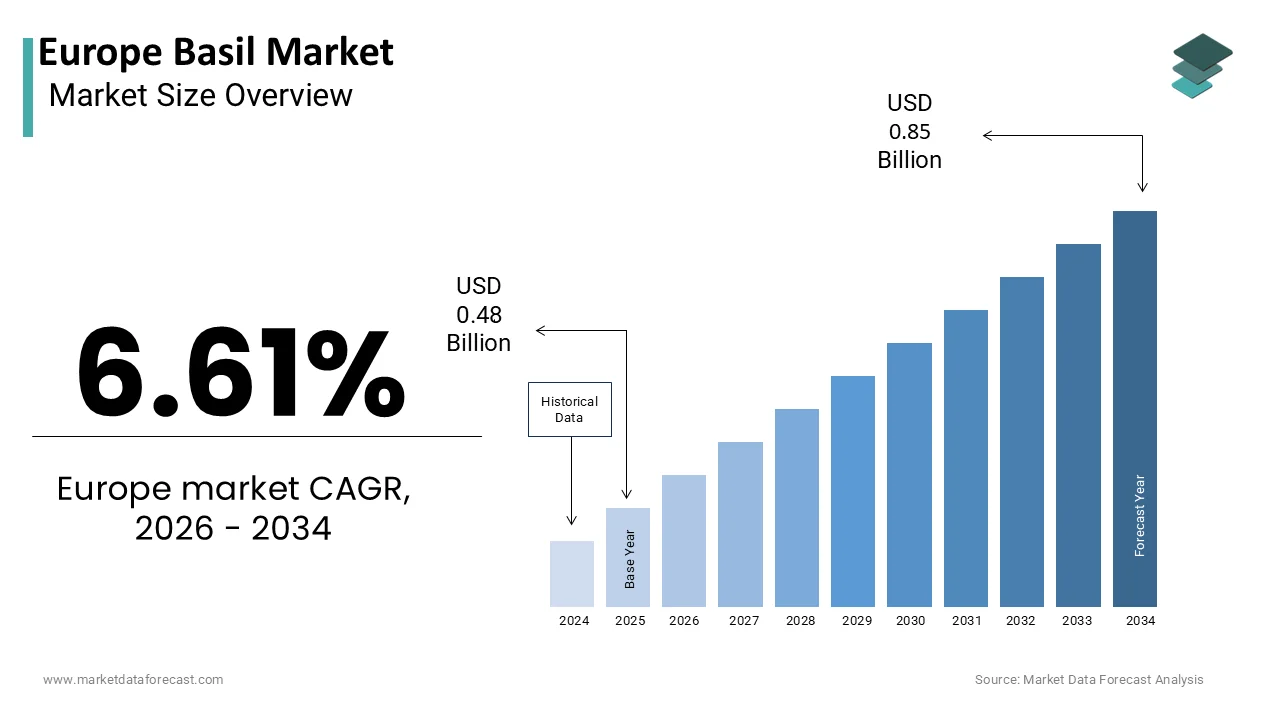
- Market Valuation: Valued at USD 0.48 billion in 2025, reaching USD 0.51 billion in 2026, and projected to expand to USD 0.85 billion by 2034, growing at a steady CAGR of 6.61% across the forecast period from 2026 to 2034.
- Primary Growth Drivers: Pervasive popularity of Mediterranean and ethnic cuisines, rising consumer health consciousness, and the growing expansion of organic farming and controlled environment urban agriculture.
Key Market Segment Metrics
| Category | Leading Segment (Base Position) | Fastest-Growing / High-Growth Segment |
|---|---|---|
| By Type | Normal / Conventional Basil (captured a dominant share, anchored by established agricultural supply chains, high yields, and affordable supermarket pricing) | Organic Basil (projected at a 9.5% CAGR, fueled by rising demand for pesticide-free produce and strict European organic labeling standards) |
| By Application | Food & Beverages (held the majority market share, driven by culinary staples like pesto Genovese, pasta sauces, and widespread Mediterranean restaurant chains) | Pharmaceuticals & Cosmetics (projected at an 8.2% CAGR, propelled by basil essential oil and natural wellness formulations) |
| By Customer | Local Residents (largest consumer base, supported by routine household cooking and the steady retail purchase of fresh potted and bunched herbs) | Health-Conscious Consumers (projected at a 10.5% CAGR, driven by focus on functional nutrition, antioxidants, and premium organic choices) |
| By Country | Italy (leading national market at 28.3% share, anchored by traditional Ligurian and Campanian production, favorable climate, and export strength) | France, Germany & Spain (high-growth hubs supported by gourmet culinary sectors, urban gardening trends, and year-round greenhouse supply) |
Major Market Players & Industry Landscape
Market Structure: A fragmented and dynamic agricultural marketplace featuring large multinational produce growers, regional co-ops, and specialized controlled-environment farming companies competing on cold-chain integrity, traceability, and sustainability.
Key Companies: NatureSweet Ltd., FlavourFresh Herbs, Costa Group Holdings, McCormick & Company, Inc., Kerry Group plc, Döhler GmbH, Symrise AG, Euroma Group, Kotányi GmbH, Verstegen Spices & Sauces B.V., Sonnentor Kräuterhandels GmbH, Frontier Co-op, Litehouse, Inc., Fresh Origins, and Pacific Botanicals.
 Download Free Sample Report
Europe Basil Market Size
The Europe basil market was valued at USD 0.48 billion in 2025, is estimated to reach USD 0.51 billion in 2026, and is projected to reach USD 0.85 billion by 2034, growing at a CAGR of 6.61% from 2026 to 2034.
The basil is an aromatic herb, which is a cornerstone of Mediterranean cuisine and has gained widespread popularity in Northern and Central Europe due to evolving dietary preferences and the globalization of food culture. As per Eurostat data from 2024, the European Union imported approximately 120000 tons of fresh herbs annually,y with basil constituting a significant portion of this volume due to its high perishability and demand for local sourcing. The shift toward home cooking during recent years has sustained robust demand for fresh basil in retail channels. According to the Food and Agriculture Organization of the United Nations, Italy remains the largest producer within Europe, producing over 30000 hectares of basil primarily in the southern regions. Consumer awareness regarding the health benefits of ba,sil, including its antioxidant and anti-inflammatory properties, has further propelled its integration into daily diets. The European Commission’s Farm to Fork Strategy emphasizes sustainable agricultural practice,s which influences production methods e, encouraging organic cultivation.
MARKET DRIVERS
Surging Demand for Mediterranean and Ethnic Cuisine
The pervasive influence of Mediterranean and ethnic cuisines for basil consumption is solely boosting the growth of Europe basil market. Basil is an indispensable ingredient in iconic dishes such as Caprese salad, pesto Genoves,e, and various pasta sauces, which have transcended their regional origins to become staples in European households. This dietary shift is driven by health consciousness and the perceived nutritional benefits of plant-based ingredients. The proliferation of Italian and Asian restaurants across major European cities further amplifies demand. In 2024, the number of Italian restaurants in the United Kingdom alone exceeded 700,,0 according to the British Hospitality Association, each requiring a consistent supply of fresh basil. Additionally, the rise of food delivery platforms has made ethnic cuisines more accessible, leading to higher household replication of these meals. Retailers respond by expanding their fresh herb sections with ready-to-use basil packs. The versatility of basil in fusion cuisine also contributes to its growing appeal. Younger demographics, particularly millennials and Generation Z, are experimenting with global flavors, rs driving innovation in product formats such as basil-infused snacks and beverages.
Growing Preference for Home Gardening and Urban Farming
The increasing popularity of home gardening and urban farming initiatives is significantly leveraged by encouraging direct consumer engagement with herb cultivation, which is another factor leveraging the growth of Europe basil market. Basil is among the top three herbs grown in home gardens due to its ease of cultivation, rapid growth cycle,e and high yield in small spaces. As per the Royal Horticultural Society in the United Kingdom, 42% of households engaged in gardening activities in 20,23 with herbs being the most popular category. This trend is mirrored in other European nations where urban dwellers utilize balconies and indoor spaces for growing fresh produce. The availability of compact growing kits and hydroponic systems has lowered barriers to entry for novice gardeners. Consumers value the superior flavor and freshness of homegrown basil compared to store-bought alternatives, which often suffer from quality degradation during transport. Furthermore, the psychological benefits of gardening, including stress reduction and connection to nature,e reinforce this behavior. Retailers capitalize on this by offering basil seeds, seedlings, gs, and specialized growing mediums.
MARKET RESTRAINTS
High Perishability and Supply Chain Vulnerabilities
The inherent perishability of fresh basil due to challenges in maintaining quality throughout the supply chain is significantly degrading the growth of Europe basil market. Basil leaves are highly sensitive to temperature fluctuations, humidity level, and physical handling, leading to rapid wilting and discoloration if not managed properly. As per the European Logistics Association, post-harvest losses for fresh herbs can reach up to 30% depending on transportation conditions and duration. This high spoilage rate increases costs for retailers and producers who must invest in specialized cold chain infrastructure, including refrigerated transport and controlled atmosphere storage. In 2023, the average shelf life of fresh basil in retail settings was estimated at only 5 to 7 days according to the German Federal Ministry of Food and Agriculture. Such short viability limits geographic distribution ranges, forcing reliance on local or regional production, which may not always meet demand peaks. Weather anomalies such as unexpected frosts or heatwaves can disrupt local supplies,s causing price volatility and stockouts. For instance, extreme weather events in Southern Europe in 2022 reduced basil yields by 15%, impacting availability across the continent. These logistical complexities hinder the ability of suppliers to offer consistent quality and availability, thereby constraining market growth. Retailers often face difficulties in balancing inventory levels to minimize waste while meeting consumer expectations for fresh produce.
Stringent Regulatory Standards and Compliance Costs
The strict regulatory frameworks governing pesticide residues and food safety standards present substantial challenges for basil producers is additionally hampering the growth of Europe basil market. The European Union maintains rigorous maximum residue levels for pesticides, which require farmers to adhere to precise application protocols and undergo frequent testing. As per the European Food Safety Authority, compliance with these regulations involves high administrative and operational costs, particularly for small and medium-sized enterprises. Transitioning to organic certification further exacerbates these costs as it requires extensive documentation, on-site testing, ng and adherence to specific cultivation practices. The cost of organic certification can range from 2000 to 5000 euros annually for small farms, as per some reports. Additionally, labor laws in many European countries mandate higher wages and better working conditions, thus increasing production expenses. The complexity of navigating varying national regulations within the EU adds another layer of difficulty for cross-border trade. Producers must invest in traceability systems to ensure transparency and compliance, which can be prohibitively expensive for smaller operators.
MARKET OPPORTUNITIES
Expansion of Organic and Sustainable Basil Production
The rising consumer preference for organic and sustainably produced food is expected to have a positive impact on the growth of Europe basil market. Shoppers are increasingly willing to pay a premium for herbs certified as organic due to concerns about chemical residues and environmental impact. As per the Research Institute of Organic Agriculture, the area dedicated to organic herb cultivation in Europe expanded by 12% in 2023, reaching 15000 hectares. This growth is supported by government subsidies and incentives under the European Union’s Common Agricultural Policy, which encourages eco-friendly farming practices. Organic basil commands a price premium of 30 to 50% compared to conventionally grown varieties, enhancing profitability for producers. Retailers are responding by expanding their organic herb sections and promoting private-label organic basil products.
Furthermore, sustainable packaging solutions such as biodegradable pots and compostable wraps align with consumer values and reduce environmental footprint. Brands that emphasize transparency and ethical sourcing gain a competitive advantage and customer loyalty. The integration of vertical farming technologies also supports sustainable production by reducing water usage and land requirements. These innovations enable year-round production with minimal environmental impact, appealing to environmentally conscious consumers.
Integration of Advanced Cultivation Technologies
The adoption of advanced cultivation technologies, such as hydroponics, aeroponics,s and vertical farming for enhancing basil production efficiency and quality, is expected to further level up the growth of Europe basil market. These controlled environment agriculture systems allow for year-round production independent of external weather conditions, ensuring a consistent supply and quality. Hydroponic systems use up to 90% less water than traditional soil-based farming, addressing water scarcity concerns in Southern Europe. In 2024, the Netherlands led the region with over 200 commercial vertical farms producing herbs and vegetables, according to the Dutch Ministry of Agriculture. These facilities utilize LED lighting and automated nutrient delivery systems to optimize growth rates and flavor profiles. The proximity of vertical farms to urban centers reduces transportation distances and carbon emissions,s aligning with sustainability goals. Retailers benefit from extended shelf life and reduced spoilage rates associated with locally grown produce. Additionally, technology enables precise control over pesticide use, often eliminating the need for chemical treatments. This appeals to health-conscious consumers seeking clean-label products. Investment in research and development continues to drive down operational costs, making these technologies more accessible to smaller producers.
MARKET CHALLENGES
ClimateChange-Induced Yield Volatility
Climate change, by inducing unpredictable weather patterns that affect crop yields and quality, is one of the challenges for the growth of Europe basil market. Basil is a warm-season crop sensitive to temperature extremes, drought, and excessive rainfall, which are becoming more frequent due to climate variability. Heatwaves in Southern Europe during the summer of 2022 caused significant stress to basil plants, leading to reduced leaf size and altered essential oil composition. Conversely,y heavy rains in Northern Europe resulted in fungal diseases such as downy mildew,w which devastated crops in several regions. These fluctuations create supply inconsistencies and price volatility, affecting both producers and retailers. Farmers face increased costs for irrigation systems and protective structures to mitigate climate risks. However, these adaptations require substantial capital investment, which may be unfeasible for smallholders. The uncertainty surrounding future climate conditions complicates long-term planning and investment decisions.
Labor Shortages in the Agricultural Sector
Acute labor shortages in the European agricultural sector, where the production and harvesting of basil is a labor-intensive crop. The labor shortages in the agricultural sector are substantially impeding the growth of Europe basil market. Basil requires careful manual harvesting to prevent damage to the delicate leaves, ensuring high quality for the fresh market. As per the European Coordination Via Campesina, the agricultural workforce in Europe has declined by 25% over the past decade due to aging populations and migration trends. This shortage leads to delayed harvesting, resulting in over-mature or wilted produce that fails to meet retail standards. The reliance on migrant labor, which has been disrupted by pandemic-related restrictions and policy changes, exacerbates the problem. Mechanization options for basil harvesting are limited due to the fragility of the leaves,s although some progress is being made with robotic solutions. However, these technologies are not yet widely adopted or cost-effective for small-scale producers. Labor costs have risen by 15% in recent years, further squeezing profit margins. The inability to secure adequate labor forces some farmers to reduce planting areas or switch to less labor-intensive crops.
REPORT COVERAGE
| REPORT METRIC | DETAILS |
| Market Size Available | 2025 to 2034 |
| Base Year | 2025 |
| Forecast Period | 2026 to 2034 |
| Segments Covered | By Type, Application, Customer, and Region. |
| Various Analyses Covered | Global, Regional and Country-Level Analysis, Segment-Level Analysis, Drivers, Restraints, Opportunities, Challenges; PESTLE Analysis; Porter’s Five Forces Analysis, Competitive Landscape, Analyst Overview of Investment Opportunities |
| Countries Covered | UK, France, Spain, Germany, Italy, Russia, Sweden, Denmark, Switzerland, Netherlands, Turkey, Czech Republic, Rest of Europe |
| Market Leaders Profiled | McCormick & Company, Inc., Kerry Group plc, Döhler GmbH, Symrise AG, Euroma Group, Kotányi GmbH, Verstegen Spices & Sauces B.V., Sonnentor Kräuterhandels GmbH, Frontier Co-op, Litehouse, Inc., Fresh Origins, Pacific Botanicals |
SEGMENTAL ANALYSIS
By Type Insights
The normal basil segment was accounted for in holding a significant share of the Europe basil market in 2025, which is established agricultural supply chains that prioritize high yield and cost efficiency over premium certification. Conventional farming methods allow for lower production costs, which translates to affordable retail prices,s making basil accessible to a broader consumer base. Large-scale retailers such as Tesco, Carrefour, and Aldi rely on consistent volumes of normal basil to meet everyday demand from households and food service providers. The infrastructure for conventional cultivation is well developed across Southern Europe, particularly in Italy and Spain, where favorable climatic conditions enable year-round production without the need for expensive controlled environment agriculture. In 2024, Italy produced approximately 45000 tons of conventional basil according to the Italian National Institute of Statistics. The widespread availability of normal basil in supermarkets ensures that it remains the default choice for general cooking purposes. Furthermore, the lack of stringent certification requirements reduces administrative burdens for farmers, allowing them to respond quickly to market fluctuations.
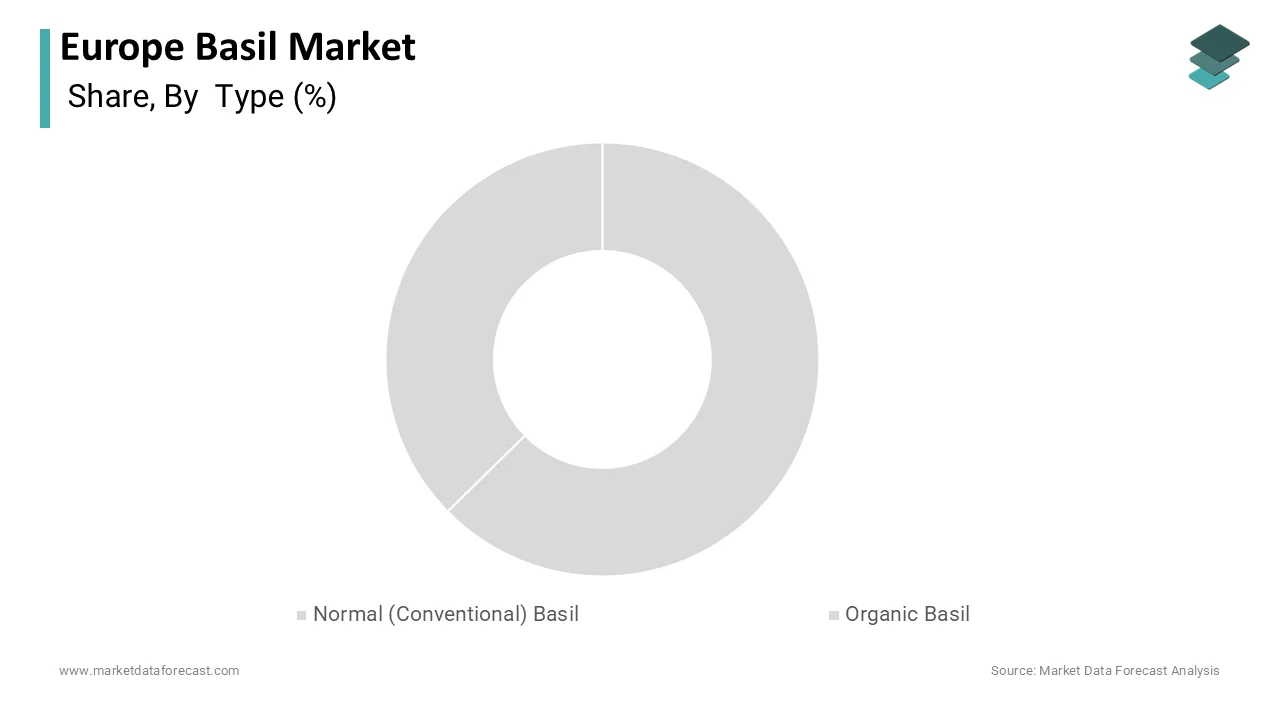
The organic basil segment is lucratively growing at an anticipated CAGR of 9.5% from 2026 to 203,4 owing to the increasing consumer awareness regarding the health risks associated with pesticide residues in conventional produce. Shoppers are actively seeking cleaner food options, leading to a surge in demand for certified organic herbs. Organic basil is perceived as safer and more nutritious, appealing to parents and individuals with dietary sensitivities. The European Union’s strict regulations on organic labeling provide consumers with confidence in the authenticity of these products. In 2024, the area under organic herb cultivation in Europe reached 15000 hectares,s according to Eurost, indicating a significant expansion in production capacity. Retailers are responding by dedicating more shelf space to organic basil and promoting it through targeted marketing campaigns.
By Application Insights
The food and beverage industry segment was the largest by holding a prominent share of the Europe basil market in 2025, owing to the integral role basil plays in Mediterranean cuisine, which has gained global popularity. Basil is a key ingredient in iconic dishes such as pesto, Genovese Caprese salad, and Margherita pizza, which are staples in European diets. As per the International Olive Council, the consumption of Mediterranean diet components, ts including fresh herbs, bs has risen by 15% in Northern Europe since 2020. The versatility of basil allows it to be used in a wide range of culinary applications, from sauces and soups to garnishes and infused oils. This broad utility ensures consistent demand across various food categories. The proliferation of Italian restaurants and fast casual dining concepts across Europe further amplifies this demand. In 2024, there were over 50000 Italian eateries in the European Union, according to the European Restaurant Association, each relying on a steady supply of fresh basil. The integration of basil into fusion cuisines also expands its application beyond traditional boundaries. Food manufacturers utilize basil in ready-to-eat meals and snacks catering to convenience-seeking consumers.
The pharmaceutical and cosmetics segment is likely to register the fastest CAGR of 8.2% from 2026 to 2034, owing to the rising popularity of natural and herbal remedies in personal care and wellness products. Basil essential oil is valued for its anti-inflammatory, antimicrobial, al and antioxidant properties, making it a sought-after ingredient in skincare and aromatherapy formulations. Consumers are shifting away from synthetic ingredients toward plant-based alternatives that offer therapeutic benefits. Basil oil is commonly used in acne treatments, hair care products, and massage oils due to its soothing and rejuvenating effects. The global wellness trend, which emphasizes holistic health and self-care, further boosts this demand. Manufacturers are investing in research to explore new applications of basil extracts in pharmaceutical formulations. The scientific validation of basil’s health benefits enhances its credibility and acceptance in the medical community.
By Customer Insights
The residents segment was the largest by holding a significant share of the Europe basil market in 2025, with the routine inclusion of basil in everyday household cooking across European cultures. Basil is a staple ingredient in many traditional recipes, making it a regular purchase item for families. The familiarity and ease of using basil in simple dishes such as tomato salads and pasta sauces ensure consistent demand. Residents prioritize convenience and accessibility, leading them to purchase basil from nearby supermarkets and grocery stores. The widespread availability of small packed basil pots and bunches caters to this need for convenience. The habit of cooking at home,e which intensified during recent years, rs has persisted, ed maintaining high levels of basil usage. Residents also value the freshness and aroma of basil, which enhances the sensory experience of home-cooked meals.
The health-conscious shoppers segment is expected to witness the fastest CAGR of 10.5% from 2026 to 2034, with a heightened focus on nutritional benefits and the functional properties of basil. Consumers in this segment actively seek foods that contribute to overall well-being and disease prevention. Basil is rich in vitamins A and K as well as antioxidants, which support immune function and reduce inflammation. Health-conscious shoppers prefer organic basil to avoid pesticide exposure, ensuring they receive maximum nutritional value. They are willing to pay a premium for high-quality produce that aligns with their health goals. This segment also explores diverse ways to incorporate basil into their diets, such as in smoothies, tea,s and supplements. The availability of detailed nutritional information on packaging helps these consumers make informed choices. Their dedication to healthy living drives consistent and growing demand for basil.
COUNTRY LEVEL ANALYSIS
Italy Basil Market Analysis
Italy was the top performer in the Europe basil market by accounting for 28.3% of the share in 2026. The cultural heritage, where basil is a fundamental ingredient in traditional cuisine, such as pesto and pizza. As per the Italian National Institute of Statistics, Italy produced over 45000 tons of basil in 2023, primarily in the Liguria and Campania regions. The favorable Mediterranean climate allows for extensive outdoor cultivation, reducing production costs and ensuring high-quality yields. Italy is also a major exporter of basil within Europe, supplying neighboring countries with fresh and processed products. The presence of numerous small-scale family farms contributes to the diversity and authenticity of Italian basil. Government initiatives supporting agricultural innovation have improved irrigation and harvesting techniques, enhancing productivity. The strong domestic consumption, coupled with robust export demand, sustains Italy’s market leadership. The integration of basil into the tourism experience through culinary tours and festivals further promotes its cultural significance.
France Basil Market Analysis
France basil market growth is expected to have a significant CAGR throughout the forecast period. The country’s market status is characterized by a strong emphasis on gourmet cuisine and high-quality fresh produce. Basil is widely used in French cooking, particularly in Provencal dishes such as ratatouille and pistou. French consumers prioritize freshness and flavor, driving demand for locally sourced basil from regional markets. The proliferation of farmers' markets and organic stores supports this preference for high-quality herbs. The country is also a hub for culinary innovation, with chefs experimenting with basil in modern gastronomy. This creativity stimulates demand for unique basil varieties such as purple and lemon basil. Government support for sustainable farming practices encourages organic production, aligning with consumer values.
Germany Basil Market Analysis
Germany's basil market growth is driven by the growing interest in healthy eating and home gardening. Basil is a popular herb among German consumers who incorporate it into salads,s sandwiches, and pasta dishes. The country has a well-developed retail infrastructure with supermarkets offering a wide variety of fresh herbs year-round. The trend toward urban farming has led to increased sales of basil seeds and growing kits. Consumer awareness of the health benefits of basil drives regular purchases. The presence of a large immigrant population from Mediterranean countries also contributes to higher consumption levels. Germany’s strong economy supports discretionary spending on premium food items, including organic basil.
Spain Basil Market Analysis
Spain's basil market growth is likely to grow with its role as a major producer and exporter of fresh herbs. Spain’s warm climate enables year-round cultivation of basil, particularly in the southeastern regions. As per the Spanish Ministry of Agriculture, basil production reached 30000 tons in 2023, making it a key supplier to Northern European markets. Domestic consumption is driven by traditional Spanish cuisine, which utilizes basil in sauces and salads. The growth of the tourism sector boosts demand for fresh herbs in hotels and restaurants. Government investments in agricultural technology improve efficiency and sustainability. The proximity to major European markets reduces transportation costs and time, enhancing competitiveness. Spain’s dual role as a producer and consumer strengthens its position in the European basil market.
United Kingdom Basil Market Analysis
The United Kingdom basil market is steadily growing with a strong retail sector and high demand for convenience foods. Basil is a popular herb among British consumers who use it in various dishes, including pasta salads and garnishes. The prevalence of Italian and Asian cuisines in the UK drives consistent demand for basil. Supermarkets play a crucial role in distributing basics,l with major chains offering both fresh and potted options. The trend toward home cooking during recent years has sustained high levels of household consumption. Consumer interest in healthy eating and organic products supports the growth of premium basil segments. The well-established supply chain ensures reliable availability despite geographical distance from production centers.
COMPETITIVE LANDSCAPE
The competition in the Europe basil market is characterized by a fragmented landscape comprising large multinational growers, regional specialists, and local farmers. Major players compete based on product quality, consistency,y and sustainability credentials rather than price alone. The market sees intense rivalry among suppliers who strive to differentiate themselves through innovative cultivation techniques and advanced packaging solutions. Established companies leverage their scale and distribution networks to dominate retail channels, while smaller niche producers focus on organic and heirloom varieties to appeal to specific consumer segments. Regulatory compliance regarding food safety and environmental standards serves as a significant barrier to entry, ensuring that only well-capitalized firms can thrive. Collaborative efforts between growers and retailers are common to optimize supply chains and reduce waste. The rise of private label brands from major supermarket chains adds another layer of competition, pressuring branded suppliers to maintain superior quality. Technological adoption, such as automation and data analytics, is becoming a key differentiator. Companies that successfully integrate sustainability into their core operations gain a competitive edge in this evolving market.
KEY MARKET PLAYERS
Some of the companies that are playing a dominating role in the global Europe Basil Market include
- McCormick & Company, Inc.
- Kerry Group plc
- Döhler GmbH
- Symrise AG
- Euroma Group
- Kotányi GmbH
- Verstegen Spices & Sauces B.V.
- Sonnentor Kräuterhandels GmbH
- Frontier Co-op
- Litehouse, Inc.
- Fresh Origins
- Pacific Botanicals
TOP PLAYERS IN THE EUROPE BASIL MARKET
- NatureSweet Ltd is a prominent grower and distributor of fresh produce with a significant footprint in the European herb market. The company specializes in cultivating high-quality basil using advanced greenhouse technologies that ensure consistent flavor and extended shelf life. NatureSweet contributes to the global market by setting benchmarks for sustainable agricultural practices and food safety standards. Recent actions include the expansion of its controlled environment agriculture facilities in the Netherlands to increase year-round production capacity. The company has also invested in proprietary seed varieties that offer enhanced resistance to common diseases. These initiatives strengthen its market position by providing a reliable supply to major retail chains. NatureSweet focuses on building strong relationships with retailers through innovative packaging solutions that reduce waste. Their commitment to environmental stewardship and product quality reinforces their reputation as a trusted supplier in the competitive European basil landscape.
- FlavourFresh Herbs is a leading supplier of fresh herbs in Europe, known for its extensive distribution network and diverse product portfolio. The company plays a vital role in the global market by exporting premium basil to various international destinations. FlavourFresh emphasizes direct partnerships with local farmers to ensure freshness and support regional economies. Recent actions include the implementation of blockchain technology for supply chain transparency,y allowing consumers to trace the origin of their basil. The company has also launched a new line of organic basil products to cater to growing health-conscious demand. FlavourFresh strengthens its market position by optimizing logistics to reduce carbon emissions and delivery times. Their focus on innovation and sustainability appeals to modern retailers and consumers.
- Costa Group Holdings is a major integrated horticulture company with a strong presence in the European fresh produce sector. The company contributes to the global market by leveraging its expertise in protected cropping systems to produce high-yielding basil crops. Costa Group focuses on technological innovation to improve efficiency and sustainability in herb cultivation. Recent actions include the acquisition of additional greenhouse assets in Southern Europe to enhance production capabilities. The company has also introduced automated harvesting systems that reduce labor dependency and improve consistency. Costa Group strengthens its market position by collaborating with research institutions to develop resilient basil varieties. Their strategic investments in infrastructure and technology enable them to meet fluctuating market demands effectively.
TOP STRATEGIES USED BY KEY MARKET PARTICIPANTS
Key players in the Europe basil market primarily employ vertical integration and technological innovation to secure competitive advantages. Companies invest heavily in controlled environment agriculture, such as greenhouses and vertical farms,s to ensure year-round production and mitigate climate risks. This strategy allows for consistent quality and supply stability, which are critical for retaining retail contracts. Another major strategy involves expanding organic product lines to capture the growing segment of health-conscious consumers willing to pay premium prices. Manufacturers also focus on sustainable packaging solutions to align with environmental regulations and consumer preferences for eco-friendly products. Strategic partnerships with local farmers help secure raw material supplies and reduce logistical costs.
MARKET SEGMENTATION
This research report on the europe basil market is segmented and sub-segmented into the following categories.
By Type
- Normal (Conventional) Basil
- Organic Basil
By Application
- Food & Beverages
- Pharmaceuticals
- Cosmetics & Personal Care
By Customer
- Local Residents
- Health-Conscious Consumers
By Country
- Italy
- France
- Germany
- Spain
- United Kingdom
- Rest of Europe