- Product Description Description
- Table of Contents TOC
- List of Table & Figure LOT
- Get Free Sample PDF Sample PDF
Market Size, 2025
$1.22 BnMarket Estimate, 2026
$1.28 BnMarket Forecast, 2034
$1.94 BnCAGR, 2026–2034
5.3%Executive Summary: Europe Bathroom And Toilet Assist Devices Market
- Market Scope: Comprehensive regional analysis of the European bathroom and toilet assist devices market covering product types, demographic drivers, post-discharge care protocols, EU Digital Health initiatives, and Green Public Procurement criteria.
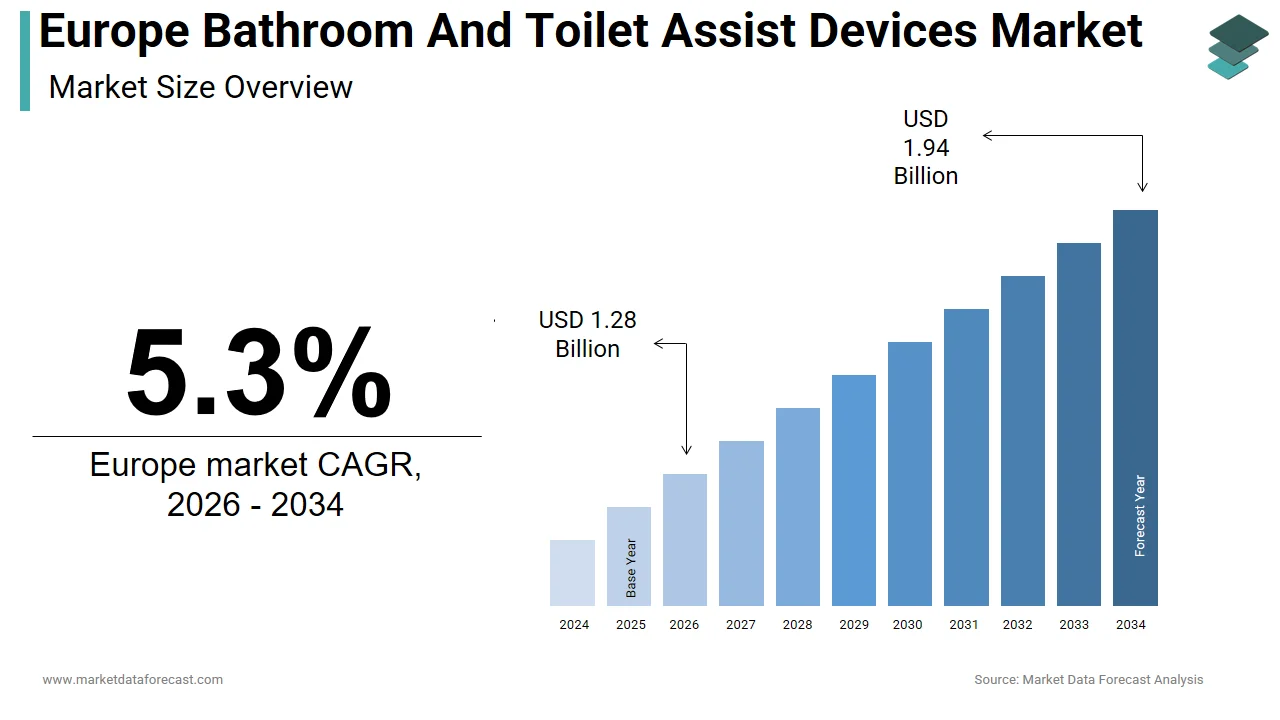
- Market Valuation: Valued at USD 1.22 billion (2025), estimated at USD 1.28 billion (2026), and projected to reach USD 1.94 billion by 2034, registering a steady CAGR of 5.3% (2026–2034).
- Primary Growth Drivers: Rapidly aging population intensifying demand for in-home safety solutions, supportive healthcare policies embedding bathroom assessments, and smart sensor integration for remote health monitoring. Key opportunities are backed by sustainable product innovation and municipal adaptation programs.
Key Market Segment Metrics (2026–2034)
| Category | Leading Segment (Position) | Fastest-Growing Segment |
|---|---|---|
| By Product / Category | Shower Chairs and Stools (dominated with a 32.4% share due to fall risk mitigation in wet environments) | Bath Lifts (projected to exhibit a noteworthy CAGR of 7.9% driven by rising demand for dignified independent bathing) |
| By Technology & Innovation | Modular Product Configurations & Standard Ergonomic Assistive Devices | Smart Sensors for Remote Health Monitoring & EU Green Public Procurement Designs |
| By Region / Country | Germany (led regionally with a 24.4% share) & United Kingdom (17.3% share via occupational therapy infrastructure) | Northern & Western European Healthcare Pathways & Adapting Southern/Eastern European Markets |
Major Market Players & Market Structure
Market Structure: Highly competitive European healthcare and assistive technology landscape featuring specialized manufacturers competing intensely on user-centered design, municipal adaptation partnerships, retail pharmacy channels, and strict EU sustainability compliance.
Key Companies: ArjoHuntleigh, Bischoff & Bischoff GmbH, Etac AB, DIETZ GmbH, Medical Depot Inc. (Drive Medical), Essity, Handicare Group, Hewi Heinrich Wilke GmbH, Invacare Corporation, and NRS Healthcare Ltd.
Europe Bathroom and Toilet Assist Devices Market Size
The size of the Europe bathroom and toilet assist devices market was valued at USD 1.22 billion in 2025. This market is expected to grow at a CAGR of 5.3% from 2026 to 2034 and be worth USD 1.94 billion by 2034 from USD 1.28 billion in 2026.
Bathroom and toilet assist devices are specialized mobility and safety aids designed to support individuals with physical limitations during essential hygiene activities. These products, including wall-mounted grab bars, raised toilet seats, freestanding toilet frames, shower chairs, and integrated bidet systems, serve as critical enablers of independent living, particularly for aging or rehabilitating populations. Unlike discretionary home improvement goods, these devices address fundamental safety and dignity requirements within domestic sanitary environments. As per Eurostat, more than one-fifth of the European Union’s population was aged sixty-five or older in 2023, with Italy and Portugal reporting figures exceeding twenty-four percent. According to research, falls are a significant and growing public health concern for the older adult population, representing a primary cause of serious injury, hospitalizations, and related mortality across the European region and globally. This demographic and public health reality positions bathroom assist devices not as optional conveniences but as necessary components of national aging in place strategies. The market’s trajectory is therefore shaped by structural societal shifts, healthcare policy frameworks, and residential infrastructure realities rather than transient consumer preferences.
MARKET DRIVERS
Aging Population Intensifies Demand for In-Home Safety Solutions
The region’s demographic trajectory is a powerful and sustained enabler for the adoption of bathroom assist devices, which in turn drives the growth of the Europe bathroom and toilet assist devices market. As per sources, the proportion of individuals aged 65 and above is increasing as the overall European Union population is gradually ageing, a trend that is expected to continue for the coming decades. Germany and Finland are among the European Union Member States with the highest proportions of older residents, which reflects a widespread demographic shift across the region. This shift correlates directly with the rising prevalence of mobility impairments. According to research, musculoskeletal conditions are widespread among older populations, leading to significant functional limitations and mobility impairments that increase safety risks in everyday environments, including bathrooms. National policies further amplify this demand. In some European countries, like Sweden, municipal programs may offer financial support or subsidies to help eligible senior residents adapt their homes, including bathroom safety retrofits, to improve living conditions and safety. These measures reflect a broader policy consensus across Northern and Western Europe that preventing falls at home reduces long-term care costs and preserves quality of life. Consequently, the convergence of demographic pressure, clinical need, and supportive public investment creates a structurally resilient demand base that extends beyond private retail into formal healthcare and social service channels.
Rising Hospital Readmission Penalties Accelerate Adoption of Preventive Home Modifications
European healthcare systems are increasingly adopting value-based reimbursement models that penalize avoidable hospital readmissions, thereby incentivizing preventive home interventions. This further contributes to the expansion of the Europe bathroom and toilet assist devices market. In addition, countries like the United Kingdom and the Netherlands now embed bathroom safety assessments into post discharge care protocols. Germany’s statutory health insurers have expanded coverage to include prescribed assistive devices following orthopedic or neurological hospitalizations under preventive care provisions. These institutional shifts reposition bathroom assist products from consumer goods to clinically endorsed tools within transitional care pathways. This integration not only broadens access but also validates the medical necessity of such devices, fostering trust among caregivers and clinicians and accelerating adoption across formal healthcare networks.
MARKET RESTRAINTS
Limited Reimbursement Coverage Constrains Market Penetration
Inconsistent public funding mechanisms severely restrict market access across much of the continent, despite clear clinical justification, and this hampers the growth of the Europe bathroom and toilet assist devices market. Public reimbursement for essential bathroom assistance devices varies considerably across European nations, with eligibility frequently dependent on specific criteria such as medical diagnoses, financial status, or post-hospitalization needs. In Southern and Eastern Europe, these products are almost universally excluded from public health benefits. As per sources, a significant number of older adults experiencing difficulty with standard bathroom fixtures face financial barriers to obtaining necessary assistive equipment, which emphasizes a need for increased financial support options. The expense of a basic suite of bathroom safety equipment, including items like a grab bar, raised toilet seat, and shower chair, represents a considerable financial challenge for many retirees living on fixed incomes. This reimbursement gap entrenches health inequities, as only wealthier or urban residents benefit from available support. Market growth is being constrained, and socioeconomic gaps in home safety are being entrenched because many potential users lack access, a problem that persists in the absence of harmonized EU rules or expanded national coverage.
Lack of Standardized Installation Guidelines Undermines Product Effectiveness
The absence of enforceable and region-wide standards for the installation and use of assistive bathroom devices compromises their real-world efficacy and erodes user confidence. This also hinders the expansion of the Europe bathroom and toilet assist devices market. Unlike regulated medical devices, most bathroom aids are classified as general consumer goods, escaping rigorous validation under the EU Medical Device Regulation. Europe’s diverse housing stock, ranging from solid masonry in Western cities to prefabricated panels in Eastern Bloc apartments, further complicates reliable installation. Outcomes currently fluctuate because national building codes and home care accreditation standards lack mandatory technical guidelines; instead, they depend significantly on uneven installer expertise or user self-assembly. This regulatory void not only increases injury risk but also discourages public procurement programs and private investment in comprehensive retrofits, limiting the market’s ability to deliver consistent safety value.
MARKET OPPORTUNITIES
Integration of Smart Home Ecosystems Opens New Functional Frontiers
The fusion of assistive bathroom devices with smart home technology is redefining their role from passive supports to active health monitoring systems, which provide new opportunities for the Europe bathroom and toilet assist devices market. Innovations such as shower chairs with weight sensors that alert caregivers to prolonged immobility or toilet frames with embedded gait analysis capabilities are gaining traction. These developments align with the European Commission’s Action Plan on Digital Health, which prioritizes remote in-home monitoring to ease pressure on clinical resources. Importantly, the EU’s robust General Data Protection Regulation framework ensures secure handling of sensitive biometric data, fostering consumer trust. This convergence transforms bathroom safety into a data-driven preventive health strategy, creating new revenue models for manufacturers and unlocking partnerships with telehealth and integrated care providers.
EU Green Public Procurement Criteria Spur Sustainable Product Innovation
Environmental mandates within European public procurement are causing a wave of sustainable innovation in assistive device design, which offers fresh prospects for the expansion of the Europe bathroom and toilet assist devices market. The European Commission is increasingly incorporating mandatory minimum environmental requirements into new sectoral legislation, such as the Ecodesign for Sustainable Products Regulation, which will apply to public procurement of various product groups over time. Public entities are encouraged to use the voluntary EU GPP criteria, which promote considerations like recycled content, durability, and recyclability, as part of a broader shift toward sustainable procurement. This regulatory shift compels manufacturers to adopt circular economy principles, using marine-grade recycled aluminum, bio-based polymers, and modular designs that enable repair rather than replacement. Public sector demand for age-friendly housing solutions is growing due to demographic changes, and there is an increasing emphasis on incorporating sustainability criteria into public tenders for related installations and infrastructure. Companies have already launched product lines featuring notable post-consumer recycled content and multi-year warranties. This alignment with the European Green Deal not only differentiates offerings but also qualifies manufacturers for sustainability-linked public funding. The result is a dual value proposition: enhanced user safety coupled with environmental responsibility, positioning eco-conscious assistive devices as strategic assets in public health infrastructure planning.
MARKET CHALLENGES
Fragmented Housing Stock Complicates Universal Design Implementation
The region’s diverse and aging residential infrastructure impedes the growth of the Europe bathroom and toilet assist devices market. This is an obstacle to the consistent deployment of bathroom assist devices. Many homes in Europe were constructed before 1980, and some lack common accessibility features such as level access showers or adequate clearance around toilets. In historic urban centers like Rome, Lisbon, and Prague, preservation laws often prohibit structural modifications, blocking the installation of wall-anchored safety fixtures. A smaller portion of older European homes, specifically those built before 1970, currently meet the basic accessibility standards that have been established for living spaces. This architectural heterogeneity renders standardized solutions ineffective, necessitating custom configurations that increase costs and complicate logistics. Besides, renters face landlord restrictions on permanent alterations. Uneven technical feasibility of installing assistive devices, coupled with a lack of coordinated urban retrofit strategies or tailored subsidies, constrains market scalability and perpetuates accessibility gaps across regions and income groups.
Stigma Associated with Assistive Devices Deters User Acceptance
Psychological resistance rooted in social perceptions of aging continues to hinder adoption, particularly among the 'younger old', which challenges the expansion of the Europe bathroom and toilet assist devices market. Older adults often show reluctance to adopt assistive devices due to various psychosocial factors, including a fear of being perceived as frail or dependent, which can be a significant barrier to improving their independence and quality of life. This stigma is especially pronounced in Southern and Eastern European cultures that emphasize self-reliance in later life. As per sources, many seniors delay acquiring safety aids until after a fall occurs, missing key prevention opportunities. The clinical appearance of many products, often metallic, utilitarian, and institutionally styled, exacerbates aesthetic concerns in domestic settings. Scandinavian designers have led the way in developing subtle integrations, such as assistive functions in modern furniture, but these items are still expensive and hard to find. The market for these products will remain limited until their design aligns with current interior trends and the public perception shifts from viewing them as a sign of aging to a positive choice for autonomous living.
REPORT COVERAGE
| REPORT METRIC | DETAILS |
| Market Size Available | 2025 to 2034 |
| Base Year | 2025 |
| Forecast Period | 2026 to 2034 |
| Segments Covered | By Product Type and Region. |
| Various Analyses Covered | Global, Regional, and Country-Level Analysis, Segment-Level Analysis, Drivers, Restraints, Opportunities, Challenges; PESTLE Analysis; Porter’s Five Forces Analysis, Competitive Landscape, Analyst Overview of Investment Opportunities |
| Countries Covered | UK, France, Spain, Germany, Italy, Russia, Sweden, Denmark, Switzerland, Netherlands, Turkey, Czech Republic, and the Rest of Europe |
| Market Leaders Profiled | ArjoHuntleigh, Bischoff & Bischoff GmbH, Etac AB, DIETZ GmbH, Medical Depot, Inc. (Drive Medical), Essity, Handicare, Hewi Heinrich Wilke GmbH, Invacare Corporation, MEYRA GmbH, Patterson Medical Holdings, Inc., Poshchair Medical Limited, Pride Mobility Products Corp., Prism Medical, RCN Medical and Rehabilitation GmbH, Sunrise Medical (US) LLC., Ortho XXI, K Care Healthcare Equipment, GF Health Products, Juvo Solutions, and Spectra Care Group. |
SEGMENTAL ANALYSIS
By Product Type Insights
The shower chairs and stools segment was the prominent segment in the Europe bathroom and toilet assist devices market and accounted for a share of 32.4% in 2024. The dominance of the shower chairs and stools segment is driven by the high incidence of balance-related fall risk in wet environments and versatility across care settings and user profiles. The bathroom remains the most hazardous domestic space for older adults, and showering represents a critical vulnerability point. Shower chairs directly mitigate this risk by eliminating the need to stand on slippery surfaces. National health agencies increasingly recognize their preventive value. In Germany, statutory health insurers routinely approve reimbursement for shower stools following orthopedic procedures, further institutionalizing their use. Hence, the functional necessity of shower seating translates into consistent and widespread demand across both public and private channels. Unlike specialized devices such as bath lifts, shower chairs serve a broad spectrum of users, from post-surgical patients and individuals with arthritis to those with temporary injuries or permanent disabilities. Furthermore, these products are extensively deployed not only in private homes but also in residential care facilities, rehabilitation centers, and public housing units adapted for seniors. Their modular designs, ease of cleaning, and compatibility with standard shower enclosures enhance adoption across diverse European housing typologies. This cross-setting utility ensures sustained procurement volumes that outpace more niche segments.
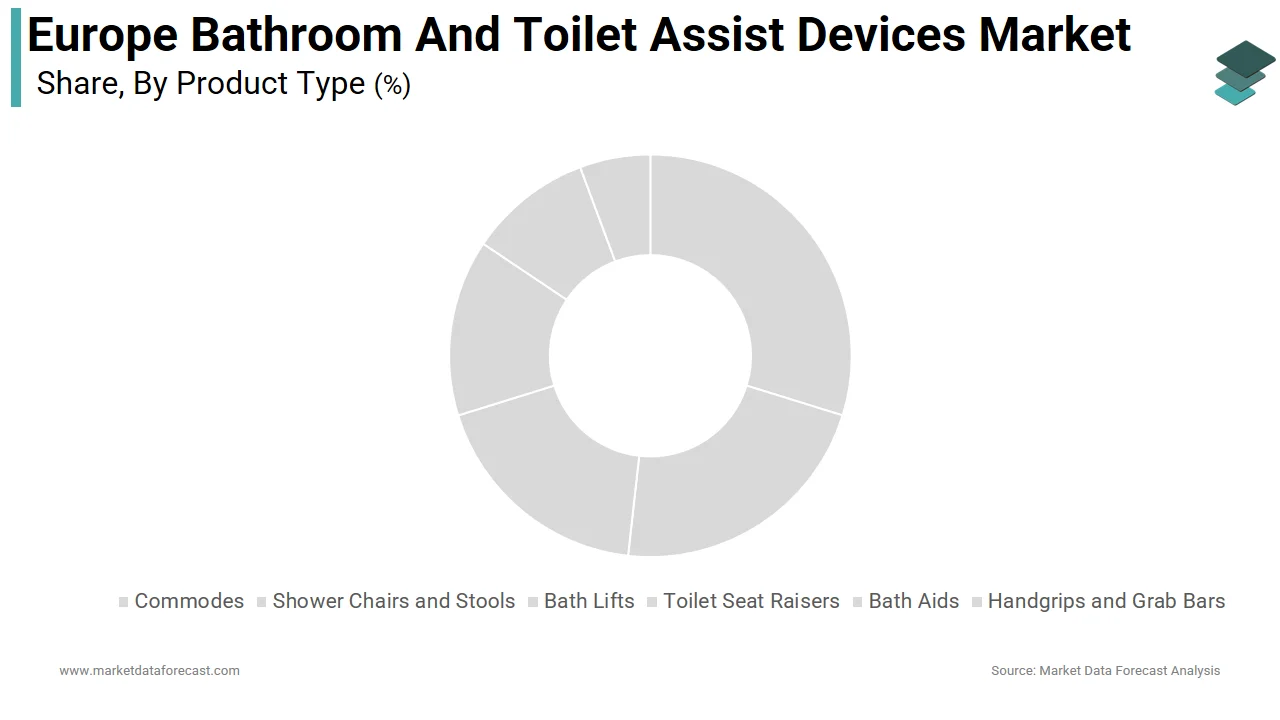
The bath lifts segment is expected to exhibit a noteworthy CAGR of 7.9% from 2025 to 2033 due to the rising demand for dignified independent bathing among high dependency seniors, and technological advancements enhancing accessibility and affordability. Bath lifts enable individuals with severe mobility limitations, such as those with advanced Parkinson’s disease, spinal cord injuries, or post-stroke paralysis, to enter and exit bathtubs safely without caregiver assistance. According to sources, millions of Europeans live with Parkinson’s or related movement disorders, a figure expected to rise by 2035 due to aging demographics. For this population, traditional transfers pose high fall risks and loss of privacy. Bath lifts preserve autonomy while reducing caregiver burden, aligning with Europe’s aging in place ethos. In the Netherlands, home care agencies now include bath lifts in personalized care budgets for clients with Barthel Index scores below 12, reflecting clinical recognition of their necessity. Recent innovations have significantly improved the usability and cost efficiency of bath lifts. Modern models feature rechargeable lithium batteries, waterproof remote controls, and slim profiles compatible with standard European bathtubs, which address previous barriers of bulkiness and installation complexity. Besides, companies have introduced rental and lease-to-own schemes in France and Germany, which lower upfront costs. This combination of user-centered engineering and flexible financing is unlocking previously untapped demand across middle-income and rural populations.
COUNTRY LEVEL ANALYSIS
Germany Bathroom and Toilet Assist Devices Market Analysis
Germany outperformed other countries in the Europe bathroom and toilet assist devices market and captured a 24.4% share in 2024. The supremacy of the German market is primarily driven by its comprehensive statutory health insurance system, which covers a wide array of assistive devices under its Hilfsmittelverzeichnis (Directory of Aids). Germany’s aging population creates structural demand, while stringent quality standards under the Medical Devices Regulation ensure high product reliability. Municipal programs in cities like Berlin and Munich further supplement federal coverage by funding home adaptations for low-income seniors, creating a multi-tiered support ecosystem that drives consistent market expansion.
United Kingdom Bathroom and Toilet Assist Devices Market Analysis
The United Kingdom followed closely in the Europe bathroom and toilet assist devices market and accounted for a 17.3% share. The expansion of the UK market is attributed to its integration of assistive devices into national health and social care pathways. Many assistive devices for bathrooms were provided in the UK through various health and social care programs. The country’s strong occupational therapy infrastructure ensures systematic assessment of home safety needs post hospitalization. Elderly patients leaving the hospital following hip fracture surgery often received a shower chair or grab bar shortly after discharge. Additionally, the UK’s growing private home care sector fuels commercial procurement of durable, easy-to-clean devices for client residences, reinforcing market depth beyond public channels.
France Bathroom and Toilet Assist Devices Market Analysis
France grew steadily in the Europe bathroom and toilet assist devices market because of its universal healthcare model and proactive aging policies. The French healthcare system, through its Assurance Maladie program, reimburses a portion of the cost for approved assistive devices when prescribed by a physician. The government’s initiative further allocates annual grants for home adaptations, with notable funds to support accessibility retrofits for seniors. France’s high homeownership rate among the elderly enables permanent installations like wall-mounted grab bars and bath lifts, distinguishing its market from rental-dominated regions. This policy and demographic alignment sustain robust device uptake across urban and rural communes.
Italy Bathroom and Toilet Assist Devices Market Analysis
Italy is another key player in the Europe bathroom and toilet assist devices market, with growth increasingly influenced by demographic urgency and regional health autonomy. Italy has the second-oldest population in Europe, with a portion of citizens aged sixty-five or older. National reimbursement for assistive tech is minimal, but robust regional funds exist in places like Lombardy, Tuscany, and Emilia Romagna. Cultural preferences for family-based elder care also drive private purchases, as adult children invest in safety aids to keep parents at home. This dual dynamic of regional innovation and familial responsibility underpins Italy’s steady market expansion despite fragmented national policy.
Sweden Bathroom and Toilet Assist Devices Market Analysis
Sweden is likely to expand notably in the Europe bathroom and toilet assist devices market from 2025 to 2033, owing to its preventive welfare model and universal design standards. The Swedish system emphasizes enabling independent living through early intervention. Sweden’s national building code mandates accessibility considerations in all new residential constructions and major renovations, which creates baseline demand for integrated solutions. Furthermore, the country’s high digital adoption among seniors facilitates access to online retailers offering innovative products like smart commodes with fall detection. Public trust in institutional support, combined with a design-conscious culture that favors discreet, aesthetically integrated aids, ensures both high penetration and rapid uptake of next-generation devices.
COMPETITIVE LANDSCAPE
The Europe bathroom and toilet assist devices market features a moderately concentrated competitive landscape characterized by a blend of specialized assistive technology firms and diversified healthcare conglomerates. Competition is driven less by price and more by product reliability, clinical validation, design discretion, and integration with public health frameworks. Leading players differentiate through engineering excellence, ergonomic adaptability, and compliance with stringent European safety and environmental regulations. National variations in reimbursement policies and housing infrastructure compel companies to adopt localized go-to-market strategies rather than a uniform pan-European approach. While Scandinavian and Western European firms dominate in innovation and policy alignment, Eastern and Southern European markets see growing participation from regional manufacturers offering cost-effective solutions. The absence of universal installation standards creates both fragmentation and opportunity as companies develop modular products suited to diverse bathroom configurations. Increasingly, competition extends beyond hardware into service ecosystems, including digital guidance installation networks and preventive care partnerships. New entrants face high barriers related to regulatory certification, clinical acceptance, and established public procurement relationships, yet niche players focusing on smart or sustainable solutions are gaining traction through targeted innovation. Overall, the market rewards companies that combine technical precision witha deep understanding of Europe’s socio-demographic and policy complexities.
KEY MARKET PLAYERS
The leading companies operating in the Europe bathroom and toilet assist devices market include:
- ArjoHuntleigh
- Bischoff & Bischoff GmbH
- Etac AB
- DIETZ GmbH
- Medical Depot, Inc. (Drive Medical)
- Essity
- Handicare
- Hewi Heinrich Wilke GmbH
- Invacare Corporation
- MEYRA GmbH
- Patterson Medical Holdings, Inc.
- Poshchair Medical Limited
- Pride Mobility Products Corp.
- Prism Medical
- RCN Medical and Rehabilitation GmbH
- Sunrise Medical (US) LLC
- Ortho XXI
- K Care Healthcare Equipment
- GF Health Products, Inc.
- Juvo Solutions
- Spectra Care Group
TOP PLAYERS IN THE MARKET
- Arjo is a leading global provider of medical and assistive technologies headquartered in Sweden with deep integration across European healthcare systems. The company specializes in ergonomic bathroom and toilet assist devices designed for both home and institutional use. Arjo has reinforced its position through continuous investment in human-centered design and compliance with European safety standards. In recent years, the company expanded its range of shower chairs and commodes featuring antimicrobial surfaces and modular adjustability to meet diverse care needs. Arjo also strengthened its distribution network through partnerships with national health agencies and home care providers across Germany, France, and the Nordic region, enhancing accessibility and service reliability throughout Europe.
- Handicare Group is a prominent European manufacturer known for its innovative mobility and bathroom safety solutions, with headquarters in Sweden and operational hubs across the continent. The company offers a comprehensive portfolio, including bath lifts, toilet seat raisers, and smart assistive frames tailored to aging populations. Handicare has intensified its focus on discreet integrated designs that blend with modern interiors while maintaining clinical functionality. Recent initiatives include the launch of a next-generation bath lift with silent motor technology and improved weight capacity. The company also deepened collaborations with occupational therapists and municipal adaptation programs in the Netherlands and the United Kingdom to facilitate early user adoption and personalized fitting services.
- Essity is a global hygiene and health company based in Sweden that has strategically expanded into assistive living solutions under its Leukoplast and TENA brands. While traditionally known for incontinence and wound care products, Essity now integrates bathroom safety devices into holistic continence management programs across Europe. The company leverages its extensive retail and pharmacy distribution channels to offer raised toilet seats and grab bars alongside personal care items, ensuring high visibility and consumer convenience. This ecosystem approach positions the company uniquely at the intersection of hygiene, health, and home safety, reinforcing its relevance in preventive elderly care strategies.
TOP STRATEGIES USED BY THE KEY MARKET PARTICIPANTS
Key players in the Europe bathroom and toilet assist devices market primarily focus on product innovation through user-centered design to enhance functionality and aesthetic integration. They actively pursue strategic collaborations with national healthcare systems, municipal adaptation programs, and occupational therapy networks to embed products into formal care pathways. Expansion of distribution via both public procurement and retail pharmacy channels ensures broad accessibility. Companies invest in sustainable manufacturing aligned with EU Green Public Procurement criteria to qualify for public tenders. Additionally, they leverage digital platforms for caregiver education, remote support, and product personalization, which strengthens brand trust and user retention across diverse European markets.
MARKET SEGMENTATION
This Europe bathroom and toilet assist devices market research report is segmented and sub-segmented into the following categories.
By Product Type
-
Commodes
- Electric Commode
- Fixed Commode
- Folding Commode
- Transit Commode
- Shower Chairs and Stools
- Bath Lifts
- Fixed Bath Lifts
- Reclining Bath Lifts
- Lying Bath Lifts
- Toilet Seat Raisers
- Bath Aids
- Bath Boards
- Transfer Aids
- Handgrips and Grab Bars
By Country
- UK
- France
- Spain
- Germany
- Italy
- Russia
- Sweden
- Denmark
- Switzerland
- Netherlands
- Turkey
- Czech Republic
- Rest of Europe