- Product Description Description
- Table of Contents TOC
- List of Table & Figure LOT
- Get Free Sample PDF Sample PDF
Market Size, 2025
$1.37 BnMarket Estimate, 2026
$1.41 BnMarket Forecast, 2034
$1.82 BnCAGR, 2026–2034
3.20%Executive Summary: North America Bathroom and Toilet Assist Devices Market
- Market Scope: Comprehensive regional market evaluation of bathroom and toilet assist devices across North America covering product types, country-level frameworks (United States, Canada, Mexico, Rest of North America), and distribution dynamics.
- Market Valuation: Valued at USD 1.37 billion in 2025, estimated at USD 1.41 billion in 2026, and projected to reach USD 1.82 billion by 2034, registering a solid CAGR of 3.2% from 2026 to 2034.
- Primary Growth Drivers: Increasing number of nursing homes, growing geriatric population prone to chronic and lifestyle diseases, rising pool of disabled and reduced mobility individuals, continuous product innovation, and expanding healthcare spending capacities.
Key Market Segment Metrics (2026–2034)
| Category | Leading Segment (2025 Position) | Segment Framework |
|---|---|---|
| By Product Type | Commodes & Shower Chairs/Stools (high demand driven by home healthcare and nursing facility needs) | Commodes (Electric, Fixed, Folding, Transit), Shower Chairs and Stools, Bath Lifts (Fixed, Reclining, Lying), Toilet Seat Raisers, Bath Aids (Bath Boards, Transfer Aids), and Handgrips/Grab Bars |
| By Country / Region | United States (dominated the North American market in 2025 with advanced healthcare infrastructure and chronic disease patient pool) | United States, Canada (promising share driven by spinal injury patients), Mexico, and Rest of North America |
Major Market Players & Market Structure
Market Structure: Competitive North American assistive device sector featuring established global medtech manufacturers and local brands competing on user-friendly designs, reliability, product durability, and ease of adoption.
Key Companies: ArjoHuntleigh, Bischoff & Bischoff GmbH, Etac AB, DIETZ GmbH, Medical Depot, Inc. (Drive Medical), Handicare, Hewi Heinrich Wilke GmbH, Invacare Corporation, MEYRA GmbH, Patterson Medical Holdings, Inc., Pushchair Medical Limited, Pride Mobility Products Corp., Prism Medical, RCN Medical and Rehabilitation GmbH, Sunrise Medical (US) LLC., Ortho XXI, K Care Healthcare Equipment, GF Health Products, Juvo Solutions, and Spectra Care Group.
 Download Free Sample Report
North America Bathroom and Toilet Assist Devices Market Size
The size of the North America bathroom and toilet assist devices market was worth USD 1.37 billion in 2025. The North America market is anticipated to grow at a CAGR of 3.2% from 2026 to 2034 and be worth USD 1.82 billion by 2034, up from USD 1.41 billion in 2026.

The bathroom and toilet assist devices are a specialized range of products designed to enhance safety, independence, and hygiene for individuals with mobility limitations or age-related physical challenges. The demand for these devices is intrinsically linked to the demographic shift toward an aging population and the rising prevalence of chronic conditions affecting mobility. According to the United States Census Bureau, the number of Americans aged 65 and older is projected to reach 95 million by 2060, which represents nearly one quarter of the total population. As per the Centers for Disease Control and Prevention, falls are the leading cause of injury-related death among adults aged 65 and older, with approximately 36 million falls reported annually in the United States alone. These statistics underscore the critical need for preventive assistive technologies in domestic settings. The market is further influenced by the growing preference for aging in place, where seniors choose to remain in their homes rather than move to assisted living facilities. Regulatory standards for bathroom safety and increasing awareness about home modification benefits are also shaping consumer behavior. Healthcare providers increasingly recommend these devices as part of discharge planning to reduce readmission rates.
MARKET DRIVERS
Surging Geriatric Population Driving Home Safety Modifications
The rapid expansion of the elderly population, because older adults face heightened risks of slips and falls in wet bathroom environments, is leveraging the growth of the North America Bathroom and Toilet Assist Devices Market. According to the Administration for Community Living, one in four older adults experiences a fall each year in the United States, resulting in high medical costs and loss of independence. This high incidence rate compels families and caregivers to proactively install safety features such as non-slip mats, grab bars, and elevated seating to mitigate risks. As per data from the National Institute on Aging, the prevalence of arthritis affects more than 50% of adults aged 65 and older, limiting their ability to squat or stand without assistance. This physical limitation directly increases the demand for toilet assist devices that reduce strain on joints and muscles. The desire to age in place rather than relocate to nursing homes further accelerates the adoption of these modifications. Homeowners are investing in bathroom retrofits to create barrier-free environments that support daily activities. Insurance providers and Medicare Advantage plans are increasingly covering some of these devices as preventive measures to avoid costly hospitalizations. The correlation between aging related mobility decline and bathroom accidents creates a sustained and growing need for reliable assistive solutions. Consequently, manufacturers are expanding their product lines to offer aesthetically pleasing and functional devices that blend seamlessly with modern home decor while ensuring maximum safety.
Rising Prevalence of Chronic Mobility Impairing Conditions
The increasing incidence of chronic diseases that impair mobility, as patients require specialized support for daily hygiene routines, is also fuelling the growth of the North America bathroom and toilet assist devices market. According to the Centers for Disease Control and Prevention, approximately 61 million adults in the United States live with some form of disability, with mobility issues being the most common type. Conditions such as stroke, multiple sclerosis, and spinal cord injuries often result in partial or complete loss of lower body function, necessitating the use of transfer benches and shower chairs. These medical realities create a consistent demand for durable and adjustable assistive devices that accommodate varying levels of physical ability. Post-surgical patients, particularly those undergoing hip or knee replacements, also contribute to market growth as they need temporary aids during recovery periods. Healthcare professionals routinely prescribe these devices to prevent complications and ensure patient safety during rehabilitation. The integration of these tools into care plans helps reduce caregiver burden and enhances patient dignity. Furthermore, the rise in obesity rates, which affects over 40% of the US adult population as per the CDC, adds stress to standard bathroom fixtures, requiring reinforced and wider assistive equipment.
MARKET RESTRAINTS
High Cost of Advanced Smart Assistive Technologies Restraining Adoption
The substantial price point of advanced smart bathroom assistive devices, by limiting accessibility for middle- and lower-income households, is limiting the growth of the North America bathroom and toilet assist devices market. According to the Kaiser Family Foundation, out-of-pocket healthcare spending remains a significant burden for many Americans, with nearly 30% of adults reporting difficulty paying for medical expenses, including durable medical equipment. Smart toilets and automated lift systems can cost several thousand dollars, which is often not covered by standard insurance plans or Medicare. This financial barrier prevents many eligible individuals from upgrading to safer and more convenient technologies. While basic grab bars are affordable, the integrated electronic systems that offer heating, drying, and automatic lid operations remain luxury items for most families. The lack of standardized reimbursement codes for newer innovative devices further complicates the approval process for coverage. Patients often opt for cheaper manual alternatives, which may not provide the same level of comfort or safety features.
Limited Awareness and Stigma Associated With Assistive Devices
The limited awareness regarding the availability and benefits of modern bathroom assistive devices, combined with social stigma that is also inhibiting the growth of the North America Bathroom And Toilet Assist Devices Market. Many older adults resist installing visible assistive equipment due to fears that it will make their homes look like hospitals or signal frailty to visitors. This psychological barrier leads to underutilization of safety features even when individuals are at high risk of falling. The perception that these devices are only for the severely disabled discourages early adoption among those with mild mobility limitations. Additionally, many consumers are unaware of the wide variety of discreet and stylish options available that blend with contemporary bathroom designs. Marketing efforts have historically focused on clinical settings rather than residential aesthetics, leaving a gap in consumer education. Healthcare providers also rarely discuss home safety modifications during routine checkups, missing opportunities to educate patients. This lack of information and negative perception results in delayed purchases and increased risk of accidents. Overcoming this restraint requires targeted campaigns that normalize the use of assistive devices as tools for independence rather than symbols of dependency.
MARKET OPPORTUNITIES
Integration of IoT and Smart Home Technologies Creating Opportunities
The integration of Internet of Things technology and smart home ecosystems, by enabling remote monitoring and enhanced user convenience, is solely promoting the growth of the North American bathroom and toilet assist devices market. According to the Consumer Technology Association, the adoption of smart home devices in the United States has grown by 25% annually, with health and wellness applications becoming a key focus area. Smart toilet seats with built-in sensors can monitor vital signs such as heart rate and body temperature, providing valuable health data to caregivers and physicians. As per data from Parks Associates, over 40% of US broadband households now own at least one smart home device, creating a ready infrastructure for connected bathroom solutions. These technologies allow for automated adjustments in water temperature, seat height, and lighting based on user preferences and safety needs. Voice-activated controls enable individuals with limited dexterity to operate fixtures without physical strain. The ability to detect falls or irregular usage patterns and alert emergency contacts adds a layer of security that appeals to families caring for elderly relatives. Manufacturers are collaborating with tech companies to develop interoperable systems that integrate with existing smart home platforms. This convergence of healthcare and technology opens new revenue streams and differentiates products in a crowded market. Consumers are increasingly willing to invest in devices that offer both comfort and peace of mind through connectivity.
Expansion of Telehealth and Remote Patient Monitoring Services
The rapid expansion of telehealth and remote patient monitoring services by linking device usage with clinical care management is also set to level up the growth of the North American bathroom and toilet assist devices market. According to the American Medical Association, telehealth visits accounted for over 30% of all outpatient consultations in recent years, highlighting the shift toward virtual care models. Integrating assistive devices with remote monitoring platforms allows healthcare providers to track patient adherence to hygiene routines and detect early signs of health deterioration. As per data from the Healthcare Information and Management Systems Society, remote monitoring can reduce hospital readmissions by up to 20% for patients with chronic conditions, making it a cost-effective solution for insurers. Devices that record usage frequency and duration can provide objective data to clinicians, helping them adjust treatment plans accordingly. This data-driven approach enhances the value proposition of assistive devices from simple hardware to comprehensive health management tools. Insurance companies are beginning to recognize the potential of these integrated systems to lower overall healthcare costs by preventing complications. Partnerships between device manufacturers and telehealth providers can create bundled offerings that appeal to value-based care models. The growing acceptance of digital health solutions among both providers and patients facilitates the adoption of smart assistive technologies.
MARKET CHALLENGES
Reimbursement Complexities and Coverage Gaps Challenging Market Growth
The complexities surrounding insurance reimbursement and inconsistent coverage policies by creating financial uncertainty for consumers and providers is a major challenge for the growth of the North America bathroom and toilet assist devices market. The eligibility for durable medical equipment coverage involves navigating intricate guidelines that vary significantly between private insurers and government programs. Many bathroom assistive devices are classified as convenience items rather than medically necessary equipment, leading to claim denials. As per data from the National Disability Institute, approximately 60% of individuals with disabilities report facing difficulties in obtaining insurance coverage for home modifications and assistive technologies. This lack of clear reimbursement pathways discourages patients from purchasing higher-quality or advanced devices. Healthcare providers often spend considerable time assisting patients with paperwork only to face rejection due to technical coding errors or policy exclusions. The administrative burden associated with prior authorizations and appeals delays access to essential equipment. Furthermore, the distinction between rental and purchase options for certain devices adds another layer of confusion for consumers. Without standardized coverage criteria, manufacturers struggle to predict demand and optimize inventory. This regulatory ambiguity stifles innovation as companies hesitate to invest in developing new products that may not qualify for reimbursement. Addressing these coverage gaps requires advocacy for policy reforms that recognize the preventive value of bathroom assistive devices in reducing long-term healthcare costs.
Supply Chain Disruptions and Raw Material Volatility
The ongoing volatility in global supply chains and raw material prices, by impacting production costs and delivery timelines, is also degrading the growth of the North America bathroom and toilet assist devices market. The manufacturing sector has faced persistent disruptions due to geopolitical tensions and logistical hurdles affecting the availability of key components such as plastics, metals, and electronic chips. The cost increases are often passed on to consumers, making devices less affordable in price-sensitive areas. Delays in shipping from overseas suppliers further exacerbate inventory shortages, leading to stockouts of popular items. Manufacturers relying on just-in-time inventory systems are particularly vulnerable to these fluctuations, forcing them to hold larger safety stocks, which ties up capital. The scarcity of semiconductor chips also affects the production of smart assistive devices, slowing down the launch of innovative products. Small and medium-sized enterprises face greater difficulties in negotiating favorable terms with suppliers compared to larger corporations. This imbalance consolidates market power among a few large players and limits competition.
REPORT COVERAGE
| REPORT METRIC | DETAILS |
| Market Size Available | 2025 to 2034 |
| Base Year | 2025 |
| Forecast Period | 2026 to 2034 |
| Segments Covered | By Product Type and Country. |
| Various Analyses Covered | Global, Regional, and Country-Level Analysis, Segment-Level Analysis, Drivers, Restraints, Opportunities, Challenges; PESTLE Analysis; Porter’s Five Forces Analysis, Competitive Landscape, Analyst Overview of Investment Opportunities |
| Countries Covered |
|
| Market Leaders Profiled | ArjoHuntleigh, Bischoff & Bischoff GmbH, Etac AB, DIETZ GmbH, Medical Depot, Inc. (Drive Medical), Handicare, Hewi Heinrich Wilke GmbH, Invacare Corporation, MEYRA GmbH, Patterson Medical Holdings, Inc., Pushchair Medical Limited, Pride Mobility Products Corp., Prism Medical, RCN Medical and Rehabilitation GmbH, Drive DeVilbiss Healthcare, Sunrise Medical (US) LLC., Ortho XXI, K Care Healthcare Equipment, GF Health Products, Juvo Solutions, Spectra Care Group, and Others. |
SEGMENTAL ANALYSIS
By Product Type Insights
The handgrips and grab bars segment was the largest, holding 34.2% of the North America Bathroom And Toilet Assist Devices Market share in 2025 due to their fundamental role in fall prevention and universal applicability across diverse user demographics. The stringent safety guidelines and widespread fall prevention protocols that mandate their installation in residential and institutional settings are fuelling the growth of the segment. According to the Centers for Disease Control and Prevention, over 36 million older adults report falling each year in the United States, with bathroom-related incidents accounting for a significant proportion of these injuries. This alarming statistic has prompted public health agencies and insurance providers to actively promote grab bar installation as a cost-effective preventive measure. Consequently, Medicare Advantage plans and state waiver programs frequently cover or subsidize grab bars, making them the most accessible entry point for consumers.
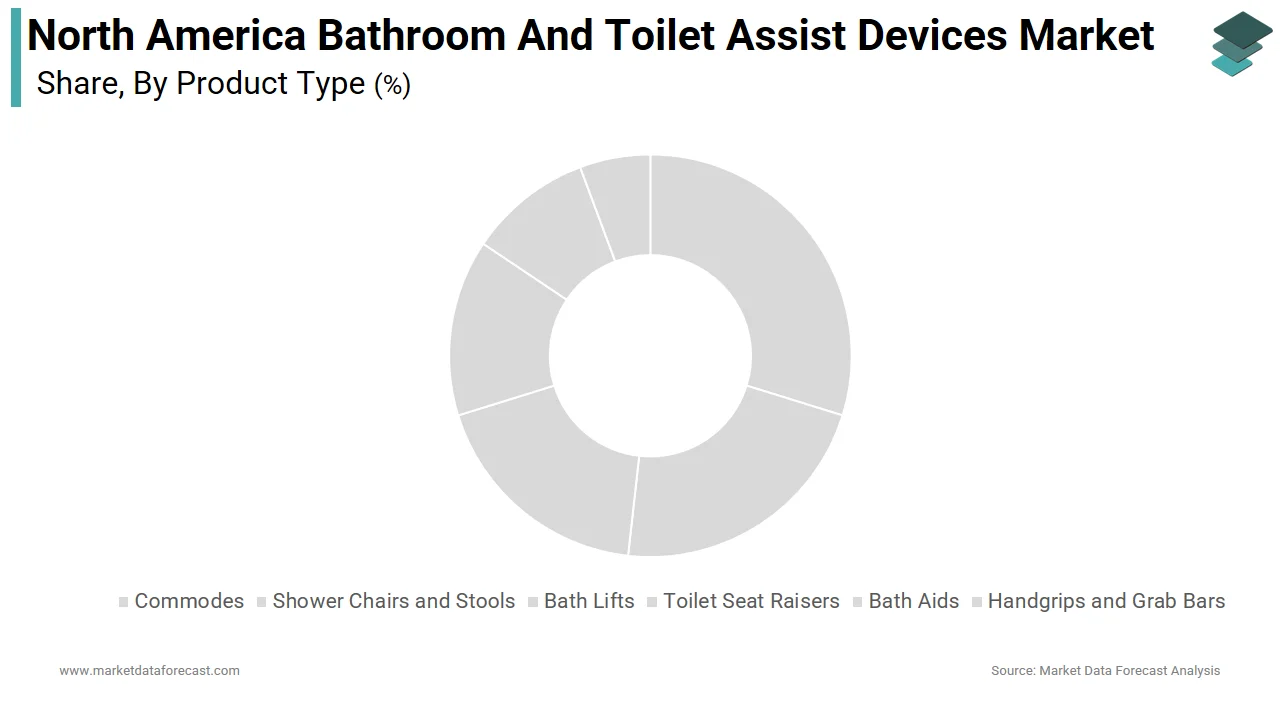
The electric commodes segment is swiftly emerging at the fastest CAGR of 9.4% during the forecast period. The rapid expansion of electric commodes is directly linked to the critical shortage of professional and family caregivers who traditionally assist with toileting transfers and hygiene. This labor deficit forces families to seek automated alternatives that reduce physical strain and dependency on human assistance. Electric commodes with powered height adjustment and tilt functions mitigate these risks by mechanizing the transfer process. The device acts as a force multiplier, allowing a single caregiver to safely manage patients who would otherwise require two people. This efficiency gain makes electric commodes economically rational despite higher upfront costs. Nursing homes and home health agencies increasingly adopt these devices to comply with occupational safety regulations and reduce workers' compensation claims.
COUNTRY LEVEL ANALYSIS
U.S. Bathroom and Toilet Assist Devices Market Analysis
The United States was the top performer in the North America Bathroom and Toilet Assist Devices Market by capturing 85.4% of the share in 2025, with the vast majority of regional revenue due to its massive aging population and advanced reimbursement infrastructure. The country serves as the primary innovation hub where new technologies are first commercialized before expanding to neighboring markets. According to the US Census Bureau, the population aged 65 and older reached 58 million in 2022, representing 17% of the total population and creating substantial baseline demand. The mature distribution network comprising specialized DME suppliers, online retailers, and big-box pharmacies ensures widespread product availability. Private insurance penetration is significantly higher than in Canada, facilitating access to premium electric and smart devices. State-level Medicaid waiver programs provide additional funding streams for low-income seniors, supporting volume sales of basic safety equipment. The litigious nature of US healthcare also drives institutional adoption as facilities invest in safety devices to mitigate liability risks.

Canada Bathroom and Toilet Assist Devices Market Analysis
Canada bathroom and toilet assist devices market was positioned second, holding an 11.2% share in 2025, with publicly funded healthcare dynamics and strong provincial support for aging-in-place initiatives. According to Statistics Canada, the proportion of Canadians aged 65 and older surpassed 19% in 2023, accelerating demand for home safety modifications. As per data from the Canadian Institute for Health Information, public spending on home care services increased by 6.3% annually, reflecting policy prioritization of community-based care over institutionalization. Provincial assistive device programs in Ontario, British Columbia, and Quebec subsidize essential items like grab bars and shower chairs, ensuring equitable access regardless of income. The colder climate influences product preferences, with indoor safety becoming paramount during long winters when outdoor mobility decreases. Bilingual labeling requirements add compliance costs but also create barriers to entry, protecting established domestic distributors.
COMPETITIVE LANDSCAPE
The competition in the North America Bathroom And Toilet Assist Devices Market is characterized by a mix of established global manufacturers and emerging niche players striving to differentiate through innovation and service quality. Large multinational corporations dominate the premium segment with advanced electric and smart devices, leveraging their strong research and development capabilities and extensive distribution networks. Smaller regional companies compete aggressively in the basic safety equipment segment by offering cost-effective alternatives that appeal to price-sensitive consumers and institutional buyers. Price competition remains intense for standard items like grab bars and shower chairs, leading to thin margins and frequent promotional activities. Differentiation increasingly relies on aesthetic design, ease of installation, and integration with smart home ecosystems rather than just functional utility. Regulatory compliance with safety standards serves as a significant barrier to entry, ensuring that only qualified manufacturers can participate. Customer service and after-sales support have become critical competitive factors, as consumers seek guidance on product selection and installation.
KEY MARKET PLAYERS
The leading companies operating in the North America bathroom and toilet assist devices market include:
- ArjoHuntleigh
- Bischoff & Bischoff GmbH
- Etac AB
- DIETZ GmbH
- Medical Depot, Inc. (Drive Medical)
- Handicare
- Hewi Heinrich Wilke GmbH
- Invacare Corporation
- MEYRA GmbH
- Patterson Medical Holdings, Inc.
- Pushchair Medical Limited
- Pride Mobility Products Corp.
- Prism Medical
- RCN Medical and Rehabilitation GmbH
- Drive DeVilbiss Healthcare
- Sunrise Medical (US) LLC.
- Ortho XXI
- K Care Healthcare Equipment
- GF Health Products
- Juvo Solutions
- Spectra Care Group
TOP PLAYERS IN THE MARKET
- Invacare Corporation maintains a robust presence in the North America Bathroom and Toilet Assist Devices Market through its comprehensive portfolio of durable medical equipment and home care solutions. The company actively collaborates with healthcare providers to ensure seamless distribution of grab bars, shower chairs, and commodes across retail and clinical channels. Recently, Invacare expanded its manufacturing capabilities in the United States to reduce lead times and enhance supply chain resilience for critical assistive products. The firm invests heavily in ergonomic design research to create devices that blend functionality with aesthetic appeal for residential settings. Invacare also supports caregiver education programs that promote safe transfer techniques and proper device usage. Its commitment to sustainability involves using recyclable materials in product packaging and manufacturing processes.
- Drive DeVilbiss Healthcare contributes significantly to the market by offering a wide range of affordable and innovative bathroom safety products tailored to diverse consumer needs. The company leverages its extensive distribution network to make essential items like raised toilet seats and bath benches accessible in pharmacies and online platforms. Recently, Drive DeVilbiss launched a new line of premium stainless steel grab bars designed to resist corrosion and support higher weight capacities. The firm engages in digital marketing campaigns targeting family caregivers to raise awareness about fall prevention strategies. Drive DeVilbiss also partners with occupational therapists to validate product efficacy and gather user feedback for continuous improvement. Its focus on modular designs allows for easy installation without professional assistance, appealing to the DIY segment.
- Etac AB plays a pivotal role in the market by introducing advanced ergonomic solutions that prioritize user dignity and independence in bathroom environments. The company specializes in high-end bath lifts and transfer aids that incorporate smart technology for enhanced safety and ease of use. Recently, Etac introduced a new series of electric commodes with integrated hygiene features catering to the growing demand for automated personal care devices. The firm collaborates with architectural firms to integrate accessibility standards into new home construction projects. Etac also provides specialized training for healthcare professionals on selecting appropriate assistive devices for complex patient needs. Its emphasis on Scandinavian design principles results in products that are visually appealing and functionally superior.
TOP STRATEGIES USED BY KEY MARKET PARTICIPANTS
Key players in the North America Bathroom And Toilet Assist Devices Market primarily employ strategies such as product innovation focused on integrating smart technologies and ergonomic designs to enhance user experience and safety. Companies increasingly engage in strategic partnerships with healthcare providers and insurance companies to facilitate reimbursement and improve product accessibility for patients. Expansion of distribution channels through e-commerce platforms allows manufacturers to reach direct consumers effectively, while reducing reliance on traditional brick-and-mortar retailers. Educational initiatives targeting caregivers and medical professionals help drive awareness and proper utilization of assistive devices. Manufacturers also focus on localizing production to mitigate supply chain risks and reduce costs associated with imports. Pricing strategies often include tiered options to cater to both budget-conscious consumers and those seeking premium features.
MARKET SEGMENTATION
This research report on the North America bathroom and toilet assist devices market is segmented and sub-segmented into the following categories.
By Product Type
-
Commodes
-
Electric Commode
- Fixed Commode
- Folding Commode
- Transit Commode
-
- Shower Chairs and Stools
- Bath Lifts
- Fixed Bath Lifts
- Reclining Bath Lifts
- Lying Bath Lifts
- Toilet Seat Raisers
- Bath Aids
- Bath Boards
- Transfer Aids
- Handgrips and Grab Bars
By Country
- United States
- Canada
- Mexico
- Rest of North America