- Product Description Description
- Table of Contents TOC
- List of Table & Figure LOT
- Get Free Sample PDF Sample PDF
Market Size, 2025
$0.54 BnMarket Estimate, 2026
$0.57 BnMarket Forecast, 2034
$0.83 BnCAGR, 2026–2034
4.79%Executive Summary: Europe BCAA Market
- Market Scope: Comprehensive analysis of the European Branched-Chain Amino Acid (BCAA) market, tracking commercial ecosystems centered on leucine, isoleucine, and valine across powders, capsules, ready-to-drink beverages, and clinical medical nutrition (forecast period: 2026-2034).
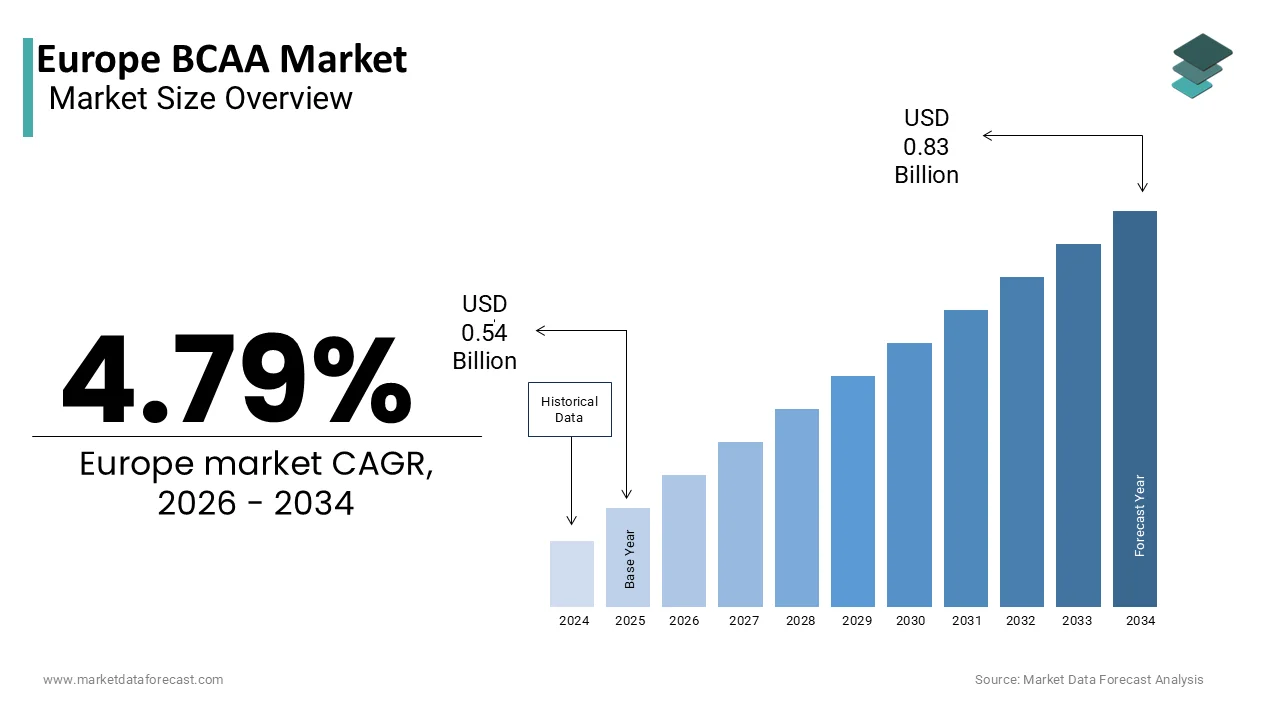
- Market Valuation: Valued at USD 0.54 billion in 2025, estimated to reach USD 0.57 billion in 2026, and projected to expand to USD 0.83 billion by 2034, growing at a steady CAGR of 4.79% from 2026 to 2034.
- Primary Growth Drivers: Rising prevalence of lifestyle-related and age-related muscle wasting conditions (e.g., sarcopenia) driving clinical demand, alongside mainstream fitness and wellness culture integration among non-elite consumers.
Key Market Segment Metrics
| Category | Leading Segment (Base Position) | Fastest-Growing / High-Growth Segment |
|---|---|---|
| By Type | L-Leucine (held 48.2% share in 2025 anchored by its role as the primary mTOR pathway activator initiating muscle protein synthesis) | L-Isoleucine (projected fastest 9.7% CAGR driven by emerging research into metabolic functions, AMPK pathways, and glucose uptake) |
| By Application | Nutraceuticals (largest share in 2025 powered by widespread fitness recovery, muscle preservation, and active aging supplements) | Pharma & Healthcare (projected fastest 11.2% CAGR fueled by clinical validation in managing liver cirrhosis, sarcopenia, and cachexia) |
| By Country / Region | Germany (top performer accounting for 22.3% share in 2025 anchored by a mature sports culture, regulatory clarity, and domestic fermentation leaders) | United Kingdom, France, & Italy (high-growth hubs leveraging commercialized gym ecosystems, pharmacy nutraceuticals, and clinical protocols) |
Major Market Players & Industry Landscape
Market Structure: Highly competitive landscape comprising multinational chemical/fermentation giants, specialized amino acid manufacturers, and agile private-label wellness brands navigating stringent EU health claim regulations.
Key Companies & Leaders: Ajinomoto, Evonik, BASF, Optimum Nutrition, MuscleTech, BSN, Dymatize Nutrition, Myprotein, Bulk™, and ESN.
 Download Free Sample Report
Europe BCAA Market Size
The Europe BCAA market was valued at USD 0.54 billion in 2025, is estimated to reach USD 0.57 billion in 2026, and is projected to reach USD 0.83 billion by 2034, growing at a CAGR of 4.79% from 2026 to 2034.
The BCAA is the commercial ecosystem centered on Branched Chain Amino Acids, specifically leucine, isoleucine,e and valine, which are essential amino acids not synthesized by the human body and must be obtained through dietary intake or supplementation. As per the European Food Safety Authority, BCAAs are classified as safe for consumption within established intake thresholds and are widely permitted in fortified foods and dietary supplements under Regulation (EC) No 1925/2006. The market spans diverse formats, ts including powders, caps, and ready-to-drink beverages, and medical nutrition products distributed through retail, e-commerce,e and clinical channels. According to Eurostat, over 42 million adults in the EU engaged in regular strength training or high-intensity physical activity in 2024, creating sustained demand for performance and recovery aids. Additionally, the European Society for Clinical Nutrition and Metabolism recognizes BCAA supplementation as clinically beneficial in managing sarcopenia and liver cirrhosis, which further anchors its relevance beyond athletic populations.
MARKET DRIVERS
Rising Prevalence of Lifestyle-Related Muscle Wasting Conditions Drives Clinical Demand
The growing burden of age-related and chronic disease-associated muscle loss is significantly expanding the clinical application of BCAAs beyond sports nutrition. Sarcopenia is a condition characterized by progressive loss of skeletal muscle mass and function that affects approximately 13.5% of Europeans aged 65 and older, according to a 2025pan-European study published in the Journal of Cachexia Sarcopenia and Muscle. With the EU’s population aged 65+ projected to reach 98 million by 2030 as per Eurostat, the demand for nutritional interventions to preserve muscle integrity is intensifying. The European Society for Clinical Nutrition and Metabolism recommends BCAA-enriched formulas as part of multimodal therapy for sarcopenia due to leucine’s potent stimulation of the mTOR pathway, which triggers muscle protein synthesis. Furthermore, in patients with hepatic encephalopathy secondary to liver cirrhosis, BCAA supplementation has been shown to improve cognitive function and reduce hospitalization rates as demonstrated in randomized trials conducted by the European Association for the Study of the Liver. National health systems in Germany, France,ce and Italy have begun integrating BCAA-based medical foods into outpatient care protocols by creating a regulated yet expanding channel that complements traditional supplement markets.
Mainstream Integration of Fitness and Wellness Culture Fuels Consumer Adoption
A profound cultural shift toward proactive health management and physical performance optimization has normalized BCAA consumption among non-elite populations, which is additionally propelling the growth of Europe BCAA market. According to the Special Eurobarometer, many on Sport and Physical Activity, where EU citizens now engage in moderate to vigorous physical activity at least once a week, with strength training participation rose between 2020 and 2024. This behavioral trend is amplified by digital fitness platforms such as Freeletics and Nike Training Club, which collectively reached over 25 million European users in 2024, as per data from the survey. These apps routinely recommend intra- or post-workout BCAA supplementation to enhance recovery and reduce perceived muscle soreness. Social media influencers and professional athletes further legitimize usage through content partnerships with nutrition brands in the UK, Germany, and Scandinavia. Unlike earlier eras where amino acid supplements were confined to bodybuilding subcultures, BCAAs are now positioned as everyday wellness aids akin to vitamins, available in flavored powders and convenient single-serve sticks in mainstream supermarkets and pharmacies across the region.
MARKET RESTRAINTS
Stringent Regulatory Classification Limits Product Positioning and Claims
The restrictive regulatory constraints that impede marketing flexibility and innovation are restraining the growth of Europe BCAA market. Under the European Union’s Nutrition and Health Claims Regulation (EC) No 1924/2006, no authorized health claim exists specifically for BCAAs related to muscle growth or exercise recovery. The European Food Safety Authority rejected an industry petition in 2022 requesting a claim for leucine and muscle protein synthesis,s citing insufficient evidence of cause-and-effectct relationship in the general population. Consequently, manufacturers cannot legally state that BCAA products “build muscle” or “enhance recovery” on packaging or advertising, forcing reliance on vague terms like “supports physical performance” or placement within broader protein narratives. This contrasts sharply with markets like the United States, where structure-function claims are permitted. As a result, product differentiation becomes challenging, and consumer education relies heavily on indirect channels, such as influencer content or retailer staff guidance, increasing go to complexity and limiting mainstream adoption among less informed demographics.
Consumer Skepticism Toward Supplement Efficacy and Ingredient Transparency
A growing segment of European consumers exhibits heightened awareness regarding the necessity and purity of isolated amino acid supplements, including BCAAs. This factor is also restricting the growth of Europe BCAA market. According to a 2025consumer survey by the European Consumer Organisation, 47% of respondents believe that adequate protein intake from whole foods renders BCAA supplementation redundant. This perception is reinforced by public health messaging from bodies like the German Nutrition Society, which emphasizes balanced diets over isolated nutrient fortification. Additionally, concerns about ingredient sourcing and manufacturing practices persist, where a 2023 investigation by the French Directorate General for Competition Policy,cy Consumer Affairs, and Fraud Control found that 12% of tested BCAA products contained undeclared fillers or inaccurate amino acid concentrations. Such incidents erode trust and amplify demand for third-party certifications like Informed Sport or NSF Certified for Sport, which only a minority of brands carry due to cost and administrative burden. Without transparent labeling and verifiable quality assurances, many health-conscious consumers opt for whole food protein sources or complete protein powders instead of standalone BCAAs.
MARKET OPPORTUNITIES
Expansion into Medical Nutrition and Hospital Formulations Presents High-Value Pathways
The integration of BCAAs into clinical nutrition protocols offers a significant opportunity to diversify beyond the saturated sports supplement aisle. In Europe, malnutrition affects up to 30% of hospitalized patients as documented by the European Society for Clinical Nutrition and Metabolism, leading to prolonged recovery times and increased healthcare costs. BCAA-enriched enteral and oral nutritional supplements are increasingly prescribed in prehabilitation programs before major surgeries to preserve lean body mass. For instance, the UK’s National Health Service piloted a perioperative nutrition bundle in 2025across 15 hospitals that included BCAA fortified drinks, resulting in a 22% reduction in postoperative complications among elderly patients undergoing hip replacement. Similarly, specialized BCAA formulas are used in oncology settings to counteract cancer cachexia, a wasting syndrome affecting nearly 80% of advanced cancer patients according to the European Palliative Care Research Collaborative. These clinical applications command premium pricing, face less price competition, and benefit from reimbursement mechanisms in countries like Germany and the Netherlands, creating a resilient and growing segment insulated from retail market volatility.
Development of Clean Label and Plant-Based BCAA Innovations Attracts Ethical Consumers
The emergence offermentation-derivedd and plant-based BCAAs addresses a gap, where clean label and sustainability preferences are intensifying, and is additionally prompting new opportunities for the growth of Europe BCAA market. Traditionally, BCAAs were produced via chemical synthesis or extracted from animal keratin, conflicting with vegan and eco-conscious values held by 34% of European supplement users, as per a 2025survey. In response, companies like Evonik and Ajinomoto have commercialized microbial fermentation processes using non-GMO corn or sugarcane feedstocks to produce vegan certified leucine, isoleucine,e and valine. These bio-based BCAAs carry a lower carbon footprint compared to petrochemical routes, according to lifecycle assessments published by the Fraunhofer Institute. Brands, such as Myvegan and Form Nutrition, have launched full-plant-based BCAA products featuring these ingredients, packaged in compostable materials and marketed with full traceability. This alignment with the EU Green Deal and Farm to Fork Strategy not only attracts ethically driven consumers but also qualifies products for inclusion in sustainable retail programs like those operated by E.Leclerc in France and dm drogerie in Germany.
MARKET CHALLENGES
Price Volatility of Raw Materials Threatens Margin Stability
The fluctuating costs of key raw materials used in amino acid production, particularly feedstocks like corn, glucose,e and soy derivatives is major challenge for the growth of Europe BCAA market. According to the European Commission’s Agricultural Market Observatory, the price of industrial-grade glucose syrup with a primary substrate in microbial fermentation increased by 28% between January 2023 and December 2025due to drought-induced crop shortages in Southern Europe and export restrictions from major suppliers. Since BCAAs are commodity-like ingredients with limited differentiation, manufacturers struggle to pass these cost increases to price-sensitive consumers without risking volume loss. Smaller brands operating on thin margins are especially vulnerable. A 2025 survey by the European Specialist Sports Nutrition Association found that independent supplement companies reduced BCAA product lines in 2025due to unsustainable input costs. While large players hedge through long term contracts, the lack of diversified production pathways and reliance on a narrow set of agricultural inputs leaves the entire supply chain exposed to climate and trade policy shocks.
Intensifying Competition from Complete Protein and Alternative Recovery Ingredients
BCAA products are increasingly challenged by the rising popularity of complete protein sources and novel recovery compounds that offer broader nutritional benefits, which is also degrading the growth of Europe BCAA market. Whey protein isolate sales in Europe grew by 14% in 2024, according to the International Dairy Federation, as consumers recognize thathigh-qualityy proteins naturally contain optimal BCAA ratios, rendering standalone supplementation redundant for many. Additionally, emerging ingredients like tart cherry extract,omega-3 3 fatty acids, and creatine monohydrate are gaining scientific backing for reducing inflammation and accelerating recovery, often at comparable price points. A 2025meta-analysis in the British Journal of Sports Medicine concluded that tart cherry juice significantly reduced muscle soreness markers more effectively than BCAAs alone. Retailers like Holland & Barrett and Decathlon have responded by reallocating shelf space toward these multifunctional alternatives, pressuring BCAA brands to reformulate or justify their niche.
SEGMENTAL ANALYSIS
By Type Insights
The L-Leucine segment was accounted in holding 48.2% of the Europe BCAA market share in 2025with its unique role as the primary activator of the mTOR signaling pathway, which directly initiates muscle protein synthesis, a mechanism not equally shared by valine or isoleucine. Scientific consensus, including a 2023 review published in the journal Nutrients, confirms that leucine thresholds of 2 to 3 grams per meal are necessary to maximally stimulate anabolic responses in adults. Consequently, supplement formulators prioritize leucine in ratios, such as 2:1:1 or 4:1:1 (leucine to isoleucine and valine) to optimize efficacy. The European Food Safety Authority acknowledges leucine’s physiological significance in maintaining muscle mass during aging, further legitimizing its use in clinical and geriatric nutrition. Major manufacturers like Evonik and Ajinomoto have expanded leucine fermentation capacity in Germany and the Netherlands to meet rising demand from sports and medical nutrition sectors.
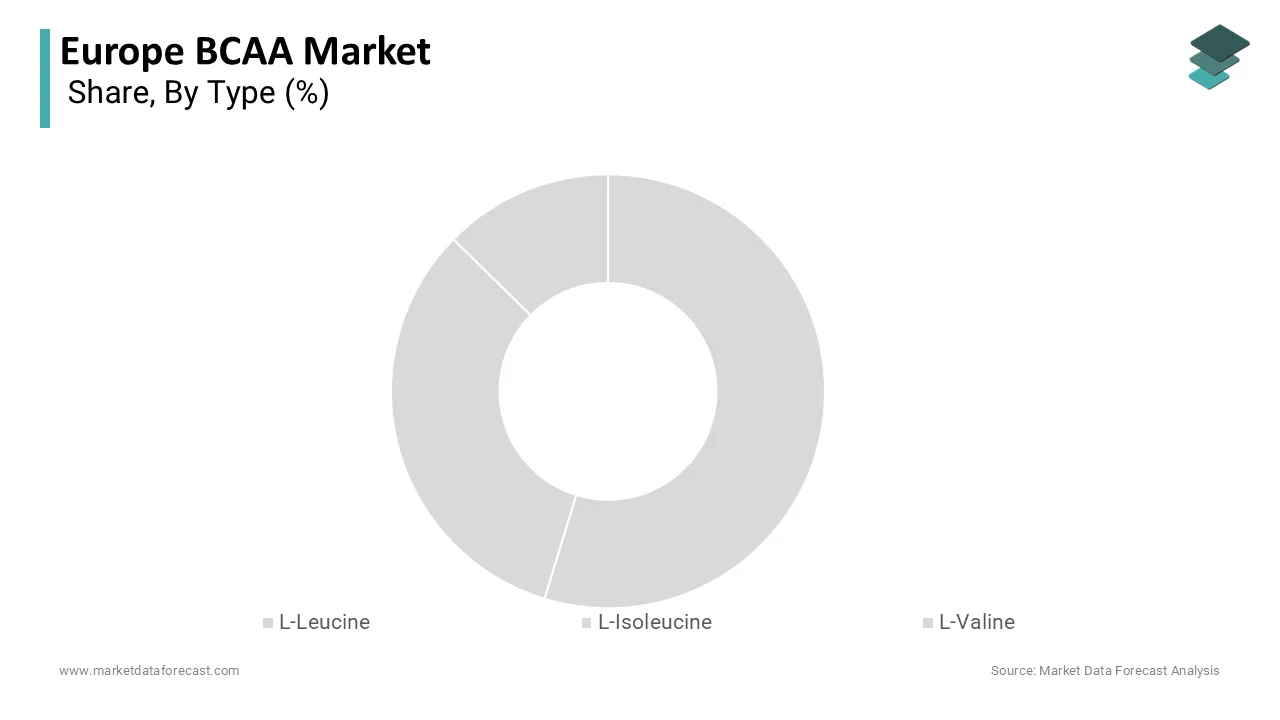
The L-Isoleucine segment is anticipated to witness the fastest CAGR of 9.7% from 2025 to 2033, owing to the emerging research with its distinct metabolic functions beyond muscle repair. A 2025study in the Journal of the International Society of Sports Nutrition demonstrated that isoleucine enhances glucose uptake in skeletal muscle during exercise by activating AMPK pathways independent of insulin, making it valuable for endurance athletes and individuals managing metabolic health. Additionally, isoleucine is increasingly incorporated into specialized medical foods for patients with maple syrup urine disease requiring precise amino acid balancing. Regulatory approvals under the EU’s Novel Foods framework have enabled its inclusion in functional beverages targeting blood sugar management. Companies like BASF and Kyowa Hakko Bio have launched high-purity isoleucine grades compliant with EU pharmacopeia standards, supporting their adoption in premium nutraceutical formulations across Germany, France, and Scandinavia.
By Application Insights
The nutraceuticals segment was the largest by holding a prominent share of the Europe BCAA market in 2025owing to the widespread integration of BCAAs into dietary supplements targeting fitness recovery,y muscle preservation, and active aging. Over 18000 branded supplement products containing BCAAs are currently listed in the EU’s Cosmetic and Supplement Notification Portal, with the majority positioned as powders, capsules, or ready-to-drink recovery drinks. The segment benefits from strong consumer self-procurement behavior in countries like the UK, Germany, and Sweden, where over 35% of adults regularly use sports or wellness supplements, according to Eurostat’s 2025health survey. Unlike pharmaceuticals, nutraceuticals operate under the EU’s Food Supplements Directive, which permits ingredient inclusion without pre-market drug approval by enabling rapid innovation and brand proliferation. Retail expansion through e-commerce and specialty health stores has further cemented this channel as the primary route for BCAA delivery.
The Pharma & Healthcare application segment is projected to register the fastest CAGR of 11.2% throughout the forecast period. The growth of the segment is driven by the expanding clinical validation of BCAAs in managing chronic conditions such as liver cirrhosis, sarcopenia, and cancer cachexia. In 2024, the German Federal Joint Committee added BCAA-enriched oral nutritional supplements to its reimbursable list for outpatient treatment of hepatic encephalopathy. Similarly, the UK’s National Institute for Health and Care Excellence updated its frailty guidelines to recommend BCAA-fortified medical foods for elderly patients at risk of falls due to muscle weakness. Hospitals across France, Italy, and the Netherlands now routinely prescribe BBCAA-basedenteral formulas in prehabilitation protocols before major surgeries. These institutional adoptions create stable, high-value demand insulated from retail price competition and supported by healthcare reimbursement systems, which marks a strategic shift from lifestyle to therapeutic positioning.
COUNTRY LEVEL ANALYSIS
Germany BCAA Market Analysis
Germany was the top performer of the Europe BCAA market by accounting for 22.3% of the share in 2025owing to a mature sports nutrition culture, strong regulatory clarity,y, and advanced manufacturing infrastructure. Over 14 million Germans engage in regular strength training, as per the Federal Ministry of Health’s 2025Physical ActivityReporto,r t by creating consistent demand for recovery supplements. The country hosts major BCAA producers, including Evonik and BAS, F, whose fermentation facilities in Marl and Ludwigshafen supply both domestand Europe countries. Germany’s strict adherence to the EU Food Supplements Directive ensures high product quality while discouraging misleading claims and fostering consumer trust. Additionally, statutory health insurance pilot programs in Bavaria and North Rhine-Westphalia now cover BCAA-based medical foods for sarcopenic elderly patients, bridging the gap between wellness and clinical use.
United Kingdom BCAA Market Analysis
The United Kingdom BCAA market was ranked second by holding 18.2% of the share in 2025with a highly commercialized fitness ecosystem and liberal supplement regulations. Its status reflects deep integration of performance nutrition into mainstream health culture, with over 10 million gym memberships recorded in 2025by ukactive. The UK remains unique in Europe for permitting structure-function claims on supplements under regulations administered by the Food Standards Agency, allowing brands to communicate benefits like “supports muscle recovery” more directly than in EU member states. This regulatory advantage has attracted global sports nutrition brands to establish European headquarters in London and Manchester.
France BCAA Market Analysis
France'sce BCAA market growth is propelling with the distinctive emphasis on medical and aesthetic applications. According to the French Agency for Food, Environmental and Occupational Health & Safety, much BCAA consumption occurs through pharmacy-exclusive nutraceuticals rather than general retail. The country’s anti-doping agency requires all sports supplements to undergo voluntary certification through the AFNOR Sport label, which has become a de facto standard for quality assurance. The French Ministry of Health launched a national sarcopenia screening program in retirement homes, recommending BCAA-enriched nutritional interventions for at-risk individuals. This institutional endorsement has elevated BCAAs from athletic aids to public health tools, differentiating France’s trajectory from more commercially driven markets.
Italy BCAA Market Analysis
Italy's BCAA market growth is propelled by the regional disparities and growing clinical adoption. Its market status combines traditional Mediterranean dietary awareness toward supplements with rising demand in northern industrial regions. Data from the Italian National Institute of Statistics shows that supplement usage among adults aged 18 to 45 increased by 27% between 2020 and 2024, concentrated in Lombardy and Emilia Romagna. The Italian Medicines Agency classifies high-dose BCAA products as “parafarmaci” requiring pharmacist oversight by ensuring professional guidance but limiting impulse purchases. However, this also builds credibility; hospitals in Milan and Turin now integrate BCAA protocols into oncology and geriatric units. The Italian Olympic Committee mandates BCAA supplementation for national athletes, reinforcing elite endorsement.
Spain BCAA Market Analysis
Spain's BCAA market growth is fueled by the youth engagement and digital fitness trends. The growth of the market in this country is likely to grow with the rapid e-commerce adoption and influencer-driven consumption patterns. The country’s warm climate and outdoor activity culture support year-round training, sustaining demand beyond seasonal peaks. Spain’s National Health System does not reimburse BCAA products, but private health insurers like Adeslas now include sports nutrition allowances in premium plans. Universities in Barcelona and Madrid have launched research initiatives on BCAAs and metabolic health, enhancing scientific legitimacy.
COMPETITIVE LANDSCAPE
The Europe BCAA market features intense competition among multinational chemical producers, specialized amino acid manufacturers,s and agile private label supplement brands. Incumbents like Ajinomoto Evonik and BASF compete on purity, ty regulatory compliance,nce and sustainability credentials rather than price alone. Their dominance stems from decades of fermentation expertise,tise pharmaceutical grade certifications, and established relationships with large formulators. However, they face pressure from smaller nutraceutical companies that bundle BCAAs with novel ingredients like adaptogens or collagen to differentiate offerings. Regulatory constraints under the EU Health Claims Regulation limit marketing flexibility, forcing innovation in delivery formats such as effervescent tablets or ready-to-drink beverages. Competition is further shaped by channel dynamics, with pharmacies e commerce and gyms each demanding distinct product profiles.
KEY MARKET PLAYERS
Some of the companies that are playing a dominating role in the global Europe BCAA (Branched-Chain Amino Acids) Market include
- Optimum Nutrition
- MuscleTech (Iovate Health Sciences)
- BSN (Bio-Engineered Supplements and Nutrition, Inc.)
- Scivation (MusclePharm brand)
- Dymatize Nutrition
- BPI Sports
- Cellucor (Kronos Advanced Technologies)
- Nutrex Research, Inc.
- Universal Nutrition
- Now Sports (Now Foods)
- AllMax Nutrition
- RSP Nutrition
- Kaged Muscle
- Grenade Ltd.
- Myprotein (The Hut Group)
- Bulk™ (Bulk Powders)
- ESN (Elite Sports Nutrients)
- SAN Nutrition
- FITNESS FOOD®
- Rule 1 Proteins
TOP LEADING PLAYERS IN THE MARKET
- Ajinomoto is a Japanese multinational with a formidable presence in the European BCAA market through its high-purity amino acid production and scientific credibility. The company supplies L leucine L isoleucine and L-valine to leading sports nutrition and pharmaceutical brands across the continent. Globally, Ajinomoto dominates amino acid fermentation technology and sets industry benchmarks for quality and sustainability. In recent years, it has strengthened its European position by expanding its regulatory affairs team in Brussels to align with EFSA guidelines and by launching vegan-certified BCAA grades produced from non-GMO sugarcane feedstock. It also collaborates with European universities on clinical studies validating BCAA efficacy in muscle health and metabolic support.
- Evonik, a German specialty chemicals leader,r is a key vertically integrated player in theEuropeane BCAA market, producing all three branched chain amino acids at its fermentation facilities in Germany and Slovakia. The company contributes significantly to global supply chains by providing pharmaceutical-grade and food-grade BCAAs to formulators worldwide. It recently introduced a carbon-neutral BCAA portfolio powered by renewable energy and green hydrogen, aligning with EU Green Deal objectives and appealing to eco-conscious brand owners across Western Europe.
- BAS, F a global chemical giant, leverages its extensive nutrition and bioscience division to serve theEuropeane BCAA market with science-backed amino acid solutions. The company integrates BCAAs into broader health platforms, including medical nutrition and active aging formulations distributed through pharmacies and clinical channels. BASF’s global footprint enables it to supply consistent quality across continents while its European R&D center in Ludwigshafen focuses on delivery systems that enhance bioavailability and stability. Recently, BASF partnered with major European supplement brands to co-develop clean-label BCAA products free from artificial additives, supporting the region’s shift toward transparent ingredient labeling.
TOP STRATEGIES USED BY THE KEY MARKET PARTICIPANTS
Key players in theEuropeane BCAA market are prioritizing clean label and sustainability by shifting to fermentation-based production using non-GMO plant feedstocks and renewable energy. They are investing in clinical research to substantiate health claims and gain regulatory acceptance, especially in medical and geriatric nutrition segments. Vertical integration from raw material sourcing to finished formulation ensures quality control and cost stability amid volatile input prices. Companies are also enhancing digital traceability to meet rising consumer demand for transparency in origin and manufacturing practices. Additionally, strategic partnerships with sports organizations, health providers, rs and e-commerce platforms help expand reach and build credibility beyond traditional retail channels.
MARKET SEGMENTATION
This research report on the europe bcaa market is segmented and sub-segmented into the following categories.
By Type
- L-Leucine
- L-Isoleucine
- L-Valine
By Application
- Nutraceuticals
- Pharma & Healthcare
- Functional Foods & Beverages
- Sports Nutrition
- Animal Nutrition
- Others
By Country
- Germany
- United Kingdom
- France
- Italy
- Spain
- Netherlands
- Sweden
- Rest of Europe