- Product Description Description
- Table of Contents TOC
- List of Table & Figure LOT
- Get Free Sample PDF Sample PDF
Market Size, 2025
$1.51 BnMarket Estimate, 2026
$1.59 BnMarket Forecast, 2034
$2.42 BnCAGR, 2026–2034
5.37%Executive Summary: Europe Beet Sugar Market
- Market Scope: Comprehensive European beet sugar industry analysis covering product segments, livestock applications, country leadership frameworks, strategic corporate developments, and competitive landscapes.
- Market Valuation: Valued at USD 1.51 billion (2025), estimated at USD 1.59 billion (2026), and projected to reach USD 2.42 billion by 2034, registering a steady CAGR of 6.2% (2026–2034).
- Primary Growth Drivers: Rising demand for high-quality animal nutrition, expansion of aquaculture and poultry industries, renewable energy integration into production facilities, and AI-driven predictive management systems for energy efficiency. Restraints include regulatory fragmentation and critical raw material supply chain volatility.
Key Market Segment Metrics (2026–2034)
| Category | Leading Segment / Country (Position) | Fastest-Growing Segment |
|---|---|---|
| By Product / Type | Monocalcium phosphate (dominated product segment with a 40.1% share in 2025 due to high bioavailability) | Defluorinated phosphate (fastest-growing type at a CAGR of 6.2%) |
| By Application / Livestock | Poultry (accounted for 35.4% of livestock demand in 2025) | Aquaculture (anticipated to expand at a CAGR of 7.5%) |
| By Region / Country | Germany (led regional market with a 22.3% share in 2025, followed by France at 16.2%) | European agricultural and processing sectors advancing energy-efficient digital operations |
Major Market Players & Market Structure
Market Structure: Highly competitive European agricultural processing ecosystem driven by sustainable production initiatives, intelligent power integrations, renewable energy adoption, and optimized supply chain frameworks.
Key Companies: Mosiac, Nutrien Ltd, OCP, Rotem, Eurochem Group, Phosagro, Fosfitalia Group, Phosphea, YARA, and J. R. Simplot Company.
Europe Beet Sugar Market Size
The size of the European beet sugar market was expected to be worth USD 1.51 billion in 2025 and is anticipated to be worth USD 2.42 billion by 2034, from USD 1.59 billion in 2026, growing at a CAGR of 5.37% during the forecast period.
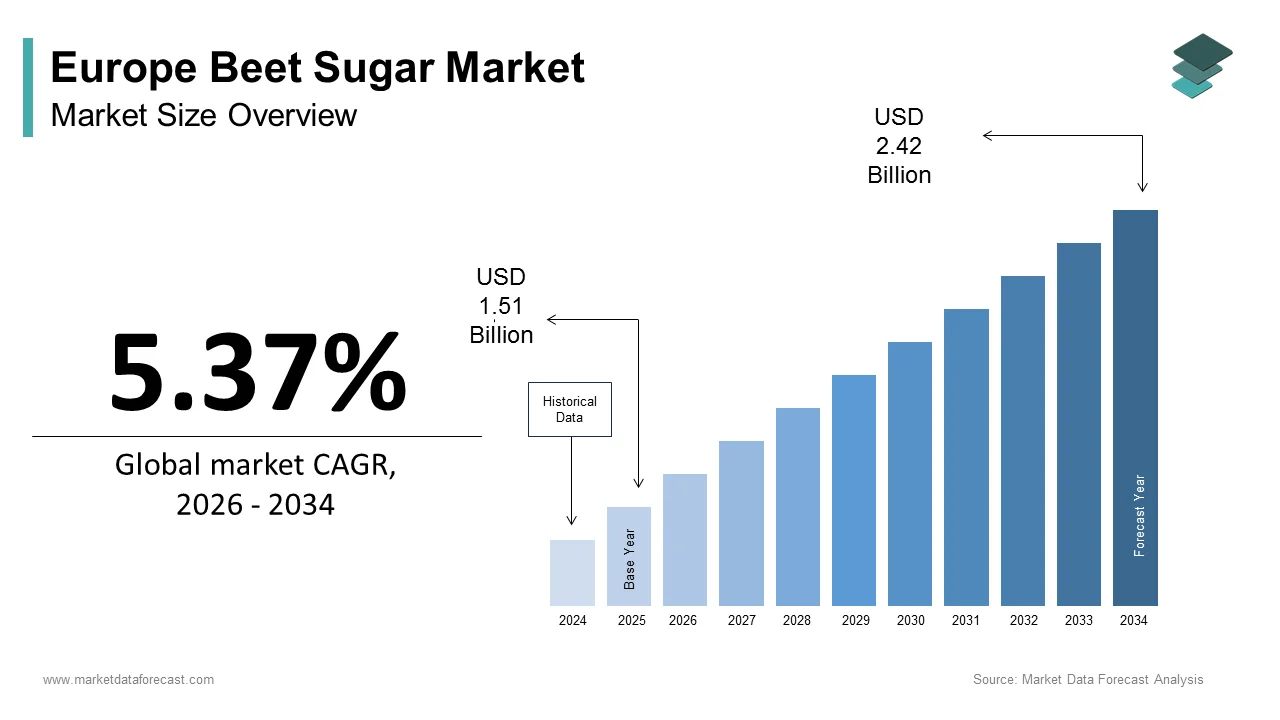
Beet sugar is a type of refined sugar derived from the sugar beet (Beta vulgaris), a root vegetable that thrives in cooler, temperate climates. This market is defined by a complex regulatory framework established under the Common Agricultural Policy, which governs planting quotas, pricing mechanisms, and environmental standards for over one hundred thousand farms across the continent. According to research, sugar beet cultivation in the European Union, concentrated heavily in France, Germany, and Poland, utilizes a significant portion of arable land as a vital rotational crop that supports soil health, with area totals fluctuating based on market prices and weather conditions. The European Union is a leading producer of beet sugar, with production levels, while significant, generally falling below the stated threshold, with output primarily serving internal consumption and varied export needs. Moreover, the definition extends beyond mere commodity production to include the generation of valuable by-products such as molasses for animal feed and bioethanol, creating an integrated biorefinery model. The sector operates on a campaign basis, typically running from September to January, requiring massive logistical coordination to process perishable roots before quality degradation occurs. This unique temporal dynamic differentiates it from year-round cane sugar operations, necessitating sophisticated storage and inventory management strategies to ensure supply stability throughout the non-campaign months while adhering to strict European Union food safety and sustainability mandates.
MARKET DRIVERS
Strategic Imperative for Regional Food Security and Supply Sovereignty
The strategic imperative for regional food security and supply sovereignty is a major growth force for the Europe beet sugar market. This drives the effort to sustain and expand beet sugar production capacity across the region. Following recent geopolitical disruptions that exposed vulnerabilities in global supply chains, European policymakers and agribusiness leaders have prioritized domestic self-sufficiency in staple commodities to mitigate reliance on imports. As per sources, the strategic autonomy of the European food system has become a central pillar of agricultural policy, with sugar identified as a critical component due to its ubiquitous role in food manufacturing and preservation. Increased volatility in global cane markets and logistics bottlenecks have highlighted the strategic importance of domestic sugar production for maintaining food security. Regions maintaining strong domestic production capabilities, often supported by policy, generally exhibit higher immunity to global supply shortages and price volatility. Consequently, member states are incentivizing farmers to maintain or increase beet acreage through targeted support measures and guaranteed minimum pricing structures. This shift in focus from pure market liberalization to security-oriented production ensures stable demand for beet sugar processors, who are viewed as essential infrastructure for national food stability. The political will to protect this sector translates into consistent investment in processing facilities and research, driving market activity independent of short-term price fluctuations.
Integrated Biorefinery Models and Circular Economy Applications
The adoption of integrated biorefinery models and circular economy applications acts as a significant driver of the Europe beet sugar market. This transition transforms sugar beet processing plants into multi-output hubs that maximize resource efficiency and revenue streams. Modern European beet sugar factories no longer function solely as sucrose extractors but operate as sophisticated biorefineries that convert every part of the root into valuable products, including bioethanol, animal feed, and biochemicals. The adoption of agricultural feedstocks for bioplastic production is increasing as European industries seek to align with decarbonization goals, though regulatory frameworks currently prioritize circularity and recycling over mandatory bio-based material quotas. The generation of pulp and molasses as high-quality livestock feed supports the extensive European dairy and meat sectors, creating a symbiotic relationship that stabilizes farmer income. European sugar beet processing has achieved a high level of resource efficiency where almost the entire crop is converted into valuable products or energy, reflecting the industry's shift toward a circular bioeconomy. This diversification allows processors to offset fluctuations in sugar prices with revenue from energy and feed markets, enhancing overall economic viability. Furthermore, the production of bioethanol from surplus sugar or molasses contributes to renewable energy targets, providing an additional outlet for production capacity. This holistic approach elevates the strategic importance of beet sugar facilities, driving investment in technology upgrades and capacity expansion to capture value from emerging green markets.
MARKET RESTRAINTS
Extreme Vulnerability to Climate Variability and Weather Shocks
Extreme vulnerability to climate variability and weather shocks acts as a formidable restraint on the consistency and yield potential of the Europe beet sugar market. This volatility directly threatens supply stability. Sugar beets are highly sensitive to specific climatic conditions during their growth cycle, requiring adequate rainfall in summer and dry conditions during harvest, patterns that are becoming increasingly erratic due to climate change. As per the European Environment Agency, the frequency of extreme weather events such as prolonged droughts, heatwaves, and unseasonal flooding has intensified across major growing regions like France and Germany, leading to significant yield volatility. For instance, lack of rainfall during the peak growing season has led to a noticeable decline in the quantity of crops harvested, which in turn limits the operational duration of processing facilities and reduces the overall supply of refined products. The spread of pest populations, such as the beet leaf curling virus transmitted by aphids, thrives in warmer winters, further compounding crop losses and necessitating costly mitigation measures that are often restricted by pesticide bans. A study indicates that the growing season is shifting, disrupting the traditional campaign schedule and complicating logistics for harvesting and transport. These environmental uncertainties make long-term planning difficult for both farmers and processors, who face the risk of substantial financial losses due to factors entirely outside their control. The inability to guarantee consistent volumes discourages some stakeholders from expanding acreage, thereby capping the market's growth potential despite strong demand.
Stringent Environmental Regulations and Pesticide Restrictions
Stringent environmental regulations and aggressive pesticide restrictions present a significant operational barrier for beet sugar producers within the Europe beet sugar market. These factors increase production costs and complicate crop protection strategies. The European Union has implemented some of the world's toughest limits on agrochemical usage, notably the ban on neonicotinoid seed treatments, which were previously essential for controlling viral yellows disease in sugar beets. As per sources, the prohibition of these chemicals was driven by concerns over pollinator health, yet it has left farmers with few effective alternatives, leading to increased crop susceptibility and lower yields. Regulatory initiatives in the EU are driving a significant reduction in chemical pesticide usage, which necessitates that farmers increase their reliance on alternative crop protection methods and integrated pest management practices. The shift towards reduced pesticide reliance is placing upward pressure on production costs, as farmers are forced to invest in new technologies and methods to maintain yields, leading to tighter profit margins. Additionally, strict limits on nitrogen fertilizer application to prevent water pollution constrain the nutrient input necessary for maximizing root weight and sugar content. The regulatory landscape creates a fragmented environment where rules can vary slightly between member states, adding complexity to cross-border operations. These constraints force a delicate balance between environmental stewardship and economic viability, often resulting in reduced planted areas or lower productivity that restrains overall market output.
MARKET OPPORTUNITIES
Expansion into High Value Specialty Sugars and Functional Ingredients
The expansion into high-value specialty sugars and functional ingredients offers a transformative opportunity for the European beet sugar market. This shift allows the industry to diversify revenue streams and capture premium market segments. Moving beyond standard white crystal sugar, processors can leverage advanced refining technologies to produce organic, non-GMO, and specific particle size sugars tailored for the confectionery, bakery, and beverage industries. As per sources, consumer demand for clean-label and sustainably sourced ingredients is driving growth in niche categories where beet sugar holds a competitive advantage due to its non-GMO status and local origin traceability. The development of liquid sugars, fondant sugars, and isotonic sugar blends offers manufacturers convenient solutions that reduce processing steps for food producers, creating sticky customer relationships. Research indicates that the functional food sector is expanding rapidly, with opportunities for beet-derived oligosaccharides and prebiotics that support gut health, adding a nutritional dimension to the product portfolio. Furthermore, the rise of craft food and beverage brands in Europe favors locally sourced sweeteners with a lower carbon footprint compared to imported cane sugar. By investing in flexible production lines capable of switching between standard and specialty grades, beet sugar companies can command higher margins and insulate themselves from the volatility of commodity pricing. This shift toward value-added differentiation aligns with broader consumer trends favoring transparency and quality, opening new avenues for growth in a mature market.
Utilization of Beet Pulp and Molasses for Renewable Energy and Bio-materials
The utilization of beet pulp and molasses for renewable energy and bio-materials opens up major possibilities to enhance sustainability credentials and generate auxiliary income streams for the beet sugar sector. This is expected to propel the expansion of the Europe beet sugar market. The European Union is accelerating its transition away from fossil fuels. As a result, the potential for converting sugar beet by-products into biogas, bioethanol, and biochemical feedstocks is becoming increasingly economically viable. The European sugar industry is increasingly adopting anaerobic digestion of waste streams to generate renewable energy, enhancing operational efficiency and reducing reliance on fossil fuels. The production of bioethanol from molasses serves as a critical component in the transport fuel mix, supported by mandatory blending quotas that ensure steady demand. Data from the Joint Research Centre of the European Commission highlights the potential for beet-derived platform chemicals to replace petroleum-based inputs in the production of bioplastics and solvents, tapping into the growing bio-economy. Investing in the co-location of biorefineries allows sugar producers to capture value from waste streams that were previously sold at low margins for animal feed. This circular approach not only improves the overall economics of beet processing but also strengthens the sector's alignment with the European Green Deal, attracting green financing and partnerships. Beet sugar producers can future-proof their businesses against commodity cycles by positioning themselves as key players in the renewable energy and bio-material value chains. This strategic shift allows them to diversify their revenue streams.
MARKET CHALLENGES
Labor Shortages and Mechanization Gaps in Harvesting Operations
Labor shortages and gaps in full mechanization during harvesting operations pose a persistent challenge to the efficiency and cost structure of the Europe beet sugar market. Planting and maintenance have become highly automated. However, the harvest period still faces bottlenecks due to a scarcity of skilled machinery operators and the limitations of current technology in adverse weather. As per sources, European agricultural employment is experiencing a significant long-term decline in the total workforce, driven by an aging demographic and difficulty attracting younger workers to the sector, resulting in persistent labor shortages during peak harvest times. This shortage forces some farms to delay harvesting, which exposes the crops to frost damage and sugar loss, directly impacting the quality and quantity of the final product. The reliance on seasonal migrant labor, which has become less reliable due to changing immigration policies and geopolitical factors, exacerbates the instability of the harvest workforce. Research indicates that delays in lifting beets can result in significant post-harvest losses, undermining the economic viability of the crop for many growers. Furthermore, the high cost of acquiring and maintaining advanced self-propelled harvesters creates a barrier for smaller farms, leading to inefficiencies in the supply chain. Addressing this human capital crisis requires substantial investment in robotics and autonomous harvesting solutions, yet the pace of technological adoption remains uneven, leaving the sector vulnerable to operational disruptions that threaten supply continuity.
Intense Competition from Alternative Sweeteners and Health Trends
Intense competition from alternative sweeteners and shifting consumer health trends are a formidable challenge to the long-term demand trajectory of the Europe beet sugar market. Growing public awareness of the health risks associated with excessive sugar consumption, including obesity and type 2 diabetes, has prompted consumers and food manufacturers to seek low-calorie and non-caloric substitutes. As per sources, recommendations to reduce free sugar intake to less than ten percent of total energy consumption are influencing national dietary guidelines and reformulation strategies across the food and beverage industry. This pressure has accelerated the adoption of high-intensity sweeteners like stevia, sucralose, and aspartame, as well as natural alternatives such as honey and fruit concentrates, which are increasingly replacing beet sugar in processed foods and soft drinks. Studies show a consistent decline in per capita sugar consumption in several Western European markets as health-conscious behaviors take hold. The implementation of sugar taxes in countries like the United Kingdom, France, and Portugal further disincentivizes the use of caloric sweeteners, forcing manufacturers to reformulate products to avoid levies. This structural shift in demand challenges beet sugar producers to defend their market share, requiring them to invest in marketing campaigns that emphasize the natural origin of beet sugar while simultaneously diversifying into healthier product variants. The relentless advance of the wellness movement threatens to erode the core volume base of the industry, necessitating a strategic pivot to remain relevant in a changing nutritional landscape.
REPORT COVERAGE
| REPORT METRIC | DETAILS |
| Market Size Available | 2025 to 2034 |
| Base Year | 2025 |
| Forecast Period | 2026 to 2034 |
| CAGR | 5.37% |
| Segments Covered | By Application, Function, Structure, And Region |
| Various Analyses Covered | Global, Regional & Country Level Analysis; Segment-Level Analysis; DROC, PESTLE Analysis; Porter’s Five Forces Analysis; Competitive Landscape; Analyst Overview of Investment Opportunities |
| Regions Covered | UK, France, Spain, Germany, Italy, Russia, Sweden, Denmark, Switzerland, Netherlands, Turkey, and the Czech Republic |
| Market Leaders Profiled | Michigan Sugar Company, Agrana Zucker Gmbh, Southern Minnesota Beet Sugar Cooperative, Amalgamated Sugar Company, LLC, Tereos, Rana Sugar Ltd, British Sugar Plc, Nippon Beet Sugar Manufacturing Co., Ltd, Nordic Sugar A/S, and American Crystal Sugar Company |
SEGMENTAL ANALYSIS
By Application Insights
The confectionery segment held the majority share 35.7% of the Europe beet sugar market in 2025. The supremacy of the segment is attributed to the intrinsic reliance of chocolate, candy, and gum manufacturers on sucrose not just for sweetness but for its critical functional properties such as texture formation, crystallization control, and preservation. Apart from these, the leading driving factor is the deep-rooted cultural tradition of confectionery consumption across Europe, particularly in nations like Germany, Switzerland, and Belgium, where chocolate making is a heritage industry requiring specific sugar profiles that beet sugar provides reliably. As per the European Association of Chocolate, Biscuit and Confectionery Industries, the sector generates tens of billions of euros in annual revenue, with sugar remaining the primary ingredient by weight in most product formulations. The unique ability of beet sugar to create stable amorphous structures in hard candies and smooth textures in fondants makes it irreplaceable by many alternative sweeteners in premium products. Sources indicate that per capita confectionery consumption in Europe remains among the highest globally, sustaining a steady baseline demand despite health trends. Furthermore, the seasonal peaks associated with holidays like Christmas and Easter drive massive bulk purchasing by industrial confectioners who prefer the supply security of domestic beet sugar over imported cane varieties. This combination of technical necessity, cultural habit, and industrial scale secures the confectionery segment as the primary consumer of beet sugar in the region.
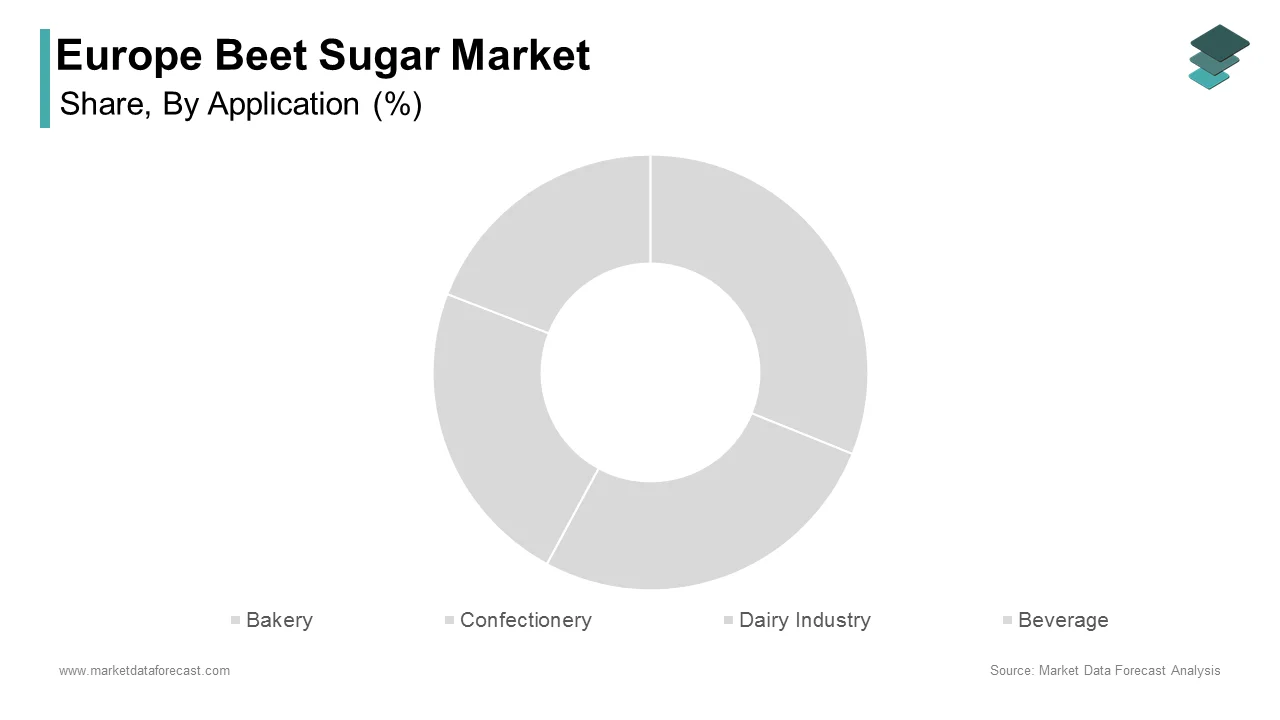
The beverage segment is predicted to witness the highest CAGR of 4.2% during the forecast period due to the expanding production of soft drinks, energy drinks, and ready-to-drink teas that utilize liquid beet sugar solutions. This rapid expansion is also propelled by the shift in manufacturing preferences toward liquid sugar formats, which offer easier handling, faster dissolution, and reduced microbial risk compared to solid crystals in high-speed bottling lines. Among these, a key primary driver is the resurgence of craft soda producers and the reformulation efforts of major beverage corporations to use non-genetically modified and locally sourced sweeteners to appeal to conscious consumers. As per research, the demand for clear label ingredients has prompted many brands to switch from high fructose corn syrup or imported cane sugar to European beet sugar, which carries a non-GMO guarantee by default. The growth of the energy drink category, which relies heavily on sucrose for immediate energy release, has also contributed significantly to volume increases, with sales in Europe reaching record levels in recent years. Sources reveal that the convenience of bulk liquid sugar delivery systems reduces operational costs for bottlers, making it an economically attractive option for large-scale production. Additionally, the development of isotonic sports drinks using beet sugar derivatives is opening new niches within the hydration market. The alignment of beet sugar with sustainability goals and the logistical advantages of liquid formats position the beverage sector as the most dynamic growth engine for the market.
By Function Insights
The regular function segment led the Europe beet sugar market and captured a substantial share in 2025. The leading position of the segment is supported by its ubiquitous role as a standard sweetener and functional ingredient in everyday food and industrial applications. This supremacy is also credited to the sheer volume of processed foods, baked goods, and preserved items that require caloric sweetness for taste, browning, fermentation, and texture. The leading driving factor is the established infrastructure of the global food industry, which is built around the physicochemical properties of sucrose, making it the default choice for manufacturers unless specific dietary claims are required. As per studies, sugar remains the most widely used food additive for sweetness and preservation, with no single alternative capable of replicating its full range of functional benefits at a comparable cost. The vast majority of households and food service establishments continue to purchase regular sugar for daily cooking and baking, reinforcing its mass market status. Research indicates that standard white and brown beet sugar products consistently top sales charts in the sweetener aisle, far outpacing specialized medical or diet variants. Furthermore, the industrial use of regular sugar in fermentation processes for bread, beer, and bioethanol creates a massive underlying demand that is insensitive to niche health trends. The economic efficiency of producing regular sugar at scale ensures it remains the most affordable option, securing its dominance across all socioeconomic demographics and application sectors throughout the continent.
The medical conditions segment is estimated to register the fastest CAGR of 6.8% from 2026 to 2034, owing to the increasing prevalence of diabetes management protocols that require precise, fast-acting glucose sources and the growing recognition of sugar's role in clinical nutrition for malnourished patients. The primary driver is the aging European population, which faces higher risks of metabolic disorders and requires tailored dietary interventions where controlled doses of specific sugar types are essential. As per research, the number of adults living with diabetes in Europe continues to rise, creating a sustained demand for medical-grade glucose tablets and gels that are often derived from highly purified beet sugar. The segment benefits from rigorous quality standards and regulatory approvals that allow these products to be prescribed or recommended by healthcare professionals, ensuring stable demand regardless of general consumer sugar avoidance trends. Stusy shows an uptick in the procurement of sterile and standardized sugar solutions for hospital use and emergency care kits. Additionally, the development of fortified nutritional shakes for elderly care facilities often incorporates specific sugar blends to ensure adequate caloric intake without triggering adverse metabolic responses. The convergence of demographic shifts, increased disease awareness, and the need for clinically validated nutritional products propels this niche segment to the forefront of growth rates.
By Structure Insights
The organized market segment was the largest in the Europe beet sugar market and accounted for a significant share in 2025. The prominence of the segment is driven by the highly regulated and consolidated nature of the industry. This dominance is also driven by the stringent requirements of the European Union's Common Agricultural Policy, which mandates licensing, quota management historically, and strict quality controls that only large-scale industrial processors can meet. A further driving factor is the capital-intensive nature of beet sugar processing, which requires massive factories capable of handling thousands of tonnes of roots daily, effectively barring small-scale or unorganized operators from entering the value chain. As per sources, the market is dominated by a handful of major cooperatives and multinational corporations that operate integrated supply chains from farm to refinery, ensuring traceability and compliance with food safety standards. The complexity of logistics involved in harvesting and transporting perishable sugar beets within a short campaign window necessitates sophisticated coordination that only organized entities can provide. Furthermore, the requirement to adhere to environmental regulations regarding wastewater and by-product management reinforces the position of large, compliant operators. The lack of an unorganized sector distinguishes beet sugar from cane sugar in developing regions, ensuring that the European market operates with high transparency, standardized pricing, and consistent quality assurance.
The organized market segment is predicted to witness the highest CAGR of 5.5% over the forecast period. The rapid expansion of the segment is propelled by the implementation of blockchain technology for supply chain transparency and the rise of e-commerce channels, allowing organized players to sell premium beet sugar directly to consumers and small businesses. The primary driver is the consumer demand for provenance and sustainability data, which organized companies are uniquely positioned to provide through digital traceability tools that verify the local origin and carbon footprint of their beet sugar. As per various sources, the integration of smart contracts and IoT sensors in the beet supply chain is optimizing logistics and reducing waste, thereby increasing the effective marketable yield. Research points out a sharp increase in online sales of specialty beet sugar products branded directly by major processors, bypassing traditional wholesale intermediaries. This digital shift allows organized players to capture higher margins and build brand loyalty in a commodity market previously defined by anonymity. The ability to offer customized packaging and subscription services via online platforms opens new revenue streams that were previously inaccessible. The rapid digitization of the organized sector enhances its efficiency and market reach, driving growth rates that outpace traditional bulk trading methods.
REGIONAL ANALYSIS
France Beet Sugar Market Analysis
France dominated the Europe beet sugar market and captured a 28.9% share in 2025. The dominance of the segment is attributed to its vast arable land dedicated to sugar beet cultivation and advanced processing infrastructure. The country functions as the central engine for regional supply, characterized by a dense network of cooperative sugar factories that process millions of tonnes of beets annually. A major driving force behind this dominance is the favorable climatic conditions in northern regions like Hauts de France and Grand Est, which provide ideal growing environments for high-yielding beet crops. The strong cooperative model ensures that farmers have a guaranteed outlet for their crops, fostering stability and continuous investment in agronomic research. Study indicates that the sector is a vital component of the rural economy, supporting thousands of jobs and generating significant value through by-products like bioethanol and animal feed. The government's support for the bio-economy further strengthens the market, encouraging the use of beet sugar for renewable energy projects. This combination of agricultural capacity, industrial efficiency, and policy support ensures France remains the undisputed leader in the European beet sugar landscape.
Germany Beet Sugar Market Analysis
Germany was the second largest country in the European beet sugar market and occupied a share of 22.7% share in 2025. The expansion of the German market is fuelled by its highly efficient processing technology and strong domestic consumption base. The market shows a robust industrial sector that utilizes beet sugar extensively in confectionery, bakery, and beverage manufacturing, creating a steady internal demand loop. A major driving factor is the presence of major sugar refining groups that operate state-of-the-art facilities capable of achieving high extraction rates and producing diverse sugar specialties. The German market is also characterized by a strong emphasis on sustainability, with processors leading the way in carbon-neutral production and circular economy practices. The high standards of food safety and quality certification in Germany make its beet sugar a preferred ingredient for premium food brands across Europe. The integration of research institutions with industry players drives continuous innovation in crop varieties and processing methods, maintaining Germany's competitive edge and market influence.
Poland Beet Sugar Market Analysis
Poland is an emerging player in the European market due to extensive agricultural resources and the modernization of its sugar processing sector. The market status is influenced by the country's transition from a fragmented industry to a consolidated powerhouse following EU accession, resulting in larger, more efficient factories. The driving factor is the availability of large tracts of fertile land suitable for sugar beet cultivation, allowing Poland to expand its planted area and increase total output significantly in recent years. As per sources, the country has become a major net exporter of sugar within the EU, leveraging its cost-competitive production to supply neighboring markets. The Polish sugar industry has invested heavily in upgrading its technological capabilities, enabling it to produce high-quality refined sugar that meets strict European standards. Research indicates a steady increase in yield per hectare due to the adoption of improved seed varieties and better farm management practices. The domestic market is also robust, with a strong tradition of sugar consumption in household cooking and food processing. The strategic location of Poland serves as a logistics hub for distributing beet sugar to both Western and Eastern European markets, enhancing its regional importance and growth trajectory.
United Kingdom Beet Sugar Market Analysis
The United Kingdom grew steadily in the European market owing to a self-sufficient production model that caters primarily to domestic needs with limited exports. The market status also reveals the geographical isolation of the island nation, which necessitates a reliable domestic sugar supply to ensure food security and reduce dependence on imports. A further driving factor is the concentrated cultivation of sugar beets in eastern England, particularly in counties like Norfolk and Lincolnshire, where soil and climate conditions are optimal for the crop. As per the British Sugar corporation, the UK operates a highly integrated supply chain where all beet grown is processed in a small number of large factories, ensuring maximum efficiency and minimal waste. The British market is notable for its pioneering work in utilizing beet by-products, with nearly all pulp and tops used for animal feed or energy generation, aligning with strict environmental goals. Data from the Department for Environment, Food and Rural Affairs shows that the sector plays a crucial role in supporting the rural economy and providing a rotational crop that benefits soil health for subsequent grain plantings. The strong relationship between growers and the sole processor fosters stability and long-term planning. Despite challenges from weather variability, the UK maintains a resilient beet sugar industry that is critical to its national food strategy.
Netherlands Beet Sugar Market Analysis
The Netherlands is likely to expand in the European market over the forecast period due to its focus on high-tech agriculture, logistical excellence, and value-added sugar products. The country is supported by its reputation as a global agri-food hub, where beet sugar is integrated into complex supply chains for re-export and further processing into specialty ingredients. The driving factor is the exceptional productivity of Dutch farms, which achieve some of the highest yields per hectare in the world through precision farming and advanced irrigation techniques. As per Statistics Netherlands, the sugar sector is a key component of the national bio-economy, with factories operating as biorefineries that produce sugar, bioethanol, and renewable energy simultaneously. The Dutch market is also a leader in sustainability, with initiatives aimed at reducing nitrogen emissions and enhancing biodiversity in beet-growing areas. Data from the Dutch Sugar Industry indicates a strong orientation towards innovation, including the development of new beet varieties resistant to pests and diseases without chemical treatments. The strategic port infrastructure facilitates the efficient export of surplus sugar and by-products to global markets. The collaboration between research institutes, farmers, and processors ensures that the Netherlands remains at the forefront of technological advancement and operational efficiency in the European beet sugar sector.
COMPETITION OVERVIEW
The competition in the Europe beet sugar market is characterized by a highly consolidated landscape dominated by a few large multinational corporations and powerful agricultural cooperatives that control the majority of production capacity. Major players compete primarily on operational efficiency, technological innovation, and sustainability credentials rather than price alone due to the regulated nature of the industry and high barriers to entry. The market dynamics are influenced by the strict European Union policies regarding agricultural subsidies, environmental standards, and trade quotas, which shape strategic decisions for all participants. Competitive rivalry intensifies as companies strive to maximize yield per hectare and extraction rates through advanced farming techniques and state-of-the-art processing technologies. The shift towards bio-refining has created a new battleground where firms vie to become leaders in renewable energy and biochemical production from beet by-products. Sustainability has emerged as a key differentiator, with companies investing heavily in carbon-neutral goals and circular economy practices to attract environmentally conscious customers and investors. The limited number of significant players fosters a stable yet intense competitive environment where strategic alliances and continuous innovation are essential for maintaining market position and profitability in the face of climatic and regulatory challenges.
KEY MARKET PLAYERS
A few major key market players of the Europe beet sugar market include
- Michigan Sugar Company
- Agrana Zucker Gmbh
- Southern Minnesota Beet Sugar Cooperative
- Amalgamated Sugar Company
- LLC
- Tereos
- Rana Sugar Ltd
- British Sugar Plc
- Nippon Beet Sugar Manufacturing Co., Ltd
- Nordic Sugar A/S
- American Crystal Sugar Company
Top Strategies Used by Key Market Participants
Key players in the Europe beet sugar market primarily employ vertical integration strategies to control the entire value chain from seed development and farming to processing and distribution, ensuring quality and cost efficiency. Companies invest heavily in diversifying their product portfolios by expanding into bioethanol, bioplastics, and renewable energy production to mitigate risks associated with sugar price volatility. Another major strategy involves the adoption of precision agriculture and digital farming technologies to optimize crop yields and reduce environmental impact through targeted resource usage. Market participants frequently engage in sustainability initiatives such as carbon reduction programs and circular economy models to comply with strict European Union regulations and appeal to eco-conscious consumers. Firms also focus on developing specialty sugar products, including organic and liquid variants, to capture high-value niches in the food and beverage industries. Strategic collaborations with agricultural cooperatives and research institutions drive innovation in crop breeding and processing techniques. Additionally, companies optimize their logistics networks to ensure the timely delivery of perishable beets and finished products across the continent.
Leading Players in the Europe Beet Sugar Market
- Südzucker AG operates as the largest sugar producer in Europe with a significant global footprint through its extensive network of processing facilities and diverse product portfolio. The company contributes to the global market by supplying high-quality beet sugar, specialty sugars, and bioethanol to food manufacturers and industrial clients worldwide. Recent actions to strengthen their market position include substantial investments in expanding biorefinery capabilities to convert beet by-products into renewable energy and biochemicals. Südzucker has also launched innovative sustainability programs aimed at achieving carbon neutrality across its production sites by optimizing energy efficiency and reducing water usage. The firm actively collaborates with farmers to promote regenerative agricultural practices that enhance soil health and biodiversity. Südzucker caters to evolving consumer preferences by focusing on value-added products like organic and non-GMO sugars. While doing so, it maintains its leadership in standard sugar production. These strategic initiatives ensure the company remains resilient against market volatility and regulatory changes.
- Tereos S.A. stands as a major global player in the sugar industry, originating from France with a strong cooperative model that integrates thousands of beet growers. The company plays a critical role in the global market by exporting beet sugar and derived products to several countries, leveraging its vast production capacity and logistical expertise. Recent actions to strengthen their market position involve aggressive expansion of their bioethanol production facilities to meet rising demand for renewable fuels in the transport sector. Tereos has implemented advanced digital tools across its supply chain to improve crop yield prediction and optimize factory operations for maximum efficiency. The firm is also developing new functional sugar ingredients tailored for the bakery and beverage industries to capture higher margin segments. By prioritizing circular economy principles, Tereos utilizes all parts of the sugar beet to minimize waste and generate additional revenue streams. These efforts reinforce its commitment to sustainability and operational excellence in a competitive global landscape.
- Nordzucker AG functions as the second-largest sugar producer in Europe with a focused strategy on high efficiency and regional dominance in Northern and Central Europe. Their contribution to the global market is defined by the export of premium beet sugar and specialized liquid sugar solutions to international food and beverage manufacturers. Recent actions to strengthen their market position include modernizing production plants to increase energy self-sufficiency through the use of biomass and biogas generated from beet pulp. Nordzucker has initiated partnerships with research institutions to develop disease-resistant beet varieties that reduce the need for chemical inputs and improve yield stability. The company is also expanding its portfolio of organic and fair-trade certified sugars to align with growing consumer demand for ethical products. By streamlining logistics and adopting smart farming technologies, Nordzucker enhances its cost competitiveness and supply reliability. These strategic moves solidify its reputation as a forward-thinking leader committed to sustainable growth and innovation in the European sugar sector.
MARKET SEGMENTATION
This research report on the Europe beet sugar market has been segmented and sub-segmented based on application, function, structure & region.
By Application
- Bakery
- Confectionery
- Dairy Industry
- Beverage
By Function
- Medical
- Regular Condition
By Structure
- Organized Market
- Unorganized Market
By Region
- UK
- France
- Spain
- Germany
- Italy
- Russia
- Sweden
- Denmark
- Switzerland
- Netherlands
- Turkey
- Czech Republic
- Rest of Europe