- Product Description Description
- Table of Contents TOC
- List of Table & Figure LOT
- Get Free Sample PDF Sample PDF
Market Size, 2025
$12.49 BnMarket Estimate, 2026
$13.32 BnMarket Forecast, 2034
$22.33 BnCAGR, 2026–2034
6.67%Europe Glucose, Dextrose, and Maltodextrin Market Size, Growth, Trends & Forecast (2026–2034)
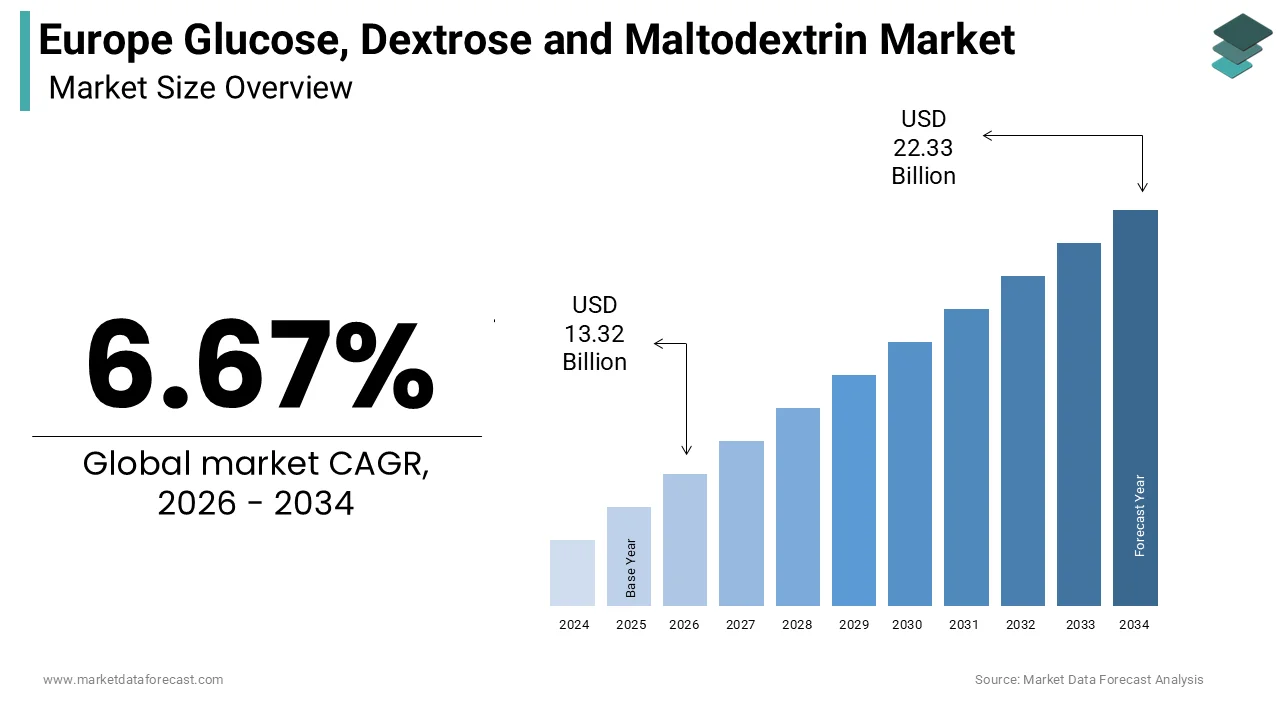
The Europe glucose, dextrose, and maltodextrin market size was calculated to be USD 12.49 billion in 2025, is anticipated to be worth USD 13.32 billion in 2026, and is projected to reach USD 22.33 billion by 2034, registering a compound annual growth rate (CAGR) of 6.67% during the forecast period from 2026 to 2034. Driven by the expansion of clinical nutrition and enteral feeding protocols, the rise of sports and performance nutrition, and deep integration into European health infrastructure, the market continues to experience steady structural growth.
Key Executive Metrics (At-a-Glance)
- 2025 Base Valuation: USD 12.49 Billion
- 2026 Current Valuation: USD 13.32 Billion
- 2034 Forecast Valuation: USD 22.33 Billion
- Compound Annual Growth Rate (CAGR): 6.67% (2026–2034)
- Dominant Product Segment: Dextrose (capturing 42.5% market share anchored by irreplaceable pharmaceutical and clinical nutrition applications)
- Fastest-Growing Product Segment: Maltodextrin (projected at a 6.8% CAGR driven by versatile use in plant-based alternatives and clean-label foods)
- Dominant Application Segment: Food and Beverages (holding a 58.7% share led by broad functional utility in baking, confectionery, and dairy alternatives)
- Fastest-Growing Application Segment: Pharmaceuticals (registering a 7.4% CAGR fueled by rising demand for intravenous fluids and enteral nutrition)
- Dominant Form Segment: Solids (capturing 65.5% share due to superior stability, exact dosing, and moisture control)
- Fastest-Growing Form Segment: Syrups (projected at a 6.2% CAGR propelled by beverage manufacturing and liquid enteral nutrition)
- Dominant Region / Country: Germany (top market performer capturing 24.6% share supported by advanced pharmaceutical scale and strong biorefineries)
Core Market Drivers
- Clinical Nutrition Expansion: Growing reliance on glucose and dextrose in enteral and parenteral feeding for aging populations and hospital care.
- Sports & Performance Nutrition: Surging demand for maltodextrin and dextrose in endurance drinks and recovery powders amid active lifestyle trends.
Primary Market Restraints & Challenges
- Sugar Reduction Regulations: Public health pressures and reformulation mandates limiting added sugars in mainstream food processing.
- Starch Supply Volatility: Agricultural yield fluctuations, weather conditions, and competing biofuel allocations tightening raw material availability.
Europe Glucose, Dextrose, and Maltodextrin Market Segmentation Breakdown
| Segment Category | Largest (Dominant) Sub-Segment | Fastest-Growing Sub-Segment |
|---|---|---|
| By Product | Dextrose (42.5% share backed by vital roles in medical IV fluids, oral rehydration, and direct metabolization) | Maltodextrin (6.8% CAGR driven by plant-based food texturizing, clean labeling, and low sweetness profiles) |
| By Application | Food & Beverages (58.7% share anchored by widespread utility across bakery, confectionery, and beverages) | Pharmaceuticals (7.4% CAGR propelled by clinical nutrition, hydration care, and vaccine stabilization) |
| By Form | Solids (65.5% share due to shelf-life stability, anti-caking properties, and precise pharmaceutical dosing) | Syrup (6.2% CAGR driven by liquid enteral nutrition, beverage manufacturing, and automated bakery systems) |
| By Region / Country | Germany (24.6% share supported by advanced pharmaceutical infrastructure, robust food processing, and biorefineries) | France / Netherlands / UK (Dynamic markets growing via starch processing, logistics hubs, and sports nutrition innovation) |
Major Industry Players Profiled
Key enterprises shaping the competitive European market include Roquette Frères, Tereos, Cargill Incorporated, Archer Daniels Midland Company, Agrana Investment Corp, Ingredion Incorporated, Tate & Lyle PLC, Avebe UA, Grain Processing Corporation, and Emsland-Starke GmbH.
Europe Glucose, Dextrose, and Maltodextrin Market Size
The Europe Glucose, Dextrose, and Maltodextrin Market size was calculated to be USD 12.49 billion in 2025 and is anticipated to be worth USD 22.33 billion by 2034, from USD 13.32 billion in 2026, growing at a CAGR of 6.67% during the forecast period.
Glucose, dextrose, and maltodextrin are essential carbohydrate-based ingredients derived primarily from starch hydrolysis of maize, wheat, or potatoes, serving critical functional roles across food, beverage, pharmaceutical, and sports nutrition sectors in Europe. Glucose and dextrose, chemically identical monosaccharides, are valued for rapid energy delivery and sweetness modulation, while maltodextrin, a polysaccharide with low sweetness and high solubility, functions as a bulking agent, texturizer, and carrier for flavors and nutrients. These ingredients are integral to products ranging from clinical rehydration solutions and infant formulas to energy gels and low-fat processed foods. European medical guidelines and standard pharmaceutical practice in the EU necessitate the inclusion of glucose or dextrose in oral rehydration formulations to enhance nutrient and water absorption, making them a standard component in such products. A significant majority of the European Union's annual starch output is processed into glucose syrups and dextrose derivatives, reflecting a strong industry focus on producing sweeteners and hydrolyzed products. This production scale reflects deep integration into both industrial supply chains and public health infrastructure, underpinning the market’s structural resilience and multifaceted demand drivers across non-discretionary applications.
MARKET DRIVERS
Expansion of Clinical Nutrition and Enteral Feeding Protocols
The growing reliance on glucose and dextrose in clinical nutrition, particularly in enteral and parenteral feeding, serves as a foundational driver for consistent demand across the region’s healthcare systems, which drives the growth of the Europe glucose, dextrose, and maltodextrin market. These monosaccharides are indispensable in medical nutrition therapy due to their rapid absorption, isotonic properties, and compatibility with intravenous and tube feeding formulations. European healthcare guidelines supported by the European Society for Clinical Nutrition and Metabolism emphasize individualized enteral nutrition to manage hospitalized patient malnutrition, utilizing varied formulas tailored to metabolic needs. National health services reinforce this demand. In Germany, clinical guidelines for intensive care units prioritize individualized, moderate blood sugar management to optimize nutrition, rather than enforcing uniform formula mandates. Additionally, the aging population increases reliance on home-based enteral feeding. According to Eurostat, a growing percentage of the European population consists of older adults, leading to increased clinical focus on specialized nutritional care to manage higher risks of dysphagia and malnutrition. Pharmaceutical compounding centers across France, Italy, and the Netherlands routinely procure pharmaceutical-grade dextrose in bulk for custom formulations. This medically anchored demand is non-discretionary, highly regulated, and insulated from consumer trend volatility, ensuring stable and recurring consumption irrespective of broader food market fluctuations.
Rise of Sports and Performance Nutrition Amid Active Lifestyle Trends
The proliferation of sports nutrition products featuring maltodextrin and dextrose as key energy sources has significantly amplified demand across Western and Northern Europe, which propels the expansion of the Europe glucose, dextrose, and maltodextrin market. These carbohydrates are favored for their rapid gastric emptying, high glycemic index, and ability to replenish glycogen stores during and after intense physical activity. Regular exercise and physical activity participation are becoming more common across the European Union, particularly in Nordic and Benelux nations, with a growing number of adults incorporating leisure-time activity into their weekly routines. The increasing consumer focus on health, fitness, and lifestyle wellness is boosting demand for sports nutrition products, resulting in significant growth in retail sales across Europe. Leading brands such as Science in Sport and High5 formulate gel drinks and recovery powders with precisely calibrated dextrose to maltodextrin blends to optimize osmolality and absorption. Regulatory endorsement further legitimizes use. European food safety regulators permit authorized health claims that associate the intake of carbohydrates with improved endurance performance during prolonged, high-intensity exercise. Gym chains have also integrated branded recovery products into their retail offerings, amplifying point of sale exposure. This convergence of public health messaging, athletic culture, and product innovation sustains robust growth in performance-oriented applications.
MARKET RESTRAINTS
Stringent Regulatory Scrutiny on Added Sugars in Processed Foods
Increasing regulatory and public health pressure to reduce added sugars in consumer foods directly constrains the use of glucose and dextrose in mainstream food manufacturing across the region, thereby limiting the growth of the Europe glucose, dextrose, and maltodextrin market. While maltodextrin is not classified as a sugar under EU labeling rules, glucose and dextrose are explicitly listed as added sugars and subject to reformulation mandates. Many European nations have adopted national guidelines aimed at reducing sugar content in processed foods, with specific regional tax initiatives and voluntary labeling systems influencing these efforts. Regulatory frameworks now emphasize mandatory reductions in added sugars for various product categories. Industry reformulation efforts to meet these guidelines have led to an increase in the use of alternative ingredients, such as intense sweeteners or added fibers. Reformulation strategies have resulted in a notable decrease in the usage of specific glucose syrups within the breakfast cereal sector. Even in categories like baked goods and confectionery, manufacturers are shifting to enzymatically modified starches or isomaltulose to avoid sugar labeling penalties. This regulatory headwind limits growth in traditional food applications despite the functional benefits of these carbohydrates.
Volatility in Starch Feedstock Supply Due to Agricultural and Trade Pressures
The production of glucose, dextrose, and maltodextrin in the region is inherently vulnerable to fluctuations in starch availability, which hinders the expansion of the Europe glucose, dextrose, and maltodextrin market. This is driven by agricultural yields, trade policies, and competition from bioindustrial uses. The majority of European dextrose comes from maize and wheat, which makes its supply susceptible to changes in crop availability driven by environmental factors. Variations in weather conditions can cause instability in raw material supply, reducing consistency in starch availability for production. Declining agricultural output, especially in southern areas, may result in a tighter overall supply of starch for industrial applications. Policies that encourage renewable energy motivate the redirection of starch towards biofuel manufacturing. A larger share of maize starch is being allocated to biofuels, rather than food production, creating competition for these resources. Trade restrictions compound the issue. Russia’s invasion of Ukraine disrupted Black Sea wheat flows, increasing competition for EU wheat supplies. These pressures elevate input costs and force manufacturers to adjust formulations or pass expenses to customers. Unlike sugar, which has global pricing benchmarks, starch-based sweeteners face localized supply shocks that undermine price stability and long term contract reliability across food and pharmaceutical sectors.
MARKET OPPORTUNITIES
Growing Demand for Plant-Based and Clean Label Functional Ingredients
The shift toward plant-based and clean label formulations in the region is creating new opportunities for the Europe glucose, dextrose, and maltodextrin market. These ingredients serve as versatile, minimally processed carriers and texturizers in alternative protein and fortified foods. As consumers avoid synthetic additives, these carbohydrates, when sourced from non-GMO maize or potatoes, are perceived as natural and functional. Sales of plant-based meat and dairy alternatives experienced an increase year over year, with maltodextrin often incorporated to enhance textures, moisture retention, and powder characteristics in products such as pea protein shakes and mycoprotein burgers. Companies such as Oatly and Beyond Meat utilize maltodextrin in European formulations to stabilize emulsions and enhance freeze-thaw stability. Additionally, the clean label movement favors ingredients with simple names—dextrose and maltodextrin are often preferred over complex chemical stabilizers like carboxymethyl cellulose. This alignment with transparency and plant-centric trends positions these carbohydrates as enablers of next-generation food innovation beyond traditional sweetening roles.
Expansion of Oral Rehydration and Emergency Nutrition in Public Health Programs
Public health initiatives targeting dehydration management and emergency nutrition are opening institutional demand for pharmaceutical-grade glucose and dextrose across the region, which is expected to fuel the expansion of the Europe glucose, dextrose, and maltodextrin market. These monosaccharides are core components of WHO-formulated oral rehydration salts, which remain critical in managing acute gastroenteritis, particularly among children and elderly populations. Reported instances of acute gastrointestinal illness across the region have prompted increased availability of oral rehydration solutions in primary care settings and retail pharmacies. National preparedness strategies have incorporated expanded stockpiles of essential rehydration products. Following periods of extreme heat and associated health impacts, regional health initiatives have prioritized the maintenance of strategic reserves for rehydration needs. Additionally, humanitarian organizations like Médecins Sans Frontières procure EU-manufactured dextrose for global emergency response kits meeting stringent European pharmacopoeia standards. The stability, low cost, and life-saving efficacy of these ingredients ensure their inclusion in both routine and crisis public health protocols, creating a resilient non-commercial demand stream that buffers against consumer market volatility.
MARKET CHALLENGES
Intensifying Consumer Misconceptions Linking Maltodextrin to Sugar and Health Risks
Maltodextrin faces growing consumer skepticism in the region, despite its classification as a complex carbohydrate, which is challenging the growth of the Europe glucose, dextrose, and maltodextrin market. This is due to perceived associations with sugar spikes and processed food. Social media narratives and wellness influencers often conflate maltodextrin with dextrose or high fructose corn syrup, leading to avoidance even in products where it serves non-sweetening functions. The misperception influences purchasing behavior. Manufacturers are sacrificing functionality to reformulate away from safe, authorized maltodextrin due to its negative reputation. In infant formula, for instance, removal can compromise powder solubility and nutrient dispersion. This gap between scientific consensus and public perception creates a persistent barrier to optimal formulation and market acceptance.
Competition from Alternative Carbohydrates and Fiber-Based Bulking Agents
Mounting substitution pressure from emerging carbohydrate alternatives that offer lower glycemic impact or digestive health benefits is slowing down the expansion of the Europe glucose, dextrose, and maltodextrin market. Ingredients such as isomaltulose, allulose, and soluble corn fiber are increasingly adopted in "better for you" products to circumvent sugar taxes and appeal to health-conscious consumers. Product development is increasingly replacing traditional carbohydrates with alternative sweeteners and fibers to lower the glycemic impact of energy bars without sacrificing texture. Regulatory approval of novel sweeteners is facilitating the adoption of functional ingredients across a broader spectrum of food products. Market trends show a shift toward using ingredients like isomaltulose or oat fiber to improve the nutritional profile of energy products. The industry is adopting allulose as a functional ingredient to support the reformulation of food products. Even in clinical nutrition, fiber-enriched dextrose blends are being tested to support gut microbiota in long term enteral patients. Major food manufacturers like Nestlé and Danone have publicly committed to reducing high glycemic carbohydrates in their portfolios as part of broader health pledges. This innovation in alternative carbohydrates, backed by regulatory approvals and consumer demand, erodes the functional monopoly once held by traditional glucose derivatives, particularly in premium and functional food segments where metabolic health is a priority.
REPORT COVERAGE
| REPORT METRIC | DETAILS |
| Market Size Available | 2025 to 2034 |
| Base Year | 2025 |
| Forecast Period | 2026 to 2034 |
| CAGR | 6.67% |
| Segments Covered | By Product, Application, Form, And Region |
| Various Analyses Covered | Global, Regional & Country Level Analysis; Segment-Level Analysis; DROC, PESTLE Analysis; Porter’s Five Forces Analysis; Competitive Landscape; Analyst Overview of Investment Opportunities |
| Regions Covered | UK, France, Spain, Germany, Italy, Russia, Sweden, Denmark, Switzerland, Netherlands, Turkey, and the Czech Republic |
| Market Leaders Profiled | Archer Daniels Midland Company, Agrana Investment Corp, Roquette Frères, Cargill Incorporated, Avebe UA, Grain Processing Corporation, Emsland-Starke GmbH, Penford Corporation, Ingredion Incorporated, and Tate& Lyle PLC |
SEGMENTAL ANALYSIS
By Product Insights
The dextrose segment held the majority share of 42.5% of the Europe glucose dextrose and maltodextrin market in 2024. The dominance of the dextrose segment is driven by its irreplaceable role in pharmaceutical formulations and clinical nutrition. Unlike other carbohydrates, dextrose is directly metabolizable without enzymatic conversion, making it the preferred source of immediate energy in intravenous fluids, oral rehydration salts, and enteral feeding solutions. Parenteral nutrition products authorized for use in the EU predominantly utilize dextrose as the primary carbohydrate source for providing non-protein energy. National health systems reinforce this dependency. Standard intravenous fluid protocols in German hospital settings heavily rely on dextrose for energy provision, as recognized by national medical consensus. Additionally, dextrose’s high solubility and isotonic properties ensure compatibility with sensitive drug molecules and patient physiology. In sports nutrition, dextrose is widely recognized for its efficacy in rapidly replenishing glycogen stores post-exercise, with regulatory frameworks acknowledging its role in supporting recovery after intense, endurance-based physical exertion. This dual anchor in life-sustaining medical applications and performance science ensures dextrose remains the most consistently demanded product across regulated and consumer sectors.
The maltodextrin segment is predicted to witness the highest CAGR of 6.8% from 2025 to 2033 due to its versatile functionality as a neutral-tasting bulking agent, encapsulant, and texture modifier in reformulated and plant-based food systems. A high percentage of commercial plant-based dairy and meat alternatives utilize maltodextrin as a functional ingredient to enhance texture, moisture retention, and flowability. Its low sweetness and high solubility make it ideal for protein shakes, meal replacements, and fortified beverages where sugar content must be minimized. Regulatory alignment further supports growth. The use of organic-compliant maltodextrin sourced from non-GMO maize or potatoes is an approved practice for processed plant-based products under European Union organic certification standards. Additionally, the ingredient’s role in stabilizing probiotics and vitamins in functional foods has expanded its use in the booming wellness sector. Unlike dextrose, it avoids sugar labeling penalties, making it a strategic substitute in clean label innovation across food and supplement categories.
By Application Insights
The food and beverages segment led the Europe glucose, dextrose, and maltodextrin market by accounting for a 58.7% share in 2024. The supremacy of the food and beverages segment is attributed to the functional versatility of these carbohydrates in processed food,s bakery confectionery, sports drinks, and dairy alternatives. Dextrose provides controlled browning and fermentation in baked goods while maltodextrin enhances texture in low-fat products and stabilizes emulsions in dressings and sauces. The European Starch Association reports that a substantial amount of European-produced starch derivatives is utilized within the EU food industry, with hydrolyzed starch ingredients, such as glucose syrups and dextrose, being the dominant components. The sports nutrition boom further amplifies demand. The Western European market for energy drinks and gels is experiencing growth, driven by the demand for products that utilize glucose and maltodextrin blends for quick energy release. Even amid sugar reduction trends, maltodextrin remains exempt from added sugar labeling, enabling its continued use in reformulated products. This deep integration into both mass market and premium food systems ensures food and beverages remain the primary consumption channel.
The pharmaceuticals segment is estimated to register the fastest CAGR of 7.4% during the forecast period, owing to rising demand for intravenous fluids, enteral nutrition, and oral rehydration therapies across aging and climate-stressed populations. Observations indicate a rise in hospitalizations related to hydration and nutritional deficits among older adults. Health authorities are adjusting their preparedness strategies to address these rising medical needs. Specific nutritional solutions are being acquired to manage potential heat-related health risks. The manufacturing of medical products and vaccines increasingly utilizes specific carbohydrates for stabilization. Regulatory bodies have validated the application of these substances in the production of pharmaceutical items. The European Pharmacopoeia mandates strict quality standards for pharmaceutical-grade dextrose, ensuring consistent demand from certified producers. Nutritional support is shifting from a peripheral service to an essential component of healthcare, driven by its prioritization in chronic disease and emergency scenarios.
By Form Insights
The solid forms segment was the largest in the Europe glucose dextrose and maltodextrin market by holding a 65.5% share in 2024. The supremacy of the solid forms segment is credited to superior stability, transport efficiency, and formulation precision. Solids are preferred in pharmaceutical compounding, where exact dosing is critical, and in dry beverage mixes, protein powder,s and instant foods, where moisture control prevents caking and microbial growth. The vast majority of maltodextrin used in sports nutrition products is in powder form to ensure suitability for consistent blending and extended shelf life. In clinical settings, solid dextrose is reconstituted on demand for IV preparation, aligning with hospital protocols that minimize pre-mixed solutions. Germany’s chemical logistics infrastructure further supports solid dominance. Dextrose shipments to pharmaceutical manufacturing centers in key German regions are predominantly transported in multiwall bags with moisture barriers. The form’s compatibility with automated manufacturing lines in both food and pharma sectors ensures operational efficiency and reduced waste, making solids the default choice for industrial-scale applications.
The syrup form segment is anticipated to witness the fastest CAGR of 6.2% from 2025 to 2033. The rapid growth of the syrup form segment is propelled by demand in beverage manufacturing, bakery glazes, and liquid enteral nutrition, where viscosity and immediate solubility are essential. In the soft drinks sector, glucose syrups provide body and fermentation substrates for kombucha and kefir beverages, which grew in EU retail sales in 2023, as per sources. Industrial bakeries also favor syrups for automated dough systems. Additionally, liquid clinical nutrition formulas for tube feeding require dextrose in syrup form to maintain homogeneity and prevent particle sedimentation. Producers have invested in on-site syrup delivery networks to reduce drum handling and contamination risks. This operational synergy with liquid processing systems positions syrups as the preferred form for high throughput and specialized applications.
REGIONAL ANALYSIS
Germany Glucose, Dextrose And Maltodextrin Market Analysis
Germany dominated the Europe glucose, dextrose, and maltodextrin market by accounting for a 24.6% share in 2024. The dominance of the German market is driven by its advanced pharmaceutical industry, robust food processing sector, and central logistics position. Major producers like Cargill and Roquette operate large-scale biorefineries in Saxony and North Rhine-Westphalia, supplying both domestic and EU markets. Germany’s stringent pharmaceutical quality standards under the German Pharmacopoeia ensure consistent demand for high-purity dextrose in hospital and biotech applications. Additionally, the country’s strong sports nutrition industry, home to brands like Multipower and Weider, drives innovation in maltodextrin-based performance products. This combination of industrial-scale regulatory rigor and diversified end use solidifies Germany as the market’s production and consumption leader.
France Glucose, Dextrose And Maltodextrin Market Analysis
France was the second largest country in the Europe glucose, dextrose, and maltodextrin market by holding a share of 16.5% in 2024. The growth of the French market is propelled by its leadership in bakery confectionery and clinical nutrition. The French starch industry uses notable amounts of wheat and maize for glucose syrups in both traditional pastries and industrial bread production. Demand in the pharmaceutical sector is steady due to the use of dextrose in enteral nutrition formulas for a substantial number of patients. Government initiatives to prepare for heatwaves also include obtaining dextrose-based oral rehydration salts for facilities caring for the elderly. Read the full analysis. Companies like Tereos operate integrated biorefineries that supply both the food and pharma sectors with traceable non-GMO ingredients. The country’s dual strength in artisanal and industrial food systems alongside robust public health infrastructure ensures balanced and resilient consumption across applications.
Netherlands Glucose Dextrose And Maltodextrin Market Analysis
The Netherlands is another major player in the Europe glucose, dextrose, and maltodextrin market due to its role as a European logistics and agri-food innovation hub. The port of Rotterdam functions as a major European logistics hub for the importation of agricultural products, including starch-based goods. The country hosts major facilities for Agrana and Ingredion that supply maltodextrin to plant-based food startups across Benelux and Germany. Dutch regulations support clean label trends. The Netherlands Nutrition Centre allows the use of maltodextrin as a functional ingredient in products labeled "no added sugar" to maintain texture and consistency. Additionally, the nation’s strong dairy export sector uses dextrose in yogurt and infant formula production for fermentation control. The convergence of trade infrastructure, food tech investment, and regulatory clarity positions the Netherlands as a high velocity and high value market for functional carbohydrates.
United Kingdom Glucose, Dextrose And Maltodextrin Market Analysis
The United Kingdom is moving ahead steadily in the Europe glucose dextrose and maltodextrin market owing to its dynamic sports nutrition sector and post Brexit self-sufficiency initiatives. Market observations indicate an upward trend in the consumption of sports and energy beverages, often featuring formulations that include dextrose and maltodextrin blends. Healthcare settings frequently utilize dextrose-based solutions for intravenous fluid requirements, with substantial procurement levels to meet protocol demands. Despite sugar levy pressures, maltodextrin remains widely used in protein powders and meal replacements due to its non-sugar classification. UK-based companies have expanded domestic sourcing of non-GMO maltodextrin to reduce import dependency. This blend of consumer innovation, public health reliance, and supply chain recalibration sustains the UK as a key growth market despite regulatory headwinds.
Italy Glucose Dextrose And Maltodextrin Market Analysis
Italy is anticipated to grow in the Europe glucose, dextrose, and maltodextrin market from 2025 to 2033 due to its extensive bakery, pasta, and dairy industries, which rely on glucose syrups for texture and browning control. According toa study, the national starch industry processes over one million tons of cereals, with maize from the Po Valley acting as a primary raw material. Dextrose is used in traditional panettone and industrial bread production to regulate yeast activity and crust color. Additionally, Italy’s aging population drives demand for clinical nutrition. Research indicates that home enteral nutrition is a commonly utilized long-term care method, with many patients receiving specialized formulas containing glucose derivatives to manage chronic conditions. Regulatory alignment with EU standards ensures the smooth export of Italian food products containing these ingredients. The integration of traditional food craftsmanship with modern nutritional science positions Italy as a stable and culturally embedded consumer of glucose derivatives across both artisanal and industrial contexts.
COMPETITION OVERVIEW
The Europe glucos,e dextrose, and maltodextrin market is characterized by a concentrated yet dynamic competitive landscape dominated by large agro-industrial players with deep integration into both food and pharmaceutical supply chains. Competition is primarily based on purity, consistency, regulatory compliance, and sustainability credentials rather than price due to the specialized nature of applications. Established companies leverage decades of starch processing expertise and proximity to EU maize and wheat production zones to maintain cost and quality advantages. However, they face pressure from emerging clean label demands requiring investment in non-GMO organic and low environmental impact production methods. The pharmaceutical segment operates under stringent European Pharmacopoeia standards, creating high barriers to entry and favoring incumbents with certified facilities. Meanwhile, in food applications, innovation in plant-based and functional foods is driving demand for customized maltodextrin blends. Smaller regional producers compete on niche certifications but lack scale. Overall, the market rewards those who balance industrial efficiency with regulatory agility and sustainability transparency across medical and consumer sectors.
KEY MARKET PLAYERS
A few major players of the Europe glucose, dextrose, and maltodextrin market include
- Archer Daniels Midland Company
- Agrana Investment Corp
- Roquette Frères
- Cargill Incorporated
- Avebe UA
- Grain Processing Corporation
- Emsland-Starke Gmbh
- Penford Corporation
- Ingredion Incorporated
- Tate& Lyle PLC
Top Strategies Used by the Key Market Participants
Key players in the Europe glucose, dextrose, and maltodextrin market prioritize vertical integration from farm to finished ingredient to ensure traceability and non-GMO compliance. They invest in expanding pharmaceutical-grade production capacity to meet growing demand from the clinical nutrition and biopharma sectors. Companies actively reformulate products to align with clean label and sugar reduction trends by offering low DE maltodextrin and high-purity dextrose with minimal processing. Strategic partnerships with plant-based food and sports nutrition brands drive innovation in texture and functionality. Additionally, firms pursue sustainability certifications such as ISCC PLUS and organic labels to support customer claims under the EU Green Deal. These strategies collectively enhance regulatory compliane product differentiation, and long-term customer retention across diverse end-use industries.
Leading Players in the Market
- Roquette Frères is a leading European producer of plant-based ingredients, including dextrose and maltodextrin derived from wheat and peas. Headquartered in France, the company supplies both the food and pharmaceutical sectors across Europe and globally with high-purity carbohydrates used in clinical nutrition, sports beverages, and clean-label foods. In recent years, Roquette has invested heavily in non-GMO and organic certified dextrose production to align with EU sustainability mandates. It also launched a medical-grade dextrose line compliant with European Pharmacopoeia standards, strengthening its position in hospital and home care nutrition. These actions reinforce Roquette’s integration of agricultural sourcing withhigh-valuee functional ingredient innovation.
- Tereos is a major cooperative based in France with significant starch processing operations across Europe, producing glucose syrups, dextrose, and maltodextrin from maize and wheat. The company plays a critical role in the European food and beverage industry, supplying bakery, dairy, and confectionery manufacturers with tailored carbohydrate solutions. It also enhanced its pharmaceutical-grade dextrose production at its Aalst, Belgium, facility to serve clinical nutrition demand in Benelux and Germany. By aligning its starch derivatives with circular economy principles and regulatory transparency, Tereos has solidified its reputation as a reliable and responsible supplier across industrial and health-focused applications.
- Cargill Incorporated maintains a strong presence in the Europe glucose, dextrose, and maltodextrin market through its integrated starch and sweetener facilities in Germany, the Netherlands, and Poland. The company leverages its global supply chain to deliver consistent quality dextrose for pharmaceutical IV fluids and maltodextrin for sports nutrition and functional foods. It also partnered with European biopharmaceutical firms to supply ultra-pure dextrose for vaccine stabilization. Cargill bridges global scale with regional, specialized knowledge through ongoing investments in food safety and R&D, meeting shifting European regulatory and consumer demands.
MARKET SEGMENTATION
This research report on the Europe glucose, dextrose, and maltodextrin market has been segmented and sub-segmented based on product, application, form, and region.
By Product
- Glucose
- Dextrose
- Maltodextrin
By Application
- Pharmaceuticals
- Food & Beverages
- Paper & Pulp Industry
- Personal Care/Cosmetics
By Form
- Syrup
- Solids
By Region
- UK
- France
- Spain
- Germany
- Italy
- Russia
- Swede
- Denmark
- Switzerland
- Netherlands
- Turkey
- Czech Republic
- Rest of Europe