- Product Description Description
- Table of Contents TOC
- List of Table & Figure LOT
- Get Free Sample PDF Sample PDF
Market Size, 2025
$14.07 BnMarket Estimate, 2026
$14.59 BnMarket Forecast, 2034
$19.48 BnCAGR, 2026–2034
3.68%Executive Summary: Europe Flavoured Syrups Market
- Market Scope: Comprehensive regional market analysis of the European flavoured syrups industry covering flavor categories, flavor types, application segments, country-specific profiles (including UK, Germany, France, Italy, and Spain), and key growth determinants.
- Market Valuation: Valued at USD 14.07 billion in 2025, estimated at USD 14.59 billion in 2026, and projected to reach USD 19.48 billion by 2034, registering a steady CAGR of 3.68% from 2026 to 2034.
- Primary Growth Drivers: Proliferation of specialty coffee shops and vibrant cafe culture across Europe, growing consumer preference for home mixology and beverage customization, and rising demand for gourmet culinary ingredients in the hospitality and bakery sectors.
Key Market Segment Metrics (2026–2034)
| Category | Leading Segment Position | Fastest-Growing / Key Highlight Segment |
|---|---|---|
| By Flavor Insights | Vanilla Flavor (captured the leading market share in 2025 due to its universal appeal, foundational role in coffee/bakery, and versatility) | Fruit Flavors (estimated to grow at a CAGR of 7.2% driven by clean-label demand, berries, citrus, and healthy mocktail/beverage trends) |
| By Flavor Type Insights | Sweet Flavors (led the market with major share supported by deep-rooted European confectionery, dessert, and pastry traditions) | Savory Flavors (fastest-growing segment at a CAGR of 6.06% driven by culinary fusion, herb/spice profiles, and gourmet cocktail trends) |
| By Application Insights | Beverage Segment (held dominant market share owing to pervasive cafe culture, coffee customization, and craft mixology) | Dairy & Frozen Desserts (anticipated to record a 7.05% CAGR fueled by gourmet ice cream swirls, toppings, and protein yogurts) |
| By Region / Country | United Kingdom (led the market with the largest share in 2025, supported by high coffee shop density and trendsetting mixology) | Germany, France, Italy & Spain (experiencing robust modernization, health-conscious clean-label shifts, and vibrant outdoor cafe/bar expansions) |
Major Market Players & Market Structure
Market Structure: Highly competitive European market featuring major multinational flavoring corporations, established commercial syrup brands, private label retail giants, and artisanal small-batch producers competing on flavor innovation, clean-label sourcing, and functional health formulations.
Key Companies: Hershey, Tate & Lyle, Kraft Heinz Company, Monin Inc, Kerry Group Plc, Sonoma Syrup, Cedarvale Maple Syrup, and Sensient Technologies Corporation.
 Download Free Sample Report
Europe Flavoured Syrups Market Size
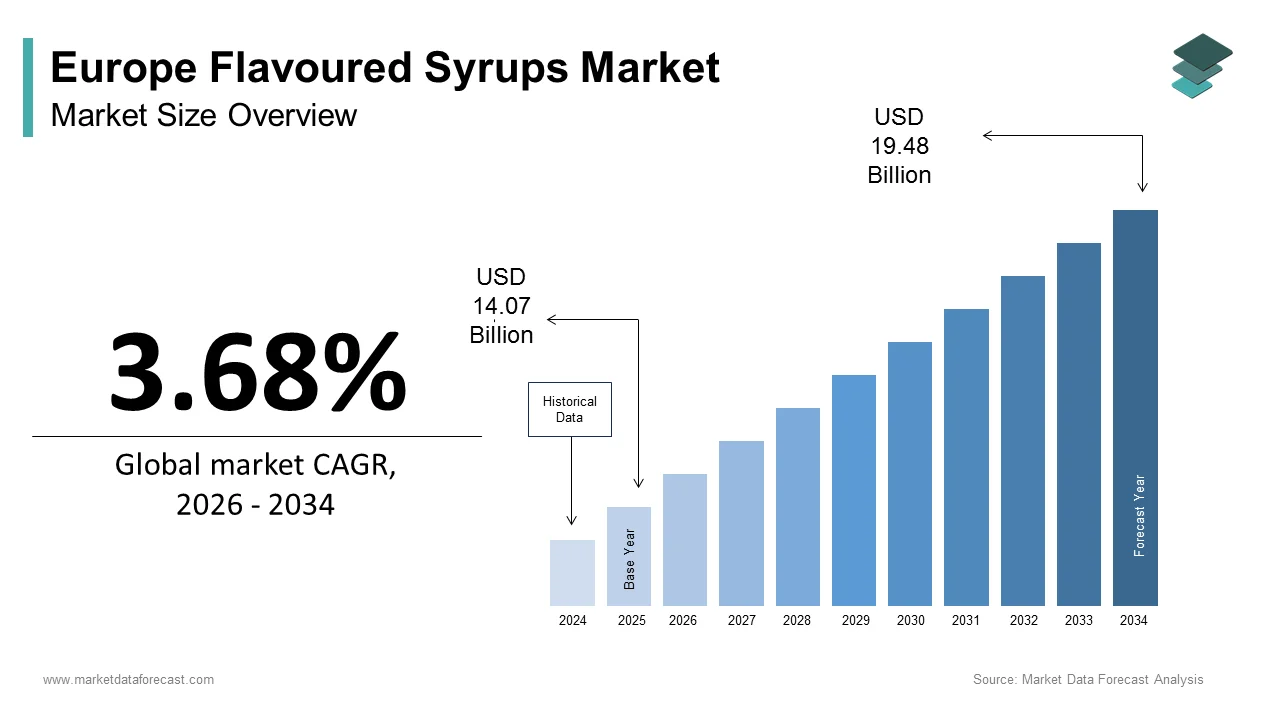
The size of the Europe Flavoured Syrups Market was expected to be worth USD 14.07 billion in 2025 and is anticipated to be worth USD 19.48 billion by 2034, from USD 14.59 billion in 2026, growing at a CAGR of 3.68% during the forecast period.
Flavoured syrups comprise concentrated liquid sweeteners infused with natural or artificial flavourings designed to enhance beverages, desserts, and culinary creations. These versatile products serve as essential ingredients in the hospitality sector, particularly in coffee shops, bars, and restaurants, where they enable customization of drinks such as lattes, cocktails, and smoothies. The market is characterized by a diverse range of flavours including vanilla, caramel, fruit extracts, and innovative botanical blends that cater to evolving consumer palates. According to Eurostat, the accommodation and food services sector in the European Union employed 10.9 million persons in 2022, and this indicates a robust infrastructure for beverage consumption and experimentation. The rise of specialty coffee culture has significantly influenced demand, with consumers seeking personalized and premium taste experiences. As per the European Food Safety Authority, there is increasing scrutiny on sugar content and additive safety, prompting manufacturers to reformulate products with reduced sugar or natural alternatives. The region’s strong tradition of confectionery and baking further supports steady demand from both commercial and household segments. Climate variability affects the availability of raw materials such as fruits and herbs, which is influencing production costs and supply chain stability. The shift toward home brewing and mixology during recent years has expanded the consumer base beyond professional establishments. Regulatory frameworks regarding labeling and health claims shape product development strategies, ensuring transparency for health-conscious buyers. This dynamic interplay of cultural trends, regulatory standards, and economic factors defines the current landscape of the flavoured syrups industry in Europe.
MARKET DRIVERS
Proliferation of Specialty Coffee Shops and Cafe Culture Drives Commercial Demand
The rapid expansion of specialty coffee shops and the entrenched cafe culture across Europe is fuelling the growth of the European flavoured syrups market. Consumers increasingly view coffee consumption as a lifestyle choice rather than a mere routine, leading to higher demand for customized and premium beverage options. According to the European Coffee Federation, Europe continues to be the world's largest coffee market, accounting for about 28% of global coffee consumption, providing a substantial base for value-added products like flavoured syrups. Baristas rely heavily on high-quality flavoured syrups to create signature drinks that differentiate their offerings in a competitive market. The trend toward experiential dining encourages cafes to introduce seasonal menus featuring unique flavour combinations such as lavender, honey, or spiced chai, which require specialized syrups. Furthermore, the rise of third-wave coffee emphasizes the quality of ingredients, prompting establishments to source premium natural syrups over artificial alternatives. This demand is reinforced by social media influence, where visually appealing and novel drinks drive foot traffic and brand loyalty. The consistency and ease of use offered by bottled syrups allow busy cafes to maintain speed of service while offering variety. Consequently, the thriving hospitality sector ensures a steady and growing volume of commercial purchases for flavoured syrup manufacturers.
Growing Consumer Preference for Home Mixology and Beverage Customization
The surge in home mixology and the desire for personalized beverage experiences among European households significantly boost the retail segment of the flavoured syrups market, which is another major market driver. The pandemic accelerated this trend as consumers sought to replicate cafe-quality drinks at home, leading to sustained interest in barista-style equipment and ingredients. For instance, the demand for flavoured syrups is growing significantly, with consumers increasingly using professional-grade syrups to recreate restaurant-quality drinks and desserts at home. Flavoured syrups offer an affordable and convenient way for consumers to experiment with various tastes without the need for complex preparation methods. Household expenditure on luxury food items, including gourmet syrups, has risen, reflecting a willingness to pay for premium home dining experiences. The versatility of these syrups extends beyond coffee to include applications in sparkling water, mocktails and dessert toppings, appealing to a broad demographic. Social media platforms play a crucial role in disseminating recipes and trends, encouraging users to share their creations and driving peer-to-peer adoption. Manufacturers respond by launching smaller retail packs and diverse flavour portfolios tailored to home users. The perception of syrups as a tool for creativity and self-expression enhances their appeal among younger consumers. This shift from purely commercial to domestic consumption diversifies revenue streams and stabilizes demand against fluctuations in the hospitality sector.
MARKET RESTRAINTS
Health Consciousness and Sugar Reduction Initiatives Limit Traditional Syrup Consumption
Increasing health awareness and government-led initiatives to reduce sugar intake pose significant restraints on the traditional flavoured syrups market in Europe. Consumers are becoming more vigilant about the nutritional content of their food and beverages, actively seeking low-sugar or sugar-free alternatives. According to the World Health Organization, excessive sugar consumption is linked to obesity and diabetes, prompting many European countries to implement sugar taxes on soft drinks and sweetened products. For instance, the United Kingdom introduced a Soft Drinks Industry Levy, which has influenced consumer behavior and prompted manufacturers to reformulate products. As per the European Commission, average sugar intake in several member states remains above recommended levels, leading to stricter labeling requirements and public health campaigns. Traditional syrups, which are often high in sucrose, face declining preference among health-conscious individuals who opt for unsweetened teas or black coffee. The stigma associated with artificial sweeteners also complicates the transition to low-calorie variants, as some consumers perceive them as unhealthy. Retailers are increasingly dedicating shelf space to natural and organic products, forcing conventional syrup brands to adapt or lose visibility. This regulatory and social pressure necessitates costly research and development efforts to create palatable low sugar alternatives without compromising texture or flavour intensity. Consequently, the market faces a structural challenge in maintaining volume growth while aligning with evolving health standards.
Volatility in Raw Material Prices and Supply Chain Disruptions Impact Profitability
The flavoured syrups market faces substantial challenges due to the volatility of raw material prices and ongoing supply chain disruptions, which affect production costs and profitability. Key ingredients such as sugar, fruit extracts, vanilla, and cocoa are subject to fluctuating global commodity prices influenced by climate change, geopolitical tensions, and trade policies. According to the Food and Agriculture Organization of the United Nations, international sugar prices overall increased since November 2022, and in May 2023 they were at their highest level since October 2011, affecting input costs for European manufacturers. Vanilla prices remain notoriously unstable, with shortages in Madagascar leading to significant cost spikes for natural flavourings. As per the European Central Bank, inflationary pressures have increased transportation and energy costs, further squeezing margins for small and medium-sized producers. Supply chain bottlenecks, exacerbated by logistical delays and labor shortages, hinder the timely procurement of packaging materials and ingredients. These disruptions force manufacturers to either absorb higher costs, reducing profitability, or pass them on to consumers, risking demand elasticity. The dependency on imported raw materials exposes the industry to currency exchange rate fluctuations, adding another layer of financial uncertainty. Smaller players lack the bargaining power to secure long-term fixed-price contracts, making them vulnerable to market shocks. This economic instability complicates strategic planning and investment in innovation, limiting the ability of companies to expand their product lines or enter new markets effectively.
MARKET OPPORTUNITIES
Expansion of Plant-Based and Natural Ingredient Formulations Appeals to Ethical Consumers
The growing demand for plant-based and natural ingredient formulations presents a significant opportunity for the Europe flavoured syrups market as consumers prioritize ethical and clean-label products. There is a rising preference for syrups made from organic fruits, herbs, and natural sweeteners such as agave or stevia rather than artificial flavourings and high fructose corn syrup. According to Mordor Intelligence, the Europe organic food and beverages market is valued at US$ 75.28 billion in 2026, advancing at a 5.27% CAGR, driven by consumer concerns about environmental sustainability and personal health. Manufacturers can capitalize on this trend by developing syrups that highlight provenance and purity, appealing to the discerning European consumer. As per the European Biobased Industries Consortium, the use of bio-based ingredients in food processing is gaining traction, supported by government incentives for sustainable agriculture. Flavour profiles derived from indigenous European botanicals such as elderflower, lingonberry, or rosemary offer unique selling points that differentiate brands in a crowded market. The alignment with vegan and vegetarian lifestyles further expands the potential customer base, as these groups seek cruelty-free and animal product-free options. Retailers are increasingly curating sections for natural and organic products, providing prominent placement for compliant brands. Certification schemes such as EU Organic or Fair Trade enhance credibility and justify premium pricing. By focusing on transparency and sustainability, manufacturers can build strong brand loyalty and capture value from the shifting consumer paradigm toward responsible consumption.
Innovation in Functional Syrups with Added Health Benefits Creates New Niches
The integration of functional ingredients into flavoured syrups offers a promising avenue for the European flavoured syrups market. Consumers are increasingly seeking beverages that provide additional benefits such as immunity support, relaxation, or energy enhancement beyond mere taste. According to the Global Wellness Institute, the wellness economy in Europe is valued at over 500 billion euros, with nutrition being a key component driving product innovation. Syrups infused with adaptogens, vitamins, probiotics, or collagen cater to this demand, allowing consumers to easily incorporate functional nutrients into their daily routines. As per the European Food Information Council, there is growing interest in foods that support mental well-being and stress management, creating opportunities for syrups containing ingredients like ashwagandha or chamomile. The convenience of delivering these benefits through a familiar and enjoyable format like a latte or smoothie lowers the barrier to entry for functional nutrition. Collaborations with nutritionists and health influencers can validate claims and educate consumers on the benefits of these specialized products. Regulatory frameworks for health claims are strict but provide a pathway for credible brands to establish trust. The premium nature of functional ingredients allows for higher margin positioning, attracting investment and retail interest. This convergence of indulgence and wellness positions functional syrups as a high-growth segment within the broader market.
MARKET CHALLENGES
Stringent Regulatory Compliance and Labeling Requirements Increase Operational Complexity
Navigating the complex regulatory landscape for food additives and labeling in Europe poses a significant challenge for the European flavoured syrups market expansion. The European Union maintains rigorous standards under the European Food Safety Authority regarding permitted flavourings, colorants, and preservatives, requiring extensive testing and documentation. According to the European Commission, any new flavouring substance must undergo a safety assessment before approval, a process that can take several years and incur substantial costs. As per the British Retail Consortium, compliance with allergen labeling rules is critical, as failure to accurately declare ingredients can lead to product recalls and legal penalties. The introduction of the Farm to Fork Strategy aims to make food systems fairer and healthier, imposing stricter limits on certain additives and promoting cleaner labels. Manufacturers must constantly monitor legislative changes across multiple member states, which may have varying national interpretations of EU directives. This regulatory fragmentation increases the administrative burden and requires dedicated compliance teams. The need for transparent sourcing and traceability adds further complexity to supply chain management. Small and medium enterprises often struggle to keep pace with these requirements, limiting their ability to innovate or expand internationally. Non-compliance risks damaging brand reputation and resulting in significant financial losses. Therefore, maintaining regulatory adherence is a continuous and resource-intensive challenge that impacts operational efficiency and market agility.
Intense Competition from Private Label and Artisanal Brands Erodes Market Share
The Europe flavoured syrups market faces intense competition from private label brands and artisanal producers, which erode the market share of established players. Supermarkets and large retail chains are increasingly developing their own high-quality private label syrups that offer similar flavour profiles at lower prices. According to market data, private label products account for a significant portion of grocery sales in many European countries, reflecting growing consumer acceptance of store brands. These products benefit from the retailer’s distribution network and marketing power, making it difficult for branded manufacturers to compete on price and visibility. Simultaneously, the rise of artisanal and small-batch syrup makers appeals to consumers seeking unique and handcrafted experiences. As per the European Craft Food Association, these niche brands often emphasize local sourcing and traditional methods, creating a strong emotional connection with customers. They leverage social media and direct-to-consumer channels to build loyal communities, bypassing traditional retail barriers. Established brands struggle to differentiate themselves in a saturated market where flavour innovation is quickly copied. Price wars initiated by private labels compress margins, forcing larger companies to cut costs, potentially affecting quality. The fragmentation of the market makes it challenging to maintain brand dominance and requires continuous investment in marketing and product development. This competitive pressure necessitates strategic pivots toward premiumization or specialization to sustain relevance and profitability.
REPORT COVERAGE
| REPORT METRIC | DETAILS |
| Market Size Available | 2025 to 2034 |
| Base Year | 2025 |
| Forecast Period | 2026 to 2034 |
| CAGR | 3.68% |
| Segments Covered | By Flavour, Flavour Type, Application, And Region |
| Various Analyses Covered | Global, Regional & Country Level Analysis; Segment-Level Analysis; DROC, PESTLE Analysis; Porter’s Five Forces Analysis; Competitive Landscape; Analyst Overview of Investment Opportunities |
| Regions Covered | UK, France, Spain, Germany, Italy, Russia, Sweden, Denmark, Switzerland, Netherlands, Turkey, and the Czech Republic |
| Market Leaders Profiled | Hershey, Tate & Lyle, Kraft Heinz Company, Monin Inc, Kerry Group Plc, Sonoma Syrup, Cedarvale Maple Syrup, And Sensient Technologies Corporation |
SEGMENTAL ANALYSIS
By Flavor Insights
The vanilla segment led the market by capturing the leading share of the European market in 2025. The growth of the vanilla segment in the European market can be attributed to its universal appeal and versatility across various culinary and beverage applications and its status as a foundational flavour in the coffee and bakery industries, where it serves as a base for countless customizations. According to the International Coffee Organization, vanilla remains a highly versatile and top-selling profile for coffee applications and confectionery. Its ability to complement both sweet and savoury profiles makes it indispensable for patisseries and ice cream manufacturers. According to the European Flavour Association, vanilla extract and syrup consumption has remained stable despite price volatility because consumers perceive it as a premium and natural ingredient. The psychological comfort associated with vanilla drives consistent demand in household settings, particularly for baking and dessert preparation. Furthermore, major coffee chains feature vanilla as a core menu item, ensuring high-volume commercial procurement. The scarcity of natural vanilla beans has led to the development of high-quality synthetic alternatives that mimic the complex profile of real vanilla, allowing for cost-effective mass production without compromising taste. This balance of tradition, availability, and adaptability secures vanilla’s dominance in the regional market.
However, the fruit segment is estimated to grow at a CAGR of 7.2% over the forecast period in the European market owing to the rising demand for natural and refreshing flavour profiles. This rapid expansion is fueled by consumer preference for clean label products and the perception of fruit flavours as healthier alternatives to artificial options. For instance, sales of fruit-based beverages and mixers have increased significantly as consumers seek hydration with added taste benefits. Flavoured syrups derived from berries, citrus, and tropical fruits are increasingly used in sparkling water, mocktails, and health-focused smoothies. As per the European Food Safety Authority, there is a growing trend toward reducing added sugars, which encourages the use of fruit purees and concentrates that provide natural sweetness and nutritional value. The seasonal nature of fruit flavours allows manufacturers to launch limited edition products that create urgency and excitement among consumers. Social media trends highlighting vibrant and colourful drinks further accelerate adoption among younger demographics. Innovations in extraction technologies preserve the authentic taste and aroma of fresh fruit, enhancing the sensory experience. This alignment with health consciousness and aesthetic appeal positions fruit-flavoured syrups as the most dynamic growth segment.
By Flavor Type Insights
The sweet segment led the market with the major share of the regional market in 2025 due to their extensive application in desserts, beverages, and confectionery products, and the deep-rooted cultural preference for sweet tastes in European cuisine, particularly in countries with strong pastry traditions such as France and Italy. According to the European Confectionery Association, the consumption of sweetened products remains high, with sugar- and sweetener-based syrups accounting for a large share of total flavour syrup sales. These syrups are essential for creating indulgent experiences in cafes and restaurants, where desserts and specialty coffees are key revenue drivers. As per the World Health Organization, while sugar reduction is a public health goal, the demand for sweet treats persists, leading to a shift toward alternative sweeteners like stevia and monk fruit within the sweet syrup category. This adaptation allows manufacturers to maintain the dominant position of sweet flavours while addressing health concerns. The versatility of sweet syrups in masking bitterness in coffee and enhancing the flavour of baked goods ensures their continued relevance. Household usage for pancake toppings and baking also contributes significantly to volume. The emotional connection between sweetness and reward sustains steady demand despite regulatory pressures.
On the other side, the savory segment is the fastest growing flavor type in the Europe flavoured syrups market and is expected to grow at a CAGR of 6.06% over the forecast period owing to the culinary innovation, the fusion of global cuisines, the increasing popularity of savory cocktails, gourmet burgers, and artisanal pizzas, where syrups made from herbs, spices, and umami rich ingredients add depth and complexity. According to the European Culinary Institute, chefs are increasingly experimenting with balsamic glazes, soy-based reductions, and herb-infused syrups to elevate simple dishes. As per the Restaurant Association of Europe, the demand for unique and adventurous flavour combinations has risen, as diners seek novel dining experiences. Savory syrups offer a convenient way for professional kitchens to achieve consistent flavour profiles without time-consuming reduction processes. The rise of plant-based diets has also spurred interest in savory marinades and dressings that enhance the taste of vegetables and legumes. Manufacturers are responding by developing syrups featuring garlic, rosemary, thyme, and smoked paprika. This expansion beyond traditional sweet applications opens new revenue streams in the food service sector. The versatility of savory syrups in both cooking and finishing dishes supports their rapid adoption among professional and home cooks alike.
By Application Insights
The beverage segment held the dominant share of the European market in 2025. The dominance of the beverage segment in the European market is attributed to the pervasive cafe culture, the high consumption of hot and cold drinks, and the customization trend in coffee shops, bars, and juice bars, where syrups allow for personalized drink creation. According to the European Coffee Federation, coffee supports about 1.5 million direct full-time equivalent jobs and generates 84.4 billion euros in direct Gross Added Value across the EU27, with a significant portion being flavored or specialized beverages. Syrups are essential for creating signature lattes, cappuccinos, and iced teas that differentiate brands in a competitive market. As per the International Bartenders Association, the craft cocktail movement has expanded the use of flavored syrups in mixology, with bartenders using them to balance acidity and add aromatic complexity. The convenience of bottled syrups enables quick service during peak hours, maintaining efficiency without sacrificing quality. Home consumption has also grown, with consumers investing in espresso machines and soda makers that require compatible syrups. The recurring nature of beverage consumption ensures steady demand, unlike seasonal applications in baking. Major chains standardize their menus using specific syrup brands, creating large-scale contractual obligations. This entrenched usage in both commercial and domestic settings solidifies the beverage segment's leadership.
On the other side, the dairy and frozen desserts segment is anticipated to record a CAGR of 7.05% over the forecast period in the European market owing to the rising demand for indulgent and visually appealing desserts that incorporate swirls and toppings made from high-quality flavored syrups. According to the European Dairy Association, the ice cream market has seen a resurgence, with consumers willing to pay more for artisanal and gourmet varieties. Syrups featuring unique flavors such as salted caramel, pistachio, or berry compote are used to create layered effects and enhance texture. As per the International Dairy Federation, the trend toward protein-rich snacks has increased the popularity of flavored yogurts, where syrups provide a controlled way to add taste without excessive sugar. Manufacturers are collaborating with dessert chains to develop exclusive syrup formulations that drive foot traffic. The visual appeal of syrup drizzles on social media platforms further stimulates consumer desire. Innovation in freeze-stable syrups that do not crystallize at low temperatures has improved product performance. This combination of aesthetic appeal and functional improvement positions dairy and frozen desserts as a high-growth segment.
REGIONAL ANALYSIS
UK Flavoured Syrups Market Analysis
The UK led the market with the largest share of the European market in 2025 and is likely to maintain its strong consumption patterns and trendsetting role for the next few years as demand for premium coffee and artisanal beverages continues to rise. The country is home to numerous independent coffee shops and major chains that drive consistent demand for diverse flavour profiles. According to industry reports, the UK has one of the highest densities of coffee shops in Europe, with thousands of outlets serving millions of customers daily. This infrastructure supports robust sales of vanilla, caramel, and fruit syrups for latte customization. The rising popularity of craft cocktails in London and other major cities has expanded the use of premium syrups in mixology. As per the Office for National Statistics, household spending on non alcoholic beverages and confectionery has remained resilient despite economic pressures. The UK market is also influenced by health trends, with growing demand for sugar-free and natural syrup alternatives. Retailers are expanding their ranges of artisanal and organic syrups to cater to discerning consumers. The presence of major international syrup manufacturers and local artisans creates a competitive landscape that fosters innovation. Government initiatives on sugar reduction continue to shape product development, encouraging reformulation. The UK’s role as a trendsetter in food and beverage ensures its continued influence on the regional market.
Germany Flavoured Syrups Market Analysis
Germany is expected to see steady modernization and growth by expanding its syrup appeal beyond traditional bakery and coffee applications in the coming years. The country has a well-established coffee house culture, particularly in cities like Berlin and Hamburg, where specialty drinks are popular. According to the German Coffee Association, 161 litres of coffee are consumed per capita in Germany every year, sustaining steady demand for flavouring agents. The bakery sector is another key driver, with syrups used in fillings and toppings for cakes and pastries. As per the Federal Ministry of Food and Agriculture, the German food service industry is recovering strongly, with increased foot traffic in cafes and restaurants. Consumers in Germany are increasingly health-conscious, leading to higher demand for organic and natural syrups. The retail sector offers a wide variety of private label and branded syrups, catering to different price points. Regulatory strictness regarding food additives ensures high quality standards, which builds consumer trust. The presence of major manufacturing hubs facilitates efficient distribution and lower costs. Innovation in sustainable packaging and clean label ingredients aligns with German environmental values. These factors contribute to a stable and mature market with steady growth potential.
France Flavoured Syrups Market Analysis
France is set to witness a continued emphasis on high-quality and authentic syrup products as it balances its traditional gastronomy with modern culinary demands in the next few years. The country is synonymous with coffee culture and patisserie, driving high usage of syrups in both professional and domestic settings. According to industry reports, France has many cafes and brasseries that serve as social hubs, requiring consistent supplies of flavouring products. Vanilla and fruit syrups are particularly popular for enhancing crepes, waffles, and ice creams, which are staples of French dessert culture. As per INSEE, the French household expenditure on food and non alcoholic beverages reflects a preference for quality and authenticity. The trend toward artisanal and locally sourced ingredients supports niche syrup producers who emphasize natural extracts. Parisian bars and mixologists are known for innovative cocktail creations that utilize sophisticated syrup blends. The government’s support for local agriculture benefits syrup manufacturers who source fruits and herbs domestically. Consumer awareness of sugar content has led to the introduction of reduced sugar options without compromising taste. The strong cultural identity around food and drink ensures that flavoured syrups remain an integral part of the culinary landscape.
Italy Flavoured Syrups Market Analysis
Italy is projected to experience a dynamic shift in its syrup consumption as it integrates modern customization trends into its deeply ingrained coffee culture over the coming years. While espresso is traditionally consumed plain, the younger generation and tourists have driven demand for flavored variations in urban centers. According to the Italian Coffee Institute, the number of specialty coffee shops has increased in recent years, introducing syrups to a market previously resistant to customization. Gelato makers also utilize fruit and chocolate syrups for toppings and swirls, contributing to commercial demand. As per ISTAT, the hospitality sector is a major contributor to the Italian economy, with food and beverage services seeing robust growth. The rise of aperitivo culture has expanded the use of syrups in cocktails and spritzes. Italian consumers value quality and origin, leading to a preference for syrups made with natural ingredients. Local manufacturers leverage Italy’s reputation for culinary excellence to produce premium products. The tourism industry further boosts demand as visitors seek familiar and novel taste experiences. Regulatory compliance with EU standards ensures safety and quality. The blend of tradition and modernity creates a dynamic market environment for flavoured syrups.
Spain Flavoured Syrups Market Analysis
Spain emerges as a key player in the Europe Flavoured Syrups Market, driven by its lively outdoor cafe culture and increasing adoption of international beverage trends. The country’s warm climate supports year-round consumption of cold drinks and ice creams, where syrups play a crucial role. According to Accumin Intelligence, Spain leads the world in bar density, with one bar for every 207 people, providing a vast network for syrup distribution. The popularity of granizados and frappes has introduced syrups to a broader audience beyond traditional coffee drinkers. As per the National Statistics Institute, tourism contributes significantly to the food service sector, with visitors driving demand for diverse and colorful beverages. The rise of healthy lifestyles has increased interest in fruit-based and low-sugar syrups for smoothies and waters. Local producers are innovating with Mediterranean flavours such as orange, lemon, and almond to appeal to regional tastes. The hospitality industry’s recovery post-pandemic has accelerated investment in menu diversification. Retail sales of syrups for home use are also growing as consumers replicate cafe experiences. The vibrant social scene and culinary openness ensure sustained market growth.
COMPETITION OVERVIEW
The competition in the Europe Flavoured Syrups Market is characterized by a mix of established international brands and niche artisanal producers striving to capture share in a mature yet evolving sector. Leading players compete primarily on product quality, flavour authenticity, and brand reputation rather than price alone due to the premium nature ofprofessional-gradee syrups. The market features moderate fragmentation with large corporations leveraging economies of scale while smaller firms differentiate through specialized organic or exotic offerings. Innovation drives competitive advantage as companies introduce clean-label and functional syrups that address health and wellness trends. Regulatory compliance regarding food safety and labeling serves as a barrier to entry, favoring established entities with robust quality control systems. Regional players maintain strong positions by offering localized flavours and personalized service to domestic hospitality clients. The threat of private label products from major retailers intensifies pressure on branded manufacturers to demonstrate superior value. Competitive intensity is heightened by the rapid pace of flavour trend cycles requiring agile product development capabilities. Customer loyalty is increasingly influenced by sustainability credentials and ethical sourcing practices. Collaboration with industry professionals through training and events helps build strong relationships and secure long-term contracts.
KEY MARKET PLAYERS
A few major players in the Europe-flavoured syrups market include
- Hershey
- Tate & Lyle
- Kraft Heinz Company
- Monin Inc
- Kerry Group Plc
- Sonoma Syrup
- Cedarvale Maple Syrup
- Sensient Technologies Corporation
Top Strategies Used by Key Market Participants
Key players in the Europe Flavoured Syrups Market employ several strategic approaches to maintain competitiveness and drive growth. Product innovation remains central as companies develop natural, organic, and sugar-free formulations to align with health-conscious consumer trends. Manufacturers invest heavily in research and development to create unique and seasonal flavour profiles that differentiate their offerings in a crowded market. Strategic partnerships with coffee chains, bars and culinary schools facilitate brand exposure and foster loyalty among professional users. Expansion into e-commerce and direct-to-consumer channels allows brands to reach home users who seek cafe-quality experiences. Sustainability initiatives, including eco-friendly packaging and responsible sourcing, strengthen brand reputation and comply with regulatory expectations. Marketing campaigns leveraging social media influencers and barista competitions enhance visibility and engagement. Continuous investment in supply chain efficiency ensures consistent quality and timely delivery. These strategies collectively support long-term market leadership and adaptation to evolving consumer preferences.
Leading Players in the Europe Flavoured Syrups Market
- Monin is a French family-owned company that stands as a global leader in premium flavoured syrups with a strong presence across Europe. The brand is renowned for its extensive portfolio of over one hundred and fifty flavours catering to coffee shops, bars, and restaurants. Monin recently expanded its production facility in Bourges, France, to increase capacity and improve sustainability practices. The company actively supports baristas and mixologists through comprehensive training programs and competitions, fostering brand loyalty among professionals. Monin emphasizes natural ingredients and clean label formulations aligning with European consumer preferences for health-conscious products. Their commitment to innovation includes launching seasonal and exotic flavour collections that drive menu differentiation for hospitality clients. By maintaining high-quality standards and offering exceptional customer service, Monin strengthens its reputation as a trusted partner in the culinary and beverage industry throughout the region.
- Giffard is a historic French manufacturer specializing in high-quality fruit purees and flavoured syrups for the professional hospitality sector. The company leverages its expertise in fruit processing to create authentic and intense flavour profiles that appeal to discerning chefs and bartenders. Giffard recently introduced a new line of organic syrups made from sustainably sourced ingredients to meet growing demand for eco-friendly options. The firm has strengthened its market position by expanding its distribution network in Northern and Eastern Europe, ensuring wider availability for local businesses. Giffard collaborates with top culinary institutions to showcase the versatility of its products in both sweet and savoury applications. Their focus on artisanal craftsmanship and traditional methods differentiates them from mass market competitors. By prioritizing product excellence and sustainable sourcing, Giffard maintains a prestigious image and captures the interest of high-end establishments seeking unique and reliable flavour solutions.
- 1883 Maison Routin is a French producer of gourmet flavoured syrups known for its commitment to natural ingredients and innovative flavours. The company serves a diverse clientele including cafes, hotels and retail consumers with a wide range of classic and contemporary options. 1883 Maison Routin recently launched a series of sugar-free syrups using natural sweeteners to address health concerns without compromising taste. The firm has invested in modern packaging technologies that enhance shelf life and reduce environmental impact. Their strategic partnerships with specialty coffee roasters and boutique hotels help promote brand visibility in niche markets. 1883 Maison Routin participates in international food and beverage exhibitions to connect with industry professionals and showcase new product developments. By focusing on quality, authenticity, and responsiveness to market trends, the company solidifies its position as a key player in the competitive European flavoured syrups landscape.
MARKET SEGMENTATION
This research report on the European flavoured syrups market has been segmented and sub-segmented based on flavour, flavour type, application, and region.
By Flavour
- Chocolate
- Coffee
- Herbs & Seasonings
- Vanilla
- Fruit
- Maple
- Malt
- Palm
- Others
By Flavour Type
- Salty
- Sour
- Mint
- Savoury
- Sweet
By Application
- Dairy & Frozen Desserts
- Bakery
- Confectionery
- Beverage
- Others
By Region
- UK
- France
- Spain
- Germany
- Italy
- Russia
- Sweden
- Denmark
- Switzerland
- Netherlands
- Turkey
- Czech Republic
- Rest Of Europe