- Product Description Description
- Table of Contents TOC
- List of Table & Figure LOT
- Get Free Sample PDF Sample PDF
Market Size, 2025
$90.11 BnMarket Estimate, 2026
$93.88 BnMarket Forecast, 2034
$130.27 BnCAGR, 2026–2034
4.18%Europe Fruit Beer Market Report Summary
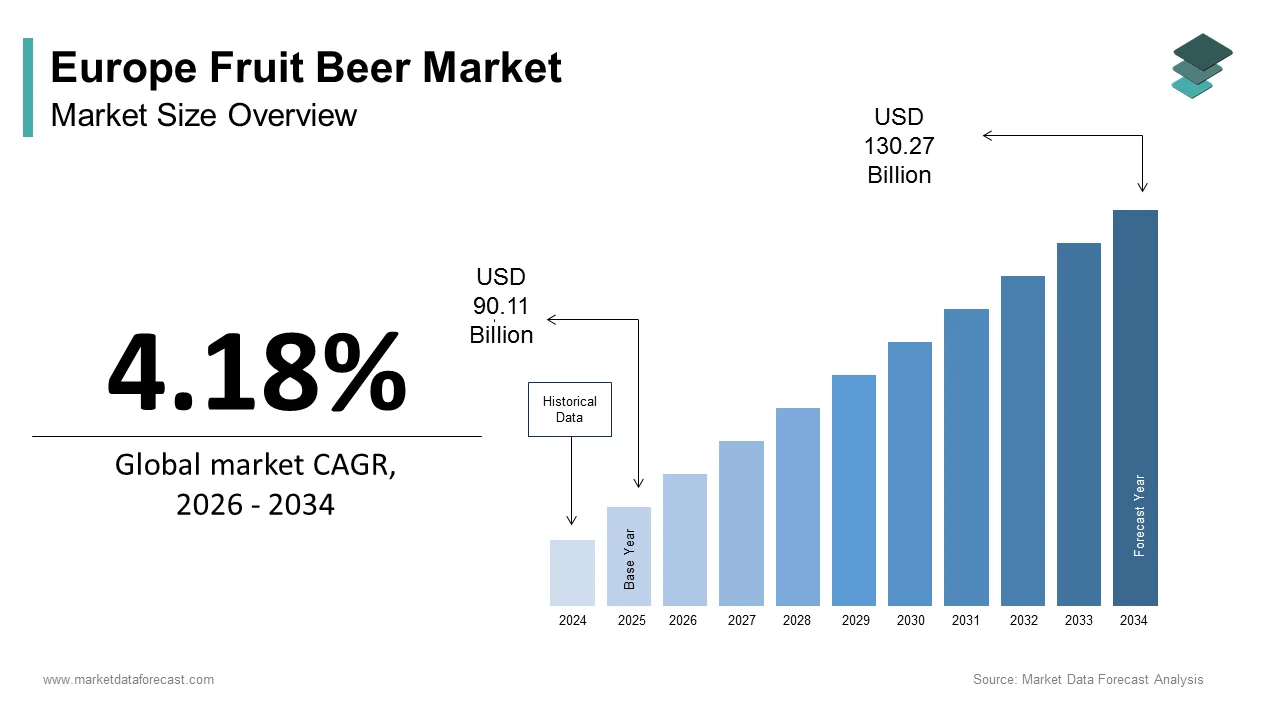
The Europe fruit beer market was valued at USD 90.11 billion in 2025 and is projected to reach USD 130.27 billion by 2034, growing from USD 93.88 billion in 2026 at a CAGR of 4.18% during the forecast period. Market growth is driven by rising consumer preference for flavored alcoholic beverages, increasing experimentation in craft brewing, and growing demand for low-bitterness and refreshing beer variants. Fruit beer is gaining popularity among younger consumers and casual drinkers due to its diverse flavor profiles and lower alcohol perception compared to traditional beer styles.
Key Market Trends
- Growing demand for flavored and specialty craft beers
- Increasing popularity of fruit-infused beer variants among millennials
- Rising consumption of low-bitterness and refreshing alcoholic beverages
- Expansion of on-trade consumption in bars and restaurants
- Innovation in seasonal and limited-edition fruit beer offerings
Segmental Insights
Based on flavor, the raspberry segment dominated the Europe fruit beer market in 2025 by accounting for 27.2% of the regional market share, supported by its balanced sweetness and tartness
Based on distribution channel, the bars and restaurants segment led the market in 2025 by capturing 61.6% of the regional market share, driven by strong on-premise consumption trends
Regional Insights
- Germany led the Europe fruit beer market in 2025 by holding 23.2% of the regional market share, supported by a strong brewing tradition and evolving craft beer culture
- France is expected to capture a notable share during the forecast period, driven by changing drinking preferences and premiumization trends
- Spain is projected to witness healthy growth, supported by warm climatic conditions and outdoor social consumption
- Netherlands is anticipated to hold a significant share, driven by an experimental and progressive craft beer culture
Competitive Landscape
The Europe fruit beer market is moderately competitive, with breweries focusing on flavor innovation, seasonal offerings, and expansion across on-trade and off-trade distribution channels. Companies are leveraging craft brewing techniques and local fruit sourcing to enhance product differentiation and brand positioning.
Prominent players in the Europe fruit beer market include Joseph James Brewing Company, Inc, New Belgium Brewing Company, Brewery Ommegang, All Saints’ Brewery, Lindemans Brewery, Lost Coast Brewery, Magic Hat Brewing Company, Shipyard Brewing Company, Unibroue, and Wells & Young's Ltd.
Europe Fruit Beer Market Size
The size of the Europe fruit beer market was calculated to be USD 90.11 billion in 2025 and is anticipated to be worth USD 130.27 billion by 2034, from USD 93.88 billion in 2026, growing at a CAGR of 4.18% during the forecast period.
The fruit beer market constitutes a dynamic and innovative segment within the broader alcoholic beverage industry, characterized by the intentional infusion or fermentation of beer with fruits, fruit juices, or natural fruit flavourings. This category transcends traditional lager and ale boundaries, offering a spectrum of products from subtly flavored to intensely fruity, often with a lower alcohol by volume (ABV) profile that appeals to a wider demographic. Unlike simple mixers, authentic fruit beers integrate the fruit's character into the brewing process, creating a harmonious balance between malt, hops, and the chosen fruit essence. The market is defined by its responsiveness to evolving consumer palates that seek novel, refreshing, and experiential drinking occasions. A significant cultural shift underpins this sector, as European consumers increasingly prioritize flavor exploration and moderate alcohol consumption. As per the Brewers of Europe, non-alcoholic and low-alcohol beer is recognized as the only growth category in the European beer market, which is a trend that directly benefits the inherently lower-ABV fruit beer segment. Furthermore, the proliferation of craft breweries across the continent, with a significant number of microbreweries operating according to the Brewers of Europe, has been instrumental in driving product diversity and quality within this niche.
MARKET DRIVERS
Resonant Appeal to Younger Demographics Seeking Novel and Moderate Experiences
The profound resonance of fruit beer with younger adult consumers, particularly those aged between 21 and 35, is one of the key factors propelling the expansion of the European fruit beer market. This demographic cohort is distinguished by a strong preference for experiential consumption, a desire for new and unique flavors, and a conscious move towards moderation in their drinking habits. They are less bound by traditional beer loyalties and more open to experimentation, viewing fruit beers as an accessible and flavourful gateway into the world of craft brewing. The inherently lower alcohol content of many fruit beers aligns perfectly with the sober curious movement and the broader trend of mindful drinking that is prevalent among this age group. According to Tesco, regional fruit lager brands have driven strong growth in sales, with the core consumer base firmly situated in the 21 to 35 age brackets. This demographic’s social habits further amplify demand, as they are more likely to frequent on-trade venues like bars and pubs where these innovative beverages are prominently featured. Their willingness to explore and share these experiences on social media also creates a powerful organic marketing effect, propelling niche products into mainstream awareness and solidifying fruit beer as a key component of contemporary European drinking culture.
The Unstoppable Momentum of the Craft Brewing Revolution
The sustained and powerful momentum of the European craft brewing revolution that has fundamentally reshaped the continent’s beer landscape is further boosting the European fruit beer market growth. Craft breweries, by their very nature, are hubs of innovation and creativity, constantly seeking to differentiate their offerings through unique ingredients, brewing techniques, and flavor profiles. Fruit provides an exceptionally versatile and appealing canvas for this innovation. The craft movement has liberated brewers from the constraints of mass-produced, homogenized lagers, enabling them to experiment with a vast array of fruits, thereby creating a rich tapestry of taste experiences for the consumer. As per the Brewers of Europe, craft beer sales have shown significant growth, a testament to the sector’s vitality. With over 10,000 microbreweries now operating across the continent, the capacity for continuous product development and market diversification is immense. These small and independent producers are not just making beer, they are crafting stories and local identities, often using regionally sourced fruits, which adds an extra layer of authenticity and appeal that resonates deeply with today’s discerning and ethically conscious European consumer.
MARKET RESTRAINTS
Stringent and Complex Regulatory Frameworks Governing Ingredients and Labeling
A significant restraint on the European fruit beer market stems from the intricate and often stringent regulatory environment that governs food and beverage production within the EU. Breweries, especially smaller craft operations, must navigate a complex web of regulations concerning the use of flavorings, additives, and labeling requirements. Regulation (EC) No 1334/2008 on flavourings establishes strict definitions and safety assessments for all flavoring substances used in food and beverages, including beer. This can be a considerable barrier for brewers who wish to use novel or natural flavoring preparations, as the approval process can be lengthy and costly. Furthermore, alcoholic beverages containing more than 1.2% alcohol by volume are currently exempt from the mandatory listing of ingredients and nutritional declaration under Regulation (EU) 1169/2011. While this exemption may seem beneficial, it is increasingly at odds with consumer demand for transparency. This regulatory gap can create a trust deficit, as consumers are unable to verify the source of fruit flavors or understand the sugar content, potentially hindering the market’s ability to fully capitalize on the clean-label and health-conscious trends that drive other food and beverage categories.
Persistent Challenge of Ingredient Sourcing and Climate Vulnerability
The European fruit beer market faces a formidable and growing restraint in the form of climate change, which directly threatens the stability and quality of its primary raw materials, fruit and traditional brewing crops. The production of high-quality fruit beer is intrinsically linked to the agricultural sector, and European harvests are becoming increasingly vulnerable to extreme weather events. According to PROFEL, Europe’s strawberry and cherry crops have faced significant losses due to unseasonal frosts and heatwaves. Similarly, research indicates that European beer-producing regions are projected to experience reductions in traditional aroma hops yield by 2050. These climatic disruptions lead to price volatility and supply chain insecurity for brewers. A poor harvest can force a brewery to reformulate a popular product or remove it from the market entirely, damaging brand loyalty. Moreover, elevated temperatures can alter the sugar-acid balance in fruits, impacting their flavor profile and consequently the final taste of the beer, making consistent product quality a persistent challenge in an era of environmental instability.
MARKET OPPORTUNITIES
Capitalizing on the Explosive Growth of the On-Trade Experience Economy
A prime opportunity for the European fruit beer market lies in its perfect alignment with the thriving on-trade sector, which includes bars, pubs, and restaurants. This channel is not merely a point of sale but a crucial platform for discovery, experience, and premiumization. The on-trade segment dominated the market with a 67% share in 2024, according to market analysis, highlighting its central role in the beer consumption journey. Fruit beers, with their visually appealing colors, aromatic bouquets, and unique flavor stories, are ideally suited to this environment. They serve as excellent conversation starters and provide bartenders with a compelling narrative to share with patrons. Breweries can leverage this channel to launch limited-edition, high-margin, and experimental fruit beers that might be too niche for the off-trade. By partnering with forward-thinking establishments, brewers can create exclusive tap offerings or curated tasting flights that elevate the fruit beer from a simple beverage to a premium experience. This strategy not only drives direct sales but also builds brand prestige and cultivates a loyal following that will seek out the brand’s products in other settings, effectively using the on-trade as a powerful marketing and innovation showcase.
Leveraging Consumer Demand for Sustainability and Ethical Production
The European fruit beer market is uniquely positioned to seize the substantial opportunity presented by the growing consumer demand for sustainability and ethical production practices. Modern European consumers are increasingly value-driven. As per Tap Beer Miami, many of them are willing to pay more for products with clear environmental commitments. Fruit beer producers can directly address this sentiment by embedding sustainability into their core business model. This can be achieved through multiple avenues, such as sourcing fruits from local, organic farms to reduce carbon footprint and support regional agriculture, investing in water conservation technologies, and utilizing innovative biodegradable packaging from sustainably managed forests. By transparently communicating these efforts from the farm to the glass, breweries can build a powerful brand identity that resonates deeply with the eco-conscious consumer. This is not just a marketing tactic; it is a strategic imperative that can foster long-term customer loyalty, command a price premium, and differentiate a brand in an increasingly crowded and competitive marketplace.
MARKET CHALLENGES
Navigating the Tension Between Flavor Authenticity and Sugar Content Perception
A central challenge for the European fruit beer market is managing the delicate balance between delivering a genuinely fruity and flavourful product and addressing consumer concerns about sugar content. While the brewing process typically ferments most of the fruit's natural sugars into alcohol, leaving a relatively low residual sugar level, the perception of fruit beer as a sweet or unhealthy option persists among health-conscious consumers. This perception is a significant hurdle. As per Circana data, many consumers are reducing their overall alcohol consumption. The challenge is compounded by the current EU regulatory exemption that prevents brewers from listing nutritional information on their labels, making it difficult to educate consumers and counteract misconceptions. Without clear labeling, crucial distinctions are lost, potentially steering health-aware consumers away from a product that could align with their moderate drinking goals. Overcoming this informational asymmetry and negative perception is a critical challenge that requires both industry-wide advocacy for labeling reform and proactive consumer education from individual brewers.
Intensifying Competition from a Proliferating and Fragmented Market Landscape
The European fruit beer market is grappling with the challenge of intensifying competition within an increasingly fragmented and saturated landscape. The very success of the craft beer movement, which is a key driver, has also led to a market flooded with new entrants and an overwhelming array of choices for the consumer. With over 10,000 microbreweries across Europe, each vying for attention, the fruit beer segment has become a primary battleground for innovation and differentiation. This hyper-competition makes it exceedingly difficult for new or smaller brands to gain traction and build a loyal customer base. Consumers are faced with a dizzying selection of berry IPAs, citrus sours, and stone fruit blondes, leading to potential brand fatigue and a focus on short-term novelty over long-term loyalty. Furthermore, the market is not just competing against itself; it is also contending with the growth of adjacent categories such as hard seltzers and canned cocktails, which offer similar promises of refreshment, flavor, and low alcohol. In this environment, standing out requires more than just a good recipe; it demands a compelling brand story, a robust distribution network, and significant marketing investment, resources that are often scarce for the independent craft brewer who forms the backbone of this market.
REPORT COVERAGE
| REPORT METRIC | DETAILS |
| Market Size Available | 2025 to 2034 |
| Base Year | 2025 |
| Forecast Period | 2026 to 2034 |
| CAGR | 4.18% |
| Segments Covered | By Flavor, Distribution Channel, And Region |
| Various Analyses Covered | Global, Regional & Country Level Analysis; Segment-Level Analysis; DROC, PESTLE Analysis; Porter’s Five Forces Analysis; Competitive Landscape; Analyst Overview of Investment Opportunities |
| Regions Covered | UK, France, Spain, Germany, Italy, Russia, Sweden, Denmark, Switzerland, Netherlands, Turkey, and the Czech Republic |
| Market Leaders Profiled | Joseph James Brewing Company, Inc., New Belgium Brewing Company, Brewery Ommegang, All Saints’ Brewery, Lindemans Brewery, Lost Coast Brewery, Magic Hat Brewing Company, Shipyard Brewing Company, Unibroue, and Wells & Young's Ltd. |
SEGMENTAL ANALYSIS
By Flavor Insights
The raspberry segment led the market by accounting for 27.2% of the European market share in 2025. The growth of the raspberry segment in the European market is attributed to the berry’s deep cultural and agricultural integration across Northern and Central Europe, where it is both widely cultivated and historically used in traditional brewing practices. The primary driver of Raspberry’s leadership is its ideal balance of tartness and sweetness, which complements the bitterness of hops without overwhelming the beer’s base character, making it highly palatable to a broad consumer base. As per Eurostat, raspberry production in the EU has been significant, with Poland, Germany, and the Netherlands being the top producers, ensuring a stable and local supply chain for brewers. This regional availability reduces costs and supports the clean-label trend, as breweries can highlight locally sourced ingredients. Furthermore, raspberries’ high antioxidant content and association with natural health benefits resonate with the growing segment of wellness-oriented consumers. According to Mintel, many European consumers prefer beverages made with recognizable fruit ingredients, and raspberry consistently ranks among the most trusted and familiar berries in the region, reinforcing its position as the cornerstone flavor in the fruit beer category.
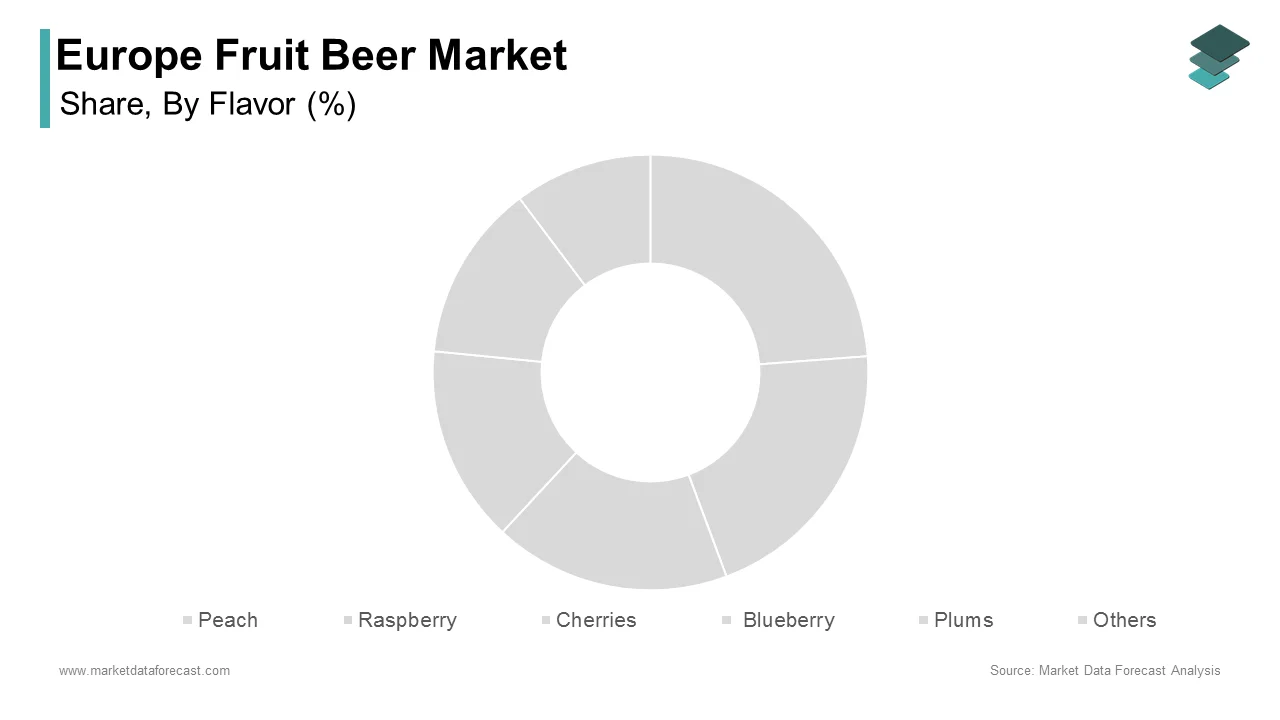
The peach segment is anticipated to witness a CAGR of 13.3% over the forecast period, owing to the sensory appeal, seasonal marketing success, and rising consumer interest in Mediterranean-inspired flavors. Peach offers a uniquely smooth, juicy, and aromatic profile that aligns perfectly with the summer drinking occasion, a period of peak beer consumption in Europe. Brewers have capitalized on this by launching limited-edition peach beers that generate significant buzz and repeat purchases. As per IRI, peach-flavored alcoholic beverages have shown strong growth across Western Europe, with fruit beers accounting for a substantial portion of that volume. The flavor’s popularity is further amplified by its strong performance in Southern European markets like Spain and Italy, where peach orchards are abundant, and the fruit is deeply embedded in culinary culture. According to the Food and Agriculture Organization of the United Nations, Spain has been a major producer of peaches, providing brewers with fresh, high-quality raw material. This synergy between agricultural abundance, consumer taste preferences, and strategic seasonal branding has positioned peach as the most dynamic and rapidly expanding flavor in the European fruit beer landscape.
By Distribution Channel Insights
The bars and restaurants segment commanded the leading share of 61.6% of the European market in 2025. This channel’s dominance is not merely a function of volume but of influence, as it serves as the primary discovery engine for new and innovative fruit beer variants. The on-trade environment allows consumers to sample unfamiliar flavors in a social setting, guided by knowledgeable staff who can articulate the product’s story, brewing method, and flavor notes. This experiential aspect is critical for premium and craft fruit beers, which often carry higher price points justified by their quality and uniqueness. As per CGA, fruit beer sales in European bars and pubs have shown notable growth, significantly outpacing overall beer category expansion. The rise of gastropubs and craft beer bars across cities like Berlin, London, and Barcelona has created dedicated spaces where fruit beers are featured on tap walls and curated menus, enhancing their visibility and credibility. Moreover, the on-trade channel enables breweries to test new recipes with immediate consumer feedback, accelerating product development cycles. This symbiotic relationship between venue and brewer fosters a vibrant ecosystem that continuously refreshes the market and drives consumer adoption, which is solidifying bars and restaurants as the indispensable backbone of the fruit beer distribution network.
The online retailers segment is promising and is estimated to grow at a CAGR of 19.1% over the forecast period, owing to the convergence of digital commerce maturity, direct-to-consumer strategies from craft breweries, and evolving consumer shopping habits. As per Euromonitor International, many European alcohol consumers now regularly buy beer online. Craft breweries, many of which lack widespread physical distribution, have leveraged e-commerce platforms to reach niche audiences across national borders, offering subscription boxes, exclusive releases, and mixed packs that showcase their fruit beer portfolios. Platforms such as Beerwulf and BrewDog’s online store have reported strong growth in the fruit beer category sales, driven by targeted digital marketing and seamless user experiences. Additionally, online retail provides valuable data on consumer preferences, enabling hyper-personalized recommendations and inventory management. The ability to bypass traditional gatekeepers and build direct brand relationships has transformed online channels from a supplementary outlet into a strategic growth pillar, making it the most dynamic and rapidly scaling route to market for Europe’s fruit beer innovators.
REGIONAL ANALYSIS
Germany Fruit Beer Analysis
Germany stood as the largest national market for fruit beer in Europe with 23.2% of the regional market share in 2025. The dominance of Germany in the European market is driven by the country’s long-standing tradition of fruit-infused brewing, most notably the Berliner Weisse and Gose styles, which historically use raspberry or woodruff syrup. This cultural legacy provides a ready-made consumer base that is both familiar with and receptive to fruit-forward beers. The German market is characterized by a dense network of over 1,500 craft breweries, many of which specialize in experimental fruit ales, supported by a robust domestic hop and fruit supply chain. As per the German Brewers Association, craft beer production has shown growth, with fruit variants leading the innovation charge. Furthermore, Germany’s strong regulatory framework for food authenticity reassures consumers about ingredient quality, a key factor in a market where many buyers prioritize natural flavourings according to GfK. The combination of historical precedent, modern craft energy, and consumer trust in product integrity ensures Germany’s continued leadership in the European fruit beer landscape.
United Kingdom Fruit Beer Analysis
The United Kingdom accounted for a substantial share of the European fruit beer market in 2025. The growth of the UK in the European market can be credited to a highly dynamic and trend-responsive consumer base. British drinkers have shown a marked shift away from traditional ales toward more adventurous and sessionable options, with fruit beers filling this gap perfectly. The UK’s craft beer scene, centred in cities like London, Bristol, and Manchester, is one of Europe’s most vibrant, with over 2,000 microbreweries actively producing fruit-infused IPAs, sours, and lagers. As per the Society of Independent Brewers, fruit beer has accounted for a significant portion of new craft beer launches in the UK. Supermarkets and on-trade venues have responded aggressively, dedicating entire sections to flavored and low-alcohol beers. A key catalyst is the nation’s embrace of moderation. According to Public Health England, many adults aged 18 to 34 now limit their weekly alcohol intake, and fruit beers with their lower ABV and refreshing profiles align seamlessly with this lifestyle. This cultural pivot toward mindful drinking, combined with a fertile craft ecosystem, positions the UK as a powerful and sustained growth engine for the category.
France Fruit Beer Analysis
France is estimated to hold a prominent share of the European fruit beer market over the forecast period, owing to a remarkable transformation in its drinking culture. Historically dominated by wine, France has witnessed a craft beer renaissance over the past decade, with fruit beers emerging as a gateway for wine drinkers seeking novel yet sophisticated alcoholic experiences. French consumers appreciate the nuanced interplay between fruit acidity and malt sweetness, drawing parallels to their oenological heritage. The market is particularly strong in urban centers like Paris and Lyon, where specialty beer bars and artisanal breweries flourish. As per France Boissons, fruit beer sales in the on-trade channel have shown notable growth. A significant driver is the use of local, terroir-driven fruits such as Mirabelle plums and Alpine blueberries, which resonate with the French emphasis on regional produce and culinary identity. According to INSEE, many French consumers prefer products labeled “made in France,” and brewers have capitalized on this by highlighting domestic sourcing. This fusion of craft innovation with national gastronomic values has cemented fruit beer’s place in France’s evolving beverage repertoire.
Spain Fruit Beer Analysis
Spain is estimated to register a healthy CAGR in the European fruit beer market over the forecast period due to its warm climate, outdoor social culture, and affinity for refreshing beverages. The Spanish consumer gravitates toward light, fruity, and low-bitterness beers that complement the country’s tapas-centric dining and long summer evenings. Peach and citrus fruit beers have found exceptional traction here, aligning with local fruit preferences and seasonal demand. The number of Spanish craft breweries has more than tripled since 2018, reaching over 800 in 202,5 according to Cerveceros de España. Many of these new entrants focus exclusively on fruit-forward styles, often using locally grown peaches, oranges, and cherries. As per the Spanish Ministry of Agriculture, Spain is the EU’s largest producer of peaches and nectarines, ensuring brewers access to premium, cost-effective ingredients. Furthermore, the rise of beer gardens and summer festivals provides ideal venues for sampling and promoting these products. This synergy between climate, agriculture, and social habits has made Spain a hotbed for fruit beer adoption and innovation.
Netherlands Fruit Beer Analysis
The Netherlands is predicted to secure a notable share of the European fruit beer market during the forecast period due to its progressive and experimental beer culture. Dutch consumers are among the most open to new flavors in Europe, with a strong preference for sour and funky beer styles that pair naturally with fruit additions. The country is home to world-renowned breweries that have pioneered complex fruit lambics and wild ales, commanding international acclaim. As per Statistics Netherlands (CBS), craft beer now accounts for a notable portion of total beer consumption in the country, with fruit variants representing a significant share of that segment. A key driver is the Netherlands’ role as a logistics and distribution hub, enabling small brewers to efficiently export their fruit beers across Europe, thereby reinvesting profits into further innovation. Additionally, the Dutch government’s support for sustainable agriculture has encouraged the use of organic and locally grown fruits. This blend of technical brewing expertise, logistical advantage, and commitment to quality ingredients ensures the Netherlands remains a vital and influential player in the European fruit beer market.
COMPETITION OVERVIEW
The competition in the Europe fruit beer market is characterized by a dynamic interplay between established multinational brewers and agile craft producers. Large corporations leverage their scale, distribution networks, and marketing budgets to launch mass-appeal fruit variants often under well-known brand extensions. Simultaneously, independent craft breweries differentiate themselves through artisanal methods, unique fruit combinations, and strong local identities, fostering deep consumer loyalty. This dual-track competition drives rapid innovation with new flavors entering the market almost monthly. The absence of standardized definitions for fruit beer further intensifies rivalry as brands compete on perceived authenticity, ingredient transparency, and taste experience. Digital engagement and social media have become critical battlegrounds where visual appeal and storytelling determine success. As consumer preferences shift toward moderation and novelty, the market remains highly fragmented yet intensely contested, with no single player able to dominate across all segments or geographies.
KEY MARKET PLAYERS
A few major players of the Europe fruit beer market include
- Joseph James Brewing Company, Inc
- New Belgium Brewing Company
- Brewery Ommegang
- All Saints’ Brewery
- Lindemans Brewery
- Lost Coast Brewery
- Magic Hat Brewing Company
- Shipyard Brewing Company
- Unibroue
- Wells & Young's Ltd
Top Strategies Used by the Key Market Participants
Key players in the Europe fruit beer market employ several strategic approaches to maintain competitiveness and drive growth. First, they prioritize product innovation by launching seasonal and limited-edition fruit flavors to capture consumer interest and encourage repeat purchases. Second, they invest in craft brewery acquisitions to access niche expertise and expand their portfolio with authentic offerings. Third, they strengthen direct-to-consumer channels through e-commerce platforms and subscription models to build brand loyalty and gather consumer insights. Fourth, they emphasize sustainability by sourcing local fruits and adopting eco-friendly packaging, which resonates with environmentally conscious buyers. Finally, they leverage experiential marketing in the on-trade sector using tasting events and collaborations with bars to enhance brand visibility and trial among target demographics.
Leading Players in the Europe Fruit Beer Market
- Carlsberg Group maintains a strong presence in the European fruit beer market through its innovative portfolio and strategic focus on flavor diversification. The company has integrated fruit variants into its core brands, such as Somersby, a leading cider brand that frequently launches limited-edition fruit flavors like blackberry and watermelon across European markets. In recent years, Carlsberg has invested heavily in consumer-centric product development, leveraging its research and development capabilities to create low-alcohol fruit beers that align with health-conscious trends. The group has also expanded its distribution network to enhance accessibility in both on-trade and off-trade channels, reinforcing its position as a key player in the evolving beverage landscape across Europe and beyond.
- AB InBev actively shapes the Europe fruit beer segment through its global brand Stella Artois and its craft-focused subsidiaries. The company has introduced fruit-infused variants under its Budweiser and Hoegaarden labels, capitalizing on the latter’s historical association with citrus and spice. AB InBev has strengthened its market position by acquiring regional craft breweries known for experimental fruit ales and integrating them into its broader innovation pipeline. Recent initiatives include sustainability-driven packaging and digital marketing campaigns targeting younger demographics. These efforts not only bolster its European footprint but also inform its global strategy, enabling the replication of successful fruit beer concepts in other international markets.
- Heineken N.V. contributes significantly to the Europe fruit beer market through its commitment to premiumization and flavor innovation. The company has expanded its Affligem and Sol brands with fruit-inspired editions and launched new sub-brands dedicated to low-alcohol fruity lagers. Heineken leverages its extensive on-trade relationships to promote these products in bars and restaurants where experiential consumption drives trial and loyalty. In 2025, the company intensified its focus on sustainable sourcing by partnering with European fruit growers to ensure traceable and eco-friendly ingredients. This vertical integration enhances product authenticity and supports Heineken’s broader environmental goals while reinforcing its leadership in the competitive European fruit beer arena.
MARKET SEGMENTATION
This research report on the Europe fruit beer market has been segmented and sub-segmented based on flavor, distribution channel, & region.
By Flavor
- Peach
- Raspberry
- Cherries
- Blueberry
- Plums
- Others
By Distribution Channel
- Departmental Stores
- Bars and Restaurants
- Supermarkets
- Specialty Stores
- Online Retailers
By Region
- UK
- France
- Spain
- Germany
- Italy
- Russia
- Sweden
- Denmark
- Switzerland
- Netherlands
- Turkey
- Czech Republic
- Rest of Europe