- Product Description Description
- Table of Contents TOC
- List of Table & Figure LOT
- Get Free Sample PDF Sample PDF
Market Size, 2025
$1,436.88 MnMarket Estimate, 2026
$1,555.85 MnMarket Forecast, 2034
$2,940.04 MnCAGR, 2026–2034
8.28%Europe Bioanalytical Testing Services Market Summary
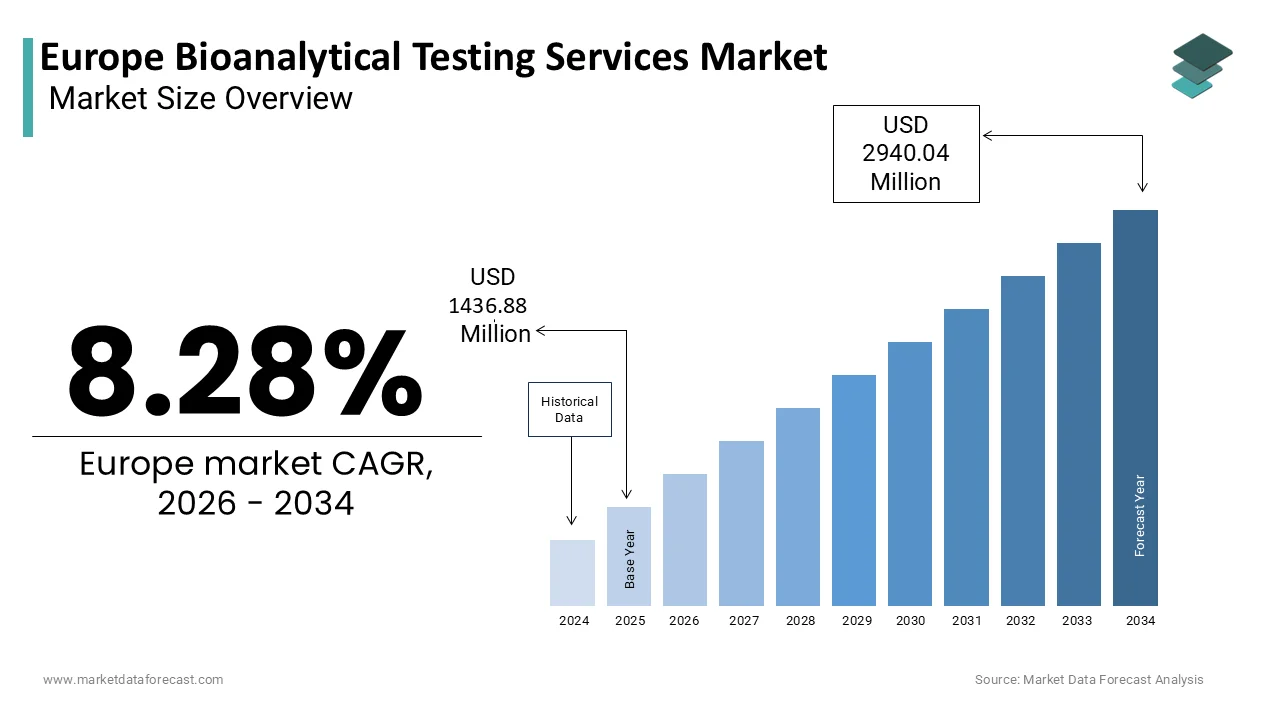
The Europe bioanalytical testing services market was valued at USD 1,436.88 million in 2025 and is projected to reach USD 2,940.04 million by 2034, growing at a CAGR of 8.28% from 2026 to 2034, driven by expanding clinical trial activity, stringent EMA validation requirements, and rising demand for precision medicine biomarker analytics.
Market Snapshot
2025 Market Size: USD 1,436.88 million
2026 Market Size: USD 1,555.85 million
2034 Forecast: USD 2,940.04 million
CAGR (2026–2034): 8.28%
Base Year: 2025
Forecast Period: 2026–2034
Quick Growth Drivers
- Rising clinical trial density across the EU under the Clinical Trials Regulation
- Increasing approvals of new molecular entities requiring validated bioanalytical data packages
- Growing demand for pharmacokinetic (PK), bioavailability (BA), and bioequivalence (BE) studies
- Expansion of biologics, biosimilars, and advanced therapy medicinal products (ATMPs)
- Regulatory stringency under EMA and ICH bioanalytical method validation guidelines
Principal Restraints
- Shortage of skilled LC-MS/MS and ligand binding assay specialists
- Fragmented regulatory interpretation across EU member states
- High compliance costs under overlapping GDPR and GxP requirements
- Capacity bottlenecks in high-throughput mass spectrometry laboratories
High-Value Opportunities
- Expansion of precision oncology and companion diagnostic-linked biomarker assays
- Rising biosimilar development under EU Pharmaceutical Strategy initiatives
- AI-powered method validation, predictive PK modeling, and automated data review
- Growth of decentralized and hybrid clinical trials requiring centralized lab analytics
- Increased public investment in molecular profiling under Europe’s cancer initiatives
Key Market Challenges
- Dual regulatory burden of EMA GxP standards and GDPR data protection rules
- High capital expenditure for advanced triple quadrupole and HRMS instrumentation
- Rapid technological obsolescence of analytical platforms
- Data integrity scrutiny during EMA and national inspections
- Limited harmonization in documentation expectations among member states
Fastest-Growing Segments
- Large Molecule Testing – fastest CAGR due to monoclonal antibodies, ADCs, and cell & gene therapies
- Bioavailability & Bioequivalence Testing – fueled by rising generic and hybrid medicine approvals
- Biopharmaceutical & Biotech End Users – rapid growth driven by outsourcing dependency
Regional Leadership & Dynamics
- Germany (21.2%) – Dense pharma ecosystem, strong early-phase trial infrastructure, and active EMA participation
- United Kingdom (17.2%) – Leading Phase I destination with mature CRO network and biomarker innovation
- France – Strong bioequivalence activity and precision medicine funding under France 2030
- Switzerland – High concentration of multinational pharma headquarters and R&D clusters
- Netherlands – Efficient regulatory approvals and advanced logistics for biological sample handling
What Wins Commercially
- EMA-validated, inspection-ready quality systems
- Advanced LC-MS/MS and immunogenicity testing capabilities
- Integrated PK/PD and biomarker analytics platforms
- GDPR-compliant digital data infrastructure
- Strategic partnerships with biotech startups and biosimilar developers
Top Strategic Ask for Executives
Invest in high-sensitivity instrumentation, AI-driven analytical workflows, and regulatory harmonization expertise to sustain competitive positioning in Europe’s precision medicine-driven and compliance-intensive bioanalytical ecosystem.
Leading Players
Some of the companies that are playing a dominating role in the Europe bioanalytical testing services market include
- Eurofins Scientific SE
- Charles River Laboratories International, Inc.
- Covance Inc.
- SGS SA
- Intertek Group plc
 Download Free Sample Report
Europe Bioanalytical Testing Services Market Size
The europe bioanalytical testing services market was valued at USD 1436.88 million in 2025, is estimated to reach USD 1555.85 million in 2026, and is projected to reach USD 2940.04 million by 2034, growing at a CAGR of 8.28% from 2026 to 2034.
The bioanalytical testing services are the quantitative and qualitative analysis of drugs, biomarkers,s and metabolites in biological matrices, such as plasma, serum, urine, and tissue, to support pharmaceutical development, regulatory submissions, and clinical diagnostics. These services are integral to pharmacokinetic, ic and bioequivalence studies, ensuring that therapeutic candidates meet stringent safety and efficacy thresholds before market authorization. The rigorous adherence to guidelines issued by the European Medicines Agency and the International Council for Harmonisation, which mandate validated analytical methods with defined specificity, accuracy,cy, and reproducibility. According to the European Medicines Agency, over 120 new molecular entities were approved in the EU between 2022 and 2025, each requiring extensive bioanalytical data packages for regulatory review. As per Eurostat, more than 3800 clinical trials were initiated across the European Union in 2023, reflecting sustained investment in drug innovation that directly fuels demand for specialized testing infrastructure. The emergence of advanced modalities, such as cell and gene therapies with evolving regulatory science,ce has elevated bioanalytical testing from a supportive function to a strategic enabler of precision medicine and accelerated approval pathways across the region.
MAKRET DRIVERS
Expanding Clinical Trial Activity Across the European Union Drives Testing Volume
The proliferation of clinical trials has significantly intensified demand for bioanalytical testing services, as every phase of human investigation requires precise quantification of drug exposure and biological response. The expanding clinical trial activity across the European Union, testing volume is driving the growth of Europe bioanalytical testing services market. According to the European Medicines Agency, the number of clinical trial applications submitted under the EU Clinical Trials Regulation increased in 2023 compared to 2021, demonstrating robust pipeline momentum. This growth is particularly pronounced in oncology and rare diseases, where complex biologics necessitate sophisticated ligand binding assays and mass spectrometry-based quantification. Germany, France, and the United Kingdomcollectively hosted over 55% of all EU interventional trials in 2023 as per the reports. Each trial typically generates thousands of bioanalytical samples requiring GLP-compliant processing within strict timelines. Furthermore, the EU’s Horizon Europe program allocated 1.8 billion euros in 2025 to translational research, accelerating first-in-human studies that depend on high-throughput bioanalytical support. This sustained trial density ensures consistent workload for contract testing laboratories and incentivizes investment in automation and multiplexed detection platforms to meet scale and speed requirements.
Regulatory Stringency and Method Validation Requirements Elevate Service Necessity
European regulatory authorities enforce some of the world’s most exacting standards for bioanalytical method validation, compelling sponsors to outsource to specialized laboratories with proven compliance infrastructure. This factor is additionally amplifying the growth of Europe bioanalytical testing services market. The European Medicines Agency’s Guideline on Bioanalytical Method Validation mandates rigorous assessment of selectivity matrix effects, recovery,ery and stability under diverse storage conditions. As per the agency,ency non-compliant submissions accounted for 18% of major objections in marketing authorization applications during 2023. This regulatory pressure is amplified by the rise of complex therapeutics; for instance, cell and gene therapies often require bespoke assays to measure vector copy numbers or transgene expression levels, capabilities rarely available in-house.
MARKET RESTRAINTS
Shortage of Skilled Personnel in Specialized Analytical Techniques Limits Capacity
The persistent deficit in scientists trained in advanced mass spectrometry ligand binding assays and data integrity protocols is a major factor hampering the growth of Europe's bioanalytical testing services market. According to the European Federation of Pharmaceutical Industries and Associations, over 60% of contract research organizations in Western Europe reported difficulty recruiting qualified bioanalytical staff in 2025. This gap is particularly acute in techniques like liquid chromatography tandem mass spectrometry, which require both instrumental expertise and a deep understanding of regulatory validation criteria. The situation is exacerbated in Central and Eastern Europe, where academic programs have been slow to align curricula with industry needs. As per Eurostat, only 12% of life science graduates in the EU specialize in analytical chemistry or pharmacokinetics. The resulting bottleneck constrains laboratory throughput and extends project timelines, especially for large multi-center trials requiring parallel sample analysis. Without targeted workforce development initiatives, this human capital shortfall will continue to cap service scalability and increase reliance on offshore alternatives despite data sovereignty preferences.
Fragmented Regulatory Interpretation Across Member States Increases Operational Complexity
Although the European Medicines Agency provides overarching guidance, national competent authorities retain discretion in interpreting bioanalytical requirements,s leading to inconsistent expectations during inspections and submissions. This factor is also hampering the growth of Europe bioanalytical testing services market. This fragmentation forces contract laboratories to maintain multiple standard operating procedures and validation templates to satisfy local inspectors with resource-intensiveve burden that inflates operational costs. For example, a bioanalytical study supporting a pan-European submission may require separate documentation packages for Germany’s BfArM and France’s ANSM due to differing thresholds for matrix effect acceptance. As per the European Directorate for the Quality of Medicines, bioanalytical labs report full harmonization of their quality systems across all EU jurisdictions. Such regulatory asymmetry not only delays study approvals but also discourages smaller testing providers from pursuing cross-border contracts, thereby stifling market fluidity and competition.
MARKET OPPORTUNITIES
Rise of Personalized Medicine Demands Advanced Biomarker Quantification Capabilities
The shift toward precision oncology and targeted therapies for highly sensitive multiplexed bioanalytical assays capable of measuring low-abundance biomarkers in limited clinical samples is solely to fuel new opportunities for the growth of Europe's bioanalytical testing services market. According to the Organisation for Economic Cooperation and Development, new cancer drugs approved in the EU since 2022 are companion diagnostic-linked, requiring concurrent biomarker validation. This trend necessitates the adoption of digital PCR, next-generation sequencing, and high-sensitivity immunoassays that can detect protein or nucleic acid signatures at femtomolar concentrations. The Innovative Medicines Initiative funded a 90-million euro consortium in 2025 to standardize biomarker analytics across European clinical networks, recognizing the critical role of bioanalytical services in enabling patient stratification. Additionally, the EU’s Beating Cancer Plan has allocated 250 million euros to expand molecular profiling infrastructure in public hospitals, directly increasing sample volumes routed to specialized testing labs. These developments position bioanalytical providers as essential enablers of tailored treatment paradigms, offering premium pricing for validated biomarker panels and longitudinal monitoring services.
Integration of Artificial Intelligence for Data Integrity and Predictive Analytics
The incorporation of artificial intelligence into bioanalytical workflows presents a transformative opportunity to enhance data reliability, accelerate method development,t and predict pharmacokinetic outcomes. This attribute is expected to elevate the growth of Europe bioanalytical testing services market. European laboratories are increasingly deploying machine learning algorithms to automate peak integration, flag anomalous calibration curves, es and forecast matrix interference based on historical datasets. The European Medicines Agency’s Big Data Steering Group has endorsed the use of predictive modeling in early phase trials to optimize sampling schedules and reduce patient burden. Vendors like Certara and Simyp now offer AI-powered simulation platforms integrated with bioanalytical outputs, enabling sponsors to model dose response relationships before Phase II.
MARKET CHALLENGES
Data Integrity and Cybersecurity Compliance Under EU GDPR and GxP Overlap
The bioanalytical laboratories operate at the intersection of Good Laboratory Practice and the General Data Protection Regulation, imposing complex compliance obligations for handling personally identifiable health data embedded in sample metadata. This factor is one of the major restraints for the growth of the European bioanalytical testing services market. According to the European Data Protection Board, over 200 enforcement actions related to health data processing were initiated across the EU in 2023, with fines exceeding 150 million euros. Bioanalytical datasets often include patient identifiers, rs timestamps, and clinical outcomes that fall under GDPR’s special category provisions requiring pseudonymization, encryption, and strict access controls. Simultaneously, these same systems must comply with Annex 11 of the EU GMP guidelines, which govern electronic records and signatures. The dual regulatory burden necessitates costly investments in hybrid audit trails, secure cloud architecture, es and staff training. As per the European Medicines Agency, 22% of laboratory inspection findings in 2025 cited deficiencies in data governance spanning both GDPR and GxP domains. This overlapping scrutiny increases operational risk and deters smaller labs from adopting digital workflows despite their efficiency benefits.
High Cost of Instrumentation and Maintenance Constrained Technological Upgrades
The capital intensity of maintaining state-of-the-art bioanalytical instrumentation represents a significant barrier to service modernization, particularly for mid-sized European laboratories. High-resolution mass spectrometers, triple quadrupole ssystemss, ms and automated liquid handlers routinely cost between 500,000 and 1.2 million euros per unit, with annual maintenance contracts exceeding 10% of purchase price. This financial pressure is compounded by rapid technological obsolescence, where, for instance,e the shift toward microsampling and dried blood spot analysis requires entirely new sample preparation robotics incompatible with legacy platforms. As per Eurostat, only 28% oEU-baseded bioanalytical labs upgraded their core instrumentation in the past two years, citing budget constraints. Without access to cutting-edge hardware, laboratories struggle to meet sponsor demands for lower limits of qquantification faster turnaround, and higher throughput, thereby losing competitive bids to better capitalized global players and limiting innovation diffusion across the regional market.
REPORT COVERAGE
| REPORT METRIC | DETAILS |
| Market Size Available | 2025 to 2034 |
| Base Year | 2025 |
| Forecast Period | 2026 to 2034 |
| Segments Covered | By Molecule, Test, Workflow, Therapeutic Area, End-user, and Region. |
| Various Analyses Covered | Global, Regional, and Country-Level Analysis, Segment-Level Analysis, Drivers, Restraints, Opportunities, Challenges; PESTLE Analysis; Porter’s Five Forces Analysis, Competitive Landscape, Analyst Overview of Investment Opportunities |
| Countries Covered | UK, France, Spain, Germany, Italy, Russia, Sweden, Denmark, Switzerland, Netherlands, Turkey, Czech Republic, Rest of Europe |
| Market Leaders Profiled | Eurofins Scientific SE, Charles River Laboratories International, Inc., Covance Inc., SGS SA, |
SEGMENTAL ANALYSIS
By Molecule Type Insights
The small molecules segment was the largest by holding 62.1% of the European bioanalytical testing services market share in 2025, with the rising prevalence of chemically synthesized drugs in therapeutic pipelines and post approval monitoring. According to the European Medicines Agency, small molecule entities of all new active substances approved in the EU between 2020 and 2025 rreflectsustained investment in traditional pharmacology. These compounds are typically analyzed using well-established liquid chromatography tandem mass spectrometry methods that offer high sensitivity, reproducibility, ty and regulatory acceptance across jurisdictions. Additionally, national health technology assessment bodies, such as Germany’s IQWiG, routinely mandate comparative pharmacokinetic data for pricing negotiations, reinforcing the need for rigorous small molecule analytics. The maturity of analytical protocols lowers method development costs and broad instrument compatibility collectively sustain this segment’s leadership despite the rise of biologics.
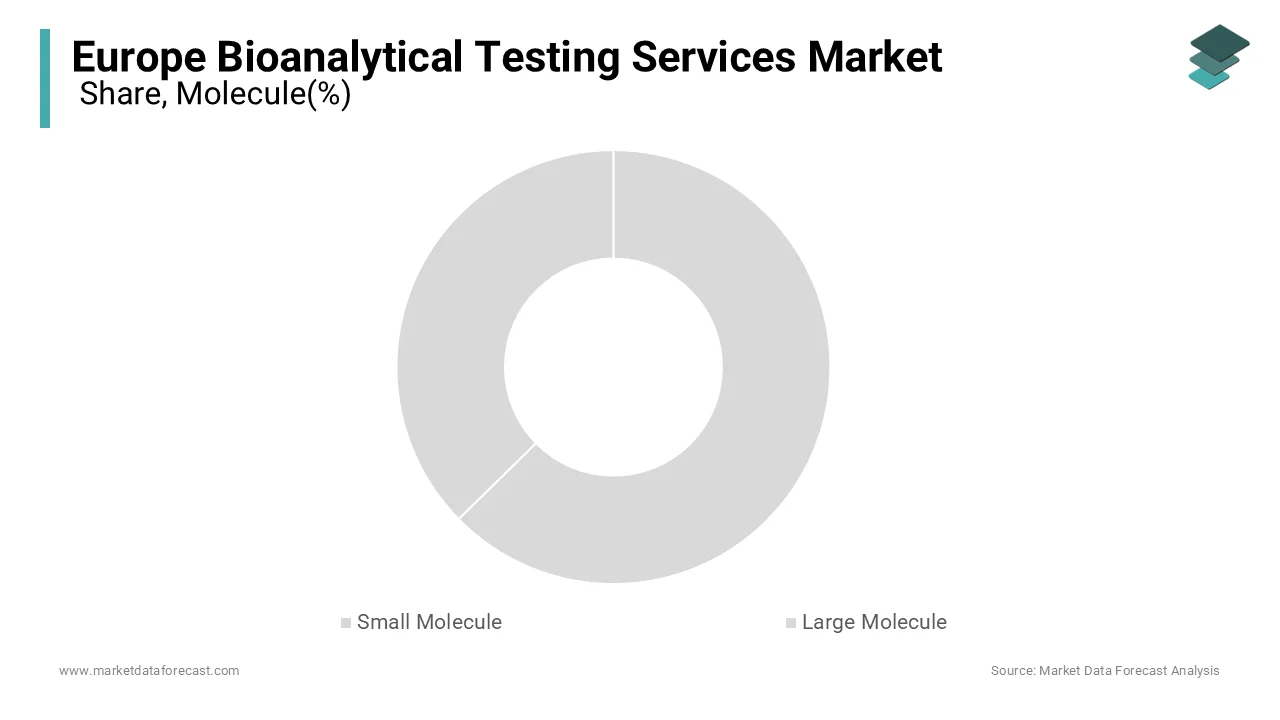
The large molecules segment is likely to witness the fastest CAGR of 13.2% throughout the forecast period, owing to the rapid clinical adoption of monoclonal antibodies, bispecifics,s and antibody drug conjugates, which require specialized ligand binding assays and cell-based potency testing. According to the European Commission, over 45% of new oncology and immunology therapies submitted for marketing authorization in 2025 were large molecule biologics demanding complex bioanalytical strategies for target engagement and anti-drug antibody detection. The European Medicines Agency has issued updated guidance on immunogenicity risk assessment mandating tiered testing approaches that increase sample volume and assay complexity. Furthermore, the expansion of biosimilar development supported by the EU’s 2023 Biosimilars Action Plan, targeting 50 new approvals by 20,30 has intensified demand for comparative PK, PD, and quality attribute analytics. As per the Paul Ehrlich Institute, German biosimilar sponsors conducted an average of 2.3 times more bioanalytical runs per dossier than small molecule counterparts in 2025. These scientific and regulatory dynamics position large molecule testing as the highest growth frontier in the European bioanalytical landscape.
By Test Type Insights
The pharmacokinetics segment was the largest by holding 54.2% of the European bioanalytical testing services market share in 2025, with its foundational role in determining drug absorption, metabolism, and excretion across all phases of clinical development. Every investigational medicinal product submitted to the European Medicines Agency must include comprehensive PK data to establish dosing regimens, safety mamargins and drug interaction profiles. According to the European Clinical Research Infrastructure Network, over 90% of Phase I trials conducted in the EU in 2025 included intensive serial blood sampling for plasma concentration time curve generation, requiring hundreds of validated bioanalytical measurements per subject. Regulatory emphasis on exposure-response relationships under the EMA’s Guideline on Dose Response Information further entrenches PK as non-negotiable. Moreover, the rise of narrow therapeutic index drugs such as immunosuppressants and anticoagulants necessitates therapeutic drug monitoring programs that rely on routine PK assays in hospital laboratories. As per the European Society of Clinical Pharmacology and Therapeutics, PPK-informeddose individualization is now standard practice in 18 EU member states, enhancing ongoing demand beyond initial development.
The bioavailability and bioequivalence testing segment is expected to register the fastest CAGR of 11.8% throughout the forecast period, with the EU’s aggressive promotion of generic and hybrid medicines to contain healthcare expenditure. According to the European Generic Medicines Association, over 1200 bioequivalence dossiers were submitted to EU national agencies in 2025 alone, driven by patent expirations of blockbuster drugs, such as apixaban and dulaglutide. The European Commission’s Pharmaceutical Strategy for Europe explicitly targets a 30% increase in generic uptake by 2027, necessitating robust BA BE evidence for market entry. Additionally, the harmonization of BE requirements under the EU Clinical Trials Regulation has streamlined cross-border study execution, enabling centralized testing hubs in countries like Hungary and Poland. As per the Dutch Medicines Evaluation Board, the average turnaround time for BE study approvals fell by 35% between 2022 and 2025, accelerating trial initiation. These policies and procedural enablers, combined with rising off-patent wave intensity, ensure sustained high velocity growth in this specialized testing domain.
By End User Insights
The pharmaceutical companies segment was the largest by holding 58.2% of the European bioanalytical testing services market share in 2025, with their extensive internal pipelines, reliance on external testing for capacity flexibility,y and stringent regulatory obligations. Major European pharma firms, such as Novartis, Roche, and AstraZeneca, routinely outsource up to 70% of their bioanalytical work to certified contract laboratories to manage fluctuating trial volumes and access specialized instrumentation. According to the European Federation of Pharmaceutical Industries and Associations, large pharmaceutical companies conducted over 2800 clinical trials in the EU in 2025, each generating thousands of bioanalytical samples requiring GLP-compliant processing. The industry’s shift toward fixed-dose combinations and modified-release formulations further increases analytical complexity as these products demand simultaneous quantification of multiple actives and intricate dissolution profiling. Moreover, national pricing authorities like France’s CEPS require comparative bioavailability data for reimbursement decisions, reinforcing the strategic importance of outsourced testing.
The biopharmaceutical and biotech firms segment is projected to grow at the fastest CAGR of 14.1% throughout the forecast period, owing to the proliferation of innovative startups and mid-sized enterprises developing advanced therapy medicinal pproducts cell therapies, and novel biologics that lack in-house analytical infrastructure. According to the European Biotech Alliance, over 1800 biotech companies were active in drug development across the EU in 2025, with 65% classified as micro or small enterprises employing fewer than 50 people. These entities depend entirely on external bioanalytical partners for assay development, validation, ion analysis, nd sample analysis due to capital constraints and technical specialization requirements. Furthermore, the rise of decentralized trial models increases reliance on central laboratories capable of handling cryopreserved samples and complex biomarker panels.
COUNTRY LEVEL ANALYSIS
Germany Bioanalytical Testing Services Market Analysis
Germany was the largest contributor by holding 21.2% of the European bioanalytical testing services market share in 2025, due to its dense concentration of pharmaceutical manufacturers, research hospit anddn d regulatory expertise. The country hosts headquarters or major R&D centers for global players, including Bayer Merck KGaA and Boehringer Ingelheim, which maintainhigh-throughputt bioanalytical outsourcing relationships. According to the Federal Ministry of Health, over 420 clinical pharmacology units operate across German university hospitals, providing a robust ecosystem for early phase trials requiring intensive PK sampling. The Federal Institute for Drugs and Medical Devices BfArM actively participates in EMA guideline development,t ensuring local laboratories align with evolving validation standards. Furthermore, Germany’s Central Ethics Committee system enables rapid trial approval with median review times of 28 days, as per the German Clinical Trials Register 2025 data.
United Kingdom Bioanalytical Testing Services Market Analysis
The United Kingdom was positioned second by holding 17.2% of the European bioanalytical testing market share in 20,24 wiworld-classass academic medical centers and a mature contract research organization sector. The UK remains deeply integrated into European drug development through mutual recognition agreements and participation in EMA scientific committees. According to the Medicines and Healthcare products Regulatory Agency, over 380 Phase I trials were initiated in the UK in 202,4 making it the leading destination fofirst-in-humanan studies in Europe. Institutions like the Clinical Research Facility Network provide standardized bioanalytical support across 15 sites, ensuring data consistency. The National Institute for Health and Care Research allocated 180 million pounds in 2025 to enhance laboratory capacity for biomarker and therapeutic drug monitoring studies. Additionally, the UK’s Early Access to Medicines Scheme requires a robust PK PD data package,s accelerating sponsor reliance on specialized testing providers. These structural advantages maintain the UK’s prominence as a high-quality, high-volume bioanalytical hub.
France Bioanalytical Testing Services Market AnalysisThe
France bioanalytical testing services market growth is likely to grow with the strong public health research infrastructure and a thriving biotech corridor in Lyon and Paris. The French National Agency for Medicines and Health Products Safety, ANSM, processed over 600 bioequivalence applications in 2025, reflecting robust generic activity. The government’s France 2030 investment plan has dedicated 500 million euros to precision medicine initiatives requiring advanced biomarker quantification and pharmacogenomic testing. Furthermore, France leads EU efforts in real-world evidence generation with the SNDS health database linking prescription records to biological monitoring outcomes.
Switzerland Bioanalytical Testing Services Market Analysis
Switzerland's bioanalytical testing services market growth is likely to grow with its cluster of multinational pharmaceutical and diagnostics companies, including Novartis,s Roche, and Idorsia. The country’s dual focus on innovative drug discovery and high-quality manufacturing drives demand for both exploratory and regulated testing. Additionally, Switzerland’s neutrality and data protection laws make it a preferred location for storing sensitive clinical samples from multinational trials. As per the Basel Area Life Sciences Cluster, the region employs over 35,000 professionals in R&, many of whom interface directly with bioanalytical service providers. This unique combination of industrial density, ty scientific excellence, and regulatory alignment sustains Switzerland’s outsized influence.
Netherlands Bioanalytical Testing Services Market Analysis
The Netherlands bioanalytical testing services market growth is likely to grow with its strategic logistics hub status, advanced clinical trial infrastructure, and progressive regulatory stance. The Dutch Medicines Evaluation Board is recognized for efficient review processes, with bioequivalence study approvals averaging 22 days in 2025. The country hosts major European trial coordination centers, including the Netherlands Trial Registry,ry which recorded over 2000 active interventional studies in 2,024, many requiring centralized bioanalytical support. Leiden University Medical Center and Erasmus MC operate state of the art bioanalysis cores that collaborate with commercial labs on complex biomarker validation. Furthermore, the Port of Rotterdam facilitates rapid import of temperature-controlled biological samples from global sites, enhancing the country’s appeal as a central testing node.
TOP LEADING PLAYERS IN THE MARKET
- Charles River Laboratories plays a pivotal role in the European bioanalytical testing services market through its integrated drug discovery and development platform spanning preclinical to clinical support. The company operates multiple GLP and GCP-compliant bioanalytical laboratories across the UK, Germany,y and Sweden, offering quantitative analysis for small molecules, large mmoleculess and biomarkers. It has significantly expanded its capabilities in cell and gene therapy analytics, including vector copy number and transgene expression assays. In recent years, Charles River has invested in high-sensitivity platforms such as Gyrolab and liquid chromatography tandem mass spectrometry to meet evolving regulatory expectations. Its strategic acquisition of Cognate BioServices enhanced its ability to deliver end-to-end solutions for advanced therapies, strengthening its position as a preferred partner for European biotech innovators seeking global regulatory alignment.
- Eurofins Scientific is a leading provider of bioanalytical testing services in Europe with an extensive network of specialized laboratories across France, Germany, Italy,aly and the United Kingdom. The company offers comprehensive support for pharmacokinetic bioequivalence and immunogenicity studies aligned with EMA and ICH guidelines. Eurofins has distinguished itself through rapid turnaround times and robust data integrity systems certified under ISO 17025 and GLP frameworks. Recently, the company launched a dedicated biomarker and precision medicine unit integrating next-generation sequencing with quantitative protein analysis to serve oncology and rare disease trials. It has also enhanced its digital infrastructure to enable real-time data access for sponsors while maintaining GDPR compliance. These initiatives reinforce Eurofins’ reputation as a scalable and scientifically rigorous partner for both pharmaceutical and emerging biotech clients across the region.
- WuXi AppTec has established a strong foothold in the European bioanalytical testing market through its global service model and investment in cutting-edge analytical technologies. The company operates bioanalytical facilities in Germany and the UK, equipped to handle complex modalities,s including antibody drug conjuga,,tes oligonucleotid, oligonucleotides, and cell therapies. WuXi AppTec emphasizes seamless data transfer between its discovery, development, and manufacturing divisions, enabling integrated program support for multinational sponsors. It expanded its ligand binding assay capacity and introduced AI-assisted method validation workflows to reduce development timelines. The company also strengthened its European regulatory affairs team to ensure submissions meet EMA and national agency requirements.
TOP STRATEGIES USED BY THE KEY MARKET PARTICIPANTS
Key players in the European bioanalytical testing services market focus on expanding specialized capabilities for large molecules and advanced therapies to address evolving scientific complexity. They invest in high-sensitivity instrumentation such as high-resolution mass spectrometry and automated immunoassay platforms to meet stringent regulatory thresholds. Strategic geographic expansion through laboratory build-outs or acquisitions enhances local presence and sample logistics efficiency. Companies prioritize digital transformation by implementing cloud-based data management systems that ensure audit readiness and GDPR compliance.
COMPETITIVE LANDSCAPE
The European bioanalytical testing services market features intense competition among global contract research organizations, mid-sized specialists,s and academic core facilities, each vying for credibility, speed,eed and scientific depth. Large players leverage integrated service models and global regulatory experience to secure long-term partnerships with multinational pharmaceutical firms, while niche providers differentiate through expertise in complex modalities such as cell and gene therapies or microsampling techniques. The competitive dynamic is shaped by rising sponsor expectations for data transparency, faster turnaround, nd and adherence to both EMA and international standards. Regulatory scrutiny during inspections has intensif,ied, with data integrity and chain of custody becoming critical evaluation criteria. Laboratories are compelled to continuously upgrade instrumentation, adopt electronic lab notebooks, ks and train staff in evolving guidelines. This environment favors organizations that combine scientific rigor,gor operational agility, and robust quality systems, creating a high barrier to entry for new entrants and consolidating leadership among established players with proven compliance records.
KEY MARKET PLAYERS
Companies playing a significant role in the European bioanalytical testing services market are
- Eurofins Scientific SE
- Charles River Laboratories International, Inc.
- Covance Inc.
- SGS SA
- Intertek Group plc
MARKET SEGMENTATION
This research report on the europe bioanalytical testing services market has been segmented and sub-segmented into the following categories.
By Molecule
- Small Molecule
- Large Molecule
- LC-MS Studies
- Immunoassays
- PK
- ADA
- Others
- Others
By Test
- ADME
- In-Vivo
- In-Vitro
- PK
- PD
- Bioavailability
- Bioequivalence
- Others
By Workflow
- Sample Preparation
- Protein Precipitation
- Liquid-Liquid Extraction
- Solid Phase Extraction
- Sample Analysis
- Hyphenated technique
- Chromatographic technique
- Electrophoresis
- Ligand Binding Assay
- Mass Spectrometry
- Nuclear Magnetic Resonance
- Other Workflow Processes
By Therapeutic Area
- Oncology
- Neurology
- Metabolic Disorders
- Hematology
- Immunology
- Orthopedics
- Others
By End-user
- Pharmaceutical and Biotechnology Companies
- Contract Development and Manufacturing Organization
- Contract Research Organization
- Others
By Country
- UK
- France
- Spain
- Germany
- Italy
- Russia
- Sweden
- Denmark
- Switzerland
- Netherlands
- Turkey
- Czech Republic
- Rest of Europe