- Product Description Description
- Table of Contents TOC
- List of Table & Figure LOT
- Get Free Sample PDF Sample PDF
Europe Blood-Brain Barrier (BBB) Technologies Market Report Summary
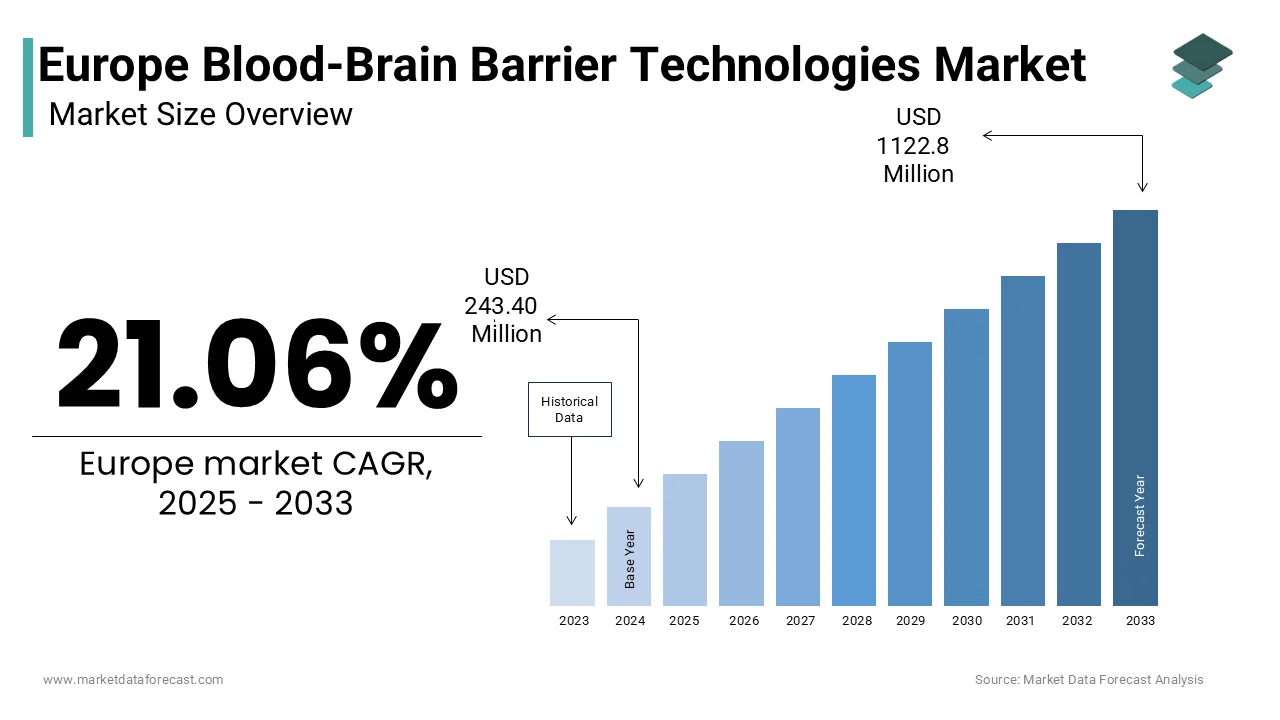
The Europe blood-brain barrier (BBB) technologies market was valued at USD 201.06 million in 2024, is projected to reach USD 243.40 million in 2025, and is expected to grow at a CAGR of 21.06% from 2025 to 2033, reaching USD 1122.88 million by 2033. The market growth is driven by increasing research in neurodegenerative disorders, advancements in drug delivery technologies, and rising investments in biotechnology aimed at overcoming BBB permeability challenges. Enhanced clinical adoption of innovative transcytosis methods and rising demand for targeted neurological therapeutics are further propelling market expansion across Europe.
Key Market Trends
- Rising research focus on neurodegenerative diseases such as Alzheimer’s, Parkinson’s, and brain cancer, driving innovation in BBB-penetrating drug formulations.
- Growing adoption of bispecific antibody receptor-mediated transcytosis (RMT) for improved central nervous system (CNS) drug delivery efficiency.
- Increasing partnerships between biopharmaceutical companies and academic research institutes to accelerate translational BBB technology research.
- Emergence of nanoparticle-based and carrier-mediated delivery systems offering enhanced precision and reduced side effects.
- Rising public and private funding across Europe to support breakthrough innovations in neurological treatment and targeted drug delivery.
- Expansion of clinical trials and regulatory approvals for advanced BBB-modulating therapies.
Segmental Insights
By Technology Insights
- The bispecific antibody receptor-mediated transcytosis (RMT) segment held the leading share of 34.2% of the Europe BBB technologies market in 2024.
- The segment’s dominance is attributed to its high specificity, improved drug delivery efficiency, and clinical validation for neurological applications.
- Increasing adoption of RMT-based therapeutics is supporting the development of effective treatments for central nervous system (CNS) disorders.
By Application Insights
- The Alzheimer’s disease segment was the largest in the Europe BBB technologies market in 2024, accounting for 28.7% of the market share.
- The segment’s growth is fueled by the rising prevalence of Alzheimer’s disease and ongoing R&D efforts focusing on improved BBB penetration strategies for targeted drug delivery.
- Continuous advancements in molecular delivery systems are supporting breakthroughs in Alzheimer’s treatment development.
By End Use Insights
- In 2024, the research institutes segment led the Europe BBB technologies market, occupying a 41.5% share.
- Increased academic and institutional research on BBB permeability and neurotherapeutic delivery methods has contributed to this segment’s dominance.
- Collaborative projects between universities, biotech firms, and pharmaceutical companies are enhancing innovation pipelines across Europe.
Regional Insights
- Germany dominated the Europe BBB technologies market in 2024, accounting for a 22.4% share, driven by strong pharmaceutical R&D infrastructure and extensive neurotherapeutic research programs.
- France followed closely, holding a 17.8% share in 2024, supported by robust government initiatives in biomedical innovation and the expansion of neuroscience research centers.
- The United Kingdom continues to be a major contributor to the European BBB technologies market, with growing investments in biotech innovation, academic collaborations, and clinical research trials for CNS therapies.
- Switzerland is advancing steadily owing to its concentration of global pharmaceutical R&D headquarters and elite neuroscience research institutions, reinforcing its position as a hub for high-end drug delivery innovation.
- Sweden is also emerging as a promising market, projected to witness substantial growth during the forecast period, driven by increased funding for translational neuroscience projects and strong academic-industry partnerships.
Competitive Landscape
The Europe blood-brain barrier (BBB) technologies market is highly competitive and innovation-driven, with a strong mix of global pharmaceutical leaders and emerging biotechnology firms focusing on advanced drug delivery systems for neurological disorders. Leading companies are investing heavily in R&D to develop effective BBB-penetrating therapeutics, leveraging receptor-mediated transport, nanocarrier platforms, and biologics to enhance central nervous system (CNS) drug delivery. The competitive environment is further fueled by strategic collaborations, mergers, licensing agreements, and academic partnerships that accelerate clinical translation and expand therapeutic pipelines across Europe. This continuous wave of innovation, coupled with supportive regulatory and research ecosystems, is positioning Europe as a key hub for next-generation BBB technology development and commercialization. Major players dominating the global BBB technologies market include Bristol-Myers Squibb Company, Pfizer Inc., F. Hoffmann-La Roche Ltd., Eli Lilly and Company, Janssen Pharmaceutical N.V., biOasia Technologies, Inc., Cypress Biosciences, Inc., NeuroVive Pharmaceutical AB, ArmaGen, Teva Pharmaceutical Industries Ltd., and Fabre-Kramer Pharmaceuticals, Inc.
Europe Blood-Brain Barrier Technologies Market Size
The europe BBB technologies market size was valued at USD 201.06 million in 2024, is expected to have a 21.06% CAGR from 2025 to 2033, and be worth USD 1122.88 million by 2033 from USD 243.40 million in 2025.
BBB Technologies refers to the advanced scientific platforms and delivery systems designed to overcome or leverage the blood-brain barrier. This highly selective semipermeable membrane shields the central nervous system from circulating pathogens and toxins while also impeding the delivery of therapeutic agents. These technologies include receptor-mediated transcytosis enhancers, focused ultrasound with microbubbles, nanoparticle-based carriers, and in vitro BBB models used for drug permeability screening. The market is driven by the urgent need to treat neurodegenerative disorders such as Alzheimer’s disease, Parkinson’s disease,e, and glioblastoma, which collectively affect millions across the continent. Neurological conditions are prevalent across Europe, accounting for a significant portion of the total disease burden within the European Union, according to studies. A notable challenge in central nervous system (CNS) drug development is the low success rate of investigational drugs in crossing the blood-brain barrier (BBB) and achieving therapeutic concentrations. The European Commission demonstrates substantial and continued financial support for research and development in neuroscience and targeted drug delivery. The rising incidence of brain diseases, coupled with an increasingly older population, has made the innovation of BBB technologies a strategic necessity within Europe's biomedical and pharmaceutical sectors.
MARKET DRIVERS
High Prevalence of Neurodegenerative Diseases Fuels Demand for BBB Penetration Tools
The escalating burden of Alzheimer’s and Parkinson’s diseases in the region is among the key accelerators of the European BBB technologies market. According to a 2020 analysis by Alzheimer Europe, approximately 7.8 million people in the EU were living with dementia, a figure projected to rise to 14.2 million by 2050 due to demographic aging. Similarly, Parkinson’s affects over 1.2 million individuals in Europe, as documented by the European Parkinson’s Disease Association. Despite decades of research, most candidate drugs fail because they cannot cross the BBB in sufficient amounts. As per studies, 98 percent of small molecule drugs and nearly 100 percent of large biologics are excluded by the barrier. This therapeutic impasse has intensified investment in enabling platforms. For instance, the Innovative Medicines Initiative funded neurological and drug delivery research projects. Academic medical centers in some countries routinely incorporate BBB permeability screening in early drug discovery pipelines. The mounting clinical and economic pressure to effectively treat these conditions is directly fueling the need for dependable and scalable BBB modulation or bypass solutions throughout the European research and pharmaceutical landscape.
Accelerated Adoption of In Vitro BBB Models in Preclinical Drug Screening
Pharmaceutical and biotech firms are rapidly integrating advanced in vitro blood-brain barrier models into their early development workflows to reduce costly late-stage failures, which further bolsters the expansion of the European BBB technologies market. Traditional animal models poorly predict human BBB permeability, with low translational accuracy. In contrast, human-induced pluripotent stem cell-derived BBB models replicate key features such as tight junctions, efflux transporters, and astrocyte interactions, improving prediction fidelity. Companies have scaled production of standardized BBB chips adopted by major pharma partners. This shift towards human-relevant predictive models not only enhances R and D efficiency but also aligns with Europe’s strong regulatory and ethical stance on animal testing reduction under Directive 2010 63 EU.
MARKET RESTRAINTS
Stringent Regulatory Pathways for Novel BBB Modulation Devices
The regulatory classification of BBB enabling technologies, particularly those involving physical disruption such as focused ultrasound, is a restraint to the European BBB technologies market. This is due to complex approval requirements under the EU Medical Device Regulation. This classification mandates long and costly trials. For example, a single pivotal study for a focused ultrasound BBB opening system can exceed a notable number of million euros in execution costs. Moreover, the European Medicines Agency and national competent authorities often require parallel assessment of the device and the co-administered drug, creating procedural ambiguity. These regulatory complexities deter startups and limit the pace of clinical translation, particularly for first-in-class platforms that lack precedent. The absence of unified regulatory guidelines for combination device-drug interventions targeting the blood-brain barrier (BBB) will hinder new market entries and impede innovation.
Limited Reimbursement and High Cost of Integrated BBB Therapeutic Platforms
The economic viability of these technologies is constrained by the absence of dedicated reimbursement codes and the high cost of integrated treatment systems, which in turn affects the expansion of the European BBB technologies market. Focused ultrasound platforms, such as those used with microbubbles for BBB opening, can cost a significant amount per installation. National health systems, including those in Italy and Spain, do not currently provide specific funding for BBB modulation procedures, which classifies them as experimental even in recurrent glioblastoma settings. Consequently, hospitals must absorb costs or rely on research grants by severely limiting patient access. The absence of clear and reliable reimbursement routes hinders the sustainable commercial deployment of even clinically validated blood-brain barrier (BBB) technologies, which suppresses market expansion despite strong scientific justification.
MARKET OPPORTUNITIES
Integration of AI-Driven BBB Permeability Prediction in Drug Design
Artificial intelligence models trained on human BBB transport data are emerging as an opportunity for the growth of the European BBB technologies market. This is made possible by enabling rapid in silico screening of compound libraries for brain penetrance potential. European academic and industrial groups are successfully developing and validating highly accurate machine learning methods for predicting blood-brain barrier (BBB) permeability, as per research. These tools analyze molecular descriptors such as polar surface area, log P, and hydrogen bonding capacity to flag candidates unlikely to cross the barrier early in discovery. EU-funded initiatives are demonstrating that the use of advanced AI platforms can significantly improve the success rates of central nervous system (CNS) drug discovery projects during the preclinical stage. Major pharmaceutical firms have widely adopted these AI tools and integrated them into their standard research and development (R&D) processes. Significant funding is being directed towards expanding public access to BBB prediction databases, which emphasizes a push for more open and collaborative research in this domain. AI-driven Blood-Brain Barrier (BBB) analytics is a high-growth niche that bridges computational biology and therapeutic innovation by minimizing the risk in pipeline development and speeding up the selection of drug candidates.
Expansion of Public-Private Partnerships for BBB Platform Validation
Strategic collaborations between EU institutions, academia, and industry are creating robust infrastructure for the validation and scale-up, and they are setting up fresh prospects for the expansion of the European BBB technologies market. There is an increasing trend of large-scale, multi-partner initiatives, often involving a mix of pharmaceutical companies, academic institutions, and public funding bodies, to standardize and accelerate research protocols for the blood-brain barrier (BBB). According to studies, Partnerships within the pharmaceutical industry are demonstrating success in significantly shortening the time required for the precompetitive validation stages of drug development. Similarly, Funding programs are actively supporting small and medium-sized enterprises in developing innovative approaches for BBB drug delivery, particularly those utilizing nanotechnology and non-invasive methods like ultrasound. National initiatives complement this effort. There is a concentrated effort, backed by government funding, to create and validate sophisticated human BBB models that meet good manufacturing practice (GMP) standards, to have them accepted for regulatory purposes. These coordinated investments address the reproducibility and scalability gaps that have historically plagued early-stage BBB platforms. Public-private partnerships are accelerating the development of clinically translatable BBB solutions in Europe by de-risking technology transfer and creating shared validation standards.
MARKET CHALLENGES
Scientific Complexity of Achieving Cell Type-Specific Delivery Across the BBB
The difficulty of achieving selective delivery to specific neural cell populations, such as dopaminergic neurons in Parkinson’s or tumor-associated microglia in glioblastoma, without off-target exposure continues to challenge the growth of the European BBB technologies market. The BBB itself is heterogeneous across brain regions and disease states, and current targeting ligands like transferrin receptor antibodies often accumulate in non-neuronal cells or healthy tissue. The inefficiency necessitates high dosing, increasing toxicity risks. These biological variables complicate the design of universal delivery systems. A key barrier to translating encouraging preclinical results into clinical practice is the current technological inability to resolve different cell types within the neurovascular unit, which invariably limits the precision of therapies delivered via advanced BBB platforms.
Ethical and Safety Concerns Surrounding Transient BBB Disruption Techniques
The deliberate and temporary opening of the blood-brain barrier, using methods such as focused ultrasound or osmotic agents, raises persistent safety and ethical questions that impede the expansion of the European BBB technologies market. Enhanced drug delivery is shown in preclinical data; however, risks of neuroinflammation, neurotoxin or plasma protein entry, and potential long-term cognitive effects are still a concern. The transient aspect of these responses means they are poorly understood when observed in chronic disease settings. Ethical review boards have required extended neurocognitive follow-up for all BBB disruption trials, which slows recruitment. Apart from these, the risk of facilitating metastatic spread in brain tumor patients remains debated. The therapeutic promise of these technologies will remain limited until extensive longitudinal safety data become available and standardized monitoring protocols are put in place.
REPORT COVERAGE
| REPORT METRIC | DETAILS |
| Market Size Available | 2024 to 2033 |
| Base Year | 2024 |
| Forecast Period | 2025 to 2033 |
| Segments Covered | By Technology, Application, End Use, and Region. |
| Various Analyses Covered | Global, Regional, and Country-Level Analysis, Segment-Level Analysis, Drivers, Restraints, Opportunities, Challenges; PESTLE Analysis; Porter’s Five Forces Analysis, Competitive Landscape, Analyst Overview of Investment Opportunities |
| Countries Covered | UK, France, Spain, Germany, Italy, Russia, Sweden, Denmark, Switzerland, Netherlands, Turkey, Czech Republic, Rest of Europe |
| Market Leaders Profiled | Bristol-Myers Squibb Company, Pfizer Inc., biOasia Technologies Inc., Cypress Biosciences Inc., Janssen Pharmaceutical N.V., Teva Pharmaceutical Industries Ltd., F. Hoffmann-La Roche Ltd., Eli Lilly and Company, Fabre-Kramer Pharmaceuticals Inc., NeuroVive Pharmaceutical AB, and ArmaGen. |
SEGMENTAL ANALYSIS
By Technology Insights
The bispecific antibody receptor-mediated transcytosis (RMT) segment held the leading share of 34.2% of the European BBB Technologies Market in 2024. High target specificity, clinical validation, and alignment with biologics development trends in neurology have majorly contributed to the supremacy of the bispecific antibody receptor-mediated transcytosis (RMT) segment. The bispecific antibody RMT approach has demonstrated tangible clinical progress, particularly in Alzheimer’s and brain cancer applications, reinforcing its dominance. These molecules feature one arm targeting BBB receptors like transferrin receptor 1 and another binding disease-specific antigens such as amyloid beta or EGFRvIII. The clinical momentum, backed by robust pharmacokinetic data and regulatory familiarity with antibody platforms, cements the bispecific RMT approach as the cornerstone of advanced BBB delivery in Europe. In addition, a dense network of patents and strategic partnerships has accelerated the adoption of bispecific RMT platforms across the European biopharma landscape. Major European pharmaceutical firms have entered cross-border licensing deals to access proprietary shuttle technologies. The convergence of IP protection venture funding and public-private collaboration creates a self-reinforcing innovation cycle. The well-defined regulatory pathways in the EU minimize commercial uncertainty for antibody developers, which leads to a preference for investing in these proven approaches rather than riskier, experimental options.
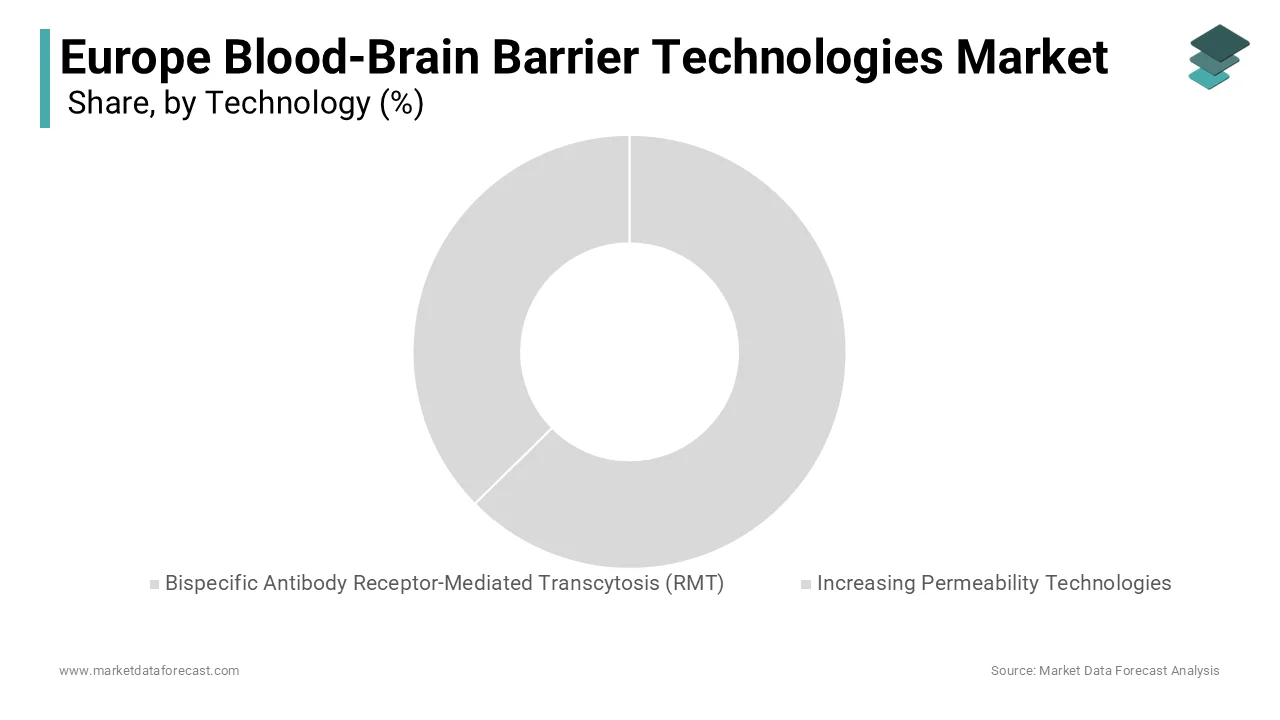
The increasing permeability segment is estimated to register the fastest CAGR of 18.3% from 2025 to 2033 due to factors such as advances in non-invasive BBB opening and rising glioblastoma incidence. Increasing permeability technologies, particularly magnetic resonance guided focused ultrasound (MRgFUS) combined with intravenous microbubbles, are gaining clinical traction for treating recurrent glioblastoma, a condition with a dismal prognosis and limited options. The integration of MRgFUS into multidisciplinary brain tumor boards is driving a sharp increase in demand for permeability-enhancing platforms throughout tertiary care networks. Technological refinements have dramatically improved the safety and precision of BBB permeability modulation by addressing historical concerns about off-target effects. Modern MRgFUS systems now incorporate real-time acoustic feedback and thermometry to confine disruption to sub-centimeter brain volumes. Apart from these, AI algorithms analyze MRI contrast leakage patterns to dynamically adjust sonication parameters, ensuring consistent and reversible opening. Academic hospitals have launched training programs for neuro radiologists in BBB sonication protocols, which build workforce capacity. These engineering and clinical advances transform permeability enhancement from an experimental concept into a reproducible, image-guided therapeutic procedure, which emphasizes its status as the highest growth segment in the European BBB technologies market.
By Application Insights
The Alzheimer’s disease segment was the largest in the European BBB technologies market in 2024 by accounting for 28.7%. The prominence of the Alzheimer’s disease segment is attributed to the high unmet need, large patient population, and sustained R and D investment in disease-modifying therapies. Alzheimer’s disease affects over 8.5 million people in the European Union, and this number is projected to exceed 13 million by 2040 due to demographic aging, according to the European Dementia Observatory’s 2023 epidemiological update. Countries have the highest prevalence, with a large number of cases each, which creates a vast target population for BBB-enabled therapeutics. The societal cost is equally staggering. Despite recent approvals of anti-amyloid antibodies like lecanemab, real-world effectiveness remains limited by poor brain penetration. This pharmacokinetic bottleneck has made BBB technologies essential for next-generation Alzheimer’s drugs. The European Medicines Agency and national health authorities have implemented expedited pathways for Alzheimer’s therapeutics that demonstrate disease modification potential, indirectly boosting demand for enabling BBB platforms. National dementia strategies emphasize inclusion of novel delivery mechanisms in publicly funded trials. Companies developing BBB-enabled Alzheimer’s candidates benefit from scientific advice and fee reductions under the EMA’s PRIME scheme. This favorable policy environment, combined with payer willingness to fund high-impact neurotherapeutics, positions Alzheimer’s disease as the dominant application driver in the European BBB technologies landscape.
The brain cancer segment is anticipated to witness the fastest CAGR of 19.6% from 2025 to 2033, owing to urgent clinical need and technological convergence in neuro oncology. Glioblastoma multiforme remains one of the most lethal cancers in Europe. Standard chemotherapies, like temozolomide, achieve limited efficacy due to poor BBB penetration and rapid tumor resistance. In recurrent settings, systemic agents such as bevacizumab offer only transient benefit. This therapeutic void has catalyzed the adoption of BBB opening technologies to deliver higher drug concentrations directly to tumors. The European Association of Neuro Oncology now includes BBB modulation as a recommended option in its updated guidelines for recurrent disease. In addition, the brain cancer segment benefits from a unique synergy between advanced MRI techniques tumor tumor-specific nanocarriers, and real-time BBB disruption systems. European researchers have pioneered theranostic approaches where MRI contrast agents double as drug carriers, enabling visualization and delivery in a single workflow. Furthermore, the EU-funded consortium, comprising partners from Switzerland, Swed,e, and the UK, developed a closed-loop system that automatically adjusts sonication based on real-time contrast kinetics. These integrated platforms are now being deployed in comprehensive cancer centers across Europe. "The evolution of neuro-oncology toward personalized combination therapies is critically enabled by BBB technologies, which effectively transform brain cancer from a challenge in drug delivery into a viable treatment area.
By End Use Insights
In 2024, the research institutes segment led the European BBB technologies market and occupied a 41.5% share. Their central role in foundational BBB science, preclinical validation, and early-stage technology development is among the key reasons behind the dominance of the research institutes segment. European research institutes lead the creation and standardization of human-relevant in vitro and in vivo BBB models that underpin drug discovery pipelines. Institutions have pioneered induced pluripotent stem cell-derived BBB models that replicate key physiological features, including P-glycoprotein efflux and tight junction integrity. These models are now commercially licensed to biopharma firms. National research councils allocate funds annually to neurovascular unit projects by ensuring sustained innovation. This scientific leadership cements research institutes as the primary end users of BBB technologies, particularly in the discovery and validation phases. Furthermore, research institutes serve as operational hubs for large-scale EU-funded initiatives that bridge basic science and clinical application of BBB technologies. The consortia develop shared protocols for assessing BBB penetration across diverse therapeutic modalities and maintain biobanks of human brain endothelial cells for cross-institutional studies. Apart from these, they train the next generation of neuroscientists and pharmacologists through specialized PhD programs in CNS drug delivery, creating a skilled workforce. This ecosystem of collaborative research infrastructure, regulatory engagement, and talent development ensures that research institutes remain the cornerstone of the European BBB technologies market.
The hospitals segment is likely to experience the fastest CAGR of 16.8% from 2025 to 2033. The rapid expansion of the hospitals segment is driven by clinical adoption of BBB opening procedures and integration into standard neuro care pathways. Hospitals across Europe are increasingly incorporating BBB permeability enhancement, particularly MR-guided focused ultrasound, into routine care for brain tumors and neurodegenerative conditions. Leading centers offer BBB opening as part of multidisciplinary glioblastoma protocols. These institutional decisions reflect growing clinical confidence in the safety and utility of permeability technologies, transitioning them from research tools to therapeutic assets within hospital settings. European hospitals are establishing specialized BBB intervention units staffed by neurologists, neurosurgeons, radiologists, and pharmacists to manage the complexities of barrier modulation. These centers follow standardized operating procedures, which ensure consistent patient selection and outcome tracking. Training programs include modules on BBB therapeutics, building clinical capacity. Routine implementation of these approaches in hospitals generates real-world evidence that provides further validation. This institutionalization of BBB technologies within clinical care pathways marks a pivotal shift, positioning hospitals as the highest growth end-user segment in the European market.
COUNTRY LEVEL ANALYSIS
Germany BBB Technologies Market Analysis
Germany dominated the European BBB technologies market and accounted for a 22.4% share in 2024. The domination of Germany in this regional market is primarily driven by world-class neuroscience research infrastructure, a dense network of university hospitals, and strong public investment in translational medicine. According to sources, a notable number of people in Germany live with Alzheimer’s or Parkinson’s, creating urgent demand for advanced delivery solutions. The country hosts many specialized neuro-oncology centers that routinely use focused ultrasound for glioblastoma. Major biopharma firms collaborate closely with academic labs in Munich and Bonn on shuttle antibody platforms. This synergy between clinical need, public funding anindustrialal R and industrial R&D in Germany is the innovation and adoption epicenter of the European BBB technologies market.
France BBB Technologies Market Analysis
France followed closely in the European BBB technologies market and held a 17.8% share in 2024. Its centralized healthcare system, strong neurosurgical expertise, and national strategy for brain health are fuelling the growth of the BBB technologies market in France. France has emerged as a clinical leader in MR-guided focused ultrasound. Apart from these, French regulatory authorities granted fast-track review to BBB shuttle antibodies under the temporary authorization for use mechanism. This combination of scientific excellence, clinical adoption, and policy support positions France as a dynamic and influential player in the European BBB landscape.
United Kingdom BBB Technologies Market Analysis
The United Kingdom continues to be a major country in the European BBB technologies market, with its world-leading academic institutions, robust clinical trial infrastructure, and post-Brexit regulatory agility. Universities have published numerous peer-reviewed studies on BBB transport mechanisms, which establishes the UK as a knowledge hub. Despite leaving the EU, the UK’s Medicines and Healthcare products Regulatory Agency maintains close collaboration with the EMA and has introduced expedited pathways for novel CNS delivery platforms. The NHS has approved compassionate use of focused ultrasound for glioblastoma in three specialist centers, with plans to expand. UK-based startups have secured millions in venture funding for BBB shuttle technologies. This blend of intellectual capital, regulatory responsiveness, and entrepreneurial energy sustains the UK’s strong position in the European BBB technologies ecosystem.
Switzerland BBB Technologies Market Analysis
Switzerland is moving ahead steadfastly in the European BBB technologies market owing to its concentration of global pharmaceutical R and D headquarters and elite neuroscience research. Basel is home to Novartis and Roche, both of which have active BBB shuttle programs integrated into their CNS pipelines. Switzerland’s regulatory agency, Swissmedic, is known for its rapid and science-based evaluations. Apart from these, Swiss hospitals participate in a portion of EU-wide BBB clinical studies despite non-membership, reflecting deep scientific integration. The country’s unique combination of industrial prominence, academic excellence, and regulatory efficiency makes it a disproportionately influential node in the European BBB technologies network.
Sweden BBB Technologies Market Analysis
Sweden is likely to grow in the European BBB technologies market during the forecast period, and is recognized for its pioneering role in clinical translation of BBB opening technologies and national health data infrastructure. Sweden’s national patient registries enable real-world tracking of long-term outcomes, providing critical post-market evidence. The Swedish Research Council allocated substantial research grants to various academic researchers and institutions, with millions of SEK awarded specifically to researchers at Karolinska Institutet's MedH department for projects in medicine and health. Stockholm is also home to several BBB-focused startups that have attracted international investment. Sweden’s commitment to open science, ethical oversight, and clinical innovation ensures its continued prominence as a test bed and implementation leader for next-generation BBB technologies in Europe.
COMPETITIVE LANDSCAPE
The European BBB Technologies Market features a dynamic competitive landscape characterized by collaboration-driven innovation rather than direct product rivalry. Competition centers on technological distinctiveness, platform versatility, and clinical validation depth rather than price or volume. Large pharmaceutical companies leverage internal R and D to develop proprietary shuttle systems while simultaneously licensing external platforms to diversify risk. Medical device firms like Insightec compete on procedural precision, on safety, and integration with hospital imaging infrastructure. Meanwhile, specialized biotechs differentiate through novel receptor targets or formulation approaches. The market is further shaped by Europe’s unique regulatory environment, which demands robust preclinical human relevance and long-term safety data. Academic institutions act as both collaborators and emerging competitors through spin-off ventures. Success hinges on the ability to generate compelling clinical evidence, navigate complex combination regulations, and align with Europe’s strong emphasis on ethical neuroscience. Strategic partnerships and the ability to adapt to regulation are becoming the new competitive edge as the field settles, diminishing the importance of technology claims alone. Strategic partnerships and the ability to adapt to regulation are becoming the new competitive edge as the field settles, which diminishes the importance of technology claims alone.
KEY MARKET PLAYERS
Some of the companies that are playing a dominating role in the global market include
- Bristol-Myers Squibb Company
- Pfizer, Inc.
- biOasia Technologies, Inc.
- Cypress Biosciences, Inc.
- Janssen Pharmaceutical N.V.
- Teva Pharmaceuticals Industries, Ltd.
- F. Hoffmann-La Roche, Ltd.
- Eli Lilly and Company
- Fabre-Kramer Pharmaceuticals, Inc.
- NeuroVive Pharmaceutical AB
- ArmaGen
TOP LEADING PLAYERS IN THE MARKET
- Roche Holding AG is a pivotal contributor to the European BBB Technologies Market through its pioneering brain shuttle platform that enables biologics to cross the blood-brain barrier via receptor-mediated transcytosis. The company has integrated this technology into multiple clinical programs targeting Alzheimer’s disease and brain cancers across European trial sites. The firm also expanded collaborations with academic centers in France and Sweden to refine shuttle pharmacokinetics using human iPSC-derived BBB models. These strategic research alliances and clinical progress reinforce Roche’s global leadership in CNS drug delivery while positioning it at the forefront of Europe’s efforts to overcome the BBB therapeutic bottleneck.
- Denali Therapeutics Inc. plays a significant role in the European BBB landscape through its proprietary Transport Vehicle technology that hijacks endogenous receptor pathways to ferry therapeutics across the barrier. The company has established multiple partnerships with European biopharmaceutical firms to co-develop BBB-enabled enzyme replacement and antibody therapies for neurodegenerative and lysosomal storage disorders. It also deepened its engagement with the Innovative Medicines Initiative by contributing data to the EU-wide BBB model validation consortium. These actions demonstrate Denali’s commitment to embedding its platform within Europe’s regulatory and clinical infrastructure to accelerate global CNS drug development.
- Insightec Ltd is a key enabler of BBB permeability technologies in Europe through its Exablate Neuro plaplatformhich uses MRI-guided focused ultrasound to temporarily open the blood-brain barrier. The company has secured regulatory approvals and clinical adoption across leading neurosurgical centers in France, Germany, and Sweden for recurrent glioblastoma and Alzheimer’s disease applications. It also partnered with European oncology groups to launch registry studies tracking long-term outcomes of ultrasound-mediated chemotherapy delivery. These initiatives solidify Insightec’s position as the primary provider of non-invasive BBB opening solutions in Europe while supporting its global mission to transform neurological care through focused ultrasound.
TOP STRATEGIES USED BY THE KEY MARKET PARTICIPANTS
Key players in the European BBB Technologies Market focus on strategic collaborations with academic and clinical institutions to validate platform efficacy in human-relevant models and early phase trials. They invest heavily in proprietary shuttle or device technologies that offer repeatable and scalable BBB penetration mechanisms. Companies actively pursue regulatory designations such as PRIME in the EU or breakthrough status to accelerate clinical development timelines. They also integrate real-world data collection through registries and national health databases to demonstrate long-term safety and therapeutic benefit. Additionally, leading firms license Coto -develop their platforms with multinational pharmaceutical partners to expand therapeutic applications and geographic reach across diverse neurological indications.
MARKET SEGMENTATION
This research report on the europe blood-brain barrier (BBB) technologies market is segmented and sub-segmented into the following categories.
By Technology
- Bispecific Antibody Receptor-Mediated Transcytosis (RMT)
- Increasing Permeability Technologies
- Others
By Application
- Alzheimer’s Disease
- Brain Cancer
- Parkinson’s Disease
- Others
By End Use
- Research Institutes
- Hospitals
- Others
By Country
- Germany
- France
- United Kingdom
- Switzerland
- Sweden
- Rest of Europe