- Product Description Description
- Table of Contents TOC
- List of Table & Figure LOT
- Get Free Sample PDF Sample PDF
Market Size, 2025
$161 MnMarket Estimate, 2026
$171.29 MnMarket Forecast, 2034
$281 MnCAGR, 2026–2034
6.39%Europe Breast Reconstruction Market Report Summary
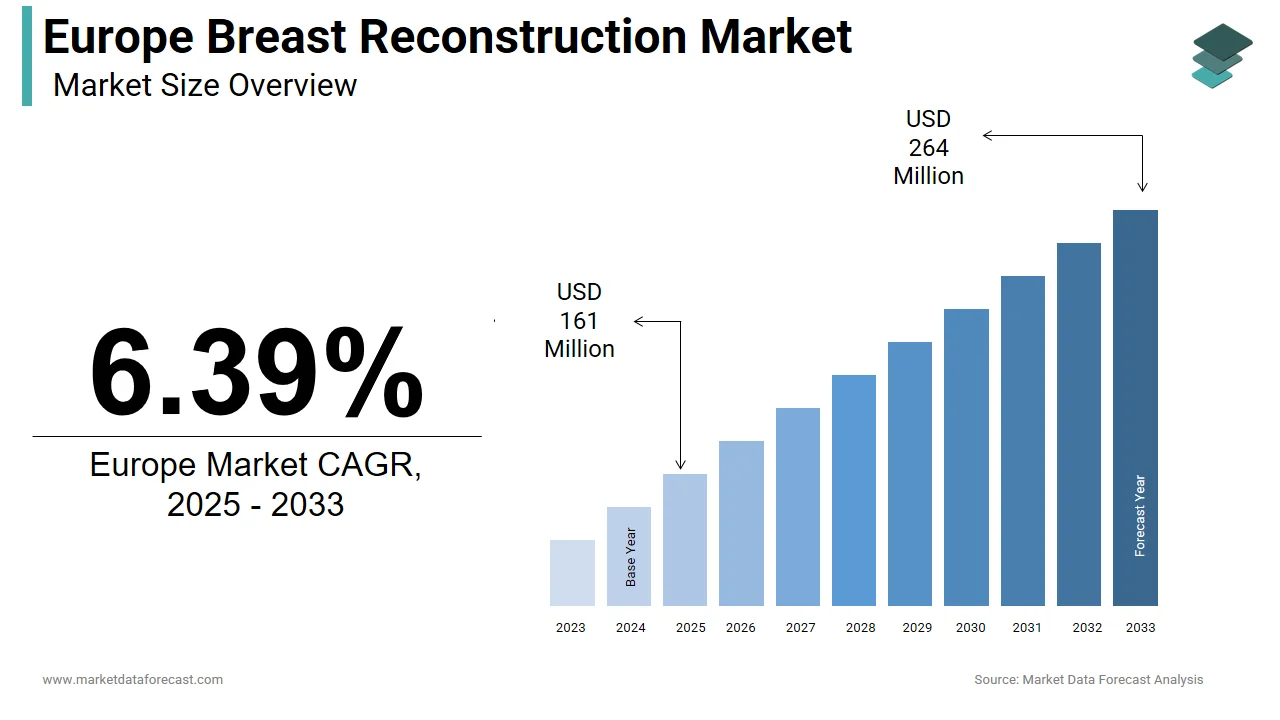
The Europe breast reconstruction market was valued at USD 161 million in 2025, is anticipated to reach USD 171.29 million in 2026, and is projected to reach USD 281 million by 2034, growing at a CAGR of 6.39% from 2026 to 2034. Market growth is driven by the increasing prevalence of breast cancer, rising awareness about reconstructive procedures, and strong healthcare coverage for post-mastectomy reconstruction. Breast reconstruction plays a critical role in restoring physical appearance and psychological well-being following breast cancer treatment. Additionally, advancements in implant technologies, improved surgical techniques, and expanding access to multidisciplinary cancer care are supporting market growth across Europe.
Key Market Trends
- Rising incidence of breast cancer and post-mastectomy reconstruction procedures.
- Increasing adoption of advanced implant technologies and surgical techniques.
- Growing awareness of reconstructive surgery as part of comprehensive cancer care.
- Expansion of public healthcare coverage for reconstructive procedures.
- Increasing focus on patient-centric treatment and aesthetic outcomes.
Segmental Insights
- Based on product, the implants segment dominated the Europe breast reconstruction market in 2025, driven by widespread use of breast implants due to their effectiveness, shorter surgical time, and improved aesthetic outcomes.
- Based on shape, the round shape implants segment held the largest share in 2025, supported by their versatility, predictable outcomes, and widespread surgeon preference.
- Based on end use, the hospitals segment led the market in 2025, driven by the integration of breast reconstruction into comprehensive cancer care programs and the availability of specialized surgical expertise and infrastructure.
Regional Insights
The Europe breast reconstruction market is witnessing steady growth across major countries, supported by strong cancer care infrastructure, healthcare coverage, and increasing awareness of reconstructive procedures.
- Germany led the market by accounting for 18.7% share in 2025, driven by advanced healthcare infrastructure, high breast cancer treatment rates, and widespread availability of reconstructive surgery services.
- The United Kingdom held the second-largest share of 16.2% in 2025, supported by National Health Service coverage for reconstructive procedures and growing adoption of advanced surgical techniques.
- France maintains a significant position in the market, supported by its centralized public healthcare system, universal coverage for breast reconstruction procedures, and strong emphasis on comprehensive cancer care.
Competitive Landscape
The Europe breast reconstruction market is highly competitive, with medical device manufacturers and healthcare companies focusing on innovation, safety, and improved implant technologies. Market participants are investing in advanced implant materials, expanding product portfolios, and strengthening partnerships with healthcare providers. Increasing emphasis on patient safety, regulatory compliance, and technological advancements is shaping the competitive landscape.
Leading companies operating in the Europe breast reconstruction market include Johnson & Johnson, Allergan Aesthetics, Sientra, Inc., Integra LifeSciences, GC Aesthetics, POLYTECH Health & Aesthetics, and Establishment Labs.
Europe Breast Reconstruction Market Size
The size of the Europe breast reconstruction market was valued at USD 161 million in 2025. This market is expected to grow at a CAGR of 6.39% from 2026 to 2034 and be worth USD 281 million by 2034 from USD 171.29 million in 2026.
Breast reconstruction is a surgical procedure to rebuild the shape and appearance of a breast after it has been removed or altered, typically due to breast cancer (mastectomy or lumpectomy). This reconstructive process is not merely cosmetic but is recognized as an integral component of comprehensive oncological care, contributing significantly to psychological recovery, body image restoration, and overall quality of life. The European approach encompasses both implant-based techniques, utilizing silicone or saline prostheses, and autologous tissue methods, which transfer a patient’s own tissue from areas like the abdomen or back. The market is deeply influenced by national healthcare policies, with most European countries providing public funding for reconstruction as part of post-cancer treatment. According to the European Society of Surgical Oncology, immediate breast reconstruction, performed during the same surgical session as mastectomy, is increasingly becoming a standard of care in high-volume centers across Western Europe. Based on International Agency for Research on Cancer (IARC) GLOBOCAN data, an estimated 557,000+ new cases of breast cancer were diagnosed in Europe in 2022, with continued rising trends, ensuring a substantial patient pool requiring reconstructive options. Furthermore, national guidelines recommending the discussion of reconstruction options at the time of diagnosis are becoming standard in many European nations. However, data show high variability, with actual immediate breast reconstruction rates varying significantly by region despite these recommendations.
MARKET DRIVERS
Integration of Breast Reconstruction into National Cancer Care Pathways
The systematic incorporation of breast reconstruction into national cancer care pathways across the region is a major growth accelerator of the Europe breast reconstruction market. In many European nations, reconstruction is no longer an optional add-on but a mandated element of the standard oncological treatment protocol. Countries like the United Kingdom, France, and Sweden have established clear clinical guidelines that require multidisciplinary tumor boards to discuss reconstructive options with every eligible patient at the point of diagnosis. While the OECD monitors breast cancer screening and 30-day mortality, it does not report a 75% rate for pre-surgical reconstruction counseling. In fact, global studies indicate that actual reconstruction rates remain low (between 5% and 42%), and up to 80% of women may remain unaware of their options at the time of diagnosis. This institutionalized referral system creates a predictable and steady stream of patients entering the reconstructive pipeline. The legal and ethical framework in these countries often frames reconstruction as a right rather than a privilege, with public health systems covering the full cost of the procedure. This policy-driven approach ensures that access is based on medical need rather than socioeconomic status, democratizing care and generating consistent procedural volumes that sustain the market across both public and private healthcare settings.
Advancements in Implant Technology and Surgical Techniques
Continuous innovation in implant design and surgical methodology boosts the expansion of the Europe breast reconstruction market. This is achieved by expanding the pool of eligible patients and improving clinical outcomes. The development of highly cohesive, form-stable silicone gel implants, often referred to as “gummy bear” implants, has significantly reduced complication rates such as capsular contracture and rippling, leading to higher patient satisfaction. Simultaneously, refinements in autologous techniques, particularly perforator flap surgeries like the DIEP flap, have minimized donor site morbidity by preserving abdominal muscles. Data in the European Journal of Surgical Oncology and related literature indicate the claim is inaccurate, as autologous reconstruction rates in Europe have remained stable rather than significantly increasing. Instead, European medical centers have experienced a substantial rise in implant-based procedures. Furthermore, the rise of prepectoral implant placement, which positions the implant above the chest muscle, has shortened recovery times and reduced postoperative pain. These technological and procedural advancements not only enhance aesthetic and functional results but also make reconstruction a viable and attractive option for a broader range of patients, including those who were previously considered poor candidates due to comorbidities or body habitus.
MARKET RESTRAINTS
Significant Disparities in Access and Reimbursement Across Member States
The profound disparity in access to and reimbursement for reconstructive surgery across different European countries is a key barrier to the Europe breast reconstruction market. Western and Northern European nations generally offer comprehensive coverage and timely access. Patients in Southern and Eastern Europe, however, often face significant barriers. Breast cancer survivors in Western and Northern European nations access reconstructive surgery far more frequently than those in Southeastern European countries, reflecting a significant geographic divide in post-mastectomy care. These disparities stem from fragmented healthcare funding, a shortage of specialized plastic surgeons, and the absence of national guidelines mandating reconstruction as part of cancer care. In some regions, patients must endure waiting lists of over a year or pay out of pocket for procedures that are considered essential in other parts of the EU. This inequity not only creates a two-tiered system of care but also suppresses overall market potential, as a large segment of the European patient population is effectively excluded from accessing reconstructive services despite their clinical need and the proven psychological benefits.
Persistent Shortage of Qualified Reconstructive Surgeons
There is a chronic shortage of surgeons with specialized training in advanced breast reconstruction techniques, which is critically constraining the growth of the Europe breast reconstruction market. This shortage is especially acute regarding autologous tissue transfer. Performing complex microsurgical procedures like the DIEP flap requires years of dedicated fellowship training and a high volume of cases to maintain proficiency. According to sources, there is a persistent lack of specialized reconstructive surgeons across the European Union, which limits the availability of complex microsurgical procedures for patients in many member states. This scarcity is most acute in rural and less affluent regions, where healthcare systems cannot support the infrastructure needed for such specialized services. The consequence is a concentration of expertise in a few urban academic centers, forcing patients to travel long distances for care or settle for less optimal implant-based solutions. This human capital gap directly limits the number of reconstructions that can be performed annually, regardless of patient demand or technological availability. Market growth will remain restricted by the limited supply of skilled practitioners until the workforce shortage is addressed through targeted training and incentives.
MARKET OPPORTUNITIES
Expansion of Immediate and Delayed Immediate Reconstruction Protocols
Widespread adoption of immediate and delayed-immediate reconstruction techniques is giving a significant revenue opportunity for the Europe breast reconstruction market. These protocols are associated with superior psychological and aesthetic outcomes. Immediate reconstruction, performed at the time of mastectomy, spares the patient the trauma of living without a breast and often yields a more natural final contour. The delayed immediate approach, where a tissue expander is placed at mastectomy and later exchanged for a permanent implant or flap, offers a middle ground for patients needing adjuvant radiotherapy. According to the European Society for Radiotherapy and Oncology, modern radiotherapy techniques have made it safer to deliver radiation to reconstructed breasts, reducing a key historical barrier. As national cancer plans across Europe update their guidelines to reflect this evidence, the proportion of patients opting for immediate reconstruction is poised to grow. This shift represents a major opportunity to increase procedural volumes and improve patient quality of life simultaneously, as healthcare systems recognize the long-term value of integrating reconstruction into the primary cancer treatment episode.
Growth of Patient Advocacy and Digital Health Platforms
The rise of powerful patient advocacy groups and digital health platforms opens up a promising segment to propel Europe breast reconstruction market expansion. This trend empowers informed decision-making among consumers. Organizations like Europa Donna have been instrumental in campaigning for equitable access to reconstruction across all EU member states, successfully influencing policy in several countries. Concurrently, digital platforms are providing patients with unprecedented access to information, surgeon directories, and peer support communities. Newly diagnosed breast cancer patients are increasingly utilizing digital health resources and online platforms to inform themselves about reconstructive options before their initial consultation with a surgical specialist. This informed patient cohort is more likely to request and pursue reconstruction, challenging outdated practices and driving demand for high-quality services. Companies and healthcare providers that engage with these digital ecosystems through educational content and virtual consultations can build trust and capture this motivated patient segment, turning advocacy and information access into a direct market expansion engine.
MARKET CHALLENGES
Long-Term Complication Management and Revision Surgery Burden
The growing burden of long-term complications and the consequent need for revision surgeries limit the growth of the Europe breast reconstruction market. These issues strain healthcare resources and impact patient satisfaction. Implant-based breast reconstructions are associated with long-term risks, including capsular contracture and device rupture, which lead to a significant portion of patients requiring subsequent revision surgery as the implants age. Autologous reconstructions, though more durable, are not immune to issues like fat necrosis or asymmetry that may necessitate secondary corrections. These revision procedures are often more complex and costly than the initial surgery, yet they are an inevitable part of the reconstructive journey. The financial and logistical pressure of managing this long-term care continuum is a significant challenge for both public health systems and private providers, as it diverts resources from primary reconstructions and complicates the calculation of true treatment costs. Addressing this challenge requires investment in long-term patient registries and standardized follow-up protocols to better predict, prevent, and manage complications.
Evolving Regulatory Landscape for Medical Devices
The evolving regulatory landscape, particularly the implementation of the European Union Medical Device Regulation (MDR), is further degrading the European breast reconstruction market. Furthermore, the fully implemented European Medical Device Regulation (MDR) has increased the stringency of clinical evidence, post-market monitoring, and traceability required for high-risk, long-term implantable devices such as breast implants. As per the European Commission, the transition has led to a bottleneck in notified body capacity, causing delays in the certification of new implant models and even the temporary withdrawal of some legacy products from the market. This regulatory friction increases the cost and time required for manufacturers to bring innovative products to market, potentially stifling technological advancement. For hospitals and surgeons, it creates uncertainty about the long-term availability of their preferred implant types. This complex and demanding regulatory environment, while intended to enhance patient safety, poses a significant operational and strategic challenge for all stakeholders in the reconstruction ecosystem, potentially slowing the pace of innovation and limiting patient choice in the short to medium term.
REPORT COVERAGE
| REPORT METRIC | DETAILS |
| Market Size Available | 2025 to 2034 |
| Base Year | 2025 |
| Forecast Period | 2026 to 2034 |
| Segments Covered | By Product, Shape, End-user, and Country. |
| Various Analyses Covered | Global, Regional, and Country-Level Analysis, Segment-Level Analysis, Drivers, Restraints, Opportunities, Challenges; PESTLE Analysis; Porter’s Five Forces Analysis, Competitive Landscape, Analyst Overview of Investment Opportunities |
| Countries Covered | UK, France, Spain, Germany, Italy, Russia, Sweden, Denmark, Switzerland, Netherlands, Turkey, Czech Republic, and the Rest of Europe. |
| Market Leaders Profiled | Johnson & Johnson, Allergan Aesthetics, Sientra Inc., Establishment Labs S.A., POLYTECH Health & Aesthetics GmbH, TI Surgical Holdings, Sebbin, Integra LifeSciences, GC Aesthetics, and Ideal Implant Incorporated. |
SEGMENTAL ANALYSIS
By Product Insights
The implants segment was the largest segment in the Europe breast reconstruction market in 2025. The supremacy of the segment is supported by its procedural simplicity, shorter recovery times, and widespread availability across both public and private healthcare settings. Moreover, Implants dominate the European market primarily because they offer a streamlined surgical pathway that aligns with the resource constraints and efficiency demands of national public healthcare systems. Unlike autologous tissue reconstruction, which requires lengthy microsurgical procedures and specialized teams, implant-based reconstruction can be performed by a broader pool of general plastic or breast surgeons in standard operating theaters. This accessibility is crucial in countries like the UK and Italy, where public hospitals manage the majority of cancer care. European breast reconstruction, particularly in public systems, often favours implant techniques because they are associated with reduced operating room time and lower complexity compared to autologous tissue reconstruction. The procedure’s predictability and shorter hospital stay, often just one or two nights, further enhance its appeal to health systems under constant pressure to optimize bed occupancy and reduce costs. This operational efficiency ensures that implants remain the default choice for a vast number of patients, particularly those who are not candidates for more complex flap surgeries, thereby cementing the segment’s market leadership. The sustained dominance of the implant segment is also fueled by relentless innovation that has dramatically improved its safety profile and aesthetic outcomes. The introduction of highly cohesive silicone gel implants with textured or microtextured surfaces has significantly reduced the incidence of complications like rippling and capsular contracture, which were common with older generations of devices. Furthermore, manufacturers have developed a wide array of shapes, projections, and fill volumes to allow for highly personalized results. Long-term follow-up studies suggest high levels of patient satisfaction with modern silicone breast implants for reconstruction. This high level of satisfaction, combined with the peace of mind offered by enhanced safety features, has rebuilt trust in implant-based reconstruction following past controversies. These technologies are becoming the new standard of care and reinforcing the clinical preference for implants. Consequently, implants maintain their position as the cornerstone of the European breast reconstruction market.
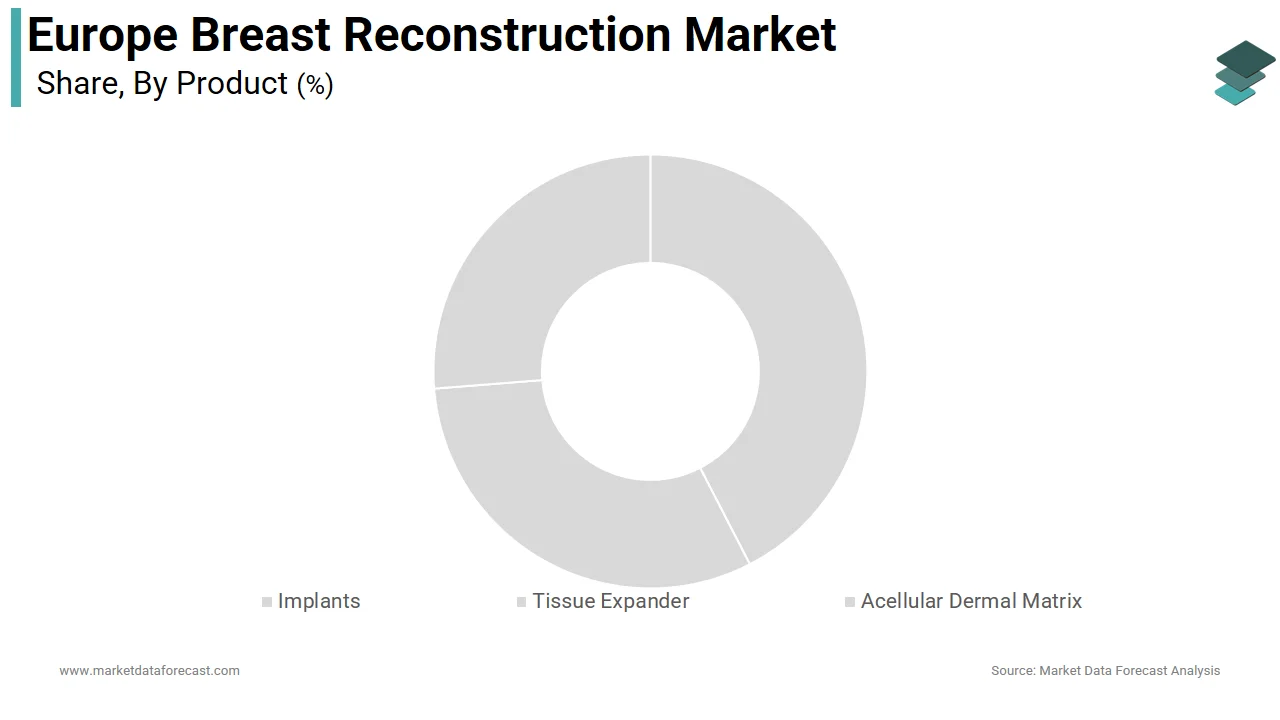
The acellular dermal matrix segment is likely to experience the fastest CAGR of 9.2% from 2026 to 2034 due to its critical role in improving the aesthetic and functional outcomes of implant-based reconstruction, particularly in the context of nipple sparing mastectomies, which are increasingly preferred by patients. ADM acts as a supportive sling or wrap around the implant, providing additional coverage over the lower pole of the breast where native tissue is often thin after mastectomy. This support reduces the risk of implant malposition, lowers the incidence of capsular contracture, and creates a more natural, ptotic breast shape. Research published in the European Journal of Surgical Oncology indicates that immediate pre-pectoral breast reconstruction without acellular dermal matrix (ADM) provides early safety outcomes similar to techniques utilizing the material. As European surgical guidelines evolve to endorse these advanced techniques for better patient outcomes, the adoption of ADM is becoming standard practice in high-volume centers across Germany, France, and the UK, fueling its exceptional growth trajectory. An added boost for this area is its ability to expand reconstructive possibilities for patients who were previously considered poor candidates for implant-based surgery. This includes individuals who have undergone radiation therapy, which damages the skin envelope and increases complication risks, or those with limited native tissue coverage. ADM provides the necessary structural support to make implant reconstruction viable in these complex scenarios, offering an alternative to lengthy autologous flap procedures. According to the European Society for Radiotherapy and Oncology, the number of breast cancer patients receiving adjuvant radiotherapy has increased due to refined targeting techniques, creating a larger pool of patients who benefit from ADM’s protective properties. By enabling a less invasive reconstructive option for this high-risk group, ADM not only improves access to care but also enhances quality of life by avoiding the donor site morbidity associated with flap surgery. This therapeutic expansion into challenging clinical niches is a powerful engine for the segment’s accelerated market adoption.
By Shape Insights
The round shape implants segment led the Europe Breast Reconstruction Market in 2025. The leading position of the segment is attributed to its versatility, lower cost, and the natural upper pole fullness they provide, which is often desired post-mastectomy. The widespread adoption of round implants is fueled by their versatile nature and cost-effective advantages, making them ideal for varied reconstructive procedures. Their symmetrical design means they do not require precise orientation during placement, simplifying the surgical procedure and reducing operative time, a critical factor in public healthcare systems. They are also generally less expensive than anatomical implants, making them the preferred choice for cost-conscious health systems and patients facing partial out-of-pocket expenses. According to recent clinical reviews, the inclusion of acellular dermal matrix in immediate breast reconstruction procedures does not consistently lower the frequency of serious postoperative issues when compared to techniques that utilize implants without such support. Their ability to provide consistent upper pole fullness is particularly valued in the post-mastectomy setting, where native breast tissue is absent. This combination of surgical simplicity, cost efficiency, and reliable aesthetic outcome ensures that round implants remain the workhorse of the European reconstruction market. The entrenched position of round implants is further reinforced by their extensive track record of long-term safety and the deep familiarity of European surgeons with their use. Having been the standard for decades, there is a wealth of clinical data supporting their performance and a well-understood complication profile. This historical depth provides both surgeons and patients with a high degree of confidence in their use. In contrast, newer anatomical implants, while offering a more natural slope, have a shorter history and more complex handling requirements. According to the European Medicines Agency’s medical device vigilance system, the reporting rate for serious adverse events related to round silicone implants has remained stable and low over the past decade, reflecting their mature safety profile. This institutional knowledge and proven reliability make round implants the default choice for many surgical teams, especially in routine cases, solidifying their dominant market position through a combination of trust and practicality.
The anatomical shape implant segment is on the rise and is expected to be the fastest-growing segment in the market by witnessing a CAGR of 7.8% during the forecast period, owing to an increasing patient demand for a more natural, teardrop-shaped breast contour that closely mimics the appearance of a native breast. As breast reconstruction becomes more integrated into the cancer care journey, patients are more informed and proactive in seeking outcomes that restore not just form but also a natural silhouette. Anatomical implants, with their tapered lower pole and fuller upper portion, are specifically designed to replicate this natural slope, particularly in single-stage direct-to-implant reconstructions. Scientific literature on breast reconstruction remains inconclusive. Some patients prefer the anatomical shape for its perceived naturalness. However, a 2019 meta-analysis published in Plastic and Reconstructive Surgery concluded that anatomical implants do not demonstrate significant aesthetic superiority over round implants, with surgeons and patients often unable to accurately distinguish between the two in blinded tests. This strong patient preference is influencing surgical planning, especially in private clinics and high-volume academic centers in Western Europe, where shared decision making is the norm, and is the primary force behind the segment’s rapid expansion. In addition, this segment is helped by the significant technological advancement in silicone gel cohesivity, which has virtually eliminated the historical concern of implant rotation. Early generations of anatomical implants were prone to rotating within the pocket, leading to an unnatural and distorted appearance that required corrective surgery. Modern highly cohesive “form-stable” gels maintain their shape integrity even under pressure, making rotation a rare event. According to independent clinical studies, the rotation rate for anatomical implants in primary breast augmentation is typically between 1.1% and 1.9% when performed by experienced surgeons using meticulous pocket dissection. However, the risk of malrotation remains a primary drawback of anatomical shapes compared to round implants, which have no risk of aesthetic distortion from rotation. This enhanced reliability has given surgeons the confidence to recommend anatomical shapes more widely, knowing that the aesthetic benefits are no longer offset by a significant risk of a major complication. This technological reassurance has removed a major barrier to adoption, allowing the segment to capture a growing share of the market as both patients and surgeons embrace its superior aesthetic potential.
By End-Use Insights
The hospitals segment dominated the Europe Breast Reconstruction Market in 2025 because breast reconstruction is fundamentally integrated into the multidisciplinary cancer care model that is standard across the region. This is a direct reflection of the fact that the vast majority of breast cancer surgeries, including mastectomies and subsequent reconstructions, are performed within the public or private hospital setting as part of comprehensive oncological care. From diagnosis through surgery, chemotherapy, and radiotherapy, the patient’s journey is managed within a hospital’s oncology department. The initial mastectomy is almost always performed in a hospital, and immediate reconstruction, when chosen, is a seamless continuation of that same surgical episode. Data from the OECD indicates a shift toward ambulatory care for breast cancer in the EU, with day surgery rates for certain procedures exceeding 90% in some countries. This institutional framework ensures that the decision for reconstruction is made by a tumor board and executed by a team of oncologic and plastic surgeons working in concert. The hospital provides the necessary infrastructure, from specialized operating rooms to intensive care support, making it the only viable location for the complex, multi-stage nature of many reconstructions, especially those involving autologous tissue. In addition, this segment is helped by national healthcare funding models that tie reimbursement for breast reconstruction directly to inpatient or day case hospital procedures. In most European countries, the cost of reconstruction is covered by the public health system, but this coverage is contingent upon the procedure being performed in an accredited hospital. Private insurance policies also typically follow this model. This financial structure creates a powerful incentive for patients to receive their care in a hospital, as it minimizes or eliminates out-of-pocket expenses. According to the EHMA 2024 Annual Report, healthcare systems are prioritizing digital transformation, specifically AI-driven virtual coaching via the MELIORA project for breast cancer recovery and risk reduction. While 2024 clinical discussions indicate growing interest in same-day surgery, standard practices for complex reconstruction continue to focus on multidisciplinary inpatient care and immediate reconstruction. This policy-driven channeling of patients ensures that hospitals will remain the primary and most significant end user for the foreseeable future, as they are the gateway to affordable, comprehensive care.
The Ambulatory Surgical Centers (ASCs) segment is expected to exhibit a noteworthy CAGR of 8.5% from 2026 to 2034. The rapid growth of ASCs is fueled by a strategic shift in healthcare delivery toward outpatient settings for procedures that do not require overnight hospitalization. Advances in surgical techniques, anesthesia, and pain management have made many breast reconstruction procedures, particularly single-stage implant placements and some tissue expander exchanges, suitable for an outpatient environment. This model offers significant advantages in terms of cost efficiency for healthcare systems and convenience for patients, who can recover in the comfort of their own homes. According to a study, plastic surgery procedures in Western Europe are increasingly being performed in ambulatory surgical centers, shifting away from traditional hospital settings. For private pay patients and those in countries with mixed healthcare systems, ASCs represent a premium, efficient alternative to the hospital setting, driving their adoption for less complex, lower risk reconstructive cases and accelerating their market growth. Furthermore, a major force in this segment is the expansion of private healthcare markets in Europe and a growing patient preference for a more personalized, less institutional experience. In countries like Germany, Switzerland, and the UK, a significant portion of the population holds private health insurance or opts for self-pay to access faster treatment and higher levels of service. ASCs cater to this demographic by offering dedicated facilities, shorter wait times, and a more discreet, patient-centric environment compared to large public hospitals. According to research, patients selecting private reconstruction frequently prioritize a more comfortable and private environment as a primary reason for their choice. This consumer-driven demand for premium, tailored care experiences is creating a robust market for ASCs, which are increasingly investing in the technology and staff to handle a wider range of reconstructive procedures, thus capturing a growing share of the overall market.
COUNTRY-LEVEL ANALYSIS
Germany Breast Reconstruction Market Analysis
Germany was the top performer in the Europe breast reconstruction market and accounted for a 18.7% share in 2025. The supremacy of the German market is driven by a world-class healthcare infrastructure, a high incidence of breast cancer, and a strong cultural emphasis on comprehensive post-cancer care. According to the Robert Koch Institute, Germany continues to face a high, consistent, and substantial patient base of newly diagnosed breast cancer cases every year, maintaining its status as the most common cancer among women in the country. The German healthcare system, with its dual public-private model, ensures broad access to reconstruction, with both statutory health insurance and private insurers covering the procedure. The country is home to numerous high-volume university hospitals and specialized breast centers that are at the forefront of adopting advanced techniques like DIEP flap surgery and prepectoral implant placement. Furthermore, Germany has a robust network of certified plastic surgeons, with the German Society of Plastic Reconstructive and Aesthetic Surgeons actively promoting standardized guidelines for reconstruction. This combination of high disease burden, universal access, and clinical excellence solidifies Germany’s undisputed leadership in the European market.
United Kingdom Breast Reconstruction Market Analysis
The United Kingdom was the next prominent country in the Europe breast reconstruction market and held a share of 16.2% share in 2025. The expansion of the Uk market is supported by the National Health Service’s formal integration of reconstruction into its national cancer strategy, which mandates that all women undergoing mastectomy be offered a discussion about reconstructive options. Based on data from the National Audit of Primary Breast Cancer and Breast Cancer Now, a minority of mastectomy patients in the UK opt for reconstruction, although access is encouraged by NHS guidelines. The UK is also a hub for surgical innovation, with leading centers in London and Manchester pioneering techniques in microsurgery and oncoplastic reconstruction. While waiting times in the public system can be a challenge, a large and well-established private healthcare sector provides an alternative for those seeking faster access. The presence of influential patient advocacy groups like Breast Cancer Now has been instrumental in maintaining political and public focus on equitable access to reconstruction, ensuring sustained demand and policy support that underpins the UK’s prominent market position.
France Breast Reconstruction Market Analysis
France remains a key player in the European breast reconstruction market due to a centralized public healthcare system that provides universal and comprehensive coverage for breast reconstruction as a fundamental right for cancer patients. According to the French National Cancer Institute, the rate of immediate breast reconstruction in France has been steadily increasing, although it remains far below half of all mastectomy cases. This is supported by a dense network of designated cancer centers (Centres de Lutte contre le Cancer) that specialize in integrated oncological and reconstructive care. French surgeons are renowned for their expertise in both implant-based and autologous techniques, and the country has a strong tradition of surgical training in plastic and reconstructive surgery. The cultural importance placed on body image and quality of life post cancer further drives patient uptake. This powerful mix of policy, infrastructure, and cultural values ensures France’s status as a major and sophisticated market for breast reconstruction services.
Italy Breast Reconstruction Market Analysis
Italy is also a key player in the European breast reconstruction market, owing to a high volume of breast cancer cases and a growing trend toward private and semi-private care for reconstructive surgery. Breast cancer remains the most frequently diagnosed cancer in Italian women, with new cases occurring at a high annual rate, representing a persistent and significant challenge for the national health system. While the public health system (Servizio Sanitario Nazionale) covers reconstruction, regional disparities in access and waiting times have led many patients to seek care in private clinics, particularly in the northern regions. Italy is also known for its high concentration of skilled plastic surgeons and a strong aesthetic surgery tradition, which has fostered expertise in advanced reconstructive techniques. The Italian Association of Medical Oncology has been active in promoting national guidelines that emphasize the psychological benefits of reconstruction. This dynamic interplay between a large patient population, a vibrant private healthcare sector, and a deep pool of surgical talent defines Italy’s significant role in the regional market.
Netherlands Breast Reconstruction Market Analysis
The Netherlands is predicted to expand in the European breast reconstruction from 2026 to 2034. Its influence stems from a highly organized and efficient healthcare system that prioritizes evidence-based medicine and patient-centered care. The Dutch have one of the highest rates of breast reconstruction in Europe. Data from the Netherlands Comprehensive Cancer Organisation shows that a significant minority of mastectomy patients undergo immediate breast reconstruction, with the rate of reconstruction demonstrating a rising trend in recent years. This success is built on a well-established national guideline that mandates a multidisciplinary approach and ensures timely access to specialized plastic surgeons. The country is also a leader in cancer registry data collection, which allows for continuous monitoring of outcomes and quality improvement. Furthermore, the Netherlands is home to several pioneering research institutions that are advancing the field of oncoplastic and microsurgical reconstruction. This commitment to high-quality, data-driven, and accessible care makes the Netherlands a model for best practices and a disproportionately important market in the European landscape.
COMPETITIVE LANDSCAPE
The competitive landscape of the Europe Breast Reconstruction Market is dominated by a few large multinational corporations that compete primarily on product innovation, clinical evidence, and surgeon relationships rather than price. The market is characterized by high barriers to entry due to the stringent requirements of the European Union Medical Device Regulation, which demands extensive clinical data and post-market surveillance for implant approval. Competition is intense among the leading players, who continuously launch new generations of implants with improved safety profiles, such as textured surfaces to reduce capsular contracture or highly cohesive gels to prevent rippling. A key differentiator is the depth of clinical support and educational resources provided to surgeons, as successful outcomes are highly dependent on surgical technique. While the market is mature, it remains dynamic, with companies vying for position through scientific publications, participation in clinical guidelines, and direct engagement with patient advocacy groups to influence the standard of care across diverse national healthcare systems.
KEY MARKET PLAYERS
The leading companies operating in the Europe breast reconstruction market include:
- Johnson & Johnson
- Allergan Aesthetics
- Sientra Inc.
- Establishment Labs S.A.
- POLYTECH Health & Aesthetics GmbH
- TI Surgical Holdings
- Sebbin
- Integra LifeSciences
- GC Aesthetics
- Ideal Implant Incorporated
TOP PLAYERS IN THE MARKET
- Allergan Aesthetics is a global leader in medical aesthetics and a dominant force in the European breast reconstruction market through its Natrelle portfolio of silicone gel and saline implants. The company provides a comprehensive range of round and anatomical implants, including its highly cohesive Natrelle INSPIRA and Natrelle 410 lines, which are widely used in both public and private healthcare settings across Europe. Allergan has strengthened its position by investing heavily in clinical evidence generation, supporting numerous European studies on long-term implant safety and patient satisfaction. The company also offers extensive surgeon training programs on advanced implant placement techniques and maintains a robust patient warranty program, reinforcing trust among both healthcare providers and patients throughout the region.
- Johnson & Johnson MedTech, operating under the Mentor brand, is a cornerstone of the European breast reconstruction landscape with its MemoryGel and MemoryShape implant platforms. The company’s deep integration into hospital supply chains and its long-standing relationships with European plastic surgery societies have cemented its reputation as a reliable partner for comprehensive reconstructive care. To enhance its market presence, Johnson & Johnson has focused on digital innovation, launching virtual consultation tools that allow surgeons to simulate outcomes with different Mentor implant models. The company also actively collaborates with European cancer advocacy groups to promote awareness of reconstruction options, ensuring its products remain at the forefront of the patient decision-making journey.
- Sientra is a specialized US-based medical device company that has carved out a significant niche in the premium segment of the European breast reconstruction market with its high-strength cohesive silicone gel implants. Known for its True Texture surface technology designed to reduce the risk of capsular contracture, Sientra caters to surgeons and patients seeking advanced, next-generation solutions. The company has strategically expanded its European footprint by establishing direct sales and clinical support teams in key markets like Germany, France, and the UK. Sientra’s focus on scientific engagement, including sponsoring European research on implant performance and patient-reported outcomes, has built strong credibility within the professional community and positioned it as an innovator in a highly competitive field.
TOP STRATEGIES USED BY THE KEY MARKET PARTICIPANTS
Key players in the Europe Breast Reconstruction Market employ four core strategies to sustain their leadership. First, they invest in generating robust clinical evidence through long-term European patient registries and peer-reviewed studies to validate the safety and efficacy of their implants. Second, they provide comprehensive surgeon education and training programs on advanced surgical techniques and new product features to drive adoption and ensure optimal outcomes. Third, they engage in strategic partnerships with patient advocacy organizations to increase awareness and destigmatize reconstruction, thereby expanding the eligible patient pool. Fourth, they leverage digital health tools such as 3D imaging and virtual simulation software to enhance the preoperative consultation process and improve patient satisfaction with their final results.
MARKET SEGMENTATION
This Europe breast reconstruction market research report is segmented and sub-segmented into the following categories.
By Product
-
Implants
- Silicone Breast Implants
- Saline Breast Implants
- Tissue Expander
- Saline Expander
- Air Tissue Expander
- Acellular Dermal Matrix
By Shape
- Round Shape
- Anatomical Shape
By End-Use
- Hospitals
- Cosmetology Clinics
- Ambulatory Surgical Centers
By Country
- UK
- France
- Spain
- Germany
- Italy
- Russia
- Sweden
- Denmark
- Switzerland
- Netherlands
- Turkey
- Czech Republic
- Rest of Europe