- Product Description Description
- Table of Contents TOC
- List of Table & Figure LOT
- Get Free Sample PDF Sample PDF
Market Size, 2025
$76.17 MnMarket Estimate, 2026
$80.36 MnMarket Forecast, 2034
$123.33 MnCAGR, 2026–2034
5.5%Europe Butylated Hydroxytoluene (BHT) Market Report Summary
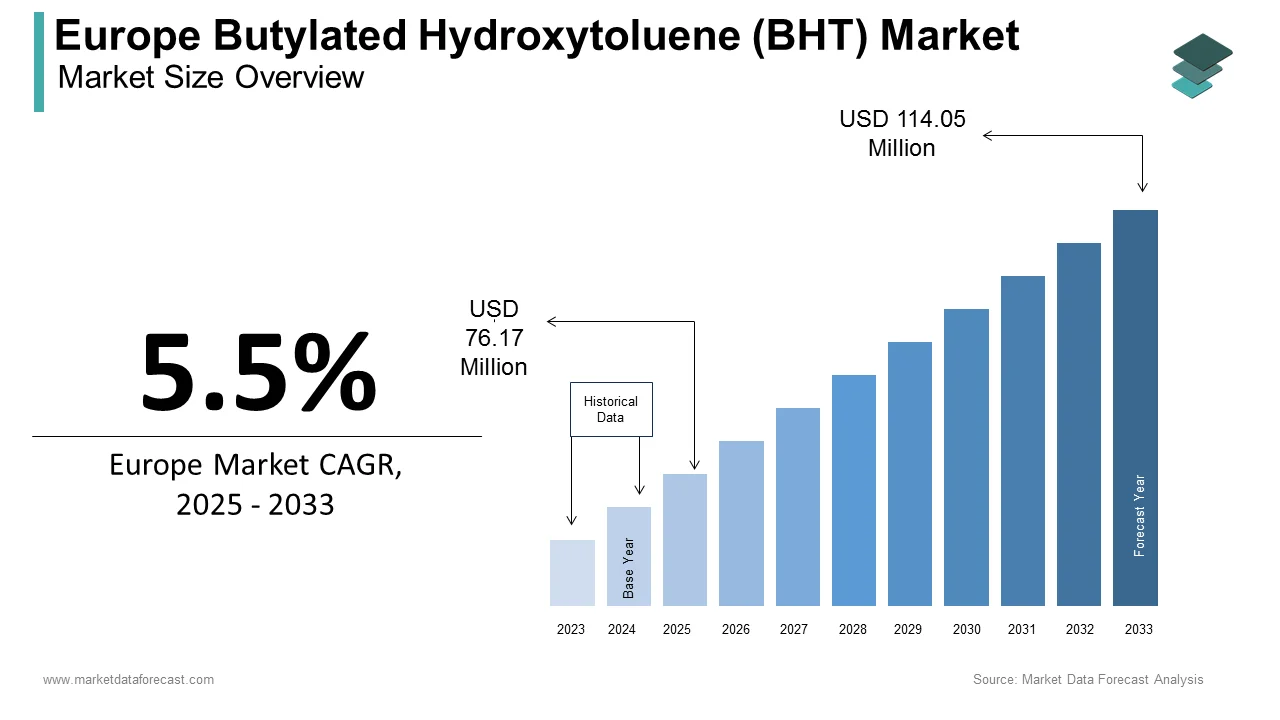
The Europe butylated hydroxytoluene (BHT) market was valued at USD 76.17 million in 2025, is estimated to reach USD 80.36 million in 2026, and is projected to reach USD 123.33 million by 2034, growing at a CAGR of 5.5% from 2026 to 2034. Market growth is driven by increasing demand for antioxidants in food preservation, plastics, rubber, and cosmetic applications. BHT is widely used to enhance product shelf life and prevent oxidation, making it essential across multiple industries. The expanding packaging industry, coupled with rising consumption of processed foods and personal care products, is further supporting market growth. Additionally, ongoing research into safer and more efficient antioxidant formulations is influencing market dynamics.
Key Market Trends
- Growing demand for antioxidants in food and packaging industries.
- Increasing usage in plastics and rubber stabilization.
- Rising consumption of processed and packaged foods.
- Expansion of cosmetics and personal care applications.
- Focus on regulatory compliance and safer formulations.
Segmental Insights
- Based on grade, the technical grade segment dominated the Europe BHT market by capturing 60.6% share in 2025, driven by its widespread industrial applications.
- Based on end-use, the plastic & rubber segment led the market with 46.4% share in 2025, supported by increasing demand for polymer stabilization.
Regional Insights
The Europe BHT market is witnessing steady growth across key industrial economies.
- Germany led the market in 2025 with 26.2% share, driven by strong industrial and manufacturing sectors.
- France followed as the second-largest market, supported by its well-developed chemical and cosmetics industries.
- Italy is expected to witness notable growth due to its strong presence in packaging and manufacturing clusters.
Competitive Landscape
The Europe BHT market is moderately competitive, with companies focusing on product quality, regulatory compliance, and expanding production capabilities. Strategic partnerships and innovation in antioxidant formulations are key competitive strategies.
Prominent companies operating in the Europe BHT market include Sasol Limited, Lanxess AG, Eastman Chemical Company, Camlin Fine Sciences Limited, Dycon Chemicals, Finar (Actylis), Songwon Industrial, Yasho Industries Limited, Milestone Preservatives Pvt. Ltd., and Twinkle Chemi Lab Pvt. Ltd.
Europe Butylated Hydroxytoluene (BHT) Market Size
The butylated hydroxytoluene (BHT) market size in Europe was valued at USD 76.17 million in 2025. The European market is estimated to be worth USD 123.33 million by 2034 from USD 80.36 million in 2026, growing at a CAGR of 5.5% from 2026 to 2034.
Butylated hydroxytoluene (BHT) revolves around the supply and consumption of a synthetic phenolic antioxidant widely utilized to inhibit oxidative degradation in various organic materials. Chemically known as 2,6-di-tert-butyl-4-methylphenol, this compound functions by scavenging free radicals that cause rancidity in fats and oils or deterioration in polymers and fuels. In the European context, BHT serves as a critical additive in the food processing, pharmaceutical, cosmetics, and petrochemical industries to extend shelf life and maintain product integrity. The region's stringent regulatory environment heavily influences the deployment of this chemical, with the European Food Safety Authority continuously evaluating its safety profile for human consumption. As per Eurostat, the European Union chemical industry generated a substantial turnover in 2023, which indicates the massive industrial base that relies on specialty additives like BHT for product stabilization. Furthermore, according to Plastics Europe, the European plastics industry produced a significant volume of plastics in the same year, and it depends on antioxidants to prevent polymer breakdown during processing and usage. The fuel sector also remains a significant consumer, as per the European Commission, which mandates specific stability standards for gasoline and diesel blends to ensure engine performance and storage safety. These interconnected industrial activities create a complex demand landscape where BHT acts as an essential, albeit scrutinized, component for preserving material quality across the continent.
MARKET DRIVERS
Surging Demand for Processed Foods and Extended Shelf Life
The escalating consumption of processed and convenience foods across Europe is primarily driving the growth of the European butylated hydroxytoluene market due to the critical need for preserving lipid stability in edible oils and fatty products. Modern European lifestyles have shifted towards ready-to-eat meals and packaged snacks, which is creating a massive requirement for effective antioxidants that prevent rancidity during storage and distribution. As per Eurostat, the European Union food production sector is valued in trillions of euros and is reflecting a robust manufacturing base that relies on preservatives to maintain quality over long supply chains. BHT is particularly favored in applications involving animal fats, vegetable oils, and baked goods, where it effectively halts the oxidation process that leads to off-flavors and spoilage. The European retail sector that manages billions of stock-keeping units demands products with extended shelf lives to minimize waste and maximize profitability. According to the European Commission, food waste in the EU amounts to tens of millions of tonnes annually, prompting manufacturers to adopt efficient preservation methods like BHT addition to reduce spoilage rates. This economic imperative drives the consistent incorporation of BHT into food formulations, ensuring that products remain safe and palatable from the factory floor to the consumer table.
Expansion of the Automotive and Polymer Industries
The robust growth of the automotive and polymer sectors in Europe significantly propels the demand for Butylated Hydroxytoluene as a vital stabilizer for plastics, rubber and fuel additives, which is another significant market driver. BHT prevents the thermal and oxidative degradation of polymers during high-temperature processing and extends the service life of rubber components used in vehicles, such as tires and seals. As per the European Automobile Manufacturers Association, the EU produces millions of cars and commercial vehicles annually, each requiring stabilized plastics and rubber parts to meet durability and safety standards. Additionally, according to Plastics Europe, the European plastics industry consumes large volumes of resin that require antioxidant protection to maintain mechanical properties. The fuel sector also contributes substantially, as per the International Energy Agency, Europe consumes millions of barrels of oil products daily, necessitating widespread use of fuel stabilizers to ensure compliance with engine performance specifications. As European manufacturers strive to produce lighter, more durable vehicles and infrastructure materials, the reliance on high-performance antioxidants like BHT intensifies, making industrial expansion a powerful catalyst for market growth independent of food sector trends.
MARKET RESTRAINTS
Stringent Regulatory Scrutiny and Safety Concerns
Intense regulatory scrutiny regarding the potential health risks associated with synthetic antioxidants is a major restraint on the Butylated Hydroxytoluene market in Europe. The European Food Safety Authority and other regulatory bodies continuously re-evaluate the acceptable daily intake levels of BHT due to studies suggesting potential toxicity and endocrine-disrupting effects at high doses. As per the European Chemicals Agency, substances classified as having potential hazards face increasingly restrictive usage limits under the Registration, Evaluation, Authorisation and Restriction of Chemicals regulation, which complicates the approval process for new applications and maintains pressure on existing uses. Consumer advocacy groups in Europe have also raised alarms about cumulative exposure to synthetic additives, leading to a decline in public trust and a shift away from products containing BHT. The European Commission has responded by tightening labeling requirements and encouraging the reduction of synthetic preservatives in food items destined for children and sensitive populations. This regulatory climate forces manufacturers to reformulate products to exclude BHT or limit its concentration, thereby capping market growth. The uncertainty surrounding future regulatory decisions creates hesitation among investors and producers, who fear sudden bans or severe restrictions that could render existing inventory obsolete.
Shift Towards Natural and Clean Label Alternatives
The growing consumer preference for natural and clean-label products is further hampering the regional market expansion. Modern European consumers are increasingly educated about ingredient lists and actively seek products free from artificial preservatives, driving a massive trend towards natural antioxidants derived from sources like rosemary extract, tocopherols, and ascorbic acid. As per the European Consumer Organisation, a majority of EU citizens prefer food products with recognizable natural ingredients, prompting major retailers and brands to reformulate their offerings to meet this demand. This shift is particularly evident in the organic food market, which has seen strong growth in recent years, according to the Research Institute of Organic Agriculture, effectively excluding synthetic additives like BHT from a rapidly expanding segment. Food manufacturers face immense pressure to replace BHT with natural alternatives to maintain brand image and market share, even if the synthetic option is more cost-effective. The higher cost of natural antioxidants is often absorbed by companies as a necessary expense to align with consumer values and avoid negative publicity. This structural change in procurement policies reduces the total addressable market for BHT, forcing suppliers to compete in a shrinking pool of conventional applications while natural substitutes capture the high-growth premium segments.
MARKET OPPORTUNITIES
Innovation in Bio-based and Sustainable Antioxidants
The development of bio-based and sustainable variants of Butylated Hydroxytoluene or its functional equivalents offers a significant opportunity for the European butylated hydroxytoluene market. As the European Union pushes for a reduction in fossil-fuel-derived chemicals, there is a burgeoning demand for antioxidants produced from renewable feedstocks that offer similar performance profiles to traditional BHT. According to the European Commission, the bioeconomy strategy is expected to generate substantial employment and contribute significantly to GDP by 2030, creating fertile ground for green chemical innovations. Companies that invest in research to synthesize BHT from biomass or develop hybrid molecules that combine synthetic efficiency with natural origin can capture a first-mover advantage in this emerging niche. The cosmetics industry, which is highly sensitive to sustainability claims, represents a lucrative avenue for such innovations, as brands seek to enhance their environmental credentials without compromising product stability. As per Cosmetics Europe, the sector is actively seeking ingredients that reduce carbon footprints and adhere to strict eco-design principles. By pivoting towards sustainable production methods and obtaining eco-label certifications, BHT manufacturers can unlock new revenue streams and secure partnerships with forward-thinking European corporations that prioritize supply chain sustainability.
Growth in Pharmaceutical and Personal Care Applications
The expanding pharmaceutical and personal care industries in Europe offer a promising opportunity for the European butylated hydroxytoluene market. BHT is extensively used as an excipient in pharmaceutical preparations to prevent the oxidation of active ingredients, ensuring efficacy and shelf life for a wide range of medications. According to the European Federation of Pharmaceutical Industries and Associations, the European pharmaceutical market is among the largest globally, with billions of euros invested annually in research and development of new therapies that require robust stabilization solutions. Similarly, the personal care sector utilizes BHT to protect creams, lotions, and lipsticks from rancidity and color changes caused by exposure to air and light. As the European population ages, the demand for healthcare products and anti-aging cosmetics is projected to rise, further increasing the consumption of high-purity antioxidants. As per the European Society of Cosmetic Scientists, formulation stability is a critical factor in product success, driving formulators to rely on proven antioxidants like BHT for complex emulsions. By focusing on high-grade, pharmaceutical-quality BHT and developing specialized grades for sensitive cosmetic applications, suppliers can tap into these high-value sectors that are less susceptible to clean-label pressures affecting the food industry.
MARKET CHALLENGES
Volatility in Raw Material Prices and Supply Chain Disruptions
Fluctuating prices of raw materials and ongoing supply chain disruptions pose a major challenge to the stability and profitability of the Butylated Hydroxytoluene market in Europe. BHT is primarily synthesized from phenol and isobutylene, both of which are petrochemical derivatives whose costs are directly linked to crude oil prices and global energy markets. According to the International Energy Agency, oil price volatility has remained high in recent years due to geopolitical tensions and supply constraints, causing erratic swings in the cost of feedstock for BHT production. The European chemical industry, already grappling with high energy costs, faces squeezed margins when raw material prices surge unexpectedly, making it difficult to maintain competitive pricing for end users. Furthermore, supply chain bottlenecks exacerbated by logistical hurdles and trade barriers have led to delays in the delivery of essential precursors, disrupting production schedules and leading to inventory shortages. As per the European Chemical Industry Council, input cost inflation has reached historic highs, forcing manufacturers to pass costs onto customers or absorb losses, both of which threaten market equilibrium. This financial instability hampers long-term planning and investment in capacity expansion, leaving the market vulnerable to external shocks that can abruptly alter supply dynamics and pricing structures across the continent.
Technical Limitations and Compatibility Issues
Technical limitations regarding the compatibility and performance of Butylated Hydroxytoluene in certain advanced applications is further challenging the expansion of the regional market. While BHT is effective in many standard applications, it exhibits limitations in high-temperature environments or when used with specific polymers and formulations where it may volatilize or interact negatively with other additives. The European plastics industry, which is constantly innovating with new high-performance materials for automotive and aerospace applications, often requires antioxidants with superior thermal stability and migration resistance that traditional BHT cannot provide. As per the European Association of Plastics Recycling, the push for recycled content in plastics introduces new complexities, as BHT may not perform adequately in matrices containing degraded polymer chains or contaminants. Additionally, in the food sector, the interaction of BHT with certain packaging materials can lead to migration issues that violate strict EU migration limits, restricting its use in specific packaging configurations. Formulators face the challenge of balancing cost, performance, and regulatory compliance, often opting for more expensive but technically superior alternatives when BHT falls short. These technical constraints limit the addressable market for BHT in cutting-edge applications, forcing suppliers to continuously innovate or risk losing ground to specialized competitors offering next-generation stabilization solutions.
REPORT COVERAGE
| REPORT METRIC | DETAILS |
| Market Size Available | 2025 to 2034 |
| Base Year | 2025 |
| Forecast Period | 2026 to 2034 |
| Segments Covered | By Grade, End-Use, and Country. |
| Various Analyses Covered | Global, Regional, and Country-Level Analysis, Segment-Level Analysis, Drivers, Restraints, Opportunities, Challenges; PESTLE Analysis; Porter’s Five Forces Analysis, Competitive Landscape, Analyst Overview of Investment Opportunities |
| Countries Covered |
|
| Market Leaders Profiled | Sasol Limited, Lanxess AG, Eastman Chemical Company, Camlin Fine Sciences Limited, Dycon Chemicals, Finar (Actylis), Songwon Industrial, Yasho Industries Limited, Milestone Preservatives Pvt. Ltd., Lanxess AG, Twinkle Chemi Lab Pvt. Ltd., and Others.
|
SEGMENTAL ANALYSIS
By Grade Insights
The technical grade segment dominated the market by commanding for 60.6% of the European market share in 2025. The dominance of the technical grade segment in the European market is driven by the vast consumption of BHT in industrial applications such as plastics, rubber, fuels, and lubricants, where purity requirements are less stringent than in food or pharmaceutical sectors, but volume usage is exceptionally high. The indispensable role of technical grade BHT as a primary antioxidant in the European polymer industry that protects plastics and rubber from thermal degradation during processing and oxidative aging during service life is further contributing to the dominance of the technical grade segment in the European market. As per Plastics Europe, the European plastics industry processes tens of millions of tonnes of plastic annually, and a significant portion of polyolefins like polypropylene and polyethylene requires stabilization with technical-grade antioxidants to maintain mechanical integrity. Unlike food-grade BHT, which faces strict purity limits and regulatory hurdles, technical grade variants are optimized for cost-efficiency and performance in harsh industrial environments, making them the preferred choice for manufacturers of automotive parts, construction materials, and packaging films. According to the European Automobile Manufacturers Association, millions of vehicles are produced annually in the EU, each utilizing stabilized rubber and plastic components, which creates a massive baseline demand. Furthermore, the fuel industry adds to this volume, as technical grade BHT is widely used to prevent gum formation in gasoline and jet fuel across the continent. The sheer scale of these industrial sectors ensures that technical grade BHT remains the volume leader, as even small dosage rates translate into enormous aggregate consumption figures due to the massive production volumes of base materials they protect.
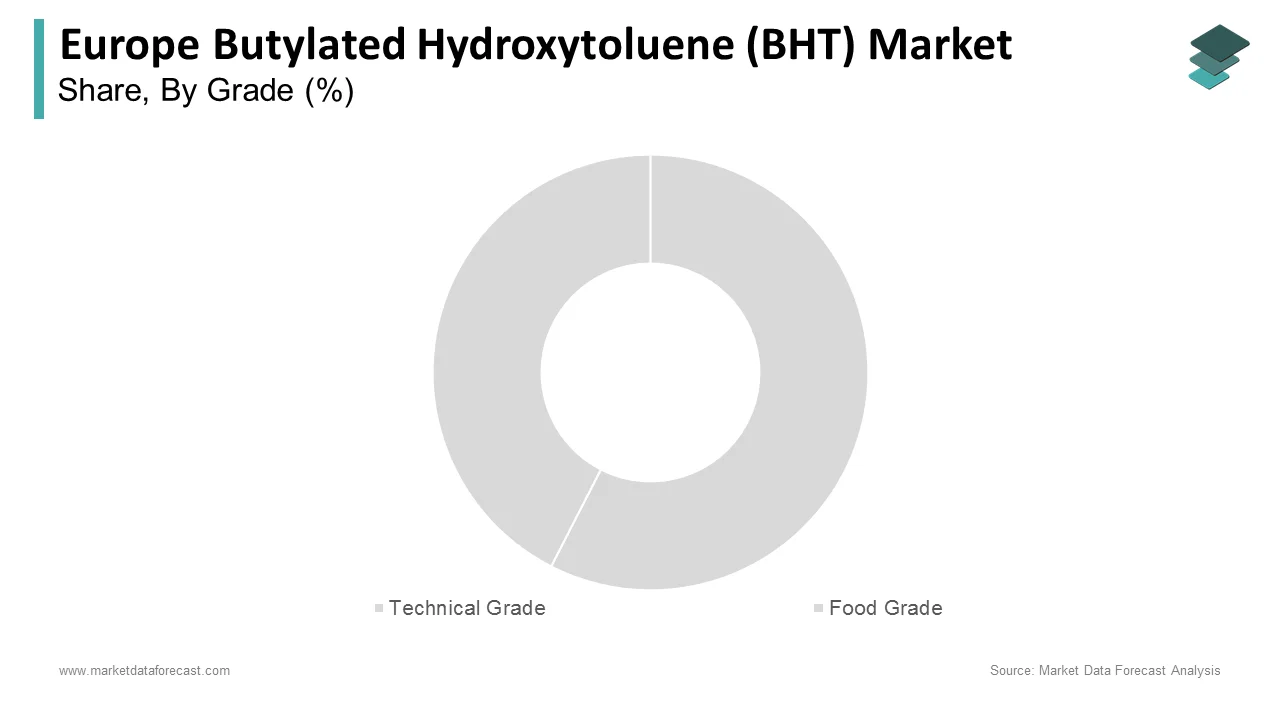
On the other hand, the food-grade segment is projected to register the highest CAGR of 6.4% over the forecast period, owing to the rising demand for processed foods with extended shelf lives and the increasing application of BHT in dietary supplements and fortified foods despite regulatory scrutiny. The rapid expansion of the food-grade BHT segment is further linked to the surging consumption of convenience foods and ready-to-eat meals across Europe, which require effective preservation to maintain quality during distribution and storage. As urbanization increases and dual-income households become the norm, the demand for packaged snacks, instant noodles, and frozen meals has risen sharply, creating a critical need for antioxidants that prevent lipid oxidation and rancidity. According to Eurostat, the European manufactured food and beverage sector is valued in trillions of euros, with snack food and confectionery sub-sectors showing consistent growth. Food-grade BHT is extensively used in chewing gums, potato chips, and dried fruits to preserve flavor and color, ensuring product acceptability over long shelf lives. The European retail landscape, dominated by supermarket chains, demands products that can withstand long logistics chains without spoilage, driving manufacturers to incorporate reliable preservatives like BHT. Furthermore, the growth of the food service industry, which reopened fully post-pandemic, has increased the consumption of bulk ingredients stabilized with food-grade antioxidants.
By End-Use Insights
The plastic & rubber segment accounted for 46.4% of the European market share in 2025. The growth of the plastic and rubber segment in the European market can be credited to the critical necessity of antioxidants in preventing polymer degradation during high-temperature processing and ensuring the longevity of rubber and plastic products in diverse applications. The overwhelming dominance of the plastic and rubber segment also results from the essential role BHT plays in stabilizing polyolefins, which constitute the largest volume of plastics produced in Europe. During extrusion and molding processes, polymers are exposed to high shear and temperatures that generate free radicals, leading to chain scission and loss of mechanical properties if not inhibited immediately. As per Plastics Europe, the EU produces tens of millions of tonnes of plastics annually, with polypropylene and polyethylene representing a substantial majority of this volume. Technical grade BHT is the standard primary antioxidant added to these resins to prevent thermal degradation, ensuring that the final products retain their strength, flexibility, and color. The construction industry, a major consumer of plastic pipes, cables, and insulation materials, relies on these stabilized polymers to meet rigorous durability standards. Furthermore, the automotive sector utilizes vast quantities of stabilized rubber for tires, seals, and hoses, which must withstand exposure to oxygen, ozone, and heat without cracking. According to the European Tire and Rubber Manufacturers Association, millions of tires are produced annually in Europe, each requiring precise antioxidant formulations.
However, the animal feed segment is anticipated to witness the fastest CAGR of 7.5% over the forecast period due to the critical need to prevent fat rancidity in high-energy feed formulations, and the increasing use of supplemental fats and oils in animal diets. The intensification of livestock farming across Europe, which demands high-quality feed formulations to ensure optimal animal health and productivity, is further propelling the expansion of the animal feed segment in the European market. Modern animal feeds are rich in fats and oils to provide concentrated energy, but these lipids are highly prone to oxidation, which leads to rancidity, nutrient loss, and the formation of toxic compounds harmful to animals. As per the Federation of European Veterinarians, the European livestock sector produces large volumes of meat, milk, and eggs annually, relying on industrial feed mills that process millions of tonnes of compound feed. According to the European Feed Manufacturers Federation, compound feed production in the EU exceeds hundreds of millions of tonnes per year, with a growing proportion containing added lipids to enhance energy density. As farmers strive to maximize feed conversion ratios and minimize disease risks associated with oxidized feed, the inclusion of effective antioxidants like BHT becomes essential. This structural shift towards high-energy, fat-rich diets for poultry, swine, and aquaculture drives the accelerated adoption of BHT, making animal feed the fastest-growing end-use segment.
COUNTRY LEVEL ANALYSIS
Germany Butylated Hydroxytoluene (BHT) Market Analysis
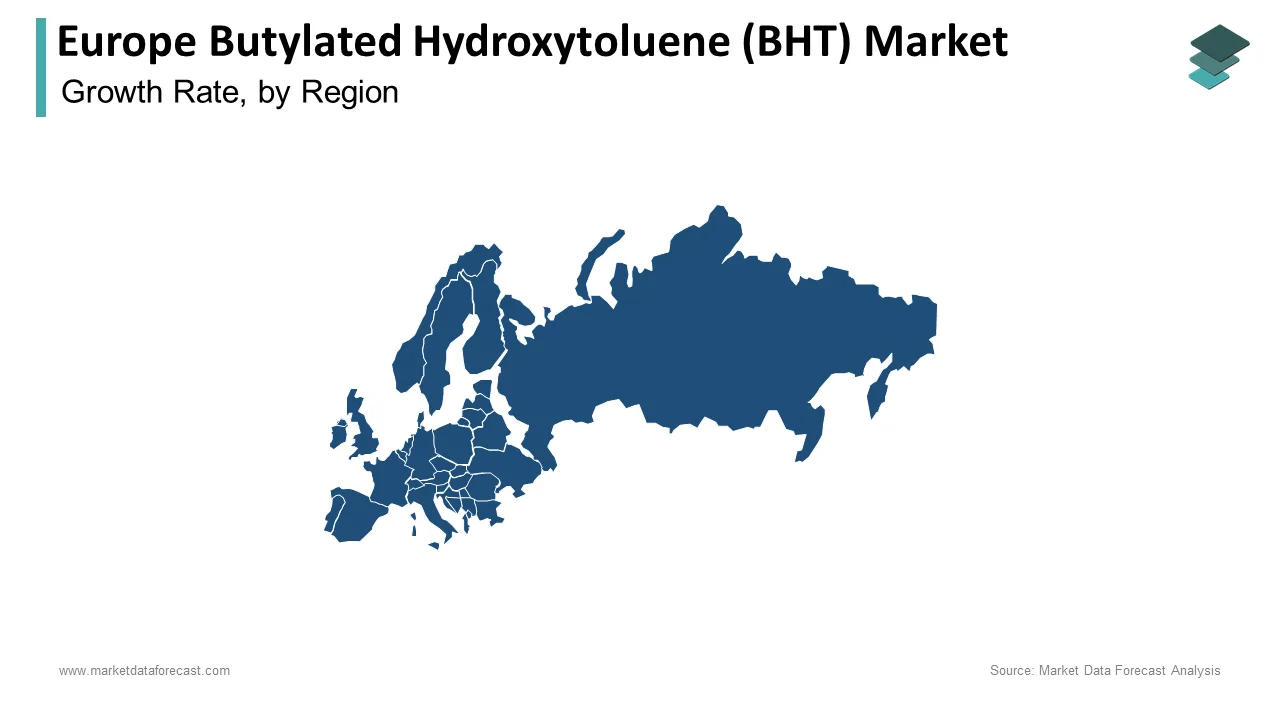
Germany led the butylated hydroxytoluene (BHT) market in Europe in 2025 with 26.2% of the regional market share. The country's dominance is anchored in its status as Europe's largest chemical producer and a global powerhouse in automotive and plastics manufacturing, which is creating a massive internal demand for industrial antioxidants. The German chemical industry, represented by giants like BASF and Covestro, operates some of the world's largest integrated production sites, consuming vast quantities of BHT for polymer stabilization and specialty chemical synthesis. As per the German Chemical Industry Association, the sector generates hundreds of billions of euros in annual turnover, with a significant portion dedicated to producing plastics and rubber products that require antioxidant protection. The automotive industry, a cornerstone of the German economy, produced millions of passenger cars in the last year, according to the Federal Statistical Office, each utilizing stabilized plastics and rubber components. Furthermore, Germany's robust food processing sector drives demand for food-grade BHT in convenience foods and animal feed. The country's strong focus on research and development also fosters advanced antioxidant formulations for high-performance applications, ensuring its continued leadership in the regional BHT market.
France Butylated Hydroxytoluene (BHT) Market Analysis
France secured the second largest position in the Europe Butylated Hydroxytoluene (BHT) Market in 2025 due to its diverse industrial base encompassing aerospace, automotive, cosmetics, and agriculture. The French economy benefits from a strong presence of multinational corporations in the personal care and luxury goods sectors, which utilize BHT to stabilize creams, lotions, and perfumes against oxidation. As per the Federation of Beauty Companies, the French cosmetics industry is a major exporter, generating billions of euros in revenue and requiring high-purity antioxidants to maintain product quality and shelf life. Additionally, France is a leading agricultural power in the EU, with a massive livestock sector that consumes significant volumes of compound feed stabilized with BHT. The French Ministry of Agriculture indicates that the country produces millions of tonnes of cereals and animal feed annually, supporting a vibrant agribusiness ecosystem. The aerospace and automotive industries, anchored by Airbus and Renault, further contribute to demand through their use of high-performance rubber and plastic components. France’s balanced industrial portfolio and strong regulatory framework sustain its significant market share.
Italy Butylated Hydroxytoluene (BHT) Market Analysis
Italy is estimated to account for a promising share of the European butylated hydroxytoluene market during the forecast period, owing to its world-renowned manufacturing clusters in packaging, automotive, and food processing. The Italian industrial landscape is characterized by a dense network of small and medium-sized enterprises that rely on BHT for product preservation and material stability. The packaging industry, a critical component of the Italian economy, produces large volumes of plastic films and containers annually, requiring effective antioxidants to ensure durability and printability. As per Confindustria, the Italian manufacturing sector contributes substantially to national GDP, with plastics and rubber transformation being a key driver. The country’s food and beverage sector, known for processed foods, olive oils, and wines, utilizes food-grade BHT to extend shelf life and maintain sensory attributes for export markets. Additionally, Italy’s automotive presence, with major plants for Fiat and other international brands, drives demand for stabilized rubber parts and interior plastic components. This combination of artisanal excellence and industrial scale ensures Italy’s steady contribution to regional BHT consumption.
United Kingdom Butylated Hydroxytoluene (BHT) Market Analysis
The United Kingdom is expected to witness a healthy CAGR in the European butylated hydroxytoluene market over the forecast period. Factors such as robust pharmaceutical, food and beverage, and animal feed industries are primarily driving the UK market expansion. Despite economic fluctuations, the UK remains a critical hub for life sciences and consumer goods, sectors that are heavy consumers of both food and technical-grade BHT. The British pharmaceutical industry is one of the largest in Europe, investing billions in R&D and requiring high-purity antioxidants for drug formulations and supplements. As per the Association of the British Pharmaceutical Industry, the sector’s significant export volume necessitates compliant and stable products. The UK food manufacturing sector, valued at over 100 billion pounds annually according to the Food and Drink Federation, relies on BHT to preserve a wide range of products from snacks to bakery items. Furthermore, the UK’s substantial animal feed industry supports its livestock sector, where BHT is essential for preventing fat oxidation in high-energy feeds. Post-Brexit trade dynamics have led to increased stockpiling and a focus on supply chain resilience, indirectly boosting demand for preservatives.
Spain Butylated Hydroxytoluene (BHT) Market Analysis
Spain is anticipated to account for a notable share of the European butylated hydroxytoluene market over the forecast period owing to its booming agri-food sector, tourism-related hospitality industry, and growing automotive manufacturing capabilities. The Spanish economy has shown resilience, particularly in the food and beverage industry, which is a major exporter of olive oil, canned goods, and processed meats within the EU. As per the Spanish Confederation of Food and Drink Industries, the sector generates billions of euros in turnover, creating steady demand for food-grade BHT to preserve lipid-rich products. The country’s large livestock population, including significant pig and poultry sectors, requires vast amounts of compound feed stabilized with antioxidants. Additionally, Spain is a key player in the European automotive industry, hosting major production facilities for international brands that utilize stabilized plastics and rubber for vehicle components. The tourism sector increases consumption of packaged foods and personal care products in hotels and restaurants, further driving demand. Government support for industrial modernization and export promotion enhances competitiveness, ensuring Spain’s steady role in the regional BHT market.
COMPETITIVE LANDSCAPE
The competition in the Europe Butylated Hydroxytoluene market is characterized by intense rivalry among established global chemical giants and specialized regional producers who compete on product quality and regulatory compliance. Market participants constantly strive to differentiate themselves through technological advancements in antioxidant formulations and sustainable manufacturing practices. The presence of stringent European regulations regarding chemical safety and food additives creates high barriers to entry, favoring large companies with robust compliance frameworks. Price competition remains moderate because industrial buyers prioritize reliability and consistent supply over minor cost savings, given the critical nature of oxidation prevention in their products. Companies distinguish themselves by offering comprehensive technical support and customized solutions for specific verticals such as automotive and food processing. The threat of substitution from natural antioxidants adds pressure on traditional synthetic BHT producers to prove their value proposition and safety profiles. Strategic alliances and vertical integration are common tactics used to secure raw material supplies and ensure consistent product availability in a volatile economic landscape where supply chain resilience is paramount for success.
KEY MARKET PLAYERS
The leading companies operating in the European butylated hydroxytoluene (BHT) market include:
- Sasol Limited
- Lanxess AG
- Eastman Chemical Company
- Camlin Fine Sciences Limited
- Dycon Chemicals
- Finar (Actylis)
- Songwon Industrial
- Yasho Industries Limited
- Milestone Preservatives Pvt. Ltd.
- Lanxess AG
- Twinkle Chemi Lab Pvt. Ltd.
TOP PLAYERS IN THE MARKET
- SI Group operates as a global leader in performance chemicals and maintains a significant footprint in the European Butylated Hydroxytoluene market through its extensive portfolio of antioxidants. The company supplies high-purity BHT grades to diverse industries, including plastics, rubber, and food processing, across the continent. Their contribution to the global market involves pioneering sustainable manufacturing processes and developing advanced antioxidant solutions that meet rigorous international safety standards. Recently, the company has focused on expanding its production capacity in Europe to ensure supply chain resilience amidst geopolitical tensions. They have also invested heavily in research and development to create bio-based alternatives and optimized formulations that enhance product stability while reducing environmental impact. By strengthening partnerships with key downstream manufacturers and obtaining critical regulatory certifications, SI Group solidifies its reputation as a reliable provider of essential stabilization additives for critical industrial applications throughout the region.
- Songwon Industrial stands as a major international supplier of polymer additives and plays a crucial role in the European Butylated Hydroxytoluene market by offering a wide range of primary and secondary antioxidants. The company serves the global market by delivering cost-effective and high-performance stabilization solutions for the automotive, packaging, and construction sectors. In Europe, Songwon has recently strengthened its position by establishing strategic distribution networks and technical service centers to support local customers with tailored formulation advice. They have actively pursued sustainability goals by launching green product lines and optimizing their logistics to lower carbon emissions. The company also engages in continuous innovation to improve the thermal stability and compatibility of its BHT products with modern polymers. Through these initiatives and a commitment to quality assurance, Songwon Industrial ensures it remains a preferred partner for European manufacturers seeking reliable antioxidants to protect their materials from oxidative degradation.
- Laness AG is a prominent specialty chemicals company headquartered in Germany and serves as a key player in the European Butylated Hydroxytoluene market with its robust portfolio of protective additives. The company contributes significantly to the global sector by providing high-quality BHT for use in fuels, lubricants, plastics, and food applications. Lanxess has recently focused on enhancing its operational efficiency and expanding its production capabilities within Europe to meet growing regional demand. They have implemented advanced digitalization strategies to optimize supply chain management and ensure timely delivery to customers. Furthermore, the company is actively involved in developing sustainable chemical solutions that align with the European Green Deal objectives. By investing in state-of-the-art manufacturing technologies and fostering strong collaborations with industry stakeholders, Lanxess AG reinforces its market presence and continues to deliver innovative antioxidant solutions that address the evolving needs of diverse industrial sectors across the continent.
TOP STRATEGIES USED BY KEY MARKET PARTICIPANTS
Key players in the Europe Butylated Hydroxytoluene market primarily focus on product innovation and sustainability integration to maintain a competitive advantage. Companies invest heavily in research and development to create bio-based antioxidants and cleaner production methods that comply with strict European environmental regulations. Strategic partnerships with raw material suppliers ensure stable feedstock availability and mitigate price volatility risks associated with petrochemical derivatives. Expansion of production facilities within the region helps reduce logistics costs and carbon footprints while enhancing supply chain resilience against global disruptions. Participants also prioritize obtaining comprehensive regulatory certifications to access highly regulated sectors like food and pharmaceuticals. Additionally, firms engage in technical collaboration with downstream manufacturers to develop customized antioxidant blends that offer superior performance in specific applications. These collective efforts aim to address the dual demands of ecological responsibility and operational efficiency while securing long-term customer loyalty in a highly scrutinized marketplace.
MARKET SEGMENTATION
This Europe butylated hydroxytoluene (BHT) market research report is segmented and sub-segmented into the following categories.
By Grade
- Technical Grade
- Food Grade
By End-Use
- Plastic & Rubber
- Food & Beverage
- Personal Care
- Animal Feed
- Others
By Country
- UK
- France
- Spain
- Germany
- Italy
- Russia
- Sweden
- Denmark
- Switzerland
- Netherlands
- Turkey
- Czech Republic
- Rest of Europe