- Product Description Description
- Table of Contents TOC
- List of Table & Figure LOT
- Get Free Sample PDF Sample PDF
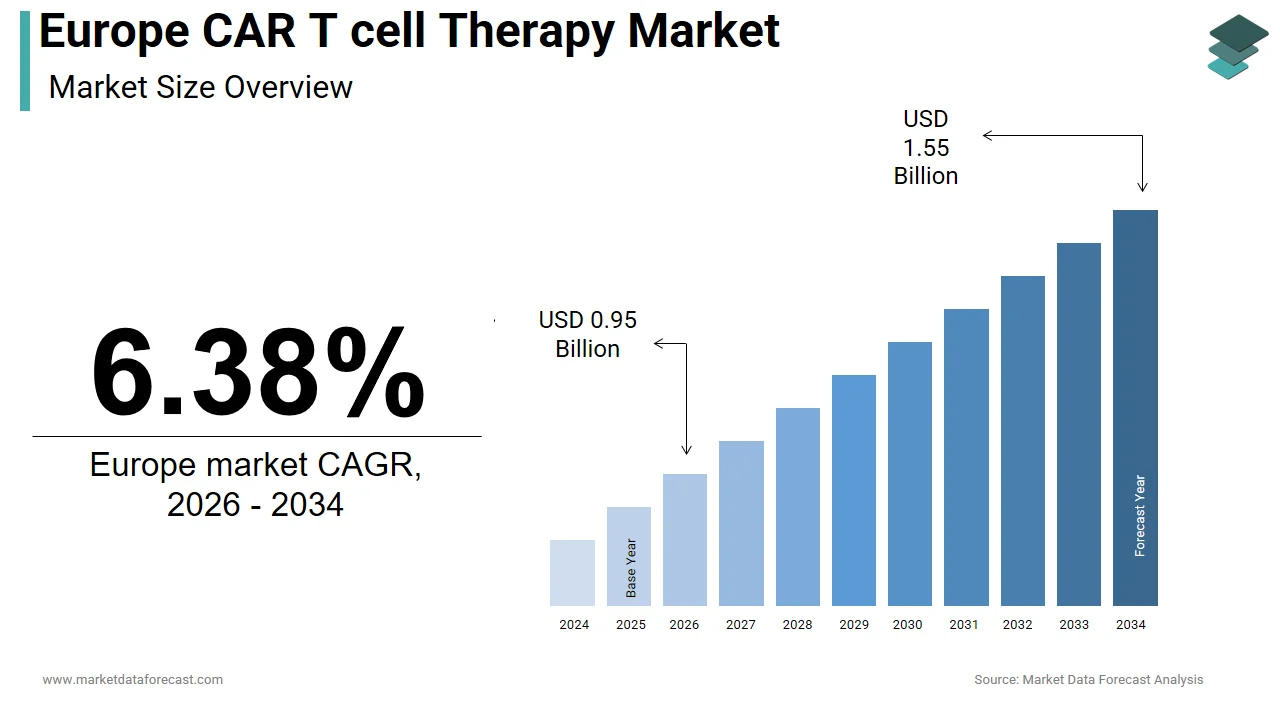
Market Size, 2025
$0.89 BnMarket Estimate, 2026
$0.95 BnMarket Forecast, 2034
$1.55 BnCAGR, 2026–2034
6.38%Europe CAR T Cell Therapy Market Summary
The Europe CAR T cell therapy market is currently experiencing progressive expansion, driven by increasing incidence of relapsed and refractory hematologic cancers, expansion of certified treatment centers, technological advancement in cellular immunotherapies, and growing institutional investment in precision oncology frameworks. Valued at $0.89 billion in 2025, the market is projected to reach $1.55 billion by 2034, reflecting sustained adoption of CAR T therapies across lymphoma, leukemia, and multiple myeloma treatment pathways.
Market Financials & Growth (2026 to 2034)
- Current Size (2025): $0.89 billion
- Estimated 2026 Size: Approximately $0.95 billion
- Growth Rate (CAGR): Industry projections indicate a CAGR of 6.38% from 2025 to 2033
Key Market Drivers
- Rising Burden of Relapsed & Refractory Blood Cancers: A growing pool of patients failing chemotherapy, stem-cell transplant, and targeted therapies is increasing demand for CAR T as a salvage and second-line treatment option across Europe. The prevalence of relapse in non-Hodgkin lymphoma, multiple myeloma, and acute lymphoblastic leukemia continues to expand the clinically eligible treatment base.
- Expansion of Certified Treatment Centers & Reimbursement Programs: The rapid increase in EMA-approved CAR T centers, harmonized accreditation standards, and strengthened national reimbursement frameworks has significantly improved patient access and facilitated broader therapy administration across major European nations.
- Growing Institutional Focus on Precision Oncology: National cancer control strategies integrating genomic profiling, molecular tumor boards, and biomarker-based treatment selection are accelerating patient identification and referral into CAR T programs.
- R&D Investment in Advanced Cell Therapy Platforms: Public-private funding initiatives, Horizon Europe grants, and collaborative research between academia and biopharmaceutical firms are supporting next-generation CAR constructs, clinical pipeline expansion, and manufacturing innovation.
Market Segmentation Outlook
By Target Antigen: CD19: The largest and most established target segment, supported by strong clinical validation across B-cell malignancies and high utilization in lymphoma and leukemia treatment programs across Germany, France, and the UK.
By Application: Diffuse Large B-Cell Lymphoma (DLBCL): The dominant application segment due to high disease prevalence, relapse severity, and strong guideline-driven adoption of CAR T as a second-line standard of care in eligible patients.
By End User: Hospitals: The leading end-user segment, as CAR T therapies are administered exclusively in certified tertiary-care hospital environments equipped with hematology oncology units, apheresis facilities, ICU support, and trained multidisciplinary specialists.
Regional Leaders
- Germany: The largest regional market, supported by strong reimbursement coverage, leading research centers, high treatment volumes, and extensive academic-industry collaborations advancing next-generation platforms.
- United Kingdom: A major growth market driven by centralized NHS service models, rapid reimbursement approvals, and strong translational research leadership in allogeneic and academic CAR T programs.
- France: Demonstrates strong adoption through national registry monitoring, advanced oncology infrastructure, and streamlined logistics supporting reduced treatment turnaround times.
Top Industry Players
- Global & Commercial Leaders: Novartis, Gilead (Kite Pharma), Bristol Myers Squibb, Pfizer, and Legend Biotech.
- Emerging & Specialized Developers: Mustang Bio, Bluebird Bio, CARsgen Therapeutics, Bellicum Pharmaceuticals, Sorrento Therapeutics, and Immune Therapeutics.
- Research-Driven & Academic Collaborators: European university hospitals, cellular therapy institutes, and EBMT-affiliated treatment centers supporting real-world outcomes and trial ecosystems.
Recent Strategic Developments
- Manufacturing & Logistics Expansion: Biopharmaceutical players invested in cryogenic supply chains, regional production hubs, and optimized apheresis-to-infusion workflows to reduce vein-to-vein time and enhance product viability.
- Reimbursement & Access Programs: Outcome-based payment frameworks, centralized procurement systems, and zero co-payment national models strengthened therapy accessibility across leading European markets.
- Clinical Pipeline & Indication Expansion: Ongoing trials in solid tumors, dual-target and armored CAR constructs, and allogeneic off-the-shelf platforms are widening future therapeutic scope and improving treatment scalability.
Europe CAR T Cell Therapy Market Size
The size of the Europe CAR T cell therapy market was valued at USD 0.89 billion in 2025. This market is expected to grow at a CAGR of 6.38% from 2026 to 2034 and be worth USD 1.55 billion by 2034 from USD 0.95 billion in 2026.
The CAR T Cell Therapy is the development, manufacturing, and clinical administration of autologous or allogeneic T cells genetically engineered to express chimeric antigen receptors that target specific tumor antigens. These advanced therapy medicinal products represent a paradigm shift in oncology, offering potential cures for relapsed or refractory hematologic malignancies, such as diffuse large B-cell lymphoma, acute lymphoblastic leukemia, and multiple myeloma. According to the European Society for Medical Oncology, over 12,000 patients in the EU have received CAR T cell therapy since 2018, with treatment centers now established in 28 countries. As per the European Reference Network for Hematologic Diseases, 37 certified CAR T cell therapy centers were operational across Europe in 2024, up from 14 in 2020. Furthermore, the EU’s Horizon Europe program allocated €210 million in 2023 to support next-generation cell and gene therapy manufacturing, reflecting institutional commitment to therapeutic innovation.
MARKET DRIVERS
High Burden of Relapsed or Refractory Hematologic Malignancies
The growing incidence of blood cancers that fail conventional treatments is creating an urgent demand for novel therapeutic modalities like CAR T cell therapy, which is majorly propelling the growth of Europe CAR T cell therapy market. According to the International Agency for Research on Cancer, over 145,000 new cases of non-Hodgkin lymphoma and 75,000 cases of multiple myeloma are diagnosed annually in the EU, with 30 to 40% progressing to relapsed or refractory states. In Germany alone, approximately 4,200 patients per year meet eligibility criteria for approved CAR T products, as documented by the German Society for Hematology and Medical Oncology. The UK’s National Cancer Registration and Analysis Service confirmed that 22% of pediatric acute lymphoblastic leukemia cases relapse after chemotherapy, making CAR T a critical salvage option.
Expansion of Certified Treatment Centers and Reimbursement Frameworks
Access to CAR T cell therapy has dramatically improved through coordinated infrastructure development, and payer acceptance is additionally escalating the growth of Europe CAR T cell therapy market. According to the European Society for Blood and Marrow Transplantation, the number of Joint Accreditation Committee-certified CAR T centers rose from 9 in 2019 to 37 in 2024, spanning 21 countries, including emerging hubs in Poland and Portugal. Reimbursement has followed clinical validation; all five EMA-approved CAR T products are reimbursed in Germany, France, and the UK, with average approval timelines of 6 to 9 months post marketing authorization. Italy’s AIFA granted full coverage for all indications of axicabtagene ciloleucel in 2023, while Sweden’s Dental and Pharmaceutical Benefits Agency included CAR T in its high-cost drug pool with no patient co-payment. The European Commission’s Network for Advanced Therapies further harmonized hospital certification standards in 2024 by reducing administrative barriers. This dual advance in clinical access and financial coverage transforms CAR T from an experimental option into a standard-of-care intervention for eligible patients across the continent.
MARKET RESTRAINTS
Extremely High Treatment Costs and Budgetary Pressure on Health Systems
The prohibitive cost of CAR T cell therapy strains national healthcare budgets and limits equitable access, which is restricting the growth of Europe CAR T cell therapy market. According to the European Health Economic Association, the average wholesale price for a single CAR T infusion in Europe, excluding hospitalization, monitoring, and management of cytokine release syndrome. Similarly, the UK’s National Health Service noted that delivering CAR T to the eligible 500 patients annually consumes over £200 million, equivalent to funding 10,000 hip replacements. Countries with constrained budgets, such as Greece and Romania, lack formal reimbursement, creating stark access disparities. Although outcome-based payment models are being piloted in Germany and the Netherlands, the upfront financial burden deters widespread adoption in public health systems prioritizing cost per quality adjusted life year thresholds.
Complex and Fragmented Manufacturing and Logistics Infrastructure
The autologous nature of current CAR T therapies requires a tightly coordinated cold chain from leukapheresis to reinfusion, posing significant operational challenges. This factor is majorly hampering the growth of Europe CAR T cell therapy market. According to the European Medicines Agency, the vein-to-vein time for approved CAR T products averages 22 to 28 days, during which patients with aggressive lymphomas may deteriorate. A 2024 audit by the European Society for Blood and Marrow Transplantation found that 19% of treatment centers experienced shipment delays due to customs clearance at non-Schengen borders, risking product viability. Furthermore, only 12 commercial manufacturing facilities, primarily in Belgium, Germany, and the UK, are authorized for commercial CAR T production. These logistical vulnerabilities increase treatment failure risk, extend wait times, and limit scalability in Eastern and Southern Europe, where collection centers are distant from manufacturing hubs.
MARKET OPPORTUNITIES
Development of Next Generation Allogeneic and Solid Tumor Targeted CAR T Platforms
The advancing CAR T technology beyond autologous hematologic applications toward off-the-shelf and solid tumor indications is certainly to create new opportunities for the growth of Europe CAR T cell therapy market. French biotech Cellectis pioneered the first allogeneic anti-CD19 CAR T, UCART19, now in Phase II trials across 14 EU centers, by offering potential treatment within 72 hours of order. The European Commission’s Horizon Europe program allocated €85 million in 2023 specifically to overcome solid tumor barriers like immunosuppressive microenvironments and antigen heterogeneity. In Sweden, Karolinska Institutet developed a dual targeting CAR T platform against HER2 and IL13Rα2 for recurrent glioblastoma, showing 50% tumor regression in early trials.
Integration of CAR T Therapy into National Cancer Control and Precision Medicine Strategies
European countries are embedding CAR T cell therapy into broader oncology frameworks that emphasize early genetic profiling and personalized treatment pathways. The integration of CAR T therapy into national cancer control and precision medicine strategies is also to boost the growth of Europe CAR t cell therapy market. According to the EU Mission on Cancer, all member states are required to implement national genomic testing programs by 2025 to identify patients eligible for advanced therapies. In the Netherlands, the Center for Personalized Cancer Treatment now includes CD19 and BCMA expression screening in routine diagnostic panels for lymphoma and myeloma, enabling preemptive referral to CAR T centers. Germany’s National Decade Against Cancer funds molecular tumor boards that review cases monthly to assign cellular therapy, where appropriate. This systemic integration ensures that CAR T is not an isolated intervention but a coordinated component of precision oncology, maximizing therapeutic impact and resource efficiency across Europe’s cancer care continuum.
MARKET CHALLENGES
Persistent Shortage of Trained Personnel and Specialized Clinical Capacity
The delivery of CAR T cell therapy demands highly specialized multidisciplinary teams, yet workforce gaps constrain treatment scalability is also one of the challenges for the growth of Europe CAR T cell therapy market. According to the European Hematology Association, only 28% of EU countries have sufficient hematologists trained in cellular therapy management, with severe shortages in the Balkans and Baltic states. A 2024 survey by the European Society for Blood and Marrow Transplantation revealed that 63% of certified centers operate at or near full capacity, with average wait times exceeding 5 weeks for lymphoma patients. Training programs exist, such as the EBMT’s CAR T Academy but annual certification caps limit output to fewer than 200 new specialists yearly.
Lack of Long Term Efficacy and Safety Data for Real World Populations
While clinical trials demonstrate impressive short term responses, uncertainties persist regarding durability, late toxicities, and outcomes in broader patient groups. The lack of long term efficacy and safety data for real-world populations is also escalating the growth of the Europe CAR T cell therapy market. According to a 2024 study, 34% of European patients relapsed within two years after CAR T therapy for diffuse large B-cell lymphoma, higher than trial-reported rates. The European Medicines Agency’s EudraVigilance database recorded over 1,200 cases of prolonged cytopenia and 87 secondary malignancies linked to CAR T products between 2019 and 2024, triggering ongoing safety reviews. These knowledge gaps complicate health technology assessments and patient counseling. The long term European registries like the EBMT’s CART Survey provide robust evidence, and payers and clinicians will remain cautious, which is slowing broader adoption and indication expansion across diverse populations.
REPORT COVERAGE
| REPORT METRIC | DETAILS |
| Market Size Available | 2025 to 2034 |
| Base Year | 2025 |
| Forecast Period | 2026 to 2034 |
| CAGR | 3.70% |
| Segments Covered | By Target Antigen, Application, Product, Therapies, End User, and Country. |
| Various Analyses Covered | Global, Regional, and Country-Level Analysis, Segment-Level Analysis, Drivers, Restraints, Opportunities, Challenges; PESTLE Analysis; Porter’s Five Forces Analysis, Competitive Landscape, Analyst Overview of Investment Opportunities |
| Countries Covered | UK, France, Spain, Germany, Italy, Russia, Sweden, Denmark, Switzerland, Netherlands, Turkey, Czech Republic, and the Rest of Europe. |
| Market Leaders Profiled | Mustang Bio, Inc., Celgene Corporation, Gilead Sciences, Bluebird Bio, Inc., CARsgen Therapeutics, Ltd., Novartis International AG, Legend Biotech, Sorrento Therapeutics Inc., Kite Pharma, Inc., Bristol Myers Squibb, Immune Therapeutics, Bellicum Pharmaceuticals, Inc., and Pfizer, Inc. |
SEGMENTAL ANALYSIS
By Target Antigen Insights
The CD19 segment was the largest by capturing 48.3% of the Europe CAR T Cell Therapy Market share in 2024 from extensive clinical validation and regulatory approvals across multiple B-cell malignancies. CD19 directed CAR T therapies are approved in Europe for diffuse large B cell lymphoma, primary mediastinal B cell lymphoma, follicular lymphoma, and acute lymphoblastic leukemia. The European Society for Medical Oncology reports that CD19 remains the most consistently expressed surface antigen on malignant B cells, with detection rates exceeding 95% across subtypes. In Germany, statutory health insurers reimbursed over 1,800 CD19 CAR T infusions in 2023 alone, as per the Federal Joint Committee. This regulatory and clinical ubiquity ensures CD19 remains the foundational target for both commercial and academic cellular therapy programs across the continent. CD19 CAR T therapy demonstrates unprecedented efficacy in patients with otherwise terminal disease. In France, the national lymphoma registry documented a median overall survival of 25.8 months for relapsed patients post CD19 CAR T, compared to 6.3 months with chemotherapy. These outcomes have redefined treatment algorithms, with European guidelines now recommending CAR T as second-line therapy for high-risk lymphomas.
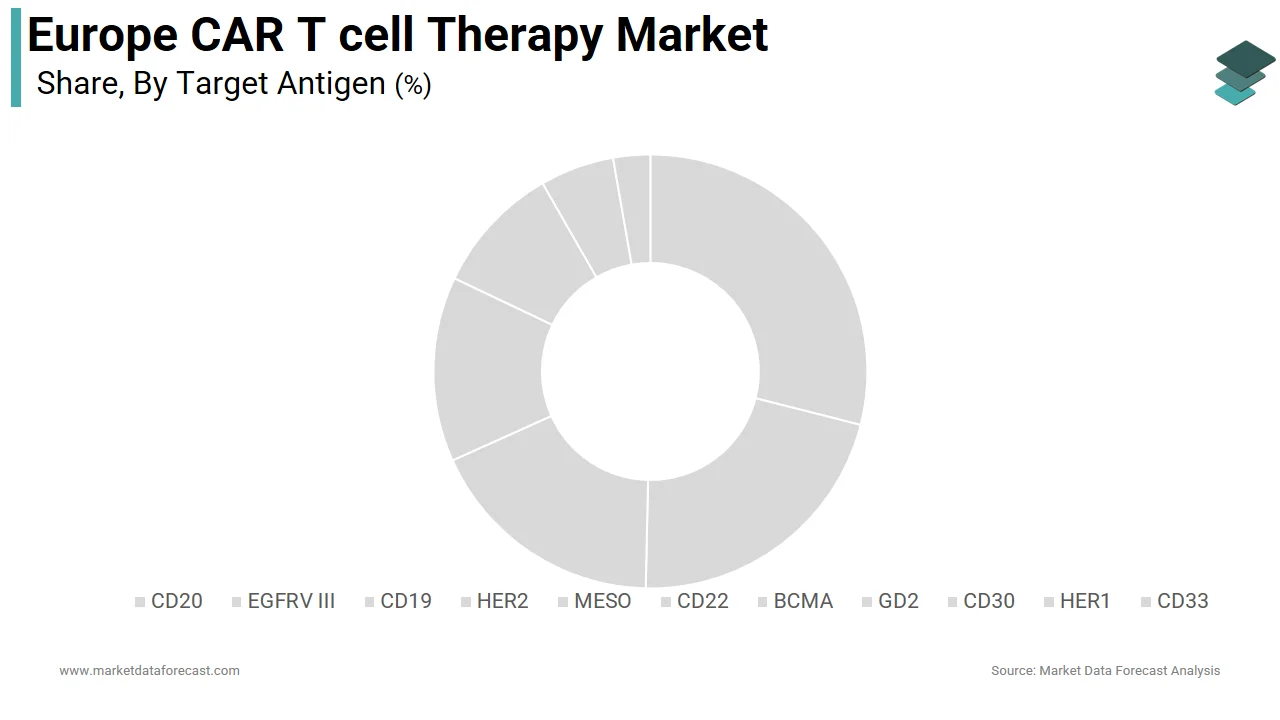
The BCMA segment is likely to grow at the fastest CAGR of 24.6% from 2025 to 2033. Multiple myeloma remains incurable for most patients, with a median survival after fourth-line therapy of under 9 months. BCMA, expressed almost exclusively on plasma cells, offers a precise therapeutic window. The European Medicines Agency approved idecabtagene vicleucel in 2021 and ciltacabtagene autoleucel in 2022 for triple-class refractory myeloma, with response rates of 73 and 98%, respectively, in pivotal trials. In Sweden, the Karolinska University Hospital reported a 68% minimal residual disease negativity rate post BCMA CAR T, a predictor of long-term survival. European countries are integrating BCMA CAR T into dedicated myeloma care pathways with dedicated funding. According to Italy’s Agenzia Italiana del Farmaco, BCMA therapies have been fully reimbursed for all eligible myeloma patients since 2023, with 12 certified centers operational nationwide. Additionally, the European Myeloma Network launched a real-world registry in 2023 tracking over 1,500 BCMA CAR T recipients across 18 countries to optimize dosing and toxicity management.
By Application Insights
The diffuse Large B Cell Lymphoma segment was the largest by accounting for 39.3% of the Europe CAR T Cell Therapy Market share in 2024. Diffuse large B cell lymphoma is the most common non-Hodgkin lymphoma, with over 38,000 new cases diagnosed annually, according to the International Agency for Research on Cancer. The European Society for Medical Oncology now recommends CAR T as second-line therapy for high-risk patients based on the ZUMA 7 and TRANSFORM trials, which showed superior progression-free survival versus standard care. In France, the national lymphoma registry recorded a 58% increase in CAR T referrals for this indication between 2022 and 2024. The combination of prevalence and life-threatening relapse creates a large, urgent patient pool driving consistent market demand. European clinical guidelines have rapidly adopted CAR T for diffuse large B-cell lymphoma, facilitating reimbursement and access. According to Germany’s S3 Guidelines for Malignant Lymphomas, CAR T is standard of care for second-line treatment in patients with early relapse or primary refractory disease. These standardized pathways ensure that eligible patients are systematically identified and referred, minimizing care fragmentation.
The multiple myeloma segment is projected to expand at a CAGR of 23.1% throughout the forecast period. The approval of idecabtagene vicleucel and ciltacabtagene autoleucel has revolutionized care for triple-class refractory myeloma, a population with few options. In the Netherlands, the University Medical Center Utrecht reported a 2.1 year median progression free survival in real world patients, far exceeding historical benchmarks. These unprecedented outcomes have shifted clinical practice, with European myeloma centers now routinely testing for BCMA expression at third line. European health systems are building specialized myeloma CAR T pathways with guaranteed funding. According to Italy’s National Health Service, all 21 regions now cover BCMA CAR T therapy with no patient co-payment, supported by a centralized procurement model that reduced costs by 12%. The UK’s NHS established the National Myeloma CAR T Service in 2024, training 300 nurses and physicians across 10 hubs. Additionally, the European Myeloma Network’s registry enables real time toxicity monitoring, improving safety and confidence among prescribers. This coordinated clinical, financial, and educational support system removes traditional barriers and accelerates growth in multiple myeloma applications.
By End User Insights
The hospitals segment was the accounted for a dominant share of the Europe CAR T Cell Therapy Market in 2024. The European Union mandates that CAR T therapies be administered only in Joint Accreditation Committee-certified centers equipped for complex immunotherapy management. According to the European Medicines Agency, all 37 active CAR T centers in 2024 are hospital-based, featuring dedicated apheresis units, cryogenic storage, intensive care beds, and trained staff. In Germany, the Paul Ehrlich Institute requires hospitals to demonstrate experience managing cytokine release syndrome and neurotoxicity before authorization. The UK’s NHS lists 14 hospital trusts as approved providers, all with hematology oncology and ICU integration. According to France’s National Health Insurance, the €380,000 CAR T cost is bundled with a 21 day inpatient stay, laboratory monitoring, and toxicity management under a single Diagnosis Related Group payment. Germany’s G-DRG system includes a special reimbursement code for cellular therapies that covers all associated services. This integrated payment model incentivizes hospitals to invest in certification, staffing, and protocols, as they retain control over the entire care continuum. Consequently, hospitals are not just delivery sites but financial and operational anchors of the CAR T ecosystem, across Europe.
The academic and research institutes segment is anticipated to witness the fastest CAGR of 18.9% in the coming years. European universities are leading the development of novel CAR constructs, including allogeneic, dual targeting, and armored platforms. According to the EU Clinical Trials Register, 63 investigator-initiated CAR T trials were active in Europe in early 2024, up from 28 in 2020, with 76% hosted by academic medical centers. The Karolinska Institute in Sweden launched a Phase I trial of a HER2 GD2 bispecific CAR for glioblastoma, while Heidelberg University tests a TGFβ-resistant CAR for solid tumors. This research intensity positions academic institutes as critical incubators for future commercial therapies. According to the European Federation of Academic Cell Therapy, the Academic Medical Center Amsterdam, King’s College London, and the University Hospital Zurich now operate certified clean rooms producing clinical-grade CAR T for trials. These hubs reduce vein-to-vein time from 28 to 12 days on average, as reported by the EBMT.
COUNTRY-LEVEL ANALYSIS
Germany CAR T Cell Therapy Market Analysis
Germany was the top performer by occupying 23.4% of the Europe CAR T Cell Therapy Market share in 2024. Germany was the first EU nation to approve all five EMA-authorized CAR T products, with 11 certified treatment centers by 2024. The statutory health insurance system covers 100% of costs for eligible patients, facilitating over 2,100 infusions in 2023 alone. Leading institutions like Charité Berlin and University Hospital Heidelberg pioneer investigator-initiated trials, including allogeneic and solid tumor platforms. The Paul Ehrlich Institute’s streamlined certification process reduces center approval time to under six months.
United Kingdom CAR T Cell Therapy Market Analysis
The United Kingdom CAR T Cell Therapy Market held second position with a significant share of Europe CAR T cell therapy market in 2024. Its strength lies in centralized service delivery, rapid reimbursement decisions, and academic excellence. The NHS established 14 designated CAR T centers by 2024, all integrated with national cancer networks to ensure timely referrals. The National Institute for Health and Care Excellence approved all hematologic indications within nine months of EMA authorization, with no patient co-payment. King’s College London and University College London lead in allogeneic CAR T research, supported by the UK Cell and Gene Therapy Catapult’s £90 million manufacturing facility.
France CAR T Cell Therapy Market Analysis
France CAR T Cell Therapy Market growth is likely to be driven by the adoption of advanced healthcare infrastructure. The national lymphoma and myeloma registries track over 1,500 CAR T patients annually, providing data for health technology assessment. Gustave Roussy and Institut Curie lead in solid tumor CAR T trials, including EGFRvIII for glioblastoma. Reimbursement is automatic upon EMA approval, with full coverage for all indications. Additionally, France’s Biomedicine Agency streamlined apheresis logistics through a national cryo transport network, reducing vein to vein time to 20 days. This blend of equity, data, and logistics sustains France’s central role in European CAR T delivery.
Italy CAR T Cell Therapy Market Analysis
Italy CAR T Cell Therapy Market growth is propelled by the rapid myeloma adoption and regional equity policies. Italy was among the first to reimburse BCMA CAR T for all triple-class refractory myeloma patients, leading to a 45% increase in infusions between 2022 and 2023. The national health service mandates that all 21 regions fund CAR T therapy, preventing geographic disparities. Ospedale San Raffaele in Milan and IRST in Meldola lead in lymphoma and myeloma trials, supported by the Italian Medicines Agency’s fast track review. In 2023, Italy launched a national CAR T registry linked to hospital discharge databases, enabling real-time outcome monitoring.
Spain CAR T Cell Therapy Market Analysis
Spain CAR T Cell Therapy Market growth is being driven by the efficient referral networks and academic trial. Spain’s Grupo Espanol de Linfomas and PETHEMA myeloma group established centralized pathways that reduced time from diagnosis to CAR T infusion by 38% between 2021 and 2023. Hospitals like Hospital Clinic de Barcelona and MD Anderson Madrid operate certified centers serving over 600 patients annually. The national health system provides full reimbursement with no co-payment, and new BCMA approvals are adopted within six months. Additionally, Spanish researchers lead EU funded trials on CD30 CAR T for Hodgkin lymphoma and GD2 for neuroblastoma. This integration of clinical excellence, access equity, and research innovation positions Spain as a high-momentum market in Southern Europe.
COMPETITIVE LANDSCAPE
Competition in the Europe CAR T Cell Therapy Market is defined by a select group of multinational biopharmaceutical leaders vying for clinical adoption, reimbursement access, and manufacturing reliability rather than price. The market is characterized by high regulatory barriers, complex logistics, and the necessity for deep integration with hospital systems. Success depends on the ability to guarantee consistent product delivery, demonstrate robust real-world outcomes, and navigate fragmented national health technology assessment processes. While Novartis, Gilead Kite, and Bristol Myers Squibb dominate the commercial landscape, academic institutions and emerging biotechs are driving next generation innovation in allogeneic and solid tumor CAR T therapies. Competition is further intensified by the race to reduce vein-to-vein time, expand indications, and implement value-based pricing models.
KEY MARKET PLAYERS
The leading companies operating in the CAR T cell therapy market include:
- Mustang Bio, Inc.
- Celgene Corporation
- Gilead Sciences
- bluebird bio, Inc.
- CARsgen Therapeutics, Ltd.
- Novartis International AG
- Legend Biotech
- Sorrento Therapeutics Inc.
- Kite Pharma, Inc.
- Bristol Myers Squibb
- Immune Therapeutics
- Bellicum Pharmaceuticals, Inc.
- Pfizer, Inc.
TOP PLAYERS IN THE MARKET
- Novartis AG is a pioneering force in the Europe CAR T Cell Therapy Market through its development and commercialization of tisagenlecleucel, the first EMA-approved CAR T therapy for acute lymphoblastic leukemia and diffuse large B cell lymphoma. The company established a dedicated European logistics network called “Kymriah® Chain” to manage vein-to-vein delivery across 28 countries, ensuring cryogenic integrity and regulatory compliance. In 2024, Novartis expanded its manufacturing capacity at its Stein, Switzerland, facility to meet growing demand for both commercial and clinical trial supplies. It also partnered with the European Society for Blood and Marrow Transplantation to launch a real-world evidence program tracking long-term outcomes across 20 certified centers. These initiatives reinforce Novartis’s role as a scientific leader and operational backbone of Europe’s CAR T ecosystem.
- Gilead Sciences, through its Kite Pharma subsidiary, significantly shapes the Europe CAR T Cell Therapy Market with axicabtagene ciloleucel and brexucabtagene autoleucel, approved for multiple lymphomas and mantle cell lymphoma. Kite operates a state-of-the-art commercial manufacturing facility in Amsterdam that serves as the central European hub for product production and distribution. In 2023, the company launched the “Kite Cell Therapy Academy” in collaboration with leading European hospitals to train hematologists, nurses, and pharmacists in CAR T management. It also initiated the EU CART initiative, a pan European registry collecting real world data on over 1,200 patients to refine toxicity protocols. These efforts enhance clinical adoption while strengthening Kite’s reputation as a partner in both therapy delivery and healthcare capacity building across the continent.
- Bristol Myers Squibb contributes to the Europe CAR T Cell Therapy Market through its dual approved therapies, lisocabtagene maraleucel for lymphomas and ciltacabtagene autoleucel for multiple myeloma, both targeting high unmet needs. The company works closely with national health systems to implement outcome-based reimbursement models, particularly in Germany and the UK, where payment is tied to six month response status. In early 2024, Bristol Myers Squibb inaugurated a new cryogenic logistics corridor linking its Cambridge, UK, apheresis collection sites to its manufacturing plant in Belgium by reducing vein-to-vein time to under 18 days. It also sponsors the European Myeloma Network’s BCMA registry to support long-term safety monitoring. These strategic investments in access, speed, and evidence generation position Bristol Myers Squibb as a key enabler of equitable and sustainable CAR T therapy delivery in Europe.
TOP STRATEGIES USED BY THE KEY MARKET PARTICIPANTS
Key players in the Europe CAR T Cell Therapy Market focus on expanding manufacturing and cryogenic logistics infrastructure to reduce vein-to-vein time and ensure product viability. They establish outcome-based reimbursement agreements with national payers to align cost with clinical benefit. Companies invest in healthcare professional education through certified training academies to build clinical capacity for toxicity management. They support pan-European real-world evidence registries to generate long term safety and efficacy data for regulatory and payer confidence. Additionally, they collaborate with academic centers to advance next-generation CAR T platforms for solid tumors and allogeneic applications, securing future market leadership through innovation.
MARKET SEGMENTATION
This Europe CAR T cell therapy market research report is segmented and sub-segmented into the following categories.
By Target Antigen
- CD20
- EGFRV III
- CD19
- HER2
- MESO
- CD22
- BCMA
- GD2
- CD30
- HER1
- CD33
By Application
- Multiple Myeloma
- Chronic Lymphocytic Leukemia
- Mantle Cell Lymphoma
- Follicular Lymphoma
- Diffuse large B-cell lymphoma
- Acute Lymphoblastic Leukemia
By Product
- Allogeneic
- Autologous
By Therapies
- Axicabtagene ciloleucel (Yescarta)
- Tisagenlecleucel (Kymriah)
By End User
- Cancer Research Centers
- Hospitals
- Academic and Research Institutes
- Pharmaceutical Companies
- Biotechnology Companies
- Contract Research Organizations
By Country
- UK
- France
- Spain
- Germany
- Italy
- Russia
- Sweden
- Denmark
- Switzerland
- Netherlands
- Turkey
- Czech Republic
- Rest of Europe