- Product Description Description
- Table of Contents TOC
- List of Table & Figure LOT
- Get Free Sample PDF Sample PDF
Market Size, 2025
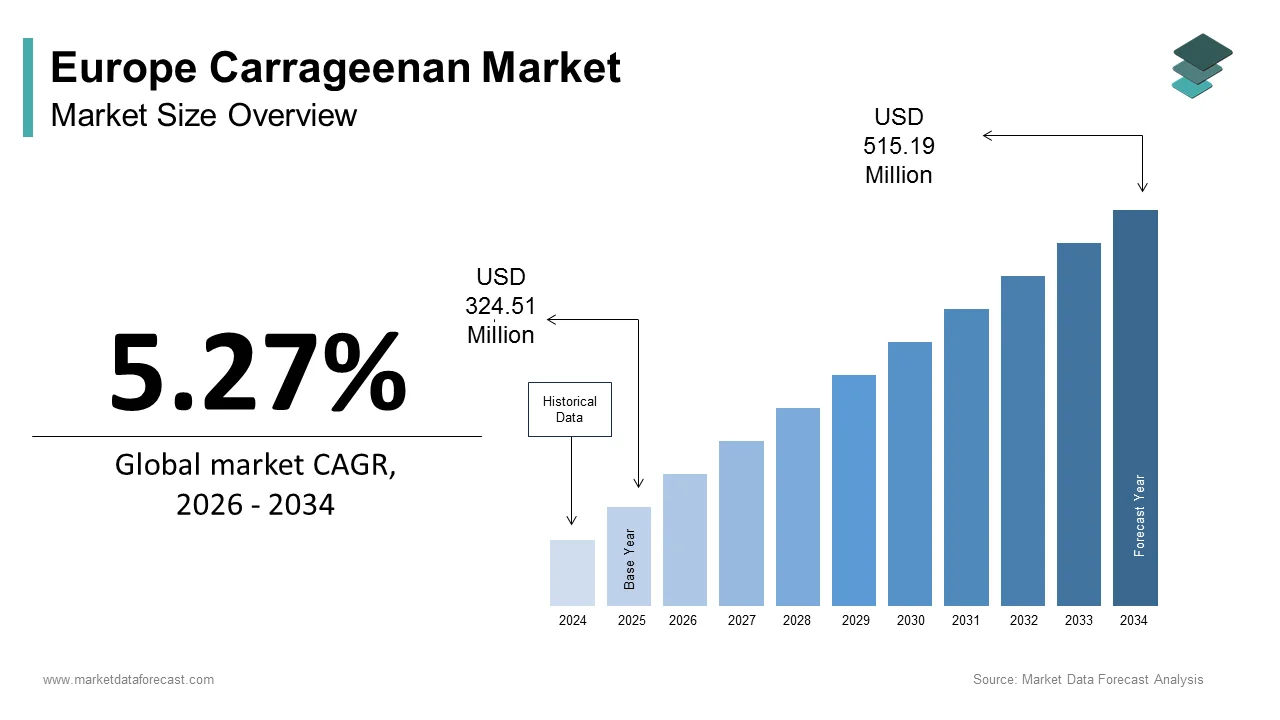
$324.51 MnMarket Estimate, 2026
$341.61 MnMarket Forecast, 2034
$515.19 MnCAGR, 2026–2034
5.27%Executive Summary: Europe Carrageenan Market
- Market Scope: Comprehensive European carrageenan market analysis covering types, application verticals, grades, seaweed sources, regional leadership frameworks, and adoption metrics.
- Market Valuation: Valued at USD 324.51 million (2025), estimated at USD 341.61 million (2026), and projected to reach USD 515.19 million by 2034, growing at a robust CAGR of 5.27% (2026–2034).
- Primary Growth Drivers: Rising consumer demand for plant-based and dairy alternative products (such as almond milk, oat yogurt, and vegan cheeses) and continuous regulatory endorsement and authorization by European food safety authorities. Key financial and operational metrics include EU imports of over 30,000 tonnes of seaweed hydrocolloids annually, robust growth across European retail plant-based food sectors, and critical functional necessity in shelf-stable alt-dairy and meat analogs.
Key Market Segment Metrics (2026–2034)
| Category | Leading Segment (2025 Position) | Fastest-Growing Segment |
|---|---|---|
| By Type | Kappa Carrageenan (dominated the European market in 2025 due to strong gelling properties in dairy, meat analogs, and pet food) | Iota Carrageenan (predicted to witness the highest CAGR of 6.1%) |
| By Application | Food Segment (led the European carrageenan market in 2025 as an indispensable functional workhorse ingredient) | Pharmaceutical Segment (estimated to register the fastest CAGR of 7.4%) |
| By Grade | Refined Carrageenan (held the majority share in 2025, legally mandated by EU regulations for food use) | Refined Carrageenan (projected to grow at a CAGR of 5.9% propelled by pharmaceutical and cosmetic sectors) |
| By Seaweed Source | Eucheuma (largest source in 2025 due to commercial viability and high-volume aquaculture yield) | Chondrus Crispus (fastest CAGR of 8.1% driven by local, traceable, and sustainable European sourcing trends) |
| By Region / Country | Western European major markets (UK, France, Germany, and Spain leading demand across food and retail sectors) | Emerging European sub-markets adopting clean-label innovations and premium plant-based portfolios |
Major Market Players & Market Structure
Market Structure: Highly competitive European carrageenan and hydrocolloid landscape featuring established global ingredient suppliers and specialized refiners competing on regulatory compliance (EU E 407 standards), high purity grades, sustainable local sourcing, and functional versatility across food and pharmaceutical applications.
Key Companies: Kachabo Gums, BLG Shanghai & Zhejiang Plants, Marinalg International, Altrafine Gums, Scalzo Food Industries, FMC Corporation, TIC Gums Incorporation, Cargill Inc, and Gum Technology Corporation.
Europe Carrageenan Market Size
The size of the Europe carrageenan market was expected to be worth USD 324.51 million in 2025 and is anticipated to be worth USD 515.19 million by 2034, from USD 341.61 million in 2026, growing at a CAGR of 5.27% during the forecast period.
Carrageenan, a natural hydrocolloid extracted from red seaweed species such as Eucheuma and Kappaphycus, serves as a critical functional ingredient in the European food, pharmaceutical, and personal care industries. In the European context, it is primarily valued for its gelling, thickening, and stabilizing properties, enabling texture modification and shelf life extension in a wide array of products, from dairy alternatives and processed meats to toothpastes and liquid medications. The European market operates under a distinct regulatory framework where only refined carrageenan (E 407) and processed eucheuma seaweed (E 407a) are permitted for use in food, following rigorous safety evaluations by the European Food Safety Authority. Based on EU regulation and European Commission safety opinions, carrageenan is permitted in various food categories, but is not authorized for use in infant formula for special medical purposes due to precautionary safety concerns regarding the developing gut. As per the Joint FAO/WHO Expert Committee on Food Additives, refined carrageenan is considered safe for human consumption at current usage levels. The European seaweed industry, though nascent in cultivation, relies heavily on imports. Data from the Centre for the Promotion of Imports from developing countries (CBI) indicates that in recent years (leading into 2024), the EU has imported over 30,000 tonnes of seaweed hydrocolloids (including carrageenan) annually, with China, the Philippines, and Indonesia being the primary suppliers. This dependency underscores the market’s vulnerability to global supply dynamics while highlighting its entrenched role in Europe’s clean label and plant-based product innovation.
MARKET DRIVERS
Rising Demand for Plant-Based and Dairy Alternative Products
The accelerating consumer shift toward plant-based diets and dairy alternatives is a primary driver of the Europe carrageenan market. As consumers seek to reduce animal product consumption for health, environmental, or ethical reasons, the market for almond milk, oat yogurt, and vegan cheeses has surged. These products inherently lack the natural proteins and fats that provide structure and mouthfeel in their dairy counterparts, creating a functional void that hydrocolloids like carrageenan are uniquely positioned to fill. Carrageenan’s ability to stabilize emulsions, prevent syneresis, and mimic the creamy texture of dairy is essential for consumer acceptance. Data from the Good Food Institute Europe indicates that the retail market for plant-based foods across key European nations continues to grow, with dairy alternatives constituting the largest segment. A significant portion of these products, particularly shelf-stable plant milks and spoonable yogurts, rely on carrageenan in combination with other gums to achieve the desired sensory profile. This structural necessity, embedded within one of Europe’s fastest-growing food categories, ensures sustained and expanding demand for high-quality, food-grade carrageenan as a key enabler of the plant-based revolution.
Regulatory Endorsement and Continued Authorization by European Food Safety Authorities
The continued scientific validation and regulatory approval of refined carrageenan by European authorities provide a stable and legally secure foundation for its use, which acts as a key factor for the Europe carrageenan market expansion. Despite public controversy, the European Food Safety Authority re-evaluated refined carrageenan (E 407) in 2018 and determined that the previous acceptable daily intake should be considered temporary, citing a need for improved data to address uncertainties in the safety database. This authoritative stance has been reinforced by the European Commission, which maintains carrageenan’s authorization in its positive list of food additives. The EFSA Panel on Food Additives and Nutrient Sources added to Food set a temporary acceptable daily intake for refined carrageenan in their 2018 re-evaluation, citing that the available data required further improvements. This regulatory clarity is crucial for food manufacturers who require certainty when formulating long-term product lines. It allows them to confidently include carrageenan in clean-label products without fear of sudden delisting, especially in sensitive applications like organic foods and medical nutrition. This institutional trust, backed by rigorous scientific review, shields the market from unwarranted disruption and sustains industrial demand across multiple sectors.
MARKET RESTRAINTS
Persistent Consumer Misinformation and Clean Label Backlash
Widespread consumer misinformation and the resulting clean label backlash, despite scientific consensus on its safety, are a major impediment to the Europe carrageenan market. Online campaigns and non-peer-reviewed publications have repeatedly conflated food-grade refined carrageenan with degraded poligeenan, a substance not used in food and known to be inflammatory. This confusion has led to a perception among some consumers that carrageenan is an artificial or harmful additive, prompting major retailers and brands to remove it from their formulations. Driven by clean-label consumer preferences, a growing number of new, niche plant-based and organic products are promoting the absence of additives like carrageenan. However, demand for carrageenan in the overall food industry remains strong. This market-driven exclusion, fueled by emotion rather than evidence, forces manufacturers to seek alternative hydrocolloids, even when they are less effective or more expensive. The reputational damage, though not grounded in regulatory science, creates real commercial pressure that constrains carrageenan’s application, particularly in premium and health-focused product categories where consumer perception is paramount.
Geopolitical and Environmental Vulnerabilities in Seaweed Supply Chains
The region’s near-total dependence on imported raw seaweed from a limited number of tropical countries, primarily Indonesia and the Philippines, is a fundamental barrier to the expansion of the Europe carrageenan market. This supply chain is highly vulnerable to geopolitical instability, climate change impacts, and local regulatory shifts. Seaweed farming in these regions is often conducted by smallholder farmers using traditional methods that are susceptible to disease outbreaks, rising sea temperatures, and ocean acidification. According to the United Nations Conference on Trade and Development, a large majority of the world’s farmed Eucheuma seaweed is produced by only two nations, which creates a concentrated risk for the industry. This high-concentration production, primarily based in Indonesia and the Philippines, makes the industry vulnerable. Furthermore, changes in export policies or environmental regulations in these nations can disrupt supply overnight. For instance, temporary bans on seaweed exports due to quality concerns or domestic processing mandates have occurred in the past. This external dependency leaves European food and pharmaceutical manufacturers exposed to price volatility and potential shortages, undermining supply security and complicating long term formulation planning in a market that demands consistent ingredient quality and availability.
MARKET OPPORTUNITIES
Expansion of Carrageenan Applications in Pharmaceutical and Medical Formulations
Its surging adoption within the pharmaceutical and medical sectors is a promising area for the growth of the Europe carrageenan market. This is driven by its biocompatibility and unique gelling properties. Refined carrageenan is increasingly used as an excipient in controlled-release drug delivery systems, mucoadhesive tablets, and topical gels due to its ability to form stable, biodegradable matrices. Its antiviral properties, particularly against enveloped viruses like herpes simplex, have also spurred interest in over-the-counter medicinal products. According to the European Directorate for the Quality of Medicines, carrageenan is listed in the European Pharmacopoeia as a recognized pharmaceutical aid, facilitating its use in licensed medicines. The European pharmaceutical market’s emphasis on natural and sustainable excipients aligns perfectly with carrageenan’s profile as a plant-derived, non-synthetic ingredient. The continent’s aging population is driving demand for advanced drug delivery solutions and self-care products. Consequently, carrageenan’s role is set to expand beyond traditional food uses into high-value, regulated medical applications, opening a new and resilient revenue stream for suppliers.
Development of European Seaweed Cultivation Initiatives
The emergence of domestic seaweed aquaculture projects across the region opens a pathway to build a localized, traceable, and sustainable source of carrageenan precursors, which is anticipated to fuel the expansion of the Europe carrageenan market. Driven by the European Union’s Blue Economy strategy and the Farm to Fork objectives, initiatives in countries like France, Ireland, and Norway are exploring the commercial cultivation of native red seaweed species. European species like Chondrus crispus yield different carrageenan types (primarily lambda and iota) compared to tropical kappa sources. However, they offer a compelling narrative of regional sourcing, reduced carbon footprint, and enhanced supply chain transparency. The European Commission is actively supporting the expansion of the seaweed industry by funding research and innovation projects focused on macroalgae cultivation, processing, and market applications through initiatives like Horizon Europe and the European Maritime, Fisheries and Aquaculture Fund (EMFAF). Full commercial scale is still years away. However, these pilot farms are already supplying niche markets for high-end cosmetics and specialty foods. Success in this domain would not only mitigate import dependency but also allow European producers to command premium pricing for “EU-grown” carrageenan, aligning with consumer demand for locally sourced, sustainable ingredients and creating a new pillar of market resilience.
MARKET CHALLENGES
Scientific and Regulatory Uncertainty Surrounding Degraded Carrageenan Contamination
The difficulty in definitively distinguishing refined carrageenan from its degraded form, poligeenan, in complex food matrices is limiting the growth of the Europe carrageenan market. Food-grade carrageenan is produced under strictly controlled conditions to prevent degradation. However, concerns remain that low levels of acidic or thermal processing during food manufacturing could lead to the formation of poligeenan-like fragments. Current analytical methods, such as gel permeation chromatography, struggle to detect these minor degraded components amidst the dominant high molecular weight carrageenan. This analytical gap fuels ongoing scientific debate and provides ammunition for critics, despite EFSA’s conclusion that no degradation occurs under normal food processing conditions. The inability to reliably identify and quantify poligeenan in finished food products persists as a significant technical obstacle, according to scientific reviews. While distinct from food-grade carrageenan, the degraded form is associated with gastrointestinal issues. This association emphasizes the need for standardized detection methods. The market will remain vulnerable to speculative claims that undermine consumer and retailer confidence until this technical uncertainty is resolved with a robust, standardized detection protocol. This is true despite the overwhelming evidence supporting the safety of properly manufactured carrageenan.
Competition from Alternative Hydrocolloids and Ingredient Substitution Pressures
Intense competitive pressure from a growing portfolio of alternative hydrocolloids, including locust bean gum, guar gum, pectin, and microbial polysaccharides like gellan gum, continues to be a serious hindrance for the Europe carrageenan market. These substitutes are often perceived as more “natural” or less controversial by consumers and marketers, even if they are functionally inferior or more costly. The rise of “free from” labeling has accelerated this substitution trend, with product developers actively reformulating to remove carrageenan, sometimes at the expense of product quality. For example, replacing carrageenan in chocolate milk can lead to cocoa sedimentation, while its removal from plant-based yogurts often results in excessive whey separation. According to sources, the reformulation of protein beverages to exclude carrageenan has led to increased use of cellulose gum and xanthan, though with compromised mouthfeel. This constant pressure to substitute, driven more by marketing than functionality, forces carrageenan suppliers to continuously demonstrate superior performance and cost efficiency. The challenge is not just technical but perceptual, requiring ongoing investment in consumer education and scientific communication to defend its irreplaceable functional role in many applications.
REPORT COVERAGE
| REPORT METRIC | DETAILS |
| Market Size Available | 2025 to 2034 |
| Base Year | 2025 |
| Forecast Period | 2026 to 2034 |
| CAGR | 5.27% |
| Segments Covered | By Type, Application, Grade, Seaweed Source, And Region |
| Various Analyses Covered | Global, Regional & Country Level Analysis; Segment-Level Analysis; DROC, PESTLE Analysis; Porter’s Five Forces Analysis; Competitive Landscape; Analyst Overview of Investment Opportunities |
| Regions Covered | UK, France, Spain, Germany, Italy, Russia, Sweden, Denmark, Switzerland, Netherlands, Turkey, and the Czech Republic |
| Market Leaders Profiled | Kachabo Gums, BLG Shanghai & Zhejiang Plants, Marinalg International, Altrafine Gums, Scalzo Food Industries, FMC Corporation, TIC Gums Incorporation, Cargil Inc, and Gum Technology Corporation |
SEGMENTAL ANALYSIS
By Type Insights
The kappa carrageenan segment dominated the Europe carrageenan market in 2025. The dominance of the segment is driven by its strong gelling properties in the presence of potassium ions, making it indispensable for applications requiring firm, brittle gels such as dairy desserts, processed meats, and pet food. Kappa carrageenan’s market leadership is mainly supported by its unique ability to form strong, thermo-reversible gels with potassium salts, a property that is critical in two of Europe’s most dynamic food sectors. In the dairy industry, it is the primary gelling agent in puddings, flans, and cream cheeses, where it provides the desired firm texture and syneresis control. More significantly, its role has expanded into the booming plant-based meat analog market. GFI Europe points out that while retail sales of plant-based meat have faced volume declines in certain European markets, demand remains strong for versatile, ingredient-focused formats, and binders like kappa carrageenan remain crucial for achieving desired textures in meat substitutes. Without it, many of these products would lack structural integrity. The European Food Safety Authority’s continued authorization of kappa carrageenan in these applications ensures its entrenched position. This dual demand from traditional dairy and innovative meat alternatives creates a powerful, sustained pull that no other hydrocolloid can fully replicate, cementing kappa’s status as the dominant type. One more reason for growth here is its essential role in the production of wet pet food, a massive and stable segment of the European market. Wet pet food is typically formulated as a meat emulsion set in a gel matrix, and kappa carrageenan is the industry standard for creating this structure due to its compatibility with high salt and protein environments. FEDIAF reports high levels of pet ownership across Europe, which, combined with the trend of pet humanization, continues to drive consistent demand for high-quality, specialized wet food formats. The gel must be firm enough to hold its shape during canning and storage yet palatable and digestible for the animal, a balance that kappa carrageenan achieves reliably. Alternative gelling agents often fail under the harsh thermal processing conditions of retort sterilization or produce gels with undesirable textures. This technical superiority in a high-volume, non-discretionary application provides a bedrock of demand that is largely immune to consumer clean-label trends, further solidifying kappa carrageenan’s leading market position.
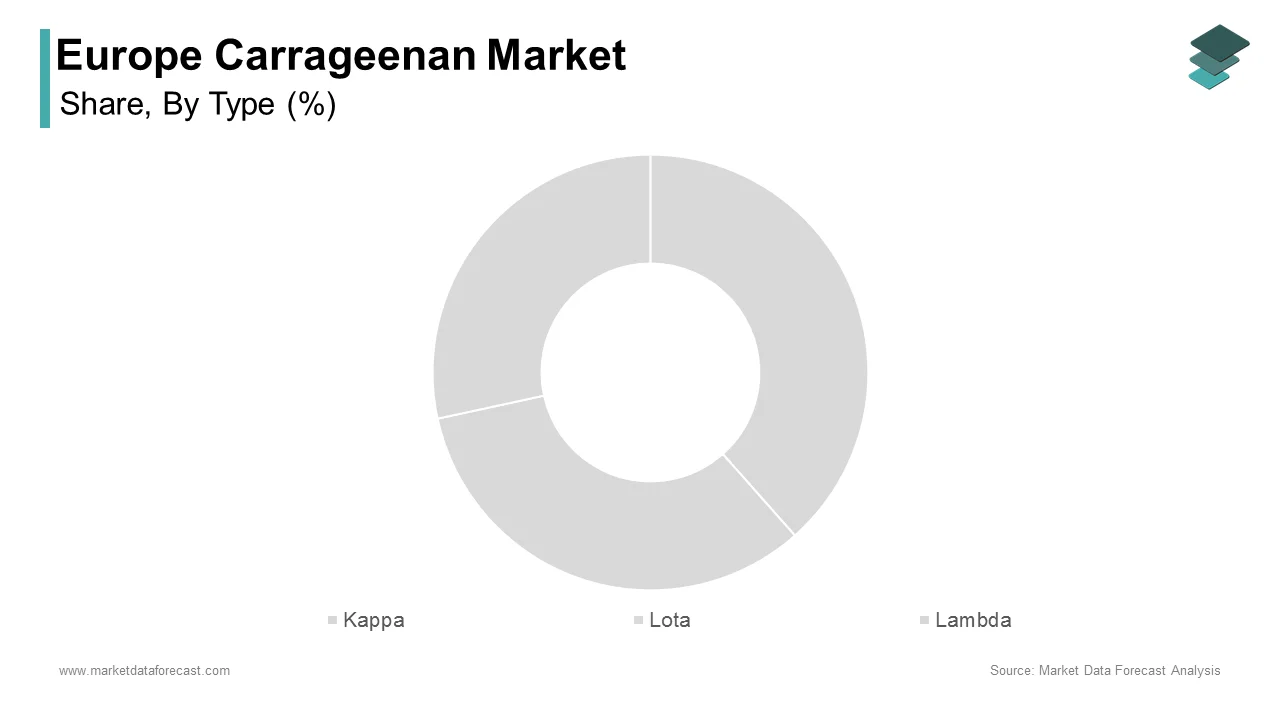
The iota carrageenan segment is predicted to witness the highest CAGR of 6.1% during the forecast period due to its unique ability to form soft, elastic, and non-syneretic gels in the presence of calcium, a property that is perfectly suited to the evolving demands of the European yogurt market. Consumers are increasingly shifting toward spoonable, high-protein, and plant-based yogurts that require a smooth, creamy, and cohesive texture without whey separation. Iota carrageenan, often used in synergy with locust bean gum, delivers this ideal mouthfeel far more effectively than stiffer kappa gels. As per multiple studies, consumers in Europe are increasingly adopting high-protein and Greek-style yogurts as healthy snacks and meal replacements, leading to steady growth driven by fitness-oriented lifestyles. On the other hand, the market for plant-based yogurt alternatives in Europe continues to expand as health-conscious and environmentally aware shoppers choose dairy-free options, with particularly strong performance in markets like Spain and Germany. These premium segments rely heavily on iota carrageenan to achieve their signature texture and stability. Its functional advantage in this high-growth, high-value category is the primary engine behind its accelerated adoption and market expansion. Beyond food, iota carrageenan is gaining significant traction in the European pharmaceutical and biomedical sectors due to its biocompatibility and gentle gelling characteristics. Its soft, elastic gels are ideal for topical drug delivery systems, wound dressings, and even tissue engineering scaffolds where a rigid structure would be detrimental. According to research, iota carrageenan is recognized for its use in mucoadhesive formulations that prolong drug contact time at the site of action. The European pharmaceutical market’s push toward natural, biodegradable excipients aligns with iota carrageenan’s profile as a marine-derived polymer. Research institutions across Germany and Sweden are actively exploring their potential in 3D bioprinting and controlled release technologies. This diversification into high-value, regulated medical applications provides a robust secondary growth vector that is less susceptible to food industry volatility, contributing significantly to its status as the market’s fastest-growing carrageenan type.
By Application Insights
The food segment led the Europe carrageenan market in 2025. The leading position of the segment is attributed to carrageenan’s unparalleled versatility as a functional ingredient that solves multiple formulation challenges across an extensive product portfolio. It covers a wide range of sub-categories from dairy and meat to bakery and confectionery. In addition, it is not confined to a single niche but is a workhorse hydrocolloid used to stabilize chocolate milk, prevent ice crystal formation in frozen desserts, provide sliceability in deli meats, and ensure suspension in salad dressings. According to research, the European Commission authorizes carrageenan for use across a vast array of food products, highlighting its extensive application as a versatile stabilizing and thickening agent in modern manufacturing. This widespread applicability creates a vast, diversified base of demand that is resilient to shifts in any single sub-sector. Even as some categories face reformulation pressures, others, such as ready meals and convenience foods, continue to grow, ensuring a steady overall consumption. This functional indispensability across the entire food landscape is the core reason for the segment’s overwhelming market share. An added boost for this area is carrageenan’s essential contribution to the shelf stability and convenience that define much of the modern European food supply. In an era of busy lifestyles and extended supply chains, the ability to produce foods that maintain their quality, texture, and appearance over weeks or months is paramount. Carrageenan’s stabilizing power prevents ingredient separation, controls water activity, and maintains emulsion integrity in products ranging from canned soups to ambient plant-based beverages. Consumer demand for prepared and ready-to-eat meals across the European Union continues to rise, a shift driven by busy lifestyles and an increasing preference for time-saving food options. The expansion of the shelf-stable food sector is inherently supported by ingredients that ensure product stability and texture throughout a long shelf life. Without it, many of these products would suffer from poor texture, sedimentation, or syneresis, rendering them commercially unviable. This enabling role in the multi-billion euro convenience food economy ensures that the food industry remains the primary and most stable application segment for carrageenan in Europe.
The pharmaceutical segment is estimated to register the fastest CAGR of 7.4% from 2026 to 2034, owing to the adoption of carrageenan as a key excipient in next-generation drug delivery and medical technologies. Its natural origin, biocompatibility, and ability to form controlled release matrices make it ideal for applications such as mucoadhesive buccal tablets, nasal sprays, and topical gels for antiviral and anti-inflammatory treatments. The total number of new medicines recommended for approval by the European Medicines Agency has seen a notable upward trajectory in recent years, reaching a multi-year high in 2024. Carrageenan’s specific sulfation pattern gives it unique binding properties with certain proteins and viruses, which are being leveraged in over-the-counter cold and flu remedies. This shift toward sophisticated, patient-centric delivery systems that enhance drug efficacy and compliance is creating a high-value, high-growth niche for carrageenan that is decoupled from the more volatile food market dynamics. Also helping this segment is the strong regulatory acceptance of refined carrageenan and its alignment with the European pharmaceutical industry’s commitment to green chemistry and sustainable sourcing. The European Pharmacopoeia explicitly includes carrageenan as a monographed substance, providing a clear pathway for its use in licensed medicines. This official recognition reduces development risk and accelerates time to market for new formulations. Furthermore, as the industry faces increasing pressure to replace synthetic polymers with bio-based alternatives, carrageenan’s status as a renewable, marine-derived resource becomes a significant advantage. Initiatives like the EU’s Chemicals Strategy for Sustainability actively encourage the use of such natural materials. This confluence of regulatory clarity and strategic alignment with sustainability goals is transforming carrageenan from a simple excipient into a preferred material for innovative, eco-conscious pharmaceutical development, fueling its rapid growth in this high-margin segment.
By Grade Insights
The refined carrageenan segment held the majority share of the Europe carrageenan market in 2025. The supremacy of the segment is credited to the European Union’s strict regulatory framework, which only permits the use of refined carrageenan (E 407) and processed eucheuma seaweed (E 407a) in food applications. Moreover, the overwhelming dominance of refined carrageenan is legally mandated by European Union legislation. Regulation (EC) No 1333/2008 on food additives explicitly authorizes only refined carrageenan for use in food, defining it as the product obtained by aqueous extraction of cleaned and dried seaweed, followed by purification steps to remove cellulose and other impurities. This legal requirement leaves food manufacturers with no alternative for applications that need carrageenan’s functionality. As per the European Food Safety Authority, the safety evaluations that underpin this authorization are based exclusively on refined carrageenan, not the semi-refined version. This regulatory gatekeeping ensures that the entire food and beverage industry, which constitutes the bulk of carrageenan demand, is a captive market for the refined grade. The legal necessity of using this specific grade, backed by decades of safety assessments, is the single most powerful driver of its market leadership. Beyond legal compliance, refined carrageenan is preferred for its superior purity, consistent viscosity, and neutral taste, which are critical for high-quality and sensitive applications. In clear beverages like flavored waters or in delicate dairy products like infant formula for special medical purposes, any impurity or off-flavor from a less pure grade would be unacceptable. The rigorous purification process removes residual seaweed particles, pigments, and minerals that could affect the final product’s clarity, color, or flavor profile. According to the International Food Additives Council, the global standard for food-grade carrageenan in developed markets is the refined variety due to these quality attributes. European food manufacturers, who operate in a highly competitive and quality-conscious market, demand this level of consistency to ensure batch-to-batch uniformity and meet stringent customer expectations. This performance advantage in premium and sensitive product categories reinforces the refined grade’s dominant position beyond mere regulatory obligation.
The refined carrageenan segment is also the fastest growing grade in the European market, with a projected CAGR of 5.9% between 2026ando 2034. The refined grade’s accelerated growth is significantly propelled by its expanding use in non-food sectors that demand the highest levels of purity and consistency, particularly pharmaceuticals and cosmetics. In pharmaceuticals, any impurity can compromise drug safety and efficacy, making the stringent quality control of refined carrageenan a non-negotiable requirement. Similarly, in premium skincare and personal care products, consumers expect clear, odorless, and hypoallergenic formulations. Semi-refined carrageenan, with its higher mineral content and potential for variability, cannot meet these exacting standards. As per sources, the trade association for the European cosmetics industry, the demand for natural, marine-derived ingredients in high-end products has grown substantially, with refined carrageenan being a preferred choice for its clean sensory profile. This diversification into high-margin, quality-driven markets provides a powerful additional growth engine that is boosting the refined grade’s trajectory beyond its already dominant food base. An additional key driver is the ongoing investment by major producers to strengthen and localize their refined carrageenan supply chains, specifically for the European market. Recognizing the region’s regulatory and quality demands, leading suppliers have established dedicated refining facilities or partnerships within Europe to ensure a secure, traceable, and compliant source of material. This reduces dependency on long-distance shipping and mitigates risks associated with customs delays or quality discrepancies from overseas refineries. According to studies, several major Asian producers have set up toll refining operations in the Netherlands and Spain in the past three years to serve the EU market directly. This strategic localization not only guarantees adherence to European pharmacopoeia and food additive standards but also appeals to the growing demand for supply chain transparency and reduced carbon footprint. This enhanced logistical and quality assurance infrastructure is facilitating greater adoption and trust in refined carrageenan, fueling its continued market expansion.
By Seaweed Source Insights
The Eucheuma segment was the largest in the Europe carrageenan market in 2025. Its prominence is fundamentally due to its exceptional commercial viability as a farmed seaweed. This tropical red algae is the primary raw material for producing both kappa and iota carrageenan on a commercial scale. Species like Eucheuma cottonii (for kappa) and Eucheuma spinosum (for iota) can be cultivated at scale in shallow tropical waters with a considerable growth rate per day, yielding significantly more carrageenan per hectare than wild-harvested species. According to the United Nations Food and Agriculture Organization, global carrageenan seaweed farming relies primarily on the cultivation of Kappaphycus and Eucheuma species. Indonesia and the Philippines are the leading suppliers in the production of these seaweeds. This established, high-volume aquaculture system provides a consistent and cost-effective supply of raw material that is essential for meeting the large-scale demands of the European food industry. No other seaweed source can match this combination of yield, scalability, and economic efficiency, making Eucheuma the indispensable foundation of the global and European carrageenan supply chain. The entrenched position of Eucheuma is further reinforced by a mature global trade and processing infrastructure that has been built around it over decades. A well-defined supply chain exists from smallholder farms in Southeast Asia to large export terminals and specialized refineries, ensuring a reliable flow of raw and semi-processed material. European importers and refiners have deep expertise in handling Eucheuma and optimizing extraction processes for maximum yield and quality. This institutional knowledge and logistical network create significant barriers to entry for alternative seaweed sources. As per studies, the EU’s imports of carrageenan and related seaweed extracts are overwhelmingly linked to Eucheuma farming regions. This path dependency, combined with the economic advantages of scale, means that even as interest grows in European native species, Eucheuma will remain the dominant source for the foreseeable future due to its unmatched reliability and cost structure.
The chondrus crispus segment is likely to experience the fastest CAGR of 8.1%over the forecast period. The swift expansion of the segment is fuelled by a powerful market trend toward local, traceable, and sustainable sourcing. As a native European species harvested from the coasts of Ireland, France, and Iceland, Chondrus offers a compelling “European origin” story that resonates with consumers and brands seeking to reduce their environmental footprint and support regional economies. According to research, there is a growing consumer willingness to pay a premium for products made with locally sourced marine ingredients. This narrative of sustainability and locality is a stark contrast to the long, complex supply chain of tropical Eucheuma. Brands in the premium organic and natural food segments are increasingly highlighting Chondrus-derived carrageenan on their labels as a mark of authenticity and environmental responsibility, creating a high-value niche that is expanding rapidly despite the higher cost and lower yield of the native seaweed. In addition, this segment is helped by its unique functional profile, which produces a blend of lambda and iota carrageenans that is ideal for specific high-end applications. The resulting extract, often sold as “Irish moss,” creates soft, non-gelling thickeners that are perfect for smooth sauces, clear broths, and luxury cosmetic lotions where a light, silky texture is desired. This is distinct from the strong gels of Eucheuma-derived kappa. The European gourmet food and clean beauty industries are actively seeking out these unique, terroir-driven ingredients to differentiate their products. As per sources, Chondrus extracts are gaining popularity in premium protein beverages for their clean mouthfeel and natural positioning. This functional differentiation, combined with its sustainable origin story, allows Chondrus to command premium pricing and capture a growing share of the high-value, innovation-led segments of the market, fueling its exceptional growth rate.
REGIONAL ANALYSIS
Germany Carrageenan Market Analysis
Germany was the top performer in the Europe carrageenan market and held a 19.3% share in 2025. The dominance of the German market is driven by a powerful combination of a massive food and beverage processing industry, a world-class pharmaceutical sector, and a central role in European trade logistics. Germany is home to some of the continent’s largest dairy cooperatives and meat processors, which are heavy users of carrageenan for product stabilization and texture. According to multiple studies, the German food industry, a leading producer in Europe, continues to generate substantial revenue, with high demand for processed and convenience products. Furthermore, Germany’s robust pharmaceutical industry, centered in cities like Berlin and Munich, is a growing consumer of high-purity refined carrageenan for advanced drug delivery systems. The country’s extensive port and rail infrastructure in Hamburg and the Rhine corridor also makes it the primary entry point for carrageenan imports from Asia, which are then distributed across the EU. This trifecta of end-user demand, high-value applications, and logistical centrality solidifies Germany’s undisputed leadership in the European carrageenan market.
France Carrageenan Market Analysis
France was the next prominent country in the Europe carrageenan market and occupied a 16.1% share in 2025. The growth of the French market is propelled by a sophisticated and diverse food culture that embraces both traditional dairy products and cutting-edge plant-based innovation, alongside a thriving cosmetics industry. France is Europe’s largest producer of cheese, a sector that uses carrageenan in processed and spreadable varieties to ensure meltability and sliceability. Simultaneously, the country is a pioneer in the plant-based food movement, with numerous startups developing meat and dairy alternatives that depend on carrageenan for texture. According to various sources, the French plant-based food retail sector is experiencing growth, with increasing consumer adoption, particularly in dairy alternatives and, in some cases, private-label products. Additionally, France’s global leadership in luxury cosmetics, centered in Paris and Grasse, drives demand for refined carrageenan as a natural thickener in high-end skincare formulations. This unique blend of heritage food production, avant-garde food tech, and premium beauty creates a multifaceted and resilient demand base that ensures France’s prominent position in the market.
United Kingdom Carrageenan Market Analysis
The United Kingdom is another key player in the European carrageenan market due to a highly consolidated and efficient food manufacturing sector, a strong focus on pet food production, and a dynamic pharmaceutical industry. The UK is home to several global food and pet food giants whose European operations are based there, creating a concentrated hub of carrageenan consumption. According to research, the UK food and drink industry continues to export a significant value of goods, with processed products being a major component of international trade. The British pet food market is one of the largest in Europe. A large share of UK households own pets, sustaining high demand for diverse pet food products that utilize various functional ingredients for texture and stability. Post Brexit, the UK has maintained its alignment with EU food safety standards for additives like carrageenan, ensuring continued market access and regulatory stability. This combination of scale, specialization in key application areas, and regulatory continuity underpins the UK’s strong market standing.
Italy Carrageenan Market Analysis
Italy is moving ahead steadfastly in the European carrageenan market owing to a massive and traditional dairy industry, particularly in the production of processed cheeses and desserts, coupled with a growing market for ready meals and convenience foods. Italy is the EU’s second-largest cheese producer, and its iconic processed mozzarella and spreadable cheese products depend on carrageenan to achieve the right melting and stretching properties. The Italian market for ready meals is expanding, driven by evolving consumer lifestyles and a demand for convenience. Italian cuisine’s emphasis on sauces and creamy textures also creates a natural fit for carrageenan’s stabilizing functions. While the country has a smaller pharmaceutical sector compared to Germany or the UK, its sheer volume of food processing, especially in the dairy and convenience segments, generates a consistent and substantial demand for carrageenan. This deep integration into the fabric of Italian food manufacturing secures its place as a top-five market in Europe.
Netherlands Carrageenan Market Analysis
The Netherlands is anticipated to expand in the Europe carrageenan market over the forecast period due to its role as Europe’s primary logistics and trading hub for food ingredients. The Port of Rotterdam is the main gateway for carrageenan imports from Asia into the EU, and the country hosts the headquarters or major distribution centers of virtually every global food ingredient supplier. According to sources, the Dutch food processing industry is one of the most export-oriented in the world, serving markets across the continent. Beyond logistics, the Netherlands is also a center for innovation in sustainable food systems, with active research into European seaweed cultivation that could reshape future supply chains. Companies like Corbion, a major producer of biobased ingredients, are based here and contribute to the advanced application development of carrageenan. This unique combination of being the continent’s pantry, a center for food tech innovation, and a testbed for sustainable alternatives makes the Netherlands a disproportionately influential and dynamic market for carrageenan in Europe.
COMPETITION OVERVIEW
The competitive landscape of the Europe Carrageenan Market is characterized by a handful of large multinational ingredient companies that dominate the supply of refined carrageenan, alongside a niche segment of regional and specialty hydrocolloid producers. Competition is not primarily based on price but on technical expertise, regulatory compliance, supply chain reliability, and the ability to provide customized solutions for complex formulation challenges. The market is highly consolidated at the top, with global players leveraging their extensive R and D resources, established distribution networks, and strong relationships with major food and pharmaceutical manufacturers. A key differentiator is the provision of comprehensive technical service, where companies deploy application scientists to work directly with customers on product development. The persistent challenge of consumer misinformation has also made scientific communication and regulatory engagement a critical competitive activity. New entrants face significant barriers due to the capital intensity of refining operations, stringent EU regulatory requirements, and the need for long-term customer trust, resulting in a stable but intensely competitive environment among incumbent leaders.
KEY MARKET PLAYERS
A few major players of the Europe carrageenan market include
- Kachabo Gums
- BLG Shanghai & Zhejiang Plants
- Marinalg International
- Altrafine Gums
- Scalzo Food Industries
- FMC Corporation
- TIC Gums Incorporated
- Cargil Inc
- Gum Technology Corporation
Top strategies used by the key market participants
Key players in the Europe Carrageenan Market pursue four primary strategies to maintain and expand their competitive position. First, they invest heavily in technical service and application development centers across major European countries to provide hands-on formulation support to customers. Second, they emphasize sustainable and traceable sourcing by establishing direct partnerships with seaweed farming communities and promoting responsible aquaculture practices. Third, they engage proactively in scientific communication and regulatory advocacy to counter misinformation and uphold carrageenan’s safety credentials with European authorities. Fourth, they integrate carrageenan into broader ingredient systems, offering synergistic blends with other hydrocolloids to deliver superior functionality and clean label solutions for complex food and pharmaceutical applications.
Leading Players in the Europe Carrageenan Market
- Ingredion is a global ingredient solutions provider with a significant presence in the European carrageenan market through its specialty hydrocolloids portfolio. The company supplies refined carrageenan to food, beverage, and pharmaceutical manufacturers across the continent, focusing on applications requiring high purity and consistent performance. Ingredion leverages its global R and D network to develop customized carrageenan solutions that address specific formulation challenges, such as clean-label stabilization in plant-based dairy alternatives. To strengthen its European position, Ingredion has invested in technical service centers in Germany and the Netherlands, offering on-site application support and collaborative product development. The company also actively participates in European regulatory dialogues to ensure scientific clarity around carrageenan’s safety, reinforcing its role as a trusted partner for innovation in functional ingredients.
- CP Kelco, a subsidiary of JM Huber Corporation, is a world leader in hydrocolloid production and a key supplier of carrageenan to the European market. The company operates a dedicated carrageenan production facility in Denmark, which serves as a strategic hub for supplying high-quality, food-grade carrageenan across the region. CP Kelco is renowned for its GENU brand of carrageenan, which is widely used in dairy, meat, and beverage applications. The company has strengthened its market position by launching a series of sustainability initiatives, including a partnership with seaweed farmers in Indonesia to promote responsible cultivation practices. Additionally, CP Kelco provides extensive technical expertise through its application labs in Europe, helping customers optimize formulations and navigate complex regulatory requirements, thereby deepening its integration into the European food value chain.
- Cargill is a global agribusiness giant with a robust presence in the European hydrocolloids market, including carrageenan. The company sources and refines carrageenan for use in a wide array of food and industrial applications, with a strong focus on the dairy and meat sectors. Cargill’s European strategy emphasizes supply chain transparency and sustainability, working directly with seaweed farming communities to ensure ethical and environmentally sound sourcing. To enhance its competitive edge, Cargill has integrated carrageenan into its broader portfolio of texturizing solutions, offering synergistic blends with other hydrocolloids to meet complex customer needs. The company has also expanded its digital nutrition platforms in Europe, enabling real-time collaboration with food manufacturers on product reformulation and new product development, thus positioning itself as a strategic innovation partner rather than just a raw material supplier.
MARKET SEGMENTATION
This research report on the Europe carrageenan market has been segmented and sub-segmented based on type, application, grade, seaweed source & region.
By Type
- Kappa
- Lota
- Lambda
By Application
- Meat
- Dairy Products
- Foods
- Beverages
- Pet Food
By Grade
- Refined Carrageenan
- Semi-Refined Carrageenan
By Seaweed Source
- Gigartina
- Chondrus
- Iridaea
- Eucheuma
By Region
- UK
- France
- Spain
- Germany
- Italy
- Russia
- Sweden
- Denmark
- Switzerland
- Netherlands
- Turkey
- Czech Republic
- Rest of Europe