- Product Description Description
- Table of Contents TOC
- List of Table & Figure LOT
- Get Free Sample PDF Sample PDF
Market Size, 2025
$2.31 BnMarket Estimate, 2026
$2.73 BnMarket Forecast, 2034
$10.43 BnCAGR, 2026–2034
18.24%Europe Cloud Managed Networking Market Report Summary
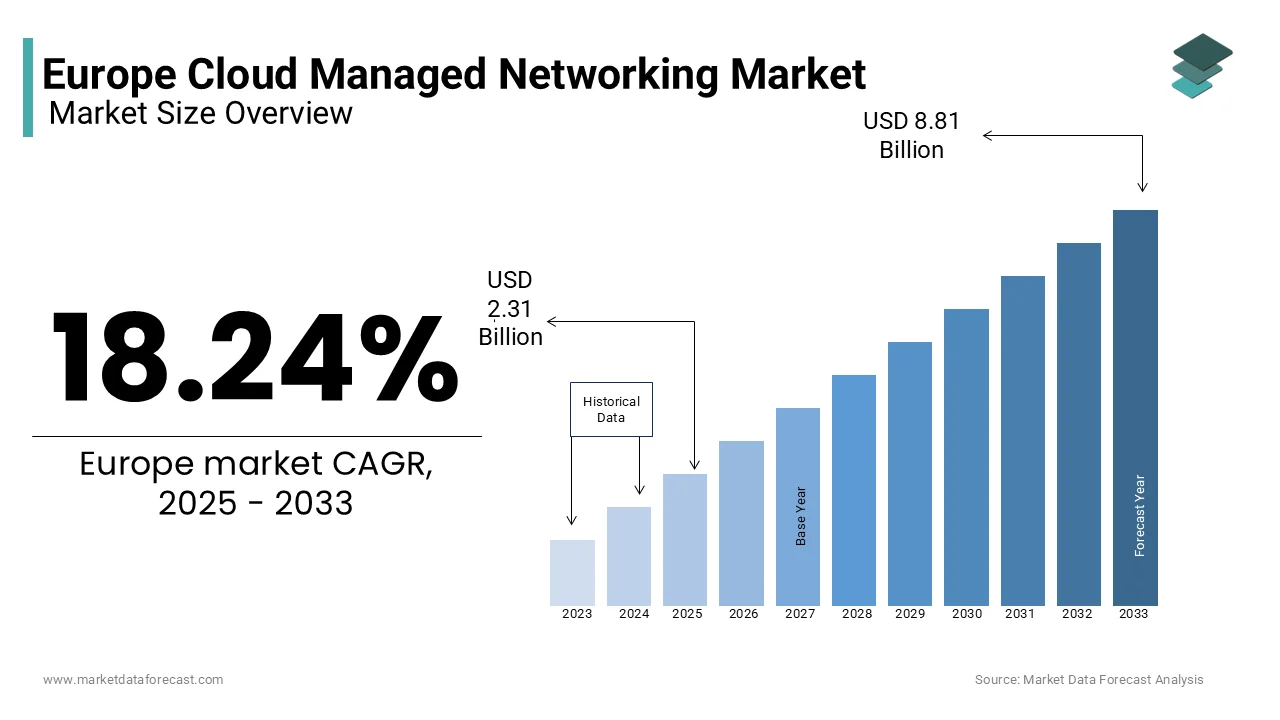
The Europe cloud managed networking market was valued at USD 2.31 billion in 2025, is estimated to reach USD 2.73 billion in 2026, and is projected to reach USD 10.43 billion by 2034, growing at a CAGR of 18.24% from 2026 to 2034. Market growth is driven by the increasing adoption of cloud-based networking solutions, rising demand for scalable and cost-efficient network management, and the expansion of digital transformation initiatives across enterprises. Cloud managed networking enables centralized control, improved network visibility, and enhanced security, making it a preferred choice for modern IT environments. The rapid adoption of hybrid and multi-cloud architectures, along with growing demand for remote network management, is further accelerating market expansion across Europe.
Key Market Trends
- Increasing adoption of cloud-based network management solutions.
- Rising demand for scalable, flexible, and cost-efficient networking infrastructure.
- Growth of hybrid and multi-cloud networking environments.
- Increasing focus on network security and centralized monitoring.
- Expansion of remote work and distributed enterprise networks.
Segmental Insights
- Based on type, the cloud services segment dominated the Europe cloud managed networking market by capturing 52.8% share in 2025, driven by growing enterprise reliance on cloud-native solutions.
- Based on deployment, the public cloud segment led the market with 58.9% share in 2025, supported by its scalability, cost-effectiveness, and ease of deployment.
- Based on industry, the telecom & IT segment held the largest share of 35.6% in 2025, driven by high network demand and early adoption of advanced networking technologies.
Regional Insights
The Europe cloud managed networking market is witnessing rapid growth across major countries due to increasing digitalization and cloud adoption.
- Germany led the regional market in 2025 with 26.1% share, supported by strong enterprise demand and advanced IT infrastructure.
- The United Kingdom followed with 21.7% share in 2025, driven by a mature cloud ecosystem and high adoption of managed networking solutions.
- France holds a significant position in the market due to its strong focus on digital sovereignty and modernization of public and private sector IT infrastructure.
Competitive Landscape
The Europe cloud managed networking market is highly competitive, with the presence of global networking providers and specialized managed service companies. Market players are focusing on enhancing cloud capabilities, improving network security, and offering integrated networking solutions. Strategic partnerships, product innovation, and expansion of service portfolios are shaping competitive dynamics across the region.
Prominent companies operating in the Europe cloud managed networking market include Aruba (Hewlett Packard Enterprise Company), NETGEAR, Inc., Cisco Systems, Inc., Prodec Networks, APSU, Inc., Fortinet, Inc., Mindsight, Total Communications, Inc., Huawei Technologies Co., Ltd., DynTek, Inc., and Extreme Networks, Inc.
Europe Cloud Managed Networking Market Size
The Europe cloud managed networking market was valued at USD 2.31 billion in 2025. The European market is projected to reach USD 10.43 billion by 2034 from USD 2.73 billion in 2026, growing at a CAGR of 18.24% from 2026 to 2034.
Cloud managed networking is an architectural approach where the management and control services of a network are hosted in the cloud rather than on-premises. This domain encompasses the remote management of wide area networks, local area networks, and wireless access points through software-defined interfaces that abstract physical complexity into intuitive dashboards. The region stands at the forefront of this evolution due to its aggressive digital sovereignty initiatives and the widespread adoption of hybrid work models that demand seamless connectivity across borders. Multiple studies indicate that more than half of all businesses across the region have integrated paid cloud services into their daily operations, establishing a significant digital foundation for the remote management of their technical resources. Furthermore, various sources show that a vast majority of the population now accesses the internet regularly, producing significant traffic volumes that require flexible and high-capacity network management systems. Findings from regional digital authorities suggest that a notable portion of businesses have encountered security challenges, leading to a greater reliance on managed cloud solutions that provide automated protection and immediate responses to emerging threats. This market serves as the nervous system for the digital economy, enabling organizations to optimize performance, reduce operational overhead, and ensure robust connectivity in an increasingly decentralized operational landscape where traditional on-premise management proves insufficient.
MARKET DRIVERS
Escalating Complexity of Hybrid Workforce Connectivity Requirements
The escalating complexity of hybrid workforce connectivity requirements fuels the growth of the Europe Cloud Managed Networking Market. The permanent shift towards flexible working arrangements has dissolved the traditional network perimeter, forcing organizations to support employees connecting from diverse locations including homes, co-working spaces, and satellite offices across multiple countries. Cloud managed networking provides the essential architecture to unify these disparate endpoints under a single policy framework, ensuring consistent security posture and application performance regardless of user location. Regional labor surveys indicate that a significant segment of the workforce continues to work remotely at least some of the time, creating a distributed network environment that requires more flexible, software-driven management than traditional hardware-based systems. Enterprises require visibility into user behavior and device health across this expanded attack surface, which cloud platforms deliver through centralized analytics and automated troubleshooting. Various sources suggest that a vast majority of IT leaders consider the reliability of connections for remote users a major objective, leading to increased interest in advanced, cloud-based networking and wireless solutions. The ability to provision new sites or extend network access to temporary locations within minutes rather than weeks is indispensable for business agility. Multiple studies show that organizations moving to centralized network management can significantly shorten the time needed to set up new locations, allowing for faster responses to changing market conditions.
Urgent Need for Integrated Cybersecurity and Automated Threat Response
There is an urgent need for integrated cybersecurity and automated threat response, which also propels the expansion of the Europe cloud managed networking market. This need is a critical driver for the adoption of cloud-managed networking solutions across the European corporate sector. The convergence of networking and security functions into a unified cloud-native platform allows organizations to enforce granular access controls and detect anomalies in real time without relying on disjointed legacy appliances. With cyber threats becoming increasingly sophisticated and targeted, the capability to push security updates and policy changes instantly across the entire network fabric is paramount for resilience. Various sources indicate a continued rise in the frequency of ransomware attacks, which can impose substantial financial burdens on affected organizations. Cloud managed networking platforms integrate advanced threat intelligence and machine learning algorithms to identify suspicious traffic patterns and isolate compromised devices automatically before they can spread laterally. A report by McKinsey and Company emphasized that organizations utilizing cloud-managed security features detected and contained breaches 50 percent faster than those using traditional segmented approaches. The regulatory pressure from frameworks like the NIS2 Directive further compels entities to adopt proactive security measures that cloud management inherently supports through continuous monitoring and audit trails. National security authorities indicate that many operators of vital infrastructure are updating their systems to comply with new regulations on risk management and the reporting of security incidents.
MARKET RESTRAINTS
Stringent Data Sovereignty Regulations and Cross-Border Compliance Hurdles
Stringent data sovereignty regulations and the complexities associated with cross-border compliance impose significant limitations on the deployment of solutions within the Europea cloud managed networking market. The General Data Protection Regulation and various national laws mandate that certain types of network telemetry and user data must remain within specific geographic boundaries, complicating the architecture of global cloud management platforms that often rely on centralized data processing hubs. Organizations face legal uncertainties regarding where their network metadata is stored and processed, leading to hesitation in adopting public cloud management planes offered by international vendors. Regional data protection authorities have issued substantial financial penalties for violations involving the unauthorized movement of personal information, emphasizing the importance of local data residency and compliance. The requirement for vendors to establish local data centers or offer sovereign cloud options increases implementation costs and limits the availability of certain advanced features that depend on global scale. Surveys among technology and privacy leaders indicate that a significant portion of digital transformation initiatives are being approached with caution as organizations work to ensure their networking strategies align with evolving regional regulations. The fragmented nature of enforcement across different member states creates a labyrinthine compliance landscape that requires extensive legal oversight and technical customization. As per sources, the lack of harmonized interpretation of data residency rules continues to slow down the migration of critical network management functions to the cloud, particularly in sensitive sectors like healthcare and finance.
Persistent Concerns Regarding Vendor Lock-in and Interoperability
Persistent concerns regarding vendor lock-in and interoperability issues are negatively impacting the expansion of the Europe cloud managed networking market. Organizations fear that committing to a single vendor's proprietary cloud ecosystem will limit their future flexibility, increase switching costs, and create dependencies that undermine negotiating power. Many cloud managed networking solutions utilize closed APIs and unique configuration models that make it difficult to integrate with existing multi-vendor infrastructure or migrate to alternative platforms seamlessly. Research reveals that a substantial number of organizations identify the difficulty of switching between service providers as a primary obstacle to expanding their investment in managed network solutions. The lack of standardized protocols for cloud-based network management exacerbates this issue, forcing businesses to choose between limited functionality and high integration complexity. A study reveraled that a notable portion of cloud-based networking trials face significant challenges when attempting to interface with older, existing hardware or specialized business software. Furthermore, the risk of service outages affecting the central management plane raises concerns about operational continuity, as a disruption could render the entire network unmanageable. As per findings from the European Telecommunications Standards Institute, the absence of universal standards for cloud network orchestration slows down adoption rates as organizations wait for more open and interoperable solutions to mature before making long-term commitments.
MARKET OPPORTUNITIES
Integration of Artificial Intelligence for Predictive Network Optimization
The integration of artificial intelligence for predictive network optimization sparks new prospects for the growth of the Europe Cloud Managed Networking Market. This enables a shift from reactive monitoring to proactive self-healing infrastructures. Advanced AI algorithms embedded within cloud management platforms can analyze vast streams of telemetry data to forecast congestion, predict hardware failures, and automatically adjust traffic routing before users experience degradation. This capability allows European organizations to maximize network uptime and efficiency while reducing the burden on IT staff who can focus on strategic initiatives rather than routine maintenance. Research suggests that the integration of artificial intelligence into network management could significantly boost the productivity of organizations across the region by automating complex operational tasks. In the manufacturing sector, predictive networking ensures uninterrupted connectivity for industrial IoT devices, preventing costly production halts caused by latency spikes or connection drops. Regional policy forums indicate that a majority of industrial leaders are looking toward advanced, technology-enhanced networking to support their transition to more automated and connected manufacturing environments. Furthermore, the ability to optimize energy consumption based on usage patterns aligns with sustainability goals, allowing companies to reduce their carbon footprint by dynamically powering down underutilized network segments. A study by the Fraunhofer Institute highlighted that AI-optimized networks reduced energy waste by 25 percent in large European office complexes. The shift towards autonomous networking opens new avenues for value creation, positioning cloud managed solutions as essential enablers of intelligent and resilient digital ecosystems.
Expansion of Edge Computing Architectures Driving Distributed Management Needs
The expansion of edge computing architectures creates a substantial opportunity for the growth of cloud managed networking solutions designed to orchestrate distributed infrastructure at the network periphery. This is expected to drive the Europe cloud managed networking market forward. As European businesses deploy more compute resources closer to data sources in retail stores, factories, and remote branches to reduce latency and bandwidth costs, the need for centralized visibility and control over these scattered nodes becomes critical. Cloud managed networking provides the ideal framework to configure, monitor, and secure thousands of edge devices from a single pane of glass, eliminating the need for onsite IT presence at every location. The rise of 5G networks further accelerates this trend by enabling high-speed connectivity for edge applications in logistics and autonomous vehicles. Research into the logistics sector suggests that a significant portion of organizations are planning to utilize localized computing strategies to improve their ability to track assets and automate their operations in real time. The ability to deploy software updates and security patches simultaneously across a vast geographical footprint ensures consistency and compliance. Studies on specialized networking solutions indicate that businesses using modern, managed platforms to handle their remote connections can significantly lower their ongoing operational costs compared to using more manual administrative methods. This architectural shift positions cloud managed networking as the backbone of the future distributed enterprise.
MARKET CHALLENGES
Reliability Risks Associated with Dependency on Internet Connectivity
Reliability risks associated with dependency on internet connectivity pose a significant challenge to the adoption of cloud-managed networking in the Europe market. This is particularly true for mission-critical operations. Since the management plane resides in the cloud, any disruption in internet access can sever the link between administrators and their network infrastructure, potentially leaving organizations unable to configure devices or respond to emergencies locally. While many solutions offer local survivability features, the full suite of analytics and control capabilities often remains inaccessible during outages, creating a vulnerability that risk-averse industries find difficult to accept. Regional cybersecurity authorities have observed that major connectivity disruptions continue to affect a significant number of individuals across the continent, highlighting the underlying vulnerabilities in the infrastructure that supports digital services. For sectors such as healthcare and emergency services, the inability to manage network parameters during a connectivity loss could have severe consequences. Multiple studies suggest that a notable portion of facility operators are cautious about moving their management systems entirely to digital platforms due to concerns regarding operational continuity during service interruptions. The variability in internet quality across rural and remote regions in Europe further complicates deployment, as inconsistent bandwidth can degrade the performance of the management interface itself. As per sources, achieving universal high-speed reliability remains an ongoing challenge, limiting the confidence of organizations in relying solely on cloud-based control planes for their critical network infrastructure.
Shortage of Skilled Professionals for Cloud-Native Network Administration
The shortage of skilled professionals capable of administering cloud-native network environments is a critical impediment to the effective realization of the Europe Cloud Managed Networking Market. Transitioning from traditional command-line interface management to software-defined, cloud-based orchestration requires a fundamentally different skill set encompassing API integration, automation scripting, and cloud security principles, which are currently in scarce supply. The gap between the available talent pool and the expertise required to leverage advanced cloud networking features is widening as organizations accelerate their digital transformation. Consequently, this leads to suboptimal implementations and underutilization of capabilities. According to various sources, there is a substantial shortage of technical professionals across the continent, with specialized roles in cloud infrastructure and network design being particularly difficult for organizations to fill. This scarcity drives up labor costs and prolongs deployment timelines, as companies struggle to find qualified personnel to design and maintain these complex systems. A study revealed that a clear majority of employers in the region find it challenging to hire individuals with the necessary technical skills to manage modern digital networks. Without adequate expertise, organizations risk misconfiguring security policies or failing to optimize network performance, negating the benefits of cloud management. As per studies, the mismatch between educational curricula and industry needs continues to widen, threatening to stall market momentum as businesses lack the human capital required to drive these sophisticated initiatives forward.
REPORT COVERAGE
| REPORT METRIC | DETAILS |
| Market Size Available | 2025 to 2034 |
| Base Year | 2025 |
| Forecast Period | 2026 to 2034 |
| Segments Covered | By Type, Deployment, Industry, Enterprise Size, and Country. |
| Various Analyses Covered | Global, Regional, and Country-Level Analysis, Segment-Level Analysis, Drivers, Restraints, Opportunities, Challenges; PESTLE Analysis; Porter’s Five Forces Analysis, Competitive Landscape, Analyst Overview of Investment Opportunities |
| Countries Covered | UK, France, Spain, Germany, Italy, Russia, Sweden, Denmark, Switzerland, Netherlands, Turkey, Czech Republic, and the Rest of Europe. |
| Market Leaders Profiled | Aruba (Hewlett Packard Enterprise Company), NETGEAR, Inc. , Cisco System, Inc., Prodec Networks, APSU, Inc., Fortinet, Inc., Mindsight, Total Communications, Inc, Huawei Technologies Co., Ltd., DynTek, Inc., Extreme Networks, Inc., and CommScope, Inc. |
SEGMENTAL ANALYSIS
By Type Insights
In 2025, the Cloud Services segment was the largest segment in the Europe Cloud Managed Networking Market and captured a 52.8% share. This dominance of the segment is primarily driven by the fundamental shift in operational expenditure models where organizations prefer subscription-based services over heavy capital investments in physical infrastructure. The ability to access network management capabilities on demand allows European enterprises to scale resources dynamically without the burden of maintaining on-premise servers or dedicated management appliances. A study indicates that more than half of all businesses across the region have integrated paid cloud services into their daily operations, establishing a significant digital foundation for the remote management of their technical resources. The service model also includes continuous updates, security patches, and technical support, which are critical for businesses facing a shortage of skilled IT personnel. As per sources, there is a substantial shortage of technical professionals across the continent, with specialized roles in cloud infrastructure and network design being particularly difficult for organizations to fill. Furthermore, the pay-as-you-go pricing structure aligns perfectly with the budgetary constraints of small and medium-sized enterprises, enabling them to access enterprise-grade networking tools. Research emphasized that a vast majority of small and medium-sized enterprises are adopting advanced, cloud-based networking solutions to lower their ongoing operational expenses and enhance performance
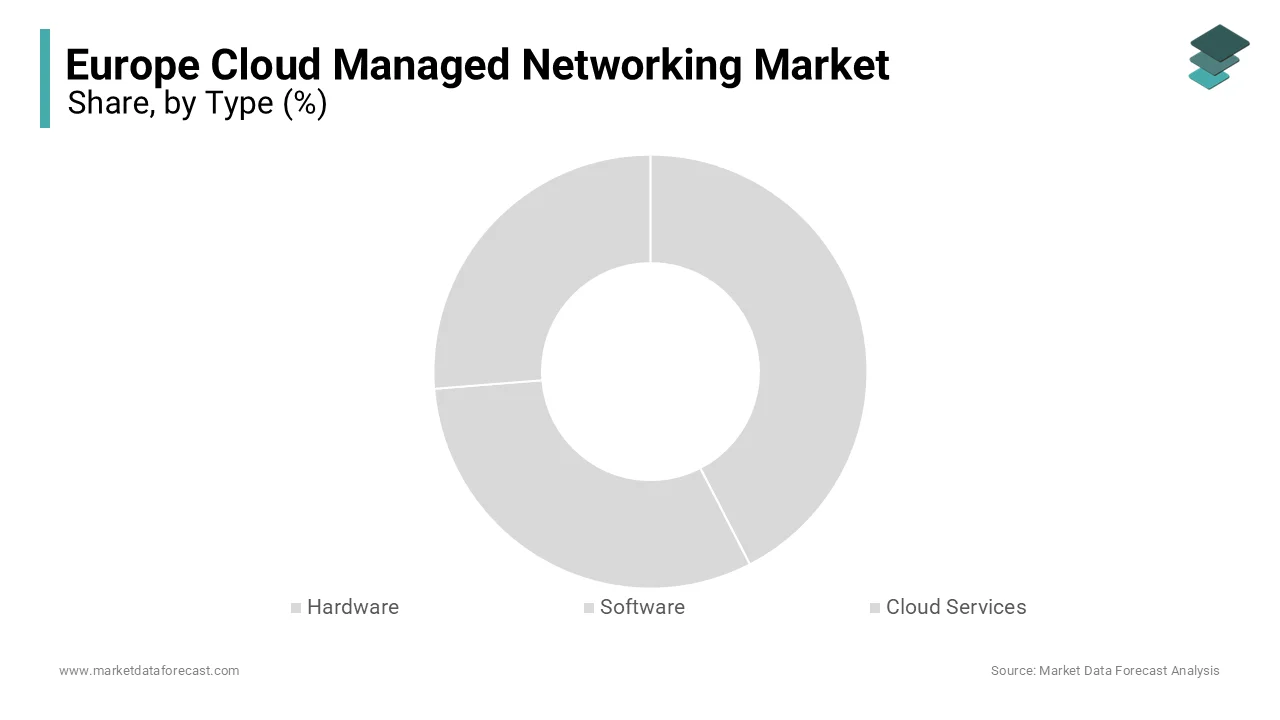
The software segment is predicted to witness the highest CAGR of 24.8% from 2026 to 2034. This rapid growth of the segment is fueled by the increasing adoption of software-defined networking principles which decouple the control plane from the hardware, allowing for greater flexibility and programmability. Organizations are increasingly investing in sophisticated management software that offers advanced analytics, artificial intelligence-driven optimization, and automated policy enforcement across hybrid environments. The demand for proprietary software licenses that offer unique features such as real-time threat detection and application-aware routing is surging as businesses seek to differentiate their network capabilities. The ability to integrate third-party applications and customize network behavior through APIs makes software a critical enabler of innovation. As per research, the standardization of software interfaces has accelerated deployment times, encouraging more organizations to replace legacy hardware-centric management with agile software solutions that can adapt to changing business requirements instantly.
By Deployment Insights
The Public Cloud deployment segment led the Europe Cloud Managed Networking Market and accounted for a 58.9% share in 2025. This prominence of the segment is credited to by the cost-effectiveness and scalability offered by public cloud providers, which allow organizations to deploy network management instances globally without significant upfront infrastructure investment. The shared responsibility model of public clouds enables European businesses to leverage the robust security measures and compliance certifications maintained by major hyperscalers, reducing the burden on internal IT teams. According to sources, most businesses across the European Union have integrated cloud computing into their operations to advance their digital transformation goals, though adoption rates vary significantly by country. The ease of integration with other public cloud services such as storage, compute, and databases creates a cohesive ecosystem that enhances overall operational efficiency. As per a study, large organizations and IT leaders increasingly prioritize managing and optimizing cloud expenditures to ensure long-term financial sustainability during their migration journeys. Furthermore, the global reach of public cloud providers ensures low-latency access to management consoles from any location, which is essential for supporting remote workforces. Migrating core business functions to public cloud environments consistently allows organizations to launch new services and products significantly faster than those relying on traditional, on-premise infrastructure. The continuous innovation and feature releases by public cloud vendors further solidify their dominance in the market.
The Private Cloud segment is estimated to register the fastest CAGR of 26.2% during the forecast period owing to the stringent data sovereignty regulations and security concerns prevalent in highly regulated industries such as finance, healthcare, and government within Europe. Organizations in these sectors require exclusive control over their network management data and infrastructure to comply with the General Data Protection Regulation and national security mandates. As per research, sustained enforcement of data protection laws and substantial penalties for privacy violations have led many enterprises to prioritize sovereign cloud solutions for their most sensitive data. The ability to customize security protocols and isolate network traffic from public internet exposure provides a level of assurance that public clouds cannot always guarantee. As per a study, national security agencies are encouraging operators of essential services to adopt secure, localized cloud architectures to mitigate risks from sophisticated cyber threats and foreign technological dependencies. The rise of sovereign cloud initiatives supported by European governments further accelerates this trend, offering localized private cloud options that meet strict residency requirements. A study revealed that European financial institutions are steadily increasing their investments in dedicated cloud networking to maintain strict control over data and meet evolving regulatory requirements.
By Industry Insights
The Telecom & IT industry segment dominated the Europe Cloud Managed Networking Market and held a 35.6% share in 2025. This supremacy of the segment is attributed to the critical role telecommunications providers play in building and maintaining the underlying infrastructure that supports cloud managed networking services for other sectors. These companies are early adopters of advanced networking technologies to optimize their own vast networks, manage service delivery, and support the growing demand for high-speed connectivity and 5G services. According to the European Telecommunications Network Operators Association, telecom operators in Europe have significantly increased their investment in network infrastructure, with a substantial portion of these funds directed toward advancing cloud-native management systems.The need to automate network provisioning, monitor performance in real time, and rapidly deploy new services drives the extensive use of cloud managed solutions. As per data from the Body of European Regulators for Electronic Communications, the rollout of 5G networks across Europe has necessitated the adoption of flexible and scalable management platforms that can handle dynamic traffic patterns and diverse device types. Furthermore, IT service providers leverage these tools to offer managed network services to their enterprise clients, creating a multiplier effect on demand. A study emphasized that telecom operators utilizing cloud-managed networking notably reduced their operational expenses while simultaneously improving service quality and customer satisfaction. The strategic importance of network agility and efficiency ensures that the Telecom & IT sector remains the primary driver of market growth.
The Retail industry segment is anticipated to witness the fastest CAGR of 27.5% from 2026 to 2034 due to the aggressive expansion of omnichannel retailing strategies which require seamless connectivity between physical stores, distribution centers, and online platforms. Retailers are increasingly deploying cloud managed networking to support point-of-sale systems, inventory tracking, and customer Wi-Fi services across hundreds of geographically dispersed locations without the need for onsite IT staff. According to the European Retail Roundtable, the number of connected devices in European retail stores has grown substantially, driven by the widespread adoption of IoT sensors and smart shelves. The ability to centrally manage network policies, push software updates, and monitor security threats in real time is crucial for maintaining operational continuity and protecting customer data. As per a study, retailers implementing cloud-managed networks experienced a meaningful reduction in network downtime and a clear improvement in customer experience scores. The rise of pop-up stores and temporary retail spaces further amplifies the need for rapid network deployment capabilities that only cloud managed solutions can provide. Research revealed that a majority of European retailers plan to upgrade their network infrastructure to cloud-managed systems in the near future to support their digital transformation goals and enhance supply chain visibility.
COUNTRY-LEVEL ANALYSIS
Germany Cloud Managed Networking Market Analysis
Germany was the top performer in the Europe Cloud Managed Networking Market and occupied a 26.1% share in 2025. The dominance of the German market is driven by its robust industrial base, strong manufacturing sector, and the presence of numerous global headquarters that require sophisticated network management solutions to support complex supply chains and production facilities. The German government's proactive stance on promoting Industry 4.0 and digital sovereignty has created a fertile ecosystem for the adoption of advanced cloud networking technologies. According to the German Federal Ministry for Economic Affairs and Climate Action, substantial public and private investments in digital infrastructure have been allocated, with a clear focus on developing secure and scalable network management systems. The strict interpretation of data privacy laws within the country encourages the development of compliant, high-quality solutions that can be exported globally. As per data from Bitkom, the German digital association, a vast majority of major German corporations have implemented cloud-managed networking systems to secure their digital infrastructures and optimize operational efficiency. The automotive and chemical sectors, pillars of the German economy, are major adopters, utilizing these tools to monitor factory floors and connect remote sites seamlessly. A study by the Fraunhofer Institute revealed that German manufacturers utilizing cloud-managed networks successfully reduced production downtime caused by connectivity issues. The convergence of technological expertise, regulatory rigor, and economic strength ensures Germany remains the primary engine for market growth in the region.
United Kingdom Cloud Managed Networking Market Analysis
The United Kingdom was the second largest country in the Europe Cloud Managed Networking Market and accounted for a 21.7% share in 2025. Despite economic fluctuations, the UK remains a global hub for fintech and digital services, driven by a mature digital economy and a concentrated cluster of technology companies in London. The country's National Cyber Strategy emphasizes the importance of resilient and secure network infrastructure, fostering a supportive environment for cloud-managed networking adoption across both public and private sectors. According to the UK National Cyber Security Centre, cyberattacks targeting critical network infrastructure have risen sharply, prompting aggressive investment in cloud-based management tools that offer integrated security features. The presence of leading technology vendors and research institutions fuels continuous innovation in software-defined networking and automation. As per a report by Tech Nation, the UK tech sector attracted massive investment, with a significant portion allocated to network modernization and cloud migration projects. The retail and hospitality sectors are also major contributors, leveraging these solutions to manage distributed store networks and enhance customer connectivity. A survey A survey by KPMG indicated that a significant majority of UK CIOs consider cloud-managed networking essential for their digital transformation roadmaps. The strong regulatory framework combined with a culture of digital adoption positions the UK as a critical market for advanced networking solutions.
France Cloud Managed Networking Market Analysis
France plays a major role in the Europe Cloud Managed Networking Market due to its strong focus on national sovereignty in digital matters and the modernization of its public and private sectors. The French government's "France 2030" investment plan allocates significant resources to cybersecurity and artificial intelligence, encouraging organizations to adopt advanced cloud-managed networking to protect critical infrastructure and sensitive data. The country's diverse economy, spanning aerospace, luxury goods, and telecommunications, creates varied use cases for network management ranging from factory automation to global retail operations. The banking and insurance sectors are particularly active adopters, utilizing these tools to comply with strict European regulations and prevent financial crimes. The emphasis on protecting intellectual property in the luxury and aerospace sectors also drives demand for secure and manageable network environments. The strategic alignment of government policy and industrial needs fosters a dynamic market environment.
Italy Cloud Managed Networking Market Analysis
Italy witnessed a consistent growth in the Europe Cloud Managed Networking Market owing to the digital transformation of its manufacturing sector and small to medium-sized enterprise landscape. The Italian market is witnessing a steady uptake of cloud-managed networking technologies as organizations recognize the need to modernize their network infrastructures to support remote work and improve operational agility. The National Recovery and Resilience Plan includes specific provisions for digitalizing businesses and enhancing connectivity, providing grants and incentives that facilitate the adoption of advanced networking tools. The fashion and design industries, central to the Italian economy, are increasingly using these tools to manage global supply chains and connect flagship stores worldwide. The tourism sector also leverages these tools to provide seamless connectivity for visitors and manage smart hotel operations. The gradual but consistent modernization of IT infrastructure across the country is paving the way for broader market penetration.
Spain Cloud Managed Networking Market Analysis
Spain is anticipated to expand notably in the Europe Cloud Managed Networking Market during the forecast period due to a booming tourism industry, a rapidly evolving e-commerce landscape, and strong government initiatives to boost digital competitiveness. The Spanish business sector is leveraging cloud-managed networking to cater to a diverse influx of international visitors and to secure its growing digital infrastructure against emerging cyber threats. Major Spanish banks and telecommunications companies are investing heavily in these solutions to detect fraud and optimize network performance in real time. The retail and hospitality industries are key adopters, utilizing cloud-managed networks to enhance customer satisfaction and streamline operations during peak tourist seasons. The rise of smart city initiatives in Barcelona and Madrid also creates opportunities for applying cloud-managed networking to urban infrastructure and public services. The supportive regulatory environment and increasing awareness of digital risks are expected to sustain this upward trajectory.
COMPETITIVE LANDSCAPE
The competition in the Europe Cloud Managed Networking Market is characterized by intense rivalry between established networking giants and agile cloud-native specialists who vie for dominance in a rapidly evolving sector. Large multinational corporations leverage their extensive distribution networks and broad product suites to offer integrated platforms that combine networking, security, and analytics into unified cloud consoles. These incumbents focus on building trust through strict compliance with European data protection laws and providing robust global support services. Conversely emerging startups differentiate themselves by delivering highly innovative and niche solutions that address specific pain points such as simplified user interfaces or superior artificial intelligence driven insights. The market landscape is dynamic with frequent mergers and acquisitions as larger players seek to absorb cutting edge technologies and talent rapidly. Competitive advantage increasingly depends on the ability to demonstrate tangible return on investment through reduced operational costs and improved network reliability. Organizations are becoming more discerning and demand transparent pricing models and clear migration paths from legacy systems. This environment forces all participants to continuously innovate and adapt to the shifting demands of architects engineers and end users across diverse European regions while navigating complex regulatory landscapes.
KEY MARKET PLAYERS
The leading companies operating in the Europe cloud managed networking market include:
- Aruba (Hewlett Packard Enterprise Company)
- NETGEAR, Inc.
- Cisco Systems, Inc.
- Prodec Networks
- APSU, Inc.
- Fortinet, Inc.
- Mindsight
- Total Communications, Inc.
- Huawei Technologies Co., Ltd.
- DynTek, Inc.
- Extreme Networks, Inc
TOP PLAYERS IN THE MARKET
- Cisco Systems Inc. stands as a preeminent force in the Europe Cloud Managed Networking Market through its Meraki platform which delivers intuitive cloud-first management for wide area and local area networks. The company contributes significantly to the global landscape by setting industry standards for software-defined networking and integrated security protocols. Recently Cisco has intensified its focus on artificial intelligence driven insights within its dashboard to enable predictive maintenance and automated troubleshooting for European enterprises. These capabilities allow organizations to optimize network performance and reduce downtime without extensive manual intervention. The company actively collaborates with major European telecommunications providers to deploy scalable solutions that support the rapid expansion of fifth generation connectivity. Cisco continuously updates its firmware to address emerging cyber threats and ensures compliance with strict regional data regulations. Through these measures, it reinforces its position as a trusted partner for businesses seeking robust and agile network infrastructure across the continent.
- Hewlett Packard Enterprise maintains a critical presence in the Europe Cloud Managed Networking Market via its Aruba Networks division which specializes in edge-to-cloud networking solutions tailored for diverse industry verticals. The American technology giant leverages its deep expertise in wireless connectivity and secure access to help European organizations manage distributed environments effectively. Recent strategic actions include the enhancement of its AI powered operations center to provide real-time visibility and proactive issue resolution for hybrid workforces. HPE focuses heavily on sustainability by developing energy efficient networking hardware that aligns with European Green Deal objectives. The company partners with leading retail and hospitality chains to implement secure guest access and Internet of Things integration at scale. HPE also invests in edge computing capabilities that allow data processing closer to the source thereby reducing latency for critical applications. This holistic approach combining innovative software with resilient hardware solidifies their role as a key enabler of digital transformation and operational excellence for enterprises throughout the region.
- Huawei Technologies Co. Ltd. serves as a specialized leader in the Europe Cloud Managed Networking Market particularly within the telecommunications and carrier sectors where high capacity and reliability are paramount. The Chinese multinational contributes to the global market by supplying advanced cloud managed routers and switches that support massive scale deployments for service providers. Recent initiatives involve strengthening collaborations with European operators to deploy software-defined wide area network solutions that enhance service agility and reduce operational costs. Huawei prioritizes continuous innovation in automation and network slicing technologies to meet the specific demands of fifth generation networks and industrial internet applications. The company has expanded its local support centers across the continent to ensure rapid response times and adherence to local cybersecurity standards. Huawei focuses on high-performance infrastructure and cost-effective scalability. This cements its reputation as a vital supplier of next-generation networking equipment for carriers and large enterprises seeking to modernize their digital backbone efficiently.
TOP STRATEGIES USED BY THE KEY MARKET PARTICIPANTS
Key players in the Europe Cloud Managed Networking Market primarily employ strategic acquisitions and partnerships to expand their technological portfolios and integrate complementary capabilities such as artificial intelligence or advanced security features. Companies frequently collaborate with local telecommunications providers and system integrators to ensure seamless deployment and customization for diverse European industry verticals. Another dominant strategy involves heavy investment in research and development to enhance automation algorithms and reduce operational complexity for end users. Major vendors also focus on achieving rigorous regional compliance certifications to build trust with government and financial sector clients who prioritize data sovereignty and regulatory adherence. Enhancing cloud native offerings remains a priority to support the growing demand for scalable and flexible networking solutions among small and medium sized enterprises. Furthermore participants actively engage in educational initiatives and certification programs to upskill the European workforce and foster greater acceptance of cloud managed architectures within the industry.
MARKET SEGMENTATION
This research report on the Europe cloud managed networking market is segmented and sub-segmented into the following categories.
By Type
- Hardware
- Software
- Cloud Services
By Deployment
- Public Cloud
- Private Cloud
By Industry
- Telecom & IT
- Retail
- Media & Entertainment
- Educational Institutions
- Others (Government, etc.)
By Enterprise Size
- Small and Medium Enterprises (SMEs)
- Large Enterprises
By Country
- UK
- France
- Spain
- Germany
- Italy
- Russia
- Sweden
- Denmark
- Switzerland
- Netherlands
- Turkey
- Czech Republic
- Rest of Europe