- Product Description Description
- Table of Contents TOC
- List of Table & Figure LOT
- Get Free Sample PDF Sample PDF
Market Size, 2025
$7.78 BnMarket Estimate, 2026
$8.40 BnMarket Forecast, 2034
$15.51 BnCAGR, 2026–2034
7.97%Executive Summary: European Corn Starch Market
- Market Scope: Comprehensive regional analysis of the European corn starch market covering product types, multi-industry applications, raw material sourcing, and regional growth frameworks.
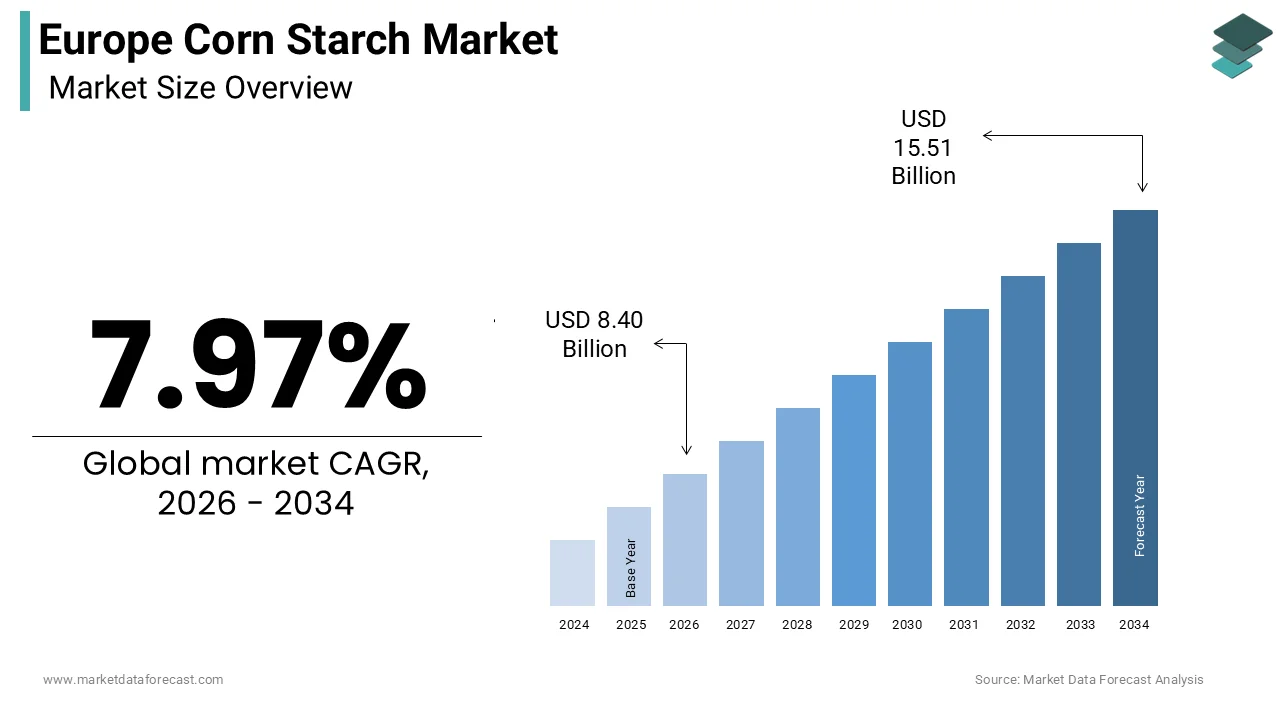
- Market Valuation: Valued at USD 7.78 billion (2025), estimated at USD 8.40 billion (2026), and projected to reach USD 15.51 billion by 2034, registering a solid CAGR of 7.97% (2026–2034).
- Primary Growth Drivers: Rising demand for clean-label and plant-based food ingredients, expansion of industrial applications in bioplastics and paper manufacturing, and growing adoption in pharmaceutical excipients.
Key Market Segment Metrics (2026–2034)
| Category | Leading Segment (Base Position) | Fastest-Growing Segment |
|---|---|---|
| By Product | Native Corn Starch (held 58.5% market share in 2025 anchored by clean-label compliance, natural origin, and regulatory simplicity) | Modified Corn Starch (predicted at the highest CAGR of 5.8% driven by freeze-thaw stability and sterilization needs in convenience foods) |
| By Application | Food and Beverages (led with a 62.7% share in 2025 as an essential thickener, stabilizer, and gelling agent) | Pharmaceuticals and Chemicals (fastest-growing segment at a CAGR of 6.3% fueled by pharmacopeial standards and generic drug production) |
| By Region / Country | France (outperformed others with an 18.5% share in 2025 backed by its status as the EU’s largest maize producer and advanced wet milling infrastructure) | Poland & Germany (expanding food processing hubs, advanced pharma applications, and high-value bioeconomy investments) |
Major Market Players & Market Structure
Market Structure: Moderately concentrated European market featuring major multinational ingredient refiners and regional agricultural processors competing on vertical integration, purity standards, and sustainable biopolymer innovations.
Key Companies: Ingredion, Cargill Incorporated, Tate & Lyle, Archer Daniels Midland Company, Akzo Nobel NV, Riddhi Siddhi Gluco Biols Ltd, Roquette, Südzucker, Gulshan Polyols Ltd, Grain Processing Corporation, Associated British Foods plc, Bayer AG, and Agrana Group.
Europe Corn Starch Market Size
The European corn starch market size was calculated to be USD 7.78 billion in 2025 and is anticipated to be worth USD 15.51 billion by 2034, from USD 8.40 billion in 2026, growing at a CAGR of 7.97% during the forecast period.
Corn starch, also known as maize starch or cornflour in the UK, is a fine, white, tasteless, and odorless powder derived from the endosperm of corn kernels. Extracted from the endosperm of maize kernels through wet milling, it is prized for its neutral flavor, high purity, gelling capacity, and biodegradability. The European corn starch sector operates within a stringent regulatory framework administered by the European Commission and the European Food Safety Authority, which governs both agricultural inputs and end-use applications. According to EU agricultural data, a substantial portion of the European Union’s grain maize area is concentrated in a few key nations, with France and Romania leading in production, highlighting a strong geographic concentration of supply. Data from the International Grains Council indicates that global maize utilization has reached record levels, driven significantly by the rising demand for industrial applications, such as starch production, across Western and Central Europe. This trajectory reflects corn starch’s evolving role beyond culinary thickening into strategic roles in circular economy initiatives, such as bioplastics and sustainable packaging.
MARKET DRIVERS
Rising Demand for Clean Label and Plant-Based Food Ingredients
European consumers are increasingly prioritizing ingredient transparency, which favours products with minimal processing and recognizable components. This trend propels the growth of the Europe corn starch market. Corn starch aligns seamlessly with this clean-label ethos due to its natural origin, gluten-free status, and absence of common allergens. EU consumers are increasingly prioritizing simple, natural, and clean-label ingredients in their purchasing decisions due to heightened health awareness. This behavioral shift has prompted major food corporations—including Nestlé and Unilever—to reformulate products using native starches instead of chemically modified alternatives. Concurrently, the plant-based food sector, which relies heavily on functional starches for texture and stability, has experienced exponential growth. Retail sales of plant-based foods in Europe have continued to grow, with plant-based dairy alternatives becoming a major component of this expansion. Corn starch is essential in oat milk, vegan yogurts, and meat analogues, where it acts as a stabilizer and mouthfeel enhancer. Furthermore, a large, growing portion of the European population now identifies as flexitarian, significantly driving demand for versatile, plant-based food alternatives. This convergence of consumer preference, regulatory support for natural additives, and innovation in alternative protein formats solidifies corn starch’s centrality in Europe’s modern food architecture.
Expansion of Industrial Applications in Bioplastics and Paper Manufacturing
Corn starch is increasingly leveraged in the region’s industrial decarbonization strategy, particularly in biodegradable packaging and eco-conscious paper production, which boosts the expansion of the Europe corn starch market. Driven by tightening European regulations for sustainable, recycled content in packaging, the production capacity of bioplastics is experiencing strong growth, with significant expansion anticipated over the next five years. Corn starch serves as a foundational feedstock for thermoplastic starch and polylactic acid blends due to its high amylose content and compatibility with existing extrusion infrastructure. In parallel, the paper industry employs corn starch as a surface sizing agent to improve tensile strength, printability, and surface smoothness. Despite facing a sharp decline in production due to economic challenges and industry-wide destocking, European paper and board mills continue to increase the adoption of bio-based, starch-based additives to improve quality and reduce reliance on synthetic chemicals. Additionally, the European Union is prioritizing the transition to a circular economy by directing substantial research and innovation funding through its long-term, multi-billion-euro framework program to support the development of sustainable, bio-based materials. These structural tailwinds position corn starch not merely as a commodity but as a critical enabler of industrial sustainability across multiple sectors.
MARKET RESTRAINTS
Volatility in Maize Supply Due to Climate-Induced Yield Fluctuations
Maize production in the region remains highly vulnerable to climatic extremes, which directly affects corn starch availability, price stability, and growth of the Europe corn starch market. Maize cultivation across the continent faces increased vulnerability due to recurring, intensified drought conditions, particularly impacting yields in southern regions. The alignment of extreme heat stress with critical flowering stages reduces kernel set and lowers the efficiency of starch concentration. Major production regions have experienced significant, multi-year declines in output compared to recent historical averages. The intensity of compound heat and water stress events in the region is creating a pattern of shortened growth periods, accelerating the need for water-resilient crop management. Production variability is becoming more pronounced in key producing countries, impacting the overall market supply and requiring shifts in agricultural strategies. Such disruptions force starch processors to either absorb cost increases or pass them on to downstream industries, amplifying supply chain fragility. Moreover, the Common Agricultural Policy’s greening requirements restrict monoculture expansion, limiting farmers’ ability to rapidly scale maize acreage in response to demand surges. Consequently, recurrent agroclimatic instability undermines long term planning and investment security across the corn starch value chain.
Stringent Regulatory Classification of Genetically Modified Maize
The European Union maintains one of the world’s most restrictive regulatory regimes for genetically modified organisms, which severely constrains raw material options for corn starch producers and the expansion of the Europe corn starch market. The cultivation of genetically modified maize in the European Union is restricted to a limited number of varieties, with several member states implementing national bans. This policy environment limits the availability of certain hybrid seeds that may offer alternative traits for pest resistance and yield, which some perspectives suggest could impact supply stability and input expenditures. Genetically modified maize is widely adopted worldwide, yet within the EU, its footprint is minimal and confined to a few regions. European starch producers frequently use conventional or organic maize, which can result in different per-hectare productivity levels compared to other methods. Differences in yields may influence the overall cost structure and land-use requirements for starch production. The regulatory framework for these products includes requirements for traceability and segregation, which introduce specific logistical and testing procedures for the industry. The regulatory environment thus creates a structural disadvantage for domestic corn starch production despite robust downstream demand.
MARKET OPPORTUNITIES
Growing Adoption of BBio-BasedAdhesives in Sustainable Packaging
The shift toward eco-friendly packaging presents a compelling opportunity for corn starch in adhesive formulations used in corrugated board, labeling, and carton sealing. This provides new opportunities for the Europe corn starch market. CEFLEX initiative partners are collaborating to ensure that the vast majority of flexible packaging in Europe is designed for, and channelled into, circular recycling streams to replace virgin materials. Corn starch-based adhesives offer biodegradability, low toxicity, and compatibility with paper recycling streams, making them preferable to synthetic alternatives like polyvinyl acetate. Driven by demand for sustainability, adhesives based on natural polymers, such as plant-based alternatives, are experiencing significant growth in the European market. Major chemical firms, including Henkel and Arkema, have launched starch-enriched adhesive lines tailored for food-grade packaging that meet both performance and environmental criteria. Additionally, starch-based derivatives, such as those from corn, are frequently utilized to meet the high renewable carbon content requirements required by the European Union Ecolabel for sustainable adhesives. The rapid evolution of the European packaging market, combined with strict sustainability goals, is accelerating the adoption of bio-based bonding solutions and expanding the use of renewable materials like corn starch.
Integration of Corn Starch in Pharmaceutical Excipients and Drug Delivery Systems
Pharmaceutical applications represent a high-value niche for high-purity corn starch, which offers fresh prospects for the Europe corn starch market. This market is driven by the region’s exacting pharmacopeial standards and a growing demand for reliable excipients. Starch is frequently employed in solid oral medication forms within the European market for its functional properties as a filler and disintegrant. The regional market for pharmaceutical excipients is experiencing growth driven by increased production of generic drugs and the development of more complex medication formulations. Corn starch meets the stringent specifications of the European Pharmacopoeia, which mandates microbial limits, heavy metal thresholds, and particle size uniformity to ensure batch consistency. Leading suppliers such as Roquette and Cargill operate dedicated pharmaceutical-grade starch facilities certified under Good Manufacturing Practices by the European Medicines Agency. Additionally, the rise of orally disintegrating tablets and controlled-release matrices has increased demand for modified corn starch variants like pregelatinized or cross-linked types. Hence, the continent’s regulatory rigor and manufacturing scale create a durable and expanding market for specialized corn starch products.
MARKET CHALLENGES
Competition from Alternative Starch Sources and Synthetic Thickeners
Corn starch contends with intensifying substitution pressure from other botanical starches and engineered hydrocolloids that offer superior functionality in specific applications, and thereby limits the growth of the Europe corn starch market. Potato and tapioca starches, for instance, deliver higher viscosity, clarity, and freeze-thaw stability, making them preferred in premium sauces, soups, and frozen meals. Potato starch manufacturing has experienced increased output in specific northern European regions, where favorable growing conditions and existing infrastructure have positioned it as a dominant local starch source over alternative options. The food industry is seeing a shift toward the use of alternative, synthetic thickeners because they offer specific texture control and cost-efficiency advantages. The overall market for ingredients that modify texture is expanding, driven by the increasing consumer demand for products with longer shelf lives and greater convenience. Consumer perception also plays a role: some clean-label advocates view corn starch as overly processed compared to whole root or legume starches. This competitive fragmentation compels corn starch suppliers to continuously invest in modification technologies and application development to retain relevance, particularly in high-margin segments where performance differentials are decisive.
Energy Intensity and Carbon Footprint of Wet Milling Processing
The wet milling process used to produce corn starch is inherently energy-intensive, which requires substantial water, thermal, and electrical inputs that conflict with Europe’s climate neutrality goals. This impedes the expansion of the Europe corn starch market. Starch manufacturing is identified as a highly energy-intensive sector within the broader food processing industry. The multi-stage production process, involving steps such as steeping, grinding, separation, and drying, requires significant energy input. The reliance on fossil-based energy sources for this processing results in substantial greenhouse gas emissions. Stricter environmental regulations, including expanded carbon trading systems, are increasing the direct operational costs for producers. Enhanced sustainability reporting requirements are raising potential financial and reputation risks for manufacturers with high carbon intensity. Despite the adoption of biomass and heat recovery by some firms, full decarbonization is still constrained by significant technical and economic barriers. This environmental burden not only affects regulatory compliance but also influences procurement decisions by sustainability-focused brands seeking low-carbon ingredients, thereby constraining market expansion despite robust end-user demand.
REPORT COVERAGE
| REPORT METRIC | DETAILS |
| Market Size Available | 2025 to 2034 |
| Base Year | 2025 |
| Forecast Period | 2026 to 2034 |
| CAGR | 7.97% |
| Segments Covered | By Product, Application, And Region |
| Various Analyses Covered | Global, Regional & Country Level Analysis; Segment-Level Analysis; DROC, PESTLE Analysis; Porter’s Five Forces Analysis; Competitive Landscape; Analyst Overview of Investment Opportunities |
| Regions Covered | UK, France, Spain, Germany, Italy, Russia, Sweden, Denmark, Switzerland, Netherlands, Turkey, and the Czech Republic |
| Market Leaders Profiled | Ingredion, Cargill Incorporated, Tate & Lyle, Archer Daniels Midland Company, Akzo Nobel NV, Riddhi Siddhi Gluco Biols Ltd, Roquette, Südzucker, Gulshan Polyols Ltd, Grain Processing Corporation, Associated British Foods plc, Bayer AG |
SEGMENTAL ANALYSIS
By Product Insights
The native corn starch segment dominated the Europe corn starch market by accounting for a 58.5% share in 2025. The dominance of the native corn starch segment is driven by its widespread acceptance in food applications due to its clean label compatibility, natural origin, and regulatory simplicity compared to chemically altered alternatives. Native starch requires no E-number classification under EU food additive regulations, making it preferable for manufacturers targeting transparency-conscious consumers. As per research, a notable share of reformulated bakery and dairy products in Western Europe replaced modified starches with native variants to meet clean label criteria. Additionally, native starch is less energy-intensive to produce than modified derivatives, aligning with corporate sustainability commitments. Major processors such as Roquette and Agrana have expanded native starch production lines in France and Germany to meet rising demand from organic and plant-based food brands. The segment’s cost effectiveness, functional adequacy in non-extreme processing conditions, and alignment with EU nutritional guidelines further reinforce its market leadership.
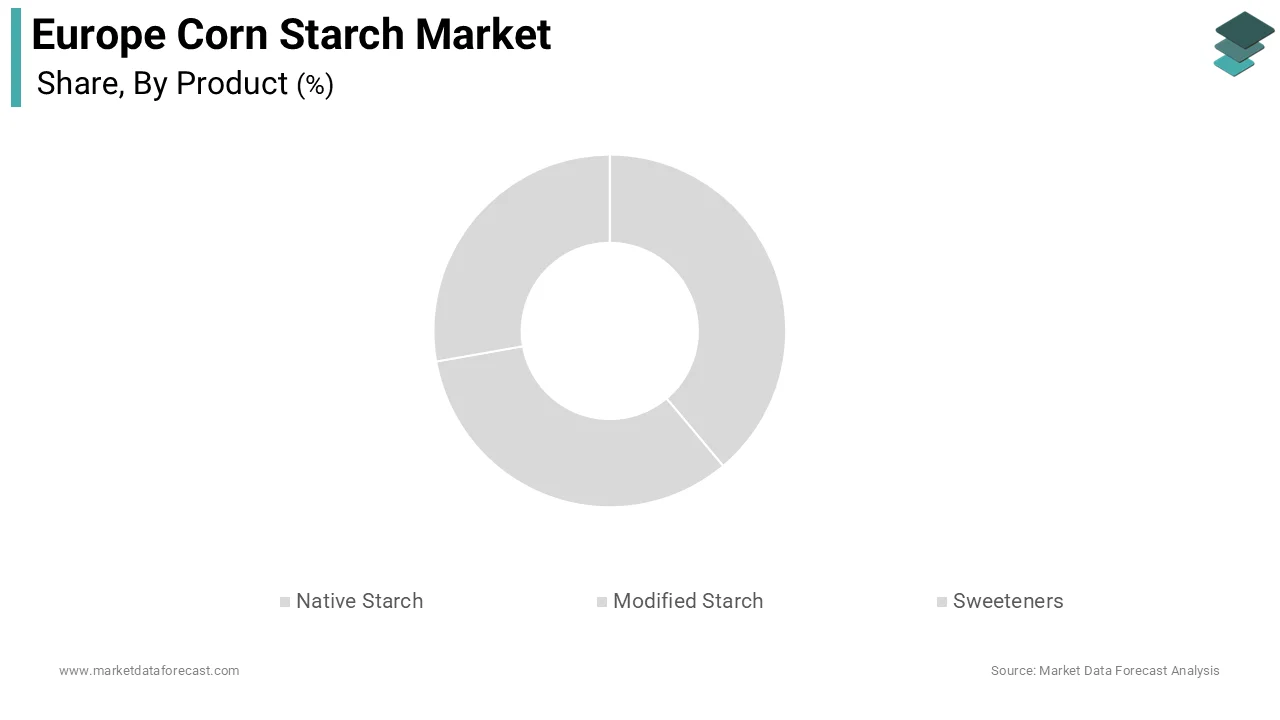
The modified corn starch segment is predicted to witness the highest CAGR of 5.8% between 2026 and 2034 due to the need for enhanced functionality in processed and convenience foods that undergo freezing, high-temperature sterilization, or extended shelf life requirements. Modified starches offer superior viscosity stability, freeze-thaw resistance, and texture retention, critical for ready meals, sauces, and dairy alternatives. The market for functional food ingredients has experienced growth, with modified starches comprising a significant portion of the volume. Advancements in enzymatic and physical techniques are enabling ingredient modifications that align with specific regulatory classifications, such as "non-GMO" and "processing aid”. Pharmaceutical and bioplastic sectors also contribute to demand, using cross-linked or hydroxypropylated variants for controlled release matrices and film formation. Investment in R&D by Cargill and Tate & Lyle in the Netherlands and UK has accelerated the development of next-generation modified starches that meet both performance and sustainability benchmarks, fueling this segment’s rapid ascent.
By Application Insights
The food and beverages segment led the Europe corn starch market by holding a 62.7% share in 2025. The supremacy of the food and beverages segment is attributed to corn starch’s irreplaceable role as a thickener, stabilizer, and gelling agent across diverse categories, including soups, sauces, dairy alternatives, baked goods, and confectionery. Regulatory acceptance under EU food safety frameworks and its status as a gluten-free ingredient further bolster adoption. The market for highly processed, convenient food products relies on the extensive use of structural ingredients in a large majority of formulations. Trends toward plant-based alternatives are driving greater utilization of specific functional ingredients, such as native or modified corn starch, to emulate the texture and consistency of traditional dairy products. Moreover, the European Commission’s Farm to Fork Strategy encourages the reduction of synthetic additives, indirectly favoring natural starches. Large-scale food manufacturers like Danone and Nestlé have standardized corn starch in their European supply chains due to consistent quality and traceability, cementing the segment’s dominance.
The pharmaceuticals and chemicals segment is estimated to register the fastest CAGR of 6.3% during the forecast period, owing to stringent pharmacopeial standards that recognize corn starch as a safe, inert, and compressible excipient in solid oral dosage forms. Corn starch is frequently included as an ingredient in a large majority of tablet formulation standards within the European Pharmacopoeia. Europe maintains a significant share of global generic medicine production, which sustains a steady demand for reliable, high-purity excipients. Additionally, emerging drug delivery systems such as orally disintegrating tablets and sustained release matrices increasingly incorporate pregelatinized or cross-linked corn starch derivatives for precise disintegration profiles. Regulatory harmonization under the EU Medical Devices Regulation also facilitates ingredient qualification, reducing time to market. Investments by specialty suppliers like Ingredion in GMP-certified facilities in Germany and Ireland further support scalable, compliant supply, positioning pharmaceuticals as the highest growth vector in the corn starch application landscape.
REGIONAL ANALYSIS
France Corn Starch Market Analysis
France outperformed others in the European corn starch market by accounting for a 18.5% share in 2025. The leading position of the French market is propelled by its status as the EU’s largest maize producer. France has experienced a strong recovery in its domestic maize production, with significantly increased harvest levels following improved environmental conditions compared to the prior, drought-stricken year. This abundant raw material base supports a dense network of wet milling facilities operated by global players, including Roquette and Tereos. France’s strong food processing sector, ranked second in Europe by output value, drives consistent demand for both native and modified starches. Additionally, the French government is directing significant investment towards industrial decarbonization, prioritizing the shift towards bio-based products and sustainable starch-derived intermediates as part of its long-term ecological transition strategy. The presence of research clusters like AgroParisTech further accelerates innovation in enzymatic modification andstarch-basedd biopolymers, reinforcing France’s structural advantage in both volume and technological sophistication.
Germany Corn Starch Market Analysis
Germany was the second largest player in the Europe corn starch market by capturing a 15.2% share in 2025. The growth of the German market is fuelled by advanced downstream processing and high-value applications. Germany hosts Europe’s largest pharmaceutical and chemical manufacturing base, consuming significant volumes of pharma-grade corn starch. Fine chemical production in Germany is characterized by a strong output, with demand for specialized pharmaceutical components increasing alongside the export of generic medicines. Major suppliers of raw ingredients in the country, such as starch refiners, operate certified manufacturing sites that incorporate sustainable practices, including renewable energy use and closed-loop water systems, to meet environmental standards. National bioeconomy strategies, aimed at increasing the percentage of bio-based materials in industrial products, are driving adoption across sectors like adhesives, coatings, and plastics. Germany is positioned as a leader in innovation for bio-based materials, moving beyond a role of primary consumption.
Romania Corn Starch Market Analysis
Romania occupies a significant position in the Europe corn starch market. This prominence is almost entirely supply-driven, as Romania is the EU’s second-largest maize producer after France, harvesting millions of metric tons in 2023 despite drought impacts. Low land and labor costs have attracted significant foreign investment in starch processing, including expansions by ADM and Cargill in the southern agricultural belt. The domestic food manufacturing sector in Romania has traditionally focused on exporting raw agricultural commodities rather than processing them locally. A significant portion of Romanian corn starch is distributed to international markets rather than being utilized for value-added production within the country. Recent investments from European funding initiatives are increasing the capacity for local processing and modernizing the agro-food industry. Efforts to enhance the local food supply chain are gradually shifting the focus toward on-site manufacturing rather than raw material export. This dual role, as a low-cost supplier and emerging processor, positions Romania as a pivotal node in the European starch supply chain, particularly for bulk native starch.
Italy Corn Starch Market Analysis
Italy is growing steadily in the Europe corn starch market. Its influence derives from its sophisticated food manufacturing ecosystem, particularly in pasta, bakery, and dairy sectors, where starch functionality is critical for texture and shelf life. The nation relies significantly on imported maize for its industrial needs, sourcing a substantial portion from Eastern Europe and South America. Advanced processing and milling technologies enable high-efficiency starch production, allowing output to surpass regional benchmarks. The domestic food industry is experiencing a shift in production, with a focus on high-value, export-oriented goods. Consumer demand trends are influencing manufacturers to adopt cleaner, more natural ingredient formulations, increasing preference for native starches. Additionally, northern regions like Emilia Romagna host integrated biorefineries that co-produce starch and bioethanol, enhancing resource utilization. The Italian government’s National Recovery and Resilience Plan indirectly supports starch innovation in plant-based and allergen-free segments.
Poland Corn Starch Market Analysis
Poland is predicted to expand in the Europe corn starch market from 2026 to 2034. Its ascent reflects its dual capacity as both a major maize grower, cultivating significant hectares, and a rapidly expanding food processing hub serving Central and Eastern Europe. Domestic demand is fueled by rising per capita consumption of convenience foods. Local starch producers such as Kruszwica and Lubelski have modernized facilities to supply both native starch for traditional applications and modified variants for industrial clients. Poland also benefits from EU Common Agricultural Policy subsidies that stabilize grain prices, insulating processors from volatility. Furthermore, the country’s strategic location enables efficient distribution to Baltic and Scandinavian markets, where clean label trends are accelerating. Poland is elevating its position in the European corn starch sector by shifting from bulk production to high-value, enzymatically modified products, bolstered by German technical partnerships.
COMPETITION OVERVIEW
The Europe Corn Starch Market features moderate concentration, with competition driven more by product differentiation and application expertise than price alone. While large integrated players dominate high-purity and modified segments, smaller regional mills maintain relevance in bulk native starch supply, particularly in Eastern Europe. Competition intensifies in value-added domains such as pharmaceutical excipients and biodegradable packaging, where technical certification, regulatory compliance, and R&D capability determine market access. Companies continuously refine their portfolios to align with EU food safety directives, circular economy policies, and consumer clean label demands. Entry barriers remain high due to the capital intensity of wet milling facilities, stringent quality control,s and established customer relationships in the food and pharma sectors. Nevertheless, innovation in enzymatic modification andbio-basedd materials creates openings for agile players to capture niche segments through targeted investments and strategic collaborations across the value chain.
KEY MARKET PLAYERS
A few major players of the Europe corn starch market include
- Ingredion
- Cargill Incorporated
- Tate & Lyle
- Archer Daniels Midland Company
- Akzo Nobel NV
- Riddhi Siddhi Gluco Biols Ltd
- Roquette
- Südzucker
- Gulshan Polyols Ltd
- Grain Processing Corporation
- Associated British Foods plc
- Bayer AG
Top Strategies Used by the Key Market Participants
Key players in the Europe Corn Starch Market are pursuing vertical integration to secure raw material supply and stabilize costs amid climatic volatility. They are investing heavily in research and development to create clean-label, compliant, and functionally enhanced starch derivatives that cater to plant-based and convenience food trends. Sustainability-driven process optimization, including energy efficiency upgrades and wastewater reduction, is a core operational focus aligned with EU Green Deal objectives. Companies are also expanding pharmaceutical-grade production capabilities to serve the growing generic drug sector. Strategic partnerships with food brands and bioplastic developers enable co-innovation and faster commercialization of starch-based solutions tailored to regional regulatory and consumer expectations.
Leading Players in the Europe Corn Starch Market
- Roquette is a leading global producer of plant-based ingredients with deep integration in the European corn starch market. Headquartered in France, the company leverages its extensive wet milling infrastructure to supply native and modified starches across the food, pharmaceutical, and bioplastics sectors. In recent years, Roquette has intensified its focus on sustainable innovation, launching enzymatically modified starches that meet clean label criteria while enhancing functionality.
- Cargill operates as a major multinational agribusiness with significant corn starch processing assets across Europe, including facilities in the Netherlands, Germany, and Romania. The company supplies both commodity and specialty starches to diverse industries ranging from food manufacturing to industrial adhesives. Cargill has recently invested in digital traceability systems to enhance supply chain transparency and launched a portfolio of non-GMO verified modified starches tailored for plant-based dairy alternatives. These initiatives reflect its strategy to align with evolving consumer preferences and sustainability mandates across the European Union.
- Agrana Group, headquartered in Austria, is a key European player specializing in starch, fruit, and sugar processing. Its Starch Segment produces a wide array of native and modified corn starches primarily serving Central and Eastern European markets. Agrana has prioritized decarbonization by integrating biomass energy and water recycling technologies into its starch plants.
MARKET SEGMENTATION
This research report on the Europe corn starch market has been segmented and sub-segmented based on product, application, and region.
By Product
- Native Starch
- Modified Starch
- Sweeteners
By Application
- Food and Beverages
- Textile
- Animal Feed
- Paper and Corrugates
- Pharmaceuticals and Chemicals
- Others
By Region
- UK
- France
- Spain
- Germany
- Italy
- Russia
- Sweden
- Denmark
- Switzerland
- Netherlands
- Turkey
- Czech Republic
- Rest of Europe