- Product Description Description
- Table of Contents TOC
- List of Table & Figure LOT
- Get Free Sample PDF Sample PDF
Market Size, 2025
$8.46 BnMarket Estimate, 2026
$8.78 BnMarket Forecast, 2034
$11.80 BnCAGR, 2026–2034
3.76%Europe Dehydrated Food Market Report Summary
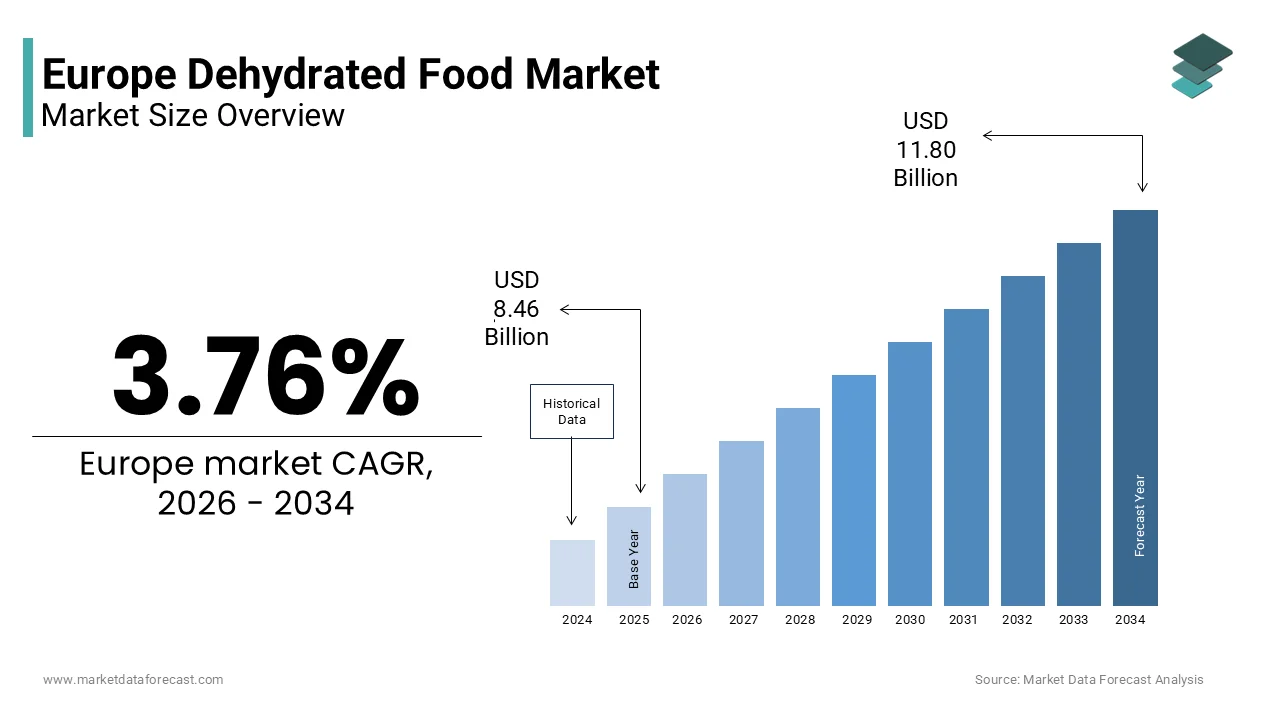
The Europe dehydrated food market was valued at USD 8.46 billion in 2025, is estimated to reach USD 8.78 billion in 2026, and is projected to reach USD 11.80 billion by 2034, growing at a CAGR of 3.76% during the forecast period. Market growth is driven by increasing demand for long shelf life food products, rising consumption of convenient packaged foods, and expanding applications in food manufacturing. Dehydrated foods are widely preferred due to their extended storage stability, reduced transportation costs, and ease of use in processed food products. The growing demand for ready to eat and convenience foods is further supporting steady market growth across Europe.
Key Market Trends
- Rising demand for convenient and shelf stable food products is driving market growth.
- Increasing use of dehydrated ingredients in processed foods is boosting demand.
- Growing preference for lightweight and easy to store food products is supporting market expansion.
- Expansion of packaged food manufacturing and foodservice industries is enhancing product adoption.
- Innovation in drying technologies and food preservation methods is influencing market development.
Segmental Insights
- Based on type, the dehydrated vegetables segment accounted for 37.5% of the Europe dehydrated food market share in 2025. This dominance is attributed to widespread use in soups, snacks, ready meals, and food processing applications.
- Based on nature, the conventional segment held a substantial share of the Europe dehydrated food market in 2025, supported by large scale production and broader commercial availability.
- Based on end user, the food product manufacturers segment accounted for 44.8% of the Europe dehydrated food market share in 2025, driven by growing demand for dehydrated ingredients in packaged and processed foods.
Regional Insights
- The Europe dehydrated food market is experiencing steady growth across key countries, supported by convenience food trends and food processing expansion.
- The United Kingdom accounted for 8.7% of the Europe dehydrated food market share in 2025, driven by strong packaged food demand, established food manufacturing industry, and rising consumer preference for shelf stable products.
Competitive Landscape
The Europe dehydrated food market is moderately competitive, with key players focusing on food preservation technologies, product diversification, and expansion of supply networks to strengthen their market position. Companies are investing in freeze drying innovations, ingredient quality enhancement, and sustainable food processing solutions. Prominent players in the Europe dehydrated food market include Freeze-dry Foods, Lyo Food Sp. Zoo, Arla Foods Ingredients Group PS, and European Freeze Dry.
Europe Dehydrated Food Market Size
The Europe dehydrated food market size was valued at USD 8.46 billion in 2025, and is expected to reach USD 11.80 billion by 2034 from USD 8.78 billion in 2026, at a CAGR of 3.76%.
Dehydrated food is a method of preservation where moisture is removed using heat, air circulation, or sunlight, typically at temperatures between 125°F and 150°F. This market includes a wide array of items including dried fruits vegetables herbs spices soups and ready to eat meals. The primary objective of dehydration is to extend shelf life reduce weight for easier transportation and preserve nutritional value without the need for refrigeration. As per Eurostat's latest monitoring (2022 data), the European Union generates approximately 59.2 million tonnes of food waste annually (roughly 132 kg per inhabitant). Household waste accounts for the largest share (54%), followed by processing and manufacturing (19%). The regulatory framework governing this market is stringent with the European Food Safety Authority enforcing rigorous standards on food safety labeling and additive usage. Consumer preferences are shifting towards convenience and sustainability driving demand for lightweight and long lasting food options. The industry is characterized by a mix of large scale industrial processors and small artisanal producers who emphasize organic and non GMO certifications. Retail channels are diversifying with increased availability in supermarkets specialty stores and online platforms. The market reflects a balance between traditional preservation methods and modern technological advancements. Seasonal variations in raw material availability influence production cycles and pricing strategies. The integration of dehydrated ingredients into the food service and manufacturing sectors further underscores their versatility and economic importance.
MARKET DRIVERS
Increasing Demand For Convenience And Ready To Eat Meals
The escalating consumer demand for convenience and ready to eat meal solutions is among the primary drivers fueling the Europe dehydrated food market. Modern lifestyles characterized by busy schedules and dual income households have reduced the time available for meal preparation. Research supported by the European Commission (and bodies like the Group of Chief Scientific Advisors) identifies convenience and time constraints as major drivers of food choice, leading consumers to prioritize processed or easy-to-prepare foods. Dehydrated foods such as instant soups noodles and meal kits offer a quick and easy solution that requires minimal cooking effort. These products retain much of their original flavor and nutritional value while offering the convenience of long shelf life and easy storage. The rise of single person households in Europe further amplifies this trend as individuals seek portion controlled and easy to prepare options. Retailers respond by expanding their ranges of convenient dehydrated meals and snacks. The perception of dehydrated foods as a practical alternative to fresh produce during travel or outdoor activities also boosts demand. Innovation in packaging such as resealable pouches and microwaveable containers enhances user experience. Marketing campaigns emphasize the time saving benefits and versatility of dehydrated ingredients. This driver ensures that dehydrated foods remain a staple in European pantries. The alignment with contemporary lifestyle needs sustains consistent growth and market expansion. The ability to provide nutritious meals with minimal preparation time appeals to a broad demographic.
Growing Awareness Of Food Waste Reduction And Sustainability
The growing awareness of food waste reduction and sustainability significantly propels the growth of the Europe dehydrated foods market. Dehydration is an effective method for preserving surplus produce and reducing post harvest losses which aligns with broader environmental goals. As per the UNEP Food Waste Index Report 2024, approximately 19% of food available to consumers is wasted globally (1.05 billion tonnes), in addition to ~13% lost in the supply chain (as estimated by the FAO). Historically, this has been summarized as "one-third" of all food produced. Dehydrated foods have a longer shelf life compared to fresh produce reducing the likelihood of spoilage and waste at both retail and consumer levels. Consumers are increasingly conscious of their environmental footprint and prefer products that contribute to sustainability. The lightweight nature of dehydrated foods also reduces transportation emissions making them an eco friendly choice. Governments and non governmental organizations promote dehydration as a key strategy for food security and waste management. Brands leverage this narrative by highlighting their commitment to sustainable sourcing and waste reduction practices. The integration of upcycled ingredients into dehydrated products further appeals to environmentally conscious shoppers. Retailers prioritize suppliers with strong sustainability credentials to meet consumer expectations. This driver fosters a positive image for the dehydrated food industry and encourages adoption. The alignment with circular economy principles ensures long term relevance and support. The focus on resource efficiency and waste minimization strengthens the market position of dehydrated foods.
MARKET RESTRAINTS
Perception Of Lower Nutritional Value And Quality
The perception that dehydrated foods have lower nutritional value and quality compared to fresh alternatives restricts the expansion of the Europe dehydrated food market. Many consumers believe that the dehydration process destroys essential vitamins and minerals leading to a less nutritious product. As per the European Food Information Council (EUFIC), misconceptions about processed foods broadly persist, with many consumers incorrectly assuming that all processed products rely heavily on additives and preservatives, often overlooking that technologies like dehydration or freezing can preserve food without chemical agents. While modern techniques such as freeze drying preserve most nutrients the stigma remains a barrier to widespread adoption. Health conscious consumers often prefer fresh or frozen options which are perceived as more natural and wholesome. The presence of added sugars or salts in some dehydrated fruit and snack products further reinforces negative perceptions. Regulatory labeling requirements help clarify nutritional content but do not fully eliminate consumer skepticism. Educational campaigns by industry bodies aim to inform the public about the benefits of advanced dehydration technologies. However changing deep seated beliefs requires sustained effort and transparency. The preference for fresh produce in European culinary traditions also limits the appeal of dehydrated alternatives. This restraint necessitates continuous innovation in processing methods to maximize nutrient retention. Without effective communication the market may struggle to overcome these quality related barriers. The challenge lies in balancing convenience with perceived health benefits.
High Energy Costs And Production Expenses
High energy costs and production expenses are a major barrier for the Europe dehydrated food market. The dehydration process particularly methods like freeze drying and spray drying is energy intensive requiring significant amounts of electricity and heat. As per Eurostat energy prices in Europe have fluctuated significantly due to geopolitical tensions and supply chain disruptions impacting manufacturing costs. These increased operational expenses are often passed on to consumers in the form of higher retail prices making dehydrated foods less competitive against fresh or frozen alternatives. Small and medium sized enterprises face particular challenges in absorbing these costs without compromising profit margins. The reliance on specialized equipment and technology further adds to capital expenditure requirements. Fluctuating raw material prices due to climate change and agricultural volatility also contribute to cost instability. Manufacturers must invest in energy efficient technologies to mitigate these impacts but such upgrades require substantial initial investment. The economic pressure limits the ability of companies to expand product lines or engage in aggressive marketing. Price sensitive consumers may switch to cheaper alternatives during periods of inflation. This financial burden restricts market growth and innovation. Ensuring cost effective production while maintaining quality is a persistent challenge for industry participants. The volatility of energy markets adds uncertainty to long term planning.
MARKET OPPORTUNITIES
Expansion Of Organic And Clean Label Products
The expansion of organic and clean label dehydrated food products offers a significant opportunity for growth in the Europe dehydrated food market. Consumers are increasingly seeking transparent and natural ingredients free from artificial additives and preservatives. As per the Research Institute of Organic Agriculture (FiBL), the organic food landscape in Europe continues to grow, with retail sales reaching €54.7 billion (in 2022) and consumers increasing their per capita spending on organic products. Dehydrated food manufacturers can capitalize on this trend by sourcing organic raw materials and obtaining relevant certifications. Clean label products appeal to health conscious individuals who prioritize simplicity and purity in their food choices. The use of natural drying methods without chemical treatments enhances the appeal of these products. Brands can differentiate themselves by highlighting their commitment to organic farming and sustainable practices. Retailers are expanding their organic sections providing greater visibility for these products. The integration of organic dehydrated ingredients into baby food and health supplements offers additional growth avenues. Marketing strategies emphasizing the natural origin and health benefits of organic dehydrated foods build trust and loyalty. This opportunity allows companies to tap into a lucrative and expanding segment. The alignment with consumer values regarding health and environment ensures sustained demand. By leading in organic offerings manufacturers can secure a competitive advantage. The focus on transparency and quality drives long term brand equity.
Innovation In Freeze Drying Technology And Applications
Innovation in freeze drying technology and its applications provides a promising prospect for the Europe dehydrated food market. Freeze drying preserves the structure flavor and nutritional content of food better than traditional methods making it ideal for premium products. As per the International Institute of Refrigeration (IIR), freeze-drying remains a highly energy-intensive process (consuming significantly more energy than conventional drying), and reducing its energy consumption remains a critical technical challenge rather than a solved accessibility milestone. This innovation enables the production of high quality dehydrated fruits vegetables and even complete meals that rehydrate quickly and retain their original characteristics. The application of freeze drying in the snack sector has gained popularity with consumers seeking crunchy and nutritious alternatives to chips. Manufacturers are exploring new combinations such as freeze dried yogurt bites and fruit blends to attract diverse demographics. The technology also supports the development of lightweight and compact food options for the outdoor and travel sectors. Collaborations with research institutions drive continuous improvement in processing techniques. The ability to create unique textures and flavors expands the potential for product differentiation. Retailers welcome innovative freeze dried products as they offer higher margins and appeal to adventurous eaters. This opportunity fosters creativity and technological advancement within the industry. The superior quality of freeze dried products justifies premium pricing. The continuous evolution of this technology ensures ongoing market expansion.
MARKET CHALLENGES
Stringent Regulatory Compliance And Safety Standards
Navigating the complex and evolving regulatory landscape is a significant challenge for participants in the Europe dehydrated food market. The European Union imposes strict standards on food safety labeling and additive usage to protect consumer health. As per European Union Regulations (supported by scientific advice from the European Food Safety Authority), manufacturers must comply with rigorous testing and documentation requirements to ensure product safety. For regulated products (e.g., novel foods), applicants must strictly follow EFSA's guidance on data requirements for risk assessment. Changes in regulations regarding pesticide residues heavy metals and allergens require companies to adapt their processes frequently. Compliance with these standards often involves substantial investments in quality control systems and staff training. The introduction of new laws such as the Farm to Fork Strategy places additional burdens on companies to demonstrate sustainability and traceability. Labeling requirements for origin ingredients and nutritional information must be accurate and transparent to avoid legal penalties. Variations in regulations across different European countries create operational complexities for multinational brands. The cost of maintaining compliance can erode profit margins particularly for smaller producers. Legal challenges related to misleading health claims can damage brand reputation. Companies must stay abreast of legislative developments and engage in proactive dialogue with regulators. The uncertainty surrounding future regulatory changes makes long term planning difficult. This challenge requires robust legal and compliance frameworks. Failure to adhere to standards can result in product recalls and fines.
Supply Chain Disruptions And Raw Material Volatility
Supply chain disruptions and raw material volatility hamper the stability of the Europe dehydrated food market. The industry relies on a consistent supply of high quality fruits vegetables and herbs which are susceptible to weather conditions and climate change. As per the Food and Agriculture Organization of the United Nations extreme weather events such as droughts and floods have impacted agricultural yields in key producing regions. These disruptions cause fluctuations in raw material availability and prices affecting production costs and profitability. Transportation delays and logistical bottlenecks further exacerbate supply chain challenges increasing lead times. The dependence on imports from outside Europe for certain ingredients adds another layer of vulnerability. Geopolitical tensions and trade policies can impact the flow of goods and increase tariffs. Companies must invest in diversified sourcing strategies and inventory management to mitigate these risks. However these measures often increase operational complexity and costs. The lack of domestic production for some specific crops means that the European market remains dependent on global supply chains. This structural vulnerability poses a persistent challenge to market stability. Ensuring a reliable and sustainable supply of raw materials is essential. Failure to manage these risks can lead to production shortages.
REPORT COVERAGE
| REPORT METRIC | DETAILS |
| Market Size Available | 2025 to 2034 |
| Base Year | 2025 |
| Forecast Period | 2026 to 2034 |
| CAGR | 3.76% |
| Segments Covered | By Type, Nature, Technology, End-user, and Region |
| Various Analyses Covered | Global, Regional, & Country Level Analysis; Segment-Level Analysis; DROC, PESTLE Analysis; Porter’s Five Forces Analysis; Competitive Landscape; Analyst Overview of Investment Opportunities |
| Regions Covered | UK, France, Spain, Germany, Italy, Russia, Sweden, Denmark, Switzerland, Netherlands, Turkey, and the Czech Republic |
| Market Leaders Profiled | Freeze-dry Foods, Lyo Food Sp. Zoo, Arla Foods Ingredients Group PS, and European Freeze Dry |
SEGMENTAL ANALYSIS
By Type Insights
The dehydrated vegetables segment held the majority share of 37.5% of the Europe dehydrated food market in 2025. This supremacy of the segment is supported by its extensive application in the food processing industry and culinary traditions. Moreover, this category includes dried onions garlic carrots peas and mixed vegetable blends which are essential ingredients for soups sauces seasonings and ready meals. These vegetables are indispensable ingredients for the European food processing industry particularly in the production of instant soups sauces snacks and ready to eat meals. Manufacturers prefer dehydrated vegetables for their consistent quality long shelf life and ease of storage compared to fresh produce. As per sources, the processed food sector accounts for a significant portion of vegetable consumption in Europe, with dehydrated forms being preferred for their stability and cost efficiency. FoodDrinkEurope data confirms the industry is a major buyer, purchasing approximately 70% of EU agricultural raw materials. The ability to standardize flavor and texture across large production batches makes dehydrated vegetables ideal for industrial applications. The reduction in weight and volume lowers transportation and storage costs enhancing supply chain efficiency. Major food manufacturers rely on a steady supply of high quality dehydrated vegetables to maintain production schedules and product consistency. The integration of these ingredients into convenience foods aligns with consumer demand for quick and easy meal solutions. Retailers stock a wide variety of dehydrated vegetable products catering to both industrial and household needs. The versatility of dehydrated vegetables allows them to be used in diverse culinary applications from seasoning blends to main courses. This widespread industrial adoption ensures that the segment remains the largest contributor to the market. The structural dependence of the food industry on these ingredients sustains their leading position. Besides these, the deep rooted culinary traditions in Europe that emphasize rich flavors and aromatic profiles drive the dominance of the dehydrated vegetables segment. Ingredients such as dried onions garlic and herbs are fundamental to European cooking providing depth and complexity to dishes. Chefs and home cooks value dehydrated vegetables for their concentrated flavor which enhances the taste of stews soups and marinades. The convenience of using pre dried ingredients saves time while maintaining authentic flavors. Traditional recipes often specify the use of dried components to achieve specific textures and tastes. The availability of high quality dehydrated vegetables in supermarkets and specialty stores ensures accessibility for consumers. The perception of dried vegetables as a pantry staple reinforces their consistent demand. Seasonal variations in fresh produce availability also encourage the use of dehydrated alternatives. The cultural acceptance of dried ingredients in European cuisine supports the sustained popularity of this segment. The combination of tradition and convenience ensures that dehydrated vegetables remain a primary choice for consumers. The emphasis on flavor and authenticity drives continuous consumption.
The dehydrated fruits segment is predicted to witness the highest CAGR of 6.3% over the forecast period due to the rising demand for healthy snacking options and natural sweeteners. Consumers are seeking nutritious and convenient alternatives to processed sweets. Also, consumer preference for healthy and portable snacking options is rising. Consequently, the market for dehydrated fruits is growing rapidly. Individuals are replacing sugary and processed snacks with nutrient dense dried fruits such as apples berries mangoes and bananas. Dehydrated fruits offer a convenient way to consume essential vitamins minerals and fiber without the spoilage risks associated with fresh fruit. The natural sweetness of dried fruits appeals to those looking to reduce added sugar intake while satisfying cravings. Retailers are expanding their healthy snacking aisles to include a wider variety of dried fruit options. Packaging innovations such as resealable pouches and single serve packs enhance convenience for on the go consumption. Marketing campaigns highlight the natural and wholesome attributes of dehydrated fruits attracting health conscious buyers. The association with active lifestyles and fitness further boosts demand among younger demographics. The versatility of dried fruits in trail mixes and yogurt toppings adds to their appeal. This trend towards mindful eating ensures sustained growth for the segment. The alignment with health and wellness goals drives rapid adoption. Innovation in product formats and flavor combinations is a key driver of growth for the dehydrated fruits segment. Manufacturers are introducing coated infused and mixed fruit products to create novel taste experiences. Brands are experimenting with combinations such as chocolate covered strawberries spiced apples and tropical fruit blends to attract adventurous eaters. These innovative formats bridge the gap between confectionery and healthy snacking appealing to those who seek indulgence without guilt. The use of freeze drying technology preserves the texture and nutritional value of fruits enhancing their premium appeal. Retailers dedicate shelf space to these premium products recognizing their potential to drive higher margins. The introduction of organic and non GMO certified dried fruits further appeals to discerning shoppers. Social media and influencer marketing amplify the visibility of these innovative products encouraging trial. The ability to customize flavors and textures allows brands to differentiate themselves in a crowded market. This focus on innovation keeps the category dynamic and engaging. The continuous evolution of product offerings ensures that the segment remains competitive and attractive to consumers.
By Nature Insights
The conventional segment was the largest segment by occupying a substantial share of the Europe dehydrated food market in 2025. This prominence of the segment is supported by its affordability widespread availability and established supply chains. Also, this category includes dehydrated foods produced using standard agricultural practices without organic certification. Lower price points for both production and purchasing allow conventional dehydrated foods to outsell organic alternatives. The lower production costs allow manufacturers to offer competitive pricing making these products accessible to a broad demographic. A study indicates the majority of food purchases in Europe are conventional products, often influenced by price sensitivity and budget constraints reflected in Eurostat data, which shows food accounts for a significant share of household expenditure (approx. 17%). Conventional dehydrated foods are widely available in supermarkets discount stores and online platforms ensuring high visibility and ease of access. The established supply chains for conventional crops ensure consistent quality and volume meeting the demands of large scale food processors. Retailers prioritize conventional products due to their higher turnover rates and broader consumer appeal. The affordability of conventional dehydrated foods makes them a staple for households and institutions such as schools and hospitals. Promotional activities and bulk discounts further enhance their value proposition. The lack of stringent certification requirements reduces operational complexities for producers. This economic advantage supports the dominant position of the conventional segment. The balance of cost and availability ensures that conventional dehydrated foods remain the primary choice for mass market consumption. The reliance on efficient and scalable production methods sustains their leadership. In addition, the established supply chains and production efficiency of conventional dehydrated foods contribute significantly to their market dominance. Decades of optimization have created robust networks for sourcing processing and distributing conventional crops. Producers can leverage economies of scale to maintain low prices and high output levels. The consistency of supply ensures that food manufacturers and retailers can rely on steady inventory levels. Conventional farming practices often yield higher volumes per hectare compared to organic methods supporting mass production. The familiarity of conventional products among consumers reduces barriers to purchase. Retailers benefit from predictable demand patterns and streamlined procurement processes. The integration of conventional dehydrated ingredients into mainstream food products reinforces their ubiquity. The efficiency of conventional production allows for rapid response to market changes and demand fluctuations. This operational reliability cements the leading position of the conventional segment. The focus on scalability and cost management ensures long term sustainability. The entrenched nature of conventional supply chains makes it difficult for alternative segments to surpass its volume.
The organic segment is estimated to register the fastest CAGR of 14.4% between 2026 and 2034 owing to increasing consumer awareness of health and environmental sustainability. Shoppers are prioritizing chemical-free and ethically sourced products. As a result, the growth rate for organic dehydrated foods is high Europeans are increasingly concerned about pesticide residues and synthetic additives in their food driving demand for organic certifications. As per the Research Institute of Organic Agriculture the organic market in Europe continues to expand with consumers willing to pay a premium for verified organic products. Organic dehydrated fruits and vegetables are perceived as safer and more nutritious appealing to health aware individuals. The alignment with sustainability goals such as soil health and biodiversity conservation resonates with eco conscious shoppers. Retailers are expanding their organic offerings to meet this growing demand. Marketing campaigns emphasize the purity and natural origin of organic dehydrated foods building trust and loyalty. The availability of organic options in mainstream supermarkets increases accessibility. Government initiatives promoting organic farming further support market growth. The association of organic products with higher quality and ethical standards drives adoption. This trend towards responsible consumption ensures sustained expansion for the organic segment. The focus on transparency and integrity strengthens brand positioning. Regulatory support and stringent certification standards facilitate the growth of the organic dehydrated food segment. The European Union has implemented comprehensive regulations to promote organic agriculture and ensure product integrity. These policies provide financial incentives and technical assistance to organic farmers encouraging production expansion. Clear labeling requirements such as the EU Organic Logo help consumers identify authentic organic products. The harmonization of standards across member states simplifies trade and distribution. Certification bodies ensure compliance with strict guidelines regarding pesticide use and processing methods. This regulatory framework builds consumer confidence and reduces skepticism. Retailers prioritize certified organic products to meet legal and consumer expectations. The support for organic initiatives fosters innovation and investment in the sector. The credibility provided by official certifications enhances market acceptance. This structured approach ensures that the organic segment continues to grow at a faster rate than conventional counterparts. The alignment with policy goals secures long term viability.
By End User Insights
The food product manufacturers segment dominated the Europe dehydrated food market and accounted for a 44.8% share in 2025. They were the primary consumer of bulk dehydrated ingredients. This sector includes companies producing soups sauces snacks baked goods and ready meals. Dehydrated vegetables fruits and herbs are essential for creating consistent and stable food products. Research identifies the processed food industry as a major driver of ingredient demand, utilizing dehydrated components for their shelf stability and ease of handling. Manufacturers prefer dehydrated ingredients to reduce water content in final products lowering shipping weights and storage costs. The ability to standardize flavor and texture across large batches is crucial for brand consistency. Dehydrated ingredients allow for longer shelf lives of finished goods reducing waste and improving logistics. The integration of these ingredients into convenience foods aligns with consumer trends towards quick meals. Large scale contracts between manufacturers and suppliers ensure steady supply and pricing stability. The efficiency of using dehydrated inputs enhances production throughput. This structural dependence on industrial ingredients cements the leading position of this segment. The continuous innovation in processed food products drives ongoing demand. The focus on operational efficiency and cost management sustains high volume purchases. The cost efficiency and supply chain stability offered by dehydrated ingredients drive their dominance among food product manufacturers. Dehydration reduces the volume and weight of raw materials significantly lowering transportation and storage expenses. Dehydrated foods have a longer shelf life reducing the risk of spoilage and inventory loss. This stability allows manufacturers to maintain safety stocks and manage production schedules effectively. The predictability of supply for dehydrated ingredients minimizes disruptions caused by seasonal variations in fresh produce. Manufacturers can source dehydrated ingredients from global markets ensuring year round availability. The reduced need for refrigeration further lowers energy costs in warehouses and facilities. The economic advantages of using dehydrated inputs enhance overall profitability. Retailers benefit from the consistent availability of products made with these ingredients. The focus on supply chain resilience and cost optimization ensures that manufacturers remain the largest end user segment. The strategic value of dehydrated ingredients supports their continued dominance.
The household segment is anticipated to witness the fastest CAGR of 7.1% over the forecast period. This swift growth of the segment is fuelled by changing consumer lifestyles and increased home cooking. Individuals are actively seeking convenient and healthy ingredients. Busy lifestyles have led many Europeans to seek quick and easy meal solutions that do not compromise on quality. As per a study, sales of pantry staples including dehydrated foods have risen as consumers look for versatile ingredients for home prepared meals. Dehydrated vegetables and fruits allow households to prepare nutritious dishes with minimal preparation time. The long shelf life of these products reduces food waste and frequent shopping trips. Consumers appreciate the ability to store dehydrated ingredients for extended periods ensuring availability when needed. The versatility of dehydrated foods in recipes such as soups stews and snacks appeals to home cooks. Retailers are promoting dehydrated products as essential pantry items. Marketing campaigns highlight the ease of use and health benefits. The shift towards mindful eating and self sufficiency supports this trend. The convenience of having ready to use ingredients enhances the cooking experience. This alignment with lifestyle needs ensures sustained growth for the household segment. The focus on practicality and nutrition drives adoption. Increased awareness of food preservation and waste reduction is a key driver of growth for the household segment. Consumers are becoming more conscious of the environmental impact of food waste and seek ways to extend the life of their groceries. Dehydrated foods offer a solution by providing long lasting alternatives to perishable fresh produce. Households are purchasing dehydrated fruits and vegetables to reduce spoilage and maximize utility. The ability to rehydrate these ingredients allows for flexible meal planning. Educational initiatives by governments and NGOs promote dehydration as a sustainable practice. Retailers offer smaller pack sizes suitable for household use encouraging trial. The perception of dehydrated foods as an eco friendly choice appeals to environmentally conscious shoppers. The integration of dehydrated ingredients into daily routines supports waste reduction goals. This focus on sustainability and efficiency drives rapid adoption. The alignment with personal values ensures long term engagement. The household segment benefits from the broader movement towards responsible consumption.
REGIONAL ANALYSIS
United Kingdom Dehydrated Food Market Analysis
The United Kingdom remained a major player in the Europe dehydrated food market and accounted for a 8.7% share in 2025. This growth of the UK market is driven by high demand for convenience foods and healthy snacking options. The country serves as a major consumer and importer of dehydrated products. Also. the United Kingdom maintains its prominent market status through a strong demand for convenience foods and healthy snacks. British consumers are increasingly seeking quick meal solutions and nutritious alternatives to processed foods. As per ONS and DEFRA family food datasets, the expenditure on convenience foods, including ready meals, remains significant, a trend market analysts attribute to busy lifestyles and the demand for time-saving solutions. Dehydrated foods such as instant soups dried fruits and vegetable chips appeal to this demographic. The rise of health consciousness has boosted sales of organic and natural dehydrated products. Retailers in the UK have expanded their ranges of healthy snacks and pantry staples. The presence of major supermarket chains facilitates widespread distribution. Consumer preference for transparent labeling and clean ingredients supports the growth of premium dehydrated foods. The cultural shift towards wellness and efficiency ensures steady demand. The UK market is also influenced by trends in outdoor activities where lightweight dehydrated meals are popular. This combination of convenience and health drives market growth. The focus on quality and innovation attracts diverse consumer segments. The resilient demand profile supports the continued expansion of the dehydrated food sector.
Germany Dehydrated Food Market Analysis
Germany outperformed other countries in the Europe dehydrated food market and occupied a 25.4% share in 2025. This position of the German market is credited to its strong organic sector and advanced food processing industry. The country is a key producer and consumer of dehydrated ingredients. Germany leads the European market in organic food consumption which significantly boosts the demand for organic dehydrated products. German shoppers are among the most likely in Europe to purchase organic items regularly. As per the Research Institute of Organic Agriculture (FiBL), Germany is the largest organic market in Europe, with strong sales in fresh fruits, vegetables, and dry grocery products (which include shelf-stable items), though fresh produce remains the dominant category. The strong food processing industry in Germany utilizes dehydrated ingredients for a wide range of products. The emphasis on quality and sustainability drives preference for certified organic options. Retailers prioritize organic and locally sourced dehydrated foods. The government support for organic farming further strengthens the market. Consumer awareness of health and environmental issues influences purchasing decisions. The integration of dehydrated ingredients into traditional and modern cuisines supports steady consumption. The focus on innovation and efficiency in processing enhances competitiveness. This combination of organic leadership and industrial strength ensures that Germany remains a key driver of the European market. The commitment to quality sets a benchmark for other regions.
Spain Dehydrated Food Market Analysis
Spain holds a notable position in the Europe dehydrated food market. It benefits from its favorable climate for fruit and vegetable production. The country is a major exporter of dehydrated products particularly peppers and tomatoes. Spain leverages its agricultural strengths to maintain a strong position in the dehydrated food market. The country is a leading producer of peppers tomatoes and citrus fruits which are commonly dehydrated for export. As per the Ministry of Agriculture, Fisheries and Food (MAPA), the Spanish agricultural sector continues to invest significantly in modernization, particularly in irrigation and digitalization, to improve efficiency and yield, alongside specific improvements in post-harvest technologies like grain and fodder drying. Spanish dehydrated products are known for their high quality and are widely exported to other European nations. Domestic consumption is also growing as Spanish consumers adopt healthier eating habits. The integration of dehydrated ingredients into traditional Mediterranean diets supports steady demand. Retailers in Spain are expanding their selections of local and imported dehydrated foods. The export strength of Spain helps stabilize prices and ensure consistent supply within the region. The focus on quality and innovation in processing enhances competitiveness. This combination of production capability and export expertise ensures that Spain remains a vital component of the European supply chain. The favorable climate supports year round production.
Italy Dehydrated Food Market Analysis
Italy plays a significant role in the Europe dehydrated food market due to its culinary traditions and strong food manufacturing sector. The country is known for its high quality dehydrated tomatoes herbs and mushrooms. Italy maintains its market position through the deep integration of dehydrated ingredients in its culinary heritage. Dehydrated tomatoes basil and mushrooms are staples in Italian cooking used in sauces pizzas and pastas. Analysis of ISTAT trade data indicates that the Italian food manufacturing sector imports and processes significant volumes of dried and preserved ingredients (such as tree nuts and dried fruits) for use in confectionery, pasta, and baking industries. The popularity of artisanal and locally sourced dehydrated products supports small scale producers. Consumers value the authenticity and quality of Italian dehydrated foods. The growth of the organic sector in Italy further drives demand. Retailers highlight local products to appeal to national pride and sustainability concerns. The tourism industry also contributes to the market by introducing visitors to Italian specialties. This blend of tradition and modern manufacturing ensures steady growth. The emphasis on quality and flavor distinguishes Italian products in the European market. The cultural significance of these ingredients supports their enduring popularity. The focus on culinary excellence drives innovation and product development.
France Dehydrated Food Market Analysis
France holds a strong position in the Europe dehydrated food market owing to a sophisticated consumer base and a focus on gourmet and organic products. The country is a significant importer and consumer of high quality dehydrated foods. France has a strong preference for gourmet and organic dehydrated foods. This preference helps maintain its market status. French consumers are discerning and value high quality ingredients in their food choices. As per Agence Bio, the organic landscape in France has stabilized after a period of decline in mass retail, with fresh fruits, vegetables, and dairy remaining the leading categories. The demand for premium varieties such as dried herbs and mushrooms drives the market. Retailers focus on offering artisanal and specialty products. The integration of dehydrated ingredients into gourmet cuisine supports steady consumption. French consumers are willing to pay for quality and authenticity. The government support for organic farming strengthens the market. The presence of specialized food shops ensures access to diverse options. The cultural appreciation for fine food and health benefits ensures that France remains a key market. The focus on quality and sustainability drives innovation. This sophisticated demand profile supports the growth of premium segments.
COMPETITIVE LANDSCAPE
The competitive landscape of the Europe dehydrated food market is characterized by intense rivalry among established international suppliers and local processors. Major players compete on product quality branding and sustainability credentials to capture consumer attention in a mature environment. The rise of private label offerings from large retail chains has intensified price competition forcing national brands to emphasize value and differentiation. Innovation in packaging and functional ingredients provides a competitive edge for companies seeking to stand out in crowded aisles. Health trends favor brands that can verify organic certification and clean label claims. Retailers play a crucial role by deciding which brands gain prime shelf space and promotional support. The influence of social media and influencer marketing shapes consumer perceptions and drives trial. Consolidation activities allow larger firms to expand portfolios and eliminate smaller competitors. Market dynamics require continuous adaptation to changing consumer tastes and regulatory requirements. Brand storytelling and authenticity are key factors influencing purchasing decisions. This highly competitive environment forces companies to innovate constantly and optimize operations. Maintaining relevance requires strategic focus on quality sustainability and consumer engagement. The balance between mass appeal and niche specialization defines the current competitive structure.
KEY MARKET PLAYERS
Some of the key players in the Europe dehydrated food market are
- Freeze-dry Foods
- Lyo Food Sp. Zoo
- Arla Foods Ingredients Group PS
- European Freeze Dry
Top Players in the Market
- Olam International is a leading global agribusiness with a significant presence in the Europe dehydrated food market through its extensive portfolio of spices herbs and dried ingredients. The company leverages its integrated supply chain to source high quality raw materials directly from farmers ensuring traceability and sustainability. Recent actions include investing in advanced processing facilities in Europe to enhance product quality and efficiency. Olam has expanded its range of organic and clean label dehydrated products to meet growing consumer demand. The company actively engages in sustainability initiatives such as water conservation and waste reduction. These efforts strengthen its reputation as a responsible supplier. Olam collaborates with local distributors to ensure wide market reach. Its focus on innovation and quality ensures consistent supply to food manufacturers. This strategic approach supports long term growth and customer loyalty in the competitive European landscape.
- Kerry Group is a prominent player in the Europe dehydrated food market specializing in taste and nutrition solutions for the food industry. The company provides a wide range of dehydrated vegetables fruits and flavor systems to food manufacturers. Recent strategies involve acquiring specialized ingredient companies to expand its product portfolio and technological capabilities. Kerry has invested in research and development to create innovative dehydrated ingredients that enhance flavor and texture. The company emphasizes sustainability by sourcing raw materials responsibly and reducing environmental impact. Kerry collaborates closely with customers to develop customized solutions. Its strong distribution network ensures timely delivery across Europe. The focus on health and wellness drives the development of clean label products. These actions reinforce its position as a key partner for food processors. Kerry continues to innovate to meet evolving consumer preferences.
- Agrana Group is a key participant in the Europe dehydrated food market with a strong focus on fruit and vegetable processing. The company produces high quality dehydrated fruits and vegetables for both retail and industrial sectors. Recent actions include expanding production capacity in Central and Eastern Europe to meet increasing demand. Agrana has introduced new organic product lines to cater to health conscious consumers. The company invests in sustainable farming practices and energy efficient processing technologies. Agrana collaborates with local farmers to ensure a steady supply of raw materials. Its diverse product portfolio includes dried apples carrots and onions. The focus on quality and consistency builds trust with business partners. Agrana actively participates in industry initiatives to promote sustainable agriculture. These efforts enhance its competitive position and market reach. The commitment to innovation and sustainability drives continuous growth.
Top Strategies Used by Key Market Participants
Key players in the Europe dehydrated food market employ diverse strategies to maintain competitiveness and drive growth. Product innovation is central as companies introduce new flavors and functional blends to attract evolving consumer preferences. Sustainability initiatives focus on eco friendly packaging and ethical sourcing to appeal to environmentally conscious buyers. Strategic partnerships with retailers ensure optimal shelf placement and visibility in high traffic areas. Digital marketing campaigns leverage social media platforms to engage younger demographics and build brand loyalty. Expansion into e commerce channels allows direct to consumer sales and broader market reach. Companies prioritize quality consistency and certification to build trust and repeat purchases. These combined approaches help operators navigate regulatory complexities while ensuring long term profitability in a mature industry landscape.
MARKET SEGMENTATION
This Research Report on Europe dehydrated food market is segmented and sub segmented into following categories
By Type
- Dehydrated Meat Products
- Dehydrated Vegetables
- Dehydrated Fruits
- Dehydrated Dairy Products
- Others
By Nature
- Organic
- Conventional
By Technology
- Spray Drying
- Freeze Drying
- Vacuum Drying
- Drum Drying
- Others
By End-user
- Food Product Manufacturers
- Food Service
- Retail
- Household
By Country
- Spain
- United Kingdom
- Germany
- Italy
- Sweden
- rest of Europe