- Product Description Description
- Table of Contents TOC
- List of Table & Figure LOT
- Get Free Sample PDF Sample PDF
Market Size, 2025
$10.36 BnMarket Estimate, 2026
$11.56 BnMarket Forecast, 2034
$27.89 BnCAGR, 2026–2034
11.64%Europe Digital Currency Market Report Summary
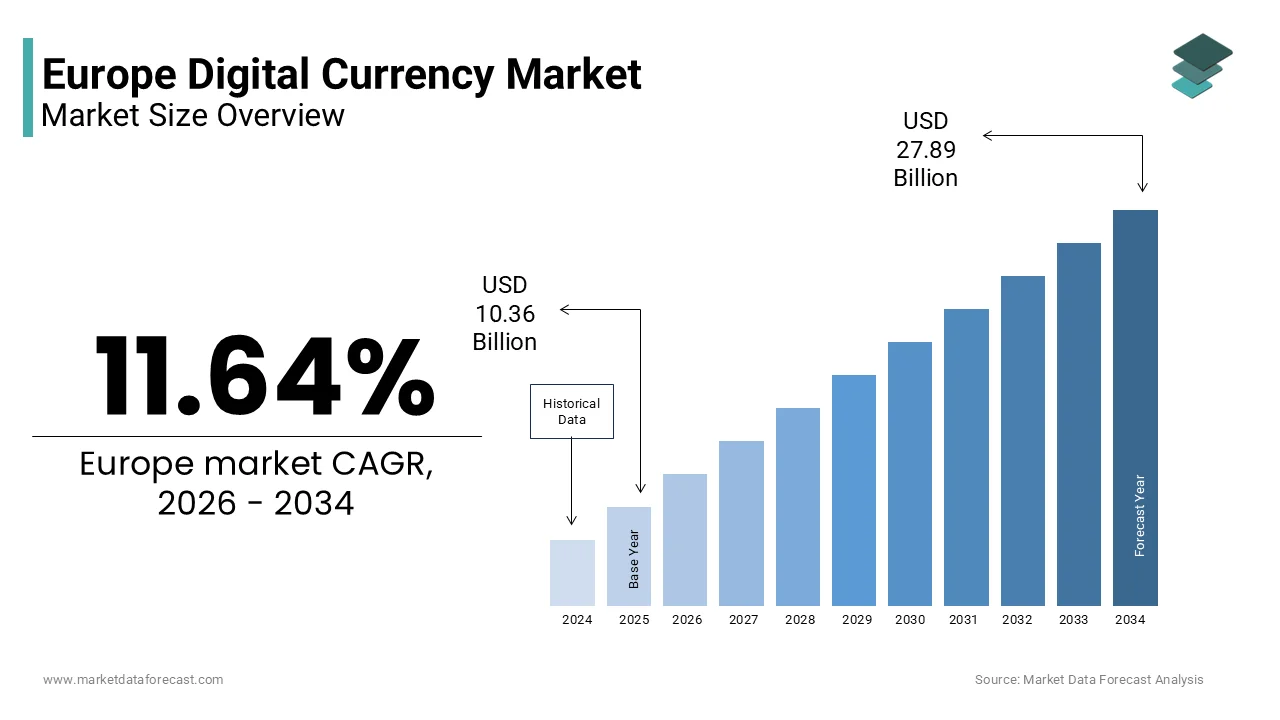
The Europe digital currency market was valued at USD 10.36 billion in 2025 and is estimated to reach USD 11.56 billion in 2026, and is projected to reach USD 27.89 billion by 2034, growing at a CAGR of 11.64% during the forecast period. The growth of the Europe digital currency market is driven by increasing adoption of blockchain technology, rising interest in decentralized finance, and growing acceptance of digital assets for trading and investment purposes. Expanding fintech ecosystems, regulatory advancements, and increasing institutional participation are further supporting market expansion. In addition, the growing use of digital currencies for cross border transactions, payments, and portfolio diversification is accelerating demand across Europe.
Key Market Trends
- Increasing adoption of cryptocurrencies and blockchain based financial solutions across retail and institutional users.
- Rising demand for decentralized finance platforms enabling secure and transparent financial transactions.
- Growing integration of digital currencies into mainstream financial services including payments and remittances.
- Increasing regulatory clarity across European countries supporting the expansion of digital asset markets.
- Expansion of digital trading platforms and mobile applications improving accessibility for individual investors.
Segmental Insights
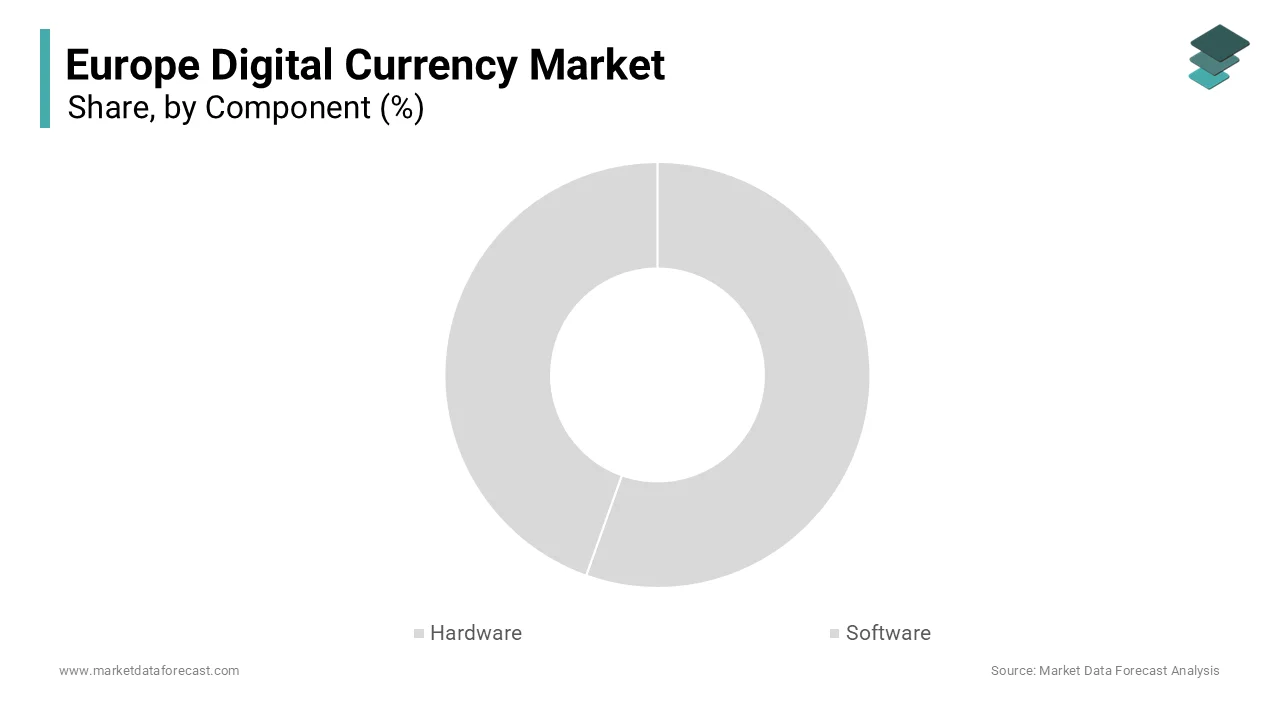
- Based on component, the software segment accounted for 66.5% of the Europe digital currency market share in 2025. The dominance of this segment is attributed to the widespread use of digital platforms, wallets, trading applications, and blockchain infrastructure supporting digital currency transactions.
- Based on currency type, the cryptocurrencies segment held 80.6% of the Europe digital currency market share in 2025. The strong adoption of cryptocurrencies is driven by their decentralized nature, investment potential, and increasing acceptance among users and institutions.
- Based on end user, the retail users and individuals segment captured 56.5% of the Europe digital currency market share in 2025. The growth of this segment is supported by increasing awareness, ease of access through mobile apps, and rising participation of individual investors in digital asset trading.
- Based on application, the trading and investment segment accounted for 66.4% of the Europe digital currency market share in 2025. The segment’s leadership is driven by high trading volumes, speculative investments, and growing interest in digital assets as alternative investment options.
Regional Insights
- The Europe digital currency market is experiencing rapid growth across several countries supported by increasing fintech adoption and digital financial innovation.
- Germany was the leading contributor to the Europe digital currency market, accounting for 23.2% of the regional market share in 2025. The country’s strong regulatory framework, advanced financial infrastructure, and growing adoption of digital assets among both retail and institutional investors are driving market growth.
- Other European countries are also witnessing rising adoption of digital currencies supported by expanding fintech ecosystems, increasing digital payments, and growing investor interest.
Competitive Landscape
The Europe digital currency market is highly competitive with the presence of several global and regional cryptocurrency exchanges, fintech companies, and blockchain technology providers. Companies are focusing on platform innovation, enhanced security features, and regulatory compliance to strengthen user trust and expand their customer base. Strategic partnerships, product diversification, and expansion of digital asset offerings are helping market players gain a competitive edge in the European market. Key companies operating in the Europe digital currency market include Binance, Coinbase, Kraken, Bitstamp, Bitpanda, eToro, Crypto.com, Ledger SAS, Bitfury Holding B.V., Zengo Ltd, Revolut, Tether Limited, CoinShares International Limited, and Börse Stuttgart Digital.
 Download Free Sample Report
Europe Digital Currency Market Size
The Europe digital currency market size was valued at USD 10.36 billion in 2025 and is projected to reach USD 27.89 billion by 2034 from USD 11.56 billion in 2026, growing at a CAGR of 11.64%.
Digital currency encompasses a complex ecosystem comprising decentralized cryptocurrencies, stablecoins pegged to fiat currencies, and the emerging framework for Central Bank Digital Currencies (CBDCs) led by the European Central Bank. This sector represents a fundamental shift in monetary infrastructure where value transfer occurs on distributed ledger technology rather than through traditional correspondent banking networks. The definition has evolved significantly with the implementation of the Markets in Crypto Assets regulation which provides a unified legal framework for issuers and service providers across the union. According to Eurostat, individuals in the European Union reported holding or using crypto assets in 2025, which is indicating a notable level of retail adoption despite market volatility. According to the European Banking Authority, the number of registered crypto asset service providers exceeded thousands of entities in 2024, which is reflecting a surge in formalized business operations under new compliance regimes. As per the European Commission, the digital euro project has progressed to the preparation phase, which is aiming to complement cash and ensure sovereign digital payment capabilities. This market functions as a critical testing ground for balancing financial innovation with consumer protection and anti-money laundering mandates. The integration of blockchain technology into settlement layers promises to reduce transaction times and lower costs for cross border payments within the single market.
MARKET DRIVERS
Implementation of Comprehensive Regulatory Frameworks Enhancing Institutional Confidence
The establishment of the Markets in Crypto Assets regulation that creates legal certainty and fosters institutional participation previously hindered by regulatory ambiguity is one of the major factors driving the growth of the Europe digital currency market. This legislation harmonizes rules across all member states regarding the issuance and trading of digital assets, thereby reducing fragmentation and compliance costs for operators. As per the European Securities and Markets Authority, financial institutions in the EU expressed increased willingness to integrate digital asset services following the finalization of these rules in 2024. The clear classification of tokens and strict requirements for reserve backing of stablecoins have mitigated risks associated with fraud and insolvency events seen in other jurisdictions. Banks and asset managers are now launching regulated custody solutions and investment products knowing they operate within a defined legal perimeter. The regulation also mandates robust consumer protection measures, which builds public trust and encourages broader adoption among risk averse demographics. By setting a global benchmark for crypto regulation, Europe has positioned itself as a safe haven for legitimate digital currency businesses seeking stability.
Surging Demand for Efficient Cross Border Payment Solutions
The escalating demand for faster and cheaper cross border payment mechanisms that traditional banking systems struggle to provide efficiently within the European economic zone is further contributing to the expansion of the Europe digital currency market. Businesses and consumers increasingly seek alternatives to the Swift network and correspondent banking chains that often involve high fees and settlement delays. As per the European Central Bank, cross border payment volumes within the EU grew in 2025, with a significant portion migrating to blockchain based settlement rails. Stablecoins and digital currencies offer near instantaneous finality and operate continuously, eliminating the friction of weekends and holidays inherent in legacy systems. Small and medium sized enterprises particularly benefit from reduced foreign exchange spreads and lower transaction costs when engaging in international trade. The rise of e commerce and the gig economy further accelerates this trend as freelancers and merchants require seamless global payout options. Digital currencies enable programmable money features such as smart contracts that automate payment conditions, enhancing efficiency for supply chain finance. As the digital single market deepens, the need for a native digital payment layer becomes indispensable, driving adoption across the continent.
MARKET RESTRAINTS
Persistent Concerns Regarding Money Laundering and Illicit Financial Flows
A significant impediment facing the Europe digital currency market is the enduring perception and reality of its utilization for money laundering, terrorist financing, and other illicit activities, which triggers stringent regulatory pushback. Despite advancements in tracking technologies, regulators remain wary of the pseudonymous nature of certain digital assets that can obscure the origin and destination of funds. As per the European Union Agency for Law Enforcement Cooperation, crypto related investigations increased in 2024, which is indicating the ongoing challenge of criminal exploitation. This association leads to de risking behaviours where traditional banks refuse to provide accounts to crypto businesses, effectively cutting them off from the fiat economy. The implementation of the Travel Rule requiring detailed sender and receiver information for transactions adds operational complexity and privacy concerns that deter some users. High profile hacks and exchange collapses continue to reinforce negative public sentiment, which is making mainstream adoption difficult among conservative populations. Compliance costs associated with anti-money laundering obligations are disproportionately high for smaller players, which is creating barriers to entry. The tension between privacy rights and transparency mandates creates a contentious environment that slows down the development of user-friendly applications.
Extreme Price Volatility Undermining Utility as a Medium of Exchange
The extreme price volatility characteristic of many digital currencies that severely limits their effectiveness as a reliable medium of exchange or unit of account for daily transactions is further hindering the growth of the Europe digital currency market. Merchants and consumers hesitate to adopt assets that can fluctuate wildly in value within hours, fearing significant financial loss or accounting complexities. As per the European Consumer Organisation, surveyed Europeans cited price instability as a primary reason for avoiding the use of cryptocurrencies for purchases in 2025. This volatility stems from speculative trading dynamics, lack of intrinsic value anchors, and sensitivity to macroeconomic news and regulatory announcements. While stablecoins attempt to address this issue, they introduce counterparty risks and dependency on underlying fiat reserves. Businesses find it challenging to price goods and services in volatile assets, which is leading to a reliance on immediate conversion to fiat, which negates some efficiency gains. The psychological barrier of watching purchasing power erode rapidly discourages long-term holding and usage for non-speculative purposes. Until digital currencies achieve greater price stability either through algorithmic mechanisms or wider adoption, their role in the real economy will remain limited to speculation and niche use cases rather than widespread tender.
MARKET OPPORTUNITIES
Development and Deployment of the Digital Euro by the European Central Bank
The imminent launch of the digital euro is a promising opportunity for the Europe digital currency market. This initiative aims to ensure that public money remains available in the digital age fostering trust and resilience in the payment system against private monopolies. According to the European Central Bank the digital euro could serve over 340 million citizens offering offline payment capabilities and enhanced privacy features not available in current commercial solutions. The project creates a vast ecosystem for developers to build innovative applications on top of a secure public infrastructure stimulating fintech growth. It offers a viable alternative to foreign dominated payment schemes ensuring strategic autonomy for the European economy. Merchants stand to benefit from lower acceptance costs compared to current card schemes while consumers gain a universal payment method accepted across all member states. The digital euro also enables programmable features for specific use cases such as conditional payments in supply chains or automated tax collection. By setting the standard for central bank digital currencies globally Europe can export its technology and regulatory frameworks strengthening its geopolitical influence. This state backed initiative legitimizes the entire sector and bridges the gap between traditional finance and the digital future.
Integration of Tokenized Real-World Assets on Blockchain Networks
The tokenization of real-world assets represents a significant opportunity to unlock liquidity and efficiency in traditionally illiquid markets such as real estate bonds and private equity. By representing physical assets as digital tokens on a blockchain issuers can enable fractional ownership lower minimum investment thresholds and facilitate instantaneous settlement. Data from the European Fund and Asset Management Association suggests that the tokenized asset market in Europe could reach 1 trillion euros by 2030 driven by demand for streamlined processes. This innovation reduces intermediaries lowers administrative costs and enhances transparency through immutable record keeping. Institutional investors are increasingly exploring tokenized funds to improve operational efficiency and access new investor bases globally. Smart contracts automate dividend distributions and compliance checks reducing manual errors and processing times. The ability to trade assets 24*7 on secondary markets enhances liquidity for assets that were previously locked up for long periods. Regulatory sandboxes in countries like France and Germany are already facilitating pilot projects that demonstrate the viability of this approach. As infrastructure matures and legal frameworks adapt, the tokenization of assets will likely become a standard practice revolutionizing capital market and expanding the utility of digital currency infrastructure beyond simple payments.
MARKET CHALLENGES
Complexities in Achieving Interoperability Across Diverse Blockchain Protocols
A profound challenge confronting the Europe digital currency market is the technical and operational complexity of achieving seamless interoperability among the multitude of disparate blockchain protocols and legacy financial systems. The current landscape is fragmented with numerous networks operating in isolation creating silos that hinder the free flow of value and data across the ecosystem. The European Commission highlighted in a 2025 technical assessment that the lack of common standards for cross chain communication increases transaction costs and introduces significant security vulnerabilities. Users often face cumbersome processes involving multiple bridges and conversions to move assets between different chains which exposes them to hacking risks and slippage. Financial institutions struggle to integrate these diverse technologies with their existing core banking systems which were not designed for distributed ledger interaction. The absence of a unified protocol for identity verification and transaction reporting complicates compliance efforts and regulatory oversight. Developing universal standards requires extensive collaboration among competitors which is often slow and fraught with conflicting interests. Without robust interoperability solutions the promise of a frictionless digital economy remains elusive limiting the scalability and user experience of digital currency applications. Bridging these technological divides is essential for realizing the full potential of the market but remains a formidable engineering and governance hurdle.
Intense Competition from Global Tech Giants and Non-European Stablecoin Issuers
The intense competition from dominant global technology companies and non-European stablecoin issuers is further challenging the expansion of the Europe digital currency market. Large American and Asian tech firms possess vast user bases and established payment ecosystems that can rapidly scale digital currency solutions potentially overshadowing local European initiatives. The European Systemic Risk Board warned in 2024 that widespread adoption of foreign issued stablecoins could lead to currency substitution risks undermining the effectiveness of European monetary policy. These global players benefit from network effects and massive capital resources allowing them to offer services at below cost prices to capture market share quickly. European startups and banks find it difficult to compete with the convenience and integration offered by these tech giants who embed payments seamlessly into social media and e commerce platforms. The dominance of non-euro denominated stablecoins in trading pairs and decentralized finance applications further entrenches the influence of external currencies. Regulators face the difficult task of fostering innovation while preventing market concentration by foreign entities that could pose systemic risks. Ensuring that European digital currency solutions remain competitive and relevant in the face of such overwhelming global pressure requires strategic coordination and supportive policies that level the playing field for domestic actors.
REPORT COVERAGE
| REPORT METRIC | DETAILS |
| Market Size Available | 2025 to 2034 |
| Base Year | 2025 |
| Forecast Period | 2026 to 2034 |
| CAGR | 11.64% |
| Segments Covered | By Component, Currency Type, End User, Application, and Region |
| Various Analyses Covered | Global, Regional, & Country Level Analysis; Segment-Level Analysis; DROC, PESTLE Analysis; Porter’s Five Forces Analysis; Competitive Landscape; Analyst Overview of Investment Opportunities |
| Regions Covered | UK, France, Spain, Germany, Italy, Russia, Sweden, Denmark, Switzerland, Netherlands, Turkey, and the Czech Republic |
| Market Leaders Profiled | Binance, Coinbase, Kraken, Bitstamp, Bitpanda, eToro, Crypto.com, Ledger SAS, Bitfury Holding B.V., Zengo Ltd, Revolut, Tether Limited, CoinShares International Limited, and Börse Stuttgart Digital |
SEGMENTAL ANALYSIS
By Component Insights
The software segment dominated the market by accounting for 66.5% of the European market share in 2025. The growth of the software segment in the European market is attributed to the fundamental nature of digital currencies that rely entirely on code protocols, blockchain ledgers, and cryptographic algorithms rather than physical mediums. The widespread adoption of cloud-based wallet solutions and exchange platforms that enable seamless transaction processing without the need for specialized hardware devices is further contributing to the growth of the software segment in the European market.
As per the European Central Bank digital finance report from 2023, cryptocurrency transactions within the Eurozone were largely executed through software interfaces including mobile applications and web portals due to their accessibility and ease of use. Furthermore, the development of smart contract capabilities and decentralized finance protocols requires sophisticated software infrastructure to automate complex financial agreements securely.
As per the European Banking Authority in 2024, financial institutions investing in software based digital asset management systems reported significant operational cost reductions compared to maintaining physical vaults or hardware security modules. The ability to update software remotely to address security vulnerabilities and comply with evolving regulatory frameworks further solidifies the leadership of this segment. Organizations increasingly view software solutions as scalable assets that can adapt quickly to market fluctuations and integrate with existing banking ecosystems across the continent.
On the other side, the hardware segment is expected to exhibit a promising CAGR of 20.2% over the forecast period in the European market due to the escalating cybersecurity threats and the increasing demand for cold storage solutions among institutional investors and high net worth individuals. The rising frequency of online hacking incidents and phishing attacks that have prompted users to seek offline storage methods that isolate private keys from internet connectivity is further aiding the expansion of the hardware segment in the European market.
As per the European Union Agency for Cybersecurity annual threat landscape report from 2023 cyberattacks targeting digital asset exchanges increased significantly leading to financial losses and eroding trust in purely software based custody. This security crisis drives the adoption of hardware wallets and dedicated mining rigs that offer enhanced protection through physical isolation and tamper resistant designs. Additionally the professionalization of cryptocurrency mining operations in regions with abundant renewable energy sources necessitates advanced hardware capable of high efficiency computational power.
As per the Cambridge Centre for Alternative Finance in 2024 European mining facilities utilizing next generation application specific integrated circuit hardware achieved notable improvements in energy efficiency and hashing rates. The trend toward institutional grade custody solutions also propels demand for enterprise level hardware security modules that meet rigorous compliance standards. This focus on tangible security assets ensures robust growth for the hardware sector as stakeholders prioritize asset preservation over convenience.
By Currency Type Insights
The cryptocurrencies segment had the leading share of 80.6% of the European market in 2025. The supremacy of cryptocurrencies segment in the European market is attributed to their established presence, first mover advantage, and widespread acceptance as both speculative assets and mediums of exchange across the continent. The mature ecosystem of exchanges, wallets, and payment gateways that facilitate easy access for retail and institutional participants alike is further driving the dominance of cryptocurrencies segment in the European market.
As per the Chainalysis Geography of Cryptocurrency Report from 2023, Western Europe accounted for a significant portion of global cryptocurrency adoption with millions of active addresses engaging in daily transactions. The decentralized nature of these assets appeals to users seeking alternatives to traditional fiat currencies particularly in times of economic uncertainty or inflationary pressure. Furthermore, the vibrant community of developers continuously innovating on blockchain protocols ensures sustained relevance and utility for major cryptocurrencies.
As per the European Securities and Markets Authority in 2024 trading volumes for major cryptocurrencies on regulated European platforms surged considerably reflecting growing investor confidence and liquidity. The integration of cryptocurrencies into mainstream financial products such as exchange traded funds and futures contracts further cements their dominance. Their role as the foundational layer for decentralized applications and non-fungible tokens creates a network effect that reinforces their market leadership despite the emergence of new digital currency forms.
The central bank digital currency segment represents the fastest growing segment in the Europe digital currency market and is expected to record a CAGR of 29.2% over the forecast period owing to the aggressive pilot programs and strategic initiatives launched by major European central banks to modernize monetary systems and maintain sovereignty in the digital age. The ongoing development and testing of the digital euro by the European Central Bank that aims to provide a secure and efficient public digital payment method for all citizens is further contributing to the growth of the central bank digital currency segment in the European market.
As per the European Central Bank progress report on the digital euro from 2024 the preparation phase has entered advanced stages with multiple commercial banks participating in live trials to assess technical feasibility and user experience. Governments view CBDCs as essential tools for enhancing financial inclusion, reducing settlement times, and improving the transmission of monetary policy. Additionally, the desire to counterbalance the influence of private stablecoins and foreign digital currencies motivates national authorities to accelerate deployment timelines.
As per the Bank for International Settlements in 2024 most central banks in Europe were actively exploring or piloting CBDC projects, which is signalling a paradigm shift in public money infrastructure. The potential for programmable money features that enable automated tax collection and targeted fiscal stimulus further accelerates interest. This state backed momentum ensures that CBDCs will emerge as a critical component of the future European financial landscape.
By End User Insights
The retail users and individuals segment constituted the largest end user group in the Europe Digital Currency Market and held 56.5% of the regional market share in 2025. The dominance of retail users and individuals segment in the European market is attributed to the increasing accessibility of user friendly mobile applications and exchange platforms that lower the barrier to entry for non-technical users. The rising awareness and acceptance of digital assets as viable investment vehicles and alternative payment methods among the general population is further boosting the dominance of the retail users and individuals segment in the European market.
As per the European Commission survey on fintech adoption in 2023 EU citizens reported owning or using cryptocurrencies primarily for investment purposes or cross border remittances. The ease of purchasing fractional amounts of digital currencies allows individuals with limited capital to participate in the market fostering broad based adoption. Furthermore, the integration of crypto payment options by major e commerce retailers and service providers encourages everyday usage for goods and services.
As per Statista in 2024 the number of digital wallet users in Europe showed a steady upward trend in consumer engagement. The appeal of decentralized finance yields and staking rewards also attracts retail investors seeking higher returns than traditional savings accounts. Their collective volume of small transactions aggregates to form the bulk of market activity solidifying their position as the primary drivers of demand.
The financial institutions segment is witnessing the most rapid growth in adoption of digital currency technologies within the European market and is estimated to register a CAGR of 25.1% over the forecast period owing to the clarifying regulatory environment and the strategic imperative for traditional lenders to innovate their service offerings and the implementation of the Markets in Crypto Assets regulation which provides legal certainty and operational guidelines for banks to offer custody and trading services legally.
As per the European Banking Federation statement from 2024, major European banks announced plans to launch digital asset custody solutions or tokenized deposit products. These institutions leverage digital currencies to streamline cross border settlements, reduce counterparty risk, and enhance liquidity management through blockchain technology. Additionally, the demand from corporate clients for treasury management solutions involving stablecoins and tokenized assets pushes banks to develop relevant infrastructure.
As per McKinsey and Company in 2024, financial institutions adopting blockchain based settlement systems reported notable reductions in transaction costs and faster finality for international transfers. The convergence of traditional finance and decentralized protocols creates new revenue streams and efficiency gains. This institutional validation marks a pivotal shift from speculation to utility driving exponential growth in this segment.
By Application Insights
The trading and investment segment occupied the major share of 66.4% of the regional market in 2025. The growth of trading and investment segment in the European market is attributed to the high volatility of digital assets which attracts speculators and long term holders seeking substantial capital appreciation. The sophisticated infrastructure of regulated exchanges and derivative markets that enable leveraged trading, hedging strategies, and portfolio diversification is further driving the growth of the trading and investment segment in the European market.
As per the European Securities and Markets Authority market data from 2023 crypto assets on EU registered platforms demonstrated intense market activity. Investors utilize digital currencies as a hedge against inflation and currency devaluation particularly during periods of macroeconomic instability. Furthermore the emergence of institutional grade investment products such as exchange traded notes and futures contracts has democratized access for traditional investors.
As per the London Stock Exchange Group in 2024 listings of crypto related financial instruments increased significantly reflecting surging demand for regulated investment vehicles. The ability to trade twenty four seven across global markets offers unparalleled flexibility compared to traditional stock exchanges. This speculative and allocative utility ensures that trading remains the core function of the digital currency ecosystem driving liquidity and price discovery mechanisms across the continent.
The payments and remittances segment is emerging as the fastest growing application segment in the Europe digital currency market and is anticipated to record a CAGR of 25.5% over the forecast period owing to the urgent need to reduce the high costs, slow processing times associated with traditional cross border money transfers and the adoption of stablecoins and central bank digital currencies that offer price stability and instant settlement capabilities ideal for commercial transactions and migrant remittances.
As per the World Bank Remittance Prices Worldwide database from 2023 the average cost of sending money to Europe remained high prompting consumers and businesses to seek cheaper blockchain based alternatives. Digital currencies enable peer to peer transfers that bypass intermediary banks significantly lowering fees and accelerating fund availability. Additionally, the integration of crypto payment gateways by major online merchants and gig economy platforms facilitates seamless checkout experiences for international customers.
As per the European Payments Council in 2024, blockchain based payment transactions grew substantially as merchants recognized the benefits of reduced chargeback risks and lower processing fees. The rise of freelance work and global supply chains further propels demand for efficient borderless payment solutions. This practical utility transforms digital currencies from speculative assets into essential tools for global commerce.
REGIONAL ANALYSIS
Germany Digital Currency Market Analysis
Germany was leader in the Europe digital currency market in 2025 with 23.2% of the regional market share. The dominance of Germany in the European market is driven by country's robust financial sector, and progressive regulatory framework under the Federal Financial Supervisory Authority. German enterprises and investors prioritize security and compliance, driving the demand for regulated custody solutions and institutional grade trading platforms. As per the German Federal Bank annual report from 2023, German financial institutions-initiated pilots or launched services related to blockchain and digital currencies, reflecting deep market integration. The strong manufacturing base also explores tokenization of supply chain assets and industrial payments using digital currencies. Furthermore, the government's proactive stance on defining legal classifications for crypto assets provides clarity that encourages mainstream participation. As per the German Crypto Association data from 2024, the number of licensed crypto custodians in Germany increased significantly, indicating a booming infrastructure sector. The presence of major fintech hubs in Berlin and Frankfurt fosters collaboration between traditional banks and blockchain startups. This combination of regulatory certainty, technological expertise, and capital availability, solidifies Germany's position as the primary market for digital currency solutions in Europe.
United Kingdom Digital Currency Market Analysis
The United Kingdom maintained a strong second position in the regional market in 2025. The growth of the UK in the European market is majorly driven by its status as a global fintech powerhouse and its ambitious strategy to become a crypto hub post Brexit. The UK market is characterized by a high concentration of cryptocurrency exchanges, venture capital firms, and blockchain developers, who benefit from a supportive government approach. As per the Office for National Statistics in 2023, the UK tech sector attracted record levels of investment, with a significant portion flowing into digital asset infrastructure and Web3 projects. The Treasury's commitment to establishing a comprehensive regulatory regime for stablecoins and crypto assets enhances investor confidence, and attracts international players. Additionally, the diverse population and extensive international trade links create strong demand for efficient cross border payment solutions using digital currencies. As per Innovate UK in 2024, blockchain related startups launching in London increased considerably, highlighting the vibrant entrepreneurial ecosystem. The Bank of England's advanced research into a digital pound further stimulates market activity and public discourse. The focus on balancing innovation with consumer protection ensures that the UK remains a dynamic and forward-looking market for digital currency technologies.
France Digital Currency Market Analysis
France is anticipated to account for a promising share of the Europe digital currency market during the forecast period owing to the strong government initiatives promoting blockchain technology and digital asset regulation. The French market is unique due to its early adoption of a voluntary licensing regime for digital asset service providers, which has attracted numerous reputable firms to establish operations in Paris. Major sectors such as luxury goods, banking, and aerospace, are exploring the use of tokenized assets and digital payments to enhance transparency and efficiency. As per INSEE in 2023, the number of registered digital asset service providers in France grew significantly, reflecting the success of the regulatory framework. The government's France 2030 investment plan includes specific funding for blockchain research and development, aiming to strengthen national technological sovereignty. Furthermore, the thriving startup ecosystem contributes to the rapid uptake of innovative digital currency applications in areas like gaming and identity management. As per the French Prudential Supervision and Resolution Authority in 2024, the volume of transactions processed by licensed entities increased notably, demonstrating growing market maturity. The emphasis on creating a safe and compliant environment ensures steady growth for digital currency adoption across various industries.
Switzerland Digital Currency Market Analysis
Switzerland is estimated to showcase a prominent CAGR in the Europe digital currency market during the forecast period due to its reputation as "Crypto Valley" and its favorable legal and tax environment. The Swiss market is renowned for its high concentration of blockchain foundations, decentralized autonomous organizations, and crypto native banks, that operate with exceptional regulatory clarity. The primary driver is the long-standing support from cantonal authorities and the federal government, which have established clear guidelines for initial coin offerings and token sales. As per the Swiss State Secretariat for Economic Affairs in 2023, the canton of Zug hosted a large number of blockchain companies, generating substantial economic value annually. The strong tradition of banking secrecy, evolving into digital privacy, attracts high net worth individuals and institutional investors seeking secure asset management solutions. Additionally, the integration of crypto payments in local commerce and public transport systems demonstrates real world utility. As per the Swiss Financial Market Supervisory Authority in 2024, the approval rate for new digital asset licenses remained high, encouraging continuous market entry. The synergy between traditional finance and decentralized innovation makes Switzerland a global benchmark for digital currency ecosystems.
Netherlands Digital Currency Market Analysis
The Netherlands is expected to showcase a healthy CAGR in the Europe digital currency market over the forecast period owing to its high digital literacy and progressive approach to financial technology adoption. The Dutch market is characterized by a collaborative environment, where regulators, banks, and startups work together to develop practical digital currency solutions. The logistics and agricultural sectors, which are vital to the Dutch economy, are increasingly experimenting with tokenized assets and smart contracts to optimize supply chain financing and trade settlement. As per Statistics Netherlands in 2023, a large portion of the population reported familiarity with cryptocurrencies, indicating a high level of public awareness and readiness for adoption. The presence of major international corporations and fintech hubs in Amsterdam drives demand for efficient cross border payment systems and treasury management tools. Furthermore, the Dutch Central Bank's active involvement in European Central Bank digital currency projects positions the country at the forefront of public sector innovation. As per the Holland FinTech association report in 2024, blockchain based payment pilots in the agrifood sector increased significantly, showcasing sector specific applications. The emphasis on sustainability and circular economy principles also influences the development of green blockchain solutions. This forward-thinking mindset ensures that the Netherlands remains a key player in the evolution of the European digital currency landscape.
COMPETITIVE LANDSCAPE
The competition within the Europe digital currency market is characterized by intense rivalry between global exchanges local fintech startups and traditional financial institutions entering the space. Major players compete fiercely to secure regulatory licenses first as early compliance provides a significant first mover advantage under the new unified framework. The landscape features a battle for liquidity where platforms offer lower fees and deeper order books to attract high volume traders and market makers. Differentiation is often achieved through superior user experience mobile app functionality and the breadth of available digital assets for trading. Trust and security serve as critical battlegrounds since high profile hacks can instantly erode customer confidence and market share. Traditional banks are leveraging their existing customer bases to launch proprietary crypto services creating pressure on pure play exchanges to innovate faster. Strategic acquisitions of smaller niche players allow larger firms to quickly expand their technological capabilities and geographic reach. The race to integrate central bank digital currency infrastructure upon launch will define the next phase of competitive dynamics. Talent acquisition for blockchain developers and compliance experts remains a key factor as specialized skills are scarce. Regulatory arbitrage opportunities are diminishing forcing all participants to compete on service quality and operational excellence rather than lax oversight.
KEY MARKET PLAYERS
Some of the notable key players in the Europe digital currency market are
- Binance
- Coinbase
- Kraken
- Bitstamp
- Bitpanda
- eToro
- Crypto.com
- Ledger SAS
- Bitfury Holding B.V.
- Zengo Ltd
- Revolut
- Tether Limited
- CoinShares International Limited
- Börse Stuttgart Digital
Top Players in the Market
- Coinbase Global operates as a leading cryptocurrency exchange platform in Europe by providing a secure and compliant environment for users to trade and store digital assets. The company contributes globally by setting high standards for regulatory adherence and user safety which encourages institutional participation. Recent actions to strengthen their market position include obtaining full regulatory approval under the Markets in Crypto Assets framework in multiple European jurisdictions. They have expanded their staking services and introduced advanced trading features tailored for European retail and professional clients. Coinbase actively engages with European policymakers to shape favorable legislation that fosters innovation while protecting consumers. Their investment in local customer support teams and euro denominated pairs enhances accessibility for the regional population. By prioritizing transparency and security they continue to build trust among users who seek reliable access to the digital economy. This strategic focus ensures their sustained relevance and growth within the competitive European landscape.
- Binance Holdings maintains a significant presence in the Europe digital currency market through its extensive range of trading pairs and liquidity provision that serves millions of users across the continent. The group contributes globally by driving adoption through educational initiatives and a robust ecosystem of financial products including savings and lending. Recent efforts to bolster their standing involve rigorous compliance upgrades to meet new European regulatory requirements and the acquisition of local licenses in key markets like France and Italy. They have launched specific euro stablecoin pairs to facilitate easier fiat on ramps for European traders. Binance also invests heavily in blockchain infrastructure projects that support scalability and interoperability within the region. Their commitment to working with law enforcement agencies helps combat illicit activities and improves industry reputation. By offering low fees and high performance they attract a diverse user base ranging from beginners to sophisticated algorithmic traders. These strategic moves solidify their position as a dominant force in the evolving European digital asset sector.
- Kraken Financial distinguishes itself in the Europe digital currency market by emphasizing security transparency and superior customer service which appeals to discerning institutional and retail investors. The company contributes globally by pioneering proof of reserves audits and advocating for clear regulatory frameworks that protect market integrity. Recent actions to strengthen their market position include securing banking charters and payment institution licenses in several European countries to offer seamless fiat integration. They have expanded their futures and margin trading capabilities specifically for European clients while maintaining strict risk management protocols. Kraken actively partners with local fintech firms to develop innovative payment solutions that bridge traditional finance with crypto assets. Their dedication to sustainability through carbon neutral operations resonates with environmentally conscious European consumers. By focusing on long term stability rather than short term gains they have cultivated a loyal community of users. This reputation for reliability and ethical conduct ensures their continued growth and influence in the maturing European digital currency ecosystem.
Top Strategies Used by Key Market Participants
Key players in the Europe digital currency market primarily employ strategies focused on rigorous regulatory compliance and license acquisition to operate legally under the new Markets in Crypto Assets framework. Companies frequently engage in strategic partnerships with traditional banks and payment processors to streamline fiat on ramps and off ramps for users. Another prevalent strategy involves the development of institutional grade custody solutions that offer insurance and advanced security features to attract large scale investors. Firms are increasingly investing in educational campaigns to demystify digital assets and build trust among conservative European consumers. Expansion of product offerings to include staking derivatives and decentralized finance tools helps retain users within their ecosystems. Localization of platforms with native language support and euro denominated trading pairs is crucial for capturing market share across diverse regions. Participants also prioritize cybersecurity enhancements and regular third party audits to prevent breaches and maintain user confidence. These approaches collectively drive adoption and stability in a rapidly evolving regulatory environment.
Europe Digital Currency Market News
- In March 2024, Coinbase Global, a cryptocurrency exchange platform, obtained full regulatory registration in France. This approval is anticipated to enhance legal compliance and strengthen the Europe digital currency market presence.
- In June 2024, Binance Holdings, a global crypto exchange, launched dedicated euro stablecoin trading pairs for European users. This launch is anticipated to improve fiat accessibility and strengthen the Europe digital currency market presence.
- In September 2023, Kraken Financial, a digital asset broker, secured a banking license in Germany to offer integrated services. This license is anticipated to expand product offerings and strengthen the Europe digital currency market presence.
- In November 2024, Bitstamp, a Luxembourg based exchange, partnered with a major European bank for custody solutions. This partnership is anticipated to boost institutional trust and strengthen the Europe digital currency market presence.
- In February 2024, Blockchain.com, a wallet provider, introduced a compliant staking service for EU residents. This introduction is anticipated to diversify revenue streams and strengthen the Europe digital currency market presence.
MARKET SEGMENTATION
This research report on the European digital currency market has been segmented and sub-segmented based on categories.
By Component
- Hardware
- Software
By Currency Type
- Central Bank Digital Currency CBDC
- Stablecoins Asset backed
- Cryptocurrencies Permissionless
By End User
- Government and Public Sector
- Financial Institutions
- Enterprises Non financial
- Individual Retail
By Application
- Payments and Remittances
- Trading and Investment
- Decentralised Applications DApps and Smart Contracts
- Others NFTs Gaming Metaverse
By Country
- UK
- France
- Spain
- Germany
- Italy
- Russia
- Sweden
- Denmark
- Switzerland
- Netherlands
- Turkey
- Czech Republic
- Rest of Europe