Europe Energy Bar Market Size, Share, Trends & Growth Forecast Report – Segmented By Product Type (Protein Bars, Cereal and Granola Bars, and More), Flavor Profile, Price Range, Distribution Channel, and Country (UK, France, Spain, Germany, Italy, Russia, Sweden, Denmark, Switzerland, Netherlands, Turkey, Czech Republic & Rest of Europe), Industry Analysis From 2026 to 2034
Market Size, 2025
$1.15 BnMarket Estimate, 2026
$1.24 BnMarket Forecast, 2034
$2.20 BnCAGR, 2026–2034
7.46%Europe Energy Bar Market Report Summary
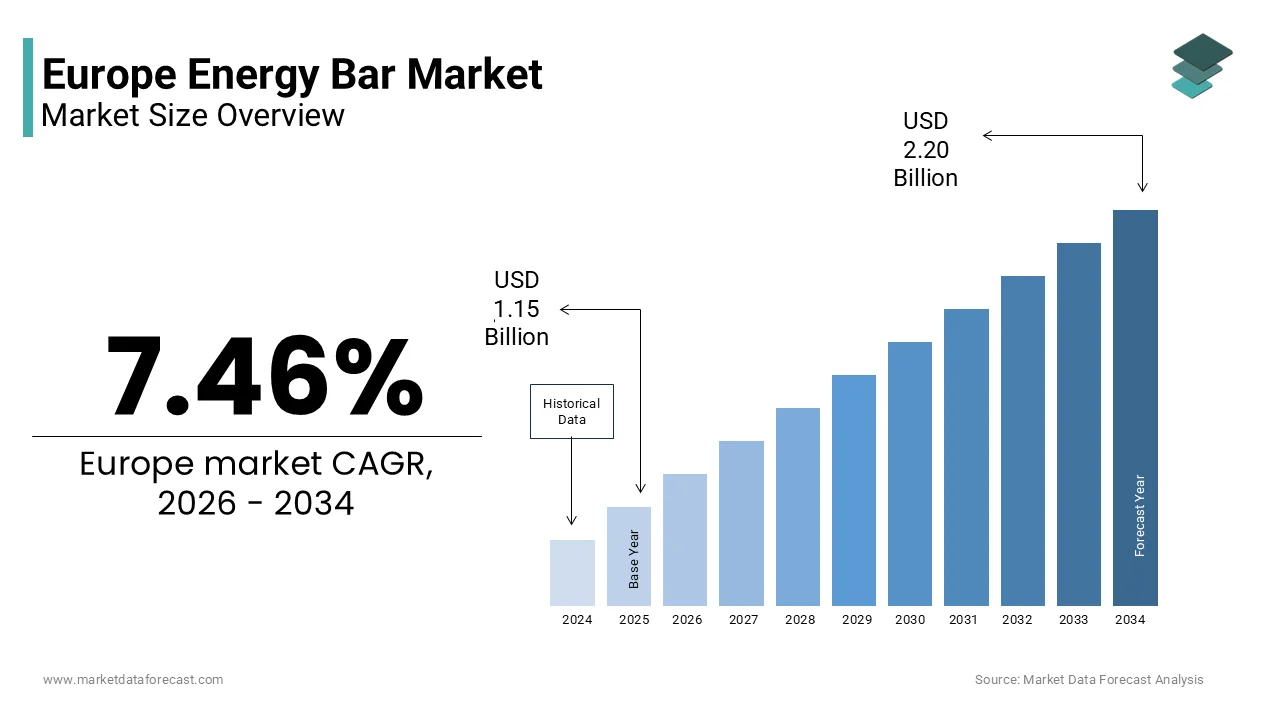
The Europe energy bar market was valued at USD 1.15 billion in 2025 and is estimated to reach USD 1.24 billion in 2026, with projections indicating growth to USD 2.20 billion by 2034, expanding at a CAGR of 7.46% during the forecast period. Market growth is driven by rising health consciousness, increasing demand for convenient on-the-go nutrition, and the growing popularity of fitness, sports, and active lifestyles across Europe. Expanding interest in high-protein, functional, and clean-label food products, along with product innovation in flavors and formulations, is further supporting market expansion.
Key Market Trends
-
Growing demand for protein-rich energy bars among fitness enthusiasts and health-conscious consumers.
-
Increasing preference for chocolate-based and indulgent flavor profiles that balance taste with nutrition.
-
Rapid growth of premium energy bars featuring organic ingredients, plant-based proteins, and functional benefits.
-
Strong role of supermarkets and hypermarkets as primary distribution channels due to wide product availability and brand visibility.
-
Rising influence of e-commerce and direct-to-consumer channels, especially for niche and premium brands.
Segmental Insights
- Based on product type, the protein bars segment dominated the Europe energy bar market by capturing 51.5% of the regional market share in 2025. The segment’s leadership is attributed to growing consumer focus on muscle recovery, weight management, and high-protein diets.
- Based on flavor profile, the chocolate-based bars segment held the largest share of 46.4% of the regional market in 2025, driven by strong consumer preference for familiar and indulgent tastes combined with functional nutrition.
- Based on price range, the premium segment is expected to register a robust CAGR of 10.2% over the forecast period. This growth is supported by increasing willingness to pay for high-quality ingredients, clean-label formulations, and specialized dietary benefits.
- Based on distribution channel, supermarkets and hypermarkets dominated the market by accounting for 60.3% of the Europe energy bar market share in 2025, owing to their extensive retail networks, promotional activities, and convenience for consumers.
Regional Insights
- The Europe energy bar market is witnessing steady growth across major economies, supported by evolving dietary habits, increasing urbanization, and rising awareness of functional foods.
- Germany led the European energy bar market in 2025, accounting for 21.2% of the regional market share.
Competitive Landscape
The Europe energy bar market is highly competitive, characterized by the presence of global food and beverage companies alongside specialized nutrition brands. Market players are focusing on product differentiation through innovative flavors, plant-based and high-protein formulations, and premium positioning. Strategic expansions, new product launches, and investments in sustainable packaging and clean-label ingredients are shaping competition. Key players operating in the Europe energy bar market include Nestlé S.A., The Hershey Company, Mars Inc., General Mills Inc., PepsiCo Inc., GlaxoSmithKline plc, Oatly Group AB, Clif Bar & Company, The Kellogg Company, Energizer Holdings Inc., Isostar (Eurogroup), MyProtein (The Hut Group), BATA (Better Energy Health & Nutrition), Uptown Energy, and Schär AG/SPA, among others.
Europe Energy Bar Market Size
The Europe energy bar market size was valued at USD 1.15 billion in 2025 and is projected to reach USD 2.20 billion by 2034 from USD 1.24 billion in 2026, growing at a CAGR of 7.46%.
Energy bars are a dynamic category of portable, nutrient dense snacks engineered to deliver sustained caloric energy, protein, and functional ingredients tailored to active lifestyles, athletic performance, and on the go nutrition. These bars typically feature complex carbohydrates, plant or dairy based proteins, healthy fats, and added micronutrients or adaptogens, distinguishing them from conventional confectionery through both formulation and intended use. Unlike meal replacements, energy bars prioritize rapid digestibility and glycogen replenishment, which is making them integral to endurance sports, gym routines, and high intensity work environments. The European segment is defined by stringent compositional standards under EU nutrition and health claims regulation, which restricts unsubstantiated performance or energy related messaging unless scientifically validated. As per the European Food Safety Authority, any claim linking a product to reduced fatigue or enhanced physical capacity requires robust human intervention data. Consumer adoption is further shaped by cultural attitudes toward snacking; in countries like Germany and Sweden, functional bars are normalized as part of daily nutrition, whereas Southern Europe exhibits slower integration due to traditional meal structures. According to Eurostat, a significant share of European adults aged 18 to 45 engaged in moderate to vigorous physical activity at least twice weekly in 2024, which is creating a broad behavioral foundation for energy bar consumption beyond elite athletics. This convergence of regulatory precision, lifestyle evolution, and performance nutrition awareness positions the category as a key pillar in Europe’s expanding functional food ecosystem.
MARKET DRIVERS
Escalating Participation in Fitness and Outdoor Activities Drives Functional Snacking
The steady rise in recreational and competitive physical activity across European populations is primarily driving the growth of the European energy bar market. As per Eurostat, a significant share of adults in the European Union reported participating in sports or exercise at least once per week, with particularly high engagement in Nordic and Western European nations. In Sweden, many individuals aged 20 to 45 engage in regular endurance activities such as running, cycling, or hiking, creating consistent demand for portable, pre and post workout nutrition. This behavioral shift is amplified by urban planning policies that prioritize active mobility. According to the European Cyclists Federation, numerous European cities now feature dedicated cycling infrastructure, encouraging daily physical exertion among commuters. Consequently, consumers seek convenient sources of sustained energy that align with performance goals without resorting to sugary alternatives. Energy bars formulated with low glycemic carbohydrates like oats or dried fruit and slow-release proteins such as casein or pea isolate fulfill this need by stabilizing blood sugar and supporting muscle recovery. Gyms, outdoor retailers, and sports clubs across Germany, France, and the Netherlands have responded by stocking branded bars at points of exertion, normalizing their use as essential gear rather than discretionary snacks. This integration into active routines transforms energy bars from occasional treats into habitual dietary components, anchoring long term consumption patterns.
Demand for Clean Label and Plant Based Nutrition Reshapes Product Development
European consumers increasingly reject artificial additives and animal derived ingredients in favor of transparent, minimally processed, and plant centric formulations, which is a trend directly influencing energy bar innovation and further boosting the European energy bar market expansion. According to the European Food Information Council, a majority of adults across the EU prefer snacks made with recognizable ingredients, and many actively seek plant-based protein sources. This sentiment is especially pronounced in Germany and the Netherlands, where flexitarian diets have gained mainstream acceptance. In response, manufacturers are reformulating energy bars to exclude maltodextrin, artificial sweeteners, and dairy whey, replacing them with whole food bases like dates, almonds, pumpkin seeds, and pea or fava bean protein. Brands such as Foodspring in Germany and Trek in the United Kingdom have built market presence by emphasizing short ingredient lists and certifications like organic or vegan. As per the European Vegetarian Union, a notable share of the EU population now identifies as flexitarian, creating a vast addressable base for plant forward energy products. Additionally, retailers like Edeka and Ekoplaza dedicate shelf space to clean label functional snacks, reinforcing consumer trust through curated selection. This shift reflects a broader ethical stance on sustainability and health, compelling brands to align nutritional efficacy with ingredient integrity to remain competitive.
MARKET RESTRAINTS
Regulatory Restrictions on Energy and Performance Claims Limit Marketing Effectiveness
A significant restraint facing the Europe energy bar market stems from the European Union’s stringent controls on nutrition and health claims, particularly those implying enhanced physical performance or reduced fatigue. Under Regulation EC No 1924 2006, any assertion that a food contributes to increased energy or improved endurance must undergo scientific evaluation and explicit authorization by the European Food Safety Authority. As of 2025, EFSA has approved only a limited number of such claims, primarily linked to specific vitamins or caffeine at defined thresholds, and none that broadly endorse whole bars as performance enhancers. According to the European Commission’s official register of authorized claims, general references to energy support or fuel for activity are prohibited unless tied to a nutrient with an established physiological role. This regulatory caution forces manufacturers to rely on indirect language such as natural source of carbohydrates or high in protein, which fails to communicate functional relevance to performance-oriented consumers. As per a study published in the European Journal of Sport Science, many active European consumers misinterpret bar labels due to ambiguous phrasing, often assuming unverified benefits. The resulting communication gap undermines product differentiation in a crowded marketplace and discourages investment in performance specific research and development, as companies cannot legally highlight clinical or functional advantages even when substantiated by internal data.
High Sugar Content in Conventional Bars Triggers Consumer Backlash and Health Scrutiny
Despite their functional positioning, many energy bars continue to contain elevated levels of added sugars, which is contradicting broader public health goals and eroding consumer trust and further hampering the expansion of the European energy bar market. According to Germany’s Stiftung Warentest, a notable share of energy bars sold across major European retailers contained high sugar levels per serving, exceeding the daily limit recommended by the World Health Organization for discretionary intake. This discrepancy between perceived healthfulness and actual composition has sparked skepticism, particularly among health literate demographics. As per the European Consumer Organisation BEUC, the category has been criticized for health washing, noting that bars marketed as fitness fuel often rival chocolate bars in sugar density. In response, national health bodies such as Public Health England and France’s Santé Publique have intensified sugar reduction campaigns, indirectly pressuring brands to reformulate. However, reducing sugar while maintaining palatability and texture presents technical challenges, since sugar contributes to binding, moisture retention, and shelf stability. Substituting it with polyols or intense sweeteners often introduces digestive discomfort or artificial taste, limiting consumer acceptance. This formulation dilemma forces brands into a trade-off between nutritional integrity and sensory appeal, constraining innovation and deterring health-conscious buyers who now scrutinize labels more rigorously than ever before.
MARKET OPPORTUNITIES
Expansion into Non-Athletic Daily Wellness Segments Broadens Consumer Reach
The most promising opportunity for the Europe energy bar market lies in transcending its athletic niche to serve broader wellness and lifestyle needs, including mental focus, stress resilience, and balanced snacking. As per a 2024 survey by the European Mental Health Coalition, a significant share of working adults in urban centers report chronic fatigue and difficulty concentrating, driving interest in functional foods that support cognitive performance. Energy bars fortified with adaptogens like rhodiola, ashwagandha, or lion’s mane mushroom, alongside B vitamins and magnesium, are gaining traction as brain fuel for professionals and students. Companies such as Form Nutrition in the United Kingdom and Nutriboost in Sweden have launched bars explicitly targeting mental clarity and sustained alertness, leveraging clean label credentials and nootropic science. This diversification aligns with the European Commission’s Healthier Lives initiative, which encourages food innovation that addresses modern lifestyle stressors beyond physical exertion. Retail placement is also evolving, as bars are now featured not only in gyms but also in co working spaces, university cafeterias, and airport lounges, signaling their repositioning as cognitive and metabolic support tools. By decoupling from athletic performance and anchoring in everyday wellness, the category can access a far larger demographic, stretching from office workers to aging populations seeking vitality, thereby unlocking new growth vectors independent of sports participation rates.
Integration with Personalized Nutrition Platforms Enables Tailored Formulations
The convergence of digital health technologies and food manufacturing offers a transformative opportunity for the European energy bar market. According to the European Connected Health Alliance, millions of Europeans now use wearable devices that track heart rate variability, sleep quality, and caloric expenditure, generating rich datasets for nutrition personalization. Startups like Nourished in the Netherlands and Nutrino in Germany are leveraging this data to produce on demand energy bars with customized macronutrient ratios, protein sources, and functional additives. For instance, a marathon runner in Berlin might receive a bar high in maltodextrin and electrolytes post run, while a remote worker in Lisbon receives one with L theanine and slow-release fats for afternoon focus. These models often operate via subscription and modular blending systems, ensuring freshness and precision. Moreover, partnerships with corporate wellness programs, as per initiatives rolled out by Siemens and Novo Nordisk, embed personalized bars into employee health benefits, creating institutional demand. As reimbursement frameworks evolve to include digital nutrition interventions, these bespoke solutions could transition from premium novelties to standard components of preventive health strategies. This data driven approach not only enhances efficacy but also fosters deep consumer loyalty through relevance, which is positioning energy bars at the forefront of Europe’s precision nutrition revolution.
MARKET CHALLENGES
Ingredient Sourcing Volatility Threatens Cost Stability and Supply Continuity
A persistent challenge confronting the Europe energy bar market is the increasing volatility in the supply and pricing of key natural ingredients such as almonds, cocoa, seeds, and pea protein. Climate anomalies, droughts, and geopolitical disruptions have intensified supply chain fragility across global agricultural markets. According to the European Commission’s 2024 Agri Food Supply Chain Report, the price of almonds rose significantly year on year due to water shortages in California and Spain, which together supply most of the EU’s almond imports. Similarly, pea protein prices surged in 2024 following poor harvests in Northern France and Canada, the primary sources for European plant protein processors. These fluctuations directly impact production costs, forcing manufacturers to either absorb margins or pass increases to consumers in a price sensitive environment. Attempts to switch to alternative ingredients often compromise taste, texture, or nutritional balance, risking brand reputation. Furthermore, as per the EU’s deforestation regulation effective from 2025, stringent traceability requirements on commodities like cocoa and soy add compliance costs and logistical complexity. This dual pressure of climate risk and regulatory scrutiny makes consistent formulation and pricing exceptionally difficult, particularly for small and mid-sized brands lacking procurement scale, thereby constraining innovation and market responsiveness.
Consumer Confusion Over Nutritional Terminology Undermines Informed Choice
Despite growing interest in functional nutrition, widespread confusion among European consumers regarding terms like energy, protein, and low sugar significantly hampers informed purchasing decisions in the energy bar category, which is further challenging the growth of the European energy bar market. According to a 2024 study by the European Food Safety Authority’s consumer perception unit, only a minority of surveyed adults could accurately differentiate between bars intended for athletic recovery versus general snacking, and many misinterpreted no added sugar as meaning low in total sugars. This ambiguity is exacerbated by inconsistent front of pack labeling, while some bars highlight protein content others emphasize fiber or superfoods, creating a fragmented communication landscape. The absence of a standardized EU definition for energy bar further permits wide variation in caloric density and macronutrient composition, leading to mismatched expectations. As per national initiatives like France’s Nutri Score, attempts to bring clarity remain voluntary and do not capture functional intent. Consequently, first time buyers often experience dissatisfaction due to unexpected sugar spikes or inadequate satiety, reducing repeat purchase likelihood. Until harmonized labeling guidelines incorporate functional purpose alongside nutritional content, this cognitive gap will continue to limit category penetration and erode trust in product claims, particularly among new or health vulnerable consumers seeking reliable dietary support.
REPORT COVERAGE
| REPORT METRIC | DETAILS |
| Market Size Available | 2025 to 2034 |
| Base Year | 2025 |
| Forecast Period | 2026 to 2034 |
| CAGR | 7.46% |
| Segments Covered | By Product Type, Flavor Profile, Price Range, Distribution Channel, and Region |
| Various Analyses Covered | Global, Regional, & Country Level Analysis; Segment-Level Analysis; DROC, PESTLE Analysis; Porter’s Five Forces Analysis; Competitive Landscape; Analyst Overview of Investment Opportunities |
| Regions Covered | UK, France, Spain, Germany, Italy, Russia, Sweden, Denmark, Switzerland, Netherlands, Turkey, and the Czech Republic |
| Market Leaders Profiled | Nestlé S.A., The Hershey Company, Mars Inc., General Mills Inc., PepsiCo Inc., GlaxoSmithKline plc, Oatly Group AB, Clif Bar & Company, The Kellogg Company, Energizer Holdings Inc., Isostar (Eurogroup), MyProtein (The Hut Group), BATA (Better Energy Health & Nutrition), Uptown Energy, Schär AG/SPA, and other |
SEGMENTAL ANALYSIS
By Product Type Insights
The protein bars segment dominated the market by capturing 51.5% of the regional market share in 2025. The clear dominance of protein bars segment in the European energy bar market is driven by the confluence of fitness culture, muscle health awareness, and functional nutrition trends. The primary factor sustaining this leadership is the widespread integration of high protein diets into both athletic and general wellness routines across the region. As per Eurostat’s 2024 Physical Activity and Nutrition Survey, a majority of adults aged 18 to 45 in Western and Northern Europe consume protein enriched foods several times per week, with bars being the most convenient format. National dietary guidelines in countries like Germany and Sweden now explicitly recommend protein intake for active individuals, reinforcing consumption norms. Additionally, the aging demographic in Europe is increasingly adopting protein supplementation to combat sarcopenia. According to the European Society for Clinical Nutrition and Metabolism, muscle mass loss affects a significant share of adults over 65, creating secondary demand beyond fitness circles. Major retailers such as Carrefour and Tesco have responded by expanding refrigerated and ambient protein bar sections, often featuring endorsements from dietitians. This alignment of public health messaging, demographic need, and retail visibility solidifies protein bars as the cornerstone of the European energy bar landscape.
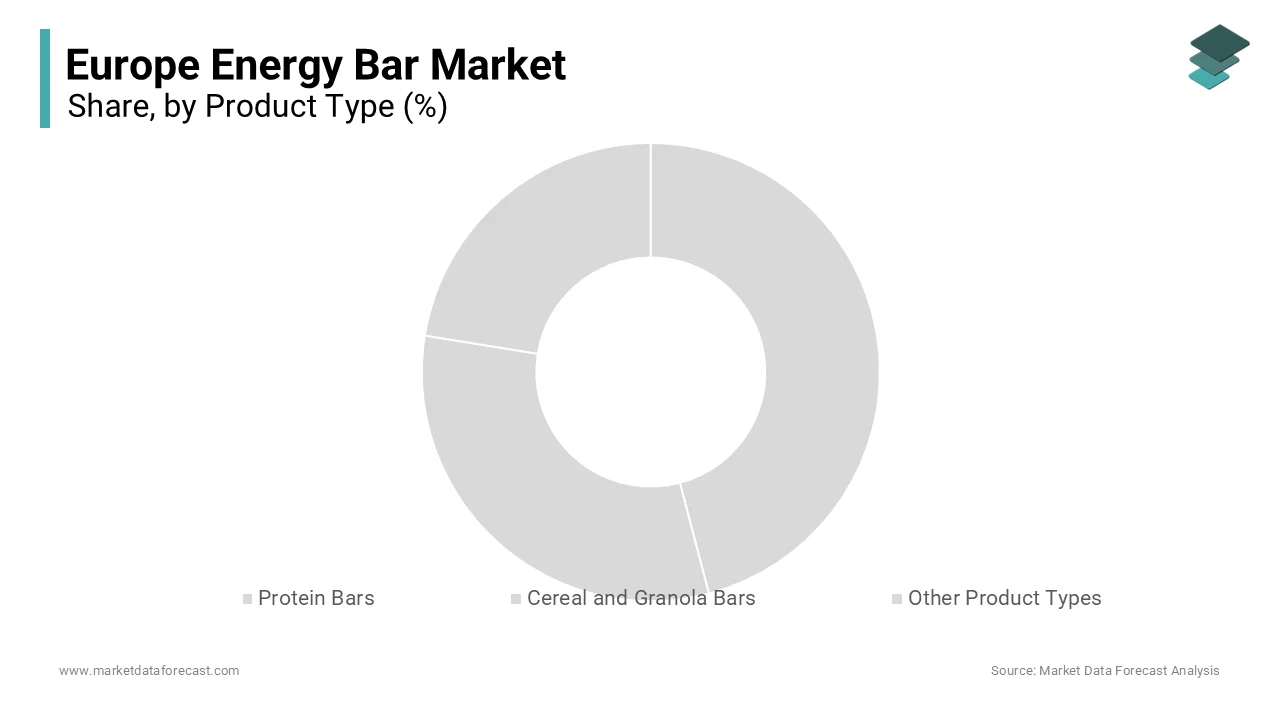
The cereal and granola bars segment is the fastest growing segment within the Europe energy bar market and is estimated to grow at a CAGR of 8.08% over the forecast period. This acceleration is not driven by athletic performance but by their repositioning as everyday wholesome snacks for families, students, and professionals seeking balanced energy without perceived fitness baggage. As per a 2024 consumer insights study by the European Food Information Council, many European parents view granola-based bars as healthier alternatives to traditional biscuits or chocolates for children’s school snacks. The segment benefits from strong familiarity with whole grain oats, honey, and dried fruit, ingredients deeply embedded in European breakfast traditions, making adoption effortless across age groups. In France and Italy, where processed protein products face skepticism, granola bars thrive due to their kitchen made perception and clean label appeal. Retailers like Edeka in Germany and Monoprix in France prominently feature them in breakfast and lunch aisles rather than sports sections, broadening accessibility. Moreover, manufacturers are innovating with functional additions like chia seeds, flaxseed, and omega 3 fortification, which is aligning with EU health priorities on heart and cognitive wellness. This strategic pivot from performance fuel to trusted daily nutrition enables cereal and granola bars to tap into mass market routines far beyond the gym, fueling sustained and inclusive growth.
By Flavor Profile Insights
The chocolate-based bars segment accounted for the dominating share of 46.4% of the regional market in 2025. The leading position of chocolate-based bars segment in this regional market is primarily due to deep rooted cultural affinity for cocoa and its unmatched sensory appeal in masking functional ingredients. The dominance stems from chocolate’s dual role as an indulgent treat and a versatile carrier for protein, fiber, and vitamins without compromising palatability. As per the European Cocoa Association, the average European consumes several kilograms of chocolate annually, with Germany and the United Kingdom leading at higher per capita levels, reflecting ingrained consumption habits that extend naturally to functional formats. Manufacturers leverage this preference by using dark chocolate coatings or cocoa powder to enhance flavor complexity while reducing added sugar, responding to public health pressures without sacrificing taste. According to a 2024 sensory evaluation by the University of Reading, chocolate flavored bars scored higher in consumer acceptability than fruit or nut alternatives among first time users, particularly in Southern Europe where fruit-based products are perceived as too tart or lacking richness. Furthermore, chocolate’s association with mood enhancement, supported by studies linking flavonoids to reduced stress, adds a psychological benefit that resonates in high pressure urban environments. This unique blend of cultural familiarity, sensory superiority, and emotional appeal ensures chocolate remains the default flavor architecture across mass and premium energy bar portfolios.
The fruit-based bars segment is the fastest growing flavor segment in the Europe energy bar market and is anticipated to expand at a CAGR of 9.12% over the forecast period. This momentum is propelled by rising demand for clean label, naturally sweetened, and children friendly options that align with sugar reduction policies and parental health concerns. As per a 2024 survey by the European Consumer Organisation, many parents in Nordic and Benelux countries actively avoid bars containing artificial sweeteners or chocolate coatings for their children, favoring date, apple, or berry-based alternatives perceived as real food. The segment also benefits from the European Commission’s 2023 update to school nutrition standards, which restricts high fat and high sugar snacks in educational settings but permits whole fruit-based products with limited added sugar. Brands like Eat Natural in the United Kingdom and Verival in Austria have capitalized on this by launching school compliant bars made solely from dried fruits, nuts, and seeds, gaining access to institutional channels previously closed to conventional energy bars. Additionally, fruit-based formulations align with circular economy goals, as companies utilize imperfect or surplus produce from local farms, appealing to environmentally conscious consumers. As per the Nordic Council, sustainability drives a significant share of snack purchases in Sweden and Denmark, and this ethical dimension further accelerates adoption. Thus, fruit-based bars are not merely a flavor choice but a convergence of health policy, parental values, and ecological responsibility.
By Price Range Insights
The premium price segment is estimated to record a promising CAGR of 10.2% over the forecast period owing to the growing consumer willingness to pay for superior ingredients, ethical sourcing, and functional efficacy, particularly in Western and Northern Europe. As per a 2024 report by the European Commission on Sustainable Food Consumption, many consumers in countries like Switzerland, Sweden, and Denmark are willing to pay more for products certified organic, vegan, or carbon neutral. Premium bars meet this demand through cold pressed techniques, single origin superfoods, and transparent supply chains, such as direct trade cacao from Peru or regeneratively farmed oats from Finland. Brands like Form Nutrition in the United Kingdom and Natura Market in Germany emphasize third party certifications and traceability QR codes, building trust in an era of greenwashing skepticism. Moreover, premium bars are increasingly featured in high end gyms, corporate wellness programs, and boutique travel retail outlets such as those in Amsterdam Schiphol or Zurich Airport, reinforcing their status as lifestyle accessories rather than mere snacks. This alignment with values driven consumption and experiential retail cements the premium segment as the most dynamic growth frontier in the European energy bar landscape.
By Distribution Channel Insights
The supermarkets and hypermarkets segment commanded for the largest share of 60.3% of the regional market in 2025. The growth of supermarkets and hypermarkets segment in this regional market is driven by high footfall, trusted retail environments, and strategic category placement beyond traditional sports aisles. The key factor underpinning this dominance is the mainstreaming of energy bars as everyday wellness snacks rather than niche athletic products. As per the European Retail Round Table’s 2024 Retail Footfall Report, a large majority of European households visit a supermarket at least once weekly, providing unmatched exposure for impulse and planned purchases. Retailers have responded by integrating energy bars into breakfast, lunchbox, and healthy snacking zones, often adjacent to yogurt, fruit, and whole grain products, normalizing their consumption among non-athletic demographics. In Germany and the Netherlands, chains like REWE and Albert Heijn use nutritional scoring systems on shelf tags, guiding consumers toward bars with lower sugar and higher fiber, enhancing perceived credibility. Additionally, private label development has expanded. As per Carrefour and Tesco, their private label lines now include energy bars priced below branded equivalents, capturing value conscious shoppers. This combination of accessibility, nutritional transparency, and competitive pricing ensures supermarkets remain the primary gateway for mass market adoption.
REGIONAL ANALYSIS
Germany Energy Bar Market Analysis
Germany led the energy bar market in Europe in 2025 by capturing 21.2% of the regional market share. The dominance of Germany in the European market is attributed to its highly organized health and fitness infrastructure and consumer receptivity to functional nutrition. The country’s strong gym culture is supported by over 10 million health club memberships. According to the German Sport University Cologne, this creates consistent demand for performance-oriented snacks. Simultaneously, public health initiatives like the National Reduction and Innovation Strategy actively promote protein intake for aging populations, broadening the user base beyond athletes. As per a 2024 study by the Max Rubner Institute, 74% of German consumers check protein and sugar content before purchasing energy bars, driving demand for clean label formulations. Retailers such as dm drogerie markt and REWE dedicate extensive shelf space to both mass and premium bars, often featuring in store nutrition advice kiosks. Domestic brands like Foodspring and nu3 have gained pan European recognition by combining scientific backing with direct-to-consumer digital engagement. This ecosystem of policy support, retail integration, and consumer sophistication positions Germany not just as a volume leader but as a trendsetter for product standards across the continent.
United Kingdom Energy Bar Market Analysis
The United Kingdom held the second largest share of the European energy bar market in 2025 due to its agile regulatory environment and deep integration of energy bars into digital wellness ecosystems. As per Public Health England’s 2024 National Diet and Nutrition Survey, 42% of British adults use fitness tracking apps, creating fertile ground for personalized bar recommendations linked to activity data. The UK’s departure from EU health claim restrictions has enabled faster innovation. Brands like Grenade and PhD Nutrition routinely launch bars with novel ingredients such as MCT oil and nootropics without waiting for EFSA approval. Supermarkets like Boots and Holland and Barrett have redefined placement by co locating energy bars with vitamins and supplements, which is signalling their therapeutic positioning. Additionally, corporate wellness programs are adopted by many FTSE 250 companies. According to the Chartered Institute of Personnel and Development, 68% of these companies routinely include energy bars in employee health kits. This fusion of digital health, retail innovation, and workplace wellness transforms the UK into a testing ground for next generation functional formats that often precede continental adoption.
France Energy Bar Market Analysis
France is a promising regional segment in the European energy bar market. The cultural aversion to highly processed foods and a preference for sensorially refined and naturally derived energy sources are propelling the French market growth. Unlike other markets where protein density dominates, French consumers prioritize taste authenticity and ingredient origin. According to the French Agency for Food Environmental and Occupational Health and Safety, 69% of energy bar buyers in France reject products containing artificial sweeteners or isolated soy protein, favoring date sweetened granola or dark chocolate nut blends. This has propelled brands like Bonne Maman and Bjorg to develop bars using traditional patisserie techniques and regional ingredients such as Provence almonds or Normandy apples. Pharmacies and organic retailers like Biocoop account for a large share of sales, reflecting trust in health centric distribution. Moreover, France’s National Nutrition and Health Program emphasizes whole food snacking, indirectly validating fruit and nut-based bars as part of balanced diets. The result is a market that resists global protein bar templates in favor of gastronomic integrity, making France a unique and influential voice in shaping clean label energy bar aesthetics across Southern Europe.
Sweden Energy Bar Market Analysis
Sweden commanded for a notable share of the European energy bar market over the forecast period. Sweden is an exceptional alignment between environmental consciousness and performance nutrition. As per Statistics Sweden, 78% of Swedes consider sustainability a primary factor in food purchases, and 63% regularly buy products with carbon footprint labeling. Energy bar brands like Nourished and Oatly leverage this by using renewable energy in production and packaging made from forest-based bioplastics. The country’s robust outdoor culture is evidenced by weekly hiking or skiing participation. According to the Swedish Sports Confederation, 52% of adults engage in these activities, creating natural demand for portable fuel with strict expectations on ingredient purity. Swedish consumers prefer bars with minimal processing, cold pressed oils, and functional additions like sea buckthorn or lingonberry for antioxidant support. Retailer ICA’s Grönt Val sustainability program prominently features certified energy bars, driving trial through values-based curation. Furthermore, Sweden’s public healthcare system includes nutritional counseling for chronic fatigue, indirectly legitimizing energy bars as part of clinical wellness protocols. This fusion of ecological ethics, physical activity, and institutional endorsement makes Sweden a high value, high loyalty market that sets benchmarks for ethical innovation.
Netherlands Energy Bar Market Analysis
The Netherlands is predicted to register a prominent CAGR in the European energy bar market over the forecast period owing to its strategic position as Europe’s logistics gateway and its openness to food tech innovation. Dutch consumers exhibit high trust in scientific nutrition. As per a 2024 survey by the Netherlands Nutrition Centre, 71% believe energy bars can be part of a healthy diet if properly formulated. The country’s dense network of cycling commuters creates daily demand for convenient, non-messy on the go fuel. According to the Dutch Cyclists’ Union, over 27% of all trips are by bicycle. This has spurred the rise of compact low sugar bars designed for portability and digestive ease. Amsterdam based startups like Nourished use 3D printing to create personalized bars based on user data from wearables, a model now being scaled across Benelux. Retailers such as Jumbo and Albert Heijn feature smart shelves with digital screens displaying real time nutritional comparisons, enhancing informed choice. Additionally, the Netherlands hosts major distribution centers for pan European brands, enabling rapid product iteration and market testing. This combination of behavioral need, technological readiness, and logistical advantage positions the Netherlands as a critical launchpad for next generation energy bar concepts across the continent.
COMPETITIVE LANDSCAPE
The Europe energy bar market features intense competition among multinational food corporations agile digital native brands and regional specialty producers. Established players leverage scale retail relationships and brand trust to dominate mass channels while innovators capture premium segments through clean label claims functional ingredients and direct to consumer engagement. The competitive landscape is fragmented by national preferences with Northern Europe favoring high protein clinical formulations and Southern Europe preferring granola based natural bars. Regulatory constraints on health claims prevent overt performance messaging forcing differentiation through ingredient transparency ethical sourcing and sensory experience. Price competition is acute in the mass segment where private labels erode branded margins yet premium brands thrive on values driven consumption. New entrants face high barriers in formulation stability supply chain sustainability and consumer education yet succeed by niche targeting such as cognitive energy or children’s wellness. Ultimately rivalry centers on balancing nutritional credibility palatability and cultural relevance across diverse European food identities.
KEY MARKET PLAYERS
Some of the notable key players in the Europe energy bar market are
- Nestlé S.A.
- The Hershey Company
- Mars Inc.
- General Mills Inc.
- PepsiCo Inc.
- GlaxoSmithKline plc
- Oatly Group AB
- Clif Bar & Company
- The Kellogg Company
- Energizer Holdings Inc.
- Isostar (Eurogroup)
- MyProtein (The Hut Group)
- BATA (Better Energy Health & Nutrition)
- Uptown Energy
- Schär AG/SPA
- Others
Top Players in the Market
- Nestlé S.A. participates in the Europe energy bar market primarily through its performance nutrition brand, Nestlé Health Science, and its global sports nutrition portfolio. The company offers scientifically formulated energy and protein bars targeting athletes and active adults, with a strong presence in Germany, the United Kingdom, and France. Nestlé emphasizes clinical validation and ingredient transparency, aligning with European consumer preferences for trusted health brands. In 2024, the company expanded its plant-based energy bar line under the Garden Gourmet sub brand, incorporating pea protein and upcycled fruit fibers to meet clean label and sustainability demands. It also integrated digital nutrition tracking through partnerships with fitness apps, enabling personalized bar recommendations based on user activity data and dietary goals.
- Mondelez International leverages its confectionery heritage to deliver accessible energy bar options across Europe under brands such as Cadbury and BelVita. While traditionally known for biscuits, the company has strategically repositioned its granola and breakfast bar segments as functional energy snacks with reduced sugar and added fiber. Mondelez capitalizes on its extensive retail distribution network to ensure high visibility in supermarkets and convenience stores across Southern and Western Europe. In 2024, it launched a reformulated BelVita Energy line in Spain and Italy featuring whole grain oats, dark chocolate, and less than 5 grams of added sugar per bar, responding directly to EU sugar reduction guidelines and parental demand for school compliant snacks.
- Foodspring GmbH is a Berlin based digital native brand that has become a leading innovator in the European premium energy and protein bar segment. Known for its clean label formulations and direct to consumer model, Foodspring offers bars made with natural sweeteners, grass fed whey, and plant-based proteins tailored for fitness enthusiasts and health-conscious professionals. The company has built a loyal community through social media engagement and subscription services. In early 2025, Foodspring introduced a new line of functional energy bars infused with adaptogens like rhodiola and lion’s mane mushroom, targeting cognitive performance and stress resilience. It also expanded its pharmacy and gym distribution network across Germany and the Netherlands to complement its e commerce dominance.
Top Strategies Used by the Key Market Participants
Key players in the Europe energy bar market focus on clean label reformulation to eliminate artificial sweeteners and reduce added sugars in response to stringent public health policies and consumer demand for natural ingredients. They invest in plant based and functional innovations such as adaptogens probiotics and upcycled ingredients to differentiate products beyond basic protein or energy claims. Companies strengthen retail partnerships by co developing private label bars with major supermarkets and securing placement in non-traditional channels like gyms pharmacies and co working spaces. Digital integration remains central with brands linking products to fitness apps personalized nutrition platforms and subscription models to enhance loyalty. Sustainability is prioritized through eco-friendly packaging regenerative agriculture sourcing and carbon footprint labeling to align with European environmental values. Additionally, firms conduct sensory optimization to improve palatability without compromising nutritional integrity ensuring broader consumer acceptance.
MARKET SEGMENTATION
This research report on the European energy bar market has been segmented and sub-segmented based on categories.
By Product Type
- Protein Bars
- Cereal and Granola Bars
- Other Product Types
By Flavor Profile
- Chocolate-Based Bars
- Fruit-Based Bars
- Other Flavor Profiles
By Price Range
- Mass
- Premium
By Distribution Channel
- Supermarkets/Hypermarkets
- Convenience Stores
- Other Distribution Channels
By Country
- UK
- France
- Spain
- Germany
- Italy
- Russia
- Sweden
- Denmark
- Switzerland
- Netherlands
- Turkey
- Czech Republic
- Rest of Europe
Frequently Asked Questions
1.What is an energy bar?
An energy bar is a convenient snack product formulated with carbohydrates, proteins, fats, vitamins, and minerals to provide quick and sustained energy.
2.What is driving the growth of the Europe energy bar market?
Market growth is driven by rising health consciousness, increasing demand for on-the-go nutrition, growth in fitness and sports activities, and busy urban lifestyles.
3.Which countries lead the energy bar market in Europe?
The UK, Germany, France, and Italy lead the market due to high consumption of functional foods and strong retail distribution networks.
4.What types of energy bars are commonly available in Europe?
Common types include protein bars, carbohydrate-based energy bars, meal replacement bars, organic bars, and vegan or plant-based bars.
5.What ingredients are most commonly used in energy bars?
Popular ingredients include oats, nuts, seeds, dried fruits, whey or plant proteins, honey, and functional additives such as fiber and probiotics.
6.How does clean-label demand impact the Europe energy bar market?
Consumers increasingly prefer energy bars with natural ingredients, no artificial additives, and transparent labeling, boosting clean-label product demand.
7.Which distribution channels are most important for energy bar sales in Europe?
Supermarkets and hypermarkets dominate sales, while online retail and convenience stores are experiencing strong growth.
8.How does sports and fitness culture influence energy bar consumption?
Rising gym memberships, outdoor activities, and sports participation increase demand for energy bars as performance and recovery nutrition.
9.What are the key challenges in the Europe energy bar market?
Key challenges include high product prices, sugar content concerns, intense competition, and maintaining taste while meeting health standards.
10.What role do innovation and product launches play in market growth?
Innovation in flavors, formulations, and functional benefits such as high protein or low sugar drives product differentiation and consumer interest.
Related Reports
Access the study in MULTIPLE FORMATS
Purchase options starting from
$ 2000
Didn’t find what you’re looking for?
TALK TO OUR ANALYST TEAM
Need something within your budget?
NO WORRIES! WE GOT YOU COVERED!
Call us on: +1 888 702 9696 (U.S Toll Free)
Write to us: sales@marketdataforecast.com