- Product Description Description
- Table of Contents TOC
- List of Table & Figure LOT
- Get Free Sample PDF Sample PDF
Market Size, 2025
$11.43 BnMarket Estimate, 2026
$11.93 BnMarket Forecast, 2034
$16.83 BnCAGR, 2026–2034
4.39%Europe Exercise Equipment Market Size
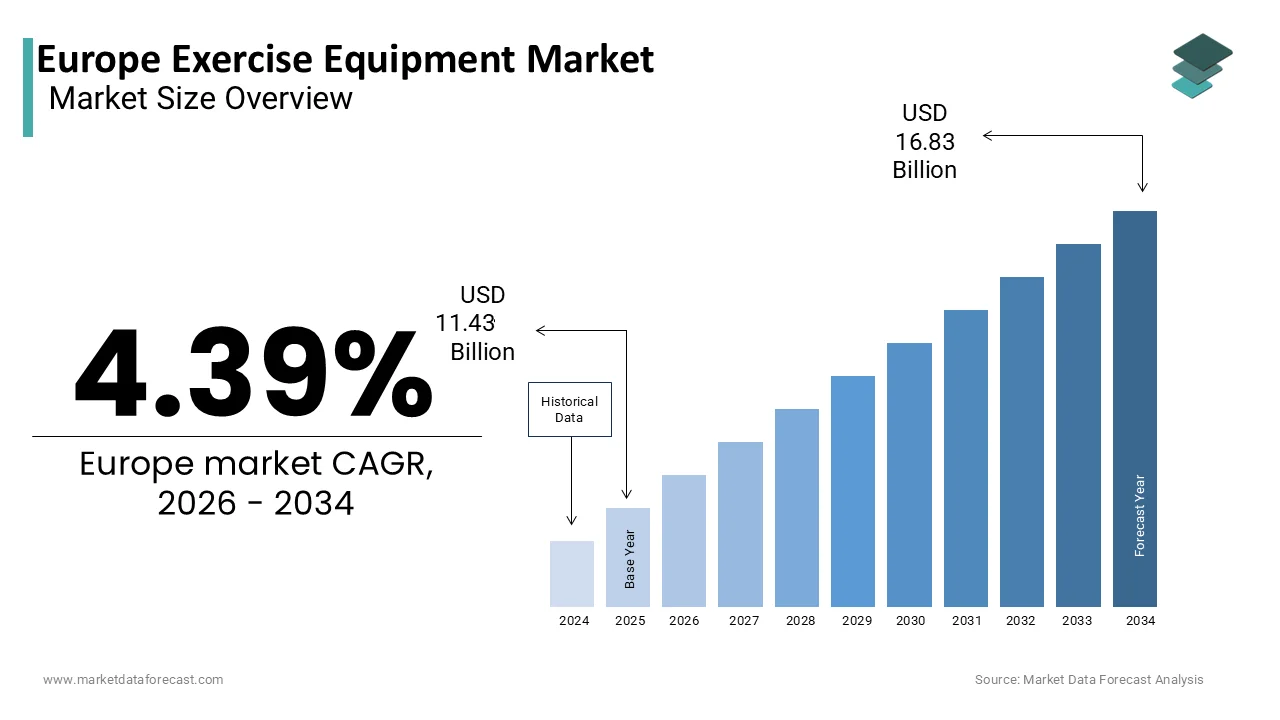
The Europe exercise equipment market was valued at USD 11.43 billion in 2025, is estimated to reach USD 11.93 billion in 2026, and is projected to reach USD 16.83 billion by 2034, growing at a CAGR of 4.39% from 2026 to 2034.
Exercise equipment comprises a diverse array of machinery and devices designed to enhance physical fitness, including cardiovascular machines,s strength training apparatus, and functional training tools used in commercial gyms, home settings, and rehabilitation centers. This sector has evolved from simple mechanical devices to sophisticated connected ecosystems that integrate artificial intelligence and biometric tracking to optimize user performance. The definition now extends beyond hardware to includesubscription-basedd digital content platforms that guide workouts remotely. According to Eurostat, the European Union has reported that a significant portion of the population engaged in regular physical activity in 2023, which reflects a cultural shift toward preventive health measures. As per the World Health Organization, physical inactivity has been identified as a major contributor to chronic diseases in the region, prompting public health initiatives. These insights indicate the critical role of accessible exercise infrastructure in mitigating chronic disease prevalence. The market is characterized by a dual demand structure where commercial facilities seek durable, high-capacity units while residential consumers prioritize compact and smart-enabled devices. Regulatory frameworks regarding electrical safety and material sustainability further shape product design and manufacturing processes across member states. The integration of Internet of Things sensors allows for real-time data synchronization with mobile applications, creating a seamless feedback loop for users. This technological convergence transforms standalone equipment into interactive health management stations, driving innovation throughout the industry.
MARKET DRIVERS
Rising Prevalence of Lifestyle Related Chronic Diseases and Obesity
The escalating incidence of obesity and lifestyle-related chronic conditions is primarily driving the growth of the European exercise equipment market. Sedentary behaviours associated with modern work environments and urban living have led to a significant increase in health complications that require active intervention. As per the World Health Organization, adults in the European Region have been reported to face high levels of overweight and obesity, creating an urgent need for effective weight management solutions. Governments and healthcare providers increasingly prescribe physical activity as a first line of defense against type 2 diabetes and cardiovascular diseases which drives individuals to invest in home gym setups. According to the European Centre for Disease Prevention and Control, non-communicable diseases account for the majority of deaths in the region, highlighting the severity of the crisis. This health emergency motivates consumers to purchase treadmills, stationary bikes, and strength machines to maintain fitness without relying solely on external facilities. The aging population also contributes to this trend as older adults seek low-impact equipment to preserve mobility and independence. Insurance companies in several European nations have begun offering incentives for policyholders who demonstrate regular exercise habits, further stimulating equipment sales. The direct correlation between physical activity levels and disease prevention creates a sustained and growing demand for reliable fitness tools.
Expansion of Hybrid Fitness Models and Digital Integration
The proliferation of hybrid fitness models that blend physical equipment with digital coaching platforms has revolutionized consumer engagement, which is also contributing to the expansion of the European exercise equipment market. Modern exercise machines now feature embedded touchscreens and connectivity options that allow users to access live classes and personalized training programs from home. According to the European Health and Fitness Association, gym members in Europe have increasingly utilized digital fitness services, indicating a strong preference for flexible workout options. This shift encourages manufacturers to produce smart equipment that syncs seamlessly with mobile applications and wearable devices to track progress accurately. The success of connected bike and rower brands has demonstrated that consumers are willing to pay a premium for integrated content ecosystems that offer community interaction and professional guidance. As per Statista, users engaging with online fitness content in Europe have grown significantly in recent years, fueling demand for compatible hardware. Gyms are also adopting this model by equipping their floors with internet-enabled machines that provide members with virtual training experiences alongside traditional instruction. The ability to update software and add new features remotely extends the lifecycle of the equipment and enhances user retention. This digital transformation makes exercise more accessible and engaging, thereby expanding the total addressable market for advanced fitness machinery.
MARKET RESTRAINTS
High Initial Investment Costs and Economic Volatility
The substantial upfront cost associated with purchasing high-quality exercise equipment is hindering the growth of the European exercise equipment market. Premium smart machines often carry price tags that are prohibitive for average households, especially during periods of economic uncertainty and inflation. As per Eurostat, inflation in the Eurozone has reached historic highs in recent years, reducing disposable income available for non-essential purchases like home gym gear. Small independent gym owners face similar challenges when attempting to upgrade their fleets with the latest connected technology due to tight profit margins and rising operational expenses. According to the European Central Bank, consumer confidence indices have dropped in recent years, leading to deferred spending on big-ticket items. The total cost of ownership, including maintenance, subscriptions for digital content, and potential repair,s further deters potential buyers who perceive the investment as risky. Economic volatility also affects commercial real estate decisions, causing delays in the opening of new fitness centers that would otherwise drive bulk equipment orders. Manufacturers struggle to pass on increased raw material costs to price-sensitive customers, resulting in compressed margins that limit research and development budgets. This financial pressure creates a conservative market environment where consumers opt for cheaper, lower-quality alternatives or second-hand equipment, stifling innovation.
Space Constraints in Urban Residential Environments
Limited living space in densely populated European cities is also hampering the European exercise equipment market expansion. Urban planning trends favor compact apartments where dedicating a room or significant floor area to fitness machinery is often impractical for residents. According to the European Environment Agency, a majority of the European population lives in urban areas where average dwelling sizes have decreased over the past decade. Bulky items such as full-size treadmills, multi-gyms, and elliptical trainers require substantial footprint and ceiling height, ht which many modern apartments cannot accommodate. This spatial limitation forces consumers to prioritize portability and foldability, often compromising on the durability and feature set of the equipment they purchase. Landlords and housing associations may also impose restrictions on heavy machinery due to concerns about floor load-bearing capacity and noise transmission to neighbors. As per national statistical offices in countries like the Netherlands and Germany, average apartment sizes have been reported to be relatively small, leaving little room for dedicated home gyms. The lack of storage space means that even foldable equipment may remain unused if it cannot be easily stowed away. This structural constraint limits the market potential for traditional large-format machines and necessitates a shift toward compact, specialized devices that may not appeal to serious athletes.
MARKET OPPORTUNITIES
Integration of Artificial Intelligence and Personalized Biometrics
The incorporation of artificial intelligence and advanced biometric sensing technologies offers a potential opportunity for tEuropeanope exercise equipment market to deliver hyper-personalized fitness experiences. Smart machines equipped with cameras and sensors can analyze user form in real time, providing instant corrective feedback to prevent injuries and maximize efficiency. As per the European Artificial Intelligence Alliance, the adoption of AI in health and wellness applications is expected to grow significantly, with fitness being a primary use case. Equipment manufacturers can leverage machine learning algorithms to adapt resistance levels and workout intensity dynamically based on individual performance metrics and recovery status. According to the International Data Corporation, shipments of AI-enabled fitness devices in Europe are projected to increase in the coming years as consumers seek data-driven training solutions. This technology enables the creation of virtual personal trainers that offer tailored programs without the high cost of human coaching. The ability to track detailed physiological parameters such as heart rate variability and oxygen saturation adds medical-grade value to consumer equipment. Companies that develop proprietary algorithms for movement analysis will gain a competitive edge by offering superior user engagement and safety features. The convergence of hardware and intelligent software opens new revenue streams through subscription-based analytics and coaching services. This technological leap positions exercise equipment as an essential component of proactive health management systems.
Growth of Corporate Wellness Programs and Workplace Fitness
The expanding focus on employee well-being and corporate social responsibility presents a lucrative opportunity for the European exercise equipment market. Organizations are increasingly recognizing the link between physical activity and productivity, leading to the installation of on-site gyms and active workstations. According to the European Agency for Safety and Health at Work, work-related stress and musculoskeletal disorders have been identified as major economic burdens, prompting companies to invest in preventive measures. Employers are purchasing under-desk cycles, walking pads, and compact strength stations to encourage movement during the workday and reduce sedentary behavior. As per the European Foundation for the Improvement of Living and Working Conditions, many large enterprises plan to enhance their wellness facilities in the coming years. This trend extends beyond traditional gyms to include standing desks with integrated movement features and breakout rooms equipped with quick workout tools. The rise of hybrid work models has also spurred demand for equipment that can be used in office hubs during intermittent visits. Manufacturers can capitalize on this segment by designing aesthetically pleasing and quiet machines that fit seamlessly into professional settings. Partnerships with corporate benefit providers to subsidize equipment costs further accelerate adoption. This B2B channel represents a stable and growing market driven by strategic human resource objectives.
MARKET CHALLENGES
Complex Regulatory Compliance and Safety Standards
Navigating the intricate web of safety regulations and compliance standards across different European nations poses a significant challenge for the European exercise equipment market. Each country may have specific requirements regarding electrical safety, mechanical stability, and material toxicity that complicate the process of bringing products to market. As per the European Committee for Standardization, manufacturers must adhere to the EN 957 series of standards, which cover various types of stationary training equipment, requiring rigorous testing and certification. The Machinery Regulation updated recently imposes stricter obligations on risk assessment and technical documentation, increasing the administrative burden on companies. According to industry associations, obtaining necessary certifications can delay product launches and incur substantial costs, particularly for small and medium-sized enterprises. Differences in national implementation of EU directives create fragmentation,n where a product approved in one member state may face additional hurdles in another. The liability risks associated with equipment failure or user injury necessitate comprehensive insurance coverage and robust quality control systems. Keeping pace with evolving regulations regarding data privacy for connected devices adds another layer of complexity. Non-compliance can result in severe penalties, product recalls, and reputational damage, deterring innovation. Companies must allocate significant resources to legal and regulatory affairs to ensure market access, which impacts overall profitability and agility.
Supply Chain Disruptions and Raw Material Scarcity
Persistent supply chain disruptions and the scarcity of critical raw materials present a formidable challenge to the European exercise equipment market. The industry relies heavily on global supply chains for steel, aluminum, electronic components, and specialized polymers, which have been subject to volatility due to geopolitical tensions and logistics bottlenecks. According to the European Manufacturing Coalition, lead times for key components such as microchips and motors have extended significantly in recent years, causing production delays and order backlogs. The reliance on imports from Asia for finished goods and parts exposes the market to shipping cost fluctuations and port congestion issues. As per the European Central Bank, input price inflation for manufacturing sectors has remained elevated, affecting the cost structure of fitness equipment producers. Shortages of high-grade steel impact the durability and safety of frames, while the limited availability of semiconductors hampers the production of smart connected consoles. Manufacturers struggle to forecast demand accurately in such an unstable environment, leading to inventory imbalances and lost sales opportunities. The push for nearshoring production to reduce dependency is capital-intensive and time-consuming, limiting immediate relief. These logistical constraints hinder the ability of companies to meet surging demand and maintain competitive pricing strategies. Addressing these vulnerabilities requires strategic diversification of suppliers and investment in local manufacturing capabilities, which remains a long-term endeavour.
REPORT COVERAGE
| REPORT METRIC | DETAILS |
| Market Size Available | 2025 to 2034 |
| Base Year | 2025 |
| Forecast Period | 2026 to 2034 |
| Segments Covered | By Product Type, End User, Distribution Channel, and Region. |
| Various Analyses Covered | Global, Regional, and Country-Level Analysis, Segment-Level Analysis, Drivers, Restraints, Opportunities, Challenges; PESTLE Analysis; Porter’s Five Forces Analysis, Competitive Landscape, Analyst Overview of Investment Opportunities |
| Countries Covered | UK, France, Spain, Germany, Italy, Russia, Sweden, Denmark, Switzerland, Netherlands, Turkey, Czech Republic, Rest of Europe |
| Market Leaders Profiled | Technogym S.p.A., Johnson Health Tech Co., Ltd., Nautilus, Inc., Brunswick Corporation, ICON Health & Fitness, Inc., Life Fitness, Core Health & Fitness, LLC, TRUE Fitness Technology, Inc., Impulse (Qingdao) Health Tech Co., Ltd., Torque Fitness LLC, Precor Incorporated, Peloton Interactive, Inc., Decathlon S.A., EGYM GmbH, Bowflex |
SEGMENTAL ANALYSIS
By Product Insights
The cardiovascular training equipment segment dominated the market by commanding the largest share of the European exercise equipment market in 2025. The growth of the cardiovascular training equipment market is driven by its fundamental role in weight management and heart health improvement, which are primary concerns for the European population. According to the World Health Organization, physical inactivity has been identified as a leading risk factor for global mortality, and European health authorities actively promote aerobic exercise to combat rising obesity rates. As per the European Heart Network, cardiovascular diseases have been reported as a major cause ofdeaths in Europe, creating a strong imperative for individuals to invest in treadmills, ellipticals, and stationary bikes. The versatility of this equipment allows it to serve both commercial gyms, where it occupies the majority of floor space, and home users who prioritize compact cardio solutions. Furthermore, the integration of digital connectivity in modern cardio machines has revitalized interest by offering immersive virtual routes and live classes that enhance user engagement. The perceived ease of use compared to complex strength machines also broadens the demographic appeal to include seniors and beginners. Consequently, the critical link between aerobic exercise and chronic disease prevention ensures that cardiovascular equipment remains the cornerstone of fitness routines across the continent.
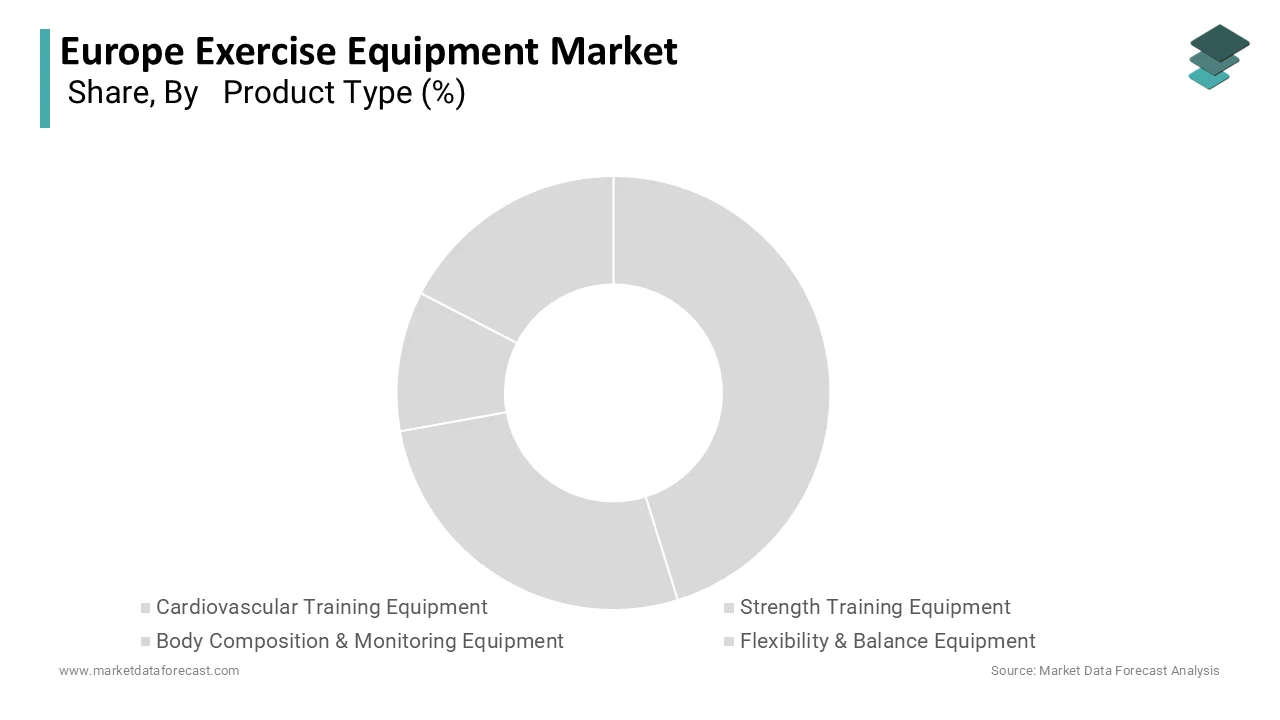
The strength training equipment segment is projected to witness a promising CAGR of 9.25% over the forecast period in the European exercise equipment market. The shifting fitness trends toward muscle building and functional longevity and an increasing awareness among Europeans that resistance training is essential for metabolic health, bone density preservation, and injury prevention, especially within aging demographics,hics are propelling the strength training equipment segment in the European market. As per the European Working Group on Sarcopenia in Older People, muscle loss has been reported as a significant issue among older adults, prompting a surge in demand for free weights, resistance bands, and multi-gyms. The rise of hybrid training methodologies that combine high-intensity interval training with heavy lifting has further popularized dumbbells, kettlebells, and power racks in both home and commercial settings. According to the European Health and Fitness Association, gym membership sign-ups for strength-focused zones have increased in recent years, reflecting changing consumer preferences. Additionally, the influence of social media fitness influencers promoting body transformation journeys has democratized strength training, making it accessible and desirable for younger generations. Manufacturers are responding by launching smart strength devices that track repetition counts and provide form feedback via apps. The expanding recognition of resistance exercise as a vital component of holistic wellness positions this segment as the fastest-growing category in the product landscape.
By End User Insights
The individual users segment had the largest share of the European exercise equipment market in 2025. The growth of the individual users segment in the European market is attributed to the permanent behavioral shifts toward home-based fitness established during recent global health crises and the desire for convenience, privacy, and cost efficiency as consumers seek to avoid gym membership fees and travel time. According to Eurostat, the proportion of Europeans exercising at home has risen significantly and remained stable, with many active adults incorporating home workouts into their weekly routines. The proliferation of compact and aesthetically pleasing equipment designed specifically for small urban apartments has removed previous spatial barriers to home ownership. As per the European Consumer Organisation, household spending on home improvement and leisure goods has shown sustained growth, as disposable income was redirected from entertainment venues to personal wellness infrastructure. The availability of flexible financing options and direct-to-consumer delivery models has further lowered the entry threshold for purchasing premium home gym setups. Moreover, the ability to exercise at any time without waiting for machines appeals to professionals with irregular schedules. The psychological comfort of working out in a private environment also attracts those who feel intimidated by public gym settings. These factors collectively ensure that the residential sector remains the largest revenue generator for equipment manufacturers across the region.
The health clubs and gyms segment is anticipated to showcase the fastest CAGR of 8.08% over the forecast period in the European market, owing to the post-pandemic resurgence of communal fitness experiences, the expansion of boutique studio concepts, and the reopening of facilities and the introduction of advanced high-capacity equipment that offers features unavailable in home setting,s such as industrial durability and specialized biomechanics. As per the European Health and Fitness Association, gym memberships in Europe have rebounded strongly, surpassing pre-pandemic levels and driving capital expenditure on fleet upgrades. Operators are investing heavily in connected commercial-grade machines that integrate with member apps to provide seamless data tracking and personalized coaching within the club environment. The trend toward experiential fitness, ss where social interaction and group energy play key roles,les has led to a surge in memberships for large-format clubs and niche studios focusing on CrossFit or Olympic lifting. According to industry reports, average revenue per member has increased as gyms offer premium tiers with access to state-of-the-art strength and recovery zones. The need to differentiate from home workouts compels facilities to adopt cutting-edge technology like AI-driven mirrors and immersive cardio theaters. This strategic reinvestment to attract and retain members propels the commercial segment to the forefront of market growth.
By Distribution Channel Insights
The specialty stores segment held the major share of the European exercise equipment market in 2025. The critical need for expert guidance, tactile evaluation, and professional installation services associated with high-value fitness machinery and consumer preference for trying out equipment before purchase to assess build quality, ergonomics, and noise levels are driving the dominance of specialty stores segment in the European market. According to the European Retail Association, specialized fitness retailers provide knowledgeable staff who can recommend suitable products based on specific fitness goals and available space, adding significant value to the buying process. As per national commerce chambers, a majority of commercial gym operators and serious home enthusiasts prefer purchasing through authorized dealers to ensure warranty validity and access to after-sales maintenance contracts. The ability of these stores to offer bundle deals, including flooring mats, cleaning kits, and assembly service,s creates a comprehensive solution that appeals to risk-averse buyers. Furthermore, specialty stores often host demonstration events and workshops that foster community engagement and brand loyalty. The trust established through face-to-face interactions reduces return rates and increases customer satisfaction compared to purely digital transactions. For high-ticket items like treadmills and multi-stations, the assurance of local support and immediate troubleshooting makes physical retail the preferred channel for the majority of European consumers.
The online retail segment is experiencing the most rapid expansion and is likely to expand at a CAGR of 10.6% over the forecast period owing to the convenience of doorstep delivery, extensive product variety, and competitive pricing dynamics and the improving logistics infrastructure in Europe that enables the efficient shipment of bulky items and the adoption of augmented reality tools that allow customers to visualize equipment in their homes virtually. As per the European E-commerce Report, online sales of sports and leisure goods have grown significantly in recent years as consumerhave becomeme increasingly comfortable purchasing larger items digitally. The availability of detailed video reviews, comparison engines, and user-generated content provides shoppers with sufficient information to make informed decisions without visiting physical stores. Direct-to-consumer brands are leveraging social media marketing to reach niche audiences with targeted campaigns for compact and smart equipment that ships easily in standard packaging. According to logistics providers, the development of white-glove delivery services, including room-of-choice placement and unpacking,g has mitigated previous concerns about handling heavy freight. Flash sales and exclusive online discounts further incentivize digital purchases, particularly among price-sensitive younger demographics. The seamless integration of mobile shopping apps and flexible payment plans enhances accessibility, making online retail the fastest growing distribution channel in the market.
COUNTRY LEVEL ANALYSIS
Germany Exercise Equipment Market Analysis
Germany held the leading position in the European exercise equipment market in 2025 with 23.2% of the regional market share. The dominance of Germany in the European market is driven by its robust economy, strong fitness culture, and high disposable income levels. The nation serves as the primary hub for both manufacturing and consumption, with a dense network of premium gyms and a population deeply committed to regular physical activity. According to the German Fitness Studio Association, the country has been reported to host thousands of fitness studios with millions of members, driving consistent demand for commercial-grade cardiovascular and strength machines. The government initiative "Move it" promotes lifelong physical activity, encouraging households to invest in high-quality home gym setups to complement club memberships. As per the Federal Statistical Office of Germany, household expenditure on sports equipment has remained resilient despite economic headwinds, reflecting the priority placed on health. German consumers are known for demanding engineering excellence and durability,ity which pushes manufacturers to introduce technologically advanced and sustainable products. The presence of major domestic brands fosters innovation and sets high standards for the entire regional market. Furthermore, the strong tradition of outdoor sports translates into indoor training during winter months, ensuring year-round equipment utilization. The combination of a mature commercial sector and an affluent residential base solidifies Germany's position as the dominant force in the European landscape.
United Kingdom Exercise Equipment Market Analysis
The United Kingdom had a promising share of the European exercise equipment market in 2025. The growth of the UK in the European market can be credited to a vibrant boutique fitness scene and early adoption of connected home fitness technologies. The country is characterized by a dynamic mix of large chain gyms and specialized studios focusing on cycling, HIIT, and strength training, which require diverse and often niche equipment portfolios. As per the UK Active organization, the fitness sector has been reported to contribute significantly to the economy, with membership numbers recovering strongly in 2023, which is fuelling procurement cycles for new hardware. British consumers are highly receptive to digital integration, leading to rapid uptake of smart mirrors, interactive bikes, and app-connected weights that offer virtual coaching experiences. According to the Office for National Statistics, online retail penetration for sports goods is among the highest in Europe, facilitating the growth of direct-to-consumer fitness brands. The trend toward hybrid work models has sustained demand for compact home equipment as individuals balance office visits with remote workdays. Government policies supporting public health initiatives and school sports programs also stimulate institutional purchasing. The UK market is distinguished by its fast-paced adoption of trends and willingness to experiment with new fitness modalities, making it a key testing ground for innovative equipment launches.
France Exercise Equipment Market Analysis
France is expected to exhibit a prominent CAGR in the European exercise equipment market during the forecast period due to the strong governmental backing for sports participation and a growing wellness consciousness among its citizens. The French government actively promotes physical activity through subsidies and tax incentives,s such as the "Pass Sport" which encourages youth engagement and drives demand for entry-level and intermediate equipment. According to the French Ministry of Sports, a significant portion of the population engages in regular physical activity, with a notable shift toward gym-based training in urban centers like Paris and Lyon. The expansion of low-cost gym chains has democratized access to fitness, leading to volume sales of durable cardio and strength machines suitable for high-traffic environments. As per the National Institute of Statistics and Economic Studies, household spending on leisure and culture including sports equipment has shown steady growth. The French market also values design and aesthetics, prompting manufacturers to offer sleek and stylish home equipment that blends with interior decor. The hosting of major international sporting events has further inspired national pride and participation, boosting equipment sales. The synergy between public policy encouragement and private sector expansion ensures a stable and growing demand profile for exercise machinery throughout France.
Italy Exercise Equipment Market Analysis
Italy is anticipated to record a noteworthy CAGR in the European exercise equipment marketover the forecast period,iod owing to the increasing health awareness and the integration of fitness facilities within its robust tourism and hospitality sectors. The Italian population is progressively adopting healthier lifestyles to combat sedentary habits, leading to a surge in both home and commercial equipment purchases. As per the Italian National Institute of Statistics, participation in sports activities has been reported to rise steadily in recent years, with gyms becoming central social hubs in cities like Milan and Rome. The luxury hotel and resort industry frequently upgrades its wellness centers with premium exercise equipment to attract high-end tourists seeking comprehensive spa and fitness experiences. According to the Italian Confederation of Gym Owners, the number of registered fitness facilities has grown steadily, creating a continuous need for fleet replacements and expansions. Italian consumers appreciate craftsmanship and design, leading to a preference for equipment that combines functionality with aesthetic appeal. The government's focus on preventing chronic diseases through active living campaigns further stimulates market activity. The unique blend of cultural appreciation for beauty and a growing commitment to health positions Italy as a vital and distinctive player in the European exercise equipment landscape.
Spain Exercise Equipment Market Analysis
Spain is projected to hold a notable share of the European exercise equipment market over the forecast period owing to the lively fitness culture that blends outdoor activities with a booming indoor gym sector, particularly in major metropolitan areas. The Spanish market is characterized by a strong community orientation where local gyms serve as social gathering points, driving demand for versatile equipment that supports group classes and functional training. According to the Spanish Superior Sports Council, sports participation rates have been reported to climb consistently, with a large portion of the population engaging in regular physical exercise. The warm climate encourages year-round activity but also drives the need for air-conditioned indoor facilities equipped with comprehensive cardio and strength zones to escape summer heat. As per the National Statistics Institute, the construction of new sports complexes and municipal gyms has increased, providing opportunities for bulk equipment procurement. The rise of budget-friendly gym chains has made fitness accessible to a broader demographic, accelerating the turnover of entry-level machines. Spanish consumers are increasingly interested in technology-enabled devices that track performance and offer gamified experiences. The combination of favorable demographics, tourism-driven hospitality needs, and a socially active lifestyle ensures Spain remains a dynamic and growing market for exercise equipment solutions.
COMPETITIVE LANDSCAPE
The competition in Europeanrope exercise equipment market is characterized by intense rivalry among established global giants and agile niche players who vie for dominance through technological innovation and brand prestige. Market leaders leverage their extensive distribution networks and strong reputations for durability to maintain loyal commercial client bases, while smaller firms often focus on specialized segments such as smart home gyms or rehabilitation devices. The landscape is highly dynamic with companies constantly striving to integrate advanced features like artificial intelligence, augmented reality, and biometric tracking to attracttech-savvyy consumers. Regulatory compliance regarding safety standards and data privacy acts as a significant barrier to entry, ensuring that only well-capitalized entities with robust quality assurance systems can thrive. Price competition remains fierce, particularly inthe entry-levell residential sector, where margin pressures force manufacturers to optimize production costs continuously. Strategic acquisitions and collaborations are becoming more frequent as firms seek to acquire digital capabilities or expand their geographic reach rapidly. This competitive environment fosters rapid technological advancement and benefits end users through improved product quality and diverse options across the region.
KEY MARKET PLAYERS
Some of the companies that are playing a dominating role in the global Europe Exercise Equipment Market include:
- Technogym S.p.A.
- Johnson Health Tech Co., Ltd.
- Nautilus, Inc.
- Brunswick Corporation
- ICON Health & Fitness, Inc.
- Life Fitness
- Core Health & Fitness, LLC
- TRUE Fitness Technology, Inc.
- Impulse (Qingdao) Health Tech Co., Ltd.
- Torque Fitness LLC
- Precor Incorporated
- Peloton Interactive, Inc.
- Decathlon S.A.
- EGYM GmbH
- Bowflex
TOP LEADING PLAYERS IN THE MARKET
- Technogym S.p.A. stands as a preeminent Italian manufacturer renowned for blending sophisticated design with advanced digital connectivity across its global fitness portfolio. The company contributes significantly to the worldwide market by supplying premium equipment to Olympic Games and luxury hospitality venues while maintaining deep roots in European wellness culture. Recently, Technogym has strengthened its position by expanding its cloud-based ecosystem, which allows users to sync workouts seamlessly between home devices and commercial gym machines. Their commitment to sustainability is evident in the launch of energy-generating cardio units that feed power back into the grid. The firm actively partners with healthcare providers to prescribe exercise as medicine, thereby opening new institutional revenue streams. By focusing on artificial intelligence-driven personalization, Technogym ensures its platforms adapt to individual user goals in real time. This strategic focus on integrated wellness solutions rather than mere hardware manufacturing secures their leadership status in the competitive landscape.
- Johnson Health Tech operates as a diversified global powerhouse specializing in a broad spectrum of fitness brands that cater to every segment from budget-consciouss home users to elite athletic facilities. The company plays a vital role in the international market by leveraging its multi-brand strategy to address specific regional preferences and price points effectively. Recent actions to strengthen its market position include significant investments in connected fitness technology that integrates live streaming classes directly into console displays across its product lines. Johnson Health Tech has also expanded its direct-to-consumer logistics network in Europe to ensure faster delivery and superior after-sales support for residential customers. Their focus on developing compact and foldable equipment addresses the critical space constraints faced by urban European residents. The firm prioritizes rigorous quality testing and durability standards, whichbuilds immense trust among commercial gym operators seeking long term asset reliability. By offering comprehensive financing solutions and flexible leasing models, Johnson Health Tech makes premium fitness accessible to a wider audience.
- Life Fitness represents a cornerstone of the global fitness industry with a legacy of engineering excellence that defines the standard forcommercial-gradee exercise equipment worldwide. This American giant contributes extensively to the European market by providing robust cardiovascular and strength solutions that withstand the rigors of high traffic health clubs and university recreation centers. To strengthen its market position, the company recently unified its hardware and software offerings under a single digital platform that enhances user engagement through gamified experiences and social connectivity. Life Fitness has introduced innovative self-strengthening resistance technology that eliminates the need for heavy weight stacks, thereby reducing maintenance costs and improving safety. The group actively collaborates with studio owners to create bespoke boutique fitness environments that drive member retention and loyalty. Their commitment to circular economy principles involves designing products for easier disassembly and recycling at the end of their lifecycle. This holistic approach to product development and customer service enables Life Fitness to maintain its reputation as a trusted partner for serious fitness enthusiasts and facility operators alike.
TOP STRATEGIES USED BY KEY MARKET PARTICIPANTS
Key players in theEuropeane exercise equipment market primarily focus on digital integration and ecosystem development to differentiate their offerings in an increasingly connected world. Manufacturers invest heavily in proprietary software platforms that link physical machines to mobile applications, enabling seamless data synchronization and personalized coaching experiences. Another major strategy involves expandingdirect-to-consumerr sales channels to bypass traditional retail intermediaries and build stronger relationships with end users. Companies are increasingly pursuing sustainability initiatives by designing energy-efficient equipment and utilizing recycled materials to comply with strict European environmental regulations. Strategic partnerships with health insurance providers and corporate wellness programs help firms secure large volume contracts and promote preventive health measures. Furthermore, vendors are optimizing their supply chains by nearshoring production facilities to reduce lead times and mitigate geopolitical risks. These combined efforts enable market participants to enhance customer loyalty and drive sustainable growth in a highly competitive environment.
MARKET SEGMENTATION
This research report on the europe exercise equipment market is segmented and sub-segmented into the following categories.
By Product Type
- Cardiovascular Training Equipment
- Strength Training Equipment
- Body Composition & Monitoring Equipment
- Flexibility & Balance Equipment
By End User
- Individual Users
- Health Clubs & Gyms
- Hotels & Hospitality
- Corporate Offices
- Educational Institutions
By Distribution Channel
- Specialty Stores
- Sporting Goods Retailers
- Online Retail
- Direct Sales
By Country
- Germany
- United Kingdom
- France
- Italy
- Spain
- Netherlands
- Sweden
- Rest of Europe