- Product Description Description
- Table of Contents TOC
- List of Table & Figure LOT
- Get Free Sample PDF Sample PDF
Market Size, 2025
$225.83 MnMarket Estimate, 2026
$287.48 MnMarket Forecast, 2034
$1,982.61 MnCAGR, 2026–2034
27.3%Europe Exosomes Market Summary
The Europe exosomes market, valued at USD 225.83 million in 2025, is projected to reach USD 1,982.61 million by 2034, expanding at a CAGR of 27.3% driven by liquid biopsy adoption, regenerative medicine funding, and engineered exosome therapeutics under EU ATMP regulation.
Market Snapshot
- 2025 Market Size: USD 225.83 million
- 2026 Estimate: USD 287.48 million
- 2034 Forecast: USD 1,982.61 million
- CAGR (2026–2034): 27.3%
- Base Year: 2025
- Forecast Period: 2026–2034
Quick Growth Drivers
- Expansion of exosome-based liquid biopsy in oncology
- Strong public funding via Horizon Europe
- Rising ATMP pipeline under European Medicines Agency classification
- Growing venture capital inflow into exosome startups
- Increased focus on cell-free regenerative therapies
Principal Restraints
- Lack of harmonized ATMP regulatory interpretation across member states
- Absence of validated potency and identity standards
- High GMP manufacturing costs for therapeutic-grade exosomes
- Limited reference materials under European Pharmacopoeia
High-Value Opportunities
- Engineered exosomes for siRNA/mRNA drug delivery
- Companion diagnostics using exosomal biomarkers
- Blood-brain barrier–penetrating vesicle platforms
- Standardized CE-marked exosome kits for hospital labs
- Integration into adaptive oncology trial endpoints
Key Market Challenges
- Analytical variability in nanoparticle tracking and flow cytometry
- IP fragmentation and overlapping patent claims
- Batch-to-batch variability in scalable bioreactor production
- Lack of EU-wide certified reference standards
Fastest-Growing Segments
- Downstream Analysis (21.3% CAGR) – high-sensitivity molecular profiling
- Services (19.6% CAGR) – outsourced GMP manufacturing and analytics
- Engineered Therapeutic Exosomes – targeted delivery and CNS applications
Regional Leadership & Dynamics
- Germany (25.3%) – Largest translational ecosystem and ATMP alignment
- United Kingdom (16.4%) – Strong in exosome engineering and CNS trials
- France – Fastest-growing with hospital exemption framework
- Sweden – Biomarker validation leveraging national biobanks
- Netherlands – Leadership in high-resolution single-vesicle analytics
What Wins Commercially
- GMP-compliant closed-system manufacturing platforms
- CE-marked diagnostic kits aligned with MISEV2018
- Strong EMA regulatory navigation capabilities
- Academic-hospital partnerships for clinical validation
- IP clarity and cross-licensing readiness
Top Strategic Ask for Executives
Standardize analytical validation across Europe, invest in scalable GMP manufacturing infrastructure, and secure strategic IP positioning to accelerate exosome translation from research to regulated therapeutic and diagnostic markets.
Leading Players
Some of the companies that are playing a dominating role in the Europe exosomes market include:
- QIAGEN N.V.
- Thermo Fisher Scientific Inc.
- Merck KGaA
- Sartorius AG
- Miltenyi Biotec
- Lonza Group AG
- HansaBioMed Life Sciences
- Evox Therapeutics
Europe Exosomes Market Size
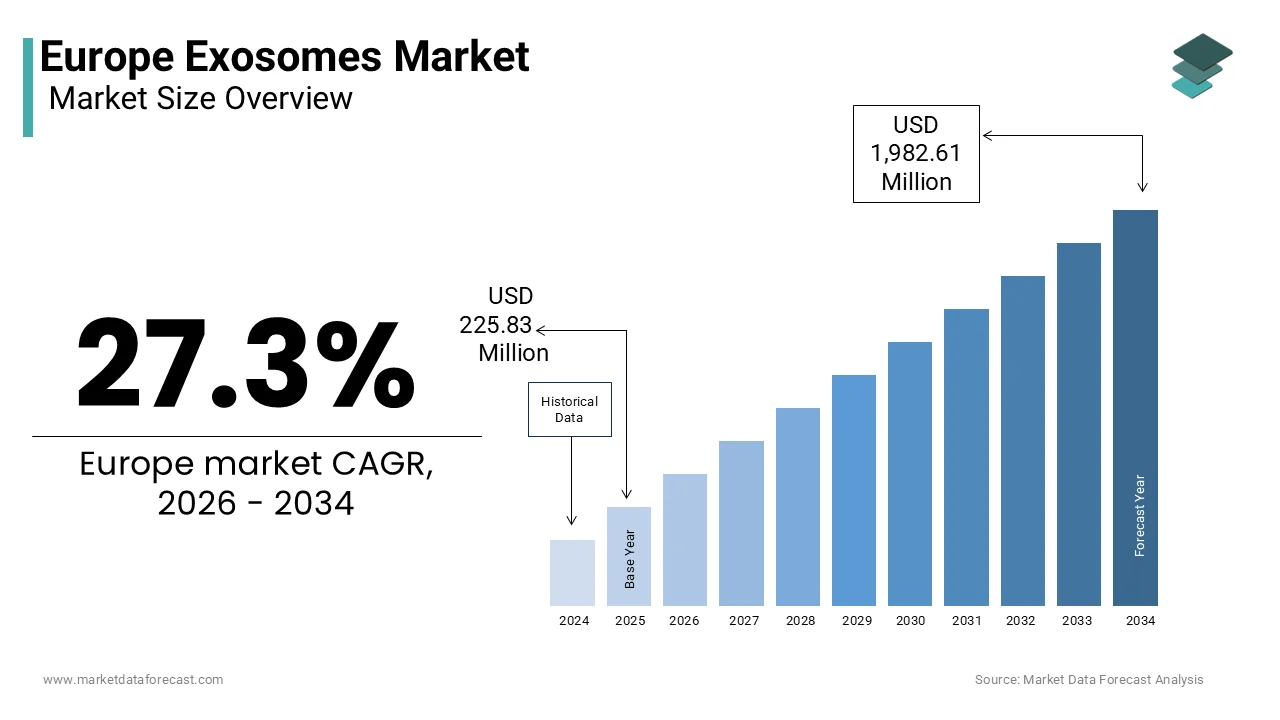
The Europe exosomes market was valued at USD 225.83 million in 2025, is estimated to reach USD 287.48 million in 2026, and is projected to reach USD 1,982.61 million by 2034, growing at a CAGR of 27.3% from 2026 to 2034.
The exosomes are nanoscale extracellular vesicles, typically 30 to 150 nanometers in diameter, naturally released by nearly all cell types to mediate intercellular communication through the transfer of proteins, lipids, and nucleic acids. The use in diagnostics, therapeutics, and regenerative medicine, with growing emphasis on liquid biopsy applications and cell-free therapies. Unlike synthetic nanoparticles, exosomes offer biocompatibility, low immunogenicity, and intrinsic targeting capabilities, making them compelling candidates for next generation biomedical tools. The European Medicines cell-freeassifies therapeutic exosomes as advanced therapy medicinal products (ATMPs), subjecting them to rigorous quality, safety, and efficacy standards under Regulation (EC) No 1394/2007. According to the European Commission’s Joint Research Centre, over 180 academic and clinical studies involving exosomes were registered in the EU Clinical Trials Register between 2020 and 2025, primarily focused on oncology, neurodegenerative diseases, and wound healing. This scientific momentum, coupled with evolving regulatory clarity and clinical validation, positions exosomes at the forefront of Europe’s precision medicine and biomanufacturing transformation.
MARKET DRIVERS
Expansion of Liquid Biopsy Adoption in Oncology Diagnostics
The integration of exosomes into liquid biopsy workflows by offering a non-invasive means to detect tumor-derived biomarkers with high biological fidelity, which is majorly propelling the growth of Europe exosomes market. Unlike circulating tumor DNA, which reflects genomic alterations, exosomes carry intact RNA, proteins, and surface receptors that reveal functional tumor states, including drug resistance mechanisms. According to the European Society for Medical Oncology, many oncology centers in Germany, France, and the Netherlands now incorporate extracellular vesicle analysis into early-phase clinical trials for cancers lacking tissue accessibility, such as pancreatic and glioblastoma. The Horizon Europe program has funded initiatives like the EXOSELECT consortium, which demonstrated that exosomal PD-L1 levels correlate with immunotherapy response in metastatic melanoma patients with sensitivity. Additionally, the European Liquid Biopsy Society has established standardized protocols for exosome isolation from plasma, enhancing cross-study reproducibility.
Strong Public and Private Investment in Regenerative Medicine
The strategic commitment to regenerative medicine has significant funding and infrastructure development for exosome-based therapeutics, particularly in wound healing and neurodegenerative disorders. The strong public and private investment in regenerative medicine is also enhancing the growth of Europe exosomes market. The European Institute of Innexosome-based technology allocated to the VES4HEAL project, which develops mesenchymal stem cell-derived exosomes for chronic diabetic ulcers, a condition affecting many million patients in the EU, according to the International Diabetes Federation. Similarly, the Innovative Medicines Initiative launched the NEUROEXO platform in 202cell-derived exosomal delivery of neuroprotective miRNAs in Alzheimer’s and Parkinson’s disease. National agencies reinforce this momentum, where Germany’s Federal Ministry of Education and Research supports over 30 exosome-related projects under its Cell and Gene Therapy initiative. Private investment is also rising, while European venture capital firms invested 180 million euros in exosome startups between 2022 and 2025, as per the European Venture Capital Association. This convergence of public strategy, clinical unmet need, and translational science creates a fertile ecosystem for exosome innovation, driving sustained demand for GMP-compliant production and characterization services.
MARKET RESTRAINTS
Absence of Harmonized Regulatory Pathways for Therapeutic Exosomes
The lack of unified regulatory guidance for exosome-based therapeutics across European jurisdictions is restraining the growth of Europe exosomes market. While the European Medicines Agency classifies exosomes as advanced therapy medicinal products, national competent authorities interpret manufacturing, potency, and purity requirements inconsistently. According to the European Network for Health Technology Assessment, a mesenchymal exosome product approved in Sweden, under hospital exemption, may face full marketing authorization requirements in Italy, delayingmulti-countryy trials. The absence of reference standards for exosome identity, such as universal markers or potency assays, further complicates comparability. This regulatory ambiguity increases development costs and timelines, deterring small biotechs from pursuing pan-European commercialization.
Technical Complexity in Scalable and Reproducible Manufacturing
The inability to produce clinical-grade exosomes at scale with consistent quality poses a major barrier to commercialization, which is additionally hampering the growth of the European exosomes market. Current methods, such as ultracentrifugation and size exclusion chromatography, suffer from low yield, co-isolation of contaminants, and poor reproducibility across batches. According to the European Committee for Standardization, less than 30% of academic labs adhere to MISEV2018 guidelines for exosome reporting, undermining data reliability. Industrial-scale production faces even greater hurdles. A 2025 study by the Fraunhofer Institute found that bioreactor-based systems achieved only some recovery efficiency compared to flask cultures, with significant batch-to-batch variability in cargo content. Furthermore, the European Pharmacopoeia lacks monographs for exosome raw materials, leaving manufacturers to develop proprietary analytics. These technical gaps increase the cost of goods estimated at over 2,00,000 euros per patient dose for some autologous products, as per the study. Without standardized closed system platforms and regulatory-endorsed analytical methods, exosome therapies will struggle to achieve the robustness required for mainstream clinical adoption.
MARKET OPPORTUNITIES
Emergence of Exosome Engineering for Targeted Drug Delivery
The advent of engineered exosomes designed to deliver siRNA, mRNA, or small molecules to specific tissues is creating new opportunities for the growth of Europe exosomes market. By modifying surface ligands or membrane composition, researchers can enhance biodistribution and cellular uptake while avoiding immune clearance. As per the Karolinska Institutet, engineered exosomes carrying KRAS G12D siRNA reduced tumor volume by 72% in a pancreatic cancer mouse model, outperforming lipid nanoparticles in liver and spleen accumulation. The European Commission’s Horizon Europe program has funded the EXOTARGET project to develop blood-brain barrier-penetrating exosomes for glioblastoma therapy, with first-in-human trials expected in 2026. Companies like Evox Therapeutics in the UK have secured partnerships with Takeda and Eli Lilly to advance exosome-based CNS delivery platforms. With the EU’s Pharmaceutical Strategy emphasizing novel modalities for undruggable targets, engineered exosomes align perfectly with policy priorities, opening pathways for orphan drug designation and accelerated assessment.
Integration of Exosomes into Companion Diagnostic Development
The dynamic biomarker sources for companion diagnostics by enabling real time monitoring of treatment response and resistanceares also leveraging the growth of Europe exosomes market. Unlike static genomic tests, exosomal cargo reflects the evolving tumor microenvironment by offering actionable insights during therapy. According to a multicenter study coordinated by the University Hospital Heidelberg, changes in exosomal EGFRvIII levels predicted progression in glioblastoma patients three months before radiographic confirmation. The European Organisation for Research and Treatment of Cancer now includes exosome profiling in adaptive trial designs for targeted therapies. Regulatory alignment is advancing in 2025. The EMA issued a reflection paper acknowledging exosomes as viable analyte sources for companion diagnostics, provided analytical validation meets ICH guidelines. Diagnostic firms such as Qiagen and Bio Rad are developingCE-markedd kits for exosomal RNA extraction, facilitating adoption in routine pathology workflows. As personalized oncology shifts toward longitudinal monitoring, exosome-based diagnostics offer a scalable, blood-based solution that complements imaging and tissue testing, creating a high-value niche in Europe’s precision medicine ecosystem.
MARKET CHALLENGES
Lack of Standardized Analytical Methods for Exosome Characterization
The absence of universally accepted analytical protocols to define identity, purity, and potency, for both research reproducibility and regulatory approval, is a challenge for the growth of Europe exosomes market. Current techniques, such as nanoparticle tracking analysis, western blotting, and flow cytometry,y yield variable results due to differences in instrument calibration, antibody specificity, and sample preparation. According to the International Society for Extracellular Vesicles, fewer than 20% of published European studies between 2020 and 2025 reported allthe minimum information required for extracellular vesicle experiments, limiting cross-validation. The European Medicines Agency has repeatedly flagged inconsistent potency assays as a reason for clinical hold in ATMP applications. Even basic metrics like particle count per microgram of protein vary by orders of magnitude across labs, as demonstrated in a 2023 ring trial by the German Society for Experimental and Clinical Pharmacology. Without reference materials and certified methods from bodies like the European Reference Laboratory for alternatives to animal testing, developers cannot ensure batch consistency or demonstrate clinical relevance, stalling translation from bench to bedside.
Intellectual Property Fragmentation and Licensing Complexities
The fragmented intellectual property landscape, where overlapping patents on isolation methods, engineering techniques, and therapeutic uses create legal uncertainty and licensing acts as a barrier for the growth of Europe exosomes market. Key patents held by institutions like Codiak BioSciences, Exopharm, and academic centers in Oxford and Leiden cover broad claims on exosome composition and modification, leading to freedom to operate disputes. According to the European Patent Office, over 1,200 exosome-related patent families were filed between 2019 and 2025, with 68% originating outside Europe yet enforced within EU jurisdictions. Startups often require licenses from multiple entities to develop a single product, escalating costs aexosome-relatedelopment. A 2025 survey by the European Biotech Alliance found that 57% of early-stage companies cited IP complexity as a top barrier to investment. Unlike gene therapy, where patent pools have emerged, exosome IP remains siloed, discouraging collaboration and increasing litigation risk. Until stakeholders establiscross-licensingng frameworks or patent commons, innovation will be hindered by legal friction rather than scientific limits.
REPORT COVERAGE
| REPORT METRIC | DETAILS |
| Market Size Available | 2025 to 2034 |
| Base Year | 2025 |
| Forecast Period | 2026 to 2034 |
| Segments Covered | By Product, Workflow, and Region. |
| Various Analyses Covered | Global, Regional, and Country-Level Analysis, Segment-Level Analysis, Drivers, Restraints, Opportunities, Challenges; PESTLE Analysis; Porter’s Five Forces Analysis, Competitive Landscape, Analyst Overview of Investment Opportunities |
| Countries Covered | UK, France, Spain, Germany, Italy, Russia, Sweden, Denmark, Switzerland, Netherlands, Turkey, Czech Republic, Rest of Europe |
| Market Leaders Profiled | Thermo Fisher Scientific Inc., Merck KGaA, QIAGEN N.V., Miltenyi Biotec B.V. & Co. KG, Sartorius AG, Bio-Rad Laboratories, Inc., NanoView Biosciences, Exosome Diagnostics (a Bio-Techne brand), Codiak BioSciences, Inc., System Biosciences, LLC, Macrogen Inc., Creative Bioarray, Lonza Group AG, Takara Bio Inc., Cell Guidance Systems Ltd., Stemcell Technologies, Inc., Exosomics Siena S.p.A., Vesigen Therapeutics, Inc., Capricor Therapeutics, Inc., Aethlon Medical, Inc. |
SEGMENTAL ANALYSIS
By Product Insights
The Kits and reagents segment was the largest by capturing a significant share of the European exosomes market in 2025 from their foundational role in enabling standardized exosome isolation and characterization across academic, clinical, and biopharmaceutical settings. Researchers rely on commercially available kits to overcome the technical complexity of ultracentrifugation and ensure reproducibility in compliance with MISEV2018 guidelines. According to the European Molecular Biology Laboratory, extracellular vesicle studies conducted in EU institutions between 2022 and 2025 utilized commercial isolation kits from vendors such as Qiagen, Thermo Fisher Scientific, and HansaBioMed. The demand is further amplified by the rise of multi-center trials requiring protocol harmonization, where the European Liquid Biopsy Society mandates kit-based workflows for its EXO-CLIN consortium to minimize inter-site variability. National funding bodies reinforce this trend; Germany’s Deutsche allocated 28 million euros in 2023 specifically for reagent standardization in exosome research.
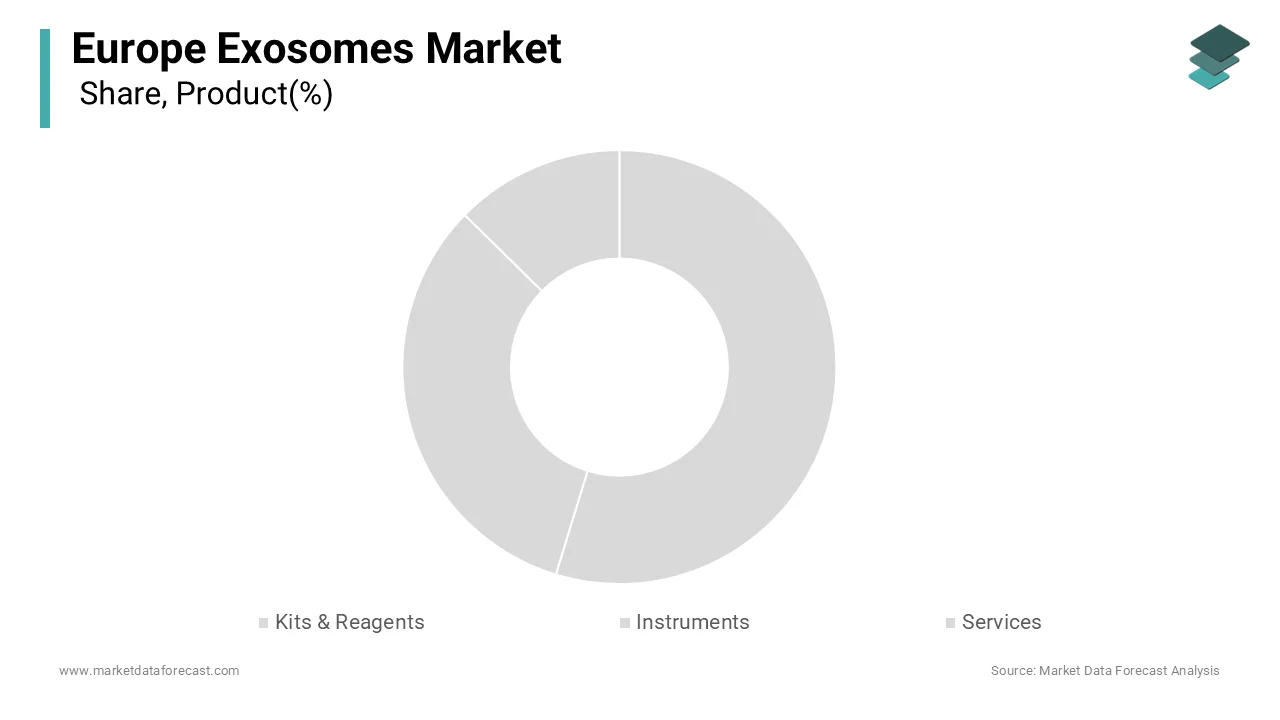
The services segment is projected to register the fastest CAGR of 19.6% from 2025 to 2033, owing to the increasing outsourcing of complex exosome workflows by biotech startups and academic labs lacking specialized infrastructure. Core facilities and contract research organizations now offerend-to-endd services, including GMP-compliant exosome production, engineering, cargo profiling, and preclinical testing. As per the survey, many early-stage exosome companies in France and the UK outsource manufacturing due to the high cost of cleanroom facilities and quality management systems. The Horizon Europe program has demanded funding for collaborative projects that require external analytical support, where the VES4HEAL initiative alone contracted five specialized service providers across Sweden and Switzerland for potency assay development. Additionally, hospitals participating in ATMP trials increasingly rely on centralized exosome processing units to meet EMA requirements.
By Workflow Insights
The isolation methods segment held 58.2% of the European exosomes market share in 2025. In any exosome study, reliably separating these nanoscale vesicles from biofluids requires isolating contaminants like lipoproteins or protein aggregates. Academic and clinical labs prioritize isolation purity because downstream applications, such as RNA sequencing or proteomics, are highly sensitive to sample integrity. According to the International Society for Extracellular Vesicles, polymer-based precipitation and size exclusion chromatography are the most widely adopted techniques in Europe due to their compatibility with low sample volumes and automation potential. The European Commission’s Joint Research Centre reports that publicly funded exosome projects include isolation method optimization as a core objective. Regulatory scrutiny further elevates this segment, where the European Medicines Agency requires detailed documentation of isolation yield and purity for advanced therapy medicinal product dossiers.
The downstream analysis segment is projected to grow at the fastest CAGR of 21.3% throughout the forecast period, due to the shift from basic exosome detection to functional and molecular characterization, particularly in biomarker discovery and therapeutic monitoring. Advanced techniques such as the single vesicle flow cytometry, digital PCR for exosomal miRNA, and mass spectrometry-based proteomics are now routinely deployed to decode cargo signatures linked to disease states. The European Organisation for Research and Treatment of Cancer has integrated exosome profiling into adaptive trial endpoints, driving demand for high-sensitivity analytics. Instrument vendors like BD Biosciences and NanoFCM have launched Europe-specific platforms with CE IVD marking, enabling hospital adoption.
COUNTRY LEVEL ANALYSIS
Germany Exosomes Market Analysis
Germany was thehigh-sensitivityutor of the European exosomes market by holding 25.3% of the share in 2025, with itsworld-classs life science infrastructure and strong public investment in translational research. Home to the Max Planck Society, Helmholtz Association, andCharitée University Hospital, the country hosts over 40 dedicated extracellular vesicle research groups. According to the German Federal Ministry of Education and Research, 120 million euros were allocated to exosome-related projects between 2021 and 2025 under the Cell and Gene Therapy Funding Initiative. The nation’s robust biotech ecosystem centered in Berlin, Munich,h and Heidelberg, includes startups like ExoThera and EV Biotech advancing GMP production platforms. Regulatory alignment is also advanced; Germany’s Paul Ehrlich Institute actively participates in EMA working groups, on advanced therapy medicinal products,cts ensuring clear pathways for clinical translation.
UK Exosomes Market Analysis
The United Kingdom exosomes market was ranked second by holding 16.4% of the share in 2025, with exosome engineering and clinical validation. Institutions, such as the University of Oxford,xford University College London,n and the Francis Crick Institute, have pioneered technologies for targeted exosome delivery and cargo loading. The UK’s Medicines and Healthcare products Regulatory Agency maintains one of Europe’s most responsive frameworks for advanced therapy trials, enabling rapid initiation of first-in-human studies. Companies like Evox Therapeutics have secured global partnerships with major pharmaceutical firms to develop exosome-based CNS therapeutics.
France Exosomes Market Analysis
France's exosomes market growth is expected to have the fastest CAGR from 2025 to 2033, with its national strategy for regenerative medicine and strong hospital-based research networks. The French National Institute of Health and Medical Research coordinates over 25 exosome-focused teams investigating applications in oncology, cardiovascular repair,r and autoimmune diseases. According to the French Ministry of Higher Education and Research, the governmenthase invested in extracellular vesicle infrastructure between 2022 and 2025, including a national exosome biobank in Lyon. The country’s hospital exemption framework allows early clinical use of autologous exosome therapies under strict oversight, accelerating real-world evidence generation. Major centers like Institut Curie and Gustave Roussy integrate exosome profiling into liquid biopsy pipelines for cancer monitoring.
Sweden Exosomes Market Analysis
Sweden's exosomes market growth is likely to grow with the excellence in biomedical innovation and public health data infrastructure. The Karolinska Institutet and Uppsala University lead in exosome biomarker discovery for neurodegenerative and inflammatory conditions. According to the Swedish Research Council, 32 million euros were granted to extracellular vesicle projects in 2025 with emphasis on standardization and clinical utility. Sweden’s national biobanks containing over 20 million samples provide unparalleled resources for exosome validation studies across longitudinal cohorts. The Swedish Medical Products Agency actively contributes to EMA guidelines on advanced therapies,s ensuring regulatory clarity. Companies like HansaBioMed Life Sciences have established global distribution of isolation kits from Stockholm while maintaining R&D in Europe. With a culture of open science, strong ethics, oversight, ht and seamless integration of research and healthcare, Sweden punches above its population weight in exosome science and application.
Netherlands Exosomes Market Analysis
The Netherlands exosomes market growth is propelbywith its collaborative research model and leadership in exosome analytics. Erasmus MC and the Hubrecht Institute drive innovation in single vesicle characterization and functional assays, while the Dutch Techcentre for Life Sciences fosters data sharing across institutions. According to the Netherlands Organisation for Scientific Research, 28 million euros were committed to extracellular vesicle programs in 2023, focusing on reproducibility and clinical translation. The country hosts key players like NanoFCM Europ,e which developshigh-resolutionn flow cytometers for exosome phenotyping, now used in over 60 European labs. The Dutch regulatory authority maintains close dialogue with the EMA on ATMP classification, facilitating smoother trial approvals.
COMPETITIVE LANDSCAPE
The competition in the European exosomes market is highly specialized, characterized by a mix of multinational life science corporations, niche European biotechs, and academic core facilities. Large players like Qiagen and Thermo Fisher dominate the reagents and instrumentation segments through brand recognition,n global logistics, and regulatory compliance,e while smaller firms such as HansaBioMed and Exopharm differentiate via tailored services and therapeutic focus. The market is not yet consolidated but features intense rivalry in standardization and scalability. Regulatory complexity under the EU’s advanced therapy medicinal product framework creates high barriers to entry,ry favoring established players with quality management systems. However, innovation thrives in engineering and analytics, where startups leverage European research excellence to develop novel platforms. orms
KEY MARKET PLAYERS
Some of the companies that are playing a dominating role in the global European exosomes market include
- Thermo Fisher Scientific Inc.
- Merck KGaA
- QIAGEN N.V.
- Miltenyi Biotec B.V. & Co. KG
- Sartorius AG
- Bio-Rad Laboratories, Inc.
- NanoView Biosciences
- Exosome Diagnostics (a Bio-Techne brand)
- Codiak BioSciences, Inc.
- System Biosciences, LLC
- Macrogen Inc.
- Creative Bioarray
- Lonza Group AG
- Takara Bio Inc.
- Cell Guidance Systems Ltd.
- Stemcell Technologies, Inc.
- Exosomics Siena S.p.A.
- Vesigen Therapeutics, Inc.
- Capricor Therapeutics, Inc.
- Aethlon Medical, Inc.
TOP LRADING PLAYERS IN THE MARKET
- Qiagen N.V. is a pivotal contributor to the European exosomes market through its comprehensive portfolio of exosome isolation and RNA analysis kits designed for research and clinical applications. Headquartered in the Netherlands, the company leverages its global distribution network to supply CE-marketed reagents that comply with MISEV2018 guidelines across academic hospitals and biotech firms. Qiagen has strengthened its position by integrating exosome workflows into its digital QIAsphere platform, enabling automated sample tracking and data management. The company launched an upgraded exoRNeasy kit with enhanced miRNA recovery from plasm, supporting liquid biopsy development in oncology and neurodegenerative diseases. Its partnerships with European reference laboratories and participation in Horizon Europe consortia further solidify its role as an enabler of standardized exosome research across the region.
- Thermo Fisher Scientific plays a significant role in theEuropeane exosomes market by offering end-to-end solutions spanning isolation reagents, high-resolution analytics, and cryopreservation systems. The company’s Total Exosome Isolation kits and EVSPOT immunoassay platforms are widely adopted in EU research institutions for biomarker discovery. It also introduced cloud-based data integration tools compatible with its Orbitrap mass spectrometers, enabling deep proteomic profiling of exosomal cargo. Through strategic collaborations with university hospitals and regulatory advisory services, Thermo Fisher bridges the gap between discovery and clinical translation in the European exosome ecosystem.
- HansaBioMed Life Sciences is a specialized European innovator focused exclusively on exosome technologies with headquarters in Estonia and R&D operations in Sweden. The company provides research-grade and GMP-compliant exosome isolation kits, scalable production services,s and custom engineering solutions for therapeutic applications. HansaBioMed has enhanced its market presence by achieving ISO 13485 certification and launching a modular exosome manufacturing platform compatible with closed system bioreactors. It partnered with Karolinska Institutet to develop exosome-based diagnostics for early-stage Parkinson’s disease. Its deep integration with European academic networks and agile service model allows it to cater to both startups and large pharma seeking localized exosome expertise within the EU regulatory framework.
TOP STRATEGIES USED BY THE KEY MARKET PARTICIPANTS
Key players in the European exosomes market employ several strategic approaches to navigate scientific complexity and regulatory uncertainty. Product standardization is paramount with companies developing CE-marked kits that align with MISEV2018 and EMA guidelines to ensure reproducibility across labs. Strategic partnerships with academic hospitals and Horizon Europe consortia facilitate clinical validation and real-world evidence generation. CE-markedintegration enables control over the entire workflow from isolation to downstream analytics, enhancing data integrity and user experience. Investment in GMP-compliant manufacturing infrastructure supports the transition from research use to advanced therapy applications.
MARKET SEGMENTATION
This research report on the europe exosomes market is segmented and sub-segmented into the following categories.
By Product
- Kits & Reagents
- Instruments
- Services
By Workflow
- Isolation Methods
- Purification & Enrichment
- Downstream Analysis
- Storage & Preservation
By Country
- Germany
- United Kingdom
- France
- Sweden
- Netherlands
- Italy
- Spain
- Rest of Europe