- Product Description Description
- Table of Contents TOC
- List of Table & Figure LOT
- Get Free Sample PDF Sample PDF
Europe Liquid Biopsy Market Report Summary
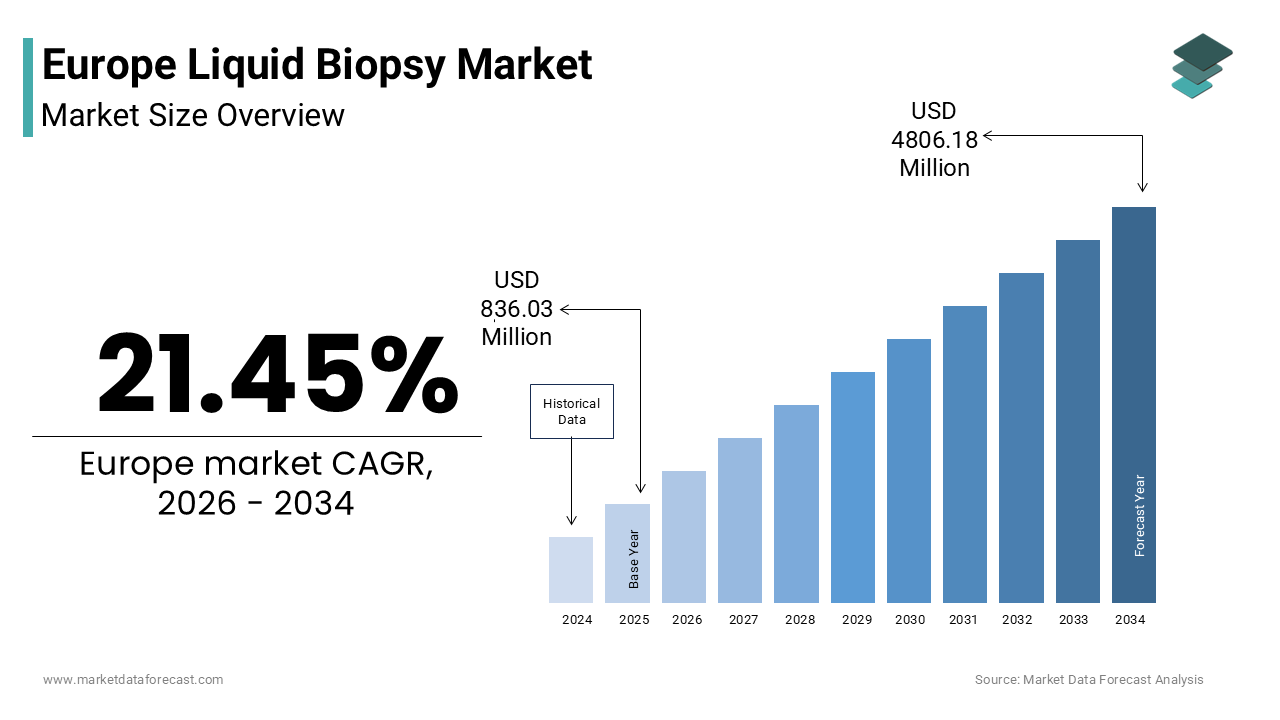
The Europe liquid biopsy market was valued at USD 836.03 million in 2025 and is anticipated to reach USD 1,015.36 million in 2026 from USD 4,806.18 million by 2034, growing at a CAGR of 21.45% during the forecast period from 2026 to 2034. The growth of the Europe liquid biopsy market is driven by the increasing prevalence of cancer, rising demand for early cancer detection, and growing adoption of minimally invasive diagnostic procedures. Expanding implementation of precision medicine strategies, increasing utilization of genomic profiling technologies, and growing demand for personalized cancer treatment approaches are further accelerating market growth. Moreover, advancements in circulating tumor DNA analysis, expansion of next-generation sequencing technologies, and increasing integration of artificial intelligence-based diagnostic platforms are supporting the expansion of the Europe liquid biopsy market.
Key Market Trends
-
Rising adoption of liquid biopsy technologies for early cancer detection and monitoring.
-
Increasing utilization of circulating tumor DNA analysis in precision oncology.
-
Growing integration of artificial intelligence and machine learning in genomic data interpretation.
-
Rising demand for minimal residual disease detection and recurrence monitoring solutions.
-
Increasing development of multi-cancer early detection testing platforms.
Segmental Insights
- Based on cancer type, the lung cancer segment dominated the Europe liquid biopsy market and held the largest share in 2025. The dominance of the segment is attributed to the high prevalence of lung cancer, increasing demand for non-invasive molecular profiling, growing utilization of targeted therapies, and rising adoption of companion diagnostic testing. The widespread use of liquid biopsy for detecting EGFR, ALK, and ROS1 mutations continues to support segment growth.
- Based on diagnostic approach, the circulating tumor DNA (ctDNA) segment accounted for the leading share of the Europe liquid biopsy market in 2025. The growth of the segment is driven by its broad clinical applicability, high sensitivity in mutation detection, increasing use in treatment monitoring, and growing integration into companion diagnostic workflows. Continuous advancements in next-generation sequencing and digital PCR technologies further strengthen segment growth.
- Based on end users, the reference laboratories segment held the major share of the Europe liquid biopsy market in 2025. The dominance of the segment is attributed to advanced genomic testing capabilities, availability of specialized expertise, centralized testing infrastructure, and growing demand for high-volume molecular diagnostic services. Reference laboratories continue to play a critical role in supporting precision oncology programs across Europe.
- The academic and research centers segment continues to maintain a significant share of the market due to increasing oncology research activities, growing biomarker discovery programs, expanding clinical trials, and rising collaborations between academic institutions and biotechnology companies.
Regional Insights
- Germany dominated the Europe liquid biopsy market in 2025 owing to its advanced healthcare infrastructure, strong focus on precision medicine, extensive genomic research activities, and increasing adoption of molecular diagnostics. The presence of leading research institutions, favorable reimbursement frameworks, and growing investments in cancer diagnostics continue to strengthen Germany’s position in the market.
- The United Kingdom held a substantial share of the Europe liquid biopsy market due to strong support from the National Health Service, increasing implementation of genomic medicine initiatives, growing cancer screening programs, and expanding adoption of personalized treatment approaches. The country’s strong research ecosystem and government-backed cancer strategies further support market expansion.
- France continues to maintain a significant position in the European market owing to increasing government investments in oncology research, expanding molecular diagnostics infrastructure, rising adoption of precision medicine, and growing utilization of advanced cancer testing technologies.
- Italy is witnessing steady growth supported by increasing cancer incidence, expanding genomic medicine programs, growing availability of molecular testing services, and rising awareness regarding the benefits of early cancer detection and personalized treatment planning.
- Spain is expected to experience notable growth during the forecast period due to improving healthcare infrastructure, increasing investments in biotechnology research, growing demand for advanced cancer diagnostics, and rising integration of liquid biopsy technologies into clinical oncology practices.
Competitive Landscape
The Europe liquid biopsy market is highly competitive and characterized by the presence of global diagnostics companies, biotechnology firms, genomic testing providers, and specialized liquid biopsy developers competing through technological innovation, product development, strategic collaborations, and clinical validation initiatives. Leading companies are focusing on enhancing assay sensitivity, expanding cancer detection capabilities, integrating artificial intelligence-based analytics, and strengthening next-generation sequencing platforms. Strategic partnerships with pharmaceutical companies, healthcare institutions, and research organizations are further strengthening market positioning across the European liquid biopsy ecosystem. Increasing investments in multi-cancer early detection technologies, minimal residual disease monitoring solutions, and companion diagnostics continue to intensify competition within the market. The key players operating in the Europe liquid biopsy market include Janssen Diagnostics, Qiagen, Rarecells SAS, Silicon Biosystems, SRI International, Myriad Genetics, Natera, Personal Genome Diagnostics, Sysmex Inostics, Trovagene, Exosome Diagnostics, Exosome Sciences, and HansaBiomed OU.
Europe Liquid Biopsy Market Size
The European liquid biopsy market size was valued at USD 836.03 million in 2025 and is anticipated to reach USD 1015.36 million in 2026 from USD 4806.18 million by 2034, growing at a CAGR of 21.45% during the forecast period from 2026 to 2034.
Liquid biopsy is a transformative diagnostic approach that analyzes circulating tumor DNA, circulating tumor cells, and other biomarkers from simple blood samples to detect and monitor cancer. This minimally invasive technology offers significant advantages over traditional tissue biopsies by enabling real time monitoring of tumor dynamics treatment response and emerging resistance mechanisms without the need for surgical intervention. The European healthcare landscape is increasingly adopting this methodology due to its ability to provide comprehensive genomic profiling from a single blood draw facilitating personalized medicine strategies. According to official data from the European Commission, an estimated 2.7 million people in the European Union were diagnosed with cancer in 2024, supported by initiatives like Europe's Beating Cancer Plan to improve early detection and diagnosis. The World Health Organization states that cancer is the second leading cause of death and morbidity in Europe, accounting for over 1.9 million deaths annually across the WHO European Region, while specifically accounting for nearly 1.3 million deaths within the European Union. Regulatory frameworks such as the In Vitro Diagnostic Regulation established by the European Union aim to ensure high standards of safety and performance for these diagnostic tests. According to Eurostat data, life expectancy at birth in the European Union rebounded to 80.6 years in 2022 following pandemic-related declines, reflecting an aging population demographic where older age groups face a higher statistical burden of cancer. The integration of liquid biopsy into clinical workflows supports early detection initiatives which are critical for improving patient survival rates. Healthcare systems across Germany France and the United Kingdom are investing in genomic infrastructure to support widespread adoption. The technology also facilitates longitudinal monitoring allowing clinicians to adjust therapeutic regimens based on molecular changes detected in circulation. This dynamic capability positions liquid biopsy as a cornerstone of modern oncology care enhancing precision and reducing patient burden associated with repeated invasive procedures.
MARKET DRIVERS
Rising Prevalence of Cancer and Demand for Early Detection
Malignancies are becoming increasingly common across the region, which fuels the growth of the Europe liquid biopsy market. This trend is a primary factor driving the adoption of liquid biopsy technologies. Cancer remains a predominant public health challenge, with data from the International Agency for Research on Cancer (IARC) projecting that new cancer cases in Europe will increase by roughly 22.5% by 2045 due to an aging population and changing risk factors. Early detection significantly improves prognosis and reduces treatment costs making non invasive screening methods highly desirable for healthcare providers and payers. According to clinical data supported by the European Society for Medical Oncology (ESMO), early-stage diagnosis can result in five-year absolute survival rates exceeding 90% for specific malignancies, such as localized breast cancer or melanoma, compared to significantly lower rates for late-stage detection. Liquid biopsy enables identification of molecular alterations before radiological evidence becomes apparent offering a critical window for intervention. National health services in countries like the United Kingdom and France are increasingly incorporating genomic testing into standard care pathways to address the growing burden of disease. The European Code Against Cancer, directed by the IARC, emphasizes evidence-based prevention and cancer screening to reduce mortality, while systemic frameworks like Europe’s Beating Cancer Plan drive policy and funding support for innovative diagnostic solutions. Patient preference for less invasive procedures further accelerates demand as blood draws are perceived as safer and more convenient than surgical biopsies. This shift in patient expectation compels healthcare institutions to adopt liquid biopsy to maintain competitiveness and patient satisfaction. Additionally the ability to detect minimal residual disease after surgery allows for timely adjuvant therapy decisions preventing recurrence. The cumulative effect of rising case volumes and the clinical imperative for early intervention creates a robust foundation for market expansion across the region.
Advancements in Precision Medicine and Personalized Therapeutics
The evolution of precision medicine frameworks across the regional healthcare systems fundamentally propels the integration of liquid biopsy into routine clinical practice, which in turn contributes to the overall expansion of the Europe liquid biopsy market. Personalized therapeutic strategies rely on detailed molecular profiling to match patients with targeted therapies that offer superior efficacy and reduced toxicity compared to conventional chemotherapy. Advocacy frameworks like the European Alliance for Personalised Medicine (EAPM) highlight that precision oncology and biomarker-tailored treatments significantly optimize clinical outcomes and response rates in specific molecularly defined oncology indications. Liquid biopsy provides a dynamic view of the tumor genome capturing heterogeneity and evolutionary changes that static tissue samples may miss. This capability is essential for monitoring treatment resistance where emerging mutations necessitate rapid switching of therapeutic agents. The European Medicines Agency has approved numerous targeted therapies that require companion diagnostics many of which are increasingly validated for use with liquid biopsy platforms. Hospitals and specialized cancer centers in Germany and Switzerland are establishing multidisciplinary molecular tumor boards that utilize liquid biopsy data to guide complex treatment decisions. Investment in genomic infrastructure including next generation sequencing capabilities supports the technical requirements for high sensitivity detection of rare variants. Pharmaceutical companies collaborate with diagnostic firms to develop co developed tests ensuring regulatory alignment and clinical utility. The push towards value based healthcare encourages adoption of tools that optimize drug selection and avoid ineffective treatments thereby reducing overall healthcare expenditure. Guidelines from the European Society for Medical Oncology (ESMO) recommend liquid biopsy (ctDNA) for specific indications, including advanced non-small cell lung cancer, driving institutional adoption based on clinical evidence, though cross-border healthcare reimbursement frameworks remain varied.
MARKET RESTRAINTS
High Costs and Limited Reimbursement Coverage
Financial barriers are impeding the growth of the Europe liquid biopsy market. This is due to high test costs and inconsistent reimbursement policies across member states. The commercial cost of comprehensive genomic profiling (CGP) via liquid biopsy frequently ranges from €2,500 to over €4,500 per test depending on panel scale and platform infrastructure, presenting notable cost-containment challenges for European public healthcare budgets. the European Observatory on Health Systems and Policies highlight that out-of-pocket expenditures remain a prominent barrier to equitable healthcare access, particularly in European regions lacking uniform public insurance coverage for advanced molecular diagnostics. Reimbursement frameworks vary significantly between nations with some countries like Germany having established pathways while others lack clear coding and payment mechanisms. This fragmentation creates uncertainty for laboratories and hospitals regarding revenue recovery discouraging investment in necessary infrastructure. Health technology assessment bodies often require extensive clinical utility data before approving reimbursement leading to delayed market access for newer assays. The economic pressure on national health services following the pandemic has intensified scrutiny of high cost diagnostics requiring robust cost effectiveness analyses that are not always available for emerging applications. Private insurance coverage is uneven leaving many patients unable to afford these advanced tests without financial assistance. Laboratories face challenges in negotiating contracts with payers who prioritize cost containment over innovation. The lack of harmonized pricing strategies across the European Union complicates market entry for diagnostic companies forcing them to navigate complex regulatory and financial landscapes in each country individually. This economic friction slows down the transition from research use to routine clinical application limiting patient access to potentially life saving information.
Regulatory Complexity and Standardization Issues
Stringent requirements under the In Vitro Diagnostic Regulation and the lack of standardized analytical protocols create substantial hurdles for the Europe liquid biopsy market. Consequently, the regulatory landscape for this domain remains highly complex. The transition from the previous directive to the new regulation has increased the burden of proof for manufacturers requiring extensive clinical performance studies and quality management system certifications. According to the European Federation of Clinical Chemistry and Laboratory Medicine (EFLM), the stringent compliance timelines and administrative resource demands of the EU's In Vitro Diagnostic Regulation (IVDR) have significantly delayed bringing innovative new tests to the European market. Variability in pre analytical variables such as blood collection tubes storage conditions and processing times affects the reliability of results creating inconsistencies between laboratories. The absence of universally accepted reference materials and proficiency testing schemes makes it difficult to compare performance across different platforms and vendors. Regulatory authorities in different member states may interpret requirements differently leading to fragmented approval processes that hinder pan European distribution. Laboratories must invest heavily in validation studies and documentation to comply with these rigorous standards which increases operational costs and time to launch. The complexity of validating multi analyte panels adds another layer of difficulty as each biomarker may require separate clinical verification. Small and medium sized enterprises struggle to meet these regulatory demands limiting innovation and competition in the market. Furthermore the dynamic nature of liquid biopsy technology means that updates to assays or software often trigger re evaluation requirements causing ongoing compliance burdens. This regulatory heaviness acts as a brake on rapid innovation and deployment despite the clear clinical potential of the technology.
MARKET OPPORTUNITIES
Expansion into Early Screening and Minimal Residual Disease Monitoring
The application of liquid biopsy for early cancer screening and minimal residual disease detection offers a vast opportunity for the growth of the European market. This potential extends well beyond current therapeutic monitoring uses. Detecting cancer at asymptomatic stages or identifying microscopic disease remaining after surgery can dramatically alter patient trajectories and reduce long term healthcare costs. According to the European Journal of Cancer minimal residual disease detection can predict recurrence months before clinical manifestation allowing for preemptive intervention. Large scale screening programs for high risk populations such as individuals with family history or specific genetic predispositions are gaining traction. Clinical validation projects in the Netherlands and Sweden are actively evaluating the feasibility of liquid biopsy protocols as supplementary diagnostic selectors for lung and colorectal cancer screening within targeted, high-risk patient populations. The technological advancement in sensitivity allowing detection of extremely low levels of circulating tumor DNA opens possibilities for earlier intervention than previously possible. Pharmaceutical companies are increasingly using minimal residual disease status as an endpoint in clinical trials accelerating drug development and approval processes. This creates a symbiotic relationship between diagnostic and therapeutic sectors driving adoption. Healthcare payers are interested in the potential cost savings from avoiding expensive late stage treatments through early detection. The development of multi cancer early detection tests that can screen for multiple tumor types simultaneously offers a compelling value proposition for preventive healthcare strategies. As evidence accumulates supporting the clinical utility of these applications regulatory bodies are likely to establish clearer pathways for approval and reimbursement. This shift from reactive to proactive oncology care positions liquid biopsy as a central tool in future cancer control strategies across Europe.
Integration with Artificial Intelligence and Digital Health Platforms
The convergence of biopsy data with artificial intelligence and digital health ecosystems provides significant prospects for enhancing diagnostic accuracy and clinical decision support, which is anticipated to accelerate the expansion of the Europe liquid biopsy market. Advanced algorithms can analyze complex genomic data patterns to identify subtle signatures of disease progression or treatment response that human interpretation might miss. According to peer-reviewed oncology literature and precision medicine initiatives, AI-driven machine learning algorithms can dramatically enhance the sensitivity and specificity of liquid biopsy platforms by synthesizing complex, high-dimensional multi-omics data sources. Digital health platforms facilitate the seamless integration of liquid biopsy results into electronic health records enabling real time access for oncologists and multidisciplinary teams. This connectivity supports remote patient monitoring and telemedicine consultations which are increasingly important in post pandemic healthcare delivery. Startups and established technology firms are developing user friendly interfaces that visualize longitudinal data trends helping clinicians make informed decisions quickly. The use of machine learning models trained on large datasets from diverse European populations can refine risk stratification and personalize screening intervals. Collaborative networks sharing anonymized data across borders enhance the robustness of predictive models while respecting privacy regulations such as the General Data Protection Regulation. These digital tools also empower patients by providing accessible insights into their health status fostering engagement and adherence to treatment plans. The scalability of software based solutions allows for rapid deployment across different healthcare settings without significant hardware investments. As digital infrastructure matures, the synergy between liquid biopsy and AI will drive the creation of intelligent diagnostic systems. These systems will continuously learn and improve, offering unprecedented precision in cancer management.
MARKET CHALLENGES
Technical Limitations in Sensitivity and Specificity
Technical limitations regarding the sensitivity and specificity of liquid biopsy assays remain a critical challenge to the Europe liquid biopsy market. This affects clinical reliability despite advancements. The concentration of circulating tumor DNA in early stage cancer or minimal residual disease can be extremely low often representing less than 0.1 percent of total cell free DNA making detection difficult. According to clinical molecular pathology standards, false-positive liquid biopsy results can occur due to Clonal Hematopoiesis of Indeterminate Potential (CHIP), where age-related mutations in hematopoietic cells shed signals that closely mimic solid tumor DNA, highlighting the critical need for paired white blood cell sequencing to filter out background mutations. Distinguishing true tumor derived signals from background noise requires highly sophisticated sequencing technologies and bioinformatics pipelines that are not uniformly available. Variability in shedding rates among different tumor types and locations further complicates standardization with some cancers releasing negligible amounts of DNA into circulation. The lack of universal thresholds for positive results creates ambiguity in clinical interpretation requiring careful correlation with imaging and other clinical findings. Technical artifacts introduced during sample processing library preparation or sequencing can skew results necessitating rigorous quality control measures that increase operational complexity. Current technologies may struggle to detect structural variations or epigenetic changes that are relevant for certain cancer types limiting the comprehensiveness of the analysis. The need for ultra deep sequencing to achieve required sensitivity increases costs and turnaround times potentially delaying clinical decisions. Researchers are working on improving error suppression techniques and novel biomarkers but achieving consistent high performance across diverse clinical scenarios remains an ongoing hurdle. These technical constraints require continuous validation and refinement to ensure that clinical actions based on liquid biopsy results are safe and effective.
Data Privacy Concerns and Ethical Implications
The handling of sensitive genomic data generated by these biopsies raises significant data privacy concerns and ethical questions that challenge widespread implementation in the region, which hampers the expansion of the Europe liquid biopsy market. The General Data Protection Regulation imposes strict requirements on the collection storage and sharing of personal health data requiring robust cybersecurity measures and explicit patient consent. Under Article 9 of the EU GDPR and guidance enforced by the European Data Protection Supervisor (EDPS), genomic data is classified as a special category of personal data, mandating rigorous protective compliance due to its immutable identifiability and long-term privacy implications for an individual's biological family members. Patients may fear discrimination by employers or insurers if their genetic risk profiles are disclosed creating reluctance to undergo testing. Ethical dilemmas arise regarding incidental findings where tests reveal unrelated genetic risks that patients may not wish to know or for which no treatment exists. The cross border flow of data for research and collaborative purposes must navigate varying national interpretations of privacy laws complicating international studies. Ensuring data anonymity while maintaining utility for research is technically challenging as re identification risks persist with advanced computational methods. Public trust in how data is used is crucial for participation in screening programs and any breach can have lasting negative impacts on adoption. Laboratories and technology providers must invest heavily in secure infrastructure and transparent governance frameworks to address these concerns. The ethical responsibility of returning results and providing genetic counseling adds to the resource burden on healthcare systems. Balancing the benefits of data sharing for scientific progress with individual privacy rights remains a complex societal challenge that requires ongoing dialogue and regulatory clarity to resolve effectively.
REPORT COVERAGE
| REPORT METRIC | DETAILS |
| Market Size Available | 2025 to 2034 |
| Base Year | 2025 |
| Forecast Period | 2026 to 2034 |
| CAGR | 21.45% |
| Segments Covered | By Cancer Type, Diagnostic Approach, End Users and Region |
| Various Analyses Covered | Global, Regional & Country Level Analysis; Segment-Level Analysis; DROC, PESTLE Analysis; Porter’s Five Forces Analysis; Competitive Landscape; Analyst Overview of Investment Opportunities |
| Regions Covered | United Kingdom, France, Spain, Germany, Italy, Russia, Sweden, Denmark, Switzerland, the Netherlands, Turkey, and the Czech Republic |
| Market Leaders Profiled | Janssen Diagnostics, Qiagen, Rarecells SAS, Silicon Biosystems, SRI International, Myriad Genetics, Natera, Personal Genome Diagnostics, Sysmex Inostics, Trovagene, Exosome Diagnostics, Exosome Sciences, and HansaBiomed OU. |
SEGMENTAL ANALYSIS
By Cancer Type Insights
The lung cancer segment led the Europe Liquid Biopsy Market and captured a 41.1% share in 2025. This leading position of the segment was attributed to its high prevalence and the critical need for non invasive molecular profiling to guide targeted therapies. According to the European Commission lung cancer accounts for approximately 20 percent of all cancer deaths in the European Union making it the most lethal malignancy in the region. The complexity of lung cancer treatment requires precise identification of genetic mutations such as EGFR ALK and ROS1 which are effectively detected through liquid biopsy methods. The European Society for Medical Oncology guidelines strongly recommend liquid biopsy for patients with advanced non small cell lung cancer when tissue samples are insufficient or unavailable. This clinical endorsement drives widespread adoption across major healthcare systems in Germany France and the United Kingdom. The high rate of disease recurrence necessitates continuous monitoring which liquid biopsy facilitates without the risks associated with repeated surgical biopsies. Pharmaceutical companies developing tyrosine kinase inhibitors often mandate companion diagnostic testing creating a symbiotic relationship that boosts market demand. Public health initiatives aimed at reducing lung cancer mortality further support the integration of advanced diagnostics into standard care pathways. The aging population in Europe contributes to rising incidence rates. This demographic trend ensures sustained demand for diagnostic solutions that offer timely and accurate information for treatment decisions. The ability to detect resistance mechanisms early allows clinicians to switch therapies promptly improving patient outcomes and justifying the investment in liquid biopsy technologies.
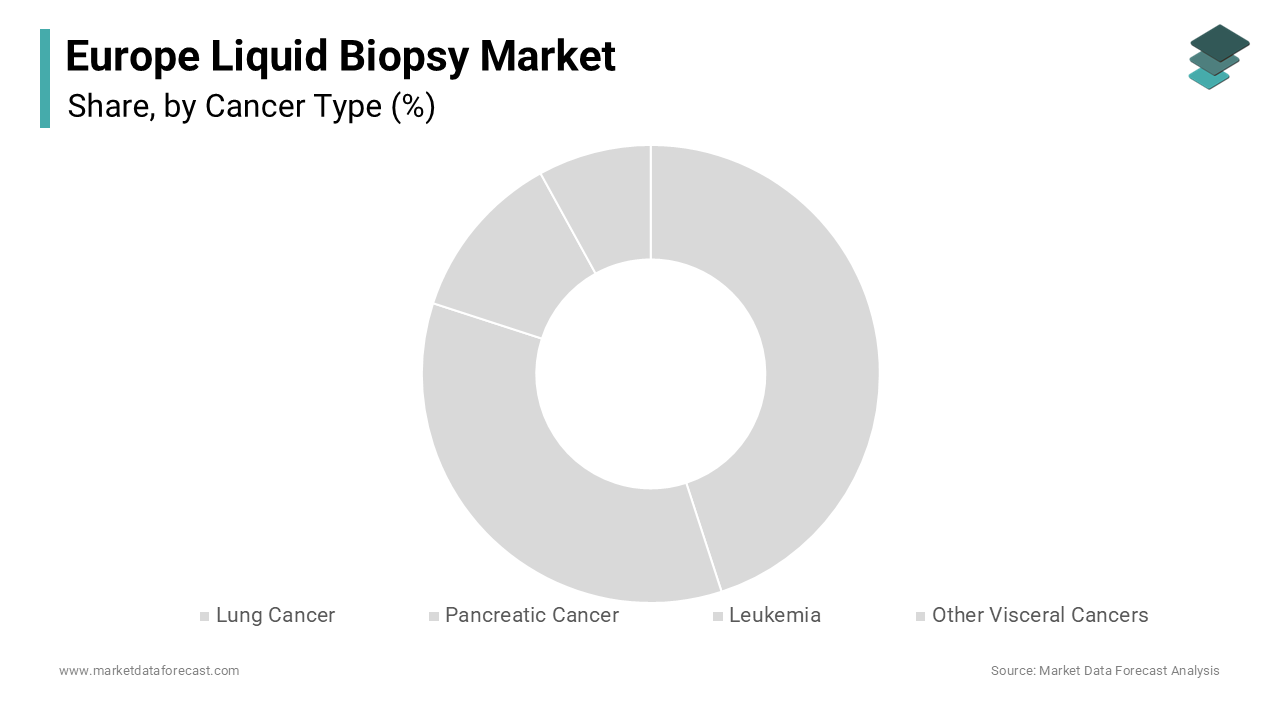
On the other hand, the pancreatic cancer segment is expected to exhibit a noteworthy CAGR of 14.2% over the forecast period due to the urgent need for early detection and improved management strategies. This malignancy is often diagnosed at late stages resulting in poor prognosis. The World Health Organization (WHO) confirms that because pancreatic cancer is typically diagnosed at advanced stages, its global five-year relative survival rate historically remains under 10%. Liquid biopsy offers a promising avenue for early detection by identifying circulating tumor DNA before symptoms manifest or tumors become visible on imaging. Research institutions across Europe are increasingly focusing on biomarkers specific to pancreatic ductal adenocarcinoma driving innovation in assay development. The difficulty in obtaining tissue biopsies from the pancreas due to its anatomical location makes blood based tests particularly attractive for clinicians. Clinical trials incorporating liquid biopsy for monitoring treatment response and detecting minimal residual disease are expanding rapidly providing robust evidence for clinical utility. Government funding for pancreatic cancer research in countries like the United Kingdom and Germany supports the development of next generation diagnostic tools. The aggressive nature of the disease necessitates frequent monitoring which liquid biopsy enables with minimal patient burden. As awareness of the limitations of current diagnostic methods grows among oncologists the adoption of liquid biopsy for pancreatic cancer accelerates offering hope for improved survival outcomes through earlier intervention and personalized treatment adjustments.
By Diagnostic Approach Insights
In 2025, the circulating-tumour DNA segment held the majority share of 57.4% in the Europe Liquid Biopsy Market because of its established clinical utility, ease of analysis, and broad applicability across various cancer types. This fragment of DNA released by tumor cells into the bloodstream provides a comprehensive snapshot of the tumor genome allowing for the detection of mutations copy number variations and methylation patterns. According to the European Federation of Clinical Chemistry and Laboratory Medicine ctDNA analysis is currently the most validated and widely used liquid biopsy approach in routine clinical practice. The technological maturity of next generation sequencing platforms enables high sensitivity detection of low abundance variants making it suitable for monitoring minimal residual disease and treatment resistance. Major pharmaceutical companies prefer ctDNA as a companion diagnostic for targeted therapies driving its integration into drug development pipelines. Regulatory approvals for ctDNA based tests in Europe have streamlined market access compared to other emerging biomarkers. The relatively straightforward sample processing requirements involving plasma separation and DNA extraction facilitate implementation in hospital laboratories and reference centers. Cost effectiveness compared to more complex assays encourages broader adoption within constrained healthcare budgets. Clinical guidelines from organizations like the European Society for Medical Oncology explicitly endorse ctDNA testing for specific indications such as lung and colorectal cancer reinforcing its standard of care status. The ability to quantify tumor burden dynamically provides valuable prognostic information that influences clinical decision making. Continuous improvements in error suppression techniques and bioinformatics algorithms enhance the reliability of ctDNA results further solidifying its leadership position in the diagnostic landscape.
However, the extra-cellular vesicles segment is predicted to witness the highest CAGR of 16.5% from 2026 to 2034 owing to its potential to provide multi omics information including proteins lipids and nucleic acids. These nanosized particles secreted by cells play crucial roles in intercellular communication and reflect the physiological state of the parent tumor cells. According to Nature Reviews Cancer exosomes and other extracellular vesicles carry unique cargo that can reveal insights into tumor microenvironment interactions and metastatic potential not captured by DNA alone. Research advancements in isolation and characterization techniques have overcome previous technical hurdles enabling more reliable analysis of these complex structures. European research consortia are heavily investing in understanding the biological significance of vesicle content leading to discovery of novel biomarkers for early detection and prognosis. The stability of vesicles in bodily fluids makes them attractive candidates for robust diagnostic assays that can withstand varying pre analytical conditions. Applications in immunotherapy monitoring are expanding as vesicles carry immune related molecules that indicate response to checkpoint inhibitors. Startups and academic spin offs in countries like Sweden and the Netherlands are pioneering commercial kits for vesicle analysis accelerating market entry. The ability to analyze multiple analytes simultaneously from a single vesicle population offers a holistic view of tumor biology appealing to precision medicine initiatives. As standardization efforts progress through organizations like the International Society for Extracellular Vesicles clinical validation studies are increasing paving the way for regulatory approvals and reimbursement. This multifaceted diagnostic potential positions extra cellular vesicles as a transformative tool in future oncology diagnostics.
By End Users Insights
The reference laboratories segment dominated the Europe Liquid Biopsy Market and accounted for a 48.2% share in 2025. This dominance of the segment was driven by its centralized infrastructure specialized expertise and ability to handle high volumes of complex genomic tests. These facilities possess advanced next generation sequencing platforms and bioinformatics capabilities that are often cost prohibitive for individual hospitals to maintain. The European Society of Pathology (ESP) emphasizes that establishing structured molecular diagnostic networks and rigorous external quality assessments optimizes standardization, ensuring robust quality control and consistent results across various healthcare settings. Reference labs benefit from economies of scale allowing them to offer competitive pricing which is crucial in price sensitive European healthcare markets. They employ specialized molecular pathologists and genetic counselors who interpret complex results and provide clinical recommendations adding value beyond simple test reporting. Partnerships with pharmaceutical companies for clinical trial testing further reinforce their market position as they manage large cohorts of patients across multiple sites. The logistical networks of major reference laboratories enable efficient sample transport from remote clinics ensuring timely processing and result delivery. Regulatory compliance is easier to manage in centralized settings where dedicated quality assurance teams monitor adherence to In Vitro Diagnostic Regulation standards. Hospitals increasingly outsource liquid biopsy testing to focus resources on patient care rather than laboratory operations. The ability of reference labs to update assays rapidly with new biomarkers keeps them at the forefront of technological advancements. This model supports the widespread availability of liquid biopsy services even in smaller healthcare facilities that lack in house molecular diagnostics capabilities thereby expanding market reach.
The hospital and physician laboratories segment is estimated to register the fastest CAGR of 13.8% during the forecast period. This swift expansion of the segment is propelled by the trend towards point of care testing and integrated diagnostic workflows. Healthcare institutions are increasingly investing in in house molecular diagnostics to reduce turnaround times which is critical for timely treatment decisions in acute oncology settings. According to the European Hospital and Healthcare Federation reducing diagnostic delays can improve patient satisfaction and clinical outcomes significantly. The availability of compact automated sequencing instruments and user friendly software packages has lowered the barrier to entry for hospital laboratories enabling them to perform liquid biopsy tests locally. Integration of liquid biopsy results directly into electronic health records facilitates seamless communication between oncologists and laboratory staff enhancing collaborative care. Teaching hospitals and university medical centers are leading this adoption by incorporating liquid biopsy into training programs and research activities fostering a culture of innovation. Reimbursement policies in certain European countries favor in house testing when it demonstrates cost efficiency and faster service delivery. The desire for greater control over test quality and customization of panels to meet specific institutional needs drives hospitals to develop internal capabilities. Collaborations with diagnostic vendors provide technical support and training ensuring successful implementation. As the volume of liquid biopsy requests increases hospitals find it economically viable to bring testing in house rather than relying solely on external reference laboratories. This shift empowers clinicians with rapid access to critical molecular data supporting personalized medicine initiatives at the point of care.
REGIONAL ANALYSIS
Germany Liquid Biopsy Market Analysis
Germany was the top performer in the Europe liquid biopsy market and accounted for a 22.5% share in 2025. This dominance of the German market was driven by a robust healthcare infrastructure and strong emphasis on precision medicine. The country boasts a dense network of university hospitals and research institutes that drive innovation in genomic diagnostics. According to the Robert Koch Institute (RKI), approximately 505,000 new cancer cases are diagnosed annually in Germany, a figure widely cited by the German Cancer Society to highlight the growing burden on the healthcare system. The statutory health insurance system provides comprehensive coverage for medically necessary diagnostics facilitating patient access to liquid biopsy tests. Government initiatives such as the National Decade Against Cancer promote early detection and personalized therapy encouraging adoption of innovative technologies. Leading pharmaceutical companies headquartered in Germany collaborate closely with diagnostic firms to develop companion diagnostics accelerating market growth. The presence of major medical technology hubs in regions like Baden Wurttemberg and Bavaria fosters a vibrant ecosystem for startup development and investment. Strict regulatory adherence to quality standards ensures high reliability of diagnostic services building trust among clinicians and patients. The aging population with a significant proportion over 65 years old contributes to higher cancer incidence rates sustaining long term demand. Integration of digital health solutions into clinical practice enhances data management and interpretation capabilities. Strong professional associations advocate for the inclusion of liquid biopsy in clinical guidelines promoting standardized usage across the country.
United Kingdom Liquid Biopsy Market Analysis
The United Kingdom was the next prominent region in the Europe liquid biopsy market and captured a 18.8% share in 2025. This growth of the UK market was supported by the National Health Service commitment to equitable access and innovative cancer care. The NHS Long Term Plan prioritizes early diagnosis and personalized treatment creating favorable conditions for liquid biopsy adoption. According to Cancer Research UK, new cancer diagnoses have reached a record high of over 400,000 people per year (specifically ~403,000), highlighting an urgent need for increased investment in diagnostic capacity and workforce. Genomics England has played a pivotal role in integrating genomic medicine into routine care providing a framework for liquid biopsy implementation. The country is home to world leading cancer research centers such as the Institute of Cancer Research which conduct extensive clinical trials validating liquid biopsy applications. Public funding for research and development supports the translation of scientific discoveries into clinical practice. The centralized nature of the NHS facilitates nationwide rollout of approved diagnostic tests ensuring consistent availability. Collaboration between academic institutions and industry partners drives innovation in assay development and data analytics. Patient advocacy groups actively promote awareness of advanced diagnostic options influencing policy decisions. The post Brexit regulatory environment has led to adaptations in approval processes but maintains high standards for safety and efficacy. Investment in digital infrastructure supports the management of large genomic datasets essential for precision oncology. The focus on value based healthcare encourages adoption of tests that improve outcomes and reduce overall treatment costs.
France Liquid Biopsy Market Analysis
France occupies a significant share of the Europe liquid biopsy market due to strong government backing for cancer research and modernization of healthcare facilities. The French National Cancer Institute implements strategic plans that emphasize precision medicine and early detection driving demand for advanced diagnostics. According to the French National Cancer Institute (INCa) and Santé Publique France, an estimated 433,136 new cancer cases occurred in 2023, underscoring the critical need for efficient diagnostic solutions. The country has established specialized molecular genetics platforms within university hospitals to centralize expertise and ensure quality control. Reimbursement policies are evolving to cover innovative diagnostic tests demonstrating clinical utility encouraging hospital adoption. Pharmaceutical companies with significant presence in France collaborate with local diagnostic providers to develop tailored solutions. The French healthcare system emphasizes equal access to care ensuring that liquid biopsy benefits are distributed across urban and rural areas. Research collaborations with European partners enhance knowledge sharing and accelerate innovation. Public awareness campaigns about cancer prevention and early diagnosis increase patient demand for sophisticated testing options. The integration of liquid biopsy into multidisciplinary tumor boards facilitates comprehensive treatment planning. Investment in bioinformatics infrastructure supports the analysis of complex genomic data generated by liquid biopsy tests. Regulatory frameworks align with European Union standards ensuring harmonization and mutual recognition of diagnostic approvals.
Italy Liquid Biopsy Market Analysis
Italy holds a notable position in the Europe Liquid Biopsy Market. The country’s market reveals regional variations in healthcare delivery and growing adoption of precision oncology. The Italian National Health Service manages cancer care through regional authorities leading to diverse implementation speeds across the country. According to the Italian Association of Medical Oncology approximately 390000 new cancer diagnoses occur annually driving the need for efficient diagnostic tools. Centers of excellence in major cities like Milan Rome and Naples lead the adoption of liquid biopsy technologies setting benchmarks for other regions. Government funding for cancer research has increased in recent years supporting clinical trials and validation studies. The presence of renowned research institutes such as the European Institute of Oncology fosters innovation and collaboration with international partners. Reimbursement mechanisms are gradually adapting to include molecular diagnostics although disparities remain between regions. Patient associations play a crucial role in advocating for access to advanced diagnostics influencing policy decisions. The aging population contributes to rising cancer incidence sustaining demand for diagnostic services. Integration of liquid biopsy into clinical pathways is supported by professional societies issuing guidelines for best practices. Collaboration with pharmaceutical companies facilitates access to companion diagnostics for targeted therapies. Efforts to standardize procedures across regions aim to reduce inequalities in access to innovative care.
Spain Liquid Biopsy Market Analysis
Spain is anticipated to expand considerably in the Europe liquid biopsy market during the forecast period due to improving healthcare infrastructure and increasing focus on personalized medicine. The Spanish National Health System provides universal coverage ensuring broad access to cancer diagnostics although resource allocation varies by autonomous community. According to the Spanish Society of Medical Oncology over 270000 new cancer cases are diagnosed each year creating significant demand for advanced testing. Leading hospitals in Madrid Barcelona and Valencia have established molecular pathology units equipped with next generation sequencing capabilities. Government initiatives promote research and development in biotechnology supporting local innovation in diagnostic assays. Collaboration with European research networks enhances knowledge transfer and clinical validation of liquid biopsy applications. Reimbursement policies are evolving to recognize the value of molecular diagnostics in optimizing treatment strategies. Patient advocacy groups raise awareness about the benefits of precision medicine influencing healthcare priorities. The tourism sector indirectly supports medical infrastructure development in coastal regions enhancing overall healthcare capacity. Professional training programs for oncologists and pathologists ensure competent interpretation of liquid biopsy results. Integration of digital health records facilitates data sharing and longitudinal monitoring of patients. Economic recovery efforts include investments in healthcare modernization benefiting the adoption of innovative technologies.
COMPETITIVE LANDSCAPE
The competitive landscape of the Europe Liquid Biopsy Market features a dynamic mix of established diagnostic giants innovative startups and specialized technology providers vying for leadership. Intense rivalry exists among top players who compete on technological superiority clinical validation depth of portfolio and regulatory compliance. Large multinational corporations leverage their extensive distribution networks and financial resources to dominate the market while agile startups introduce disruptive technologies focusing on niche applications such as multi cancer early detection. Differentiation strategies emphasize unique value propositions including higher sensitivity faster turnaround times and comprehensive bioinformatics support. Partnerships between diagnostic firms and pharmaceutical companies create high barriers to entry for competitors lacking similar collaborative ecosystems. Regulatory complexity under the In Vitro Diagnostic Regulation favors well capitalized entities capable of managing rigorous certification processes. Price competition intensifies as reimbursement pressures mount across European healthcare systems prompting companies to demonstrate clear cost effectiveness. Innovation in sample preparation and data analysis remains a critical battleground with companies investing heavily in artificial intelligence to enhance interpretative accuracy. Customer loyalty is driven by reliable technical support and consistent product quality. The market exhibits consolidation trends as larger players acquire smaller innovators to expand capabilities. Regional variations in healthcare policies require adaptable strategies ensuring local relevance while maintaining global standards.
KEY MARKET PLAYERS
A few of the noteworthy companies operating in the Europe Liquid Biopsy Market include
- Janssen Diagnostics
- Qiagen
- Rarecells SAS
- Silicon Biosystems
- SRI International
- Myriad Genetics
- Natera
- Personal Genome Diagnostics
- Sysmex Inostics
- Trovagene
- Exosome Diagnostics
- Exosome Sciences
- HansaBiomed OU.
Top Players in Europe Liquid Biopsy Market
Qiagen N V
Qiagen N V maintains a strong presence in the European liquid biopsy landscape through its comprehensive portfolio of sample preparation and analysis solutions. The company provides essential technologies for isolating circulating tumor DNA and cells ensuring high quality inputs for downstream genomic analysis. Recent strategic initiatives include expanding its digital PCR capabilities which offer superior sensitivity for detecting low frequency mutations in blood samples. Qiagen actively collaborates with pharmaceutical partners to develop companion diagnostics supporting clinical trials across multiple oncology indications. The organization invests heavily in research and development to enhance assay performance and streamline workflows for clinical laboratories. By integrating automated systems with bioinformatics tools Qiagen enables efficient data interpretation crucial for personalized medicine applications. Their focus on regulatory compliance ensures that products meet stringent European standards facilitating widespread adoption in hospital and reference laboratories. The company also engages in educational programs to train healthcare professionals on best practices for liquid biopsy implementation. This holistic approach strengthens their position as a key enabler of precision oncology in the region.
F Hoffmann La Roche Ltd
F Hoffmann La Roche Ltd leverages its extensive expertise in diagnostics and pharmaceuticals to drive innovation in the European liquid biopsy sector. The company offers integrated solutions including the cobas plasma separation tubes and next generation sequencing platforms tailored for circulating tumor DNA analysis. Roche recently expanded its portfolio by launching new assays specifically designed for monitoring treatment response in lung and colorectal cancers. Strategic partnerships with leading cancer centers facilitate clinical validation and real world evidence generation supporting reimbursement discussions. The organization emphasizes quality and reliability ensuring consistent results across diverse laboratory settings. Roche actively participates in shaping regulatory frameworks contributing to the development of standards for liquid biopsy testing. Their global supply chain infrastructure ensures timely availability of reagents and instruments throughout Europe. By combining diagnostic insights with therapeutic options Roche supports holistic patient management strategies. Continuous investment in digital health solutions enhances data connectivity enabling seamless integration of liquid biopsy results into clinical decision making processes.
Bio Mérieux S A
Bio Mérieux S A contributes significantly to the Europe Liquid Biopsy Market through its advanced molecular diagnostics platforms and commitment to infectious disease and oncology testing. The company has developed specialized solutions for detecting circulating tumor markers using next generation sequencing technology. Recent actions include strengthening collaborations with academic institutions to validate novel biomarkers for early cancer detection. Bio Mérieux focuses on automating laboratory processes to reduce turnaround times and minimize human error enhancing operational efficiency for clients. The organization invests in developing user friendly software interfaces that simplify complex genomic data interpretation for clinicians. Their robust distribution network ensures broad access to diagnostic tools across various European healthcare settings. Bio Mérieux prioritizes regulatory adherence ensuring all products comply with In Vitro Diagnostic Regulation requirements. The company also engages in public private partnerships to support large scale screening initiatives. BioMérieux serves as a trusted partner by emphasizing both innovation and customer support. Consequently, the company helps advance precision medicine and improve patient outcomes with accurate and timely diagnostic information.
Top Strategies Used by Key Market Participants
Key players in the Europe Liquid Biopsy Market employ several strategic approaches to maintain competitive advantage and drive growth. Strategic collaborations with pharmaceutical companies form a core strategy enabling co development of companion diagnostics for targeted therapies. This alignment ensures regulatory synergy and accelerates market access for both diagnostic tests and corresponding drugs. Expansion of product portfolios through internal research and development focuses on enhancing sensitivity and specificity of assays for early detection and minimal residual disease monitoring. Geographic expansion involves establishing local manufacturing and support facilities to improve supply chain resilience and customer service responsiveness. Investment in digital health platforms integrates liquid biopsy data with electronic health records facilitating seamless clinical workflow and data analytics. Regulatory engagement strategies involve active participation in shaping European Union guidelines to ensure favorable reimbursement pathways. Educational initiatives target healthcare professionals to increase awareness and proper utilization of liquid biopsy technologies. Mergers and acquisitions allow companies to acquire complementary technologies or enter new market segments rapidly. Focus on cost optimization through automation helps make tests more accessible within constrained healthcare budgets. These multifaceted strategies enable companies to navigate complex regulatory landscapes while meeting evolving clinical needs.
MARKET SEGMENTATION
This research report on the European Liquid Biopsy Market has been segmented and sub-segmented market into the following categories.
By Cancer Type
- Lung Cancer
- Pancreatic Cancer
- Leukemia
- Other Visceral Cancers
By Diagnostic Approach
- Circulating Tumour Cells (CTC)
- Circulating Tumour DNA (ctDNA)
- RNA in exosomes
- Extra-Cellular Vesicles
By End-Users
- Reference Laboratories
- Hospital/Physician Laboratories
- Academic and Research Centers
- Other End Users
By Country
- UK
- France
- Spain
- Germany
- Italy
- Russia
- Sweden
- Denmark
- Switzerland
- Netherlands
- Turkey
- Czech Republic
- Rest of Europe