- Product Description Description
- Table of Contents TOC
- List of Table & Figure LOT
- Get Free Sample PDF Sample PDF
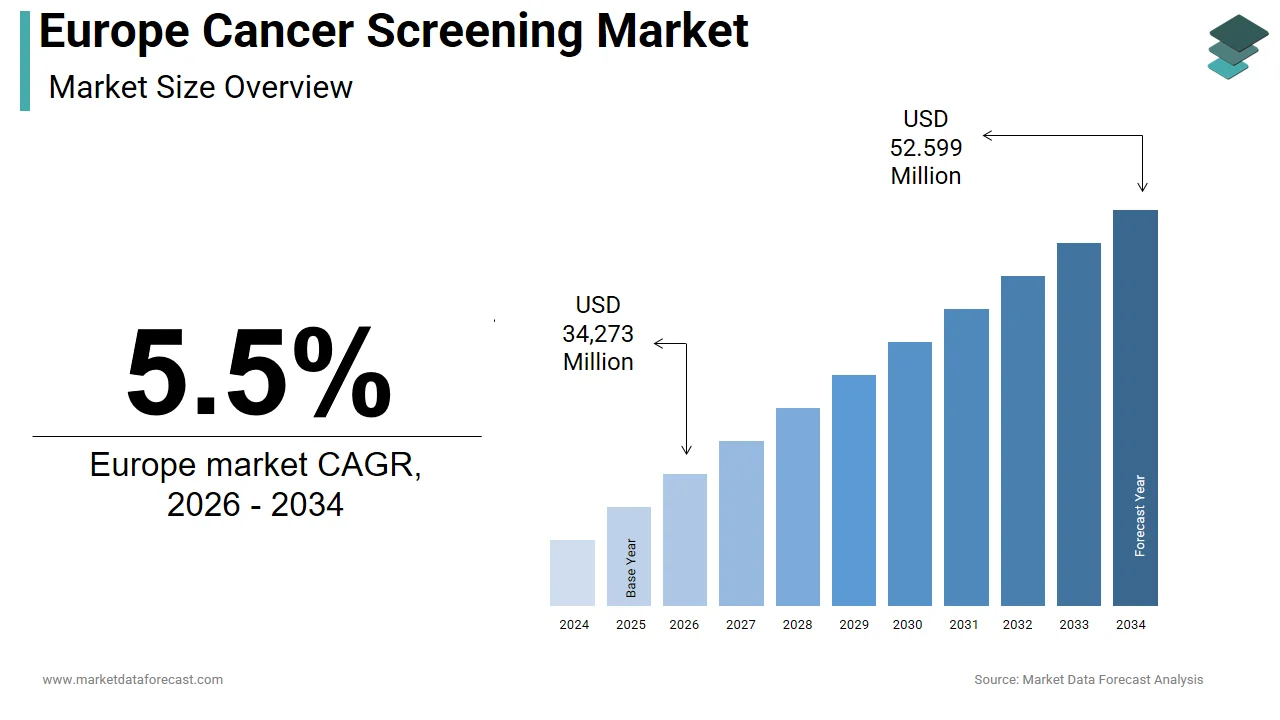
Market Size, 2025
$32,487 MnMarket Estimate, 2026
$34,273 MnMarket Forecast, 2034
$52,599 MnCAGR, 2026–2034
5.5%Europe Cancer Screening Market Report Summary
The Europe cancer screening market was valued at USD 32,487 million in 2025, is estimated to reach USD 34,273 million in 2026, and is projected to reach USD 52,599 million by 2034, growing at a CAGR of 5.5% from 2026 to 2034. Market growth is driven by the increasing prevalence of cancer, rising awareness of early detection, and expanding government-supported cancer screening programs across Europe. Cancer screening technologies help detect cancer at early stages, improving treatment outcomes and survival rates. The growing adoption of advanced diagnostic technologies, expanding healthcare infrastructure, and increasing investments in preventive healthcare are further supporting the expansion of the cancer screening market across the region.
Key Market Trends
- Increasing adoption of early cancer detection and preventive screening programs.
- Rising use of advanced imaging and molecular diagnostic technologies.
- Expansion of government-funded cancer screening initiatives across Europe.
- Growing awareness of regular health check-ups and preventive healthcare.
- Increasing investment in precision medicine and personalized oncology diagnostics.
Segmental Insights
- Based on cancer type, the breast cancer screening segment dominated the Europe cancer screening market in 2025, driven by widespread screening programs and high awareness levels regarding breast cancer detection.
- Based on technique, the imaging techniques segment held the largest share in 2025, supported by the extensive use of mammography, CT scans, MRI, and ultrasound in cancer detection.
- Based on stage, the TNM staging segment led the market in 2025, as it provides a globally recognized framework for classifying the size, spread, and severity of cancer.
Regional Insights
The Europe cancer screening market is witnessing steady growth across major countries due to strong healthcare infrastructure, national screening initiatives, and rising healthcare awareness.
- Germany led the regional market in 2025 with 22.6% share, supported by advanced healthcare systems and widespread cancer screening programs.
- The United Kingdom followed with 18.8% share in 2025, driven by comprehensive national screening programs and strong public healthcare initiatives.
- France holds a significant position in the market due to its hybrid healthcare model that combines government-organized screening programs with active private sector participation.
Competitive Landscape
The Europe cancer screening market is characterized by strong competition among diagnostic technology providers, biotechnology firms, and medical imaging companies. Market players are focusing on developing advanced diagnostic tools, expanding screening technologies, and improving early detection capabilities. Strategic partnerships with healthcare providers and investments in research and development are shaping competitive dynamics across the region.
Prominent companies operating in the Europe cancer screening market include DiaSorin S.p.A., Epigenomics AG, Techlab Inc., Positive Biosciences Limited, MedGenome Labs Ltd., Roche Diagnostics GmbH, 20/20 GeneSystems, AB SCIEX, Abbott Laboratories, Hologic Inc., Siemens Healthineers AG, Abcodia Ltd., and Abingdon Health Ltd.
 Download Free Sample Report
Europe Cancer Screening Market Size
The Europe cancer screening market was valued at USD 32,487 million in 2025, is estimated to reach USD 34,273 million in 2026, and is projected to reach USD 52,599 million by 2034, growing at a CAGR of 5.5% from 2026 to 2034.
Cancer screening is the process of testing healthy individuals for signs of cancer before they develop any symptoms. This includes organized population-based programs for breast, cervical, and colorectal cancers, as well as emerging screening for lung and prostate cancers using advanced imaging and molecular diagnostics. The European market is defined by a strong public health mandate, with most screening services funded and coordinated through national healthcare systems. According to the European Commission’s Health Union monitoring, more than 25 million EU citizens were invited to participate in organized cancer screening programs in 2022, marking a major effort to recover from pandemic-era disruptions. As per estimates from the European Cancer Information System (ECIS), approximately 2.7 million new cancer cases were diagnosed across the EU Member States in 2024, representing a slight 1.7% decrease compared to 2022 data. Furthermore, the European Union’s Beating Cancer Plan, launched in 2021 with a budget of 4 billion euros, has set a target for 90% of the eligible population in all member states to have access to screening for breast, cervical, and colorectal cancers by 2025. This policy-driven, publicly funded framework, combined with advances in non-invasive liquid biopsy and AI-powered imaging, shapes a unique market where public health goals and technological innovation converge to improve survival outcomes across the continent.
MARKET DRIVERS
EU Beating Cancer Plan and Mandated Population-Based Screening Programs
The European Union’s Beating Cancer Plan serves as the primary structural driver for the Europe cancer screening market. It achieves this by establishing legally backed targets and providing substantial funding to expand and standardize screening across all member states. The European Union is undergoing a coordinated effort to standardize and expand cancer detection, shifting from opportunistic testing to organized, population-based programs that aim for universal access across all Member States. Member States are focused on upgrading their existing screening protocols to align with new EU guidelines while launching pilot initiatives to expand screening to additional cancer types like lung and prostate. The plan allocates significant resources not just for traditional screening but also for research into next-generation methods like HPV testing for cervical cancer and fecal immunochemical tests for colorectal cancer. This centralized policy framework transforms cancer screening from a variable national service into a standardized EU-wide public health priority, creating a predictable and sustained demand for screening tests, diagnostic equipment, and associated services that is unprecedented in scale and coordination.
Rising Incidence of Cancer and Aging Population Demographics
The continent’s aging population and the consequent rise in cancer incidence also fuel the expansion of the Europe cancer screening market. Cancer is predominantly a disease of older age, and as life expectancy increases, so does the pool of individuals at risk. Europe is experiencing a steady demographic shift toward an older population profile, which is expected to gradually increase the demand for healthcare services and age-related disease management over the next several decades. This demographic shift directly translates into a larger eligible population for screening programs. The total number of new cancer diagnoses in Europe is expected to rise significantly over the coming decade, primarily driven by the demographic aging of the continent's population. This growing burden creates an urgent public health imperative to detect cancers early when treatment is most effective and least costly. National health systems, facing the economic pressure of rising cancer care costs, are therefore increasingly investing in screening as a cost-effective preventive strategy. This demographic reality ensures a long-term, expanding base of demand for all forms of cancer screening services and technologies across the European region.
MARKET RESTRAINTS
Fragmented Implementation and Low Uptake Rates in Organized Screening Programs
The persistent gap between policy ambition and on-the-ground reality is a major restraint on the Europe Cancer Screening Market. This gap is characterized by fragmented program implementation and suboptimal participation rates. Despite the EU’s 90% coverage target, actual uptake varies dramatically across and within member states. Breast cancer screening participation remains highly uneven across Europe, with Nordic countries consistently exceeding targets while several Southern and Eastern European nations continue to struggle with rates well below the continental average. Barriers to participation include lack of awareness, fear of diagnosis, logistical challenges like travel and time off work, and cultural or language barriers for migrant populations. This low uptake means that a significant portion of the eligible population is not benefiting from available screening, which in turn reduces the overall effectiveness of these programs and dampens the market demand for screening tests and services. Until these systemic and social barriers are addressed through targeted outreach and improved accessibility, the full potential of the European cancer screening market will remain unrealized.
High Cost and Limited Reimbursement for Advanced and Emerging Screening Technologies
The high cost of advanced screening technologies and the limited or inconsistent reimbursement policies across the region’s healthcare systems are a significant economic barrier to the Europe cancer screening market. While traditional screening methods like mammography and Pap smears are widely covered, newer, more sensitive technologies such as low-dose CT for lung cancer or multi-cancer early detection (MCED) blood tests are often not included in national reimbursement schemes. According to the European Observatory on Health Systems and Policies, the cost of a low-dose CT scan can be three to five times higher than a standard chest X-ray, creating a financial barrier for public health programs operating on tight budgets. Similarly, MCED tests, which can cost several hundred euros per test, are currently only available on a private pay basis in most of Europe. This lack of public funding restricts access to these potentially life-saving innovations to a small, affluent segment of the population, slowing their adoption and limiting the market’s growth potential for cutting-edge screening solutions.
MARKET OPPORTUNITIES
Integration of Artificial Intelligence in Medical Imaging for Early Detection
The integration of artificial intelligence into medical imaging workflows to enhance the accuracy and efficiency of early cancer detection gives a great opportunity for the Europe Cancer Screening Market. AI algorithms can assist radiologists and pathologists by flagging suspicious areas on mammograms, lung CT scans, or cervical cytology slides, reducing both false negatives and false positives. Clinical trials in Europe are increasingly demonstrating that artificial intelligence can match or exceed the accuracy of traditional human double-reading in mammography, significantly reducing the workload for radiologists while maintaining high safety standards. The European Commission’s Horizon Europe program has allocated significant funding to validate these AI tools in real-world clinical settings across multiple countries. As these systems receive CE marking under the new In Vitro Diagnostic Regulation and are integrated into national screening programs, they have the potential to significantly improve outcomes while alleviating the strain on a shortage of specialist staff, creating a high-growth market for AI-powered diagnostic software.
Expansion of Organized Screening Programs to Include Lung and Prostate Cancers
The formal inclusion of lung and prostate cancer screening into national organized programs creates many new options for the Europe cancer screening market expansion. The European Commission’s Beating Cancer Plan explicitly supports the rollout of lung cancer screening for high-risk individuals, such as long-term smokers, using low-dose CT. Several countries, including the Netherlands and Germany, have already begun piloting or implementing these programs. Similarly, there is growing momentum to establish evidence-based prostate cancer screening using MRI and PSA testing to reduce overdiagnosis while catching aggressive cancers early. The introduction of organized lung cancer screening is expected to create a massive new requirement for diagnostic imaging, necessitating a significant expansion of radiology capacity and funding across the European Union. This policy-driven expansion beyond the traditional “big three” cancers would dramatically increase the addressable population and create substantial new demand for imaging equipment, biomarker tests, and associated diagnostic services, representing the single largest growth vector for the European cancer screening market in the coming decade.
MARKET CHALLENGES
Persistent Shortage of Specialized Healthcare Professionals for Screening and Diagnosis
The chronic shortage of specialized healthcare professionals is a serious human capital problem for the Europe Cancer Screening Market. These include radiologists, pathologists, cytotechnologists, and endoscopists who are essential for performing and interpreting screening tests. The European radiology workforce is facing an acute staffing crisis characterized by an aging professional population and a growing imbalance between the surging demand for imaging and the rate of new trainee recruitment. This shortage leads to long waiting times for appointments and result interpretation, which can delay diagnosis and deter participation in screening programs. The problem is particularly acute in Eastern and Southern Europe, but is increasingly evident even in high-income nations. Without a sufficient workforce, even the most advanced screening technologies and well-funded programs cannot function effectively. This barrier in human resources poses a fundamental constraint on the market’s ability to scale and deliver on the ambitious targets set by the EU Beating Cancer Plan, threatening to undermine the entire early detection strategy.
Ethical and Logistical Complexities of Implementing Multiple Cancer Early Detection Tests
The potential implementation of multi-cancer early detection (MCED) blood tests poses a formidable scientific and ethical challenge for the Europe Cancer Screening Market. These innovative tests can screen for dozens of cancers from a single sample. While promising, these tests raise significant concerns about overdiagnosis, false positives leading to unnecessary invasive follow-up procedures, and the psychological burden of uncertain results. According to the European Society for Medical Oncology, the positive predictive value of current MCED tests for many rare cancers is still too low for population-wide use. Furthermore, there is no established clinical pathway for managing a positive MCED result, creating a logistical nightmare for already strained healthcare systems. The European Commission has called for large-scale prospective trials to evaluate the clinical utility and cost-effectiveness of these tests before any recommendation for routine use. Until these complex issues of validation, clinical integration, and ethical management are resolved, the widespread adoption of MCED tests in Europe will remain a distant prospect, despite their revolutionary potential.
SEGMENTAL ANALYSIS
By Cancer Insights
In 2025, the breast cancer screening segment continued to be the largest segment in the Europe Cancer Screening Market. The dominance of this segment is attributed to the comprehensive implementation of organized mammography programs across the European Union, which mandate regular screening for women within specific age brackets. It is also because of the decades of established national protocols and high public awareness. The European Union is characterized by a "screening divide," where Northern and Western nations operate highly efficient, invitation-based systems while several Eastern and Southern nations struggle to transition from ad-hoc testing to organized national programs. The high prevalence of the disease further cements this segment leadership as breast cancer remains the most frequently diagnosed malignancy among women in the region. Europe faces a massive and growing volume of new cancer diagnoses each year, placing a continuous and escalating demand on diagnostic and screening infrastructure across all healthcare systems. Furthermore, technological advancements in digital breast tomosynthesis have revitalized the sector by improving detection rates in dense breast tissue, which is common among younger European women. Advanced imaging technologies are progressively replacing traditional methods in European clinics because they offer clearer visualization of breast tissue and a higher probability of identifying malignant lesions in dense tissue. This clinical superiority drives healthcare providers to upgrade equipment rapidly, sustaining high capital expenditure within the segment. The combination of legislative mandates, high disease burden, and continuous technological innovation ensures that breast cancer screening maintains its position as the cornerstone of the European oncological diagnostic landscape.
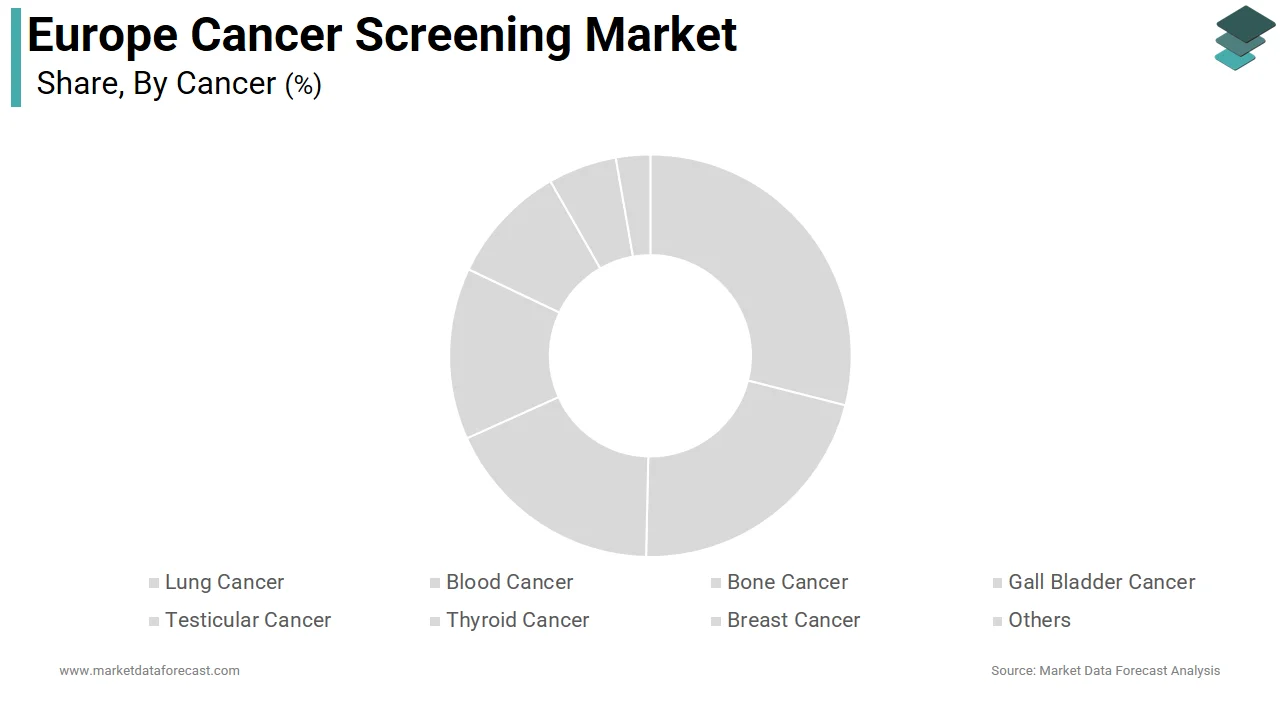
The lung cancer screening segment is on the rise and is expected to be the fastest-growing segment in the market by witnessing a CAGR of 12.5% from 2026 to 2034 due to the recent inclusion of lung cancer in the updated Council Recommendation on cancer screening issued in 2022, which formally urged member states to implement population-based screening for high-risk individuals. Historically limited to opportunistic testing, the shift toward organized low-dose computed tomography programs has unlocked a vast previously untapped patient population. As per the International Agency for Research on Cancer, lung cancer causes more deaths than any other cancer type in Europe, yet early detection rates have historically remained below 20% due to the lack of systematic screening. The new guidelines target current and former heavy smokers aged fifty to seventy four, a demographic comprising millions of citizens across the continent. Clinical evidence from the Nelson trial, a major European study, demonstrated that low-dose CT screening reduces lung cancer mortality by 26% in men and up to 39% in women, providing the robust scientific backing needed for policy adoption. Countries like Germany and France have already begun rolling out pilot programs with plans for nationwide expansion by 2025. The rapid transition from recommendation to implementation, combined with the urgent need to address the leading cause of cancer mortality, creates an unprecedented surge in demand for specialized CT scanners and associated diagnostic services, propelling this segment to the forefront of market growth.
By Technique Insights
The imaging techniques segment held the majority share of the Europe Cancer Screening Market in 2025. This supremacy of the segment is credited to its non-invasive nature and critical role in visualizing internal anatomical structures for early tumor detection. This segment covers modalities such as mammography, computed tomography, and magnetic resonance imaging, which serve as the first line of defense in most national screening algorithms. The supremacy of imaging is driven by the widespread availability of advanced hardware and the integration of these tools into standardized public health pathways. Western European healthcare systems are continuing to expand their diagnostic infrastructure to manage an aging population, with a focus on increasing the availability of advanced imaging to reduce waiting times for critical diagnoses. This extensive infrastructure enables high-throughput screening capabilities essential for managing large eligible populations. Furthermore, the evolution of imaging technology toward lower radiation doses and higher resolution has increased patient acceptance and clinical confidence. The integration of artificial intelligence and advanced iterative reconstruction into radiology is drastically lowering the radiation burden on patients, allowing for safer, more frequent screening of high-risk individuals. Government investments continue to prioritize imaging upgrades as part of broader digital health strategies. For instance, the European Union has allocated significant funds under its recovery plan to modernize hospital imaging departments to ensure equitable access across rural and urban areas. The reliance on visual confirmation for diagnosis ensures that imaging remains the backbone of cancer screening, outpacing invasive methods in terms of volume and frequency of use across the continent.
The genomic and molecular tests segment is expected to exhibit a noteworthy CAGR of 14.8% during the forecast period, owing to the paradigm shift toward precision medicine and the increasing clinical validation of liquid biopsy technologies for early cancer detection. Unlike traditional methods that rely on anatomical changes, these tests identify malignancies at the molecular level by detecting circulating tumor DNA or specific genetic mutations in blood samples. The driving force behind this surge is the ability of genomic assays to screen for multiple cancer types simultaneously from a single sample, offering a convenient alternative to organ-specific imaging. As per research presented at the European Society for Medical Oncology annual congress, multi-cancer early detection tests have demonstrated specificity rates above 99% in diverse European cohorts, prompting health technology assessment bodies to fast-track evaluations. National health systems are increasingly recognizing the potential of these tests to reach underserved populations who avoid invasive procedures. Major clinical evaluations of liquid biopsy technology are demonstrating their ability to catch the most aggressive cancers early, though current evidence has yet to prove they can consistently reduce the overall rate of late-stage diagnoses across all cancer types. Additionally, decreasing costs of next-generation sequencing have made these tests more economically viable for broad deployment. Regulatory frameworks are adapting quickly, with the European In Vitro Diagnostic Regulation providing clearer pathways for approval. The convergence of technological maturity, clinical proof, and regulatory support positions genomic testing as the most dynamic growth engine in the European screening landscape.
By Stage Insights
The TNM Staging segment dominated the Europe Cancer Screening Market in 2025 because it offers a universally accepted framework for classifying cancer spread. This, in turn, directly dictates treatment protocols and prognosis estimation. The TNM staging system evaluates the size of the primary tumor, the involvement of regional lymph nodes, and the presence of distant metastasis, forming the basis for almost all clinical decision-making in oncology. The dominance of this segment is entrenched in its mandatory inclusion in cancer registry reporting and clinical trial eligibility criteria across all European nations. As per the guidelines issued by the Union for International Cancer Control, which are adopted by the European Society for Medical Oncology, accurate TNM staging is required for every new cancer diagnosis to ensure standardized care and comparable outcome data. Leading European registries are moving toward mandatory clinical data collection to improve transparency and care quality, though complete recording of complex anatomical staging remains a logistical challenge that agencies are currently addressing through simplified staging tools. The integration of TNM staging into electronic health records and hospital information systems further solidifies its prevalence. Hospitals invest heavily in software solutions that automate TNM assignment based on imaging and pathology results to comply with quality assurance mandates. Furthermore, reimbursement models in many European countries link payment levels to the stage at diagnosis, incentivizing precise staging to optimize resource allocation. The sheer ubiquity of the TNM system in clinical practice, research, and public health monitoring ensures that it remains the primary method for categorizing cancer severity, overshadowing other prognostic factors in terms of market utilization and procedural volume.
The Prognostic Factors segment is predicted to witness the highest CAGR of 11.2% between 2026 and 2034. This acceleration is propelled by the increasing integration of biomarker analysis and genetic profiling into routine screening workflows to predict disease aggressiveness and tailor surveillance intervals. While TNM staging describes anatomical extent, prognostic factors provide biological insights that are crucial for personalized risk stratification. The rise of this segment is fueled by the adoption of multigene assays that assess recurrence risk in early-stage cancers, allowing clinicians to spare low-risk patients from unnecessary aggressive treatments. Major European cancer centers are rapidly integrating molecular profiling into standard diagnostic workups, shifting away from general classifications toward a system where genetic and proliferative markers dictate the choice of targeted and systemic therapies. This trend is supported by evolving clinical guidelines that recommend molecular characterization for all newly diagnosed breast and colorectal cancers to guide therapy selection. Healthcare payers are increasingly covering these tests as evidence mounts that they improve long-term outcomes and reduce overall healthcare costs by avoiding ineffective therapies. The European Union's Beating Cancer Plan explicitly promotes the use of genomic data to refine screening strategies and identify high-risk subgroups who require more intensive monitoring. The reliance on static anatomical staging is giving way to dynamic biological assessments as the understanding of tumor biology deepens. Consequently, this evolution is driving increased demand for advanced prognostic testing services and associated analytical platforms.
COUNTRY-LEVEL ANALYSIS
Germany Cancer Screening Market Analysis
Germany outperformed other countries in the Europe Cancer Screening Market and occupied a 22.6% share in 2025. The growth of cancer screening in Germany is driven by its robust healthcare infrastructure and comprehensive statutory insurance coverage. The country's market is known for high utilization rates of advanced diagnostic technologies and a strong culture of preventive health check-ups mandated by law. A primary driving factor is the German Cancer Early Detection Program, which entitles all insured citizens to annual skin cancer screenings and regular examinations for colorectal, cervical, and breast cancers starting at specific ages. Germany is successfully transitioning from opportunistic to organized invitation-based screening, which has led to a steady increase in the number of citizens utilizing preventative colonoscopies and stool-based tests. The nation also boasts the highest density of CT and MRI scanners in Europe, facilitating rapid access to imaging diagnostics. Furthermore, Germany serves as a hub for medical technology innovation, hosting numerous global manufacturers who launch new screening devices domestically first. The Federal Joint Committee continuously updates screening guidelines based on the latest evidence, ensuring rapid adoption of novel methods such as fecal immunochemical tests. The demographic shift toward an older population in Germany is creating a sustained and growing demand for age-related medical check-ups, particularly for cancers that have a higher incidence in later life. This combination of legislative support, technological abundance, and demographic pressure secures Germany's dominant position.
United Kingdom Cancer Screening Market Analysis
The United Kingdom was the next prominent country in the Europe cancer screening market and captured a 18.8% share in 2025. This position of the UK market is supported by its centralized National Health Service, which delivers screening as a universal public good. The market growth in the UK reveals a highly organized call recall systems that actively invite eligible individuals rather than relying on patient initiative, resulting in structured and predictable demand patterns. A key driving factor is the NHS Long Term Plan, which commits to diagnosing 75% of cancers at stage one or two by 2028, necessitating a massive expansion in screening capacity and outreach. As per reports from NHS England, the rollout of the Targeted Lung Health Check programme aims to screen hundreds of thousands of high-risk smokers annually, representing a significant new revenue stream for diagnostic providers. The country is also a pioneer in adopting genomic screening, with the NHS Genomic Medicine Service integrating whole genome sequencing into routine care for certain cancer types. Public awareness campaigns such as Be Clear on Cancer have successfully increased presentation rates for symptoms, indirectly boosting screening uptake. Despite challenges related to workforce shortages, the government has invested heavily in artificial intelligence tools to triage images and reduce radiologist workload. The commitment to equity ensures that screening services reach deprived communities through mobile units and community hubs, sustaining high-volume activity across the nation and reinforcing the UK's status as a critical market player.
France Cancer Screening Market Analysis
France occupies a significant position in the Europe Cancer Screening Market due to a hybrid system that combines state-organized programs with strong private sector participation. The country’s market shows a high accessibility and a cultural emphasis on regular medical consultations, facilitated by a reimbursement model that covers most screening costs fully. A major driving factor is the nationwide expansion of organized screening for colorectal cancer, which switched to the more user-friendly fecal immunochemical test in 2019, leading to a substantial increase in participation rates. The country also maintains rigorous breast and cervical cancer screening networks managed by regional health agencies that ensure high coverage in both urban and rural areas. France is increasingly focusing on reducing inequalities in access, launching specific initiatives to improve screening uptake in overseas territories and among socioeconomically disadvantaged groups. The presence of a vibrant biotechnology sector supports the rapid adoption of innovative molecular diagnostic tests. Additionally, the French government has prioritized cancer control in its national health strategy, allocating dedicated funds to modernize screening equipment and train professionals. The synergy between public health mandates and a dynamic private diagnostic market fuels continuous growth and sustains France's strong standing in the region.
Italy Cancer Screening Market Analysis
Italy continues to be a noteworthy contributor to the Europe cancer screening market because of a regionally decentralized healthcare system that leads to varied but generally high screening coverage across its twenty regions. The market status is defined by the strong performance of organized screening programs in the northern and central regions, which often exceed European average participation targets. A primary driving factor is the longstanding tradition of organized breast, cervical, and colorectal cancer screening programs managed by local health authorities, which have achieved notable participation rates in regions like Emilia Romagna and Tuscany. The Italian government is actively working to harmonize screening offerings across the south to reduce geographical disparities, investing in new equipment and training programs. The aging demographic profile of Italy, with one of the oldest populations in the world, creates a naturally expanding base of eligible individuals for cancer screening. Furthermore, the integration of screening data into regional electronic health records improves tracking and follow-up efficiency. The strong emphasis on prevention within the National Prevention Plan ensures that screening remains a political priority, driving sustained investment and operational activity throughout the country.
Spain Cancer Screening Market Analysis
Spain is likely to grow in the European market over the forecast period by leveraging a universal public healthcare system that provides free access to cancer screening for all citizens. The market status is marked by steady growth as autonomous communities progressively implement and expand organized screening protocols in alignment with European Union recommendations. A key driving factor is the recent intensification of efforts to meet EU targets for breast, cervical, and colorectal cancer screening coverage, with regions like Catalonia and the Basque Country serving as models of excellence. The Spanish Strategy for Cancer Control outlines clear objectives to increase early detection rates and reduce mortality, guiding regional health planning and resource allocation. The country benefits from a high density of primary care centers that act as gateways for screening referrals, ensuring a broad reach into local communities. Additionally, Spain is investing in digital health infrastructure to improve patient tracking and reduce loss to follow-up. The growing awareness of cancer prevention among the population, coupled with government commitments to reduce waiting times, fosters a conducive environment for market expansion. These factors collectively position Spain as a vital and growing component of the European cancer screening landscape.
COMPETITIVE LANDSCAPE
The competitive landscape of the Europe Cancer Screening Market is dominated by a few large multinational corporations that compete primarily on technological integration, regulatory compliance, and public health partnerships rather than price. The market is highly consolidated, with leaders leveraging their broad portfolios of imaging, in vitro diagnostics, and AI software to offer end-to-end solutions for national screening programs. Competition is intense among these incumbents, who continuously innovate to meet the stringent quality and performance standards set by the EU Beating Cancer Plan. A key differentiator is the ability to provide not just products but comprehensive support services, including staff training, data management, and program evaluation, which are critical for the success of publicly funded initiatives. The market features high barriers to entry due to the capital intensity of R and D, the need for extensive clinical validation, and the complex process of gaining inclusion in national screening protocols. New entrants face significant challenges in building trust with public health bodies, resulting in a stable but fiercely competitive environment where long-term relationships and scientific credibility are paramount.
KEY MARKET PLAYERS
The leading companies operating in the Europe cancer screening include:
- DiaSorin S.p.A.
- Epigenomics AG
- Techlab, Inc.
- Positive Biosciences Limited
- MedGenome Labs Ltd.
- Roche Diagnostics GmbH
- 20/20 GeneSystems
- AB SCIEX
- Abbott Laboratories
- Hologic Inc.
- Siemens Healthineers AG
- Abcodia Ltd.
- Abingdon Health Ltd.
TOP PLAYERS IN THE MARKET
- Roche Diagnostics is a global leader in in vitro diagnostics with a profound impact on the European cancer screening market through its comprehensive portfolio of molecular and genomic tests. The company is a key supplier of HPV DNA tests used in cervical cancer screening programs across the continent and provides advanced immunoassays for colorectal cancer detection. Roche leverages its extensive R and D network to develop highly sensitive and automated diagnostic platforms that integrate seamlessly into high-throughput public health laboratories. To strengthen its position, Roche has invested heavily in digital pathology solutions and AI-powered image analysis tools for breast cancer screening. The company also actively collaborates with European public health agencies to validate its tests within national screening protocols, ensuring its technologies are at the forefront of the EU’s Beating Cancer Plan implementation.
- Siemens Healthineers is a cornerstone of the European cancer screening landscape, offering a full range of advanced imaging systems, including mammography, low-dose CT, and MRI scanners that are essential for breast, lung, and prostate cancer screening. The company’s strength lies in its integration of hardware, software, and AI-driven analytics to create end-to-end diagnostic solutions. Siemens has reinforced its market position by launching dedicated screening packages, such as its Mammomat Fusion for digital breast tomosynthesis and its SOMATOM X.cite for ultra-low dose lung CT. The company also provides extensive training and support services to radiology departments across Europe, ensuring optimal use of its technology in organized screening programs. This focus on workflow efficiency and diagnostic accuracy makes Siemens an indispensable partner in Europe’s public health infrastructure.
- Hologic is a major force in the European cancer screening market, renowned for its pioneering role in women’s health diagnostics, particularly in breast and cervical cancer screening. The company’s 3D mammography (tomosynthesis) systems are widely deployed in national breast screening programs across Western Europe, and its Aptima HPV assay is a leading test for primary cervical screening. Hologic has strengthened its European presence by expanding its manufacturing and service operations in the Netherlands and Germany to ensure rapid delivery and support. The company also invests in public awareness campaigns in partnership with European health ministries to promote screening participation. Through its focus on innovation in women’s health and its deep integration into public screening pathways, Hologic remains a critical enabler of early cancer detection across the continent.
TOP STRATEGIES USED BY THE KEY MARKET PARTICIPANTS
Key players in the Europe Cancer Screening Market employ four core strategies to maintain their leadership. First, they develop integrated diagnostic solutions that combine hardware, reagents, and AI-powered software to streamline screening workflows in high-volume public health settings. Second, they actively collaborate with national health authorities and the European Commission to validate their technologies within official screening guidelines and secure inclusion in organized programs. Third, they invest in localized manufacturing and service infrastructure to ensure rapid deployment, maintenance, and training for public health laboratories and hospitals. Fourth, they support public health initiatives through educational campaigns and data analytics services that help governments monitor program performance and improve participation rates, thereby embedding their technologies into the fabric of Europe’s cancer control strategy.
MARKET SEGMENTATION
This research report on the Europe cancer screening market has been segmented and sub-segmented into the following categories.
By Cancer
- Lung Cancer
- Blood Cancer
- Bone Cancer
- Gall Bladder Cancer
- Testicular Cancer
- Thyroid Cancer
- Breast Cancer
- Others
By Technique
- Imaging Techniques
- CT Scan
- MRI
- Others
- Endoscopy
- Colonoscopy
- Sigmoidoscopy
- Others
- Biopsy and Cytology Tests
- Needle Biopsy
- CT-Guided Biopsy
- Others
- Genomic and Molecular tests
- Next Generation Sequencing (NGS)
- RT- PCR
- Others
By Stage
- TNM Stages
- Stages 0, 1, 2, 3, 4
- Prognostic Factors
- Others
By Gender
- Men
- Women
By Country
- UK
- France
- Spain
- Germany
- Italy
- Russia
- Sweden
- Denmark
- Switzerland
- Netherlands
- Turkey
- Czech Republic
- Rest of Europe