- Product Description Description
- Table of Contents TOC
- List of Table & Figure LOT
- Get Free Sample PDF Sample PDF
Market Size, 2025
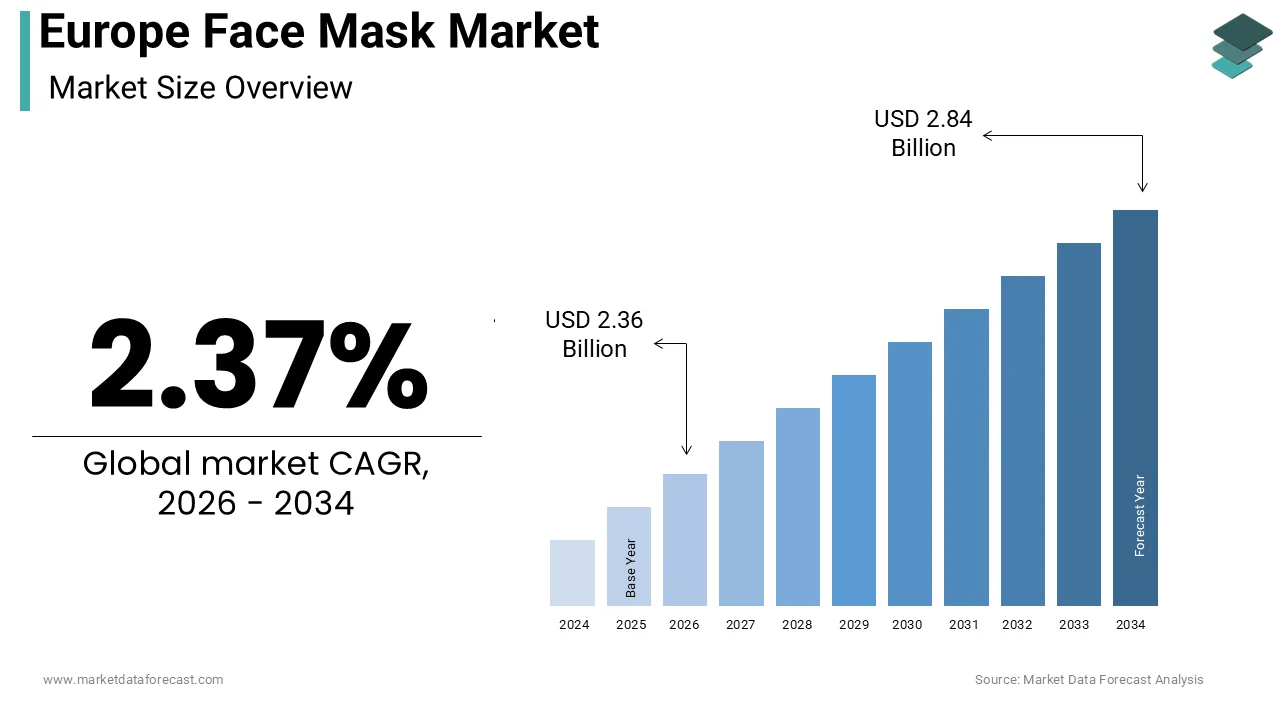
$2.30 BnMarket Estimate, 2026
$2.36 BnMarket Forecast, 2034
$2.84 BnCAGR, 2026–2034
2.37%Europe Face Mask Market Report Summary
The Europe face mask market was valued at USD 2.30 billion in 2025, is estimated to reach USD 2.36 billion in 2026, and is projected to reach USD 2.84 billion by 2034, growing at a CAGR of 2.37% during the forecast period. The growth of the Europe face mask market is driven by sustained awareness of personal hygiene, increasing adoption of skincare routines, and ongoing demand for protective masks in healthcare and industrial settings. In the beauty segment, face masks are gaining popularity due to rising interest in skincare, self-care trends, and demand for premium cosmetic products. Meanwhile, in the healthcare and industrial segments, regulatory requirements and occupational safety standards continue to support demand. However, market growth is relatively moderate due to post-pandemic normalization and market saturation in certain categories.
Key Market Trends
- Increasing focus on skincare and self-care routines, boosting demand for cosmetic face masks.
- Continued demand for protective masks in healthcare and industrial sectors.
- The rising popularity of sheet masks and premium skincare products.
- Growing consumer preference for natural, organic, and dermatologically tested products.
- Expansion of retail and online distribution channels, improving product accessibility.
Segmental Insights
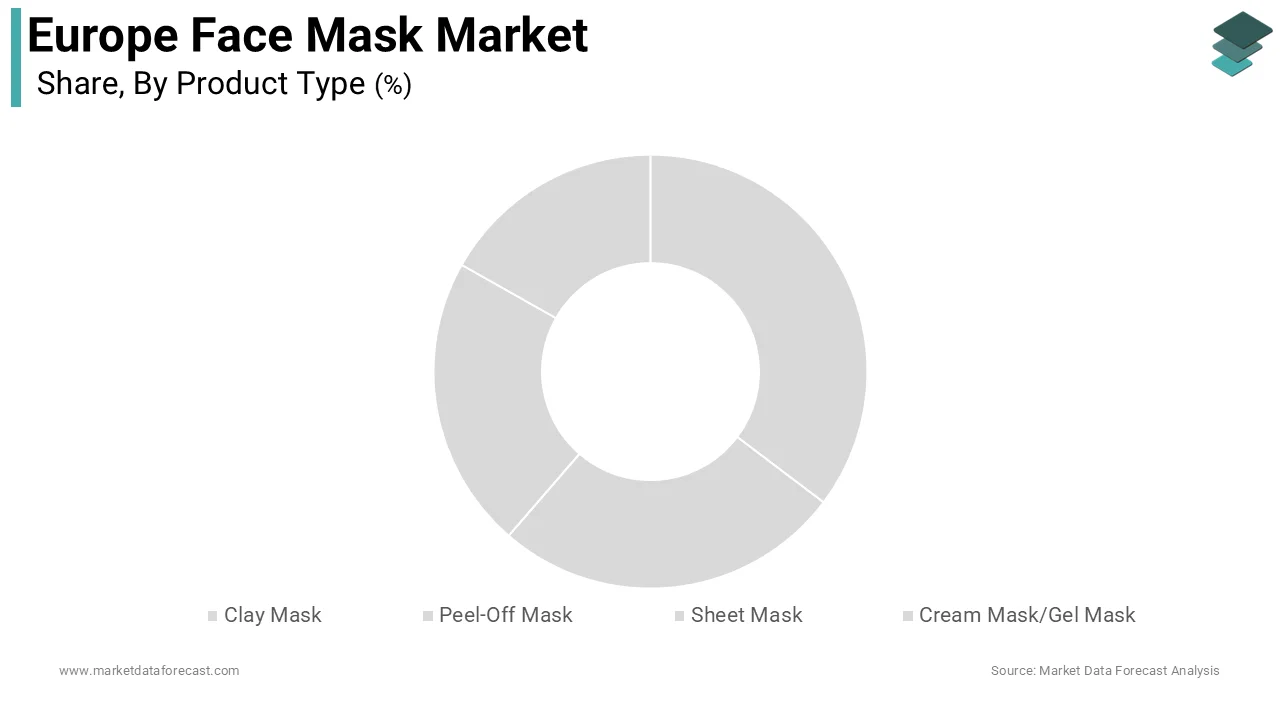
- Based on product type, the sheet mask segment dominated the Europe face mask market by accounting for 38.6% of the market share in 2025, driven by convenience, ease of use, and growing popularity in skincare routines.
- Based on end user, the women segment held a dominant share of the Europe face mask market in 2025, supported by higher adoption of skincare and beauty products.
- Based on distribution channel, the supermarkets and hypermarkets segment accounted for 42.3% of the Europe face mask market share in 2025, owing to wide availability and strong retail presence.
Regional Insights
- Germany dominated the Europe face mask market in 2025, accounting for 22.3% of the regional market share, driven by strong healthcare infrastructure, industrial demand, and consumer awareness.
- France held 19.8% of the Europe face mask market share in 2025, supported by its strong cosmetics industry and demand for premium skincare products.
- The United Kingdom is expected to witness notable growth, fueled by increasing self-care trends and expanding beauty product markets.
- Italy is projected to grow steadily, supported by its strong fashion and beauty culture, along with demand for high-quality skincare products.
- Spain is emerging as a growing market, driven by increasing adoption of beauty trends and rising focus on personal care.
Competitive Landscape
- The Europe face mask market is highly competitive, with the presence of both healthcare equipment manufacturers and cosmetic brands. Market players are focusing on product innovation, quality improvement, and expanding their distribution networks to strengthen their market position. Strategic partnerships and investments in sustainable and high-performance materials are key strategies adopted by leading companies.
- Prominent players in the Europe face mask market include 3M Company, Honeywell International Inc, Kimberly-Clark Worldwide, DACH Schutzbekleidung GmbH & Co. KG, uvex group, Delta Plus Group, Valmy SAS, Ambu A/S, SAS Safety Corp, Maskpol, MKE Maksam, Avon Protection, DuPont de Nemours Inc, Cardinal Health Inc, Moldex-Metric Inc, Alpha Pro Tech Ltd, Prestige Ameritech, Ansell Limited, Cambridge Mask Co, and Kowa Company Ltd.
Europe Face Mask Market Size
The Europe face mask market size was calculated to be USD 2.30 billion in 2025 and is anticipated to be worth USD 2.84 billion by 2034, from USD 2.36 billion in 2026, growing at a CAGR of 2.37% during the forecast period.
The face mask is a personal protective equipment designed to filter airborne particles, pathogens, and pollutants, which is a barrier in healthcare, industrial, and public settings. The definition of the market now extends beyond simple surgical masks to include high-efficiency respirators, reusable cloth variants with advanced filtration, and specialized masks for industrial hygiene. According to the European Environment Agency, exposure to fine particulate matter contributes to over 300000 premature deaths annually in Europe, underscoring the necessity for effective respiratory protection in daily life. Furthermore, the European Centre for Disease Prevention and Control emphasizes that proper mask usage can reduce the transmission of respiratory viruses by up to 80% in community settings, reinforcing their role in infection control protocols. The market operates under stringent regulatory frameworks such as the European Norm 14683 for medical masks and EN 149 for filtering face pieces, ensuring high standards of safety and efficacy.
MARKET DRIVERS
Stringent Occupational Health and Safety Regulations Drive Industrial Demand
The rigorous enforcement of occupational health and safety legislation in industrial and professional sectors is fuelling the growth of Europe face mask market. The European Agency for Safety and Health at Work mandates that employers provide adequate personal protective equipment, including respiratory protection, to workers exposed to hazardous dust, fumes, and biological agents. Compliance with directives like the EU Regulation 2016/425 requires that all protective masks meet specific performance criteria, compelling companies to procure certified products rather than generic alternatives. In the healthcare sector alone, which employs over 18 million people in Europe, the mandatory use of medical-grade masks during patient care procedures ensures a consistent baseline demand regardless of pandemic status. Recent updates to safety guidelines have expanded the scope of required protection to include emerging nanomaterials and viral pathogens by prompting industries to upgrade their inventory to higher filtration standards like FFP2 and FFP3. This regulatory environment creates an inelastic demand curve where compliance is non-negotiable, driving steady volume growth for manufacturers who can certify their products according to European norms.
Rising Public Awareness of Air Quality and Respiratory Health
The growing public consciousness regarding air pollution and its detrimental effects on respiratory health is additionally elevating the growth of Europe face mask market. Urban populations across Europe are increasingly exposed to nitrogen dioxide and particulate matter levels that exceed World Health Organization guidelines, prompting individuals to seek personal protection during daily commutes and outdoor activities. According to the European Environment Agency, more than 90% of the urban population in Europe is exposed to harmful levels of air pollutants, leading to a surge in demand for high-filtration civilian masks. This trend is particularly pronounced in major metropolitan areas like Paris, Milan, and Warsaw, where smog alerts frequently trigger spikes in mask sales. Medical associations have begun recommending mask usage for vulnerable groups, including children and the elderly, during periods of poor air quality, further normalizing their use outside of clinical settings. The prevalence of respiratory conditions such as asthma and chronic obstructive pulmonary disease, which affect over 30 million people in Europe, motivates patients to adopt proactive measures to minimize symptom exacerbation. Consumer behavior has shifted towards viewing masks as essential accessories for urban living, similar to sunglasses or umbrellas.
MARKET RESTRAINTS
Market Saturation and Inventory Overhang Restrain Growth Momentum
The inventory accumulation from the pandemic era is also hindering the growth of Europe face mask market. During the peak of the global health crisis, manufacturers and distributors aggressively scaled up production capacities, leading to a massive surplus of stock that continues to flood the supply chain. Retailers and healthcare providers are currently focused on depleting these existing stockpiles before placing new orders, resulting in a prolonged period of sluggish demand for fresh production. This oversupply has triggered intense price competition, eroding profit margins for manufacturers and discouraging investment in innovation or capacity expansion. Small and medium-sized enterprises that entered the market during the boom are particularly vulnerable, facing insolvency as they struggle to compete with discounted legacy stock. The psychological impact of this saturation also affects buyer behavior, with organizations adopting a "just-in-time" purchasing strategy to avoid future overstocking risks.
Environmental Concerns Regarding Single-Use Plastic Waste
The escalating environmental concerns surrounding the disposal of single-use masks are also impeding the growth of Europe face mask market. The widespread adoption of disposable masks has generated a substantial volume of plastic waste, with estimates indicating that billions of masks enter the waste stream monthly across the continent. According to the European Commission, personal protective equipment waste increased by over 500% during the pandemic, with a significant portion ending up in landfills or as litter in natural environments. The polypropylene material used in most surgical and respirator masks is not biodegradable and can persist in ecosystems for decades, breaking down into microplastics that contaminate soil and water sources. This environmental footprint has sparked backlash from eco-conscious consumers and regulatory bodies aiming to meet the European Green Deal targets for waste reduction. Several municipalities have implemented strict disposal guidelines or bans on certain types of single-use plastics, complicating the logistics for end-users and institutions. The negative publicity associated with plastic pollution drives a preference for reusable alternatives, yet these options often face hurdles regarding certification and perceived efficacy. Manufacturers face increasing pressure to develop sustainable solutions, but the high cost of biodegradable materials and the complexity of recycling multi-layer masks slow down the transition.
MARKET OPPORTUNITIES
Innovation in Sustainable and Biodegradable Mask Materials
The development and commercialization of sustainable, biodegradable, and reusable face mask technologies is substantially to create new opportunities for the growth of Europe face mask market. As environmental regulations tighten and consumer preferences shift towards green products, there is a growing demand for masks made from natural fibers, bioplastics, and innovative nanomaterials that offer high filtration without the ecological burden. Research initiatives funded by the European Union are actively exploring alternatives such as cellulose-based filters and chitosan coatings that degrade naturally within months rather than centuries. Data from sustainability surveys indicates that 65% of European consumers are willing to pay a premium for eco-friendly personal protective equipment, signaling a viable market niche for green innovators. Companies that successfully launch certified biodegradable masks can differentiate themselves in a crowded marketplace and align with the corporate sustainability goals of large institutional buyers. Furthermore, the advancement of washable and reusable mask designs with replaceable filters offers a long-term solution that reduces waste generation while maintaining protection standards. The integration of circular economy principles, such as take-back programs for recycling used masks, opens new revenue streams and enhances brand loyalty.
Integration of Smart Technologies and Functional Features
The integration of smart technologies and advanced functional features to elevate the product from a passive barrier to an active health monitoring device is expected to significantly boost the growth of Europe face mask market in the coming years. Innovations such as embedded sensors capable of detecting respiratory rate, body temperature, and even specific viral particles are reshaping the potential utility of face masks in healthcare and industrial settings. The European digital health market is projected to grow significantly, and the convergence of wearable technology with personal protective equipment aligns perfectly with this trend. Pilot studies have demonstrated that smart masks can transmit real-time data to smartphones or central monitoring systems, enabling early detection of health anomalies in workers or patients. Additionally, the incorporation of antimicrobial coatings, self-cleaning surfaces using photocatalytic materials, and enhanced breathability through electrospun nanofibers adds value propositions that justify higher price points. These functional enhancements appeal to high-end consumers and specialized industries where safety and monitoring are paramount. The ability to customize masks with branding or specific filtration profiles for different pollutants also caters to niche markets.
MARKET CHALLENGES
Standardization and Certification Complexity Across Borders
The complex and sometimes fragmented landscape of standardization and certification requirements across different member states is likely to impede the growth of Europe face mask market. While European Norms provide a unified framework, the interpretation and enforcement of these standards can vary, creating barriers for manufacturers seeking pan-European distribution. The process of obtaining CE marking involves rigorous testing and documentation, which can be time-consuming and costly, particularly for small enterprises or those importing from outside the EU. Navigating the regulatory nuances of individual countries, such as specific national health ministry approvals in addition to CE certification, adds layers of administrative burden. This complexity hinders rapid market entry for innovative products and can lead to supply chain disruptions if certifications are questioned or revoked. Furthermore, the constant evolution of guidelines in response to new scientific findings requires manufacturers to continuously adapt their production processes and testing protocols. The lack of a fully harmonized digital database for verified suppliers complicates procurement for buyers who struggle to distinguish between compliant and substandard products.
Supply Chain Vulnerability and Raw Material Price Volatility
The supply chain vulnerabilities and the volatility of raw material prices, which threaten production stability and profit margins is also slowing down the growth of Europe face mask market. The primary materials for mask production, such as polypropylene for melt-blown fabric and elastic bands, are derived from petrochemicals, making their costs susceptible to fluctuations in global oil prices and geopolitical tensions. Additionally, the reliance on imported components from Asia for certain specialized filters or machinery parts exposes the European supply chain to logistical and shipping delays. The push for local manufacturing to enhance security of supply has led to increased capital expenditure, but full self-sufficiency remains elusive. Energy costs in Europe, which have risen sharply due to regional conflicts, further exacerbate production expenses for energy-intensive processes like melt-blowing. These economic pressures squeeze margins, particularly for lower-margin disposable products, and can lead to shortages if producers cut back output.
REPORT COVERAGE
| REPORT METRIC | DETAILS |
| Market Size Available | 2025 to 2034 |
| Base Year | 2025 |
| Forecast Period | 2026 to 2034 |
| CAGR | 2.37% |
| Segments Covered | By Product Type, End User, Distribution Channel, And Region |
| Various Analyses Covered | Global, Regional & Country Level Analysis; Segment-Level Analysis; DROC, PESTLE Analysis; Porter’s Five Forces Analysis; Competitive Landscape; Analyst Overview of Investment Opportunities |
| Regions Covered | UK, France, Spain, Germany, Italy, Russia, Sweden, Denmark, Switzerland, Netherlands, Turkey, and the Czech Republic |
| Market Leaders Profiled | 3M Company, Honeywell International Inc., Kimberly-Clark Worldwide, DACH Schutzbekleidung GmbH & Co. KG, uvex group, Delta Plus Group, Valmy SAS, Ambu A/S, SAS Safety Corp., Maskpol, MKE Maksam, Avon Protection, DuPont de Nemours Inc., Cardinal Health Inc., Moldex-Metric Inc., Alpha Pro Tech Ltd., Prestige Ameritech, Ansell Limited, Cambridge Mask Co., Kowa Company Ltd |
SEGMENTAL ANALYSIS
By Product Type Insights
The sheet mask segment accounted in holding 38.6% of the Europe face mask market share in 2025. The growth of the segment is driven by the exceptional convenience, which aligns perfectly with the increasingly fast-paced lifestyles of European consumers. As per research, over 65% of European women aged 18 to 45 prefer skincare products that save time without compromising efficacy, a demographic that heavily favors the "apply and wait" simplicity of sheet masks. The single-use format also eliminates the risk of bacterial contamination often associated with jarred products, addressing growing hygiene consciousness post-pandemic. Brands have capitalized on this by launching travel-sized multi-packs, further entrenching the product in the consumer psyche.
The clay mask segment is anticipated to witness the fastest CAGR of 7.8% throughout the forecast period, owing to the primary engine behind the robust growth of the clay mask segment. European consumers are increasingly scrutinizing ingredient lists, favoring products with recognizable, earth-derived components like kaolin, bentonite, and charcoal over synthetic alternatives. Urban pollution is increasing, with the European Environment Agency reporting that fine particulate matter levels in major cities often exceed safe limits by leading to clogged pores and dullness that consumers seek to remedy through deep-cleansing rituals. Clay masks are perceived as the most effective solution for drawing out impurities, absorbing excess oil, and unclogging pores, making them indispensable for individuals living in polluted metropolitan areas. The ritualistic aspect of applying and washing off a clay mask also appeals to the growing wellness movement, where skincare is viewed as a form of self-care and mindfulness.
By End User Insights
The women segment was the largest by occupying a dominant share of the Europe face mask market in 2025, owing to the deeply entrenched culture of comprehensive skincare routines that prioritize regular mask usage as an essential step. For decades, the beauty industry in Europe has cultivated a narrative where face masks are synonymous with feminine self-care, relaxation, and beauty maintenance. This habitual usage is reinforced by social structures, such as spa days and beauty gatherings, which normalize and encourage frequent application. The diversity of products available, ranging from anti-aging to hydrating and brightening, caters to the specific and evolving concerns of female consumers across different age groups. Moreover, the influence of female-centric media, magazines, and digital influencers continuously educates and motivates women to try new mask formats and ingredients. The emotional connection to skincare as a ritual of pampering and stress relief further cements this behavior, making face masks a non-negotiable part of the weekly schedule for millions of women.
The men segment is likely to witness the fastest CAGR of 9.2% in the coming years. The erosion of traditional gender stigmas surrounding male grooming is the most potent catalyst for the accelerated growth of the men's face mask segment. Contemporary societal shifts in Europe have redefined masculinity to include self-care and skincare, encouraging men to adopt routines previously considered feminine. This cultural evolution is amplified by male celebrities, athletes, and influencers who openly endorse and use face masks, normalizing the practice for the broader public. The launch of dedicated men's beauty lines by major conglomerates and niche startups has provided products specifically formulated and marketed for male skin types, which tend to be oilier and thicker. These brands utilize masculine packaging and messaging that resonates with male consumers by removing barriers to entry. As the conversation around male mental health and self-care gains traction, the act of applying a face mask is increasingly framed as a legitimate wellness activity rather than a vanity project.
By Distribution Channel Insights
The supermarkets and hypermarkets segment was the largest by holding 42.3% of the Europe face mask market share in 2025. The sheer ubiquity and convenience offered by supermarkets and hypermarkets are the primary drivers of their market leadership. In Europe, where weekly grocery shopping is an ingrained cultural habit, consumers prefer to purchase personal care items alongside their food and household essentials to save time and effort. The strategic placement of face masks near checkout counters or in dedicated beauty aisles encourages impulse purchases, which account for a significant portion of sheet mask and single-use product sales. The ability to physically inspect products, check expiration dates, and read ingredients before buying adds a layer of trust that online channels sometimes lack. Furthermore, the wide geographic coverage of major chains like Carrefour, Tesco, and Edeka ensures that face masks are accessible to consumers in both urban centers and rural areas, democratizing access to skincare. Promotional activities, such as buy-one-get-one-free offers and seasonal discounts, are easily executed in these physical spaces, driving volume sales during peak periods.
The online retail segment is likely to witness the fastest CAGR of 11.5% from 2026 to 2034, with the rapid expansion of dedicated digital beauty platforms and the integration of social commerce features. European consumers are increasingly turning to e-commerce giants like Amazon and specialized beauty sites like Sephora and Lookfantastic for their skincare needs, attracted by detailed product descriptions, user reviews, and virtual try-on tools. Influencer marketing plays a pivotal role, as tutorials and "haul" videos demonstrating the effects of various face masks drive immediate traffic to online stores. The ability of online retailers to offer personalized recommendations based on browsing history and skin type quizzes enhances the shopping experience, leading to higher conversion rates. Furthermore, the convenience of home delivery and flexible return policies removes friction from the purchasing process. The pandemic accelerated this shift, establishing online shopping as a permanent preference for many consumers who value the time savings and safety of contactless transactions.
REGIONAL ANALYSIS
Germany Face Mask Market Analysis
Germany was the largest contributor in the Europe face mask market by holding 22.3% of the share in 2025, with its unique reliance on pharmacies as trusted sources for skincare, where dermatologically tested face masks are highly valued. Consumers in Germany prioritize efficacy and safety, often seeking products recommended by medical professionals, which drives demand for clinical and dermo-cosmetic brands. The country's aging population is also a significant factor, with older demographics investing heavily in anti-aging face masks to maintain skin vitality. Furthermore, the strong trend towards sustainability in Germany has spurred the growth of eco-friendly and plastic-free mask options, with 68% of German consumers willing to switch brands for more sustainable packaging. The presence of major domestic chemical and cosmetic manufacturers ensures a steady supply of high-quality raw materials and finished goods. The rigorous regulatory environment enforced by German authorities guarantees product safety, fostering high consumer confidence.
France Face Mask Market Analysis
France held second position by holding 19.8% of the Europe face mask market in 2025 owing to the intrinsic cultural importance placed on beauty and "art de vivre," where skincare rituals are considered essential rather than optional. France is home to some of the world's most prestigious cosmetic houses, which drive innovation and set global trends in face mask formulations, particularly in the luxury and premium segments. The French consumer is highly educated about ingredients and prefers natural, organic, and locally sourced products, fueling the demand for masks containing French thermal water, lavender, and other botanical extracts. The influence of French fashion and lifestyle media reinforces the ideal of flawless skin, encouraging frequent use of various mask types. Moreover, the thriving tourism sector brings millions of visitors annually who purchase French beauty products as souvenirs, boosting retail sales. The government's support for the "Made in France" label further strengthens domestic brands against international competition. The integration of face masks into spa treatments and thalassotherapy centers also contributes to market volume, embedding the product deeply in the national wellness infrastructure.
United Kingdom Face Mask Market Analysis
The United Kingdom face mask market growth is expected to have prominent opportunities in the coming years, with its highly developed e-commerce landscape and the influence of multicultural beauty trends that embrace a wide variety of face mask formats. British consumers are early adopters of new beauty phenomena, such as K-beauty sheet masks and charcoal detox masks, facilitated by a vibrant digital media ecosystem. The presence of major multinational retailers and a competitive high street environment ensures aggressive pricing and frequent promotions, making face masks accessible to a broad demographic. The growing male grooming sector in the UK is also a significant contributor, with men increasingly participating in skincare routines. Furthermore, the post-Brexit regulatory landscape has prompted some localization of supply chains, though the market remains open to global imports.
Italy Face Mask Market Analysis
Italy's face mask market growth is likely to grow with its rich tradition in fashion and aesthetics, a strong manufacturing base, and a consumer base that values quality and natural ingredients. The growth of the market is fueled by a deep-seated appreciation for aesthetics and personal presentation, where maintaining a youthful and radiant complexion is socially significant. Italy's strong manufacturing sector, particularly in the north, supports a robust domestic industry producing high-quality face masks that are exported globally and consumed locally. Consumer preferences in Italy lean heavily towards natural and organic ingredients, with a significant portion of the population favoring products derived from Mediterranean flora like olive oil, lemon, and almond. The family-oriented culture often sees skincare products shared across generations, increasing household consumption volumes. Additionally, the tourism industry, especially in cities like Milan and Rome, drives sales of premium Italian beauty brands to international visitors. The influence of Italian fashion weeks and celebrity culture keeps beauty trends in the spotlight, encouraging regular use of face masks as part of a comprehensive beauty regimen.
Spain Face Mask Market Analysis
Spain's face mask market growth is likely to grow with a growing emphasis on self-care, a warm climate that impacts skin needs, and an increasing adoption of international beauty trends. The specific skincare needs arising from its sunny climate, which necessitate products that repair sun damage, hydrate deeply, and soothe stressed skin is escalating the growth of the market. Face masks offering cooling, hydrating, and after-sun benefits are particularly popular among Spanish consumers. The economic rebound following recent challenges has led to a resurgence in consumer confidence and spending on personal care, with the beauty sector showing resilient growth. The proliferation of perfumeries and drugstores across the country ensures wide availability, while the rise of local Spanish brands focusing on natural and sustainable formulations caters to evolving consumer values.
COMPETITION OVERVIEW
The competition in the Europe face mask market is characterized by intense rivalry between established multinational corporations and agile niche brands vying for consumer attention in a saturated landscape. Large players leverage their extensive distribution networks and massive marketing budgets to dominate shelf space in supermarkets and drugstores while promoting premium innovations. Conversely, smaller indie brands differentiate themselves through unique natural ingredients, sustainable packaging, and targeted storytelling that resonates with eco-conscious buyers. The market sees frequent product launches as companies race to capitalize on trending ingredients like charcoal, clay, and probiotics. Price competition is fierce in the mass market segment, leading to frequent promotions and bundle offers to attract price-sensitive shoppers. Regulatory compliance regarding safety and labeling acts as a barrier to entry, favoring companies with robust quality control systems. Brand loyalty is increasingly driven by ethical values and transparency, forcing all participants to adopt greener practices.
KEY MARKET PLAYERS
A few major players of the Europe face mask market include
- 3M Company
- Honeywell International Inc
- Kimberly-Clark Worldwide
- DACH Schutzbekleidung GmbH & Co. KG
- uvex group
- Delta Plus Group
- Valmy SAS
- Ambu A/S
- SAS Safety Corp
- Maskpol
- MKE Maksam
- Avon Protection
- DuPont de Nemours Inc
- Cardinal Health Inc
- Moldex-Metric Inc
- Alpha Pro Tech Ltd
- Prestige Ameritech
- Ansell Limited
- Cambridge Mask Co
- Kowa Company Ltd
Top Strategies Used by Key Market Participants
Key players in the Europe face mask market primarily employ product innovation and sustainability initiatives to differentiate their offerings and capture consumer interest. Companies frequently launch new formulations featuring natural, organic, and vegan ingredients to align with the growing demand for clean beauty. Another major strategy involves the development of eco-friendly packaging solutions, such as biodegradable sheets and recyclable containers, to address environmental concerns. Manufacturers also invest heavily in digital marketing and influencer partnerships to reach younger demographics and drive brand awareness on social media platforms. Strategic acquisitions of niche indie brands allow large corporations to quickly enter emerging sub-segments and access loyal customer bases. Expansion of distribution networks through e-commerce channels ensures a broader reach and convenience for online shoppers. Furthermore, firms focus on dermatological testing and clinical claims to build trust and validate product efficacy among discerning European consumers.
Leading Players in the Europe Face Mask Market
- L'Oreal S.A. stands as a global powerhouse in the Europe face mask market, leveraging its extensive portfolio of luxury and consumer brands to dominate shelf space. The company contributes significantly to the global sector by driving innovation in sheet masks and clay formulations through dedicated research centers. Recent actions include the launch of sustainable mask ranges using biodegradable materials to align with European green initiatives. L'Oréal actively acquires niche clean beauty brands to diversify its offerings and capture emerging consumer trends. The firm invests heavily in digital marketing campaigns featuring influencers to engage younger demographics across social media platforms. By integrating advanced skincare actives like hyaluronic acid and probiotics into their mask lines, L'Oréal maintains a reputation for efficacy.
- Beiersdorf AG is a pivotal player in the Europe face mask market, renowned for its Nivea brand, which offers accessible and effective skincare solutions. The company plays a crucial role globally by setting standards for moisturizing and protective face masks suitable for various skin types. Recent strategies involve expanding their natural ingredient lines to meet the rising demand for organic products in Europe. Beiersdorf has upgraded its manufacturing facilities to increase production capacity for sheet masks and peel-off variants. The firm focuses on dermatological testing to ensure safety and build trust with sensitive skin consumers. They have also launched targeted campaigns emphasizing skin barrier repair, resonating with post-pandemic health awareness. Beiersdorf collaborates with retailers to create exclusive product bundles that drive volume sales. Their investment in sustainable sourcing and recyclable packaging reinforces their commitment to environmental responsibility.
- Garnier operates as a leading mass-market brand within the Europe face mask sector, known for popularizing sheet masks infused with natural extracts. Although part of L'Oreal, Garnier functions with a distinct positioning focused on affordable sustainability and vegan formulations. The brand contributes globally by making skincare accessible to a wide audience through its Green Beauty initiative. Recent actions include the introduction of fabric masks made from renewable fibers to reduce environmental impact. Garnier actively partners with European supermarkets to secure prime retail visibility and promote value packs. The company leverages social media challenges to encourage user-generated content and community engagement around self-care routines. They have reformulated many products to exclude parabens and silicones, aligning with clean beauty trends. Garnier also supports reforestation projects to offset carbon emissions from production.
MARKET SEGMENTATION
This research report on the Europe face mask market has been segmented and sub-segmented based on product type, end user, distribution channel & region.
By Product Type
- Clay Mask
- Peel-Off Mask
- Sheet Mask
- Cream Mask/Gel Mask
By End User
- Men
- Women
By Distribution Channel
- Supermarkets/Hypermarkets
- Specialty Stores
- Others
By Region
- UK
- France
- Spain
- Germany
- Italy
- Russia
- Sweden
- Denmark
- Switzerland
- Netherlands
- Turkey
- Czech Republic
- Rest of Europe