- Product Description Description
- Table of Contents TOC
- List of Table & Figure LOT
- Get Free Sample PDF Sample PDF
Market Size, 2025
$10.12 BnMarket Estimate, 2026
$10.56 BnMarket Forecast, 2034
$14.88 BnCAGR, 2026–2034
4.38%Europe Figurine Market Report Summary
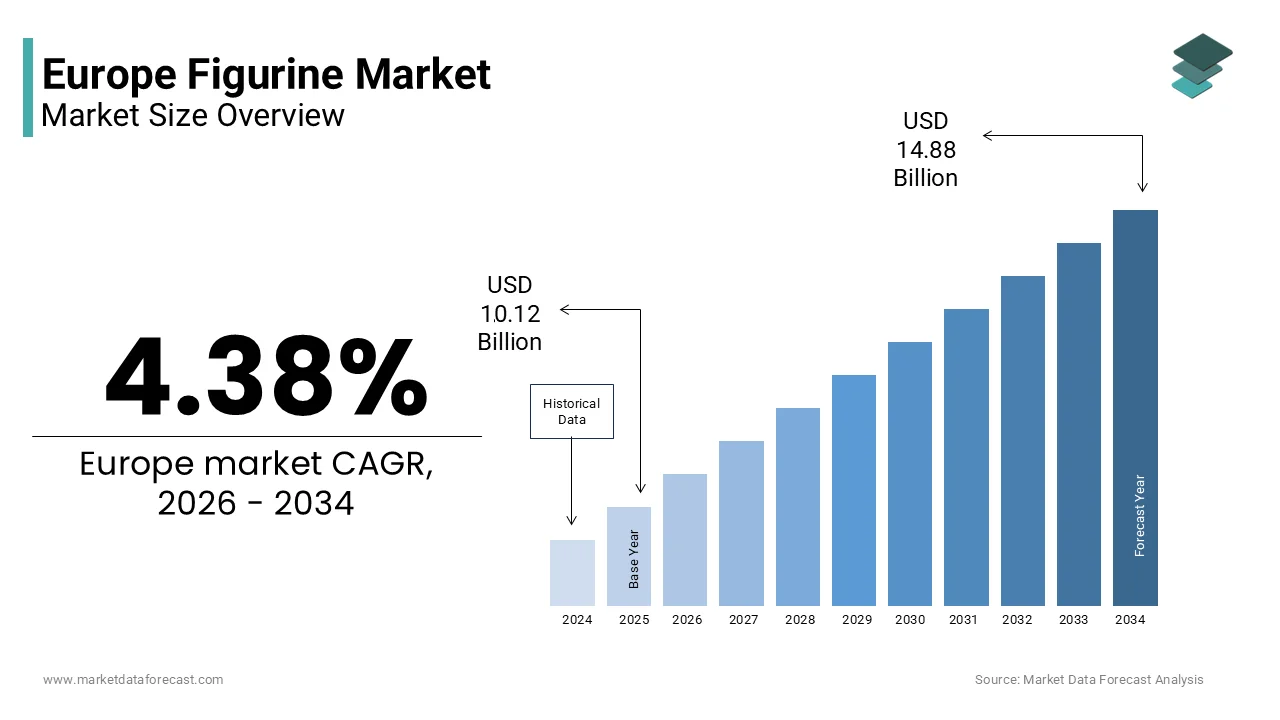
The Europe figurine market was valued at USD 10.12 billion in 2025 and is estimated to reach USD 10.56 billion in 2026, further projected to reach USD 14.88 billion by 2034, growing at a CAGR of 4.38% during the forecast period. Market growth is driven by rising popularity of pop culture collectibles, expanding anime and gaming fan communities, and increasing consumer spending on licensed merchandise. Growth in ecommerce platforms, limited edition releases, and collaborations with entertainment franchises are further strengthening market expansion. In addition, strong collector culture and growing demand for premium and customized figurines are supporting steady revenue growth across Europe.
Key Market Trends
- Increasing demand for anime and manga based figurines supported by the growing popularity of Japanese pop culture across Europe.
- Expansion of online retail platforms enabling wider product accessibility and cross border sales.
- Rising interest in limited edition, exclusive, and high detail collectible figurines among adult collectors.
- Growing licensing agreements between manufacturers and global entertainment franchises.
- Integration of advanced molding and 3D printing technologies to enhance design precision and product quality.
Segmental Insights
- Based on type, the anime figurines segment accounted for 48.3% of the Europe figurine market share in 2024. The segment’s dominance is attributed to strong fan engagement, franchise driven demand, and increasing streaming access to anime content across European countries.
- Based on application, the online sales segment held a prominent share of the Europe figurine market in 2024. Growth in this segment is driven by ecommerce expansion, collector communities, pre order systems, and global distribution capabilities.
Regional Insights
- Germany accounted for 22.6% of the Europe figurine market share in 2024, making it the leading country in the region. The country’s dominance is supported by strong consumer interest in collectibles, established retail networks, and active participation in gaming and anime conventions.
- Other Western European countries are also contributing significantly due to expanding entertainment and merchandise markets.
Competitive Landscape
The Europe figurine market is moderately competitive with the presence of international collectible brands and established toy manufacturers. Companies are focusing on product differentiation, franchise licensing, limited edition launches, and online distribution strategies to strengthen their competitive positioning. Key players operating in the Europe figurine market include MCA, Good Smile Company, MaxFactory, Alter, Bandai, Funko, Hasbro, Mattel, Kenner Products, Kotobukiya, Kaiyodo, Hot Toys, Aniplex, MegaHouse, Hobbymax, Sideshow Collectibles, and Azone.
 Download Free Sample Report
Europe Figurine Market Size
The Europe figurine market size was valued at USD 10.12 billion in 2025 and is projected to reach USD 14.88 billion by 2034 from USD 10.56 billion in 2026, growing at a CAGR of 4.38%.
The figurine is the design, production, and retail of small sculptural representations, typically crafted from porcelain, resin, ceramic, or polymer clay that depict humans, animals, mythological beings, or fictional characters for decorative, collectible, or commemorative purposes. These objects span a broad spectrum from mass produced home décor items to limited edition artisanal collectibles and licensed pop culture merchandise. As per Eurostat, over 14 million European households reported purchasing decorative figurines in 2024 with their enduring role in interior personalization and cultural expression. According to the European Cultural Heritage Observatory, more artisan workshops across the EU specialize in hand painted or sculpted figurines, preserving traditional techniques while adapting to contemporary aesthetics. Seasonal gifting, tourism-driven souvenir demand, and generational collecting habits further anchor this market within Europe’s broader creative economy.
MARKET DRIVERS
Resurgence of Artisanal Craftsmanship and Heritage Branding Drives Premium Demand
A renewed appreciation for handmade, culturally rooted objects has revitalized demand for high end European figurines, particularly those tied to historic manufacturing centers. The resurgence of artisanal craftmanship and heritage branding is escalating the growth of Europe figurine market. In Germany, Meissen porcelain produced since 1710 continues to command premium prices, with its hand painted animal and court figurines sought after by collectors, across Europe. Similarly, France’s Limoges region maintains strict geographical indication standards for its porcelain, ensuring authenticity and quality that justify luxury positioning. National initiatives like Italy’s “Made in Italy” certification and Spain’s “Artesania de Calidad” label further protect and promote regional craftsmanship. This cultural capital transforms figurines from mere decor into heirloom investments, insulating premium segments from mass market volatility and fostering intergenerational brand loyalty.
Explosion of Licensed Pop Culture and Anime Collectibles Fuels Youth Engagement
The experiencing dynamic growth in the youth demographic due to surging demand for officially licensed collectibles from global entertainment franchises is additionally prompting the growth of Europe figurine market. According to the European Audiovisual Observatory, anime viewership among Europeans aged 15 to 34 rose by 37% between 2020 and 2024, directly correlating with increased sales of Japanese style character figurines. Simultaneously, franchises such as Marvel, Star Wars, and Pokemon drive consistent demand for resin and PVC collectibles sold through specialty retailers like Forbidden Planet and online platforms like Zavvi. Limited edition releases often sell out within minutes by creating secondary market premiums that reinforce collector behavior. This convergence of fandom, digital media, and physical ownership redefines figurines as cultural artifacts of participatory identity rather than passive ornaments.
MARKET RESTRAINTS
Stringent EU Safety and Material Regulations Increase Compliance Costs
The manufacturers face escalating regulatory burdens under directives governing chemical safety, toy standards, and consumer product compliance is limiting the growth of Europe figurine market. The EU Toy Safety Directive 2009/48/EC mandates rigorous testing for phthalates heavy metals and flammability even for non-child oriented decorative items if they resemble toys by forcing many small studios to reformulate materials or abandon certain designs. According to the European Commission’s Directorate General for Internal Market, non-compliant figurine batches were rejected at EU borders in 2024 due to lead content in ceramic glazes or unapproved colorants in resin. Compliance with REACH regulations requires extensive documentation and third-party certification, costing small artisans an average of 8000 euros annually, as per a 2024 study by the European Confederation of Artisans. These barriers disproportionately impact independent creators who lack legal and testing resources, stifling innovation and pushing them toward generic, low risk designs that dilute artistic diversity.
Vulnerability to Global Supply Chain Disruptions and Raw Material Volatility
The highly susceptible to international supply chain instabilities, particularly concerning specialized raw materials like kaolin clay, synthetic resins, and rare earth pigments. The vulnerability to global supply chain disruptions and raw material volatility is also hampering the growth of Europe figurine market. Over 65% of high-grade porcelain clay used by European ceramic studios is imported from China and the United States, according to the European Ceramic Industry Association. Geopolitical tensions and export restrictions caused kaolin prices to surge by 22% in 2023, which is directly impacting production costs for heritage brands in France and Germany. Similarly, resin is a key material for anime and pop culture figurines, which is derived from petrochemical feedstocks whose prices fluctuated by 30% in 2024 due to energy market volatility, as reported by Plastics Europe. Many small European producers operate on thin margins and cannot hedge against these swings, leading to delayed launches or reduced output.
MARKET OPPORTUNITIES
Integration of Digital Customization and On Demand Manufacturing
Advancements in 3D printing and digital design are unlocking new opportunities for personalized and limited run figurines tailored to individual preferences. The integration of digital customization and on demand manufacturing is creating new opportunities for the growth of Europe figurine market. European startups like Shapeways and Sculpteo offer on demand resin printing services allowing customers to upload custom avatars or modify existing designs before production. In 2024, the UK based studio Mytholon launched a platform, where fans could generate bespoke fantasy character figurines using AI assisted design tools, with each piece uniquely numbered and shipped within ten days. Museums across Europe, including the Louvre and the Rijksmuseum, now offer 3D scanned replicas of historical sculptures as desktop figurines, blending education with collectibility. This shift from mass production to micro batch customization caters to the growing consumer desire for uniqueness and narrative ownership by enabling even small creators to compete without inventory risk while reducing waste through made to order models.
Revival of Figurines as Sustainable and Timeless Alternatives to Fast Decor
Amid rising eco consciousness, figurines are being repositioned as durable, emotionally resonant alternatives to disposable home decor. The revival of figurines as sustainable and timeless alternatives to fast décor is ascribed to create new opportunities for the growth of Europe figurine market. Unlike trend driven plastic ornaments, high quality porcelain or ceramic figurines are designed to last decades, aligning with the EU’s Circular Economy Action Plan which encourages long life products. According to a 2024 survey by the European Consumer Organisation, 54% of respondents aged 25 to 45 prefer purchasing fewer but higher quality decorative items that carry personal or cultural meaning. Brands like Royal Copenhagen and Lladro emphasize repairability, heirloom potential, and recyclable packaging in their marketing. Artisan cooperatives in Portugal and Czech Republic now use reclaimed clay and water-based glazes to produce eco certified figurines that appeal to green consumers. This narrative reframes figurines not as frivolous trinkets but as sustainable expressions of identity and heritage in an era of mindful consumption.
MARKET CHALLENGES
Counterfeit Replicas Undermine Brand Integrity and Artisan Livelihoods
The proliferation of counterfeit figurines particularly online poses a severe threat to both heritage brands and independent artists, which is a challenging factor for the growth of Europe figurine market. Fake versions of Meissen, Lladro, and popular anime figures flood e commerce platforms like Amazon and AliExpress, often indistinguishable to casual buyers but lacking quality control or ethical production standards. These replicas not only erode sales but damage reputations when poorly made fakes break or discolor. Small studios lack resources for global IP enforcement, and cross border legal action remains costly and slow. The absence of universal authentication technology, such as embedded NFC chips leaves consumers vulnerable and creators unprotected, discouraging investment in new designs and limiting market trust.
Generational Shift Away from Traditional Décor Reduces Mainstream Appeal
Changing interior design preferences among younger Europeans are diminishing the cultural relevance of classic figurines in everyday domestic spaces. Minimalist Scandinavian and industrial styles dominate urban apartments, where ornamental objects are often viewed as clutter. A 2024 study by the European Interior Design Council found that only 29% of Europeans under 35 display figurines in their living areas, compared to 68% of those over 55. Traditional animal or pastoral porcelain pieces are increasingly perceived as outdated or associated with older generations, limiting intergenerational transfer of collecting habits. While niche communities thrive online, mainstream retail shelf space for non-licensed figurines has declined in major chains like IKEA and Habitat. Without successful rebranding that connects heritage aesthetics to contemporary lifestyles through collaborations with designers or integration into modern narratives.
REPORT COVERAGE
| REPORT METRIC | DETAILS |
| Market Size Available | 2025 to 2034 |
| Base Year | 2025 |
| Forecast Period | 2026 to 2034 |
| CAGR | 4.38% |
| Segments Covered | By Type, Application, and Region |
| Various Analyses Covered | Global, Regional, & Country Level Analysis; Segment-Level Analysis; DROC, PESTLE Analysis; Porter’s Five Forces Analysis; Competitive Landscape; Analyst Overview of Investment Opportunities |
| Regions Covered | UK, France, Spain, Germany, Italy, Russia, Sweden, Denmark, Switzerland, Netherlands, Turkey, and the Czech Republic |
| Market Leaders Profiled | MCA, Good Smile Company, MaxFactory, Alter, Bandai, Funko, Hasbro, Mattel, Kenner Products, Kotobukiya, Kaiyodo, Hot Toys, Aniplex, MegaHouse, Hobbymax, Sideshow Collectibles, and Azone |
SEGMENTAL ANALYSIS
By Type Insights
The anime figurines segment held 48.3% of the Europe figurine market share in 2024 owing to the explosive mainstream adoption of Japanese animation across all age groups among millennials and Gen Z consumers. Streaming platforms like Crunchyroll and Netflix have localized over 1200 anime titles into European languages since 2020 by creating deep emotional connections that translate into physical collectible demand. In 2024, alone European sales of officially licensed anime figures exceeded 22 million units with franchises like Demon Slayer My Hero Academia and Attack on Titan leading regional preferences as reported by the Japan External Trade Organization. Specialty retailers in Germany France and the UK dedicate entire sections to rotating limited edition releases that often sell out within hours. The cultural shift from passive viewership to active fandom, where ownership of a character figurine signifies identity and community belonging has anime as the defining force in contemporary European figurine consumption.
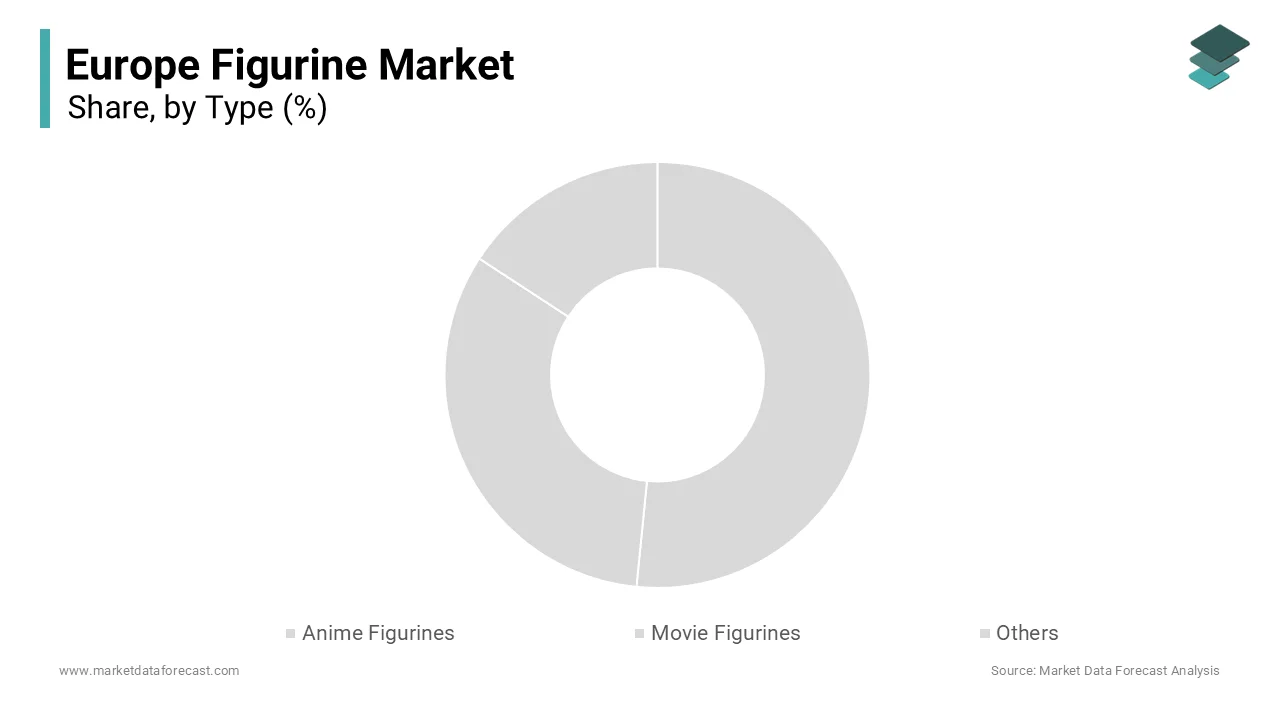
The anime figurines segment is also growing at a fastest CAGR of 13.7% during the forecast period owing to the strategic collaborations between Japanese licensors and European distributors that ensure faster release parity and region-specific variants. In 2024, Good Smile Company opened its first EU warehouse in the Netherlands reducing delivery times from weeks to days and enabling same day dispatch for pre orders. Social media further amplifies demand, where TikTok hashtags like #AnimeCollectionEurope generated over 4 billion views in 2024 showcasing curated displays that inspire peer purchases. Additionally, the rise of secondary marketplaces like eBay and dedicated forums such as MyFigureCollection allows collectors to trade rare pieces fostering long term engagement. Universities in cities like Berlin and Lyon now host anime clubs, where figurine collecting is a core social activity reinforcing intergenerational continuity and expanding the demographic base beyond traditional otaku circles.
By Application Insights
The online sales segment was the largest by holding a prominent share of the Europe figurine market in 2024 from the highly specialized and geographically dispersed nature of figurine collecting, which favors digital discovery and global access over physical retail limitations. Major platforms like Amazon Zavvi and specialty sites such as Solaris Japan offer extensive catalogs with high resolution images customer reviews and authentication guarantees that build trust for high value purchases. Direct to consumer models from brands like Kotobukiya allow fans to receive limited editions unavailable in brick-and-mortar stores.
The online sales segment is esteemed to witness a fastest CAGR of 15.2% throughout the forecast period with the immersive digital shopping innovations including 360 degree product views augmented reality previews and blockchain based authenticity verification. Bandai Namco launched an AR feature allowing European fans to project life size figurines into their living rooms via smartphone to assess scale and aesthetics before purchasing. Cross border e-commerce within the EU has eliminated import duties and simplified returns making it easier for German collectors to buy from French retailers or Swedish fans to access UK exclusives. Payment flexibility through Klarna and PayPal Credit also reduces purchase barriers for premium items costing over 200 euros.
REGIONAL ANALYSIS
Germany Figurine Market Analysis
Germany was the top performer of the Europe figurine market by holding 22.6% of share in 2024 with a unique duality of heritage craftsmanship and pop culture enthusiasm. While Meissen and Nymphenburg porcelain studios maintain global prestige for artisanal animal and court figurines younger demographics drive massive demand for anime and gaming collectibles. Over 3.2 million Germans identify as anime fans with cities like Berlin and Hamburg hosting annual conventions attracting over 50000 attendees, according to the study. The country’s robust e commerce infrastructure and high disposable income support premium purchases with average figurine spending per collector exceeding 320 euros annually. Strict enforcement of IP laws also deters counterfeits ensuring market integrity and brand trust.
United Kingdom Figurine Market Analysis
The United Kingdom figurine market was positioned second by holding 18.9% of the share in 2024 with the early adoption of global entertainment trends and a vibrant collector subculture. Its market status is defined by strong retail partnerships with US and Japanese licensors enabling rapid access to Marvel Star Wars and anime exclusives. According to the British Toy and Hobby Association, over 1.8 million UK households purchased licensed figurines in 2024 with London Manchester and Glasgow serving as key hubs for specialty stores like Forbidden Planet. Additionally, British museums such as the Victoria and Albert increasingly collaborate with studios to produce historical character figurines blending education with fandom and broadening appeal beyond traditional segments.
France Figurine Market Analysis
France figurine market growth is likely to grow with the distinctive emphasis on artistic quality and cultural narrative. Data from the French Ministry of Culture shows that over 2.1 million French citizens aged 15 to 35 engage with anime monthly fueling demand for high end Nendoroid and Figma lines. Paris hosts Europe’s largest Japan Expo attracting 250000 visitors annually where exclusive figurines debut. French collectors prioritize aesthetic refinement often favoring stylized over hyper realistic designs. Domestic brands like Sideshow France collaborate with local artists to create Gallic themed variants of global franchises enhancing cultural resonance and justifying premium pricing in a market that values artistry as much as fandom.
Italy Figurine Market Analysis
Italy figurine market growth is likely to grow with the contrasts and artisanal innovation. The southern appreciation for religious and nativity figurines with northern enthusiasm for cinematic and anime collectibles. According to ISTAT, over 65% of Italian figurine sales occur in Lombardy Veneto and Emilia Romagna where disposable income and design sensibility converge. Milan’s annual Lucca Comics & Games festival draws 300000 attendees making it a launchpad for limited editions. Italian designers increasingly reinterpret global characters through Renaissance inspired aesthetics, such as marble finished anime busts creating hybrid collectibles that appeal to both traditionalists and modern fans.
Spain Figurine Market Analysis
Spain figurine market growth is likely to grow with the tourism driven demand and digital fluency. The growth of the country is driven by the coastal cities like Barcelona and Madrid as gateways for souvenir figurines while urban youth fuel online anime consumption. According to the Spanish Ministry of Industry, over 1.5 million Spaniards purchased collectible figurines in 2024 with 72% doing so via mobile apps. The country’s warm climate and open floor plans encourage display culture with shelves and cabinets prominently featured in home interiors. Local creators on platforms like Wallapop thrive by offering custom painted figures blending Iberian folklore with global franchises. Additionally, Spain’s proximity to North Africa enables efficient logistics for imports while its participation in EU digital single market ensures seamless access to pan European e commerce ecosystems.
COMPETITIVE LANDSCAPE
The Europe figurine market features a dynamic interplay between global entertainment giants heritage artisans and agile independent creators. On one end Japanese firms like Good Smile and Bandai dominate pop culture segments through licensing speed and manufacturing scale. On the other European heritage brands such as Meissen and Lladro command premium positioning through centuries old craftsmanship and cultural prestige. Competition is further intensified by thousands of small studios selling via Etsy Instagram and specialized forums offering custom or niche designs that cater to micro communities. While mass market retailers focus on affordability and volume luxury and collectible segments compete on exclusivity artistic merit and narrative depth. Digital innovation has lowered entry barriers but also increased vulnerability to counterfeits making authenticity trust and community engagement differentiators in a fragmented yet passionate marketplace.
KEY MARKET PLAYERS
Some of the notable key players in the Europe figurine market are
- MCA
- Good Smile Company
- MaxFactory
- Alter
- Bandai
- Funko
- Hasbro
- Mattel
- Kenner Products
- Kotobukiya
- Kaiyodo
- Hot Toys
- Aniplex
- MegaHouse
- Hobbymax
- Sideshow Collectibles
- Azone
Top Players in the Market
- Good Smile Company is a Japanese collectibles giant with a formidable presence in the Europe figurine market through its Nendoroid and Figma lines that dominate anime and gaming segments. The company contributes globally by setting industry standards for articulation paint precision and character authenticity. In Europe, it has cultivated deep fan loyalty via localized marketing rapid release parity and exclusive regional variants. Recently, Good Smile strengthened its European position by opening a dedicated logistics hub in the Netherlands to accelerate deliveries and reduce cross border complexities. It also launched an augmented reality app allowing collectors to preview figurines in their space and introduced blockchain based digital certificates of authenticity to combat counterfeits and enhance resale value.
- Meissen Porzellanmanufaktur is Germany’s iconic porcelain manufacturer and a cornerstone of Europe’s heritage figurine segment. Globally, recognized for its handcrafted animal court and mythological figurines since 1710 Meissen represents the pinnacle of artisanal excellence. In Europe, the brand maintains strong appeal among high-net-worth collectors and interior designers who value its historical legacy and museum grade quality. It also partnered with German luxury retailers to offer personalized engraving and launched sustainability initiatives using recycled kaolin and lead-free glazes aligning with EU environmental directives.
- Bandai Spirits a subsidiary of Bandai Namco Holdings is a leading global producer of licensed movie and anime figurines with extensive reach across Europe. Its SH Figuarts and Tamashii Nations lines are highly sought after for their accuracy to source material and engineering sophistication. The company strengthens its European footprint through strategic collaborations with major entertainment studios and timely releases aligned with film premieres and streaming launches. Recently Bandai Spirits enhanced its European operations by implementing real time inventory tracking across key markets and introducing eco-friendly packaging made from plant-based plastics. It also expanded its online pre order system with multilingual support and region-specific payment options to improve accessibility for collectors.
Top Strategies Used by the Key Market Participants
Key players in the Europe figurine market are investing in digital authentication and blockchain verification to combat counterfeiting and protect brand integrity. They are leveraging localized e commerce platforms with augmented reality previews and multilingual customer support to enhance online shopping experiences. Strategic partnerships with entertainment studios ensure timely access to global franchises and exclusive regional variants. Companies are also adopting sustainable packaging and production practices to align with EU environmental regulations and consumer expectations. Additionally, they are expanding direct to consumer channels through pre order systems subscription boxes and collector loyalty programs to build long term engagement and reduce reliance on third party retailers.
MARKET SEGMENTATION
This research report on the European figurine market has been segmented and sub-segmented based on categories.
By Type
- Anime Figurines
- Movie Figurines
- Others
By Application
- Offline Sales
- Online Sales
By Country
- UK
- France
- Spain
- Germany
- Italy
- Russia
- Sweden
- Denmark
- Switzerland
- Netherlands
- Turkey
- Czech Republic
- Rest of Europe