- Product Description Description
- Table of Contents TOC
- List of Table & Figure LOT
- Get Free Sample PDF Sample PDF
Market Size, 2025
$1677.07 MnMarket Estimate, 2026
$1843.10 MnMarket Forecast, 2034
$3922.31 MnCAGR, 2026–2034
9.9%Executive Summary: Europe Flow Cytometry Market
- Market Scope: Comprehensive regional flow cytometry market analysis covering technology segments, product categories, end-user segments, country leadership frameworks, and immunotherapy research trends.
- Market Valuation: Valued at USD 1677.07 million (2025), estimated at USD 1843.10 million (2026), and projected to reach USD 3922.31 million by 2034, registering a solid CAGR of 9.9% (2026–2034).
- Primary Growth Drivers: Rising prevalence of hematological malignancies (approx. 2.7 million new cancer cases annually across EU), immunotherapy advancement, AI integration reducing data analysis time by up to 90%, and portable point-of-care devices.
Key Market Segment Metrics (2026–2034)
| Category | Leading Segment (Base Position) | Fastest-Growing Segment |
|---|---|---|
| By Technology Type | Cell-Based Technology (dominated the market with a 62.5% share in 2025) | Bead-Based Flow Cytometry (likely to experience the fastest CAGR of 9.2%) |
| By Product Category | Reagents and Consumables (accounted for the largest product share at 52.3%) | Instruments (expected to grow at a steady CAGR of 7.8%) |
| By End-User Segment | Research Institutes (largest end-user segment with a 44.7% share in 2025) | Clinical Testing Labs (anticipated to exhibit a solid CAGR of 8.5%) |
| By Region / Country | Germany (led the regional market with a 26.1% share in 2025) | European clinical diagnostic and biomedical research centers |
Major Market Players & Market Structure
Market Structure: Highly competitive regional life sciences and diagnostics landscape where top manufacturers introduce advanced spectral flow cytometers, integrate AI into data workflows, and expand multicolor antibody panel portfolios.
Key Companies: Becton, Dickinson and Company, Beckman Coulter, Inc., Thermo Fisher Scientific, Inc., Merck KGaA, Sysmex Partec GmbH, Luminex Corporation, Miltenyi Biotec GmbH, Bio-Rad Laboratories, Inc., Sony Biotechnology, Life Technologies Corporation Inc., EMD Millipore Corporation, Agilent Technologies, Inc., and Affymetrix Inc.
Europe Flow Cytometry Market Size
The size of the Flow Cytometry market in Europe was valued at USD 1677.07 million in 2025. The European market size is further estimated to grow from USD 1843.10 million in 2026 to USD 3922.21 million by 2034, growing at a CAGR of 9.9% during the forecast period.
Flow cytometry is a laboratory technique used to rapidly analyze the physical and chemical characteristics of microscopic particles, such as cells, as they pass in a fluid stream through a laser beam. This technology has become indispensable in clinical diagnostics immunology hematology and oncology enabling precise identification and quantification of cellular populations. The region stands as a global hub for biomedical research and advanced healthcare delivery driven by robust infrastructure and stringent regulatory standards. According to Eurostat, current healthcare expenditure in the European Union accounts for 10.0% of its gross domestic product (GDP), with leading nations like Germany and France allocating over 11% of their GDP to healthcare systems. Furthermore, the World Health Organization (WHO) Regional Office for Europe confirms that cancer is a primary driver of mortality in the European region, accounting for over 1.9 million deaths annually and reinforcing the imperative for highly integrated early screening and advanced diagnostic pathology services. The aging demographic with over 20 percent of the population aged 65 and above as per United Nations data exacerbates the prevalence of chronic diseases requiring detailed immunophenotyping. Integration of artificial intelligence into data analysis software enhances the precision and speed of interpretation transforming raw data into actionable clinical insights. Regulatory frameworks like the In Vitro Diagnostic Regulation ensure high quality and safety standards fostering trust in diagnostic outcomes. This technological ecosystem supports both academic research and routine clinical practice positioning flow cytometry as a cornerstone of modern precision medicine across the continent.
MARKET DRIVERS
Rising Prevalence of Hematological Malignancies Driving Diagnostic Demand
The escalating incidence of blood cancers is a major factor driving the adoption of these systems across regional healthcare facilities, which in turn fuels the growth of the Europe flow cytometry market. Leukemia lymphoma and myeloma require precise immunophenotyping for accurate diagnosis classification and monitoring of minimal residual disease which flow cytometry provides with high sensitivity and specificity. According to the European Cancer Information System (ECIS), there are approximately 2.7 million new cases of cancer diagnosed annually across European Union member states, with hematological malignancies constituting a highly significant share of the overall clinical burden. The European Society for Medical Oncology emphasizes that flow cytometry is the gold standard for diagnosing acute leukemias allowing clinicians to distinguish between different subtypes based on surface marker expression. This diagnostic precision is crucial for selecting appropriate therapeutic regimens such as targeted therapies or stem cell transplantation. National health services in countries like Germany France and the United Kingdom have established specialized reference laboratories equipped with high throughput flow cytometers to handle the increasing volume of samples. The shift toward personalized medicine further amplifies demand as treatment decisions increasingly rely on detailed molecular and cellular profiles. Aging populations are disproportionately affected by these conditions creating a sustained need for advanced diagnostic capabilities. Reimbursement policies in several European nations cover flow cytometric analyses for specific indications encouraging widespread utilization in both public and private healthcare settings. This clinical necessity ensures consistent growth in instrument sales and reagent consumption.
Expansion of Immunotherapy and Personalized Medicine Initiatives
The rapid advancement of immunotherapy and personalized medicine strategies greatly fuels the expansion of the Europe flow cytometry market. Therapies such as Chimeric Antigen Receptor T cell therapy and checkpoint inhibitors require rigorous characterization of immune cell subsets to predict patient response and monitor treatment efficacy. According to the European Medicines Agency numerous novel immunotherapeutic agents have received marketing authorization in recent years driving the need for companion diagnostics. Flow cytometry enables researchers and clinicians to assess the expansion persistence and functional status of engineered T cells as well as the composition of the tumor microenvironment. Academic institutions and pharmaceutical companies across the region are investing heavily in clinical trials that utilize multicolor flow cytometry panels to identify biomarkers associated with therapeutic success. The Horizon Europe program allocates substantial funding for cancer research and innovative health technologies fostering collaboration between industry and academia. Hospitals are establishing dedicated immunomonitoring cores equipped with spectral and mass cytometry platforms to support these complex analyses. The ability to analyze dozens of parameters simultaneously allows for a deeper understanding of immune dynamics facilitating the development of next generation treatments. Regulatory guidelines increasingly recommend immune monitoring as part of clinical trial endpoints further institutionalizing the use of flow cytometry. This integration into drug development and clinical care creates a robust demand for advanced instrumentation and specialized expertise.
MARKET RESTRAINTS
High Capital Investment and Operational Costs Restraining Adoption
Substantial financial requirements for acquiring and maintaining flow cytometry systems act as a significant barrier to the expansion of the Europe flow cytometry market. This directly hinders the adoption of the technology by smaller healthcare providers and research institutes. High end instruments capable of multi parameter analysis can cost several hundred thousand euros representing a major capital expenditure for budget constrained organizations. According to data from national health accounts many European hospitals face tight financial pressures limiting their ability to invest in cutting edge diagnostic equipment. Beyond the initial purchase price ongoing operational costs including expensive fluorochrome conjugated antibodies maintenance contracts and specialized personnel training add to the total cost of ownership. The complexity of these instruments requires dedicated technical staff who command higher salaries due to their specialized skills. In countries with decentralized healthcare systems such as Italy and Spain regional disparities in funding lead to unequal access to advanced flow cytometry services. Smaller private laboratories may struggle to compete with large university hospitals that benefit from economies of scale and government subsidies. The rapid pace of technological obsolescence means that instruments may need replacement or upgrading within a few years to remain competitive further straining budgets. Reimbursement rates for flow cytometric tests do not always cover the full cost of analysis particularly for experimental panels discouraging innovation in some settings. These economic constraints limit the widespread deployment of state of the art systems especially in rural or less affluent regions.
Shortage of Skilled Professionals and Technical Expertise
A critical shortage of trained personnel capable of operating flow cytometers and interpreting complex data is a major limitation for the Europe flow cytometry market. Flow cytometry is a highly specialized field requiring knowledge of optics fluidics electronics and immunology which is not commonly taught in standard undergraduate curricula. Healthcare workforce studies across Europe document an increasing strain on clinical laboratories due to a shortage of highly specialized technical personnel, underlining a broader operational challenge in keeping pace with the technical demands of advanced flow cytometry workflows. Many laboratories rely on a small number of experts making them vulnerable to staff turnover and burnout. The complexity of multicolor panel design and compensation adjustments requires extensive experience and continuous professional development which is often lacking in resource limited settings. Academic programs offering specialized training in flow cytometry are limited in number and geographic distribution leading to regional disparities in expertise. Hospitals and research centers struggle to recruit and retain qualified technicians resulting in delays in sample processing and data analysis. The lack of standardized certification processes across European countries further complicates workforce mobility and quality assurance. Automated analysis software helps mitigate some issues but cannot fully replace human judgment in troubleshooting and complex interpretation. This human resource bottleneck limits the throughput and efficiency of flow cytometry laboratories hindering their ability to meet increasing clinical and research demands. Addressing this challenge requires coordinated efforts in education and vocational training.
MARKET OPPORTUNITIES
Integration of Artificial Intelligence and Machine Learning Algorithms
The incorporation of artificial intelligence and machine learning into flow cytometry data analysis offers transformative opportunities for enhancing accuracy and efficiency, which is likely to propel the Europe flow cytometry market. Traditional manual gating methods are time consuming and subject to operator bias whereas AI driven algorithms can automatically identify cell populations with high consistency and speed. According to recent studies published in scientific journals machine learning models can process high dimensional data from spectral flow cytometry experiments reducing analysis time by up to 90 percent. This capability is particularly valuable in clinical settings where rapid turnaround times are critical for patient management. European software developers are leading the way in creating user friendly platforms that integrate seamlessly with existing instrument hardware. These tools enable the discovery of rare cell populations and subtle phenotypic changes that may be missed by conventional analysis. The European Union investment in digital health initiatives supports the development of such innovative solutions through grants and collaborative projects. Pharmaceutical companies utilize AI enhanced flow cytometry for high throughput screening in drug discovery accelerating the identification of promising candidates. Standardization of data formats facilitates the sharing of algorithms and datasets across institutions fostering a collaborative research environment. As these technologies mature they promise to democratize access to advanced analysis capabilities allowing smaller laboratories to perform complex studies. This digital transformation positions flow cytometry as a key component of precision medicine infrastructure.
Development of Point of Care and Portable Flow Cytometry Devices
The emergence of compact and portable flow cytometry devices unlocks potential for expanding diagnostic capabilities beyond central laboratories, which is expected to accelerate the expansion of the Europe flow cytometry market. These miniaturized systems are designed for use in point of care settings such as clinics emergency rooms and remote locations enabling rapid decision making. According to sources, the demand for decentralized testing is rising due to the need for immediate results in critical care situations. Portable flow cytometers can perform essential assays such as CD4 counting for HIV monitoring or platelet enumeration with minimal sample preparation. This accessibility is particularly beneficial in rural areas of Eastern and Southern Europe where access to specialized laboratories is limited. The lower cost and ease of use of these devices make them attractive to smaller healthcare providers and developing regions within the continent. Regulatory approvals for simplified devices are streamlining market entry allowing manufacturers to reach broader customer bases. Integration with mobile devices and cloud platforms enables real time data transmission to specialists for remote consultation enhancing diagnostic accuracy. Public health initiatives focusing on infectious disease control and chronic disease management support the deployment of these tools. The versatility of portable systems allows for applications in environmental monitoring and food safety diversifying revenue streams for manufacturers. This trend toward decentralization aligns with broader healthcare goals of improving accessibility and reducing hospital burden.
MARKET CHALLENGES
Complexity of Data Analysis and Standardization Issues
The increasing complexity of flow cytometry data generated by high-parameter instruments is a significant challenge for interpretation and standardization. These challenges are a serious hurdle for the Europe flow cytometry market. Modern spectral and mass cytometers can measure over 40 parameters simultaneously producing vast datasets that are difficult to manage and analyze using traditional methods. Variability in instrument configuration laser alignment and detector sensitivity leads to inconsistencies in data quality requiring rigorous calibration and quality control measures. The absence of harmonized protocols for panel design and staining procedures further complicates multicenter studies and clinical trials. Researchers and clinicians often struggle with the steep learning curve associated with advanced analysis software leading to errors and misinterpretation. The diversity of reagents and conjugates from various manufacturers adds another layer of variability affecting experimental outcomes. Efforts to establish common data elements and best practice guidelines are ongoing but adoption remains uneven across the region. Regulatory bodies are beginning to address these issues through stricter requirements for validation and documentation but compliance can be burdensome. Overcoming these technical hurdles requires sustained investment in training software development and international collaboration to ensure reliable and comparable results.
Regulatory Hurdles and Compliance with In Vitro Diagnostic Regulation
Navigating the stringent regulatory landscape imposed by the regional In Vitro Diagnostic Regulation further slows down the expansion of the Europe flow cytometry market. This is a major impediment for manufacturers and users of flow cytometry reagents and instruments. The regulation which came into full application recently imposes stricter requirements for clinical evidence performance evaluation and post market surveillance. According to the European Commission manufacturers must demonstrate the safety and performance of their products through rigorous clinical studies which can be time consuming and costly. Many legacy reagents and laboratory developed tests that were previously exempt now require certification disrupting supply chains and increasing prices. Laboratories must adapt their quality management systems to comply with new documentation and traceability requirements placing additional administrative burdens on staff. The transition period has caused uncertainty among suppliers leading to temporary shortages of certain antibodies and kits. Small and medium sized enterprises struggle to meet the financial and technical demands of compliance potentially reducing innovation and market diversity. Healthcare providers face delays in accessing new tests and reagents as manufacturers navigate the approval process. The complexity of the regulation requires specialized legal and regulatory expertise which may be scarce in smaller organizations. Ensuring continuous compliance while maintaining operational efficiency is a delicate balance that requires strategic planning and resource allocation. These regulatory pressures shape the market dynamics influencing product availability and pricing structures across Europe.
REPORT COVERAGE
| REPORT METRIC | DETAILS |
| Market Size Available | 2025 to 2034 |
| Base Year | 2025 |
| Forecast Period | 2026 to 2034 |
| CAGR | 5.77% |
| Segments Covered | By Technology, Product, Application, End-users and Region |
| Various Analyses Covered | Global, Regional & Country Level Analysis; Segment-Level Analysis; DROC, PESTLE Analysis; Porter’s Five Forces Analysis; Competitive Landscape; Analyst Overview of Investment Opportunities |
| Regions Covered | United Kingdom, France, Spain, Germany, Italy, Russia, Sweden, Denmark, Switzerland, the Netherlands, Turkey, and the Czech Republic |
| Market Leaders Profiled | Becton, Dickinson and Company, Beckman Coulter, Inc., Thermo Fisher Scientific, Inc., Merck KGaA, Sysmex Partec GmbH, Luminex Corporation, Miltenyi Biotec GmbH, Bio-Rad Laboratories, Inc., Sony Biotechnology, Life Technologies Corporation Inc., EMD Millipore Corporation, Miltenyi Biotec, Thermo Fischer Scientific, Agilent Technologies, Inc. and Affymetrix Inc. |
SEGMENTAL ANALYSIS
By Technology Insights
The cell based flow cytometry segment led the European market and captured a 62.5% share in 2025. This leading position of the segment was attributed to its fundamental role in clinical diagnostics and immunological research. The main factor fueling this dominance is the indispensable nature of direct cellular analysis for diagnosing hematological malignancies such as leukemia and lymphoma. According to the European Society for Medical Oncology flow cytometry is the gold standard for immunophenotyping acute leukemias allowing for precise classification based on surface marker expression which is critical for treatment selection. The technology enables the simultaneous measurement of multiple physical and chemical characteristics of single cells providing high resolution data that bead based methods cannot replicate for complex cellular populations. The rising prevalence of blood cancers in Europe with over 150000 new cases diagnosed annually creates a consistent demand for cell based assays in hospital laboratories. Furthermore the expansion of immunotherapy requires detailed characterization of T cell subsets and tumor infiltrating lymphocytes which necessitates direct cell analysis. Regulatory guidelines from bodies like the European Medicines Agency mandate rigorous cellular profiling for clinical trials involving novel biologics. The integration of spectral flow cytometry has further enhanced the capability to analyze rare cell populations within heterogeneous samples. This clinical utility ensures that cell based technology remains the cornerstone of diagnostic workflows across major healthcare institutions in Germany France and the United Kingdom.
But the bead based flow cytometry segment is likely to experience the fastest CAGR of 9.2% over the forecast period due to the increasing adoption of multiplex immunoassays for cytokine profiling and biomarker discovery in drug development and clinical research. According to industry analysis bead based arrays allow for the simultaneous quantification of dozens of analytes from small sample volumes significantly reducing costs and time compared to traditional enzyme linked immunosorbent assays. The surge in personalized medicine initiatives across Europe necessitates high throughput screening of patient samples to identify predictive biomarkers for therapeutic response. Pharmaceutical companies are increasingly utilizing bead based platforms in preclinical and clinical trials to monitor immune responses to vaccines and immunotherapies. The Horizon Europe funding program supports large scale collaborative research projects that rely on efficient multiplexing technologies to process thousands of samples. Additionally the simplicity of bead based workflows makes them accessible to laboratories without specialized flow cytometry expertise broadening their user base. Advances in bead chemistry and fluorescence encoding have improved sensitivity and reduced cross talk enhancing data reliability. The ability to integrate these assays with automated liquid handling systems further drives adoption in high volume screening environments. These factors collectively contribute to the robust growth trajectory of bead based technologies in the European market.
By Product Insights
The reagents and consumables segment dominated the Europe flow cytometry market and accounted for a 52.3% share in 2025. This dominance of the segment was driven by its recurring nature and essential role in daily laboratory operations. In addition, a major factor behind this position is the continuous need for fluorochrome conjugated antibodies buffers and calibration beads for routine diagnostic and research applications. According to research, the average flow cytometry laboratory consumes reagents worth tens of thousands of euros annually creating a stable and predictable revenue stream for manufacturers. The complexity of modern multicolor panels requiring highly specific and bright fluorochromes increases the volume of reagents used per test. The rise in clinical testing for minimal residual disease monitoring in leukemia patients requires standardized and validated reagent kits which are purchased repeatedly. Furthermore the expansion of research activities in immunology and stem cell biology across European universities drives demand for specialized antibodies targeting novel markers. The In Vitro Diagnostic Regulation has increased the requirement for certified reagents ensuring quality and consistency which favors established suppliers with robust portfolios. Laboratories prefer bundled contracts for reagents to ensure supply chain stability and cost efficiency. The short shelf life of certain biological reagents necessitates frequent replenishment preventing stockpiling and ensuring consistent sales. This recurring consumption model makes reagents and consumables the financial backbone of the flow cytometry industry in Europe.
On the other hand, the flow cytometry instruments segment is on the rise and is expected to be the fastest growing segment in the market by witnessing a CAGR of 7.8% from 2026 to 2034. This accelerated growth of the segment is propelled by the technological advancement towards high parameter spectral and mass cytometry systems that offer deeper insights into cellular heterogeneity. According to recent procurement trends major academic medical centers in countries like Germany and the United Kingdom are investing heavily in next generation instruments capable of analyzing over 40 parameters simultaneously. The shift from traditional benchtop analyzers to sophisticated platforms equipped with artificial intelligence driven software enhances data accuracy and throughput attracting research institutes and pharmaceutical companies. The increasing focus on single cell analysis in cancer research and immunology requires instruments with higher sensitivity and resolution driving upgrade cycles. Government grants and infrastructure funds support the modernization of laboratory facilities enabling the purchase of expensive capital equipment. The introduction of compact and portable flow cytometers for point of care testing also contributes to market expansion by reaching smaller clinics and remote locations. Manufacturers are launching innovative models with simplified user interfaces and automated setup features reducing the technical barrier to entry. These technological innovations and increased funding for scientific infrastructure sustain the rapid growth of the instruments segment.
By End-users Insights
The research institutes segment was the largest in the Europe flow cytometry market and occupied a 44.7% share in 2025. This supremacy of the segment was supported by extensive basic and translational research activities in immunology oncology and stem cell biology. Also pushing the segment forward is the substantial funding allocated to scientific research by national governments and the European Union. According to Eurostat public expenditure on research and development in the European Union exceeded 100 billion euros recently supporting numerous projects that rely on flow cytometry for data generation. Universities and dedicated research centers require high end instruments for exploring complex biological questions and discovering new therapeutic targets. The collaborative nature of European research networks facilitates the sharing of core facilities equipped with advanced flow cytometers increasing utilization rates. PhD students and postdoctoral researchers generate a high volume of samples requiring detailed phenotypic analysis driving reagent consumption. The publication pressure in academic settings encourages the adoption of cutting edge technologies such as spectral flow cytometry to produce high impact data. Training programs and workshops hosted by these institutes further promote the use of flow cytometry among the scientific community. The presence of world class research infrastructure in countries like Germany France and the United Kingdom consolidates the leadership of this segment. Continuous innovation in research methodologies ensures sustained demand for both instruments and consumables.
However, the clinical testing labs segment is expected to exhibit a noteworthy CAGR of 8.5% during the forecast owing to the increasing integration of flow cytometry into routine diagnostic workflows for hematological disorders and immune monitoring. The mandatory requirement for immunophenotyping in the diagnosis of leukemia and lymphoma under clinical guidelines ensures a steady increase in test volumes. The adoption of minimal residual disease testing as a standard of care for monitoring treatment efficacy in cancer patients further drives demand. Private laboratory chains are expanding their capabilities by installing automated flow cytometry systems to handle high throughput samples with faster turnaround times. Reimbursement policies in countries like France and Italy are evolving to cover more complex flow cytometric assays encouraging wider adoption. The aging population leads to higher incidence of blood disorders requiring diagnostic confirmation. Outsourcing of specialized tests by smaller hospitals to reference laboratories also contributes to market growth. These factors combine to accelerate the adoption of flow cytometry in clinical settings across Europe.
REGIONAL ANALYSIS
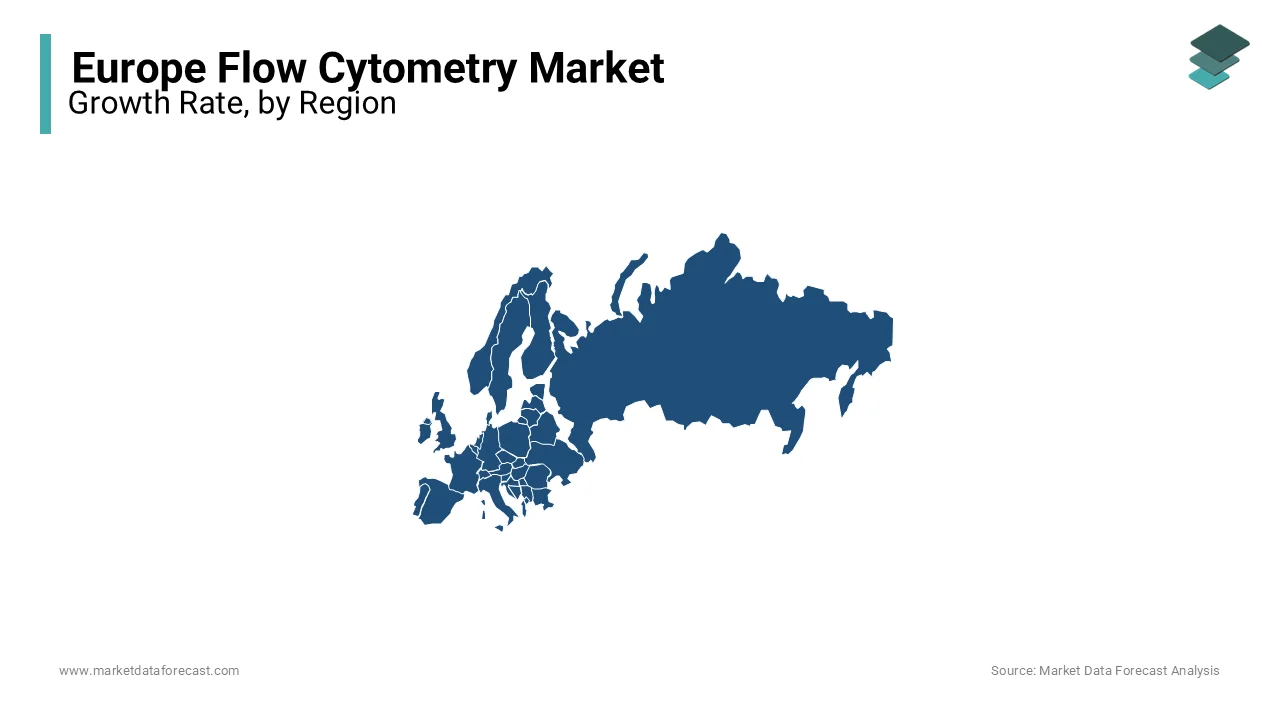
Germany Flow Cytometry Market Analysis
Germany was the top performer in the Europe flow cytometry market and accounted for a 26.1% share in 2025, owing to its robust healthcare infrastructure and strong emphasis on biomedical research. The country is home to leading pharmaceutical companies and research institutions that drive demand for advanced analytical instruments. According to data from the German Federal Ministry of Education and Research (BMBF), Germany invests billions of euros annually into broader medical research and life sciences to maintain cutting-edge laboratory infrastructure and health innovations. The universal healthcare system ensures broad access to diagnostic services including flow cytometry for cancer diagnosis. The presence of major instrument manufacturers and distributors in Germany facilitates easy access to technology and after sales support. Regulatory compliance with strict European standards ensures high quality diagnostic outcomes. The aging population increases the prevalence of hematological malignancies driving clinical demand. Collaborative projects between universities and industry foster innovation in assay development. The country’s strong economy supports sustained healthcare spending enabling hospitals to upgrade their laboratory equipment. These factors collectively maintain Germany’s position as the dominant market leader in the region.
United Kingdom Flow Cytometry Market Analysis
The United Kingdom is the fastest growing nation in the Europe flow cytometry market due to a centralized healthcare system and world class research capabilities. The National Health Service provides comprehensive coverage for diagnostic tests including flow cytometry for leukemia and lymphoma classification. According to Cancer Research UK thousands of new cases of blood cancer are diagnosed annually necessitating reliable diagnostic tools. The country hosts prestigious research institutions such as the Francis Crick Institute which utilize high parameter flow cytometry for cutting edge immunology studies. Government funding for health research supports the adoption of new technologies in academic and clinical settings. The exit from the European Union has led to independent regulatory processes but maintains high standards for medical devices. The private healthcare sector is growing contributing to additional demand for premium diagnostic services. Strong collaborations between academia and the pharmaceutical industry drive innovation in biomarker discovery. The widespread use of electronic health records facilitates data integration and analysis. These elements ensure the United Kingdom remains a key market for flow cytometry products and services.
France Flow Cytometry Market Analysis
France is a major contributor to the Europe flow cytometry market, which is supported by a well developed healthcare system and an active research community. The French National Institute of Health and Medical Research conducts extensive studies in immunology and oncology relying heavily on flow cytometry. According to the French Ministry of Solidarity and Health cancer care plans prioritize early and accurate diagnosis driving the adoption of advanced diagnostic technologies. Public hospitals and private clinics are equipped with modern flow cytometers to meet clinical demand. Reimbursement policies cover essential flow cytometric tests ensuring patient access. The country has a strong biotechnology sector that utilizes flow cytometry for drug development and quality control. Regulatory frameworks align with European standards ensuring product safety and efficacy. Investment in digital health initiatives supports the integration of flow cytometry data into clinical decision support systems. The presence of skilled professionals and training programs enhances the quality of service. These factors contribute to the steady growth of the flow cytometry market in France.
Italy Flow Cytometry Market Analysis
Italy holds a notable share in the Europe flow cytometry market because of its large population and increasing focus on cancer care. The Italian National Health Service provides diagnostic services through regional hospitals and specialized centers. The Italian Association of Medical Oncology (AIOM) highlights stable or shifting trends in hematological malignancies across the country, reinforcing the clinical necessity of advanced diagnostic modalities like flow cytometry for precise patient monitoring and staging. Regional disparities in healthcare resources exist but efforts are being made to standardize diagnostic capabilities across the country. Private laboratories play a significant role in providing specialized testing services. The country has a growing biopharmaceutical industry that utilizes flow cytometry for research and development. Government initiatives to modernize healthcare infrastructure include funding for laboratory equipment upgrades. Collaboration with international research networks facilitates knowledge exchange and technology adoption. The aging demographic increases the demand for diagnostic services. These dynamics support the continued expansion of the flow cytometry market in Italy.
Spain Flow Cytometry Market Analysis
Spain is an emerging player in the Europe flow cytometry market, with a growing emphasis on precision medicine and diagnostic accuracy. The Spanish National Health System covers flow cytometric tests for hematological disorders ensuring widespread access. According to the Spanish Society of Hematology and Hemotherapy flow cytometry is essential for the classification of leukemias and lymphomas. Public hospitals are upgrading their laboratories with modern instruments to improve diagnostic efficiency. The country has a vibrant research community engaged in immunology and stem cell studies. Government funding for scientific research supports the acquisition of advanced technologies. Private diagnostic centers are expanding their offerings to include specialized flow cytometry panels. The tourism and medical travel sectors also contribute to demand for high quality diagnostic services. Regulatory compliance with European standards ensures product quality. These factors drive the steady growth of the flow cytometry market in Spain.
COMPETITIVE LANDSCAPE
The competition in the Europe Flow Cytometry Market is characterized by intense rivalry among established global leaders and emerging regional players. Major corporations leverage their extensive product portfolios strong brand recognition and widespread distribution networks to dominate the landscape. Innovation serves as a primary differentiator with companies continuously launching high parameter spectral and mass cytometry systems to capture research and clinical segments. Price competition is moderate as customers prioritize performance reliability and after sales support over cost savings. Strategic alliances with local distributors and service providers enhance market penetration in various European countries. The regulatory environment under the In Vitro Diagnostic Regulation creates barriers to entry ensuring that only compliant and high quality products reach the market. Intellectual property protection regarding proprietary technologies and reagent formulations is crucial for maintaining competitive advantage. Customer loyalty is built through comprehensive training programs and responsive technical assistance. The market sees frequent mergers and acquisitions as larger entities seek to expand their technological capabilities and geographic reach. This dynamic environment drives continuous improvement and fosters a culture of innovation among participants.
KEY MARKET PLAYERS
A few of the companies playing a significant role in the Europe Flow Cytometry Market include
- Becton, Dickinson and Company
- Beckman Coulter, Inc.
- Thermo Fisher Scientific, Inc.
- Merck KGaA
- Sysmex Partec GmbH
- Luminex Corporation
- Miltenyi Biotec GmbH
- Bio-Rad Laboratories, Inc.
- Sony Biotechnology
- Life Technologies Corporation Inc.
- EMD Millipore Corporation
- Miltenyi Biotec
- Thermo Fisher Scientific
- Agilent Technologies, Inc.
- Affymetrix Inc.
Top Players in the Europe Flow Cytometry Market
BD Biosciences
BD Biosciences maintains a strong presence in the Europe flow cytometry market through its comprehensive portfolio of instruments reagents and software solutions. The company actively collaborates with European research institutions and hospitals to advance clinical diagnostics and immunology research. Recent initiatives include launching advanced spectral flow cytometers that enable high parameter analysis for complex biological samples. BD focuses on integrating artificial intelligence into data analysis workflows to enhance accuracy and efficiency for users. The company also expands its training programs to address the shortage of skilled professionals in the region. Strategic partnerships with local distributors ensure broad market access and reliable customer support. These efforts reinforce its reputation for innovation and quality while supporting the evolving needs of European healthcare and scientific communities.
Beckman Coulter Life Sciences
Beckman Coulter Life Sciences contributes significantly to the Europe flow cytometry market by offering robust automated systems and specialized reagents. The company emphasizes workflow automation to reduce manual errors and increase throughput in clinical and research laboratories. Recent actions include introducing next generation analyzers with improved sensitivity and ease of use for routine diagnostic applications. Beckman Coulter invests in digital health solutions that facilitate seamless data integration with laboratory information systems. The company strengthens its market position through continuous engagement with key opinion leaders and participation in major European scientific conferences. Collaborative projects with academic centers drive the development of novel assays and applications. These strategies enhance operational efficiency for customers and solidify its role as a trusted partner in precision medicine and life sciences research across Europe.
Thermo Fisher Scientific
Thermo Fisher Scientific plays a pivotal role in the Europe flow cytometry market by providing integrated solutions including instruments antibodies and analysis software. The company leverages its extensive global network to deliver tailored support and rapid service to European clients. Recent developments include expanding its portfolio of multicolor antibody panels designed for specific disease areas such as oncology and infectious diseases. Thermo Fisher focuses on sustainability initiatives by reducing environmental impact in manufacturing processes. The company also enhances its digital platforms to offer remote troubleshooting and educational resources for users. Strategic acquisitions of niche technology firms enable the introduction of innovative features and capabilities. These actions strengthen its competitive edge and support the growing demand for high quality flow cytometry products in the European healthcare and research sectors.
Top Strategies Used by the Key Market Participants
Key players in the Europe Flow Cytometry Market predominantly focus on product innovation and strategic collaborations to maintain their competitive edge. Companies invest heavily in research and development to create advanced instruments with higher parameter capabilities and improved user interfaces. Integration of artificial intelligence and machine learning into software platforms enhances data analysis speed and accuracy. Strategic partnerships with academic institutions and hospitals facilitate clinical validation and adoption of new technologies. Expansion of service networks ensures timely maintenance and technical support for customers across diverse regions. Manufacturers also emphasize sustainability by developing eco friendly packaging and energy efficient instruments. Training and education programs address the skills gap among laboratory personnel promoting proper usage and interpretation of results. Regulatory compliance with European standards remains a priority to ensure market access and patient safety. These comprehensive strategies enable companies to meet evolving customer needs and drive market growth effectively.
MARKET SEGMENTATION
This research report on the Europe Flow Cytometry market has been segmented and sub-segmented into the following categories
By Technology
- Cell-based
- Bead-based
By Product
- Reagents & Consumables
- Flow Cytometry Instruments
By Application
- Research
- Clinical
- Industrial
By End-users
- Commercial Organizations
- Research Institutes
- Clinical Testing Labs
By Country
- UK
- France
- Spain
- Germany
- Italy
- Russia
- Sweden
- Denmark
- Switzerland
- Netherlands
- Turkey
- Czech Republic
- Rest of Europe