- Product Description Description
- Table of Contents TOC
- List of Table & Figure LOT
- Get Free Sample PDF Sample PDF
Market Size, 2025
$66.63 MnMarket Estimate, 2026
$72.27 MnMarket Forecast, 2034
$138 MnCAGR, 2026–2034
8.46%Europe Gamma Knife Market Report Summary
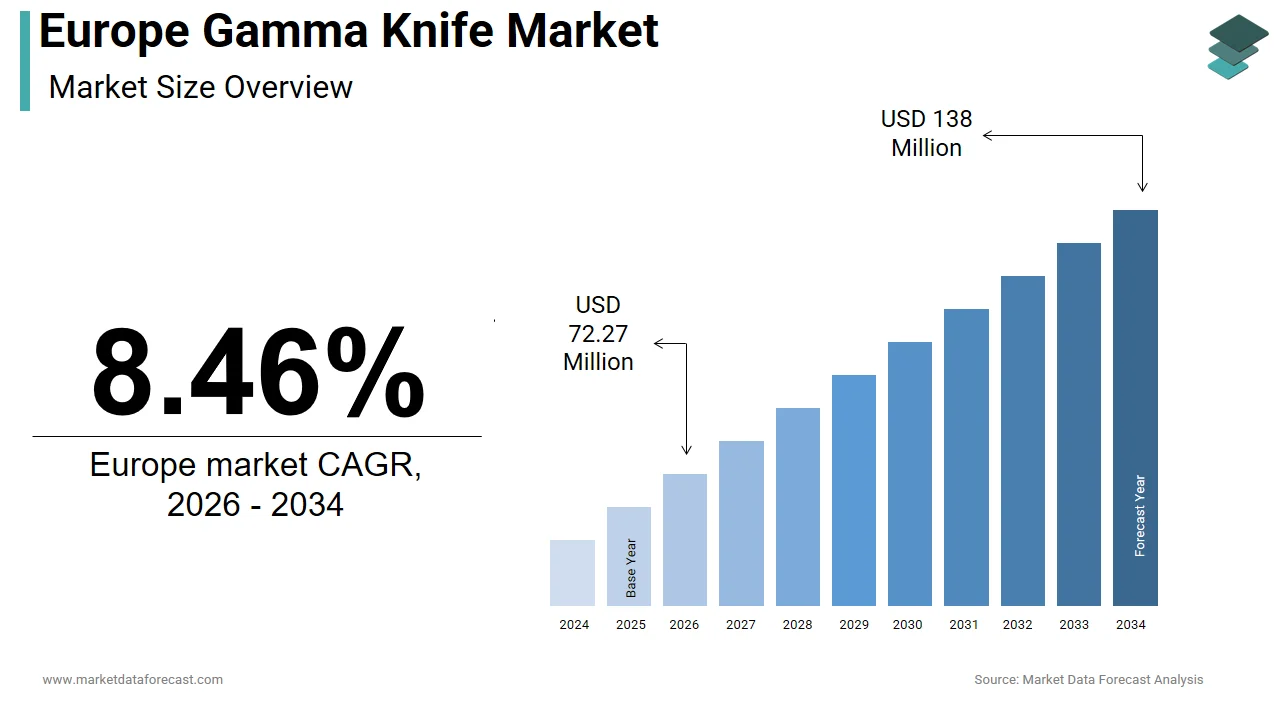
The Europe Gamma Knife market was valued at USD 66.63 million in 2025, is estimated to reach USD 72.27 million in 2026, and is projected to reach USD 138 million by 2034, growing at a CAGR of 8.46% from 2026 to 2034. Market growth is driven by the rising prevalence of brain tumors and neurological disorders, increasing adoption of minimally invasive radiosurgery, and advancements in precision radiation therapy technologies. Gamma Knife systems provide highly targeted, non-invasive treatment for intracranial conditions, reducing surgical risks and hospital stays. Expanding oncology infrastructure, growing awareness of stereotactic radiosurgery, and supportive healthcare investments across Europe are further supporting market expansion.
Key Market Trends
- Rising adoption of stereotactic radiosurgery (SRS) for brain tumor and neurological disorder treatment.
- Increasing preference for non-invasive and outpatient-based procedures.
- Growing investments in advanced oncology and neurosurgical centers.
- Continuous improvements in radiation precision, imaging integration, and treatment planning software.
- Expansion of Gamma Knife applications beyond oncology into functional neurological disorders.
Segmental Insights
- Based on disease indication, the brain metastasis segment held the majority share of 45.6% in 2025, driven by the increasing incidence of metastatic brain tumors and the growing preference for targeted radiosurgery over conventional open surgery.
Regional Insights
The Europe Gamma Knife market is witnessing steady growth across major economies, supported by strong healthcare infrastructure, advanced oncology services, and rising adoption of minimally invasive treatment technologies.
- Germany dominated the regional market in 2025 with 22.5% share, driven by well-established neurosurgical centers, strong healthcare spending, and advanced radiation therapy facilities.
- The United Kingdom followed closely with 18.2% share in 2025, supported by specialized cancer treatment centers and integration of advanced radiosurgery systems within the NHS framework.
Competitive Landscape
The Europe Gamma Knife market is characterized by the presence of specialized radiation therapy equipment manufacturers and medical technology providers focusing on precision oncology solutions. Market players are emphasizing technological advancements, integration of AI-driven treatment planning, and expansion of service networks to strengthen market positioning. Strategic collaborations with hospitals and oncology centers are shaping competitive dynamics across the region.
Prominent companies operating in the Europe Gamma Knife market include Elekta AB, Cyber Medical Corporation Ltd., Huiheng Medical Inc., ET Medical Group, American Shared Hospital Services, Accuray Incorporated, Masep Infini Europe, Inc., RaySearch Laboratories AB, Varian Medical Systems, Hokai, and Nordion Inc.
Europe Gamma Knife Market Size
The Europe gamma knife market was valued at USD 66.63 million in 2025, is estimated to reach USD 72.27 million in 2026, and is projected to reach USD 138 million by 2034, growing at a CAGR of 8.46% from 2026 to 2034.
Gamma Knife is a highly precise, non-invasive medical technology used to treat brain tumors and other neurological disorders. Unlike conventional linear accelerator-based systems or invasive neurosurgical procedures, these units deliver high-dose radiation to targeted brain lesions while sparing surrounding healthy tissue, representing a pinnacle of non-invasive neurological care. The definition of this market extends beyond hardware sales to include comprehensive service contracts, source replenishment, and advanced treatment planning software essential for complex functional disorders and tumors. The clinical imperative for such technology is underscored by the rising burden of neurological conditions across the continent. According to multiple studies, the prevalence of brain disorders is high in Europe, driven by an aging population, creating a significant and growing patient population requiring specialized care. Furthermore, primary brain and CNS cancer incidence is stable or slightly increasing, particularly in older populations, with high mortality requiring improved early detection and treatment. As per the European Association of Neurosurgical Societies, the shift toward minimally invasive techniques is driven by the need to reduce hospital stays and improve quality of life for an aging demographic. The regulatory landscape under the European Union Medical Device Regulation further shapes this market by enforcing rigorous safety standards for high-activity radioactive sources, ensuring that only facilities with robust infrastructure and specialized expertise can operate these sophisticated therapeutic platforms.
MARKET DRIVERS
Rising Incidence of Intracranial Tumors and Functional Neurological Disorders
The escalating prevalence of benign and malignant brain tumors, alongside functional disorders such as trigeminal neuralgia and arteriovenous malformations, is the primary factor propelling the Europe Gamma Knife market. These conditions require precise, non-invasive management, driving the demand for advanced, targeted treatment options. Demographic shifts toward an older population have correlated with increased diagnosis rates of meningiomas and metastatic brain lesions, conditions where stereotactic radiosurgery offers superior outcomes compared to open craniotomy. According to the European Society for Medical Oncology, the incidence of brain metastases has risen significantly due to improved systemic cancer therapies that extend patient survival, thereby increasing the window for developing secondary intracranial complications. Data from the World Health Organization Regional Office for Europe reveals that neurological disorders are the leading cause of disability adjusted life years in the region, necessitating treatments that minimize recovery time and cognitive side effects. The Gamma Knife system addresses this by allowing outpatient procedures with immediate return to normal activities, a critical factor for patient preference. As per clinical guidelines from the European Association of Neuro-Oncology, stereotactic radiosurgery is increasingly recommended as the first-line treatment for small to medium-sized vestibular schwannomas and pituitary adenomas. This clinical consensus, driven by the sheer volume of patients requiring delicate intracranial intervention, creates a sustained and growing demand for Gamma Knife installations across major European medical centers to accommodate the expanding caseload of complex neurological pathologies.
Superior Clinical Outcomes and Cost Effectiveness Compared to Invasive Surgery
Compelling evidence demonstrates that Gamma Knife radiosurgery delivers equivalent or superior tumor control rates, and thereby fuels the expansion of the European Gamma Knife market. Furthermore, this approach results in significantly lower morbidity and healthcare costs compared to traditional microsurgical approaches. The ability to treat lesions in eloquent or deep brain areas without the risks of hemorrhage, infection, or prolonged anesthesia makes it an indispensable tool for modern neurosurgery. Patients receiving Gamma Knife treatment generally undergo the procedure in an outpatient setting, requiring a significantly shorter hospital stay compared to the extended hospitalization typically required for open cranial surgery. This reduction in inpatient care translates to considerable savings for national health services operating under tight budgetary constraints. The total cost of treating intracranial pathologies is generally lower with Gamma Knife radiosurgery compared to conventional surgery, primarily driven by reduced resource utilization (no ICU, shorter hospital stay) and quicker rehabilitation. Furthermore, the precision of the Gamma Knife minimizes damage to critical neural pathways, preserving cognitive function and quality of life, which is a paramount concern for patients and clinicians alike. Severe or permanent adverse events from Gamma Knife procedures are rare. However, the overall rate of any symptomatic complication, including transient effects, is generally higher than the specified percentage. These economic and clinical advantages drive hospital administrators and health policymakers to prioritize investment in Gamma Knife technology as a strategic asset for delivering high-value neurological care.
MARKET RESTRAINTS
Stringent Regulatory Hurdles and Complex Licensing for Radioactive Sources
The rigorous and often fragmented regulatory framework governing the use, transport, and disposal of high-activity cobalt-60 sources required to operate these systems is a critical impediment facing the Europe Gamma Knife market. Each European nation maintains distinct nuclear safety authorities with varying licensing protocols, creating a complex bureaucratic landscape that can delay installation and commissioning for months or even years. International and European regulatory frameworks require a specialized system of packaging, certification, and monitoring for the cross-border movement of radioactive substances to ensure high levels of safety and security. The process of obtaining approval for a new Gamma Knife unit often requires extensive environmental impact assessments and public consultations, which can be contentious in densely populated urban areas where major hospitals are located. The rapid pace of technological innovation in medical radiation requires increased staff training and equipment upgrades to align with evolving European safety standards for patient and personnel protection. Furthermore, the eventual decommissioning and disposal of spent radioactive sources pose significant logistical and financial challenges, as few facilities in Europe are equipped to handle high-level waste. The management of radioactive waste and its associated liabilities requires a defined strategy for the entire lifecycle of a facility, from initial planning and operation through to eventual decommissioning and final site clearance.
Prohibitive Capital Expenditure and Limited Reimbursement Frameworks
The exceptionally high initial capital investment required for purchasing and installing a Gamma Knife system further derails the expansion of the Europe Gamma Knife market. This issue is compounded by inconsistent reimbursement policies across European healthcare systems. The cost of the unit itself, combined with the necessity for specialized shielded vault construction and ongoing source replacement expenses, represents a significant financial barrier for many public and private hospitals. According to analyses by the European Observatory on Health Systems and Policies, healthcare budgets in several member states have faced stagnation or cuts, forcing administrators to prioritize essential services over high-cost specialized equipment. While the procedure is clinically effective, reimbursement tariffs for stereotactic radiosurgery vary widely between countries and sometimes fail to cover the full operational costs, affecting the return on investment for providers. The high initial investment and operational expenses of advanced radiosurgery systems often present a challenge for achieving financial break-even, particularly when standardized healthcare packages do not align with the actual costs of the technology. This financial misalignment creates uncertainty for providers considering adoption, particularly in Southern and Eastern Europe, where healthcare funding is more constrained. Structural disparities in healthcare funding and reimbursement across different regions contribute to unequal access to advanced medical treatments, with specialized services often more concentrated in high-income areas.
MARKET OPPORTUNITIES
Expansion of Indications to Include Functional Disorders and Epilepsy
The broadening of clinical indications beyond oncology is a transformative opportunity for the Europe Gamma Knife market. This expansion encompasses functional neurological disorders such as essential tremor, Parkinson's disease, and drug-resistant epilepsy. Recent technological advancements have enabled Gamma Knife systems to perform thalamotomies and other functional lesions with unprecedented precision, offering hope to patients who are ineligible for deep-brain stimulation or open surgery. Large segments of the population across Europe live with chronic neurological conditions, creating a significant and growing demand for advanced neurosurgical interventions and specialized care. Clinical trials conducted at leading European centers have demonstrated significant improvement in tremor control and seizure frequency following Gamma Knife thalamotomy, validating its efficacy as a therapeutic option. A consistent proportion of individuals diagnosed with epilepsy do not achieve seizure freedom through pharmacological treatments alone, necessitating the development of non-invasive surgical options. Clinical guidelines are increasingly incorporating non-invasive stereotactic techniques for the treatment of various neurological dysfunctions, expanding the range of conditions that can be addressed through targeted radiation. This diversification of applications allows hospitals to maximize the utility of their Gamma Knife investments and serves a broader demographic of patients, positioning the technology as a versatile platform for comprehensive neurological care rather than solely a cancer treatment tool.
Integration of Artificial Intelligence for Enhanced Treatment Planning and Workflow
The convergence of Gamma Knife technology with artificial intelligence and machine learning algorithms unlocks significant potential for the Europe Gamma Knife market. It aims to revolutionize treatment planning efficiency and dosimetric accuracy. Advanced AI tools can automate the segmentation of tumors and critical structures, reducing planning time from hours to minutes while optimizing radiation dose distribution to spare healthy tissue. According to research published by the European Society for Radiotherapy and Oncology, AI-driven planning systems have shown the ability to produce plans comparable to those created by expert human physicists but with significantly greater consistency and speed. This technological leap enables high-volume centers to treat more patients per day, addressing backlog issues and improving access to care. Data from the European Institute for Biomedical Imaging indicates that the adoption of digital health solutions is accelerating across Europe, supported by funding initiatives aimed at modernizing medical infrastructure. The ability to integrate real-time imaging and adaptive planning further enhances the precision of Gamma Knife procedures, allowing for the treatment of irregularly shaped or moving targets. European policy frameworks are prioritizing the development of a secure digital health ecosystem that encourages the use of advanced data processing and intelligent software within the medical sector. This evolution promises to lower operational barriers and enhance clinical outcomes, driving renewed interest and investment in the market.
MARKET CHALLENGES
Shortage of Specialized Medical Physicists and Multidisciplinary Teams
The acute shortage of highly trained medical physicists, neurosurgeons, and radiation oncologists is a formidable challenge confronting the Europe Gamma Knife market. These professionals must possess the specific expertise required to operate these complex systems safely and effectively. The successful deployment of Gamma Knife technology relies on a cohesive multidisciplinary team capable of performing intricate treatment planning, quality assurance, and precise stereotactic frame application, skills that require years of specialized training. According to the European Federation of Organisations for Medical Physics, there is a critical deficit of qualified medical physicists across the continent, with many positions remaining vacant due to an aging workforce and insufficient training pipelines. This scarcity limits the number of facilities that can realistically sustain a Gamma Knife program, regardless of their financial capacity to purchase the equipment. Mastery of complex neurosurgical technologies requires structured, mentor-led training to ensure high standards of patient safety and technical proficiency during the initial implementation phase. The competition for talent among established high-volume centers further exacerbates the issue, leaving smaller or newer installations vulnerable to operational inefficiencies. Differences in national certification requirements for specialized medical staff continue to limit the effective distribution of expertise across borders, slowing the adoption of advanced clinical services in underserved regions.
Competition from Emerging Linear Accelerator-Based Radiosurgery Technologies
The intensifying competition from advanced linear accelerator-based stereotactic radiosurgery systems limits the expansion of the Europe gamma knife market. These systems offer greater versatility and lower operational costs compared to dedicated Gamma Knife units. Modern linac platforms are capable of treating both intracranial and extracranial lesions, providing hospitals with a single solution for a wider range of oncological needs, whereas the Gamma Knife is restricted exclusively to the head. According to the European Society for Radiotherapy and Oncology, the flexibility of linac systems to perform fractionated treatments and treat larger tumors makes them an attractive alternative for comprehensive cancer centers aiming to maximize resource utilization. The absence of radioactive source replacement costs and the reduced shielding requirements for linacs further enhance their economic appeal in budget-conscious healthcare environments. Modern advancements in high-precision radiation delivery have narrowed the performance gap between specialized brain-surgery tools and general-purpose radiation machines for several common neurological conditions. The introduction of real-time imaging and sophisticated robotic adjustments into general radiation equipment is providing clinicians with high-precision options that were previously exclusive to dedicated cranial radiosurgery systems. This competitive pressure forces Gamma Knife manufacturers to continuously demonstrate superior precision and workflow advantages to justify the higher investment and operational constraints associated with their dedicated systems.
REPORT COVERAGE
| REPORT METRIC | DETAILS |
| Market Size Available | 2025 to 2034 |
| Base Year | 2025 |
| Forecast Period | 2026 to 2034 |
| Segments Covered | By Disease Indication and Country. |
| Various Analyses Covered | Global, Regional, and Country-Level Analysis, Segment-Level Analysis, Drivers, Restraints, Opportunities, Challenges; PESTLE Analysis; Porter’s Five Forces Analysis, Competitive Landscape, Analyst Overview of Investment Opportunities |
| Countries Covered | UK, France, Spain, Germany, Italy, Russia, Sweden, Denmark, Switzerland, Netherlands, Turkey, Czech Republic, and the Rest of Europe. |
| Market Leaders Profiled | Elekta AB, Cyber Medical Corporation Ltd., Huiheng Medical Inc., ET Medical Group and American Shared Hospital Services, Accuray Incorporated, Masep Infini Europe, Inc., RaySearch Laboratories AB, Varian Medical Systems, Hokai, Nordion Inc. |
SEGMENTAL ANALYSIS
By Disease Indication Insights
The brain metastasis segment held the majority share of 45.6% of the Europe gamma knife market in 2025. The supremacy of the segment is attributed to the increasing survival rates of systemic cancer patients, which inadvertently leads to a higher incidence of secondary brain tumors requiring precise local control. Apart from these, the primary force behind the leadership of the brain metastasis segment is the paradoxical success of modern systemic cancer treatments, which extend patient life but allow time for cancer cells to migrate to the brain. As patients with lung, breast, and melanoma cancers live longer due to advanced immunotherapy and targeted therapies, the incidence of brain metastases has surged. This has created a massive clinical need for effective intracranial management. According to the European Society for Medical Oncology, nearly thirty percent of adult cancer patients will develop brain metastases during their disease course, representing a significant burden on healthcare systems. Data from the International Agency for Research on Cancer indicates that lung cancer remains the leading cause of cancer death in Europe and is the most common primary tumor to metastasize to the brain, affecting up to fifty percent of patients. The inability of many chemotherapy drugs to cross the blood-brain barrier necessitates local therapies like Gamma Knife radiosurgery, which can deliver ablative doses without invasive surgery. As per clinical guidelines from the European Association of Neuro-Oncology, stereotactic radiosurgery is now the standard of care for patients with limited brain metastases due to its superior cognitive preservation compared to whole-brain radiation. This growing population of survivors with secondary brain lesions ensures that brain metastasis remains the dominant indication for Gamma Knife technology across the continent. An additional factor sustaining the dominance of this segment is the proven ability of Gamma Knife radiosurgery to preserve cognitive function and quality of life, which are critical concerns for patients with metastatic disease. Unlike whole-brain radiation therapy, which is associated with significant neurocognitive decline, including memory loss and executive dysfunction, Gamma Knife targets only the visible tumors while sparing healthy brain tissue. According to studies published in the Lancet Oncology, patients treated with stereotactic radiosurgery for brain metastases demonstrated significantly better cognitive outcomes at three and six months post treatment compared to those receiving whole brain radiation. Data from the European Organisation for Research and Treatment of Cancer highlights that maintaining cognitive integrity is a top priority for patients with limited life expectancy, allowing them to remain functional and engaged with family during their remaining time. The minimally invasive nature of the procedure also allows for rapid recovery, with most patients returning to normal activities within twenty-four hours, reducing the burden on caregivers and hospital resources. The high degree of precision in certain radiosurgery systems allows clinicians to treat new lesions that appear over time while minimizing the total radiation dose delivered to previously treated healthy brain tissue. These compelling clinical advantages drive oncologists and neurosurgeons to prioritize Gamma Knife for managing brain metastases, solidifying its position as the leading disease indication.
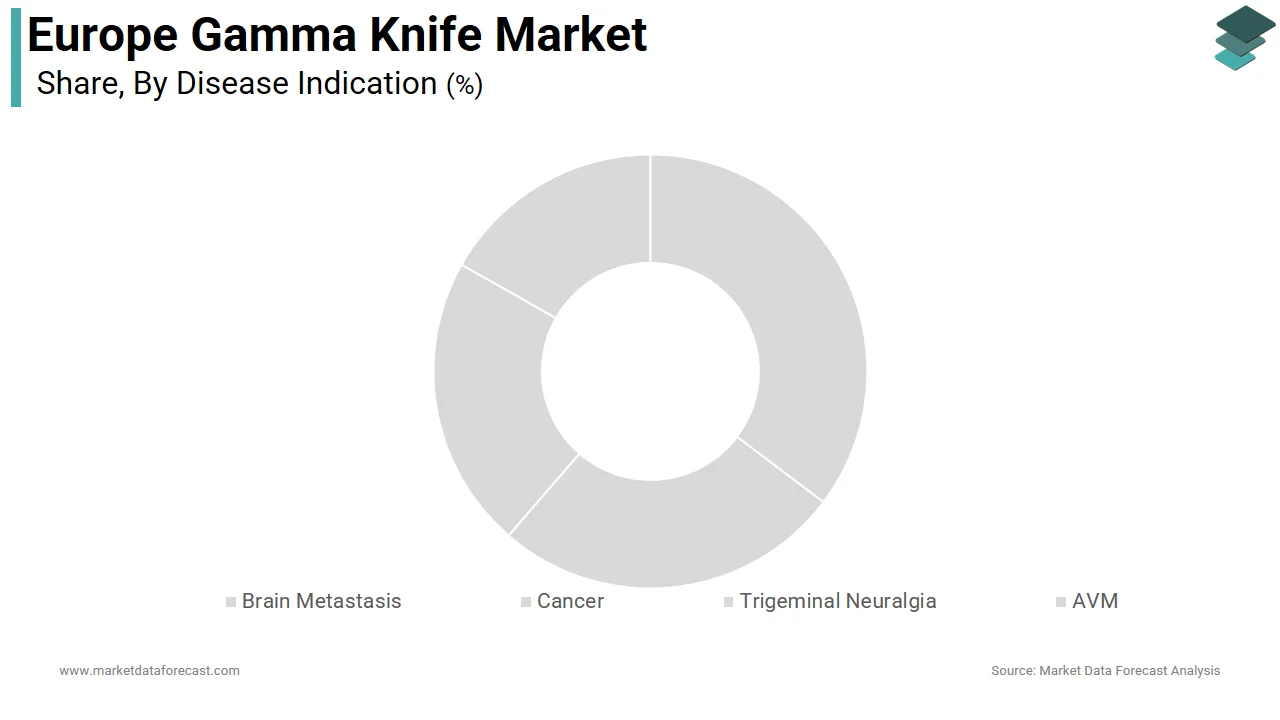
The trigeminal neuralgia segment is estimated to register the fastest CAGR of 12.5% during the forecast period due to the aging population and the increasing acceptance of radiosurgery as a first-line treatment for medication-refractory cases. The rapid expansion of the trigeminal neuralgia segment is largely attributed to the demographic shift toward an older population in Europe, as the incidence of this debilitating facial pain disorder increases significantly with age. Trigeminal neuralgia predominantly affects individuals over the age of fifty, with prevalence rates rising sharply in the seventh and eighth decades of life, creating an expanding patient base for non-invasive interventions. The rising number of elderly individuals across the continent is expected to lead to a corresponding increase in the clinical demand for treatments targeting chronic neurological pain conditions. Data from the European Academy of Neurology estimates that trigeminal neuralgia affects approximately four to five people per hundred thousand annually, but the true prevalence is likely higher due to underdiagnosis in elderly populations who may attribute symptoms to dental issues or normal aging. Conventional medical management often loses efficacy over time or causes intolerable side effects, such as drowsiness and confusion, in older adults. As a result, there is a growing demand for definitive procedural solutions. For older patients who may face higher risks from traditional invasive brain surgery, non-invasive radiation techniques are increasingly utilized as a reliable method for managing severe nerve pain. This demographic tailwind, combined with the safety profile of the procedure, drives the accelerated growth of this segment. A further key driver for the explosive growth of the trigeminal neuralgia segment is the evolving clinical paradigm that positions Gamma Knife radiosurgery as a preferred early intervention for patients who fail initial pharmacological management. Historically reserved for last resort cases, recent evidence supports its use earlier in the treatment algorithm to prevent the severe psychological and physical toll of uncontrolled pain. Data from specialized medical facilities indicates that a high majority of individuals treated with precision radiation for nerve pain achieve lasting relief that continues for several years following a single session. Targeted radiation treatments for facial pain carry a minimal risk of serious surgical complications, with minor sensory changes being the primary trade-off for avoiding the risks of invasive procedures. The outpatient nature of the treatment allows patients to avoid hospitalization and return to daily life immediately, which is particularly appealing for working-age individuals and those with limited mobility. Economic evaluations of healthcare suggest that advanced non-invasive procedures can reduce overall spending by minimizing the need for long-term pharmaceutical care and follow-up surgeries for chronic pain. This shift in clinical practice guidelines and the strong evidence base for efficacy and safety are propelling trigeminal neuralgia to become the fastest-growing indication in the Gamma Knife market.
COUNTRY-LEVEL ANALYSIS
Germany Gamma Knife Market Analysis
Germany dominated the Europe Gamma Knife market and accounted for a share of 22.5% in 2025. The dominance of the German market is driven by its world-class neurosurgical infrastructure, high density of specialized treatment centers, and robust healthcare funding. The country serves as a hub for medical innovation in Europe, hosting some of the most experienced Gamma Knife teams globally who perform a high volume of complex procedures annually. The German healthcare system, characterized by mandatory statutory health insurance, ensures broad patient access to advanced radiosurgery technologies without significant financial barriers. The availability of specialized intracranial radiation equipment in Germany is supported by a robust network of neurosurgical departments, ensuring that advanced treatment options are accessible within the national healthcare infrastructure. Data from the Federal Joint Committee indicates that reimbursement policies for Gamma Knife procedures are well established and comprehensive, covering both oncological and functional indications, which encourages hospitals to invest in and maintain state of the art equipment. The strong collaboration between university hospitals and private clinics fosters continuous research and adoption of the latest treatment protocols, ensuring optimal patient outcomes. The requirement for various medical specialists to collaboratively review cancer cases ensures that patients are presented with a full range of surgical and radiation-based treatment options. This combination of advanced medical expertise, favorable reimbursement, and an extensive network of care centers solidifies Germany's position at the forefront of the regional market.
United Kingdom Gamma Knife Market Analysis
The United Kingdom followed closely behind Germany in the European gamma knife market and captured a 18.2% share in 2025 because of its highly centralized National Health Service, which strategically deploys Gamma Knife units in major tertiary referral centers to ensure equitable access across the population. The UK market is characterized by rigorous clinical governance and a strong focus on evidence-based practice, with leading institutions like the National Hospital for Neurology and Neurosurgery setting global standards for Gamma Knife application. According to NHS England, the commissioning of specialized services ensures that Gamma Knife treatment is available for all indicated conditions, including rare functional disorders, through a network of designated centers. Data from the Society of British Neurological Surgeons highlights that the UK has been a pioneer in adopting the Gamma Knife for trigeminal neuralgia and arteriovenous malformations, with long-term registry data demonstrating excellent safety and efficacy profiles. The integration of radiosurgery into national cancer pathways ensures that patients with brain metastases receive timely assessment and treatment as part of their overall oncology care plan. Professional regulatory bodies use standardized evaluation tools and collaborative clinical reviews to ensure that specialized radiation treatments consistently meet rigorous national safety and performance benchmarks. The presence of renowned research institutions drives innovation in treatment planning and dosimetry, attracting international patients and fostering a culture of excellence. This structured approach to service delivery and commitment to high clinical standards ensure the UK remains a key driver of market growth and technological advancement.
France Gamma Knife Market Analysis
France secures a significant position in the European market due to its universal healthcare coverage, strong tradition of neurological research, and active investment in advanced medical technologies. The French market benefits from a dense network of university hospitals and private clinics equipped with Gamma Knife systems, allowing for widespread geographic access to stereotactic radiosurgery. According to the French National Authority for Health, Gamma Knife procedures are fully reimbursed for a wide range of indications, including brain metastases, meningiomas, and functional disorders, removing financial obstacles for patients. Data from the French Society of Neurosurgery indicates that France has been at the forefront of expanding indications for Gamma Knife, particularly in the realm of functional neurosurgery for epilepsy and movement disorders. The country's robust public funding for medical research supports clinical trials and the development of novel treatment protocols, enhancing the reputation of French centers internationally. A structured system of regional medical partnerships in France facilitates the rapid transition of oncology patients from general diagnosis to high-level specialized radiation therapy. The presence of major manufacturers and research partnerships facilitates the early adoption of new software and hardware upgrades, keeping French facilities at the cutting edge of technology. This blend of comprehensive access, research leadership, and clinical versatility positions France as a vital and growing market for Gamma Knife technology in Europe.
Italy Gamma Knife Market Analysis
Italy is moving ahead steadfastly in the Europe gamma knife market, owing to a concentration of Gamma Knife units in high-volume northern centers, while southern regions face disparities in access despite a strong overall demand for neurosurgical services. The Italian market is also driven by the expertise of renowned neurosurgical departments in cities like Milan, Rome, and Bologna, which attract patients from across the country and neighboring regions for complex Gamma Knife procedures. Basic insurance coverage for brain surgery is universal across the country. However, the speed and ease of accessing specialized radiation centers depend significantly on a patient's local administrative district. The significant demographic shift toward an older society is directly increasing the total number of individuals requiring intervention for complex neurological and oncological conditions. The strong emphasis on multidisciplinary care in major academic hospitals ensures that Gamma Knife is integrated into comprehensive treatment plans for oncology and functional patients. As per reports from the Ministry of Health, recent initiatives aim to reduce regional inequalities by upgrading facilities in underserved areas and promoting telemedicine for treatment planning consultations. The cultural preference for non-invasive treatments among Italian patients further drives demand for the Gamma Knife as an alternative to open surgery. Despite logistical challenges, the high level of clinical skill and dedication to patient care in leading Italian centers maintains the country's significant position in the European market.
Sweden Gamma Knife Market Analysis
Sweden is anticipated to grow in the European market over the forecast period due to a deep institutional knowledge and unparalleled expertise in Gamma Knife applications, with virtually all major university hospitals equipped with the latest systems. It is distinguished as the birthplace of Gamma Knife technology and home to the Karolinska Institute, which continues to lead global research and development in stereotactic radiosurgery. According to the Swedish Society of Neurosurgery, the country maintains a long-standing tradition of using the Gamma Knife for a broad spectrum of indications from small acoustic neuromas to complex arteriovenous malformations with exceptional long-term outcome data. National health policies in Sweden streamline the movement of patients from local clinics to a small number of high-expertise centers to ensure equal treatment quality for the entire population. The close collaboration between clinicians, engineers, and physicists at the Elekta headquarters in Stockholm fosters rapid translation of research findings into clinical practice and product improvements. As per publications from the Leksell Gamma Knife Society, Swedish centers consistently publish landmark studies defining best practices and safety standards for the global community. The commitment to precision medicine and minimal invasiveness aligns perfectly with Swedish healthcare values, ensuring high utilization rates and continuous innovation. This unique heritage and ongoing leadership in research and clinical excellence make Sweden a critical and influential market despite its smaller population size.
COMPETITIVE LANDSCAPE
The competition in the Europe Gamma Knife Market is characterized by a specialized rivalry between the sole manufacturer of dedicated cobalt-60 based systems and providers of advanced linear accelerator and robotic radiosurgery platforms that offer versatile alternatives. Major competitors differentiate themselves through technological innovation, particularly in achieving sub-millimeter precision while minimizing treatment time and improving patient comfort through frameless options. The market features a dynamic where the established gold standard of Gamma Knife faces pressure from flexible robotic systems capable of treating extracranial tumors alongside brain lesions. Competitive advantage is increasingly determined by the ability to integrate artificial intelligence for automated treatment planning and real-time motion management, which enhances clinical outcomes. Regulatory compliance with stringent European nuclear safety and medical device directives acts as a significant barrier to entry, favoring incumbents with robust quality management systems. Strategic alliances with top-tier university hospitals are crucial for generating clinical evidence that validates efficacy for new indications such as functional neurological disorders. Companies continuously invest in post-market surveillance and long-term outcome registries to demonstrate superior survival rates and quality of life benefits. This highly specialized environment fosters rapid advancements in radiosurgical techniques while pushing firms to maintain exceptional safety standards and operational reliability to capture market share in this critical segment of neuro-oncology and functional neurosurgery.
KEY MARKET PLAYERS
The leading companies operating in the Europe gamma knife market include:
- Elekta AB
- Cyber Medical Corporation Ltd.
- Huiheng Medical Inc.
- ET Medical Group
- American Shared Hospital Services
- Accuray Incorporated
- Masep Infini Europe, Inc.
- RaySearch Laboratories AB
- Varian Medical Systems
- Hokai
- Nordion Inc.
TOP PLAYERS IN THE MARKET
- Elekta AB stands as the undisputed global pioneer and dominant force in the Gamma Knife market, having invented the technology over fifty years ago in Sweden. The company contributes significantly to the global landscape by manufacturing the only dedicated stereotactic radiosurgery systems that utilize cobalt-60 sources for intracranial treatments. Elekta recently strengthened its market position by launching the Perfexion and Icon models, which integrate advanced cone beam computed tomography for frameless treatments and expanded indications to include functional disorders. The firm actively collaborates with leading European neurosurgical centers to conduct clinical trials that validate new treatment protocols for epilepsy and movement disorders. By investing heavily in artificial intelligence-driven treatment planning software, Elekta enhances workflow efficiency and dosimetric precision for clinicians. Their commitment to continuous innovation ensures that their systems remain the gold standard for non-invasive brain surgery worldwide. These strategic initiatives solidify their reputation as the primary provider of life-saving radiosurgery solutions across Europe and the globe.
- Accuray Incorporated is a major competitor in the broader stereotactic radiosurgery sector, offering the CyberKnife system, which serves as a versatile alternative to traditional Gamma Knife units for both cranial and extracranial applications. The company plays a crucial role in the global market by providing robotic radiosurgery solutions that eliminate the need for invasive head frames through real-time image guidance and motion tracking. Accuray recently enhanced its market presence in Europe by introducing the Vantage System, which features improved throughput and patient comfort, along with advanced artificial intelligence tools for faster treatment planning. They have intensified efforts to demonstrate the clinical equivalence of their robotic platforms for trigeminal neuralgia and brain metastases compared to fixed-source systems. The firm also focuses on expanding reimbursement coverage across European nations by generating robust health economic data that highlights the cost-effectiveness of outpatient robotic procedures. By positioning their technology as a multi-site solution, Accuray appeals to comprehensive cancer centers seeking versatility. These actions reinforce their status as a key challenger capable of delivering high-precision radiation therapy without the logistical constraints of radioactive source management.
- RaySearch Laboratories AB is a Swedish innovator that plays a pivotal role in the Europe Gamma Knife market by providing sophisticated treatment planning software that integrates seamlessly with Elekta hardware and other radiosurgery platforms. The company contributes to the global advancement of stereotactic radiosurgery by developing algorithms that optimize dose distribution and minimize exposure to critical brain structures with unprecedented accuracy. RaySearch recently strengthened its position by releasing RayStation updates that incorporate deep learning capabilities for automatic organ segmentation and adaptive planning specifically tailored for Gamma Knife Icon procedures. They collaborate extensively with European research institutions to refine biological modeling and predict treatment outcomes for complex vascular malformations and functional targets. The firm focuses on enhancing interoperability, allowing clinics to manage diverse equipment fleets through a unified interface that streamlines clinical workflows. By prioritizing user-centric design and computational speed, RaySearch enables physicists to create superior plans in less time. These technological advancements ensure their software remains an essential component of modern radiosurgery suites, driving efficiency and clinical excellence across European healthcare facilities.
TOP STRATEGIES USED BY THE KEY MARKET PARTICIPANTS
Key players in the Europe Gamma Knife Market primarily focus on continuous product innovation by integrating advanced imaging modalities and artificial intelligence into their systems to enhance treatment precision and workflow efficiency. Companies heavily invest in clinical research and multicenter studies to expand approved indications beyond oncology to include functional disorders like epilepsy and essential tremor. Expanding service and support networks across Europe helps firms ensure maximum uptime and regulatory compliance for facilities managing radioactive sources. Market participants frequently engage in strategic partnerships with leading academic hospitals to validate new treatment protocols and generate real-world evidence supporting their technologies. Another prevalent strategy involves developing frameless treatment capabilities that improve patient comfort and allow for fractionated therapies, thereby broadening the addressable patient population. Firms also pursue aggressive educational initiatives to train neurosurgeons and medical physicists on the latest stereotactic techniques and safety standards. These combined approaches enable companies to strengthen their competitive positioning and drive widespread adoption of advanced radiosurgery solutions across the region.
MARKET SEGMENTATION
This European gamma knife market research report has been segmented and sub-segmented into the following categories.
By Disease Indication
- Brain Metastasis
- Cancer
- Trigeminal Neuralgia
- AVM
- Others
By Country
- UK
- France
- Spain
- Germany
- Italy
- Russia
- Sweden
- Denmark
- Switzerland
- Netherlands
- Turkey
- Czech Republic
- Rest of Europe