- Product Description Description
- Table of Contents TOC
- List of Table & Figure LOT
- Get Free Sample PDF Sample PDF
Market Size, 2025
$321 MnMarket Estimate, 2026
$349.2 MnMarket Forecast, 2034
$685 MnCAGR, 2026–2034
8.8%Global Gamma Knife Market Report Summary
The global gamma knife market was valued at USD 321 million in 2025 and is projected to grow from USD 349.22 million in 2026 to USD 685 million by 2034, registering a CAGR of 8.79% from 2026 to 2034. Market growth is driven by the increasing prevalence of neurological disorders, rising incidence of brain tumors, and growing adoption of non-invasive radiosurgery procedures. Gamma Knife technology provides highly precise radiation treatment for brain lesions and neurological conditions while minimizing damage to surrounding healthy tissue. Advancements in stereotactic radiosurgery systems, expanding access to specialized neuro-oncology care, and increasing preference for minimally invasive treatment options are further supporting market expansion worldwide.
Key Market Trends
- Rising adoption of non-invasive stereotactic radiosurgery procedures for brain disorders.
- Increasing prevalence of brain tumors, brain metastases, and neurological diseases.
- Growing investments in advanced radiation oncology infrastructure.
- Expansion of specialized neuro-oncology and radiosurgery centers globally.
- Continuous technological advancements in precision radiation delivery and treatment planning systems.
Segmental Insights
- Based on disease indication, the brain metastasis segment dominated the global gamma knife market in 2025, driven by the high incidence of secondary brain tumors resulting from cancers such as lung cancer, breast cancer, and melanoma. The increasing use of Gamma Knife radiosurgery as an effective treatment option for metastatic brain lesions continues to support segment growth.
Regional Insights
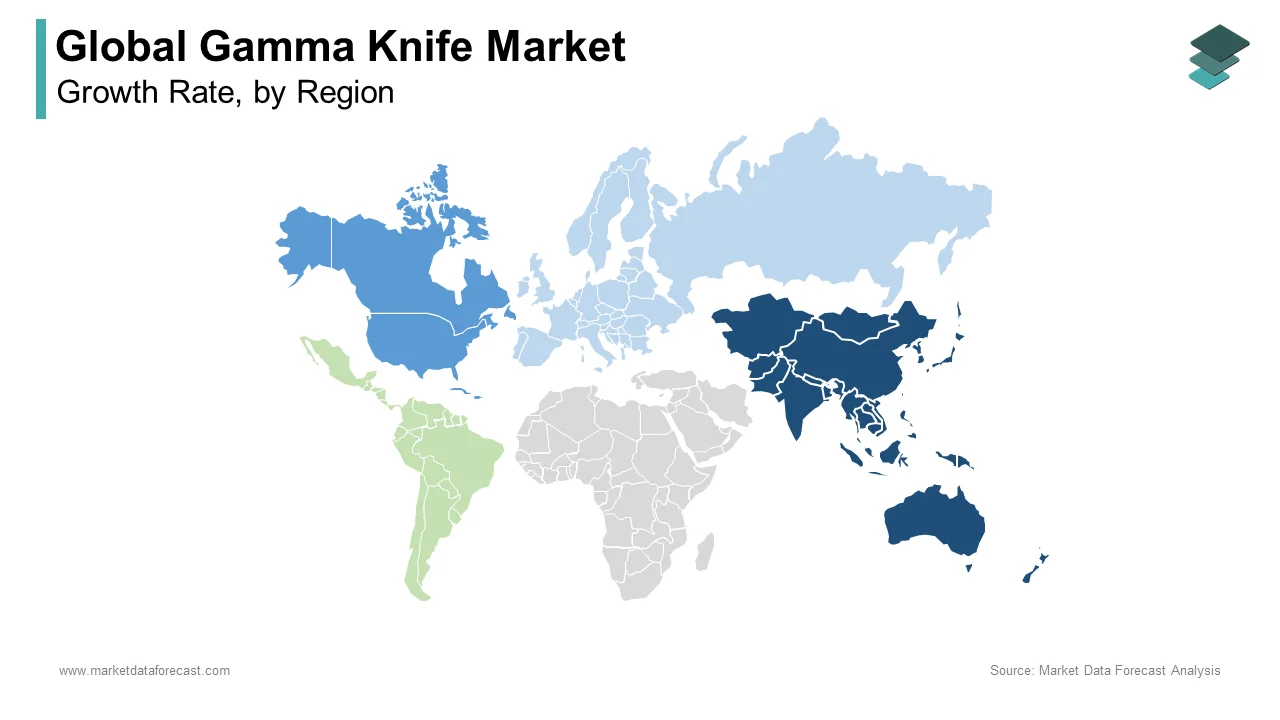
The global gamma knife market is witnessing steady growth across major regions, supported by increasing healthcare investments, expanding oncology infrastructure, and growing demand for advanced radiosurgery technologies.
- North America held the largest share of the global gamma knife market in 2025, driven by advanced healthcare infrastructure, high adoption of innovative treatment technologies, and the presence of leading neurosurgical and oncology centers.
- Europe ranked as the second-largest regional market and is expected to witness steady growth due to ongoing modernization of public healthcare systems, increasing investment in radiation oncology equipment, and growing focus on advanced cancer treatment solutions.
- Asia-Pacific is projected to register the fastest growth during the forecast period, supported by rising healthcare expenditure, increasing prevalence of neurological disorders, expanding access to specialized treatment facilities, and significant public health investments across emerging economies.
Competitive Landscape
The global gamma knife market is characterized by the presence of specialized medical technology companies focusing on innovation, treatment precision, and expansion of radiosurgery capabilities. Market participants are investing in advanced treatment planning software, next-generation stereotactic radiosurgery systems, and strategic collaborations with healthcare providers to strengthen their market positions. Technological advancements, product enhancements, and expanding clinical applications continue to shape competitive dynamics across the market.
Prominent companies operating in the global gamma knife market include Varian Medical Systems, Elekta AB, Accuray, Cyber Medical Corporation Ltd., Huiheng Medical Inc., Masep Infini Global, Inc., Hokai, Nordion Inc., ET Medical Group, and American Shared Hospital Services.
Global Gamma Knife Market Size
The size of the global gamma knife market was worth USD 321 million in 2025. The global market is anticipated to grow at a CAGR of 8.79% from 2026 to 2034 and be worth USD 685 million by 2034 from USD 349.22 million in 2026.
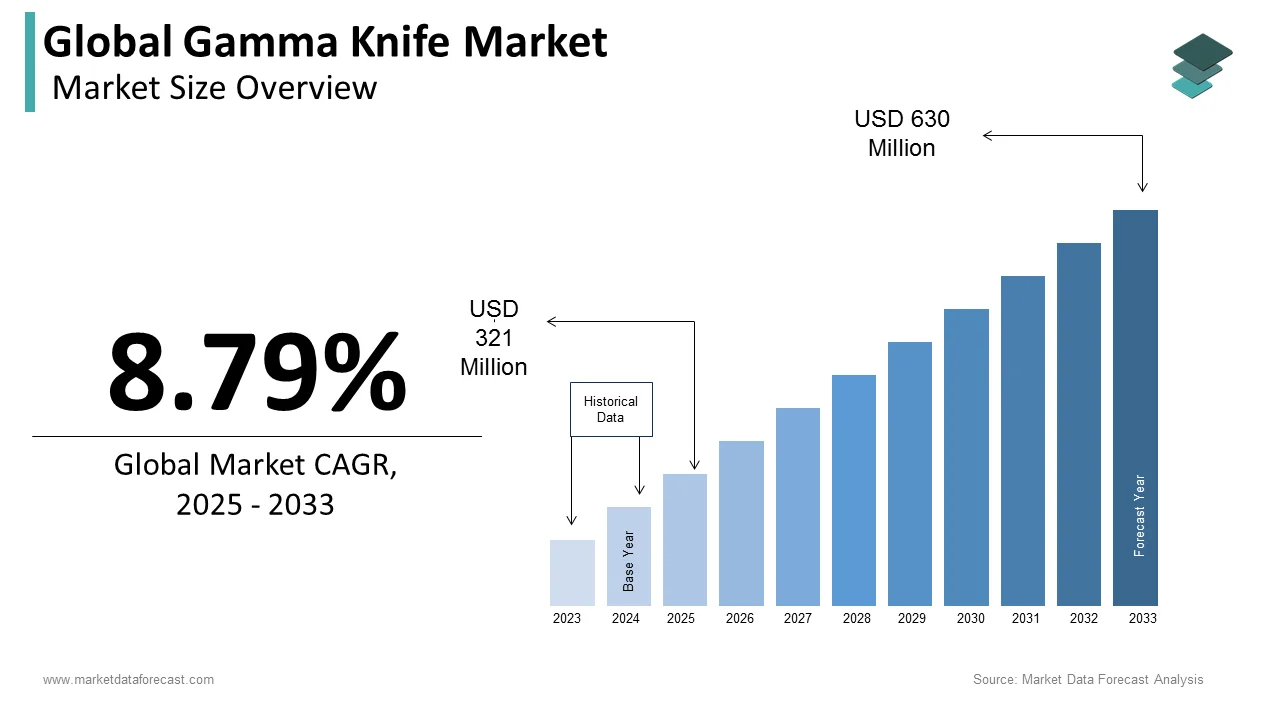
Gamma knife represents a specialized segment within the medical device industry focused on stereotactic radiosurgery systems designed for the precise treatment of intracranial abnormalities. This technology utilizes highly focused beams of gamma radiation to target brain tumors, vascular malformations, and functional disorders without requiring invasive surgical incisions. The procedure is renowned for its ability to deliver high doses of radiation to specific targets while sparing surrounding healthy tissue, thereby minimizing recovery time and complications. The aging global population further exacerbates the prevalence of neurological conditions, necessitating advanced therapeutic interventions. According to the United Nations Department of Economic and Social Affairs, the number of people aged 65 years or older is projected to reach 1.5 billion by 2050, creating a substantial patient base for neurosurgical procedures. Healthcare infrastructure in developed regions continues to expand, with hospitals investing in state-of-the-art equipment to enhance patient outcomes and operational efficiency. Regulatory bodies, such as the Food and Drug Administration in the United States and the European Medicines Agency, maintain stringent approval processes ensuring safety and efficacy standards are met. The integration of artificial intelligence and advanced imaging technologies has refined treatment planning, allowing for greater precision and personalized care protocols. These technological advancements, coupled with increasing awareness among clinicians and patients, drive the adoption of Gamma Knife systems across major medical centers worldwide.
MARKET DRIVERS
Rising Prevalence of Brain Tumors and Neurological Disorders
The escalating incidence of brain tumors and various neurological disorders is majorly driving the expansion of the global gamma knife market, as healthcare providers seek effective, non-invasive solutions for complex intracranial conditions. Brain tumors, including gliomas, meningiomas, and metastatic lesions, require precise intervention to prevent damage to critical brain structures and improve patient survival rates. The aging population is particularly susceptible to these conditions, with incidence rates rising significantly among individuals over 60 years of age. According to the American Cancer Society, brain and spinal cord tumors account for about 1% of all cancers, but remain a leading cause of cancer-related death in children and adults. Gamma Knife radiosurgery offers a viable alternative to traditional open surgery for patients who are not suitable candidates for craniotomy due to age, comorbidities, or tumor location. The ability to treat multiple metastases in a single session enhances its appeal in oncology practices. Furthermore, the growing awareness of early diagnosis through advanced magnetic resonance imaging and computed tomography scans leads to earlier detection and timely intervention. This trend increases the volume of eligible patients for stereotactic radiosurgery, thereby driving demand for Gamma Knife installations in hospitals and specialized clinics globally.
Advancements in Stereotactic Radiosurgery Technology and Precision
Technological advancements in stereotactic radiosurgery systems are further fuelling the gamma knife market expansion by enhancing treatment accuracy, efficiency, and patient comfort through innovative engineering and software integration. Modern Gamma Knife platforms incorporate automated positioning systems, high-resolution imaging capabilities, and sophisticated dose planning algorithms that allow for sub-millimeter precision in targeting lesions. As per Elekta, a leading manufacturer of Gamma Knife systems, the latest Icon platform enables frameless treatments using mask-based immobilization, which improves patient experience and expands the range of treatable conditions. This evolution reduces procedure time and allows for fractionated treatments where radiation is delivered in multiple sessions, benefiting larger or more complex tumors. According to the Journal of Neurosurgery, clinical studies have demonstrated that modern Gamma Knife techniques achieve local control rates exceeding 90% for many benign tumors with minimal side effects. The integration of artificial intelligence into treatment planning software assists physicians in optimizing dose distribution and identifying critical structures to avoid, thereby reducing the risk of complications. These technological improvements also facilitate shorter recovery times and outpatient procedures, which lower overall healthcare costs and increase hospital throughput. The continuous innovation in hardware and software ensures that Gamma Knife remains at the forefront of radiosurgery, attracting investments from healthcare institutions seeking to offer cutting-edge care. This relentless pursuit of precision and efficiency sustains the growth trajectory of the market as clinicians adopt newer models to enhance their therapeutic capabilities.
MARKET RESTRAINTS
High Capital Investment and Operational Costs
The substantial capital investment required for acquiring and maintaining Gamma Knife systems is a major restraint to the Gamma Knife market growth, which is limiting accessibility primarily to large, well-funded healthcare institutions. The initial cost of a Gamma Knife unit often exceeds several million dollars, depending on the model and configuration, which poses a financial barrier for smaller hospitals and clinics in developing regions. As per the Healthcare Financial Management Association, the total cost of ownership includes not only the purchase price but also expenses related to facility shielding, installation, specialized staff training, and ongoing maintenance contracts. These operational costs can strain hospital budgets, particularly in healthcare systems facing reimbursement pressures and resource constraints. According to the World Bank, many low- and middle-income countries allocate less than 5% of their gross domestic product to healthcare, making it challenging to justify such high expenditure on specialized equipment. Additionally, the need for dedicated, radiation-shielded rooms adds to the infrastructure costs, requiring significant construction modifications. The limited number of trained physicists and neurosurgeons capable of operating these systems further increases labor costs and creates dependency on specialized personnel. Reimbursement policies for stereotactic radiosurgery vary widely across regions and may not always cover the full cost of the procedure, affecting revenue generation. These financial hurdles restrict the widespread adoption of Gamma Knife technology, particularly in resource-limited settings where the burden of neurological diseases is often high but funding is scarce.
Stringent Regulatory Approvals and Safety Compliance Requirements
Stringent regulatory approvals and rigorous safety compliance requirements impose significant delays and complexities on the gamma knife market, which is hindering rapid deployment and innovation cycles for manufacturers. Medical devices involving ionizing radiation are subject to extensive scrutiny by regulatory bodies, such as the Food and Drug Administration in the United States and the European Medicines Agency, to ensure patient safety and device efficacy. As per the International Atomic Energy Agency, strict guidelines govern the installation, operation, and quality assurance of radiosurgery equipment, requiring comprehensive documentation and regular audits. The process of obtaining regulatory clearance for new features or software updates can take months or even years, delaying market entry and increasing development costs. According to the Medical Device Regulation in Europe, manufacturers must adhere to rigorous clinical evaluation and post-market surveillance obligations, which demand substantial resources and expertise. Non-compliance can result in severe penalties, product recalls, and reputational damage, discouraging smaller companies from entering the market. The variability in regulatory standards across different countries complicates global expansion strategies, forcing manufacturers to navigate diverse legal frameworks. Additionally, changes in radiation safety protocols may necessitate retrofitting existing units or updating operational procedures, adding to the operational burden. These regulatory barriers create a high entry threshold that limits competition and slows the pace of technological dissemination, particularly in emerging markets where regulatory infrastructure may be less developed or consistent.
MARKET OPPORTUNITIES
Expansion into Emerging Markets with Improving Healthcare Infrastructure
The expansion of Gamma Knife technology into emerging markets presents a substantial opportunity for the gamma knife market growth, as these regions invest heavily in upgrading healthcare infrastructure and expanding access to advanced medical treatments. Countries in the Asia-Pacific, Latin America, and the Middle East are witnessing rapid economic development, which enables increased government and private sector spending on healthcare facilities. This financial boost allows hospitals in these regions to acquire sophisticated medical equipment, including Gamma Knife systems, to cater to the growing demand for specialized neurosurgical care. The increasing prevalence of brain tumors and neurological disorders in these populations creates a pressing need for effective treatment options. According to the World Health Organization, many emerging economies are implementing national cancer control plans that prioritize access to radiotherapy and radiosurgery services. Manufacturers can capitalize on this trend by offering flexible financing options, leasing models, and localized training programs to facilitate adoption. Partnerships with local distributors and healthcare providers can help navigate regulatory landscapes and build trust within the medical community. The untapped potential in these markets offers a significant avenue for revenue growth and market diversification for Gamma Knife manufacturers seeking to reduce dependence on saturated, developed markets.
Integration of Artificial Intelligence and Machine Learning in Treatment Planning
The integration of artificial intelligence and machine learning into Gamma Knife treatment planning systems offers a promising opportunity to enhance clinical outcomes, operational efficiency, and personalized care delivery. AI algorithms can analyze vast amounts of patient data, including medical images, genetic profiles, and historical treatment outcomes, to optimize radiation dose distribution and predict potential complications. As per Nature Medicine, recent studies indicate that AI-assisted planning can reduce treatment planning time by up to 50% while improving accuracy and consistency compared to manual methods. This efficiency gain allows healthcare providers to treat more patients per day, increasing throughput and revenue potential. Machine learning models can also identify patterns in tumor response to radiation, enabling more precise customization of treatment protocols for individual patients. According to IBM Watson Health, the adoption of cognitive computing in healthcare is accelerating, with radiology and oncology being key areas of application. By leveraging AI, manufacturers can differentiate their products and offer value-added services that appeal to forward-thinking medical institutions. The ability to continuously learn from real-world data ensures that the system improves over time, enhancing its clinical utility. This technological convergence positions Gamma Knife systems as intelligent platforms rather than just hardware devices, opening new avenues for software subscriptions and data analytics services.
MARKET CHALLENGES
Shortage of Skilled Professionals and Specialized Training Needs
The shortage of skilled professionals, including neurosurgeons, medical physicists, and radiation therapists proficient in Gamma Knife operations, is a significant challenge to the market, as it limits the capacity of healthcare institutions to utilize these systems effectively. Operating a Gamma Knife requires specialized knowledge of stereotactic principles, radiation physics, and complex software interfaces, which demands extensive training and experience. As per the American Society for Radiation Oncology, there is a growing workforce gap in radiation oncology, with projections indicating a shortfall of nearly 1,000 radiation oncologists in the United States by 2030. This scarcity is even more pronounced in rural areas and developing countries, where access to specialized education and training programs is limited. The steep learning curve associated with new Gamma Knife models further exacerbates the issue, requiring continuous professional development and certification. According to the International Society for Stereotactic Radiosurgery, standardized training curricula are essential, but not universally available, leading to variations in practice quality and safety. Hospitals may face difficulties in recruiting and retaining qualified staff, resulting in underutilization of expensive equipment and delayed patient care. The dependency on a small pool of experts creates bottlenecks in service delivery and increases operational risks. Addressing this challenge requires collaborative efforts between manufacturers, educational institutions, and healthcare providers to develop comprehensive training programs and simulation tools that accelerate competency acquisition.
Competition from Alternative Radiosurgery Technologies
Intense competition from alternative radiosurgery technologies, such as linear accelerator-based systems and CyberKnife, is further challenging the gamma knife market expansion, as these alternatives offer comparable efficacy with greater flexibility and lower costs. Linear accelerators equipped with multileaf collimators can perform stereotactic radiosurgery for both intracranial and extracranial targets, providing a versatile solution for hospitals seeking multi-purpose equipment. As per the American Association of Physicists in Medicine, linac-based systems have gained significant market share due to their ability to treat a wider range of anatomical sites beyond the brain. CyberKnife systems, which use robotic arms to deliver radiation, offer frameless treatment and real-time tracking, appealing to patients and providers seeking convenience and precision. Gamma Knife systems are traditionally limited to intracranial applications, which restricts their utility compared to multi-modality platforms. Healthcare administrators often prefer investments that serve multiple departments and patient groups, maximizing return on investment. This competitive pressure forces Gamma Knife manufacturers to innovate continuously and demonstrate superior clinical outcomes for specific indications to justify their niche position. The presence of robust alternatives necessitates strategic differentiation and evidence-based marketing to maintain relevance in a dynamic technological landscape.
REPORT COVERAGE
| REPORT METRIC | DETAILS |
| Market Size Available | 2025 to 2034 |
| Base Year | 2025 |
| Forecast Period | 2026 to 2034 |
| Segments Covered | By Disease Indication and Region. |
| Various Analyses Covered | Global, Regional, and Country-Level Analysis, Segment-Level Analysis, Drivers, Restraints, Opportunities, Challenges; PESTLE Analysis; Porter’s Five Forces Analysis, Competitive Landscape, Analyst Overview of Investment Opportunities |
| Regions Covered | North America, Europe, Asia Pacific, Latin America, the Middle East, and Africa |
| Market Leaders Profiled | Varian Medical Systems, Elekta AB, Cyber Medical Corporation Ltd., Huiheng Medical Inc., Masep Infini Global, Inc., Hokai, Nordion Inc., ET Medical Group and American Shared Hospital Services. |
SEGMENTAL ANALYSIS
By Disease Indication Insights
The brain metastasis segment dominated the market by holding the leading share of the global market in 2025, primarily due to the high incidence of secondary brain tumors arising from systemic cancers such as lung, breast, and melanoma. As survival rates for primary cancers improve due to advancements in chemotherapy and immunotherapy, patients are living longer, which increases the likelihood of cancer spreading to the brain. According to the American Association of Neurological Surgeons, approximately 20% of all cancer patients will develop brain metastases during the course of their disease, creating a substantial patient pool for stereotactic radiosurgery. The ability of the Gamma Knife to treat multiple metastatic lesions simultaneously with high precision makes it the preferred modality over whole-brain radiation therapy, which is associated with significant cognitive decline. As per the Journal of Clinical Oncology, studies have shown that stereotactic radiosurgery provides superior local control and quality of life outcomes for patients with limited brain metastases compared to surgical resection. This clinical evidence drives oncologists and neurosurgeons to recommend Gamma Knife as a first-line treatment for eligible patients. The increasing prevalence of lung cancer, which is the most common source of brain metastases, further fuels demand. According to the World Health Organization, lung cancer remains the leading cause of cancer death globally, ensuring a steady stream of patients requiring intracranial intervention. The minimally invasive nature of the procedure allows for rapid recovery, enabling patients to resume systemic treatments quickly, which is critical for managing their overall disease burden.

On the other hand, the trigeminal neuralgia segment is predicted to expand at a CAGR of 8.4% during the forecast period in the global market, owing to the rising prevalence of this debilitating condition among the aging population and the strong patient preference for non-invasive solutions. Trigeminal neuralgia, characterized by severe facial pain, is more common in individuals over 50 years of age, and its incidence increases with age. As per the National Institute of Neurological Disorders and Stroke, approximately 15,000 new cases are diagnosed annually in the United States alone, highlighting the significant burden of this disorder. Traditional treatments, including medication and microvascular decompression surgery, carry risks of side effects and complications, which deter many patients, especially those with comorbidities. Gamma Knife radiosurgery offers a painless, outpatient alternative that targets the trigeminal nerve root to disrupt pain signals without incisions or anesthesia. According to the Journal of Neurosurgery, initial pain relief rates following Gamma Knife treatment exceed 80%, providing substantial relief for patients who have failed conservative management. The aging global demographic ensures a growing base of potential candidates for this procedure. As per the United Nations, the number of people aged 60 years and older is expected to double by 2050, expanding the addressable market. The minimal downtime and low risk profile make it an attractive option for elderly patients who wish to avoid the stresses of open surgery.
REGIONAL ANALYSIS
North America Gamma Knife Market Analysis
North America held the major share of the global market in 2025 and is anticipated to experience robust market growth and maintain its leading position in advanced therapeutic adoption over the next few years. The United States is the primary contributor to this regional dominance, hosting the highest number of installed Gamma Knife units worldwide. As per the Centers for Disease Control and Prevention, the high prevalence of chronic diseases, including cancer and neurological disorders in the United States, drives consistent demand for specialized treatments. The presence of leading manufacturers, such as Elekta, and strong research institutions, fosters continuous innovation and clinical excellence. According to the American Medical Association, widespread insurance coverage for stereotactic radiosurgery reduces financial barriers for patients, facilitating access to care. The region benefits from a robust network of specialized neurosurgical centers and academic hospitals that serve as referral hubs for complex cases. Regulatory approvals by the Food and Drug Administration are streamlined for breakthrough devices, accelerating the introduction of new technologies. High healthcare expenditure per capita enables hospitals to invest in premium equipment despite high initial costs. The strong emphasis on patient-centered care and quality outcomes further supports the adoption of minimally invasive procedures like the Gamma Knife. Collaborative efforts between industry stakeholders and healthcare providers ensure ongoing training and education, maintaining high standards of practice. This conducive ecosystem sustains North America's position as the leader in the global Gamma Knife market.
Europe Gamma Knife Market Analysis
Europe is expected to exhibit steady, sustainable expansion and focus heavily on high-value technological updates across its public healthcare frameworks for the next few years. Countries such as Germany, France, and the United Kingdom are key contributors, with well-established networks of specialized radiotherapy centers. As per Eurostat, the aging population in Europe contributes to a higher incidence of brain tumors and vascular malformations, necessitating advanced treatment options. The European Union medical device regulations ensure high safety and performance standards, which build trust among clinicians and patients. According to the European Society for Radiotherapy and Oncology, there is a growing consensus on the clinical benefits of stereotactic radiosurgery, leading to increased integration into standard care pathways. Government funding and public healthcare budgets support the acquisition of expensive medical equipment, although procurement processes can be lengthy. The region places a strong emphasis on cost-effectiveness and health technology assessments, which influence adoption rates. Cross-border collaboration and research initiatives facilitate the sharing of best practices and clinical data. Patient awareness and advocacy for non-invasive treatments are rising, prompting healthcare providers to expand their service offerings. The presence of skilled medical professionals and comprehensive training programs ensures high-quality care delivery. Despite economic variations across countries, the overall commitment to healthcare excellence maintains Europe's strong position in the global market.
Asia Pacific Gamma Knife Market Analysis
The Asia Pacific region is poised to advance at an unmatched growth rate and demonstrate substantial capital investments in public health systems over the coming years. China, Japan, and India are the primary drivers of growth, with significant investments in hospital modernization and specialized cancer centers. As per the World Health Organization, the rising incidence of cancer and neurological disorders in the Asia Pacific, coupled with a large population base, creates immense demand for effective therapies. Governments in the region are prioritizing healthcare accessibility and quality, leading to increased public and private sector spending. According to the Asian Development Bank, healthcare expenditure in the region is growing at a faster rate than gross domestic product, reflecting this strategic focus. The adoption of international clinical standards and partnerships with global manufacturers facilitates technology transfer and capacity building. Rising disposable incomes and expanding health insurance coverage enable more patients to afford premium treatments. The shortage of neurosurgeons in some areas makes non-invasive options like Gamma Knife attractive, as they require shorter hospital stays and less intensive post-operative care. Medical tourism is also emerging as a factor, with patients traveling to countries with advanced facilities for treatment. Local manufacturing initiatives and government incentives further support market expansion. These dynamic factors position the Asia Pacific as a key growth engine for the future of the Gamma Knife market.
Latin America Gamma Knife Market Analysis
Latin America is projected to undergo gradual private sector expansion and experience targeted enhancements in localized neurosurgical access for the next few years. Brazil, Mexico, and Argentina are the leading markets in the region, with established private healthcare sectors that drive the adoption of advanced technologies. As per the Pan American Health Organization, non-communicable diseases, including cancer, are becoming the leading cause of mortality in the region, shifting healthcare priorities towards specialized treatment capabilities. Private hospitals and clinics are investing in Gamma Knife systems to differentiate their services and attract patients seeking cutting-edge care. According to the Inter-American Development Bank, economic stability in certain countries has enabled greater investment in medical infrastructure, although challenges remain in public sector funding. The availability of skilled specialists is improving through international training programs and collaborations. Patient awareness is rising due to digital health initiatives and media coverage of successful treatments. Reimbursement mechanisms are evolving, with some private insurers covering stereotactic radiosurgery, although out-of-pocket expenses remain high for many. The region benefits from proximity to North America, which facilitates technology adoption and knowledge exchange. Despite economic volatility, the long-term trend towards healthcare modernization supports steady market growth. Strategic partnerships with global manufacturers can help navigate local regulatory and economic complexities.
Middle East and Africa Gamma Knife Market Analysis
The Middle East and Africa region is expected to showcase a distinctly divided performance, with affluent Gulf states building premium medical cities while sub-Saharan areas slowly adopt foundational technologies over the next few years. Gulf Cooperation Council countries, such as Saudi Arabia and the United Arab Emirates, are leading the way with substantial investments in world-class medical facilities. As per the World Bank, healthcare spending in the Middle East is increasing as governments seek to provide comprehensive care to their citizens. The establishment of specialized cancer centers and neurosurgical institutes creates demand for advanced radiosurgery equipment. According to the African Union, efforts to strengthen health systems in Africa include improving access to diagnostic and therapeutic technologies, although progress varies by country. In the Middle East, a high prevalence of lifestyle-related diseases contributes to the need for effective treatments. Regulatory frameworks are becoming more robust, aligning with international standards to ensure patient safety. The region attracts global manufacturers through tender processes and public-private partnerships. Training and education initiatives are crucial to build local capacity and ensure the sustainable operation of complex systems. While challenges such as infrastructure gaps and funding constraints persist in parts of Africa, the overall trajectory is positive. The desire to retain patients within the region, rather than sending them abroad for treatment, drives investment in high-end technologies like the Gamma Knife.
COMPETITIVE LANDSCAPE
The competition in the Gamma Knife market is unique due to the monopoly held by Elekta on the specific Gamma Knife technology, yet it faces intense rivalry from alternative stereotactic radiosurgery platforms such as linear accelerator-based systems and robotic radiosurgery devices. While Elekta dominates the niche for dedicated intracranial radiosurgery, competitors like Accuray and Varian offer versatile systems that can treat both brain and body tumors, providing hospitals with greater flexibility and potential return on investment. This dynamic creates a competitive landscape where the value proposition extends beyond technical specifications to include operational efficiency, cost-effectiveness, and clinical versatility. Manufacturers compete based on precision, ease of use, and integration with existing hospital infrastructure. The high barrier to entry due to regulatory requirements and substantial capital investment limits the number of direct competitors but encourages innovation among existing players. Clinical evidence and peer-reviewed studies play a crucial role in influencing purchasing decisions as healthcare providers seek proven outcomes. Service quality and training support also differentiate brands as hospitals rely on manufacturers for ongoing operational success. The market is characterized by a balance between specialized excellence and broad applicability, driving continuous technological advancement and strategic differentiation among key participants.
KEY MARKET PLAYERS
Some of the prominent companies leading the global gamma knife market profiled in this report are
- Varian Medical Systems
- Elekta AB
- Accuray
- Cyber Medical Corporation Ltd.
- Huiheng Medical Inc.
- Masep Infini Global, Inc.
- Hokai
- Nordion Inc.
- ET Medical Group
- American Shared Hospital Services
TOP PLAYERS IN THE MARKET
- Elekta AB stands as the pioneering force and sole manufacturer of Gamma Knife technology globally, holding exclusive rights to this specialized stereotactic radiosurgery platform. The company continuously innovates its product portfolio with advanced models like the Gamma Knife Icon, which introduces frameless treatments and cone beam computed tomography for enhanced precision. Elekta strengthens its market position by expanding its global service network and providing comprehensive training programs for neurosurgeons and medical physicists. Recent initiatives include strategic partnerships with leading cancer centers to conduct clinical research and validate new treatment protocols. The company also invests heavily in software upgrades that integrate artificial intelligence for automated treatment planning, improving workflow efficiency. By focusing on clinical excellence and customer support, Elekta maintains its dominant role in defining the standards for intracranial radiosurgery and ensuring widespread adoption of its proprietary technology across major healthcare institutions worldwide.
- Accuray Incorporated competes in the broader stereotactic radiosurgery landscape with its CyberKnife system, which serves as a primary alternative to Gamma Knife for treating intracranial and extracranial tumors. The company focuses on robotic radiosurgery technology that offers frameless treatment and real-time tumor tracking capabilities, appealing to patients seeking non-invasive options. Accuray strengthens its position through continuous software enhancements, such as the MultiLeaf Collimator, which improves dose conformality and treatment speed. Recent actions include expanding its direct sales force in emerging markets and collaborating with academic institutions to publish comparative clinical outcomes. The company also emphasizes interoperability with various imaging modalities to streamline clinical workflows. By highlighting the versatility of its platform to treat multiple anatomical sites, Accuray captures a significant segment of the radiosurgery market that values flexibility and comprehensive care solutions beyond just brain-specific applications.
- Varian Medical Systems, a Siemens Healthineers company, is a major participant in the radiosurgery market, offering linear accelerator-based systems capable of performing stereotactic treatments, including intracranial procedures. The company leverages its extensive installed base of linear accelerators to promote software upgrades and hardware accessories that enable Gamma Knife-like precision for brain tumors. Varian strengthens its market position through the integration of its Ethos therapy platform, which uses artificial intelligence for adaptive radiotherapy planning. Recent strategies include acquiring specialized software firms to enhance treatment planning capabilities and expanding its global service infrastructure. The company actively engages in educational initiatives to train clinicians on stereotactic techniques using its equipment. By positioning its linear accelerators as versatile multi-purpose tools, Varian appeals to hospitals seeking cost-effective solutions that can handle a wide range of oncology cases while maintaining high standards of accuracy and patient safety in neurological treatments.
TOP STRATEGIES USED BY KEY MARKET PARTICIPANTS
Key players in the Gamma Knife market employ several strategic approaches to maintain competitiveness and drive growth in a specialized medical device sector. Product innovation remains central as manufacturers introduce advanced features such as frameless immobilization and integrated imaging to enhance precision and patient comfort. Strategic partnerships with leading cancer centers and academic institutions facilitate clinical research and validate treatment efficacy, building trust among clinicians. Expansion into emerging markets through localized training programs and flexible financing options helps overcome high initial cost barriers. Companies also focus on software development, integrating artificial intelligence to automate treatment planning and improve workflow efficiency. After-sales service and maintenance contracts provide recurring revenue streams while ensuring optimal device performance. Regulatory compliance and adherence to international safety standards are prioritized to maintain market access. Marketing efforts emphasize clinical outcomes and quality of life benefits to differentiate from alternative radiosurgery technologies. These multifaceted strategies enable companies to navigate regulatory complexities and meet evolving healthcare needs effectively.
MARKET SEGMENTATION
This research report on the global gamma knife market has been segmented and sub-segmented based on the disease indication and region.
By Disease Indication
- Brain Metastasis
- Cancer
- Trigeminal Neuralgia
- VM (Arteriovenous Malformation)
- Others
By Region
- North America
- Europe
- Asia Pacific
- Latin America
- Middle East and Africa