Europe Gene Sequencing Market Size, Share, Trends & Growth Forecast Report, Segmented By Product Type (Consumables, Instruments, Services), Application, End User, And Country (UK, France, Spain, Germany, Italy, Russia, Sweden, Denmark, Switzerland, Netherlands, Turkey, Czech Republic & Rest of Europe) - Industry Analysis From (2026 To 2034)
Market Size, 2025
$2.50 BnMarket Estimate, 2026
$2.85 BnMarket Forecast, 2034
$8.04 BnCAGR, 2026–2034
13.85%Europe Gene Sequencing Market Report Summary
The Europe gene sequencing market was valued at USD 2.50 billion in 2025, is estimated to reach USD 2.85 billion in 2026, and is projected to reach USD 8.04 billion by 2034, growing at a CAGR of 13.85% during the forecast period. The growth of the Europe gene sequencing market is driven by increasing demand for precision medicine, rising prevalence of genetic disorders, and advancements in next-generation sequencing (NGS) technologies. The growing application of gene sequencing in oncology, reproductive health, and rare disease diagnostics is significantly contributing to market expansion. Additionally, increasing investments in genomics research, government funding, and collaborations between research institutions and biotechnology companies are accelerating market growth. The adoption of personalized healthcare solutions and advancements in bioinformatics are further enhancing the efficiency and accessibility of gene sequencing technologies across Europe.
Key Market Trends
- Rising adoption of precision medicine and personalized healthcare is driving demand for gene sequencing.
- Increasing use of next-generation sequencing (NGS) technologies in clinical and research applications.
- Growing focus on oncology and genetic disease diagnostics is boosting market growth.
- Expansion of genomics research and government funding initiatives across Europe.
- Advancements in bioinformatics and data analysis tools are improving sequencing accuracy and efficiency.
Segmental Insights
- Based on product type, the consumables segment dominated the Europe gene sequencing market in 2025, driven by the recurring demand for reagents, kits, and other consumables required for sequencing processes.
- Based on application, the oncology and reproductive health segment led the Europe gene sequencing market by accounting for 46.4% of the market share in 2025, supported by increasing use in cancer diagnostics, prenatal testing, and genetic screening.
- Based on end user, the academic research segment held 41.4% of the Europe gene sequencing market share in 2025, owing to strong research funding, collaborations, and the expansion of genomic research programs.
Regional Insights
- The United Kingdom dominated the Europe gene sequencing market in 2025, accounting for 24.1% of the regional market share, driven by strong government initiatives, advanced research institutions, and widespread adoption of genomic medicine.
- Germany held the second-largest share, supported by its robust industrial base, significant R&D investments, and growing focus on genomic healthcare solutions.
- France is expected to witness notable growth, fueled by increasing government support and the expansion of biotechnology research.
- Italy is projected to register a healthy CAGR, supported by improvements in healthcare infrastructure and increasing adoption of advanced diagnostic technologies.
- The Netherlands is expected to grow steadily, driven by its strong research ecosystem and increasing investments in life sciences.
Competitive Landscape
- The Europe gene sequencing market is highly competitive, with the presence of global biotechnology companies and research solution providers. Market players are focusing on technological innovation, product development, and strategic collaborations to strengthen their market position. Investments in next-generation sequencing platforms and the expansion of service offerings are key strategies adopted by leading companies.
- Prominent players in the Europe gene sequencing market include Illumina Inc, Thermo Fisher Scientific Inc, Agilent Technologies Inc, QIAGEN N.V, BGI Group, Oxford Nanopore Technologies plc, Pacific Biosciences of California Inc, Eurofins Scientific SE, F. Hoffmann-La Roche Ltd, PerkinElmer Inc, Bio-Rad Laboratories Inc, Danaher Corporation, Genewiz (Azenta Life Sciences), Macrogen Inc, and GATC Biotech AG.
Europe Gene Sequencing Market Size
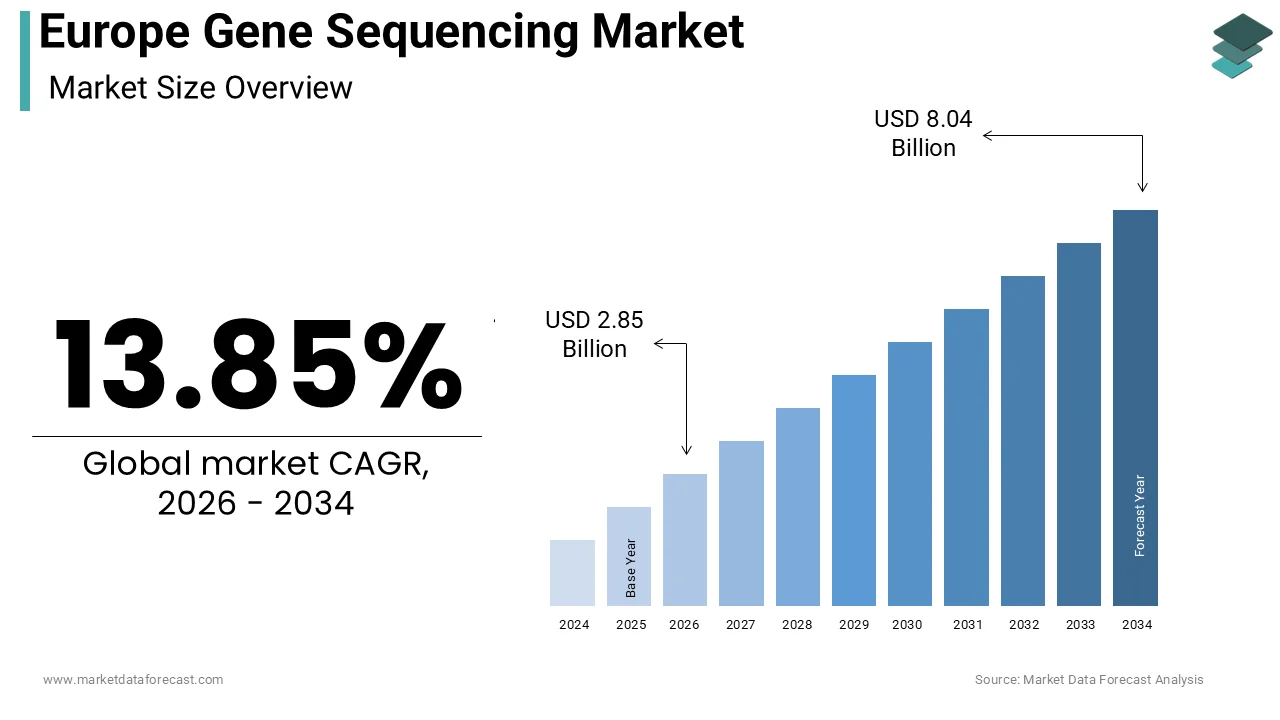
The Europe gene sequencing market size was calculated to be USD 2.50 billion in 2025 and is anticipated to be worth USD 8.04 billion by 2034, from USD 2.85 billion in 2026, growing at a CAGR of 13.85% during the forecast period.
Gene sequencing represents a sophisticated biomedical sector dedicated to determining the precise order of nucleotides within DNA and RNA molecules, serving as the foundational infrastructure for precision medicine, agricultural biotechnology, and infectious disease surveillance across the continent. This ecosystem encompasses a wide array of technologies ranging from traditional Sanger sequencing to advanced Next Generation Sequencing and emerging Third Generation long read platforms. The market operates within a unique regulatory and ethical framework defined by the European Union's strong emphasis on data sovereignty and patient rights. According to Eurostat, the life sciences sector in the European Union employs a large pool of highly skilled individuals, which indicates the depth of human capital driving innovation in genomic research. Furthermore, the European Centre for Disease Prevention and Control has emphasised the critical role of genomic surveillance in monitoring pathogen evolution, which is a capability that has become indispensable following recent global health crises. As per the European Commission, the initiative to create a unified European Health Data Space aims to facilitate the secure sharing of genomic data across member states, potentially unlocking insights from millions of patient records. This market is not merely a commercial endeavour but a strategic public health asset, which is enabling the transition from reactive treatment models to proactive, genotype-guided interventions that promise to redefine healthcare delivery and biological understanding throughout the region.
MARKET DRIVERS
Implementation of National Genomic Medicine Initiatives and Public Funding
The growth of the Europe gene sequencing market is majorly driven by the aggressive rollout of national genomic medicine strategies backed by substantial public funding, which systematically integrates sequencing into routine clinical care. Governments across the continent recognise genomics as a pillar of future healthcare sustainability and have launched ambitious programs to sequence hundreds of thousands of genomes to improve diagnostic yields for rare diseases and cancer. According to the European Society of Human Genetics, countries such as the United Kingdom, France, and Germany have committed to sequencing over one million genomes collectively within the current decade, creating a guaranteed demand pipeline for sequencing services and reagents. The UK Ten Thousand Genomes Project has already demonstrated how large-scale sequencing can identify novel disease variants, prompting similar initiatives in Estonia and Sweden. As per the European Commission, the Horizon Europe research framework has allocated significant funding specifically for genomic research and infrastructure development, lowering the financial barrier for academic and clinical institutions to adopt advanced sequencing technologies. This state-sponsored demand ensures a stable market floor, encouraging private sector investment in high-throughput platforms and bioinformatics solutions tailored to clinical-grade standards.
Declining Costs of Sequencing and Expansion of Clinical Applications
The decline in the cost per genome, coupled with the rapid expansion of clinical applications beyond oncology and rare diseases into areas such as pharmacogenomics and prenatal screening, is further boosting the Europe gene sequencing market expansion. The economic feasibility of sequencing has improved dramatically, making it accessible for broader population screening and routine diagnostic workflows that were previously cost-prohibitive. According to the Wellcome Genome Campus, the cost to sequence a human genome has dropped below key affordability thresholds in many European centres, enabling its use as a first-line diagnostic test. This cost efficiency allows healthcare providers to implement pre-emptive genetic testing to tailor drug prescriptions, thereby reducing adverse drug reactions and improving therapeutic outcomes. As per the European Medicines Agency, pharmaceutical labels increasingly include pharmacogenomic information, necessitating sequencing to guide prescription decisions. Furthermore, the integration of non-invasive prenatal testing into standard obstetric care across nations such as Italy and Spain has created a high-volume, recurring market segment. The ability to generate comprehensive genetic data quickly and affordably empowers clinicians to make more informed decisions, fostering a culture where genetic insight is expected rather than optional.
MARKET RESTRAINTS
Stringent Data Privacy Regulations and Cross-Border Data Fragmentation
The complex landscape of data privacy regulations, particularly the General Data Protection Regulation that imposes rigorous constraints on the collection, storage, and sharing of sensitive genetic information, is a major impediment to the growth of the Europe gene sequencing market. While designed to protect patient rights, these regulations create substantial administrative burdens and legal uncertainties that hinder the formation of large-scale transnational genomic databases essential for robust statistical analysis. According to the European Data Protection Board, genetic data is classified as a special category of personal data requiring explicit consent and enhanced security measures, which complicates data pooling efforts across different member states. The lack of harmonised implementation of these rules leads to fragmentation, where data generated in one country cannot easily be utilised for research in another, limiting the statistical power of European genomic studies. As per the European Bioinformatics Institute, researchers often face delays navigating ethical review boards and legal compliance checks before accessing necessary datasets. This fragmentation discourages international collaboration and slows the pace of discovery, as companies and institutions must invest heavily in localised data infrastructure and legal counsel rather than scientific innovation.
Acute Shortage of Specialised Bioinformatics Talent and Infrastructure
The critical scarcity of skilled professionals capable of managing, analysing, and interpreting the massive volumes of complex data generated by modern high-throughput sequencing platforms is further hampering the regional market growth. The rate of data generation far outpaces the availability of trained bioinformaticians and computational biologists who can translate raw sequence reads into actionable clinical insights. According to the European Molecular Biology Organisation, there is a significant deficit of data scientists with specific expertise in genomics across the European Union, leading to bottlenecks in data processing and delayed diagnostic reporting. As per the European Commission’s Digital Skills and Jobs Coalition, the demand for advanced digital skills in the life sciences sector is growing rapidly, yet educational programs have not scaled sufficiently to meet this need. Furthermore, the computational infrastructure required to store and process petabytes of genomic data is expensive and energy-intensive, posing a challenge for smaller hospitals and research centres with limited budgets. The inability to effectively harness the data produced by sequencers diminishes the value proposition of the technology, leading to underutilization of installed capacity. This human and infrastructural constraint acts as a brake on market expansion, preventing the full realisation of the clinical potential offered by advanced sequencing technologies.
MARKET OPPORTUNITIES
Integration of Artificial Intelligence for Variant Interpretation and Diagnostics
The convergence of gene sequencing with artificial intelligence and machine learning algorithms to automate and enhance the accuracy of variant interpretation, which is a process that currently consumes significant time and expert resources, is a major opportunity in the Europe gene sequencing market. AI-driven platforms can analyse vast genomic datasets to identify pathogenic mutations, predict protein structures, and correlate genetic variants with phenotypic outcomes much faster than manual methods. According to the European Molecular Biology Laboratory, AI models trained on diverse genomic datasets can significantly reduce the time required for diagnosing rare genetic disorders, improving patient outcomes and reducing healthcare costs. This technological synergy enables the reanalysis of existing genomic data as new knowledge emerges, unlocking additional diagnostic value without the need for resequencing. As per the Innovative Health Initiative, AI-enhanced diagnostics could expand the addressable market for sequencing by making it viable for complex polygenic diseases and common conditions previously deemed too difficult to interpret. The ability to provide rapid, precise, and automated reports appeals to healthcare systems seeking efficiency, creating a lucrative niche for software and service providers who can seamlessly integrate AI tools with sequencing workflows.
Expansion of Population Scale Biobanking and Preventive Health Programs
The establishment of large-scale national biobanks and preventive health programs offers a lucrative avenue for the gene sequencing market to transition from reactive diagnostics to proactive population health management. Several European nations are initiating projects to sequence representative portions of their populations to create reference databases that facilitate early disease detection and personalised prevention strategies. According to the BBMRI ERIC network, which coordinates biobanking resources across Europe, there is growing momentum to link genomic data with electronic health records and lifestyle information to build comprehensive health profiles for millions of citizens. This shift creates recurring demand for sequencing services as governments seek to identify at-risk individuals before symptoms appear, enabling early interventions for conditions such as cardiovascular disease and diabetes. As per the Estonian Genome Centre, national biobank initiatives demonstrate how genomic data can drive public health policy and create sustainable markets for sequencing services through voluntary participation and citizen engagement. The potential to offer direct-to-consumer health insights based on population data also opens new commercial channels for private providers.
MARKET CHALLENGES
Ethical Complexities Regarding Incidental Findings and Genetic Discrimination
The ethical dilemma surrounding incidental findings, where sequencing reveals unexpected genetic risks unrelated to the primary indication, is primarily challenging the expansion of the Europe gene sequencing market. The possibility of uncovering predispositions to untreatable conditions or non-paternity events creates psychological distress for patients and liability concerns for providers, complicating the consent process. According to the European Group on Ethics in Science and New Technologies, there is no consensus across member states on how to manage and report incidental findings, leading to inconsistent practices that erode public trust. The fear of genetic discrimination by employers or insurers, despite legal protections such as the Oviedo Convention, remains a deterrent for individuals considering sequencing. As per Eurobarometer surveys, a significant portion of the European population expresses concern about the misuse of their genetic data, which can suppress demand for voluntary testing programs. Navigating these ethical complexities requires robust counselling frameworks and clear legal guidelines that are currently lacking in many jurisdictions.
Reimbursement Uncertainties and Health Technology Assessment Hurdles
The market faces a critical challenge from fragmented and uncertain reimbursement landscapes across European nations, where Health Technology Assessment bodies struggle to evaluate the long-term cost-effectiveness of genomic tests compared to traditional diagnostics. While the clinical value of sequencing is increasingly recognised, proving its economic benefit within short-term evaluation horizons remains difficult, leading to delayed or denied coverage decisions. According to the European Network for Health Technology Assessment, reimbursement criteria for genomic tests vary widely between countries, creating a patchwork market that complicates commercial planning. As per the Organisation for Economic Cooperation and Development, without clear reimbursement pathways, adoption of sequencing in public healthcare systems remains sporadic and dependent on temporary research grants rather than sustainable funding models. This financial ambiguity forces providers to operate on a cash pay basis for many indications, limiting access for the broader population and stalling market growth. The inability to secure consistent reimbursement prevents scale economies necessary to lower costs further, creating a cycle that hampers integration of sequencing into standard care protocols.
REPORT COVERAGE
| REPORT METRIC | DETAILS |
| Market Size Available | 2025 to 2034 |
| Base Year | 2025 |
| Forecast Period | 2026 to 2034 |
| CAGR | 13.85% |
| Segments Covered | By Product Type, Application, End User, And Region |
| Various Analyses Covered | Global, Regional & Country Level Analysis; Segment-Level Analysis; DROC, PESTLE Analysis; Porter’s Five Forces Analysis; Competitive Landscape; Analyst Overview of Investment Opportunities |
| Regions Covered | UK, France, Spain, Germany, Italy, Russia, Sweden, Denmark, Switzerland, Netherlands, Turkey, and the Czech Republic |
| Market Leaders Profiled | Illumina Inc., Thermo Fisher Scientific Inc., Agilent Technologies Inc., QIAGEN N.V., BGI Group, Oxford Nanopore Technologies plc, Pacific Biosciences of California Inc., Eurofins Scientific SE, F. Hoffmann-La Roche Ltd., PerkinElmer Inc., Bio-Rad Laboratories Inc., Danaher Corporation, Genewiz (Azenta Life Sciences), Macrogen Inc., GATC Biotech AG |
SEGMENTAL ANALYSIS
By Product Type Insights
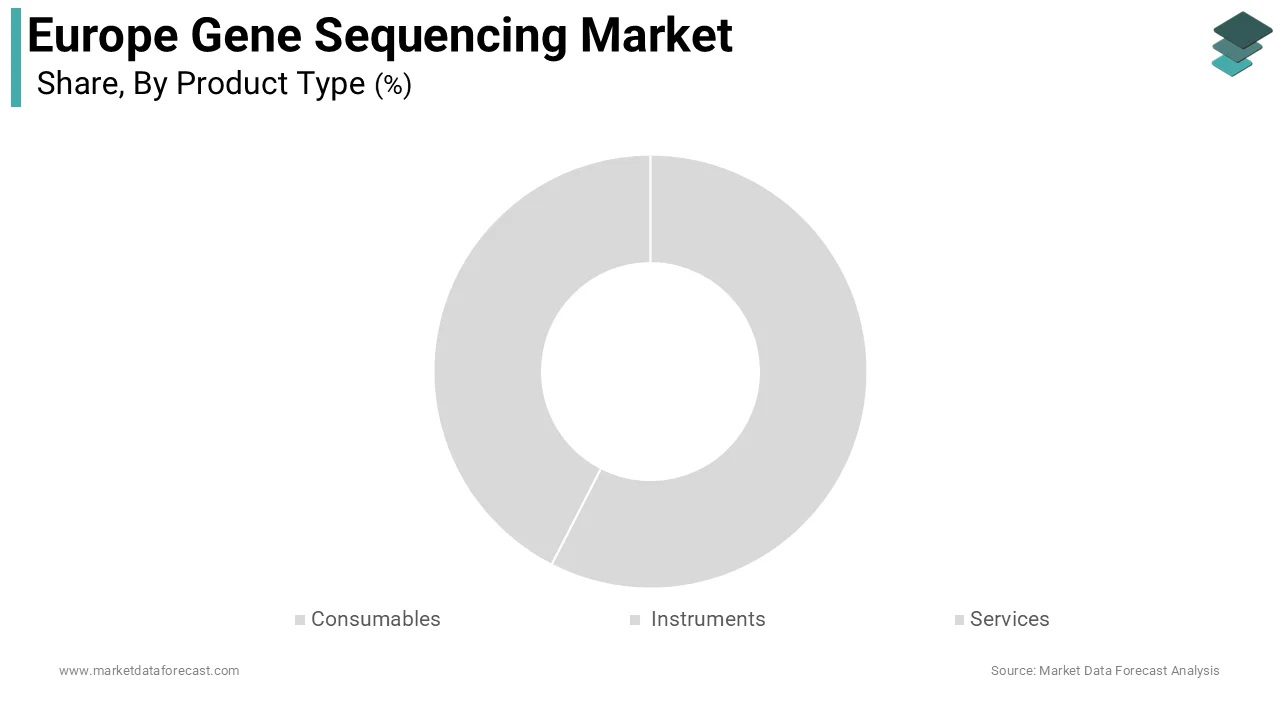
The consumables segment dominated the market by commanding the major share of the Europe gene sequencing market in 2025. The dominance of the consumables segment in this regional market is attributed to the recurring nature of reagent purchases required for every sequencing run and the high volume of samples processed in clinical and research settings. The operational model of gene sequencing that necessitates continuous purchases of reagents, kits, flow cells and library preparation materials for every experiment or diagnostic test is further contributing to the expansion of the consumables segment in this regional market. Unlike instruments, which are capital expenditures purchased infrequently, consumables represent a steady operational expense that scales directly with the increasing volume of genomic data generation across European healthcare systems. According to the European Molecular Biology Organisation, sequencing runs performed annually in European laboratories have increased significantly due to the integration of genomics into routine cancer care and rare disease diagnosis. As per the Wellcome Genome Campus, reagent costs now constitute the majority of the total cost per genome, overshadowing instrument depreciation. This structural dependency on disposable components secures the leading position of the consumables segment, making it the financial backbone of the industry.
However, the services segment is on the rise and is expected to exhibit a CAGR of 14.4% over the forecast period in the European market, owing to the increasing complexity of genomic data analysis and the shortage of in-house bioinformatics expertise among end users. The overwhelming volume and complexity of raw genomic data generated by next-generation sequencing platforms are further contributing to the expansion of the services segment in the European market. According to the European Bioinformatics Institute, genomic data production is growing faster than the availability of trained bioinformaticians, which is creating bottlenecks that force organisations to outsource data analysis to specialised service providers. As per the Innovative Health Initiative, outsourced bioinformatics services can reduce time to insight considerably compared to building internal capabilities. This reliance on external expertise for data decoding propels the services segment to the forefront of market growth.
By Application Insights
The oncology and reproductive health segment held the dominant position in the Europe gene sequencing market by accounting for 46.4% of the European market share in 2025. The dominance of oncology and reproductive health segments in the European market is attributed to the established clinical utility of sequencing for cancer diagnostics and the widespread adoption of non-invasive prenatal testing. The entrenched role of gene sequencing in precision oncology, where it has become the standard of care for diagnosing cancer subtypes, predicting prognosis, and selecting targeted therapies, is further boosting the dominance of oncology and reproductive health segments in the European market. According to the European Society for Medical Oncology, many new cancer drug approvals in Europe now require companion diagnostic testing based on genetic markers, creating mandatory demand for sequencing services. As per the Organisation for Economic Cooperation and Development, the volume of tumour sequencing tests performed annually in European hospitals has grown significantly as costs have decreased and turnaround times improved. This clinical entrenchment ensures that oncology remains the largest and most stable application area for gene sequencing.
On the other hand, the consumer genomics segment is emerging as the fastest-growing application and is estimated to expand at a CAGR of 16.2% over the forecast period, owing to the rising health consciousness, the availability of direct access testing, and the integration of wellness data into lifestyle management. The rapid ascent of the consumer genomics segment is linked to a cultural shift towards proactive health management and preventive wellness. According to Eurobarometer, a growing majority of EU citizens express interest in knowing their genetic makeup to improve long term health outcomes, driving demand for direct-to-consumer testing kits. As per the European Consumer Organisation, sales of home DNA testing kits have increased significantly in recent years, particularly among younger demographics. The expansion of test offerings from simple ancestry tracing to comprehensive health risk assessments and nutrigenomics has broadened the appeal beyond niche enthusiasts to the general public. This democratisation of genetic knowledge fuels the explosive growth of the consumer segment.
By End User Insights
The academic research segment held 41.4% of the European market share in 2025. The growth of the academic research segment in the European market can be credited to the foundational role of universities and research institutes in generating genomic knowledge and the extensive public funding dedicated to basic science. The substantial and sustained public investment in genomic research through European Union framework programs and national science foundations that finance large-scale collaborative projects requiring massive sequencing capacity is further contributing to the dominance of the academic research segment in the European market. Initiatives like Horizon Europe allocate billions of euros specifically for life sciences research, enabling consortia of universities to undertake ambitious projects such as pan-European population genomics studies and biodiversity mapping. According to the European Research Council, a significant portion of granted funds is designated for high-throughput sequencing to answer fundamental biological questions, ensuring a steady flow of resources for consumables and instrument usage. The culture of open science in Europe encourages data sharing and reproducibility, leading to repeated sequencing of reference samples and validation studies that amplify volume. As per the Confederation of Open Access Repositories in Europe, the output of genomic publications from European institutions continues to rise, correlating directly with sequencing activity. The presence of world-class research infrastructure, such as the European Molecular Biology Laboratory, further concentrates sequencing activities within the academic sector. This robust funding ecosystem and the imperative to advance scientific frontiers secure the leading position of academic research.
On the other side, the hospitals segment is identified as the fastest-growing end user and is predicted to witness a CAGR of 15.4% over the forecast period due to the rapid transition of gene sequencing from research settings into routine clinical diagnostics and bedside decision making. The systematic integration of gene sequencing into standard diagnostic workflows for oncology, rare diseases, and infectious diseases, which is transforming it from a specialised test into a routine clinical tool, is further propelling the expansion of the hospitals segment in the regional market. National health services across Europe are increasingly mandating genomic testing as part of the standard of care, which requires hospitals to establish or expand their internal sequencing capabilities or partner closely with reference labs. According to the European Society of Human Genetics, the number of hospital-based genetic testing laboratories in Europe has grown significantly as health systems recognise the cost-effectiveness of early genetic diagnosis in reducing unnecessary treatments and hospitalisations. The rollout of national genomic medicine strategies has provided hospitals with the funding and frameworks needed to adopt next-generation sequencing platforms for daily use. As per the European Centre for Disease Prevention and Control, hospital sequencing plays a critical role in real-time pathogen surveillance, which is further driving adoption in microbiology departments. The shift towards point-of-care sequencing technologies also enables faster turnaround times, crucial for acute care settings. This institutionalisation of genomics within hospital walls drives unprecedented growth in sequencing volume and infrastructure investment.
REGIONAL ANALYSIS
UK Gene Sequencing Market Analysis
The UK led the gene sequencing market in Europe in 2025 with 24.1% of the Europe gene sequencing market share. The dominance of the UK in the European market is attributed to its pioneering national genomic strategy and highly integrated healthcare system. The NHS Genomic Medicine Service, which evolved from the Ten Thousand Genomes Project, is the first globally to offer routine genomic testing across a national health service. According to Genomics England, hundreds of thousands of genomes have already been sequenced, creating a vast database that fuels both research and clinical innovation. The centralised NHS structure enables rapid implementation of new sequencing technologies and standardised protocols nationwide to ensure equitable access. World-class institutions such as the Wellcome Sanger Institute and a vibrant biotech cluster in the Golden Triangle foster innovation. As per UK Research and Innovation, public and private investment in genomics remains robust, while clear regulatory pathways from MHRA and NICE encourage adoption. This combination of political will, infrastructure, and scientific excellence secures the UK’s top position.
Germany Gene Sequencing Market Analysis
Germany occupied the second-largest position in the European market in 2025 due to its strong industrial base, robust research funding, and evolving genomic medicine framework. The German Network for Genomic Medicine in Cancer integrates comprehensive genomic profiling into oncology care across university hospitals. According to the Federal Ministry of Education and Research, significant investments have been directed toward sequencing infrastructure and workforce training. The pharmaceutical and biotechnology sectors drive demand for sequencing in drug discovery and clinical trials. As per the German Research Foundation, funding for genomic projects continues to rise, fostering collaboration between academia and industry. While federal healthcare structures can cause fragmentation, national initiatives are harmonising adoption. The presence of major sequencing instrument manufacturers strengthens the local supply chain, positioning Germany as a pivotal pillar of the European market.
France Gene Sequencing Market Analysis
France is estimated to secure a promising share of the Europe gene sequencing market during the forecast period due to the French Genomic Medicine Plan, which aims to sequence hundreds of thousands of patients. According to the French National Institute of Health and Medical Research, referencecentress for rare diseases and cancer have centralized sequencing activities, driving high throughput utilisation. The government’s commitment to data sovereignty has led to secure national platforms for genomic data storage and analysis. As per the French Ministry of Higher Education and Research, public funding for genomics has reached record levels, supporting infrastructure and talent development. Pharmaceutical companies and biotech clusters in Paris Saclay and Lyon add commercial demand. France’s emphasis on public health and equal access ensures rapid translation of genomic advances into patient care.
Italy Gene Sequencing Market Analysis
Italy is expected to record a healthy CAGR in the Europe gene sequencing market during the forecast period due to its strong medical research tradition, large population base, and regional initiatives to integrate genomics into healthcare. According to the Italian National Institute of Health, several regions have launched local genomic medicine programs, driving decentralised growth. Participation in European collaborative projects ensures access to advanced methodologies and funding. As per the Italian Association of Medical Oncology, molecular profiling adoption is rising in cancer care, supported by targeted therapies. A robust manufacturing sector for laboratory equipment strengthens the supply chain. National coordination efforts aim to standardise access across regions, while Italy’s genetic diversity provides valuable data for population genomics studies.
Netherlands Gene Sequencing Market Analysis
The Netherlands is projected to grow at a steady CAGR in the Europe gene sequencing market over the forecast period, owing to its digitised healthcare system and proactive genomic medicine approach. Initiatives like the Centre for Population Screening offer nationwide hereditary condition programs. According to the Netherlands Genomics Initiative, a dense network of sequencing facilities supports both clinical and research needs. The unified electronic health record system facilitates seamless integration of genomic data into patient care. As per the Dutch Ministry of Health, reimbursement policies for genetic testing are well established, encouraging adoption. Academic medical centres in Amsterdam, Rotterdam, and Utrecht drive high-volume sequencing. Strong public-private partnerships and ethical frameworks build trust, supporting voluntary participation in screening programs.
COMPETITION OVERVIEW
The competition within the Europe gene sequencing market is characterised by intense rivalry among established global giants, specialised niche players and emerging technology startups vying for dominance in a rapidly evolving landscape. Incumbent companies leverage their extensive product portfolio,s robust distribution networks and strong brand recognition to maintain leadership positions while newer entrants differentiate themselves through disruptive technologies lilong-readead sequencing and portable devices. The market is further complicated by stringent regulatory requirements and varying reimbursement policies across member states, which force competitors to adopt localised strategies for market entry and expansion. Competitive pressure drives continuous investment in innovation, particularly in areas of speed, accuracy and cost reduction to make sequencing more accessible for routine clinical use. Brands compete fiercely for partnerships with leading research institutions and hospital networks to secure large-scale contracts and validate their technologies in real-world settings. The rise of data analytics and artificial intelligence has added a new dimension to competition as firms strive to offer comprehensive solutions that transform raw data into actionable insights. Trust and reliability have become key differentiators, with customersprioritisingg providers who demonstrate consistent performance and regulatory compliance. This dynamic environment fosters rapid technological advancement but also leads to consolidation as smaller players struggle to match the capital intensity and scale of major corporations.
KEY MARKET PLAYERS
A few major players of the Europe gene sequencing market include
- Illumina Inc
- Thermo Fisher Scientific Inc
- Agilent Technologies Inc
- QIAGEN N.V
- BGI Group
- Oxford Nanopore Technologies plc
- Pacific Biosciences of California Inc
- Eurofins Scientific SE
- F. Hoffmann-La Roche Ltd
- PerkinElmer Inc
- Bio-Rad Laboratories Inc
- Danaher Corporation
- Genewiz (Azenta Life Sciences)
- Macrogen Inc
- GATC Biotech AG
Top Strategies Used by the Key Market Participants
Key players in the Europe gene sequencing market primarily employ strategies centred on technological innovation and strategic partnerships to secure competitive advantages. Companies heavily invest in research and development to create next-generation sequencing platforms that offer higher throughput, lower costs and improved accuracy for complex genomic analyses. This technical superiority allows them to meet the evolving demands of clinical diagnostics and large-scale research projects. Another major strategy involves forming alliances with national health systems and academic institutions to facilitate the integration of genomics into routine healthcare and drive the adoption of precision medicine. Firms actively expand their portfolios of bioinformatics tools and cloud-based data solutions to address the critical need for efficient data analysis and interpretation. Enhancing supply chain resilience through localised manufacturing and distribution networks serves as a critical tactic to ensure the uninterrupted availability of essential reagents and consumables. Furthermore, participants focus on obtaining regulatory approvals for new diagnostic tests to unlock reimbursement opportunities and broaden market access. These combined approaches enable organisations to navigate the complex regulatory landscape effectively while capturing growth in emerging application areas.
Leading Players in the Europe Gene Sequencing Market
- Illumina Inc stands as the global leader in DNA sequencing and array-based technologies with a dominant presence across European research institutions and clinical laboratories. The company contributes significantly to the global market by providing the most widely adopted next-generation sequencing platforms that enable high-throughput genomic analysis for diverse applications. Its involvement in Europe includes strategic partnerships with national health services to implement large-scale genomic medicine programs. Recent actions to strengthen its market position involve the launch of advanced sequencers designed specifically for clinical diagnostics with faster turnaround times and lower operational costs. The firm has also expanded its portfolio of comprehensive genomic profiling tests for oncology to meet growing demand for precision medicine. By investing heavily in bioinformatics solutions and cloud-based data analysis tools, Illumina ensures seamless integration of genomic data into clinical workflows. These initiatives reinforce its reputation as an indispensable partner for advancing genomic research and healthcare delivery throughout the continent.
- Thermo Fisher Scientific Inc operates as a premier provider of life sciences solutions, offering a comprehensive suite of gene sequencing instruments, reagents and services that cater to both academic and commercial sectors globally. The company plays a pivotal role in the global market through its Ion Torrent technology, which provides rapid and cost-effective sequencing solutions ideal for targeted applications. Its European operations focus on supporting drug discovery efforts and clinical diagnostic laboratories with reliable and scalable sequencing platforms. Recent actions to strengthen its market position include the acquisitiospecialisedlized biotechnology firms to enhance its capabilities in single-cell analysis and spatial genomics. The firm has also introduced automated sample preparation systems that streamline workflows and reduce human error in high-volume settings. By expanding its manufacturing footprint in Europe, Thermo Fisher ensures consistent supply chain reliability for critical consumables. These strategic moves demonstrate a clear commitment to innovation and customer support, solidifying its status as a key enabler of genomic advancements across the region.
- F Hoffmann-La Roche Ltd functions as a global healthcare giant with a strong foothold in the gene sequencing market through its subsidiary Roche Sequencing Solutions, which develops innovative technologies for personalised healthcare. The company contributes to the global market by integrating sequencing capabilities with its extensive diagnostic and pharmaceutical portfolios to drive precision medicine initiatives. Its involvement in Europe is marked by collaborations with hospital networks to deploy companion diagnostics that guide treatment decisions for cancer patients. Recent actions to strengthen its market position involve the introduction of long-read sequencing platforms that offer superior accuracy for complex genomic regions and structural variant detection. The firm has also launched digital pathology solutions that complement genomic data to provide holistic views of disease mechanisms. By focusing on end-to-end solutions from sample to insight, Roche enhances the clinical utility of sequencing data. These efforts highlight its dedication to transforming patient care through advanced genomic technologies and integrated diagnostic ecosystems.
MARKET SEGMENTATION
This research report on the Europe gene sequencing market has been segmented and sub-segmented based on product type, application, end user & region.
By Product Type
- Consumables
- Instruments
- Services
By Application
- Oncology and Reproductive Health
- Clinical Investigation
- Consumer Genomics
- Metagenomics
- Others
By End User
- Academic Research
- Clinical Research
- Hospitals
- Pharmaceutical Companies
- Others
By Region
- UK
- France
- Spain
- Germany
- Italy
- Russia
- Sweden
- Denmark
- Switzerland
- Netherlands
- Turkey
- Czech Republic
- Rest of Europe
Frequently Asked Questions
1. What is the market outlook for gene sequencing in Europe?
The market is experiencing rapid growth due to advancements in genomics and increasing demand for precision medicine
2. What are the key drivers of the market?
Rising demand for personalized medicine, increasing research in genomics, and declining sequencing costs drive the market
3. Why is gene sequencing important?
It helps in disease diagnosis, drug development, and understanding genetic disorders
4. What are the main technologies used?
Next-generation sequencing (NGS), Sanger sequencing, and third-generation sequencing technologies
5. Which segment dominates the market?
Next-generation sequencing dominates due to its high speed and cost efficiency
6. What are the major applications?
Clinical diagnostics, drug discovery, agriculture, and research applications
7. What trends are shaping the market?
Growth of precision medicine, integration of AI in genomics, and increasing government funding
8. What challenges does the market face?
High initial investment, data management issues, and ethical concerns
9. What opportunities exist in the market?
Expansion in clinical diagnostics, rare disease research, and personalized healthcare
10. Who are the key players in the market?
Illumina, Thermo Fisher Scientific, QIAGEN, Agilent Technologies, and Oxford Nanopore are major players
Related Reports
Access the study in MULTIPLE FORMATS
Purchase options starting from
$ 2000
Didn’t find what you’re looking for?
TALK TO OUR ANALYST TEAM
Need something within your budget?
NO WORRIES! WE GOT YOU COVERED!
Call us on: +1 888 702 9696 (U.S Toll Free)
Write to us: sales@marketdataforecast.com