Europe Graphite Electrodes Market Research Report By Product Type (Ultra-High Power (UHP), High Power (HP), and Regular Power (RP)), By Application (Steel, Silicon Metal, and Aluminum) and Industry Analysis on Size, Share, Trends, Growth & Forecast Report | 2025 to 2033
Market Size, 2025
$5.11 BnMarket Estimate, 2026
$5.30 BnMarket Forecast, 2034
$7.06 BnCAGR, 2026–2034
3.66%Europe Graphite Electrode Market Size
The Europe Graphite Electrode Market is projected to grow from USD 5.11 billion in 2025 to USD 5.30 billion in 2026 and reach USD 7.06 billion by 2034, registering a CAGR of 3.66% from 2026 to 2034.
Graphite electrodes are high-purity carbon-based conductors used primarily in electric arc furnaces to melt scrap steel and other metals through the generation of intense electric arcs. In Europe, these electrodes serve as a critical enabler of the region’s circular steel production model, which relies heavily on electric arc furnace technology to reduce reliance on primary iron ore and lower carbon emissions. Unlike integrated blast furnace routes, electric arc furnaces can operate with up to 100 per cent recycled scrap, aligning with the European Green Deal’s decarbonization targets. According to a study, the use of electric arc furnaces (EAFs) in Europe for crude steel production is a significant component of the region's overall steel output, a share that is anticipated to grow due to evolving carbon regulations. European steelmakers maintain a relatively low average CO2 emission intensity per ton of steel compared to the global average, with the increased adoption of electric arc furnaces being a primary contributing factor to this reduced intensity. The performance and longevity of graphite electrodes directly influence energy efficiency, operational continuity, and emissions profiles in this transformation. Consequently, the graphite electrode is not merely an industrial consumable but a strategic component in Europe’s sustainable metallurgical infrastructure.
MARKET DRIVERS
Expansion of Electric Arc Furnace Steelmaking Capacity Under EU Decarbonization Policies
The European Union’s aggressive climate policies are accelerating the shift from coal-dependent blast furnaces to scrap-based electric arc furnace steelmaking, which drives the growth of the European graphite electrode market. The cost associated with carbon emissions within the EU trading system has made some traditional steel production methods less viable. Also, there has been an increase in the number of electric arc furnace facilities operating across the EU in recent years. This expansion has added significant new capacity for steel production using the electric arc furnace method. Graphite electrodes are a key consumable material in the operation of these furnaces. The European Commission’s Net Zero Industry Act further designates low-carbon steel as a strategic sector, incentivising investments in circular production. Industrial entities in Europe are directing investments toward adopting cleaner steel production methods, specifically hydrogen and electric arc furnace routes. The share of electric arc furnaces in European steel production is anticipated to increase as the industry evolves. This structural shift transforms graphite electrodes from a cyclical commodity into a cornerstone of industrial decarbonization, ensuring sustained and policy-driven demand across the region.
Rising Use of High Power and Ultra High Power Electric Arc Furnaces for Energy Efficiency
The regional steel producers are increasingly adopting high-power and ultra-high-power electric arc furnaces to reduce melting time, lower specific energy consumption, and improve throughput, which accelerates the expansion of the European graphite electrode market. These technologies require premium graphite electrodes with superior density and thermal shock resistance. A notable shift has occurred in how electric arc furnaces operate within the European Union. The use of ultra-high power mode has increased significantly among these furnaces. This operational mode is now the predominant method for steel production using this technology. These advanced furnaces operate at currents exceeding significant kiloamperes, demanding electrodes with low electrical resistivity and high flexural strength to prevent breakage and oxidation. Advanced furnace technology may offer reductions in specific electricity consumption compared to conventional units. These efficiency gains have the potential for associated operational cost and emissions benefits. Individual facilities have shown improvements in energy use per ton following upgrades to high-power operation. Efficiency in energy use is an important economic consideration in the context of typical industrial electricity costs. This technological evolution elevates the performance bar for graphite electrodes, favouring high-quality synthetic variants and reinforcing their strategic role in Europe’s energy-conscious steelmaking future.
MARKET RESTRAINTS
Stringent Environmental Regulations on Graphite Electrode Manufacturing Emissions
The production of graphite electrodes involves high-temperature baking graphitisation processes that emit volatile organic compounds, polycyclic aromatic hydrocarbons, and particulate matter, thereby restricting the growth of the European graphite electrode market. These substances are tightly regulated under European environmental law. Advanced furnace technologies tend to require less specific electricity compared to more conventional units. This general efficiency trend has implications for both operational expenditure and associated emissions. Recent operational data from some facilities indicates a notable reduction in energy consumption per unit of material produced after equipment upgrades. Efficiency improvements are particularly significant when considering the prevailing costs for industrial electricity use. These regulations have discouraged new domestic production capacity, forcing Europe to rely on imports for a portion of its graphite electrode supply. The compliance burden thus constrains local manufacturing scalability and inflates costs, limiting the region’s self-sufficiency in a critical industrial input.
High Import Dependency and Geopolitical Supply Chain Vulnerabilities
There is significant supply risk due to heavy reliance on imports from a concentrated set of non-EU countries, primarily China, India, and the United States, which hinders the expansion of the European graphite electrode market. According to sources, the quantity of graphite electrodes imported into the European Union has reached a notable level. A significant portion of these imports originates from a single prominent source country, indicating a concentrated supply trend. This dependency creates exposure to export restrictions, trade tariffs, and logistical disruptions. Environmental inspections in a key graphite-producing region were strengthened. This action led to a reduction in material availability for export. Consequently, an upward trend in some material prices was observed in certain external markets. Furthermore, the EU’s Carbon Border Adjustment Mechanism may soon extend to downstream steel inputs, potentially penalising high-carbon-intensity imported electrodes. The absence of strategic reserves and diversified sourcing leaves European steelmakers exposed to external disruptions capable of halting furnace operations and jeopardising their decarbonization timelines.
MARKET OPPORTUNITIES
Development of Low-Carbon Graphite Electrodes Using Bio-Based Binders
Innovations in electrode manufacturing using renewable carbon sources offer a significant opportunity to align graphite electrode production with Europe’s net-zero ambitions, which is expected to drive the growth of the European graphite electrode market. Traditional electrodes rely on coal tar pitch derived from fossil coke ovens, but emerging alternatives use lignin bio pitch or pyrolysed biomass as sustainable binders. Pilot projects have used electrodes with bio-based binder content, showing a reduction in lifecycle CO2 emissions without affecting mechanical strength. Prototype bio electrodes have also demonstrated reduced energy demands in the graphitisation process, potentially due to lower volatile content. Funding programs are supporting the expansion and development of green electrode technologies within the steel industry. If commercialised, these low-carbon electrodes could qualify for green premium pricing and meet the stringent product carbon footprint requirements under the EU Ecolabel scheme. This technological pathway not only decouples electrode production from fossil refining but also creates a new exportable European innovation in sustainable metallurgy.
Integration of Graphite Electrode Consumption into Steelmakers’ Digital Twin Platforms
The emergence of digital twin technology in European steel plants is creating new demand for high-fidelity electrode performance data to optimise furnace operations and predict maintenance needs, which provides potential opportunities for the expansion of the European graphite electrode market. Leading producers like Tata Steel in the Netherlands and voestalpine in Austria have deployed sensor-enabled electrode tracking systems that monitor consumption rate, tip temperature, and arc stability in real time. Many electric arc furnace operators in the EU are now incorporating electrode telemetry into their maintenance strategies. This approach is used to help predict maintenance needs. The practice is becoming a standard part of operational algorithms within the industry. This data allows for dynamic adjustment of current intensity and scrap charging patterns to extend electrode life and reduce breakage incidents. Digital twin optimisation aids in reducing material consumption. This approach helps to improve process efficiency. The use of digital twins has a positive effect on resource management. As a result, electrode suppliers are developing smart electrodes with embedded RFID tags and standardised data interfaces compliant with the OPC UA industrial communication protocol. This convergence of materials science and industrial IoT transforms the graphite electrode from a passive consumable into an intelligent component of the digital steelworks, which opens new service revenue streams and deepens supplier-customer integration across Europe’s advanced manufacturing base.
MARKET CHALLENGES
Limited Domestic Production Capacity and Underinvestment in Graphite Electrode Plants
The region suffers from a shortage of modern graphite electrode manufacturing facilities, which is a major challenge to the European electrode market. This leaves the region exposed to supply shocks and quality inconsistencies in imported products. According to research, the region currently has limited domestic capacity for fully integrated graphite electrode production. Regional demand for graphite electrodes is mostly met through external supply. The last major greenfield investment in electrode production occurred over two decades ago, and no significant capacity expansion has been approved since. Infrastructure challenges in certain regions have impacted the quality of locally produced materials. The quality of domestically produced electrodes in these areas is inconsistent when compared to materials produced in other countries. High industrial energy costs present a challenge for new manufacturing investments. Manufacturing processes requiring high heat face economic hurdles due to elevated operational expenses. Europe's circular steel economy cannot achieve true resilience without dedicated policies and joint industry action to rebuild domestic manufacturing capability.
Volatility in Needle Coke Feedstock Prices and Supply Constraints
Sensitivity towards fluctuations in the availability and cost of needle coke is a key concern that inhibits the expansion of the European graphite electrode market. This premium petroleum or coal tar-derived precursor is essential for high-quality electrodes. Global demand for needle coke has exceeded supply due to its use in electric vehicle battery anodes and steel sector growth. In Europe, needle coke prices have increased, affecting the profit margins of electrode manufacturers. A key source for needle coke is subject to restrictions, increasing regulatory compliance costs. Moreover, European refineries have reduced delayed coker units, the primary source of petroleum needle coke, due to declining heavy fuel oil demand and decarbonization pressures. This dual pressure from competing end uses and shrinking domestic feedstock production creates a persistent bottleneck in the electrode value chain, limiting Europe’s ability to scale up secure and cost-effective supply for its strategic steel industry.
REPORT COVERAGE
| REPORT METRIC | DETAILS |
| Market Size Available | 2025 to 2034 |
| Base Year | 2025 |
| Forecast Period | 2026 to 2034 |
| Segments Covered | By Product Type, Application and Region. |
| Various Analyses Covered | Global, Regional and Country-Level Analysis, Segment-Level Analysis, Drivers, Restraints, Opportunities, Challenges; PESTLE Analysis; Porter’s Five Forces Analysis, Competitive Landscape, Analyst Overview of Investment Opportunities |
| Countries Covered | UK, France, Spain, Germany, Italy, Russia, Sweden, Denmark, Switzerland, Netherlands, Turkey, Czech Republic, and the Rest of Europe |
| Market Leaders Profiled | Showa Denko K.K., GrafTech International, Graphite India Limited, Nippon Carbon Co., Ltd., HEG Limited, Kaifeng Carbon Co., Ltd., Nantong Yangzi Carbon, SEC Carbon, Ltd., and Tokai Carbon Co., Ltd. |
SEGMENTAL ANALYSIS
By Product Type Insights
The Ultra-high power (UHP) segment held the largest share of 64.8% of the European graphite electrode market in 2025. The dominance of the UHP segment is driven by the continent’s strategic shift toward energy-efficient and high-productivity electric arc furnace steelmaking aligned with decarbonization mandates. European steel producers are compelled by the EU Emissions Trading System and the Energy Efficiency Directive to minimise specific energy consumption per ton of steel. The European Commission’s Best Available Techniques reference document for iron and steel explicitly recommends UHP electrodes for all new or modernised furnaces due to their superior thermal conductivity and lower consumption rates. Higher energy expenses suggest that even minor improvements in efficiency might result in considerable reductions in operating costs. Consequently, UHP electrodes have become the non-negotiable standard for competitive and compliant steel production across Europe. UHP electrodes enable faster melting cycles, reduced tap-to-tap times, and higher furnace availability, vital for meeting just-in-time supply demands in automotive and construction sectors. Ultra High Power (UHP) electric arc furnace (EAF) systems demonstrate operational advantages over traditional high-power systems, including faster melt times and increased throughput. UHP electrodes exhibit enhanced durability due to lower oxidation rates, potentially extending service life and reducing unplanned downtime. The lower electrode consumption associated with UHP systems also correlates with reduced particulate emissions from furnace operations.
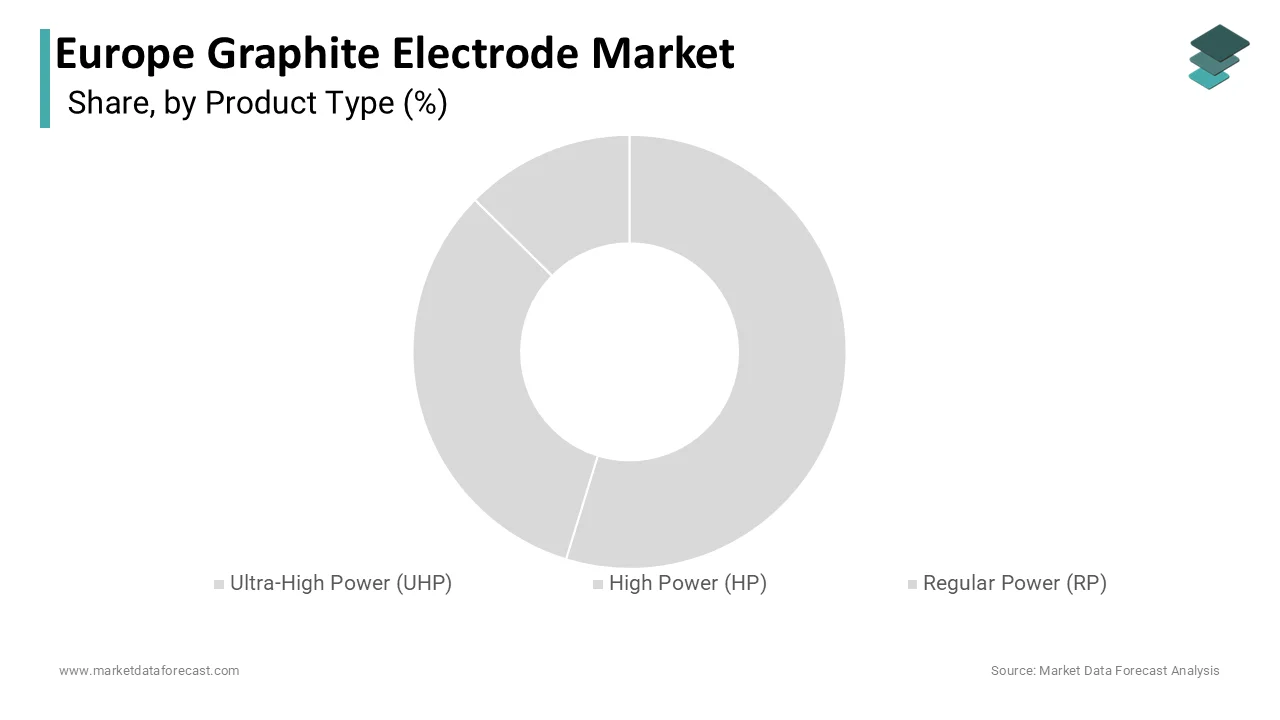
The high power (HP) segment is expected to exhibit a noteworthy CAGR of 4.8% from 2025 to 2033 due to the modernisation of legacy electric arc furnaces in central and eastern Europe. Many steel plants in Poland Czech Republic, and Romania operate older electric arc furnaces that lack the transformer capacity for ultra-high power operation, but are being upgraded from regular power to high power configurations as a cost-effective intermediate step. Furnace modernisation is a common practice among numerous steel mills, with High Power (HP) electrode compatibility often a core technical criterion. Adopting HP electrodes allows facilities to improve efficiency and reduce electrode consumption compared to standard systems, while avoiding the high capital costs associated with converting to Ultra High Power (UHP) systems. This pragmatic transition strategy, supported by EU cohesion funds, creates sustained demand for HP electrodes in markets where full decarbonization timelines are extended but incremental improvements remain mandatory. Beyond bulk steelmaking, HP electrodes are increasingly favoured in foundries and speciality alloy producers that melt high-alloy scrap or ferroalloys, where extreme arc intensity could damage sensitive chemistries. These applications prioritise consistent arc stability over maximum throughput, a domain where HP electrodes offer optimal cost-performance balance. Europe's push for domestic battery-grade silicon and speciality alloys under the Critical Raw Materials Act creates a niche but stable demand, which provides a path for resilient growth for the HP segment, separate from the mainstream steelmaking industry.
By Application Insights
The steel application segment led the European graphite electrode market by capturing a substantial share in 2025. The leading position of the steel application segment is credited to the near-exclusive reliance of electric arc furnace steelmaking on graphite electrodes as the primary energy transmission medium. Europe’s steel industry is undergoing a fundamental transformation from blast furnace-basic oxygen furnace routes to electric arc furnace technology to meet the European Green Deal’s emissions reduction target by 2030. Electric arc furnaces are a primary method for producing crude steel in Europe, accounting for a significant portion of total output. The share of steel produced using electric arc furnaces is expected to continue growing. Major investments are explicitly tied to electrode-based melting. This structural reorientation anchors graphite electrodes as indispensable enablers of Europe’s circular steel economy. The EU Carbon Border Adjustment Mechanism and escalating allowances under the Emissions Trading System have rendered traditional blast furnace operations economically unsustainable. In addition, companies have accelerated plans to replace blast furnaces with electric arc furnaces powered by renewable electricity. The Net Zero Industry Act designates low-carbon steel as a strategic value chain, unlocking state aid for electrode-reliant technologies. Europe will add millions of tons of new electric arc furnace capacity.
COMPETITIVE LANDSCAPE
The European graphite electrode market is characterised by a dual dynamic of global supply dominance and regional strategic vulnerability. While the continent hosts only a handful of producers, including SGL Carbo, most demand is met by imports from China, India, nd Jap, creating inherent supply chain fragility. Competition among suppliers centres on electrode quality, consistency, delivery reliability, and alignment with Europe’s aggressive decarbonization policies. Global leaders differentiate through vertical integration, advanced manufacturing control, and digital value-added services, while European players emphasise local presence, sustainability credentials, and technical collaboration. The market is highly concentrated, with a few large steelmakers accounting for the majority of consumption, which grants them significant negotiating power. Regulatory pressures under the Carbon Border Adjustment Mechanism and Clean Steel Partnership are reshaping procurement toward low-carbon electrodes, accelerating innovation i bio-based binders and energy-efficient production. This environment fosters intense but selective competition where trust, transparency, and environmental performance are as critical as price and availability.
KEY MARKET PLAYERS
The key players in the europe graphite electrode market include
- Showa Denko K.K.
- GrafTech International
- Graphite India Limited
- Nippon Carbon Co., Ltd.
- HEG Limited
- Kaifeng Carbon Co., Ltd.
- Nantong Yangzi Carbon
- SEC Carbon, Ltd.
- Tokai Carbon Co., Ltd.
TOP LEADING PLAYERS IN THE MARKET
- GrafTech International Ltd is a globally recognised manufacturer of high-quality graphite electrodes with a strategic presence in the European market. The company specialises in ultra-high power electrodes engineered for energy-efficient electric arc furnace operations, aligning closely with Europe’s decarbonization agenda. GrafTech contributes to the global market through its proprietary petroleum needle coke integration and vertically aligned production model that ensures consistent quality and supply reliability. In recent years, the company has strengthened its European position by expanding its logistics hub in Rotterdam to ensure faster delivery to steelmakers in Germany, France, and Italy. It also launched a digital electrode tracking platform in 2023 that provides real-time consumption analytics to European clients, enhancing operational planning and furnace efficiency in line with Industry 4.0 principles.
- Showa Denko K.K., now operating under Resonac Holdings Corporation, is a leading Japanese producer of advanced carbon materials with a significant footprint in the European graphite electrode market. The company is renowned for its high-purity ultra-high-power electrodes that meet stringent European environmental and performance standards. Resonac serves major electric arc furnace operators across Northern and Western Europe with products engineered for low oxidation and extended service life. To reinforce its regional commitment, the company certified its electrode portfolio under the EU Eco Management and Audit Scheme in 2023 and established a technical support centre in Düsseldorf. This centre provides on-site furnace optimisation services and electrode performance audits, deepening collaboration with European steel producers pursuing net-zero targets under the Clean Steel Partnership.
- SGL Carbon SE is a key European manufacturer of graphite electrodes headquartered in Germany and deeply integrated into the continent’s industrial ecosystem. The company leverages its local production base and R&D capabilities to deliver customised electrode solutions for speciality steel and silicon metal applications. SGL Carbon contributes to the global market through innovations in sustainable manufacturing, including the development of electrodes with a reduced carbon footprint using recycled raw materials. In 202,3, the company upgraded its Meitingen plant with energy recovery systems that cut thermal energy consumption by 18 per cent during graphitisation. It also partnered with the German Steel Institute to develop digital twin interfaces that enable real-time electrode monitoring in electric arc furnaces. These initiatives underscore SGL Carbon’s role as a homegrown enabler of Europe’s circular and digital steel transformation.
TOP STRATEGIES USED BY THE KEY MARKET PARTICIPANTS
Key players in the European graphite electrode market prioritise vertical integration by securing long-term needle coke supply through captive refining or strategic partnerships to mitigate feedstock volatility. They invest in energy-efficient graphitisation technologies, such as joule heating and waste heat recovery, to align with EU emissions standards and reduce production costs. Companies develop digital services, including electrode tracking, predictive consumption modes, and furnace optimisation consulting to deepen customer relationships beyond product supply. Certification under EU environmental schemes like EMAS and ISO 14064 enhances credibility and meets steelmakers’ sustainability procurement criteria. Vendors also localise logistics through European warehousing to ensure just-in-time delivery and reduce supply chain risks. These strategies collectively address Europe’s unique convergence of industrial decarbonization, energy transition, and supply chain resilience imperatives.
MARKET SEGMENTATION
This research report on the europe graphite electrode market has been segmented and sub-segmented into the following categories.
By Product Type
- Ultra-High Power (UHP)
- High Power (HP)
- Regular Power (RP)
By Application
- Steel
- Silicon Metal
- Aluminum
By Country
- UK
- France
- Spain
- Germany
- Italy
- Russia
- Sweden
- Denmark
- Switzerland
- Netherlands
- Turkey
- Czech Republic
- Rest of Europe
Frequently Asked Questions
1. What is the current market size of the Europe Graphite Electrode Market?
The Europe Graphite Electrode Market reached USD 4.93 billion in 2024 and projects growth to USD 5.11 billion in 2025,
with a CAGR of 3.66% leading to USD 6.81 billion by 2033. This expansion ties to rising EAF steel demand in construction,
automotive, and oil & gas sectors amid Europe's decarbonization efforts.
2. What drives growth in the Europe Graphite Electrode Market?
Demand for steel via electric arc furnaces (EAF) propels the Europe Graphite Electrode Market, fueled by construction, automotive,
and infrastructure needs. High energy costs push mills toward EAF optimization, while EU Battery Regulation boosts electrode
recycling into battery anodes. Eastern Europe, like Poland, sees EAF investments lifting shipments.
3. What are key challenges in the Europe Graphite Electrode Market?
Raw material shortages, like needle coke and petroleum coke, cause price volatility in the Europe Graphite Electrode Market.
Mining fluctuations and EU environmental rules raise costs, while high energy prices slow steel recovery. Geopolitical factors
also disrupt supply chains for sustainable sourcing.
4. Who are major players in the Europe Graphite Electrode Market?
Key firms in the Europe Graphite Electrode Market include GrafTech International, Showa Denko K.K., Graphite India Limited,
Nippon Carbon Co. Ltd., HEG Limited, and Tokai Carbon Co. Ltd. SGL Carbon and Resonac also compete via innovations in UHP
electrodes and recycling.
5. What is the role of UHP electrodes in the Europe Graphite Electrode Market?
Ultra-high power (UHP) graphite electrodes hold over 65% revenue share in the Europe Graphite Electrode Market, vital for
high-efficiency EAF steelmaking. They support flexible production amid energy costs, with demand rising from digital furnace
optimizations in Germany and the UK
6. How does steel production impact the Europe Graphite Electrode Market?
EAF steelmaking dominates the Europe Graphite Electrode Market, as electrodes conduct electricity for melting scrap in ladle
furnaces. Europe's 2.20% steel recovery from 2025 drives shipments, especially with green steel shifts and ferroalloy needs.
7. What are market trends in the Europe Graphite Electrode Market?
Sustainability trends shape the Europe Graphite Electrode Market, including electrode recycling for batteries under EU rules.
AI/IoT optimizes raw material tracking, while synthetic graphite and low-sulfur coke gain traction. Eastern Europe attracts
EAF investments
8. What is the forecast for the Europe Graphite Electrode Market?
The Europe Graphite Electrode Market anticipates steady growth at 3.66% CAGR to 2033, reaching USD 6.81 billion, driven by
EAF adoption and steel demand. Germany leads revenue, with the UK growing via construction; challenges include raw material
costs.
9. Which countries lead the Europe Graphite Electrode Market?
Germany dominates the Europe Graphite Electrode Market due to engineering firms and EAF focus, while the UK grows fastest
from construction. Eastern nations like Poland and Turkey invest in EAFs, boosting shipments amid lower costs.
10. How do regulations affect the Europe Graphite Electrode Market?
EU Green Deal and Battery Regulation 2023/1542 influence the Europe Graphite Electrode Market by promoting low-carbon EAF
and electrode recycling into anodes. Anti-dumping tariffs on China imports protect local supply, enhancing competitiveness.
Related Reports
Access the study in MULTIPLE FORMATS
Purchase options starting from
$ 2000
Didn’t find what you’re looking for?
TALK TO OUR ANALYST TEAM
Need something within your budget?
NO WORRIES! WE GOT YOU COVERED!
Call us on: +1 888 702 9696 (U.S Toll Free)
Write to us: sales@marketdataforecast.com