- Product Description Description
- Table of Contents TOC
- List of Table & Figure LOT
- Get Free Sample PDF Sample PDF
Market Size, 2025
$6.38 BnMarket Estimate, 2026
$7.79 BnMarket Forecast, 2034
$38.36 BnCAGR, 2026–2034
22.05%Europe Green Technology and Sustainability Market Size, Growth, Trends & Forecast (2026–2034)
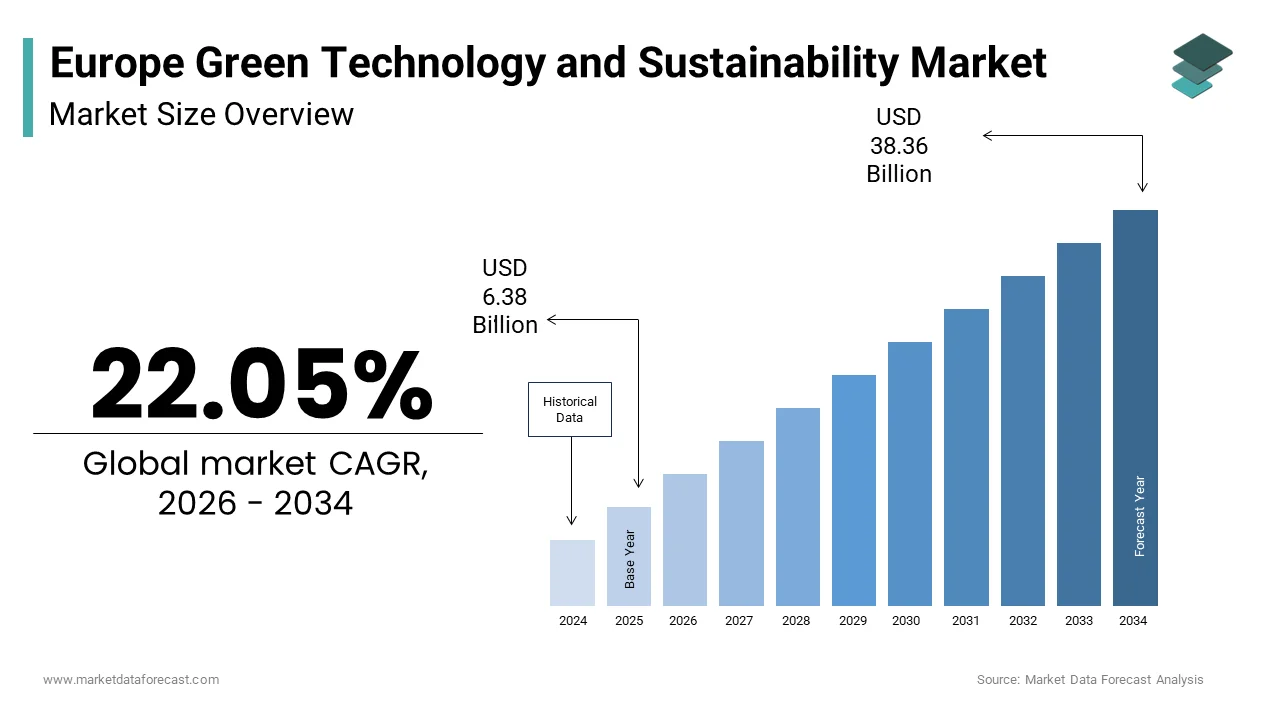
The Europe green technology and sustainability market size was valued at USD 6.38 billion in 2025, is anticipated to reach USD 7.79 billion in 2026, and is projected to scale up to USD 38.36 billion by 2034, registering a compound annual growth rate (CAGR) of 22.05% during the forecast period from 2026 to 2034. Driven by the European Green Deal, regulatory mandates under the Fit for 55 package, and strategic energy independence initiatives, the green technology industry continues to expand steadily across the European continent.
Key Executive Metrics (At-a-Glance)
- 2025 Base Valuation: USD 6.38 Billion
- 2026 Current Valuation: USD 7.79 Billion
- 2034 Forecast Valuation: USD 38.36 Billion
- Compound Annual Growth Rate (CAGR): 22.05% (2026–2034)
- Dominant Technology Segment: Internet of Things (IoT) (holding 34.7% of the market share in 2025, driven by energy efficiency and resource optimization)
- Fastest-Growing Technology Segment: Artificial Intelligence and Analytics (projected to experience a CAGR of 26.8% from 2026 to 2034)
- Dominant Application Segment: Green Building (accounting for a 29.8% share in 2025, supported by stringent regulatory frameworks and renovation waves)
- Fastest-Growing Application Segment: Carbon Footprint Management (expected to be the fastest-growing segment with a CAGR of 24.5% between 2026 and 2034)
- Dominant Region: Germany (holding a 24.9% share of the market in 2025)
Core Market Drivers
- Regulatory Mandates Under the Fit for 55 Package and Carbon Pricing: Legislative pressure and the expansion of the Emissions Trading System (ETS II) compelling industries to invest heavily in decarbonization technologies.
- Strategic Energy Independence and Security Imperatives: Accelerated deployment of domestic renewable energy and efficiency solutions following geopolitical disruptions and REPowerEU targets.
Primary Market Restraints & Challenges
- Critical Shortages of Raw Materials for Green Technologies: Supply chain bottlenecks and heavy reliance on foreign entities for essential critical minerals like lithium, cobalt, and rare earth elements.
- High Upfront Capital Costs and Financing Gaps for SMEs: Prohibitive initial investments and limited access to green finance hindering adoption among smaller enterprises and households.
- Grid Infrastructure Bottlenecks and Intermittency Management: Aging transmission networks and inadequate energy storage struggling to manage variable renewable energy inputs.
Europe Green Technology and Sustainability Market Segmentation Breakdown
| Segment Category | Leading Sub-Segment (2025 Base) | Fastest-Growing Sub-Segment (2026–2034) |
|---|---|---|
| By Technology | Internet of Things (IoT) (holding 34.7% share, essential for real-time asset tracking and efficiency) | Artificial Intelligence and Analytics (projected at a 26.8% CAGR driven by data processing needs) |
| By Application | Green Building (holding 29.8% share, driven by renovation waves and energy performance mandates) | Carbon Footprint Management (growing at a 24.5% CAGR propelled by CSRD and CBAM regulations) |
| By Region | Germany (holding 24.9% market share in 2025) | Europe-wide expansion driven by coordinated EU targets |
Major Industry Players Profiled
Key enterprises shaping the competitive Europe green technology and sustainability market include Siemens AG, Schneider Electric SE, ABB Ltd., Vestas Wind Systems A/S, Ørsted A/S, Iberdrola S.A., Enel S.p.A., Veolia Environnement S.A., SUEZ S.A., ENGIE S.A., Nordex SE, Alstom S.A., Johnson Controls International plc, Acciona S.A., and EDP Renováveis S.A..
Europe Green Technology and Sustainability Market Size
The Europe green technology and sustainability market size was calculated to be USD 6.38 billion in 2025 and is anticipated to be worth USD 38.36 billion by 2034, from USD 7.79 billion in 2026, growing at a CAGR of 22.05% during the forecast period.
Green technology (also known as greentech or cleantech) refers to the use of science and innovation to create products and services that have a positive impact on the environment. Sustainability is the broader goal: meeting our current needs without compromising the ability of future generations to meet theirs. This market encompasses renewable energy generation, circular economy solutions, carbon capture, utilization, and storage, and sustainable agriculture technologies aimed at achieving climate neutrality. The operational landscape is fundamentally shaped by the European Green Deal, which legally binds the region to reduce net greenhouse gas emissions by at least 55% by 2030 compared to 1990 levels. According to the 2024 Climate Action Progress Report, net EU greenhouse gas emissions were 37% below 1990 levels by the end of 2023. This progress was driven by a record 8.3% year-on-year drop in 2023, primarily due to a surge in renewable energy and a significant decrease in power sector emissions. The urgency for deployment is further amplified by the REPowerEU plan, which seeks to eliminate dependence on Russian fossil fuels by accelerating the rollout of clean energy alternatives. Data from the European Environment Agency reveals that the transport sector (including international aviation and maritime) accounted for 28.9% of total EU emissions in 2022. It remains the only major sector where emissions have generally increased since 1990, necessitating the "Fit for 55" transition to zero-emission vehicles by 2035. Furthermore, under the Circular Economy Action Plan, the EU aims to double its circularity rate to 24% by 2030 and significantly reduce its total consumption footprint. This strategy focuses on making sustainable products the norm through the Ecodesign for Sustainable Products Regulation. This market thus functions as the critical engine for transforming the European industrial base into a resource-efficient and climate-resilient economy.
MARKET DRIVERS
Regulatory Mandates Under the Fit for 55 Package and Carbon Pricing
Legislative pressure and rising carbon costs force the rapid adoption of low-carbon technologies. The implementation of the Fit for 55 package and the consequent strengthening of the Emissions Trading System accelerate the growth of the Europe green technology and sustainability market. This legislative framework transforms climate goals into binding legal obligations, compelling industries to invest heavily in decarbonization technologies or face prohibitive financial penalties. After reaching record highs, carbon prices have recently eased, though they remain high enough to continue pushing heavy industry toward cleaner energy sources. According to the European Commission, the inclusion of maritime transport and the planned extension to road transport and buildings under the new ETS II mechanism will expand the scope of carbon pricing to cover 75% of EU emissions, creating a massive addressable market for emission reduction technologies. Industries such as steel, cement, and chemicals are now forced to integrate carbon capture systems and switch to green hydrogen to avoid the escalating costs of compliance. Money collected from carbon taxes and permits is hitting record levels globally, providing a massive fund that governments are using to pay for new green technologies. Furthermore, the Carbon Border Adjustment Mechanism imposes levies on imported goods with high carbon footprints, protecting domestic green technology investors and leveling the playing field. This robust regulatory architecture ensures that the adoption of sustainability solutions is not merely a corporate social responsibility initiative but a fundamental economic imperative for survival in the European market.
Strategic Energy Independence and Security Imperatives
Geopolitical instability drives accelerated investment in domestic renewable energy and efficiency. The urgent strategic imperative for energy independence following geopolitical disruptions acts as a key enabler for the Europe green technology and sustainability market expansion. This shift effectively moves the narrative from climate action to national security. The reduction of reliance on imported fossil fuels has prompted European nations to fast-track the deployment of domestic renewable energy sources and energy efficiency technologies at an unprecedented pace. According to the International Energy Agency, Europe added a record 56 gigawatts of solar photovoltaic capacity in 2023, surpassing the combined additions of the United States and India, driven largely by the need to secure indigenous power supplies. The REPowerEU plan explicitly targets an increase in the share of renewables in final energy consumption to 42.5% by 2030, up from the previous 32% target, necessitating massive investments in wind, solar, and grid modernization technologies. Data from Eurostat reveal that the share of renewable energy in gross final consumption of energy in the EU reached 23% in 2023, yet the acceleration required to meet the new targets demands a tripling of annual installation rates for wind and solar. Furthermore, the push for green hydrogen production aims to produce 10 million tonnes domestically and import another 10 million tonnes by 2030, creating a burgeoning market for electrolyzers and related infrastructure. The European Commission highlights that every euro invested in energy independence through renewables yields significant long-term economic stability, reducing exposure to volatile global fossil fuel markets. This convergence of security needs and climate goals ensures sustained and aggressive capital flow into green technology sectors across the continent.
MARKET RESTRAINTS
Critical Shortages of Raw Materials for Green Technologies
Supply chain bottlenecks for critical minerals hinder the scaling of renewable and battery technologies. The critical shortages of raw materials essential for green technologies act as a significant restraint on the Europe green technology and sustainability market. This scarcity threatens to slow down the pace of the energy transition. The production of electric vehicle batteries, wind turbines, and solar panels relies heavily on critical raw materials such as lithium, cobalt, nickel, and rare earth elements, the supply chains of which are currently dominated by non-European entities. Europe is almost entirely reliant on foreign countries for the specialized minerals needed for high-tech batteries and magnets. The world's appetite for battery metals is set to explode as every major economy tries to switch to electric power at the same time. There is a significant risk that Europe will not have enough lithium to build all the electric cars its laws require by the end of the decade. Furthermore, the lengthy permitting processes for new mining projects within Europe delay the development of domestic sources, exacerbating the reliance on imports. Opening a new mine in Europe takes over a decade, which is too slow to help meet the continent's immediate climate goals. This structural bottleneck in the upstream supply chain poses a formidable challenge to the scalability and cost-effectiveness of green technology deployment across the region.
High Upfront Capital Costs and Financing Gaps for SMEs
Prohibitive initial investments and limited access to green finance stall adoption among smaller entities. The high upfront capital costs associated with green technology adoption and the persistent financing gaps for small and medium-sized enterprises are major obstacles to the Europe green technology and sustainability market growth. While the long-term operational savings of renewable energy and energy efficiency measures are well documented, the initial investment required for technologies such as heat pumps, solar installations, and industrial electrification remains prohibitive for many businesses and households. Europe is falling significantly short of the funding needed to build a green economy, with hundreds of billions of euros in missing investment every year. Most European houses are being upgraded too slowly, with only a tiny fraction of buildings receiving energy-saving renovations each year. Small and medium-sized enterprises, which constitute the backbone of the European economy, often lack the collateral and credit history required to secure large loans for sustainability upgrades, leading to a slower rate of decarbonization in this segment. Furthermore, the complexity of navigating multiple funding schemes and the administrative burden of applying for grants deter potential adopters. As per sources, the payback period for many green technologies has extended due to rising interest rates, further dampening investment appetite. This financial friction limits the democratization of green technology and slows the overall market momentum.
MARKET OPPORTUNITIES
Expansion of the Circular Economy and Industrial Symbiosis
Waste valorization and resource looping create new revenue streams and reduce material dependency. The expansion of the circular economy and industrial symbiosis networks offers a great opportunity for the European green tech and sustainability market. This is achieved by turning waste streams into valuable resources. This approach involves designing out waste, keeping products in use longer, and regenerating natural systems, thereby reducing the demand for virgin raw materials and lowering environmental impact. According to the European Environment Agency, fully implementing circular economy principles across the EU could increase GDP by an additional 0.5% by 2030 and create around 700000 new jobs, highlighting the immense economic potential of this shift. The revised Waste Framework Directive and specific regulations on batteries and packaging mandate higher recycled content requirements, driving demand for advanced sorting, recycling, and chemical recovery technologies. Data from Circle Economy indicates that the circularity gap in Europe stands at 88%, meaning there is a vast untapped potential for technologies that can recover materials from end-of-life products and industrial by-products. Industrial symbiosis, where the waste of one industry becomes the feedstock for another, is gaining traction in regions like the Port of Rotterdam and Kalundborg in Denmark, offering opportunities for specialized monitoring and logistics platforms. Furthermore, the rise of product-as-a-service models encourages manufacturers to design for durability and recyclability, opening new business avenues. As per the Ellen MacArthur Foundation, transitioning to a circular economy could reduce EU greenhouse gas emissions by 48% by 2030, making it a critical pillar of the sustainability strategy. This systemic shift creates a fertile ground for innovation in material science, reverse logistics, and waste processing technologies.
Development of Green Hydrogen Value Chains for Hard-to-Abate Sectors
Clean hydrogen offers a viable pathway to decarbonize heavy industry and long-haul transport. The development of comprehensive green hydrogen value chains creates strong prospects for the Europe green technology and sustainability market. This is particularly true for decarbonizing sectors that are difficult to electrify directly. Green hydrogen, produced via water electrolysis using renewable electricity, is poised to replace fossil fuels in heavy industries such as steelmaking, chemical production, and refining, as well as in heavy-duty transport and aviation. The world is preparing for a massive new energy market that could eventually be worth trillions of euros a year. Europe is putting billions of euros on the table to make sure clean hydrogen can compete with cheaper, dirtier fuels. Experts expect the equipment needed to make clean hydrogen to become significantly cheaper as factories start building it on a much larger scale. Furthermore, the creation of hydrogen valleys, which integrate production, storage, and end-use applications in specific geographic clusters, is fostering local ecosystems of innovation and investment. Hydrogen is expected to become a core part of the world's energy mix, particularly for powering heavy ships and industrial factories. This emerging sector represents a frontier for technological leadership and export potential for European industries.
MARKET CHALLENGES
Grid Infrastructure Bottlenecks and Intermittency Management
Aging transmission networks struggle to accommodate variable renewable energy inputs. The inadequacy of existing grid infrastructure and the challenges associated with managing the intermittency of renewable energy sources slow down the growth of the Europe green technology and sustainability market. Variable renewable energy sources like wind and solar are making up a larger share of our power. This shift means the electrical grid needs major upgrades to manage bidirectional flows, ensure stability, and avoid congestion. The amount of clean energy waiting to join the power grid is now larger than the total amount of solar and wind power currently installed in Europe. The aging transmission infrastructure in many member states was designed for centralized fossil fuel generation and lacks the flexibility needed for a decentralized renewable system. Meeting climate goals requires a historic financial commitment to rebuilding the "backbone" of Europe's energy system. Furthermore, the lack of sufficient energy storage capacity exacerbates the intermittency issue, leading to curtailment of renewable generation during periods of low demand and high production. Because the power lines are too small, significant amounts of clean electricity are being intentionally wasted instead of reaching homes. Addressing these grid bottlenecks requires coordinated planning, streamlined permitting for transmission lines, and massive capital mobilization, all of which remain complex and politically sensitive hurdles.
Social Acceptance and Workforce Skills Mismatch
Public resistance to infrastructure projects and a lack of green skills hinder implementation. The challenges of social acceptance for new green infrastructure projects and the significant mismatch in workforce skills constitute critical barriers to the Europe green technology and sustainability market. The rapid deployment of wind farms, transmission lines, and mining operations for critical minerals often faces strong local opposition due to concerns over land use, visual impact, and environmental disruption, a phenomenon known as the Not In My Back Yard syndrome. While most people want green energy, the challenge is shifting from "not in my backyard" to involving local communities in the planning and profits of new projects. Simultaneously, the transition to a green economy requires a workforce equipped with new technical skills in areas such as renewable energy installation, energy auditing, and sustainable manufacturing, which are currently in short supply. Europe's green ambitions are facing a "human bottleneck" as there are currently not enough trained professionals to actually build the new systems. The shortage of qualified installers for heat pumps and solar panels is already causing bottlenecks in deployment rates. As per research, without a concerted effort to align education and training with market needs, the labor shortage could severely constrain the growth of the green technology sector. Overcoming these social and human capital challenges is essential for ensuring a just and effective transition.
REPORT COVERAGE
| REPORT METRIC | DETAILS |
| Market Size Available | 2025 to 2034 |
| Base Year | 2025 |
| Forecast Period | 2026 to 2034 |
| CAGR | 22.05% |
| Segments Covered | By Technology, Application And Region |
| Various Analyses Covered | Global, Regional & Country Level Analysis; Segment-Level Analysis; DROC, PESTLE Analysis; Porter’s Five Forces Analysis; Competitive Landscape; Analyst Overview of Investment Opportunities |
| Regions Covered | UK, France, Spain, Germany, Italy, Russia, Sweden, Denmark, Switzerland, Netherlands, Turkey, and the Czech Republic |
| Market Leaders Profiled | Siemens AG, Schneider Electric SE, ABB Ltd., Vestas Wind Systems A/S, Ørsted A/S, Iberdrola S.A., Enel S.p.A., Veolia Environnement S.A., SUEZ S.A., ENGIE S.A., Nordex SE, Alstom S.A., Johnson Controls International plc, Acciona S.A., EDP Renováveis S.A. |
SEGMENTAL ANALYSIS
By Technology Insights
In 2025, the Internet of Things (IoT) segment held the majority share of 34.7% of the Europe green technology and sustainability market. This supremacy of the segment is attributed to the necessity for granular, real-time data collection from physical assets to enable energy efficiency, resource optimization, and emissions tracking across diverse sectors. Without the pervasive sensor networks provided by IoT, higher-level technologies like artificial intelligence lack the raw data required to function effectively in sustainability contexts. European homes are becoming smarter every year, with most households now owning several different internet-connected gadgets to manage their daily lives. Furthermore, the industrial sector's push towards Industry 4.0 relies heavily on IoT sensors to monitor machine health and optimize production processes to reduce waste and energy usage. Modern office buildings are using smart sensors to automatically turn off lights and air conditioning in empty rooms, which significantly cuts down on monthly power bills. The ability of IoT devices to track water quality, soil moisture, and air pollution levels in real time also supports regulatory compliance with strict EU environmental standards. The specialized wireless networks needed for environmental sensors have now been built across almost the entire continent, reaching even remote rural areas. This foundational role of connectivity ensures IoT remains the primary technology enabler in the market. The critical need for real-time energy monitoring and optimization in the vast stock of European buildings acts as the primary catalyst for the dominance of the Internet of Things segment. Because buildings use nearly half of all the energy in Europe, they are the most important place to install smart technology to stop energy waste. European law now requires that every new house or office built after 2030 must produce as much energy as it uses, making smart sensors a necessity for every builder. These devices enable facility managers to track heating, cooling, and lighting usage down to the room level, allowing for dynamic adjustments that significantly lower carbon footprints. High-tech buildings that can "think" for themselves are proving to be much cheaper to run than traditional properties. Furthermore, the integration of IoT with renewable energy sources like rooftop solar panels allows for optimized self-consumption and grid interaction, enhancing overall system efficiency. The proliferation of smart thermostats and connected appliances in residential settings further expands the market, as consumers seek to reduce utility bills amidst rising energy prices. Although the extreme price jumps of the past few years have slowed down, energy costs remain high enough that families are still looking for smart gadgets to help them save money. This economic and regulatory imperative ensures that IoT remains the cornerstone of green technology deployment in the built environment. The escalating demand for precision agriculture and efficient resource management serves as a powerful driver sustaining the leadership of the Internet of Things segment in the European market. As the continent faces increasing challenges from climate change, including droughts and extreme weather events, farmers are turning to IoT sensors to optimize water usage, fertilizer application, and crop health monitoring. IoT devices such as soil probes and drone-mounted sensors provide farmers with actionable data to apply resources only where and when needed, reducing waste and environmental runoff. The Common Agricultural Policy of the EU increasingly ties subsidies to sustainable practices, incentivizing the adoption of these digital tools. Furthermore, the ability to monitor livestock health and location remotely improves animal welfare and operational efficiency. This shift towards data-driven agriculture ensures a continued strong demand for IoT technologies across the rural landscape.
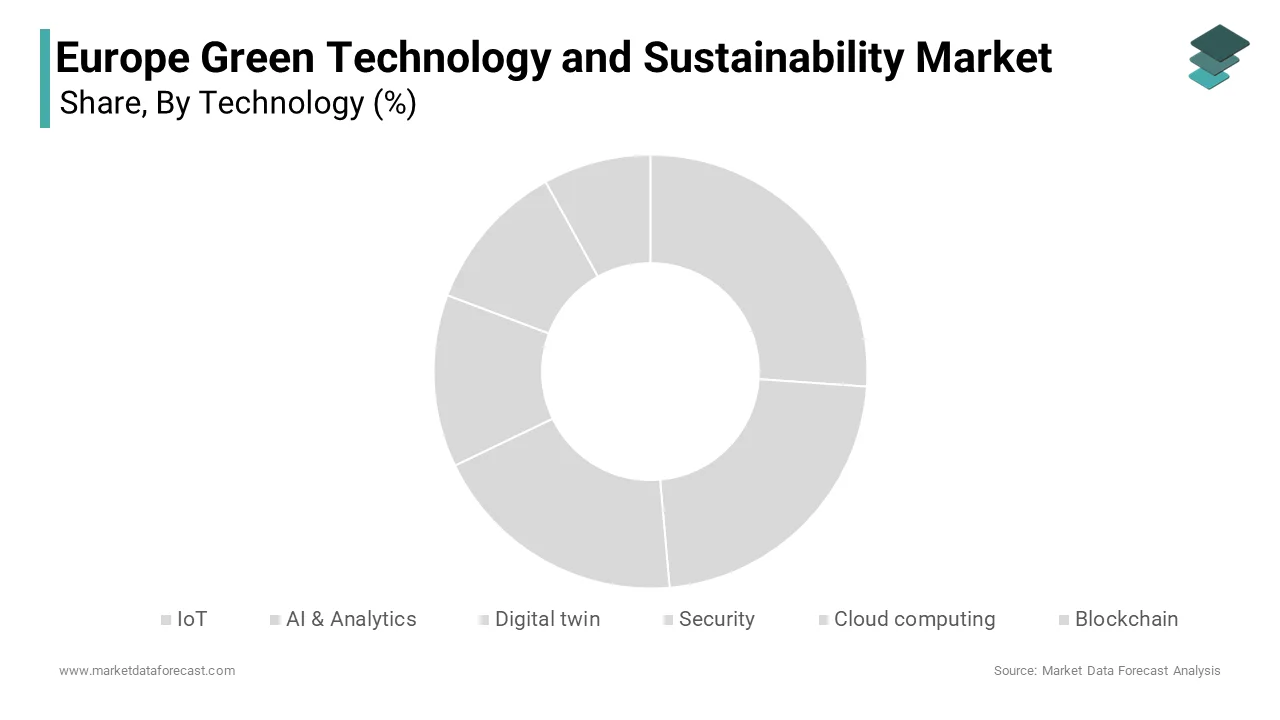
The Artificial Intelligence and Analytics segment is likely to experience the fastest CAGR of 26.8% from 2026 to 2034. This accelerated growth of the segment is fueled by the exponential increase in data generated by IoT devices and the urgent need to transform this data into actionable insights for complex decision-making. IoT provides the eyes and ears of the sustainability ecosystem. Meanwhile, AI serves as the brain, capable of predicting trends, optimizing systems autonomously, and identifying patterns invisible to human analysts. The primary factor driving this expansion is the integration of generative AI and machine learning models into energy grids, supply chains, and industrial processes to maximize efficiency and minimize waste. As per sources, the promotion of trustworthy AI for environmental applications has created a favorable regulatory environment that encourages innovation and investment in this sector. The ability of AI to forecast renewable energy generation based on weather patterns and balance grid loads in real time is becoming indispensable as the share of variable renewables increases. Furthermore, the use of AI for predictive maintenance in wind turbines and solar farms reduces downtime and extends asset life, offering significant cost savings. The convergence of big data availability and advanced computing power positions AI and analytics as the most dynamic growth engine in the market. The critical requirement for predictive grid management to handle the volatility of renewable energy sources stands as the foremost driver propelling the rapid growth of the Artificial Intelligence and Analytics segment. As Europe accelerates its transition to wind and solar power, the electrical grid faces unprecedented challenges in balancing supply and demand due to the intermittent nature of these resources. AI algorithms excel at analyzing vast datasets from weather forecasts, historical consumption patterns, and real-time grid conditions to predict fluctuations and optimize dispatch strategies. These systems enable grid operators to anticipate surges in generation or drops in demand, automatically adjusting storage charging and discharging cycles to maintain stability. Furthermore, the emergence of virtual power plants that aggregate distributed energy resources relies entirely on AI to coordinate thousands of individual assets seamlessly. This operational necessity ensures that AI adoption in the energy sector will continue to surge. The pressing need for supply chain decarbonization and the optimization of circular economy flows acts as a key driver for the surging growth of the Artificial Intelligence and Analytics segment in Europe. Corporations are under increasing pressure from regulators and consumers to disclose and reduce their Scope 3 emissions, which often constitute the majority of their carbon footprint. AI-powered analytics platforms enable companies to map complex global supply chains, identify emission hotspots, and simulate the impact of various reduction strategies with high precision. These technologies can analyze transactional data, logistics records, and supplier reports to calculate accurate carbon footprints and suggest optimal routing or material substitutions to lower emissions. Furthermore, AI facilitates the matching of waste streams from one industry with resource needs of another, fostering industrial symbiosis. As per research, a notable share of European CEOs plan to invest heavily in AI for supply chain sustainability in the next three years, recognizing it as a competitive differentiator. This strategic imperative to achieve transparency and efficiency in value chains fuels the rapid expansion of the AI and analytics market.
By Application Insights
The green building segment dominated the Europe green technology and sustainability market and accounted for a 29.8% share in 2025. This leading position of the segment is attributed to the stringent regulatory framework targeting the building sector, which is responsible for a significant portion of the continent's energy consumption and emissions. The comprehensive renovation wave initiated by the European Union aims to double the annual renovation rate of buildings, creating a massive market for sustainable construction materials, energy-efficient systems, and smart building technologies. The mandatory implementation of Energy Performance Certificates and the requirement for all new public buildings to be nearly zero-energy have standardized green practices across the region. Furthermore, the rise of green financing instruments such as green mortgages and sustainability-linked loans provides favorable terms for developers who adhere to high environmental standards, further stimulating demand. The convergence of regulatory mandates, financial incentives, and societal demand for healthy living spaces cements the Green Building segment as the market leader. The rigorous regulatory mandates for energy efficiency and the transition to zero-emission buildings serve as the fundamental force driving the dominance of the Green Building segment. The European Union has established a legally binding trajectory to achieve climate neutrality by 2050, with the building sector playing a central role in this roadmap. According to research, non-compliance with these standards will result in restrictions on renting or selling properties, creating a powerful market driver for retrofitting and modernization. The phase-out of fossil fuel boilers in many member states, including bans on oil and gas heating in new constructions, accelerates the adoption of electric heating solutions and district heating networks. Furthermore, local governments in cities like Paris and Amsterdam have implemented low-emission zones that restrict access for high-polluting buildings, adding another layer of regulatory pressure. The regulatory landscape ensures that green building technologies remain in high demand. The availability of substantial financial incentives and specialized green financing mechanisms acts as a potent driver sustaining the leadership of the Green Building segment in the European market. Recognizing the high upfront costs associated with sustainable construction and renovation, the EU and its member states have deployed a wide array of grants, tax credits, and subsidized loans to support property owners. The Recovery and Resilience Facility has allocated billions of euros specifically for energy efficiency upgrades in buildings, providing direct funding to projects that meet certain green criteria. According to sources, green mortgage lending in Europe grew, as banks offer lower interest rates to borrowers who purchase or renovate energy-efficient homes. This financial advantage makes green buildings more attractive to investors and homeowners alike, stimulating market activity. Additionally, the taxonomy regulation provides a clear definition of what constitutes a sustainable economic activity, guiding capital flows towards verified green building projects. As per studies, Europe remains the largest issuer of green bonds globally, with a significant share dedicated to green real estate development. These financial drivers lower the barrier to entry and accelerate the adoption of green technologies in the building sector.
The Carbon Footprint Management segment is on the rise and is expected to be the fastest-growing segment in the market by witnessing a CAGR of 24.5% between 2026 and 2034 due to the implementation of the Corporate Sustainability Reporting Directive and the Carbon Border Adjustment Mechanism, which mandate rigorous measurement, reporting, and verification of greenhouse gas emissions for thousands of companies. The primary factor accelerating this expansion is the shift from voluntary carbon disclosure to mandatory compliance, forcing organizations to adopt sophisticated software and consulting services to manage their carbon data. The complexity of calculating Scope 3 emissions across global supply chains necessitates advanced digital tools capable of aggregating and analyzing vast amounts of data. Furthermore, the rising price of carbon allowances in the Emissions Trading System increases the financial stakes of accurate footprint management, encouraging companies to invest in reduction strategies. Research reveals that a notable portion of European companies now have net-zero targets, up from those in 2022, driving the need for robust tracking and verification systems. This regulatory and financial imperative positions carbon footprint management as the most rapidly advancing application segment. The introduction of mandatory sustainability reporting standards and strict compliance requirements stands as the primary engine driving the rapid growth of the Carbon Footprint Management segment. The Corporate Sustainability Reporting Directive represents a paradigm shift in corporate accountability, requiring detailed disclosure of environmental impacts, including comprehensive carbon footprints. According to research, this directive expands the number of companies required to report on sustainability by a factor of four, covering not only large listed companies but also large non-listed companies and subsidiaries of non-EU groups. The stringent assurance requirements mean that companies can no longer rely on rough estimates but must implement precise measurement methodologies supported by auditable data systems. Furthermore, the Carbon Border Adjustment Mechanism imposes tariffs on imports based on their embedded carbon content, forcing importers to accurately calculate the footprint of their goods to avoid excessive fees. As per studies, the cost of non-compliance with these regulations far exceeds the investment in management systems, driving rapid adoption. This regulatory tsunami ensures that carbon footprint management becomes a core business function rather than a niche activity. Intensifying pressure from investors and the growing demand for supply chain decarbonization act as a critical driver for the surging growth of the Carbon Footprint Management segment in Europe. Institutional investors and asset managers are increasingly integrating environmental criteria into their investment decisions, demanding transparent and verified carbon data from portfolio companies. Large multinational corporations are also setting ambitious net-zero targets that extend to their entire value chains, requiring suppliers to measure and reduce their emissions to maintain business relationships. The reputational risk associated with greenwashing further compels organizations to invest in robust verification systems to substantiate their claims. As per studies, scrutiny of sustainability claims by regulators is increasing, penalizing companies with unsubstantiated environmental assertions. This combination of financial, commercial, and reputational pressures ensures that the demand for carbon footprint management solutions will continue to grow exponentially.
REGIONAL ANALYSIS
Germany Green Technology and Sustainability Market Analysis
Germany led the Europe green technology and sustainability market and held a share of 24.9% in 2025. The supremacy of the German market is driven by the massive investment in renewable energy infrastructure and energy efficiency technologies to phase out nuclear and coal power. The country is known for its robust industrial base, which is undergoing a profound transformation towards sustainability, driven by the "Energiewende" policy and strict federal climate laws. The manufacturing sector, a pillar of the German economy, is aggressively adopting green technologies to maintain competitiveness in a carbon-constrained world, particularly in the automotive and chemical industries. Furthermore, the government's commitment to achieving climate neutrality by 2045, five years ahead of the EU target, accelerates the deployment of innovative solutions. The presence of leading research institutions and a skilled workforce fosters continuous innovation in green tech. This combination of policy ambition, industrial capacity, and financial commitment secures Germany's position as the premier market for green technology in Europe.
France Green Technology and Sustainability Market Analysis
France followed closely behind in the Europe green technology and sustainability market and accounted for 18.1% in 2025 because of its strong state-led approach to nuclear energy integration and renewable expansion. The market status is heavily influenced by the "France 2030" investment plan, which prioritizes decarbonization of industry and the development of green hydrogen. A key driver for the French market is the ambitious goal to renovate a substantial number of energy-inefficient homes annually, creating a booming market for insulation, heat pumps, and smart energy management systems. The country's extensive nuclear fleet provides a low-carbon baseload that complements the growth of variable renewables, offering a unique energy mix that attracts green industries. Furthermore, the push for sustainable mobility, including significant subsidies for electric vehicles and the development of charging infrastructure, stimulates related green technologies. This strategic blend of nuclear stability, renewable growth, and state support drives the robust expansion of the green technology market in France.
United Kingdom Green Technology and Sustainability Market Analysis
The United Kingdom is a key player in the Europe green technology and sustainability market due to its leadership in offshore wind energy and green finance. The country has a mature regulatory framework and a strong commitment to net zero emissions by 2050, enshrined in law. Apart from these factors, a major driving factor is the UK's position as a global hub for green finance, with the London Stock Exchange hosting a significant volume of green bond issuances that fund sustainability projects across the continent. The government's Industrial Decarbonization Strategy provides substantial funding for carbon capture and storage clusters, driving innovation in heavy industry. Furthermore, the ban on the sale of new petrol and diesel cars by 2030 accelerates the transition to electric mobility and associated charging infrastructure. As per sources, investments in grid flexibility and storage solutions have grown in the last two years to support the integration of renewables. This combination of technological leadership, financial depth, and policy certainty ensures the UK remains a critical market for green technology.
Sweden Green Technology and Sustainability Market Analysis
Sweden saw consistent growth in the Europe green technology and sustainability market owing to its pioneering role in fossil-free steel production and circular economy initiatives. The market status is evolving rapidly as the country leverages its abundant renewable electricity from hydro and wind to power energy-intensive industries. Among these, a keg growth enabler is the "Fossil-Free Sweden" initiative, a collaborative effort between the government and industry to eliminate fossil fuels from the national economy by 2045. The development of the HYBRIT project, which aims to produce steel using green hydrogen instead of coal, positions Sweden at the forefront of industrial decarbonization technologies. Furthermore, Sweden's advanced waste management system, which recycles most of the household waste, drives demand for recycling and waste-to-energy technologies. This culture of innovation and early adoption secures Sweden's influential position in the European green market.
Netherlands Green Technology and Sustainability Market Analysis
The Netherlands is anticipated to grow significantly in the European market during the forecast period due to its strategic focus on hydrogen hubs, sustainable agriculture, and circular construction. The market status is robust, supported by the country's role as a logistical gateway to Europe and its ambitious climate goals. A primary driver for the Dutch market is the Port of Rotterdam's transformation into a major green hydrogen hub, attracting massive investments in electrolysis and distribution infrastructure. The agricultural sector, a key part of the Dutch economy, is increasingly adopting precision farming and vertical farming technologies to reduce nitrogen emissions and water usage. Furthermore, the Dutch government's commitment to a circular economy by 2050 stimulates innovation in material recovery and product-as-a-service models. This focused approach to specific high-impact sectors ensures the Netherlands remains a vital and innovative market for green technology in Europe.
COMPETITION OVERVIEW
The competition in the Europe green technology and sustainability market is intense and characterized by a diverse mix of established industrial conglomerates and agile specialized startups that compete on technological innovation and solution integration. Large incumbents leverage their extensive global networks and broad product portfolios to offer end-to-end sustainability solutions that cover the generation, distribution, and consumption of energy. In contrast, niche players differentiate themselves through highly specialized technologies such as advanced battery chemistries or unique carbon capture methods that address specific pain points for industries. The market sees frequent mergers and acquisitions as companies seek to rapidly acquire digital capabilities and expand their geographic reach to meet rising demand. Price competition is moderate as buyers prioritize long-term reliability and proven track records in delivering measurable emission reductions over initial cost savings. Regulatory compliance with the European Green Deal acts as a significant driver for innovation while creating barriers for non-compliant entities. Collaboration between competitors on standardization efforts is becoming common to ensure interoperability of green technologies. This dynamic environment fosters rapid advancement and ensures that only the most adaptable and innovative firms thrive in the evolving landscape.
KEY MARKET PLAYERS
A few major players of the Europe green technology and sustainability market include
- Siemens AG
- Schneider Electric SE
- ABB Ltd
- Vestas Wind Systems A/S
- Ørsted A/S
- Iberdrola S.A
- Enel S.p.A
- Veolia Environnement S.A
- SUEZ S.A
- ENGIE S.A
- Nordex SE
- Alstom S.A
- Johnson Controls International plc
- Acciona S.A
- EDP Renováveis S.A
Top Strategies Used by Key Market Participants
Key players in the Europe green technology and sustainability market primarily focus on developing integrated digital platforms that combine artificial intelligence with energy management systems to optimize resource usage and reduce emissions. Companies are increasingly investing in research and development of green hydrogen technologies and energy storage solutions to address intermittency issues associated with renewable power generation. Strategic partnerships with government bodies and industry consortia are essential to shape regulatory frameworks and secure funding for large-scale infrastructure projects. Vendors are also prioritizing circular economy principles by designing products for recyclability and offering take-back programs to minimize environmental impact. Furthermore, market participants are expanding their service portfolios to include sustainability consulting and carbon footprint verification to help clients navigate complex compliance requirements. These collective strategies aim to drive systemic change and accelerate the transition toward a climate-neutral economy across the region.
Leading Players in the Market
- Siemens AG stands as a pivotal force in the Europe green technology and sustainability market by providing comprehensive digitalization and electrification solutions that enable industrial decarbonization. The company contributes globally through its Smart Infrastructure division, which integrates renewable energy sources and optimizes building efficiency using advanced software. Siemens recently strengthened its market position by launching new AI-driven energy management platforms designed to reduce carbon footprints for large industrial clients across the continent. Their strategic focus includes expanding production capacities for electrolyzers to support the growing green hydrogen economy. Siemens continues to collaborate with European governments to modernize power grids and enhance resilience against climate change impacts. These initiatives solidify their role as a primary enabler of the energy transition while driving innovation in sustainable manufacturing and mobility sectors worldwide.
- Vestas Wind Systems A/S operates as a leading innovator in the Europe green technology and sustainability market by designing and installing advanced wind turbine solutions that generate clean electricity at scale. The firm influences the global sector by maintaining the largest installed base of wind power equipment and continuously improving turbine efficiency and recyclability. Vestas has recently accelerated its strategy by introducing next-generation offshore wind platforms capable of operating in deeper waters with higher energy yields. Their commitment to circularity is evident through initiatives to recycle turbine blades and minimize waste throughout the product lifecycle. The company also focuses on digital services that optimize wind farm performance and predict maintenance needs to maximize uptime. Vestas continuously refines its technology and expands its service network. Through these efforts, it empowers utilities and corporations to achieve ambitious renewable energy targets and reduce reliance on fossil fuels.
- Schneider Electric SE maintains a robust presence in the Europe green technology and sustainability market by offering integrated energy management and automation solutions that promote efficiency and sustainability. The company contributes globally through its EcoStruxure platform, which connects hardware and software to manage energy consumption in real time for buildings and industries. Schneider Electric recently focused on strengthening its position by acquiring specialized software firms to enhance its carbon accounting and sustainability consulting capabilities. Their approach involves developing all-electric and digital solutions that help customers decarbonize operations and comply with strict environmental regulations. The firm also invests heavily in training programs to build a skilled workforce capable of implementing green technologies effectively. Schneider Electric provides holistic solutions that span from the grid to the plug. These offerings support organizations as they navigate the energy transition and work toward net-zero goals.
MARKET SEGMENTATION
This research report on the Europe green technology and sustainability market has been segmented and sub-segmented based on technology, application & region.
By Technology
- IoT
- AI & Analytics
- Digital twin
- Security
- Cloud computing
- Blockchain
By Application
- Carbon Footprint Management
- Green Building
- Water Purification
- Soil Condition/Moisture Monitoring
- Crop Monitoring
- Forest Monitoring
- Weather Monitoring & Forecasting
- Others
By Region
- UK
- France
- Spain
- Germany
- Italy
- Russia
- Sweden
- Denmark
- Switzerland
- Netherlands
- Turkey
- Czech Republic
- Rest of Europe