- Product Description Description
- Table of Contents TOC
- List of Table & Figure LOT
- Get Free Sample PDF Sample PDF
Market Size, 2025
$27.66 BnMarket Estimate, 2026
$30.22 BnMarket Forecast, 2034
$61.33 BnCAGR, 2026–2034
9.25%Europe Infant Formula Market Size
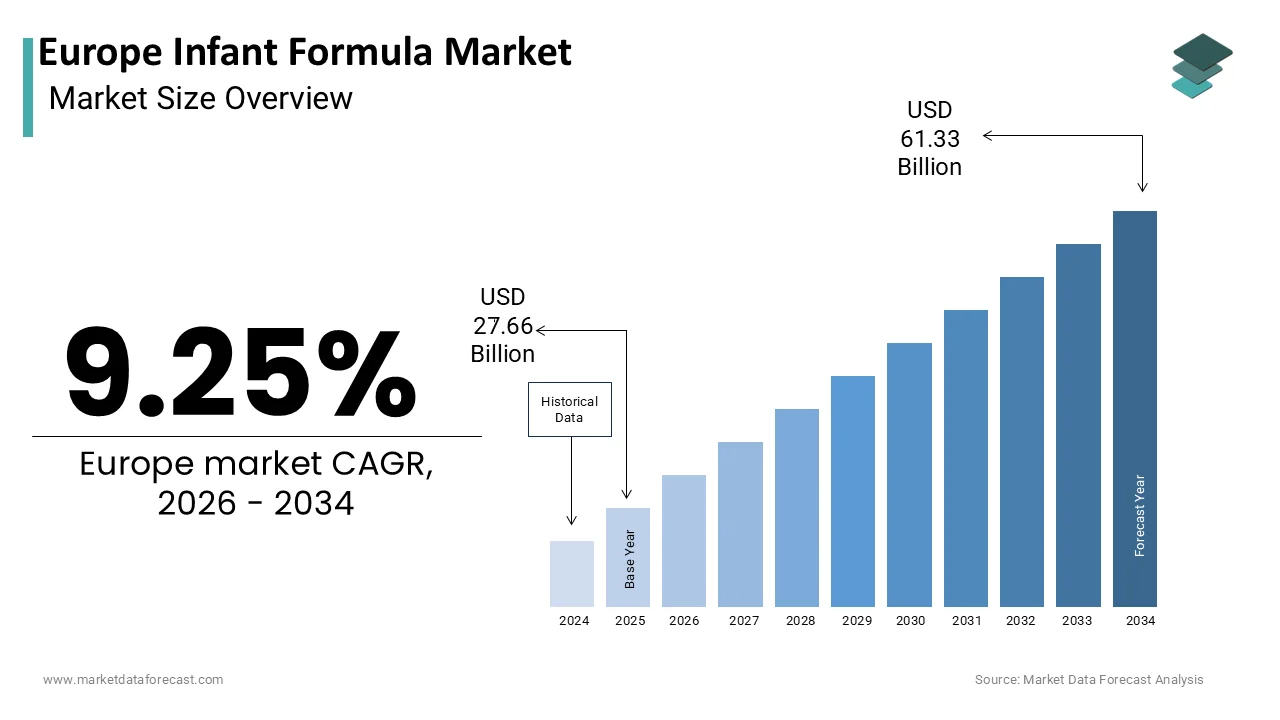
The Europe infant formula market was valued at USD 27.66 billion in 2025, is estimated to reach USD 30.22 billion in 2026, and is projected to reach USD 61.33 billion by 2034, growing at a CAGR of 9.25% from 2026 to 2034.
Europe infant formula is a breast milk substitute designed for infants from birth up to 36 months of age. This market is defined by a rigorous regulatory framework, primarily governed by the European Commission Delegated Regulation, which sets stringent standards for composition, labeling, and safety that often exceed global norms. The sector includes various categories such as cow's milk-based, soy-based, hydrolyzed, and specialized medical formulas tailored for specific dietary needs like lactose intolerance or allergies. According to Eurostat, live births in the European Union provide the fundamental demographic baseline for demand despite a general downward trend in fertility rates across the continent. The market dynamics are heavily influenced by public health initiatives, and as per the World Health Organization Regional Office for Europe, exclusive breastfeeding rates at 6 months vary significantly across member states, which necessitates a robust formula supply for the remaining majority. Furthermore, the definition extends beyond basic nutrition to include functional ingredients like prebiotics, probiotics, and human milk oligosaccharides aimed at mimicking the immunological benefits of breast milk. As per the European Food Safety Authority, the approval process for new ingredients in infant nutrition is among the most cautious globally, ensuring that only scientifically validated components enter the supply chain. This landscape creates a high-barrier environment where trust, safety, and scientific backing are the primary currencies of trade.
MARKET DRIVERS
Increasing Participation of Women in the Workforce and Changing Lifestyles
The sustained increase in female labor force participation, coupled with evolving societal structures that make exclusive breastfeeding challenging for many working mothers,s is primarily fuelling the growth of the Europe infant formula market. As more women pursue careers and return to the workforce shortly after maternity leave, the logistical difficulties of maintaining exclusive breastfeeding have led to the adoption of formula feeding as a practical alternative. According to Eurostat, the employment rate for women in the European Union has reached historic highs, which is correlating with a shift in infant feeding patterns. As per the European Institute for Gender Equality, despite supportive policies, the lack of adequate breastfeeding facilities in many workplaces remains a barrier, which is pushing many working mothers to introduce formula within the first few months. Furthermore, the rise of single-parent households and dual-income families creates a demand for the convenience and reliability that commercial formula offers. The modern lifestyle, characterized by busy schedules and the need for shared feeding responsibilities between partners, which is further cements the role of formula as an essential tool for family management.
Rising Prevalence of Maternal Health Issues and Lactation Challenges
The growth of the Europe infant formula market is further attributed to the growing incidence of maternal health conditions and physiological challenges that hinder the ability to breastfeed, thereby increasing reliance on medically sound alternatives. Conditions such as gestational diabetes, obesity, and thyroid disorders can impact milk production and are becoming more common among pregnant women in Europe. According to the European Centre for Disease Prevention and Control, obesity among women of reproductive age has risen in several member states, which is a factor clinically linked to delayed lactogenesis and reduced milk supply. Additionally, anatomical issues such as inverted nipples or previous breast surgeries, alongside psychological factors like postpartum depression, contribute to early weaning. As per national health services in the United Kingdom and France, many mothers cite insufficient milk supply as the primary reason for introducing formula, often exacerbated by a lack of accessible lactation support. As per guidelines from European pediatric associations, ensuring adequate infant nutrition takes precedence, validating the use of formula in cases where breastfeeding is not viable.
MARKET RESTRAINTS
Stringent Regulatory Frameworks and Marketing Restrictions
The growth of the Europe infant formula market is majorly hindered by the exceptionally rigid regulatory environment that strictly limits marketing, advertising, and promotional activities, thereby hindering brand differentiation and consumer outreach. The International Code of Marketing of Breast-milk Substitutes, adopted widely across European nations, prohibits the advertising of formula for infants under six months and imposes severe restrictions on labeling and sampling. According to the European Commission, these regulations are enforced to protect breastfeeding rates, which is resulting in a landscape where manufacturers cannot directly communicate product benefits to consumers through traditional media channels. For instance, non-compliance penalties are severe, creating a climate of extreme caution among marketers. Furthermore, the requirement for pre-market approval for any claim regarding health benefits means that even scientifically backed innovations face lengthy delays before reaching the shelf. As per the European Food Safety Authority, the approval timeline for new ingredients can extend significantly, stifling rapid innovation. These regulatory hurdles create high barriers to entry for smaller players and limit the ability of established firms to aggressively expand their market share.
Strong Public Health Advocacy for Exclusive Breastfeeding
The intense and pervasive public health advocacy promoting exclusive breastfeeding that culturally and psychologically discourages the use of infant formula among new parents is further restraining the expansion of the Europe infant formula market. European governments and health organizations actively campaign to normalize breastfeeding as the sole source of nutrition for the first six months, often framing formula use as a secondary or last-resort option. According to the World Health Organization Regional Office for Europe, member states have implemented comprehensive Baby-Friendly Hospital Initiatives that restrict the distribution of formula samples within maternity wards. For instance, breastfeeding initiation rates are high in several countries, driven by strong societal pressure and extensive educational programs. The perception of formula as inferior persists despite advancements in nutritional science, influencing purchasing decisions and limiting market volume. The ubiquity of free lactation consulting services provided by state healthcare systems further reduces the immediate need for commercial alternatives. This deeply entrenched pro-breastfeeding sentiment acts as a powerful suppressor of demand, restricting the market to those with genuine medical or logistical necessities rather than expanding it through choice.
MARKET OPPORTUNITIES
Integration of Advanced Bioactive Ingredients Mimicking Human Milk
The development and integration of advanced bioactive ingredients that closely mimic the complex composition of human breast milk, particularly human milk oligosaccharides (HMOs) and specific protein fractions, is a notable opportunity in the Europe infant formula market. As scientific understanding of breast milk deepens, manufacturers can differentiate their products by offering formulas that provide immunological and cognitive benefits previously unattainable in cow's milk-based options. According to the European Society for Paediatric Gastroenterology,y Hepatology, and Nutrition, the inclusion of HMOs has been shown to support infant health, creating a compelling value proposition for parents. As per the European Food Safety Authority, approvals for several new HMO structures have been granted in recent years. According to the data from clinical trials, formulas enriched with these bioactives can help bridge the gap between breast milk and formula. Furthermore, the trend towards personalized nutrition allows for the creation of stage-specific formulas tailored to developmental needs. By leveraging biotechnology to replicate the functional properties of breast milk, companies can command premium pricing and foster brand loyalty.
Expansion of Organic and Clean Label Product Segments
The surging consumer demand for organic and clean label products presents a lucrative opportunity for the Europe infant formula market, driven by increased parental awareness of pesticide residues and synthetic additives. European parents are increasingly scrutinizing ingredient lists, which is seeking products that are free from genetically modified organisms, palm oil, and artificial flavors, aligning with broader sustainability trends. According to the Research Institute of Organic Agriculture, organic baby food sales in Europe have been growing faster than conventional segments, indicating a strong willingness to pay a premium for purity. For instance, organic formula SKUs are gaining shelf space in major supermarket chains, reflecting shifting consumer preferences. As per consumer surveys conducted by the European Consumer Organisation, many parents consider organic certification a critical factor when selecting infant formula. By positioning their products as safe, natural, and environmentally responsible, companies can tap into a rapidly expanding niche that prioritizes long-term health and planetary well-being.
MARKET CHALLENGES
Declining Birth Rates and Shrinking Demographic Base
The persistent decline in birth rates across the continent that directly shrinks the total addressable market for infant nutrition products is a primary challenge to the growth of the Europe infant formula market. Many European nations are experiencing sub-replacement fertility levels, which is leading to a reduction in the absolute number of infants requiring formula. According to Eurostat, fertility rates in the European Union have fallen well below replacement levels, resulting in consecutive decreases in live births. In countries like Italy and Spain, where birth rates have hit historic lows, the shrinking cohort of newborns poses a significant threat to revenue growth for formula manufacturers. For instance, the population of children under three in Western Europe is expected to decline further, which is exacerbating competition for a smaller pool of consumers. This trend forces companies to fight for market share, often leading to price wars that erode margins. Furthermore, the aging population structure shifts government spending priorities away from child-centric services, potentially reducing subsidies or support for infant nutrition.
Supply Chain Volatility and Rising Raw Material Costs
The volatility in the supply chain and the escalating costs of key raw materials, particularly dairy commodities that squeeze profit margins and disrupt pricing stability, are further challenging the Europe infant formula market expansion. The production of infant formula is heavily dependent on high-quality skimmed milk powder, whey protein, and lactose, the prices of which are subject to global fluctuations driven by climate change, feed costs, and geopolitical tensions. According to the European Milk Board, dairy prices in Europe have experienced significant swings during periods of supply constraint caused by droughts and energy crises. These cost pressures are compounded by rising expenses of packaging materials and logistics, fueled by inflation and energy price hikes. As per industry financial reports, manufacturers are struggling to pass these costs onto consumers due to price sensitivity and competitive retail environments. Furthermore, the requirement for premium-quality ingredients that meet strict safety standards limits the ability to switch to cheaper alternatives. For instance, margin compression threatens the viability of smaller producers who lack the scale to absorb shocks. The unpredictability of input costs makes long-term planning difficult and necessitates complex hedging strategies, adding financial risk that challenges the operational stability of the entire market ecosystem.
REPORT COVERAGE
| REPORT METRIC | DETAILS |
| Market Size Available | 2025 to 2034 |
| Base Year | 2025 |
| Forecast Period | 2026 to 2034 |
| Segments Covered | By Type, Distribution Channel, and Region. |
| Various Analyses Covered | Global, Regional, and Country-Level Analysis, Segment-Level Analysis, Drivers, Restraints, Opportunities, Challenges; PESTLE Analysis; Porter’s Five Forces Analysis, Competitive Landscape, Analyst Overview of Investment Opportunities |
| Countries Covered | UK, France, Spain, Germany, Italy, Russia, Sweden, Denmark, Switzerland, Netherlands, Turkey, Czech Republic, Rest of Europe |
| Market Leaders Profiled | Nestlé S.A., Danone S.A., Abbott Laboratories, Reckitt Benckiser Group plc, FrieslandCampina N.V., Arla Foods amba, HiPP GmbH & Co. Vertrieb KG, Hero Group AG, Kraft Heinz Company, Perrigo Company plc, Ausnutria B.V., Holle Baby Food AG |
SEGMENTAL ANALYSIS
By Type Insights
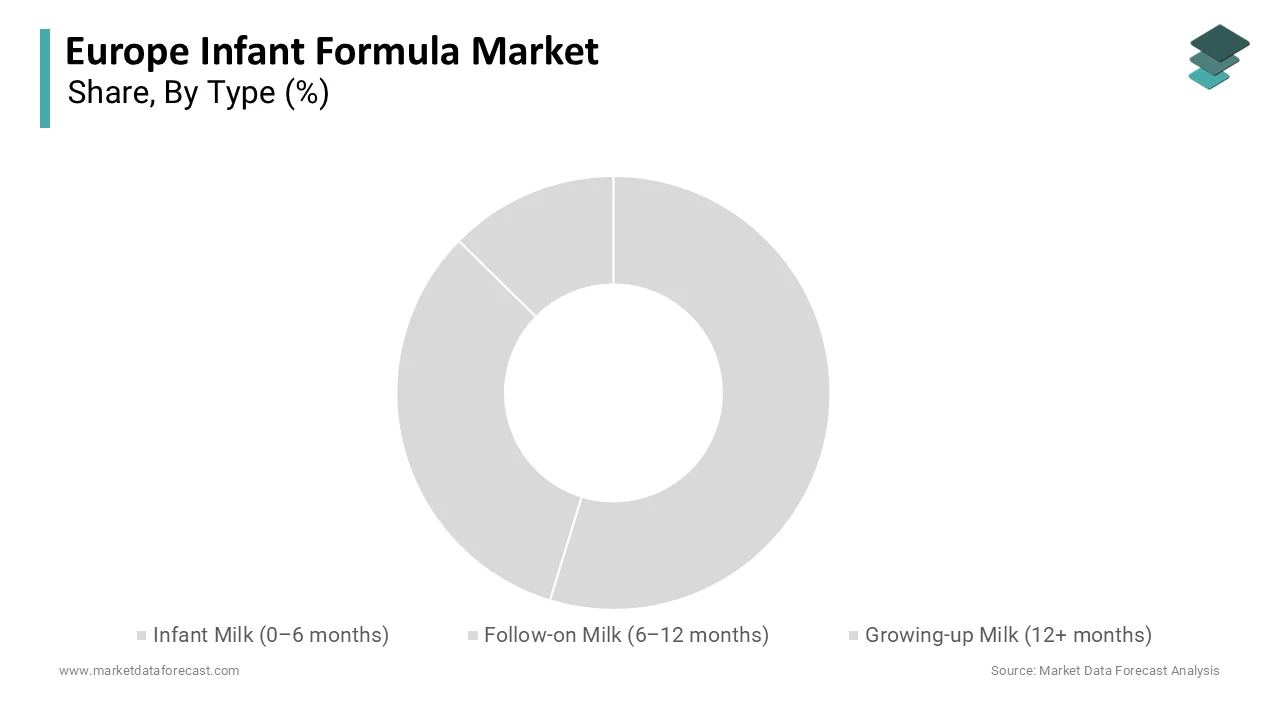
The infant milk segment dominated the market by capturing 46.4% of the European market share in 2025. The dominance of the infant milk segment in the European market is attributed to the absolute physiological necessity of this product category for infants who are not breastfed or require supplementation during their most critical developmental window. The non-negotiable requirement for a complete nutritional source for infants aged zero to six months who cannot be exclusively breastfed is further boosting the dominance of the infant milk segment in the regional market. Unlike supplementary follow-on formulas, infant milk serves as the sole source of nutrition, which creates an inelastic demand curve that is immune to economic fluctuations. According to the European Food Safety Authority, exclusive breastfeeding rates decline significantly within the first few months, necessitating reliance on starter formulas. As per national health registries in Germany and France, many infants receive formula within the first week of life due to perceived low milk supply or medical indications. Furthermore, the high frequency of feeding in the first six months drives significant volume turnover. The strict regulatory definition of infant formula as a standalone foodstuff reinforces its status as an essential commodity rather than a discretionary purchase, securing its dominance as the largest revenue generator in the market landscape.
By Distribution Channel
The hypermarkets and supermarkets segment held the position of the leading distribution channel for the Europe infant formula market in 2025 with 53.9% of the regional market share due to the convenience of one-stop shopping, competitive pricing strategies, and the extensive geographic reach of large retail chains across the continent. The unparalleled convenience they offer to parents who need to purchase infant formula alongside diapers, fresh food, and household essentials in a single trip is further aiding the dominance of the supermarkets and hypermarket segment in the European market. According to the European Retail Round Table, a majority of European households conduct their primary grocery shopping at large format stores, which is making these venues the natural default for recurring purchases like formula. As per consumer spending studies in Spain and Italy, basket sizes for baby care products are larger in hypermarkets compared to smaller formats, driven by promotional bundles and multi-pack offers. Additionally, the widespread presence of these stores in both urban centers and suburban areas ensures accessibility for a vast majority of the population. The integration of loyalty programs that offer points on baby products further incentivizes repeat visits and brand retention. This convergence of convenience, affordability, and accessibility cements the position of hypermarkets as the primary conduit for infant formula distribution.
COUNTRY LEVEL ANALYSIS
Germany Infant Formula Market Analysis
Germany led the infant formula market in Europe in 2025 with 25.5% of the regional market share. The leading position of Germany in the European market is attributed to a robust domestic manufacturing base, stringent quality standards that enjoy global trust, and a high concentration of premium brand headquarters. The German market is characterized by a strong preference for organic and high-quality domestically produced formulas, driven by a culturally ingrained emphasis on food safety and environmental sustainability. According to the Federal Statistical Office of Germany, the country is recognized as the largest producer of organic milk in Europe, providing a secure raw material base for its formula industry. As per the Research Institute of Organic Agriculture, organic infant formula accounts for a significantly higher share of total sales in Germany compared to the European average. The export orientation of German companies also bolsters the domestic market status, as global demand for "Made in Germany" products drives innovation and scale. Furthermore, the comprehensive healthcare system and generous parental leave policies ensure high engagement with pediatric services, where formula recommendations are frequently made.
United Kingdom Infant Formula Market Analysis
The United Kingdom held the second-largest share of the Europe infant formula market in 2025. Factors such as a highly competitive retail landscape, a strong tradition of scientific innovation in nutrition, and a diverse consumer base with varying dietary preferences are primarily driving the UK market expansion. British parents are among the most well-informed in Europe, often relying on independent reviews and clinical data when selecting formula, which drives manufacturers to invest heavily in research and development. As per the Office for National Statistics, the UK maintains high per capita expenditure on infant nutrition, reflecting a willingness to pay for premium and specialized products. Industry reports highlight that the UK leads Europe in the launch of new specialized formulas for allergies and digestive health, catering to a medically aware population. Additionally, the dominance of supermarket chains and the rapid growth of online subscription services create efficient distribution networks that ensure wide availability.
France Infant Formula Market Analysis
France is predicted to account for a promising share of the Europe infant formula market during the forecast period due to its powerful domestic dairy industry and a cultural narrative that strongly links infant nutrition to national agricultural heritage. The French market is unique due to the pharmacy channel influence, where a significant portion of premium and medical formulas are sold through pharmacists who act as trusted advisors, although supermarkets are gaining ground. According to the French Ministry of Agriculture, France is one of the largest milk producers in the EU, ensuring a stable supply of raw materials for formula production. As per consumer surveys, French parents place immense trust in domestic brands, often viewing them as superior to imported alternatives. The government's active promotion of breastfeeding is balanced by a well-established framework for formula use when necessary, supported by reimbursement schemes for medical formulas. Furthermore, the French expertise in dairy processing translates into high-quality powdered and liquid formulas that are exported globally.
Italy Infant Formula Market Analysis
Italy is estimated to showcase a healthy CAGR in the Europe infant formula market over the forecast period. The renowned dairy tradition and a growing focus on organic and natural ingredients to drive consumption are propelling the Italian market growth. The Italian market is characterized by a gradual shift from traditional feeding practices to increased formula usage, driven by changing lifestyle patterns and higher female workforce participation. As per the Italian National Institute of Statistics, employment rates among women with young children have been rising, correlating with increased reliance on commercial formulas for convenience. Industry analysis indicates that the organic segment in Italy is growing faster than the conventional market, fueled by a cultural appreciation for natural foods. The presence of numerous small to medium-sized dairy cooperatives allows for localized production and fresh supply chains, which is a key selling point for Italian parents. Additionally, the public healthcare system provides support for specialized formulas, ensuring access for infants with medical needs.
Spain Infant Formula Market Analysis
Spain is expected to exhibit a notable CAGR in the Europe infant formula market over the forecast period. The Spanish market is characterized by a high sensitivity to price promotion,s yet a growing willingness to adopt premium products among urban demographics. According to the National Statistics Institute of Spain, regional variations and expatriate families contribute to a diverse demand profile. As per the Spanish Association of Pediatrics, awareness of allergy management is increasing, driving growth in the medical formula segment. The warm climate and outdoor lifestyle also influence packaging preferences, with demand for portable and easy-to-prepare formats. Furthermore, Spain serves as a strategic export hub for Latin American markets, influencing local production scales and capabilities.
COMPETITIVE LANDSCAPE
The competition in the Europe infant formula market is characterized by a high degree of consolidation, with a few multinational corporations dominating alongside strong regional cooperatives and niche organic brands. Major competitors differentiate themselves through scientific innovation, specifically in the inclusion of advanced bioactive compounds that claim to support immune function and cognitive development. The market sees intense rivalry in the premium and organic segments, where brand trust and perceived purity are paramount for anxious parents. New entrants face significant barriers due to stringent regulatory requirements and the high cost of establishing credibility with healthcare providers and consumers. Established players leverage their extensive distribution networks spanning pharmacies, supermarkets, and online platforms to ensure maximum availability. The competitive landscape is further shaped by price sensitivity in certain regions versus a willingness to pay premiums for specialized or organic options in others. Companies continuously invest in marketing campaigns that emphasize safety, quality, and scientific backing to maintain consumer confidence. Success in this environment requires a delicate balance between adhering to strict regulations, innovating rapidly, and building deep emotional connections with families through trusted advisory roles and transparent sourcing practices.
KEY MARKET PLAYERS
Some of the companies that are playing a dominating role in the global Europe Infant Formula Market include
- Nestlé S.A.
- Danone S.A.
- Abbott Laboratories
- Reckitt Benckiser Group plc
- FrieslandCampina N.V.
- Arla Foods amba
- HiPP GmbH & Co. Vertrieb KG
- Hero Group AG
- Kraft Heinz Company
- Perrigo Company plc
- Ausnutria B.V.
- Holle Baby Food AG
TOP LEADING PLAYERS IN THE MARKET
- Danone S.A. stands as a global leader in early life nutrition with its specialized division dedicated to infant feeding solutions across Europe. The company contributes significantly to the global market by pioneering research into human milk oligosaccharides and probiotics to mimic breast milk composition. In Europe, Danone leverages strong brands like Aptamil and Blédina to maintain a robust presence in both retail and pharmacy channels. Recent actions to strengthen their market position include substantial investments in organic farming partnerships to secure sustainable milk sources and the launch of new premium formulas featuring advanced bioactive ingredients. The company actively engages with healthcare professionals to promote scientific evidence supporting their products. By focusing on innovation in gut health and immune support, Danone continues to set industry standards while expanding its portfolio of specialized medical nutrition for infants with allergies. Their commitment to sustainability and scientific rigor reinforces trust among European parents and regulators alike.
- Nestlé S.A. operates as a dominant force in the Europe infant formula market through its extensive portfolio under the Nestlé Health Science and BabyNes brands. The company contributes to the global sector by utilizing vast research facilities to develop tailored nutrition solutions that address specific developmental needs of infants. In Europe, Nestlé focuses on high-quality standards and digital engagement to connect with modern parents seeking reliable advice and products. Recent actions to strengthen their market position involve the introduction of innovative packaging technologies that ensure freshness and ease of use for families on the go. They have also expanded their range of organic and hypoallergenic formulas to meet rising consumer demand for clean-label products. Nestlé collaborates closely with pediatricians and nutritionists to validate the efficacy of their formulations. By integrating artificial intelligence into customer service platforms, they provide personalized feeding guidance. This dual focus on scientific advancement and consumer-centric digital tools solidifies their reputation as a trusted partner in infant nutrition throughout the European region.
- FrieslandCampina is a major cooperative based in the Netherlands that plays a pivotal role in the Europe infant formula market by controlling the entire supply chain from farm to finished product. The company contributes to the global market by exporting high-quality dairy-based nutrition derived from its member farms, known for strict quality protocols. In Europe, FrieslandCampina markets brands like Friso and Hero Baby with an emphasis on natural ingredients and traceability. Recent actions to strengthen their market position include the implementation of blockchain technology to offer consumers full transparency regarding the origin of milk used in their formulas. They have also invested heavily in expanding production capacity for organic infant nutrition to cater to the growing eco-conscious demographic. The cooperative model ensures fair prices for farmers while maintaining rigorous safety standards. By launching new product lines focused on sustainable packaging and reduced carbon footprint, FrieslandCampina appeals to environmentally aware parents. Their integrated approach and commitment to quality assurance continue to drive growth and loyalty in the competitive European landscape.
TOP STRATEGIES USED BY KEY MARKET PARTICIPANTS
Key players in the Europe infant formula market primarily employ strategies focused on intensive research and development to innovate formulations that closely replicate the nutritional and immunological profile of human breast milk. Companies are heavily investing in clinical trials to validate the benefits of added bioactive ingredients such as prebiotics and specific protein fractions. Another major strategy involves securing sustainable and organic raw material supplies through direct partnerships with local farmers to ensure quality and meet environmental standards. Market participants are also expanding their digital ecosystems by offering personalized parenting apps and online consultation services to build brand loyalty and trust. Furthermore, firms are diversifying their portfolios to include specialized medical formulas for infants with allergies or metabolic disorders to capture niche, high-value segments. Aggressive marketing campaigns targeting healthcare professionals remain crucial to influence prescribing habits and recommendations. Sustainability initiatives, including carbon-neutral production and eco-friendly packaging, are increasingly used to appeal to conscious consumers.
MARKET SEGMENTATION
This research report on the europe infant formula market is segmented and sub-segmented into the following categories.
By Type
- Infant Milk (0–6 months)
- Follow-on Milk (6–12 months)
- Growing-up Milk (12+ months)
By Distribution Channel
- Hypermarkets & Supermarkets
- Pharmacies & Drugstores
- Online Retail
- Convenience Stores
By Country
- Germany
- United Kingdom
- France
- Italy
- Spain
- Rest of Europe