- Product Description Description
- Table of Contents TOC
- List of Table & Figure LOT
- Get Free Sample PDF Sample PDF
Market Size, 2025
$9.36 BnMarket Estimate, 2026
$9.74 BnMarket Forecast, 2034
$13.41 BnCAGR, 2026–2034
4.08%Executive Summary: Europe Milk Powder Market
- Market Scope: Comprehensive European milk powder industry analysis covering product types (non-fat dry milk), application segments (infant formulas, nutritional formulas), functional roles (emulsification, thickening), regional leadership frameworks, strategic corporate developments, and competitive landscapes.
- Market Valuation: Valued at USD 9.36 billion (2025), estimated at USD 9.74 billion (2026), and projected to reach USD 13.41 billion by 2034, registering a steady CAGR of 4.08% (2026–2034).
- Primary Growth Drivers: Stringent infant formula regulations, advanced food processing functional roles, clean-label natural emulsifiers/thickeners, and fortified dairy ingredients targeting sports nutrition/healthy aging. Restraints include plant-based alternative adoption and EU Green Deal sustainability compliance burdens.
Key Market Segment Metrics (2026–2034)
| Category | Leading Segment / Region (Position) | Fastest-Growing Segment |
|---|---|---|
| By Type & Application | Non-fat dry milk (held largest type share in 2025 as foundational ingredient) & Infant formulas (leading application share; market valued at USD 22.95 billion in 2024) | Nutritional formulas (predicted fastest CAGR due to aging population and preventive healthcare focus) |
| By Function | Emulsification (led function segments in 2025 via casein serving as a natural emulsifier) | Thickening segment (expected to register fastest growth driven by clean-label convenience food demand) |
| By Region / Country | Germany (dominated with 19.1% share in 2025 as EU's largest raw milk producer) & France (captured promising share through cooperatives like Lactalis and Sodiaal) | European processing hubs upgrading spray-drying capabilities for specialized sports and clinical nutrition |
Major Market Players & Market Structure
Market Structure: Highly consolidated European dairy processing and ingredient ecosystem characterized by advanced drying technology investments for emission reductions, blockchain-enabled traceability systems, specialized milk protein fraction research, and clean-label additive-free product rollouts.
Key Companies: Nestlé, Danone, Royal FrieslandCampina N.V., Arla Foods, Lactalis Group, Fonterra, and Saputo.
Europe Milk Powder Market Size
The size of the Europe milk powder market was calculated to be USD 9.36 billion in 2025 and is anticipated to be worth USD 13.41 billion by 2034, from USD 9.74 billion in 2026, growing at a CAGR of 4.08% during the forecast period.
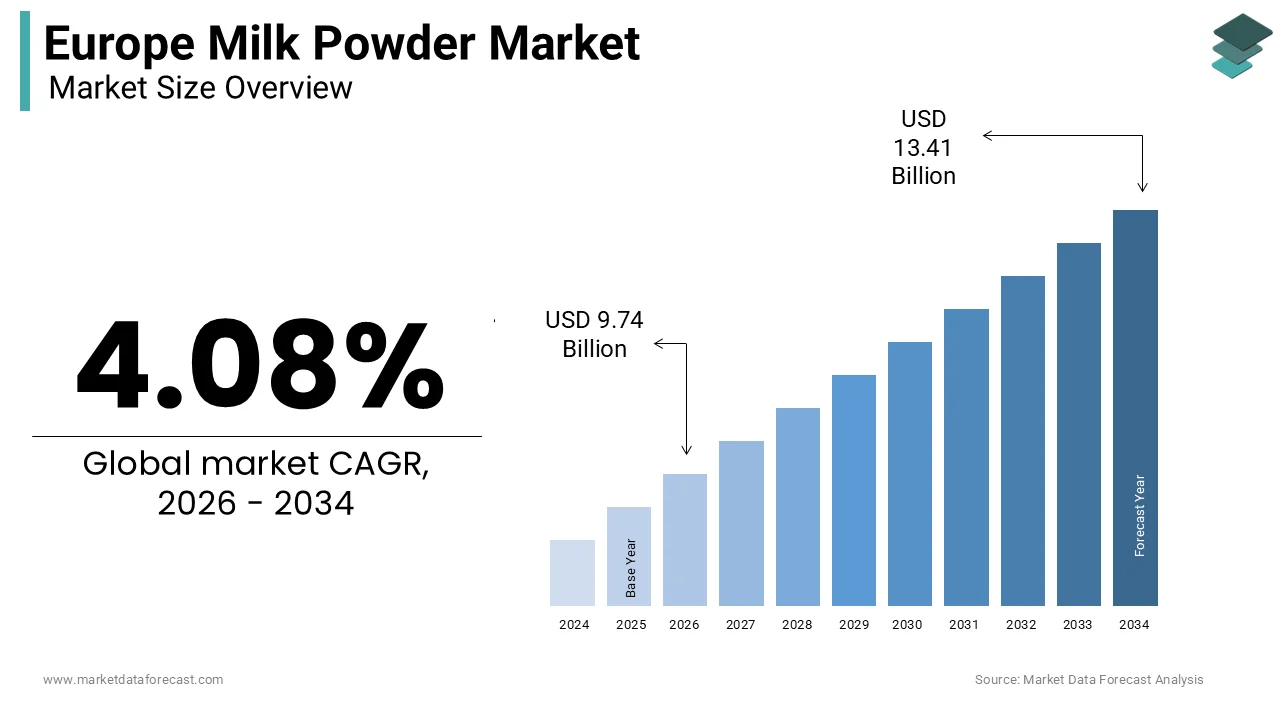
Milk powder is a dehydrated dairy product derived from liquid milk through evaporation and spray drying processes. This category primarily includes whole milk powder and skimmed milk powder, which serve as critical ingredients in a broad spectrum of food, feed, and industrial applications. According to Eurostat, the European Union’s dairy infrastructure processed a substantial volume of raw milk at dairies in 2024 out of the total farm production. As per Eurostat, the EU produced a significant amount of dairy powder products in the same year, utilizing skimmed milk and whole milk as primary inputs. This conversion process is a strategic mechanism for managing seasonal fluctuations in fresh milk supply and ensuring a stable, long shelf-life dairy ingredient for both domestic use and international trade. The market is characterized by its integration within a highly regulated food safety framework and its responsiveness to evolving consumer preferences, technological advancements in dairy processing, and stringent sustainability mandates under the EU Green Deal.
MARKET DRIVERS
A Resilient Demand from the Infant Nutrition Sector
The infant nutrition sector stands as a cornerstone of demand for high-quality milk powder in Europe, which is driven by stringent regulatory standards and persistent demographic pressures, and is one of the major factors propelling the European milk powder market growth. The Commission enforces rigorous compositional and labelling requirements for infant and follow-on formula under Regulation (EU) No 1169/2011 and its delegated acts, mandating specific nutrient profiles that necessitate the use of premium-grade milk powders as a base. This regulatory environment ensures a consistent and non-discretionary demand for specialized dairy ingredients. Furthermore, despite an overall aging population, the need for safe and scientifically formulated infant nutrition remains a constant. According to Eurostat, the EU’s dairy processing industry handled a substantial volume of raw milk in 2024, meeting these exacting standards and providing a reliable domestic supply chain for infant formula manufacturers. The market’s stability is further reinforced by the fact that cow milk allergy affects only a small percentage of children in Europe, leaving a large segment of the infant population reliant on milk powder-based products. This combination of regulatory necessity and a substantial target demographic creates a powerful, inelastic driver for the market.
Strategic Role in the Food Industry and Industrial Applications
Beyond direct human consumption, milk powder serves as an indispensable functional ingredient across Europe’s expansive food manufacturing and industrial sectors, creating a significant and steady demand stream, which is further driving the growth of the European milk powder market. Its properties, including solubility, emulsification, browning, and nutritional fortification, make it a key component in a wide array of products such as baked goods, confectionery, processed meats, and ready meals. The European food industry, one of the world’s largest and most advanced, relies heavily on the consistent quality and year-round availability of milk powder to maintain its complex supply chains and product formulations. According to Eurostat, the EU produced a large volume of dairy powder in 2024, serving not only retail demand but also as a strategic buffer against the inherent seasonality of fresh milk production. This buffer allows food manufacturers to operate with predictable input costs and quality, insulating them from the volatility of the fresh milk market. The industrial demand is therefore less sensitive to short-term consumer trends and more tied to the overall health and output of the European food processing industry, which is a major pillar of the continent’s economy, thereby providing a stable and substantial foundation for the milk powder market.
MARKET RESTRAINTS
Rising Competition from Plant-Based Dairy Alternatives
The Europe milk powder market faces a formidable and growing restraint in the form of rapidly expanding plant-based dairy alternatives, which are capturing significant market share, particularly among younger and health-conscious consumers. According to the European Plant-Based Foods Association, the plant-based milk market generated substantial revenue in 2024 and is projected to grow at a compound annual growth rate of 7.1% through 2030, directly competing with traditional dairy products for consumer preference and shelf space. This shift is fueled by perceived health benefits, environmental concerns, and ethical considerations regarding animal welfare. While the prevalence of lactose intolerance in Europe is relatively low, the narrative around plant-based diets has extended far beyond those with medical necessities. Major retailers and food service providers across the continent are increasingly dedicating more resources to plant-based portfolios, which is creating a powerful marketing and distribution advantage for these alternatives. This trend represents a structural challenge to the traditional dairy industry, as it diverts consumer spending away from milk powder-derived products and forces dairy processors to invest in innovation and marketing to defend their position in a rapidly evolving marketplace.
Stringent Regulatory and Sustainability Compliance Burdens
European milk powder producers operate under an increasingly complex and demanding regulatory environment that imposes significant financial and operational restraints on the market. According to the EU Green Deal and its associated Farm to Fork strategy, ambitious targets have been set for reducing the environmental footprint of the entire food system, placing immense pressure on the dairy sector to lower its greenhouse gas emissions, improve water efficiency, and enhance animal welfare standards. Compliance with these mandates requires substantial capital investment in new technologies, process optimization, and supply chain transparency. Transitioning toward sustainable dairy systems involves costs related to manure management, renewable energy adoption, and precision farming techniques. These compliance burdens increase the cost of production for milk powder, which can erode profit margins, especially for smaller dairies. Furthermore, the regulatory landscape is dynamic, with frequent updates to food safety and compositional standards. As per the European Food Safety Authority, recent amendments to maximum levels for contaminants such as 3-MCPD in infant formula illustrate the evolving requirements. Navigating this intricate web of regulations demands dedicated legal and technical expertise, creating a barrier to entry and a continuous operational challenge that can stifle innovation and limit market agility.
MARKET OPPORTUNITIES
Innovation in Functional and Fortified Dairy Ingredients
The development and commercialization of value-added, functional, and fortified dairy ingredients that cater to evolving health and wellness trends is a notable opportunity for the European milk powder market. Consumers are increasingly seeking foods that offer benefits beyond basic nutrition, such as enhanced immune support, digestive health, and cognitive function. Milk powder, with its rich protein and mineral content, serves as an ideal platform for such innovations. The European dairy industry can leverage its advanced processing capabilities to create specialized powders enriched with probiotics, prebiotics, vitamins, or bioactive peptides. This aligns with the growing sports nutrition and healthy aging markets in Europe, where demand for high-quality protein sources is surging. By moving up the value chain from commodity ingredients to premium functional products, European producers can command higher prices and build stronger brand loyalty. This strategy also allows the industry to differentiate itself from the threat of plant-based alternatives by emphasizing the unique and complete nutritional profile of dairy, thereby transforming a potential weakness into a competitive strength in a health-conscious marketplace.
Expansion into Emerging Export Markets
The European Union exported a significant volume of dairy products in milk equivalent in 2024, which demonstrates its capacity as a global supplier, and this is another considerable opportunity in the European milk powder market. The EU’s established reputation for high-quality and safe dairy products presents a compelling opportunity to expand exports of milk powder to emerging markets with growing middle classes and increasing demand for imported dairy. While traditional export destinations like China and Algeria remain important, new markets in Southeast Asia, the Middle East, and Africa offer significant growth potential. By leveraging its stringent food safety protocols and advanced production standards as a mark of quality, European producers can position their milk powder as a premium ingredient for infant formula, bakery, and confectionery industries in these developing economies. Strategic trade agreements and partnerships can facilitate market access and reduce tariff barriers. This export diversification strategy not only provides a new revenue stream but also helps to balance the EU’s domestic milk production cycles, offering greater stability to the internal market by creating a reliable external outlet for surplus powder production.
MARKET CHALLENGES
Vulnerability to Input Cost Volatility and Food Inflation
The acute vulnerability to fluctuations in input costs and broader food inflation that can severely impact profitability and consumer demand is primarily challenging the expansion of the European milk powder market. The cost of producing milk powder is intrinsically linked to the price of raw milk, which is itself subject to volatility driven by feed costs, energy prices, and weather conditions. According to Eurostat, the annual food inflation rate in the European Union stood at a notable level in December 2025, with dairy products being a contributor to this upward pressure. Items like butter and milk saw price increases faster than other food categories due to extreme weather events affecting agricultural output. This inflationary environment squeezes the margins of dairy processors who may be unable to fully pass on increased costs to price-sensitive consumers or to large food manufacturing clients with significant bargaining power. Consequently, sustained high input costs can lead to reduced production volumes or force producers to seek cheaper, potentially lower-quality alternatives, thereby compromising the market’s reputation for premium products and creating a cycle of economic instability.
Navigating Complex Consumer Sentiment and Dietary Shifts
The European milk powder market is grappling with the profound challenge of shifting consumer sentiment, where traditional dairy is increasingly scrutinized for its environmental impact and ethical implications, leading to a fragmentation of dietary choices. While a complete shift away from dairy is not yet the norm, a growing segment of the population is adopting flexitarian or reducetarian diets, consciously limiting their dairy intake. This cultural shift is amplified by a constant stream of media narratives and advocacy campaigns that question the sustainability of intensive animal agriculture. The market must therefore contend with a more complex and fragmented consumer base, where loyalty to traditional dairy brands can no longer be assumed. Rebuilding trust and demonstrating the sector’s commitment to sustainability, as outlined in various industry roadmaps towards a carbon-neutral future by 2050, is a monumental task. Failure to effectively communicate these efforts and adapt product offerings to align with modern values risks a long-term erosion of market share, as consumers redirect their spending towards alternatives they perceive as more aligned with their personal ethics and environmental concerns.
REPORT COVERAGE
| REPORT METRIC | DETAILS |
| Market Size Available | 2025 to 2034 |
| Base Year | 2025 |
| Forecast Period | 2026 to 2034 |
| CAGR | 4.08% |
| Segments Covered | By Type, Application, Function, And Region |
| Various Analyses Covered | Global, Regional & Country Level Analysis; Segment-Level Analysis; DROC, PESTLE Analysis; Porter’s Five Forces Analysis; Competitive Landscape; Analyst Overview of Investment Opportunities |
| Regions Covered | UK, France, Spain, Germany, Italy, Russia, Sweden, Denmark, Switzerland, Netherlands, Turkey, and the Czech Republic |
| Market Leaders Profiled | Nestle (Switzerland), Danone (France), Lactalis (France), Frieslandcampina (Netherlands), Fonterra (New Zealand), Dean Foods (US), Arla Foods (Denmark), Dairy Farmers of America (US), Kraft Foods (US), and Saputo (Canada) |
SEGMENTAL ANALYSIS
By Type Insights
The non-fat dry milk segment was the dominant segment in the Europe milk powder market and held the largest share of the European market in 2025 due to its extensive use as a foundational ingredient in the food processing industry and its role in managing the EU’s dairy supply chain. According to Eurostat, the EU’s dairy infrastructure processed a substantial volume of raw milk at dairies in 2024, and non-fat dry milk serves as a critical buffer to absorb surplus skimmed milk during peak production seasons. Its long shelf life, ease of transport, and functional properties make it indispensable for manufacturers of baked goods, confectionery, and processed meats. Furthermore, its high protein and calcium content without the fat makes it a preferred choice for nutritional and sports food applications. The stability it provides to the dairy market, by converting a perishable liquid into a storable commodity, underpins its structural dominance within the European context.
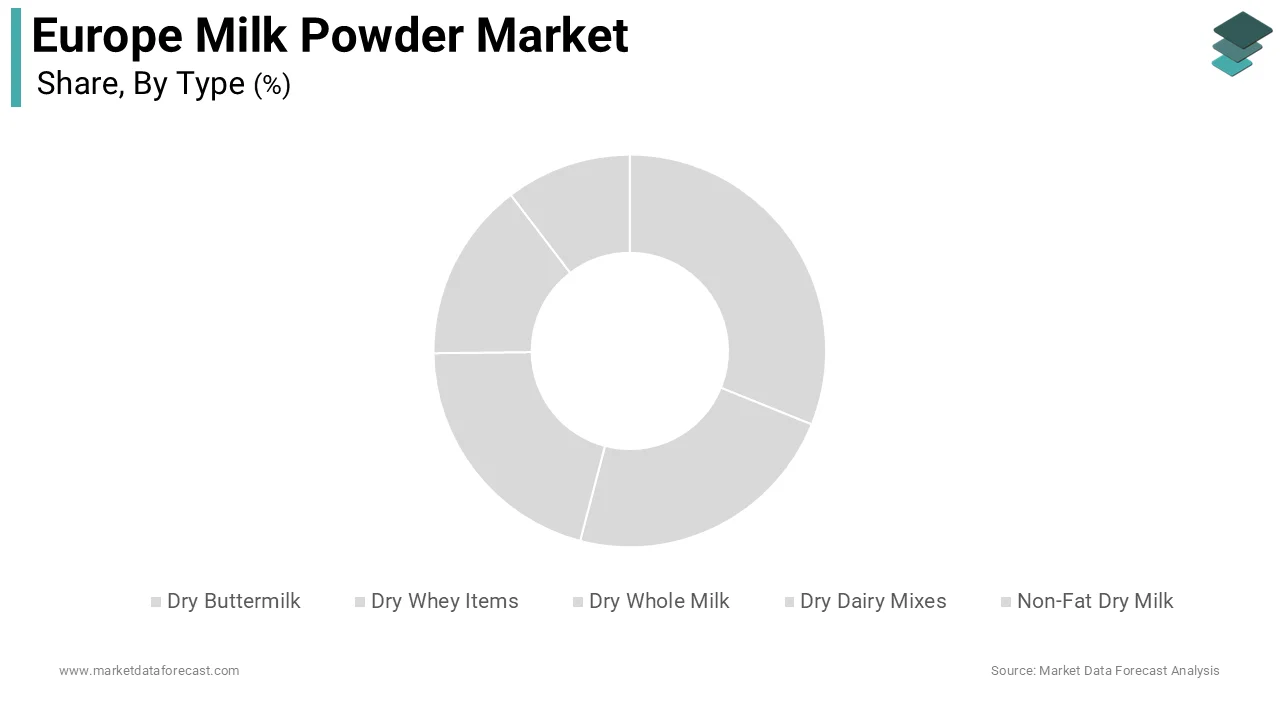
The dry whey products segment is promising and is estimated to record a CAGR of 9.2% over the forecast period. The powerful convergence of health and wellness trends and the versatile functional properties of whey are majorly propelling the growth of the dry whey products segment in this regional market. The rising consumer demand for high-quality protein sources, particularly among fitness enthusiasts and an aging population seeking to maintain muscle mass, has propelled whey into the mainstream. According to the European Dairy Association, the whey protein ingredients market was valued at a significant level in 2025, highlighting the scale of this trend. Beyond direct supplements, whey’s excellent solubility, emulsification, and gelling capabilities make it a valuable ingredient in a wide array of food and beverage applications, from protein-enriched yogurts to bakery items. This dual demand from both the specialized sports nutrition sector and the broader food industry creates a robust and diversified growth engine for the dry whey segment.
By Application Insights
The infant formulas segment commanded the leading share of the European milk powder market in 2025. The growth of the infant formulas segment in the European market can be driven by stringent regulatory frameworks and consistent demographic demand. European regulations mandate that infant and follow-on formulas must be based on cow’s milk or goat’s milk, with specific compositional requirements that necessitate the use of high-quality milk powders as the primary base ingredient. This creates a non-discretionary and stable demand stream that is largely insulated from short-term consumer fads. According to Eurostat, the Europe infant formula milk powder market was valued at USD 22.95 billion in 2024, a testament to its economic significance. The segment’s dominance is further reinforced by the fact that alternative feeding options are limited to a small medical necessity group, as cow milk allergy affects only around 1% of children in Europe. This regulatory and demographic foundation ensures that infant formula remains the single most important application for premium milk powder in the region.
The nutritional formulas segment is predicted to witness the fastest CAGR in the European market during the forecast period, owing to the continent’s rapidly aging population and a heightened focus on preventive healthcare. As the proportion of citizens aged 65 and over continues to rise, there is a corresponding surge in demand for specialized medical and dietary foods designed to address age-related health challenges, such as sarcopenia and malnutrition. These clinical and lifestyle nutritional products rely heavily on milk powder for their complete protein profile and bioavailable nutrients. The demand for clinical nutrition formula milk powder is on the rise across the European region, and this trend is amplified by increasing healthcare costs, which incentivize the use of cost-effective nutritional interventions to manage chronic conditions and support recovery, thereby creating a powerful and sustained tailwind for milk powder in this high-value application.
By Function Insights
The emulsification function segment had the leading share of the European milk powder market in 2025. This is because milk proteins, particularly casein, are exceptional natural emulsifiers that stabilize mixtures of oil and water, a fundamental requirement in countless processed foods. The European food industry, renowned for its sophisticated and diverse product portfolio, relies on this property to create consistent textures and extended shelf lives in products ranging from creamy sauces and salad dressings to processed cheeses and meat emulsions. According to the European Food Information Council, the need for clean-label, natural ingredients has further solidified the position of milk powder over synthetic alternatives, as consumers increasingly seek recognizable components on their food labels. This functional necessity, combined with consumer preference for natural solutions, makes emulsification the cornerstone of milk powder’s industrial utility in Europe.
The thickening function of milk powder segment is expected to register the fastest growth in this regional market during the forecast period due to the rising demand for convenient, ready-to-eat meals and the clean label movement across Europe. Consumers are increasingly seeking quick meal solutions that do not compromise on texture or perceived quality, and milk powder provides a natural and effective means to achieve a rich, creamy mouthfeel without the need for artificial thickeners or stabilizers. Its ability to increase viscosity and provide body is crucial in products like instant soups, sauces, puddings, and dairy-based desserts. According to the European Dairy Association, the shift away from E-numbered additives has made milk powder an attractive alternative for food manufacturers reformulating their products to meet clean-label criteria. This trend is particularly strong in Northern and Western Europe, where consumer awareness of food ingredients is high. The growth in this segment is therefore a direct reflection of the broader market dynamics favoring convenience, naturalness, and sensory quality in processed foods.
REGIONAL ANALYSIS
Germany Milk Powder Market Analysis
Germany dominated the milk powder market in Europe in 2025 with 19.1% of the regional market share. The dominance of Germany in the European market is driven by the status of Germany as the EU’s largest producer of raw cow’s milk and its world-class food processing infrastructure. The country’s vast agricultural output, combined with a highly advanced and integrated dairy industry, provides a stable and efficient supply chain for milk powder production. Germany’s strong confectionery and bakery sectors are major consumers of dairy powders, utilizing them for their functional properties in a wide range of products. The market is characterized by a focus on quality, innovation, and sustainability, with German producers often at the forefront of developing new dairy ingredients. This robust industrial base and its central role in the EU’s dairy economy firmly establish Germany as the market leader.
France Milk Powder Market Analysis
France was a pivotal player in the European milk powder market and captured a promising share of the European milk powder market in 2025. The growth of France in the European market is driven by its highly consolidated dairy industry and its strategic role in the EU’s dairy export framework. The country’s market is led by a few major cooperatives and corporations, such as Lactalis and Sodiaal, which collectively hold a significant share, ensuring a high degree of operational efficiency and market control. France is a key exporter of dairy products, including milk powder, leveraging its reputation for quality to access global markets. The domestic market is also significant, with a strong tradition of dairy consumption and a sophisticated food manufacturing sector that demands high-quality ingredients. The French milk protein market was valued at USD 620.3 million in 2024, indicating a strong foundation for value-added dairy powder products. This combination of export strength and a resilient domestic industry secures France’s position as a top-tier market.
United Kingdom Milk Powder Market Analysis
The United Kingdom maintains a substantial presence in the Europe milk powder market, driven by its large and diverse food and beverage manufacturing sector. The UK’s market is characterized by a high level of innovation and a strong consumer demand for convenience foods, which in turn fuels the need for functional dairy ingredients like milk powder. The country’s extensive bakery, confectionery, and ready-meal industries are major end-users, relying on milk powder for its emulsifying, thickening, and nutritional properties. While the UK’s departure from the EU has introduced new complexities to its trade relationships, its domestic dairy industry remains robust and well-integrated into the national food supply chain. The market continues to adapt to post-Brexit realities while maintaining its focus on meeting the evolving needs of a sophisticated consumer base, ensuring its continued relevance as a key market.
Italy Milk Powder Market Analysis
Italy’s position in the European milk powder market is anchored in its significant dairy production and its unique culinary traditions that increasingly incorporate modern food processing techniques. The country is a major producer of raw milk within the EU, providing a solid foundation for its dairy ingredient sector. While Italy is globally renowned for its artisanal cheeses, its industrial food sector is a substantial consumer of milk powder, particularly for applications in pasta sauces, processed cheeses, and baked goods. The Italian market shows a growing interest in functional and fortified dairy ingredients, aligning with broader European health and wellness trends. This blend of traditional dairy heritage and a dynamic industrial food sector allows Italy to maintain a strong and distinctive market share, contributing significantly to the overall European landscape.
Netherlands Milk Powder Market Analysis
The Netherlands occupies a critical niche in the Europe milk powder market, functioning as a major logistics and trading hub for dairy products across the continent and beyond. Despite its relatively small land area, the country is one of the world’s largest exporters of dairy, with a highly efficient and technologically advanced agricultural sector. Dutch dairy companies are known for their expertise in dairy processing and ingredient innovation, producing a wide range of high-quality milk powders for both domestic and international markets. The Port of Rotterdam serves as a key gateway for the import and export of dairy commodities, reinforcing the Netherlands’ role as a central node in the global dairy supply chain. This strategic advantage in trade and logistics, combined with a strong focus on processing excellence, ensures the Netherlands remains a top-five market in Europe.
COMPETITION OVERVIEW
The competition in the Europe milk powder market is characterized by a mix of large multinational dairy cooperatives and specialized ingredient suppliers vying for dominance across multiple application segments. The market is highly consolidated at the top tier, where established players leverage integrated supply chains, advanced processing infrastructure, and strong regulatory compliance to maintain their positions. Competition is intensifying not only on price but more significantly on product differentiation through nutritional fortification, sustainability credentials, and functional performance. The entry of plant-based alternatives has further pressured traditional dairy companies to innovate and communicate their value proposition more effectively. Regional players are focusing on niche applications while global giants are expanding their export reach. This dynamic environment fosters continuous investment in R&D and strategic collaborations to secure long term market relevance and resilience against shifting consumer preferences and regulatory landscapes.
KEY MARKET PLAYERS
A few major players of the Europe milk powder market include
- Nestle
- Danone
- Lactalis
- Frieslandcampina
- Fonterra
- Dean Foods
- Arla Foods
- Dairy Farmers of America
- Kraft Foods
- Soputo
Top Strategies Used by the Key Market Participants
Key players in the Europe milk powder market are primarily focused on product innovation through the development of functional and clean-label dairy ingredients to cater to evolving health and wellness demands. They are investing heavily in sustainable production practices, including energy-efficient drying technologies and renewable energy integration to comply with the EU Green Deal. Strategic partnerships with food manufacturers and research institutions are being leveraged to co-develop specialized formulations. Companies are also enhancing supply chain transparency using digital tools like blockchain to build consumer trust. Furthermore, expansion of export capabilities to emerging markets is a critical strategy to diversify revenue streams and balance domestic production cycles.
Leading Players in the Europe Milk Powder Market
- Lactalis Group is a global dairy leader with a profound footprint in the European milk powder market. The company leverages its extensive network of production facilities across France and other EU countries to supply a wide range of milk powders for infant nutrition, food service, and industrial applications. In recent years, Lactalis has intensified its focus on sustainability and traceability, investing in advanced drying technologies to reduce energy consumption and carbon emissions. It has also expanded its portfolio of functional dairy ingredients to meet rising demand from health-conscious consumers. These strategic initiatives reinforce its position as a key innovator and reliable supplier in both the European and global dairy ingredient sectors.
- Although headquartered in New Zealand, Fonterra plays a significant role in the Europe milk powder market through its strategic partnerships and ingredient supply agreements with European food manufacturers. The company supplies high-quality whole and skim milk powders primarily for use in nutritional formulations and bakery applications. To strengthen its European presence, Fonterra has prioritized digital transparency and launched blockchain-enabled traceability systems for its dairy ingredients. It has also collaborated with EU-based research institutions to develop specialized milk protein fractions tailored to European regulatory and consumer preferences, thereby deepening its integration into the regional value chain and enhancing its global relevance.
- Arla Foods amba is a major European dairy cooperative with a strong influence on the milk powder segment across Northern and Western Europe. Owned by thousands of farmers, Arla ensures a stable and high-quality raw milk supply that underpins its powder production. The company has recently invested in expanding its spray drying capacity at its German and Danish facilities to meet growing demand for dairy ingredients in sports nutrition and clinical foods. Arla has also launched a series of clean-label milk powders free from additives, aligning with European consumer trends. These actions demonstrate its commitment to innovation and sustainability while reinforcing its role in the global dairy ingredients trade.
MARKET SEGMENTATION
This research report on the Europe milk powder market has been segmented and sub-segmented based on type, application, function, & region.
By Type
- Dry Buttermilk
- Dry Whey Items
- Dry Whole Milk
- Dry Dairy Mixes
- Non-Fat Dry Milk
By Application
- Infant Formula
- Nutritional Formulas
- Confectioneries and Baked
- Sweets And Savouries
By Function
- Foaming
- Emulsification
- Flavouring
- Thickening
By Region
- UK
- France
- Spain
- Germany
- Italy
- Russia
- Sweden
- Denmark
- Switzerland
- Netherlands
- Turkey
- Czech Republic
- Rest of Europe