- Product Description Description
- Table of Contents TOC
- List of Table & Figure LOT
- Get Free Sample PDF Sample PDF
Market Size, 2025
$1.23 BnMarket Estimate, 2026
$1.30 BnMarket Forecast, 2034
$2.02 BnCAGR, 2026–2034
5.68%Europe Intraoperative Neuromonitoring Market Summary
The Europe Intraoperative Neuromonitoring Market is experiencing steady growth, driven by the rising volume of complex spine and neurosurgical procedures, aging populations, and stronger emphasis on surgical safety and neurological preservation. Increasing adoption of multimodal monitoring techniques, integration into national clinical guidelines, and expansion into emerging surgical specialties such as endocrine and head & neck surgery are supporting market growth. However, workforce shortages and reimbursement challenges continue to influence adoption rates across the region.
Market Size & Growth
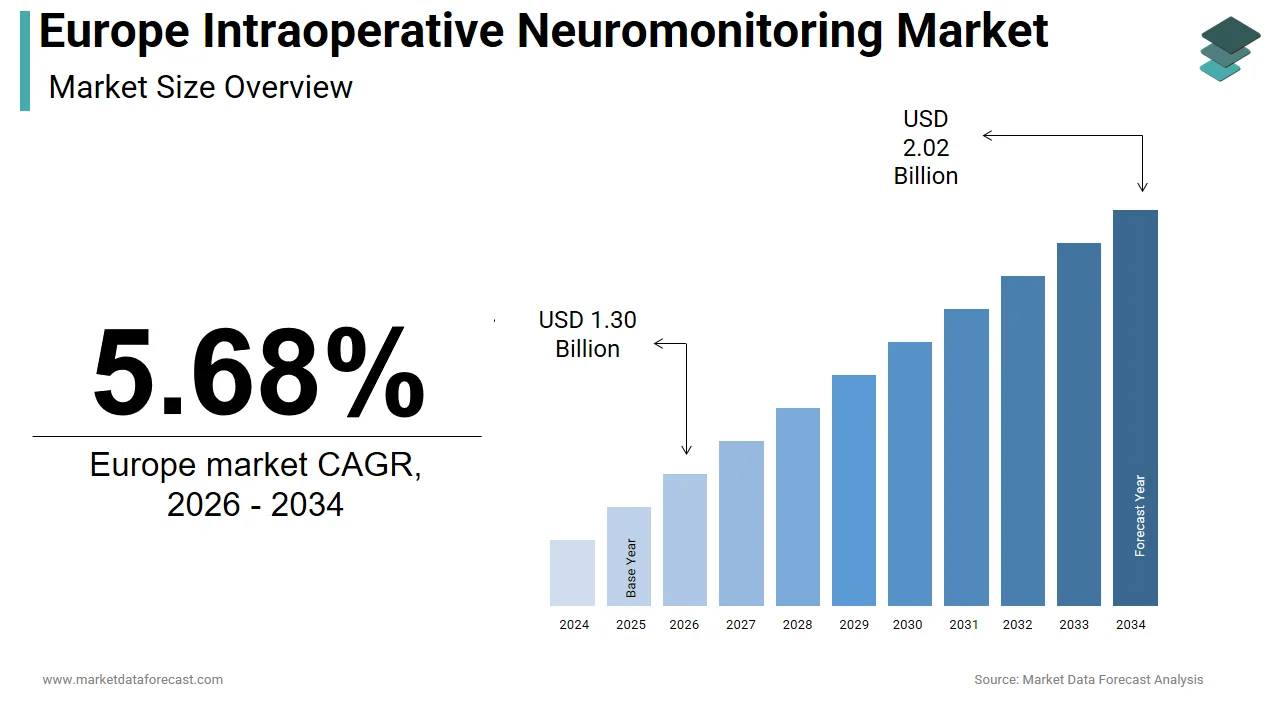
- Valued at USD 1.23 billion in 2025, with projected growth to USD 2.02 billion by 2034.
- CAGR estimated at 5.68% for the 2026 to 2034 period.
Key Drivers
- Complex Surgical Procedures: Rising demand for neuromonitoring in spine, brain, and vascular surgeries.
- Aging Population: Higher incidence of degenerative and cerebrovascular conditions.
- Clinical Guidelines: National frameworks promoting multimodal neuromonitoring for patient safety.
- Digital OR Integration: Advanced surgical workflows embedding neuromonitoring systems.
Leading Segments
- Product: Systems and Services.
- Modality: Motor Evoked Potentials and Electromyography.
- End Users: Hospitals and Ambulatory Surgical Centers.
Key Trends
- Remote & AI-Assisted Monitoring: Growth of tele-neuromonitoring platforms.
- Cross-Specialty Adoption: Expansion into endocrine and head & neck surgeries.
- Workforce Optimization: Increased outsourcing due to staff shortages.
- Regulatory Compliance: Alignment with EU Medical Device Regulation standards.
Major Players
- Medtronic, Nihon Kohden, Cadwell Industries, NuVasive, Inomed Medizintechnik, Natus Medical, Computational Diagnostics.
 Download Free Sample Report
Europe Intraoperative Neuromonitoring Market Size
The size of the Europe intraoperative neuromonitoring market was valued at USD 1.23 billion in 2025. This market is expected to grow at a CAGR of 5.68% from 2026 to 2034 and be worth USD 2.02 billion by 2034 from USD 1.30 billion in 2026.
Intraoperative neuromonitoring (IONM) refers to the real-time electrophysiological assessment of neural structures during surgical procedures to minimize iatrogenic injury and preserve neurological function. This technique is standard in high-risk interventions, including spinal fusion, brain tumor resection, and vascular surgeries, where nerve integrity is paramount. As per sources, a large number of spinal surgeries are performed annually across the EU, with a notable share incorporating some form of neuromonitoring. The practice is further institutionalized through national clinical guidelines, which recommend multimodal monitoring for complex cases. Technological integration has advanced significantly, with operating rooms in Sweden, the Netherlands, and France now embedding neuromonitoring systems into digital surgical workflows, enabling synchronized data with navigation and imaging platforms. The rise in degenerative spine and cerebrovascular conditions among aging populations necessitates intraoperative neuromonitoring, which is now considered a vital part of neurosurgical quality assurance across Europe's high-acuity care landscape.
MARKET DRIVERS
Rising Volume of Complex Spine and Neurosurgical Procedures
The expanding caseload of intricate neurosurgical and spinal interventions across the region is a major growth enabler for the Europe intraoperative neuromonitoring market. This is driven by demographic aging and improved diagnostic capabilities. The proportion of individuals in the EU aged 65 and over has been steadily increasing, reflecting a long-term trend of population aging. Also, the number of spinal fusion procedures varies significantly by country, with ongoing efforts to use international registries like Spine Tango to standardize data collection for quality assurance and research. These complex surgeries carry a heightened risk of nerve root or spinal cord injury, making continuous neuromonitoring indispensable. In addition, there is a consensus within the medical community that multimodal neuromonitoring is a critical component of care for high-risk spinal surgeries, such as deformity corrections and intradural tumor resections. Furthermore, the use of intraoperative neuromonitoring is widely recognized by professional bodies like the European Society of Anaesthesiology and Intensive Care as an effective tool for potentially reducing the incidence of neurological deficits in high-risk surgical procedures. This procedural escalation directly fuels sustained demand for skilled monitoring teams and integrated equipment platforms.
Integration of Neuromonitoring into National Surgical Quality and Safety Frameworks
Intraoperative neuromonitoring has become embedded within the region’s healthcare quality infrastructure as national bodies increasingly link its use to surgical accreditation and outcome reporting. This further propels the expansion of the Europe intraoperative neuromonitoring market. European medical training standards increasingly incorporate specialized surgical monitoring into the curriculum for neurosurgical and orthopedic spine practitioners to ensure higher patient safety during complex procedures. National clinical improvement programs in the United Kingdom emphasize the consistent adoption of nerve-tracking technology to reduce surgical complications and standardize care across major spinal centers. Similarly, the German healthcare system utilizes procedural coding and quality frameworks to support the integration of advanced nerve-monitoring techniques within the national hospital reimbursement model. Modern surgical monitoring systems are subject to stringent European safety regulations that categorize them as higher-risk medical devices, requiring rigorous independent assessment before they can be used in operating rooms. These regulatory and institutional mechanisms transform neuromonitoring from a discretionary tool into a non-negotiable element of surgical governance, reinforcing its systematic adoption across public and private hospitals alike.
MARKET RESTRAINTS
Shortage of Certified Intraoperative Neurophysiologists and Technologists
A severe deficit of qualified personnel capable of interpreting complex neurophysiological signals in real time is a major barrier in the Europe intraoperative neuromonitoring market. The European Federation of Clinical Neurophysiology emphasizes a significant disparity between the current number of practicing certified intraoperative neurophysiologists in the EU and the actual demand for their services. Specific EU member states, including Poland, Romania, and Greece, face a particularly severe scarcity of full-time certified intraoperative neurophysiologists. The training pathway remains fragmented. Formal accreditation programs for intraoperative neurophysiology recognized by relevant European boards are available in only a limited number of EU member states. Moreover, the European Working Time Directive restricts on-call hours, limiting availability for emergency or extended cases. Recent reports indicate that hospitals in Southern Europe frequently face the difficult decision to cancel or postpone high-risk spine procedures, a situation often linked to persistent staffing shortages. This human capital constraint not only impedes market penetration but also compromises patient safety despite technological readiness.
Reimbursement Limitations and Fragmented Coverage Policies
Inconsistent and often inadequate reimbursement across European healthcare systems, despite clinical consensus on its value, constrains the expansion of the Europe intraoperative neuromonitoring market. Dedicated procedure codes and full coverage for comprehensive neuromonitoring in spinal surgery are provided by only a limited number of European countries, with others bundling it into global surgical fees without offering incremental payment. In some areas, hospitals must absorb monitoring costs unless complications arise, potentially disincentivizing proactive use. Public health services in some regions reimburse only for specific monitoring modalities in limited cases, excluding applications recommended by guidelines. Underfunded reimbursement reportedly leads a significant percentage of hospitals to outsource monitoring to third-party vendors. This reliance on external vendors can introduce procedural delays and data integration challenges. The absence of harmonized and value-based payment models means neuromonitoring is financially unviable for many Eastern and Southern European facilities, thus restricting equitable patient access and the growth of the market.
MARKET OPPORTUNITIES
Expansion of Remote and AI-Assisted Neuromonitoring Platforms
The emergence of tele-neuromonitoring and artificial intelligence-driven interpretation tools offers a potential opportunity to overcome geographic and human resource barriers in the region, which is expected to boost the growth of the Europe intraoperative neuromonitoring market. Funding has increased for piloting remote intraoperative monitoring networks that link specialized medical professionals in academic centers with hospitals in rural or underserved areas. Companies are deploying cloud-based platforms to transmit real-time surgical data signals from operating rooms to expert monitoring teams in various locations. This signal transmission typically exhibits low latency. Advancements in data analysis have facilitated the development of algorithms trained on extensive datasets to identify critical changes in medical waveforms during surgery. Evaluations across multiple sites indicate these analytical algorithms demonstrate high sensitivity in detecting such changes. These technologies not only extend specialist coverage but also standardize interpretation, reducing inter-operator variability. Regulatory pathways under the EU AI Act further classify such tools as high-risk medical devices, ensuring rigorous validation. This digital leap enables scalable, high-quality neuromonitoring across Europe’s diverse healthcare landscape.
Adoption in Emerging Surgical Specialties Beyond Traditional Neurosurgery
IONM is rapidly expanding into non-traditional domains such as head and neck oncology, thyroid surgery, and peripheral nerve reconstruction, which creates new opportunities for the Europe intraoperative neuromonitoring market. National guidelines in the Netherlands and Sweden now recommend continuous electromyography of the thyroepiglottic muscle during all thyroid and parathyroid procedures, a shift that has increased monitoring utilization in endocrine surgery. Similarly, in head and neck cancer resections, monitoring of cranial nerves VII, IX, and XII preserves swallowing and facial function critical for postoperative quality of life. The European Association of Neurological Surgeons has also endorsed neuromonitoring in complex peripheral nerve tumor removals, where fascicular mapping prevents motor deficit. These cross-specialty applications diversify the user base beyond neurosurgical teams and position neuromonitoring as a universal safeguard in any surgery involving neural structures.
MARKET CHALLENGES
Lack of Standardized Protocols and Interoperability Across Systems
The absence of unified technical and interpretive standards leads to variability in data quality and clinical decision making, which is a persistent obstacle in the Europe intraoperative neuromonitoring market. As per sources, no harmonized protocol exists for stimulus parameters, electrode placement, or alarm thresholds across the EU member states, resulting in inconsistent monitoring practices even within the same country. Furthermore, neuromonitoring devices from major vendors such as Nihon Kohden, Cadwell, and Viking Wave often operate on proprietary software that does not integrate with hospital information systems or surgical navigation platforms. Many neurosurgical centers still manually enter physiological data into electronic health records, which can increase the risk of errors and limit the ability to analyze data retrospectively. While regulations promote device interoperability, progress is slow due to fragmented purchasing and existing infrastructure. The full capabilities of neuromonitoring for predictive analytics and outcome benchmarking in various surgical settings are hindered by a lack of universal data formats and clinical algorithms.
Regulatory and Certification Delays Under the EU Medical Device Regulation
The transition to the European Union Medical Device Regulation 2017 745 has introduced significant approval issues for IONM systems due to heightened clinical evidence requirements and limited notified body capacity, and thereby negatively impacts the expansion of the Europe intraoperative neuromonitoring market. According to European Commission monitoring, only a minority of legacy neurological monitoring systems have successfully transitioned to the new Medical Device Regulation, leaving a significant portion of the market reliant on extended transitional periods. Manufacturers of neuromonitoring technology continue to encounter substantial multi-year delays in the recertification process, primarily due to the rigorous documentation requirements of the new regulatory framework. Prominent certification organizations like TÜV SÜD and BSI are managing extensive application queues for mid-to-high-risk neurological devices, leading to a persistent bottleneck that affects market availability. The slow pace of recertification for legacy monitoring equipment has prompted new European legislative requirements for manufacturers to provide advance notice of potential supply disruptions to prevent clinical shortages. This regulatory congestion forces hospitals to extend the use of older systems beyond their intended lifespans or suspend procurement of next-generation equipment featuring advanced signal processing or wireless capabilities. Moreover, the regulation’s stringent post-market surveillance obligations increase compliance costs, particularly for small and medium enterprises developing niche monitoring modalities. These delays stifle innovation and create uncertainty for healthcare providers planning capital investments, thereby constraining market evolution despite strong clinical demand and technological readiness.
REPORT COVERAGE
| REPORT METRIC | DETAILS |
| Market Size Available | 2025 to 2034 |
| Base Year | 2025 |
| Forecast Period | 2026 to 2034 |
| Segments Covered | By Product, Source, Modality, Application, End User, and Region. |
| Various Analyses Covered | Global, Regional, and Country-Level Analysis, Segment-Level Analysis, Drivers, Restraints, Opportunities, Challenges; PESTLE Analysis; Porter’s Five Forces Analysis, Competitive Landscape, Analyst Overview of Investment Opportunities |
| Countries Covered | UK, France, Spain, Germany, Italy, Russia, Sweden, Denmark, Switzerland, Netherlands, Turkey, Czech Republic, and the rest of Europe |
| Market Leaders Profiled | Medtronic PLC, Nihon Kohden Corporation, Cadwell Industries Inc, NuVasive, Inc., Inomed Medizintechnik GmbH, Natus Medical Incorporated, Computational Diagnostics, Inc., and Others. |
SEGMENTAL ANALYSIS
By Product Insights
The systems segment led the Europe intraoperative neuromonitoring market in 2024. The leading position of the systems segment is attributed to its foundational role in enabling real-time neural signal acquisition and interpretation during surgery. These integrated platforms combine hardware amplifiers, stimulators, and software interfaces that support multimodal monitoring, including motor evoked potentials, somatosensory evoked potentials, and electromyography. A large majority of high-volume surgical centers specializing in procedures on the spine and brain in Western Europe are using dedicated neuromonitoring systems as standard equipment in their operating rooms. More than ten thousand neuromonitoring systems are currently in active clinical use across hospitals within the European Union. The consistent operational lifespan and subsequent replacement of this equipment are steady factors in ongoing capital procurement for medical facilities. Certain national surgical quality initiatives require the deployment of certified neuromonitoring systems for specific corrective procedures in younger patient populations. The high initial investment and clinical indispensability of these platforms ensure systems remain the dominant product category.
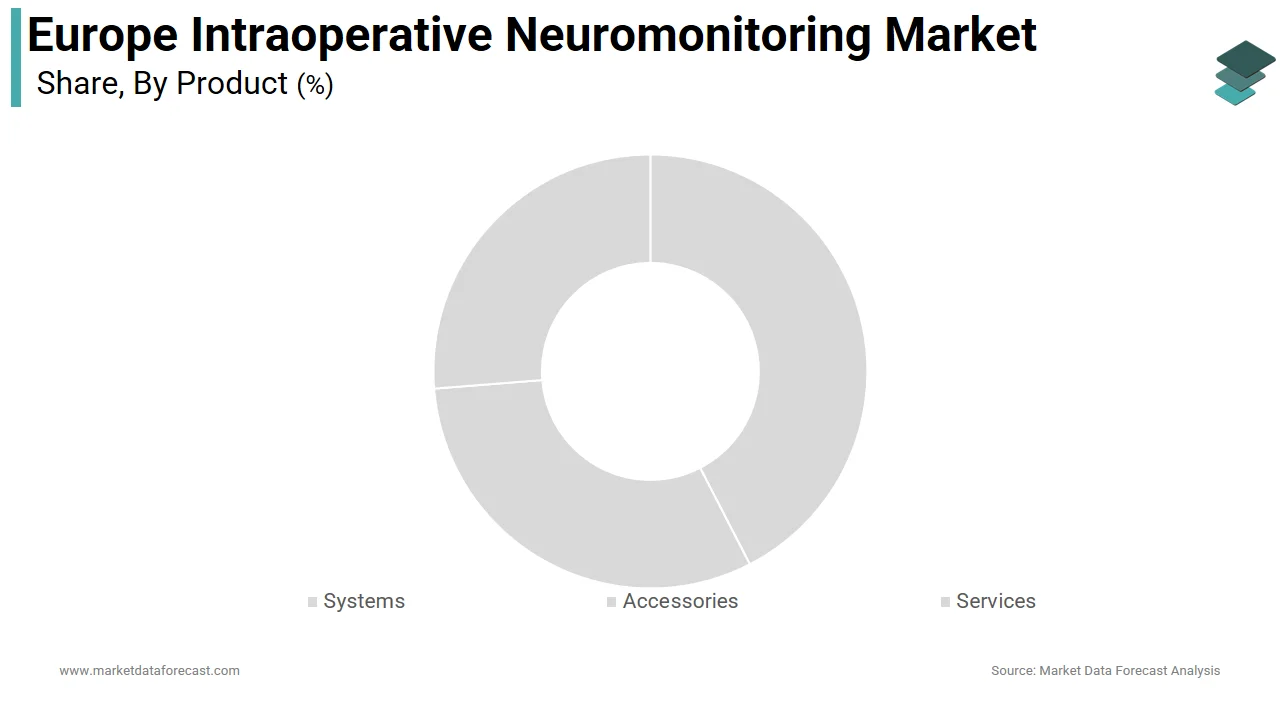
The services segment is predicted to witness the highest CAGR of 9.3% from 2025 to 2033 due to the increasing outsourcing of monitoring interpretation to specialized neurophysiology service providers, particularly in regions with acute personnel shortages. A persistent shortage of in-house certified neurophysiology technologists across some Southern and Eastern European hospitals is encouraging a general shift toward utilizing more third-party intraoperative neuromonitoring services. The rise of tele-neuromonitoring has further caused this trend, with cloud-based platforms enabling real-time remote supervision from expert hubs in Germany and the Netherlands. Additionally, ongoing adjustments to national health system policies in Italy and Spain are gradually clarifying the framework for reimbursing professional neuromonitoring services, influencing the adoption rates across accredited medical facilities. Hospitals also benefit from reduced training and staffing burdens while maintaining compliance with surgical safety standards. These structural and economic drivers position services as the most dynamic and rapidly scaling segment in the European neuromonitoring ecosystem.
By Source Insights
The insourced monitoring segment held the majority share in the Europe intraoperative neuromonitoring market in 2024. The supremacy of the insourced monitoring segment is driven by leading academic medical centers in Germany, France, and the Nordic countries that maintain full-time in-house neurophysiology teams. University-affiliated hospitals in Western Europe are increasingly integrating dedicated, physically present intraoperative neurophysiologists to enhance safety during complex, high-risk procedures. The practice is becoming more widespread as clinical guidelines emphasize the value of multimodality monitoring and immediate, in-person expert interpretation. This model ensures seamless integration with surgical workflows, immediate signal interpretation, and direct communication with the surgical team, critical factors in time-sensitive interventions such as brainstem tumor resection or complex spinal deformity correction. National health systems with robust public funding, such as Sweden and Switzerland, prioritize insourcing as part of their surgical excellence frameworks. The use of comprehensive intraoperative neuromonitoring in all pediatric spinal surgeries is considered a best practice in Sweden and is widely implemented to optimize patient safety. Professional organizations globally advocate for these monitoring methods during high-risk spinal procedures. The presence of formal neurophysiology training programs in these countries further sustains a pipeline of qualified personnel, reinforcing the insourced model as the gold standard for high acuity care.
The outsourced monitoring segment is anticipated to witness the fastest CAGR of 10.1% during the forecast period, owing to workforce shortages and cost containment pressures in medium-sized and rural hospitals across Southern and Central Europe. Several countries consistently exhibit a low number of certified professionals in intraoperative neurophysiology per million inhabitants. This scarcity has led to the growth of private neuromonitoring service companies, which are establishing regional centers to provide both on-site and remote monitoring through secure telemedicine links. Regulatory measures support the delivery of these services across national borders, and policy adjustments in certain areas now recognize outsourced monitoring as a billable professional activity, enhancing financial viability. These converging factors transform outsourcing from a gap filler into a scalable and quality-assured delivery model.
By Modality Insights
The motor evoked potentials segment dominated the Europe intraoperative neuromonitoring market in 2024. The dominance of the motor evoked potentials segment is credited to its critical role in preserving motor function during spinal and intracranial surgeries. The use of motor evoked potential monitoring in instrumented spinal fusions has become a well-established practice, particularly for procedures involving the thoracic and lumbar spinal cord, where neurological risk is higher. The modality’s dominance is reinforced by strong clinical evidence. Intraoperative monitoring, including motor evoked potentials, is highly effective for the early detection of potential neurological compromise, allowing for prompt surgical or medical intervention to help prevent permanent postoperative motor deficits. Leading professional societies recommend and widely adopt the use of multimodal intraoperative neuromonitoring during complex spinal procedures, such as spinal deformity corrections, scoliosis surgeries, and intramedullary tumor resections, to enhance patient safety and minimize neurological injury risk. Advanced transcranial stimulation techniques have also improved reliability in anesthetized patients, overcoming historical limitations. Furthermore, integration with robotic surgical systems allows real-time feedback during pedicle screw placement, enhancing precision. These clinical imperatives and technological refinements solidify motor evoked potentials as the cornerstone modality in European neurosurgical practice.
The electromyography segment is likely to experience the fastest CAGR of 11.2% from 2025 to 2033. The rapid growth of the electromyography segment is fuelled by expanding adoption beyond traditional spine surgery into endocrine and craniofacial procedures where nerve integrity is paramount. Large volumes of thyroid procedures are conducted across various regions, with potential concerns regarding nerve preservation during these interventions. Certain jurisdictions have updated their clinical guidelines to favor the use of continuous monitoring techniques during endocrine surgeries. These revised standards aim to mitigate risks associated with nerve damage in both thyroid and parathyroid operations. The implementation of these new recommendations has led to a notable rise in the adoption of specialized electromyography equipment within the surgical community. Refined procedural protocols reflect a broader shift toward integrating advanced technological oversight in standard operative practices. Additionally, electromyography is indispensable in skull base tumor resections to monitor facial vestibulocochlear and hypoglossal nerves, preserving speech, swallowing, and facial expression. Real-time free run and triggered electromyography also guide nerve decompression in peripheral neuropathies. This cross-specialty utility and strong outcome data position electromyography as the most dynamically expanding neuromonitoring modality in Europe.
COUNTRY-LEVEL ANALYSIS
Germany Intraoperative Neuromonitoring Market Analysis
Germany outperformed other players in the Europe intraoperative neuromonitoring market by accounting for a share of 23.6% in 2024. The prominence of the German market is propelled by its world-class neurosurgical infrastructure and stringent surgical quality mandates. The country performs thousands of spinal and intracranial procedures annually, requiring neuromonitoring. All university hospitals and most large private clinics maintain dedicated in-house neurophysiology teams and integrated monitoring systems. Furthermore, Germany hosts major neuromonitoring equipment manufacturers and research centers, driving innovation in multimodal platforms and signal interpretation algorithms. National training programs certified by the German Society of Clinical Neurophysiology ensure a steady supply of qualified personnel. These institutional, technological, and regulatory pillars establish Germany as the undisputed nerve center of Europe’s intraoperative neuromonitoring landscape.
France Intraoperative Neuromonitoring Market Analysis
France was the next prominent country in the Europe intraoperative neuromonitoring market by capturing a 18.9% share in 2024. The growth of the French market is fuelled by centralized healthcare policies that institutionalize neuromonitoring in high-risk surgical pathways. A directive requires the use of neuromonitoring for all pediatric scoliosis corrections and intradural spinal tumor resections within public university hospitals. Moreover, a substantial number of monitored procedures are conducted each year, with notable adoption in centers specializing in head and neck oncology. There is a developing focus on remote neuromonitoring pilot programs, supported by investment allocated to digital surgical technologies that provide remote neurophysiology assistance to rural hospitals. The French Society of Clinical Neurophysiology offers standardized certification ensuring consistent interpretation quality. Additionally, France’s robust medtech ecosystem fosters collaboration between academic hospitals and device innovators, accelerating clinical validation of next-generation monitoring systems. These coordinated policy innovation and training initiatives sustain France’s position as a core market.
United Kingdom Intraoperative Neuromonitoring Market Analysis
The United Kingdom holds a significant position in the intraoperative neuromonitoring market due to national quality frameworks and specialized neurosurgical networks. Also, the UK performs a large number of monitored cases annually, with particularly high adoption in cranial and vascular neurosurgery at centers like the National Hospital for Neurology and Neurosurgery in London. The Royal College of Surgeons includes intraoperative neuromonitoring in its specialty training curriculum, ensuring widespread competency. Despite Brexit, the UK remains aligned with EU Medical Device Regulation standards, facilitating equipment procurement. Recent policy shifts also allow separate billing for professional monitoring services, enhancing financial sustainability for both hospital-employed and outsourced models. These systemic quality controls and professional integration mechanisms ensure the UK maintains a high standard and broad reach in neuromonitoring practice.
Italy Intraoperative Neuromonitoring Market Analysis
Italy is moving ahead steadfastly in the Europe intraoperative neuromonitoring market owing to rising spinal surgery volumes and growing adoption in endocrine and oncological procedures. There is a notable upward trend in the integration of specialized monitoring technologies during spinal surgical procedures. The application of advanced physiological tracking is becoming a standard component in the management of intricate structural corrections. A substantial volume of endocrine surgeries has established a consistent need for laryngeal diagnostic and monitoring tools. Clinical associations are increasingly recognizing the utility of electromyography to enhance safety protocols during thyroid interventions. The regional medical landscape reflects a broader shift toward data-driven intraoperative oversight in complex surgical specialties. While northern regions like Lombardy and Emilia Romagna feature advanced in-house monitoring programs, southern hospitals increasingly rely on outsourced and remote services to overcome staffing gaps. The Ministry of Health’s National Plan for Rare Diseases further supports neuromonitoring in peripheral nerve tumor resections. These regional disparities and policy evolutions position Italy as a high-potential market with accelerating adoption.
Spain Intraoperative Neuromonitoring Market Analysis
Spain is anticipated to expand in the intraoperative neuromonitoring market from 2025 to 2033 due to the progressive integration of neuromonitoring into both public and private surgical networks. Major hospitals in Spain, including prominent centers located in large cities like Madrid, Barcelona, and Valencia, perform a substantial volume of neurosurgical operations and often lead in implementing advanced techniques and training initiatives. These large centers frequently provide extensive training and support, contributing significantly to the national capacity for complex surgical care. Spain has notably expanded neuromonitoring into head and neck oncology, with national guidelines recommending electromyography for all parotid and thyroid surgeries to preserve facial and laryngeal nerve function. The Spanish Agency for Medicines and Health Products enforces strict compliance with the EU Medical Device Regulation, ensuring high equipment standards. Additionally, public-private partnerships under the PERTE Health Initiative have funded digital operating rooms equipped with integrated neuromonitoring and AI-assisted interpretation tools. Despite historical under-resourcing, neuromonitoring is now embedded in Spain’s surgical safety roadmap, reflecting a strategic shift toward quality-driven neurosurgical care across the national health system.
COMPETITIVE LANDSCAPE
Competition in the Europe intraoperative neuromonitoring market is defined by a mix of global medtech leaders and specialized European innovators competing on clinical accuracy, regulatory compliance, and digital integration. The market is highly influenced by the EU Medical Device Regulation, which mandates rigorous clinical evidence and post-market surveillance, favoring established players with robust quality management systems. Differentiation centers on multimodal capability interoperability with hospital information systems and support for remote monitoring, given the chronic shortage of certified neurophysiologists. National surgical guidelines in Germany, France, and the UK further shape adoption by mandating specific modalities for high-risk procedures, creating de facto standards. While large firms like Natus leverage global scale and service networks, regional players such as Inomed excel through deep clinical partnerships and procedure-specific customization. Emerging entrants face high barriers due to certification timelines and the need for extensive clinical validation. This environment fosters continuous innovation in signal analytics workflow efficiency and cross-specialty applications while reinforcing the dominance of players who combine technological excellence with strong regulatory and clinical engagement across Europe’s diverse healthcare ecosystems.
KEY MARKET PLAYERS
The leading companies operating in the Europe intraoperative neuromonitoring include:
- Medtronic
- Nihon Kohden
- Cadwell Industries
- NuVasive
- Inomed Medizintechnik
- Natus Medical
- Computational Diagnostics
TOP PLAYERS IN THE MARKET
- Natus Medical Incorporated is a prominent contributor to the Europe intraoperative neuromonitoring market through its comprehensive portfolio of multimodal monitoring systems, including the Xltek and Nicolet lines. The company provides integrated solutions that support motor evoked potentials, somatosensory evoked potentials, and electromyography across high-volume neurosurgical centers in Germany, France, and the UK. Natus has strengthened its European footprint by enhancing cloud-based data integration capabilities, allowing real-time waveform sharing with remote neurophysiologists. Its innovations reinforce Natus’s global leadership in neurodiagnostic technologies while addressing Europe’s growing demand for interoperable and AI-ready monitoring infrastructure aligned with EU Medical Device Regulation standards.
- Inomed Medizintechnik GmbH is a key European player headquartered in Germany, specializing in high-precision intraoperative neuromonitoring systems for spinal and cranial surgery. The company’s flagship ISIS system is widely adopted in academic hospitals across Central and Northern Europe due to its modular design and real-time multimodal capabilities. Inomed has deepened its market presence by collaborating with European neurosurgical societies to develop standardized monitoring protocols and training curricula. Recently, the company integrated wireless stimulation technology into its platform, reducing setup time and improving sterility during complex procedures. Inomed also participates in EU-funded research initiatives focused on predictive analytics for neurological injury. These efforts position the company as a regional innovator with growing influence in global neuromonitoring standardization and clinical education.
- Cadwell Industries Inc maintains a strong position in the Europe intraoperative neuromonitoring market through its Harmony and Sierra systems, known for user-friendly interfaces and reliable signal acquisition in high-risk surgeries. The company serves hospitals in the UK, Italy, and the Nordic countries with tailored solutions for spine tumors and vascular neurosurgery. Cadwell has recently expanded its tele-neuromonitoring support services, enabling European centers to connect with certified remote interpreters under secure EU data compliance frameworks. Its strategic enhancements demonstrate Cadwell’s commitment to clinical relevance and digital integration while supporting its broader mission to advance accessible neuromonitoring worldwide.
TOP STRATEGIES USED BY THE KEY MARKET PARTICIPANTS
Key players in the Europe intraoperative neuromonitoring market focus on developing multimodal integrated systems that comply with the EU Medical Device Regulation and support real-time data sharing across digital operating rooms. They invest in tele-neuromonitoring infrastructure to address workforce shortages and extend specialist coverage to rural hospitals. Companies collaborate with national neurosurgical and neurophysiology societies to standardize protocols and provide accredited training programs. Innovation in signal processing, artificial intelligence, and wireless stimulation enhances clinical utility and workflow efficiency. Additionally, they expand modality portfolios to include electromyography for endocrine and craniofacial surgeris aligning with evolving surgical indications and reimbursement landscapes across European healthcare systems.
MARKET SEGMENTATION
This Europe intraoperative neuromonitoring market research report is segmented and sub-segmented into the following categories.
By Product
- Systems
- Accessories
- Services
By Source
- Insourced Monitoring
- Outsourced Monitoring
By Modality
- Motor Evoked Potentials
- Somatosensory Evoked Potentials
- Electroencephalography
- Electromyography
- Brainstem Auditory Evoked Potentials
- Visual Evoked Potentials
By Application
- Spinal Surgery
- Neurosurgery
- Vascular Surgery
- ENT Surgery
- Orthopedic Surgery
- Other Surgeries
By End User
- Hospitals
- Ambulatory Surgical Centers
By Country
- UK
- France
- Spain
- Germany
- Italy
- Russia
- Sweden
- Denmark
- Switzerland
- Netherlands
- Turkey
- Czech Republic
- Rest of Europe