- Product Description Description
- Table of Contents TOC
- List of Table & Figure LOT
- Get Free Sample PDF Sample PDF
Europe Knowledge Process Outsourcing Market Size
The Europe Knowledge Process Outsourcing Market was valued at USD 27.09 billion in 2025, is estimated to reach USD 31.93 billion in 2026, and is projected to reach USD 118.81 billion by 2034, growing at a CAGR of 17.85% from 2026 to 2034.
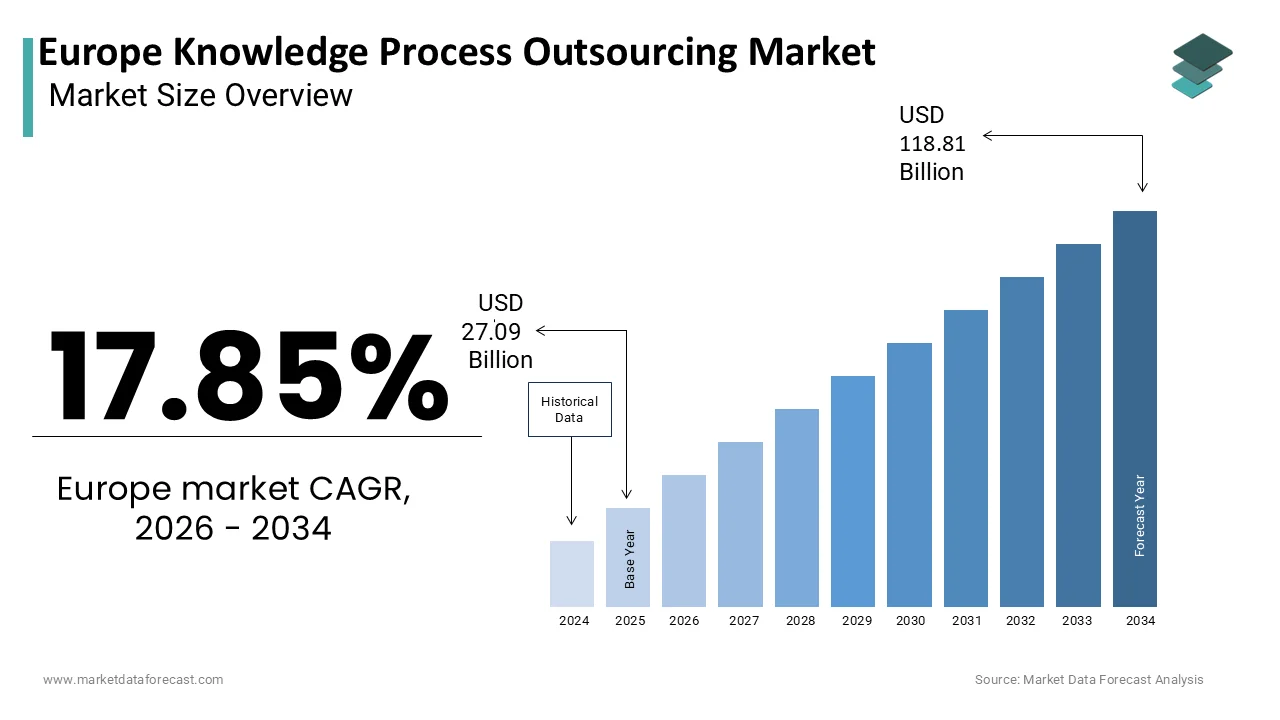
Knowledge Process Outsourcing (KPO) is a business model where companies contract high-level, knowledge-intensive tasks to specialized external service providers, rather than just routine, rule-based operations. Unlike traditional business process outsourcing, which focuses on routine transactional activities, knowledge process outsourcing involves complex analytical research and decision support functions in sectors such as healthcar,e legal service,, financ,e and engineering. This strategic shift allows European enterprises to access specialized talent pool,, enhance operational efficiency, and accelerate innovation without the burden of maintaining large internal teams. According to Eurostat, around 80.1 million people in the EU were employed in science and technology occupations in 2024, representing 36.5% of the total labour force. While women make up less than half of total EU employment, they remain the majority in knowledge-intensive services at 59%, a trend that has been consistent since 2019. As per the European Commission, knowledge-intensive business services account for nearly 50 percent of the total value added by the service sector in the EU highlighting their critical role in economic productivity. The increasing complexity of regulatory frameworks and the rapid pace of technological advancement necessitate continuous upskilling and specialized knowledge, which outsourcing partners provide effectively. The market is characterized by a growing preference for nearshore locations within Eastern Europe due to cultural affinity,time zone alignment, and high educational standards. Digital transformation initiatives across European industries further drive the demand for data analytics, artificial intelligenc,,e and cybersecurity expertise. Hence, organizations are leveraging knowledge process outsourcing to transform raw data into actionable insights thereby gaining a competitive edge in the global marketplace. This evolution signifies a transition from cost arbitrage to value creation through intellectual capital.
MARKET DRIVERS
Acute shortage of specialized domestic talent and skills gap
The persistent shortage of specialized domestic talent and the widening skills gap in key technical and analytical fields drive the growth of the Europe knowledge process outsourcing market. Many European countries face demographic challenges including an aging workforce and a decline in the number of graduates specializing in science technology engineering and mathematics. According to the European Centre for the Development of Vocational Training there is a significant mismatch between the skills possessed by the labor force and the requirements of modern digital economies particularly in areas such as data science and advanced analytics. Demand for AI and Data Science roles in the EU grew by 42% between 2023 and 2025. Cedefop identifies that nearly one-third of all job openings now require "high-level" digital skills, yet only 11% of the workforce currently possesses them, driving up the cost of external consulting. This scarcity drives up labor costs and prolongs recruitment cycles making it difficult for companies to build internal capabilities quickly. Knowledge process outsourcing providers offer immediate access to a global pool of qualified experts who are trained in niche domains. By partnering with these providers European firms can bypass the lengthy hiring process and tap into ready made teams with proven expertise. This flexibility allows organizations to scale their operations up or down based on project requirements without the long term commitment of permanent hires. The ability to access rare skills such as machine learning engineering or regulatory compliance expertise ensures that companies remain competitive. So, the reliance on external knowledge partners becomes a strategic necessity rather than just a cost saving measure. This dynamic sustains the robust demand for knowledge process outsourcing services across the region.
Increasing complexity of regulatory compliance and risk management
The escalating complexity of regulatory compliance and the need for rigorous risk management strategies fuel the expansion of the Europe knowledge process outsourcing market. European businesses operate within a dense framework of laws including the General Data Protection Regulation anti money laundering directives and industry specific mandates that require constant monitoring and interpretation. According to the European Banking Authority financial institutions face increasing pressure to maintain comprehensive compliance records and conduct thorough due diligence which demands specialized legal and analytical expertise. As per the International Association of Compliance Professionals the cost of non compliance can result in severe financial penalties and reputational damage prompting organizations to seek external support. Knowledge process outsourcing providers employ teams of legal experts compliance officers and risk analysts who stay abreast of changing regulations across multiple jurisdictions. These specialists assist companies in navigating complex regulatory landscapes ensuring that business practices adhere to local and international standards. The outsourcing of compliance related tasks such as contract review policy formulation and audit preparation allows internal teams to focus on core strategic initiatives. Furthermore the objective perspective provided by external experts helps identify potential risks that may be overlooked internally. The ability to leverage specialized knowledge for regulatory adherence reduces liability and enhances corporate governance. As regulations continue to evolve and become more stringent the demand for expert guidance through outsourcing arrangements remains strong. This driver ensures sustained growth in sectors such as financial services healthcare and pharmaceuticals where compliance is paramount.
MARKET RESTRAINTS
Data security concerns and privacy regulatory constraints
Concerns regarding data security and the stringent requirements of privacy regulations are major restraints to the growth of the Europe knowledge process outsourcing market. The transfer of sensitive intellectual property and confidential business information to third party providers raises substantial risks related to data breaches and unauthorized access. According to the European Union Agency for Cybersecurity cyberattacks targeting service providers have increased in frequency and sophistication posing a threat to the integrity of outsourced knowledge processes. As per the General Data Protection Regulation organizations are held accountable for the protection of personal data regardless of where it is processed requiring rigorous due diligence and contractual safeguards when engaging outsourcing partners. The complexity of ensuring compliance with cross border data transfer mechanisms such as Standard Contractual Clauses adds administrative burden and legal uncertainty. Many European companies hesitate to outsource high value knowledge tasks due to fears of losing control over proprietary information. The potential for intellectual property theft or leakage discourages innovation driven firms from sharing critical research and development data with external vendors. Additionally the varying levels of cybersecurity infrastructure among outsourcing destinations create inconsistencies in protection standards. Organizations must invest heavily in monitoring and auditing their partners security practices which increases the total cost of engagement. These security and privacy challenges limit the scope of processes that can be safely outsourced. Until trust in data protection measures is fully established some enterprises will retain sensitive knowledge functions in house. This caution restricts market expansion in high security sectors.
Cultural and communication barriers affecting collaboration
Cultural and communication barriers are a notable obstacle to the effective implementation and scalability of KPO initiatives in the region, which limits the expansion of the Europe knowledge process outsourcing market. Knowledge intensive tasks require close collaboration frequent feedback and nuanced understanding of business context which can be hindered by differences in language work ethics and business practices. According to the Harvard Business Review Analytic Services misalignment in communication styles and expectations often leads to misunderstandings delays and reduced quality of deliverables in outsourcing relationships. As per the European Institute for International Business Studies cultural distance between European clients and offshore providers can impede the transfer of tacit knowledge which is crucial for complex analytical projects. Differences in time zones further complicate real time collaboration making it difficult to resolve issues promptly. Language proficiency variations may result in inaccuracies in documentation and reporting affecting the reliability of outcomes. Building trust and rapport with remote teams requires significant investment in relationship management and cultural training which many organizations overlook. The lack of shared organizational culture can lead to lower employee engagement and higher turnover rates among outsourcing partners. These interpersonal challenges reduce the efficiency gains expected from outsourcing. Companies often find that the effort required to bridge cultural gaps outweighs the benefits of cost arbitrage. Consequently some firms prefer nearshore or onshore providers despite higher costs to ensure smoother interactions. This preference limits the geographic diversity of the outsourcing market.
MARKET OPPORTUNITIES
Integration of artificial intelligence and advanced analytics
The integration of artificial intelligence and advanced analytics into KPO services creates new paths for expansion and value enhancement in the Europe knowledge process outsourcing market. AI technologies enable the automation of routine analytical tasks allowing human experts to focus on higher order strategic thinking and problem solving. According to the European Commission, the Apply AI Strategy launched in late 2025 is the primary driver for business integration. With the EU AI Act becoming fully applicable in August 2026, demand has surged for "AI Governance Officers" to manage high-risk systems in health and critical infrastructure. As per sources, organizations that leverage AI driven analytics can achieve up to 20 percent improvement in operational efficiency and decision making accuracy. Knowledge process outsourcing providers are increasingly offering hybrid models where algorithms handle data processing and pattern recognition while skilled analysts interpret results and provide strategic recommendations. This synergy enhances the speed and quality of deliverables making outsourcing more attractive to European enterprises. The ability to process vast amounts of unstructured data using natural language processing opens new avenues for market research customer sentiment analysis and competitive intelligence. Providers who invest in AI capabilities can differentiate themselves by offering predictive insights and proactive solutions. The transition from descriptive to prescriptive analytics adds significant value to client engagements. Furthermore the use of AI tools reduces the cost of delivering high quality knowledge services making them accessible to small and medium sized enterprises. This technological evolution transforms the nature of outsourcing from labor arbitrage to innovation partnership. The potential for continuous improvement through machine learning ensures long term client retention.
Expansion into niche, specialized domains and verticals
The expansion of KPO services into niche specialized domains and industry verticals offers significant growth opportunities for providers in the European knowledge process outsourcing market. As businesses seek deeper expertise in specific areas such as biotechnology renewable energy and fintech generalist outsourcing models are becoming less effective. According to the European Federation of Pharmaceutical Industries and Associations the complexity of drug discovery and clinical trials requires highly specialized knowledge that is often scarce internally. As per the European Green Deal the transition to a sustainable economy creates demand for expertise in environmental impact assessment carbon accounting and regulatory compliance. Knowledge process outsourcing providers who develop deep domain expertise in these emerging sectors can command premium pricing and build long term partnerships. Specialized services such as patent analysis clinical data management and sustainability reporting require tailored solutions that generic providers cannot offer. By focusing on vertical specific needs outsourcing firms can deliver higher value and become strategic partners rather than mere vendors. The growing importance of intellectual property management in innovation driven industries also drives demand for specialized legal and technical support. Providers who invest in training and certification for niche skills can capture a loyal customer base. This specialization reduces competition from low cost generalist providers. The ability to address unique industry challenges positions outsourcing as a critical enabler of business strategy. This trend towards specialization ensures diversified revenue streams and resilience.
MARKET CHALLENGES
Retention of top talent and high attrition rates in provider nations
The challenge of retaining top talent and managing high attrition rates in key outsourcing destination countries poses a significant threat to the stability and quality of KPO services in the region, which negatively impacts the expansion of the Europe knowledge process outsourcing market. As the global demand for skilled professionals increases competition for talent intensifies leading to frequent job hopping and salary inflation. According to Sourcefit's 2026 Comparison, the Philippines consistently reports lower attrition (15–25%) for dedicated long-term teams compared to India's major hubs (30–50%). This disparity is driven by India's highly competitive market and frequent salary-based poaching, while Filipino loyalty is bolstered by a stronger cultural emphasis on community. As per the National Association of Software and Service Companies high turnover disrupts project continuity increases training costs and affects the consistency of service delivery. European clients rely on the institutional knowledge and experience of dedicated teams and frequent staff changes undermine this stability. The loss of experienced analysts and researchers results in a decline in quality and requires constant reinvestment in recruitment and onboarding. Providers struggle to maintain career progression paths and engagement levels that compete with local tech giants and startups. This instability makes it difficult for European firms to build long term relationships with specific individuals or teams. The uncertainty regarding team composition affects planning and resource allocation for critical projects. Furthermore the cost savings associated with outsourcing are eroded by the need for continuous training and knowledge transfer. Addressing this challenge requires innovative retention strategies and stronger employer branding by providers. Until attrition rates are stabilized the reliability of outsourcing partnerships remains compromised.
Quality control and standardization of deliverables
Ensuring consistent quality control and standardization of deliverables across diverse outsourcing engagements remains a serious impediment for the Europe knowledge process outsourcing market. Knowledge intensive tasks are often subjective and context-dependent, making it difficult to define uniform quality metrics. According to the International Organization for Standardization variations in interpretation and execution can lead to inconsistencies in output quality affecting decision making processes. As per the European Foundation for Quality Management maintaining high standards requires rigorous monitoring regular audits and continuous feedback loops which add to operational complexity. European clients often face difficulties in aligning the quality expectations of their internal stakeholders with the output provided by external partners. Differences in educational backgrounds and professional experiences among outsourcing teams can result in varied approaches to problem solving and analysis. The lack of standardized frameworks for evaluating knowledge work makes it challenging to measure performance objectively. Inconsistencies in data accuracy analytical depth and report formatting can undermine the credibility of outsourced insights. Clients may need to invest additional resources in reviewing and correcting deliverables reducing the efficiency gains of outsourcing. The absence of universal benchmarks for knowledge processes complicates vendor selection and management. Providers must implement robust quality assurance systems and invest in continuous training to mitigate these risks. However, achieving uniform excellence across large distributed teams remains difficult. This challenge affects client satisfaction and trust in outsourcing models.
REPORT COVERAGE
| REPORT METRIC | DETAILS |
| Market Size Available | 2025 to 2034 |
| Base Year | 2025 |
| Forecast Period | 2026 to 2034 |
| Segments Covered | By Service, End-User Industry, Organization Size, and Region. |
| Various Analyses Covered | Global, Regional and Country-Level Analysis, Segment-Level Analysis, Drivers, Restraints, Opportunities, Challenges; PESTLE Analysis; Porter’s Five Forces Analysis, Competitive Landscape, Analyst Overview of Investment Opportunities |
| Countries Covered | UK, France, Spain, Germany, Italy, Russia, Sweden, Denmark, Switzerland, Netherlands, Turkey, Czech Republic, Rest of Europe |
| Market Leaders Profiled | Accenture plc, Capgemini SE, Cognizant Technology Solutions Corporation, Genpact Limited, Tata Consultancy Services Limited, Infosys Limited, Wipro Limited, HCL Technologies Limited, EXL Service Holdings, Inc., NTT DATA Corporation, IBM Corporation, McKinsey & Company |
SEGMENTAL ANALYSIS
By Service Insights
The data analytics and market intelligence segment led the Europe knowledge process outsourcing market and captured a 35.5% share in 2025. This leading position of the segment is attributed to the exponential growth of data generation across European industries and the critical need for organizations to derive actionable insights to maintain competitive advantage. The ability to transform raw data into strategic intelligence has become a cornerstone of modern business decision making. One of the major drivers of the data analytics and market intelligence segment is the increasing reliance of European enterprises on data driven strategic decision making. In an era characterized by volatility and uncertainty businesses require precise and timely insights to navigate market dynamics effectively. According to the European Commission the amount of data generated globally is expected to reach 175 zettabytes by 2025 with a significant portion originating from European digital interactions. This vast volume of data necessitates specialized analytical capabilities that many organizations lack internally. Research demonstrates that organizations prioritizing data-driven insights are significantly more successful at winning new customers and maintaining long-term loyalty compared to their peers. Knowledge process outsourcing providers offer advanced analytical tools and expertise in machine learning and predictive modeling enabling firms to identify trends forecast demand and optimize strategies. The integration of these insights into core business processes enhances agility and responsiveness. European retailers financial institutions and healthcare providers utilize market intelligence to understand consumer behavior and regulatory changes. The ability to access real time analytics allows for proactive rather than reactive management. This strategic value proposition ensures that data analytics remains the most sought after service in the knowledge process outsourcing landscape. Organizations prioritize this segment to unlock the full potential of their data assets. The widespread adoption of artificial intelligence and machine learning technologies significantly contributes to the leading position of the data analytics and market intelligence segment. These technologies enable the automation of complex analytical tasks and the discovery of patterns that are invisible to human analysts. Knowledge process outsourcing providers leverage these technologies to offer sophisticated services such as sentiment analysis customer segmentation and risk assessment. The use of natural language processing enables the extraction of insights from unstructured data sources such as social media and news articles. This capability is particularly valuable for market intelligence where understanding public opinion and competitor moves is crucial. The scalability of AI driven analytics allows businesses to handle increasing data volumes without proportional increases in cost. Furthermore the continuous improvement of algorithms ensures that insights become more refined over time. European companies are increasingly partnering with outsourcing firms that possess advanced AI capabilities to stay ahead of technological curves. This technological synergy drives the sustained dominance of the data analytics segment. The focus on innovation and efficiency ensures long term growth.
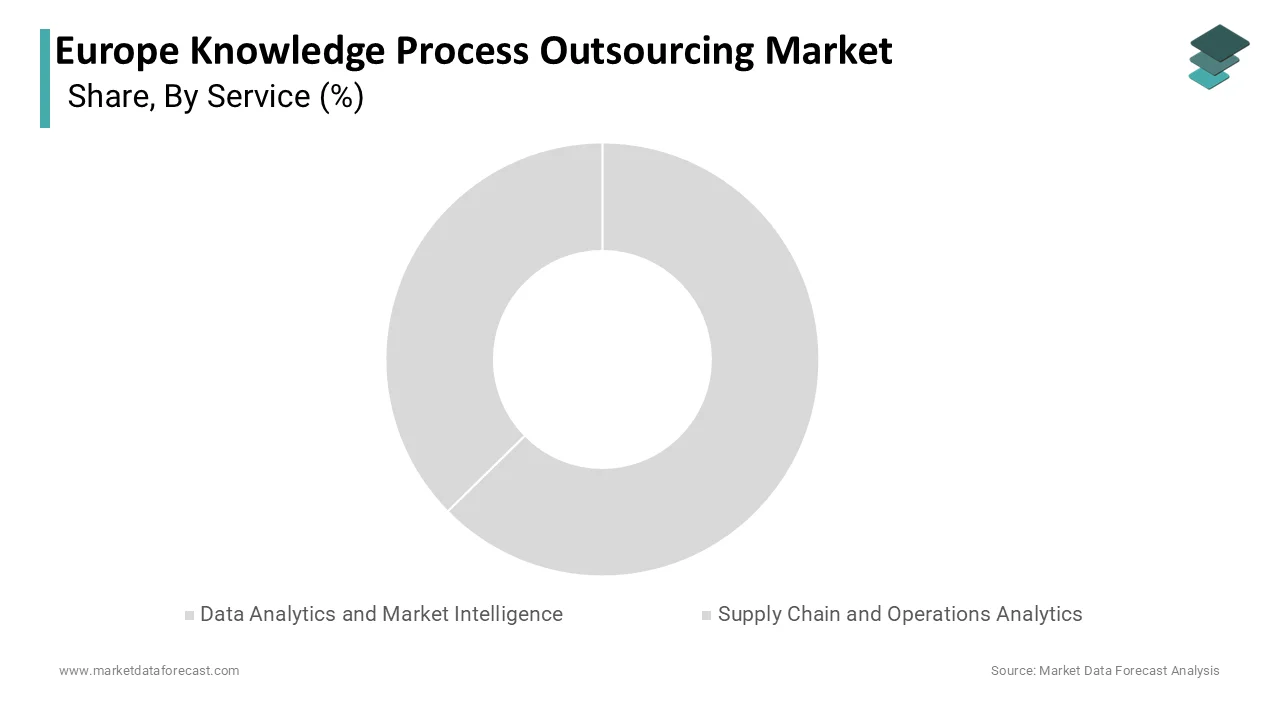
The supply chain and operations analytics segment is on the rise and is expected to be the fastest growing segment in the market by witnessing a CAGR of 14.2% during the forecast period. This rapid growth of the segment is attributed to the increasing complexity of global supply chains and the urgent need for resilience and efficiency in the face of disruptions. The critical need for supply chain resilience and effective risk mitigation is a primary catalyst for the rapid growth of the supply chain and operations analytics segment. Recent global events including pandemics geopolitical tensions and logistical bottlenecks have exposed the vulnerabilities of traditional supply chain models. Findings from major European shipping and logistics monitors reveal that a large majority of businesses have faced notable operational delays in recent years, leading to a fundamental shift in how they manage their supply routes. As per Deloitte organizations are increasingly investing in analytics to enhance visibility and predict potential disruptions before they occur. Knowledge process outsourcing providers offer specialized services in supply chain mapping demand forecasting and inventory optimization using advanced analytical tools. These services enable companies to identify weak points in their networks and develop contingency plans. The ability to simulate various scenarios helps businesses prepare for unexpected events and minimize downtime. European manufacturers and retailers are prioritizing the diversification of suppliers and the optimization of logistics routes which requires detailed data analysis. Outsourcing these complex analytical tasks allows firms to access specialized expertise without the need for extensive internal investment. The focus on building agile and responsive supply chains drives the demand for operational analytics. This strategic imperative ensures that the segment continues to grow at an accelerated pace. The emphasis on continuity and efficiency sustains market momentum. The relentless pursuit of operational efficiency and cost reduction is accelerating the adoption of supply chain and operations analytics services in the Europe knowledge process outsourcing market. In a competitive economic environment businesses are under constant pressure to minimize waste and maximize productivity. Knowledge process outsourcing providers utilize data analytics to identify inefficiencies in procurement production and distribution processes. By analyzing historical data and real time inputs these providers recommend improvements that streamline operations and reduce expenses. The integration of Internet of Things devices with analytics platforms enables real time monitoring of assets and shipments enhancing transparency. European companies are leveraging these insights to negotiate better contracts with suppliers and optimize transportation routes. The ability to make data driven decisions regarding resource allocation leads to significant cost savings. Outsourcing these analytical functions allows organizations to focus on core competencies while benefiting from expert optimization strategies. The tangible financial benefits drive the rapid adoption of these services. This focus on profitability ensures sustained growth for the segment.
By End User Industry Insights
The BFSI (Banking Financial Services and Insurance) segment dominated the Europe knowledge process outsourcing market and accounted for a 30.3% share in 2025. This dominance of the segment is driven by the highly regulated nature of the industry the vast amounts of data processed and the critical need for risk management and compliance expertise. The stringent regulatory compliance and risk management requirements inherent in the BFSI sector are the primary drivers for its dominant position in the knowledge process outsourcing market. European financial institutions operate under a complex web of regulations including the General Data Protection Regulation Anti Money Laundering directives and Basel III standards. These providers employ experts who are well versed in local and international regulations ensuring that institutions remain compliant and avoid hefty penalties. The ability to access specialized legal and compliance knowledge without maintaining large internal teams is a key advantage. Furthermore the need for robust risk management frameworks to assess credit market and operational risks drives the demand for analytical services. Outsourcing providers offer advanced modeling and simulation capabilities that help banks identify and mitigate potential threats. The complexity of financial products and the speed of market changes require continuous monitoring and analysis. This reliance on external expertise for compliance and risk management ensures that the BFSI segment remains the largest consumer of knowledge process outsourcing services. The high stakes involved in financial regulation sustain this demand. The ongoing digital transformation and the focus on enhancing customer experience in the BFSI sector significantly contribute to its leading position in the market. Financial institutions are increasingly adopting digital channels to interact with customers requiring sophisticated data analytics to personalize services and improve engagement. Knowledge process outsourcing providers assist financial institutions in analyzing customer behavior preferences and transaction patterns to create targeted marketing campaigns and product recommendations. The integration of artificial intelligence in customer service through chatbots and virtual assistants also relies on extensive data processing and natural language understanding. Outsourcing these analytical and technological functions allows banks to innovate quickly and respond to changing customer expectations. The need to compete with fintech startups drives traditional banks to adopt agile and data driven approaches. Providers offer expertise in digital strategy user experience design and data management supporting the transformation journey. The focus on retaining customers through superior service quality ensures continued investment in knowledge process outsourcing. This strategic shift towards digital centrality sustains the segment's leadership.
The healthcare and life sciences segment is expected to exhibit a noteworthy CAGR of 15.5% from 2026 to 2034 due to the increasing complexity of medical research the rising demand for personalized medicine and the need for efficient clinical trial management. In addition, the increasing complexity of clinical trials and drug development processes is a primary driver for the rapid growth of the healthcare and life sciences segment in the knowledge process outsourcing market. Developing new pharmaceuticals involves rigorous testing extensive data collection and strict regulatory approval processes that require specialized expertise. Knowledge process outsourcing providers offer services in clinical data management statistical analysis and regulatory submission support helping pharmaceutical companies accelerate development timelines. The ability to access specialized scientific talent and advanced analytical tools without substantial internal investment is a key benefit. Providers assist in designing trial protocols monitoring patient data and ensuring compliance with Good Clinical Practice guidelines. The integration of real world evidence into drug development further increases the demand for data analytics services. Outsourcing these complex tasks allows life sciences companies to focus on innovation and core research activities. The pressure to bring life saving treatments to market quickly drives the adoption of outsourcing solutions. This urgency ensures sustained high growth for the segment. The specialization required supports premium service offerings. The rising demand for personalized medicine and genomics is accelerating the adoption of knowledge process outsourcing services in the healthcare and life sciences sector. Personalized medicine tailors medical treatment to individual characteristics requiring the analysis of vast amounts of genetic and clinical data. Knowledge process outsourcing providers offer specialized services in bioinformatics genomic data analysis and precision medicine strategy. These services enable healthcare providers and pharmaceutical companies to develop targeted therapies that improve patient outcomes and reduce adverse effects. The complexity of interpreting genomic data requires specialized expertise that is often scarce internally. Outsourcing allows organizations to access cutting edge analytical capabilities and stay abreast of scientific advancements. The shift towards value based healthcare also encourages the use of data driven insights to optimize treatment pathways. Providers assist in analyzing real world data to demonstrate the effectiveness of personalized interventions. This focus on precision and efficacy drives the rapid growth of the segment. The potential for improved health outcomes sustains market momentum.
By Organization Size Insights
The large enterprises segment was the largest segment in the Europe knowledge process outsourcing market and occupied a substantial share in 2025. This prominence of the segment is credited to the substantial resources of large organizations their complex operational needs and the strategic imperative to optimize costs and enhance efficiency through specialized external partnerships. A key driver for the dominance of the large enterprises segment is the strategic focus on core competencies and the need for significant cost optimization. Large organizations often operate across multiple geographies and business units creating complex operational structures that require streamlined management. By outsourcing non core but critical functions such as data analytics research and compliance large firms can redirect resources towards innovation and market expansion. The scale of operations allows these enterprises to negotiate favorable contracts with outsourcing providers achieving significant economies of scale. The ability to convert fixed costs into variable costs provides financial flexibility and improves balance sheet performance. Large enterprises also benefit from the global delivery models of outsourcing partners which offer 24/7 support and faster turnaround times. This strategic alignment with business goals ensures that large organizations remain the primary consumers of knowledge process outsourcing services. The continuous pursuit of operational excellence sustains this dominance. The magnitude of their operations drives substantial volume. The need to access specialized talent and advanced technologies significantly contributes to the leading position of large enterprises in the knowledge process outsourcing market. Large organizations often face challenges in recruiting and retaining employees with niche skills in areas such as artificial intelligence data science and regulatory compliance. As per sources, large enterprises are leveraging knowledge process outsourcing to bridge this gap by partnering with providers who possess dedicated teams of experts and state of the art technological infrastructure. This approach allows them to implement advanced solutions quickly without the long lead times associated with internal hiring and training. Outsourcing providers invest heavily in technology and continuous learning ensuring that their clients benefit from the latest innovations. Large firms can thus stay ahead of technological curves and maintain competitive advantages. The ability to scale expertise up or down based on project requirements provides agility in a dynamic market. This access to external intellectual capital is a key driver for large enterprise adoption. The strategic value of specialized knowledge ensures sustained demand. The complexity of their needs favors comprehensive outsourcing solutions.
The small and medium sized enterprises segment is predicted to witness the highest CAGR of 16.8% over the forecast period owing to the increasing availability of affordable outsourcing solutions the democratization of advanced technologies and the need for SMEs to compete with larger rivals. Moreover, the democratization of advanced technologies and the increasing affordability of knowledge process outsourcing services are primary drivers for the rapid growth of the SME segment. Historically high costs limited access to specialized analytical and research services for smaller businesses. However the rise of cloud based platforms and modular service offerings has made these solutions accessible to SMEs. As per research, outsourcing allows SMEs to access enterprise grade tools and expertise at a fraction of the cost of internal development. This level playing field enables smaller firms to compete effectively with larger counterparts by making data driven decisions and optimizing operations. The pay as you go models offered by many outsourcing providers align with the budget constraints of SMEs allowing for flexible scaling. The ease of integration and minimal upfront investment reduces barriers to entry. SMEs are increasingly recognizing the value of outsourcing in enhancing productivity and innovation. This shift in accessibility drives the rapid adoption of knowledge process outsourcing services. The focus on cost effective growth sustains market momentum. The agility of SMEs supports quick adoption. The need for agility and competitive advantage in a rapidly changing market is accelerating the adoption of knowledge process outsourcing among small and medium sized enterprises in Europe. SMEs must respond quickly to market trends customer demands and competitive pressures to survive and thrive. Also, the partnership enables smaller firms to launch new products enter new markets and optimize processes with greater speed and precision. The ability to access specialized knowledge on demand provides a competitive edge that was previously unavailable. Outsourcing providers offer tailored solutions that meet the specific needs of SMEs ensuring relevance and impact. The focus on innovation and differentiation drives SMEs to seek external support for research and development. The collaborative nature of outsourcing relationships fosters knowledge transfer and capacity building within SMEs. This empowerment drives sustained growth in the segment. The strategic imperative for competitiveness ensures long term adoption. The flexibility of outsourcing aligns with SME dynamics.
COUNTRY LEVEL ANALYSIS
United Kingdom Knowledge Process Outsourcing Market Analysis
The United Kingdom was the top performer in the Europe knowledge process outsourcing market and accounted for a 22.6% share in 2025. The country’s dominance is supported by its robust financial services sector strong legal framework and high concentration of multinational corporations seeking specialized knowledge services. Also, the UK is a global hub for banking insurance and professional services which generates substantial demand for knowledge process outsourcing in areas such as risk management compliance and data analytics. According to the Office for National Statistics the financial and insurance activities sector contributes significantly to the UK economy driving the need for efficient and compliant operational support. As per the British Chambers of Commerce UK businesses are increasingly adopting outsourcing strategies to enhance competitiveness and manage costs in a post Brexit environment. The presence of leading global outsourcing providers in London and other major cities facilitates easy access to high quality services. The strong educational system produces a steady stream of graduates with skills in finance law and technology supporting the domestic knowledge economy. The regulatory environment although evolving remains conducive to business operations and data protection. The focus on digital transformation in the UK public and private sectors further boosts demand for analytics and IT related knowledge services. The cultural affinity with major outsourcing destinations such as India and the Philippines enhances collaboration effectiveness. The strategic importance of London as a financial center ensures continuous demand for specialized knowledge support. These factors collectively sustain the UK’s position as the largest market. The emphasis on innovation and efficiency drives growth.
Germany Knowledge Process Outsourcing Market Analysis
Germany was the next prominent country in the Europe knowledge process outsourcing market and held a 18.7% share in 2025. This position of the German market is propelled by its strong manufacturing base engineering expertise and increasing focus on digitalization and Industry 4.0 initiatives. The German industrial sector particularly automotive and machinery manufacturing relies heavily on knowledge process outsourcing for research and development supply chain analytics and engineering support. Besides, the Federal Ministry for Digital Transformation and Government Modernisation has identified the industrial digital shift as a critical national objective, leading to substantial funding for advanced technologies and more efficient production methods. As per Statista, Germany companies are increasingly outsourcing data intensive tasks to leverage external expertise and accelerate innovation cycles. The strong emphasis on quality and precision in German manufacturing necessitates high standard knowledge services. The presence of numerous Mittelstand companies which are often global leaders in niche markets creates diverse demand for specialized knowledge support. The regulatory framework regarding data privacy and labor laws influences outsourcing decisions with a preference for nearshore providers in Eastern Europe. The skilled workforce in Germany complements outsourcing efforts by focusing on core strategic activities. The government’s support for digital infrastructure and smart factory initiatives further stimulates demand for knowledge process outsourcing. The integration of IoT and AI in manufacturing processes requires advanced analytical capabilities often sourced externally. These elements maintain Germany’s strong position in the market. The focus on industrial excellence drives sustained demand.
France Knowledge Process Outsourcing Market Analysis
France holds a significant share in the Europe knowledge process outsourcing market due to its strong pharmaceutical aerospace and luxury goods sectors which require specialized research and analytical support. Moreover, the French healthcare and life sciences sector is a major consumer of knowledge process outsourcing services particularly for clinical trial management and regulatory compliance. According to the Ministry of Labor, Health and Solidarity, the pharmaceutical sector is a vital component of the national economy, necessitating high levels of data accuracy and comprehensive documentation to maintain its leadership position. As per INSEE French companies are increasingly adopting outsourcing to manage complex regulatory requirements and accelerate time to market for new products. The aerospace and defense sectors also contribute to demand through engineering and technical research outsourcing. The strong centralization of business activities in Paris creates a hub for knowledge intensive services. The government’s support for digital innovation and start ups fosters a conducive environment for outsourcing adoption. The cultural emphasis on high quality and intellectual rigor aligns with the value proposition of knowledge process outsourcing. The availability of skilled professionals in mathematics and engineering supports domestic capabilities while outsourcing handles volume and specialized tasks. The regulatory environment encourages data protection and ethical standards influencing vendor selection. The focus on sustainability and green technologies is creating new opportunities for environmental analytics outsourcing. These factors support the continued growth of the market in France. The strategic importance of key industries drives demand.
Netherlands Knowledge Process Outsourcing Market Analysis
The Netherlands is also a key player in the Europe knowledge process outsourcing market owing to its strategic location as a logistics hub strong ICT sector and progressive approach to digital business solutions. Also, the Netherlands is a gateway for international trade and logistics driving demand for supply chain analytics and operations research outsourcing. According to Statistics Netherlands the logistics sector is a major contributor to the economy requiring sophisticated data management and optimization services. As per the Netherlands Enterprise Agency Dutch companies are early adopters of digital technologies and outsourcing solutions to enhance efficiency and global reach. The strong ICT ecosystem in cities like Amsterdam and Eindhoven supports the development and delivery of knowledge process outsourcing services. The high level of English proficiency and international orientation facilitates seamless collaboration with global providers. The regulatory framework is business friendly and supportive of innovation encouraging outsourcing adoption. The focus on sustainability and circular economy principles drives demand for environmental and social governance analytics. The presence of multinational headquarters in the Netherlands creates a concentrated demand for high level strategic support. The collaborative business culture promotes partnerships and knowledge sharing. The investment in digital infrastructure ensures reliable connectivity and data security. These characteristics position the Netherlands as a key market. The emphasis on logistics and ICT drives growth.
Sweden Knowledge Process Outsourcing Market Analysis
Sweden is predicted to grow notably in the Europe knowledge process outsourcing market from 2026 to 2034 due to its advanced digital infrastructure strong innovation culture and leadership in telecommunications and clean technology sectors. In addition, Sweden is a leader in digitalization and innovation driving significant demand for knowledge process outsourcing in research and development and data analytics. According to Statistics Sweden the ICT sector is a major employer and exporter requiring specialized technical and analytical support. As per the Swedish Agency for Economic and Regional Growth Swedish companies are increasingly outsourcing non core knowledge tasks to focus on innovation and product development. The strong emphasis on sustainability and clean technology creates opportunities for environmental analytics and compliance outsourcing. The high level of digital literacy among the population supports the adoption of advanced outsourcing solutions. The regulatory environment is transparent and supportive of business growth encouraging outsourcing partnerships. The proximity to other Nordic countries facilitates regional outsourcing strategies. The focus on work life balance and efficiency drives the adoption of flexible outsourcing models. The strong academic institutions produce a skilled workforce that complements external expertise. The investment in 5G and IoT infrastructure supports data intensive applications. These factors sustain Sweden’s position in the market. The focus on innovation and sustainability drives demand.
COMPETITIVE LANDSCAPE
The competition in the Europe knowledge process outsourcing market is characterized by the presence of large global integrators specialized boutique firms and regional providers who compete on expertise technology and service quality. Global players leverage their scale and broad service portfolios to offer end to end solutions while niche firms differentiate themselves through deep domain knowledge in specific sectors such as pharmaceuticals or finance. The market sees intense rivalry in areas such as data analytics, artificial intelligence integration and regulatory compliance support. Providers are increasingly focusing on value creation rather than just cost arbitrage to retain clients in a mature market. Innovation in delivery models including hybrid and nearshore options, is a key competitive factor addressing client concerns about data sovereignty and communication. Strategic partnerships with technology vendors enable companies to offer advanced tools and platforms that enhance operational efficiency. Talent acquisition and retention remain critical as the demand for skilled analysts and data scientists outstrips supply. Companies that invest in continuous learning and development gain a competitive edge. Regulatory compliance with European data protection laws serves as a significant differentiator. The market is consolidating as larger firms acquire smaller specialists to broaden their capabilities. This dynamic environment drives continuous improvement and benefits clients through enhanced service offerings and technological advancements.
KEY MARKET PLAYERS
Some of the companies that are playing a dominating role in the global Europe Knowledge Process Outsourcing Market include
- Accenture plc
- Capgemini SE
- Cognizant Technology Solutions Corporation
- Genpact Limited
- Tata Consultancy Services Limited
- Infosys Limited
- Wipro Limited
- HCL Technologies Limited
- EXL Service Holdings, Inc.
- NTT DATA Corporation
- IBM Corporation
- McKinsey & Company
TOP LEADING PLAYERS IN THE MARKET
- Genpact is a global leader in digital transformation and knowledge process outsourcing with a significant presence in the European market. The company serves diverse industries including financial services healthcare and manufacturing by providing advanced analytics and artificial intelligence solutions. Genpact contributes to the global market by leveraging its Lean Digital approach to drive operational excellence and innovation for clients. Recent actions to strengthen its market position include strategic acquisitions of specialized data analytics firms to enhance its cognitive capabilities. The company has expanded its delivery centers in Eastern Europe to provide nearshore support that aligns with European time zones and cultural nuances. Genpact actively invests in upskilling its workforce in emerging technologies such as machine learning and robotic process automation. Their focus on industry specific solutions allows them to address complex business challenges effectively. By partnering with leading technology providers Genpact ensures access to cutting edge tools for its clients. This commitment to innovation and client centricity solidifies its reputation as a trusted partner in the knowledge process outsourcing sector.
- Accenture is a dominant force in the Europe knowledge process outsourcing market offering comprehensive consulting and outsourcing services across various sectors. The company plays a crucial role in helping organizations navigate digital transformation through its extensive portfolio of intelligent operations and analytics services. Accenture contributes to the global market by integrating deep industry knowledge with advanced technological capabilities to deliver measurable business outcomes. Recent actions to strengthen its market position include significant investments in cloud based platforms and artificial intelligence studios across Europe. The company has established innovation hubs in key European cities to foster collaboration and co creation with clients. Accenture focuses on sustainability and responsible business practices which resonate strongly with European regulatory standards and consumer expectations. Their ability to scale solutions rapidly enables clients to adapt to changing market conditions efficiently. The firm continuously enhances its talent pool through rigorous training programs in digital skills. By combining strategic insight with execution excellence Accenture maintains its leadership in delivering high value knowledge process outsourcing services. This holistic approach ensures long term partnerships and sustained growth.
- Cognizant is a prominent provider of knowledge process outsourcing services in Europe specializing in IT healthcare and life sciences sectors. The company leverages its domain expertise to deliver tailored solutions that enhance operational efficiency and drive innovation for its clients. Cognizant contributes to the global market by offering end to end services ranging from data management to advanced analytics and decision support. Recent actions to strengthen its market position include the expansion of its digital engineering capabilities and the establishment of new delivery centers in Europe. The company has focused on building strong partnerships with technology vendors to integrate next generation tools into its service offerings. Cognizant emphasizes agile methodologies and customer centric design to ensure rapid deployment and high satisfaction rates. Their investment in cybersecurity and compliance frameworks addresses the stringent regulatory requirements of the European market. The firm actively promotes diversity and inclusion within its workforce fostering a collaborative and innovative culture. By delivering scalable and secure solutions Cognizant supports the digital ambitions of European enterprises. This strategic focus on quality and reliability reinforces its competitive position in the knowledge process outsourcing landscape.
TOP STRATEGIES USED BY THE KEY MARKET PARTICIPANTS
Key players in the Europe knowledge process outsourcing market primarily focus on integrating artificial intelligence and automation to enhance service efficiency and accuracy. Companies are increasingly adopting nearshore delivery models to mitigate risks associated with time zone differences and cultural barriers. Strategic acquisitions of niche analytics firms allow vendors to expand their specialized capabilities and offer comprehensive solutions. Investment in upskilling workforces ensures that employees possess the latest digital and domain specific skills required for complex tasks. Emphasis on data security and compliance with European regulations builds trust and meets legal obligations for sensitive information handling. Partnerships with technology leaders facilitate access to cutting edge tools and platforms for improved service delivery. Customization of services to meet specific industry needs helps differentiate offerings in a competitive landscape. These strategies collectively enable companies to deliver high value and maintain strong client relationships in the evolving market environment.
MARKET SEGMENTATION
This research report on the europe knowledge process outsourcing market is segmented and sub-segmented into the following categories
By Service
- Data Analytics and Market Intelligence
- Supply Chain and Operations Analytics
By End-User Industry
- BFSI (Banking, Financial Services, and Insurance)
- Healthcare and Life Sciences
By Organization Size
- Large Enterprises
- Small and Medium-Sized Enterprises (SMEs)
By Country
- United Kingdom
- Germany
- France
- Netherlands
- Sweden
- Rest of Europe