- Product Description Description
- Table of Contents TOC
- List of Table & Figure LOT
- Get Free Sample PDF Sample PDF
Market Size, 2025
$76.12 MnMarket Estimate, 2026
$82.03 MnMarket Forecast, 2034
$149.26 MnCAGR, 2026–2034
7.77%Executive Summary: Europe Lactoferrin Market
- Market Scope: Comprehensive European lactoferrin market analysis covering functional categories, application segments, regional leadership frameworks, EU Novel Food regulations, and whey-derived bioactive protein extraction trends.
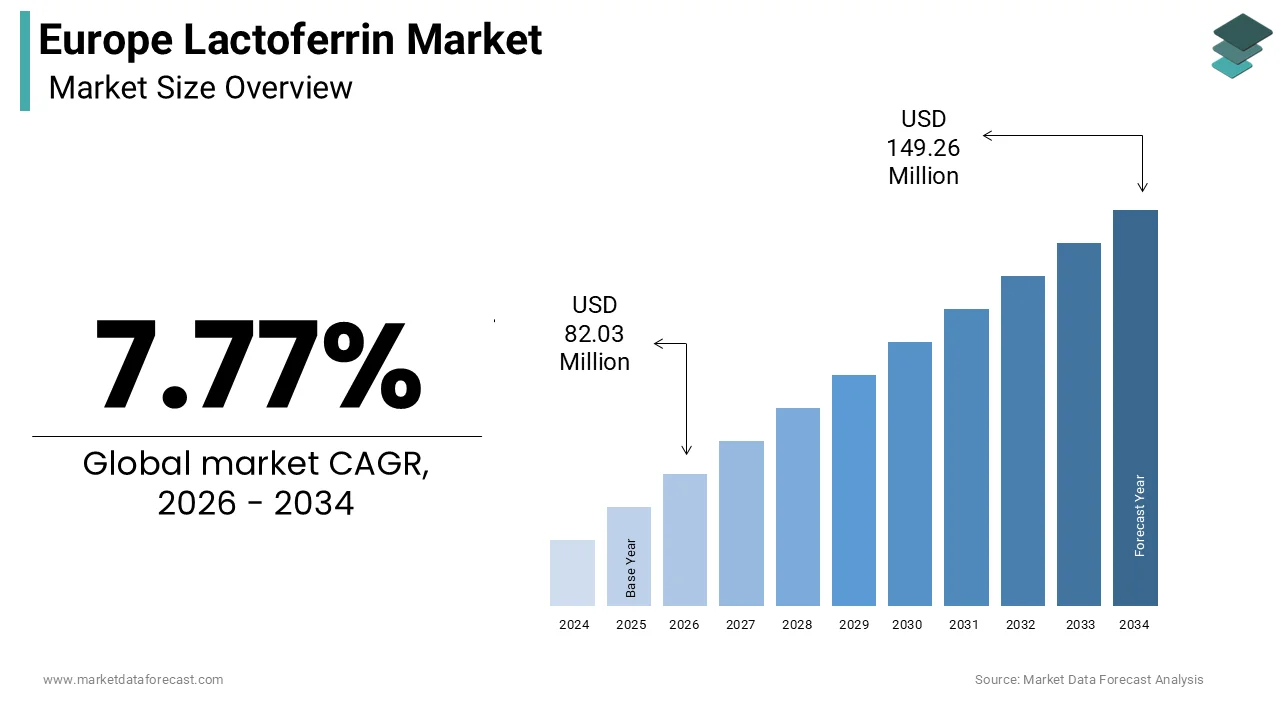
- Market Valuation: Valued at USD 76.12 million (2025), estimated at USD 82.03 million (2026), and projected to reach USD 149.26 million by 2034, registering a robust CAGR of 7.77% (2026–2034).
- Primary Growth Drivers: Rising consumer demand for immune support and gut health solutions, integration into advanced infant and clinical nutrition formulations, and expansion into sports nutrition and active lifestyle products.
Key Market Segment Metrics (2026–2034)
| Category | Leading Segment (2025 Position) | Fastest-Growing Segment |
|---|---|---|
| By Function | Immune Cell Stimulation (led by accounting for a 34.5% share in 2025) | Iron Absorption (anticipated to witness the fastest CAGR of 10.1% from 2026 to 2034) |
| By Application | Infant Formula (largest segment capturing a 42.6% share in 2025) | Sports and Functional Foods (experiencing the fastest CAGR of 11.4% during the forecast period) |
| By Country | Germany (outperformed other countries by occupying a share of 21.3% in 2025) | The Netherlands & Switzerland (expanding advanced extraction hubs and premium clinical/infant nutrition solutions) |
Major Market Players & Market Structure
Market Structure: Highly specialized and quality-driven European market dominated by a select group of dairy ingredient processors competing on extraction purity, iron saturation, rigorous clinical validation, and compliance with the EU Novel Food framework.
Key Companies: FrieslandCampina Ingredients (DMV International), Glanbia Nutritionals, Westland Co-Operative Dairy Co. Ltd, Fonterra Co-Operative Group Ltd, MP Biomedicals, Synlait Milk Ltd, Ingredia SA, Vitalus Nutrition Inc, ProHealth, and Metagenics.
Europe Lactoferrin Market Size
The Europe Lactoferrin Market Size was calculated to be USD 76.12 million in 2025 and is anticipated to be worth USD 149.26 million by 2034, from USD 82.03 million in 2026, growing at a CAGR of 7.77% during the forecast period.
Lactoferrin is an iron-binding glycoprotein naturally present in mammalian milk, particularly bovine and human colostrum, and is recognized for its multifunctional biological properties, including antimicrobial, anti-inflammatory, and immunomodulatory effects. In Europe, lactoferrin is primarily derived from bovine whey, a byproduct of cheese manufacturing, and is utilized across infant nutrition, dietary supplements, clinical nutrition, and functional foods. The regulatory framework in the European Union strictly governs novel foods, with the European Food Safety Authority (EFSA) performing robust safety assessments to ensure that approved compounds can be used safely in specific food categories and at appropriate levels for consumers of various ages. European Union milk production remains substantial, with a significant amount of raw milk processed into various dairy products, which generates considerable whey byproduct streams from which valuable components like lactoferrin can be increasingly extracted. Rising consumer awareness of gut health and immune resilience, amplified by post-pandemic wellness trends, has intensified demand for bioactive ingredients like lactoferrin. Lactoferrin, once a niche dairy derivative, is a high-value functional ingredient integrated into Europe's preventive health and precision nutrition strategies, thanks to strict quality controls, clear traceability, and a growing base of clinical evidence.
MARKET DRIVERS
Rising Consumer Demand for Immune Support and Gut Health Solutions
Heightened public interest in natural immune modulation and digestive wellness is a major driver of the Europe lactoferrin market. European consumers are increasingly focused on preventative health measures and show significant interest in consuming functional foods and supplements that are perceived to support their immune systems. Scientific validation further bolsters credibility. Recent scientific literature includes clinical studies suggesting that bovine lactoferrin supplementation may help in managing symptoms of respiratory tract infections. Market reports indicate a growing commercial interest in the use of lactoferrin as an ingredient in new dietary supplement products across various global and regional markets. The ingredient’s dual role in modulating gut microbiota, by promoting beneficial Bifidobacteria and inhibiting pathogenic E. coli, and enhancing iron absorption, aligns with the EU’s focus on preventive health. Lactoferrin is well-positioned to be a cornerstone of evidence-based immune nutrition, thanks to its natural origin and multifunctionality that aligns perfectly with the consumer shift towards proactive wellness.
Integration into Advanced Infant and Clinical Nutrition Formulations
The incorporation of lactoferrin into specialized medical and infant nutrition products is accelerating demand in regulated health segments, which boosts the expansion of the Europe lactoferrin market. Human milk naturally contains lactoferrin, a vital component that was historically absent or in much lower concentrations in most infant formulas due to the high cost of extraction, but recent advancements have made the addition of bovine lactoferrin more feasible for commercial use. The European Society for Paediatric Gastroenterology, Hepatology and Nutrition published a position paper on enteral nutrition for preterm infants in 2022 that considered extensive recent literature regarding various nutritional components, including potential benefits of some additives, but a definitive, widespread endorsement for lactoferrin in all formulas for specific outcomes is not clearly established in the available guidelines. Major pediatric nutrition companies are increasingly reformulating their high-end infant formulas to incorporate lactoferrin, aligning the formulas more closely with the composition of human milk. Similarly, clinical nutrition providers use lactoferrin in enteral formulas for elderly and immunocompromised patients to mitigate infection risks during hospitalization. Clinical nutrition portfolios in Northern Europe are increasingly incorporating lactoferrin as a functional ingredient to support patient health. Regulatory acceptance under the Novel Food framework ensures safe use, while clinical outcomes drive premium positioning in high-career nutrition markets.
MARKET RESTRAINTS
Stringent Regulatory Classification and Novel Food Authorization Hurdles
The regulatory status of lactoferrin as a novel food in the European Union imposes significant barriers to product innovation and market entry. Consequently, this restrains the growth of the Europe lactoferrin market. European safety standards mandate that the use of bovine lactoferrin, though an approved food ingredient, is strictly limited to predefined nutritional and specialized health food products. Introducing lactoferrin into mainstream beverages or everyday snacks requires a lengthy and resource-intensive regulatory approval process to confirm safety for broader consumer use. Complex oversight procedures have led many dairy innovators to pause or cancel the development of new health-focused products containing lactoferrin. Unlike in the United States, where lactoferrin is generally recognized as safe, Europe’s precautionary approach limits commercial flexibility. These regulatory barriers stifle product diversification and discourage small and medium enterprises from entering the market, constraining lactoferrin’s potential beyond narrow therapeutic and infant nutrition segments.
Limited and Inconsistent Supply of High-Purity Bovine Lactoferrin
Persistent supply constraints due to the low natural concentration of the protein in bovine whey and the technical complexity of purification impede the expansion of the Europe lactoferrin market. Lactoferrin constitutes only a portion of total whey protein, requiring processing of thousands of liters of whey to yield one kilogram of high-purity lactoferrin, as per sources. Europe has fewer facilities capable of large-scale lactoferrin extraction, with major production concentrated in the Netherlands, Germany, and France. Leading global dairy processors are significantly increasing their manufacturing capabilities to keep pace with the rising appetite for high-purity bioactive proteins. Prices in the sector remain sensitive to evolving international safety standards and the high operational costs associated with specialized extraction technologies. Furthermore, seasonal fluctuations in milk production, particularly during winter months, reduce raw material availability. The lack of standardized extraction protocols also leads to batch variability in iron saturation and glycosylation patterns, affecting bioactivity. Lack of investment in dedicated lactoferrin production lines and standardized quality benchmarks leaves the market vulnerable to shortages and inconsistent efficacy, which hinders scalability in high-value applications.
MARKET OPPORTUNITIES
Expansion into Sports Nutrition and Active Lifestyle Products
The growing sports nutrition sector in the region is a promising area for the Europe lactoferrin market. This is due to its role in reducing exercise-induced inflammation and supporting iron homeostasis. Iron deficiency affects a significant share of female endurance athletes, according to sources, and lactoferrin’s ability to enhance iron absorption without gastrointestinal side effects makes it a superior alternative to ferrous sulfate. Athletes using lactoferrin are showing improved iron levels and reduced fatigue during tough training, though exact dosage and results vary by study. Capitalizing on this, brands in Germany and the UK launched lactoferrin fortified protein bars and recovery drinks targeting endurance and strength athletes. The market for lactoferrin in sports nutrition is expanding rapidly, with increased product adoption and industry interest. Lactoferrin offers a premium differentiator in performance nutrition formulations, utilizing its dual functionality in immunity and iron management within the expanding European sports nutrition market.
Development of Lactoferrin-Based Medical Devices and Wound Care Applications
Emerging applications of lactoferrin in medical devices and topical formulations introduce lucrative openings beyond oral consumption, which is likely to fuel the expansion of the Europe lactoferrin market. Lactoferrin’s antimicrobial and tissue regenerative properties are being leveraged in advanced wound dressings, oral gels for mucositis, and nasal sprays for viral defense. A novel product designed for addressing a type of chronic wound has received regulatory approval, following trials that indicated a measurable improvement in the healing process compared to the typical approach. Furthermore, a newly introduced application in the form of a spray, containing the same protein along with another natural defense compound, has been made available to support patients dealing with a common side effect of cancer treatment. Significant financial investment has been committed to research and development initiatives focused on integrating this biomaterial into various protective barriers and infection management solutions. The EU's updated Medical Device Regulation (MDR) is enabling the use of bioactive ingredients like lactoferrin in Class IIa and IIb devices, which positions it as a therapeutic agent rather than solely a nutraceutical and opens new regulatory and commercial opportunities in the European medtech sector.
MARKET CHALLENGES
High Production Costs and Economic Viability for Mass Market Applications
The elevated cost of high-purity lactoferrin remains a fundamental challenge to the Europe lactoferrin market. This expense hinders its widespread adoption in mainstream food and beverage categories. High-purity lactoferrin remains a prohibitively expensive ingredient in Europe, effectively preventing its integration into mass-market food products with low profit margins. Even lower-purity lactoferrin variants carry significant price premiums that confine their use primarily to specialized nutritional sectors like infant nutrition and high-end dietary supplements. The high expense stems from multi-step purification processes involving ultrafiltration, ion exchange chromatography, and lyophilization, which require significant energy and specialized equipment. Research indicates that lactoferrin constitutes an extremely small portion of the total value generated from whey processing, which limits the incentive for major dairy producers to significantly expand their production capacity. Lactoferrin's market volume will not equal that of prevalent dairy bioactives like whey protein isolate until more cost-effective extraction methods, such as membrane chromatography or recombinant production, are commercialized.
Scientific and Clinical Evidence Gaps for Specific Health Claims
Insufficient robust clinical data to support specific health claims under the EU Nutrition and Health Claims Regulation, despite promising biological activity, constrains the expansion of the Europe lactoferrin market. The European Food Safety Authority has rejected multiple lactoferrin dossiers due to inadequate human trial evidence, including claims related to immune defense and gut health. Regulatory challenges in the European Union have meant that lactoferrin-related claims have not been authorized by the European Commission, leading manufacturers to use general wording about overall wellness rather than explicitly mentioning the ingredient's specific benefits. This limitation reduces marketing impact and consumer understanding. The majority of existing research on lactoferrin does not meet the rigorous scientific standards for clinical evidence required by the European Food Safety Authority (EFSA), particularly regarding study design and relevance to specific populations. Furthermore, variability in lactoferrin source, purity, and iron saturation across studies complicates meta-analyses. Lactoferrin's commercial potential in the European functional food market will remain untapped without coordinated, industry-funded clinical trials that adhere to EFSA guidelines.
REPORT COVERAGE
| REPORT METRIC | DETAILS |
| Market Size Available | 2025 to 2034 |
| Base Year | 2025 |
| Forecast Period | 2026 to 2034 |
| CAGR | 7.77% |
| Segments Covered | By Function, Application, And Region |
| Various Analyses Covered | Global, Regional & Country Level Analysis; Segment-Level Analysis; DROC, PESTLE Analysis; Porter’s Five Forces Analysis; Competitive Landscape; Analyst Overview of Investment Opportunities |
| Regions Covered | UK, France, Spain, Germany, Italy, Russia, Sweden, Denmark, Switzerland, Netherlands, Turkey, and the Czech Republic |
| Market Leaders Profiled | Glanbia, Westland Co-Operative Dairy Co. Ltd, Fonterra Co-Operative Group Ltd, MP Biomedicals, Synlait Milk Ltd, Ingredia SA, Vitalus Nutrition Inc, ProHealth, and Metagenics |
SEGMENTAL ANALYSIS
By Function Insights
The immune cell stimulation segment led the Europe lactoferrin market by accounting for a 34.5% share in 2025. The leading position of the immune cell stimulation segment is driven by robust scientific evidence demonstrating lactoferrin’s ability to modulate innate immunity by activating natural killer cells, neutrophils, and macrophages. Scientific research has consistently shown that daily lactoferrin supplementation offers benefits in supporting immune function and may help in reducing the occurrence of common respiratory infections in adults. Post-pandemic consumer behavior has amplified this demand. Surveys on consumer behavior indicate a general trend across the European Union where citizens are increasingly mindful of health, including immune support, when making dietary choices, with a strong interest in healthy eating visible across many member states. Leading supplement brands in Sweden and the Netherlands now feature lactoferrin as a core immune ingredient, often combined with zinc and vitamin D. Regulatory acceptance under the Novel Food framework further legitimizes its use in immune support products. Lactoferrin maintains its functional leadership in enhancing immune surveillance, which is vital as Europe's population ages and the burden of chronic diseases increases.
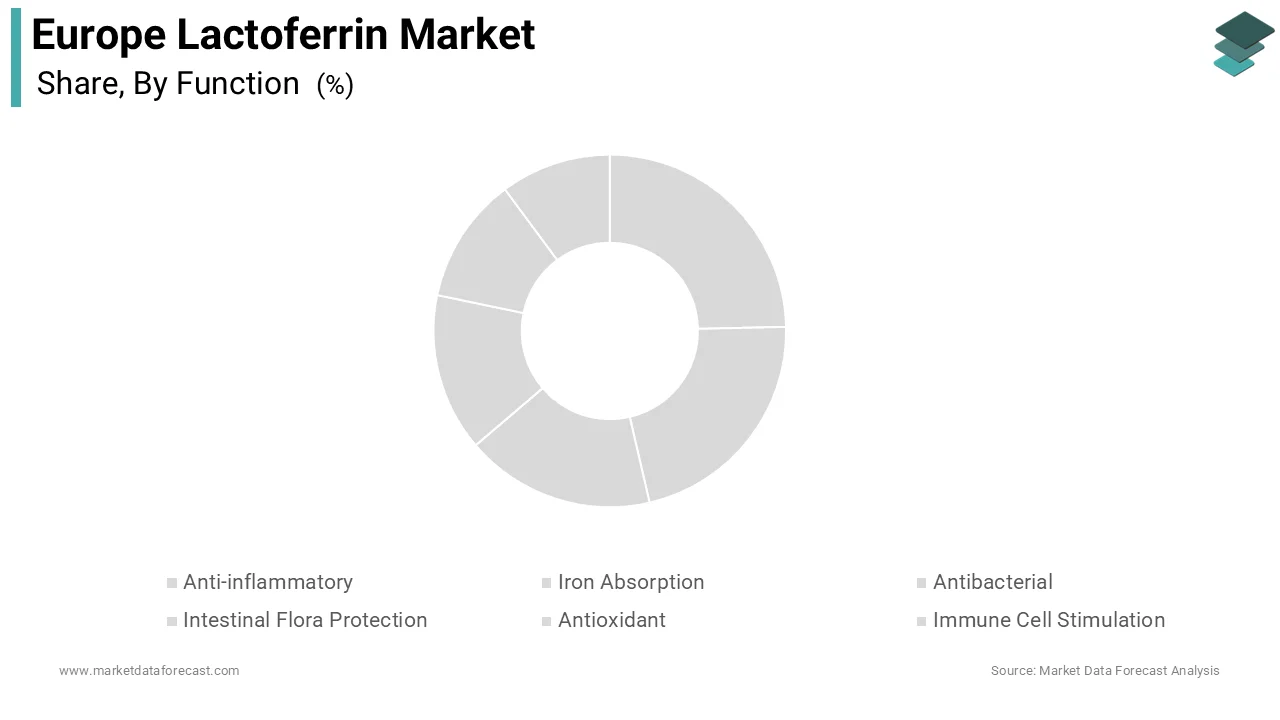
The iron absorption segment is anticipated to witness the fastest CAGR of 10.1% from 2026 to 2034 due to the high prevalence of iron deficiency, particularly among women, children, and the elderly, and lactoferrin’s superior bioavailability compared to conventional iron salts. Iron deficiency affects a portion of women of reproductive age in the EU, and conventional ferrous sulfate often causes gastrointestinal distress, leading to poor compliance. Sports nutrition brands in Germany and France have capitalized on this by launching lactoferrin-fortified recovery products for endurance athletes. Lactoferrin’s well-tolerated, natural iron delivery mechanism is quickly gaining traction in both clinical and consumer health applications, particularly as the EU emphasizes preventive nutrition and reducing reliance on synthetic supplements.
By Application Insights
The infant formula segment was the largest segment of the Europe lactoferrin market by capturing a 42.6% share in 2025. The supremacy of the infant formulation segment is credited to the scientific consensus on lactoferrin’s critical role in neonatal immunity and gut development, mirroring its natural abundance in human breast milk. Recent comprehensive clinical trials and position papers by major pediatric nutrition societies, including the European Society for Paediatric Gastroenterology, Hepatology and Nutrition, have not identified strong evidence supporting the routine inclusion of lactoferrin in preterm infant formulas for preventing severe conditions like necrotizing enterocolitis and late-onset sepsis. Driven by a general consumer interest in immune health ingredients and the desire for formulas that closely resemble human milk composition, several global nutrition ingredient suppliers and formula manufacturers are actively expanding their production of bovine lactoferrin, leading to its increased incorporation into various premium infant formula products worldwide. The EU’s strict Novel Food authorization specifically permits lactoferrin in infant and follow-on formula, providing regulatory clarity absent in other categories. Parents’ willingness to pay premium prices for bioactive-enriched formulas further drives adoption. The high volume of births across the EU and a growing preference for functional nutrition position infant formula as the most critical application for lactoferrin’s market success.
The sports and functional foods segment is likely to experience the fastest CAGR of 11.4% during the forecast period, owing to the convergence of performance nutrition and immune resilience, particularly among endurance athletes and active agers. Iron deficiency affects a notable share of female endurance athletes in Europe, as per research, and lactoferrin offers a well-tolerated solution that enhances iron absorption without gastrointestinal side effects. Consumers are increasingly seeking sports recovery beverages that incorporate specialized bioactive proteins to reduce physical fatigue and improve recovery times. Leading dairy innovators are developing functional, protein-rich snacks that utilize immune-supporting ingredients to meet the wellness needs of active professionals. The European Commission’s Farm to Fork Strategy encourages bioactive ingredients from dairy side streams, aligning lactoferrin with circular economy goals. Consumer demand for multifunctional, clean-label ingredients integrating wellness and performance is expanding the use of lactoferrin in sports and functional foods, moving beyond its traditional roles in clinical and infant nutrition.
REGIONAL ANALYSIS
Germany Lactoferrin Market Analysis
Germany outperformed other countries in the Europe lactoferrin market by occupying a share of 21.3% in 2025. The prominence of the German market is driven by its advanced dairy processing infrastructure, high consumer awareness of functional nutrition, and strong presence of nutraceutical manufacturers. Many new dietary supplement launches in Germany featured lactoferrin, driven by demand for immune and gut health solutions. Germany is also home to leading infant formula producers, which pioneered lactoferrin fortification in premium lines. The nation’s robust sports nutrition sector further amplifies demand, with brands like Multipower integrating lactoferrin into recovery products. Public funding through the Federal Ministry of Education and Research supports clinical validation of dairy bioactives, ensuring scientific credibility. Germany’s combination of industrial capacity, regulatory compliance, and health-conscious consumer base cements its position as Europe’s lactoferrin hub.
France Lactoferrin Market Analysis
France was the next prominent region in the Europe lactoferrin market by accounting for a 16.7% share in 2025. The growth of the French market is attributed to its world-class dairy science and strong infant nutrition industry, with Danone and Lactalis leading lactoferrin fortified formula development. Ongoing research by numerous scientific bodies, including those affiliated with France's National Research Institute for Agriculture, Food and Environment, continues to investigate the properties of lactoferrin. The process for authorizing health claims for lactoferrin in the European Union involves a centralized system managed by the European Food Safety Authority and the European Commission, and this process has not resulted in new approved health claims for general lactoferrin properties in the recent past. Additionally, France’s functional food sector is expanding rapidly, with brands like Yoplait introducing lactoferrin-enriched yogurts for immune support. Government support under the French health innovation plan includes funding for bioactive ingredient extraction from whey, ensuring a sustainable supply. France’s blend of scientific rigor, brand leadership, and regulatory progress sustains its high impact position in the lactoferrin value chain.
Netherlands Lactoferrin Market Analysis
The Netherlands is growing steadily in the Europe lactoferrin market. The country is a global leader in whey processing, with FrieslandCampina and DMV International operating some of Europe’s most advanced lactoferrin extraction facilities. The Netherlands produces a portion of the EU’s high-purity bovine lactoferrin, much of it exported to infant formula manufacturers across Europe and Asia. Dutch research institutions like Wageningen University have pioneered cost-effective purification methods that maintain protein functionality, reducing production costs. The nation also hosts leading clinical nutrition companies that use lactoferrin in medical foods for elderly and immunocompromised patients. Strong alignment with the EU Green Deal, valorizing whey as a circular bioresource, further supports investment. The Netherlands acts as the epicenter for Europe's lactoferrin production and technology, driven by its integrated approach to dairy science, a strong focus on exports, and innovative extraction technologies.
Sweden Lactoferrin Market Analysis
Sweden holds a significant position in the Europe lactoferrin market due to its progressive public health policies, high consumer trust in functional foods, and leadership in clinical validation. A notable share of Swedish households regularly purchase immune-supporting supplements, with lactoferrin featured prominently in brands like Nutri and Arctic Nutrition. Sweden’s strict but clear regulatory environment facilitates novel food innovation, and the government’s initiative funds research on dairy bioactives for preventive health. Additionally, Swedish sports federations recommend lactoferrin for national athletes to combat iron deficiency. This synergy of public health integration, scientific credibility, and consumer acceptance makes Sweden a high-value, early-adopter market for lactoferrin applications.
Switzerland Lactoferrin Market Analysis
Switzerland is anticipated to expand in the Europe lactoferrin market from 2026 to 2034. Despite its small population, the country exerts an outsized influence through its premium nutrition and pharmaceutical sectors. Swiss brands like Emmi and Hochdorf incorporate lactoferrin into high-end infant formulas and clinical nutrition products sold across Europe. Switzerland is also a hub for sports nutrition innovation, with companies like Amacyn developing lactoferrin-based recovery protocols for elite athletes. The Swiss Federal Institute of Technology has published key studies on lactoferrin’s stability during food processing, enabling its use in shelf-stable functional foods. Strict quality standards and consumer willingness to pay premium prices support high-margin applications. Furthermore, Switzerland’s bilateral agreements with the EU ensure seamless regulatory alignment for lactoferrin products. This combination of premium positioning, scientific excellence, and market access sustains Switzerland’s disproportionate role in Europe’s lactoferrin landscape.
COMPETITION OVERVIEW
Competition in the Europe Lactoferrin Market is defined by a small group of specialized dairy ingredient companies that dominate due to technical expertise in extraction and regulatory navigation. FrieslandCampina DMV International and Glanbia lead through integrated supply chains, scientific validation, and application development. The market is highly quality-driven with differentiation based on purity, iron saturation, and functional performance rather than price. Regulatory barriers under the EU Novel Food framework limit new entrants, favoring established players with approved dossiers. Competition also extends to clinical evidence generation as companies seek to support specific health benefits in immune nutrition, sports recovery, and infant health. While infant formula remains the core application, players are aggressively expanding into sports and functional foods to diversify revenue. The limited number of high-capacity extraction facilities in Europe creates supply concentration, reinforcing the advantage of incumbents. Success requires balancing scientific credibility, regulatory compliance, and innovative formulation to meet evolving consumer and clinical demands.
KEY MARKET PLAYERS
A few major players of the Europe lactoferrin market include
- Glanbia
- Westland Co-Operative Dairy Co. Ltd
- Fonterra Co-Operative Group Ltd
- MP Biomedicals
- Synlait Milk Ltd
- Ingredia SA
- Vitalus Nutrition Inc
- ProHealth
- Metagenics
Top Strategies Used by the Key Market Participants
Key players in the Europe Lactoferrin Market invest in advanced purification technologies to ensure high protein purity and bioactivity while maintaining cost efficiency. They pursue full compliance with EU Novel Food and food safety regulations to enable use in infant formula and clinical nutrition. Companies generate clinical and preclinical evidence through academic partnerships to support immune and iron health claims. Strategic integration into functional food and sports nutrition applications expands market reach beyond traditional segments. Additionally, they implement digital traceability systems from the source to the final powder to meet EU transparency and sustainability expectations.
Leading Players in the Europe Lactoferrin Market
- FrieslandCampina Ingredients is a leading supplier of high-purity bovine lactoferrin in Europe, leveraging its integrated dairy supply chain to produce pharmaceutical and food-grade lactoferrin from fresh whey streams. Headquartered in the Netherlands, the company serves infant nutrition, clinical nutrition,n and supplement manufacturers across the EU with lactoferrin that meets stringent ISO and EU Novel Food standards. FrieslandCampina has strengthened its position by investing in advanced chromatography systems that increase yield while preserving protein bioactivity. It also collaborates with European research institutions to generate clinical data supporting lactoferrin’s role in immune health and iron metabolism. Recent upgrades to its production facility in Leeuwarden ensure full traceability from farm to powder, er aligning with EU sustainability and food safety mandates.
- DMV International, a Netherlands-based specialty dairy ingredients company, plays a pivotal role in the Europe lactoferrin market through its proprietary extraction technology and focus on high-purity applications. The company supplies lactoferrin to leading infant formula and pharmaceutical brands requiring >95 percent purity for clinical use. DMV has reinforced its European footprint by achieving full compliance with the EU Novel Food Regulation and implementing blockchain-enabled batch tracking for quality assurance. It also partners with universities in Germany and Belgium to validate lactoferrin’s efficacy in gut barrier protection and antimicrobial activity. These science-driven initiatives position DMV as a trusted source for premium lactoferrin in regulated health segments across the continent.
- Glanbia Nutritionals significantly contributes to the Europe lactoferrin market by integrating the ingredient into functional food and sports nutrition formulations. While headquartered in Ireland, the company operates production and application labs in Germany and the Netherlands to serve European brand owners seeking clean-label immune support solutions. Glanbia has strengthened its position by developing lactoferrin fortified delivery formats, including ready-to-mix powders and encapsulated granules stable in ambient conditions. The innovations enable Glanbia to bridge the gap between dairy science and consumer wellness trends in Europe’s evolving functional food landscape.
MARKET SEGMENTATION
This research report on the Europe lactoferrin market has been segmented and sub-segmented based on function, application, and region.
By Function
- Anti-inflammatory
- Iron Absorption
- Antibacterial
- Intestinal Flora Protection
- Antioxidant
- Immune Cell Stimulation
By Application
- Food and Beverages
- Infant Formula
- Sports and Functional Foods
- Animal Feed
- Pharmaceuticals
- Personal Care
By Region
- UK
- France
- Spain
- Germany
- Italy
- Russia
- Sweden
- Denmark
- Switzerland
- Netherlands
- Turkey
- Czech Republic
- Rest of Europe