- Product Description Description
- Table of Contents TOC
- List of Table & Figure LOT
- Get Free Sample PDF Sample PDF
Market Size, 2025
$0.98 BnMarket Estimate, 2026
$1.03 BnMarket Forecast, 2034
$1.47 BnCAGR, 2026–2034
4.59%Europe Loose-Leaf Tea Market Summary
The Europe loose-leaf tea market was valued at USD 0.98 billion in 2025 and is projected to reach USD 1.47 billion by 2034, growing at a CAGR of 4.59% from 2026 to 2034, driven by premiumization, wellness integration, ethical sourcing, and sustainable packaging adoption across conscious consumer segments.
Market Snapshot
- 2025 Market Size: USD 0.98 Billion
- 2026 Market Size: USD 1.03 Billion
- 2034 Forecast: USD 1.47 Billion
- CAGR (2026–2034): 4.59%
- Base Year: 2025
- Forecast Period: 2026–2034
Quick Growth Drivers
- Rising consumer preference for premium and artisanal tea experiences
- Expansion of herbal and functional wellness blends
- Growth of direct trade and single-estate sourcing models
- Strong anti-plastic sentiment supporting refillable formats
- Increased demand from younger demographics seeking mindful rituals
Principal Restraints
- Strict EU pesticide residue and contaminant regulations
- High price sensitivity compared to mass-market tea bags
- Competition from ready-to-drink and convenience beverages
- Complex import compliance for small-scale tea gardens
High-Value Opportunities
- Direct trade sourcing with blockchain-enabled traceability
- Organic-certified and regenerative agriculture tea portfolios
- Zero-waste retail and refill station expansion
- Subscription-based e-commerce discovery models
- Premium gifting and hospitality channel partnerships
Key Market Challenges
- Climate vulnerability in origin countries (Kenya, India, Sri Lanka)
- Geopolitical instability affecting tea imports
- Shortage of trained tea tasters and blending expertise in Europe
- Supply chain cost volatility and import dependency
Fastest-Growing Segments
- Herbal & Specialty Tea – fastest CAGR of 12.2% driven by wellness integration
- Organic Category – fastest CAGR of 11.2% supported by EU Farm-to-Fork targets
- Online Retail & E-Commerce – fastest CAGR of 14.1% due to subscription and D2C growth
Regional Leadership & Dynamics
- United Kingdom (25.5%) – largest market with strong tea heritage and premiumization shift
- Germany – organic and wellness-driven consumption leadership
- France – gourmet positioning with luxury tea house dominance
- Netherlands – digital-first, zero-waste, and subscription-driven expansion
- Italy – emerging growth fueled by wellness and non-alcoholic beverage trends
What Wins Commercially
- Transparent origin storytelling and direct trade certification
- Certified organic and pesticide-compliant sourcing
- Sustainable, compostable, or refillable packaging formats
- Functional blends aligned with sleep, digestion, and immunity benefits
- Strong omnichannel presence combining supermarkets and D2C e-commerce
Top Strategic Ask for Executives
Invest in traceable, climate-resilient sourcing partnerships while scaling sustainable packaging and wellness-focused product innovation to transform loose-leaf tea from a premium niche into a mainstream ritual within Europe’s conscious consumption economy.
Leading Players
Some of the companies that are playing a dominating role in the Europe loose-leaf tea market include
Twinings,
Lipton,
Dilmah,
Tetley,
PG Tips,
Harney & Sons,
Fortnum & Mason,
Mariage Frères,
Teapigs,
and Ronnefeldt.
Europe Loose-Leaf Tea Market Size
The Europe loose-leaf tea market was valued at USD 0.98 billion in 2025, is estimated to reach USD 1.03 billion in 2026, and is projected to reach USD 1.47 billion by 2034, growing at a CAGR of 4.59% from 2026 to 2034.
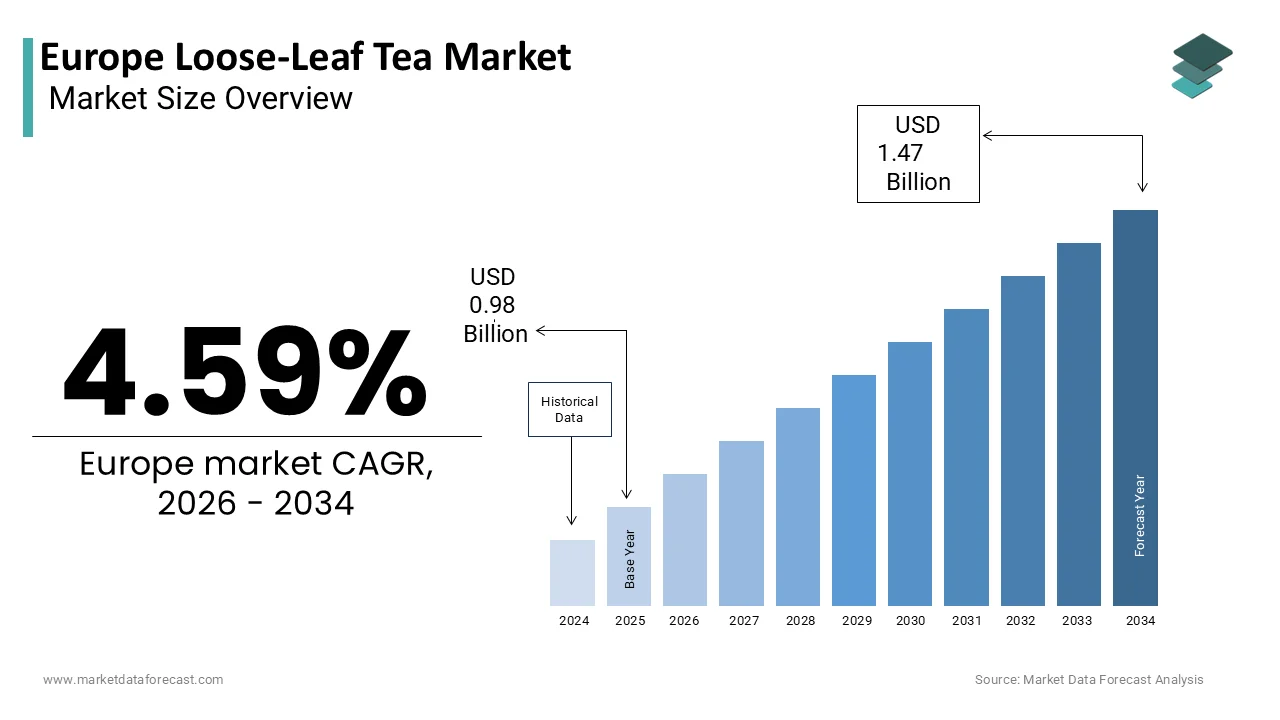
Loose-leaf tea is whole or minimally processed tea leaves that are primarily from Camellia sinensi,s as well as herbal infusions sold in non-bagged formats for brewing in pots, presses, or strainers. In 2025, this segment is distinguished by its alignment with premiumization, sustainability, and mindful consumption trends, standing in contrast to mass market tea bags. According to Eurostat, Europe imports large volumes of tea annually, ly with a growing share dedicated to loose-leaf varieties sourced from certified gardens in India, Sri Lanka, Kenya, and China. The European Food Safety Authority recognizes numerous herbal teas as traditional plant-based remedies, while Regulation (EU) No 1169/2011 mandates clear labeling of ingredients and allergens. Independent tea houses, now present across major cities like Berlin, Paris, and Amsterdam, serve as cultural hubs that educate consumers on terroir, oxidation levels, and brewing techniques. As per a 2024 Eurobarometer survey, younger EU consumers increasingly prefer loose-leaf tea for its perceived quality, reduced packaging waste, and ritualistic preparation. This confluence of ethical sourcing, sensory experience, and wellness orientation positions loose-leaf tea not merely as a beverage but as a curated lifestyle choice within Europe’s evolving conscious consumption landscape.
MARKET DRIVERS
Rising Demand for Premium and Artisanal Tea Experiences
European consumers are increasingly rejecting commoditized tea in favor of high-quality, traceable loose-leaf varieties that offer sensory depth and cultural authenticity, which is a major factor propelling the growth of the European loose-leaf tea market. As per the European Specialty Tea Association, sales of premium loose-leaf tea continue to grow, driven by urban professionals seeking mindful rituals amid digital saturation. Independent tea houses function as experiential retail spaces where customers sample single estate Darjeelings, Japanese senchas, or hand-rolled oolongs, often accompanied by brewing guidance. According to Wageningen University, regular loose-leaf consumers primarily value superior flavor and aroma. Retailers reinforce this trend, with organic chains like Alnatura in Germany and Biocoop in France dedicating entire sections to glass jarred loose teas with origin maps and harvest dates. The rise of gifting culture also fuels demand, with luxury brands like Mariage Frères and TWG reporting growth in curated gift tins. This shift reflects a broader move toward intentional consumption, where tea becomes a vehicle for mindfulness, education, and connection to global terroirs.
Integration of Herbal and Functional Teas into Preventive Wellness Regimens
Loose-leaf tea is increasingly positioned as a natural tool for daily wellness, with herbal and functional blends driving mainstream adoption beyond traditional Camellia sinensis varieties, which is further boosting the loose-leaf tea market expansion in Europe. According to the European Herbal and Traditional Medicine Practitioners Association, many Europeans regularly consume herbal infusions for digestive support, sleep aid, or immune resilience. Chamomile, peppermint, and ginger dominate, but adaptogens like ashwagandha and rooibos are gaining traction. The European Medicines Agency acknowledges the traditional use of many herbs under the Traditional Herbal Registration scheme, lending scientific credibility. Brands like Pukka Herbs and Yogi Tea lead innovation with certified organic, ethically sourced blends targeting specific health outcomes. Supermarkets now feature wellness tea aisles with clear benefit labeling, while pharmacies stock medicinal-grade infusions. This functional reframing transforms loose-leaf tea from a mere beverage into an accessible, evidence-aligned component of Europe’s preventive health ecosystem.
MARKET RESTRAINTS
Stringent EU Regulations on Pesticide Residues and Contaminant Limits
The European loose-leaf tea market faces significant compliance challenges due to rigorous food safety standards that restrict permissible levels of agricultural and environmental contaminants. The European Commission enforces maximum residue limits for hundreds of pesticides, with frequent violations detected in shipments from major origins like India and Kenya. More critically, tea is susceptible to polycyclic aromatic hydrocarbons formed during drying over open fires, which the EU strictly regulates. According to the European Food Safety Authority, violations of contaminant thresholds have triggered rejections and costly recalls. Compliance demands pre-shipment laboratory testing, controlled drying infrastructure, and supplier certification, costs that small estates struggle to absorb. These regulations, while protective of public health, fragment supply chains, increase costs, and disproportionately impact developing country producers, forcing European importers to consolidate sourcing and invest heavily in verification to maintain market access.
High Price Sensitivity and Competition from Convenient Alternatives
Despite growing interest in quality, the European loose-leaf tea market contends with entrenched consumer habits favoring low-cost, convenient alternatives like tea bags and ready-to-drink beverages. According to Eurostat, premium loose-leaf tea is priced significantly higher than standard bagged tea, creating a barrier for price-sensitive households. As per the European Tea & Coffee Association, bagged tea still accounts for the majority of total tea consumption volume in the EU. Ready-to-drink iced teas further erode market share among younger demographics seeking on-the-go refreshment. Even among wellness-oriented consumers, time scarcity limits adoption. According to Kantar, many Europeans who own loose-leaf tea use it infrequently due to perceived preparation complexity. Without compelling value communication and simplified brewing tools, loose-leaf tea risks remaining a niche indulgence rather than a daily staple, constraining its path to mainstream penetration.
MARKET OPPORTUNITIES
Expansion of Direct Trade and Single Estate Sourcing Models
A significant opportunity in the European loose-leaf tea market lies in the adoption of direct trade relationships that connect European consumers with specific tea gardens, fostering transparency and equitable economics. Unlike conventional supply chains involving multiple intermediaries, direct trade ensures farmers receive fair premiums while buyers gain control over quality and sustainability practices. Companies like Bird & Blend in the UK and Palais des Thés in France now publish harvest dates, elevation, and farmer profiles for each estate, turning tea into a story-rich product. As per the European Fair-Trade Association, direct trade tea sales continue to grow, particularly among millennials who prioritize ethical consumption. Blockchain pilots further enhance credibility, with brands allowing customers to scan QR codes and view farm audits and carbon footprint data. As the EU Deforestation Regulation demands geolocation proof for agricultural imports by 2025, these models offer a compliance advantage. By humanizing the supply chain, direct trade transforms loose-leaf tea into a vehicle for global solidarity and terroir appreciation.
Adoption of Sustainable Packaging and Zero Waste Retail Formats
The European loose-leaf tea market is uniquely positioned to capitalize on the continent’s strong anti-plastic sentiment through refillable, compostable, and package-free solutions. According to the European Environment Agency, a majority of EU consumers actively avoid single-use packaging, making loose-leaf tea’s minimal waste profile a key selling point. Leading retailers have responded, with Germany’s Original Unverpackt and France’s Day by Day operating zero-waste stores where customers bring containers to fill with bulk tea. Even mainstream chains adopt sustainable formats, with UK brand Whittard offering compostable paper pouches and in-store refill stations. Innovations extend to home delivery, such as Berlin startup TeeFrisch, using returnable glass jars with deposit systems. The EU’s Packaging and Packaging Waste Directive further accelerates this shift by mandating reusable or recyclable packaging by 2030. By aligning with circular economy principles, loose-leaf tea transcends beverage status to become a tangible expression of environmental responsibility, resonating deeply with Europe’s eco-conscious consumer base.
MARKET CHALLENGES
Dependence on Climate Vulnerable and Geopolitically Sensitive Origin Countries
Europe’s loose-leaf tea market remains critically exposed to ecological and political instability in key producing regions, threatening supply consistency and quality, which is a major challenge to the growth of the European loose-leaf tea market. As per the Kenya Tea Development Agency, prolonged droughts have reduced black tea yields, while erratic monsoons in Assam disrupted flush cycles critical for first flush Darjeeling. Simultaneously, economic crises in Sri Lanka and export restrictions in India have created bottlenecks that inflate prices and delay shipments. According to the International Trade Centre, tea import costs into Rotterdam have surged significantly in recent years. Unlike commodities with diversified sources, specialty teas rely on specific microclimates that cannot be replicated elsewhere. This geographic concentration creates systemic risk that no amount of inventory buffering can fully mitigate, undermining planning certainty for retailers, blenders, and tea houses alike.
Shortage of Skilled Tea Tasters and Blending Expertise in Europe
A critical yet overlooked challenge confronting the European loose-leaf tea market is the declining availability of trained tea tasters and blenders capable of maintaining quality consistency and developing innovative profiles. Professional tea tasting requires knowledge of terroir, oxidation levels, and defect identification, yet formal training pathways in Europe are scarce. As per the European Specialty Tea Institute, the number of certified tea sommeliers across the EU remains limited, with most concentrated in the UK and France. As demand for single estate and seasonal teas grows, the need for nuanced sensory evaluation intensifies. Small importers often lack in-house expertise, relying on origin country assessments that may not align with European palates. This deficit risks quality drift, inconsistent customer experiences, and missed opportunities in flavor innovation. Without coordinated investment in professional certification programs and sensory labs, Europe’s ability to curate and communicate the full spectrum of loose-leaf tea’s potential will remain constrained, limiting the market’s evolution from commodity to connoisseurship.
REPORT COVERAGE
| REPORT METRIC | DETAILS |
| Market Size Available | 2025 to 2034 |
| Base Year | 2025 |
| Forecast Period | 2026 to 2034 |
| Segments Covered | By Type, Category, Distribution Channel, and Region. |
| Various Analyses Covered | Global, Regional, and Country-Level Analysis, Segment-Level Analysis, Drivers, Restraints, Opportunities, Challenges; PESTLE Analysis; Porter’s Five Forces Analysis, Competitive Landscape, Analyst Overview of Investment Opportunities |
| Countries Covered | UK, France, Spain, Germany, Italy, Russia, Sweden, Denmark, Switzerland, Netherlands, Turkey, Czech Republic, Rest of Europe |
| Market Leaders Profiled | Twinings (Associated British Foods plc), Lipton (Unilever), Dilmah Ceylon Tea Company PLC, Tata Global Beverages Limited (Tetley), PG Tips (Ekaterra), Celestial Seasonings (Hain Celestial Group), Harney & Sons Fine Teas, Fortnum & Mason, Tea Pigs (UK Tea & Infusions Ltd.), Mariage Frères, Teapigs Ltd., Ahmad Tea Ltd., The Republic of Tea, Teavana (Starbucks Corporation), Yogi Tea (Hain Celestial Group), David’s Tea, Clipper Tea (Speciality Drinks Ltd.), Mighty Leaf Tea (Peet’s Coffee & Tea), Ronnefeldt KG |
SEGMENTAL ANALYSIS
By Type Insights
The black tea segment dominated the market by holding 47.4% of the European market share in 2025. The dominance of the black tea segment in the European market is driven by its deep historical roots, widespread familiarity, and integration into daily rituals across the continent. According to the UK Tea & Infusions Association, black tea remains a staple in the United Kingdom, consumed in massive daily volumes. Classic origins like Assam, Ceylon, and Kenyan teas form the backbone of breakfast blends, while single estate Darjeelings and Keemuns cater to connoisseurs. European tea houses in cities like London, Berlin, and Paris prominently feature black tea on their menus, often served with milk or lemon in traditional settings. The segment benefits from consistent supply chains and established grading systems, ensuring quality predictability. Moreover, black tea’s robust flavor profile and longer shelf life compared to green or white varieties make it ideal for both household and commercial use. This cultural entrenchment, combined with reliable availability and sensory versatility, ensures black tea remains the cornerstone of Europe’s loose-leaf tea landscape.
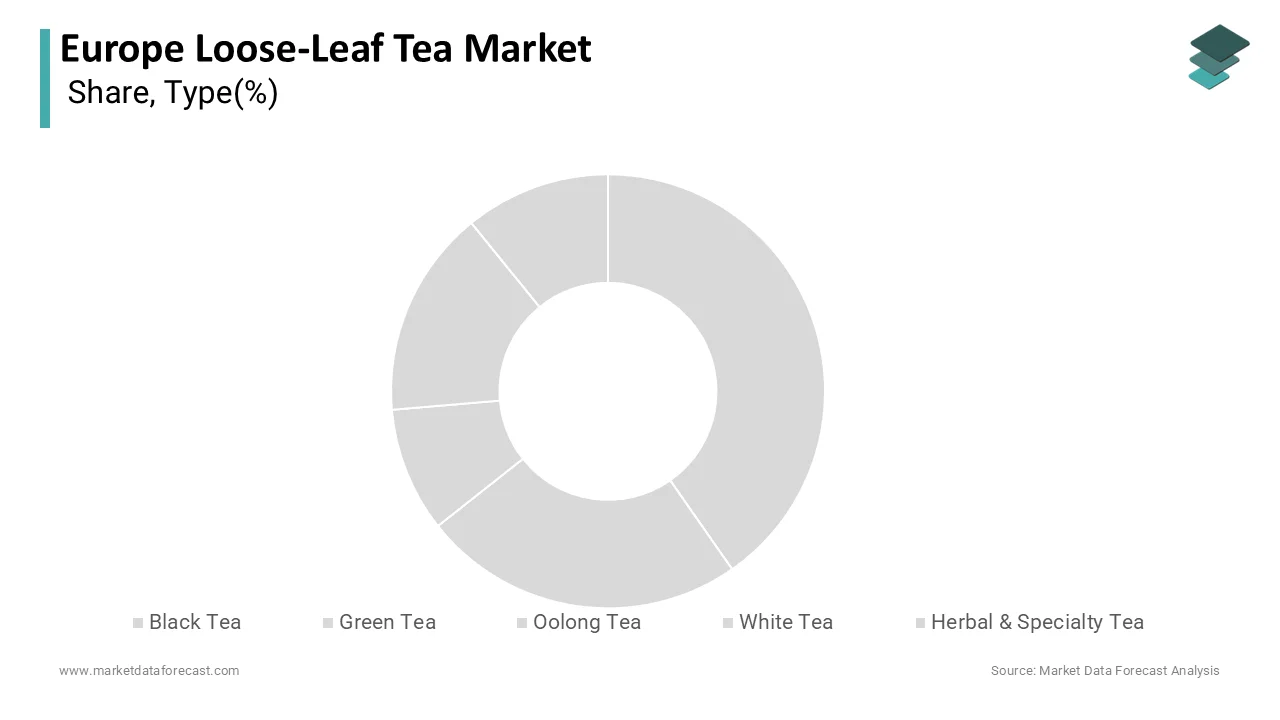
The herbal and specialty tea segment is anticipated to register a CAGR of 12.2% over the forecast period. The rising consumer interest in functional wellness, caffeine-free alternatives, and botanical diversity is propelling the expansion of the herbal and specialty tea segment in the European market. According to the European Herbal and Traditional Medicine Practitioners Association, herbal infusions are widely consumed for digestive support, sleep enhancement, or immune resilience. Chamomile, peppermint, and rooibos lead demand, but adaptogenic blends featuring ashwagandha, turmeric, and hibiscus are gaining rapid traction. The European Medicines Agency recognizes numerous herbs under its Traditional Herbal Registration scheme, lending scientific credibility to wellness claims. Independent tea houses now dedicate a majority of their offerings to herbal and fruit tisanes, catering to younger, health-conscious demographics. As consumers seek personalized, plant-based solutions for everyday well-being, herbal and specialty tea transitions from seasonal indulgence to daily ritual, which is fuelling its high growth trajectory.
By Category Insights
The conventional segment held the dominating share of 65.5% of the European market in 2025. The leading position of the conventional segment in the European market is driven by the broader consumer accessibility, lower price points, and established distribution networks that serve mass market retailers and traditional tea houses alike. While organic tea gains ground, conventional varieties remain the default choice for everyday consumption due to affordability and familiarity. According to Eurostat, conventional loose-leaf tea is priced significantly lower than certified organic equivalents, making it accessible to a wider demographic. Major brands like Twinings and Dammann Frères maintain extensive conventional lines that dominate supermarket shelves in France, Germany, and the UK. Additionally, many independent tea shops offer conventional options alongside premium selections to cater to budget-conscious customers. The segment benefits from decades of supply chain optimization, ensuring consistent quality and year-round availability from major growing regions. Until organic certification becomes more cost-competitive, conventional loose-leaf tea will continue to anchor the market through volume and reach.
The organic loose-leaf tea segment is estimated to witness the fastest CAGR of 11.2% over the forecast period, owing to the growing consumer awareness of pesticide residues, environmental sustainability, and ethical farming practices. According to FiBL, the Research Institute of Organic Agriculture, organic tea sales in the EU continue to grow significantly, outpacing conventional segments. Retailers like Alnatura in Germany and Biocoop in France now allocate prime shelf space to certified organic teas, often featuring transparent sourcing stories and farm profiles. The European Commission’s Farm to Fork Strategy further accelerates this trend by promoting organic conversion, with a target of 25% agricultural land under organic management by 2030. Brands such as Pukka Herbs and Yogi Tea have built loyal followings through rigorous certification and regenerative agriculture partnerships. As consumers increasingly view food as medicine and scrutinize supply chain ethics, organic loose-leaf tea evolves from niche preference to mainstream expectation, driving innovation, premiumization, and trust in a value-led market.
By Distribution Channel Insights
The supermarkets and hypermarkets segment accounted for the 53.5% of the regional market share in 2025. The leading position of the supermarkets and hypermarkets segment in the European market is attributed to their extensive reach, consistent product availability, and strategic placement of premium tea sections alongside organic and wellness aisles. Chains like Carrefour in France, Edeka in Germany, and Tesco in the UK stock a wide range of loose-leaf teas, from affordable house brands to premium imports. According to the European Retail Round Table, modern retail channels remain the primary source of tea purchases for European households. These stores leverage private label development to offer value-added formats, such as seasonal blends or functional infusions, enhancing accessibility. Promotions during key periods like winter and holidays further boost visibility. The integration of loyalty programs and digital shelf tags allows personalized marketing, reinforcing repeat purchases. This combination of scale, convenience, and curation ensures supermarkets remain the primary gateway for loose-leaf tea consumption across urban and suburban Europe.
The online retail and e-commerce segment is estimated to register a CAGR of 14.1% over the forecast period due to the rise of direct-to-consumer brands, subscription models, and digital discovery among tech-savvy, health-conscious consumers. According to Eurostat, online grocery purchases are increasingly common, with specialty foods like loose-leaf tea among the top categories. Platforms like Amazon, specialized sites such as Palais des Thés and Bird & Blend, and brand-owned stores enable detailed storytelling, highlighting origin, harvest date, and brewing instructions. Subscription boxes for monthly tea discoveries have gained popularity, particularly among millennials in Germany and the UK. Social media and influencer marketing amplify reach, with Instagram and TikTok campaigns showcasing brewing rituals and wellness benefits. As logistics improve and consumer trust in online fresh goods grows, e-commerce bypasses traditional markups and fosters direct brand relationships, positioning it as the frontier of education, personalization, and innovation in the loose-leaf tea market.
COUNTRY LEVEL ANALYSIS
United Kingdom Loose-Leaf Tea Market Analysis
The United Kingdom led the loose-leaf tea market in Europe in 2025 by holding 25.5% of the regional market share. The dominance of the UK in the European market is driven by its deep cultural entrenchment of tea as a national ritual. The high per capita consumption and a growing shift toward premium loose-leaf varieties among urban professionals are further propelling the market growth in the UK. According to the UK Tea & Infusions Association, regular tea drinkers are increasingly opting for loose-leaf. London hosts numerous specialty tea houses, including historic establishments like Fortnum & Mason and innovative newcomers like Postcard Teas. The rise of afternoon tea culture in hotels and cafés further drives demand for high-quality single estate teas. Retailers like Waitrose and Selfridges feature extensive loose-leaf sections with origin transparency. This blend of tradition, premiumization, and experiential retail ensures the UK remains the continent’s most influential and volume-driven loose-leaf tea market.
Germany Loose-Leaf Tea Market Analysis
Germany captured a promising share of the European loose-leaf tea market in 2025. The growth of Germany in the European market is driven by its strong wellness orientation, organic consumption trends, and high health literacy and environmental consciousness. As per the German Nutrition Society, many Germans actively seek natural, additive-free beverages. Organic loose-leaf tea sales continue to grow, led by herbal and green varieties. Cities like Berlin and Munich host numerous independent tea houses that emphasize sustainability, fair trade, and zero-waste packaging. Retailers such as Alnatura and Denn’s Biomarkt dedicate entire sections to certified organic teas, often sourced through direct trade. The government supports this ecosystem through the National Organic Farming Strategy, which promotes ethical sourcing. This fusion of preventive health culture, regulatory alignment, and retail innovation positions Germany as a leader in Europe’s conscious tea movement.
France Loose-Leaf Tea Market Analysis
France is estimated to register a prominent CAGR in the European loose leaf tea market during the forecast period, owing to the gourmet appreciation, artisanal craftsmanship,p and historical café culture with modern wellness trends, where tea is viewed as both a refined beverage and a wellness tool. According to FranceAgriMer, premium loose-leaf tea imports continue to rise, driven by demand from luxury hotels, patisseries, and specialty boutiques. Paris is home to iconic tea houses like Mariage Frères and Palais des Thés, which curate single estate collections and offer tea sommelier services. The rise of tea pairing with pastries and cheese has elevated tea’s gastronomic status. Organic and herbal blends are gaining ground, particularly among younger demographics in Lyon and Bordeaux. This balance of heritage, sensory sophistication, and emerging health consciousness sustains France’s influential role in Europe’s premium tea segment.
Netherlands Loose-Leaf Tea Market Analysis
The Netherlands is predicted to hold a notable share of the European market over the forecastperiod. The Netherlands is notable for its progressive wellness culture, strong e-commerce adoption, and high digital literacy and openness to global wellness trends, with Amsterdam and Utrecht serving as hubs for specialty tea innovation. According to Statistics Netherlands, online tea sales continue to grow, driven by subscription models anddirect-to-consumerr brands. The Dutch embrace herbal and functional teas, with rooibos and ginger blends particularly popular for their digestive benefits. Zero-waste stores like Marqt and De Groene Drukte offer package-free loose-leaf refills, aligning with national sustainability goals. The government’s circular economy policies further encourage reusable packaging. This combination of digital agility, health awareness, and environmental responsibility makes the Netherlands a dynamic and forward-looking tea market in Northern Europe.
Italy Loose-Leaf Tea Market Analysis
Italy is estimated to witness a healthy CAGR in the European loose leaf tea market during the forecast period, owing to its evolving beverage landscape, growing interest in non-alcoholic alternatives, and a shift from traditional coffee dominance toward tea as a wellness and social beverage, particularly among women and younger urbanites. As per ISMEA, Italy’s agricultural economics institute, loose-leaf tea imports continue to grow, with green and herbal varieties leading demand. Milan and Rome now feature numerous specialty tea rooms that blend Italian design with Asian tea traditions, offering matcha lattes and herbal infusions in elegant settings. The rise of aperitè, non-alcoholic aperitifs, has further boosted tea’s appeal as a sophisticated alternative. Supermarkets like Eataly and NaturaSì stock premium organic teas alongside local products. Though historically peripheral, Italy’s embrace of tea as part of a modern, health-conscious lifestyle positions it as a high-potential growth market in Southern Europe.
COMPETITIVE LANDSCAPE
Competition in the European loose-leaf tea market is defined by a dual dynamic: heritage brands leverage legacy and scale to modernize offerings, while specialty players differentiate through terroir, ethics, and wellness narratives. Unlike commoditized beverage segments, success hinges on storytelling—proving origin, farming practices, and functional benefits to discerning consumers. Retailers increasingly demand certified organic, low-pesticide, and sustainably packaged teas, reshaping supply chains toward transparency. The market is further segmented by format: supermarkets drive volume with accessible blends, while independent tea houses and e-commerce fuel premiumization through education and curation. Climate vulnerability in origin countries adds supply risk, rewarding companies with diversified sourcing and strong grower relationships. Ultimately, the most resilient players harmonize sensory excellence with environmental and social responsibility, transforming loose-leaf tea from a simple infusion into a trusted ritual of mindfulness, health, and global connection in Europe’s conscious consumption era.
KEY MARKET PLAYERS
Some of the companies that are playing a dominating role in the global Europe Loose-Leaf Tea Market include
- Twinings (Associated British Foods plc)
- Lipton (Unilever)
- Dilmah Ceylon Tea Company PLC
- Tata Global Beverages Limited (Tetley)
- PG Tips (Ekaterra)
- Celestial Seasonings (Hain Celestial Group)
- Harney & Sons Fine Teas
- Fortnum & Mason
- Tea Pigs (UK Tea & Infusions Ltd.)
- Mariage Frères
- Teapigs Ltd.
- Ahmad Tea Ltd.
- The Republic of Tea
- Teavana (Starbucks Corporation)
- Yogi Tea (Hain Celestial Group)
- David’s Tea
- Clipper Tea (Speciality Drinks Ltd.)
- Mighty Leaf Tea (Peet’s Coffee & Tea)
- Ronnefeldt KG
TOP LEADING PLAYERS IN THE MARKET
- Palais des Thés is a French premium tea company renowned for its direct sourcing of loose-leaf teas from over 40 gardens across Asia, Africa, and South America. The company operates more than 50 boutiques across Europe and supplies high-end hotels and restaurants with single estate and seasonal blends. Palais des Thés contributes to global tea sustainability by implementing transparent pricing models that ensure fair compensation for growers and promoting agroecological practices in origin countries. In recent years, it strengthened its European position by launching a digital traceability platform that displays harvest dates, elevation, and farmer profiles for each tea. It also introduced compostable packaging and in-store refill stations to align with EU circular economy goals. These initiatives reinforce its reputation as a curator of terroir-driven, ethically sourced loose-leaf tea.
- Twinings, a British heritage brand with over 300 years of history, maintains a significant presence in the European loose-leaf tea market through its premium range of black, green, and herbal blends. While known globally for tea bags, Twinings has strategically expanded its loose-leaf offerings in response to rising demand for quality and authenticity. The company sources from Rainforest Alliance-certified estates and invests in flavor innovation, such as cold brew and functional wellness blends. Recently, it enhanced its European footprint by introducing recyclable tins and QR code-enabled origin stories on packaging. It also partnered with UK and German retailers to create dedicated loose-leaf sections with brewing guides. These actions demonstrate Twinings’ commitment to modernizing tradition while meeting evolving consumer expectations for transparency and sustainability.
- Pukka Herbs is a UK-based organic herbal tea specialist with a strong foothold across Germany, France, and Scandinavia, offering certified organic loose-leaf infusions focused on wellness and Ayurvedic principles. The company sources herbs and teas from over 20 countries under strict ethical and environmental criteria, holding both Fair for Life and Soil Association certifications. Pukka contributes to global regenerative agriculture by funding reforestation and soil health programs in supplier communities. In recent years, it strengthened its European position by launching plastic-free, home-compostable packaging and expanding its range of adaptogenic blends featuring ashwagandha and turmeric. It also collaborated with pharmacies and wellness centers to promote herbal teas as part of daily preventive care. These efforts position Pukka as a trusted leader in Europe’s functional and sustainable tea movement.
TOP STRATEGIES USED BY THE KEY MARKET PARTICIPANTS
Key players in the European loose-leaf tea market prioritize direct trade relationships to ensure traceability, quality control, and fair compensation for growers. They invest in sustainable packaging solutions such as compostable materials and refill systems to align with EU circular economy mandates. Companies expand into functional and herbal blends targeting specific wellness benefits like sleep, digestion, and immunity to capture health-conscious consumers. Digital storytelling through QR codes and online platforms enhances transparency by sharing farm origins, harvest dates, and sustainability metrics. Additionally, firms strengthen retail presence through dedicated in-store sections, brewing education, and partnerships with hotels and wellness centers to elevate the sensory and cultural experience of loose-leaf tea consumption.
MARKET SEGMENTATION
This research report on the European loose-leaf tea market is segmented and sub-segmented into the following categories.
By Type
- Black Tea
- Green Tea
- Oolong Tea
- White Tea
- Herbal & Specialty Tea
By Category
- Conventional
- Organic
By Distribution Channel
- Supermarkets & Hypermarkets
- Specialty Stores
- Online Retail & E-Commerce
- Others
By Country
- United Kingdom
- Germany
- France
- Netherlands
- Italy
- Rest of Europe