- Product Description Description
- Table of Contents TOC
- List of Table & Figure LOT
- Get Free Sample PDF Sample PDF
Market Size, 2025
$7.68 BnMarket Estimate, 2026
$8.14 BnMarket Forecast, 2034
$12.95 BnCAGR, 2026–2034
5.98%Europe Luxury Perfume Market Size, Growth, Trends & Forecast (2026–2034)
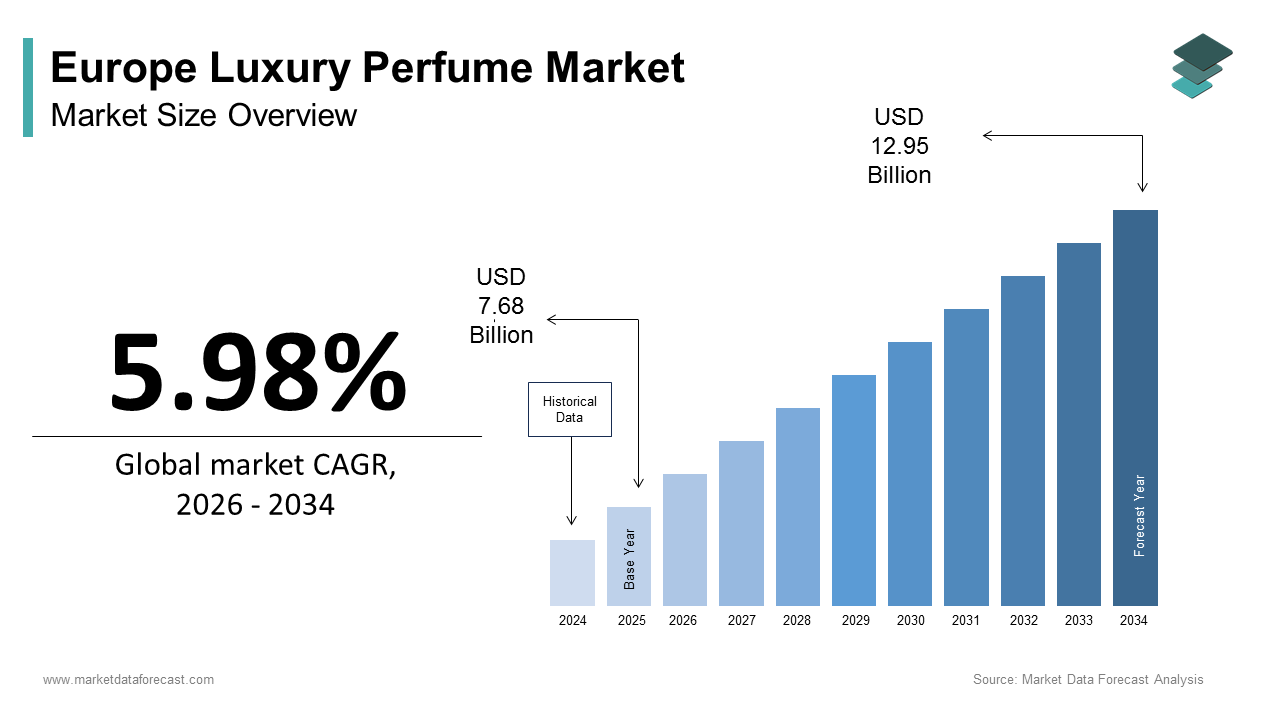
The Europe luxury perfume market size was calculated to be USD 7.68 billion in 2025, reached USD 8.14 billion in 2026, and is anticipated to be worth USD 12.95 billion by 2034, growing at a compound annual growth rate (CAGR) of 5.98% during the forecast period from 2026 to 2034. Driven by a discerning clientele prioritizing heritage craftsmanship, the evolution of fragrance as an intimate tool for personal identity, and expanding experiential retail, the market remains the global birthplace and benchmark of luxury perfumery.
Key Executive Metrics (At-a-Glance)
- 2025 Base Valuation: USD 7.68 Billion
- 2026 Current Valuation: USD 8.14 Billion
- 2034 Forecast Valuation: USD 12.95 Billion
- Compound Annual Growth Rate (CAGR): 5.98% (2026–2034)
- Dominant Regional Market: France (holding a 28.8% market share in 2025, anchored by Grasse heritage and production sovereignty)
- Key Growth Segments: High price range, unisex formulations, online retail channels, and emerging niche artisanal lines
Core Market Drivers & Growth Triggers
- Heritage Craftsmanship & Provenance: Strong consumer preference for authenticity, artisanal lineage, and time-honored production techniques, elevating fragrances into collectible cultural artifacts.
- Personal Identity Expression: Evolving consumer behavior viewing luxury perfume as an intimate language of selfhood, driving demand for bespoke and customizable options.
Primary Market Restraints & Challenges
- Regulatory & Supply Constraints: Stringent chemical regulations restricting traditional natural ingredient usage alongside supply chain volatility for climate-sensitive botanicals.
- Competitive Pressures: Intensifying competition from agile independent niche perfumers and growing consumer skepticism regarding greenwashing claims.
Europe Luxury Perfume Market Segmentation Breakdown
| Segment Category | Largest Segment / Leader | Fastest-Growing Segment |
|---|---|---|
| By Price Range | High Price Range (Captured 64.1% share in 2025, driven by heritage positioning and exclusivity) | Medium Price Range (Projected at an 8.2% CAGR due to generational shifts and retail democratization) |
| By End Use | Women’s (Held 58.3% share in 2025, anchored by cultural gifting norms and complex scent innovations) | Unisex (Expanding at a 12.7% CAGR driven by identity fluidity, digital culture, and genderless preferences) |
| By Distribution Channel | Specialty Stores (Accounted for 49.6% share in 2025 through experiential authority and personalized consultation) | Online Stores (Projected at a 14.3% CAGR propelled by AI scent matching, virtual try-ons, and subscription models) |
| By Region | France (Held 28.8% market share in 2025, supported by Grasse culture and production sovereignty) | Spain / Germany (Growing rapidly through tourism, middle-class affluence, and robust e-commerce infrastructure) |
Major Industry Players Profiled
Key corporations shaping the Europe luxury perfume market include LVMH, Chanel, Estée Lauder Companies, L’Oréal Group, Coty Inc., Kering, Puig, Inter Parfums, Shiseido Company, Hermès, Burberry Group, and Dolce & Gabbana.
Europe Luxury Perfume Market Size
The Europe luxury perfume market size was calculated to be USD 7.68 billion in 2025 and is anticipated to be worth USD 12.95 billion by 2034, growing from USD 8.14 billion in 2026 at a CAGR of 5.98% during the forecast period.
Luxury perfume is a premium fragrance defined by rare, high-quality ingredients, expert craftsmanship, complex scent profiles, superior longevity, and artistic, opulent packaging, offering a sophisticated and long-lasting sensory experience beyond everyday scents. It is distinguished by meticulous craftsmanship, limited production runs, and a narrative depth that transcends mere olfactory appeal. More than a consumer good luxury fragrance in Europe functions as an intimate extension of personal identity and social expression. According to sources, high-income European households are increasingly allocating discretionary income toward premium personal care and fragrance products, driven by a demand for quality and sustainability. As per sources, major Western European nations, led by France and Italy, dominate the luxury goods sector, where personal fragrances act as a primary, accessible entry point for luxury consumers. Further, UNESCO has officially recognized the traditional perfume-making expertise of the Grasse region in France as a protected cultural heritage, emphasizing its historic role in raw material cultivation and fragrance composition. This unique confluence of tradition, regulation, and evolving consumer behavior positions Europe not only as a dominant market but as the global birthplace and benchmark of luxury perfumery.
MARKET DRIVERS
Elevated Consumer Preference for Heritage Craftsmanship and Artisanal Provenance
A discerning clientele that prioritizes authenticity, artisanal lineage, and time-honored production techniques fuels the growth of the Europe luxury perfume market. Many younger premium fragrance consumers are increasingly prioritizing the history, story, and traditional crafting techniques of a brand when making purchasing decisions. Artisanal perfumery remains a significant contributor to local economies, supporting a wide range of specialized jobs in both raw material cultivation and final product formulation. A notable portion of European consumers shows a preference for luxury products manufactured in historically recognized regions known for excellence in craft. This reverence for provenance drives premium pricing and loyalty with niche houses like Creed and Maison Francis Kurkdjian achieving double-digit annual growth across domestic European markets. The emotional resonance of handcrafted processes and traceable ingredients transforms perfume from a consumable into a collectible cultural artifact, reinforcing sustained demand in mature economies.
Rising Importance of Fragrance as a Tool for Personal Identity Expression
Luxury perfumes have evolved into essential instruments ofself-articulationn with consumers curating multiple scents to reflect mood context or life phase, which further drives the expansion of the Europe luxury perfume market. Many younger city residents in Europe frequently maintain a diverse collection of fragrances. A significant portion of fragrance users choose scents that reflect changes in their personal identity. Digital platforms are increasingly used to share and discover fragrance content across the region. In certain regions with a strong tradition of fragrance use, consumers often associate specific scents with significant life events. Consequently, demand for bespoke and customizable offerings has surged, prompting houses like Dior and Guerlain to expand personalization ateliers in major European capitals. This behavioural shift underscores fragrance’s role not as an accessory but as an intimate language of selfhood in a digitally saturated era.
MARKET RESTRAINTS
Stringent Regulatory Constraints on Natural Ingredient Usage
Increasingly restrictive chemical regulations limit access to traditional natural raw materials, which restricts the growth of the Europe luxury perfume market. Regulatory frameworks and industry guidelines have placed limitations on numerous traditional fragrance ingredients due to increased concern for potential allergies. A significant number of substances used in fragrance formulation are now subject to either mandatory disclosure or strict usage restrictions. Many niche fragrance brands have undertaken reformulation projects for established products, resulting in changes to their original scent profiles. The resources required for regulatory compliance have grown for smaller fragrance manufacturers. These constraints challenge artistic freedom and risk diluting the authenticity of historic formulas that anchor Europe’s perfumery legacy, particularly for independent producers lacking corporate legal infrastructure.
Volatility in Natural Raw Material Supply Chains
Luxury perfumery’s dependence on climate-sensitive botanicals exposes it to acute supply chain disruptions, which in turn hinders the expansion of the Europe luxury perfume market. Key inputs such as Bulgarian rose absolute, Madagascar vanilla, and Tuscan orris root face yield instability due to extreme weather and geopolitical factors. Environmental stressors like drought and frost have caused a reduction in the cultivation of certain key botanical ingredients. Severe weather events have led to significant, rapid increases in the cost of specific natural flavoring components. A major, concentrated supply source for a specific flavoring ingredient has proven vulnerable to climate-related disruption. Many large-scale manufacturers are increasingly adopting strategies to procure materials from multiple sources to mitigate risk. Smaller, independent creators of scented products often face challenges in implementing diverse sourcing strategies. This volatility compromises scent consistency, inflates costs, and undermines the promise of natural luxury that European consumers expect, thereby constraining both scalability and brand reliability.
MARKET OPPORTUNITIES
Expansion of Immersive Retail Experiences through Scent Theaters and Olfactory Installations
Luxury brands are redefining retail through multisensory environments that elevate fragrance discovery into an experiential art form, and thereby boost prospects for the Europe luxury perfume market. Flagship boutiques in Paris, London, and Milan now integrate scent theaters, live blending stations, and digital olfactory mapping to foster deeper engagement. Integrating specialized, interactive experiences into retail locations is associated with higher average transaction values compared to traditional setups. A notable percentage of premium buyers in certain age groups show interest in visiting curated, experiential environments for specialized products. This pattern suggests a move towards experiential retail where the environment contributes to consumer engagement and purchasing. Department stores like Le Bon Marché and Harrods have dedicated entire floors to perfumery, featuring live perfumer interactions and heritage storytelling pods. As per sources, these settings increased repurchase rates. This strategy offers significant expansion opportunities, both geographically and demographically, owing to the early stage of these concepts in Central and Eastern Europe.
Growing Demand for Gender Fluid and Inclusive Fragrance Narratives
The shift toward genderless perfumery aligns with the region’s broader cultural embrace of inclusivity and self-defined identity and exhibits a powerful opportunity for the Europe luxury perfume market. Younger consumers increasingly prefer fragrances without traditional gender labeling. Many consumers are actively avoiding gender-segregated aisles. Unisex fragrance collections represent a significant portion of sales for various high-end fragrance houses. A substantial number of new luxury perfume launches in certain European markets are adopting a non-binary, gender-neutral approach. This paradigm expands market reach while fostering emotional authenticity, allowing fragrance to reflect fluid identity rather than prescribed norms. Southern Europe in particular offers untapped potential as younger demographics rapidly move away from traditional gendered marketing in personal care.
MARKET CHALLENGES
Intensifying Competition from Independent Niche Perfumers
A surge of agile independent perfumers, who leverage authenticity, limited editions, and direct consumer relationships to outmanoeuvre legacy houses, constrains the growth of the Europe luxury perfume market. The European market has seen a notable increase in independent fragrance brands, suggesting a trend towards smaller-scale perfume production. A significant number of these new independent fragrance labels are becoming profitable relatively quickly. Smaller, specialized fragrance labels are accounting for a considerable part of the luxury scent market in France, indicating a potential shift in consumer preference. The market for artisan perfumes appears to be expanding, with these brands becoming a significant element within the luxury fragrance industry. These players often bypass traditional retail, favoring curated e-commerce pop-ups and concept stores, which enhance margins and creative control. Legacy brands constrained by multilayered approval processes face several months of delays in product development, limiting responsiveness. These newcomers command premium positioning through perceived rarity and artistic integrity. This dynamic pressure established houses to either acquire emerging talent or risk losing cultural relevance among trendsetting urban consumers.
Shifting Consumer Skepticism Toward Greenwashing in Sustainability Claims
Sustainability is now a baseline expectation, yet consumer trust in environmental claims is eroding due to perceived greenwashing, thereby negatively impacting the expansion of the Europe luxury perfume market. Consumers of premium scents are increasingly skeptical of eco-friendly marketing that lacks independent validation. New European regulations require substantiated, full-lifecycle evidence for environmental assertions, which increases compliance challenges for businesses. Audits of high-end brands indicate that a significant portion of claims regarding product biodegradability or natural ingredients lack sufficient backing. A lack of transparent supply chain traceability exposes brands to risks of reputational harm, as evidenced by declining consumer confidence in products perceived as greenwashed. The core challenge lies not in adopting sustainable practices but in proving them credibly without compromising the sensory sophistication that defines luxury, requiring significant investment in certification, supply chain transparency, and packaging innovation.
REPORT COVERAGE
| REPORT METRIC | DETAILS |
| Market Size Available | 2025 to 2034 |
| Base Year | 2025 |
| Forecast Period | 2026 to 2034 |
| CAGR | 5.98% |
| Segments Covered | By Price Range, End Use, Distribution Channel, And Region |
| Various Analyses Covered | Global, Regional & Country Level Analysis; Segment-Level Analysis; DROC, PESTLE Analysis; Porter’s Five Forces Analysis; Competitive Landscape; Analyst Overview of Investment Opportunities |
| Regions Covered | UK, France, Spain, Germany, Italy, Russia, Sweden, Denmark, Switzerland, Netherlands, Turkey, and the Czech Republic |
| Market Leaders Profiled | LVMH, Chanel, Estée Lauder Companies, L’Oréal Group, Coty Inc., Kering, Puig, Inter Parfums, Shiseido Company, Hermès, Burberry Group, Dolce & Gabbana |
SEGMENTAL ANALYSIS
By Price Range Insights
The high price range segment captured the majority share of 64.1% of the Europe luxury perfume market in 2025. The dominance of the high price range segment is driven by consumer prioritization of exclusivity and the strategic positioning of heritage brands. European luxury consumers increasingly view high-priced perfumes as non-substitutable symbols of sophistication and social distinction. Affluent consumers in Western Europe tend to associate higher-priced fragrances with enhanced personal expression and cultural sophistication. In specific European markets with a long history of luxury, a significant portion of higher-income households regularly acquire luxury fragrances. The purchase behavior indicates that high-end fragrance acquisition is a frequent, ongoing activity for a portion of the affluent consumer base in these areas. This segment thrives on limited editions, bespoke formulations, and artisanal packaging that justify premium pricing while reinforcing emotional scarcity. Moreover, high price points act as a psychological filter,s ensuring alignment with discerning clientele who equate cost with quality and rarity. The enduring appeal of iconic scents like Chanel No 5 and Dior J’adore further anchors this segment’s market leadership by blending legacy with aspirational value. Legacy perfume houses deliberately reinforce their premium positioning through controlled distribution, narrative depth, and craftsmanship storytelling. Major luxury conglomerates, including LVMH and Kering, have elevated their fragrance positioning by significantly increasing price points and curbing promotional activity to enhance brand exclusivity. This calculated scarcity enhances desirability, particularly in markets like Italy and the UK, where brand heritage outweighs price sensitivity. Repeat buyers in the European luxury fragrance market are frequently selecting premium, higher-priced options as a means to ensure consistent quality and connection to the brand's heritage. These houses preserve their pricing power and shield luxury products from mid-tier commoditization by anchoring value in craftsmanship rather than production volume.
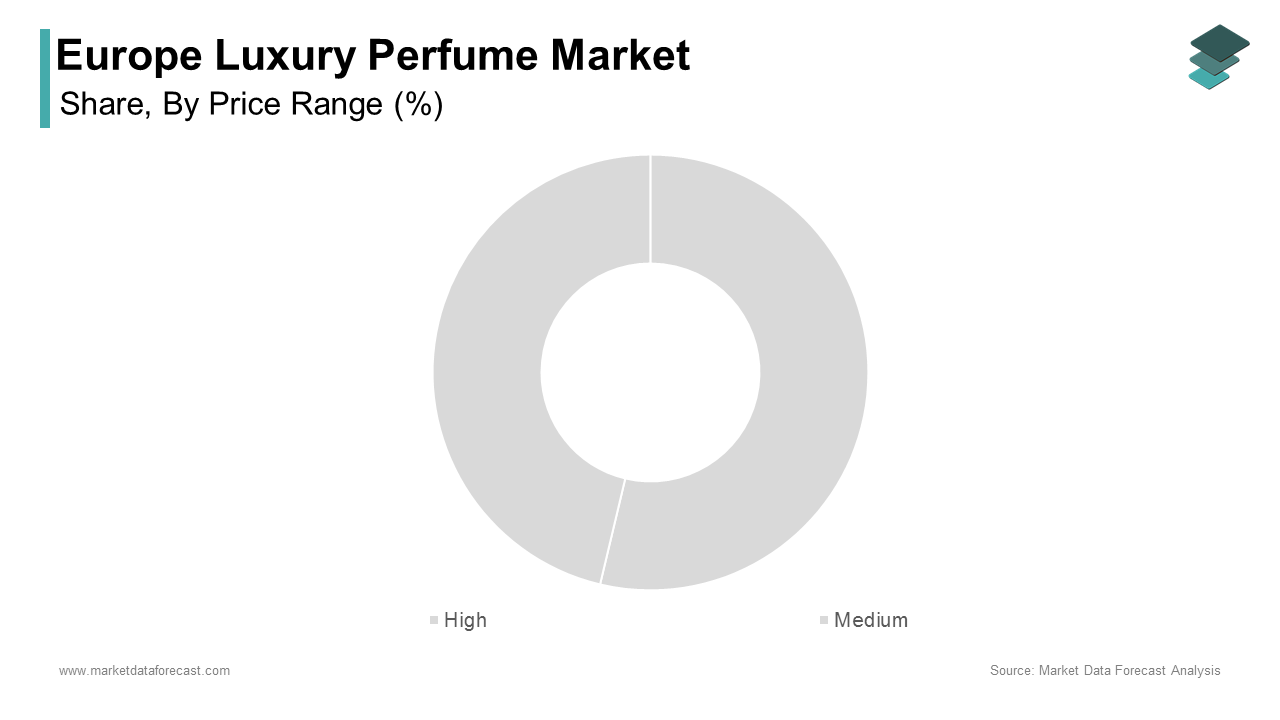
The medium price range segment is anticipated to witness the fastest CAGR of 8.2% from 2026 to 2034 due to generational shift and retail democratization. Millennial and Gen Z buyers seeking authentic luxury experiences without the prohibitive cost oultra-premiumum offerings are driving adoption. Many younger consumers are beginning their experience with premium scents by exploring brands positioned between mainstream and ultra-high-end options. This trend suggests a shift towards starting luxury fragrance journeys with niche products rather than established fashion house scents. The data indicates a pattern where the first luxury fragrance purchase is frequently aligned with medium-priced niche offerings. These products offer credible heritage, credible formulation quality, and aesthetic sophistication at an accessible entry point,s making them ideal for gifting trials and wardrobe diversification. This gateway function sustains category expansion while nurturing future high-end loyalty. Independent perfumeries are deliberately calibrating price architecture to balance exclusivity with volume potential. Many new niche fragrance releases are now specifically aimed at the medium-price segment to attract urban professionals who have discretionary income but limited prior engagement with high-end purchases. Some smaller fragrance houses are seeing considerable expansion in this category, largely due to carefully chosen retail collaborations and specific digital sales channels. This indicates an intentional strategy to create a connection between mass-market options and exclusive high-end products. This strategic bridging allows artisanal authenticity to scale without diluting brand equity, thereby accelerating segment penetration across Southern and Northern Europe alike.
By End Use Insights
In 2025, the women’s segment led the Europe luxury perfume market by holding a 58.3% share of the Europe luxury perfume market because of cultural gifting norms and product innovation tailored to female sensory preferences. Luxury perfumes remain the most gifted personal luxury item among women in Europe, driven by seasonal occasions and relational gestures. Observations indicate that a substantial portion of premium fragrance acquisitions across various European markets is designated for female recipients. Specific seasonal events, holidays, and personal celebrations represent a significant volume of these gift-oriented purchases. Data suggests a consistent pattern where premium fragrance sales in retail settings frequently serve as gifts for women, particularly during the final quarter of the year. This ritualistic consumption creates predictable demand cycles and encourages brand loyalty as recipients often repurchase the same scent. The emotional weight attached to gifting also reduces price sensitivity, allowing brands to maintain premium positioning even during economic uncertainty. Brands continuously refine floral, woody, and gourmand accords to match evolving female scent profiles. Urban European women increasingly prefer complex, layered, and long-lasting scents over simpler, shorter-lasting alternatives, showing a higher affinity for these styles compared to men. This has led to the success of scents like Guerlain Mon Guerlain and Yves Saint Laurent Libre, which integrate modern vanilla and iris notes within traditional floral structures. A large portion of women across Europe view their fragrance as a key element of their personal, daily style, leading many to build substantial collections of luxury, high-end perfumes. This deep integration into daily identity sustains consistent replenishment and trial of new variants, reinforcing segment dominance.
The unisex segment is likely to experience the fastest CAGR of 12.7% during the forecast period, owing to identity fluidity and digital culture. Young European consumers increasingly reject gendered marketing in favor of self-defined sensory experiences. Many young city dwellers express a preference for personal care items that are not marketed based on gender. A significant portion of younger consumers in specific European nations are choosing scents that are marketed as unisex rather than gender-specific. The trend indicates a shift toward gender-neutral options in the fragrance market among younger demographics. The distinction between traditionally gendered personal care products appears to be diminishing among urban consumers under thirty. Brands like Le Labo and Byredo have capitalized on this shift by eliminating gender labels entirely and emphasizing raw material storytelling over demographic targeting. This alignment with progressive values enhances brand authenticity and social currency, particularly on digital platforms where scent reviews often highlight inclusivity as a key purchase criterion. Unisex fragrances dominate online discourse due to their narrative flexibility and aesthetic neutrality. Online, unisex fragrances are generating significantly higher volume in user-created content on social media platforms compared to traditional, gender-specific perfumes, reflecting a shift toward versatility. Influencers frequently showcase these perfumes as versatile and modern, resonating with audiences seeking individuality without overt gender coding. Younger consumers are increasingly driving luxury fragrance trends toward unisex, scent-driven options, with purchase decisions heavily influenced by social media algorithms and online community reviews rather than conventional advertising. This digital native advantage accelerates trial conversion and geographic reach, particularly in Central and Eastern Europe, where e-commerce adoption is rising rapidly.
By Distribution Channel Insights
The specialty stores segment dominated the Europe luxury market by accounting for a 49.6% share in 2025. The supremacy of the specialty stores segment is credited to experiential authority and brand curation. Consumers rely on specialty retailers for authentic product selection and olfactory guidance in a category where sampling is essential. Luxury fragrance consumers are increasingly valuing the in-store experience and staff expertise when choosing fragrances. This trend includes a preference for purchasing from authorized boutiques and specialized perfumeries, indicating that the time spent in these retail environments reflects a desire for personalized consultation and an immersive experience. These spaces offer personalized consultations, scent layering advice, and access to limited editions unavailable elsewhere, reinforcing their role as cultural gatekeepers rather than mere vendors. This trust translates into higher conversion rates, with specialty stores achieving more basket value than department stores. Luxury houses prioritize specialty channels to safeguard brand storytelling and pricing discipline. Luxury fragrance brands are increasingly limiting the initial availability of new releases to exclusive brand stores or certified specialty retailers. This controlled approach helps preserve a sense of scarcity and enables a more complete presentation of the scent's olfactory and visual identity. Shoppers are often drawn to these dedicated retailers specifically to ensure the authenticity of their purchases. Aligning distribution with core brand ethos sustains a high-end perception and curtails the price discounting that erodes brand value in broader retail environments.
The online stores segment is on the rise and is expected to be the fastest-growing segment in the market by witnessing a CAGR of 14.3% from 2026 to 2034. The rapid growth of the online stores segment is propelled by technological innovation and geographic inclusivity. Digital platforms are overcoming the traditional barrier of scent invisibility through AI-driven scent matching and virtual try-on tools. Online luxury fragrance retailers are increasingly implementing algorithm-driven systems that analyze customer data, including past purchases and preference surveys, to offer personalized recommendations. Fragrance brands and subscription services are collaborating to offer discovery kits that provide options for purchasing full-sized products. The utilization of augmented reality tools is becoming more prevalent, allowing consumers to visualize fragrance bottles within their personal environments. The integration of technology, such as personalized recommendations and visual tools, appears to correspond with higher rates of repeat purchases and increased conversion. These innovations replicate in-store guidance digitally, making online channels increasingly viable for first-time and complex purchases. E-commerce democratizes access to luxury perfumery beyond metropolitan hubs. Many online buyers of luxury fragrances are in smaller European cities without local boutiques. In some European nations, digital sales of fragrances are experiencing growth. The lack of nearby specialized brands seems to encourage consumers in certain areas to shop online. This geographic inclusivity not only expands customer bases but also introduces new demographics to luxury scent culture. Furthermore, subscription models offering curated monthly selections have proven particularly effective in Northern Europe. This convenience-driven model sustains engagement and builds long-term brand relationships in previously inaccessible regions.
REGIONAL ANALYSIS
France Luxury Perfume Market Analysis
France was the top performer in the Europe luxury perfume market by holding a 28.8% share in 2025. The leading position of the French market is propelled by institutionalized perfumery culture and production sovereignty. The country is home to Grasse, the historic epicenter of raw material cultivation, where large hectares of jasmine and rose fields remain under cultivation. Exports of premium scents from France represent a significant portion of the European Union's total trade value for these products. The domestic market in France shows strong engagement, with a large majority of households owning luxury perfumes. Repeat purchasing behavior is common, with a substantial portion of consumers consistently buying their preferred luxury scents. The government’s recognition of perfumery as intangible cultural heritage further reinforces national pride and consumer loyalty. Moreover, Paris hosts numerous artisanal perfumeries and serves as the global launchpad for major fragrance houses, ensuring continuous innovation and international influence that cements France’s unrivaled position.
United Kingdom Luxury Perfume Market Analysis
The United Kingdom followed closely in the Europe luxury perfume market by capturing a 16.1% share in 2025. London functions as a cosmopolitan fragrance epicenter where global launches intersect with diverse consumer tastes. The market thrives on gifting, with a portion of luxury perfume purchases occurring during festive seasons. Additionally, the UK’s regulatory alignment with EU standards post Brexit has ensured seamless import of raw material,s sustaining local niche production. Brands like Penhaligon’s and Jo Malone London leverage British heritage to command global appeal, while international houses use London as a test market for gender fluid and sustainable lines due to its progressive consumer base. This blend of tradition opennes, and purchasing power solidifies the UK’s pivotal role in the European landscape.
Italy Luxury Perfume Market Analysis
Italy is another key player in the Europe luxury perfume market, owing to the seamless integration of fragrance into daily elegance and fashion identity. Italians view scent as an indispensable element of personal presentation, with a notable share of urban residents applying luxury perfume daily, as per sources. The country’s fashion houses, including Dolce Gabbana, Prada, and Valentino, have successfully extended their aesthetic authority into the olfactory domain,s driving consistent domestic demand. The Italian luxury fragrance market has demonstrated resilience, maintaining positive performance even when faced with challenging economic conditions, which highlights a strong cultural connection to these products. Milan acts as a significant distribution center for the broader region, and the domestic market supports a wide network of specialized retail locations throughout the country. The emphasis on Mediterranean accords, such as citrus amber, and leather also distinguishes Italian offerings, appealing to both local preferences and international tourists who account for a notable share of in-country luxury fragrance purchases.
Germany Luxury Perfume Market Analysis
Germany is growing steadily in the Europe luxury perfume market owing to rational yet appreciative consumption driven by high disposable income and environmental consciousness. German consumers prioritize ingredient transparency, longevity, and brand ethics, with a notable share of checking ingredient lists before purchasing. This has propelled demand for certified natural and vegan luxury fragrances, with brands like Frau Tonis Parfum and Scenthusiasm achieving double-digit growth. Additionally, Germany’s robust e-commerce infrastructure supports widespread access, with online channels accounting for a portion of national luxury fragrance sales, the highest in Western Europe. The country also serves as a key logistics gateway for Central and Eastern Europe, enabling efficient distribution. Despite cultural restraint in overt luxury signaling, Germans demonstrate consistent replenishment behavior, with many repurchasing their preferred scent within six months, underscoring functional loyalty rooted in quality rather than status.
Spain Luxury Perfume Market Analysis
Spain is predicted to expand in the Europe luxury perfume market from 2026 to 2034 due to sensory expressiveness tourism and growing middle-class affluence. Many Spanish consumers report that fragrances evoke personal memories and emotional responses. Niche perfumery experiences growth in major Spanish cities through a variety of curated, artisanal, and international boutiques. International visitors contribute significantly to luxury fragrance sales within the country. The local climate supports a high frequency of fragrance application and usage. There is a growing preference for unisex and environmentally conscious products among younger consumers. This blend of cultural warmth, economic recovery, and openness to innovation positions Spain as a dynamic growth market within Southern Europe.
COMPETITION OVERVIEW
The Europe luxury perfume market features intense competition characterized by a blend of legacy conglomerates, agile niche houses, and fashion-led fragrance lines. Established players rely on century-old perfumery traditions, brand equity, and controlled distribution to maintain authority, while independent artisans compete through creative boldness, limited editions, and direct consumer narratives. The entry barrier remains high due to regulatory complexity, raw material access, and craftsmanship requirements, yet digital channels have enabled disruptive newcomers to gain rapid visibility. Competition is no longer solely about scent composition but extends to sustainability storytelling, retail immersion, and identity inclusivity. Brands that fail to innovate in experiential or ethical dimensions risk losing relevance, particularly among younger demographics who prioritize authenticity over logo recognition. This multifaceted rivalry drives continuous product evolution and strategic reinvention across the region.
KEY MARKET PLAYERS
A few major players of the Europe luxury perfume market include
- LVMH
- Chanel
- Estée Lauder Companies
- L’Oréal Group
- Coty Inc
- Kering
- Puig
- Inter Parfums
- Shiseido Company
- Hermès
- Burberry Group
- Dolce & Gabbana
Top Strategies Used by the Key Market Participants
Key players in the Europe luxury perfume market primarily employ four core strategies to sustain competitive advantage. First, they invest heavily in heritage storytelling and artisanal craftsmanship to differentiate their olfactory offerings. Second, they expand experiential retail through flagship boutiques, scent theaters, and personalized blending services to deepen consumer engagement. Third, they adopt sustainable practices including refillable packaging, ethically sourced raw materials, and carbon-neutral production to align with evolving regulatory and consumer expectations. Fourth, they leverage digital innovation such as AI-powered scent recommendation tools and immersive e-commerce platforms to bridge the sensory gap in online shopping. These strategies collectively reinforce brand prestige, enhance customer loyalty, and future-proof their presence in an increasingly conscious and experience-driven luxury landscape.
Leading Players in the Market
- LVMH Moët Hennessy Louis Vuitton SE holds a central role in the Europe luxury perfume market through its prestigious portfolio, including Parfums Christian Dior and Guerlain. The company actively invests in sustainable sourcing and heritage storytelling to reinforce its artisanal credibility. It also launched a traceability platform for raw materials used in its perfumes, aligning with EU green regulations while enhancing consumer trust. These initiatives reflect its commitment to blending tradition with innovation to maintain relevance among discerning European consumers who value authenticity and environmental responsibility.
- Kering SA contributes significantly to the luxury perfume landscape through its ownership of Creations Parfums under its strategic partnership with Puig for Saint Laurent and Alexander McQueen fragrances. The company has intensified its focus on gender fluid narratives and circular packaging. It also co-funded a biodiversity initiative in Grasse to protect native jasmine cultivation. These actions demonstrate Kering’s dedication to ethical luxury and sensory modernity, resonating with younger European consumers seeking purpose-driven brands.
- Puig S.L. stands as a key European player with iconic brands such as Carolina Herrera, Paco Rabanne, and Penhaligon’s. Headquartered in Spain, the company leverages its deep regional roots to drive global expansion. It also introduced AI-driven scent personalization kiosks in major European department stores. Additionally, Puig strengthened its direct-to-consumer platform with localized digital storytelling campaigns across Germany and the Nordics. These moves enhance its agility and consumer intimacy within the competitive luxury olfactory space.
MARKET SEGMENTATION
This research report on the Europe luxury perfume market has been segmented and sub-segmented based on price range, end use, distribution channel, and region.
By Price Range
- High
- Medium
By End Use
- Men
- Women
- Unisex
By Distribution Channel
- Specialty Stores
- Supermarket/Hypermarket
- Online Stores
- Others
By Region
- UK
- France
- Spain
- Germany
- Italy
- Russia
- Sweden
- Denmark
- Switzerland
- Netherlands
- Turkey
- Czech Republic
- Rest of Europe