Europe Maple Syrup Market Size, Share, Trends & Growth Forecast Report – Segmented By Category (Conventional, and Organic), Distribution Channel, Source, and Country (UK, France, Spain, Germany, Italy, Russia, Sweden, Denmark, Switzerland, Netherlands, Turkey, Czech Republic & Rest of Europe), Industry Analysis From 2026 to 2034
Market Size, 2025
$491 MnMarket Estimate, 2026
$524 MnMarket Forecast, 2034
$890 MnCAGR, 2026–2034
6.84%Europe Maple Syrup Market Report Summary
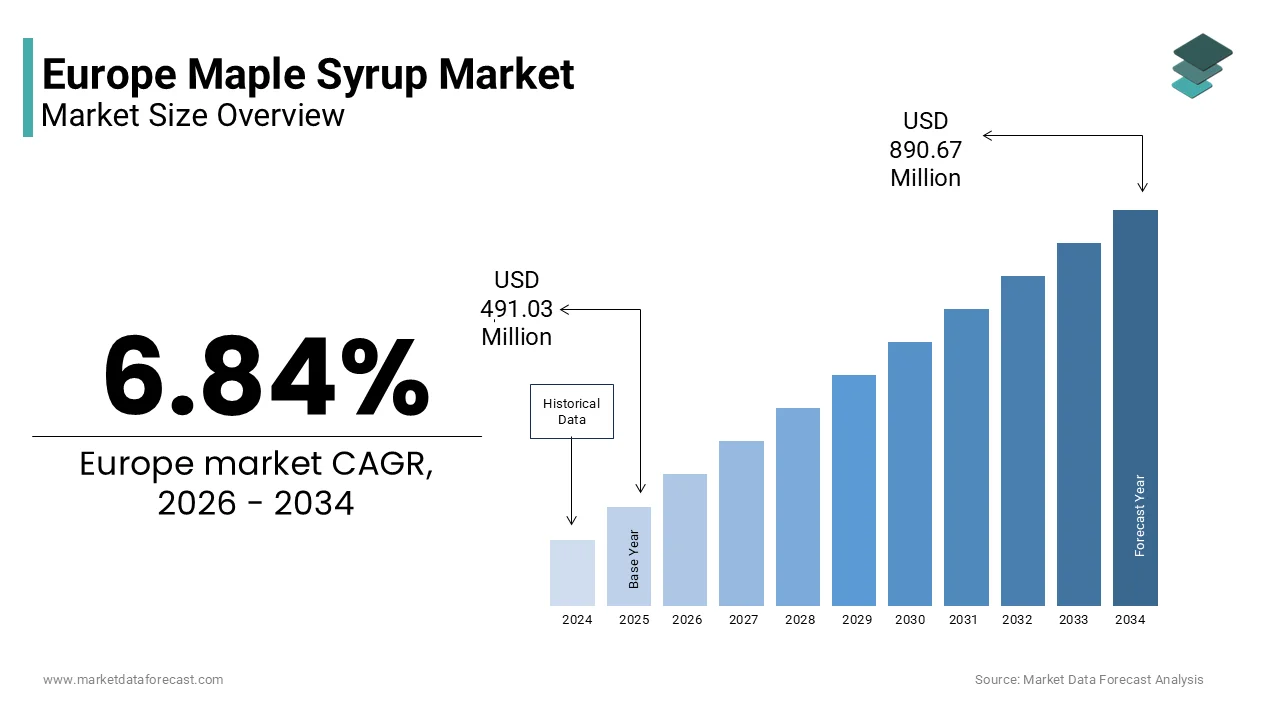
The Europe maple syrup market was valued at USD 491.03 million in 2025, reached USD 524.62 million in 2026, and is projected to grow to USD 890.67 million by 2034, registering a CAGR of 6.84% during the forecast period. Market growth is driven by rising consumer preference for natural sweeteners, increasing awareness of clean-label and organic food products, and growing demand for maple syrup as a healthier alternative to refined sugar. Expanding use of maple syrup in bakery, confectionery, breakfast foods, and plant-based recipes, along with premiumization trends in the European food and beverage sector, is further supporting market expansion.
Key Market Trends
-
Increasing demand for natural and minimally processed sweeteners due to health-conscious consumer behavior.
-
Growing use of maple syrup in vegan, organic, and clean-label food formulations.
-
Rising popularity of maple syrup as a premium ingredient in bakery, desserts, and breakfast products.
-
Expansion of private-label maple syrup offerings across large retail chains.
-
Strong growth in imported maple syrup consumption driven by limited domestic production in Europe.
Segmental Insights
- Based on category, the conventional maple syrup segment dominated the Europe maple syrup market in 2025, supported by its wide availability, lower price point compared to organic variants, and strong presence across mass retail channels.
- Based on distribution channel, hypermarkets and supermarkets led the market by accounting for 58.3% of the total share in 2025, driven by high product visibility, extensive shelf space, and consumer preference for one-stop retail formats.
- Based on source, the sugar maple (Acer saccharum) segment held the largest market share in 2025, owing to its superior flavor profile, high sap sugar content, and widespread use in commercial maple syrup production.
Regional Insights
The Europe maple syrup market is witnessing steady growth across key countries, supported by rising imports and evolving consumer food preferences.
-
The United Kingdom emerged as the largest national market, accounting for 21.7% of the European market share in 2025, driven by strong demand for natural sweeteners, premium breakfast products, and growing adoption of North American food trends.
-
Other Western European countries continue to show increasing consumption due to expanding health-focused retail offerings and international cuisine influence.
Competitive Landscape
The Europe maple syrup market is moderately competitive, with a mix of established North American producers and specialty maple syrup brands supplying the region. Key players focus on product quality, sustainable sourcing, clean labeling, and strong distribution partnerships with European retailers. Expanding private-label production and premium-grade offerings are key competitive strategies. Prominent companies operating in the market include B&G Foods, Inc., Vermont Pleasant Valley Maples, Ferguson Farm Vermont Maple Syrup, Butternut Mountain Farm, Coombs Family Farms, Maple Joe (Famille Michaud Apiculteurs), Golden Dog Farm LLC, Judd’s Wayeeses Farms, and Anderson’s Maple Syrup, Inc.
Europe Maple Syrup Market Size
The Europe maple syrup market size was valued at USD 491.03 million in 2025 and is projected to reach USD 890.67 million by 2034 from USD 524.62 million in 2026, growing at a CAGR of 6.84%.
Maple syrup is a premium natural sweetener imported almost exclusively from Canada and the United States, valued for its distinct flavour profile and perceived health advantages over refined sugars. Unlike in North America, ca where maple syrup is a breakfast staple, European consumption is primarily concentrated in gourmet food services, ice, artisanal baking and speciality retail channels. European import regulations classify maple syrup as a distinct, unadulterated product, requiring clear country-of-origin labelling and prohibiting added flavours or additives. According to sources, the vast majority of maple syrup imported into the EU is produced in Quebec, Canada, where a centralised organisation manages a strategic reserve to stabilise global supply and enforce quality standards. European consumer interest is rising amid broader clean-label trends. Consumer preference in the EU is shifting toward natural, healthier, and clearly labelled sweeteners, increasing demand for authentic products like maple syrup. Besides, pure maple syrup is increasingly recognised for containing manganese and polyphenols, supporting its positioning as a natural alternative to refined sweeteners. Maple syrup’s niche appeal in Europe is rising through creative culinary applications and ethical sourcing, even though its volume remains low compared to rivals like agave.
MARKET DRIVERS
Growing Consumer Preference for Natural and Clean Label Sweeteners
European consumers are increasingly rejecting refined sugars and artificial sweeteners in favour of transparent,nt naturally derived alternatives, which contributes to the growth of the European maple syrup market. Many European consumers are increasingly reviewing ingredient labels for indicators of natural composition when selecting sweet products. Maple syrup aligns with evolving clean label guidelines due to its single-ingredient composition. In specific European markets, maple syrup is becoming a more common sweetener choice in premium baked goods, potentially reducing the reliance on glucose syrup. Plant-based dessert manufacturers are incorporating maple syrup to meet consumer demand for products perceived as less processed and ethically sourced. Unlike honey, which faces authenticity scandal,,s maple syrup’s traceable origin and standardised grading instil consumer trust. Maple syrup is rising in popularity across European retail and food service, driven by stricter government regulations and taxes aimed at reducing sugar consumption.
Expansion of Maple Syrup in Gourmet Foodservice and Artisanal Product Innovation
Its integration into high-end culinary applications beyond traditional breakfast use also propels the European maple syrup market. Michelin-starred restaurants across France,, Ita,, ly and Spain now feature maple syrup in savouryglazes, reduction sauces and dessert plating as a signature ingredient. Fine dining establishments are increasingly integrating maple syrup into savoury menu items, moving beyond traditional breakfast applications to pair with game meats, cheese, and chocolate. The culinary utilisation of maple syrup is expanding to leverage its complex, caramel-like flavour profiles in sophisticated, high-end dishes. Artisanal producers are shifting toward value-added, specialised formats, resulting in new product offerings like premium infused dark chocolate. The craft beverage sector is adopting maple syrup as a flavouring agent, with a rise in maple-infused spirits such as gins and whiskies. The adoption of maple products is growing, driven by a combination of culinary innovation in restaurants and the introduction of unique, high-quality products from niche producers. Geographical growth in maple-focused products is concentrated within specific European markets. These premium applications elevate maple syrup from a commodity sweetener to a versatile gastronomic ingredient, justifying higher price points and broadening its appeal among urban food enthusiasts and professional chefs who value provenance and flavour depth.
MARKET RESTRAINTS
Heavy Import Dependency and Geopolitical Supply Vulnerability
Inherent total reliance on North American imports creates a significant risk that impedes the European maple syrup market from growing. The bulk of these imports originates from a single area within Canada. This concentrated origin point introduces potential susceptibility to interruptions in the supply chain, including fluctuations in production or alterations in trade regulations. Warmer winter conditions in the primary sourcing locale have led to abbreviated production periods and decreased syrup output. Limitations in the primary region's supply have contributed to higher wholesale prices in European markets. Maple syrup brought into the region is subject to tariffs, with rates affected by modifications to trade agreements. Unlike honey or aga, ve Europe lacks domestic maple syrup production due to the absence of mature sugar maple forests, Acer saccharum is not native to the continent and is protected under EU invasive species regulations. This structural import reliance limits supply security and exposes European buyers to price shocks and logistical delays beyond their control.
Strict EU Labelling and Authenticity Enforcement Limiting Market Flexibility
European regulations impose stringent requirements on maple syrup labelling, which restrains the expansion of the European maple syrup market. These regulations ensure quality but create significant barriers to entry and innovation for smaller firms. Regulations concerning maple product labelling in the region mandate 100 per cent purity, disallowing the sale omaple-flavouredded blends prevalent in other areas. Market surveillance has found cases where products marked as maple syrup include unauthorised additives such as corn syrup or artificial flavourings. The discovery of non-compliant items has led to increased examination at borders. Enhanced inspection procedures have resulted in longer processing times for imported maple products. Additionally, all imports must comply with the Canadian grading system, Grade A or Processing Grad,e which limits flexibility for European manufacturers seeking cost-tiered ingredients. Unlike honey, which allows floral origin blends, maple syrup cannot be mixed with other natural syrups without forfeiting its legal designation. Consequently, product development is constrained to pure formats, increasing costs and reducing accessibility for mid-tier food brands. These rigid standards protect authenticity but hinder market expansion into broader sweetener categories where blended natural syrups could offer affordable entry points.
MARKET OPPORTUNITIES
Development of Maple Syrup as a Premium Ingredient iPlant-Baseded and Vegan Products
The rise of plant-based diets across the region offers a major opportunity for the European maple syrup market. It acts as a vegan-approved, natural sweetener with clean functional properties. A noticeable portion of European consumers are embracing a flexitarian or vegan diet, leading to increased demand for plant-based ingredients in areas like sweets, dairy alternatives, and baked goods. Maple syrup is often favoured over honey in vegan-certified products, as it aligns with dietary preferences that exclude animal-derived ingredients. The use of maple syrup is expanding in vegan product launches across European markets, particularly in items such as plant-based yoghurts, snacks, and dairy-free frozen desserts. Companies have begun testing maple variants to differentiate from competitors using standard cane sugar. Moreover, maple syrup’s natural browning properties enhance texture and appearance in vegan baking, ing where egg and dairy replacements often compromise mouthfeel. Europe's plant-based pipeline is embracing maple syrup as a functional cornerstone, a shift from its niche status, as ethical and clean-label demands converge.
Collaboration with Canadian Producers on Traceability and Sustainability Storytelling
European importers and retailers are forging direct partnerships with Quebec maple syrup cooperatives to enhance traceability and promote sustainability narratives that resonate with conscious consumers, a move that is expected to drive the expansion of the European maple syrup market. The maple syrup industry is adopting digital tracking technology to enable international buyers to verify product origin, environmental impact, and production methods. Concurrently, high-end retail markets, particularly in Europe, are increasingly demanding detailed transparency and verified sustainability practices for product listings. This shift is accompanied by marketing campaigns that emphasise sustainable forest management and tapping techniques as a key aspect of product value. The industry appears to be focusing on addressing environmental concerns through improved documentation of carbon footprints and forest health practices. Additionally, the syrup’s production aligns with EU deforestation regulations as maple forests are actively preserved rather than cleared. European brands are repositioning maple syrup as a narrative-driven luxury by highlighting ecological care, indigenous roots, and climate consciousness, which allows them to secure premium prices and deep brand loyalty.
MARKET CHALLENGES
Intense Competition from Established Natural Sweeteners Like Honey and Agave
Maple syrup faces formidable competition in the region from entrenched natural sweeteners that benefit from lower prices, broader application,,s and domestic productiond thereby challenging the growth of theEuropeane maple syrup market. The European Union sustains a high demand for honey, with total consumption significantly surpassing domestic production, requiring large-volume imports. Southern European nations, led by Spain, constitute the major share of the European Union's honey production, though output is subject to climatic fluctuations. Agave nectar has also gained traction as a low glycemic alternative, with major retailers offering private label versions at half the price of maple syrup. Honey remains the dominant natural liquid sweetener in Western European retail, maintaining a significantly higher market presence than maple syrup, which is considered a fast-growing niche alternative. Unlike maple syrup,p these alternatives are permitted in blended form, ats allowing optimisation and functional tailoring for baking beverages and sauces. Consumer familiarity further entrenches them. A vast majority of European consumers identify honey as a staple, natural sweetener, while recognition of maple syrup in this category is notably lower, despite its growing popularity. Maple syrup risks becoming a marginal player in Europe's competitive natural sweetener sector unless it invests in consumer awareness and price competitiveness.
Limited Consumer Awareness and Misconception About Usage Beyond Breakfast
Many European consumers remain unaware of maple syrup’s versatility beyond pancakes and waffles, despite growing availability, which holds back the expansion of the European maple syrup market. This restricts its adoption to seasonal or niche use. Consumers tend to view maple syrup mainly as a breakfast condiment, limiting its use in savoury cooking, baking, or beverages. A lack of education and recipe suggestions at the point of sale may contribute to this limited application and low household penetration. Usage appears higher in regions with greater culinary exposure to maple syrup compared to those with less familiarity. Absent active promotion (demos, digital content, chef partnerships), consumers overlook the full culinary potential of maple syrup. This knowledge deficit limits repeat purchases and relegates the product to occasional gourmet use rather than regular pantry inclusion, constraining volume growth despite rising interest in natural ingredients.
REPORT COVERAGE
| REPORT METRIC | DETAILS |
| Market Size Available | 2025 to 2034 |
| Base Year | 2025 |
| Forecast Period | 2026 to 2034 |
| CAGR | 6.84% |
| Segments Covered | By Category, Distribution Channel, Source, and Region |
| Various Analyses Covered | Global, Regional, & Country Level Analysis; Segment-Level Analysis; DROC, PESTLE Analysis; Porter’s Five Forces Analysis; Competitive Landscape; Analyst Overview of Investment Opportunities |
| Regions Covered | UK, France, Spain, Germany, Italy, Russia, Sweden, Denmark, Switzerland, Netherlands, Turkey, and the Czech Republic |
| Market Leaders Profiled | B&G Foods, Inc., Vermont Pleasant Valley Maples, Ferguson Farm Vermont Maple Syrup, Butternut Mountain Farm, Coombs Family Farms, Maple Joe (Famille Michaud Apiculteurs), Golden Dog Farm LLC, Judd’s Wayeeses Farms, and Anderson’s Maple Syrup, Inc. |
SEGMENTAL ANALYSIS
By Category Insights
The conventional maple syrup segment dominated theEuropeane maple syrup market by accounting for a substantial share in 2025. The dominance of the conventional maple syrup segment is driven by its cost advantage, broad availability, ty and established supply chains from Quebec, Canada. The majority of European foodservice operators and mid-tier food manufacturers rely on conventional grades for consistent flavour and functional performance in baking,g beverages, and sauces. Conventional maple syrup is entering the European market without tariffs via trade agreements, helping stabilise prices for bulk buyers. Mainstream retailers are offering conventional options as more accessible choices than organic alternatives. Conventional syrup also meets safety standards and regulatory requirements concerning contaminants and additives. Growing demand for conventional products persists despite interest in organic, as inflation-driven budget constraints force European consumers to prioritise price.
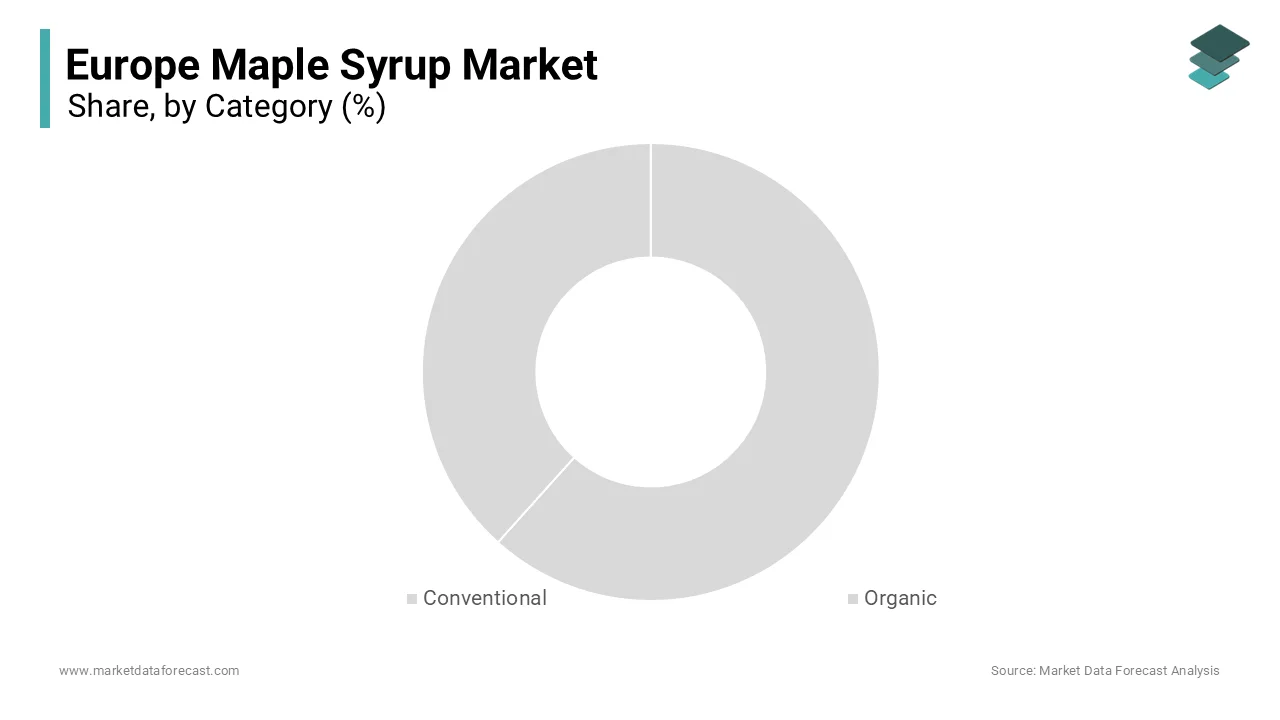
The organic maple syrup segment is estimated to register the fastest CAGR of 11.3% from 2026 to 2034 due to rising consumer demand for certified, sustainable,e anchemical-freeee food products aligned with EU Green Deal objectives. European consumer patterns show increased engagement with organic products, particularly within niche categories. Natural sweeteners like plant-based syrups are gaining traction within the broader organic market as consumers seek healthier alternatives. Major retailers are expanding shelf space for organic products to meet this demand. Listings for organic, speciality, and natural syrups are rising in some European countries. European regulations are becoming more stringent, enforcing eco-conscious production and sourcing practices. Canadian producers have obtained EU Organic certification, enabling premium positioning in health food stores and vegan product lines. The intersection of health-conscious shopping and environmental responsibility has propelled organic maple syrup from a niche luxury to a staple ethical choice.
By Distribution Channel Insights
In 2025, the hypermarkets and supermarkets segment led tEuropeanope maple syrup market by holding a share of 58.3% and served as the primary access point for mainstream consumers due to wide reach, competitive pricing, and established grocery routines. Chains offer both private label and branded maple syrup in standard 250 millilitre and 500 millilitre formats, catering to occasional and regular users. Many first-time maple syrup consumers encounter the product near other breakfast staples like cereals or pancake mixes. Promotional pricing and themed marketing campaigns during holiday periods drive increased product trial. Seasonal shopping trends, especially during late autumn and spring holidays, contribute to a rise in consumer interest and sales. Additionally, these retailers enforce strict quality controls requiring full ingredient transparency and origin labeling which builds consumer trust in a market vulnerable to adulteration. Monthly hypermarket visits by many European families make this channel essential for product distribution and brand presence.
The online sales segment is estimated to register the fastest CAGR of 14.7% over the forecast period, owing to the rise of e-commerce for specialitygroceries, direct-to-consumer brand models and demand for transparent product storytelling. Speciality platforms offer bulk and single-origin maple syrup with detailed harvest year, forest location and sustainability credentials, information rarely available in physical stores. Subscription models are also emerging. Moreover o, online channels enable small Canadian producers to bypass traditional importers and connect directly with European consumers through Shopify stores and marketplaces like Amazon EU. This digital disintermediation enhances authenticity, access, acce, ss and personalization accelerating adoption among urban food enthusiasts.
By Source Insights
The sugar maple (Acer saccharum) segment was the largest segment in the European maple syrup market by occupying a significant share in 2025. The supremacy of this segment is supported by its superior sap composition, yielding high sugar content ana d rich flavour profile ideal for commercial production. Native to northeastern North America, sugar maple sap contains sugar, the highest among maple species, reducing processing energy and cost. According to the Quebec Maple Syrup Producers, sugar maple forests are the primary source of the vast majority of Canadian maple syrup output. European importers prioritise this source for its consistency in color flavor and grading compliance with international standards. European Commission guidelines regarding the purity of maple syrup identify trees from the Acer genus, primarily the sugar maple, as the acceptable botanical origin. Culinary professionals also favour sugar maple syrup for its balanced caramel and vanilla notes,s which enhance both sweet and savoury dishes without overpowering other ingredients. This combination of agronomic efficiency,ncy regulatory recognition, and sensory quality solidifies sugar maple’s dominance in Europe’s premium syrup supply chain.
The red maple (Acer rubrum) segment is the fastest-growing source segment in the European maple syrup market. This growth is propelled by climate adaptation strategies in North American production regions where warming winters threaten traditional sugar maple viability. Red maple trees are showing a tendency to bud later in the season and withstand warmer temperatures, suggesting they could become more suitable for syrup harvesting in parts of Quebec and Ontario. The sap from red maples generally possesses a lower sugar content compared to other varieties, resulting in a lighter and more delicate syrup flavour profile. This particular type of maple syrup is gaining favour among specialised producers and artisans, including those in the baking and beverage industries, for its subtle taste. Efforts to study and develop techniques for harvesting from red maples have received financial support, with initial observations indicating better consistency in production despite changing spring weather patterns. Though not yet mainstream, red maple syrup is gaining traction in niche European markets like Denmark and Switzerland, where chefs value terroir-driven ingredient diversity. The demand for climate-resilient supply chains has transformed the red maple from a minor curiosity into a strategic sourcing option.
REGIONAL ANALYSIS
United Kingdom Maple Syrup Market Analysis
The United Kingdom outperformed other players in the European maple syrup market by accounting for a 21.7% share in 2025. The dominance of the UK market is driven by its cosmopolitan food culture, strong e-commerce infrastructure and early adoption of North American culinary trends. British consumers are highly receptive to premium imported ingredients, with a portion of households having purchased maple syrup at least once in the past year,r according to the UK Office for National Statistics. Major retailers like Waitrose and Sainsbury’s feature maple syrup in dedicated “world pantry” sections alongsidspecialityty salts and vinegars, reinforcing its gourmet status. The UK’s vibrant café scene also drives demand. The availability of maple-based beverages and breakfast items has become more common across numerous UK coffee shops. The UK has established a bilateral agreement to maintain consistent access to Canadian maple syrup, ensuring a steady supply post-Brexit. Hence, the UK market often acts as a key launchpad for new maple syrup products and culinary applications, driven by high digital engagement and a willingness to explore new food trends.
France Maple Syrup Market Analysis
France followed closely in the European maple syrup market by occupying a 17.1% share in 2025. The country stood out for its deep integration of maple syrup into haute cuisine and artisanal confectionery. Unlike other markets where usage is breakfast-centric, French chefs leverage maple syrup’s complex notes in savoury reductions for duck foie gras and game meats, as well as in chocolate ganaches and tarte tatin variations. High-end French culinary establishments are increasingly incorporating maple syrup into their seasonal menus. The retail market for maple syrup in France features specialised, premium options targeting discerning consumers. Authenticity checks are in place to ensure the quality of imported maple syrup, particularly from Canada. The organic movement in France is supporting the growth in sales of premium, organic maple syrup products. This fusion of gastronomic prestige and ethical consumption cements France’s role as Europe’s high-value maple syrup epicentre.
Germany Maple Syrup Market Analysis
Germany grew steadily in the European maple syrup market owing to its health-oriented consumer base and robust distribution through pharmacies and organic stores. German shoppers prioritise clean label transparency with a notable share checking for “100 per cent pure” claims before purchase, according to sources. Maple syrup is commonly positioned as a natural alternative to refined sugar in health food stores like Alnatura and Denn’s Bioma,rkt where organic variants dominate shelf space. The country’s strong baking tradition also drives steady demand. Many German households use maple syrup in traditional winter baked goods like gingerbread and stollen, particularly during colder months. Trade agreements support a consistent supply of maple syrup to Germany, which is a major importer. Consumer demand appears influenced by a preference for certified natural products and the ability to purchase high-quality ingredients, supporting sustained growth in both conventional and organic maple syrup segments in the German market.
Netherlands Maple Syrup Market Analysis
The Netherlands is another key player in the European maple syrup market and functions as a key logistics and sustainability gateway due to its strategic port infrastructure and progressive food policies. Rotterdam handles a portion of all Canadian maple syrup entering continental Europe, according to research enabling efficient redistribution to Germany, France and Belgium. Dutch consumers exhibit strong environmental consciousness. A significant share prefers products with verifiable forest stewardship credentials as per the Netherlands Nutrition Centre. This has spurred partnerships between Dutch importerand s and cooperatives to offer blockchain-traced syrup with carbon footprint labels. Additionally, the Netherlands leads in plant-based innovation with brands using maple syrup in vegan desserts and dairy alternatives. The Dutch government’s Green Deal for Sustainable Food encourages such ethical sourcing, reinforcing maple syrup’s appeal. The Netherlands' multicultural business landscape and mature e-commerce infrastructure are key to amplifying maple syrup's penetration into Northern and Central European markets.
Sweden Maple Syrup Market Analysis
Sweden is predicted to expand in theEuropeane maple syrup market from 2026 to 2034, exemplifying Scandinavia’s clean label ethos, where maple syrup is valued for its simplicity and functional versatility. Swedish dietary guidelines from the National Food Agency recommend natural sweeteners over refined sugar, aligning with the country’s “Mat som gör gott” national nutrition strategy. The country’s strict food marketing laws prohibit exaggerated health claims but allow factual statements like “naturally sourced,d” which enhances credibility. Additionally, Sweden’s thriving craft beverage scene has adopted maple syrup in limited edition gins and non alcoholic tonics, with brands launching seasonal variants. Sweden's blend of eco-consciousness, digital shopping, and sourcing transparency makes it a prime example for integrating ethical maple syrup into Nordic meals, showcasing how consumers embrace sustainable, traceable goods, a model for other markets seeking to normalise such practices.
COMPETITIVE LANDSCAPE
Competition in the European maple syrup market is defined by a unique interplay between a centralised North American supply authority and fragmented European distribution channels. The Federation of Quebec Maple Syrup Producers exerts significant influence by controlling global inventory pricing and quality standards, yet European competition occurs among importers, distributors,ors and artisanal brands rather than syrup producers themselves. De Traay B.V., KoRo and regional organic importers compete on logistics speed c certificationn transparency and private customisation. Meanwhile, premium brands like Sirop Mélasse and Bascom Family Farms differentiate through storytelling, terroir and chef collaborations. The market is further segmented by channel, with hypermarkets favoring cost efficient conventional syrup andspecialityy storeprioritisingng organic, traceable variants. Intense pressure from honey agave and other natural sweeteners forces players to emphasise maple syrup’s clean label purity and culinary versatility. With no domestic European production competition centers on value addition rather than sourcing, rewarding those who master regulatory compliance, consumer education and sustainable narrative marketing in a high trust low volume niche.
KEY MARKET PLAYERS
Some of the notable key players in thEuropeanpe maple syrup market are
- B&G Foods, Inc.
- Vermont Pleasant Valley Maples
- Ferguson Farm Vermont Maple Syrup
- Butternut Mountain Farm
- Coombs Family Farms
- Maple Joe (Famille Michaud Apiculteurs)
- Golden Dog Farm LLC
- Judd’s Wayeeses Farms
- Anderson’s Maple Syrup, Inc.
Top Players in the Market
- The Federation of Quebec Maple Syrup Producers is not a commercial entity but a globally influential regulatory and marketing body that governs thousands of maple syrup producers in Quebec, which supplies a significant share of the world’s maple syrup. In Europe, FPAQ strengthens market presence by enforcing strict quality grading,g authenticity verification, and sustainable forest management standards that build consumer trust. The organisation actively promotes pure maple syrup through EU-wide culinary campaigns and provides traceability documentation required by European importers. In recent years, FPAQ has partnered with European retailers to combat syrup adulteration and launched educational initiatives highlighting maple syrup’s natural origin and environmental stewardship, thereby reinforcing its premium positioning across the continent.
- Sirop Mélasse is a leading Canadian artisanal maple syrup producer with a strong foothold in Europe through direct exports and partnerships with premium organic retailers. The company contributes globally by emphasising small batch production, forest biodiversity, ty and carbon neutral certification, which resonate deeply with European sustainability values. In Europe, Sirop Mélasse has strengthened its position by obtaining EU Organic certification and launching single forest vintage syrups that appeal to gourmet consumers in France, Germany and the Netherlands. The brand actively participates in European food expos and collaborates with chefs to showcase maple syrup’s versatility beyond breakfast. These efforts position Sirop Mélasse as a premium storytelling brand that bridges Quebec terroir with European culinary innovation.
- De Traay B.V. is a Netherlands-based importer and distributor specialising in North American natural food products with maple syrup as a core offering across continental Europe. The company plays a pivotal role in the European supply chain by ensuring compliance with EU labelling, customs, and food safety regulations while maintaining cold chain integrity from Quebec to retail shelves. De Traay has strengthened its market position by implementingblockchain-enabledd traceability for every batch, allowing European retailers to verify harvest dates and forest practices. The company also offers private label solutions for organic and conventional maple syrup tailored to supermarket specifications in Germany, Belgium, um and Scandinavia. De Traay bridges the gap for Canadian producers to Europe’s natural foods market by leveraging logistics expertise and sustainability transparency.
Top Strategies Used by the Key Market Participants
Key players in tEuropeanope maple syrup market focus on authenticity verification by providing batch-level traceability and third-party certifications to combat adulteration and build consumer trust. They pursue EU Organic and sustainability credentials to align with Europe’s green consumption trends and justify premium pricing. Strategic partnerships with gourmet retailers, cheese,f s aplant-basedsed food brands expand usage beyond breakfast into culinary and functional applications. Companies invest in direct-to-consumer e-commerce platforms and subscription models to bypass traditional retail markups and foster brand loyalty. Additionally, they conduct educational campaigns on proper labelling usage and environmental stewardship to differentiate pure maple syrup from imitation syrups and enhance household penetration across diverse European markets.
MARKET SEGMENTATION
This research report on the European maple syrup market has been segmented and sub-segmented based on categories.
By Category
- Conventional
- Organic
By Distribution Channel
- Hypermarkets & Supermarkets
- Specialty Stores
- Online Sales Channels
- Others
By Source
- Sugar Maple
- Black Maple
- Red Maple
By Country
- UK
- France
- Spain
- Germany
- Italy
- Russia
- Sweden
- Denmark
- Switzerland
- Netherlands
- Turkey
- Czech Republic
- Rest of Europe
Frequently Asked Questions
1.What is maple syrup and how is it used?
Maple syrup is a natural sweetener made from the sap of maple trees, commonly used on pancakes, waffles, desserts, beverages, and as a natural sugar alternative in recipes.
2.What is driving growth in the Europe maple syrup market?
Growth is driven by rising consumer preference for natural and organic sweeteners, increased awareness of health benefits, and demand for premium food products.
3.Which countries in Europe consume the most maple syrup?
Countries such as the UK, Germany, France, and the Netherlands are key consumers due to growing interest in natural sweeteners and culinary trends.
4.How is maple syrup imported into Europe?
Europe primarily imports maple syrup from North America (especially Canada and the United States) through established trade channels and distribution networks.
5.What types of maple syrup products are available in Europe?
Products include pure maple syrup in various grades, organic maple syrup, flavored syrups, and value-added maple syrups blended with other natural flavors.
6.What factors influence maple syrup pricing in Europe?
Key factors include import duties, transportation costs, grade and quality of syrup, availability at source, and retail distribution margins.
7.What are the key distribution channels for maple syrup in Europe?
Supermarkets and hypermarkets, specialty food stores, online retail platforms, and gourmet shops are major distribution channels.
8.How does consumer preference for natural foods impact the maple syrup market?
Increasing demand for natural, minimally processed foods boosts maple syrup consumption, as consumers seek alternatives to refined sugars.
9.What are the challenges in the Europe maple syrup market?
Challenges include high import costs, limited local production, competition from artificial sweeteners, and seasonal supply variations.
10. Who are the major suppliers of maple syrup in Europe?
Major suppliers include Canadian cooperatives, North American exporters, specialty food importers, and select European distributors focusing on natural foods.
Related Reports
Access the study in MULTIPLE FORMATS
Purchase options starting from
$ 2000
Didn’t find what you’re looking for?
TALK TO OUR ANALYST TEAM
Need something within your budget?
NO WORRIES! WE GOT YOU COVERED!
Call us on: +1 888 702 9696 (U.S Toll Free)
Write to us: sales@marketdataforecast.com