- Product Description Description
- Table of Contents TOC
- List of Table & Figure LOT
- Get Free Sample PDF Sample PDF
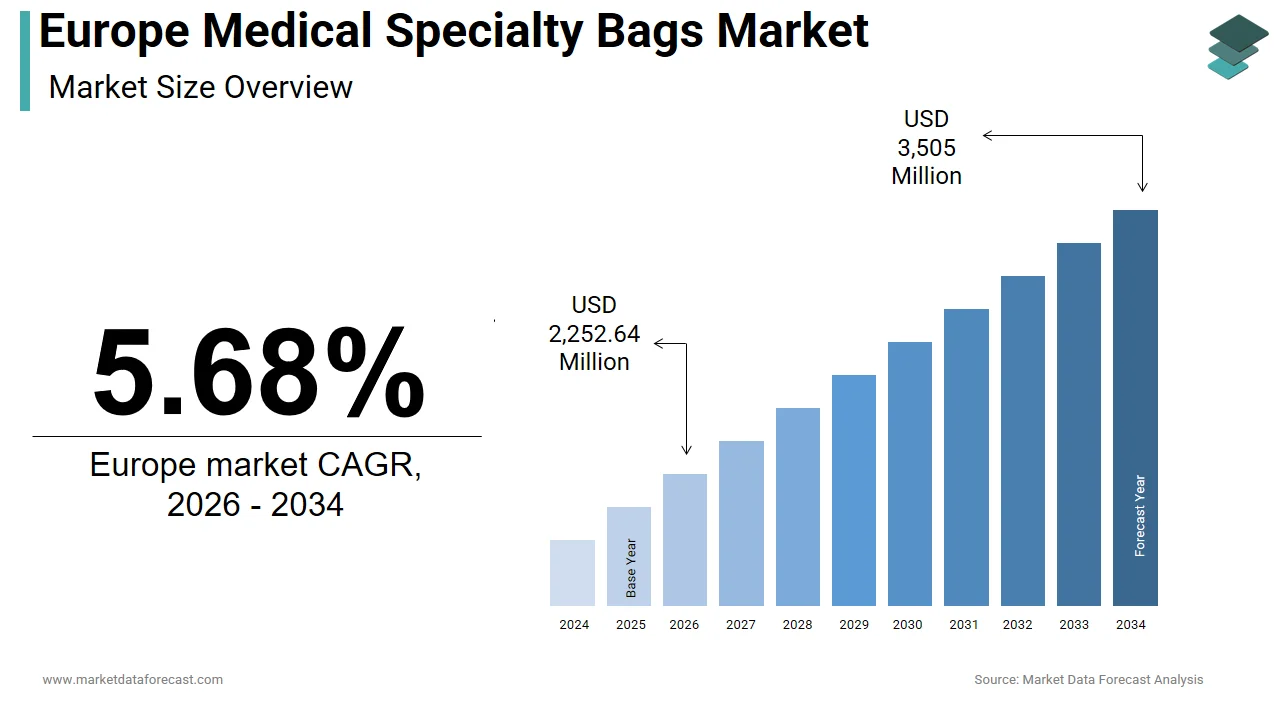
Market Size, 2025
$2,131.57 MnMarket Estimate, 2026
$2,252.64 MnMarket Forecast, 2034
$3,505 MnCAGR, 2026–2034
5.68%Europe Medical Specialty Bags Market Report Summary
The Europe medical specialty bags market was valued at USD 2,131.57 million in 2025, is estimated to reach USD 2,252.64 million in 2026, and is projected to reach USD 3,505 million by 2034, growing at a CAGR of 5.68% from 2026 to 2034. Market growth is driven by rising hospital admissions, increasing surgical procedures, and growing demand for safe and sterile fluid management solutions. Medical specialty bags, including intravenous (IV) fluid bags, ostomy bags, blood bags, and drainage bags, play a critical role in patient care and infection control. Expanding healthcare infrastructure, aging population trends, and stringent regulatory standards for medical disposables are further supporting steady market expansion across Europe.
Key Market Trends
- Rising demand for sterile and single-use medical fluid management systems.
- Increasing adoption of PVC-free and eco-friendly medical bag materials.
- Growing prevalence of chronic diseases and surgical interventions.
- Expansion of home healthcare and ambulatory care services.
- Strengthening regulatory focus on infection prevention and patient safety standards.
Segmental Insights
- Based on product, the intravenous (IV) fluid bags segment dominated the Europe medical specialty bags market in 2025 by holding the largest share. The segment’s leadership is attributed to high usage in hospitals for hydration therapy, medication delivery, and critical care applications.
Regional Insights
The Europe medical specialty bags market is witnessing steady growth across major economies, supported by strong healthcare systems, rising procedural volumes, and increasing medical disposable consumption.
- Germany stood as the leading country in 2025 by commanding 23.5% of the regional market share, driven by advanced hospital infrastructure, high healthcare expenditure, and strong domestic medical device manufacturing capabilities.
- France held the second-largest share in 2025, supported by public healthcare investments and growing demand for surgical and post-operative care products.
- The United Kingdom maintained a significant position in 2025, driven by NHS procurement systems and increasing focus on infection control and patient safety initiatives.
Competitive Landscape
The Europe medical specialty bags market is characterized by strong competition among global medical device manufacturers and specialized healthcare consumables providers. Market players are focusing on product innovation, development of biocompatible and environmentally sustainable materials, and expansion of manufacturing capacities. Strategic collaborations with hospitals and healthcare distributors are strengthening competitive positioning across the region.
Prominent companies operating in the Europe medical specialty bags market include ConvaTec, Medline Industries, Inc., Nolato AB, Hollister Incorporated, Baxter International, Inc., Coloplast A/S, Macopharma SA, Terumo Corporation, B. Braun Melsungen AG, and C.R. Bard, Inc.
Europe Medical Specialty Bags Market Size
The Europe application lifecycle management market was valued at USD 2,131.57 million in 2025, is estimated to reach USD 2252.64 million in 2026, and is projected to reach USD 3,505 million by 2034, growing at a CAGR of 5.68% from 2026 to 2034.
Medical specialty bags comprise a critical array of sterile containment solutions designed for the safe collection, storage, and transport of biological fluids, tissues, and pharmaceutical products within clinical settings. These specialized containers include blood collection bags, urine drainage systems, ostomy pouches, and parenteral nutrition vessels that adhere to rigorous sterility and biocompatibility standards. The operational necessity for these devices stems from the increasing complexity of surgical procedures and the rising prevalence of chronic conditions requiring long-term fluid management. According to Eurostat, the population aged 65 and older in the European Union accounted for 21% of the total population in 2023, which is creating a substantial demographic base reliant on continuous medical care involving fluid exchange. The European Centre for Disease Prevention and Control emphasizes that healthcare-associated infections remain a persistent threat, which drives the demand for single-use disposable bags that minimize cross-contamination risks. National health systems across nations like Germany and France have implemented strict protocols for waste segregation and fluid handling that mandate the use of certified specialty bags. The shift toward outpatient care and home-based therapies further amplifies the need for portable and user-friendly bag systems that patients can manage independently. Regulatory bodies ensure that every product entering the market undergoes exhaustive testing for leachables and extractables to guarantee patient safety during prolonged contact with bodily fluids.
MARKET DRIVERS
Rising Prevalence of Chronic Diseases Requiring Fluid Management
The escalating incidence of chronic diseases such as kidney failure, cancer, and diabetes is fuelling the growth of the European medical specialty bags market. These conditions often necessitate regular dialysis, chemotherapy, or parenteral nutrition, which rely heavily on sterile bag systems. As per the International Diabetes Federation, approximately 61 million adults in the European region were living with diabetes in 2023, with many requiring intravenous therapy or wound care involving specialty bags. Chronic kidney disease affects over 12 million people in Western Europe, driving demand for hemodialysis circuits that utilize high-performance blood bags and tubing sets. The European Renal Association notes that the number of patients undergoing renal replacement therapy continues to rise annually. Oncology treatments frequently involve complex infusion protocols requiring specialized bags. The aging population exacerbates this trend, as older adults are more susceptible to comorbidities demanding intensive fluid management. Healthcare providers prioritize high-quality bags to prevent treatment interruptions and ensure patient safety.
Expansion of Home Healthcare and Ambulatory Surgical Centers
The strategic shift toward decentralized care delivery models, including home healthcare and ambulatory surgical centers, which is significantly propels demand for portable and easy-to-use medical specialty bags and further contributes to the regional market expansion. European health policies increasingly favor treating patients in non-hospital settings. As per the European Commission, over 30% of surgical procedures in several member states are now performed in ambulatory settings. Home dialysis programs have gained traction, with thousands of patients transitioning to home-based regimens requiring compact bag systems. The convenience of self-draining urine bags and discreet ostomy pouches empowers patients to maintain daily activities. Manufacturers are developing user-friendly designs with intuitive connections and anti-reflux valves. The growth of telemedicine supports remote monitoring of patients using these devices. Insurance providers in countries like the Netherlands and Sweden have expanded reimbursement coverage for home care supplies.
MARKET RESTRAINTS
Stringent Regulatory Compliance and Approval Timelines
The rigorous regulatory framework governing medical devices in Europe creates barriers to entry and slows the commercialization of new specialty bag products, which is a significant impediment to the growth of the European medical specialty bags market. Manufacturers must navigate complex conformity assessment procedures under the Medical Device Regulation. As per the European Commission, the transition to stricter regulation has extended approval timelines by 18–24 months for many class II and III devices, including fluid bags. Requirements for technical documentation, biocompatibility, sterilization validation, and risk management add high cost and time. SMEs often struggle to meet these standards. The lack of harmonized interpretation among notified bodies leads to inconsistencies in approval outcomes. Companies must invest heavily in quality management systems, diverting funds from innovation. This restrictive environment discourages new entrants and limits product diversity, delaying patient access to innovative bag technologies.
Environmental Concerns Regarding Single-Use Plastic Waste
The growing environmental scrutiny surrounding the disposal of single-use plastic medical products poses a significant restraint. Healthcare facilities generate vast amounts of plastic waste, with disposable bags constituting a major portion. As per the European Environment Agency, the healthcare sector is responsible for a significant share of municipal waste. Incineration of contaminated plastic bags releases harmful emissions, while recycling options remain limited. Hospitals are setting sustainability goals that prioritize eco-friendly procurement. The development of biodegradable or recyclable bags faces technical challenges regarding sterility and barrier properties. Cost implications of green materials often result in higher prices, straining healthcare budgets. The absence of standardized guidelines for the disposal of medical plastics complicates waste management strategies. Until viable, sustainable solutions become mainstream, the industry faces reputational risks and potential regulatory restrictions.
MARKET OPPORTUNTIES
Integration of Smart Technologies for Patient Monitoring
The incorporation of smart sensors and connectivity features into medical specialty bags presents a transformative opportunity for the European medical specialty bags market. These intelligent bags can monitor fluid levels, flow rates, and temperature in real time, transmitting data to healthcare providers via wireless networks to enable proactive interventions. As per the European Society of Intensive Care Medicine, the implementation of connected devices in critical care settings has been shown to reduce medication errors and improve response times to adverse events by up to 40%. Smart infusion bags equipped with RFID tags allow for automated tracking of inventory and expiration dates, reducing waste and ensuring the availability of critical supplies. The ability to detect air bubbles or clots within the tubing system prevents potentially fatal complications during transfusions or dialysis procedures. Remote monitoring capabilities support the expansion of home care programs by allowing clinicians to oversee patient status without physical presence. Technology firms are collaborating with medical device manufacturers to develop miniaturized sensors that integrate seamlessly into existing bag designs. Reimbursement bodies are beginning to recognize the value of these advanced features in preventing costly hospital readmissions.
Development of Bio-Based and Sustainable Material Solutions
The innovation of bio-based and fully recyclable materials for medical specialty bags offers a significant opportunity for the European medical specialty bags market. Researchers and manufacturers are exploring polymers derived from renewable resources such as corn starch and cellulose. As per the European Bioplastics Association, the market for biodegradable plastics in the medical sector is projected to grow substantially as regulatory pressure mounts to reduce single-use waste. New processing techniques enable the production of films that resist leakage and maintain integrity during sterilization processes. Hospitals are increasingly willing to pay a premium for sustainable products that align with corporate social responsibility goals. Collaborative projects funded by the European Union focus on creating closed-loop systems where used bags can be safely collected and recycled. The development of compostable bags for non-hazardous waste streams simplifies disposal procedures. Brands that successfully launch eco-friendly lines can differentiate themselves in a competitive market.
MARKET CHALLENGES
Supply Chain Vulnerabilities for Raw Materials
The dependence on global supply chains for critical raw materials such as specialized resins and additives creates a significant challenge for the European medical specialty bags market. Disruptions caused by geopolitical tensions, trade restrictions, or logistical bottlenecks can lead to severe shortages and price volatility. As per the European Chemical Industry Council, the prices of key petrochemical derivatives fluctuated wildly in recent years due to energy crises and supply chain constraints affecting the medical device sector. Manufacturers often rely on a limited number of suppliers for high-purity polymers that meet strict medical-grade specifications, making them vulnerable to single points of failure. The lead times for importing these materials have extended significantly, causing delays in fulfilling orders. Diversifying the supplier base requires extensive qualification processes that are time-consuming and costly. The lack of local production capacity for certain advanced materials within Europe exacerbates reliance on imports from Asia and North America. Companies must maintain higher inventory levels to buffer against disruptions, which ties up capital and increases storage costs.
High Costs Associated with Advanced Sterilization Processes
The substantial financial burden of maintaining advanced sterilization processes poses a persistent challenge for manufacturers of medical specialty bags in Europe. Ensuring absolute sterility requires sophisticated equipment and rigorous validation protocols. As per the European Agency for Safety and Health at Work, operational costs for sterilization facilities have risen sharply due to increasing energy prices and stricter emission regulations. Methods such as gamma irradiation and electron beam processing require specialized infrastructure and safety measures that represent a high barrier to entry for smaller producers. The need to validate every batch for sterility assurance levels adds layers of complexity and time. Regulatory audits demand meticulous documentation of every step in the sterilization cycle. Any deviation in the process can result in rejection of entire production lots, leading to financial losses and supply shortages. The transition to alternative sterilization methods like vaporized hydrogen peroxide involves substantial capital investment. These high operational costs are often passed on to healthcare providers, straining public health budgets. Balancing cost efficiency with uncompromising safety standards remains a delicate struggle for the industry.
REPORT COVERAGE
| REPORT METRIC | DETAILS |
| Market Size Available | 2025 to 2034 |
| Base Year | 2025 |
| Forecast Period | 2026 to 2034 |
| Segments Covered | By Product and Country. |
| Various Analyses Covered | Global, Regional and Country-Level Analysis, Segment-Level Analysis, Drivers, Restraints, Opportunities, Challenges; PESTLE Analysis; Porter’s Five Forces Analysis, Competitive Landscape, Analyst Overview of Investment Opportunities |
| Countries Covered | UK, France, Spain, Germany, Italy, Russia, Sweden, Denmark, Switzerland, Netherlands, Turkey, Czech Republic, Rest of Europe |
| Market Leaders Profiled | ConvaTec, Medline Industries, Inc., Nolato AB, Hollister Incorporated, Baxter International, Inc., Coloplast A/S, Macopharma SA, Terumo Corporation, B. Braun Melsungen AG, Inc, C.R. Bard, Inc. |
SEGMENTAL ANALYSIS
By Product Insights
The intravenous fluid bags segment dominated the market by holding the largest share of the European medical specialty bags market in 2025. The dominating position of the intravenous fluid bags segment in the European market is attributed to its fundamental role as a universal delivery system for medications, nutrients, and hydration across all healthcare settings and the sheer volume of surgical procedures and hospital admissions that require immediate fluid resuscitation or continuous drug administration. As per the Organisation for Economic Co-operation and Development, the average number of hospital discharges per capita in European Union countries exceeds 12,000 annually, with nearly every admitted patient receiving some form of intravenous therapy during their stay. The versatility of these bags allows them to be used for everything from simple saline hydration to complex chemotherapy regimens, making them indispensable in emergency rooms, operating theatres, and intensive care units. The rise in chronic diseases such as cancer and diabetes further amplifies demand. National health services in major economies like Germany and France maintain vast stockpiles of these bags to ensure readiness for public health emergencies. Furthermore, the shift toward pre-filled IV bags to reduce medication errors and nursing workload has revitalized this mature segment.
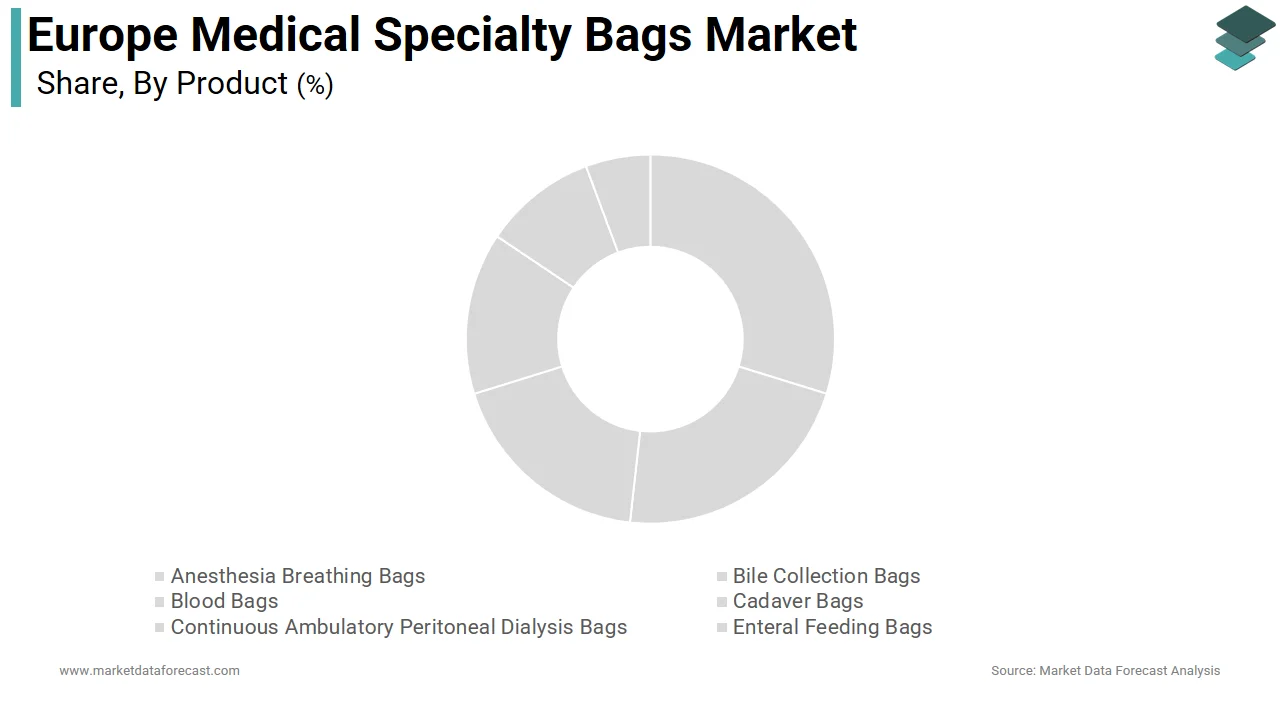
The continuous ambulatory peritoneal dialysis (CAPD) bags segment is the fastest-growing product category in the Europe medical specialty bags market and is expected to exhibit a CAGR of 10.2% over the forecast period, owing to the increasing preference for home-based dialysis treatments that offer patients greater autonomy and improved quality of life compared to center-based hemodialysis. The primary driver is the escalating prevalence of end-stage renal disease across Europe. As per the European Renal Association, the number of patients requiring renal replacement therapy in Europe continues to rise by over 3% annually, with a significant portion opting for peritoneal dialysis due to its flexibility and lower cost burden on healthcare systems. These specialized bags are designed for multiple daily exchanges, allowing patients to perform treatments at home, work, or while traveling. Government initiatives in countries like the United Kingdom and Spain actively promote home dialysis programs to alleviate pressure on overcrowded clinics. Technological advancements have led to twin bag systems and automated cycler-compatible bags that minimize infection risks and simplify the exchange process for elderly users. The aging demographic profile of Europe ensures a steady influx of new patients who benefit from this less invasive treatment modality, securing robust growth for this specific bag segment.
COUNTRY-LEVEL ANALYSIS
Germany Medical Specialty Bags Market Analysis
Germany stood as the preeminent leader in the Europe medical specialty bags market by commanding a share of 23.5% of the regional market in 2025. The dominance of Germany in the European market is attributed to its robust manufacturing base and advanced healthcare infrastructure. The country's position is reinforced by a dense network of world-class hospitals and research institutions that drive high consumption of specialized medical consumables. A major driving factor is the stringent regulatory environment enforced by the Federal Institute for Drugs and Medical Devices, which sets high standards for product quality and sterility. As per the German Federal Statistical Office, the nation performs over 20 million surgical procedures annually, each requiring extensive use of anesthesia breathing bags, IV fluid bags, and sterile packaging solutions. The presence of leading global medical device manufacturers facilitates rapid innovation and efficient supply chain logistics. Germany’s emphasis on outpatient care and early discharge protocols has increased demand for home care compatible bags. Furthermore, substantial government funding for digital health integration supports the adoption of smart bag technologies.
France Medical Specialty Bags Market Analysis
France held the second-largest share of the European medical specialty bags market in 2025. The leading position of France in the European market can be credited to the high utilization rates of specialized bags for oncology and rare disease treatments and the national strategy to expand home hospitalization programs. As per Santé Publique France, the incidence of chronic kidney disease and cancer continues to rise, necessitating increased volumes of blood collection and parenteral nutrition bags. The centralized procurement system under the Ministry of Health enables bulk purchasing agreements. France’s tradition of biomedical research fosters collaborations between academic centers and industry players. The aging population, with a significant proportion over 75, creates sustained demand for urinary collection and ostomy bags.
United Kingdom Medical Specialty Bags Market Analysis
The United Kingdom held a significant position in the Europe medical specialty bags market in 2025. The market status in the UK is defined by the tension between budgetary constraints and modernization needs. A key driving factor is the NHS Long Term Plan, which targets the expansion of community-based care. As per NHS Digital, the number of patients receiving treatment at home has grown by 15% in recent years, directly correlating with higher consumption of user-friendly medical bags. The presence of renowned research universities and biotech hubs in Cambridge and London drives innovation in smart packaging and bio-based materials. Despite post-Brexit trade challenges, the UK remains a critical market due to rigorous safety standards and early adoption of novel technologies.
Italy Medical Specialty Bags Market Analysis
Italy represents a crucial market within the Europe medical specialty bags market due to its heavy influence by the high prevalence of age-related conditions and the Italian National Health Service’s commitment to managing chronic diseases. As per the Italian National Institute of Statistics, more than 23% of the Italian population is aged 65 or older, creating a substantial pool reliant on continuous fluid management. The decentralized healthcare system allows regions to tailor procurement strategies. Collaborations between Italian nephrology societies and international research groups facilitate the adoption of best practices. Economic incentives for reducing hospital-acquired infections further encourage the use of single-use disposable bags.
Spain Medical Specialty Bags Market Analysis
Spain is predicted to account for a notable share of the European medical specialty bags market over the forecast period, owing to the modernization of healthcare infrastructure and a focus on preventive medicine. A significant driving factor is the Strategic Action for Chronic Diseases launched by the Ministry of Health. As per the Spanish Society of Nephrology, chronic kidney disease prevalence in Spain has risen to affect nearly 10% of the adult population. Expansion of private healthcare providers alongside the public system accelerates the adoption of innovative consumables. Regional governments in Catalonia and Madrid are investing in state-of-the-art laboratory facilities. The tourism industry also plays a role as medical tourism grows, attracting patients for specialized treatments requiring sterile bags.
KEY MARKET PLAYERS
Key players dominating the Europe medical specialty bags market profiled in this report are
- ConvaTec
- Medline Industries, Inc.
- Nolato AB
- Hollister Incorporated
- Baxter International, Inc.
- Coloplast A/S
- Macopharma SA
- Terumo Corporation
- B. Braun Melsungen AG
- C.R. Bard, Inc.
MARKET SEGMENTATION
This research report on the Europe medical specialty bags market has been segmented and sub-segmented into the following categories.
By Product
- Anesthesia Breathing Bags
- Bile Collection Bags
- Blood Bags
- Cadaver Bags
- Continuous Ambulatory Peritoneal Dialysis Bags
- Enteral Feeding Bags
- Intravenous Fluid Bags
- Ostomy Bags
- Sterile Packaging Bags
- Urinary Collection Bags
By Country
- UK
- France
- Spain
- Germany
- Italy
- Russia
- Sweden
- Denmark
- Switzerland
- Netherlands
- Turkey
- Czech Republic
- Rest of Europe