- Product Description Description
- Table of Contents TOC
- List of Table & Figure LOT
- Get Free Sample PDF Sample PDF
Market Size, 2025
$1,188.99 MnMarket Estimate, 2026
$1,332.02 MnMarket Forecast, 2034
$3,305.11 MnCAGR, 2026–2034
12.03%Europe Mesenchymal Stem Cells Market Summary
The European mesenchymal stem cells market, valued at USD 1,188.99 million in 2025, is projected to reach USD 3,305.11 million by 2034, growing at a CAGR of 12.03%, driven by EU-funded regenerative medicine programs, aging demographics, and the transition toward scalable allogeneic cell therapies.
Key Market Highlights
- 2025 Market Size: USD 1,188.99 million
- 2026 Estimate: USD 1,332.02 million
- 2034 Forecast: USD 3,305.11 million
- CAGR (2026–2034): 12.03%
- Base Year: 2025
- Forecast Period: 2026–2034
Quick Growth Drivers
- Strong EU public funding under Horizon Europe and regenerative medicine programs
- Rapid growth in clinical trials under the ATMP framework
- Rising prevalence of chronic and degenerative diseases (osteoarthritis, IBD, autoimmune disorders)
- An aging European population is increasing the demand for regenerative orthopedic therapies
- Ethical acceptability of MSCs compared to embryonic stem cells
Principal Restraints
- Complex and fragmented ATMP regulatory pathways across EU member states
- High manufacturing and clinical development costs
- Limited number of MSC therapies with full EMA approval
- Inconsistent reimbursement coverage across national health systems
- Heavy reliance on out-of-pocket payments for patients
High-Value Opportunities
- Expansion of allogeneic “off-the-shelf” MSC platforms enabling scale and cost reduction
- Integration of MSCs with 3D bioprinting and scaffold technologies
- Growing use of MSCs in drug discovery and human-relevant disease models
- Combination products bridging medical devices + cell therapy
- Increased adoption of hospital exemption pathways for early clinical access
Key Market Challenges
- Lack of standardized potency and efficacy assays, limiting comparability
- Donor sourcing, screening, and ethical consent complexities
- Long timelines to generate long-term safety and durability data
- Fragmentation between commercial ATMP routes and hospital exemption models
Fastest-Growing Segments
- Services: 14.4% CAGR driven by hospital exemption and outsourced GMP processing
- Characterization Workflows: 17.2% CAGR regulatory demand for multiparametric assays
- Tissue Engineering Applications: strong growth via MSC–scaffold combination products
Regional Leadership & Dynamics
- Germany (23.9%), ATMP leadership, hospital exemption use, GMP infrastructure
- France'se public reimbursement pilots and state-led regenerative medicine programs
- United Kingdom potency assay R&D and ATMP Treatment Centres
- Sweden's allogeneic platform development and biobank strength
- Italy orthopedic and corneal applications under controlled reimbursement
What Wins Commercially
- Scalable allogeneic manufacturing platforms
- Strong GMP compliance and regulatory strategy
- Integration with hospital networks and certified treatment centers
- Real-world evidence supporting health economic value
- Advanced cell characterization and quality control capabilities
Top Strategic Ask for Executives
Shift from bespoke autologous models toward standardized allogeneic platforms, invest in potency assay harmonization, and align early with reimbursement bodies to unlock scalable adoption across Europe.
Leading Players
Some of the companies that are playing a dominating role in the European mesenchymal stem cells market include
- Lonza Group AG
- Thermo Fisher Scientific
- Merck KGaA
- Takeda
- RoosterBio
- PromoCell GmbH
- Stemcell Technologies
- Mesoblast
Europe Mesenchymal Stem Cells Market Size
The europe mesenchymal stem cells market was valued at USD 1,188.99 million in 2025, is estimated to reach USD 1,332.02 million in 2026, and is projected to reach USD 3,305.11 million by 2034, growing at a CAGR of 12.03% from 2026 to 2034.

Mesenchymal stem cells are multipotent stromal cells derived primarily from bone marrow, adipose tissue, umbilical cord, and dental pulp for research and clinical use. These cells are distinguished by their capacity to differentiate into osteogenic, chondrogenic, ic and adipogenic lineages and by their potent immunomodulatory and anti-inflammatory paracrine signaling, ing as these are the properties that underpin their investigational use in autoimmune disorders, dermal orthopedic repair,r and graft versus host disease. Unlike embryonic stem cells, mesenchymal stem cells are ethically non-contentious and fall under the EU’s Advanced Therapy Medicinal Products framework, which governs their development as standardized biological medicines. According to the European Medicines Agency, clinical trials involving mesenchymal stem cells are actively registered in the EU, with several progressing to advanced phases. As per the European Commission’s Horizon Europe program, regenerative medicine projects focusing on cell-based therapies have received significant funding support under the health cluster. Furthermore, according to Eurostat, around 35% of Europeans report living with chronic health problems, including conditions such as osteoarthritis, type 2 diabetes, and inflammatory bowel disease. These scientific, policy, and demographic factors position the market not as a speculative frontier but as an emerging pillar of Europe’s precision medicine and aging society strategy.
MARKET DRIVERS
EU-Funded Regenerative Medicine Initiatives Accelerate Clinical Translation
Public investment through European Union research frameworks has become a primary engine for advancing mesenchymal stem cell therapies from bench to bedside, which is one of the key factors propelling the growth of the European mesenchymal stem cells market. As per the European Commission’s Horizon Europe Work Programme 2023–2024, funding was earmarked for cell and gene therapy development, with mesenchymal stem cells included in a majority of supported projects. Flagship programs like the EU-funded REMEDi consortium have established standardized protocols for bone marrow-derived mesenchymal stem cell expansion and cryopreservation across multiple clinical sites in Germany, France, and Sweden, ensuring batch consistency required for regulatory approval. According to the European Institute of Innovation and Technology, EU-funded trials benefited from centralized ethics review and GMP infrastructure sharing, which accelerated regulatory milestone progression compared to privately sponsored studies. Additionally, the Innovative Medicines Initiative’s “BeTheCure” project demonstrated the therapeutic potential of adipose-derived mesenchymal stem cells in Crohn’s disease fistula recurrence, with data under EMA review. This coordinated public investment reduces risks in early-stage development and creates a robust pipeline of clinically validated candidates.
Aging Population and Rising Prevalence of Degenerative Joint Disorders Drive Orthopedic Applications
Europe’s demographic shift toward an older population is creating sustained demand for regenerative orthopedic solutions, which is further boosting the expansion of the European mesenchymal stem cells market. According to Eurostat, more than one-fifth of the EU population was aged 60 or older in 2024, with projections indicating continued growth by 2030. This aging cohort faces high rates of osteoarthritis, and the European Alliance of Associations for Rheumatology reports that millions of Europeans currently suffer from knee osteoarthritis, with annual societal costs in the tens of billions of euros. Mesenchymal stem cell injections offer a disease-modifying alternative to joint replacement, with trials showing cartilage regeneration and pain reduction. As per The Lancet Rheumatology, intra-articular mesenchymal stem cell therapy demonstrated significant improvement in WOMAC scores compared to hyaluronic acid controls. In Germany and Italy, national health technology assessment bodies now reimburse stem cell procedures for early-stage osteoarthritis under controlled use schemes. This convergence of unmet clinical need, demographic pressure, and partial reimbursement ensures orthopedics remains the largest and most viable near-term application segment.
MARKET RESTRAINTS
Stringent and Fragmented Regulatory Pathways Under ATMP Framework Increase Development Timelines
The European Union’s Advanced Therapy Medicinal Products regulation, while ensuring safety, creates significant barriers to market entry due to its complexity and national implementation variations. According to the European Medicines Agency, only a limited number of ATMPs have received full marketing authorization since 2009, with few involving mesenchymal stem cells. The process requires extensive chemistry, manufacturing, and controls data, comparability studies, and long-term follow-up for tumorigenicity, costing hundreds of millions of euros per product. Moreover, while the EMA provides centralized assessment, national competent authorities in countries like France and Sweden impose additional hospital exemption requirements that allow unapproved therapies under restricted conditions, creating regulatory asymmetry. As per the European Society for Gene and Cell Therapy, many academic developers abandoned commercialization due to regulatory burden, preferring hospital exemption routes that limit scalability. This fragmented and costly pathway discourages private investment and delays patient access despite a strong scientific rationale.
Limited Reimbursement and High Out-of-Pocket Costs Restrict Patient Access
Even when mesenchymal stem cell therapies demonstrate clinical efficacy, they often face exclusion from public reimbursement due to uncertain cost-effectiveness, which further hinders the growth of the European mesenchymal stem cells market. According to the European Observatory on Health Systems and Policies, only a few EU countries, such as Germany, Italy, and the Netherlands,s provide partial coverage for orthopedic stem cell injections, and only under strict criteria such as failed conventional therapy and early disease stage. In most EU countries, patients must pay several thousand euros out of pocket for a single treatment, which is prohibitive for chronic conditions requiring repeat administration. As per IQVIApatient-fundeded procedures account for the majority of current mesenchymal stem cell use in Europe, creating a two-tier system where access is determined by income rather than medical need. Furthermore, health technology assessment bodies like NICE in the UK consistently reject reimbursement due to a lack of long-term durability data beyond two years. Until robust health economic models demonstrate lifetime cost savings over standard care, widespread adoption will remain constrained to affluent patient segments.
MARKET OPPORTUNITIES
Expansion of Allogeneic “Off the Shelf” Platforms Enables Scalable Therapeutic Delivery
The shift from patient-specific autologous to donor-derived allogeneic mesenchymal stem cell products is unlocking commercial viability through standardized, scalable manufacturing, which is a promising opportunity for the European mesenchymal stem cells market. Unlike autologous therapies,s which require individual cell harvest and expansion, allogeneic products can be produced in large batches from a single donor and cryopreserved for immediate use. According to the European Medicines Agency, allogeneic mesenchymal stem cell lines represent a majority of active clinical trials in the EU due to logistical and quality control advantages. Companies like TiGenix, now part of Takeda, have developed allogeneic dipose-derived cells for complex perianal fistulas in Crohn’s disease, achieving EMA approval as Alofisel. As per research from the Karolinska Institute, a single master cell bank can generate thousands of doses that meet EMA’s identity, purity, and potency criteria. This industrial model reduces cost per dose and enables rapid deployment in acute settings such as stroke or myocardial infarction, transforming mesenchymal stem cells from bespoke interventions into accessible medicines.
Integration with 3D Bioprinting and Scaffold Technologies Enhances Tissue Regeneration Efficacy.
The convergence of mesenchymal stem cells with advanced biomaterials is creatingnext-generationn regenerative implants for bone and cartilage repair, which is another notable opportunity in the European mesenchymal stem cells market. According to the European Commission’s Bio-based Industries Joint Undertaking, funding was allocated in 2023 to projects combining stem cells with biodegradable scaffolds for orthopedic applications. Researchers at the University of Utrecht developed a 3D printed hydrogel scaffold seeded with bone marrow-derived mesenchymal stem cells that showed strong cartilage regeneration in porcine knee defects, with results now in Phase I human trials. Similarly, the Spanish National Center for Biotechnology partnered with Orthocell to create a collagen membrane infused with mesenchymal stem cells for spinal fusion that demonstrated reduced healing time. These combination products leverage the cells’ regenerative capacity while providing structural support and controlled release of growth factors. As the EU Medical Devices Regulation harmonizes combination product classification, this integrated approach offers a clear pathway to premium reimbursement and clinical differentiation.
MARKET CHALLENGES
Lack of Standardized Potency Assays Undermines Product Comparability and Clinical Reproducibility
The absence of universally accepted biomarkers to quantify mesenchymal stem cell therapeutic potency creates significant scientific and regulatory uncertainty, which is a significant challenge to the growth of the European mesenchymal stem cells market. According to the International Society for Cell and Gene Therapy, current potency assays ranging from immunosuppression of T cells to cytokine secretion profiles vary widely between laboratories, with poor inter-assay correlation. A multicenter study published in Stem Cells Translational Medicine found that the same cell batch showed notable variation in IDO enzyme activity, a key immunomodulatory marker, across EU testing sites due to differences in culture conditions and assay protocols. This inconsistency complicates dose standardization and makes clinical trial results difficult to replicate or compare. The European Medicines Agency has repeatedly requested validated potency assays as part of marketing applications, yet no reference method exists. Without harmonized metrics, developers cannot ensure batch-to-batch consistency or demonstrate dose-response relationships, which are fundamental requirements for regulatory approval and clinical trust.
Ethical and Logistical Complexities in Sourcing and Donor Screening for Allogeneic Cells
While allogeneic platforms promise scalability, they introduce new challenges in donor recruitment, consent, and infectious disease screening, which further challenge the growth of the European mesenchymal stem cells market. According to the European Directorate for the Quality of Medicines, donor eligibility criteria under EU Tissue and Cells Directives include extensive serological testing for HIV, hepatitis, and emerging pathogens. The scarcity of eligible donors, particularly for young healthy adipose or bone marrow sources, limits master cell bank creation. A review by the Paul Ehrlich Institute in Germany found that only a minority of screened bone marrow donors met all ATMP requirements due to latent viral infections or prior medical history. Furthermore, ethical consent for commercial use varies by country, with Sweden requiring explicit approval for profit-generating applications while Spain allows broad research consent. These discrepancies complicate pan-European cell banking and increase costs for donor acquisition and testing. Until harmonized donor frameworks and alternative cell sources such as perinatal tissues are fully validated, supply constraints will persist, threatening the scalability of off-the-shelf therapies.
REPORT COVERAGE
| REPORT METRIC | DETAILS |
| Market Size Available | 2025 to 2034 |
| Base Year | 2025 |
| Forecast Period | 2026 to 2034 |
| Segments Covered | By Product, Workflow Type, Application, and Region. |
| Various Analyses Covered | Global, Regional, and Country-Level Analysis, Segment-Level Analysis, Drivers, Restraints, Opportunities, Challenges; PESTLE Analysis; Porter’s Five Forces Analysis, Competitive Landscape, Analyst Overview of Investment Opportunities |
| Countries Covered | UK, France, Spain, Germany, Italy, Russia, Sweden, Denmark, Switzerland, Netherlands, Turkey, Czech Republic, Rest of Europe |
| Market Leaders Profiled | Lonza Group AG, Thermo Fisher Scientific Inc., Merck KGaA (MilliporeSigma), FUJIFILM Cellular Dynamics, Inc., RoosterBio, Inc., PromoCell GmbH, Stemcell Technologies, Inc., Bio-Techne Corporation, Cell Systems, LLC, Athersys, Inc., Osiris Therapeutics, Inc., Mesoblast Limited, Takara Bio Inc., Pluristem Therapeutics Inc., Celyad Oncology SA, Cytori Therapeutics, Inc., ReNeuron Group plc, Invetech (IDT Australia), Beijing Beike Biotechnology Co., Ltd., AllCells, LLC |
SEGMENTAL ANALYSIS
By Products Insights
The products segment dominated the market by holding the highest share of 63.6% of the regional market in 2025. The dominance of products segment in the European market is driven by the commercial maturity of standardized cell lines, reagents, and GMP-compliant kits compared to bespoke service models. Allogeneic mesenchymal stem cell products, manufactured from donor-derived master cell banks, enable off-the-shelf availability and consistent quality required for regulatory approval and clinical adoption. According to the European Medicines Agency, allogeneic products account for a majority of ATMP clinical trials in the EU due to their batch reproducibility and reduced manufacturing complexity. Companies like Takeda’s Alofisel for Crohn’s fistulas and Holostem’s Holoclar for corneal repair have achieved EMA approval as standardized medicinal products rather than custom services. As per the European Society for Gene and Cell Therapy, product-based therapies reduce treatment cost variability compared to autologous services, which require individual cell processing. This industrial model aligns with EU pharmaceutical frameworks and facilitates hospital pharmacy integration, key advantages over labor-intensive service delivery.
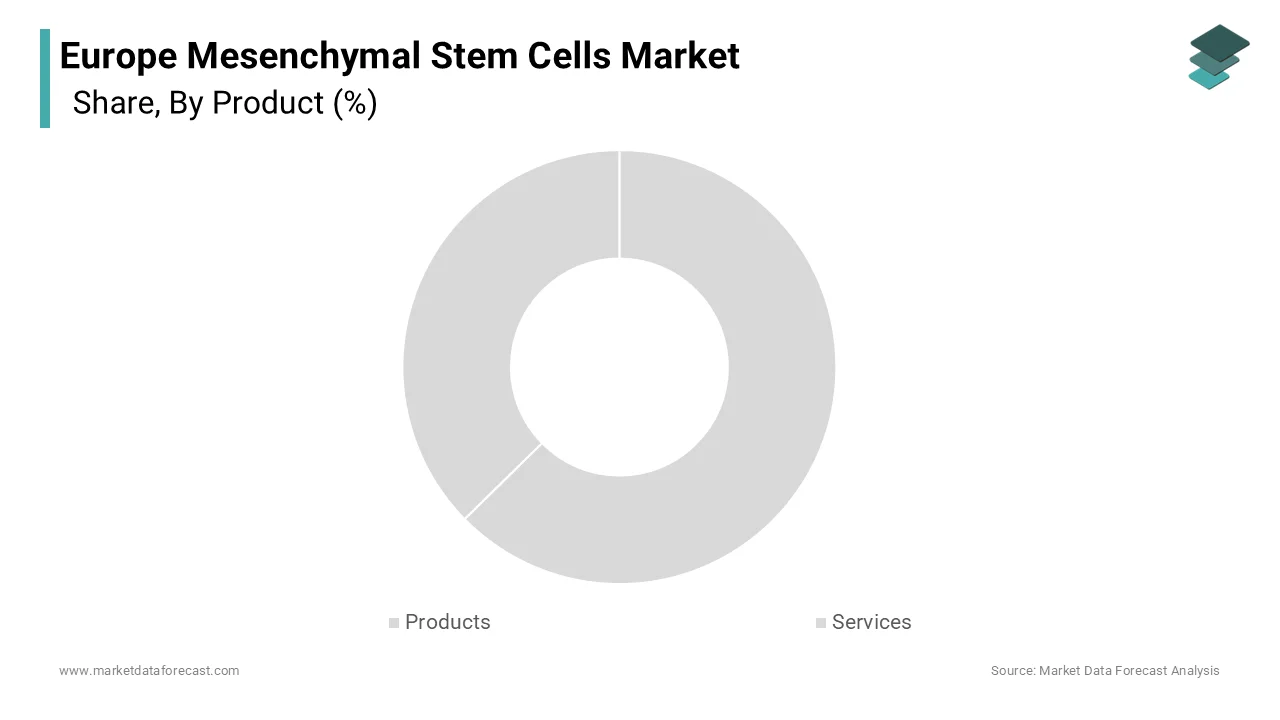
The services segment is the fastest-growing and is likely to witness a CAGR of 14.4% over the forecast period. Under the EU ATMP Regulation, Article 28 allows hospitals to prepare and administer non-routine mesenchymal stem cell therapies without full marketing authorization, a pathway increasingly used for orthopedic and autoimmune conditions. According to the Paul Ehrlich Institute, hospital exemption procedures involving mesenchymal stem cells were reported in Germany in 2024. These services, performed in certified hospital clean rooms, require specialized isolation, expansion, and quality control support, often outsourced to contract development and manufacturing organizations. As per the Italian Medicines Agency, a majority of such services rely on external partners for GMP-compliant cell processing due to limited in-house expertise. This regulatory niche fuels demand for tailored service contracts beyond standardized products.
By Workflow Type Insights
The culture & cryopreservation segment occupied 36.3% of the European mesenchymal stem cells market share in 202,5 owing to the extended time and resource intensity required to expand cells to therapeutic doses while maintaining viability. Most clinical applications require large-scale mesenchymal stem cell expansion under strict GMP conditions. According to the European Medicines Agency, approved protocols mandate multiple population doublings to achieve sufficient yield. This process consumes significant media, growth factors, and labor, costs that dominate the workflow budget. As per a cost analysis by the University Hospital Heidelberg, culture and cryopreservation accounted for the majority of total manufacturing expenses per patient batch. Additionally, cryopreservation in vapor-phase liquid nitrogen tanks with controlled-rate freezers is essential for batch release testing and just-in-time delivery, further amplifying infrastructure and monitoring costs across EU clinical sites.
The characterization workflow segment is the fastest-growing segment and is predicted to register a CAGR of 17.2% over the forecast period. The European Medicines Agency now requires multi-parametric characterization, including surface marker profiling, differentiation potential, and secretome analysis for all ATMP marketing applications. According to EMA’s 2024 Guideline on Quality Requirements for Mesenchymal Stromal Cells, developers must demonstrate CD73, CD90, and CD105 positivity and CD34, CD45, and HLA-DR negativity via flow cytometry alongside trilineage differentiation validation. As per the Spanish Agency for Medicines, characterization now accounts for a growing share of total development time compared to earlier years. The absence of standardized potency assays further drives demand for custom assay development and validation services as companies seek to meet evolving regulatory expectations for batch consistency and mechanism of action.
By Application Insights
The drug development & discovery segment led the market by capturing 36.5% of the regional market share in 2025, owing to the integration of mesenchymal stem cells into preclinical screening for efficacy and safety. Pharmaceutical companies increasingly use mesenchymal stem cell-derived tissues to model fibrosis, osteoarthritis, and inflammatory conditions that are poorly replicated in animal models. According to the Innovative Medicines Initiative, a significant proportion of EU-based drug developers now incorporate mesenchymal stem cell co-cultures in early screening to assess anti-fibrotic or immunomodulatory compound effects. As per AstraZeneca research, mesenchymal stem cell-based fibrosis models reduced false positive rates compared to traditional cell lines. The European Medicines Agency encourages such human-relevant models under its 2023 Non-Clinical Testing Guidelines to improve clinical translatability. This scientific validation ensures sustained demand from biopharma for research-grade cells and co-culture services.
The tissue engineering application segment is another major segment and is expected to exhibit a CAGR of 1.2% over the forecast period. Combination products merging mesenchymal stem cells with biodegradable scaffolds are achieving regulatory milestones for cartilage and bone regeneration. According to the European Medicines Agency, the Spanish company Orthocell’s stemcell-seeded collagen membrane for spinal fusion entered Phase III trials in 2024. Similarly, the Dutch firm Xeltis uses mesenchymal stem cells in bioresorbable heart valves that remodel into living tissue, now in CE Mark review. The EU’s Horizon Europe program allocated funding in 2024 to scale such combination products. As per The Lancet Digital Health, tissue-engineered constructs with mesenchymal stem cells achieved higher integration rates than acellular scaffolds, validating their clinical superiority.
COUNTRY LEVEL ANALYSIS
Germany Mesenchymal Stem Cells Market Analysis
Germany held the leading position in the European mesenchymal stem cells market in 2025, holding 23.9% of the regional market share. The dominance of Germany in the European market is driven by its robust biopharma industry, advanced hospital infrastructure, and supportive ATMP regulation. According to the Paul Ehrlich Institute, hospital exemption procedures involving mesenchymal stem cells were reported in 2024, making Germany one of the EU’s most active clinical users. The country hosts leading developers like Miltenyi Biotec and university hospitals in Heidelberg and Munich that pioneer GMP manufacturing and orthopedic applications. As per Germany’s Federal Ministry of Education and Research, funding was allocated in 2024 to initiatives supporting scalable allogeneic platforms. This ecosystem of regulation, research, and clinical adoption ensures Germany remains a central hub of European mesenchymal stem cell innovation and application.
United Kingdom Mesenchymal Stem Cells Market Analysis
The United Kingdom captured a promising share of the European mesenchymal stem cells market in 2025, with leadership in academic research and commercial translation despite Brexit. According to the Medicines and Healthcare products Regulatory Agency, mesenchymal stem cell clinical trials were active in the UK in 2024, witha strong focus on autoimmune and neurological indications. Institutions like the Francis Crick Institute and the University of Edinburgh lead in potency assay development and 3D bioprinting. The UK’s Advanced Therapy Treatment Centres network, funded by NHS England, has treated patients with mesenchymal stem cells since 2020, creating a real-world evidence base for reimbursement. Although no longer under EMA, the UK maintains equivalent ATMP standards and participates in Horizon Europe projects, ensuring continued scientific alignment and market influence.
France Mesenchymal Stem Cells Market Analysis
France is predicted to witness a healthy CAGR in the European mesenchymal stem cells market over the forecast period, with strength in public health integration and hospital-based cell therapy. According to the French National Agency for Medicines, hospital exemption protocols involving mesenchymal stem cells were approved in 2024, primarily for Crohn’s disease and osteoarthritis. As per Plan France 2030, funding was allocated to regenerative medicine, including initiatives to scale allogeneic production in Lyon and Paris. Public hospitals like Hôpital Saint-Louis lead in graft versus host disease treatment using adipose-derived cells. A 2024 evaluation by the Haute Autorité de Santé confirmed that partial reimbursement for stem cell therapies in early osteoarthritis improved patient access while controlling costs. This state-driven model ensures France remains a high-volume clinical and policy leader.
Sweden Mesenchymal Stem Cells Market Analysis
Sweden is estimated to hold a considerable share of theEuropeane mesenchymal stem cells market during the forecast period owing to the excellence in allogeneic platform development and Nordic collaboration. According to the Swedish Medical Products Agency, the Karolinska Institute’s allogeneic bone marrow-derived cell line has been used in EU trials for multiple sclerosis and stroke. Sweden co-leads the EU-funded REMEDi consortium standardizing cell expansion across Scandinavia. The country’s national biobank infrastructure and strict but clear ethical consent laws facilitate donor recruitment for master cell banks. As per Vinnova, investment was made in 2024 to expand GMP facilities in Uppsala and Gothenburg. With high public trust in biomedical research and universal healthcare, Sweden serves as a model for ethically grounded, scalable cell therapy.
Italy Mesenchymal Stem Cells Market Analysis
Italy is expected to register a healthy CAGR in the European mesenchymal stem cells market over the forecast period,d with leadership in orthopedic and corneal applications under hospital exemption. According to the Italian Medicines Agency, centers performed mesenchymal stem cell injections for knee osteoarthritis in 2024, with partial reimbursement available in several regions. The University of Modena developed Holoclar, the first EMA-approved stem cell therapy for corneal burns, now used across Europe. As per Italy’s National Recovery and Resilience Plan, funding was allocated to regenerative medicine, including a national network for cell processing standardization. A 2024 study by the Italian Society of Orthopaedics confirmed that stem cell therapy reduced knee replacement rates in patients under 60. This clinical focus on high-burden degenerative conditions ensures Italy remains a key therapeutic adoption hub.
KEY MARKET PLAYERS
Some of the companies that are playing a dominating role in the global Europe Mesenchymal Stem Cells Market include
- Lonza Group AG
- Thermo Fisher Scientific Inc.
- Merck KGaA (MilliporeSigma)
- FUJIFILM Cellular Dynamics, Inc.
- RoosterBio, Inc.
- PromoCell GmbH
- Stemcell Technologies, Inc.
- Bio-Techne Corporation
- Cell Systems, LLC
- Athersys, Inc.
- Osiris Therapeutics, Inc.
- Mesoblast Limited
- Takara Bio Inc.
- Pluristem Therapeutics Inc.
- Celyad Oncology SA
- Cytori Therapeutics, Inc.
- ReNeuron Group plc
- Invetech (IDT Australia)
- Beijing Beike Biotechnology Co., Ltd.
- AllCells, LLC
COMPETITIVE LANDSCAPE
Competition in thEuropeanpe mesenchymal stem cells market is defined by a race to achieve regulatory validation, clinical credibility, and scalable manufacturing within a highly complex and evolving policy environment. The market features a mix of large pharmaceutical companies, biotech innovators,s and specialized technology providers who compete not on price but on scientific rigor, regulatory strategy,egy and clinical integration. Barriers to entry are formidable due to the capital intensity of GMP infrastructure, the stringent EMA requirements,ments and the need for long term safety data. Competition is intensifying around standardization as developers seek to replace bespoke autologous services with reproducible allogeneic products. At the same time, the time hospital exemption pathways create a dual track where innovation thrives outside full commercial,ization yet limits scale. Unlike traditional pharma,e euticals'success here depends on ecosystem orchestration, which is making collaboration as critical as proprietary science in a market where patient access remains the ultimate benchmark.
TOP LEADING PLAYERS IN THE MARKET
- Takeda plays a pivotal rolEuropeanhe Europe mesenchymal stem cells market through its commercialized allogeneic therapy Alofisel for complex perianal fistulas in Crohn’s disease. The company contributes globally by demonstrating a scalable manufacturing and regulatory pathway for mesenchymal stem cell products under the EU ATMP framework. In Europe, Takeda has strengthened its position by expanding Alofisel’s reimbursement coverage in Germany,ce and Italy,aly and investingreal-worldorld evidence studies to support broader indications. Recent actions include partnerships with European university hospitals to establish standardized administration protocols and patient registries, enhancing clinical adoption and post marketing surveillance across the EU.
- Miltenyi Biotec is a leading provider of GMP-compliant cell processing technologies and research reagents for mesenchymal stem cell applications across Europe. The company enables both academic and clinical users through its CliniMACS and Prodigy platforms, which automate isolation expansion and formulation under closed systems. In Europe, eMiltenyi has reinforced its market presence by achieving CE certification for its mesenchymal stem cell expansion kits and launching digital process analytics software that integrates with hospital quality management systems. These tools support compliance with EMA guidelines and hospital exemption requirements, ts making Miltenyi a critical infrastructure partner in the European regenerative medicine ecosystem.
- Holostem Terapie Avanzate is a pioneering European developer of autologous stem cell therapies with EMA-approved product Holoclar for limbal stem cell deficiency. The company contributes globally by proving the viability of hospital exemption to centralized approval transition under the ATMP regulation. Based in Italy, Holostem has strengthened its position by expanding its GMP manufacturing facility in Bologna and training corneal surgeons across Spain,n Germany, and Sweden in Holoclar administration. Recent initiatives include developing new formulations for dry eye disease and establishing a European network of certified treatment centers,s ensuring consistent delivery and patient outcomes.
TOP STRATEGIES USED BY THE KEY MARKET PARTICIPANTS
Key players in the European mesenchymal stem cells market prioritize compliance with the EU Advanced Therapy Medicinal Products regulation by developing standardized allogeneic platforms and GMP-compliant manufacturing processes. They invest in real-world evidence generation through patient registries and post-marketing studies to support reimbursement and label expansion. Companies form strategic partnerships with academic hospitals to establish certified treatment centers and train clinicians in cell therapy administration. They leverage hospital exemption pathways for early market access while preparing for centralized marketing authorization. Additionally, they develop integrated digital tools for process analytics, chain of custody, and potency tracking to meet EMA’s evolving quality and traceability requirements.
MARKET SEGMENTATION
This research report on the europe mesenchymal stem cells market is segmented and sub-segmented into the following categories.
By Product
- Products
- Services
By Workflow Type
- Cell Isolation
- Culture & Cryopreservation
- Characterization
- Quality Control & Release Testing
By Application
- Drug Development & Discovery
- Tissue Engineering
- Clinical Therapy
- Toxicity & Disease Modeling
By Country
- Germany
- United Kingdom
- France
- Sweden
- Italy
- Spain
- Rest of Europe