- Product Description Description
- Table of Contents TOC
- List of Table & Figure LOT
- Get Free Sample PDF Sample PDF
Market Size, 2025
$67.94 BnMarket Estimate, 2026
$71.16 BnMarket Forecast, 2034
$103.04 BnCAGR, 2026–2034
4.74%Europe Microbial Fuel Cell Market Size, Growth, Trends & Forecast (2026–2034)
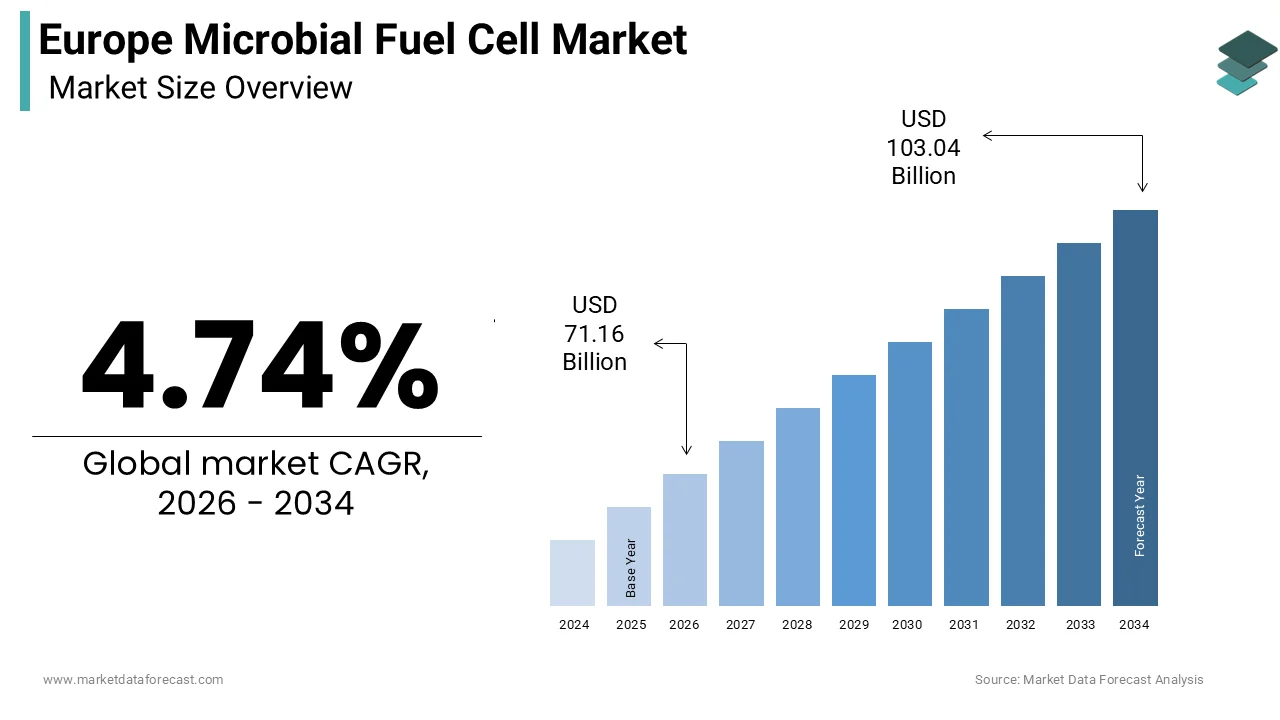
The Europe microbial fuel cell market size was calculated at USD 67.94 billion in 2025, is anticipated to reach USD 71.16 billion in 2026, and is projected to scale up to USD 103.04 billion by 2034, registering a compound annual growth rate (CAGR) of 4.74% during the forecast period from 2026 to 2034. Driven by stringent environmental regulations, carbon-neutral wastewater treatment mandates, and circular economy action plans, the industry continues to evolve from laboratory-scale prototypes into viable engineering solutions for sustainable urban infrastructure development.
Key Executive Metrics (At-a-Glance)
- 2025 Base Valuation: USD 67.94 Billion
- 2026 Current Valuation: USD 71.16 Billion
- 2034 Forecast Valuation: USD 103.04 Billion
- Compound Annual Growth Rate (CAGR): 4.74% (2026–2034)
- Dominant Type Segment: Mediator-Free MFC (holding a substantial share due to the elimination of toxic chemical additives and alignment with circular economy standards)
- Dominant Design Segment: Single-Chamber MFCs (capturing the largest share backed by simple design, lower capital expenditure, and operational ease)
- Dominant Application Segment: Wastewater Treatment & Energy Recovery (holding the majority share driven by binding energy-neutrality mandates for municipal plants)
- Fastest-Growing Type Segment: Mediator-Based MFC (projected to witness a CAGR of 8.5%, propelled by higher power densities and natural mediator discoveries)
- Fastest-Growing Design Segment: Stacked & Modular Designs (expanding rapidly at a 9.2% CAGR driven by the need to scale power output for industrial treatment)
- Dominant Region: Western & Northern Europe (supported by rigorous EU directives, advanced municipal sanitation infrastructure, and green tech investments)
Core Market Drivers
- Stringent Environmental Regulations: Revised Urban Wastewater Treatment Directives forcing binding energy-neutrality targets by 2040.
- Circular Economy Action Plan: EU-wide push to transform organic wastewater pollutants into valuable energy streams and clean water resources.
- Smart Water Integration: Digitalization of urban water grids creating dual-function applications for MFCs as both power sources and biosensors.
Primary Market Restraints & Challenges
- High Capital Expenditure: Cost-prohibitive specialized electrode materials (e.g., platinum, nanotubes) and complex reactor designs restricting rapid commercialization.
- Technical & Scaling Limitations: Lower historical power densities and complex microbial community stability management under variable field conditions.
Europe Microbial Fuel Cell Market Segmentation Breakdown
| Segment Category | Leading Sub-Segment (2025 Base) | Fastest-Growing Sub-Segment (2026–2034) |
|---|---|---|
| By Type | Mediator-Free MFC (dominant share due to natural exoelectrogens and strict avoidance of chemical pollutants) | Mediator-Based MFC (fastest-growing category registered at an 8.5% CAGR driven by high power density needs and natural mediators) |
| By Design | Single-Chamber MFCs (largest share supported by simple configuration, low cost, and minimal maintenance) | Stacked & Modular Designs (fastest-growing segment at a 9.2% CAGR propelled by industrial scaling and modular energy output) |
| By Application | Wastewater Treatment & Energy Recovery (dominant market backed by municipal sustainability and energy-neutrality mandates) | Remote Environmental Monitoring (fastest-growing segment driven by self-powered sensor arrays and IoT data integration) |
| By Region | Western Europe / Netherlands & Germany (dominant market supported by early pilot-scale adoption and green financing) | Southern & Eastern Europe (fastest-growing regional markets driven by modernization updates to municipal water infrastructure) |
Major Industry Players Profiled
Key enterprises shaping the competitive European microbial fuel cell market include SFC Energy AG, Fluence Corporation, Cambrian Innovation, MICRODYN-NADIR GmbH, Emefcy Ltd., Plant-e, Protonex Technology Corporation, Microbial Fuel Cell Technologies, Inc., and Bioo Scientific Corporation.
Europe Microbial Fuel Cell Market Size
The Europe microbial fuel cell market size was calculated at USD 67.94 billion in 2025 and is anticipated to reach USD 103.04 billion by 2034, from USD 71.16 billion in 2026, growing at a CAGR of 4.74% during the forecast period.
A Microbial Fuel Cell (MFC) is a bio-electrochemical device that uses bacteria to clean up waste and generate electricity at the same time. This technology aligns with the continent’s circular economy ambitions by transforming waste management facilities into energy-generating assets. According to the European Environment Agency, expanding advanced resource-recovery and circular technologies within municipal sewer infrastructure can help reclaim valuable energy streams from urban effluents while simultaneously mitigating regional pollution. The Joint Research Centre evaluates emerging bioelectrochemical innovations, including microbial fuel cells and microbial electrolysis cells, as sustainable tools to co-generate electricity or hydrogen alongside urban waste management. These underscore the strategic relevance of the Europe microbial fuel cell market in achieving energy neutrality in the water sector. As per Eurostat, regional bioenergy strategies rely on scaling advanced bioelectrochemical frameworks to increase the overall share of renewable power generation across European Union sectors. The market is currently transitioning from laboratory-scale prototypes to pilot-scale demonstrations in countries like the Netherlands and Germany. Regulatory frameworks such as the Urban Wastewater Treatment Directive increasingly emphasise resource recovery, creating a favourable policy environment. Consequently, this market is evolving from a niche scientific curiosity into a viable engineering solution for sustainable urban infrastructure development.
MARKET DRIVERS
Stringent Environmental Regulations Driving Wastewater Energy Recovery
Legislative Mandates for Carbon-Neutral Water Treatment. The region’s environmental legislation is among the main factors behind the Europe microbial fuel cell market growth. These laws impose strict requirements on wastewater treatment plants to reduce their carbon footprint and energy consumption. According to the European Commission, the newly revised Urban Wastewater Treatment Directive enforces an active binding energy neutrality target by 2040 for municipal installations processing wastewater capacities above ten thousand population equivalents. The regulatory deadline creates an urgent demand for technologies that can generate power on-site rather than consuming it. As per the European Water Association, joint industry groups are promoting an updated EU Water Strategy to scale advanced purification architectures and establish dedicated European Water Funds. The relation between these mandates and market growth is direct; compliance requires adopting technologies like microbial fuel cells that offer simultaneous treatment and energy generation. Facilities that fail to meet these standards face substantial penalties and increased operational costs. The directive also encourages the recovery of resources such as nutrients and energy, aligning perfectly with the dual function of microbial fuel cells. This legislative pressure transforms microbial fuel cells from an optional innovation into a necessary compliance tool. Consequently, municipal utilities are increasingly investing in pilot projects to validate the technology for full-scale deployment.
Circular Economy Action Plan Promoting Resource Efficiency
The European Union’s Circular Economy Action Plan drives demand for these fuel cells, which further propels the Europe microbial fuel cell market. The plan achieves this by prioritising the transformation of waste streams into valuable resources, including energy and clean water. According to the European Environment Agency, expanding advanced resource-recovery and circular technologies within municipal sewer infrastructure can help reclaim valuable energy streams from urban effluents while simultaneously mitigating regional pollution. Microbial fuel cells exemplify this principle by extracting electrical energy from organic pollutants in wastewater, thereby closing the energy loop within treatment facilities. As per the Joint Research Centre, expert panels evaluate emerging bioelectrochemical innovations, including microbial fuel cells and microbial electrolysis cells, as sustainable tools to co-generate electricity or hydrogen alongside urban waste management. The economic incentive complements the environmental mandate, making microbial fuel cells attractive to cost-conscious utility managers. Also, the plan specifically highlights the importance of bioenergy from waste, providing a clear policy signal for investment in biological energy conversion technologies. Utilities seeking to demonstrate sustainability leadership are motivated to adopt such visible and innovative solutions. The alignment with broader EU industrial strategy ensures sustained political and financial support for research and deployment. This policy framework thus acts as a powerful driver for the adoption of microbial fuel cell technology in the region.
MARKET RESTRAINTS
High Capital Expenditure for Material and Construction
Cost-Prohibitive Electrode Materials and Infrastructure. The high initial capital expenditure required for constructing microbial fuel cell systems remains a significant restraint to the European microbial fuel cell market. This is primarily due to the cost of specialised electrode materials and complex reactor designs. According to the International Water Association, high initial expenses stemming from premium electrode materials and specialized ion exchange membranes remain a significant economic bottleneck that restricts the scaled, commercial adoption of microbial electrochemical systems. Unlike conventional treatment infrastructure, which benefits from decades of optimisation and economies of scale, microbial fuel cell components often require expensive materials like platinum or specialised carbon nanotubes to achieve acceptable performance. As per the Fraunhofer Institute, engineering and design challenges associated with scaling up microbial fuel cell configurations continue to limit modular manufacturing consistency across combined municipal wastewater sludge treatment infrastructure. The high upfront investment creates a barrier to entry for smaller municipalities and private operators who operate on tight budgets. In addition, the return on investment period is often perceived as too long compared to established technologies, discouraging capital allocation. Without significant reductions in material costs or government subsidies, the financial viability of widespread adoption remains questionable. This economic hurdle restricts the market to well-funded research institutions and flagship demonstration projects rather than commercial mainstream applications.
Limited Economies of Scale in Manufacturing
The absence of mass production capabilities for MFC components restricts the ability to achieve economies of scale, which inhibits the growth of the Europe microbial fuel cell market. This keeps unit costs artificially high and limits market penetration. According to the European Battery Alliance, industrial priorities and investment pipelines are directed toward securing a strategic, high-volume battery value chain to advance automotive electrification and grid-scale storage rather than managing microbial bioenergy networks. As per sources, scaling sustainable bioenergy options faces severe financial and logistical headwinds due to capital-expenditure penalties, low technology readiness levels, and localized feedstock availability constraints. This highlights the disadvantage microbial fuel cells face against established wastewater treatment equipment manufacturers who benefit from global supply networks and standardized parts. The lack of dedicated production lines means that components are often custom fabricated, leading to longer lead times and higher labor costs. Investors are hesitant to fund large-scale manufacturing facilities without proven commercial demand, creating a chicken-and-egg situation. This manufacturing bottleneck prevents the technology from reaching the price parity needed for competitive bidding in public tenders. Production volumes must increase substantially. Until then, the high cost structure will continue to restrain widespread market adoption in Europe.
MARKET OPPORTUNITIES
Integration with Smart Water Management Systems
Digitalisation of Water Infrastructure Creates New Applications. The ongoing digitalisation of water infrastructure unlocks potential for the European microbial fuel cell market. This digital shift enables real-time monitoring and optimisation of bioenergy generation. According to the European Innovation Partnership on Water, targeted action groups advance cloud-integrated biosensors and smart metering schemes to transform traditional infrastructure into dynamic, partitioned networks for enhanced municipal wastewater management. Microbial fuel cells inherently produce electrical signals that correlate with water quality parameters, allowing them to function as both power sources and biosensors. As per the International Water Association, utility installations rely on affordable pressure and flow sensors to power automated event recognition systems that detect structural pipe bursts and equipment failures. The dual functionality adds significant value beyond simple energy generation, making microbial fuel cells attractive for modernizing aging infrastructure. Utilities can leverage the data generated by these systems to optimize treatment processes and detect contaminants early. The synergy between microbial fuel cells and Internet of Things platforms opens new revenue streams for technology providers offering integrated software and hardware solutions. This technological convergence positions microbial fuel cells as a key component of next-generation smart water infrastructure. The trend toward digital twins in water management further supports this opportunity by requiring accurate real-time data inputs.
Government Grants for Green Technology Innovation
Substantial government funding and grants dedicated to green technology innovation provide a critical financial lifeline for the Europe microbial fuel cell market. This accelerates research and pilot deployments. According to the European Commission, the Horizon Europe joint missions allocate dedicated multi-million euro project funding toward deploying innovative wastewater management, treatment, and valorisation solutions across European cities. These grants reduce the financial risk for companies developing microbial fuel cell technologies, enabling them to conduct large-scale trials that would otherwise be unaffordable. As per the European Investment Bank, sustainable utility financing packages integrate energy, water, and municipal wastewater networks into unified urban systems designed to capture waste heat and scale down carbon footprints. Access to capital allows startups and research consortia to bridge the valley of death between laboratory success and commercial viability. Public-private partnerships facilitated by these funding mechanisms foster collaboration between academia and industry, speeding up technology transfer. The availability of non-dilutive funding encourages experimentation and refinement of system designs. This financial support ecosystem is essential for overcoming the early-stage hurdles faced by emerging bioenergy technologies. It ensures that promising innovations receive the resources needed to prove their worth in real-world conditions.
MARKET CHALLENGES
Technical Limitations in Power Density and Scalability
Low Power Output Hinders Commercial Viability. The relatively low power density of microbial fuel cells compared to other energy generation technologies is a significant technical challenge for the European microbial fuel cell market. This limits their ability to power energy-intensive treatment processes independently. According to the Journal of Power Sources, engineering efforts are targeting material design optimization to push microbial fuel cell power densities past historical limits and enhance chemical oxygen demand removal efficiencies in active effluent bioreactors. The performance gap means that microbial fuel cells can currently only offset a small fraction of total energy consumption, rather than achieving full energy neutrality. As per the Helmholtz Centre for Environmental Research, contemporary meta-analyses of pilot-scale bioelectrochemical systems track structural adjustments in stack configurations to directly alleviate internal resistance and oxygen mass transfer bottlenecks. Utilities require technologies that deliver substantial energy savings to justify investment. Without significant breakthroughs in electrode materials or reactor design, the technology may remain confined to low-power applications such as sensor powering. This technical limitation restricts the addressable market to niche segments where low power is acceptable. Overcoming this barrier requires fundamental advances in electrochemistry and engineering that are still in early stages of development.
Complexity in Microbial Community Management
Managing the stability and performance of microbial communities within fuel cells is also a complex biological obstacle that affects reliability and operational consistency in the European market. According to the American Society for Microbiology, electroactive microorganisms actively assemble complex biofilm structures on electrode surfaces as a dynamic survival strategy to withstand fluctuating environmental stress conditions. As per the Technical University of Denmark, research teams are implementing specialised microbial electrochemical monitoring systems to observe volatile fatty acid fluctuations during anaerobic digestion. The biological variability makes it difficult to guarantee consistent performance, a key requirement for critical infrastructure operations. Operators lack standardized protocols for maintaining optimal microbial health, leading to trial-and-error approaches that increase operational risks. The need for careful monitoring and adjustment of biological parameters adds complexity to daily operations, requiring specialized expertise that many utilities do not possess. This operational burden discourages adoption among conservative water managers who prioritise reliability and ease of use. Until robust and resilient microbial cultures are developed that can withstand variable conditions, the technology will face skepticism regarding its practicality for large-scale deployment.
Standardisation and Regulatory Uncertainty
Lack of Unified Performance Standards. The absence of unified international standards for testing and reporting MFC performance creates confusion and hinders comparative evaluation among different technologies, which slows down the expansion of the Europe microbial fuel cell market. As per the European Committee for Standardization, harmonized European standards are undergoing rapid updates to streamline product verification pathways and enhance single-market cross-border commercial trade. Potential buyers struggle to assess the true value and reliability of different systems without standardised metrics for power density, longevity, and treatment efficiency. This uncertainty increases perceived risk and delays procurement decisions. The industry lacks a common language for specifying performance guarantees, making it difficult to write effective contracts and service level agreements. Developing these standards requires consensus among diverse stakeholders, including scientists, engineers, and regulators, a process that can take years. Until standardised testing protocols are established and widely accepted, the market will remain fragmented and opaque. This regulatory gap impedes the professionalization of the industry and limits its credibility among mainstream infrastructure investors.
Unclear Regulatory Classification for Bioenergy Products
The regulatory classification of electricity generated by MFCs remains ambiguous in many jurisdictions in the region, which holds back the expansion of the European microbial fuel cell market. This creates legal and administrative hurdles for grid connection and compensation. According to the European Network of Transmission System Operators for Electricity, network operators are executing updated grid code architectures to cleanly integrate decentralized clean energy resources into regional distribution systems. As per the German Federal Network Agency, regulatory frameworks enforce structured grid feed-in tariffs and customized balancing market rules to support small-scale renewable biomass and biomethane electricity producers. The regulatory uncertainty discourages utilities from investing in microbial fuel cells because they cannot reliably predict revenue streams from excess energy sales. Also, the lack of clear guidelines on safety and environmental compliance for these hybrid systems creates liability concerns. Operators may face unexpected bureaucratic delays when seeking permits for installation and operation. This administrative friction adds hidden costs and risks to projects. Clarifying the legal status of microbial fuel cell-generated energy is essential for creating a stable investment environment. Without clear regulatory pathways, the market will struggle to move beyond pilot phases into commercial reality.
REPORT COVERAGE
| REPORT METRIC | DETAILS |
| Market Size Available | 2025 to 2034 |
| Base Year | 2025 |
| Forecast Period | 2026 to 2034 |
| CAGR | 4.74% |
| Segments Covered | By Type, Design, Application, and Region |
| Various Analyses Covered | Global, Regional, & Country-Level Analysis; Segment-Level Analysis; DROC; PESTLE Analysis; Porter’s Five Forces Analysis; Competitive Landscape; Analyst Overview of Investment Opportunities |
| Regions Covered | UK, France, Spain, Germany, Italy, Russia, Sweden, Denmark, Switzerland, Netherlands, Turkey, Czech Republic, Rest of Europe |
| Market Leaders Profiled | SFC Energy AG, Fluence Corporation, Cambrian Innovation, MICRODYN-NADIR GmbH, Emefcy Ltd., Plant-e, Cambrian Innovation Inc., Protonex Technology Corporation, Microbial Fuel Cell Technologies, Inc., Bioo Scientific Corporation |
SEGMENTAL ANALYSIS
By Type Insights
The mediator-free MFC segment dominated the European microbial fuel cell market and accounted for a substantial share in 2025. These systems utilise electroactive bacteria to transfer electrons directly to the anode, thereby eliminating the need for expensive and potentially toxic chemical mediators. According to the European Environment Agency, regulatory watchdogs enforce chemical management rules within urban wastewater treatment loops to prevent toxic materials from entering and harming regional aquatic life. This regulatory preference drives the adoption of mediator-free systems which rely on exoelectrogens such as Geobacter and Shewanella species. As per the Joint Research Centre, industrial research pipelines focus on engineering advanced bioelectrochemical frameworks to bypass standard processing challenges and make decentralised power-generating bioreactors ready for broad municipal use. Utilities operate on tight budgets and prefer solutions with lower recurring expenses. Mediator-free systems also avoid the degradation issues associated with chemical additives, leading to more stable long-term performance. This simplicity aligns with the European focus on green and sustainable technologies that minimize chemical footprints. Consequently, research and development efforts are heavily skewed toward optimising mediator-free strains and electrode interfaces. The absence of hazardous chemicals simplifies waste disposal and regulatory compliance, further cementing the leading position of this segment in the European market.
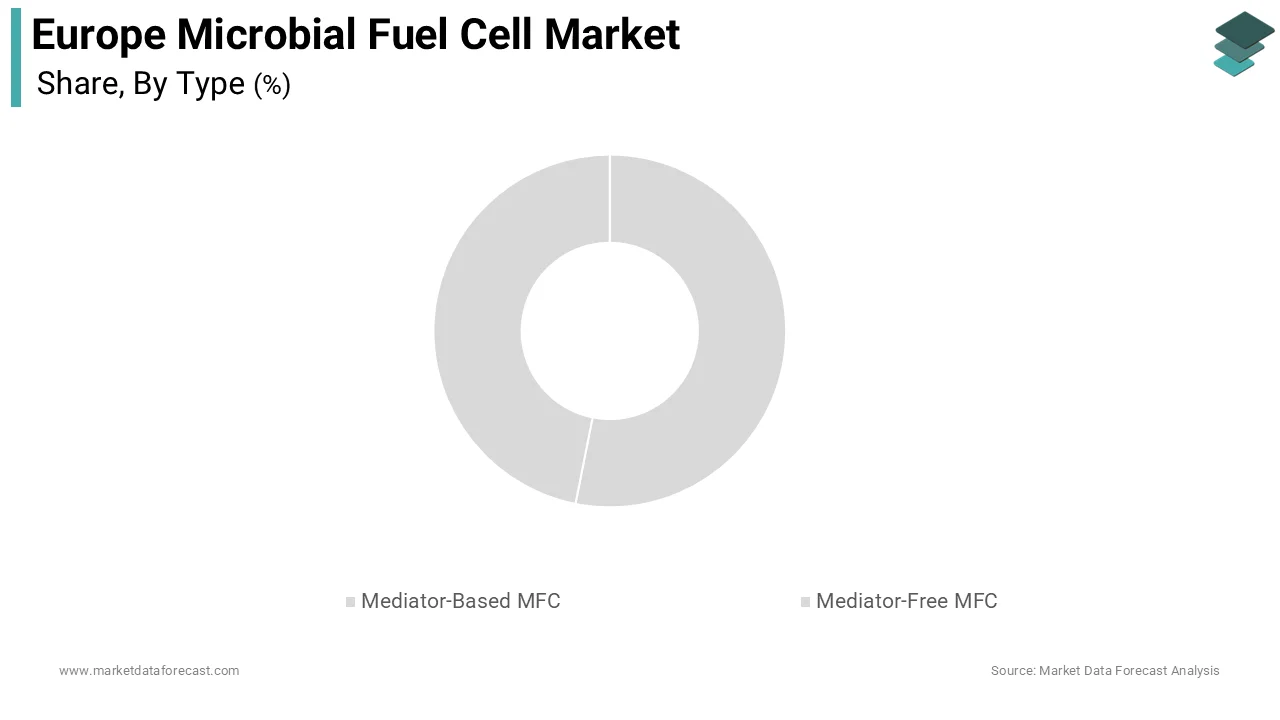
The alignment of mediator-free microbial fuel cells with strict European sustainability standards drives their dominance by ensuring that energy generation processes do not introduce new pollutants into the environment. According to the European Commission, circular infrastructure projects must demonstrate measurable greenhouse gas cuts and energy neutrality by 2040 to align with modernised European urban wastewater directives. Mediator-free systems meet this criterion by relying solely on natural microbial metabolism, thereby avoiding the ecological risks associated with synthetic electron shuttles. As per the Fraunhofer Institute, pilot installations combine modular microbial fuel cell designs with operational wastewater facilities to scale biological sludge processing capabilities across public sanitation grids. The ease of integration lowers the barrier to entry for wastewater treatment plants seeking to upgrade their facilities. The natural origin of the electron transfer mechanism appeals to stakeholders prioritizing circular economy principles and ecological safety. Public acceptance of bioenergy technologies is higher when they are perceived as natural and non-intrusive. The regulatory landscape in Europe increasingly penalizes the use of persistent organic pollutants, making mediator-free options the only viable path for large-scale implementation. This environmental compatibility ensures that mediator-free MFCs remain the preferred choice for public sector projects and environmentally conscious private operators.
The mediator-based microbial fuel cells segment is anticipated to witness the fastest CAGR of 8.5% from 2026 to 2034 due to its ability to achieve significantly higher power densities compared to mediator-free counterparts in specific high-value applications. According to the Journal of Power Sources, engineering efforts target optimization of chemical oxygen demand removal rates and biofilm-anode configurations to maximize active bioelectricity output from liquid effluents. The performance advantage makes them ideal for remote monitoring applications where consistent power output is critical. As per the Technical University of Delft, collaborative European bioenergy projects analyse extracellular electron transfer mechanisms to refine macro-scale electricity harvesting from specialised anaerobic wastewater plants. Applications require reliable micro power sources that prioritize performance over absolute simplicity. The development of immobilized mediators that prevent leakage further improves the viability of these systems for long-term deployment. Industries such as aquaculture and environmental monitoring are increasingly adopting mediator-based MFCs for self-powered sensor networks. The ability to tailor mediator selection for specific bacterial consortia allows for optimization in diverse conditions. This flexibility drives rapid adoption in niche sectors where high efficiency is paramount.
The discovery and application of non-toxic natural mediators are accelerating the growth of the mediator-based segment by resolving previous environmental and safety concerns associated with synthetic compounds. According to the European Chemicals Agency, registration databases expand chemical transparency under European Union law to protect industrial water systems from toxic xenobiotic accumulations. These natural mediators, derived from plant extracts or microbial metabolites, offer the performance benefits of mediation without the ecological drawbacks. As per the Max Planck Institute for Marine Microbiology, bio-resource valorization studies leverage anaerobic fungal and bacterial systems to extract useful biotechnological enzymes and energy streams from organic waste residues. The breakthrough removes a major barrier to commercialisation and opens new markets in sensitive ecological zones. The availability of standardized natural mediator formulations simplifies system design and operation for end users. Researchers are optimising extraction methods to reduce costs and improve purity, making these mediators more accessible. The synergy between high performance and environmental safety creates a compelling value proposition for investors and operators. This technological evolution ensures that mediator-based MFCs capture a growing share of the market despite the dominance of mediator-free systems in general wastewater treatment.
By Design Insights
The single-chamber MFCs segment led the European microbial fuel cell market and captured a significant share in 2025. This leading position of the segment was attributed to its simple design, which eliminates the need for a separate cathode chamber and complex membrane assemblies. According to the International Water Association, utility researchers deploy specialized single-chamber, dual-chamber, and up-flow microbial fuel cell variations to optimize biological nutrient removal and recover valuable phosphorus elements from effluent arrays. The cost advantage is crucial for scaling up the technology from laboratory prototypes to pilot-scale installations. As per the Fraunhofer Institute, materials laboratories focus on minimizing electrode impedance and optimizing low catalyst loadings within intermediate-temperature fuel systems to lower the baseline hurdles confronting broad commercialization. Lower capital expenditure and easier installation drive adoption among municipal utilities. The absence of a proton exchange membrane in some air-cathode configurations further reduces maintenance requirements and operational complexity. This robustness makes single-chamber MFCs suitable for harsh environments where frequent maintenance is impractical. The modular nature of these units facilitates incremental expansion as demand grows. Consequently, the majority of commercial pilot projects in Europe utilize single-chamber designs to demonstrate feasibility and economic viability.
The operational simplicity of single-chamber microbial fuel cells contributes to their dominance by minimising the technical expertise required for daily management and maintenance. According to the European Federation of National Water Associations, municipal utility networks prioritize massive investment upgrades into traditional sanitation systems to satisfy stricter incoming EU environmental regulations and manage shifting precipitation patterns. Single-chamber MFCs typically have fewer moving parts and no need for pH balancing between separate chambers, reducing the risk of operational failure. The ease of operation is a key selling point for decentralized applications in remote locations or small communities. The reduced risk of membrane fouling and leakage enhances long-term stability, ensuring consistent performance. Operators prefer systems that can run with minimal intervention, allowing them to focus on core treatment processes. The proven track record of single-chamber designs in various European pilot sites builds confidence among potential adopters. This operational reliability secures their position as the default choice for most current applications in the market.
The stacked and modular designs segment is on the rise and is expected to be the fastest-growing segment in the market, witnessing a CAGR of 9.2% during the forecast period. This swift expansion is propelled by the need to scale up power output for industrial wastewater treatment applications. According to the European Chemical Industry Council, manufacturing plants prioritize heavy capital allocations toward implementing large-scale carbon capture integration and eco-efficient resource recycling to retain global competitiveness under regional regulatory pressures. Stacking multiple MFC units in series or parallel allows for voltage and current amplification, meeting the higher energy demands of industrial processes. Industrial users require customizable solutions that can grow with their operations. Modular systems also allow for individual unit replacement without shutting down the entire system, enhancing uptime and reliability. This flexibility is highly valued in continuous process industries such as food and beverage production. The ability to standardize modules reduces manufacturing costs through mass production techniques. These advantages drive rapid adoption in the industrial sector, making stacked designs the fastest-growing segment.
The integration of stacked microbial fuel cells with other renewable energy sources such as solar and wind is accelerating their growth by creating hybrid systems that ensure continuous power supply. According to the European Renewable Energy Council, regional power strategies focus on rapidly scaling up solar photovoltaic infrastructure alongside land-based wind farms to accelerate deep grid decarbonization targets. Stacked MFCs provide sufficient voltage to interface directly with power management electronics, simplifying system integration. As per the Joint Research Centre, expert panels investigate multi-stage bioelectrochemical configurations to evaluate their suitability for co-generating clean electrical energy or bio-hydrogen streams within localized urban sanitation networks. The synergy appeals to remote industrial sites and agricultural operations seeking energy independence. The modular nature of stacked MFCs allows them to be easily combined with battery storage and inverters. Standardized interfaces facilitate plug-and-play installation, reducing engineering costs. The trend toward decentralised energy microgrids supports this integration strategy. By positioning MFCs as a component of a broader energy ecosystem, manufacturers can access larger project budgets and diverse application scenarios. This strategic positioning fuels the rapid expansion of the stacked design segment.
By Application Insights
In 2025, the wastewater treatment and energy recovery segment held the majority share in the European microbial fuel cell market because of stringent regulatory mandates requiring treatment plants to reduce their energy consumption and carbon footprint. According to the European Commission, the revised Urban Wastewater Treatment Directive enforces an active binding energy neutrality target by 2040 for municipal installations processing wastewater capacities above ten thousand population equivalents, accelerating the deployment of advanced bioelectrochemical energy recovery frameworks. Microbial fuel cells offer a unique solution by treating wastewater while simultaneously producing electricity, directly addressing these regulatory requirements. As per the European Water Association, joint industry groups are promoting an updated EU Water Strategy to scale advanced purification architectures and establish dedicated European Water Funds. The relation between regulatory pressure and market dominance is direct; compliance drives investment in proven technologies. Municipalities are prioritising projects that offer dual benefits of pollution control and energy generation. The availability of EU funding for green infrastructure further supports these initiatives. The mature understanding of wastewater parameters allows for optimized MFC performance in this application. Consequently, the majority of current MFC deployments are focused on municipal and industrial wastewater treatment facilities.
The vast availability of organic-rich wastewater in Europe provides a consistent and free fuel source for microbial fuel cells, driving their dominance in the treatment and energy recovery segment. According to Eurostat, regional utility databases compile annual volume records of municipal sewage to track how effectively industrial resource-recovery methods extract electrical bioenergy from incoming organic waste loads. The abundant substrate ensures continuous operation and stable power generation for MFC systems. As per the Joint Research Centre, expert panels evaluate multi-stage microbial fuel cells and bioelectrochemical systems as sustainable tools to co-generate electricity directly from urban effluents while optimising organic contaminant removal. Reliable fuel supply is essential for any energy generation technology. Wastewater treatment plants are already equipped to handle and process this material, making integration seamless. The dual function of waste removal and energy production maximizes resource efficiency, aligning with circular economy principles. This inherent advantage makes wastewater treatment the most logical and economically viable application for MFC technology in the current market landscape.
The biosensors and remote monitoring segment is growing at the fastest rate, fuelled by the increasing demand for self-powered sensors to monitor water quality and environmental parameters in real time. According to the European Environment Agency, EU environmental frameworks track the integration of industrial resource-recovery methods to scale up self-powered water quality biosensors across vulnerable regional aquatic systems. Microbial fuel cells can power low-energy sensors indefinitely by harvesting energy from the surrounding environment, eliminating the need for battery replacements. As per the Technical University of Delft, collaborative European research networks focus on optimising microbial fuel cell biofilms to ensure continuous current generation for self-contained, real-time pollution monitoring equipment. The relation between IoT expansion and MFC growth is direct; autonomous power enables scalable sensor networks. This application leverages the high sensitivity of MFCs to organic matter, turning them into effective biosensors. The ability to operate in hard-to-reach locations without maintenance is a key advantage. Governments and environmental agencies are investing heavily in smart monitoring infrastructure to comply with water quality directives. This trend fuels rapid adoption of MFCs in the sensing sector.
Recent advancements in low-power electronics are accelerating the growth of the biosensor segment by reducing the energy requirements of monitoring devices to levels that MFCs can reliably support. According to the Institute of Electrical and Electronics Engineers, ultra-low-power integrated circuits utilise advanced microwatt energy managers to match the low-voltage power supply generated by localised microbial fuel cell arrays. The technological convergence enables the creation of compact and efficient sensing nodes. As per the Fraunhofer Institute, microelectronics engineering teams deploy sleep-mode hardware modules and optimized voltage-boost converters to capture stable electrical current from biological energy harvesting substrates. Lower power needs expand the range of feasible applications. These advancements allow for more frequent data transmission and complex processing capabilities. The miniaturization of components facilitates deployment in diverse environments, including soil and groundwater. The synergy between MFCs and ultra-low-power electronics creates new opportunities for environmental monitoring and industrial process control. This technological enablement drives the rapid expansion of the biosensor application segment.
REGIONAL ANALYSIS
Germany Microbial Fuel Cell Market Analysis
Germany was the largest player in the European microbial fuel cell market and occupied a commanding share in 2025. Factors such as its strong industrial base and commitment to environmental technology innovation are the key factors behind the supremacy of the German market. According to the Federal Ministry for Economic Affairs and Climate Action, industrial research networks fund projects that combine green hydrogen electrolysis byproducts with large-scale aeration loops to maximise the thermodynamic efficiency of municipal wastewater treatment setups. The country is home to leading research institutes such as the Fraunhofer Society and Helmholtz Centre, which are at the forefront of MFC advancements. As per the German Water Partnership, international network members deploy standardized structural engineering and cross-border technology transfers to enhance the long-term infrastructure stability of public utilities and wastewater management frameworks. Germany’s strict environmental regulations and high energy costs create a favourable environment for energy-recovery technologies. The presence of a robust manufacturing sector facilitates the production of MFC components. Government grants and subsidies further encourage commercialisation efforts. This combination of research excellence, industrial demand, and policy support cements Germany’s dominant role in the regional market.
France Microbial Fuel Cell Market Analysis
France was positioned second in the Europe microbial fuel cell market and secured a noteworthy share in 2025. This market in the country is driven by strong state support for green technology and a focus on circular economy principles. According to the French Ministry of Ecological Transition, national circular urban strategies prioritize the implementation of thermal heat extraction from urban wastewater networks to supply low-carbon heating loops for public municipal aquatics infrastructure. The country hosts several prominent research centers specializing in bioelectrochemistry, contributing to technological advancements. As per the French National Research Institute for Agriculture, Food and Environment, bioelectrochemical pilot studies examine extracellular electron transport pathways within dual-chamber reactors to optimise continuous chemical oxygen demand removal from highly concentrated industrial effluent feeds. France’s large agricultural sector offers opportunities for MFC deployment in agro-industrial wastewater treatment. Government incentives for renewable energy and waste reduction support market growth. The emphasis on sustainability and innovation ensures France remains a key player in the European MFC landscape.
United Kingdom Microbial Fuel Cell Market Analysis
The United Kingdom continues to hold a major position in the European microbial fuel cell market. This standing is propelled by the nation's world-class academic research base and emerging green technology sector. According to the UK Department for Business, Energy and Industrial Strategy, clean energy innovation portfolios allocate infrastructure funding to upgrade macro-scale waste processing plants and enhance per-capita sewage handling volumes across municipal centres. The country is home to leading universities such as Imperial College London and the University of East Anglia, which conduct cutting-edge MFC research. As per the UK Water Industry Association, water system operators expand capital investments into smart sensor integration and automated leakage isolation networks to satisfy national net-zero emission mandates. The presence of innovative startups and spin-out companies facilitates technology commercialization. Collaborative networks between industry and academia ensure a steady flow of talent and ideas. This dynamic ecosystem positions the UK as a key innovator in the European MFC market.
Italy Microbial Fuel Cell Market Analysis
Italy plays a key role in the Europe microbial fuel cell market due to its strong research tradition in environmental engineering and growing focus on sustainable water management. According to the Italian Ministry of Ecological Transition, national circular economy investments allocate over one billion euros to update municipal recycling hubs and scale resource-recovery waste management plants, creating new industrial platforms for bioelectrochemical systems. The country hosts several research institutes collaborating with European partners on bioenergy projects. As per the National Research Council of Italy, materials engineering teams develop non-precious metal catalysts and composite carbon felt electrodes to minimize oxygen reduction reaction limitations inside scaled microbial fuel cell bioreactors. The agricultural and food processing industries provide ample opportunities for MFC application in wastewater treatment. Government support for innovation and sustainability encourages adoption. These initiatives strengthen Italy’s position in the regional market and contribute to broader European advancements.
Spain Microbial Fuel Cell Market Analysis
Spain contributes significantly to the Europe microbial fuel cell market, owing to its ambitious renewable energy goals and its need for efficient water management in arid regions. According to the Spanish Ministry for Ecological Transition, updated water reuse regulations enforce strict efficiency mandates across regional agricultural and municipal processing plants, pushing utilities to adopt advanced bioelectrochemical energy recovery installations. Research centers in Spain are actively participating in European consortiums focused on bioelectrochemical systems. The abundance of solar energy complements MFC operations in hybrid systems. Government incentives promote pilot projects and industrial applications. Spain’s strategic focus on water and energy nexus technologies enhances its role in the European market.
COMPETITION OVERVIEW
The competition in the Europe microbial fuel cell market is characterized by a fragmented landscape of specialized startups, academicspin-offs,s and established water technology firms exploring bioelectrochemical applications. Unlike mature industries, this sector lacks dominant incumbents, creating an open environment where intellectual property and technical performance drive competitive advantage. Startups often lead in innovation due to their agility and focus on niche applications such as industrial wastewater treatment or environmental sensing. Established players leverage their extensive distribution networks and engineering expertise to scale promising technologies once they reach commercial readiness. Collaboration is prevalent, with many competitors partnering on research projects to share costs and mitigate technical risks associated with early-stage development. Government funding plays a crucial role in shaping competitive dynamics favoring projects that align with European sustainability and circular economy goals. The race to achieve higher power densities and longer operational lifespans defines the current competitive frontier. Companies that can demonstrate reliable performance and economic viability in real-world pilots will likely emerge as leaders. The absence of standardized testing protocols adds complexity, requiring firms to prove efficacy through diverse case studies. This environment fosters rapid innovation but also entails significant financial and technical risks for all participants striving for market leadership.
KEY MARKET PLAYERS
A few major players in the Europe microbial fuel cell market include
- SFC Energy AG
- Fluence Corporation
- Cambrian Innovation
- MICRODYN-NADIR GmbH
- Emefcy Ltd
- Plant-e
- Cambrian Innovation Inc
- Protonex Technology Corporation
- Microbial Fuel Cell Technologies, Inc
- Bioo Scientific Corporation
Top Strategies Used by Key Market Participants
Key players in the Europe microbial fuel cell market primarily employ strategic partnerships with research institutions and industrial end users to accelerate technology validation and commercial deployment. Companies focus on developing modular and scalable system designs that facilitate easy integration into existing wastewater infrastructure while minimizing capital expenditure. Investment in proprietary electrode materials and microbial consortia optimization serves as a core strategy to enhance power density and operational stability. Participants actively engage with regulatory bodies to shape standards and secure funding through green technology grants and subsidies. Diversification into adjacent applications such as biosensors and remote monitoring allows firms to generate early revenue streams while larger treatment markets mature. Emphasis on demonstrating clear return on investment through pilot projects helps overcome customer hesitation regarding new technology risks. Collaborative ecosystems involving universities, startups, and utilities foster innovation and knowledge sharing. These combined strategies enable companies to navigate technical challenges and build credibility in a nascent but promising market sector.
Leading Players in the Europe Microbial Fuel Cell Market
- Cambrian Innovation is a pioneering company specializing in bioelectrochemical technologies that transform wastewater treatment facilities into renewable energy and water recovery assets. The company operates its flagship EcoVolt system, which utilizes microbial fuel cell principles to treat industrial wastewater while generating clean electricity. Recent actions include expanding its operational footprint across European industrial sites by partnering with major food and beverage manufacturers to demonstrate cost savings and sustainability benefits. Cambrian Innovation actively collaborates with research institutions to optimize microbial consortia for higher efficiency and reliability. Their involvement in the market focuses on proving the commercial viability of bioelectrochemical systems at scale. By offering a service-based model rather than just equipment sales, they reduce upfront capital risks for clients. These strategic initiatives position Cambrian Innovation as a leader in practical application of microbial fuel cell technology for industrial decarbonization and resource recovery in Europe.
- Paques BV is a Dutch biotechnology company renowned for its innovative biological wastewater treatment solutions, including technologies rooted in microbial electrochemistry. The company contributes to the Europe microbial fuel cell market through its advanced Sharm reactor technology, which integrates biological processes with energy-efficient designs. Recent actions involve scaling up pilot projects in collaboration with European municipal utilities to test enhanced nutrient removal and energy recovery capabilities. Paques BV invests heavily in research to improve the stability and performance of electroactive bacterial communities within their systems. Their focus on circular economy principles aligns with stringent European environmental regulations driving adoption. The company strengthens its market position by providing comprehensive engineering and operational support to ensure successful implementation. By leveraging its strong presence in the Netherlands and broader Europe, Paques BV facilitates knowledge transfer and technology standardization. This approach ensures sustained growth and influence in the evolving bioenergy landscape.
- Aquacycl is an emerging leader in the Europe microbial fuel cell market, focusing on decentralized wastewater treatment solutions for industrial and commercial applications. The company develops modular bioelectrochemical systems that convert organic waste into electricity and treated water efficiently. Recent actions include securing partnerships with European industrial parks to deploy pilot units that demonstrate significant reductions in energy consumption and sludge production. Aquacycl actively engages with regulatory bodies to establish performance benchmarks and safety standards for microbial fuel cell technologies. Their involvement in the market emphasizes ease of installation and low maintenance requirements, making them attractive to diverse sectors. The company strengthens its position by highlighting the dual benefits of pollution control and energy generation. By targeting niche markets with high organic loads, Aquacycl validates the technology in real-world conditions. These efforts contribute to broader acceptance and commercialization of microbial fuel cell solutions across the European region.
MARKET SEGMENTATION
This research report on the Europe microbial fuel cell market has been segmented and sub-segmented based on type, design, application, and region.
By Type
- Mediator-Based MFC
- Mediator-Free MFC
By Design
- Single-Chamber
- Others
By Application
- Wastewater Treatment
- Energy Recovery
- Others
By Region
- UK
- France
- Spain
- Germany
- Italy
- Russia
- Sweden
- Denmark
- Switzerland
- Netherlands
- Turkey
- Czech Republic
- Rest of Europe