- Product Description Description
- Table of Contents TOC
- List of Table & Figure LOT
- Get Free Sample PDF Sample PDF
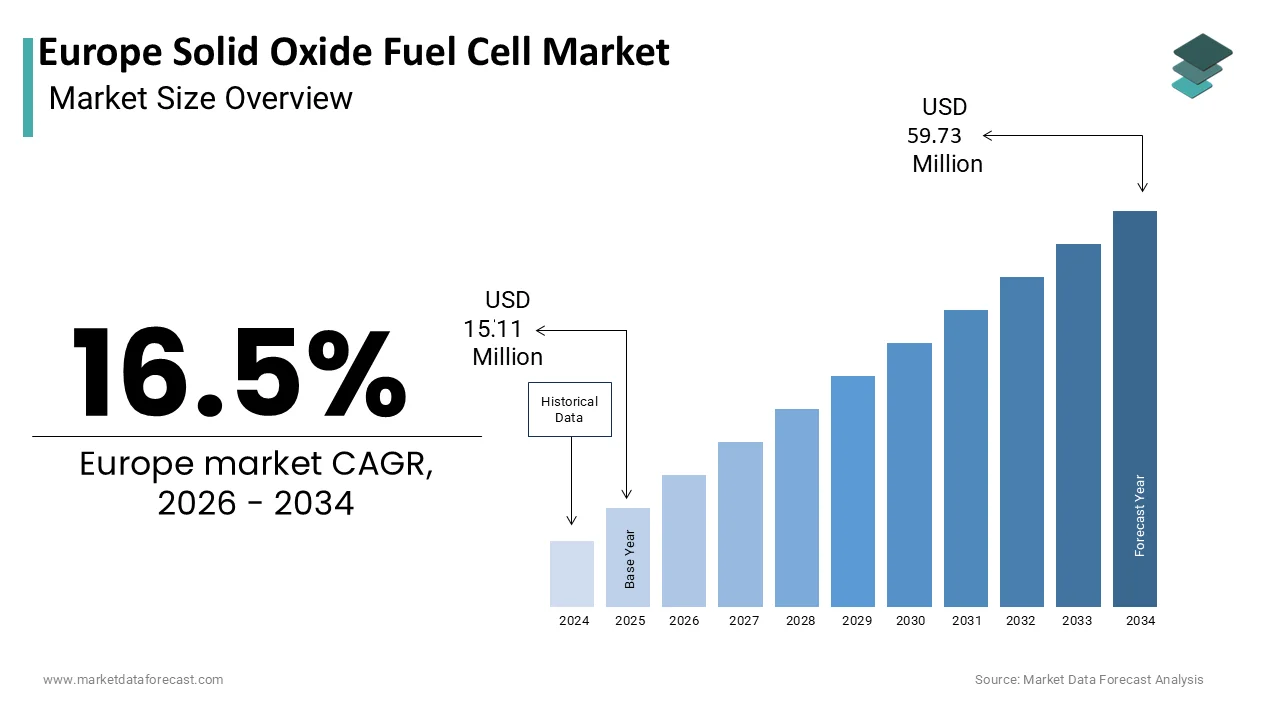
Market Size, 2025
$15.11 MnMarket Estimate, 2026
$17.60 MnMarket Forecast, 2034
$59.73 MnCAGR, 2026–2034
16.5%Europe Solid Oxide Fuel Cell Market Size
The Europe solid oxide fuel cell market was valued at USD 15.11 million in 2025, is estimated to reach USD 17.60 million in 2026, and is projected to reach USD 59.73 million by 2034, growing at a CAGR of 16.5% from 2026 to 2034.
Solid oxide fuel cells are high-temperature electrochemical energy conversion systems that utilize a solid ceramic electrolyte to generate electricity from various fuels, including natural gas, hydrogen, and biogas. This sector represents a critical pillar in the continental strategy for decentralized power generation and deep decarbonization, distinguishing itself from other fuel cell types by operating at temperatures between 500 and 1000 degrees Celsius, which enables internal reforming of hydrocarbons. As per Eurostat, the industrial sector accounts for a significant portion of total final energy consumption in the European Union, which is creating a substantial demand base for efficient on-site power solutions that solid oxide fuel cell technology addresses. The European Commission has identified fuel cells as a key technology under the Strategic Energy Technology Plan, aiming to reduce reliance on centralized grid infrastructure while enhancing energy security. According to the International Energy Agency, Europe hosts a large share of global solid oxide fuel cell research and development activities, with notable clusters in Germany, Denmark, and the United Kingdom driving innovation in stack durability and system integration. The market is characterized by a shift from pure research to commercial pilot projects in data centers, hospitals, and heavy industry, where the ability to utilize existing gas networks while transitioning to green hydrogen offers a unique pathway to net zero emissions without immediate infrastructure overhaul.
MARKET DRIVERS
Stringent Carbon Reduction Mandates Driving Decentralized Power Adoption
Stringent carbon reduction mandates are primarily driving the European solid oxide fuel cell market growth. The European Green Deal and the Fit for 55 packages have established binding targets to reduce greenhouse gas emissions, which are forcing energy-intensive sectors to seek alternatives to conventional combustion. According to the European Environment Agency, stationary energy production remains the largest source of carbon dioxide emissions in the region, prompting regulators to incentivize high-efficiency combined heat and power systems that SOFCs provide. This regulatory pressure creates a favorable environment for microgrids and on-site generation, where solid oxide fuel cells can replace aging diesel generators and inefficient boilers. As per the European Commission, billions of euros have been allocated through the Innovation Fund specifically for low-carbon technologies, with fuel cells receiving significant attention for their ability to decarbonize hard-to-abate sectors. The mandatory phase-out of coal and the tightening of emission trading system caps further increase the operational costs of fossil fuel-based power, which is making the high efficiency and fuel flexibility of SOFC systems economically attractive.
Superior Fuel Flexibility Facilitating Transition to Green Hydrogen
Superior fuel flexibility facilitates the transition to green hydrogen, which is further boosting the expansion of the European solid oxide fuel cell market. Unlike low-temperature fuel cells that require pure hydrogen, solid oxide fuel cells can internally reform hydrocarbons such as methane, propane, and biogas directly within the stack, providing immediate decarbonization benefits using current fuel supplies. As per the European Hydrogen Backbone Initiative, plans are underway to repurpose thousands of kilometers of existing natural gas pipelines for hydrogen transport, which is a transition that SOFC technology supports seamlessly due to its tolerance for varying fuel compositions. This capability allows data centers, hospitals, and industrial facilities to install power systems today that can operate on natural gas and switch to hydrogen as supply becomes available, protecting capital investments against stranded asset risks. According to Gas Infrastructure Europe, pilot projects across Germany and the Netherlands are already testing hydrogen-blended fuels in SOFC systems with successful results. The ability to achieve high overall system efficiencies in combined heat and power mode further enhances the economic case, making SOFCs a versatile bridge technology that aligns with both immediate energy security needs and long-term climate goals.
MARKET RESTRAINTS
High Operating Temperatures Limiting Application Scope and Startup Times
High operating temperatures limiting application scope and startup times are a severe restraint on the Europe solid oxide fuel cell market by restricting the technology to applications requiring continuous baseload power rather than dynamic or mobile uses. The necessity to maintain operating temperatures between 500 and 1000 degrees Celsius means that SOFC systems require significant time to reach operational status, which often takes several hours to start up and cool down safely, which renders them unsuitable for backup power scenarios demanding instant response. According to the Fraunhofer Institute for Ceramic Technologies and Systems, the thermal cycling stress caused by frequent start-stop operations can lead to rapid degradation of the ceramic electrolyte and interconnect materials, significantly shortening the lifespan of the stack. This limitation confines the market primarily to stationary applications such as district heating and industrial processes, where the system runs continuously, excluding vast segments like transportation or portable power,r where proton exchange membrane fuel cells dominate. Data from industry trials indicates that thermal shock remains a leading cause of failure in field deployments, necessitating complex insulation and control systems that increase overall system cost and footprint. The inability to ramp power output quickly also limits the ability of SOFCs to provide grid balancing services that require rapid frequency response, reducing their potential revenue streams in ancillary service markets.
Prohibitive Manufacturing Costs and Complex Supply Chain for Ceramic Components
Prohibitive manufacturing costs and complex supply chain for ceramic components impose significant restraints on the Europe solid oxide fuel cell market by preventing the technology from achieving cost parity with established power generation alternatives. The production of SOFC stacks requires specialized high-performance ceramics, rare-earth materials, and high-temperature alloys that involve intricate sintering processes and precision engineering, resulting in high capital expenditure for manufacturing facilities. As per the European Fuel Cells and Hydrogen Joint Undertaking, the current cost of producing solid oxide fuel cell systems remains significantly above the target required for mass market competitiveness, largely due to low production volumes and the lack of automated manufacturing lines. The supply chain for critical materials such as yttria-stabilized zirconia and lanthanum-strontium manganite is concentrated among a few global suppliers, creating vulnerabilities to price volatility and logistical bottlenecks. According to market analysts, the cost of balance of plant components, including high-temperature heat exchangers and reformers, adds a substantial expense that is difficult to reduce without economies of scale. Furthermore, the skilled labor shortage in advanced ceramics manufacturing within Europe exacerbates production delays and quality control issues. These economic barriers deter potential investors and end users who perceive the technology as financially risky compared to mature alternatives like gas turbines or lithium battery storage, which is stalling the transition from pilot projects to widespread commercial deployment.
MARKET OPPORTUNITIES
Integration with Industrial Waste Heat Recovery Systems
Integration with industrial waste heat recovery systems is a major opportunity for the Europe solid oxide fuel cell market by leveraging the high-grade exhaust heat produced by SOFCs to drive additional industrial processes or generate extra power. The high operating temperature of solid oxide fuel cells produces exhaust gases that are sufficiently hot to be used in bottoming cycles such as steam turbines or organic Rankine cycles, potentially pushing total system efficiency beyond 90%. According to the European Industrial Energy Initiative, the industrial sector wastes large amounts of thermal energy annually, representing a massive untapped resource that SOFC hybrid systems can capture to reduce overall energy consumption and costs. This synergy is particularly valuable in energy-intensive industries like steel, glass, and chemical manufacturing, where both electricity and high-temperature process heat are required simultaneously. As per the Joint Research Centre, deploying SOFC-based combined heat and power units in these sectors could reduce primary energy demand significantly compared to separate generation methods. The ability to utilize biogas or syngas derived from industrial waste streams further enhances the sustainability profile, aligning with circular economy principles.
Deployment in Off-Grid and Weak-Grid Critical Infrastructure
Deployment in off-grid and weak-grid critical infrastructure provides a promising opportunity for the Europe solid oxide fuel cell market by providing reliable, high-efficiency power to remote locations and facilities where grid stability is compromised. As extreme weather events and geopolitical tensions increasingly threaten centralized grid reliability, critical infrastructure such as telecommunications towers, remote medical facilities, and isolated military bases require resilient power sources that can operate independently for extended periods. As per the European Network of Transmission System Operators for Electricity, the frequency of grid disturbances and localized blackouts has risen, highlighting the need for decentralized generation assets that offer fuel flexibility and long-duration runtime. Solid oxide fuel cells excel in these scenarios due to their ability to run on readily available fuels like propane or natural gas without the need for extensive hydrogen storage infrastructure. According to the European Defence Agency, there is growing interest in silent, efficient power solutions for forward operating bases, where SOFCs offer a strategic advantage over noisy diesel generators. The modular nature of SOFC systems allows for scalable deployment tailored to specific load requirements, ensuring energy security for critical services.
MARKET CHALLENGES
Durability and Degradation Issues under Long-Term Operation
A durability and degradation issue under long-term operation is a significant challenge for the Europe solid oxide fuel cell market by undermining investor confidence in the lifecycle economics of the technology. Despite high initial efficiency, SOFC stacks suffer from gradual performance loss due to mechanisms such as chromium poisoning, nickel coarsening, and delamination of electrode layers when operated for thousands of hours at extreme temperatures. According to the International Energy Agency, current commercial SOFC systems often struggle to meet the target operational lifetime required to compete with conventional gas engines, with many prototypes showing significant voltage degradation after extended use. This uncertainty regarding long-term reliability forces developers to oversize systems or plan for frequent stack replacements, which drastically increases the levelized cost of electricity and complicates maintenance logistics. Data from field trials in Germany and Denmark reveal that unexpected shutdowns due to stack failures remain a common occurrence, which is disrupting power supply for critical customers. The lack of standardized accelerated testing protocols that accurately predict real-world degradation rates further hampers the ability to offer competitive warranties.
Lack of Standardized Hydrogen Blending Regulations across Member States
The lack of standardized hydrogen blending regulations across member states is another major challenge for the Europe solid oxide fuel cell market by creating a fragmented legal landscape that hinders the rollout of fuel flexible systems. While SOFC technology is technically capable of operating on hydrogen-natural gas blends, the permissible hydrogen concentration in public gas grids varies significantly between European countries, creating uncertainty for system integrators and fuel suppliers. As per the European Committee for Standardization, the absence of a unified EU-wide standard for hydrogen quality and blending limits complicates the certification of SOFC appliances and discourages manufacturers from producing universal models suitable for the entire single market. This regulatory fragmentation forces companies to develop country-specific variants, increasing engineering costs and slowing down deployment schedules. According to the European Hydrogen Association, inconsistent safety codes and connection standards delay project approvals, as operators must navigate a complex web of national rules to ensure compliance. Furthermore, the uncertainty regarding future blending mandates makes it difficult for investors to calculate the long-term fuel mix and economic viability of SOFC installations. Without harmonized regulations that clearly define the pathway for hydrogen integration, the market faces unnecessary friction that stifles innovation and prevents the realization of the technology’s full potential in the European energy transition.
SEGMENTAL ANALYSIS
By Application Insights
The industrial segment dominated the market by holding 57.4% of the European market share in 2025. The growth of the industrial segment in the European market can be credited to the critical need for high-efficiency combined heat and power solutions in energy-intensive manufacturing sectors, where continuous operation and waste heat utilization are paramount for economic viability. The urgent requirement for highly efficient combined heat and power systems to reduce operational costs and carbon footprints in heavy manufacturing is also propelling the dominance of the industrial segment in the European market. Solid oxide fuel cells offer electrical efficiencies exceeding 60% and total system efficiencies up to 85% when capturing waste heat, which is significantly outperforming conventional gas turbines or internal combustion engines. According to the European Industrial Energy Initiative, the industrial sector consumes a substantial portion of final energy in the European Union, with much of it used for process heat that SOFC exhaust can directly supply. As per the Joint Research Centre, replacing traditional boilers and grid electricity with on-site SOFC units can reduce primary energy consumption considerably in industries like glass, steel, and chemicals. The ability of these systems to operate continuously for thousands of hours aligns perfectly with the base load requirements of factories, ensuring a stable power supply and minimizing production interruptions. Furthermore, the high-temperature exhaust from SOFCs is suitable for driving absorption chillers or steam processes, adding value beyond simple electricity generation.
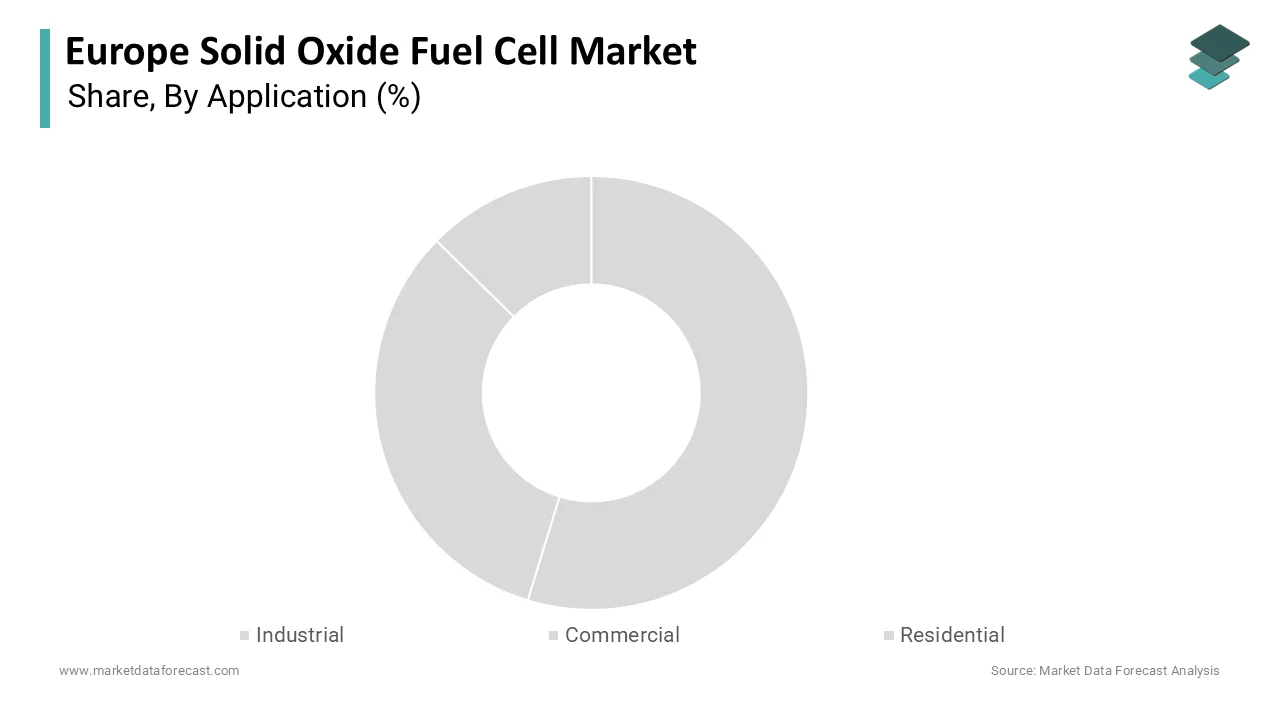
However, the commercial segment is anticipated to register a promising CAGR of 29.2% over the forecast period in this regional market, owing to the rising demand for resilient power solutions in data centers, hospitals, and large office complexes that cannot tolerate grid interruptions. The surging critical power requirements for data centers and digital infrastructure are further boosting the rapid expansion of the commercial segment. As cloud computing and artificial intelligence drive exponential growth in data processing, facilities require uninterrupted, high-quality power that diesel generators and batteries struggle to provide sustainably over long durations. According to the Climate Neutral Data Centre Pact, European data centers aim to become climate neutral by 2030, pushing operators to adopt clean on-site generation technologies like solid oxide fuel cells. As per the International Energy Agency, data center electricity demand in Europe is expected to grow significantly, necessitating reliable backup and baseload solutions that offer lower emissions than traditional diesel. SOFC systems provide silent, vibration-free operation with the ability to run on natural gas or hydrogen, making them ideal for urban data hubs where noise and pollution regulations are strict. Industry analysts highlight that the uptime reliability of SOFC installations meets the stringent availability standards required by hyperscale operators. The ability to scale modularly allows data centers to match power capacity precisely with load growth, avoiding stranded assets. This alignment with sustainability goals and reliability needs propels the commercial segment to the forefront of market growth.
COUNTRY LEVEL ANALYSIS
Germany Solid Oxide Fuel Cell Market Analysis
Germany led the solid oxide fuel cell market in Europe in 2025 with 31.3% of the regional market share. Its robust industrial base, aggressive energy transition policies, and strong domestic manufacturing capabilities make it the primary hub for deploying SOFC technology in heavy industry and commercial applications. Germany's market dominance is also driven by its Energiewende policy, which prioritizes decentralized energy generation and the phase-out of nuclear and coal power. The German Federal Ministry for Economic Affairs and Climate Action has allocated substantial funding through programs like Callux and KfW to subsidize stationary fuel cell systems. According to the German Fuel Cell Association, a majority of stationary fuel cell installations in Europe are located in Germany, reflecting the effectiveness of these incentives. The presence of leading technology developers and system integrators fosters innovation and reduces deployment costs. As per the Fraunhofer Institute, German industries are increasingly integrating SOFC units to meet strict carbon pricing mechanisms under the European Emissions Trading System. The nation’s extensive natural gas grid provides immediate fuel accessibility while preparations for hydrogen blending advance, ensuring operational continuity.
Denmark Solid Oxide Fuel Cell Market Analysis
Denmark occupied the second-largest share of the European solid oxide fuel cells market. It leverages its pioneering role in fuel cell research and its ambitious national strategy to become independent of fossil fuels. Denmark’s strength is propelled by partnerships such as Bloom Energy and Topsoe, which established one of the largest SOFC manufacturing facilities in Herning. The Danish Energy Agreement sets a target of 100% renewable energy supply by 2050, encouraging integration of fuel cells that can operate on biogas and eventually green hydrogen. As per the Danish Energy Agency, numerous megawatt-scale SOFC projects have been deployed in district heating networks. Data from the Technical University of Denmark shows that Danish SOFC systems achieve some of the highest efficiency rates globally due to optimized integration with thermal infrastructure. Strong collaboration between academia, industry, and government ensures a steady pipeline of skilled engineers and pilot projects. Early investment in hydrogen infrastructure prepares the market for seamless transition to hydrogen-fueled SOFC operations.
United Kingdom Solid Oxide Fuel Cell Market Analysis
The United Kingdom is predicted to hold a promising share of the European solid oxide fuel cell market during the forecast period due to its focus on utilizing SOFC technology for critical infrastructure resilience and its supportive regulatory framework for low-carbon heat. The UK’s prominence is further driven by legally binding net zero targets and the need to enhance energy security. The Department for Energy Security and Net Zero has introduced grants and contracts for different schemes to make fuel cell projects more attractive. According to the Fuel Cell and Hydrogen Association, flagship projects in hospitals and data centers demonstrate SOFC reliability. Data from Ofgem indicates that reforms in grid charging structures improve the economics of on-site generation. Research clusters in universities such as Imperial College London advance stack durability and materials science. The UK’s hydrogen economy strategy includes pathways for blending hydrogen into the gas grid, directly benefiting SOFC technologies.
Italy Solid Oxide Fuel Cell Market Analysis
Italy is projected to account for a notable share of the European solid oxide fuel cell market during the forecast period due to high electricity costs, aging grid infrastructure, and strong incentive mechanisms for distributed generation. Italy’s growth is fueled by schemes like Conto Termico and fiscal deductions that allow businesses and homeowners to recover investment costs for cogeneration systems. As per the Italian National Agency for New Technologies, Energy and Sustainable Economic Development, deployment of micro CHP units has surged in the manufacturing and hospitality sectors. Data from Terna shows that distributed generation helps alleviate congestion in the southern grid. The abundance of biogas from agriculture in northern Italy provides a sustainable fuel source. The government’s push for energy communities encourages shared locally generated power, well-suited to modular SOFC arrays.
Netherlands Solid Oxide Fuel Cell Market Analysis
The Netherlands has emerged as a key player in the Europe solid oxide fuel cell market. It is transforming into a testing ground for hydrogen-ready technologies and industrial cluster decarbonization. The Netherlands’ ascent is driven by ambitious climate agreements and the energy demands of its greenhouse horticulture sector, which requires heat and CO2 for plant growth. The Port of Rotterdam promotes fuel cells to decarbonize industrial operations, offering infrastructure support for pilot projects. According to the Netherlands Enterprise Agency, substantial funds have been set aside for hydrogen and fuel cell demonstrations. Data from Gasunie indicates that the Dutch gas grid is being prepared for higher hydrogen blends faster than many neighbors. The Rotterdam Antwerp cluster creates a dense network of potential users for waste heat and syngas-fueled systems. Dutch utilities are also exploring vehicle-to-grid and building-to-grid concepts where stationary fuel cells play a balancing role.
COMPETITIVE LANDSCAPE
The competition in the Europe solid oxide fuel cell market is characterized by a dynamic interplay between established technology licensors and vertically integrated manufacturers striving to dominate the emerging decentralized energy landscape. Market participants compete fiercely based on system efficiency, fuel flexibility, and the ability to demonstrate long-term operational stability under real-world conditions. The entry of major industrial players into the sector has intensified pressure on specialized startups to scale production rapidly and reduce costs to achieve grid parity. Companies are increasingly differentiating themselves through unique cell architectures such as steel-based designs versus traditional ceramic stacks, which offer distinct advantages in thermal cycling and manufacturing scalability. The race to secure strategic partnerships with gas utilities and data center operators has become a critical battleground where reliability and service support determine market success. Government funding and regulatory support play a pivotal role in shaping the competitive environment as nations vie to become hubs for clean energy technology. The overall landscape remains fragmented but is consolidating as successful pilots attract significant investment and lead to larger commercial contracts that validate the technology for widespread adoption.
KEY MARKET PLAYERS
Some of the companies that are playing a dominating role in the global europe solid oxide fuel cell market include
- Bloom Energy Corporation
- Mitsubishi Heavy Industries, Ltd.
- Aisin Corporation
- Kyocera Corporation
- Siemens Energy AG
- Ceres Power Holdings plc
- Elcogen AS
- Sunfire GmbH
- Convion Ltd.
- SOLIDpower Group
- FuelCell Energy, Inc.
- Toshiba Corporation
TOP LEADING PLAYERS IN THE MARKET
- Topsoe stands as a preeminent force in the Europe solid oxide fuel cell market with its groundbreaking facility in Herning, Denmark, representing the largest manufacturing plant of its kind globally. The company contributes significantly to the worldwide sector by scaling production capacity to meet the surging demand for high-efficiency electrolyzers and power generation units. Recent actions to strengthen its position include securing massive orders from international energy majors for green hydrogen projects and expanding its technology licensing agreements. Topsoe continues to invest heavily in research to enhance stack durability and reduce operating temperatures for broader application suitability. The firm actively collaborates with European utilities to deploy megawatt-scale systems that integrate seamlessly with existing gas infrastructure. Its strategic focus on mass manufacturing capabilities ensures it can deliver cost-competitive solutions that accelerate the global transition to sustainable energy while solidifying its role as a primary technology enabler.
- Bloom Energy operates as a critical participant in the Europe solid oxide fuel cell market, leveraging its proven track record from the United States to deliver reliable on-site power solutions across the continent. The company plays a vital global role by providing modular energy servers that offer continuous baseload power with exceptional fuel flexibility, including natural gas and hydrogen blends. Recent initiatives to bolster its European standing include forming strategic partnerships with local distributors and signing long-term service agreements with major data center operators in Germany and the United Kingdom. Bloom Energy has also adapted its platform to comply with strict European emissions standards and grid connection requirements. The corporation continuously innovates its cell chemistry to improve efficiency and extend operational life under diverse climatic conditions. Its commitment to deploying carbon-free power systems reinforces its pivotal role in helping European industries achieve net-zero targets while maintaining grid independence and energy security.
- Ceres Power serves as a vital innovator in the Europe solid oxide fuel cell market, specializing in unique steel-based cell technology that offers lower manufacturing costs and faster startup times compared to traditional ceramic designs. The company contributes to the global landscape by licensing its intellectual property to original equipment manufacturers worldwide, enabling rapid market penetration without heavy capital expenditure on factories. Recent efforts to enhance its market presence include expanding its licensing portfolio with major Asian and European partners and securing funding for pilot production lines in the United Kingdom. Ceres Power actively engages in joint development programs with automotive and stationary power companies to tailor its technology for specific use cases. The firm focuses on demonstrating the versatility of its steel cell platform for both power generation and electrolysis applications. Its strategy of acting as a technology licensor rather than a direct manufacturer allows for scalable growth and widespread adoption of its proprietary solid oxide fuel cell solutions across diverse global markets.
TOP STRATEGIES USED BY KEY MARKET PARTICIPANTS
Key players in the Europe solid oxide fuel cell market primarily employ strategic licensing agreements to expand their geographical reach and accelerate technology adoption without bearing the full burden of manufacturing capital expenditure. Companies actively form joint ventures with established industrial conglomerates and utility providers to share development risks and secure long-term off-take agreements for large-scale deployments. Another major strategy involves investing heavily in research and development to improve stack durability and reduce operating temperatures, which broadens the range of viable applications. Market participants also focus on securing government grants and subsidies to offset high initial costs and demonstrate commercial viability through flagship pilot projects. Additionally, firms are diversifying their product portfolios to offer dual-mode systems capable of both power generation and electrolysis to capture opportunities in the growing green hydrogen sector. Continuous efforts to localize supply chains within Europe ensure resilience against global disruptions and compliance with regional content requirements.
MARKET SEGMENTATION
This research report on the europe solid oxide fuel cell market is segmented and sub-segmented into the following categories.
By Application
- Industrial
- Commercial
- Residential
By Country
- Germany
- Denmark
- United Kingdom
- Italy
- Netherlands
- Rest of Europe