- Product Description Description
- Table of Contents TOC
- List of Table & Figure LOT
- Get Free Sample PDF Sample PDF
Market Size, 2025
$1.33 BnMarket Estimate, 2026
$1.37 BnMarket Forecast, 2034
$1.83 BnCAGR, 2026–2034
3.64%Europe Microphones Market Size, Growth, Trends & Forecast (2026–2034)
The Europe microphones market size was calculated to be USD 1.33 billion in 2025, is anticipated to be worth USD 1.37 billion in 2026, and is projected to reach USD 1.83 billion by 2034, growing at a compound annual growth rate (CAGR) of 3.64% during the forecast period from 2026 to 2034. Driven by a paradigm shift from simple voice capture to intelligent audio processing, rigorous automotive safety mandates, and the widespread proliferation of voice-activated smart home ecosystems, the regional market continues to expand steadily.
Key Executive Metrics (At-a-Glance)
- 2025 Base Valuation: USD 1.33 Billion
- 2026 Current Valuation: USD 1.37 Billion
- 2034 Forecast Valuation: USD 1.83 Billion
- Compound Annual Growth Rate (CAGR): 3.64% (2026–2034)
- Dominant Product Segment: Wired Microphones (holding 58.5% market share in 2025 due to professional reliability and lossless fidelity)
- Fastest-Growing Product Segment: Wireless Microphones (projected to register an 8.4% CAGR driven by digital transmission and mobility demands)
- Dominant Distribution Channel Segment: Offline (capturing 62.2% market share in 2025 via specialized retail and B2B procurement)
- Fastest-Growing Technology Segment: MEMS (exhibiting a 14.2% CAGR driven by smart devices, automotive integration, and Edge AI)
- Dominant Application Segment: Consumer Electronics (holding 48.2% market share in 2025 across smartphones, wearables, and portables)
- Fastest-Growing Application Segment: Automotive (anticipated to expand at an 11.8% CAGR fueled by cabin monitoring and active noise cancellation)
- Dominant Country Market: Germany (holding 24.8% market share in 2025 backed by premium automotive OEMs and pro-audio heritage)
Core Market Drivers
- Smart Home Integration: Ubiquitous adoption of voice-activated interfaces and far-field microphone arrays in consumer automation systems.
- Automotive Safety Mandates: Strict EU regulations requiring in-cabin occupant monitoring, driver alertness tracking, and active road noise cancellation in electric vehicles.
Primary Market Restraints & Challenges
- Data Privacy Regulations: Strict GDPR compliance and AI Act requirements limiting cloud-based voice processing and always-on listening systems.
- Supply Chain Vulnerabilities: Heavy dependency on imported critical raw materials and semiconductor components leading to cost instability.
Europe Microphones Market Segmentation Breakdown
| Segment Category | Largest (Dominant) Segment | Fastest-Growing Segment |
|---|---|---|
| By Product Type | Wired Microphones (58.5% share) | Wireless Microphones (8.4% CAGR) |
| By Distribution Channel | Offline (62.2% share) | Online / E-commerce |
| By Technology | Electret Microphones | MEMS (14.2% CAGR) |
| By Application | Consumer Electronics (48.2% share) | Automotive (11.8% CAGR) |
| By Region / Country | Germany (24.8% share) | United Kingdom (Prominent hub & creative sectors) |
Major Industry Players Profiled
Key enterprises shaping the Europe microphones market include Sennheiser, Shure Incorporated, Audio-Technica Corporation, AKG Acoustics, Rode Microphones, Beyerdynamic, Neumann, Blue Microphones, Sony Corporation, and Panasonic Corporation.
Europe Microphones Market Size
The Europe microphones market size was calculated to be USD 1.33 billion in 2025 and is anticipated to be worth USD 1.83 billion by 2034, from USD 1.37 billion in 2026, growing at a CAGR of 3.64% during the forecast period.
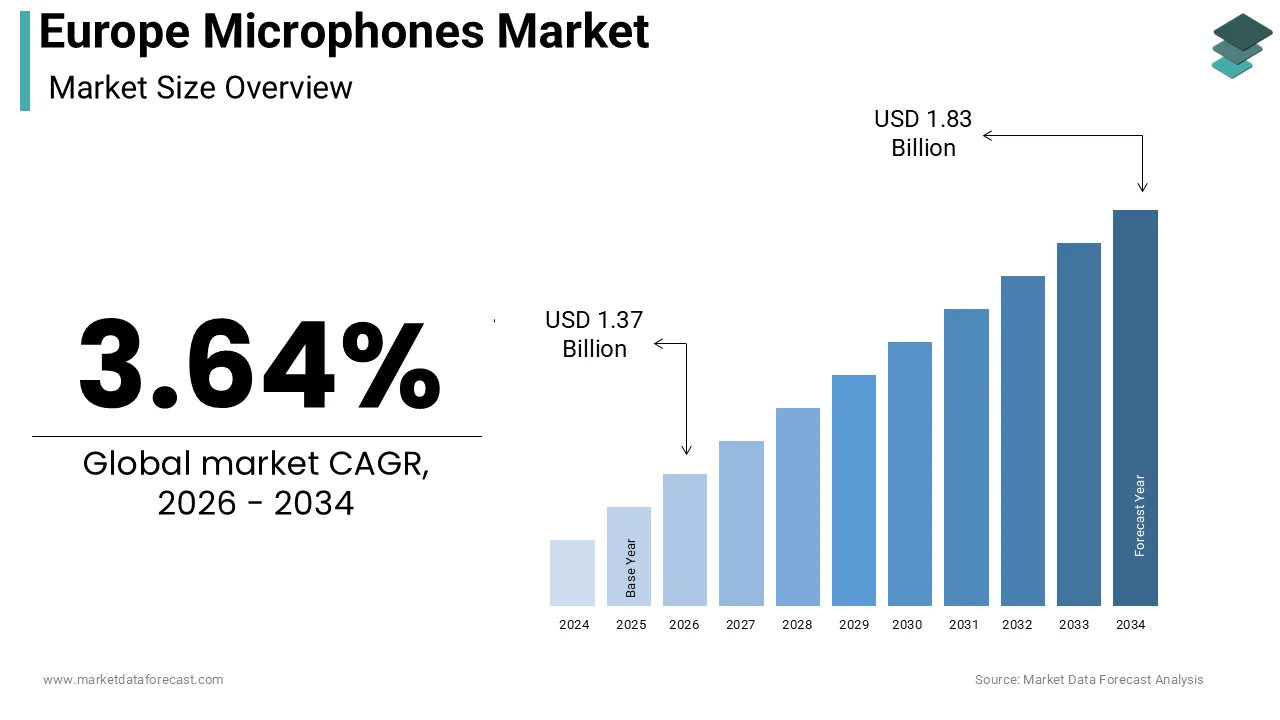
A microphone (often called a "mic") is a device that converts sound waves into electrical signals. This process is known as transduction. This market is currently defined by a paradigm shift from simple voice capture to intelligent audio processing, driven by the proliferation of artificial intelligence and the stringent privacy regulations unique to the region. The market is not merely about hardware but involves sophisticated integration with digital signal processors to enable noise cancellation, voice biometrics, and far-field recognition. According to Eurostat, the number of information and communication technology specialists in the European Union is on a steady upward trajectory, reflecting the massive demand for digital expertise to support remote work and virtual collaboration environments. Furthermore, the European Commission's Artificial Intelligence Act has established rigorous standards for biometric data processing, compelling manufacturers to develop microphones with enhanced security and on-device processing capabilities. Reports from ACEA and automotive electronics analysts indicate that new vehicle models are increasingly equipped with multiple high-fidelity microphones. These sensors are critical for supporting advanced driver assistance systems (ADAS), hands-free connectivity, and sophisticated in-cabin voice recognition technologies. The shift toward connected and autonomous vehicles is driving a robust market for automotive-grade sensors, including MEMS microphones. These components are essential for modern infotainment solutions and active noise cancellation (ANC), particularly in electric vehicles, where reducing ambient noise is a priority. This convergence of regulatory compliance, automotive electrification, and the digitalization of work positions the European market as a hub for high-value, smart microphone technologies rather than just commodity components.
MARKET DRIVERS
Proliferation of Voice-Activated Interfaces and Smart Home Ecosystems
The ubiquitous integration of voice control in consumer devices and home automation systems drives exponential demand for MEMS microphone arrays. Rapid adoption of voice-activated interfaces across smartphones, smart speakers, and home appliances is the primary catalyst propelling the European microphone market. Consequently, there is a growing need for multi-microphone arrays to ensure accurate far-field voice recognition. Consumers increasingly prefer hands-free interaction for controlling lighting, heating, and entertainment systems, requiring microphones capable of isolating voice commands from background noise and reverberation in typical European housing structures. According to the International Data Corporation (IDC), the European smart home market continues to expand, though growth in mature categories like smart speakers has stabilized. Manufacturers are increasingly integrating beamforming technology and high-performance MEMS microphones into connected displays and security systems to improve voice recognition accuracy in noisy environments. The European Consumer Organisation (BEUC) highlights that voice assistants have become a primary interface for controlling home automation. This trend is driving a continuous upgrade cycle as consumers seek devices with better privacy features and more localized language support. Furthermore, the expansion of 5G networks across the continent has lowered latency, making real-time voice processing more reliable and encouraging developers to integrate voice controls into a wider range of IoT devices. This structural shift towards natural language user interfaces ensures that the volume of microphones per household continues to rise, transforming the microphone from a single component into a critical sensor array essential for the functionality of the modern smart home.
Stringent Automotive Safety Regulations and Cabin Communication Systems
Mandatory safety standards and the rise of electric vehicles drive the integration of advanced microphone systems for in-cabin monitoring and emergency communication. The European Union has implemented rigorous safety regulations mandating advanced in-vehicle communication systems, which further fuels the expansion of the Europe microphones market. Consequently, this has directly boosted the demand for high-performance automotive microphones. The General Safety Regulation requires new vehicle types to be equipped with event data recorders and advanced driver monitoring systems, many of which rely on audio sensors to detect driver distraction, drowsiness, or emergencies through voice analysis and cabin sound profiling. According to the European New Car Assessment Programme, the inclusion of occupant monitoring systems became a key criterion for five-star safety ratings in 2023, prompting automakers to install sophisticated microphone arrays capable of distinguishing between passengers and isolating specific seating zones. The transition to electric vehicles further amplifies this need, as the absence of engine noise makes wind and road noise more apparent, requiring active noise cancellation systems that utilize feed-forward and feedback microphones to maintain cabin quietness. The Society of Motor Manufacturers and Traders (SMMT) and automotive technology analysts indicate that premium electric vehicles are leading the shift toward "silent cabins." To achieve this, manufacturers are deploying advanced active noise control (ANC) systems that rely on multiple strategically placed microphones to neutralize road noise and provide high-quality hands-free communication. This regulatory and technological push ensures a robust and growing demand for automotive-grade microphones that can withstand extreme temperatures and vibrations.
MARKET RESTRAINTS
High Sensitivity to Data Privacy and Surveillance Concerns
Strict European data protection laws and public skepticism regarding always-on listening devices constrain the adoption of cloud-based voice services. Profound sensitivity to data privacy is a significant restraint on the Europe microphones market. This stems from the General Data Protection Regulation and a culturally ingrained skepticism towards always-on listening devices. European consumers and regulators are increasingly wary of microphones that continuously stream audio data to the cloud for processing, fearing unauthorized surveillance and data breaches. The environment forces manufacturers to invest heavily in edge computing capabilities to process voice data locally on the device, which increases the complexity and cost of the final product compared to simpler cloud-dependent alternatives. The requirement to comply with the upcoming AI Act, which classifies certain biometric identification systems as high risk, further complicates the deployment of advanced microphone applications in public spaces. These privacy hurdles slow down the mass market penetration of voice-first technologies, limiting the growth potential for microphone suppliers who cannot guarantee absolute data sovereignty.
Supply Chain Volatility for Rare Earth Materials and Semiconductors
Dependency on imported critical raw materials and semiconductor components creates supply instability and cost fluctuations. The heavy reliance on imported materials hampers the expansion of the Europe microphones market. These include rare earth elements and specialized semiconductor wafers required for high-quality MEMS microphones. The production of these components depends on materials such as gallium, indium, and specific piezoelectric crystals, the supply chains of which are concentrated outside Europe and subject to geopolitical tensions and export restrictions. This volatility makes it difficult for manufacturers to offer stable pricing to long term automotive and industrial clients, potentially delaying project timelines and forcing original equipment manufacturers to seek alternative, often inferior, technologies. The region lacks resilient domestic sourcing or recycling for critical inputs. As a result, supply chain instability will remain a persistent drag on market growth.
MARKET OPPORTUNITIES
Emergence of Edge AI and On-Device Voice Processing
The shift towards processing voice data locally on the device offers a transformative opportunity to overcome privacy barriers and reduce latency. The rapid development of Edge Artificial Intelligence paves the way for the expansion of the Europe microphones market. This technology enables voice recognition and audio processing to occur directly on the device rather than in the cloud. This technological shift directly addresses the primary privacy concerns of European consumers by ensuring that sensitive voice data never leaves the local hardware, thereby complying seamlessly with the General Data Protection Regulation. According to the European Commission's Digital Decade policy, the deployment of edge computing nodes is a strategic priority, with billions of euros allocated to support technologies that enhance data sovereignty. Microphone manufacturers are increasingly partnering with chip designers to embed neural processing units directly into microphone modules, allowing for wake word detection and command recognition with minimal power consumption. A study indicates that the demand for high-performance MEMS components is rising steadily. In Europe, the integration of AI-driven features like noise cancellation and voice recognition into smart microphones is a key driver for market expansion in the consumer and automotive sectors. This evolution opens new application verticals in healthcare and legal sectors where confidentiality is paramount, allowing microphones to be deployed in environments previously considered too sensitive for voice technology. Edge AI transforms the microphone into a trusted intelligent sensor by enabling secure, low-latency, and offline functionality. This unlocks vast new revenue streams.
Expansion of Hybrid Work Infrastructure and Unified Communications
The permanent shift to hybrid work models drives demand for professional-grade conferencing microphones and noise-cancelling headsets. The structural transformation of the European workforce towards hybrid and remote work models provides a potential prospect for the Europe microphones market. This is creating sustained demand for high-fidelity audio equipment in home offices and corporate meeting rooms. As organizations invest in permanent hybrid infrastructure, the need for professional-grade conferencing bars, desktop microphones, and headsets with advanced noise cancellation has become critical to ensure clear communication and productivity. Research emphasizes that while many workers prefer flexible arrangements, the actual share of the workforce engaged in hybrid work remains a specialized segment. Despite this, the shift toward teleworkable jobs continues to sustain the market for high-quality professional communication tools. Companies are upgrading from basic laptop microphones to dedicated array microphones that can isolate voices in noisy home environments and provide360-degreee coverage for small meeting rooms. A study shows consistent investment in Unified Communications and Collaboration (UC&C) solutions across Western Europe. Businesses are prioritizing hardware that supports seamless virtual collaboration, with a particular focus on audio and video peripherals that improve employee productivity in distributed environments. Furthermore, the rise of webinar culture and online education has expanded the consumer base for streaming quality microphones beyond professional broadcasters to include educators and content creators. This enduring change in work habits ensures a long-term growth trajectory for the professional and prosumer microphone segments.
MARKET CHALLENGES
Complexity of Acoustic Design in Miniaturized Devices
The relentless trend towards smaller form factors in consumer electronics creates significant engineering challenges for maintaining audio quality. Designing high-performance acoustic systems is a serious barrier to the Europe microphones market. These must fit within the shrinking physical footprint of modern devices like smartphones and wearables. As devices become thinner and more compact, the available space for microphone ports, acoustic chambers, and isolation structures diminishes, leading to issues with self-noise, wind turbulence, and limited dynamic range. Engineers must employ complex simulation and novel materials to mitigate these effects, significantly increasing research and development costs and time to market. Additionally, the placement of multiple microphones in tight spaces leads to crosstalk and interference, requiring sophisticated digital signal processing algorithms to correct, which adds to the computational load and battery drain. This technical bottleneck limits the ability of manufacturers to deliver flagship audio performance in mid-range and budget devices, constraining market potential in price-sensitive segments.
Environmental Impact of Electronic Waste and Recycling Difficulties
The disposal of billions of miniature microphone components embedded in non-repairable devices poses a growing environmental and regulatory challenge. The escalating challenge of managing the environmental impact of electronic waste hinders the expansion of the Europe microphones market. This is particularly critical as microphones are increasingly embedded in sealed, non-repairable consumer devices that are difficult to recycle. Micro Electro Mechanical Systems microphones contain trace amounts of precious metals and specialized materials that are economically unviable to recover using current recycling methods, leading to their loss in landfills or incineration. According to the European Commission, the deployment of a secure and climate-neutral edge node network is a cornerstone of the Digital Decade 2030 strategy. Substantial funding is being directed toward these infrastructures to enhance the EU's data sovereignty and reduce reliance on non-European cloud providers. A study indicates that the demand for high-performance MEMS components is rising steadily. In Europe, the integration of AI-driven features like noise cancellation and voice recognition into smart microphones is a key driver for market expansion in the consumer and automotive sectors. Research emphasizes that while many workers prefer flexible arrangements, the actual share of the workforce engaged in hybrid work remains a specialized segment. Despite this, the shift toward teleworkable jobs continues to sustain the market for high-quality professional communication tools. Sources show consistent investment in Unified Communications and Collaboration (UC&C) solutions across Western Europe. Businesses are prioritizing hardware that supports seamless virtual collaboration, with a particular focus on audio and video peripherals that improve employee productivity in distributed environments. Complying with these evolving circular economy requirements forces companies to rethink their manufacturing processes and material choices, increasing production costs and logistical complexity. Failure to address these sustainability issues could result in reputational damage and regulatory penalties, threatening the long term viability of current product architectures.
REPORT COVERAGE
| REPORT METRIC | DETAILS |
| Market Size Available | 2025 to 2034 |
| Base Year | 2025 |
| Forecast Period | 2026 to 2034 |
| CAGR | 3.64% |
| Segments Covered | By Product Type, Distribution Channel, Technology, Application, And Region |
| Various Analyses Covered | Global, Regional & Country Level Analysis; Segment-Level Analysis; DROC, PESTLE Analysis; Porter’s Five Forces Analysis; Competitive Landscape; Analyst Overview of Investment Opportunities |
| Regions Covered | UK, France, Spain, Germany, Italy, Russia, Sweden, Denmark, Switzerland, Netherlands, Turkey, and the Czech Republic |
| Market Leaders Profiled | Sennheiser, Shure Incorporated, Audio-Technica Corporation, AKG Acoustics, Rode Microphones, Beyerdynamic, Neumann, Blue Microphones, Sony Corporation, Panasonic Corporation |
SEGMENTAL ANALYSIS
By Product Type Insights
The wired microphones segment was the largest segment in the Europe microphones market and captured a 58.5% share in 2025. This supremacy of the segment is sustained by its unparalleled reliability, superior audio fidelity, and critical necessity in professional broadcasting, live sound reinforcement, and studio recording environments where signal integrity is non-negotiable. The main driver for the dominance of wired microphones is their ability to deliver lossless, high-resolution audio signals without the latency, interference, or battery dependency issues inherent in wireless systems. In professional studios, broadcast centers, and live concert venues across Europe, audio engineers prioritize absolute signal purity and zero latency, which only a direct physical connection can guarantee. The complexity of the electromagnetic spectrum in dense urban European environments further exacerbates the risk of wireless congestion, making wired solutions the safest choice for critical applications. Furthermore, the absence of batteries eliminates operational downtime during long performances or recording marathons. This unwavering demand for perfection in the professional sector ensures that wired microphones remain the backbone of the industry, securing their majority market share despite the convenience of wireless alternatives. Further boosting this segment is its significant cost advantage and exceptional durability, making it the preferred choice for educational institutions, government bodies, and houses of worship operating under strict budget constraints. Wired systems require no complex frequency coordination, expensive receivers, or frequent battery replacements, resulting in a much lower total cost of ownership over the product lifecycle. The robust construction of wired dynamic microphones allows them to withstand rough handling, drops, and extreme weather conditions better than their delicate wireless counterparts, reducing replacement rates. For large-scale installations such as conference centers and airports, the simplicity of cabling infrastructure compared to managing wireless networks offers a pragmatic solution that balances performance with economic reality. This enduring value proposition ensures continued widespread adoption across the public and institutional sectors.
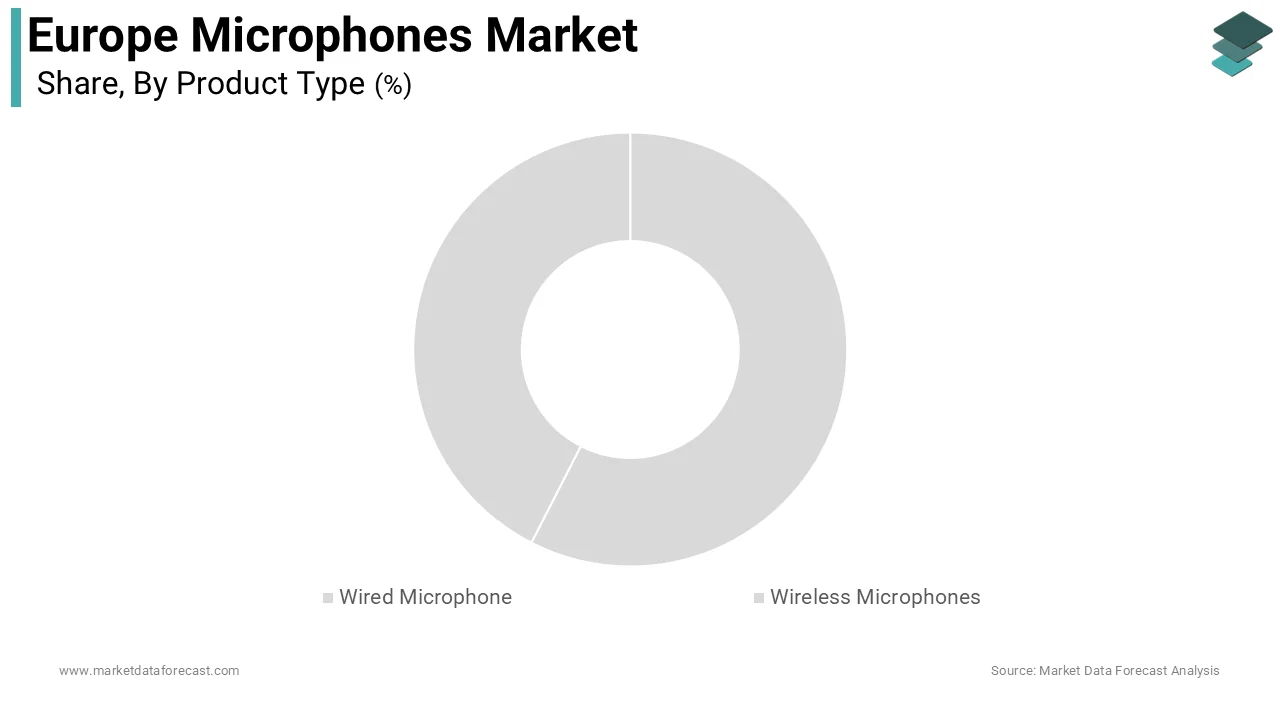
The Wireless Microphones segment is projected to register the highest CAGR of 8.4% from 2026 to 2034 due to advancements in digital transmission protocols, the liberation of performers and speakers from cable constraints, and the surging demand for mobility in corporate and entertainment sectors. One of the key drivers of the explosive growth of wireless microphones is the revolutionary shift from analog to digital transmission technologies, which offer superior sound quality, enhanced security through encryption, and vastly improved spectrum efficiency. Modern digital wireless systems utilize advanced compression algorithms and frequency hopping spread spectrum techniques to deliver audio quality indistinguishable from wired connections while resisting interference in crowded radio environments. The ability of these new systems to operate in the increasingly congested 2.4 GHz and 5.8 GHz bands without licensing further lowers barriers to entry. As digital technology matures and costs decrease, it unlocks wireless capabilities for mid-market users who previously could not afford the premium associated with reliable wireless audio, driving rapid market expansion. Also helping this segment is the growing cultural and operational emphasis on mobility and audience engagement in live events, corporate conferences, and religious services. Speakers, performers, and presenters increasingly demand the freedom to move across stages and interact directly with audiences without being tethered by cables, enhancing the dynamism and impact of their delivery. The trend towards interactive worship styles in churches and mosques across Europe has also led to a surge in the adoption of headset and lapel wireless microphones for clergy and choir members. Furthermore, the rise of fitness instructors and content creators who require unrestricted movement for video production has created a new consumer base for affordable wireless lavalier systems. This societal shift towards dynamic, untethered communication ensures that wireless microphones will continue to grow at a faster pace than their wired counterparts.
By Distribution Channel Insights
The Offline distribution channel segment held the majority share of 62.2% of the Europe microphones market in 2025. Its supremacy is driven by the need for acoustic testing before purchase and complex B2B procurement processes, whereas electret microphones lead due to their optimal balance of cost, size, and performance for mass-market electronics. The dominance of this channel is also supported by the unique nature of professional audio equipment, where buyers insist on physically testing sound characteristics, build quality, and ergonomics before committing to high-value purchases. Professional sound engineers, broadcasters, and musicians rely on specialized retailers and trade shows like ISE in Barcelona to audition microphones in controlled environments, a process impossible to replicate fully online. Furthermore, large-scale institutional procurements for schools, governments, and corporations often require formal tender processes and direct vendor relationships that are managed exclusively through offline channels. The complexity of integrating microphones into existing AV systems also necessitates face-to-face interaction with system integrators who specify and supply hardware directly. This reliance on tactile evaluation and personalized professional service ensures that offline channels remain the primary route to market for the majority of microphone transactions in Europe. The leading position of electret microphones is sustained by their exceptional cost-to-performance ratio, compact form factor, and versatility, making them the default choice for billions of consumer electronic devices manufactured or sold in Europe. Electret technology eliminates the need for an external polarizing voltage, allowing for simpler circuitry and smaller sizes ideal for smartphones, laptops, headsets, and IoT devices. Their manufacturing process is highly scalable and mature, resulting in unit costs significantly lower than dynamic or ribbon alternatives while still delivering adequate frequency response for speech and general audio capture. The ability to integrate easily into printed circuit boards without bulky housing makes them indispensable for modern miniaturized electronics. The proliferation of connected devices continues. Consequently, the demand for these economical and effective transducers remains unshakeable, securing their status as the most widely used microphone technology in the region.
By Technology Insights
The MEMS (Micro-Electro-Mechanical Systems) segment is expected to exhibit a noteworthy CAGR of 14.2% from 2026 to 2034 due to the shift towards e-commerce for prosumer gear and the insatiable demand for ultra-small, intelligent sensors in smart devices and automotive applications. Moreover, the rapid rise of online distribution is driven by content creators and home studio enthusiasts shifting to digital marketplaces for better convenience, variety, and competitive pricing. The rise of the "creator economy" in Europe has democratized audio production, leading to a surge in direct-to-consumer sales of USB and streaming microphones via platforms like Amazon, Thomann, and brand websites. Manufacturers are increasingly bypassing traditional distributors to sell directly online, offering bundled kits and firmware updates that enhance customer loyalty. The ability to access global brands and niche products not available in local stores further fuels this channel's expansion, making it the fastest route to market for emerging audio trends. A key reason for the growth of MEMS microphones is their critical role in enabling artificial intelligence features, far-field voice recognition, and beamforming in space-constrained applications like smartphones, smart speakers, and modern vehicles. Unlike traditional microphones, MEMS devices are fabricated using semiconductor processes, allowing them to be surface-mounted directly onto PCBs with extreme precision and consistency, which is vital for automated mass production. Their tiny size allows manufacturers to embed arrays of four to eight microphones in a single device for noise suppression and directional audio capture, a capability essential for voice assistants like Siri and Alexa to function accurately in noisy environments. Devices are becoming smaller and smarter. Consequently, the unique advantages of MEMS technology ensure it will remain the fastest-growing segment in the market.
By Application Insights
The consumer electronics application segment dominated the Europe microphones market and accounted for a 48.2% share in 2025 because of the ubiquitous presence of microphones in smartphones, tablets, laptops, and wearable devices, which are essential for communication, content creation, and voice interaction in daily life. High-performance audio requirements, specifically spatial sound and advanced noise cancellation, coupled with maximum smartphone penetration in Europe, are key drivers for the electronics market's leadership. Modern flagship and mid-range smartphones now routinely incorporate three to five microphones to isolate voice from background noise, record stereo video, and support voice assistant wake words, drastically increasing the volume of units consumed per handset. The European Commission's push for higher-quality video calling and accessibility features has further mandated the inclusion of high-fidelity audio capture in all connected devices. Research indicates that the trend towards foldable phones and premium wearables has accelerated the demand for ultra-thin MEMS microphones that can fit into compact chassis without compromising performance. As consumers replace devices every few years and demand ever-better audio quality for social media and conferencing, the sheer volume of endpoints ensures that consumer electronics remains the largest application vertical for microphone manufacturers. A top factor behind the expansion of the explosive growth of the wearable technology sector is that wireless stereo earbuds and smartwatches rely heavily on integrated microphones for calls and health monitoring. The shift towards hands-free communication and fitness tracking has made hearables a staple accessory for millions of Europeans, with each pair of earbuds requiring at least two to four microphones for active noise cancellation and transparency modes. These devices demand extremely small, low-power microphones capable of picking up bone conduction vibrations and filtering wind noise, driving innovation and volume in the MEMS sector. The continuous iteration of these personal devices, combined with the emergence of augmented reality glasses that require sophisticated audio arrays, creates a relentless demand cycle. This pervasive integration of audio sensing into personal tech ensures the consumer electronics segment maintains its substantial market lead.
The automotive application segment is predicted to witness the highest CAGR of 11.8% over the forecast period. This rapid growth of the segment is propelled by stringent safety regulations mandating in-cabin monitoring, the rise of electric vehicles requiring active noise control, and the integration of sophisticated voice-controlled infotainment systems. A key factor in the rapid increase of the automotive segment is the implementation of rigorous European Union safety regulations that require advanced in-cabin monitoring systems to detect driver drowsiness, distraction, and the presence of forgotten children. These systems increasingly rely on sensitive microphone arrays to analyze breathing patterns, coughing, and voice stress levels as part of a holistic safety approach alongside cameras and radar. The General Safety Regulation further mandates event data recorders that may utilize audio inputs to reconstruct accident scenarios. The regulatory push transforms microphones from a comfort feature into a critical safety component, driving a mandatory and rapid uptake that outpaces other application sectors. Following this, the segment is backed by the rapid transition to electric vehicles, which lack the masking noise of internal combustion engines, thereby making wind, tire, and road noise more perceptible and annoying to passengers. To maintain the premium quietness expected in EVs, manufacturers are deploying sophisticated Active Road Noise Cancellation systems that use feed-forward and feedback microphones to generate anti-phase sound waves in real time. Each RNC system requires a network of four to six accelerometers and microphones strategically placed throughout the cabin and chassis. As the electrification of the fleet accelerates towards the 2035 combustion engine ban, the demand for specialized automotive microphones will surge, making this the fastest-growing application segment.
REGIONAL ANALYSIS
Germany Microphones Market Analysis
Germany led the Europe microphones market and captured a 24.8% share in 2025. The demand for microphones in Germany is propelled by its dense concentration of premium automotive original equipment manufacturers such as Volkswagen, BMW, and Mercedes-Benz, who are pioneers in integrating advanced microphone arrays for in-cabin communication and active noise cancellation in electric vehicles. Massive demand for high-performance acoustic sensors is driven by the nation's leadership in automotive engineering, pro-audio manufacturing, and industrial automation. The country is also home to legendary professional audio brands like Sennheiser and Neumann, which drive both export volumes and domestic adoption of high-fidelity microphones in broadcasting and music production. Furthermore, Germany's strong industrial base utilizes microphones extensively for predictive maintenance and machine listening applications under its Industry 4.0 initiative. The presence of world-class research institutes focusing on acoustics and signal processing further fosters innovation. This unique combination of automotive leadership, audio heritage, and industrial digitization ensures Germany remains the primary engine of the European microphone market.
United Kingdom Microphones Market Analysis
The United Kingdom was the next prominent country in the European market and occupied a 17.5% share in 2025. This position of the UK market is fuelled by its vibrant creative industries, world-leading broadcasting sector, and a thriving ecosystem of audio technology startups and research institutions. London's position as a premier global hub for media, music, and film creates immense demand for high-end microphones, forming the backbone of the UK’s strong professional audio market. The country hosts iconic entities like the BBC and Abbey Road Studios, which set global standards for audio quality and continuously invest in cutting-edge microphone technology. Additionally, the UK is a center for automotive research, particularly in the development of autonomous driving technologies that rely on sophisticated acoustic sensing for cabin monitoring. The presence of numerous universities specializing in acoustic engineering and the proliferation of podcasting and content creation startups further stimulate demand. This blend of cultural influence, technological innovation, and strong institutional buyers positions the UK as a critical and dynamic market for microphones in Europe.
France Microphones Market Analysis
France is another key player in the Europe microphones due to its strong aerospace and defense sectors, a robust public broadcasting infrastructure, and a growing focus on smart city initiatives utilizing acoustic sensors. Microphones play a pivotal role in France's robust defense and aerospace sectors, particularly for surveillance, cockpit communication, and helmet-mounted displays, underpinning its market strength. Companies like Thales and Dassault Aviation drive demand for ruggedized, high-performance microphones capable of operating in extreme environments. The country also boasts a powerful public broadcasting sector, with France Télévisions and Radio France maintaining extensive networks of professional audio equipment for national coverage. Furthermore, France is at the forefront of smart city deployments, utilizing acoustic sensors for traffic monitoring, gunshot detection, and environmental noise mapping in cities like Paris and Lyon. The French government's support for the "French Tech" ecosystem has also spurred growth in startups developing AI-driven audio solutions for healthcare and security. This diverse mix of high-tech industrial applications and public sector modernization ensures France remains a pivotal market for microphone technologies.
Italy Microphones Market Analysis
Italy grew steadily in the Europe microphones market owing to its deep-rooted culture of music and opera, which sustains a steady demand for premium microphones in conservatories, theaters, and recording studios across the country. The country’s market is known for its renowned musical heritage, a strong luxury automotive sector, and a burgeoning design-led consumer electronics industry that values high-quality audio components. The nation is also home to prestigious luxury car manufacturers like Ferrari and Lamborghini, which integrate bespoke audio systems and advanced voice controls into their high-performance vehicles, driving demand for specialized automotive microphones. The "Made in Italy" brand extends to consumer electronics, where design-focused audio products command a premium, encouraging the use of high-fidelity microphone components. Additionally, the tourism sector's reliance on guided tour systems and conference facilities in historic cities fuels the installation of wireless microphone networks. This fusion of artistic tradition, luxury manufacturing, and tourism infrastructure keeps Italy a key growth market for microphones in Southern Europe.
Spain Microphones Market Analysis
Spain is likely to expand notably in the European market during the forecast period due to its booming tourism and hospitality industry, a rapidly expanding renewable energy sector utilizing acoustic monitoring, and a lively entertainment scene driving live sound equipment sales. The surge in high-impact tourism is catalyzing a major upgrade of audio-visual capabilities in Spain’s hospitality sector, particularly in luxury and conference-focused facilities. The need for reliable wireless microphone systems for events, guided tours, and multilingual interpretation creates a consistent demand stream. According to sources, the rapid expansion of wind farms in regions like Galicia and Andalusia has increased the use of acoustic monitoring microphones for noise compliance and blade health monitoring. The country's vibrant festival culture, including events like Primavera Sound and Sonar, necessitates large-scale professional sound systems, boosting sales of high-durability microphones. Furthermore, the growth of the call center and business process outsourcing sector in cities like Barcelona and Madrid drives demand for high-quality headsets and desk microphones. This combination of tourism-driven hospitality, renewable energy needs, and a dynamic events industry ensures Spain remains a vital and evolving market for microphones in the region.
COMPETITION OVERVIEW
The competition in the Europe microphones market is characterized by intense rivalry among established multinational corporations and specialized niche players vying for dominance in specific application verticals like automotive and professional audio. Large global players leverage their extensive patent portfolios and deep acoustic expertise to secure long term contracts with major smartphone and vehicle manufacturers across the continent. This trend towards integrated audio system providers creates high barriers to entry for smaller firms unless they possess highly differentiated MEMS technologies or proprietary noise cancellation algorithms. The competitive landscape is further complicated by stringent European Union regulations regarding radio spectrum usage and data privacy, which demand rigorous testing and certification before market approval. Companies must therefore invest significantly in research and development to demonstrate superior audio quality and security features while navigating complex compliance processes. Innovation speed and the ability to provide localized technical support are critical differentiators that determine market success. Furthermore, strategic alliances between microphone manufacturers and semiconductor designers have become essential for accessing cutting-edge processing chips to accelerate product adoption. The market remains dynamic with continuous entries of smart microphone solutions challenging traditional standards and reshaping competitive dynamics across the region.
KEY MARKET PLAYERS
A few major players of the Europe microphones market include
- Sennheiser
- Shure Incorporated
- Audio-Technica Corporation
- AKG Acoustics
- Rode Microphones
- Beyerdynamic
- Neumann
- Blue Microphones
- Sony Corporation
- Panasonic Corporation
Top Strategies Used by Key Market Participants
Key players in the Europe microphones market predominantly employ strategic product innovation and regulatory compliance to secure supply chains and meet escalating regional demand for intelligent audio solutions. Companies frequently invest millions in developing next-generation Micro Electro Mechanical Systems microphones embedded with edge artificial intelligence to enable on-device voice processing and enhance data privacy. Another major strategy involves forming deep collaborative partnerships with automotive original equipment manufacturers and consumer electronics brands to co-develop customized acoustic arrays that address specific application requirements like active noise cancellation. Market participants also focus heavily on expanding their manufacturing facilities within the European Union to mitigate geopolitical risks and ensure rapid delivery to local clients. Investment in research and development remains a cornerstone strategy as firms strive to achieve breakthroughs in signal-to-noise ratio and power consumption. Additionally, companies pursue targeted acquisitions of software startups specializing in audio algorithms to rapidly incorporate advanced beamforming and sound classification tools into their existing hardware platforms. These combined approaches allow industry leaders to navigate complex spectrum regulations while maintaining a competitive edge in this rapidly evolving technological sector.
Leading Players in the Europe Microphones Market
- Sennheiser Electronic GmbH and Co KG stands as a global titan in audio technology with a profound impact on the European microphone landscape through its legendary professional and consumer product lines. The company contributes significantly to the global market by setting industry standards for sound fidelity, durability, and innovation in broadcasting and live performance sectors. Recently, Sennheiser has strengthened its position by launching next-generation digital wireless microphone systems tailored for the complex spectrum regulations of the European Union. The firm actively collaborates with major European broadcasters and music festivals to deploy cutting-edge audio solutions that ensure crystal clear communication. These strategic initiatives ensure their technology remains at the forefront of acoustic excellence while addressing the growing demand for reliable and secure wireless audio throughout the continent.
- Knowles Corporation operates as a leading innovator in micro acoustic solutions with a dominant presence in the European market, particularly within consumer electronics and hearing health applications. The company contributes globally by manufacturing miniature Micro Electro Mechanical Systems microphones that enable voice control and noise cancellation in billions of smart devices. Their recent actions to solidify market presence include expanding production capabilities for advanced beamforming microphone arrays designed specifically for European automotive and smartphone manufacturers. Knowles has also invested heavily in research to develop ultra-low-power sensors that extend battery life for wearable devices. The firm frequently engages in partnerships with chipset providers to optimize audio processing algorithms for artificial intelligence applications. By focusing on miniaturization and energy efficiency, Knowles enhances value for customers seeking compact and intelligent audio components. These efforts demonstrate their commitment to driving technological advancement and maintaining leadership in the competitive European arena.
- Bosch Sensortec GmbH is a specialized semiconductor solution provider that has established itself as a key player in the European market through its focus on smart MEMS microphones for Internet of Things and automotive applications. The company makes a substantial global contribution by integrating high-performance acoustic sensors with edge artificial intelligence capabilities to enable always-on voice interfaces. Their recent strategy to strengthen their European position involves launching new microphone modules with built-in trigger word detection that comply with strict European data privacy regulations. Bosch Sensortec has also expanded its manufacturing footprint in Germany to ensure supply chain resilience for local automotive and industrial clients. The firm continues to invest in developing self-learning audio algorithms that allow devices to adapt to changing acoustic environments without cloud connectivity. By maintaining a dedicated focus on privacy-centric design and robustness, Bosch addresses the evolving needs of smart home and vehicle manufacturers. Their persistent innovation in intelligent sensing ensures they remain a vital partner for industries seeking secure and efficient audio solutions.
MARKET SEGMENTATION
This research report on the Europe microphones market has been segmented and sub-segmented based on product type, distribution channel, technology, application & region.
By Product Type
- Wired Microphone
- Wireless Microphones
By Distribution Channel
- Online
- Offline
By Technology
- Electret Microphones
- Dynamic Microphones
- MEMS Microphones
- Ribbon Microphones
- Condenser Microphones
By Application
- Consumer Electronics
- Professional Audio
- Medical Devices
- Automotive
- Education
- Others
By Region
- UK
- France
- Spain
- Germany
- Italy
- Russia
- Sweden
- Denmark
- Switzerland
- Netherlands
- Turkey
- Czech Republic
- Rest of Europe