Europe Neisseriaceae Infections Market Research Report By Type Of Bacteria, Disease, Antibacterial Drugs and Country (United Kingdom, France, Spain, Germany, Italy, Russia, Sweden, Denmark, Switzerland, Netherlands and Rest of Europe) - Industry Analysis, Size, Share, Growth, Trends And Forecasts (2026 to 2034)
Market Size, 2025
$0.89 BnMarket Estimate, 2026
$0.95 BnMarket Forecast, 2034
$1.6 BnCAGR, 2026–2034
6.76%Europe Neisseriaceae Infections Market Report Summary
The Europe Neisseriaceae Infections Market was valued at USD 0.83 billion in 2024, is estimated to reach USD 0.88 billion in 2025, and is projected to reach USD 1.49 billion by 2033, growing at a CAGR of 6.76% during the forecast period (2025–2033). The market is driven by the rising prevalence of Neisseria gonorrhoeae and Neisseria meningitidis infections, the growing threat of antimicrobial resistance (AMR), and expanding vaccination and diagnostic programs across Europe. Continued public health surveillance, increased government investments in infectious disease research, and the introduction of AI-powered diagnostic systems are further supporting market growth. Collaborative EU-wide initiatives for meningococcal vaccination, gonorrhea treatment optimization, and antibiotic resistance containment are fostering innovation in therapeutic and preventive care strategies.
Key Market Trends
- Antimicrobial Resistance (AMR) Escalation: Rising resistance in N. gonorrhoeae strains is driving the development of novel β-lactamase inhibitors and alternative antibacterial agents.
- Vaccine Advancements: Expansion of meningococcal and gonococcal vaccine programs, including MenB and MenACWY, is enhancing public immunity.
- AI Integration in Disease Surveillance: AI-based algorithms are now aiding real-time outbreak detection and resistance pattern prediction, improving response efficiency.
- Expansion of Rapid Diagnostics: Widespread adoption of molecular and PCR-based point-of-care testing enables faster and more accurate infection detection.
- Public Health Awareness: Sexual health education and preventive campaigns across Europe are improving early diagnosis and treatment compliance.
- Collaborative Research Initiatives: Partnerships between EU health agencies and biopharmaceutical firms are promoting the discovery of new antibiotic classes and vaccine candidates.
Segmental Analysis
By Type of Bacteria Insights
- In 2024, the Neisseria gonorrhoeae segment dominated the European Neisseriaceae infections market, occupying a substantial share.
- The segment’s dominance is attributed to high transmission rates, rising antibiotic resistance, and the increasing availability of PCR-based diagnostic kits.
- The growing global emphasis on controlling sexually transmitted infections (STIs) is propelling surveillance and therapeutic advancements in this segment.
By Disease Insights
- The Gonorrhea segment held the leading share of 65.3% of the European Neisseriaceae infections market in 2024.
- Strong surveillance programs, growing public awareness, and improved testing infrastructure contribute to this dominance.
- Continued vaccine R&D for gonococcal infection prevention is expected to enhance long-term disease management.
By Antibacterial Drugs Insights
- The β-lactam antibiotics segment remained the most prominent, capturing a 32.7% share in 2024.
- Despite emerging resistance, β-lactams remain a first-line therapy, supported by continuous innovation in combination formulations and novel enzyme-resistant molecules.
- Increasing development of non-traditional antimicrobial agents (e.g., peptide-based and phage-based therapies) may gradually diversify the treatment landscape.
Regional Analysis
- The United Kingdom led the European Neisseriaceae infections market, holding a 1% share in 2024. The country’s performance is driven by a robust sexual health surveillance system, advanced laboratory networks, and the integration of AI-based epidemiological tracking in national health databases.
- France followed as the second-largest market, accounting for 6% of the share in 2024. Its dominance stems from comprehensive STI screening programs, national vaccination campaigns, and enhanced antibiotic stewardship efforts.
- Germany maintained a notable position, supported by its strong laboratory infrastructure, antimicrobial resistance research, and structured sexual health services across federal healthcare networks.
- Italy is progressing rapidly due to its pioneering MenB vaccination program, rising urban gonorrhea incidence, and high public health spending on infectious disease prevention.
- Spain is projected to record significant growth between 2025 and 2033, driven by rising gonorrhea transmission among young adults, targeted meningococcal vaccination efforts, and improved access to molecular diagnostic platforms.
Competitive Landscape
The Europe Neisseriaceae Infections Market is characterized by active R&D efforts from pharmaceutical innovators and biotech firms addressing antimicrobial resistance and vaccine gaps.
Key players are investing in next-generation antibiotics, multi-target immunotherapies, and AI-enabled antimicrobial discovery platforms. Partnerships with public health agencies and academic institutions are accelerating innovation pipelines. Some of the companies that are playing a dominating role in the global Europe Neisseriaceae Infections Market include
Aphios Corporation, Basilea Pharmaceuticals Ltd., Pfizer Inc., GSK plc, AstraZeneca plc, Adenium Biotech ApS, Dainippon Sumitomo Pharma Co., Ltd., and Theravance, Inc
Europe Neisseriaceae Infections Market Size
The Europe Neisseriaceae Infections Market is projected to grow from USD 0.89 billion in 2025 to USD 0.95 billion in 2026 and reach USD 1.60 billion by 2034, registering a CAGR of 6.76% during the forecast period from 2026 to 2034.

Neisseriaceae infections refer to the diagnostic, therapeutic, and preventive interventions targeting infections caused by Gram-negative bacteria of the Neisseriaceae family, most notably Neisseria gonorrhoeae and Neisseria meningitidis. These pathogens are responsible for gonorrhea, a sexually transmitted infection with rising antimicrobial resistance, and invasive meningococcal disease, which can progress to sepsis or meningitis within hours. According to the European Centre for Disease Prevention and Control (ECDC), over 70,000 confirmed cases of gonorrhea were reported across EU and EEA countries in 2022, marking a 22 percent increase from 2021. Similarly, invasive meningococcal disease affected several individuals in the same period, with serogroup B remaining predominant. As per sources, a portion of EU member states have integrated N gonorrhoeae culture and antimicrobial susceptibility testing into national surveillance programs. The European Medicines Agency has prioritized novel antibiotics and rapid molecular diagnostics for these pathogens under its priority medicines scheme. The Neisseriaceae infections market in Europe stands at a critical intersection of infectious disease control, diagnostics innovation, and antimicrobial policy, driven by the pressing dual threats of transmission urgency and drug resistance.
MARKET DRIVERS
Rising Incidence of Antimicrobial-Resistant Gonorrhea
The escalating prevalence of multidrug-resistant Neisseria gonorrhoeae is fuelling the growth of the European Neisseriaceae infections market. Gonorrhea has developed resistance to nearly every antibiotic class historically used for treatment, including penicillin, fluoroquinolones, and now extended-spectrum cephalosporins. According to sources, across the European Union, the number of gonorrhea cases showing reduced sensitivity to ceftriaxone, a key antibiotic treatment, has notably increased in recent years. In the United Kingdom, a growing number of people with gonorrhea are needing alternative, second-line treatments because standard initial medications are not working as well as they used to. This resistance pressure has spurred an urgent clinical need for susceptibility-guided treatment. Medical facilities in Germany are increasingly adopting modern molecular testing methods to quickly identify drug resistance in patients, moving away from older test types. The increasing unreliability of empirical treatment is driving a demand for point-of-care tests that detect resistance markers, as well as for new, next-generation antibiotics.
Expansion of Meningococcal Vaccination Programs
The broadening of national immunization schedules to include multiple meningococcal serogroups is a major driver of preventive interventions in the European Neisseriaceae infections market. Countries are now adopting broader vaccination strategies, specifically quadrivalent ACWY and serogroup B vaccines, to manage evolving disease patterns, moving beyond the routine serogroup C vaccinations of past decades. As of 2024, at least 12 Italian regions had introduced MenB vaccination into their regional immunization programs, while a national program had been under discussion, showing an increase from earlier periods where few countries had routine, publicly funded programs. In Italy, while universal MenB vaccination is recommended for newborns in some regions, the coverage rate was only around 81% for the 2020 birth cohort, below the 90% target, according to research. These policy shifts create sustained demand for conjugate and recombinant vaccines while reinforcing public health infrastructure for Neisseria surveillance and outbreak response across the region.
MARKET RESTRAINTS
Diagnostic Limitations in Point of Care Settings
The lack of widely available rapid point-of-care tests hampers the growth of the European Neisseriaceae infections market. These point-of-care settings can simultaneously detect Neisseria gonorrhoeae and determine antimicrobial resistance profiles. Most current diagnostics rely on nucleic acid amplification testing in centralized laboratories with turnaround times of 2 to 5 days, delaying targeted therapy and enabling ongoing transmission. In Eastern Europe, the situation is more acute. Even where NAATs are available, they often do not include resistance markers for ceftriaxone or azithromycin. Clinicians remain constrained to syndromic management, which increases antimicrobial misuse and hinders containment efforts, because they lack affordable, CE-marked rapid tests that combine pathogen detection with resistance genotyping.
Fragmented Reporting and Surveillance Systems
Inconsistent and incomplete national surveillance of these infections in the region impedes timely public health response and market readiness for diagnostics and vaccines, and ultimately hinders the expansion of the European Neisseriaceae infections market. While the European Centre for Disease Prevention and Control coordinates EU-wide data collection, reporting remains voluntary and variable in quality. As per a study, only a few EU and EEA countries provided complete gonorrhea antimicrobial susceptibility data, limiting regional resistance trend analysis. Meningococcal surveillance also suffers. This data fragmentation prevents accurate burden estimation, hampers vaccine impact evaluation, and reduces commercial incentives for developers targeting region-specific strains. Hee market will function with incomplete epidemiological intelligence, weakening both public health and commercial decision-making, until standardized, mandatory reporting that includes genomic and resistance metadata is adopted by all member states.
MARKET OPPORTUNITIES
Development of Next Generation Oral Antibiotics
The clinical advancement of novel antimicrobials specifically targeting multidrug-resistant Neisseria gonorrhoeae offers an opportunity for the growth of the European Neisseriaceae infections market. Zoliflodacin, a first-in-class spiropyrimidinetrione antibiotic, inhibits DNA gyrase through a unique mechanism,m rowith cross-resistanceisting to drug classes. Zoliflodacin has received priority review status from the U.S. Food and Drug Administration (FDA), with a target action date of December 2025, which is expected to accelerate its launch on the U.S. market in 2026. The pivotal Phase III trial, co-developed by the Global Antibiotic Research & Development Partnership (GARDP) and Innoviva Specialty Therapeutics, demonstrated that oral zoliflodacin (3g dose) was non-inferior to the standard-of-care injection (ceftriaxone plus oral azithromycin), achieving a 90.9% microbiological cure rate in the micro-intent-to-treat population. If approved, it would be the first new oral gonorrhea therapeutic in over years. National health systems are preparing for rapid uptake. This pipeline breakthrough offers a sustainable therapeutic alternative that could restore single-dose cure rates and reduce reliance on injectable regimens.
Integration of Genomic Surveillance for Outbreak Prediction
The deployment of whole genome sequencing in national reference laboratories creates a major opportunity for the European Neisseriaceae infections market. By analyzing strain-relatedness resistance genes and virulence markers, public health agencies can identify emerging clusters before they escalate. Most countries within the European Union have adopted the use of genomic information for regularly monitoring the spread of meningococcal disease, and a smaller number of these nations are also applying the same technology to track gonorrhea infections. Authorities in the Netherlands demonstrated a rapid response capability by quickly identifying a single, drug-resistant strain of gonorrhea responsible for an outbreak in 2023, which allowed them to focus testing efforts and alert affected individuals efficiently. This real-time intelligence not only enhances outbreak control but also informs vaccine strain selection and diagnostic target validation, driving demand for integrated molecular and bioinformatics solutions.
MARKET CHALLENGES
Emergence of Ceftriaxone Heteroresistance
The rise of ceftriaxone heteroresistance in Neisseria gonorrhoeae, where only a subpopulation of bacteria exhibits reduced susceptibility, complicates detection and treatment, which impedes the growth of the European Neisseriaceae infections market. Standard susceptibility tests often miss these mixed populations, leading to false susceptibility calls and subsequent treatment failure. Moreover, current EU diagnostic guidelines do not mandate heteroresistance screening due to methodological complexity and lack of standardized protocols. This diagnostic blind spot undermines the reliability of offirst-linee therapy and accelerates the silent spread of resistance. Across Europe, heteroresistance will continue to erode treatment efficacy and confound surveillance data unless regulatory mandates for advanced phenotypic or digital droplet PCR-based detection are implemented.
Vaccine Hesitancy and Low Uptake in Adolescent Populations
Persistent vaccine hesitancy and logistical barriers obstruct the expansion of the European Neisseriaceae infections market. This limits the full public health impact of meningococcal vaccines in Europe, particularly among adolescents, the key demographic for ACWY and MenB immunization. Despite national recommendations, uptake remains suboptimal in several high-income countries. Social media misinformation has amplified fears. Vaccination coverage will not reach herd immunity thresholds without effective communication strategies, school mandates, or digital reminder systems, thereby allowing serogroup B and W strains to circulate and cause sporadic outbreaks, especially in congregate settings such as universities and military barracks.
REPORT COVERAGE
| REPORT METRIC | DETAILS |
| Market Size Available | 2025 to 2034 |
| Base Year | 2025 |
| Forecast Period | 2026 to 2034 |
| Segments Covered | By Type of Bacteria, Disease, Antibacterial Drugs, and Region. |
| Various Analyses Covered | Global, Regional, and Country-Level Analysis, Segment-Level Analysis, Drivers, Restraints, Opportunities, Challenges; PESTLE Analysis; Porter’s Five Forces Analysis, Competitive Landscape, Analyst Overview of Investment Opportunities |
| Countries Covered | UK, France, Spain, Germany, Italy, Russia, Sweden, Denmark, Switzerland, Netherlands, Turkey, Czech Republic, Rest of Europe |
| Market Leaders Profiled | Aphios Corporation, Basilea Pharmaceuticals Ltd., Pfizer, Inc., GSK plc, AstraZeneca plc, Adenium Biotech ApS, Dainippon Sumitomo Pharma Co., Ltd., Theravance, Inc., Pfizer, Inc. |
SEGMENTAL ANALYSIS
By Type of Bacteria Insights
In 2024, the Neisseria gonorrhoeae segment dominated the European Neisseriaceae infections market and occupied a substantial share. Its high incidence, rising antimicrobial resistance, and the urgent need for novel diagnostics and therapeutics have largely contributed to the dominance of the Neisseria gonorrhoeae segment. Unlike other Neisseria species, which are often commensal or opportunistic, gonorrhoeae is a primary pathogen with a significant public health impact. The epidemiological burden drives demand for molecular diagnostics, rapid resistance detection platforms, ms anext-generationion antibiotics. The combination of transmissibility, resistance complexity, and sexual health policy focus ensures N. gonorrhoeae remains the central clinical and commercial driver in the market.
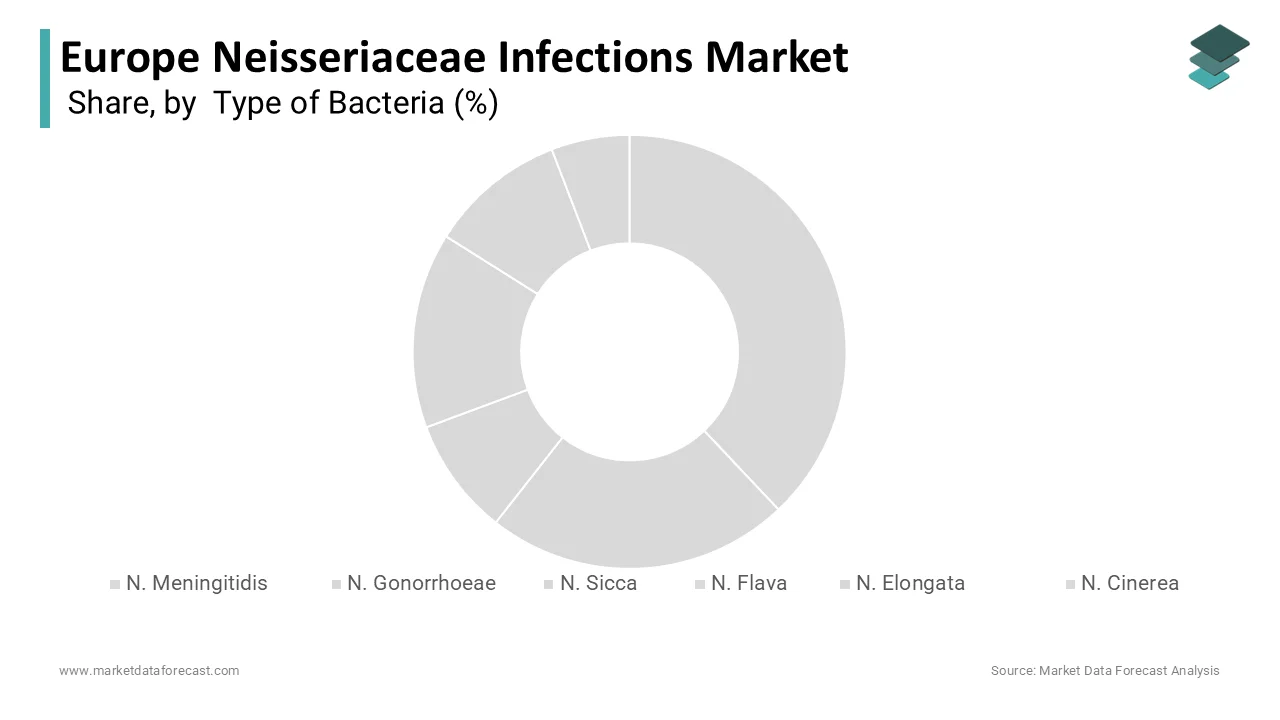
The Neisseria meningitidis segment is predicted to witness the highest CAGR of 7.2% from 2025 to 2033 due to expanding vaccination programs, genomic surveillance, and sporadic outbreaks requiring rapid public health response. Although the incidence is lower than gonorrhea, the severity of invasive meningococcal disease, carrying a 10 percent mortality rate even with treatment, commands high clinical and policy attention. Outbreaks continue to occur. The European Medicines Agency has hasfast-trackedd conjugate and protein-based vaccines, while national reference labs increasingly use whole genome sequencing for strain tracking. Influenced by climate and social factors and with adolescent vaccination coverage on the rise, N. meningitidis is now the subject of a renewed strategic focus, which emphasizes public health investment and diagnostic innovation over volume.
By Disease Insights
The Gonorrhea segment held the leading share of 65.3% of the European Neisseriaceae infections market in 2024. The growth of the Gonorrhea segment is driven by its widespread prevalence, antimicrobial resistance challenge, and integration into national sexual health and antimicrobial stewardship frameworks. It is the only Neisseriaceae-related disease with epidemic potential in sexually active populations across all age groups. Resistance trends amplify clinical urgency; a share of EU isolates showed reduced ceftriaxone susceptibility. This drives demand for dual therapy regimens, resistance-guided diagnostics, and novel antibiotics. National programs allocate specific budgets for testing partner notification and antibiotic monitoring. The disease’s syndemic nature with HIV and chlamydia further embeds it in integrated sexual health services, ensuring sustained diagnostic and therapeutic utilization across public and private clinics.
The Meningitis segment is estimated to register the fastest CAGR of 8.1% over the forecast period due to heightened surveillance, vaccine deployment, and public health preparedness for outbreaks. Although case numbers remain low, the catastrophic progression of bacterial meningitis, leading to death or disability within 24 hours, triggers rapid policy and clinical responses. As per studies, the incidence of invasive meningococcal disease (IMD) in the EU/EEA is increasing post-pandemic, with serogroups B and W predominant in many areas. Studies based on circulating strains suggest that the 4CMenB vaccine could cover roughly 58% of MenB isolates in young children, despite Italy's relatively low risk for Invasive Meningococcal Disease (IMD). The Netherlands implemented a MenACWY adolescent catch-up campaign after a surge in serogroup W cases, resulting in 92% vaccine effectiveness in the eligible age group. Diagnostic innovation is accelerating. The European Commission's funding of genomic surveillance and vaccine stockpiles for outbreak response is elevating meningitis to a high-priority segment, notwithstanding its relatively lower incidence.
By Antibacterial Drugs Insights
The β-Lactam antibiotics segment remained the prominent segment in the European Neisseriaceae infections market and captured a 32.7% share in 2024. The expansion of the β-Lactam antibiotics segment is propelled by their historical role as first-line treatment for both gonorrhea and meningococcal disease. Despite rising resistance, ceftriaxone in combination with azithromycin is still recommended by the European Centre for Disease Prevention and Control for uncomplicated gonorrhea where susceptibility is confirmed. For meningococcal meningitis, third-generation cephalosporins like cefotaxime are standard in emergency protocols across EU hospitals. The dominance of beta-lactam antibiotics also persists due to a lack of widely approved alternatives, even as resistance continues to erode their efficacy. Hospitals maintain large formulary stocks and public health agencies include them in emergency outbreak kits, which ensures continued high utilization across both community and hospital settings.
The tetracycline segment is anticipated to witness the fastest CAGR of 9.4% from 2025 to 2033, owing to its repurposing as a second-line option in gonorrhea treatment and its role in prophylaxis for meningococcal contacts. Although historically abandoned due to resistance, tetracycline derivatives like doxycycline are regaining relevance in combination regimens and prevention. Apart from these, doxycycline is used for chemoprophylaxis in close contacts of meningococcal cases when rifampicin is contraindicated. The European Medicines Agency is evaluating new tetracycline analogs with enhanced activity against resistant strains. In specific clinical areas, tetracycline is seeing a strategic increase in use, influenced by stewardship programs that encourage narrow-spectrum alternatives and the rise of cephalosporin resistance.
COUNTRY LEVEL ANALYSIS
United Kingdom Neisseriaceae Infections Market Analysis
The United Kingdom was the top performer in the European Neisseriaceae infections market and occupied a 24.1% share in 2024. The supremacy of the UK market is primarily driven by its high gonorrhea burden, robust surveillance infrastructure, and proactive antimicrobial resistance initiatives. The country operates a national Gonococcal Resistance to Antimicrobial Surveillance Programme that tests every isolate for susceptibility, ty guiding empirical treatment guidelines. The UK also leads in rapid diagnostics. The UK maintains its status as a high-activity and high-response market for Neisseriaceae infections, a result of the robust integration of sexual health strategies, antimicrobial stewardship programs, and vaccine policy.
France Neisseriaceae Infections Market Analysis
France was the next-biggest country in the European Neisseriaceae infections market and accounted for a 19.6% share in 2024. The growth of the French market is fuelled by the rising gonorrhea rates and a comprehensive national strategy against sexually transmitted infections. Reports from public health authorities in France show a significant rise in gonorrhea infections in recent years. The French government initiated a specific national plan to address sexually transmitted infections by focusing efforts on improving testing, tracing partners, and monitoring for drug resistance. France’s National Reference Centre for Meningococci performs whole genome sequencing on all invasive isolates, enabling real-time outbreak detection. Health experts in Paris identified a specific instance of gonorrhea that was resistant to the standard treatment, prompting a focused public health screening response. Meningococcal vaccination coverage has expanded. Vaccination against meningococcal serogroup B disease is now part of the recommended health strategy for individuals identified as having specific high-risk medical conditions, such as those with certain immune system deficiencies. France has a significant demand for diagnostics and therapeutics, driven by its centralized public health coordination and high urban population density, which facilitates transmission.
Germany Neisseriaceae Infections Market Analysis
Germany occupied a notable position in the European Neisseriaceae infections market, with its strong laboratory network, antimicrobial stewardship programs, and structured sexual health services. Germany mandates culture and susceptibility testing in all federal states, es high-quality surveillance. The country also leads in vaccine uptake. For outbreak response, Germany maintains a national meningococcal task force that coordinates rapid vaccination and chemoprophylaxis. Germany supports its central role in the regional market through high case detection and management continuity, made possible by statutory health insurance coverage for all STI testing and treatment, as well as a comprehensive network of dermatovenerology clinics.
Italy Neisseriaceae Infections Market Analysis
Italy is moving ahead steadfastly in the European Neisseriaceae infections market, which is driven by its pioneering MenB vaccination program and rising gonorrhea incidence in urban centers. Italy’s National Institute of Health operates a sentinel surveillance system that tracks resistance in real time. Sexual health services are decentralized, but major cities offer free rapid testing through public clinics and NGOs. Italy exemplifies the tensions in the evolving market, facing the dual challenges of a decline in meningococcal disease cases and an increase in resistant gonorrhea.
Spain Neisseriaceae Infections Market Analysis
Spain is predicted to grow in the European Neisseriaceae infections market from 2025 to 2033 due to high gonorrhea transmission among young adults and targeted meningococcal vaccination in outbreak settings. Catalonia and Madrid have implemented rapid testing in university health centers and LGBTQ+ clinics, reducing diagnosis delays. Meningococcal disease e Spain does not have universal MenB vaccination but uses reactive campaigns. The National Centre for Microbiology performs resistance testing on a representative sample of isolates feeding into EU surveillance. Spain’s vibrant youth populations and significant regional public health autonomy ensure dynamic demand for Neisseriaceae diagnostics and outbreak response tools.
COMPETITIVE LANDSCAPE
Competition in the European Neisseriaceae Infections Market is defined by distinct therapeutic and preventive domains with limited overlap. In meningococcal disease, GSK and Pfizer dominate through a differentiated vaccine platform, Bexsero and Trumenba, competing on coverage breadth, public procurement, and outbreak responsiveness. In gonorrhea, the landscape is more fragmented, with diagnostic firms supplying molecular assays and antibiotic developers like Innoviva advancing novel therapeutics against a backdrop of rising resistance. No single player spans both segments comprehensively, creating a bifurcated market. Competition is price-driven and more dependent on regulatory agility, clinical validation, and public health integration. With antimicrobial resistance and vaccine-preventable outbreaks shaping policy, the most successful companies align closely with EU and national health strategies, ensuring their solutions are embedded in surveillance, treatment, and prevention protocols rather than marketed as standalone products.
KEY MARKET PLAYERS
Companies playing a vital role in the europe neisseriaceae infections market profiled in this report are
- Aphios Corporation
- Basilea Pharmaceuticals Ltd.
- Pfizer, Inc.
- GSK plc
- AstraZeneca plc
- Adenium Biotech ApS
- Dainippon Sumitomo Pharma Co., Ltd.
- Theravance, Inc.
- Pfizer, Inc.
TOP LEADING PLAYERS IN THE MARKET
- GSK plc is a global leader in the European Neisseriaceae Infections Market through its pioneering meningococcal vaccines Bexsero (MenB) and Nimenrix (MenACWY). The company supplies the majority of publicly funded meningococcal vaccines across EU member states and has driven universal infant MenB adoption in countries like the UK and Italy. It also partnered with the European Centre for Disease Prevention and Control to support genomic surveillance of circulating strains. GSK continues to invest in next-generation protein-based antigens to broaden serogroup coverage. Its integrated approach of vaccine delivery, strain monitoring, and public health collaboration solidifies its central role in preventing invasive Neisseria meningitidis disease across Europe.
- Pfizer Inc. contributes significantly to the European Neisseriaceae Infections Market with its Trumenba vaccine targeting serogroup B meningococcal disease. Although primarily used in private markets and outbreak settings, Pfizer has secured national recommendations in Germany, Spain, and the Netherlands for high-risk populations and university students. Globally, Pfizer supports the WHO’s meningitis roadmap and participates in EU-funded consortia developing cross-protective Neisseria antigens. Its strategic focus on adolescent and outbreak vaccination fills critical gaps in Europe’s meningococcal prevention architecture.
- Entasis Therapeutics, now operating under Innovi, plays a vital role in the European Neisseriaceae Infections Market through its novel antibiotic zoliflodacin, developed specifically for multidrug-resistant gonorrhea. The company collaborates with sexual health clinics and antimicrobial stewardship programs to prepare for post-approval resistance monitoring. Zoliflodacin, the first new oral therapeutic for gonorrhea in decades, has the potential to fundamentally change the way resistant N. gonorrhoeae infections are treated across Europe.
TOP STRATEGIES USED BY THE KEY MARKET PARTICIPANTS
Key players in the European Neisseriaceae Infections Market focus on securing regulatory approvals through priority pathways such as the European Medicines Agency’s PRIority Medicines scheme to accelerate access. They engage in public health partnerships with national agencies and the European Centre for Disease Prevention and Control to support surveillance, outbreak response, and vaccination campaigns. Companies invest in IP, post-marketing resistance monitoring, and real-world evidence generation to sustain product relevance amid evolving epidemiology. Strategic labeling expansions to include adolescents, high-risk groups, and outbreak indications broaden market access. AAdditionallythey enhance supply chain readiness for rapid vaccine or therapeutic deployment during emerging clusters, ensuring alignment with Europe’s preparedness and response frameworks.
MARKET SEGMENTATION
This research report on the europe neisseriaceae infections market has been segmented and sub-segmented into the following categories.
By Type of Bacteria
- N. Meningitidis
- N. Gonorrhoeae
- N. Sicca
- N. Flava
- N. Elongata
- N. Cinerea
- Others
By Disease
- Gonorrhea
- Septicemia
- Meningitis
- Sinusitis
- Otitis
- Pneumonia
- CNS
- Urinary
- Respiratory Infections
By Antibacterial Drugs
- Aminoglycosides (Streptomycin)
- B-Lactum Antibiotics (Penicillin)
- Clavulanic Acid (Augmentin)
- Glycopeptides (Vancomycin)
- Polypeptides (Bacitracin)
- Rifamycins (Rifampicin)
- Chloramphenicol
- Tetracycline
By Country
- United Kingdom
- France
- Spain
- Germany
- Italy
- Russia
- Sweden
- Denmark
- Switzerland
- Netherlands
- Rest of Europe
Frequently Asked Questions
1. Which countries are the largest contributors to the Europe Neisseriaceae Infections Market growth?
The main contributors to the Europe Neisseriaceae Infections Market growth are Germany, UK, France, Italy, and Spain, due to higher prevalence, research initiatives, and healthcare investments across these countries.
2. What is driving the growth of the Europe Neisseriaceae Infections Market?
Growth in the Europe Neisseriaceae Infections Market is primarily driven by rising infection rates, growing antibiotic resistance, advancements in diagnostics, and the rollout of new meningococcal and gonococcal vaccines
3. How does antimicrobial resistance impact the Europe Neisseriaceae Infections Market?
Antimicrobial resistance has a significant effect on the Europe Neisseriaceae Infections Market, leading to demand for next-generation therapies, improved surveillance, and research into novel antimicrobial drugs and vaccines.
4. What treatment options are included in the Europe Neisseriaceae Infections Market analysis?
The Europe Neisseriaceae Infections Market includes antibiotics such as cephalosporins and macrolides, updated dual therapy regimens, and several vaccines against Neisseria meningitidis infection.
5. What role does vaccine development play in the Europe Neisseriaceae Infections Market?
Vaccine development is essential in the Europe Neisseriaceae Infections Market, especially for Neisseria meningitidis, where the introduction of MenB and conjugate vaccines has changed both epidemiology and market dynamics.
6. Are there new diagnostic technologies in the Europe Neisseriaceae Infections Market?
Yes, the Europe Neisseriaceae Infections Market has seen advancements with rapid molecular diagnostic tools, nucleic acid assays, and the application of next-generation sequencing for improved detection of Neisseria infections.
7. Who are the main players in the Europe Neisseriaceae Infections Market?
Leading companies in the Europe Neisseriaceae Infections Market include Merck & Co, BioMerieux, GSK, Pfizer, and various European diagnostics and biotech firms focusing on Neisseria-based therapies and diagnostics.
8. How do public health initiatives affect the Europe Neisseriaceae Infections Market?
Public health programs promoting vaccination and early diagnosis directly boost the Europe Neisseriaceae Infections Market by increasing both awareness and the need for diagnostic kits and vaccines.
9. What are the challenges faced by the Europe Neisseriaceae Infections Market?
Key challenges for the Europe Neisseriaceae Infections Market include antimicrobial resistance, vaccine hesitancy, emerging Neisseria strains, and gaps in diagnostic access in some regions
10. How does the prevalence of Neisseria gonorrhoeae compare to Neisseria meningitidis in the Europe Neisseriaceae Infections Market?
Both are significant, but Neisseria gonorrhoeae is a leading bacterial STI, while Neisseria meningitidis is associated with epidemics of meningitis and sepsis, with both prioritized within the Europe Neisseriaceae Infections Market.
Related Reports
Access the study in MULTIPLE FORMATS
Purchase options starting from
$ 2000
Didn’t find what you’re looking for?
TALK TO OUR ANALYST TEAM
Need something within your budget?
NO WORRIES! WE GOT YOU COVERED!
Call us on: +1 888 702 9696 (U.S Toll Free)
Write to us: sales@marketdataforecast.com