- Product Description Description
- Table of Contents TOC
- List of Table & Figure LOT
- Get Free Sample PDF Sample PDF
Market Size, 2025
$2.08 BnMarket Estimate, 2026
$2.18 BnMarket Forecast, 2034
$3.18 BnCAGR, 2026–2034
4.83%Europe Oats Market Report Summary
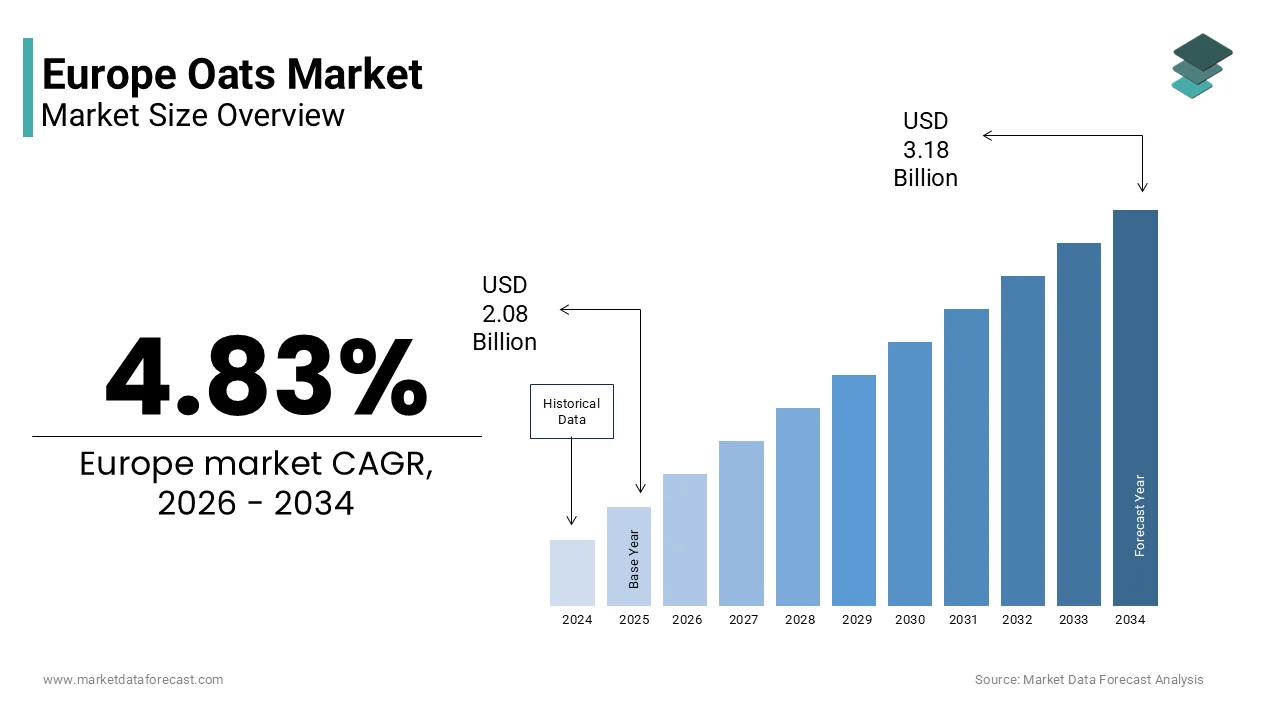
The Europe oats market was valued at USD 2.08 billion in 2025, is estimated to reach USD 2.18 billion in 2026, and is projected to reach USD 3.18 billion by 2034, growing at a CAGR of 4.83% during the forecast period. Market growth is driven by increasing consumer preference for healthy and whole grain foods, rising awareness of the nutritional benefits of oats, and expanding demand for plant based and functional food products. Oats are widely consumed due to their high fiber content, heart health benefits, and versatility in food applications. The growing popularity of breakfast cereals, oat based snacks, and dairy alternatives is further supporting steady market expansion across Europe.
Key Market Trends
- Rising demand for healthy and whole grain food products is driving market growth.
- Increasing awareness of the nutritional and heart health benefits of oats is boosting consumption.
- Growing adoption of plant based diets and oat based alternatives is supporting market expansion.
- Expansion of breakfast cereals and snack categories is enhancing demand.
- Rising preference for clean label and natural ingredients is influencing product development.
Segmental Insights
- Based on type, the rolled oats segment was the largest and held a dominant share of the Europe oats market in 2025. This dominance is attributed to ease of preparation, widespread consumption, and versatility in various recipes.
- Based on application, the food ingredient segment accounted for 23.2% of the Europe oats market share in 2025. The segment’s growth is driven by increasing use of oats in bakery products, cereals, and processed foods.
Regional Insights
- The Europe oats market is experiencing steady growth across key countries, supported by rising health awareness and consumption trends.
- Germany was the largest contributor, accounting for 32.4% of the Europe oats market share in 2025, driven by strong demand for healthy food products, expanding retail sector, and increasing consumption of oat based products.
Competitive Landscape
The Europe oats market is moderately competitive, with key players focusing on product innovation, organic offerings, and expansion of distribution networks to strengthen their market position. Companies are investing in oat based product development, sustainable sourcing, and branding strategies. Prominent players in the Europe oats market include The Quaker Oats Company, Bob’s Red Mill Natural Foods, Mornflake, Grain Millers Inc, Jordan’s Mill, Blue Lake Milling, Avena Food Ltd, The Hain Celestial Group Inc, European Oat Millers, Wild Oats Marketing LLC, and Richardson International.
Europe Oats Market Size
The Europe oats market size was valued at USD 2.08 billion in 2025, and it is expected to reach USD 3.18 billion by 2034 from USD 2.18 billion in 2026. The market is growing at a CAGR of 4.83%.
The oats is the broader cereal and grain industry, characterized by the cultivation, processing, and distribution of oat based products, across the European region. Oats are recognized for their high nutritional value, particularly their rich content of soluble fiber known as beta glucan, which supports heart health and digestive wellness. The region has witnessed a significant shift towards plant based diets, driven by increasing health consciousness and environmental awareness among consumers. According to Eurostat, the European Union produced approximately 6.5 million metric tons of oats in 2024, with Poland, Finland, and Sweden emerging as the leading producers. This production volume with the agricultural significance of oats in Northern and Eastern Europe, where climatic conditions favor their growth. As per the Food and Agriculture Organization of the United Nations, the average yield of oats in Europe stands at around 3.2 metric tons per hectare, reflecting steady improvements in agricultural practices. The consumption patterns indicate a growing preference for organic and non-genetically modified variants, aligning with the stringent regulatory frameworks governing food safety and sustainability in the region.
MARKET DRIVERS
Rising Consumer Preference For Plant Based Diets And Functional Foods
The escalating demand for plant-based diets, fundamentally reshaping consumption patterns is amplifying the growth of Europe oats market. Consumers are increasingly adopting vegetarian and vegan lifestyles due to ethical considerations, health benefits, and environmental concerns. Oats have emerged as a staple in this dietary shift due to their versatility and nutritional profile. According to the Good Food Institute Europe, the number of flexitarians in Europe reached 45% of the population in 2025, indicating a substantial base of consumers who actively reduce meat intake. Oat milk, in particular, has seen exponential growth, with sales increasing by 18% year on year in 2024, as per data from NielsenIQ. The high fiber content of oats, specifically beta glucan, is linked to reduced cholesterol levels and improved glycemic control, making it an attractive option for health-conscious individuals. The European Food Safety Authority has approved health claims related to oat beta glucan, further validating its functional benefits. This regulatory endorsement boosts consumer confidence and drives product innovation. Manufacturers are responding by launching fortified oat products that cater to specific health needs such as immune support and weight management. The integration of oats into mainstream retail channels and food service outlets amplifies accessibility, reinforcing its position as a key component of the modern European diet.
Stringent Regulatory Standards Supporting Organic And Sustainable Farming Practices
The implementation of rigorous regulatory standards promoting organic and sustainable farming practices is additionally bolstering the growth of Europe Oats Market. The European Union has prioritized sustainability through initiatives, such as the Farm to Fork Strategy, which aims to increase the share of organic farmland to 25% by 2030. According to the Research Institute of Organic Agriculture, the area dedicated to organic oat cultivation in Europe expanded by 12% in 2024, reaching over 400000 hectares. This expansion is driven by consumer willingness to pay premium prices for organic products, which are perceived as healthier and environmentally friendly. The EU Organic Regulation ensures that organic oats are produced without synthetic pesticides or fertilizers, aligning with the growing demand for clean label products. Retailers are increasingly dedicating shelf space to organic oat products, enhancing visibility and availability. Furthermore, government subsidies and financial incentives for farmers transitioning to organic methods encourage higher production volumes. The emphasis on biodiversity and soil health in organic farming also resonates with environmentally conscious consumers. This regulatory framework not only supports farmers but also builds trust among consumers regarding the quality and sustainability of oat products.
MARKET RESTRAINTS
Volatility In Raw Material Prices Due To Climatic Uncertainties
The fluctuations in raw material prices caused by climatic uncertainties is significantly hindering the growth of Europe Oats Market. Oats are sensitive to weather conditions, and extreme events such as droughts, floods, and unseasonal temperatures can severely impact yields. According to the Joint Research Centre of the European Commission, climate variability led to a 7% decline in oat productivity in Central Europe during the 2024 growing season. This reduction in supply triggers price volatility, affecting both producers and manufacturers. Farmers face higher risks of crop failure, which discourages investment in oat cultivation despite rising demand. Additionally, the cost of inputs such as seeds and fertilizers has risen by 10% in 2024 as per Eurostat, further squeezing profit margins. Manufacturers must absorb these costs or pass them on to consumers, potentially dampening demand. The unpredictability of weather patterns exacerbates these challenges, making long term planning difficult for stakeholders. Supply chain disruptions resulting from poor harvests also lead to inconsistencies in product availability, affecting retailer relationships.
Competition From Alternative Grains And Cereal Substitutes
The intense competition from alternative grains and cereal substitutes is additionally declining the growth of Europe Oats Market. Consumers have access to a wide array of grain options including quinoa, barley, rye, and spelt, each offering unique nutritional benefits. Quinoa is often marketed as a complete protein source, appealing to health focused consumers seeking diverse nutrient profiles. Barley and rye also compete directly in the breakfast cereal and baking segments, leveraging their established presence in European diets. The proliferation of gluten free alternatives such as rice and corn based products further fragments the market. This diversification of consumer choices dilutes the dominance of oats, forcing manufacturers to invest heavily in differentiation and marketing. Private label brands often prioritize cheaper alternatives, putting pressure on branded oat products. The saturation of the grain market means that oats must continuously innovate to maintain relevance. Failure to distinguish themselves from competitors can lead to stagnant sales and reduced market penetration.
MARKET OPPORTUNITIES
Expansion Into Value Added Oat Based Product Innovations
The development of value-added oat based products is certainly creating new opportunities for the growth of Europe Oats Market. Innovation in product formulations allows manufacturers to tap into niche segments such as sports nutrition, infant food, and functional snacks. Oat protein isolates and concentrates are gaining traction in the fitness and wellness sectors due to their high biological value and allergen free status. These ingredients are used in protein bars, shakes, and meat alternatives, expanding the application scope of oats beyond traditional breakfast items. The rise of personalized nutrition also drives demand for specialized oat products tailored to specific dietary needs, such as low sugar or high fiber variants. Collaborations between agricultural firms and food tech startups facilitate the creation of novel textures and flavors, enhancing consumer appeal. This financial support accelerates research and development efforts, leading to breakthrough products. Retailers are eager to stock innovative items that differentiate their offerings, providing ample shelf space for new launches.
Growth Of E Commerce And Direct To Consumer Sales Channels
The rapid expansion of e-commerce and direct to consumer sales channels is additionally attributed in bolstering the growth of Europe Oats Market. Digital platforms enable brands to reach a broader audience and engage directly with consumers, bypassing traditional retail intermediaries. Oat brands utilize social media and digital marketing to educate consumers about the benefits of their products, fostering brand loyalty. Subscription models for oat-based staples, such as muesli and oat milk provide recurring revenue streams and enhance customer retention. The convenience of home delivery appeals to busy urban consumers who prioritize ease of shopping. Major retailers have enhanced their online infrastructure, offering same day delivery options that boost impulse purchases. The shift allows smaller and niche oat brands to compete with established players by leveraging targeted advertising and personalized recommendations. The ability to gather direct feedback facilitates rapid product iteration and improvement.
MARKET CHALLENGES
Supply Chain Disruptions And Logistical hurdles
The persistent supply chain disruptions and logistical hurdles is one of the major challenges for the growth of Europe Oats Market. The complexity of sourcing raw materials from multiple regions exposes the industry to various risks including transportation delays and port congestions. According to the European Logistics Association, average freight costs for agricultural commodities increased by 20% in 2024 due to fuel price hikes and capacity constraints. These elevated costs erode profit margins and complicate pricing strategies for manufacturers. Geopolitical tensions and trade restrictions further exacerbate these issues, limiting access to key input markets. The reliance on just in time inventory systems leaves companies vulnerable to sudden shocks, leading to stockouts and production halts. As per the Confederation of European Paper Industries, which also tracks grain logistics, lead times for oat deliveries extended by 15 days on average in 2025. This inconsistency affects relationships with retailers who demand reliable supply. Labor shortages in the transportation sector also contribute to delays, with a deficit of 50000 truck drivers reported in Western Europe in 2024, according to the International Road Transport Union. These operational inefficiencies hinder the ability to meet fluctuating demand, resulting in lost sales opportunities. Companies must invest in resilient supply chain strategies including diversified sourcing and warehousing solutions to mitigate these risks.
Changing Consumer Preferences Towards Low Carb Diets
The shifting consumer preference towards low carbohydrate diets is likely to hamper the growth of Europe Oats Market. Despite the health benefits of oats, their relatively high carbohydrate content deters some health-conscious consumers, who adhere to ketogenic or low carb lifestyles. The trend reduces the demand for traditional oat products, particularly in the breakfast and snacking categories. Manufacturers face the dilemma of reformulating products to reduce carb content without compromising texture and taste, which is technologically challenging. The rise of low carb labeling on competing products further influences purchasing decisions, drawing attention away from oat based items. Oat brands must innovate to create low carb variants or emphasize the quality of carbohydrates such as slow releasing energy from beta glucan. However, educating consumers about the nuances of carbohydrate types requires significant marketing effort and resources. The perception of oats as a high carb food persists, limiting their appeal to a specific demographic.
REPORT COVERAGE
| REPORT METRIC | DETAILS |
| Market Size Available | 2025 to 2034 |
| Base Year | 2025 |
| Forecast Period | 2026 to 2034 |
| CAGR | 4.83% |
| Segments Covered | By Type, Application, and Region |
| Various Analyses Covered | Global, Regional, & Country Level Analysis; Segment-Level Analysis; DROC, PESTLE Analysis; Porter’s Five Forces Analysis; Competitive Landscape; Analyst Overview of Investment Opportunities |
| Regions Covered | UK, France, Spain, Germany, Italy, Russia, Sweden, Denmark, Switzerland, Netherlands, Turkey, and the Czech Republic |
| Market Leaders Profiled | The Quaker Oats Company, Bob’s Red Mill Natural Foods, Mornflake, Grain Millers Inc., Jordan’s Mill, Blue Lake Milling, Avena Food Ltd, The Hain Celestial Group, Inc., European Oat Millers, Wild Oats Marketing, LLC and Richardson International among others |
SEGMENTAL ANALYSIS
By Type Insights
The rolled oats segment was the largest by holding a dominant share of the Europe Oats Market in 2025 due to their versatility and widespread acceptance in traditional breakfast routines. The entrenched cultural habit of consuming oatmeal porridge, across Northern and Central Europe. According to the International Grains Council, rolled oats accounted for approximately 45% of total oat consumption in Europe in 2024. This preference is reinforced by the convenience factor, as rolled oats require minimal preparation time compared to steel cut varieties. The European Breakfast Cereal Association notes that 60% of households in Germany and the United Kingdom purchase rolled oats at least once a month. This high frequency of purchase ensures consistent demand volume. Additionally, the compatibility of rolled oats with various culinary applications, from baking to smoothies, broadens their consumer base. Manufacturers have capitalized on this by offering flavored and instant variants, which further stimulate sales. The affordability of rolled oats compared to specialized grain products also makes them accessible to a wider demographic. Economic pressures in 2024 led consumers to seek cost effective nutritious options, boosting the appeal of rolled oats. The established supply chain infrastructure for processing rolled oats ensures steady availability and competitive pricing.
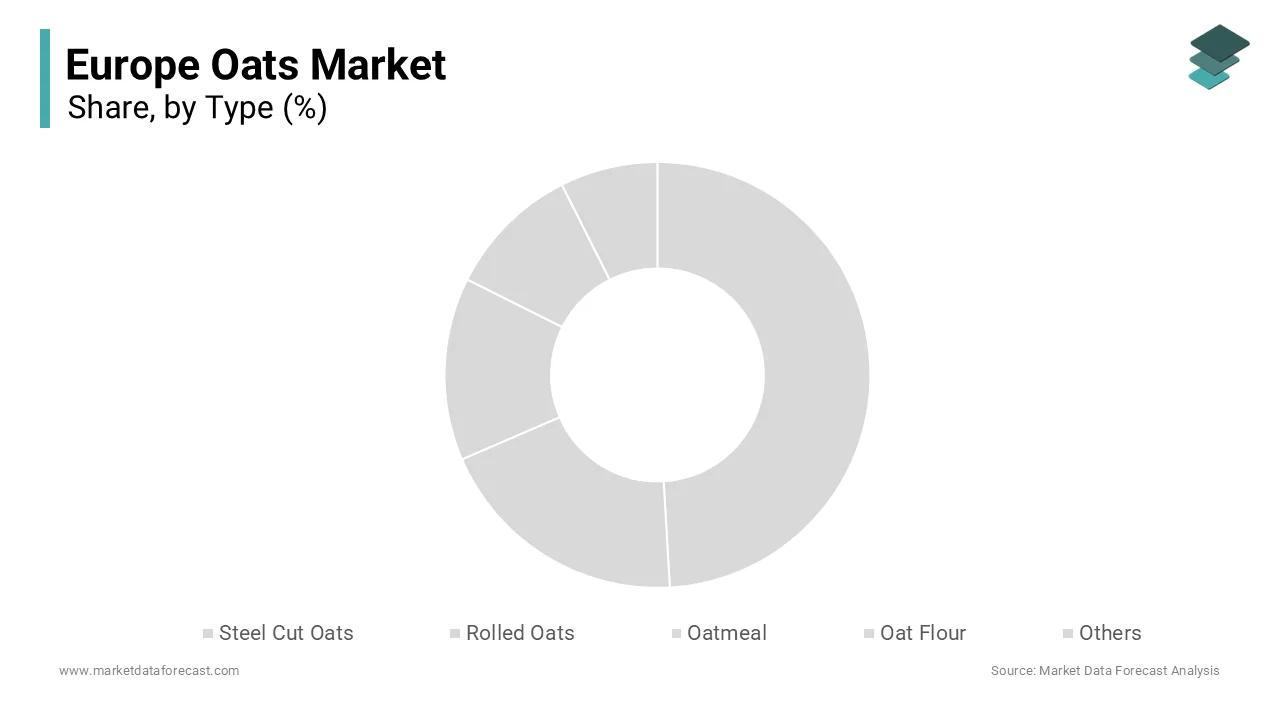
The oat flour segment is swiftly emerging at a fastest CAGR of 8.5% from 2026 to 2034 with the surge in gluten free baking trends among health conscious consumers. Oat flour serves as a viable alternative to wheat flour for individuals with celiac disease or gluten sensitivity. The versatility of oat flour in creating baked goods with desirable texture and flavor profiles enhances its adoption. Consumers are increasingly aware of the nutritional benefits of oat flour, including its high fiber and protein content. The rise of home baking during recent years has also contributed to this trend, with households experimenting with alternative flours. Retailers are responding by expanding their gluten free sections, providing greater visibility for oat flour products. The European Commission’s support for labeling clarity regarding gluten free status further boosts consumer confidence.
By Application Insights
The food ingredient segment was the largest by occupying 23.2% of the Europe Oats Market share in 2025 with the extensive integration of oats into processed food formulations. Manufacturers utilize oats as a key component in snacks, cereals, and ready to eat meals due to their functional properties such as water absorption and texture enhancement. The growth is fueled by the demand for clean label products, where oats serve as a natural thickener and stabilizer. The versatility of oats allows them to be incorporated into a wide range of products including energy bars, crackers, and infant food. The health halo associated with oats enables brands to market these products as nutritious choices, appealing to health aware consumers. Regulatory approvals for health claims related to oat beta glucan further incentivize manufacturers to include oats in their formulations. The European Food Safety Authority’s endorsement of oat based health claims provides a competitive edge to products containing significant oat content. This regulatory support drives innovation and encourages the development of new oat enriched food items. The established industrial infrastructure for processing oats into various ingredient forms ensures consistent supply and quality.
The health care application segment is likely to register a fastest CAGR of 9.2% throughout the forecast period with the increasing recognition of oats as a functional food with therapeutic benefits. Oats are extensively used in dietary supplements and medical nutrition products aimed at managing cholesterol levels and blood sugar. According to the European Heart Network, cardiovascular diseases remain the leading cause of death in Europe, prompting a proactive approach towards preventive nutrition. Oat beta glucan has been clinically proven to reduce low density lipoprotein cholesterol, making it a valuable component in heart health supplements. Healthcare professionals are increasingly recommending oat based interventions for patients with metabolic syndrome. The aging population in Europe, which is expected to reach 30% of the total population by 2030 according to Eurostat, drives demand for health supporting foods. Pharmaceutical and nutraceutical companies are collaborating with oat producers to develop standardized extracts for clinical use. This intersection of food and medicine creates new opportunities for value addition.
REGIONAL ANALYSIS
Germany Oats Market Analysis
Germany was the largest contributor in the Europe Oats Market by holding 32.4% of share in 2025 with the robust domestic production and high consumption levels. The country is one of the largest producers of oats in the European Union, leveraging its favorable agricultural conditions in the northern regions. According to the Federal Ministry of Food and Agriculture, Germany produced approximately 1.2 million metric tons of oats in 2024. This substantial output supports both domestic consumption and export activities. The German consumer base is highly health conscious, driving demand for organic and whole grain oat products. The strong retail presence of discount supermarkets facilitates affordable access to oat products for a broad demographic. The government’s emphasis on sustainable agriculture aligns with consumer preferences for environmentally friendly products. Initiatives, such as the National Organic Action Plan promote the cultivation of oats using eco-friendly methods. This policy support enhances the competitiveness of German oats in the international market. The integration of oats into traditional German cuisine, including muesli and bread, ensures steady demand.
United Kingdom Oats Market Analysis
The United Kingdom oats market held second position with 19.4% of share in 2025 with the strong cultural traditions and innovative product development. Oats are a staple in the British diet, particularly in the form of porridge and oatcakes. The popularity of oat milk has surged in the UK, with sales growing by 20% in 2024, as per recent study. This trend is supported by a large vegan and flexitarian population seeking dairy alternatives. Major food manufacturers in the UK are investing in oat based product lines to capitalize on this demand. The retail sector is highly competitive, with supermarkets promoting own brand oat products to attract price sensitive consumers. The UK government’s Public Health England initiatives encourage the consumption of whole grains to combat obesity and related health issues. The presence of leading global oat brands in the UK market fosters innovation and quality standards. Consumer awareness of the health benefits of oats remains high, sustaining long term demand.
France Oats Market Analysis
France oats market growth is likely to be driven by the growing interest in oat based products driven by changing dietary habits. Traditionally, a wheat dominated market, France is seeing a gradual shift towards diverse grains including oats. This expansion is motivated by the need for crop rotation and sustainable farming practices. French consumers are increasingly exploring international breakfast trends, leading to higher adoption of oatmeal and muesli. The French bakery sector is also incorporating oat flour into artisanal breads and pastries, appealing to health conscious patrons. The government’s National Nutrition and Health Program promotes the consumption of whole grains to improve public health outcomes. This policy framework supports the introduction of oat based products in institutional settings such as schools and hospitals. Retailers are expanding their organic and health food sections, providing shelf space for premium oat brands. The influence of Mediterranean diet principles, which emphasize whole grains, further encourages oat consumption.
Spain Oats Market Analysis
Spain oats market growth is likely to grow with a notable rise in oat consumption, fueled by the increasing popularity of plant based diets and health awareness. The warm climate of Spain traditionally favored other crops, but recent agricultural adaptations have allowed for increased oat production. The Spanish consumer is becoming more receptive to oat milk and yogurt alternatives, driven by lactose intolerance concerns and ethical choices. Urban centers, such as Madrid and Barcelona are hubs for innovative oat based product launches. The hospitality sector is incorporating oats into menus to cater to diverse dietary requirements. Government initiatives promoting sustainable agriculture support the expansion of oat cultivation in regions, such as Castile and Leon. The European Union’s Common Agricultural Policy provides subsidies that encourage farmers to grow resilient crops like oats. Consumer education campaigns by health organizations highlight the benefits of beta glucan, boosting demand.
Italy Oats Market Analysis
Italy oats market growth is likely to grow with the focus on premium and specialized oat products. While pasta and rice remain staples, there is a growing segment of consumers interested in healthy and alternative grains. The trend aligns with the strong Italian tradition of valuing food quality and origin. The bakery industry in Italy is experimenting with oat flour to create gluten free and high fiber breads, appealing to health-conscious customers. The prevalence of celiac disease in Italy, which is among the highest in Europe, drives demand for safe and nutritious gluten free options. Retail chains are dedicating specific aisles to free from products, enhancing the visibility of oat based items. The cultural emphasis on wholesome and natural ingredients supports the premium positioning of oats in the Italian market.
COMPETITIVE LANDSCAPE
The competition in the Europe Oats Market is characterized by a mix of established multinational corporations and agile regional players vying for consumer attention. Large entities leverage their extensive distribution networks and brand equity to dominate shelf space in major retail chains. Meanwhile smaller niche brands differentiate themselves through organic certifications and specialized product offerings such as gluten free or ancient grain blends. Price competition remains intense particularly in the private label segment where retailers offer cost effective alternatives to branded goods. Innovation serves as a key differentiator with companies launching novel formats like oat milk and protein bars to capture emerging trends. Regulatory compliance regarding health claims and sustainability standards adds complexity to the competitive landscape. Collaborations between agricultural producers and food manufacturers are becoming increasingly common to ensure supply stability.
Key Market Players
Some of the key players in the Europe oats market are
- The Quaker Oats Company
- Bob’s Red Mill Natural Foods
- Mornflake
- Grain Millers Inc.
- Jordan’s Mill
- Blue Lake Milling
- Avena Food Ltd
- The Hain Celestial Group, Inc.
- European Oat Millers
- Wild Oats Marketing, LLC
- Richardson International
Top Players in the Market
- The Quaker Oats Company remains a pivotal force in the global oats landscape through its extensive portfolio of breakfast cereals and snack products. The company leverages its strong brand recognition to drive consumer loyalty across diverse international markets. Recent initiatives focus on sustainable sourcing practices and the development of plant based alternatives to meet evolving dietary preferences. Quaker has invested heavily in research and development to create innovative oat based beverages and functional foods that appeal to health conscious consumers. Their strategic partnerships with agricultural suppliers ensure a consistent supply of high quality raw materials. These efforts reinforce its position as a leader in delivering wholesome grain solutions to households worldwide while adapting to modern consumption trends.
- Cargill Incorporated plays a critical role in the global oats market by providing comprehensive supply chain solutions and ingredient innovations. The company connects farmers with manufacturers ensuring efficient distribution and quality control throughout the value chain. Cargill has recently expanded its portfolio of specialty oat ingredients including proteins and fibers for use in various food applications. Their commitment to sustainability is evident in programs that support regenerative agriculture and reduce environmental impact. The company collaborates with food brands to develop customized solutions that meet specific consumer needs. These strategic moves strengthen their influence in the industry by offering reliable and versatile oat based ingredients that cater to the growing demand for healthy and sustainable food options globally.
- Arla Foods amba has significantly influenced the global oats market through its pioneering role in the plant based dairy alternative sector. The company utilizes oats as a primary ingredient in its innovative range of milk and yogurt substitutes. Arla focuses on creating products that mimic the taste and texture of dairy while offering superior nutritional benefits. Recent actions include the launch of new organic oat milk variants and the expansion of production facilities to meet rising demand. The company emphasizes transparency and sustainability in its sourcing practices appealing to environmentally conscious consumers. These efforts position Arla as a key player in the transition towards plant based diets driving growth and innovation in the global oats industry through continuous product development and market expansion.
Top Strategies Used by Key Market Participants
Key players in the Europe Oats Market primarily employ product innovation and strategic partnerships to maintain competitive advantage. Companies focus on developing value added oat products such as protein isolates and fortified snacks to cater to health conscious consumers. Expansion into e commerce platforms allows brands to reach wider audiences and enhance direct consumer engagement. Sustainability initiatives are central to corporate strategies with firms investing in organic farming and eco-friendly packaging to align with regulatory standards. Mergers and acquisitions enable companies to consolidate resources and access new technologies. Marketing campaigns emphasize the nutritional benefits of oats particularly beta glucan to educate consumers and drive demand. Diversification of supply chains helps mitigate risks associated with climate variability and price fluctuations.
MARKET SEGMENTATION
This research report on the Europe oats market is segmented and sub segmented into following categories
By Type
- Steel Cut Oats
- Rolled Oats
- Oatmeal
- Oat Flour
- Others
By Application
- Bakery Products
- Animal Feed
- Food Ingredient
- Health Care
- Cosmetic Product
- Others
By Country
- UK
- France
- Spain
- Germany
- Italy
- Russia
- Sweden
- Denmark
- Switzerland
- Netherlands
- Turkey
- Czech Republic
- Rest of Europe