- Product Description Description
- Table of Contents TOC
- List of Table & Figure LOT
- Get Free Sample PDF Sample PDF
Market Size, 2025
$2.06 BnMarket Estimate, 2026
$2.17 BnMarket Forecast, 2034
$3.28 BnCAGR, 2026–2034
5.31%North America Oats Market Report Summary
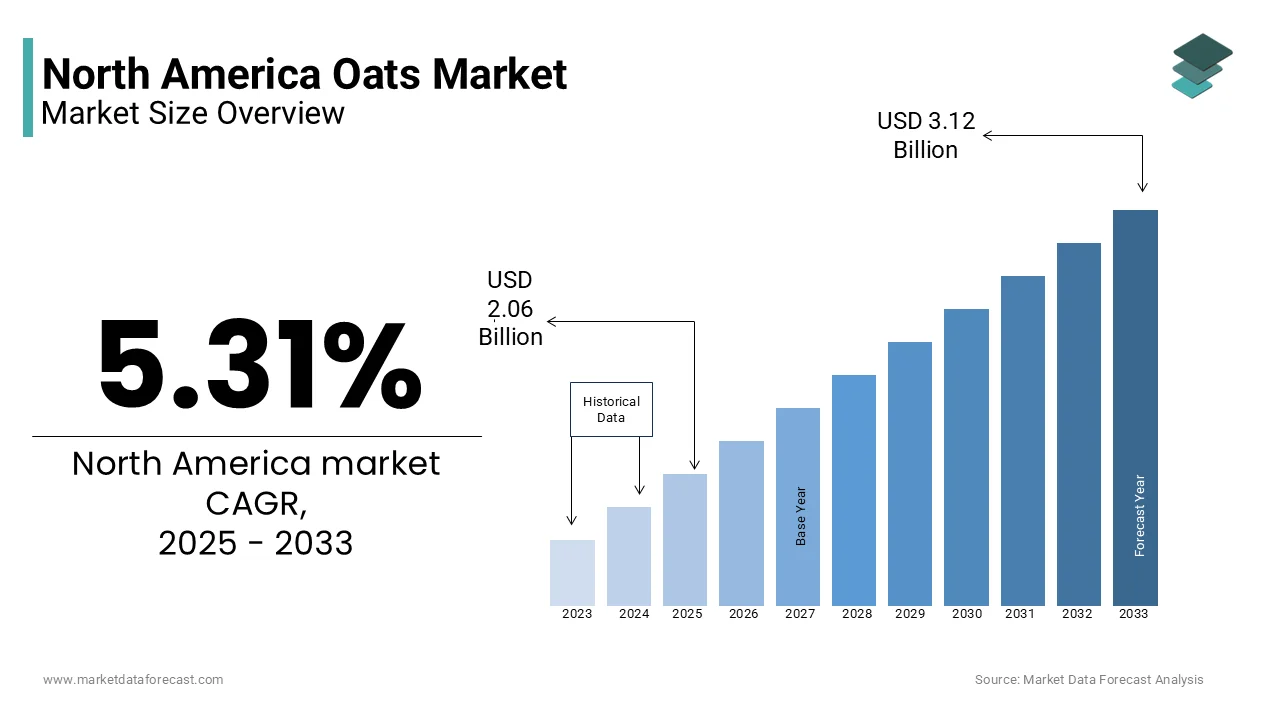
The North America oats market was valued at USD 2.06 billion in 2025, is estimated to reach USD 2.17 billion in 2026, and is projected to reach USD 3.28 billion by 2034, growing at a CAGR of 5.31% during the forecast period from 2026 to 2034. The growth of the North America oats market is driven by increasing consumer preference for healthy breakfast options, rising demand for whole-grain and high-fiber foods, and growing awareness of the nutritional benefits of oats. Expanding applications in functional foods, plant-based beverages, bakery products, and sports nutrition are further supporting market growth. Additionally, the increasing popularity of clean-label, gluten-free, and heart-healthy food products is accelerating the adoption of oats across the region.
Key Market Trends
-
Rising consumer demand for nutritious, high-fiber, and whole-grain foods is driving the growth of the North America oats market.
-
Increasing popularity of plant-based diets is boosting the use of oats in dairy alternatives, breakfast cereals, and snack products.
-
Growing demand for clean-label and minimally processed food products is encouraging innovation in oat-based foods.
-
Expansion of functional food and sports nutrition categories is creating new opportunities for oat ingredient manufacturers.
-
Increasing retail availability through supermarkets, hypermarkets, and e-commerce platforms is supporting market expansion.
Segmental Insights
-
Based on type, the rolled oats segment dominated the North America oats market by accounting for 37.3% of the market share in 2025. The segment's leadership is attributed to its versatility, ease of preparation, nutritional value, and widespread use in breakfast cereals, baking, and snack products.
-
Based on application, the food & beverage segment held the largest share of the North America oats market by accounting for 68.0% of the market share in 2025. The segment's dominance is driven by increasing demand for oat-based breakfast products, bakery items, beverages, and functional food formulations.
-
Based on distribution channel, the supermarkets and hypermarkets segment accounted for 52.1% of the North America oats market in 2025. The segment's leadership is supported by extensive product availability, organized retail expansion, competitive pricing, and consumer preference for one-stop shopping.
Regional Insights
-
The North America oats market is witnessing steady growth due to increasing health awareness, expanding demand for whole-grain products, and rising consumption of plant-based foods.
-
The United States dominated the North America oats market by accounting for 65.0% of the regional market share in 2025. The country's leadership is supported by strong consumer demand for healthy breakfast foods, a well-established food processing industry, extensive retail infrastructure, and continuous innovation in oat-based products.
-
Canada remains a significant market due to its large oat production, strong export capabilities, and growing domestic demand for functional and whole-grain food products.
-
Mexico is emerging as a promising market owing to increasing health consciousness, expanding modern retail channels, and rising consumption of convenient breakfast products.
Competitive Landscape
The North America oats market is moderately competitive, with manufacturers focusing on product innovation, clean-label formulations, and expansion of oat-based product portfolios to strengthen their market positions. Companies are investing in sustainable sourcing, advanced processing technologies, and strategic partnerships to meet the growing demand from food, beverage, bakery, and nutrition industries. Key players operating in the North America oats market include The Scoular Company, Quaker Oats Company, Morning Foods, General Mills, Richardson International, Grain Millers, Avena Foods, Blue Lake Milling, B&G Foods, Inc., The Kellogg Company, and Marico Limited.
North America Oats Market Size
The North America oats market size was valued at USD 2.06 billion in 2025. The European market is estimated to be worth USD 3.28 billion by 2034 from USD 2.17 billion in 2026, growing at a CAGR of 5.31% from 2026 to 2034.
Oats are a nutrient-rich cereal grain known for their high fiber content, essential vitamins, and heart-healthy properties. They are widely consumed in various forms, including rolled oats, steel-cut oats, instant oats, and oat flour, primarily used in breakfast cereals, baked goods, dairy alternatives, and health-focused food products.
Moreover, oats have re-emerged as a key crop in sustainable farming rotations due to their adaptability to cooler climates and lower input requirements compared to other grains. In Canada, oats remain an integral part of agricultural output, particularly in Manitoba and Saskatchewan, where favorable growing conditions support large-scale cultivation.
Additionally, the rise of plant-based diets and the popularity of oat milk which is driven by brands like Oatly as well as Planet Oat and have significantly expanded the use of oats beyond traditional applications.
MARKET DRIVERS
Increasing Consumer Demand for Plant-Based and Functional Foods
One of the primary drivers of the North America oats market is the rising consumer preference for plant-based and functional food products. As more individuals adopt vegetarian, vegan, or flexitarian diets, oats have become a cornerstone ingredient due to their nutritional profile, versatility, and compatibility with clean-label formulations. According to the Plant Based Foods Association, sales of plant-based foods in the U.S. grew by 20% in 2022, with oat-based beverages accounting for nearly 40% of the alternative milk segment. Companies such as Quaker Oats, PepsiCo, and private-label brands have capitalized on this trend by expanding their product lines to include oat-based yogurts, protein bars, and gluten-free snacks tailored to health-conscious consumers. In Canada, Dalhousie University’s Agri-Food Analytics Lab reported that over 60% of surveyed consumers preferred oat-based beverages over almond or soy alternatives due to environmental concerns and perceived health benefits.
 Expansion of the Oat Milk Industry and Beverage Innovation
An important aspect fueling the growth of the North America oats market is the rapid expansion of the oat milk industry and broader beverage innovation using oat-based ingredients. Oat milk has emerged as one of the fastest-growing segments within the plant-based beverage category, supported by its creamy texture, neutral flavor, and environmentally friendly production process. Coffee chains such as Starbucks and Tim Hortons have incorporated oat milk into their standard menu options, further boosting mainstream acceptance and daily consumption patterns. Oatly and local producers in Canada have expanded their distribution networks to reach major retailers and independent cafés, aligning with the country’s progressive stance on sustainable food choices.
MARKET RESTRAINTS
Competition from Alternative Grains and Cereals
A key restraint affecting the North America oats market is the growing competition from alternative grains and cereals such as quinoa, barley, buckwheat, and ancient grains that are increasingly being promoted for their nutritional benefits and unique flavors. Consumers seeking variety in their diets are turning to these alternatives, which can limit oat’s dominance in certain health-focused niches. As per the Whole Grains Council, quinoa and millet saw double-digit growth in retail sales in 2023, especially among millennials and Gen Z consumers who prioritize novel and exotic ingredients. These demographic groups often perceive oats as a traditional or less trendy option, despite their well-documented health benefits. Besides, marketing efforts from alternative grain producers have been effective in positioning products as more "authentic" or "ancient," leveraging heritage narratives that appeal to premium health consumers
Price Volatility and Supply Chain Disruptions in Oat Production
Another critical constraint influencing the North America oats market is the volatility in oat prices and disruptions in supply chain logistics, which affect both farmers and end-use processors. Climate variability, fluctuating demand from livestock feed markets, and transportation bottlenecks contribute to inconsistent oat availability and cost fluctuations. In line with the U.S. Department of Agriculture (USDA), oat yields in major producing states like South Dakota and Minnesota declined in 2023 due to unseasonal rainfall and delayed planting cycles. These weather-related disruptions led to tighter supplies and increased raw material costs for food manufacturers relying on stable oat sourcing. The Canadian Federation of Agriculture reported that oat exports of Canada to Europe and Asia faced delays in early 2025 due to port congestion and rail freight constraints, impacting contract fulfillment and pricing stability. As a result, some domestic processors opted to blend oats with cheaper cereal substitutes to manage production expenses, diluting the purity of oat-based formulations.
MARKET OPPORTUNITIES
Rising Popularity of Gluten-Free and Celiac-Friendly Products
An emerging opportunity for the North America oats market lies in the increasing demand for naturally gluten-free and celiac-friendly food products. Although oats themselves do not contain gluten, cross-contamination during processing has historically limited their inclusion in gluten-free diets. However, advancements in dedicated processing facilities and certification standards have made it easier to produce uncontaminated oat products suitable for sensitive consumers. According to Beyond Celiac, a leading advocacy organization, approximately 3 million Americans suffer from celiac disease, with many more adopting gluten-free lifestyles for perceived health benefits. This has created a robust market for certified gluten-free oat products, particularly in breakfast cereals, snack bars, and bakery items. In response, companies like Bob’s Red Mill and Avena Foods have expanded their gluten-free oat offerings, backed by third-party certifications ensuring traceability and purity. As per the National Institutes of Health (NIH), clinical studies have confirmed that properly processed oats are safe for most individuals with celiac disease when consumed in moderation.
Growth of Sustainable and Regenerative Farming Practices
A major opportunity shaping the future of the North America oats market is the growing emphasis on sustainable and regenerative farming practices that align with environmental stewardship goals. As climate change and soil degradation become pressing concerns, oat cultivation is gaining recognition for its relatively low carbon footprint and ability to enhance soil health when integrated into crop rotation systems. According to the Rodale Institute, oats require fewer synthetic fertilizers and pesticides compared to corn or wheat, making them an attractive choice for farmers transitioning to organic or regenerative agriculture. Several major food companies, including General Mills and Nestlé, have launched oat sourcing initiatives aimed at supporting sustainable farming methods and reducing greenhouse gas emissions in their supply chains. In Canada, the Manitoba government launched the Prairie Agricultural Climate Solutions Program in 2022, offering incentives for oat growers adopting conservation tillage and cover cropping techniques.
MARKET CHALLENGES
Changing Weather Patterns and Agricultural Uncertainty
A major challenge facing the North America oats market is the increasing unpredictability of weather patterns, which directly affects oat yields, quality, and availability. Climate change has led to more frequent extreme weather events such as droughts, excessive rainfall, and unseasonal frosts—disrupting traditional growing cycles and threatening the stability of oat supply chains. According to the National Oceanic and Atmospheric Administration (NOAA), the Midwest experienced three consecutive years of irregular growing seasons between 2021 and 2023, impacting oat harvests in states like Iowa and Minnesota. Similarly, in Canada, the Prairie provinces saw a decline in oat production in 2023 due to prolonged dry spells and heatwaves. These climatic pressures not only reduce yield volumes but also increase the risk of mycotoxin contamination and lower grain quality, complicating procurement for food processors and exporters. Farmers are responding by investing in resilient oat varieties and precision agriculture technologies; however, the financial burden of adaptation measures remains a concern.
Regulatory Scrutiny and Labeling Standards for Oat-Derived Ingredients
A different challenge confronting the North America oats market is the tightening of regulatory scrutiny and evolving labeling standards for oat-derived ingredients, particularly concerning health claims, allergen declarations, and environmental impact disclosures. Both the U.S. Food and Drug Administration (FDA) and Health Canada have introduced updated guidelines that require greater transparency in oat-based product formulations, affecting how manufacturers market their goods. According to the FDA’s 2025 guidance on whole grain labeling, claims related to heart health benefits must now be accompanied by specific qualifying criteria, limiting the way oat products can be advertised without meeting stringent nutritional benchmarks. Similarly, Health Canada’s updated front-of-package nutrition labeling regulations now mandate warning icons for products exceeding sodium or sugar thresholds, even if derived from natural sources. These regulatory changes aim to improve consumer clarity but pose compliance challenges for smaller oat processors and startups lacking the resources to navigate complex approval processes. Apart from these, as oat-based beverages come under scrutiny for water usage and land footprint comparisons with dairy milk, the industry faces reputational risks that could influence public perception.
REPORT COVERAGE
| REPORT METRIC | DETAILS |
| Market Size Available | 2025 to 2034 |
| Base Year | 2025 |
| Forecast Period | 2026 to 2034 |
| CAGR | 5.31% |
| Segments Covered | By Type, Application, Distribution Channel, and Region |
| Various Analyses Covered | Global, Regional, & Country Level Analysis; Segment-Level Analysis; DROC; PESTLE Analysis; Porter’s Five Forces Analysis; Competitive Landscape; Analyst Overview of Investment Opportunities |
| Regions Covered | UK, France, Spain, Germany, Italy, Russia, Sweden, Denmark, Switzerland, Netherlands, Turkey, Czech Republic, Rest of Europe |
| Market Leaders Profiled | Scoular Company, Quaker Oats Company, Morning Foods, General Mills, Richardson International, Grain Millers, Avena Foods, Blue Lake Milling, B&G Foods, Inc., and The Kellogg Company, along with Marico Limited, and others. |
SEGMENT ANALYSIS
By Type Insights
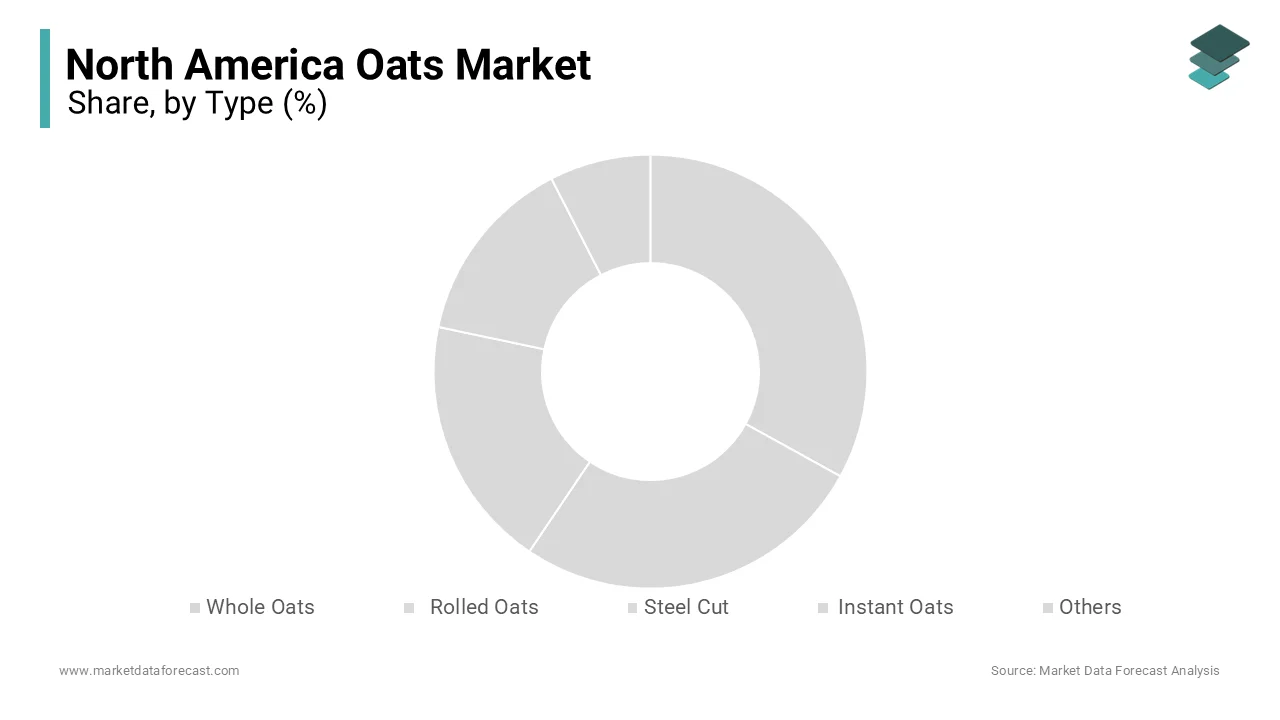
Rolled oats depicted the strongest segment in the North America oats market by capturing an estimated 37.3% of total market share in 2025. This influence is basically credited to their widespread use in breakfast cereals, baking ingredients, and health-focused food products due to their convenience, versatility, and nutritional benefits. As indicated by the U.S. Department of Agriculture (USDA), rolled oats account for nearly half of all oat-based retail sales in the United States, with major brands such as Quaker Oats, Bob’s Red Mill, and Nature’s Path leading consumer preference. The grain’s ability to absorb flavors while maintaining a soft texture after cooking makes it a preferred choice among consumers seeking quick and nutritious meal options. Statistics Canada reported that rolled oats remain the most commonly consumed oat variety in Canada, particularly among urban households where time-efficient meal preparation is a priority. Besides, health organizations recommend rolled oats as part of balanced diets due to their low glycemic index, further reinforcing their popularity among health-conscious consumers.
The instant oats segment is projected to grow at the fastest rate within the North America oats market, registering a CAGR of 6.8% from 2026 to 2034. This rapid expansion is driven by increasing demand for ready-to-eat breakfast solutions that align with fast-paced lifestyles and on-the-go consumption habits. In the U.S., private-label instant oat brands sold through Walmart and Kroger saw a 15% increase in unit sales in 2023 compared to the previous year, reflecting strong consumer adoption. Manufacturers such as Maple Grove Farms and Quaker have also introduced organic and flavored instant oat variants to cater to evolving taste preferences.
By Application Insights
The food & beverage segment accounted for the largest application area in the North America oats market, holding approximately 68% of total market share in 2025. This control over the market is mainly supported by the expanding use of oats in breakfast cereals, dairy alternatives, snack bars, and functional beverages, fueled by growing consumer interest in plant-based nutrition and heart-healthy diets. From the point of view of the Plant Based Foods Association, oat milk accounted for a significant share of all non-dairy milk sales in the U.S., with major brands like Oatly, Planet Oat, and Starbucks’ proprietary oat milk blend contributing to this surge. The U.S. Food and Drug Administration (FDA) has long recognized the cardiovascular benefits of beta-glucan fiber found in oats, which has reinforced their inclusion in cholesterol-lowering claims on packaged foods. In Canada, Health Canada’s updated dietary guidelines encourage daily whole grain consumption, including oats, as part of a balanced diet.
The personal care and cosmetics segment is emerging as the quickest advancing application area for oats in North America, expanding at a CAGR of 7.2%. This growth is fueled by rising consumer awareness of natural skincare ingredients and the dermatological benefits associated with colloidal oat extracts used in lotions, creams, shampoos, and bath products. Like, colloidal oat extract has been extensively studied for its anti-inflammatory, moisturizing, and skin-barrier-enhancing properties, making it a favored ingredient in sensitive skin formulations. Major cosmetic companies such as Aveeno, Neutrogena, and L’Oréal have expanded their oat-infused product lines to meet increasing demand for clean beauty and ecologically sourced components. In the U.S., the Organic Trade Association reported that natural skincare product sales grew by 12% in 2023, with oat-based formulations accounting for a significant share. Similarly, in Canada, the Natural Products Association noted a 9% rise in personal care items containing certified organic oat derivatives, particularly among eco-conscious millennial and Gen Z consumers.
By Distribution Channel Insights
Supermarkets and hypermarkets commanded the distribution landscape of the North America oats market by capturing an estimated 52.1% of total retail volume in 2025. This lead position position is linked to the broad accessibility, consistent availability, and promotional strategies employed by large retail chains such as Walmart, Kroger, Costco, and Sobeys. These stores frequently feature seasonal promotions, loyalty program discounts, and in-store sampling initiatives that drive trial and repeat purchases. Retailers such as Loblaw Companies Limited have expanded their store-brand oat lines to offer cost-effective alternatives to national brands, enhancing affordability and accessibility.
Online retail is rising as the swiftest progressing distribution channel in the North America oats market, expanding at a CAGR of 9.1%. This accelerated growth is driven by the increasing adoption of e-commerce platforms, improved logistics infrastructure, and the rising preference for specialty and organic oat products available exclusively online. Adobe Analytics reported that U.S. online grocery sales surged by 18% in 2025, with oat-based products benefiting from targeted digital marketing and subscription-based purchasing models. Platforms such as Amazon Fresh, Instacart, and Thrive Market have enabled consumers to explore niche oat varieties, gluten-free options, and small-batch artisanal brands that may not be widely available in local stores. Direct-to-consumer (DTC) models adopted by independent oat producers have allowed for personalized engagement, subscription services, and limited-edition product launches, enhancing brand loyalty and customer retention.
REGIONAL ANALYSIS
The United States held the dominant position in the North America oats market by capturing an estimated 65% of total regional consumption in 2025. This is underpinned by strong domestic production, widespread consumer adoption, and the presence of major oat processors and food manufacturers. According to the U.S. Department of Agriculture (USDA), oat production in the U.S. reached approximately 55 million bushels in 2023, with Minnesota, South Dakota, and Wisconsin serving as key growing regions. The country's robust agricultural supply chain supports both domestic consumption and export markets, particularly in Asia and Europe. Additionally, the popularity of oat-based beverages continues to rise. Coffee chains such as Starbucks and Dunkin' have incorporated oat milk into standard menus, further boosting daily consumption rates.
Canada is positioning reflects a strong agricultural base, favorable growing conditions in Prairie provinces, and increasing consumer demand for plant-based and gluten-free food products. Also, oat exports to international markets increased by 6% in 2023, with growing demand from European and Asian buyers. In terms of domestic consumption, Health Canada’s updated dietary guidelines recommend regular intake of whole grains, including oats, for cardiovascular and digestive health.
The remaining North American countries, including Mexico and select Caribbean territories, collectively held a descent share of the regional oats market in 2025. Though smaller in scale, these markets are gradually gaining traction due to cross-border trade agreements, changing dietary preferences, and increasing imports of oat-based products from the U.S. and Canada. PepsiCo and Grupo Bimbo have expanded their oat-based product portfolios to cater to urban consumers seeking healthier breakfast alternatives.
COMPETITIVE LANDSCAPE
The competitive landscape of the North America oats market is characterized by a dynamic mix of multinational corporations, regional producers, and specialty grain suppliers. Established giants such as PepsiCo, General Mills, and Nestlé dominate due to their extensive brand portfolios, robust supply chains, and aggressive marketing strategies centered around health and wellness. These firms frequently introduce new oat-based formulations and invest heavily in consumer education to reinforce product loyalty.
At the same time, boutique brands like Bob’s Red Mill and Nature’s Path are carving out distinct market positions by focusing on organic, non-GMO, and gluten-free oat varieties tailored to niche consumer segments. Their emphasis on transparency, traceability, and ethical sourcing appeals to environmentally aware and health-focused shoppers.
Retailers are intensifying competition by launching private-label oat lines that offer cost-effective alternatives to national brands. This multi-layered rivalry encourages continuous innovation, sustainability efforts, and digital engagement, pushing all players to evolve rapidly in response to shifting dietary trends, regulatory changes, and supply chain challenges.
KEY MARKET PLAYERS
Some of the key players in the North America oats market are
- The Scoular Company
- Quaker Oats Company
- Morning Foods
- General Mills
- Richardson International
- Grain Millers
- Avena Foods
- Blue Lake Milling
- B&G Foods, Inc.
- The Kellogg Company
- Marico Limited
TOP PLAYERS IN THE MARKET
- PepsiCo, through its Quaker Oats division, is a dominant player in the North America oats market. Known for its extensive product range including instant, rolled, and steel-cut oats, Quaker has built a strong brand presence rooted in tradition, quality, and nutritional value. The company's influence extends beyond breakfast cereals into snack bars, oat-based beverages, and gluten-free offerings. Globally, Quaker serves as a benchmark for oat-based food innovation, leveraging its North American success to expand into emerging markets and lead in oat-derived product development.
- General Mills plays a pivotal role in the North America oats market with flagship brands such as Cheerios and Fiber One, which are among the most recognized oat-based food products worldwide. The company emphasizes heart health messaging and sustainability, aligning with consumer trends toward wellness and responsible sourcing. Its investment in regenerative agriculture and partnerships with oat farmers enhances supply chain resilience. General Mills also supports global nutrition initiatives, making oats a core component of its cereal and snack portfolio across multiple international markets.
- Bob’s Red Mill is a leading specialty producer known for its commitment to whole grains, organic certification, and artisanal processing methods. As a family-owned brand, it has carved out a niche in premium rolled oats, steel-cut oats, and gluten-free oat products that cater to health-conscious consumers. Its emphasis on transparency, small-batch production, and clean-label marketing has influenced industry standards. In the global market, Bob’s Red Mill contributes to the growing demand for natural, minimally processed ingredients, reinforcing North America’s leadership in high-value oat consumption.
TOP STRATEGIES USED BY THE KEY MARKET PLAYERS
One major strategy employed by key players in the North America oats market is product diversification and innovation , particularly in developing oat-based alternatives for dairy, snacks, and functional foods. Companies are continuously launching new formats such as instant oatmeal cups, oat protein isolates, and gluten-free baked goods to cater to evolving dietary preferences and lifestyle needs.
Another key approach is sustainability-driven sourcing and branding , where manufacturers are strengthening their environmental credentials by partnering with farmers practicing regenerative agriculture and promoting carbon-neutral processing. These efforts are designed to appeal to eco-conscious consumers and align with global climate commitments.
Lastly, expanding omnichannel distribution networks , especially digital and direct-to-consumer platforms, has become a priority. By enhancing e-commerce visibility, offering subscription models, and leveraging data analytics, companies are improving accessibility and customer engagement while adapting to shifting purchasing behaviors in the oat-based product space.
RECENT HAPPENINGS IN THE MARKET
- In February 2025, PepsiCo announced the expansion of its Quaker Smart Origins line with the introduction of a plant-based oat protein beverage, targeting health-conscious consumers seeking dairy-free alternatives with added functional benefits.
- In June 2025, General Mills launched a regenerative agriculture initiative aimed at sourcing 100% of its oats from farms practicing sustainable land management, reinforcing its commitment to environmental stewardship and long-term supply chain resilience.
- In September 2025, Bob’s Red Mill introduced a new line of sprouted oats, positioning them as more digestible and nutrient-dense compared to conventional oats, appealing to wellness-oriented consumers and expanding its footprint in premium health food stores.
- In November 2025, a rising oat-based startup partnered with a major U.S. coffee chain to develop an exclusive oat milk formulation optimized for barista use, enhancing its brand visibility and integration into mainstream foodservice channels.
- In March 2026, a Canadian oat processor secured a strategic distribution deal with a leading U.S. grocery delivery platform, significantly boosting online availability of bulk and specialty oats to urban consumers seeking convenience and variety.
MARKET SEGMENTATION
This research report on the North America oats market is segmented and sub-segmented into the following categories.
By Type
- Whole Oats
- Rolled Oats
- Steel Cut
- Instant Oats
- Others
By Application
- Food & Beverage
- Animal Feed
- Personal Care and Cosmetics
- Others
By Distribution Channel
- Supermarkets/Hypermarkets
- Convenience Stores
- Grocery Stores
- Online
- Others
By Country
- The United States
- Canada
- Mexico
- Rest of North America