- Product Description Description
- Table of Contents TOC
- List of Table & Figure LOT
- Get Free Sample PDF Sample PDF
Market Size, 2025
$1,642 MnMarket Estimate, 2026
$1,731.98 MnMarket Forecast, 2034
$2,654 MnCAGR, 2026–2034
5.48%Europe Optometry Market Report Summary
The Europe optometry market was valued at USD 1,642 million in 2025, is estimated to reach USD 1,731.98 million in 2026, and is projected to reach USD 2,654 million by 2034, growing at a CAGR of 5.48% from 2026 to 2034. Market growth is driven by the rising prevalence of vision disorders, increasing awareness of preventive eye care, and growing demand for advanced ophthalmic diagnostic equipment. Optometry services and devices play a crucial role in diagnosing and managing eye conditions such as refractive errors, glaucoma, and age-related vision problems. The expansion of specialized eye clinics, advancements in optical diagnostic technologies, and increasing adoption of routine eye examinations are further supporting market growth across Europe.
Key Market Trends
- Rising prevalence of refractive errors and age-related vision disorders.
- Increasing adoption of advanced ophthalmic diagnostic and imaging technologies.
- Growing awareness of preventive eye care and regular eye examinations.
- Expansion of specialized optometry clinics and vision care centers.
- Increasing integration of digital eye examination systems and automated diagnostic tools.
Segmental Insights
- Based on type, the slit lamp segment accounted for 28.3% share of the Europe optometry market in 2025, supported by its widespread use in eye examinations and ophthalmic diagnostics.
- Based on application, the refractive errors segment dominated the market by capturing 45.3% share in 2025, driven by the growing incidence of myopia, hyperopia, and astigmatism across the population.
- Based on end user, the clinics and specialty clinics segment held a prominent share in 2025, supported by increasing patient visits for vision correction and eye health consultations.
Regional Insights
The Europe optometry market is witnessing steady growth across major countries due to expanding eye care services, rising healthcare awareness, and growing demand for advanced diagnostic technologies.
- Germany led the regional market in 2025 with 22.3% share, driven by strong healthcare infrastructure, high disposable income, and a well-established culture of preventive eye care.
- The United Kingdom ranked second with 18.2% share in 2025, supported by the integration of optometry services into the National Health Service and the expanded role of community optometrists.
- France is expected to register the fastest CAGR over the forecast period due to its comprehensive social security system that reimburses a significant portion of eye examinations and eyewear costs.
Competitive Landscape
The Europe optometry market is characterized by strong competition among ophthalmic device manufacturers and vision care technology providers. Market players are focusing on developing advanced diagnostic equipment, improving optical imaging technologies, and expanding product portfolios for eye care professionals. Strategic partnerships with healthcare institutions, optical retailers, and clinics are shaping competitive dynamics across the region.
Prominent companies operating in the Europe optometry market include Topcon Corporation, NIDEK Co. Ltd., Alcon Inc., Revenio Group PLC, Canon Inc., EssilorLuxottica, Halma plc, Zeiss Group, Heine Optotechnik, Kowa American Corporation, OCULUS, Inc., and Carl Zeiss AG.
 Download Free Sample Report
Europe Optometry Market Size
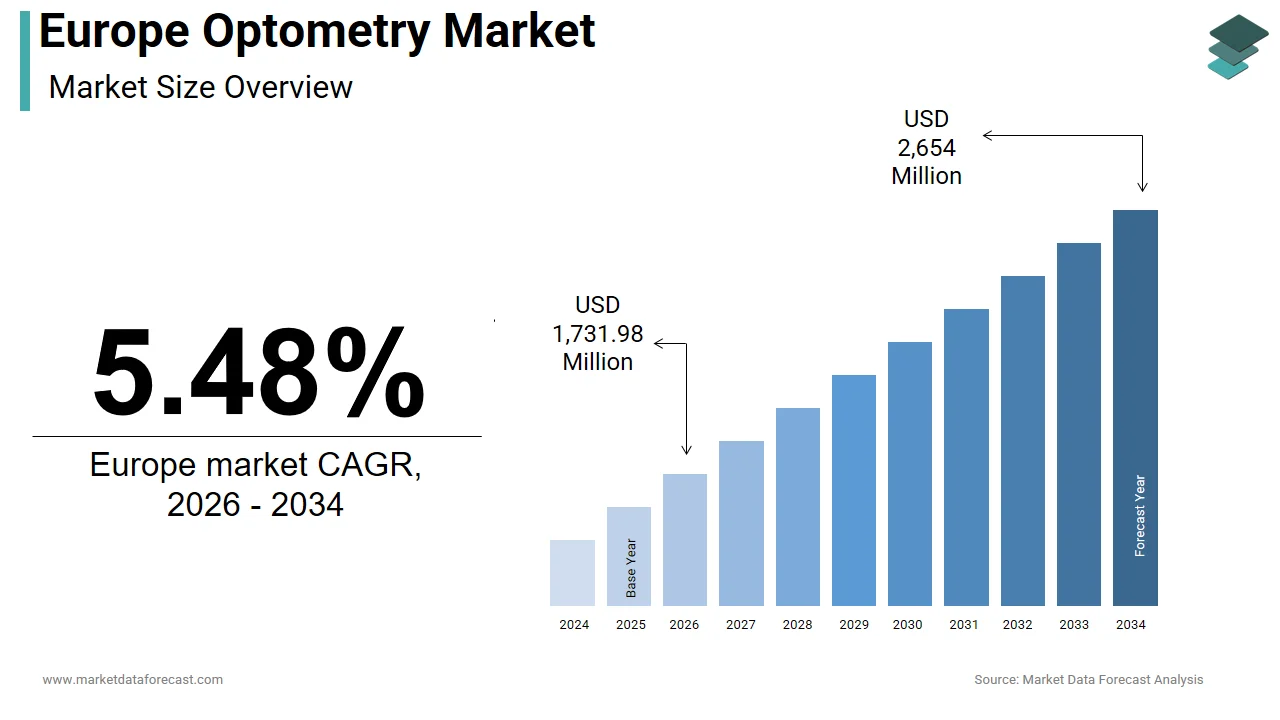
The size of the Europe optometry market was worth USD 1,642 million in 2025. The regional market is anticipated to grow at a CAGR of 5.48% from 2026 to 2034 and be worth USD 2,654 million by 2034 from USD 1,731.98 million in 2026.
The optometry is a primary eye care services, including refraction, vision therapy, contact lens fitting, and the detection of ocular diseases, delivered by qualified optometrists and optical dispensing professionals. This sector functions as the frontline for maintaining visual health, across the continent, bridging the gap between general wellness and specialized ophthalmological intervention. As per Eurostat, the proportion of the European population aged 65 and over-reached 21.3% in 2024, creating a demographic imperative for increased frequency of vision screenings and chronic disease management. According to the World Health Organization Regional Office for Europe, uncorrected refractive errors remain the leading cause of vision impairment, affecting approximately 27 million individuals, which underscores the vast addressable need for professional optometric services. The European Union mandates that member states ensure access to essential health services, yet the delivery model varies significantly between state-integrated systems and private retail chains. The integration of digital health records across borders remains fragmented, complicating patient continuity. According to national health surveys, myopia prevalence among school-aged children in Europe has doubled since the 1990s, now affecting nearly 50% of young adults, driving urgent demand for myopia management protocols.
MARKET DRIVERS
Demographic Aging Amplifies Demand for Geriatric Vision Care
The growing elderly people exponentially increases the prevalence of age-related ocular conditions that require regular professional monitoring and intervention, which is solely propelling the growth of Europe optometry market. The physiological changes associated with aging, such as presbyopia, cataracts, glaucoma, and age-related macular degeneration, necessitate frequent visits to optometrists for diagnosis, prescription updates, and low vision rehabilitation. According to Eurostat, the median age of the EU population rose to 44.4 years in 2024, with projections indicating that nearly 30% of Europeans will be over 60 by 2050, fundamentally altering the patient mix for optical practices. As per clinical data from the European Eye Epidemiology Consortium, the incidence of glaucoma doubles every decade after age 40, meaning the expanding elderly cohort creates a built-in pipeline of patients requiring lifelong management rather than one-time corrections. The necessity for multifocal and progressive lenses, which require precise measurement and adaptation counseling, drives higher service revenue per patient compared to simple single-vision corrections. According to public health records, falls caused by poor vision are a leading cause of injury among seniors, prompting government initiatives in countries like Germany and the UK to subsidize annual eye exams for those over 60. This policy support removes financial barriers and encourages regular attendance.
Digital Screen Proliferation Accelerates Myopia Management Needs
The digital screen proliferation by inducing a surge in computer vision syndrome and accelerating the onset and progression of myopia, among the younger people is additionally prompting the growth of Europe optometry market. The ubiquitous use of smartphones, tablets, and computers for education and work has drastically increased near-work duration, a primary environmental risk factor for axial elongation of the eye. According to the International Myopia Institute, the prevalence of myopia in European teenagers is projected to reach 60% by 2050 if current trends continue, creating a massive cohort requiring corrective lenses and specialized management. As per some studies, over 70% of European office workers report symptoms of digital eye strain, including dry eyes, blurred vision, and headaches, driving demand for blue light filtering lenses and ergonomic vision assessments. The shift toward remote and hybrid work models has further entrenched screen dependency, making vision care a recurring necessity rather than an occasional expense. Optometrists are increasingly adopting myopia control therapies, such as orthokeratology and specialized soft contact lenses, which require frequent follow-up visits and generate higher recurring revenue. According to educational health reports, schools in Scandinavia and the Netherlands have begun implementing mandatory vision screening programs, identifying undiagnosed cases early and funneling them into professional care pathways. As per consumer behavior analysis, parents are becoming more proactive in seeking preventative solutions for their children, willing to invest in premium products that promise to slow vision deterioration. This epidemiological shift ensures a sustained expansion of the patient base across all age groups.
MARKET RESTRAINTS
Reimbursement Fragmentation Limits Patient Access Frequency
The reimbursement fragmentation by creating inconsistent financial incentives for patients to seek regular eye care, across different national jurisdictions, which is limiting the growth of Europe optometry market. Unlike a unified European health policy, vision care coverage varies wildly, with some countries offering full state coverage for examinations and lenses, while others relegate optometry entirely to out-of-pocket expenditure. According to the European Society of Ophthalmology, only 12 European countries provide comprehensive state reimbursement for routine eye examinations for the general adult population by leaving a majority of citizens to bear the full cost of preventive care. As per some studies, in nations where patients must pay fully for glasses and contacts, the average interval between eye exams extends to 36 months or more, significantly reducing the volume of billable services for practitioners. The lack of coverage for advanced diagnostic technologies, such as optical coherence tomography or retinal imaging, discourages optometrists from investing in these tools, limiting the scope of practice to basic refraction. According to patient advocacy groups, high co-payments for progressive lenses or contact lenses deter lower-income demographics from upgrading to optimal vision correction, capping the potential value per transaction. The complexity of navigating partial reimbursement schemes in countries like France or Belgium often leads to administrative burdens that small practices struggle to manage. As per market data, regions with low reimbursement rates correlate strongly with lower penetration of contact lenses and premium lens materials.
Workforce Shortages Constrain Service Delivery Capacity
The workforce shortages by limiting the number of available practitioners to meet the growing demand for eye care services is also hampering the growth of Europe optometry market. The supply of qualified optometrists has failed to keep pace with the expanding aging population and the increasing complexity of ocular disease management, leading to extended wait times and reduced access in rural areas. According to the Association of European Schools and Colleges of Optometry, several member states face a deficit of trained professionals, with graduation rates insufficient to replace retiring practitioners or cover new openings. As per data, the density of optometrists per 100,000 inhabitants varies drastically, ranging from over 20 in the UK and Netherlands to fewer than 5 in parts of Southern and Eastern Europe, thereby creating severe geographic disparities in care availability. The rigorous educational requirements and licensing barriers within the EU hinder the free movement of optometrists, preventing labor mobility from alleviating local shortages. According to survey, existing practitioners are facing increasing burnout due to high patient volumes, which can compromise the quality of care and lead to early exits from the profession. The scarcity of specialists in areas like pediatric optometry or low vision rehabilitation further restricts the market's ability to offer comprehensive services. As per some studies, the inability to recruit sufficient staff forces many optical chains to limit their operating hours or turn away new patients, directly capping revenue potential. This human capital bottleneck acts as a structural constraint on the market's capacity to expand and serve the underserved populations effectively.
MARKET OPPORTUNITIES
Tele-Optometry Integration Expands Rural Reach
The tele-optometry integration by leveraging digital connectivity to overcome geographic barriers and extend professional services to underserved rural and remote communities. This attribute is ascribed to bolster new opportunities for the growth of Europe optometry market. The deployment of remote refraction units, store-and-forward retinal imaging, and video consultation platforms allows optometrists to triage patients, monitor chronic conditions, and prescribe corrections without the need for physical presence. As per pilot program results in Sweden and Finland, tele-optometry initiatives have successfully reduced travel time for patients by 80% while maintaining diagnostic accuracy comparable to in-person examinations for routine cases. The technology enables optometrists to manage larger patient panels efficiently by focusing physical appointments on complex cases while handling follow-ups and minor adjustments remotely. According to regulatory developments, several member states are updating their legal frameworks to recognize remote prescriptions and reimburse tele-health consultations, removing previous legislative hurdles. The integration of artificial intelligence into tele-optometry platforms enhances the screening capability for diabetic retinopathy and glaucoma, allowing technicians in remote locations to capture images that algorithms analyze instantly. As per studies, the adoption of hybrid care models could increase the total addressable market by capturing the estimated 15% of the European population living in areas with limited access to eye care professionals.
Advanced Diagnostic Technology Enhances Clinical Scope
The advanced diagnostic technology to expand their clinical scope and revenue streams by incorporating medical-grade imaging and functional testing into primary care settings. This factor is also to enhance the growth of Europe optometry market. The miniaturization and cost reduction of devices such as Optical Coherence Tomography (OCT), wide-field retinal cameras, and corneal topographers enable community practices to detect sight-threatening conditions earlier and manage them alongside ophthalmologists. According to clinical guidelines from the Royal College of Ophthalmologists, the integration of OCT in routine eye exams increases the detection rate of early-stage glaucoma and macular pathology by over 40% compared to standard fundoscopy alone. As per industry data, practices offering advanced imaging report a 25% increase in patient retention and higher average transaction values due to the perceived value of comprehensive health screening. The shift towards a medical model of optometry, allows practitioners to charge professional fees for disease management rather than relying solely on retail margins from eyewear sales. According to technological trends, handheld and smartphone-connected diagnostic devices are lowering the entry barrier for small clinics, democratizing access to high-end capabilities. The ability to share digital images instantly with hospital specialists facilitates seamless referral pathways, positioning the optometrist as an integral node in the broader healthcare network. As per some studies, the adoption of these technologies future-proofs practices against commoditization by online retailers, emphasizing the irreplaceable value of professional clinical expertise.
MARKET CHALLENGES
Regulatory Heterogeneity Complicates Cross-Border Standardization
The regulatory heterogeneity by fragmenting the professional landscape and hindering the establishment of unified standards for practice, education, and product approval is one of the major challenges for the growth of Europe optometry market. Each member state maintains distinct laws governing the scope of optometric practice, with some nations allowing therapeutic prescribing and minor surgery while others restrict optometrists strictly to refraction and dispensing. According to the European Council of Optometry, these discrepancies prevent the mutual recognition of qualifications, stifling labor mobility and creating confusion for multinational optical chains attempting to standardize service protocols. As per legal analyses, the variation in classification of contact lenses and solutions as either medical devices or general consumer goods leads to divergent marketing restrictions and distribution channels across borders. The lack of a centralized European framework for tele-optometry creates legal uncertainty regarding liability and cross-border prescriptions, slowing the adoption of digital health solutions. According to the reports, manufacturers face increased compliance costs as they must navigate 27 different sets of regulations for labeling, advertising, and professional training requirements. The inconsistency in reimbursement policies further distorts the market, encouraging "health tourism" where patients cross borders for cheaper care, undermining local providers.
Online Retail Disruption Erodes Traditional Margin Structures
The online retail disruption is decoupling the sale of vision correction products from the professional examination, thereby compressing margins for brick-and-mortar practices. These disruptions is ascribed to decline the growth of Europe optometry market. The rise of e-commerce platforms offering prescription glasses and contact lenses at significantly lower prices has conditioned consumers to view eyewear as a commodity rather than a medical device requiring professional fitting. According to e-commerce data, online sales of eyewear in Europe have grown by 18% annually over the last five years, capturing a substantial share of the repeat purchase market for contact lenses and spare spectacles. The aggressive marketing strategies of online giants, including home try-on programs and virtual fitting rooms, mimic the in-store experience, reducing the friction of buying without an optometrist present. According to industry financials, independent optical practices have seen their retail margins shrink by up to 15% as they are forced to match online pricing to retain customers. The challenge is compounded by the difficulty in enforcing prescription validity and ensuring proper fit for complex lenses through remote channels. As per some studies, the continued erosion of retail revenue threatens the economic viability of the examination model, potentially forcing practitioners to increase exam fees, which could further deter patients from seeking regular care.
REPORT COVERAGE
| REPORT METRIC | DETAILS |
| Market Size Available | 2025 to 2034 |
| Base Year | 2025 |
| Forecast Period | 2026 to 2034 |
| Segments Covered | By Type, Application, End User, and Country. |
| Various Analyses Covered | Global, Regional, and Country-Level Analysis, Segment-Level Analysis, Drivers, Restraints, Opportunities, Challenges; PESTLE Analysis; Porter’s Five Forces Analysis, Competitive Landscape, Analyst Overview of Investment Opportunities |
| Countries Covered | UK, France, Spain, Germany, Italy, Russia, Sweden, Denmark, Switzerland, Netherlands, Turkey, Czech Republic, and the Rest of Europe. |
| Market Leaders Profiled | Topcon Corporation, NIDEK Co Ltd, Revenio Group PLC, Zeiss Group, Canon Inc., Essilor Luxottica, Halma plc, Heine Optotechnik, Alcon Inc, Kowa American Corporation, OCULUS, Inc., Carl Zeiss AG. |
SEGMENTAL ANALYSIS
By Type Insights
The slit lamp segment was accounted in holding 28.3% of the Europe optometry market share in 2025 with the status of the slit lamp as the fundamental diagnostic tool required for every comprehensive eye examination, making it indispensable in all practice settings. The device allows for a magnified three-dimensional view of the anterior and posterior segments of the eye, which is critical for detecting cataracts, corneal abrasions, and foreign bodies. As per clinical guidelines from national health bodies, the slit lamp is mandatory for contact lens fitting assessments, a service utilized by over 60 million Europeans, further cementing its ubiquity. The durability and longevity of these devices mean that while replacement cycles are long, the initial installation base is vast and nearly universal. According to data, the average optical practice in Western Europe operates at least two slit lamps to handle patient volume efficiently, doubling the unit count per location. The integration of digital imaging modules into modern slit lamps has also refreshed the market, prompting upgrades even in established practices. As per reports, the relatively lower cost compared to advanced imaging systems like OCT makes it accessible for small independent practitioners, sustaining high sales volumes. This combination of clinical necessity, regulatory mandate, and broad accessibility ensures the slit lamp remains the cornerstone of optometric equipment revenue.
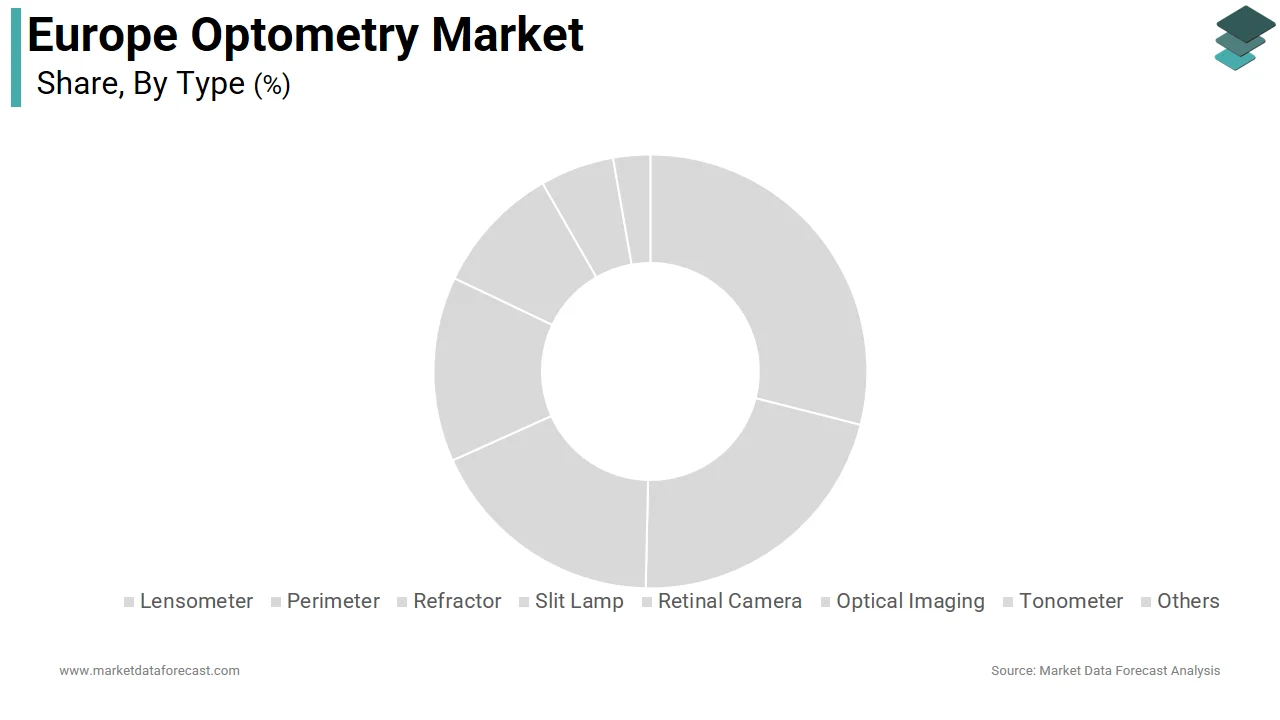
The optical imaging segment is swiftly emerging at a fastest CAGR of 9.4% throughout the forecast period owing to the rapid adoption of Optical Coherence Tomography (OCT) and wide-field retinal cameras as standard-of-care tools for early disease detection rather than specialized referrals. The shift toward a medical model of optometry requires practitioners to detect conditions like glaucoma and macular degeneration at earlier stages, driving demand for high-resolution cross-sectional imaging. As per technological trends, the miniaturization of imaging devices and the introduction of handheld units have lowered the barrier to entry for smaller clinics and mobile screening services. The integration of artificial intelligence software that automatically analyzes scans for pathology reduces the need for specialist interpretation, empowering general optometrists to manage complex cases. According to reimbursement updates in countries like Germany and France, specific codes for retinal imaging during diabetic screenings now offer financial incentives for practices owning these devices. The ability to store and share digital images seamlessly with hospital specialists enhances the value proposition, making imaging systems essential for integrated care networks.
By Application Insights
The refractive errors segment was the largest by capturing 45.3% of the Europe optometry market share in 2025 owing to the sheer prevalence of myopia, hyperopia, astigmatism, and presbyopia by creating a universal and continuous demand for correction. According to the International Myopia Institute, approximately 50% of young adults in Europe are now myopic, a figure that has doubled in recent decades, expanding the addressable market for corrective lenses and contact lenses significantly. As per research, the average European replaces their prescription eyewear every 2.5 years, driving a consistent cycle of refraction services and product sales. The rise of digital screen usage has exacerbated symptoms of computer vision syndrome, prompting many individuals who previously did not wear glasses to seek professional refraction for blue light filtering or task-specific lenses. According to the study, the premium progressive lenses, which require precise and frequent refraction measurements, constitutes the highest value portion of the optical retail sector. The non-invasive nature of correcting refractive errors through glasses or contacts makes it the first line of intervention for many patients. As per public health statistics, uncorrected refractive error remains the primary cause of visual impairment in the region, keeping it at the forefront of public health initiatives and insurance coverage schemes.
The glaucoma application segment is witnessing a fastest CAGR of 8.7% from 2026 to 2034 with the aging European demographic, which significantly increases the prevalence of this chronic condition, coupled with a strategic shift toward early detection and community-based management. Glaucoma is often asymptomatic in its early stages, necessitating regular screening with advanced tonometry and imaging, which drives equipment and service utilization. According to the European Glaucoma Society, the number of people aged 40 to 80 with glaucoma in Europe is expected to rise to over 15 million by 2040, creating a massive pipeline of patients requiring lifelong monitoring. As per clinical protocols, the frequency of visits for glaucoma suspects and diagnosed patients is much higher than for routine refraction, often occurring every 3 to 6 months, thereby increasing service volume per patient. The delegation of glaucoma monitoring from hospital ophthalmology departments to community optometrists, a trend accelerated by healthcare system pressures in the UK and Scandinavia, has expanded the role of primary care providers in managing this disease. According to therapeutic advancements, the introduction of new classes of intraocular pressure-lowering drops and minimally invasive surgical procedures requires optometrists to be equipped with sophisticated monitoring tools. The implementation of national screening programs for high-risk groups in countries like the Netherlands and Sweden, further boosts case identification rates. The cost-effectiveness of preventing blindness through early optometric intervention is driving government funding toward glaucoma detection services.
By End User Insights
The clinic and specialty clinic segment held a prominent share of the Europe optometry market in 2025 with the decentralized nature of eye care delivery in Europe, where the majority of routine examinations, contact lens fittings, and low-complexity disease management occur in private or chain-owned community practices. These settings offer greater convenience, flexible scheduling, and a retail environment that integrates vision correction product sales directly with professional services, creating a seamless patient experience. According to some studies, large optical retail chains such as GrandVision, Specsavers, and Fielmann operate thousands of clinic locations across the continent, aggregating significant purchasing power for equipment and supplies. As per patient preference surveys, over 70% of Europeans prefer visiting a local optical clinic for routine eye care due to shorter wait times and a more relaxed atmosphere compared to hospital outpatient departments. The business model of these clinics relies heavily on the synergy between professional fees and the high-margin sale of eyewear, which subsidizes the cost of advanced diagnostic equipment. According to regulatory frameworks in many EU nations, optometrists in private practice have expanded scopes of practice allowing them to manage minor ocular diseases, reducing the need for hospital referrals. The agility of specialty clinics to adopt new technologies like dry eye therapy suites or myopia management centers allows them to capture niche markets effectively. As per economic indicators, the density of optical clinics per capita in Western Europe is among the highest globally by ensuring widespread access and sustained demand. This structural dominance ensures that clinics remain the primary channel for optometric products and services.
The hospital segment is lucratively growing at a fastest CAGR of 7.2% throughout the forecast period. The growth of the segment is driven by the increasing complexity of ocular diseases requiring multidisciplinary care, surgical interventions, and the management of systemic conditions with ocular manifestations that cannot be handled in primary care settings. Hospitals are becoming hubs for advanced diagnostic imaging and tele-ophthalmology networks that coordinate care between specialists and community optometrists. According to healthcare utilization data, the rising prevalence of diabetic retinopathy and age-related macular degeneration in the aging population has led to a surge in hospital-based injection clinics and laser treatment centers. As per health policy trends, several European countries are centralizing complex cataract and glaucoma surgeries in hospital day-case units to improve efficiency and outcomes, driving demand for high-end surgical and pre-operative diagnostic equipment. The integration of electronic health records across hospital networks facilitates better tracking of chronic eye conditions, encouraging more frequent follow-ups within the hospital system. According to funding mechanisms, public healthcare systems in Europe are investing heavily in upgrading hospital ophthalmology departments to reduce waiting lists and prevent blindness, leading to significant capital expenditure on new technology. The role of hospitals in training future optometrists and ophthalmologists also ensures they remain at the forefront of adopting cutting-edge diagnostic and therapeutic modalities.
COUNTRY-LEVEL ANALYSIS
Germany Optometry Market Analysis
Germany was the largest contributor of the Europe optometry market by capturing 22.3% of share in 2025 due to its robust healthcare infrastructure, high disposable income, and strong culture of preventive eye care. The dense network of independent opticians and large retail chains that emphasize high-quality German engineering in diagnostic equipment and precision lens manufacturing. According to the Central Association of Opticians, Germans undergo eye examinations more frequently than the European average, with over 60% of the population visiting an optometrist annually, driven by statutory health insurance subsidies for specific groups. As per studies, the demand for premium progressive lenses and photochromic technologies is exceptionally high, reflecting a consumer base willing to pay for superior visual performance and comfort. The aging population in Germany, with one of the highest proportions of seniors in the world, creates a sustained demand for cataract screening and low vision aids. According to regulatory standards, strict certification requirements for optical devices ensure that only high-quality equipment enters the market, fostering a competitive landscape focused on technological superiority. The presence of major global manufacturers of ophthalmic instruments within Germany further stimulates local innovation and adoption of advanced diagnostics.
United Kingdom Optometry Market Analysis
The United Kingdom was ranked second by holding 18.2% of the Europe optometry market share in 2025 with its unique integration of optometry into the National Health Service and the advanced scope of practice for community optometrists. The mature system, where high street opticians perform a significant volume of NHS-funded eye tests and manage chronic conditions like glaucoma and dry eye, reducing the burden on hospitals. According to the General Optical Council, there are over 5,500 registered optical practices in the UK, providing widespread access to care funded through government contracts. The introduction of Minor Eye Conditions Services in England and similar schemes in Scotland and Wales has expanded the clinical role of optometrists is driving demand for advanced diagnostic equipment in community settings. The high prevalence of myopia among UK children has spurred national initiatives for myopia management, creating a specialized growth niche. According to the studies, the dominance of large multiples like Specsavers and Boots creates a highly competitive environment focused on efficiency and volume, while independent practitioners differentiate through specialized clinical services. The strong regulatory framework ensures high professional standards, maintaining public trust in optometric advice.
France Optometry Market Analysis
France optometry market is likely to witness a fastest CAGR in coming years with a comprehensive social security system that reimburses a significant portion of eye examination and eyewear costs. According to the National Union of Opticians, the frequency of eye exams in France is high, with millions of consultations reimbursed annually under the "100% Health" reform which aims to provide fully covered quality equipment. French patients show a strong preference for fashion-forward eyewear, driving a vibrant market for designer frames alongside functional vision correction. The centralized healthcare system allows for coordinated national screening campaigns for glaucoma and diabetic retinopathy, boosting equipment utilization in both public and private sectors. According to research, France is highly fragmented with a mix of large groups and many independent owners, leading to intense competition on price and service. The growing awareness of blue light hazards and digital eye strain has increased demand for specialized coatings and lenses.
Italy Optometry Market Analysis
Italy optometry market growth is likely to have steady opportunities in coming years with the oldest populations in the world, which creates immense demand for age-related eye care services and products. According to ISTAT, the median age in Italy continues to rise, projecting a significant increase in the prevalence of chronic ocular diseases over the next decade, ensuring long-term market growth. The Italian consumer places a high value on style and design by making the eyewear market a crucial component of the fashion industry, which drives frequent replacements and upgrades. There is a growing movement to expand the scope of practice for optometrists to include more therapeutic roles, mirroring trends in the UK and Scandinavia.
Spain Optometry Market Analysis
Spain optometry market growth is likely to have significant growth with the rapidly consolidating optical retail sector and a significant boost from medical tourism and expatriate communities. The market status is defined by the aggressive expansion of large optical chains that are modernizing stores with advanced diagnostic capabilities to capture market share from traditional independents. According to the General Council of Optometrists, the awareness of eye health is rising among the Spanish population, leading to increased frequency of voluntary eye examinations beyond mandatory occupational checks. The sunny climate in Spain contributes to a higher incidence of UV-related eye conditions, driving demand for high-quality sunglasses with prescription and photochromic lenses. The recovery of the tourism sector has revitalized demand for vision care among visitors and residents in coastal regions by creating seasonal spikes in service utilization. The government's efforts to digitize the health system are beginning to impact optometry, with pilot projects for electronic prescriptions and shared imaging records. There is a growing interest in contact lenses and refractive surgery alternatives among the younger urban demographic. The concentration of optical manufacturing in the Alicante region also supports a strong domestic supply chain.
COMPETITIVE LANDSCAPE
The competition within the Europe optometry market is intense and characterized by the presence of several large multinational corporations alongside numerous regional specialists. Major global entities leverage their extensive resources to drive technological advancements while smaller firms often compete through niche specialization or personalized service offerings. The landscape sees constant evolution as companies strive to differentiate themselves via innovative lens materials and smarter diagnostic equipment. Regulatory compliance across different European nations adds complexity requiring players to adapt quickly to varying standards. Strategic mergers and acquisitions are common tactics employed to consolidate market positions and eliminate direct rivals efficiently. Furthermore there is a growing emphasis on digital health solutions which has prompted traditional manufacturers to collaborate with tech startups. This shift towards digitization creates new battlegrounds where software integration becomes as crucial as hardware quality. Price competition remains relevant but brand reputation and clinical efficacy increasingly dictate purchasing decisions among practitioners. As consumer awareness rises regarding eye health services providers face pressure to deliver superior outcomes consistently.
KEY MARKET PLAYERS
The leading companies operating in the Europe optometry market include:
- Topcon Corporation
- NIDEK Co. Ltd.
- Alcon Inc
- Revenio Group PLC
- Canon Inc.
- EssilorLuxottica
- Halma plc
- Zeiss Group
- Heine Optotechnik
- Kowa American Corporation
- OCULUS, Inc.
- Carl Zeiss AG
TOP PLAYERS IN THE MARKET
- EssilorLuxottica stands as a dominant force formed by the merger of two industry giants. The company designs and manufactures a vast array of ophthalmic lenses and frames sold globally. Their contribution to the global sector involves setting high standards for vision correction technology and fashion eyewear. Recently they have focused on integrating digital tools into patient care pathways across Europe. They launched advanced lens technologies that adapt to individual visual needs while expanding their retail network.
- Zeiss Group is a renowned German technology enterprise specializing in optics and optoelectronics with a strong European footprint. They provide sophisticated diagnostic equipment and measurement instruments essential for modern optometry practices worldwide. Their global impact stems from continuous innovation in precision engineering and medical technology solutions. Recent initiatives include rolling out artificial intelligence driven diagnostic platforms to improve early detection of eye diseases. They also partnered with various clinics to upgrade infrastructure ensuring higher accuracy in prescriptions. These strategic moves demonstrate their commitment to advancing clinical capabilities and maintaining technological superiority.
- Alcon Inc operates as a leading global eye care company with significant operations throughout Europe. They offer a comprehensive portfolio including surgical equipment and contact lenses tailored for diverse patient requirements. Their worldwide influence is evident through widespread adoption of their surgical systems and daily disposable lenses. They also invested heavily in training programs for eye care professionals to ensure optimal product utilization. These efforts reflect their dedication to improving surgical precision and patient satisfaction, while expanding their therapeutic offerings.
TOP STRATEGIES USED BY THE KEY MARKET PARTICIPANTS
Key players in this sector primarily focus on innovation through research and development to launch advanced diagnostic tools. Companies frequently pursue strategic acquisitions to broaden their product portfolios and enter new geographic regions efficiently. Another major strategy involves forming partnerships with local clinics to enhance distribution networks and improve customer reach. Digital transformation remains central as firms integrate artificial intelligence into their devices for better diagnostic accuracy. Additionally, organizations invest heavily in professional education programs to train optometrists on using their latest technologies effectively. These approaches collectively help businesses maintain competitive advantages and respond rapidly to evolving consumer demands within the region.
MARKET SEGMENTATION
This research report on the Europe optometry market has been segmented and sub-segmented into the following categories.
By Type
- Lensometer
- Perimeter
- Refractor
- Slit Lamp
- Retinal Camera
- Optical Imaging
- Tonometer
- Others
By Application
- Cataract
- Glaucoma
- Refractive Errors
- Age-Related Macular Degeneration
- Others
By End User
- Clinic and Specialty Clinic
- Hospital
By Country
- United Kingdom
- France
- Spain
- Germany
- Italy
- Russia
- Sweden
- Denmark
- Switzerland
- Netherlands
- Rest of Europe