Europe Peptide Synthesis Market Size, Share, Trends And Growth Forecasts Research Report, Segmented By Technique, Product Type, End User and Country – Industry Analysis (2026 to 2034)
Market Size, 2025
$0.32 BnMarket Estimate, 2026
$0.34 BnMarket Forecast, 2034
$0.52 BnCAGR, 2026–2034
5.53%Europe Peptide Synthesis Market Report Summary
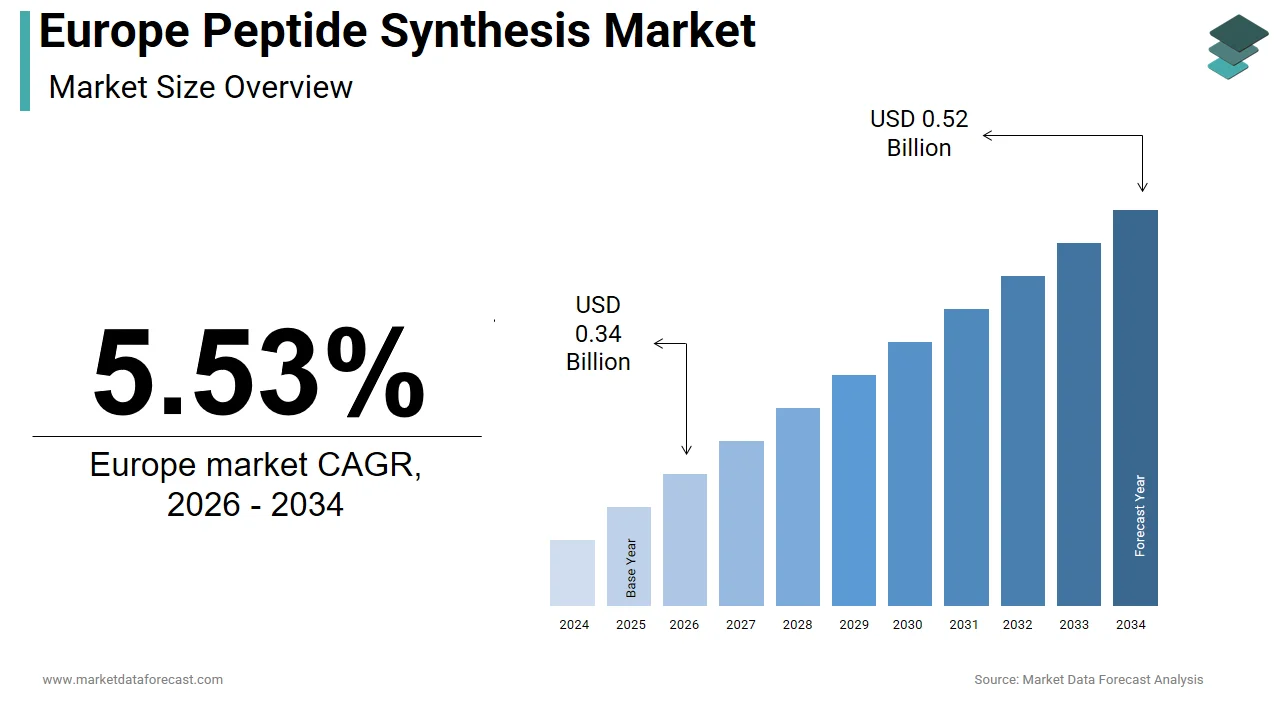
The Europe peptide synthesis market was valued at USD 0.32 billion in 2025, is estimated to reach USD 0.34 billion in 2026, and is projected to reach USD 0.52 billion by 2034, growing at a CAGR of 5.53% during the forecast period from 2026 to 2034.
The growth of the European peptide synthesis market is driven by rising demand for peptide-based therapeutics, increasing R&D activities in biopharmaceuticals, and advancements in automated peptide synthesizers and solid-phase synthesis technologies. Expanding applications in drug discovery, diagnostics, and personalized medicine, along with the rise of contract manufacturing organizations (CDMOs and CROs), is further fueling market growth across the region.
Key Market Trends
- Rising adoption of solid-phase peptide synthesis (SPPS) for efficient, high-yield production.
- Growing use of peptide-based drugs in oncology, metabolic disorders, and infectious diseases.
- Increasing reliance on outsourced peptide synthesis services by pharmaceutical and biotech firms.
- Technological advancements in automated synthesis platforms are improving scalability and reproducibility.
- Expanding biotech innovation clusters and academic research collaborations are driving new peptide discoveries.
Segmental Insights
- Based on technique, the solid-phase peptide synthesis (SPPS) segment accounted for a substantial share of the Europe peptide synthesis market in 2024, owing to its high efficiency, flexibility, and suitability for large-scale production of complex peptides.
- Based on product type, the reagents and consumables segment held a leading share of 54.5% of the Europe peptide synthesis market in 2024, driven by their continuous use in synthesis workflows and growing demand for high-purity reagents to ensure process accuracy.
- Based on end user, the peptide contract development and manufacturing organizations (CDMOs) and contract research organizations (CROs) segment led the Europe peptide synthesis market, capturing a 49.4% share in 2024, supported by increasing outsourcing of peptide design, synthesis, and analytical services by pharmaceutical and biotech companies.
Regional Insights
The European peptide synthesis market is experiencing consistent growth across leading economies, supported by strong biopharmaceutical R&D infrastructure, investment in life sciences, and expanding peptide drug pipelines.
- Germany dominated the regional market, occupying a 24.6% share in 2024, driven by strong industrial biotech capabilities and presence of leading peptide manufacturers.
- Switzerland was the second-largest market, capturing a 19.3% share in 2024, supported by its advanced pharmaceutical sector, CDMO base, and innovation-driven research ecosystem.
- The United Kingdom remains a key player, supported by world-leading academic research and a vibrant biotech ecosystem centered in the Cambridge–Oxford–London Golden Triangle, fostering rapid advancements in peptide drug development.
Competitive Landscape
The European peptide synthesis market is moderately consolidated, with key players focusing on process automation, purity optimization, and peptide customization to meet growing pharmaceutical and research demands. Companies are investing in scalable synthesis technologies, analytical validation tools, and strategic collaborations to strengthen their global footprint. Prominent players include Merck KGaA, Thermo Fisher Scientific Inc., CordenPharma International, GenScript, Novozymes A/S, PolyPeptide Group, and Bachem Holding AG.
Europe Peptide Synthesis Market Size
The Europe peptide synthesis market was valued at USD 0.32 billion in 2025, is estimated to reach USD 0.34 billion in 2026, and is projected to reach USD 0.52 billion by 2034, growing at a CAGR of 5.53% from 2026 to 2034.
Peptide synthesis is the chemical or biological process of creating peptides by linking amino acids in a specific order. This process is crucial for producing peptides with precise sequences and desired modifications for applications in pharmaceuticals, diagnostics, and research. Europe’s robust biopharmaceutical ecosystem, particularly in Germany, Switzerland, and the UK, serves as a global hub for peptide drug development. Over 200 peptide-based therapeutics are currently in clinical development globally, with the European biopharmaceutical sector actively engaged in this research area due to the high specificity and low off-target effects of peptides. The European Pharmacopoeia maintains stringent monographs for peptide identity assays and impurity profiling, which drive demand for GMP-compliant synthesis services. According to sources, the European Union's total government budget allocations for R&D across all sectors reached approximately €127.9 billion in 2024. Apart from these, the European Commission’s Pharmaceutical Strategy for Europe does emphasize innovation in complex generics and biosimilars, where synthetic peptides play a critical role, as part of efforts to improve the region's competitiveness in pharmaceutical innovation. This confluence of scientific infrastructure, regulatory rigor, and therapeutic demand positions peptide synthesis as a strategic enabler of Europe’s life sciences dominance.
MARKET DRIVERS
Rising Clinical Adoption of Peptide-Based Therapeutics
The expanding pipeline and approval of peptide drugs for chronic and oncological conditions are the primary causes for the growth of the Europe peptide synthesis market. Peptides offer high target affinity, metabolic stability, and lower toxicity compared to small molecules, making them ideal for precision medicine. The European Medicines Agency continues to receive numerous new peptide-based drug applications for marketing authorization annually, with significant focus on treatments for conditions such as type 2 diabetes, obesity, and metastatic prostate cancer, as per studies. Notably, the approval of dual GLP-1 GIP receptor agonists such as tirzepatide has intensified demand for complex long-chain peptides with multiple disulfide bonds. The prevalence of target diseases further amplifies this trend. According to the International Diabetes Federation’s Europe report, diabetes affects a significant population in the EU, a number generally cited as around or over 61 million adults. This therapeutic momentum necessitates scalable high-fidelity synthesis capabilities, particularly for peptides exceeding 30 amino acids, which require advanced solid-phase techniques and rigorous endotoxin control to meet EMA standards.
Growth in Contract Development and Manufacturing Organizations
The proliferation of specialized contract development and manufacturing organizations has greatly expanded access to GMP-grade peptide synthesis in the region, and this progress further assists the expansion of the Europe peptide synthesis market. Biotech startups and mid-sized pharmaceutical firms increasingly outsource peptide production due to the high capital and expertise barriers associated with in-house synthesis. According to a study, a general trend in the industry is that a significant majority of emerging biotechs rely heavily on Contract Development and Manufacturing Organizations (CDMOs) for their clinical and commercial supply needs, particularly for complex molecules like peptides, due to the high costs of in-house manufacturing infrastructure. Leading European CDMOs have invested heavily in automated synthesis platforms and lyophilization suites capable of producing multi-kilogram batches under full regulatory compliance. The European Investment Bank (EIB) provides significant financing to support the European biotech and life sciences sectors, including investments that can facilitate the expansion of Good Manufacturing Practice (GMP) facilities for drug development and manufacturing. Furthermore, the EU’s Innovation Fund has prioritized peptide manufacturing as a strategic capability under its health security agenda. This ecosystem enables rapid scale-up from preclinical to commercial stages, reducing time to market and de-risking development for innovators who lack dedicated peptide facilities.
MARKET RESTRAINTS
Stringent Regulatory Requirements for Impurity Profiling
The European Medicines Agency enforces exceptionally rigorous standards for peptide impurity characterization, which significantly increases production complexity and cost and thereby limits the growth of the Europe peptide synthesis market. Unlike small molecules, peptides are prone to deletion sequences, truncations, epimerization, and oxidation byproducts that must be controlled to parts per million levels. Manufacturers must use the European Pharmacopoeia's specified methods to find and measure any impurities in a drug substance. These impurities, both known and unknown, must be identified and quantified if they exceed a certain level, which is determined by the substance's daily dosage. This mandates investment in high-resolution mass spectrometry and specialized chromatography systems, which smaller laboratories often lack. These regulatory hurdles disproportionately impact academic spin-offs and SMEs that cannot absorb the compliance burden, thereby limiting innovation diversity and concentrating synthesis capacity among a few large CDMOs with validated quality systems.
High Cost and Technical Complexity of Long Chain Peptide Synthesis
The synthesis of peptides exceeding 40 amino acids remains technically challenging and economically prohibitive for many European developers due to cumulative coupling inefficiencies and purification difficulties, which in turn constrain the expansion of the Europe peptide synthesis market. Each amino acid addition in solid phase synthesis carries a typical yield of 99.2 to 99.8 percent, but over 50 cycles, this results in crude product purity below 60 percent, as demonstrated in a 2024 technical review by the Royal Society of Chemistry. Purifying such complex mixtures requires multiple preparative HPLC runs, consuming large volumes of acetonitrile and water. Moreover, folding and disulfide bond formation for multi-cysteine peptides often require redox buffers and extended incubation times under GMP conditions. These factors drive production costs for research-grade long-chain peptides. Fragment condensation and native chemical ligation are alternative methods, but their use involves additional protection/deprotection steps and the potential for racemization. Europe's ability to develop next-generation peptide therapeutics is currently limited by the lack of industrial-scale continuous flow or enzymatic synthesis methods.
MARKET OPPORTUNITIES
Expansion of Peptide Applications in Oncology and Radiopharmaceuticals
The integration of peptides into targeted cancer therapies and diagnostic imaging is creating opportunities for the growth of the Europe peptide synthesis market. Peptide receptor radionuclide therapy uses somatostatin analogs to deliver therapeutic isotopes directly to tumor cells with minimal systemic toxicity. According to research, the number of Peptide Receptor Radionuclide Therapy (PRRT) procedures for neuroendocrine tumors is increasing in Europe, driven by regulatory approvals (like that of Lutathera) and growing clinical evidence. This growth is supported by centralized radiopharmacies in Germany and the Netherlands that produce GMP-grade peptides under strict radiological controls. Simultaneously, peptide drug conjugates are gaining traction with companies advancing bicyclic peptide payloads in phase II trials for solid tumors. These applications demand ultra-high purity peptides with site-specific modifications that command premium pricing and long-term supply agreements. As personalized oncology expands, this niche is poised to become a cornerstone of Europe’s advanced therapy manufacturing landscape.
Adoption of Sustainable and Green Peptide Synthesis Technologies
Environmental sustainability is uncovering new potential for the expansion of the Europe peptide synthesis market. This is driven by regulatory pressure and corporate ESG commitments. Traditional peptide manufacturing relies heavily on hazardous solvents like dichloromethane and large volumes of acetonitrile, generating significant chemical waste. As per sources, several actions and developments indicate a shift in the peptide synthesis industry towards more sustainable practices, driven by regulatory pressure and technological innovation. Regulatory bodies are increasingly focusing on the environmental impact of chemical use, which leads to stricter regulations. Contract Development and Manufacturing Organizations (CDMOs) are adopting greener alternatives to minimize waste. The development of advanced synthesis technologies, such as continuous flow processes, is improving efficiency and significantly reducing solvent usage. Governmental bodies are implementing economic incentives and policies to encourage industrial sustainability and resource recovery. Companies in the industry are investing in on-site solvent recovery and recycling infrastructure to improve efficiency and meet regulatory and sustainability goals. These innovations not only lower environmental impact but also reduce operational costs and enhance compliance with tightening waste disposal regulations across the EU.
MARKET CHALLENGES
Limited Availability of Skilled Workforce in Peptide Chemistry
The region faces a serious shortage of trained chemists specializing in advanced peptide synthesis, an issue that constrains capacity expansion and innovation velocity, ultimately hampering the growth of the Europe peptide synthesis market. Unlike organic or medicinal chemistry, peptide synthesis requires mastery of solid phase techniques, protecting group strategies, and orthogonal deprotection protocols that are rarely covered in standard undergraduate curricula. This talent gap is exacerbated by competition from the biologics and mRNA sectors, which offer higher salaries and broader career paths. Europe's capacity to scale complex peptide production and sustain its position in the global market will continue to be hindered by this workforce deficit, unless coordinated academic and industry initiatives are established to build specialized curricula.
Intellectual Property and Sequence Patent Ambiguities
Legal uncertainty deters investment and generic development in the region, which hinders the expansion of the Europe peptide synthesis market. This is because of the evolving landscape of peptide intellectual property. Patents for novel peptide sequences are possible, but the patentability of modified analogs, salt forms, and manufacturing methods continues to be debated. The legal gray area increases due diligence costs and delays market entry for follow-on products. Furthermore, universities often publish sequences before filing patents, inadvertently placing them in the public domain. The current uncertainty regarding peptide patentability standards and data exclusivity rules will continue to suppress competitive supply and inflate drug prices until Europe achieves harmonization.
REPORT COVERAGE
| REPORT METRIC | DETAILS |
| Market Size Available | 2025 to 2034 |
| Base Year | 2025 |
| Forecast Period | 2026 to 2034 |
| Segments Covered | By Technique, Product Type, End User, and Country. |
| Various Analyses Covered | Global, Regional, and Country-Level Analysis, Segment-Level Analysis, Drivers, Restraints, Opportunities, Challenges; PESTLE Analysis; Porter’s Five Forces Analysis, Competitive Landscape, Analyst Overview of Investment Opportunities |
| Countries Covered | UK, France, Spain, Germany, Italy, Russia, Sweden, Denmark, Switzerland, Netherlands, Turkey, Czech Republic, and the Rest of Europe. |
| Market Leaders Profiled | Merck KGaA, Thermo Fisher Scientific Inc., CordenPharma International, GenScript, Novozymes A/S, PolyPeptide Group, and Bachem Holding AG. |
SEGMENTAL ANALYSIS
By Technique Insights
The solid phase peptide synthesis (SPPS) segment accounted for a substantial share of the Europe peptide synthesis market in 2025. Its unparalleled efficiency in automating multi-step syntheses and enabling rapid purification through simple filtration has largely contributed to the SPPS segment. SPPS anchors the resin to a solid support, allowing excess reagents to be washed away after each coupling cycle, a vital advantage for producing peptides under 50 amino acids, which constitute most of therapeutic candidates. The technique’s compatibility with Fmoc and Boc chemistries also supports diverse side chain protections required for complex modifications like phosphorylation or glycosylation. Leading CDMOs operate multiple automated SPPS reactors across Europe capable of parallel synthesis for high-throughput screening. Furthermore, SPPS aligns with GMP requirements by minimizing manual handling and enabling closed system processing, which reduces contamination risks. These operational and regulatory advantages ensure SPPS remains the backbone of industrial peptide manufacturing in Europe.
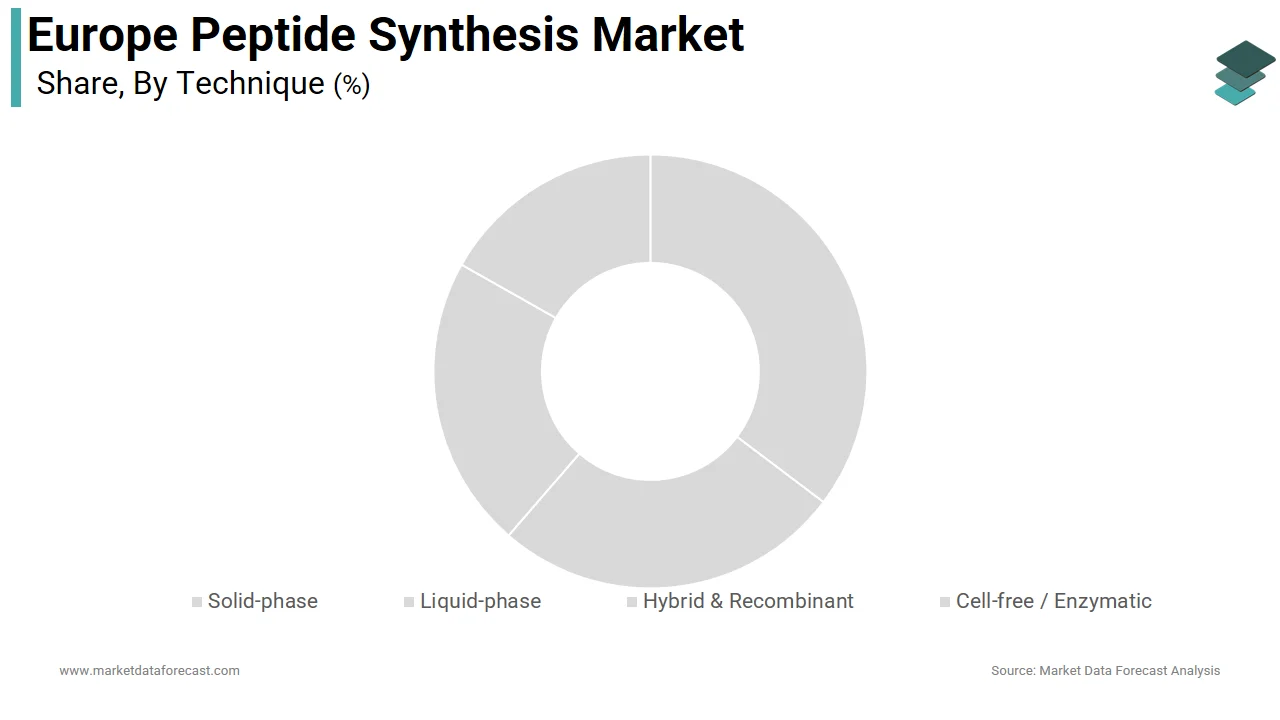
The hybrid and emerging peptide synthesis techniques segment is anticipated to witness the fastest CAGR of 18.4% from 2025 to 2033. The swift expansion of the hybrid and emerging peptide synthesis techniques segment is driven by the need to overcome the limitations of traditional SPPS in synthesizing long or hydrophobic sequences. Continuous flow platforms developed at institutions like ETH Zurich enable precise temperature and residence time control, reducing racemization and improving yields for difficult couplings. In addition, chemoenzymatic ligation is gaining traction for assembling large peptides with native disulfide bonds. These innovations promise to expand the druggable peptide space while aligning with the EU’s Green Deal through reduced waste and energy use.
By Product Type Insights
The reagents and consumables segment held a leading share of 54.5% of the Europe peptide synthesis market in 2024. The dominance of the reagents and consumables segment is attributed to the repetitive and high-volume nature of peptide manufacturing, which demands consistent supplies of protected amino acids, coupling agents, resins, and solvents. The shift toward Fmoc-based SPPS has further increased demand for high-purity HBTU, HATU, and Oxyma reagents, which minimize side reactions and improve yields. Besides, stringent EMA guidelines require lot traceability and a certificate of analysis for every raw material lot, driving premium pricing for certified consumables. Major suppliers have established dedicated peptide reagent divisions with certified warehouses ensuring rapid delivery to CDMOs. The recurring purchase cycle, often monthly for active production lines, creates stable revenue streams insulated from project volatility. This operational dependency ensures reagents and consumables remain the largest product category in the European peptide synthesis ecosystem.
The peptide synthesis services segment is likely to experience the fastest CAGR of 16.7% over the forecast period, owing to factors such as the increasing reliance of biotech firms and academic spin-offs on specialized CDMOs for GMP-compliant peptide production. Many of the early-stage peptide developers in Europe lack in-house synthesis capabilities, as per studies. CDMOs are responding with integrated service models that include route scouting, analytical validation, lyophilization, and regulatory filing support. Furthermore, the rise of peptide radiopharmaceuticals has created demand for radiolabelling and sterile fill finish service,s which only a handful of European facilities can provide. The shift in the drug development pipeline toward complex conjugates and multi-epitope vaccines ensures that innovators will increasingly rely on external experts for synthesis services, as their own internal capacity struggles to keep pace.
By End User Insights
The peptide contract development and manufacturing organizations, along with contract research organizations (Peptide CDMOs & CROs) segment led the Europe peptide synthesis market and captured a 49.4% share in 2024. The prominence of the peptide CDMOs & CROs segment is because of their role as the primary production engine for both clinical and commercial peptide supply across the region. Leading European CDMOs operate multi-site networks with capacities exceeding notable kilograms per month of GMP peptides. Their integrated platforms offer end-to-end services from preclinical research through commercial launch, reducing development timelines by several months, according to sources. Regulatory familiarity with EMA inspection protocols further enhances their appeal as they navigate complex requirements for impurity profiling and stability testing. This outsourced model has become the de facto standard for peptide development in Europe, enabling innovation while ensuring compliance.
The academic and research institutes segment is on the rise and is expected to be the fastest-growing segment in the regional market by witnessing a CAGR of 14.2% from 2025 to 2033. The rapid growth of the academic and research institutes segment is fuelled by increased public funding for peptide-based drug discovery and diagnostics under Horizon Europe and national innovation programs. In addition, the EU allocated funds to academic consortia focused on antimicrobial peptides cancer cancer-targeting sequences, and peptide vaccines. Institutions have established dedicated peptide synthesis cores featuring automated SPPS and high-resolution mass spectrometry. Moreover, the rise of open science initiatives has spurred collaboration between universities and CDMOs for the scale-up of promising leads. Academic laboratories are emerging as essential incubators for pioneering peptide science, driven by Europe's focus on building health sovereignty and advancing therapeutic developments.
COUNTRY LEVEL ANALYSIS
Germany Peptide Synthesis Market Analysis
Germany dominated the Europe peptide synthesis market and occupied a 24.6% share in 2024. The expansion of peptide synthesis in Germany is primarily driven by its dense network of biotech clusters, pharmaceutical giants, and world-class academic institutions. Regions host multiple biotech firms actively developing peptide therapeutics supported by state-funded innovation centers. Germany also operates the highest number of GMP peptide synthesis suites in Europe, with CordenPharma and PolyPeptide running large-scale facilities in Freiburg and Tübingen, respectively. Apart from these, the country’s stringent quality culture aligns closely with EMA expectations, making it a preferred location for regulatory filings. This combination of industrial capacity, academic excellence, and public support cements Germany’s position as Europe’s peptide synthesis powerhouse.
Switzerland Peptide Synthesis Market Analysis
Switzerland was the second-largest country in the Europe peptide synthesis market and captured a 19.3% share in 2024. Despite its small size, the nation is a global epicenter for peptide manufacturing due to the presence of industry pioneers, which together produce a portion of the world’s commercial therapeutic peptides. Switzerland’s regulatory alignment with the EU through mutual recognition agreements ensures seamless market access while its political neutrality attracts international R and D investment. The country’s highly skilled workforce and stable energy supply further enhance manufacturing reliability. These factors make Switzerland not just a production hub but a center of peptide innovation with global influence.
The United Kingdom Peptide Synthesis Market Analysis
The United Kingdom is also a key player in the Europe peptide synthesis market, with world-leading academic research and a vibrant biotech ecosystem centered in the Cambridge, Oxford, and London golden triangle. Institutions are advancing peptide applications in oncology, infectious disease, and neurodegeneration with many active clinical collaborations. The UK’s Medicines and Healthcare products Regulatory Agency maintains a streamlined innovation passport for advanced therapy medicinal products, which accelerates peptide drug development. Post Brexit, the UK has introduced targeted grants through Innovate UK. Companies serve both domestic and EU clients via strategic logistics partnerships. Despite regulatory divergence, this scientific excellence and agile policy environment sustain the UK’s significant role in European peptide synthesis.
France Peptide Synthesis Market Analysis
France experienced gradual growth in the European peptide synthesis market due to strong public investment in health innovation and a growing base of peptide-focused startups. Academic hospitals are actively involved in peptide radiopharmaceutical trials with many clinical studies registered. Besides, France hosts key reagent suppliers, which ensure rapid access to high-purity amino acid derivatives. The national research institute INSERM coordinates a national peptide network linking universities and CDMOs to share protocols and analytical resources. This coordinated ecosystem bridges discovery and manufacturing, enabling France to convert scientific output into clinical and commercial peptide products at an accelerating pace.
Italy Peptide Synthesis Market Analysis
Italy is anticipated to grow notably in the Europe peptide synthesis market from 2026 to 2034 due to its strong tradition of organic and medicinal chemistry, with universities like the University of Naples and Sapienza Rome maintaining specialized peptide synthesis laboratories. It is also home to a growing number of CDMOs serving the Mediterranean and Central European markets with facilities offering GMP-compliant services for clinical trial material. Furthermore, Italian researchers are pioneering peptide-based cosmeceuticals and nutraceuticals, creating a dual demand stream that supports domestic synthesis capacity. Collaborative projects under the EU’s Horizon Europe program have linked Italian labs with German and Swiss partners for complex peptide conjugate development. This blend of academic heritage, industrial pragmatism, and EU integration ensures Italy remains a strategic player in the European peptide landscape.
COMPETITIVE LANDSCAPE
Competition in the Europe peptide synthesis market is highly specialized and driven by technical capability, regulatory compliance, and service depth rather than price alone. A handful of established CDMOs dominate the commercial landscape while niche players compete on specific modalities such as radiolabeling or long-chain synthesis. The barrier to entry is high due to capital-intensive GMP infrastructure, stringent EMA quality requirements, and the need for highly skilled peptide chemists. Competition also extends to innovation in green chemistry, where solvent reduction and waste minimization are becoming key differentiators under EU environmental policies. Academic institutions further influence the market by advancing novel synthesis methods that CDMOs must rapidly adopt. With the peptide therapeutic pipeline expanding into complex conjugates and multi-epitope vaccines, the ability to deliver high-purity difficult sequences reliably will determine long-term dominance. This environment favors integrated players with scale expertise and strong regulatory track records.
KEY MARKET PLAYERS
Some of the companies that are playing a dominating role in the Europe peptide synthesis market include
- Merck KGaA
- Thermo Fisher Scientific Inc.
- CordenPharma International
- GenScript
- Novozymes A/S
- PolyPeptide Group
- Bachem Holding AG
TOP PLAYERS IN THE MARKET
- Bachem Holding AG is a Swiss-based global leader in peptide synthesis with deep integration across research, clinical, and commercial manufacturing. The company supplies GMP-grade peptides to over 500 biopharmaceutical clients worldwide and operates state-of-the-art facilities in Switzerland and the United States. It also launched a digital peptide portal offering real-time batch tracking and regulatory documentation access for European clients. These enhancements support Bachem’s position as a trusted partner for end-to-end peptide development while strengthening its compliance with EMA standards and supply chain resilience across the continent.
- PolyPeptide Group is a European-headquartered contract manufacturer specializing in custom peptide synthesis for pharmaceutical and diagnostic applications. With production sites in Sweden, Germany, France, and the United States, the company supports global drug developers from preclinical through commercial supply. It also established a dedicated peptide radiopharmaceutical unit in Lyon, France, to serve the growing theranostics market. These strategic investments enhance its technical differentiation and align with European sustainability mandates while expanding access to high complexity peptide formats for oncology and metabolic disease programs.
- CordenPharma International is a fully integrated contract development and manufacturing organization with significant peptide synthesis capabilities across Europe and North America. The company offers end-to-end services from route scouting to sterile fill finish with GMP facilities in Germany, France, and Italy. It also partnered with a leading European biotech to co-develop a novel cyclic peptide conjugate for solid tumors under a long-term supply agreement. These actions underscore its commitment to technical excellence, regulatory agility, and strategic collaboration in advancing next-generation peptide therapeutics across the European market.
TOP STRATEGIES USED BY THE KEY MARKET PARTICIPANTS
Key players in the Europe peptide synthesis market focus on vertical integration by offering end-to-end services from early research to commercial GMP manufacturing to capture full project value. They invest heavily in automation and continuous flow technologies to improve synthesis efficiency and reduce environmental impact in line with EU sustainability regulations. Strategic expansion of radiopharmaceutical and complex modification capabilities addresses growing demand in oncology and precision medicine. Companies also enhance digital infrastructure for real-time quality tracking and regulatory documentation to streamline client compliance. Furthermore, they form long-term partnerships with biotech firms and academic institutions to secure pipeline visibility and co-develop novel peptide formats that require specialized synthesis expertise.
MARKET SEGMENTATION
This research report on the Europe peptide synthesis market has been segmented and sub-segmented into the following categories.
By Technique
- Solid-phase
- Manual SPPS
- Automated SPPS
- Microwave-assisted SPPS
- Liquid-phase
- Batch LPPS
- Continuous flow LPPS
- Hybrid & Recombinant
- Cell-free / Enzymatic
By Product Type
- Equipment
- Peptide Synthesizers
- Cleavage & Deprotection Systems
- Purification (Prep-HPLC)
- Lyophilizers
- Reagents & Consumables
- Amino-acid Building Blocks
- Resins
- Coupling Reagents & Activators
- Solvents
- Enzymes
- Other Reagents & Consumables
- Services
- Custom / Catalog Peptide Synthesis
- GMP Peptide Manufacturing
- Peptide Library Design
- Post-translational Modification Services
By End User
- Pharmaceutical & Biotechnology Companies
- Peptide CDMOs & CROs
- Academic & Research Institute
- Diagnostic Laboratory
- Food & Nutraceutical Producers
- Cosmetic Manufacturers
By Country
- United Kingdom
- France
- Spain
- Germany
- Italy
- Russia
- Sweden
- Denmark
- Switzerland
- Netherlands
- Rest of Europe
Frequently Asked Questions
1. What is the europe peptide synthesis market?
The europe peptide synthesis market covers production, reagents, equipment, and services for synthesizing peptides used in pharmaceuticals, diagnostics, and research
2. What drives growth in the europe peptide synthesis market?
Growth is driven by biopharmaceutical R&D, rising peptide therapeutics, government support, advanced manufacturing, and academia-industry collaborations
3. What are key product segments in the europe peptide synthesis market?
Reagents & consumables lead in revenue, with equipment showing fastest growth, supported by custom services and automation in the europe peptide synthesis market
4. Which countries dominate the europe peptide synthesis market?
The UK and Belgium are prominent, benefiting from biotech hubs and advanced manufacturing capabilities in the europe peptide synthesis market
5. What synthesis methods are used in the europe peptide synthesis market?
Solid-phase and liquid-phase peptide synthesis methods are common, with solid-phase being dominant for commercial-scale production
6. How does peptide synthesis support drug discovery in europe?
Custom peptide synthesis accelerates development of peptide-based drugs, vaccines, and diagnostics across the europe peptide synthesis market
7. What role do reagents play in the europe peptide synthesis market?
Reagents and consumables ensure high purity and yield in peptide synthesis, forming the largest revenue share in the europe peptide synthesis market
8. How is automation influencing the europe peptide synthesis market?
Automation enhances synthesis speed, reproducibility, and scalability, making it a key growth driver in the europe peptide synthesis market
9. What industries utilize the europe peptide synthesis market?
Pharmaceuticals, biotechnology, diagnostics, cosmetics, and academic research heavily rely on peptide synthesis in europe
10. What challenges impact the europe peptide synthesis market?
Challenges include high manufacturing costs, complexity in peptide design, regulatory compliance, and capacity shortages in the europe peptide synthesis market
Related Reports
Access the study in MULTIPLE FORMATS
Purchase options starting from
$ 2000
Didn’t find what you’re looking for?
TALK TO OUR ANALYST TEAM
Need something within your budget?
NO WORRIES! WE GOT YOU COVERED!
Call us on: +1 888 702 9696 (U.S Toll Free)
Write to us: sales@marketdataforecast.com