- Product Description Description
- Table of Contents TOC
- List of Table & Figure LOT
- Get Free Sample PDF Sample PDF
Market Size, 2025
$16.08 BnMarket Estimate, 2026
$17.67 BnMarket Forecast, 2034
$37.61 BnCAGR, 2026–2034
9.9%Europe Peptide Therapeutics Market Report Summary
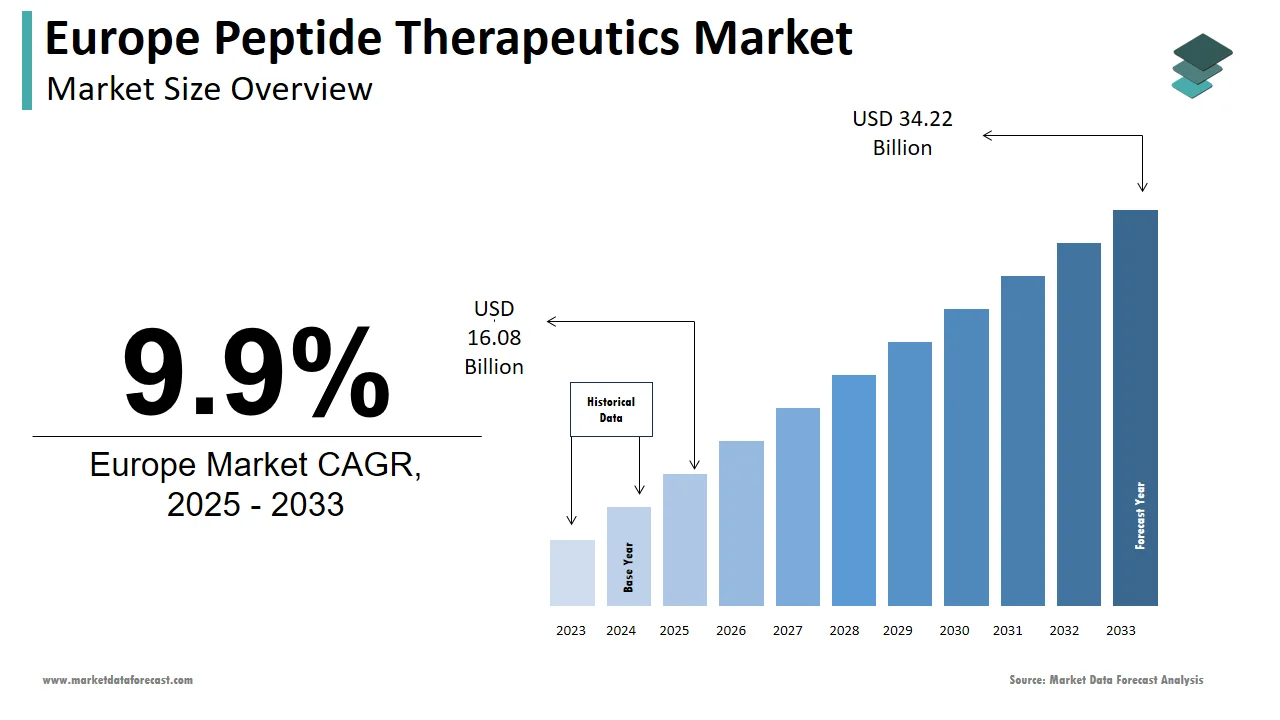
The Europe peptide therapeutics market was valued at USD 16.08 billion in 2025, is estimated to reach USD 17.67 billion in 2026, and is projected to reach USD 37.61 billion by 2034, growing at a CAGR of 9.9% during the forecast period from 2026 to 2034.
The growth of the European peptide therapeutics market is driven by rising demand for peptide-based drugs, increasing prevalence of metabolic and cardiovascular disorders, and ongoing advancements in peptide synthesis and drug delivery technologies. Expanding applications of peptides in oncology, endocrinology, and infectious diseases, coupled with biotech innovation and biosimilar adoption, are further accelerating market expansion across the region.
Key Market Trends
- Growing use of peptide-based drugs for chronic diseases such as diabetes, cancer, and metabolic disorders.
- Increasing focus on innovative and long-acting peptide formulations to improve therapeutic outcomes.
- Rising adoption of solid-phase peptide synthesis (SPPS) for efficient, high-purity peptide production.
- Expansion of biopharmaceutical R&D and strategic collaborations for peptide drug discovery.
- Growing biosimilar and generic peptide development driven by patent expiries and cost-efficiency initiatives.
Segmental Insights
- Based on type, the innovative peptides segment accounted for the largest share of the Europe peptide therapeutics market in 2024, driven by a robust pipeline of novel peptide-based drugs and rising investments in next-generation therapies.
- Based on application, the metabolic disorders segment held a 42.3% share of the Europe peptide therapeutics market in 2024, driven by the growing incidence of diabetes and obesity, and the extensive use of GLP-1 receptor agonists and related treatments.
- Based on route of administration, the parenteral route segment dominated the market in 2024, reflecting its continued preference for achieving high bioavailability, faster action, and improved patient outcomes in peptide drug delivery.
- Based on synthesis technology, the solid-phase peptide synthesis (SPPS) segment was the largest in 2024, owing to its scalability, efficiency, and ability to produce complex peptide chains with high precision.
Regional Insights
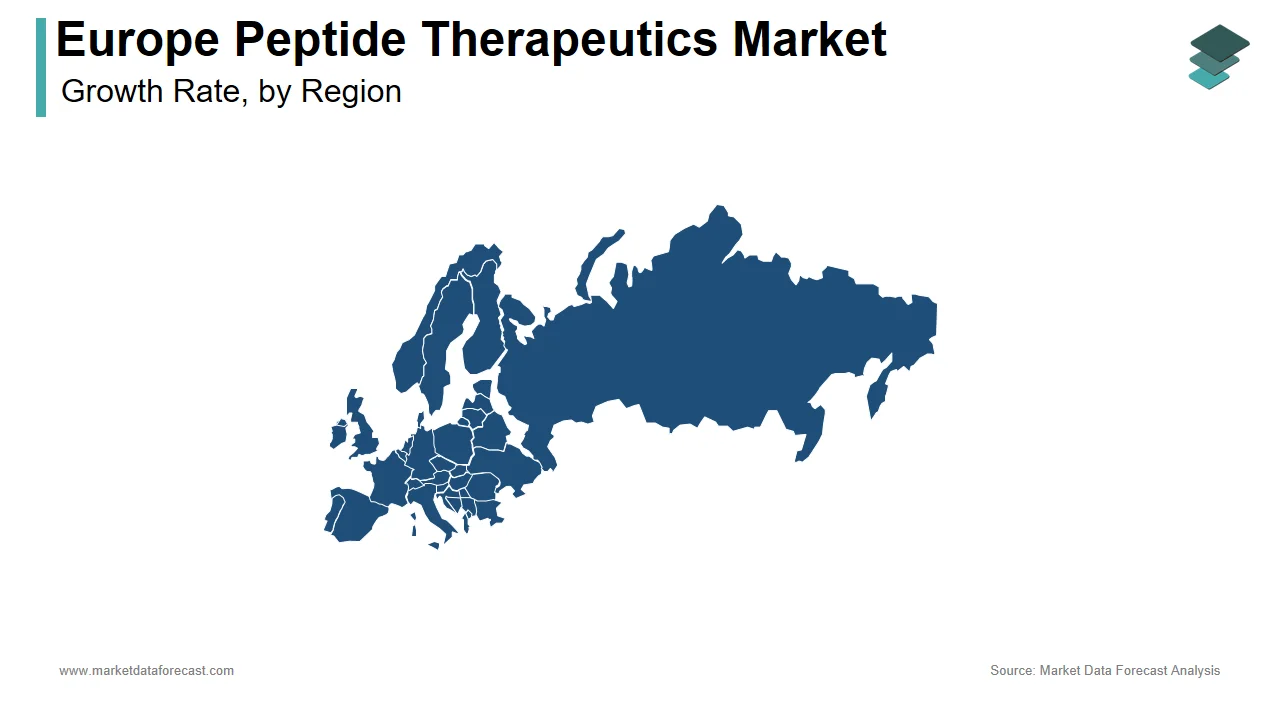
The European peptide therapeutics market is witnessing strong growth across leading economies, supported by advanced healthcare systems, rising R&D spending, and increasing biopharmaceutical innovation.
- Germany was the top performer, accounting for a 21.3% share of the regional market in 2024, driven by strong pharmaceutical manufacturing and clinical research infrastructure.
- France ranked second, capturing a 17.3% share in 2024, supported by expanding peptide drug R&D and favorable government initiatives promoting biopharma innovation.
- The United Kingdom held a significant share in 2024, benefiting from its vibrant biotech ecosystem and academic excellence in peptide chemistry and drug design.
- Italy is expected to grow steadily, leveraging a high prevalence of metabolic and endocrine disorders and a growing focus on biosimilar and generic peptide adoption.
Competitive Landscape
The European peptide therapeutics market is highly competitive, with key players focusing on drug discovery collaborations, formulation innovations, and large-scale manufacturing capabilities. Companies are investing in peptide drug conjugates, long-acting formulations, and delivery system enhancements to improve treatment efficacy and patient compliance. Prominent players in the market include Eli Lilly and Company, Amgen, Inc., Pfizer, Inc., Bristol-Myers Squibb Company, Ever Neuro Pharma GmbH, Takeda Pharmaceutical Company Limited, AstraZeneca PLC, GlaxoSmithKline plc, Novo Nordisk A/S., Novartis AG, Zealand Pharma AG, AmbioPharm Inc., Bachem Holding AG, PolyPeptide Group, Sanofi SA, Amylin Pharmaceuticals, CirclePharma, Inc., PeptiDream Inc., Apitope Technology, Arch NioPartners, Ipsen, and Galena Biopharmaceuticals.
Europe Peptide Therapeutics Market Size
The peptide therapeutics market size in Europe was valued at USD 16.08 billion in 2025. The European market is estimated to be worth USD 37.61 billion by 2034 from USD 17.67 billion in 2026, growing at a CAGR of 9.9% from 2026 to 2034.
The peptide therapeutics are a class of bioactive molecules composed of short chains of amino acids that modulate specific physiological pathways with high target selectivity and low toxicity. In Europe, these agents are increasingly deployed in the treatment of chronic and complex diseases, including diabetes, oncology, metabolic disorders, and autoimmune conditions. According to the European Medicines Agency, over 80 peptide-based medicinal products have received marketing authorization in the EU since 2000. Additionally, the European Commission’s Innovative Medicines Initiative has allocated more than 1.2 billion euros since 2019 to support advanced therapy development, including next-generation peptide platforms.
MARKET DRIVERS
Rising Prevalence of Chronic Metabolic and Endocrine Disorders
The escalating burden of chronic metabolic diseases across Europe is a primary driver for peptide therapeutic adoption in diabetes and obesity management, which is a major driver of the growth of the Europe peptide therapeutics market. As per the International Diabetes Federation, 61 million adults in the European region had diabetes in 2023, with type 2 diabetes accounting for over 90 % of cases. This epidemic has driven widespread use of incretin-based peptides such as liraglutide and semaglutide, which mimic glucagon-like peptide 1 to enhance insulin secretion and suppress appetite. According to the World Health Organization, age-standardized obesity rates in the EU increased by 13 % between 2015 and 2023, which expands the patient pool eligible for GLP-1 analogs. Moreover, national reimbursement policies increasingly favor these agents due to their demonstrated cardiovascular benefits. This clinical and economic validation ensures sustained and growing demand for peptide therapeutics as first-line or adjunctive treatments in metabolic care pathways.
Accelerated Regulatory Pathways for Advanced Therapy Medicinal Products
Europe’s progressive regulatory framework for biologics and advanced therapies has significantly shortened development timelines for peptide therapeutics, which is additionally prompting the growth of Europe peptide therapeutics market. As per the EMA, 22 peptide-based candidates received PRIME designation between 2020 and 2024 by enabling faster clinical validation. This mechanism is particularly impactful in oncology and rare diseases, where novel peptide drug conjugates and receptor antagonists show high specificity. For instance, the approval of lutetium Lu 177 dotatate for neuroendocrine tumors was expedited under this pathway by setting a precedent for future radiolabeled peptides. Additionally, the EU’s centralized authorization procedure allows single application approval across all 27 member states by reducing commercialization complexity.
MARKET RESTRAINTS
High Manufacturing Complexity and Cost Barriers
The production of therapeutic peptides involves intricate synthesis, purification, and formulation processes that pose significant cost and scalability challenges, which are restraining the growth of the Europe peptide therapeutics market. Unlike small molecules, peptides require either solid phase synthesis or recombinant expression in controlled bioreactor environments, both of which demand specialized infrastructure and stringent quality control. These quality hurdles translate into elevated production costs, where the European Biopharmaceutical Review estimates that manufacturing a kilogram of clinical-grade peptide can cost between 200,000 and 500,000 euros by depending on length and modifications. Furthermore, peptides often require cold chain logistics and lyophilization to ensure stability by adding 15 to 25 % to distribution expenses, as per the sources. These economic and technical barriers disproportionately affect small and mid-sized biotech firms, which limits competitive diversity and slows the introduction of novel candidates.
Limited Oral Bioavailability and Delivery Constraints
Their poor oral bioavailability with parenteral administration, which impedes patient compliance and market penetration, is also hampering the growth of the Europe peptide therapeutics market. Most peptides are rapidly degraded by gastrointestinal enzymes and exhibit minimal intestinal permeability, rendering oral delivery ineffective without advanced formulation technologies. According to the European Journal of Pharmaceutics and Biopharmaceutics, the average oral bioavailability of unmodified therapeutic peptides is less than 2%. While injectable formulations dominate current use, they present barriers in chronic disease management, where daily or weekly injections reduce adherence. Although innovations like oral semaglutide formulated with sodium N acetyltaurine to enhance absorption that represent breakthroughs, such technologies remain proprietary and costly. The European Medicines Agency notes that only three orally delivered peptides have received approval in the EU as of 202,5, with the persistent delivery challenge.
MARKET OPPORTUNITIES
Expansion into Oncology Through Peptide Drug Conjugates and Radioligands
The emergence of peptide drug conjugates and radiolabeled ligands that enable precise tumor targeting with minimal systemic toxicity, which is significantly creating new opportunities for the growth of the Europe peptide therapeutics market. These agents exploit overexpressed receptors on cancer cells, such as somatostatin receptors in neuroendocrine tumors, to deliver cytotoxic payloads or therapeutic radionuclides directly to malignant tissue. The approval of agents like lutetium Lu 177 vipivotide tetraxetan for prostate-specific membrane antigen-positive metastatic castration resistant prostate cancer has further validated this approach. Moreover, the European Commission’s Horizon Europe program has committed 320 million euros since 2022 to support radiopharmaceutical development, including peptide-based platforms.
Advancements in Stabilization and Half-Life Extension Technologies
Innovations in peptide engineering, particularly half-life extension and stability enhancement, which are unlocking new therapeutic applications and dosing regimens, are another factor prompting the growth of the Europe peptide therapeutics market. Traditional peptides suffer from rapid renal clearance and enzymatic degradation, requiring frequent administration. However, technologies such as PEGylation, fatty acid acylation, and fusion to albumin binding domains have significantly prolonged circulation time. Semaglutide, for example, employs a C18 fatty diacid chain that enables once weekly dosing, dramatically improving adherence compared to daily injectables. Additionally, cyclization and D-amino acid incorporation are being used to enhance proteolytic resistance without compromising receptor affinity. These molecular refinements not only improve clinical outcomes but also reduce healthcare utilization by minimizing injection frequency and clinic visits.
MARKET CHALLENGES
Intense Competition from Biosimilars and Alternative Modalities
The mounting pressure from biosimilar peptides and competing therapeutic modalities that offer comparable efficacy at lower cost or with improved convenience is challenging the growth of the Europe Peptide Therapeutics Market. Once patent protection expires, originator peptides like insulin glargine and exenatide face rapid biosimilar entry, where the European Medicines Agency approved 14 insulin biosimilars between 2020 and 2024, which is driving average price reductions of 35 to 50 % according to the European Generic and Biosimilar Medicines Association. Furthermore, the rise of gene and cell therapies for rare diseases threatens to displace peptide replacement strategies in indications like growth hormone deficiency. This multi-front competitive landscape compresses pricing power and forces innovators to continuously demonstrate superior clinical differentiation to maintain market relevance.
Stringent Environmental and Waste Management Regulations for Peptide Synthesis
The environmental footprint of peptide manufacturing, solvent use, and chemical waste generation has become an operational challenge under Europe’s tightening sustainability regulations. Solid phase peptide synthesis, the dominant production method for short to medium length peptides, consumes large volumes of hazardous solvents such as dichloromethane and N N N-dimethylformamide. The EU’s Industrial Emissions Directive now mandates best available techniques for waste minimization, which is forcing manufacturers to invest in closed-loop recycling systems and green chemistry alternatives. Additionally, the European Commission’s Pharmaceutical Strategy for Europe explicitly links environmental risk assessments to marketing authorization renewals, requiring companies to disclose solvent intensity metrics. These regulatory pressures increase capital expenditure and operational complexity, particularly for contract development and manufacturing organizations lacking in-house sustainability infrastructure.
REPORT COVERAGE
| REPORT METRIC | DETAILS |
| Market Size Available | 2025 to 2034 |
| Base Year | 2025 |
| Forecast Period | 2026 to 2034 |
| Segments Covered | By Type, Application, Type of Manufacturers, Route of Administration, Synthesis Technology, and Country. |
| Various Analyses Covered | Global, Regional, and Country-Level Analysis, Segment-Level Analysis, Drivers, Restraints, Opportunities, Challenges; PESTLE Analysis; Porter’s Five Forces Analysis, Competitive Landscape, Analyst Overview of Investment Opportunities |
| Countries Covered | UK, France, Spain, Germany, Italy, Russia, Sweden, Denmark, Switzerland, Netherlands, Turkey, Czech Republic, and the Rest of Europe. |
| Market Leaders Profiled | Eli Lilly and Company, Amgen, Inc., Pfizer, Inc., Bristol-Myers Squibb Company, Ever Neuro Pharma GmbH, Takeda Pharmaceutical Company Limited, AstraZeneca PLC, GlaxoSmithKline plc, Novo Nordisk A/S., Novartis AG, Zealand Pharma AG, AmbioPharm Inc., Bachem Holding AG, PolyPeptide Group, Sanofi SA, Amylin Pharmaceuticals, CirclePharma, Inc., PeptiDream Inc., Apitope Technology, Arch NioPartners, Ipsen, and Galena Biopharmaceuticals. |
SEGMENTAL ANALYSIS
By Type Insights
The innovative peptides segment was the largest by accounting for a dominant share of the Europe peptide therapeutics market in 2024. These novel agents, such as GLP-1 receptor agonists, radiolabeled somatostatin analogs, and dual hormone mimetics, address high unmet needs in chronic and oncologic conditions with superior efficacy and safety profiles. According to the European Medicines Agency, 27 first-in-class peptide therapeutics received marketing authorization in the EU between 2020 and 2024, reflecting robust innovation momentum. Additionally, national health technology assessment bodies in Germany, France, and Sweden have consistently granted favorable reimbursement status to innovative peptides that demonstrate cardiovascular or survival benefits. The GLP-1-based agents reduced hospitalization for heart failure by 21% in pivotal trials, which is accelerating their adoption in clinical guidelines. This alignment of scientific advancement, regulatory support, and health economic validation ensures that innovative peptides remain the market’s core growth engine.

The generic peptides segment is expected to witness a CAGR of 9.4% throughout the forecast period, with the expiration of key patents on blockbuster agents like insulin glargine, exenatide, and octreotide, opening the door for biosimilar and generic entrants. According to the European Generic and Biosimilar Medicines Association, the average price of peptide therapies declines by 35 to 50% within two years of generic entry, significantly improving affordability and access. Furthermore, manufacturers like STADA and Krka have invested in EU GMP-certified peptide synthesis facilities in Eastern Europe to supply cost-competitive alternatives.
By Application Insights
The metabolic disorders segment accounted in holding 42.3% of the Europe peptide therapeutics market share in 2024, owing to the widespread use of peptide hormones for diabetes and obesity, where two conditions with escalating prevalence across the region. National treatment guidelines increasingly prioritize these agents, where the UK’s National Institute for Health and Care Excellence recommends GLP-1 analogs as second-line therapy after metformin for patients with a BMI over 35. Moreover, real-world evidence from Sweden’s National Diabetes Register shows that patients on once-weekly GLP-1 peptides achieve HbA1c reductions of 1.4 %age points on average, reinforcing clinical confidence.
The oncology segment is projected to expand at a CAGR of 14.2% throughout the forecast period with the clinical success of peptide receptor radionuclide therapy and tumor-targeting peptide drug conjugates in neuroendocrine tumors, prostate cancer, and rare malignancies. Similarly, the approval of lutetium Lu 177 vipivotide tetraxetan for metastatic castration resistant prostate cancer based on the VISION trial, showing a 38 % reduction in death risk that has expanded the addressable population to over 120,000 patients annually in Europe, according to the major sources. The European Commission’s Innovative Health Initiative has committed 280 million euros since 2022 to advance radiopharmaceutical platforms, including peptide-based ligands.
By Route of Administration Insights
The parenteral route segment held a dominant share of the Europe peptide therapeutics market in 2024, with the inherent physicochemical properties of peptides, which are typically large, hydrophilic, and susceptible to enzymatic degradation in the gastrointestinal tract. Consequently, injectable formulations remain the only viable option for ensuring therapeutic bioavailability. According to the European Federation of Pharmaceutical Industries and Associations, over 95% of approved peptide drugs in the EU are administered via injection, including insulin analogs, GLP-1 agonists, and octreotide. The infrastructure for parenteral delivery is well established across European healthcare systems, with home injection training programs widely available in countries like Germany and the Netherlands. Additionally, advancements in autoinjector and pen device technology, such as Novo Nordisk’s FlexTouch and Eli Lilly’s Tempo platform that have significantly reduced administration anxiety. This mature ecosystem of devices, training, and reimbursement ensures that parenteral delivery remains the default and most reliable route for peptide therapeutics.
The oral route segment is deemed to witness a CAGR of 18.6% in the coming years, with almost entirely driven by the commercial success of oral semaglutide, the first clinically viable orally delivered peptide approved in the EU in 2020. The formulation uses sodium N-acetyltaurine as an absorption enhancer to transiently open intestinal tight junctions by enabling sufficient systemic uptake. As per the European Association for the Study of Diabetes, the oral peptide users exhibit 29% higher persistence at one year compared to injectable counterparts. Encouraged by this proof of concept, companies like Chiasma and Enteris BioPharma are advancing oral formulations of octreotide and PTH analogs through EU clinical trials.
By Synthesis Technology Insights
The solid phase peptide synthesis segment was the largest by capturing a dominant share of the Europe peptide therapeutics market in 2024, owing to its efficiency, scalability, and compatibility with automation for peptides up to 50 amino acids in length. Developed by Bruce Merrifield in the 1960s, SPPS anchors the growing peptide chain to an insoluble resin, enabling rapid stepwise addition and easy purification through filtration. The technology’s modularity also supports the incorporation of non-natural amino acids and post-synthetic modifications critical for half-life extension. Continuous innovations, such as microwave-assisted SPPS and greener solvent systems that have further enhanced yield and reduced cycle times. This combination of technical maturity, regulatory familiarity, and industrial adaptability ensures SPPS remains the backbone of peptide manufacturing in Europe.
The hybrid synthesis technology segment is likely to grow with a projected CAGR of 12.3% throughout the forecast period. This approach combines solid phase and liquid phase methods to overcome the limitations of each when producing long or complex peptides exceeding 50 amino acids, such as those used in oncology and regenerative medicine. Hybrid strategies enable segment assembly in solution followed by final coupling on resin, improving purity and reducing deletion sequences. Companies like PolyPeptide Group and Bachem have invested in integrated hybrid platforms in Switzerland and Germany to meet demand for high-purity long-chain peptides. The European Medicines Agency notes that hybrid synthesized peptides exhibit impurity profiles 20 to 30 % cleaner than pure SPPS counterparts, facilitating regulatory approval.
COUNTRY LEVEL ANALYSIS
Germany Peptide Therapeutics Market Analysis
Germany was the top performer in the Europe peptide therapeutics market with 21.3% of share in 2024, with its advanced healthcare infrastructure, high disease burden, and leadership in biopharmaceutical innovation. The country hosts over 40% of Europe’s GMP-certified peptide manufacturing capacity, with major facilities operated by Bachem, Rentschler Biopharma, and Boehringer Ingelheim. Additionally, the German Research Foundation has funded 28 peptide-related projects under its Precision Medicine Initiative since 2022, which are focusing on tumor targeting and blood-brain barrier penetration.
France Peptide Therapeutics Market Analysis
France was positioned second in the Europe peptide therapeutics market by holding 17.3% of share in 2024, with its centralized healthcare system and strong public investment in rare disease and oncology therapies. The French National Authority for Health grants rapid reimbursement to peptide therapies that demonstrate significant clinical benefit, with a policy that accelerated the adoption of radiolabeled somatostatin analogs for neuroendocrine tumors. France is also home to key R&D centers for Ipsen and Servier, which specialize in peptide oncology and metabolic drugs, respectively. Furthermore, the government’s France 2030 investment plan has allocated 150 million euros to advanced therapy manufacturing, including peptide synthesis. This blend of equitable access, therapeutic specialization, and state-backed innovation ensures France’s continued influence in shaping Europe’s peptide landscape.
United Kingdom Peptide Therapeutics Market Analysis
The United Kingdom peptide therapeutics market was positioned second by capturing a significant share in 2024 with evidence-based prescribing, strong academic research, and dynamic post-Brexit regulatory adaptation. According to NHS Digital, over 500,000 patients received a GLP-1 agonist prescription in 2024, where a 22% increase from the previous year. The UK also hosts world-leading peptide research at institutions like the University of Oxford and Imperial College London, which are developing novel blood-brain barrier-penetrating peptides for CNS disorders.
Italy Peptide Therapeutics Market Analysis
The Italy peptide therapeutics market growth is leveraging on a high prevalence of metabolic and endocrine disorders and a growing focus on biosimilar adoption. Italy has also emerged as a key market for generic peptides, where the Italian Medicines Agency approved 11 off-patent peptide products in 2023, which is driving a 31 % year-on-year increase in biosimilar insulin use according to the Italian Society of Diabetology. Furthermore, Italy’s National Recovery and Resilience Plan has allocated 220 million euros to strengthen advanced therapy production, including peptide synthesis infrastructure in the biotech corridors of Milan and Rome.
COMPETITIVE LANDSCAPE
The Europe peptide therapeutics market features a dynamic mix of multinational pharmaceutical companies, specialized biotechs, and contract manufacturers competing across therapeutic, technological, and geographic dimensions. Large firms leverage global scale and established commercial infrastructure to dominate metabolic and oncology segments, while niche players focus on orphan indications and complex peptide architectures. Regulatory expertise is a critical differentiator given Europe’s stringent requirements for impurity profiling and environmental impact assessment. The entry of generic and biosimilar peptides has intensified price competition in off-patent segments, prompting originators to demonstrate superior clinical outcomes or convenience.
KEY MARKET PLAYERS
Some of the companies that are playing a dominating role in the Europe peptide therapeutics market include
- Eli Lilly and Company
- Amgen, Inc.
- Pfizer, Inc.
- Bristol-Myers Squibb Company
- Ever Neuro Pharma GmbH
- Takeda Pharmaceutical Company Limited
- AstraZeneca PLC
- GlaxoSmithKline plc
- Novo Nordisk A/S
- Novartis AG
- Zealand Pharma AG
- AmbioPharm Inc.
- Bachem Holding AG
- PolyPeptide Group
- Sanofi SA
- Amylin Pharmaceuticals
- CirclePharma, Inc.
- PeptiDream Inc.
- Apitope Technology
- Arch NioPartners
- Ipsen
- Galena Biopharmaceuticals
TOP PLAYERS IN THE MARKET
- Novo Nordisk is a global leader in peptide therapeutics with a profound presence in Europe through its extensive portfolio of insulin analogs and GLP-1 receptor agonists. The company pioneered the development of once-weekly semaglutide and has driven clinical adoption across metabolic and obesity indications. In recent years, Novo Nordisk has expanded its manufacturing footprint in Kalundborg, Denmark, to increase the supply of peptide APIs for the European market. It has also invested in digital health integration by launching connected pens and dose tracking apps that enhance patient adherence.
- Ipsen holds a specialized position in the Europe Peptide Therapeutics Market with a strong focus on oncology and rare diseases. The company is renowned for its somatostatin analogs, including lanreotide, which is widely used in neuroendocrine tumor management. Ipsen has strengthened its European footprint through strategic partnerships with academic medical centers to advance peptide receptor radionuclide therapy protocols. Recently, the company upgraded its biomanufacturing facility in France to support commercial-scale production of next-generation radiolabeled peptides.
- Bachem is a leading contract development and manufacturing organization specializing in peptide synthesis with deep integration across the European pharmaceutical ecosystem. The company provides end-to-end services from preclinical API production to commercial-scale GMP manufacturing for both generic and innovative peptides. Bachem has recently expanded its facility in Bubendorf, Switzerland, to incorporate hybrid synthesis technologies for complex long-chain peptides. It also collaborates with biotech firms on formulation development for oral and pulmonary delivery systems.
TOP STRATEGIES USED BY THE KEY MARKET PARTICIPANTS
Key players in the Europe Peptide Therapeutics Market focus on expanding manufacturing capacity for complex and long-chain peptides to meet rising demand in oncology and metabolic diseases. They invest in half-life extension and delivery platform technologies to overcome bioavailability limitations and enable non-parenteral routes. Strategic partnerships with academic institutions and hospitals accelerate clinical validation of novel peptide candidates, particularly in rare diseases and targeted radiotherapeutics. Companies also prioritize sustainability by adopting greener synthesis methods and reducing solvent waste in alignment with EU environmental regulations. Additionally, they enhance patient support through digital tools such as smart injection devices and adherence tracking apps to improve real-world outcomes and secure favorable reimbursement decisions.
MARKET SEGMENTATION
This Europe peptide therapeutics market research report is segmented and sub-segmented into the following categories.
By Type
- Generic
- Innovative
By Application
- Metabolic
- Cardiovascular Disorder
- Respiratory
- GIT
- Anti-infection
- Pain
- Dermatology
- CNS
- Renal
- Others
By Type of Manufacturers
- In-house
- Outsourced
By Route of Administration
- Parenteral Route
- Oral Route
- Pulmonary
- Mucosal
- Others
By Synthesis Technology
- Solid Phase Peptide Synthesis (SPPS)
- Liquid Phase Peptide Synthesis (LPPS)
- Hybrid Technology
By Country
- UK
- France
- Spain
- Germany
- Italy
- Russia
- Sweden
- Denmark
- Switzerland
- Netherlands
- Turkey
- Czech Republic
- Rest of Europe